Legrand Legacy: Tale of the Fatebounds Review

Legrand Legacy: Tale of the Fatebounds Review [PC] – A Purely Riveting Fantasy RPG

The story of Legrand Legacy: Tale of the Fatebounds is brimming with all of the beloved aesthetics from the fantasy RPG genre, taking players on a journey throughout the war-raged lands. Working your way from a meagre and worthless slave up to a worthy warrior, the enthralling package that Semisoft presents in their recently released RPG is an exciting experience with all of the makings of a surprise sleeper hit.

Taking on the role of the lowly slave – Finn – your journey throughout Legrand takes place after a devastating bout with a gruesome warrior, as a form of spectating entertainment. In a town that takes complete advantage of slaves, you are forgotten as a living being and thrown into the ring to meet your fate. Following an impressive show of power, you are purchased from a mysterious elder man known as a Norn – a race equipped with the ability to communicate telepathically.

Legrand Legacy takes players along an adventure through the fantasy lands of the warring Legrand. As players journey through the many diverse settings of Legrand, unique monsters, characters and combat tactics present themselves, offering the compelling feeling that comes attached to some of the most memorable RPG titles around today. Legrand Legacy is filled with informative lore and dialogue, most of which helps describe the somewhat confusing narrative that follows the surreal world.
Legrand Legacy: Tale of the Fatebounds Review
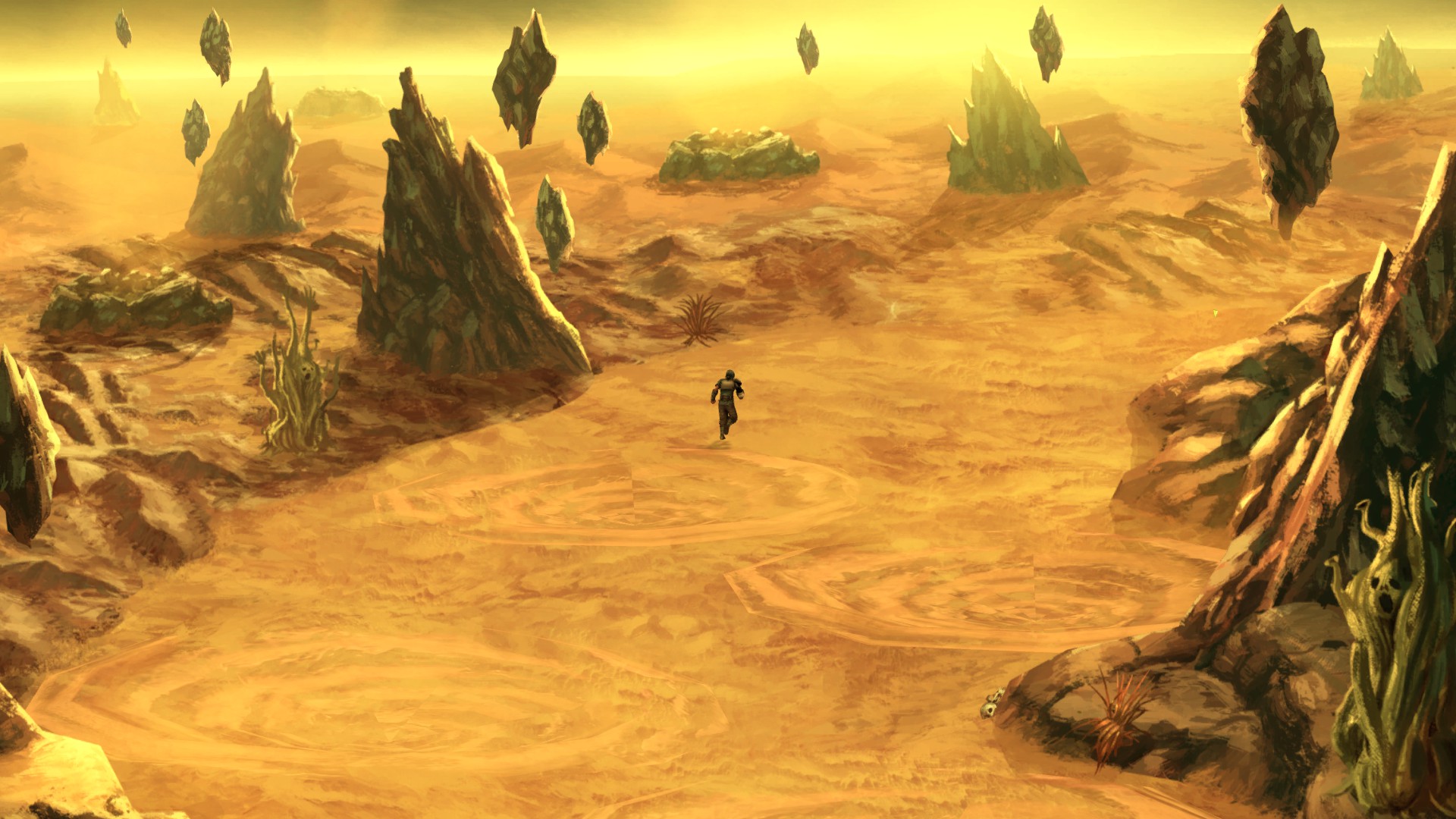
As you cross the world of Legrand, aside from encountering the many enemies, Finn will also need to keep an eye out for environmental traps.

Legrand Legacy: An Intuitive Combat System

As players begin their journey, the combat system makes itself present in the form of helpful tutorials. Immediately taking a familiar plunge into the traditional turn-based strategy of similar RPG titles, Legrand Legacy does offer a few different aspects to the battle sequences. No time constraints or MP gauges to worry about within the battle, players are free to choose either offensive or defensive abilities with each turn. Unlike other popular turn-based titles where characters perform their attacks in a set order, Legacy has players performing their attacks throughout one turn, followed abruptly by their enemies. This gives a unique twist on battles, forcing players to think ahead about the consequences of each of the party members actions.

Performing physical melee attacks is the go-to method of dealing a great deal of damage, but this only strikes enemies in the front row of the battle layout. The second, or back row may only be struck with range weapons, but they offer considerably less damage. Once all characters or enemies have been eliminated in the front, the monsters in the back row move forward, allowing a more versatile attack range. Upon selecting your desired attacks with all party members, a series of rather simple QTEs – or quick time events – is thrown at the player in rapid succession. Landing these quick face button combos determines the overall power and accuracy of the ability, providing a bit more than the luck found in other turn-based RPGs.
Legrand Legacy: Tale of the Fatebounds Review
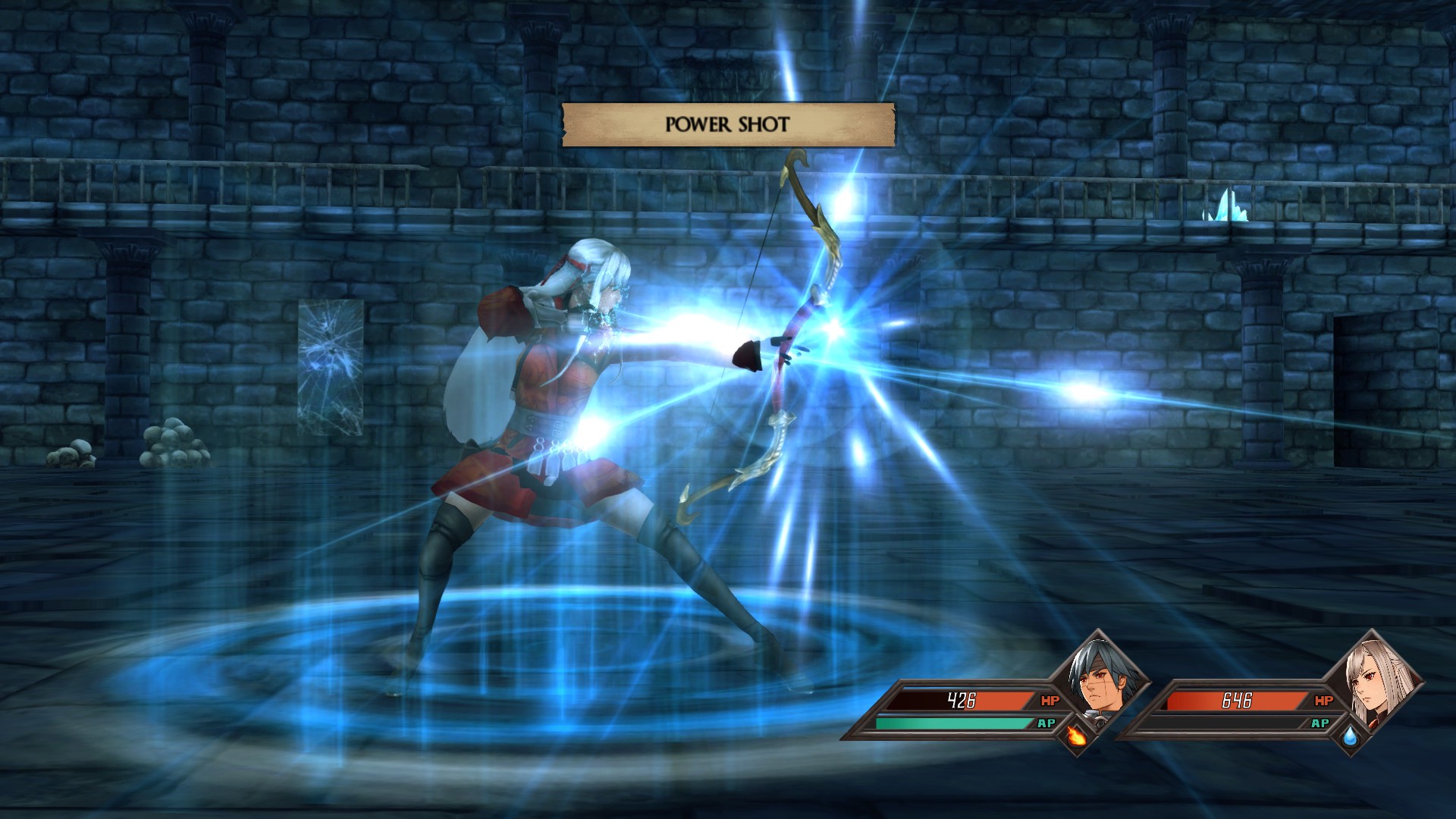
Arcana is the powerful ability used only when players fill up their AP meters in the midst of battle.

Grow And Utilize The Strength Of Arcana

While in combat, players will begin to fill up their AP meter. Once full, the AP meter is capable of dealing a massive amount of damage to all foes on the battleground known as Arcana, which acts as an excellent tactic to easily turn the tables in battle. Along with the unique AP abilities, other skills become available with every character throughout Finn’s journey. As the story deepens with shifting plotlines pointing towards the inevitable destruction of the world, the power within Finn, and his companions, grows with every level gained through experience points.

Increasing your stats aids you in battle the further you dive into Legrand and becomes the bridge between survival and death across your journey. While new abilities become available the stronger specific stats become, sharpening your party’s overall vitality, strength, or even luck attributes are as prominent as ever. Taking on the tougher enemies found later in the game prove to be worthwhile contenders, putting everything you’ve learned about the unique combat system into play.
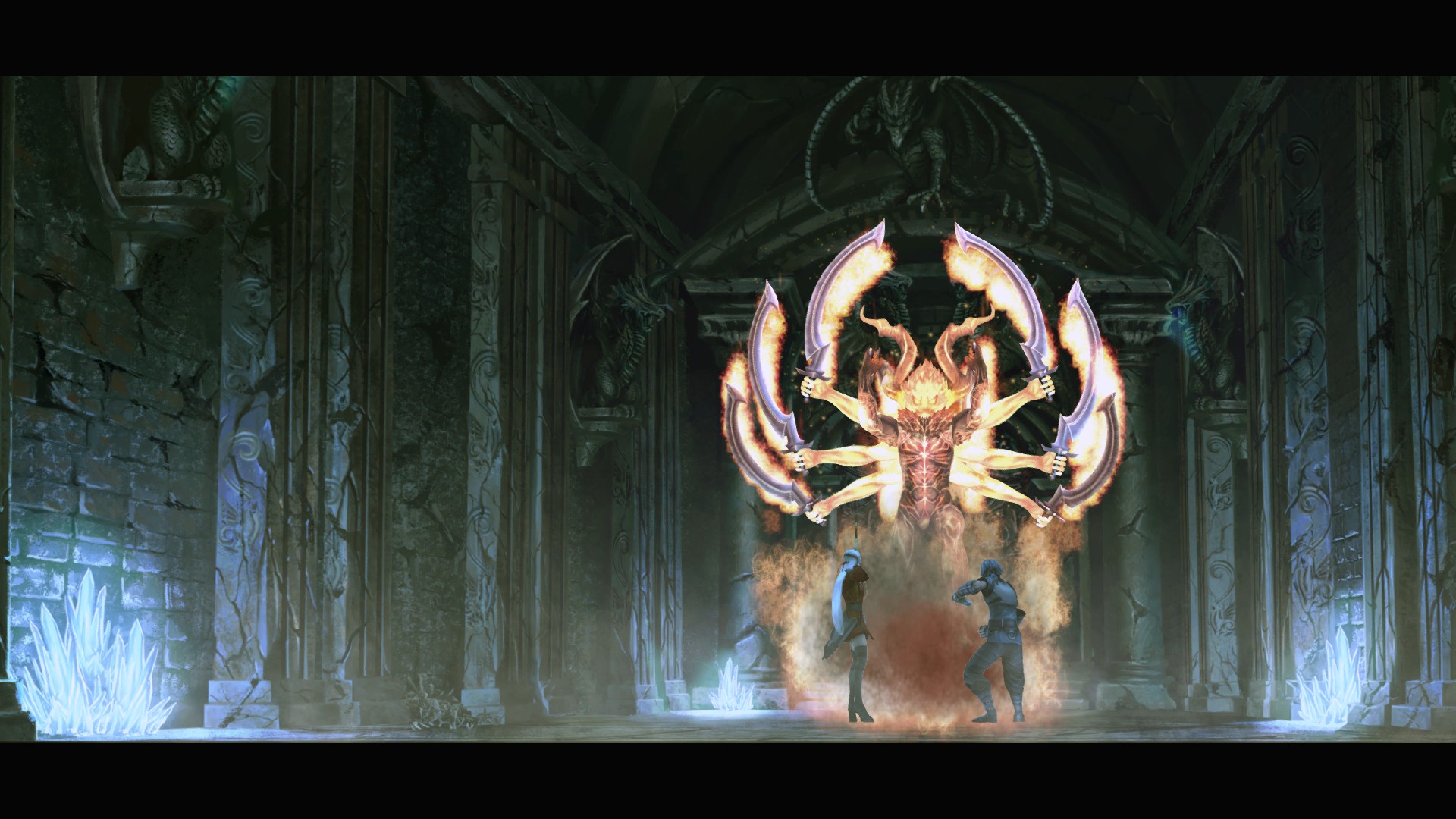
Legrand Legacy: Tale of the Fatebounds Review
From small, weaker foes to massive monsters with devastating attacks, everything awaits within the world of Legrand.

Purely Riveting

Throughout the promising story that oozes with memorable fantasy settings, tons of gripping character dialogue, engaging and fulfilling battles with the freedom to strengthen your party at will, all tied together in a tightly-wound RPG package, Legrand Legacy is an impeccable way to ring in a new year of indie titles. Though never really pushing any boundaries within the realm of RPG titles, Legrand Legacy is an excellent representation of how simple RPG mechanics can still provide a deep and riveting experience.
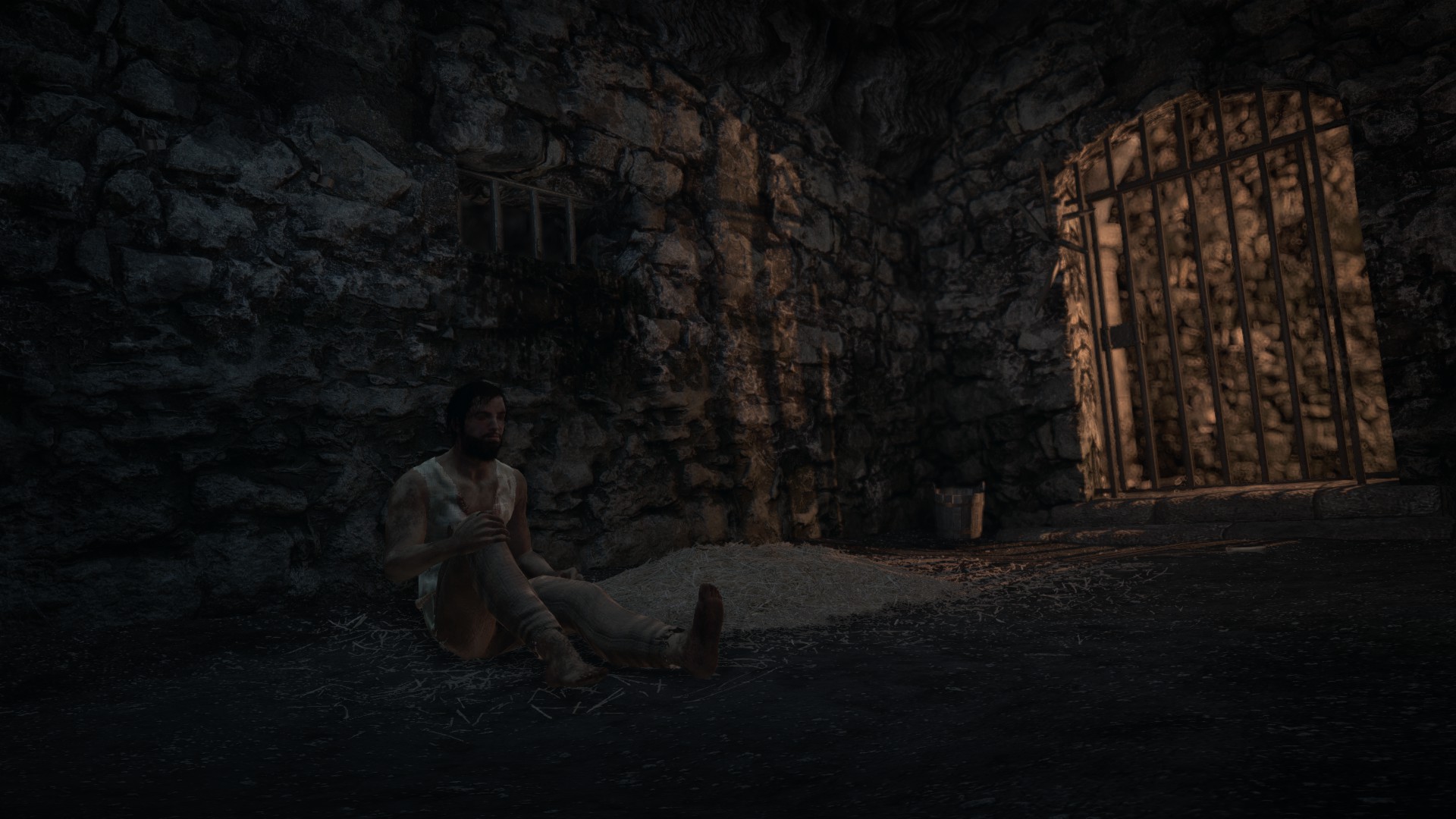
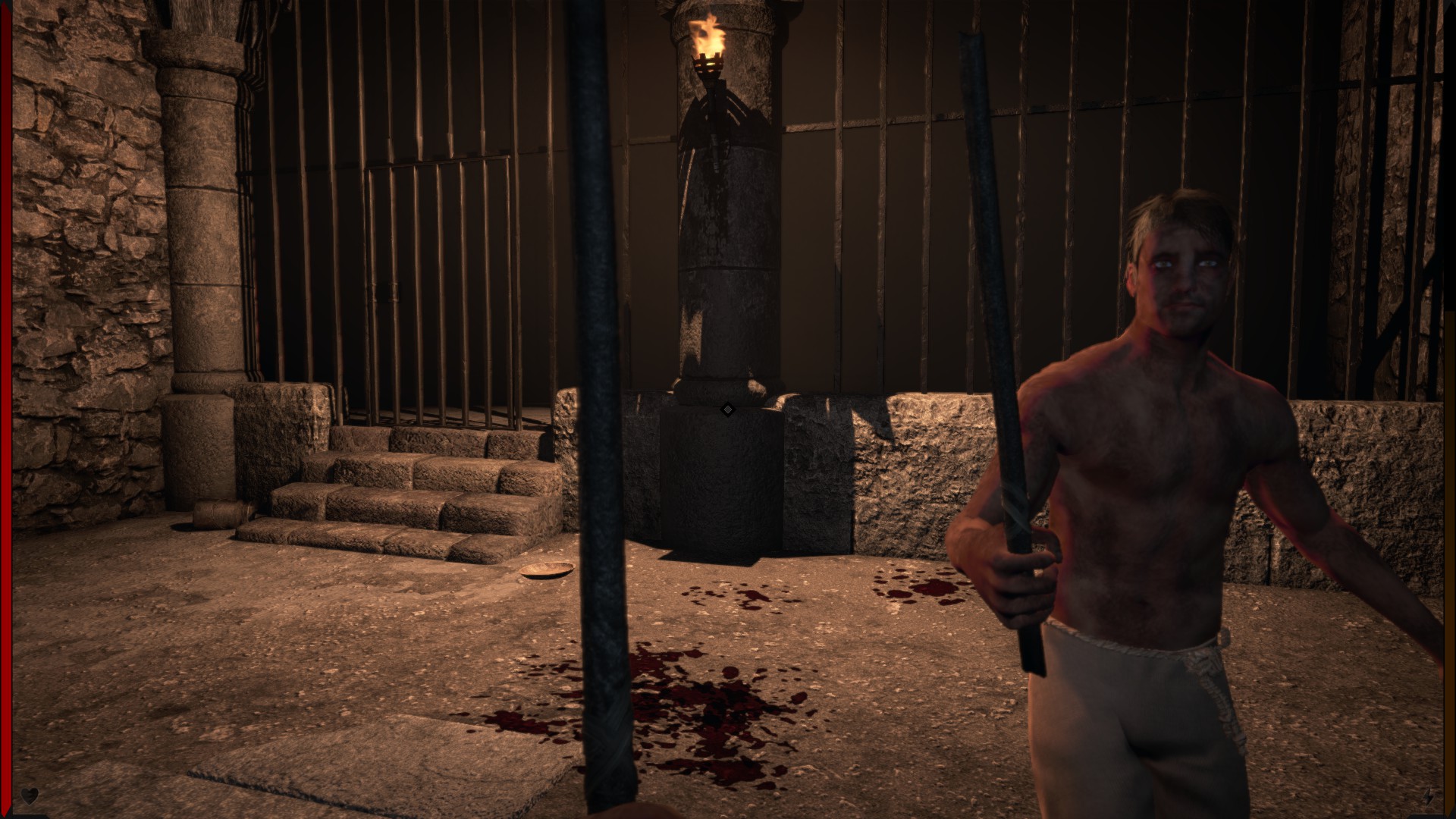
Elium: Prison Escape

Elium: Prison Escape Review [PC] – A Mostly Satisfying Survival Experience

Time and time again I slayed and filleted the unknowing guards as I attempted to escape from my dirty confines in Elium: Prison Escape. The small one man indie developer – Lone Artisan Games – has put together an extremely strategic stealth combat experience. While considerably unpolished in many aspects of the game, once you battle your way through the initial trials of adapting to the control scheme, making your way through the procedural prison dungeon becomes a touch more thrilling.
After the simple and rather short tutorial which takes you through the basic movements and attacks, players may begin to embark their escape out of the medieval prison. With a four-direction attack range using a variety of different melee weapons – mostly swords and axes – players may also equip shields in their other hands. While the standard weapons are the most efficient methods of disposing enemy guards, it’s how players use the other aspects of the game to escape that’s important.

The tutorial shows players the gist of how the mechanics work in Elium. Interacting with items and doors, singing your fists or weapon, picking up objects and throwing them, or utilizing the stealth aspect are all viable techniques for safely finding a way out of the grim dungeon. Shadows are ever-so important in staying out of sight, so the brightly lit rooms that you’ll frequently pass will need to be dealt with in a shrouded manner. One easy method is finding a bag of ash to dispense on the lights, further covering the area in darkness for safe passage.

Elium: Prison Escape
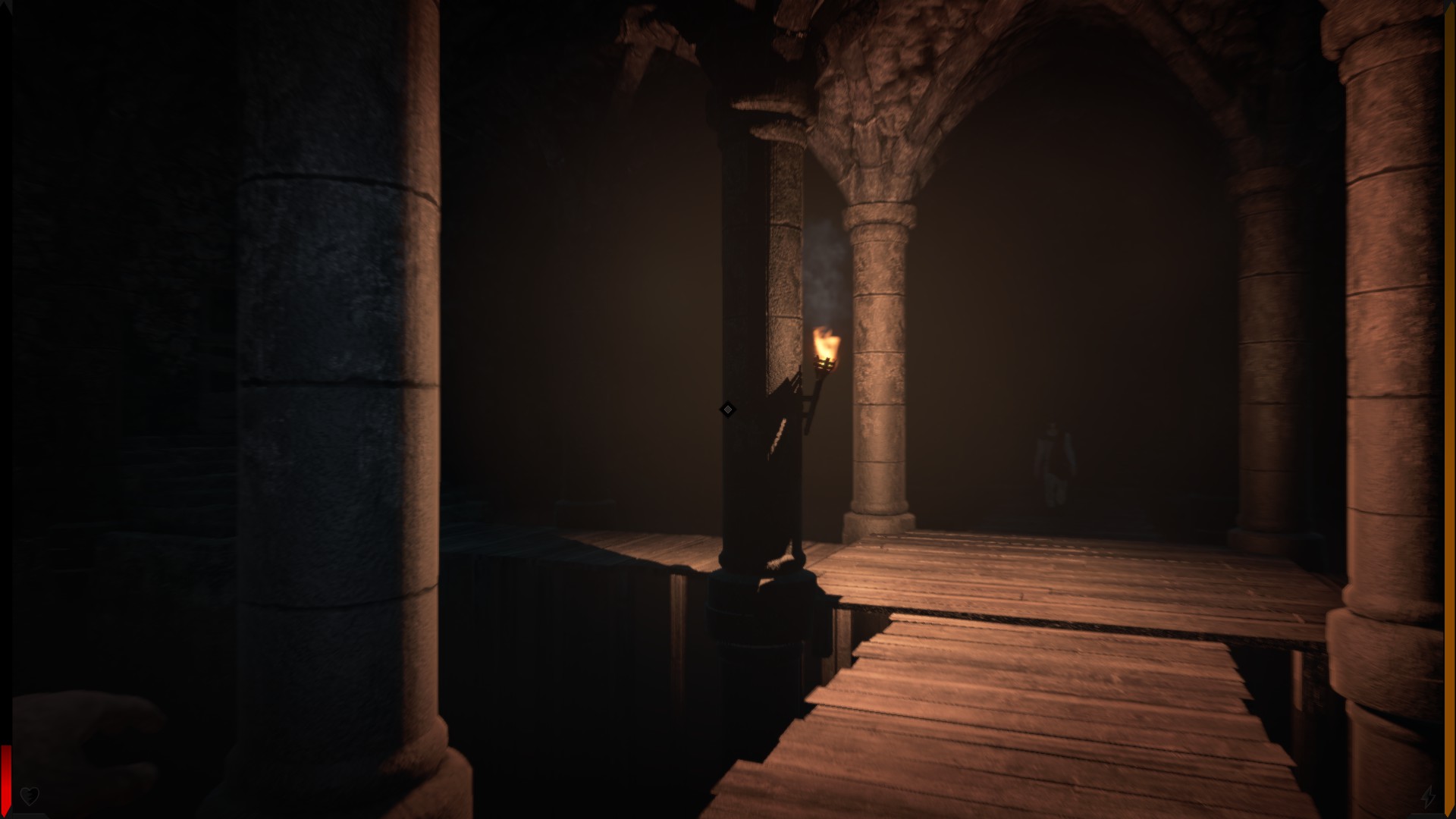
In Training Mode players will be able to hone their combat skills utilizing the strategic melee mechanics.

Elium: Prison Escape – Stick To The Shadows

Through the many shadows lurks patrolling guards ready to stick you the moment you’re discovered. Though busted out of prison by an unknown prisoner, you’re quickly abandoned and left alone to fend for yourself. However, as you make your escape through the procedurally generated dungeon, fellow prisoners may be found along the way and are able to help you in battle. These companions are helpful as the combat can be rather difficult, but not in terms of their AI skill sets, which are rather clunky and unresponsive. Setup as a mouse and keyboard only combat title, players not up to par with traditional PC gaming controls might want to hone their skills first.

The randomizing rooms concept is an excellent way to get to the point of what seems like an endless journey to escape prison. Upon death, players must start whichever level they died on from the beginning. The procedural process makes starting over much less painless, as players avoid trying the same path and discovering the same secrets in a repetitive pattern. While this particular form of gameplay offers better depth than most survival combat titles, there’s not much else to Elium.

Elium: Prison Escape
Elium provides a unique randomized experience with procedurally generated levels upon every restart.

Players are also able to dabble a bit in changing their equipment and other item inventory options. Though, my time with Elium revealed problems with the inventory system – more than anything else in the game. Searching through chests and downed guards provides similar inventory swapping from beloved RPG titles, *but too often did guard armor, boots or belts turn directly into a prisoner shirt, netting me around half a dozen useless shirts after only a couple of kills.Ā  While weapons and other items typically didn’t fall under this error, the cost of negating protective equipment makes staying alive more difficult; but only if you’re looking to mercilessly slash your way through the campaign.

*Edit: This bug has since been patched by the developer.

Escaping The Bugs

Elium: Prison Escape is a straightforward combat experience with a big helping of stealth. With almost no story, the first person dungeon crawler is purely for those looking to engage themselves in a tactical sword fighting title as they lurk through the shadows. Each level is filled with more procedurally generated rooms throwing constant surprises for the first few hours of gameplay, but soon after it begins to feel a bit stale and is often frustrating. Glitches will also appear and frequently cause players to start the level over in hopes of negating the problematic errors.

Elium: Prison Escape
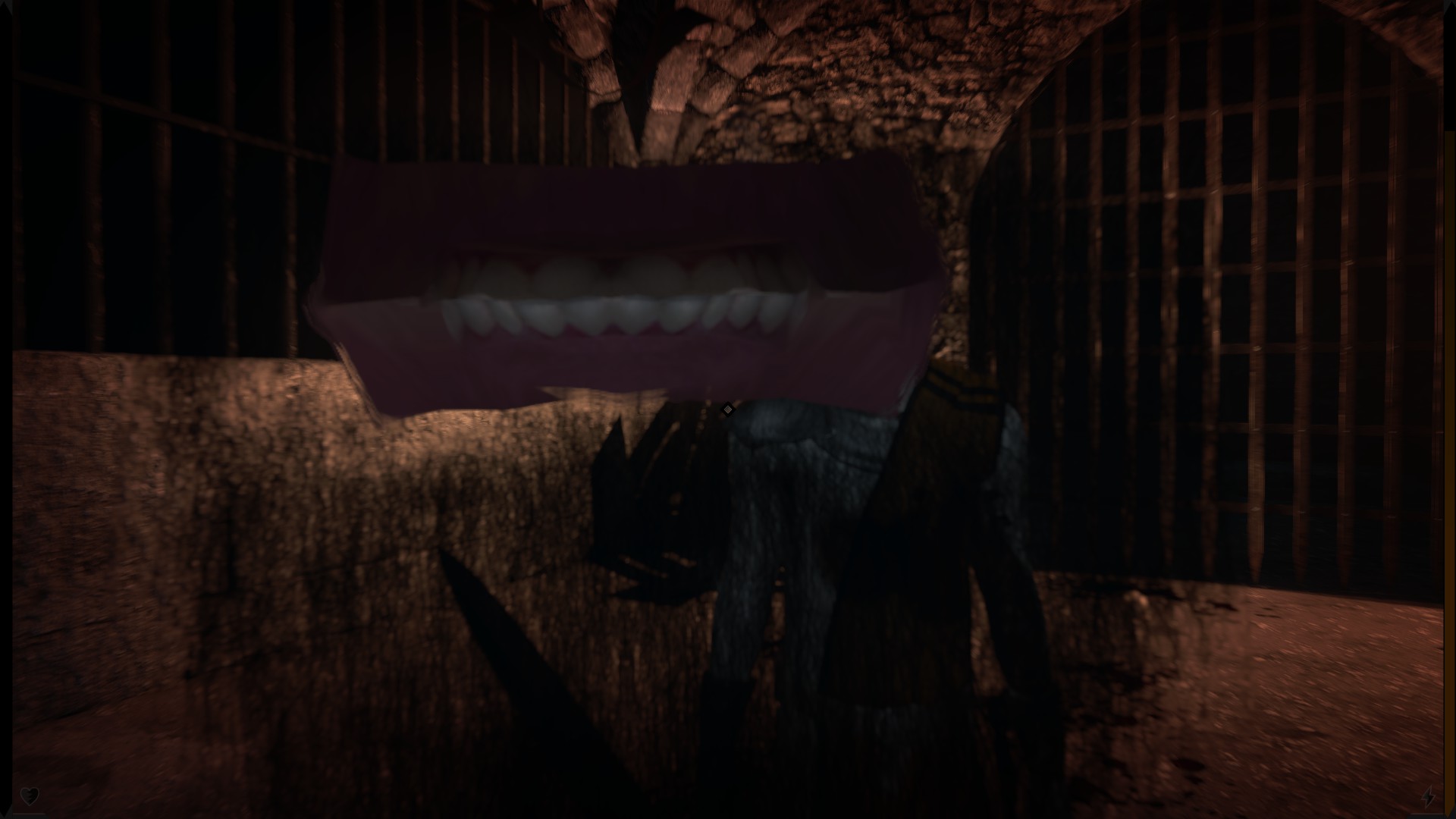
Though the gameplay can be challenging in a good way, some bugs will have players’ eyes appearing behind their teeth.

While the thrill of finding your escape route provides an initial exciting experience set in a gloomy medieval dungeon, Elium falls short as nothing more than a set of linear challenges. Though the randomizing levels add a certain sense of depth to the game and the combat can be a joy for tactical sword-swinging players, there’s still a fair share of bugs and tedious gameplay to work around.

Elium: Prison Escape isn’t a game-changer for the stealth action genre then, but it still manages to capture a dark and challenging experience that’s capable of entertaining at a mostly satisfying level.

Brawl

Brawl Review [Nintendo Switch] – A Gritty Bomb-Planter

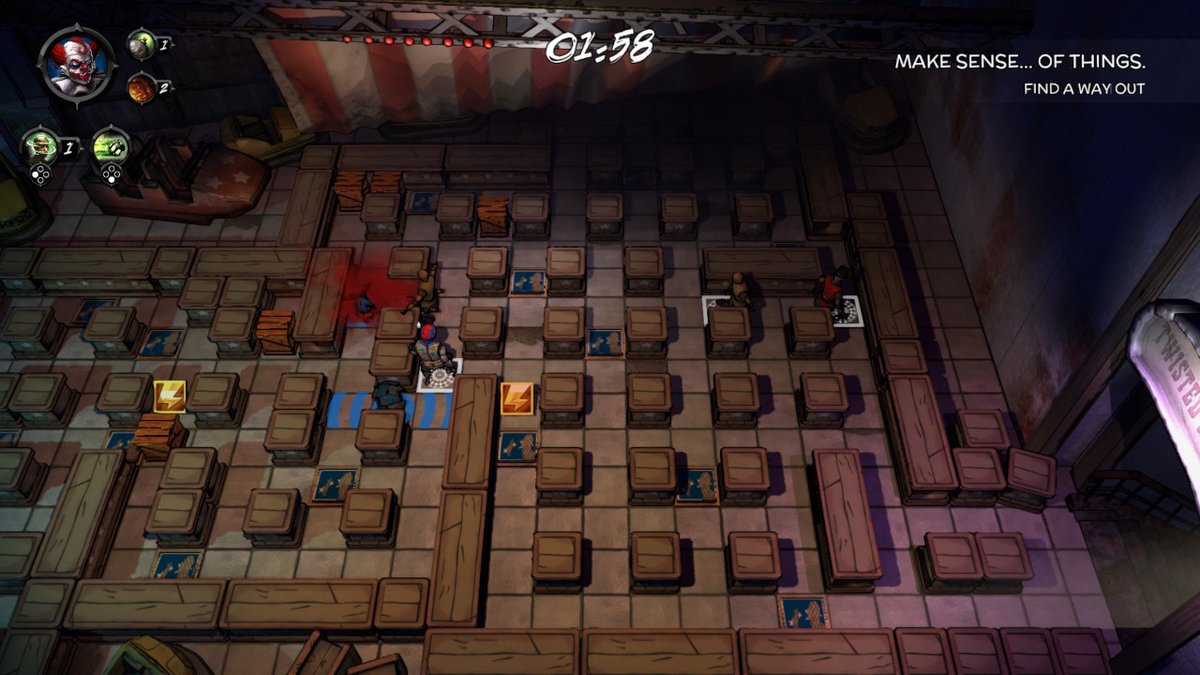
The bomb-planting, puzzle-solving action vaguely reminiscent of the iconic Bomberman series has found a new home in a dark and disturbing setting that surrounds the new Switch port – Brawl. Taking on the role of one of the gritty “heroes” like the dismembered test dummy or sad psycho clown, players find themselves amidst a deadly Emporium booby-trapped by the eerie narrator slowly guiding players to their doom. That’s, of course, only if they don’t manage to escape the grim deathtrap first.

By choosing one of the eight playable characters, players may then embark on the game’s main story campaign, which acts as the single-player portion of the game. Each level throws a handful of arenas at the character, each tossing in more obstacles and enemies to add to the difficulty. To nullify and/or defeat these enemies lies in your ability to plant bombs, as well as perform other useful special skills and abilities which are unique to each character.

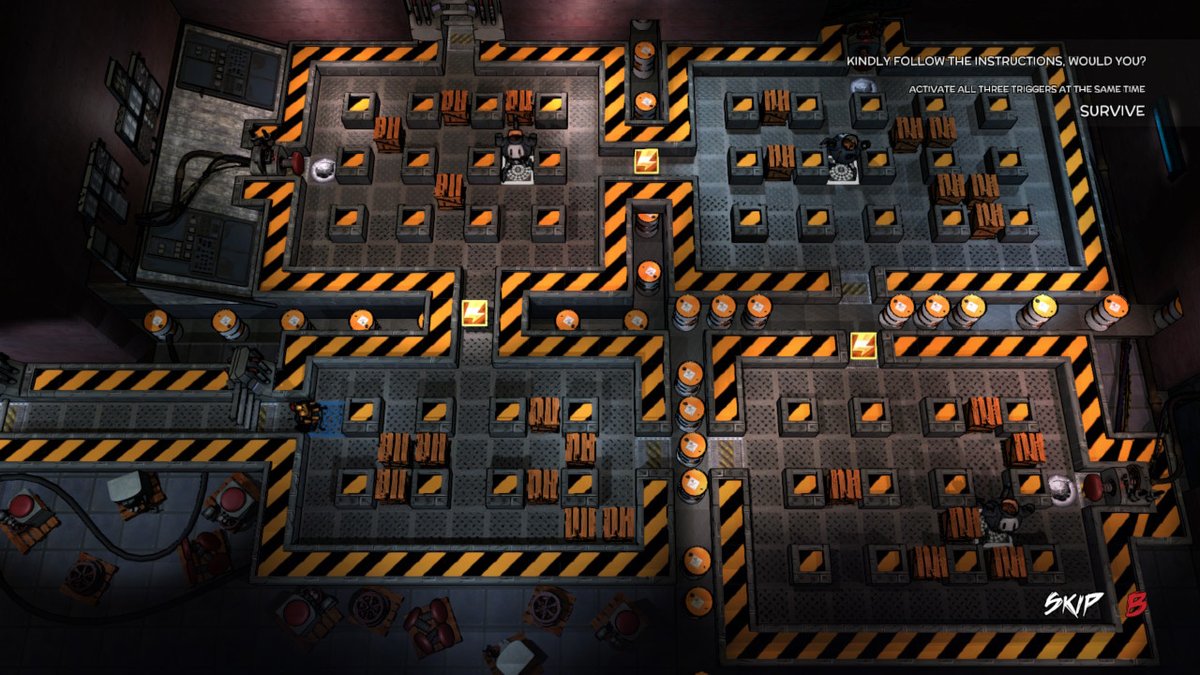
The arenas act like big mazes filled with both breakable objects like boxes, and immovable walls. All of the characters have the ability to place bombs to break through boxes and defeat enemies, but it’s what they can do with these bombs that makes them unique. Freezing them in place to stop their detonation timer, or sneezing a bomb clear across the area are a few examples of the special abilities held by each character. These special skills are limited in use unlike planting bombs, so players must use caution when relying on them. Along with the bomb countdown timer, players may also detonate bombs manually for more trivial challenges later in the game.

A Precise Bombing Affair

As you make your way through the levels, more and more enemies begin to appear, making the timing and precision increasingly important. To help with the difficulty curve, upgrades also appear when busting up the right boxes, or triggering the correct switches. Various upgrades include increasing your blast radius, adding more health or upping the amount of special ability uses you have. Finding the bomb power-ups gives you the ability to plant bombs, but the more you find and add to your inventory, the more you can place down at one time. Bombs come in unlimited quantities once you’ve picked up a bomb icon, but until power-ups are found only one can be placed at a time.

Brawl
Maps are filled with plenty of deathtraps, barriers and most importantly, power-ups and abilities.

When finding health packs wyour health is already full, players may also add up to two more extra lives, and the use of a powerful ability, like causing a massive explosion surrounding a large area around your character. These are primarily useful when engaging in arenas with tricky enemy movements and plenty of breakable boxes stand in your way. Trying to use the standard bomb attack to wipe out enemy forces can become quite tricky in the later levels, which is exactly where the various power-ups and abilities come into play perfectly.

Taking players through the story mode shows off the dark and eerie visuals presented in Brawl. Like a combination of Saw and Bomberman, players will be taunted by the narrator in Brawl, leading them ever-further into the maniacal maze of deathtraps and hordes of enemies. The sinister stills that act as cutscenes in between levels show more of the character’s distraught backstory as they venture closer to freedom outside of the gruesomely haunting Emporium.

Brawl
Each set of levels are different and are based on the 8 playable characters in Brawl’s story mode.

Bomb-arded With Competitive Modes

The play style of Brawl is unique when compared to the sparse ‘bomber’ style puzzle genre. Each of the eight characters not only has their own special skill and ability but a different set of levels for each as well. The story mode alone is packed with content, dozens of levels across all eight unlockable characters. On top of the main campaign is the co-op, competitive and practice modes.

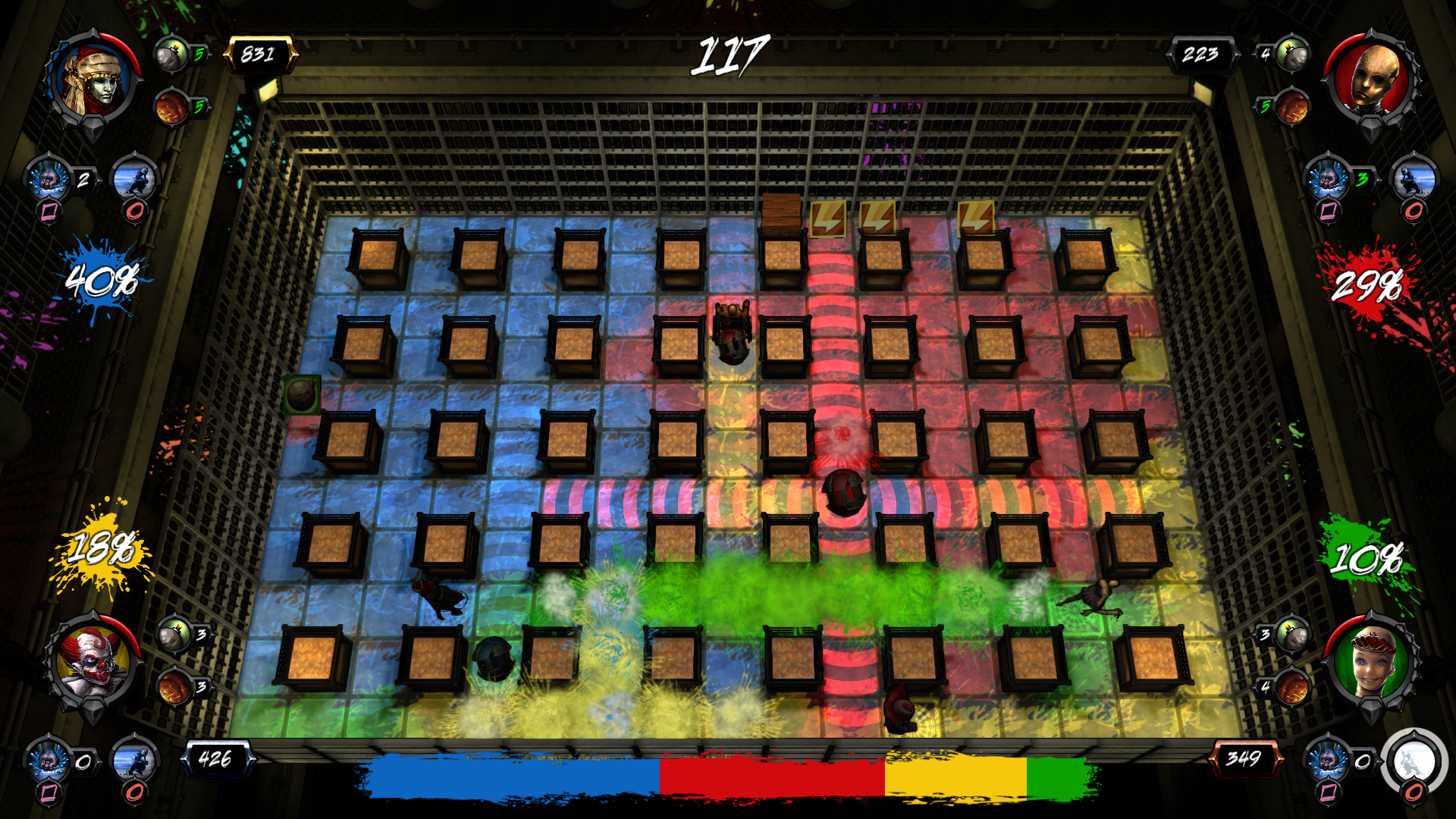
Multiplayer is filled with even more bomb planting challenges, including 4-player deathmatches, survival mode which pits players against non-stop waves of enemies, two-player duels, Sumo which has players attempting to knock one-another out of each arena, and the unique Color Domination, which involves splashing colored paint across the board against up to three other players. While the single-player content is crammed with inventive level designs and power-ups, these multiplayer modes really create a party style atmosphere in Brawl, something that moulds perfectly with the Switch console.

Brawl
Color Domination has players facing off against one another attempting to blast the most paint color across the arena.

Though Bloober Team‘s Brawl brings a familiar style of puzzling challenges to the table, there’s plenty of unique assets that separate it from the rest. While newcomers to the genre may find themselves trapped and killing themselves more than they’d care for, the ability to adapt and conform to the game’s complex and strategic approach to bomb-planting, puzzle-solving carnage comes naturally through the game’s in-game progression across the story. An excellent pick up for all those co-op party doers, this doom and gloom bomber is a simple, yet tactful addition to the Switch’s indie game library.

Z-Alert

Survival RPG Z-Alert announced for PC and Mac

A brand new survival sim from indie developers Cedar Games – Z-Alert – has been officially unveiled for release on PC and Mac. The announcement for the debut title from the young development team also came with a rather intriguing trailer to help shine some light on the unique zombie apocalypse title:

The non-linear 2D survival title places players into a world full of the living dead, and a resourceful approach to make it through the night alive. Players will have the ability to craft resources found when scavenging, recruit team members both online and offline, as well as building their own shelter to stay safe from the hordes.

Here are the takeaways from the announcement of Z-Alert:

  • The world of Z-alert provides an engaging story full of characters, with unique world generation and surprise encounters to ensure each playthrough is as fresh as the first.
  • Players will be able to discover useful resources to craft new items and construct a shelter, as well as embark into the dangerous forest for valuable loot.
  • Played in both single-player and online, players are able to recruit a team of companions to help take on the dangers of the world outside your shelter.
  • The unique 2D visuals present a non-linear approach with plenty of simulation, survival and RPG elements like customizing character skills and perks to keep Z-Alert rich and engaging.

The survival experience is completely customizable, granting players the ability to change combat from automated fights, classic 2D combat or tactical isometric battles.

More on the debut title – Z-Alert – from Cedar Games is bound to surface later in the year as the game sets to release on PC and Mac. Stay tuned.

Jumpdrive

Jumpdrive Review [PC] – Jump Into The Nothingness Of Space

Space sims come and go but have never really opened players up to the extreme amount of vastness and endless amount of stars that dot our galaxy. Formerly known as Paragon, Jumpdrive offers the chance to set out into the great unknown and make discoveries at your own pace. Unfortunately for players short on time due to their busy schedules of adult life, school and work, Jumpdrive offers little to no shortcuts when traversing through the stars in this gutsy space exploration title. After all, the universe is infinite.

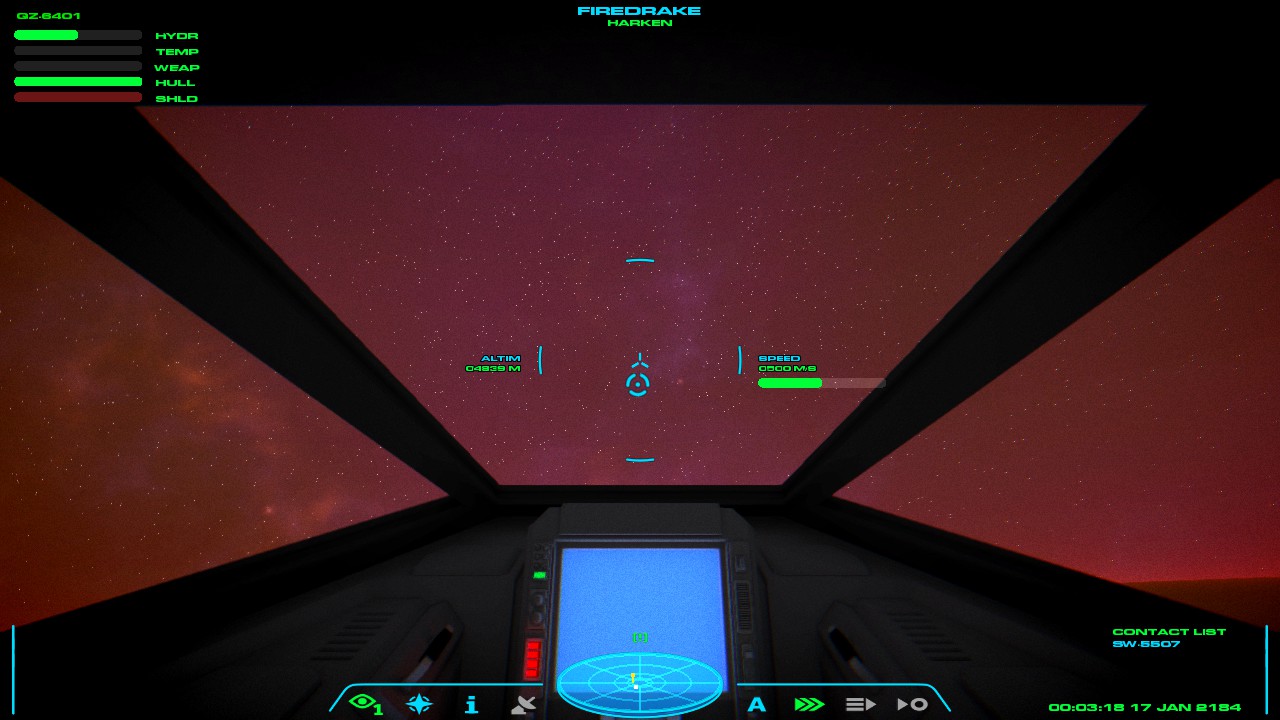
Sitting in the cockpit of your space shuttle, the instructions of the controls read across your screen. The basic click controls are simple enough, but then the game cuts you loose. The objective of Jumpdrive? Not sure… Explore? Sit in your speeding shuttle and wander through the stars for countless hours hoping to come across a unique discovery, or perhaps engage in an epic space battle? We can only hope so, anyway.

Jumpdrive
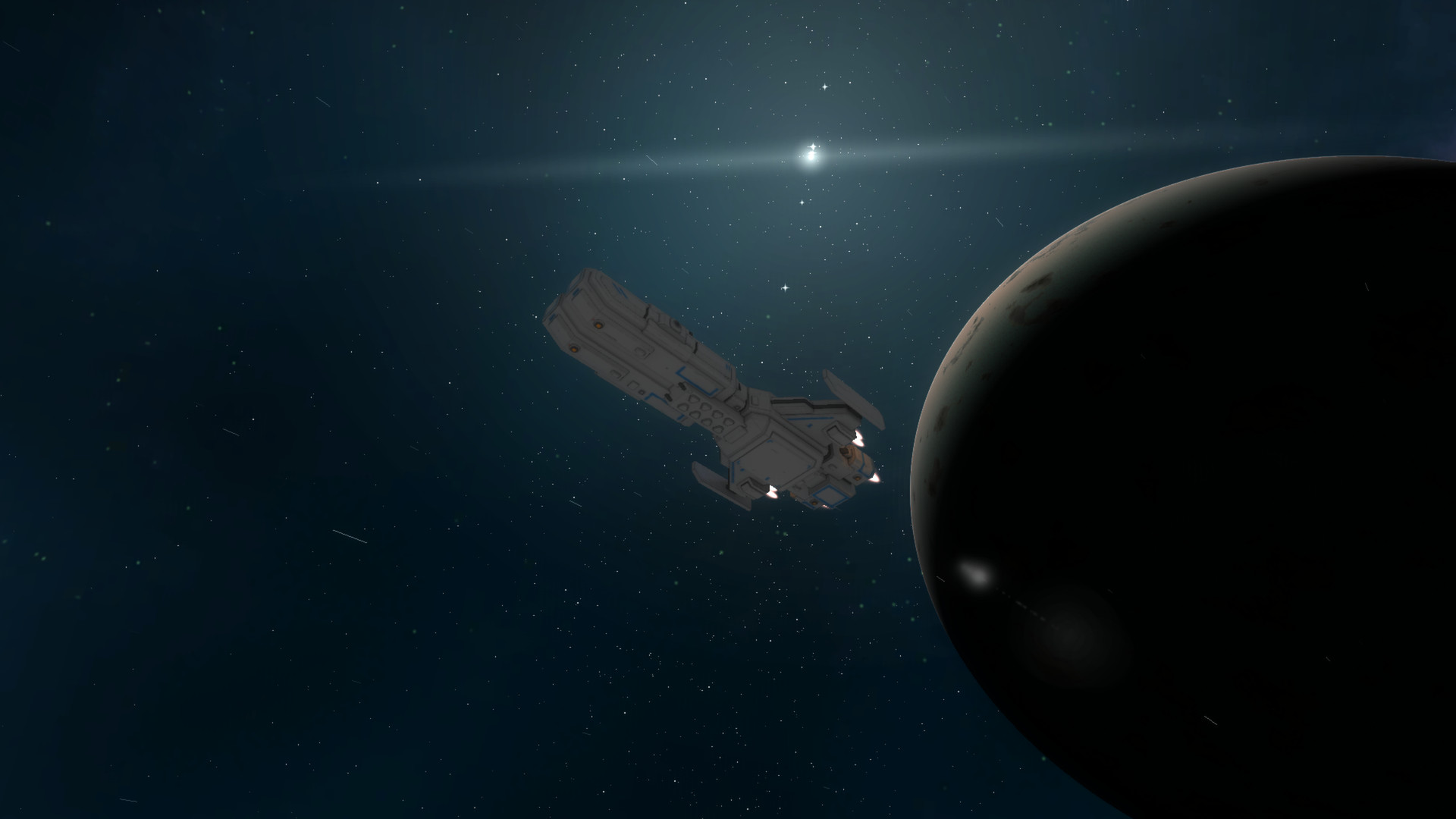
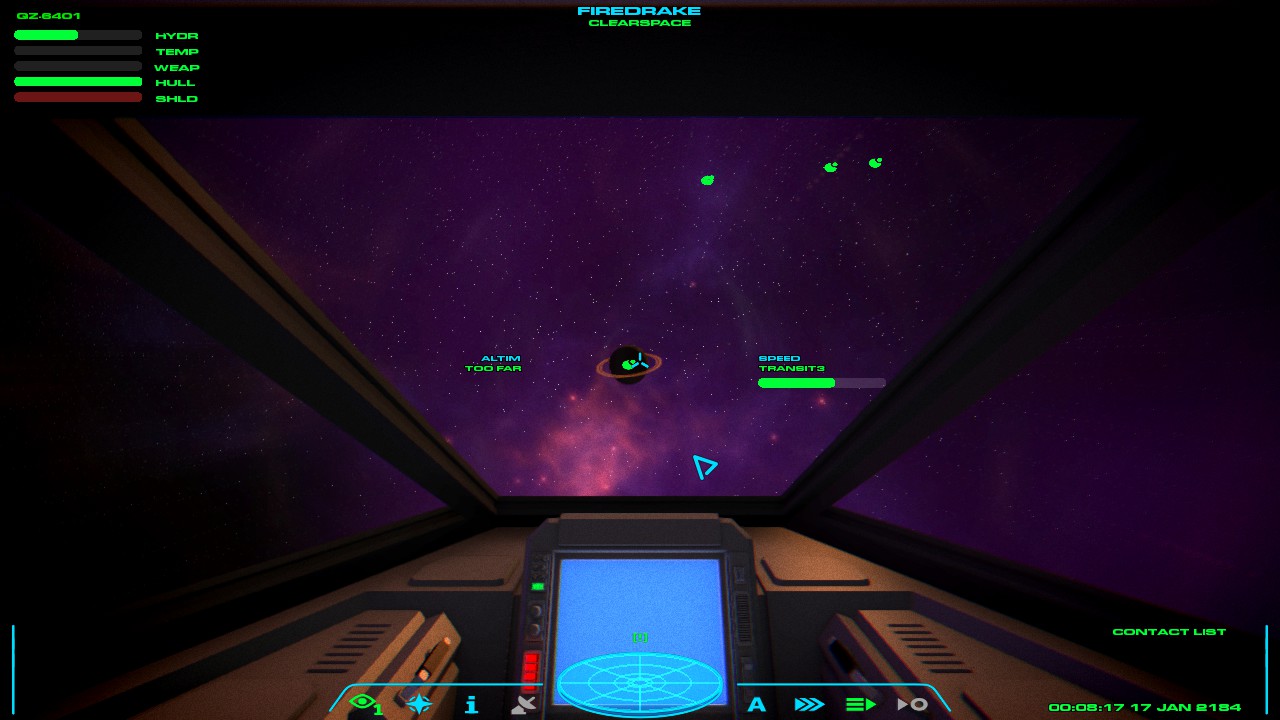
When pulling out of the gravity bubble that surrounds planets, players may then switch to an increased mode of travel, Transit Mode.

The purpose of Meteoric Games‘ Jumpdrive is to simply explore the enormous procedurally generated galaxy, picking up on anything that may cross your path. Distant missions with handsome rewards, long space expeditions to the other side of the galaxy, or fending off your shuttle from enemy ships, anything seems possible in Jumpdrive, but at what cost? The sheer amount of the universe seems endless as the developers express the ability to explore through a galaxy brimming with millions of stars and planets. Let me be perfectly clear: Jumpdrive is for the hardcore space exploring enthusiasts. Pouring in tons of hours to travel great distances, slowly immersing yourself while travelling in real-time to your next objective is an average day when living out your astronaut dreams in Jumpdrive.

Jumpdrive: How Do You Travel Through Space?

There are three basic controls when travelling from one objective to the next. When still in one planet’s gravity bubble, players may only use Maneuver Mode. This mode acts as the slowest mode of transport, used to travel around planet surfaces within the gravitational field. After exiting the planet’s atmosphere, or gravitational bubble, players may then engage in Transit Mode. Used for quicker travel between planets, Transit Mode will most likely be your main mode of travel.

Jumpdrive
Many green blips mark your objectives and other planets/space stations throughout the systems.

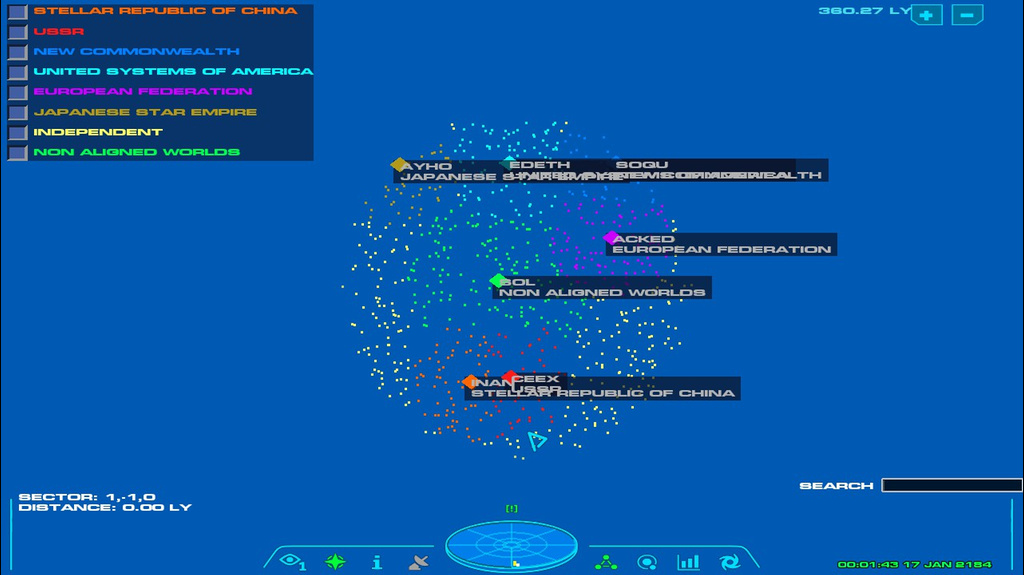
Last but not least, Jump Mode is the hyper speed setting to jump between different solar systems. Though a much quicker method of travel, players will need to meet the specific item requirements, e.g. hydrogen stock, as well as a jump drive installed on their shuttle. The three modes are accessed simply by clicking on one of the icons next to your radar at the bottom of the player’s screen, offering for quick and easy switching between modes on the go.

Objectives are found when following the green blips that are scattered throughout the open universe. Either when docking on planets or space stations, completing the various missions given to you will net cash rewards, which can be used to purchase upgrades or even new ships. Though from what I experienced with my time in Jumpdrive, the missions are standard fetch and grab or destroying enemy ships, but the amount of ground (or space) to cover is remarkably vast. I can easily see one losing most of their day spent completing a handful of objectives spanning across a number of different solar systems.

Jumpdrive
Plot your destination on the galactic map and use Jump Drive to travel between solar systems.

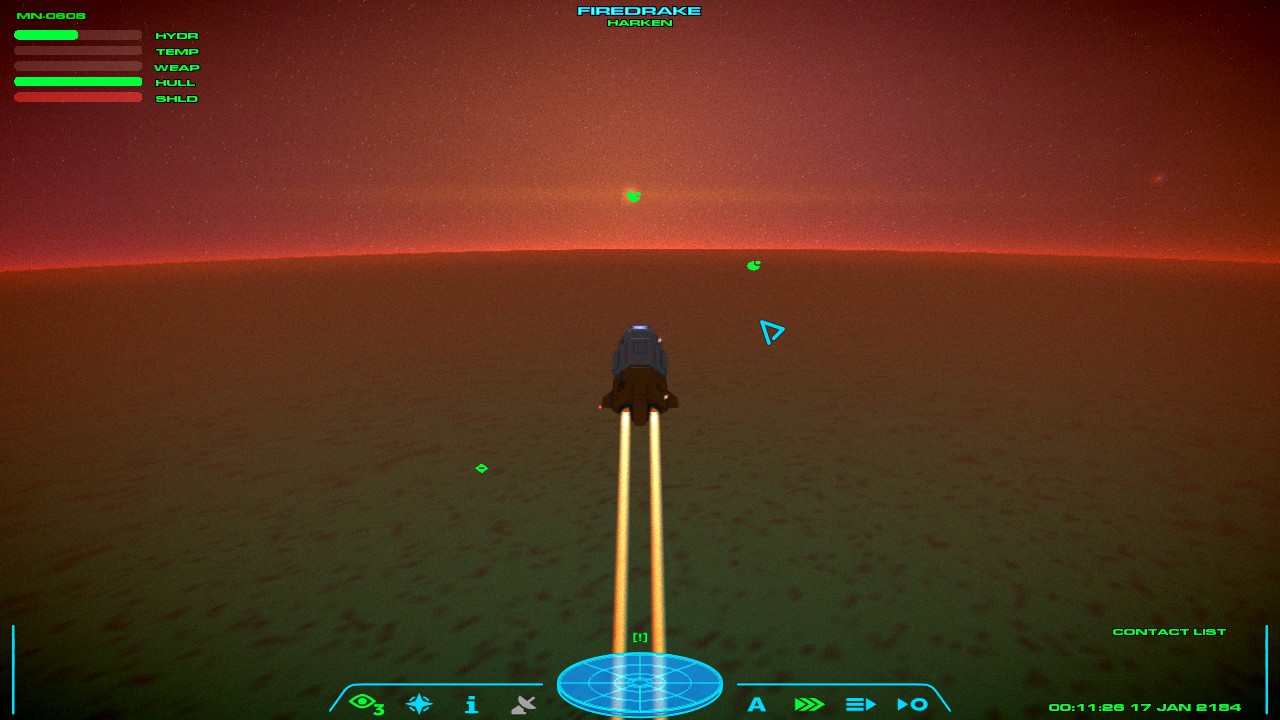
While Jumpdrive is astonishing in size, the visuals are no conversation starter. Though there’s not much to gaze upon when deep in the blackness of space, planet surfaces and textures when in sight are grainy, bleak and boring. I suppose that’s not exactly the point of Jumpdrive but it still manages to break some of the immersion when descending into a planet’s atmosphere. Still, the view of colors amidst the star-dotted sky is a sheer joy to stare at while endlessly drifting into the void.

So Much To Do, So Little Time

So, what is the point of Jumpdrive? Is there any storyline, plot twists or ending in sight? The answer is yes, but it all comes down to the player involved. With Jumpdrive you are offered a chance to create your very own space legacy in this massive space explorer, and take it for as long as you please. Players have a completely open experience from the start, whether they’re engaging in combat, completing various mission objectives, purchasing new ships and parts, or simply exploring the vast darkness of space.

Jumpdrive
The distant visuals of space are breathtaking in Jumpdrive, adding a thrilling sense of depth to the enormous space sim.

Jumpdrive is an impressive space sim, but if one thing is certain, it only appeals to a relatively small audience. Those hindered by time and, in my case, an ever-growing backlog of other titles, simply won’t find it in their schedule to continue on this vast journey through the great unknown.

Tesla vs. Lovecraft

Tesla vs. Lovecraft Review [PC] – Electrifying Arcade Mayhem

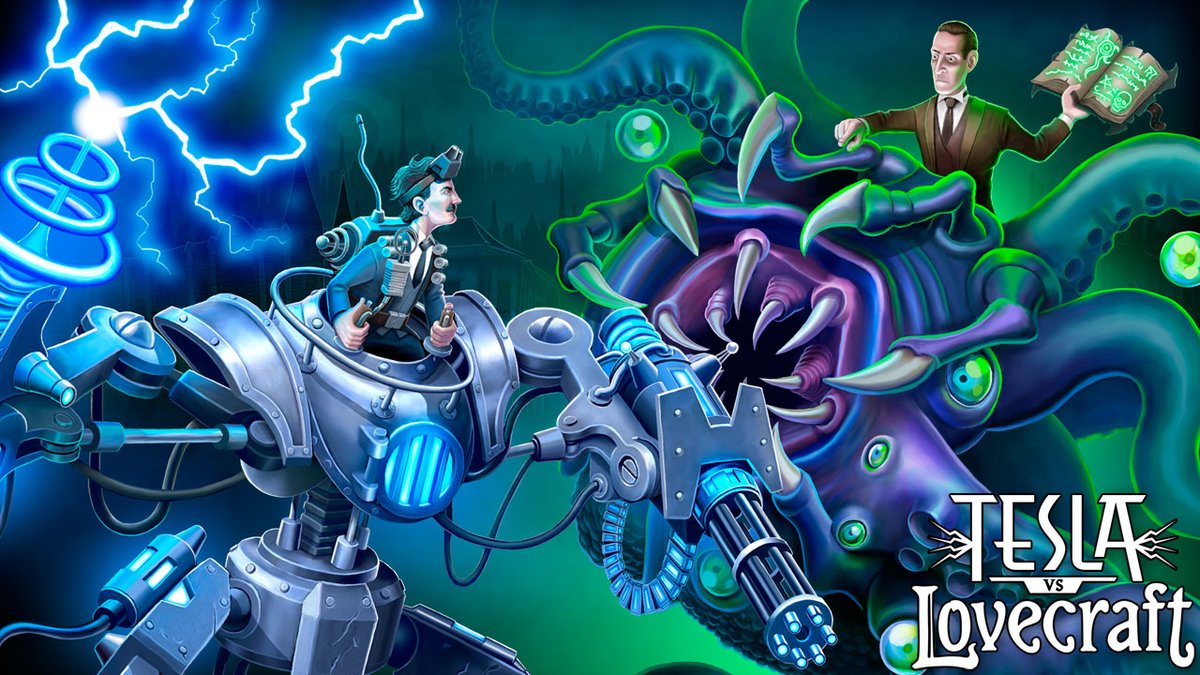
The unimaginable technological feats of Nikola Tesla combined with the sci-fi horror fiction of H.P. Lovecraft10tons has added yet another adrenaline-fueled twin-stick arena shooter to their already impressive library. Strap on your teleport pack and prepare to face off against Cthulhu, and its many hordes of demonic enemies in this monstrous arena shooter – Tesla vs. Lovecraft.

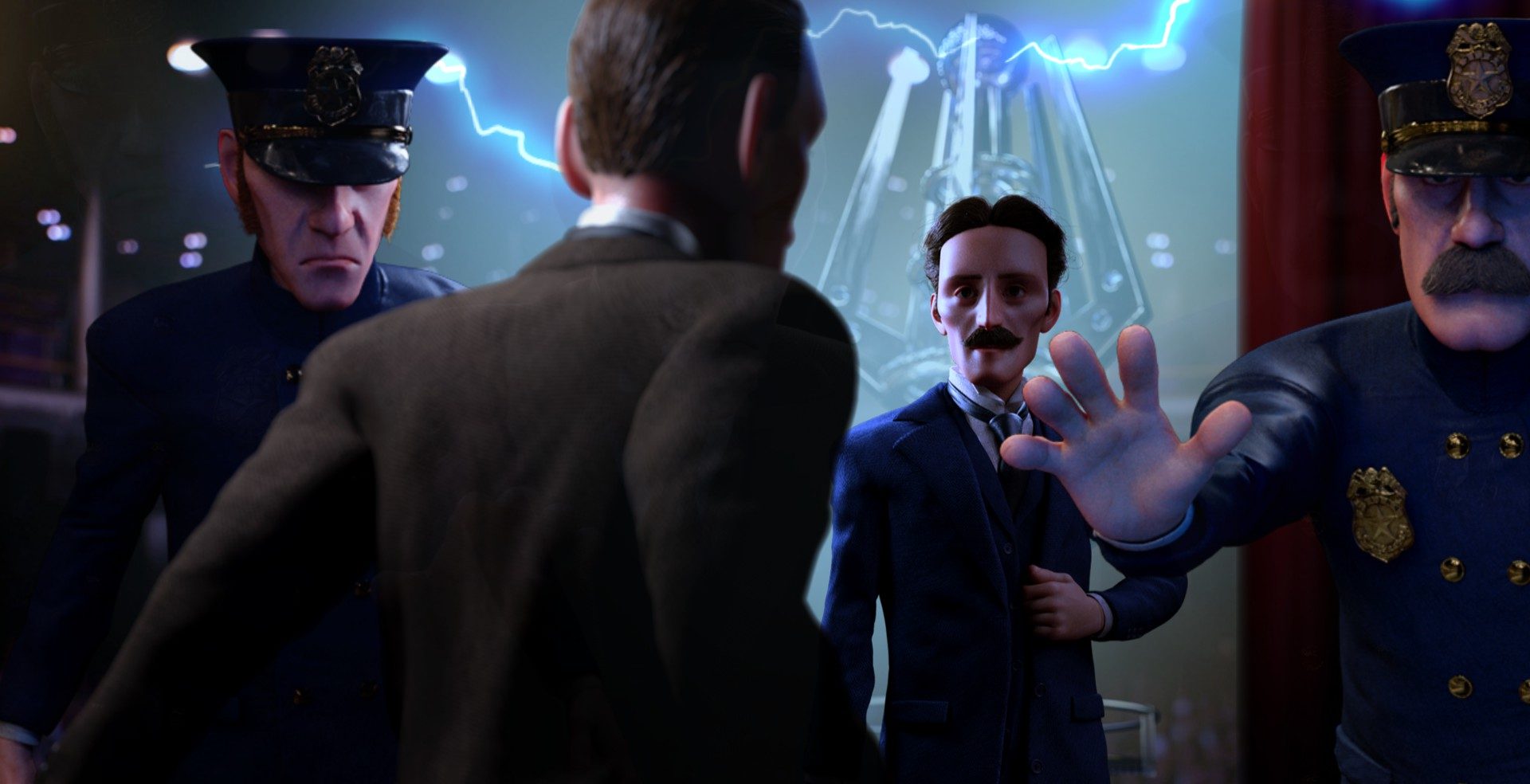
As you take on the role of none other than the electric-wielding genius, Nikola Tesla, the minions and fiendish creations of the coveted sci-fi writer, H.P. Lovecraft, begin to take over the world. Distraught by Tesla’s electric inventions, Lovecraft takes matters into his own hands to stop Tesla and his inventive actions. Harnessing the power of his very own creation, Cthulhu, Lovecraft unleashes waves of nightmarish monsters on our hero Nikola, but that won’t stop Tesla from fighting back.

Tesla vs. Lovecraft
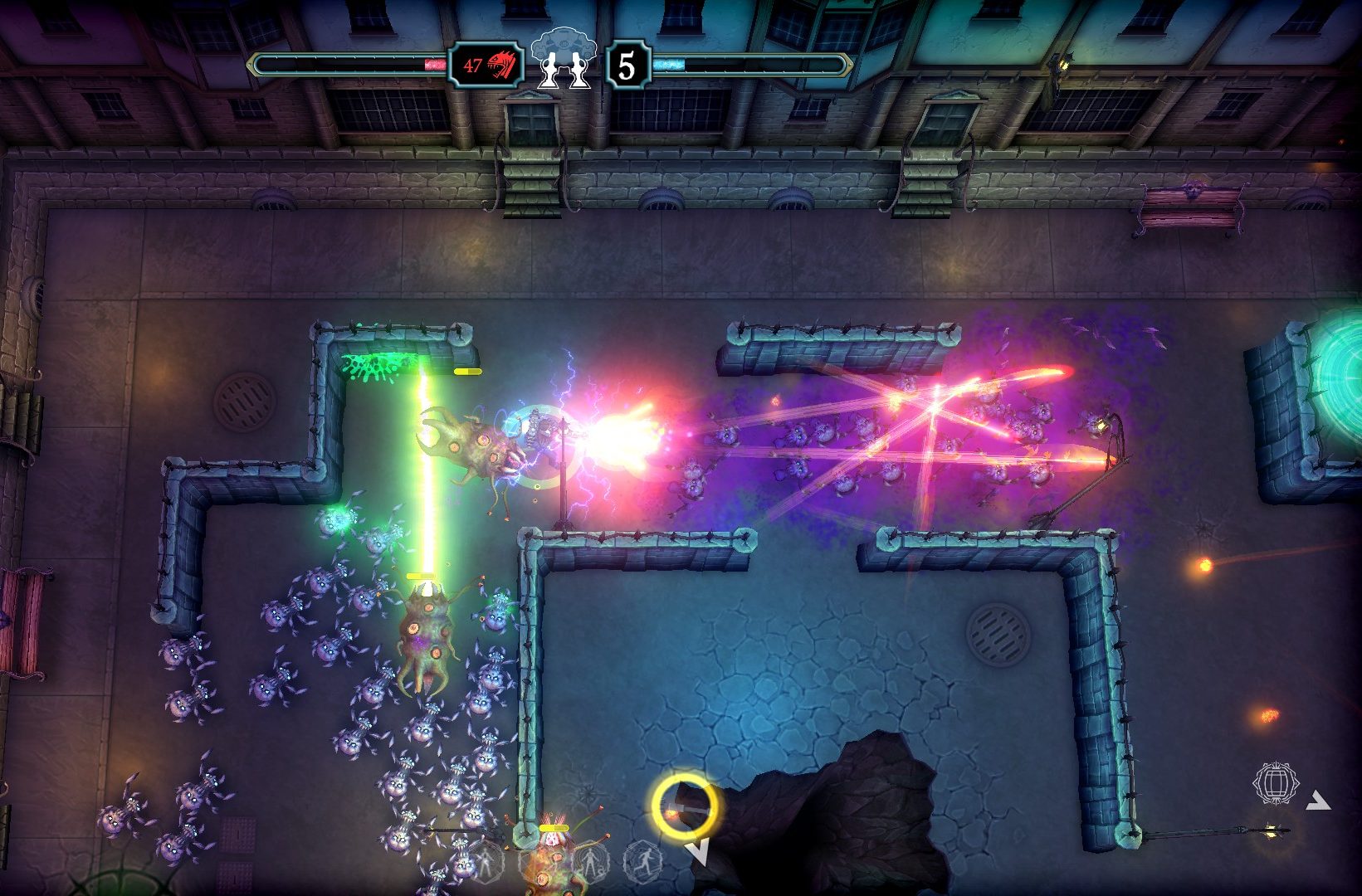
Angered by the inventive actions of Nikola Tesla, H.P. Lovecraft unleashes his army of monsters on the world.

The story of Tesla vs. Lovecraft is completely out of this world, but that only strengthens the energetic gameplay that backs it all up. This top-down arena shooter is as exciting as it is weird, providing players with a wildly entertaining experience from start to finish. From blasting through walls of grotesque monsters with Tesla’s super-sleek electric weapons, to running a full assault in the powerful Mech suit, this twin-stick shooter is as intense as they come. Tesla vs. Lovecraft is smooth, addictive and keeps pushing the player forward by unlocking satisfying perks and abilities to take your reign to the highest degree.

Tesla vs. Lovecraft: Sci-Fi Shooting Mayhem

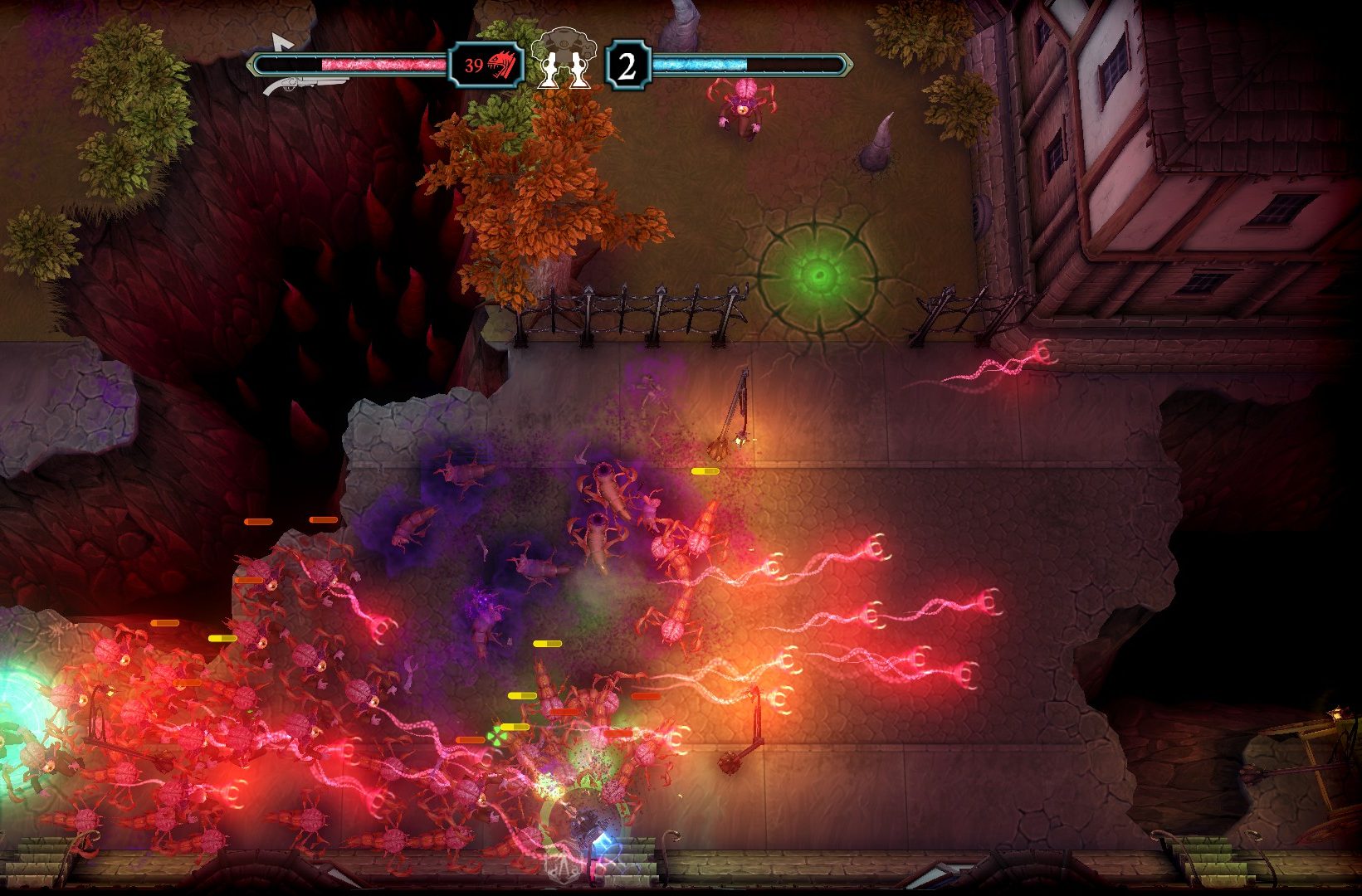
Throughout the many stages of the campaign, Tesla’s main goal is to wipe out all enemies in each level. The enemy bar at the top of the screen not only shows the player how much longer the stages are, but how many enemies are currently on the map as well. Once you hit an empty bar and zero enemies left, the stage is complete. It’s a simple concept that’s worked for decades across the popular genre, but Tesla vs. Lovecraft – like all unique indie titles – has what it takes to gracefully stand out from the crowd.

Tesla vs. Lovecraft
Enemies swarm in this ultimate twin-stick shooter – Tesla vs. Lovecraft.

The levels in Tesla vs. Lovecraft offer a wide arrange of size and obstacles in various settings across the campaign. Some act as small areas barely filling up more than the entire screen, while others have the players running through alleyways, courtyards and city streets, searching for the next player-boosting perk. Along with primary weapons and abilities, players will keep things interesting with other consumables like health packs, armour shields and unique enhancements like fire bullets. After a few short training levels, the player is granted the Quantum Teleport backpack which allows Tesla to teleport a short distance, as well as through most fences or other obstacles. Now all Nikola needs is some weaponry.

Tesla vs. Lovecraft creates a unique arcade feel with unlimited ammunition rounds, a vast array of awesome weapons to pick up, mighty abilities and character customizing perks. Weapons like pistols, revolvers, gauss rifles, shotguns, repeater shotguns and the beloved Tommy Gun are found throughout the levels during your campaign. Randomly spawning during each stage, players are only permitted to carrying one weapon at a time. Running over a different weapon than you have will automatically replace your current weapon, often leading to unwanted weapon switches.

With the intense action and splashing array of colours flooding the screen, it’s easy to lose sight of what’s what. The developers have done a substantial job in colour-coding items based on whether they’re weapons, power-ups or mech parts, but there may still be some visual confusion that slightly hinders the overall gameplay. Whether or not you accidentally swap a quick-firing Tesla blaster for a slow 2-shot shotgun, you still have a few options to keep the action in your favour.

Tesla vs. Lovecraft
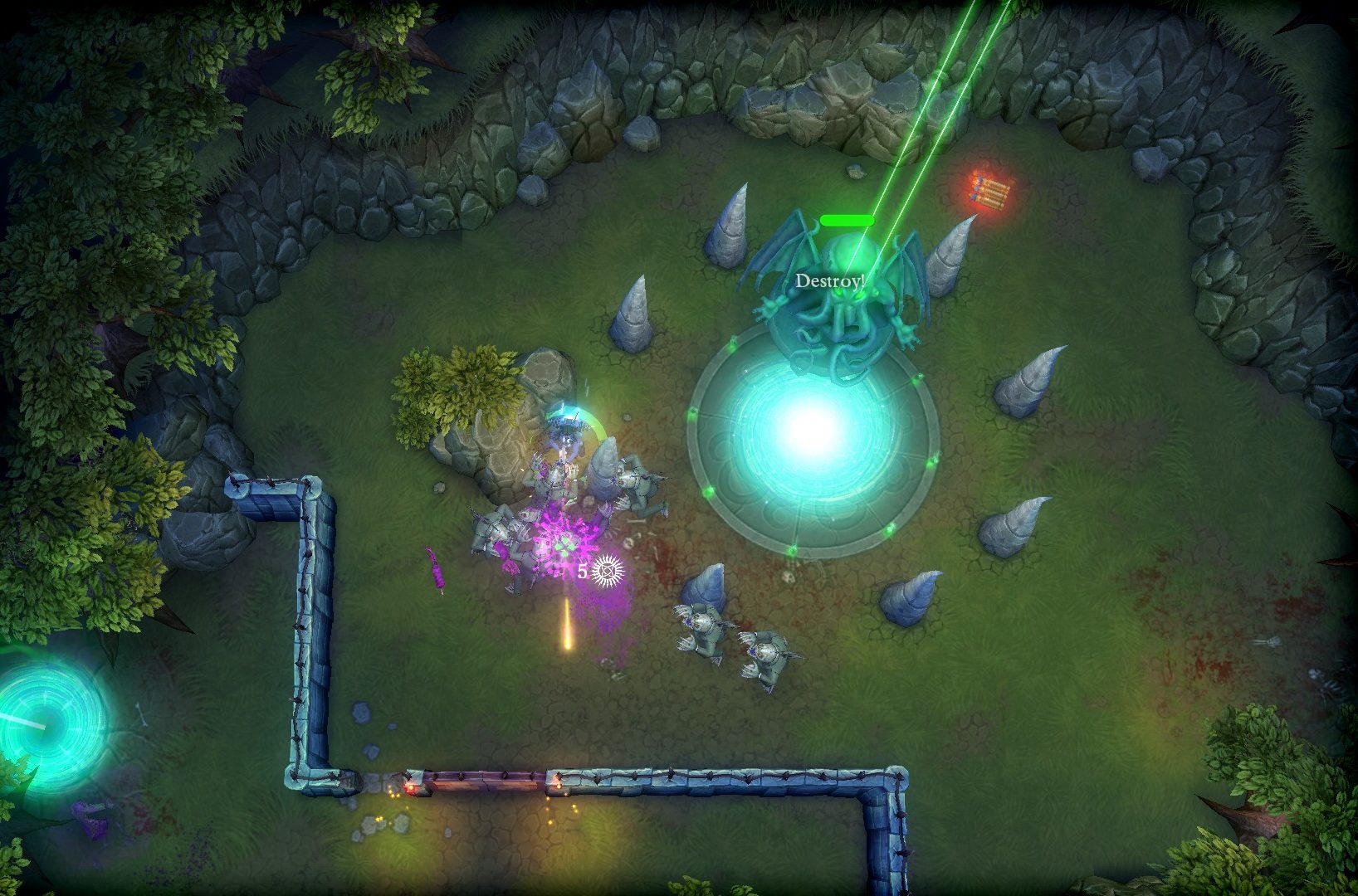
Along with the many waves of enemy monsters, Cthulhu statues will appear which endlessly spawn enemies until they are destroyed.

Strengthen Tesla’s Skills With Unique Perks and Abilities

Along with the many weapons to find and unlock throughout the game, players also have many perks and abilities to trigger. In typical arcade fashion, every stage starts Nikola Tesla off at level one, growing through the ranks as you mercilessly slaughter Lovecraft’s army. Leveling up comes quick, as stages typically last anywhere from 20 seconds to a few minutes, as players wipe out hundreds of enemies in one stage. As you gain each new level, players are awarded a perk point and may choose between two randomly selected perks.

Increasing movement speed, adding bullet penetration, a higher chance of acquiring more power-ups, or unleashing lightning strikes every few seconds are only a few of the perks available throughout the game. Starting off with a limited number of perks, more are unlocked as you progress further in the game. Gaining anywhere from 5-10 levels in one stage is an average run in Tesla vs. Lovecraft, allowing players to enhance Tesla in unique ways for every single level.

Tesla vs. Lovecraft
Unique perks help develop Tesla across each level, like having the ability to ricochet bullets off of walls.

On top of the useful and semi-permanent perk to choose from, powerful abilities also come into the mix when fending off the hordes of Lovecraftian nightmares. Spawning randomly in each stage, much like the standard weaponry, players may only equip one ability at a time. However, unlike standard weapons, these abilities are capable of dealing massive amounts of damage to the many waves of enemies. Using a massive sword to slash through a thick crowd of enemies, unleashing a flurry of static shock, or an AoE nova attack act as some of the unique abilities found in each level. Not similar to the unlimited ammunition found with primary weapons, abilities have a limited number of uses, making for more strategic actions.

Lay Out Some Carnage With The Mighty Mech Suit

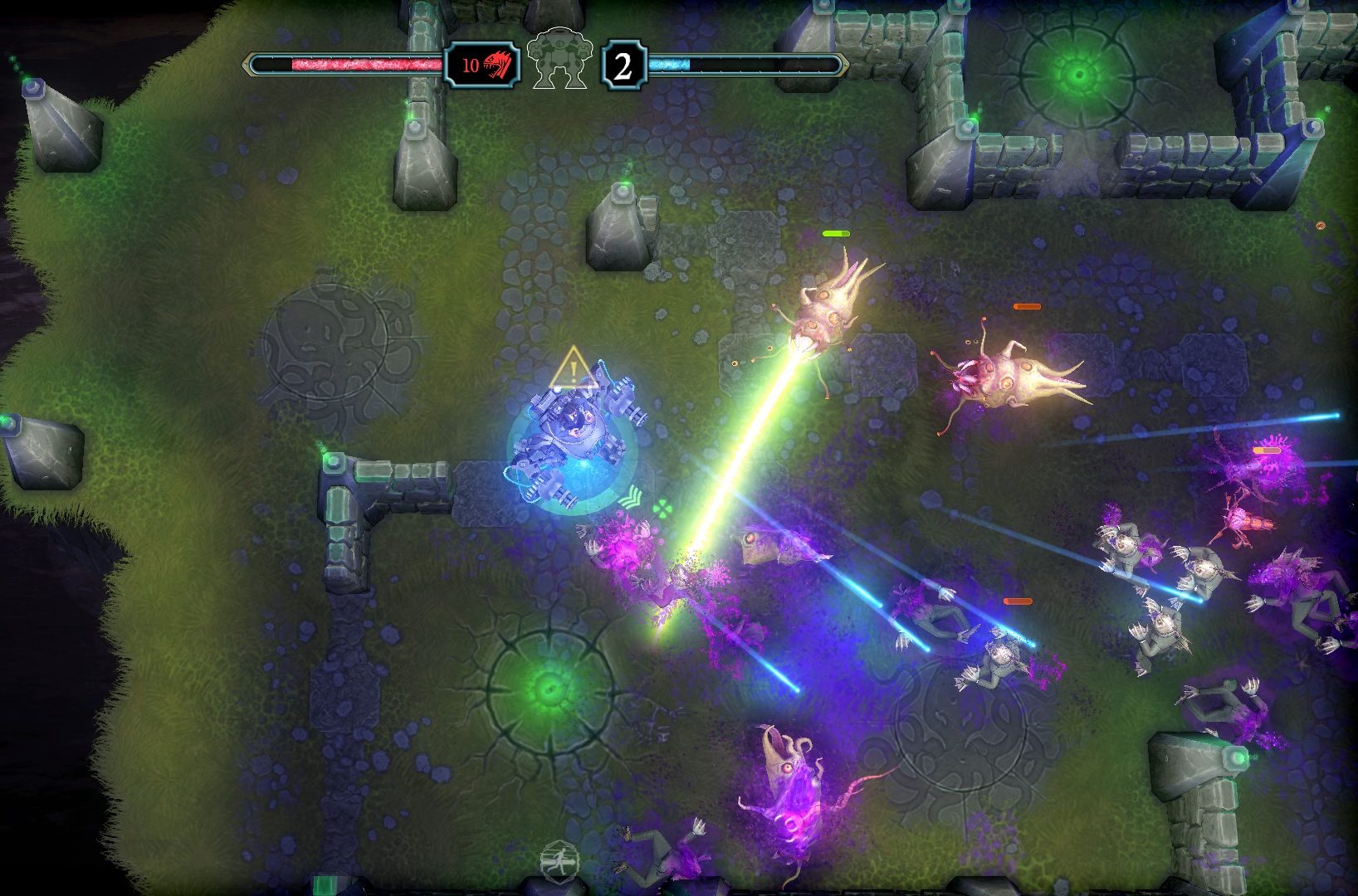
With all of this talk about unlimited ammo, character developing perks and game-changing abilities, these are nothing when compared to the deadly and outrageously fun Mech suit. Invented by none other than Tesla himself, this Mech suit is the ultimate table turner. Once unlocked – which is relatively early in the game – players will start each round with the assaulting Mech suit intact. After about 10 seconds or so, the Mech suit explodes into six pieces, all scattered throughout the stage. Once players pick up each part, the rampage is back on for another 10-or so second run, or until the Mech takes enough damage.

The Mech suit is not only extremely powerful but all-too satisfying as well. While firing the duel cannons works perfectly fine against the many waves of monsters, walking through them and crushing walls and barriers bring the carnage to a maximum level. It’s easy to get carried away once the Mech suit is engaged, effortlessly wiping out any helpless monster standing in your path.

Tesla vs. Lovecraft
The Mech suit is the ultimate weapon for slaying an enormous amount of monsters quickly.

Tesla vs. Lovecraft is a rampage inducing, action-packed sci-fi arena shooter that stands tall amongst titles of similar stylings. With the unique perk and levelling system, smooth controls, one-of-a-kind story, devastating abilities and Mech suit, 10tons graciously hands over an experience of science and horror like no other game has before.Ā Throughout the game’s many, many levels available through three different areas, plenty of monster slaying, Mech-suit-smashing mayhem awaits at your fingertips in this latest twin-stick arena shooter.

Hellblade: Senua's Sacrifice

Hellblade: Senua’s Sacrifice Review [PS4 Pro] – A Brilliantly Haunting Experience

With the ever-popular action adventure category of video games becoming more and more saturated throughout the years, developing teams are finding new ways to push the envelope for the repetition-riddled genre. After making a name for themselves with titles like DmC: Devil May Cry, Enslaved: Odyssey to the West and Heavenly Sword – Ninja Theory is back with another gripping action experience; but doing so by tackling the dark and merciless journey of a Viking warrior, aided by her haunting curse of psychosis and mind-rotting visions in Hellblade: Senua’s Sacrifice.

Hellblade: Senua's Sacrifice
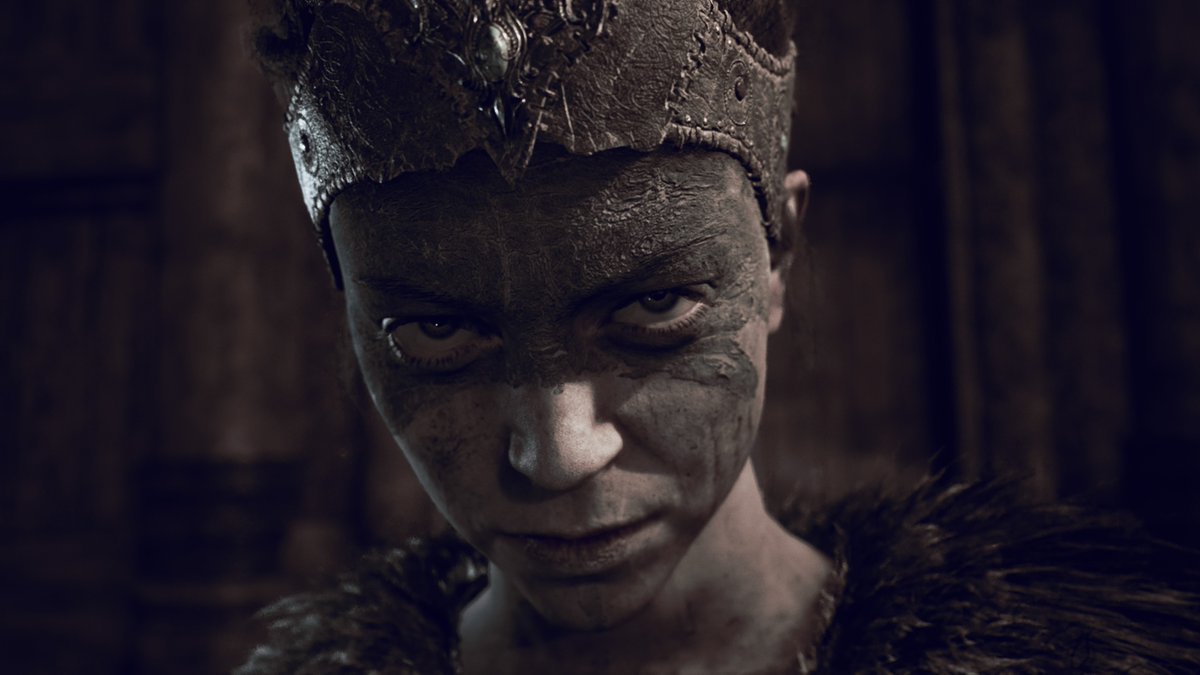
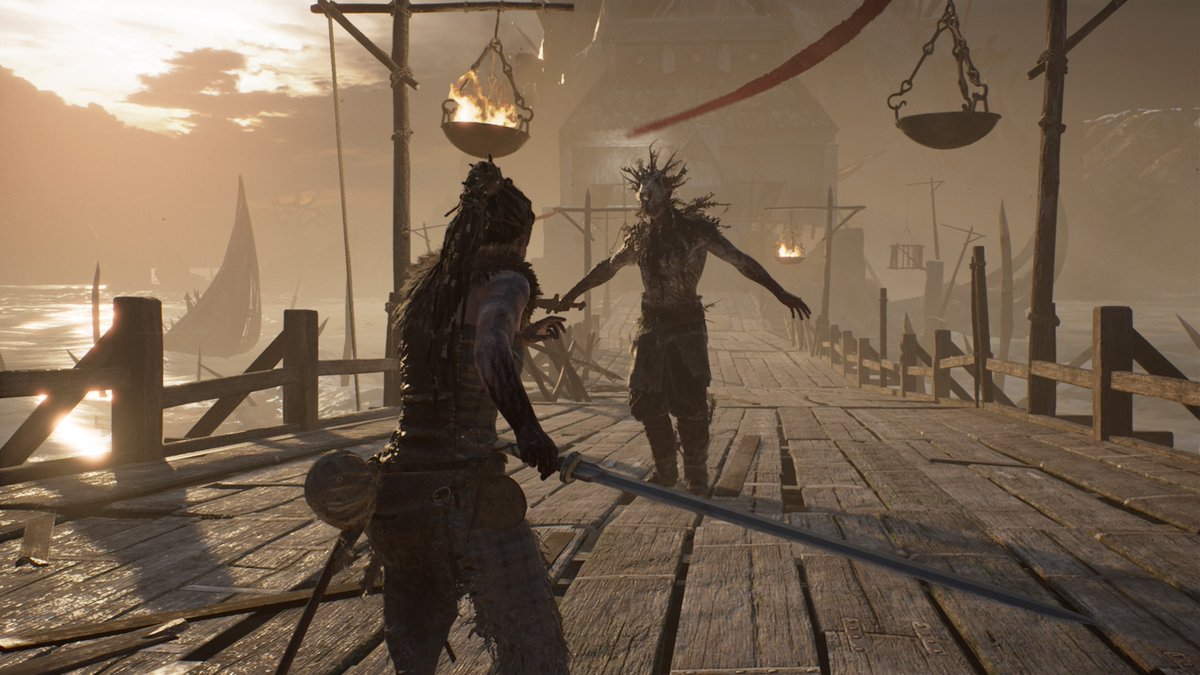
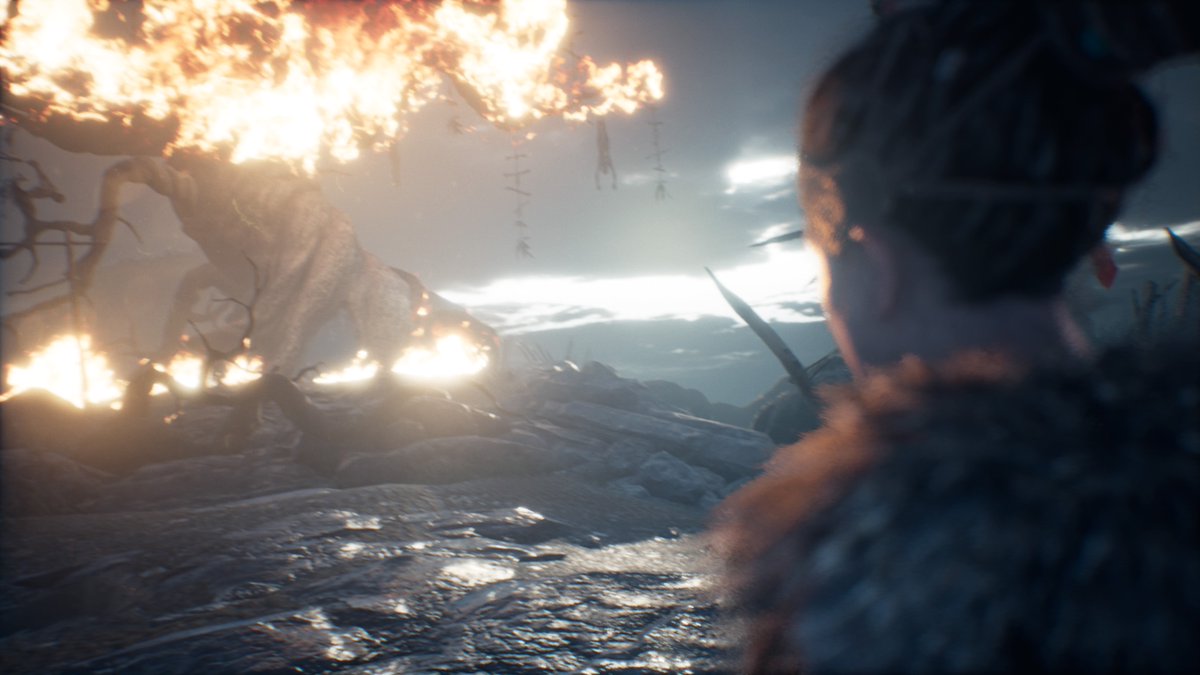
Playing as the Viking warrior – Senua – you’ll embark on a disturbing journey to the depths of Helheim.

The path of Senua is a violent and disturbing one, bringing to life the realism of psychosis and interpreting what it’s like perceiving an alternate reality from what’s right in front of the player. The team at Ninja Theory did their research regarding this mental disorder, and it shows dramatically. The entire run-through of the 7 hour or so long campaign is brimming with haunting whispers, flickering lights and distant movements, ever pushing the twitching reality of Senua’s chaotic, and broken mind.

Hellblade: Senua’s Sacrifice – Fighting the Curse of Psychosis

The game is extremely linear, following a given path of intricate puzzle-solving and staged combat experiences. The dark story of the Viking warrior and her quest to Helheim to bring her loved one back to the living is as endearing as any love story, but permeates with evocative dialogue, enveloping sounds and troubling imagery. The puzzles featured are innovative and unique to the story of Hellblade, but add a much-needed sense of depth to the overall gameplay. If not for the ever-present puzzles to solve, the staged combat doesn’t quite fill Hellblade with sword swinging hack ‘n’ slash battles like other titles from the Ninja Theory catalogue.

Hellblade: Senua's Sacrifice
Throughout Hellblade players will be faced with brutally grotesque monsters in the staged hack and slash combat.

As you begin your journey to Helheim, the grave voice narrates over your slow trek to one new area after another. Hellblade is fueled off the drawbacks of psychosis. The constantly shifting reality of the scenery surrounding Senua is the source to figuring out the many puzzles, by either finding specific shapes scattered somewhere in the world, discovering and aligning segments of a symbol to create the full image or finding other discoveries hidden deep within the Viking world.

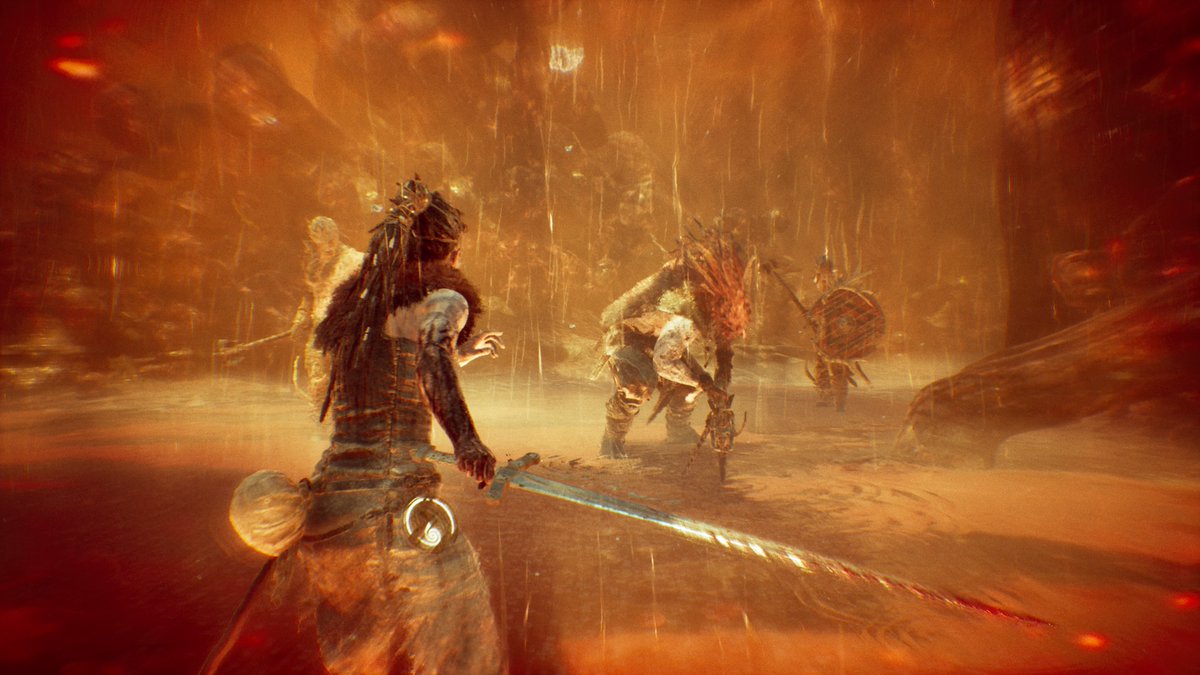
As you progress through, the combat in Hellblade will soon enough be introduced. Appearing in front of your from the ashes, enemies come in a handful of different forms. Quick acting sword swingers, shield-wielding brutes and giant warriors bringing down a heavy blade with extreme force are all part of the family of opponents found in Hellblade. Senua fights with a standard mode of attack, with both a light and heavy attack, a melee kick and, of course, the useful dodge technique.

Hellblade: Senua's Sacrifice
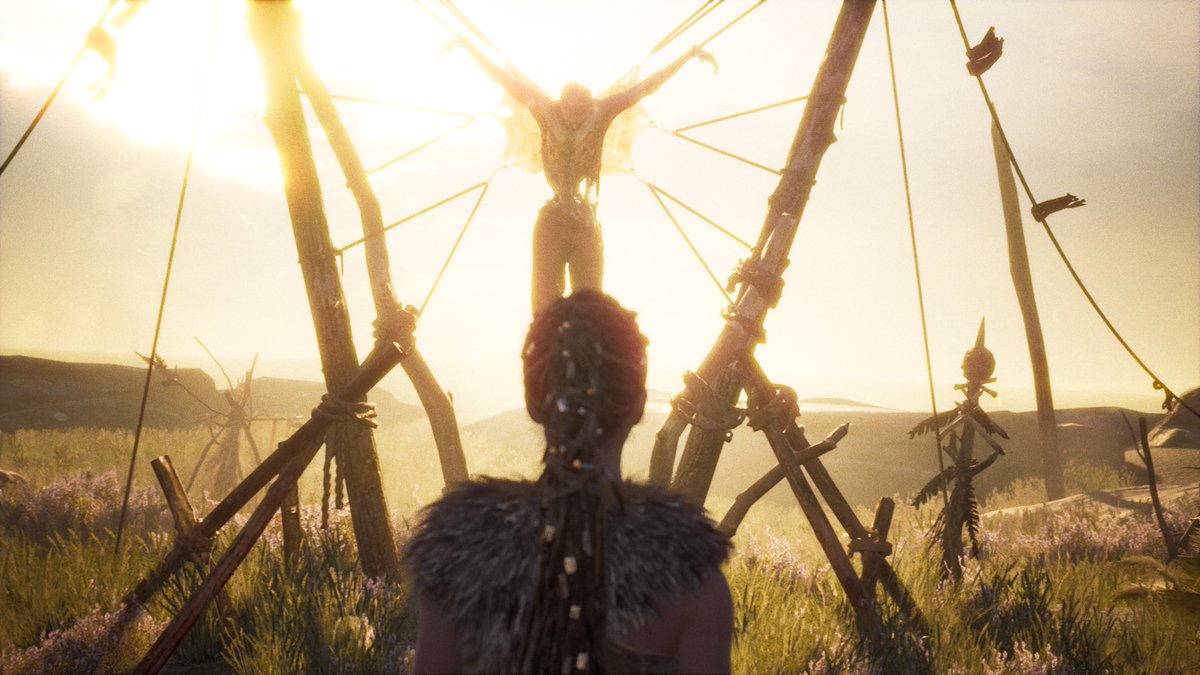
Illusions from psychosis haunt Senua throughout her deadly journey to Helheim.

Along with the defensive tactic to roll or sidestep, Senua is capable of blocking attacks with her sword, as well as performing a parry move to open up an attack window for extra damage. I mention this parry technique because the game simply fails to do so. What seems like an important combat ability, parrying is only discovered by the player when they time a perfect defence against an enemy’s attack. On top of the parry technique and other essential combat manoeuvres, Senua also has the ability to use her focus skill in combat.

Focus. Use Your Inner Eye

The focus skill while outside of combat allows Senua to “focus her inner eye” on important details and symbols throughout the journey. The focus technique is the primary ability to solving the puzzles that riddle Senua throughout her story. That being said, puzzle-solving is not the only occasion Senua will use this secret skill. During combat, using the focus skill – which is charged by connecting Senua’s attacks – will slow down time for a few moments, increasing the number of strikes Senua can land on her opponents. Though simple and unembellished, the what seems like shallow combat mechanics provide an incredibly exciting and thrilling experience when engaging in the vile monsters that come to take Senua’s life.

Hellblade: Senua's Sacrifice
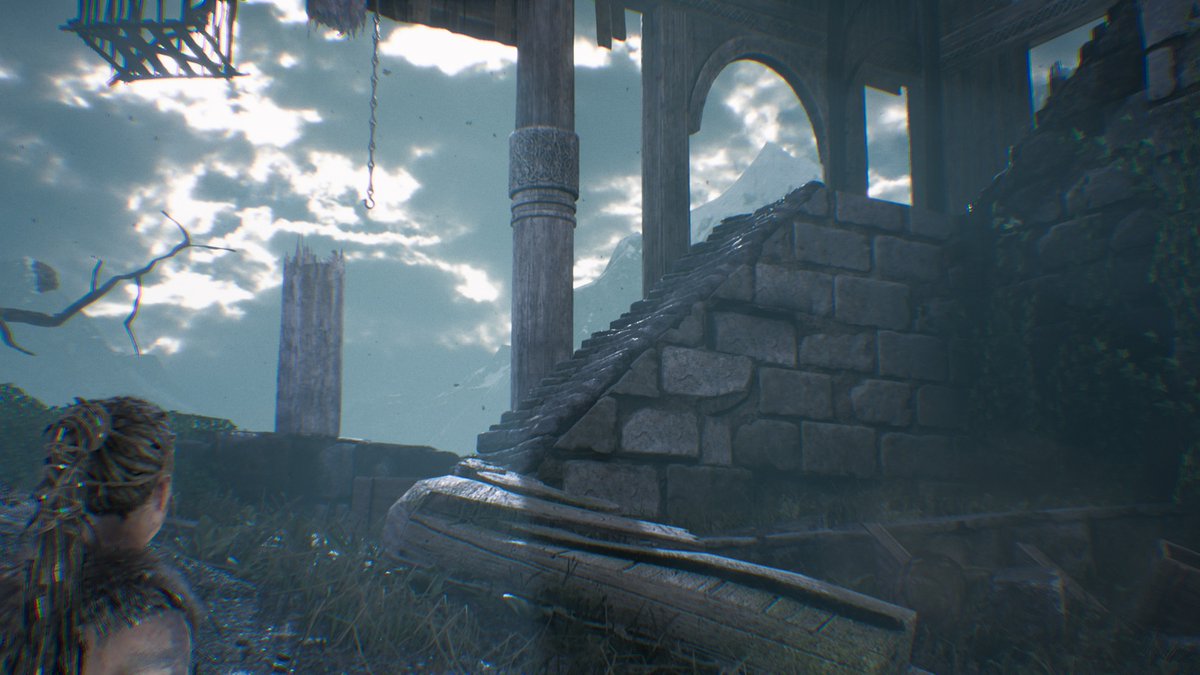
Using the focus mode, players will need to solve puzzles by paying close attention to details in Senua’s surroundings.

The curse that follows Senua throughout the game is both mental and physical. While the whispers and cynical chants eat away at her mental stability as she undergoes her harrowing journey, the physical torment endured from failing is just as disturbing. The lingering fear of losing your progress is a significant weight the player must carry as the black plague on Senua’s arm crawls upward with every player death. Once the webbing plague reaches Senua’s head, the game is over and the player must start from the beginning. Luckily, with a selection of combat difficulty, text-book staged combat and relatively short story length, starting over doesn’t seem as much of a chore as it sounds. Of course, there are some who claim that losing your progress never actually happens after numerous deaths, but is merely a bluff from the developers.

Hellblade: Senua's Sacrifice
Senua will often find herself against multiple enemies at once, but using focus in the midst of battle will allow a brief period of slowed down enemy movements.

Impressively Evocative

The winding and distraught road of Hellblade: Senua’s Sacrifice is something so powerfully stirring that playing through the linear campaign multiple times still feels fresh and thrilling. The isolated quest to defeat the horrors of Helheim, overcome the dark curse that haunts Senua and return her loved one back to the living is as enthralling as it is disturbing. The realism and time spent on providing an accurate reflection of what it means to wield the curse that is psychosis is impressively alone, not to mention the astonishing visuals and sound effects. Ninja Theory took their time with this one, and it shows, as Hellblade: Senua’s Sacrifice is easily one of the most memorable experiences from 2017.

Keatz: The Lonely Bird Review [PC] – Being Lonely Never Felt So Bad

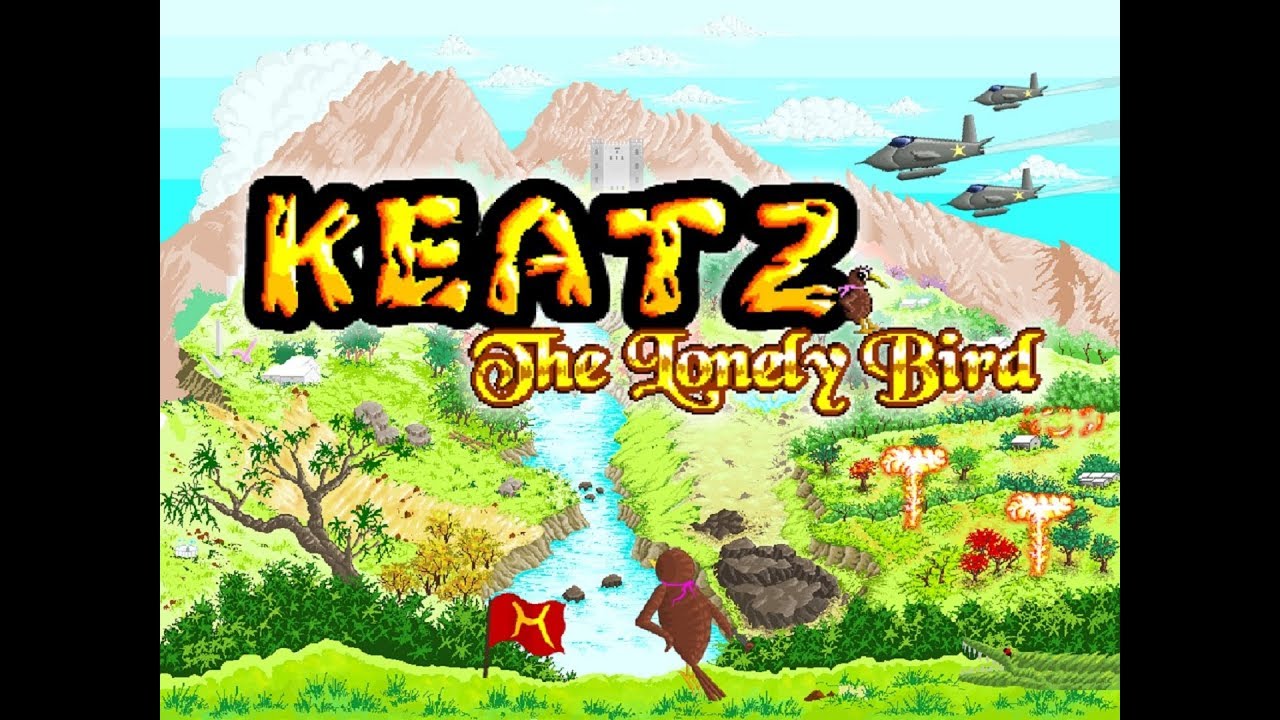
Unforgiving and unpolished, Keatz: The Lonely Bird is a dreadful story about a flightless bird whose species has been banned from the ungrateful bird community of the fowl nation – Heavens. Feeling down in the dumps and desperate to seek vengeance on all those who toss aside anyone not up to par by their standards, Keatz embarks on a 2D platforming journey riddled with flaws and errors to the core; but if dissected carefully, shows promise of much greater future endeavors from the young indie developer – Anamik Majumdar.

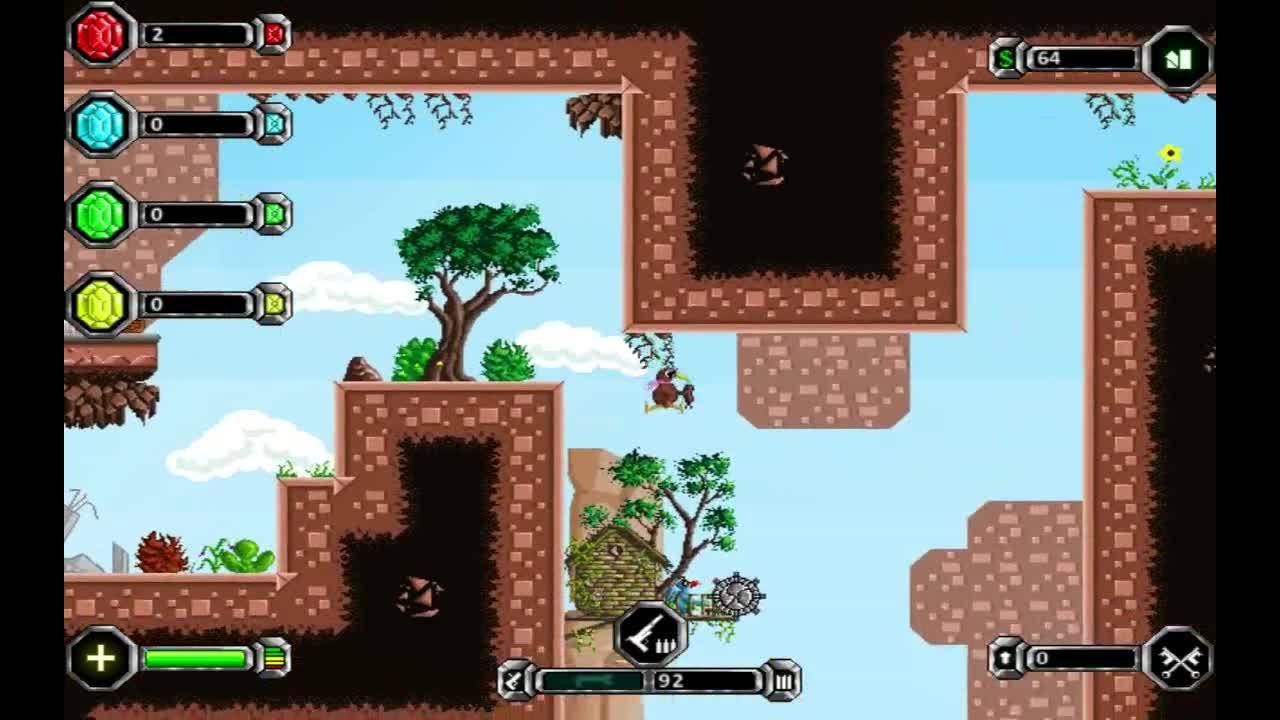
After a rather heart-wrenching introduction, players take over as the flightless bird, Keatz, and begin firing away with the mysterious gun they obtained in a dream. Now flightless but deadly, Keatz is able to hop around the moderately sized platforming levels in search of a variety of different coloured gems, and that precious loot we all hunger for: money. Throughout these clunky platforming levels, players may take notice that they have no ending location. They’re simply over when the player has completed the objectives mentioned on the loading screen before the level starts.

Keatz: The Lonely Bird
Keatz: The Lonely Bird forces players to embark on a challenging 2D platformer, using a painful control scheme.

It’s easy to find the frustrations that leak through the cracks of Keatz: The Lonely Bird. The scavenger hunt to seek out all collectable items to end the level comes with its own share of miscues. Passing up important collectables only to be forced to backtrack across otherwise impossible one-way platforming obstacles is a rage-quit inducing tactic and happens frequently. The level design is unique and shows a decent amount of challenging traps and hazards, but still lacks the finishing touches to leave a positive impression.

Ouch, Those Controls Are Painful

The smooth controls in a platformer are key in creating a memorable and delightful experience for gamers. Both the keyboard and gamepad options feel clumsy, offering an unwelcome learning curve to manoeuvre around the sticky movements. When using a gamepad, the game forces players to use the left analogue stick to move left and right, but also using it to jump as well. The face buttons don’t exactly hinder the experience, but moving and hopping about the levels are often a wild beast that can be rather frustrating to tame.

Other than gems and cash to collect, there are also health packs, ammo crates and other similar useful items. Guarding many of these items are the enemy bird henchmen that fire away at Keatz on sight. Through a variety of different weapons, players will need to persevere through a relentless amount of trial and error to continue further in the campaign. There are a total of 20 levels to play through, both available in easy and hard modes. However, these difficulty settings don’t help with the obvious holes and clumsy mechanics featured in the game.

Keatz: The Lonely Bird
Across 20 different levels, players will find themselves in many different settings filled with a variety of deadly enemies and hazards.
Keatz: The Lonely Bird

There’s not much to the simple platformer in terms of story – a lonely bird cast out from an overruling government wants revenge. Yes really. The story seems to strike a chord of personal feelings from the developer as a positive message to not let someone’s unwelcome judgement anchor you down. It’s unfortunate, however, that the gameplay and mechanics themselves un-apologetically anchor the story down with glaring frustrations, issues and an overall unpolished feeling. Through all of the clunky moments and my rotten words towards the casual platformer, there’s still some dim light that shines through the ever-present cracks in Keatz: The Lonely Bird.

You can find Keatz: The Lonely Bird available for PC on Steam coming this January 2018.

Fearful Symmetry and The Cursed Prince

Fearful Symmetry and The Cursed Prince Review [PC] – Puzzling Symmetry For Everyone

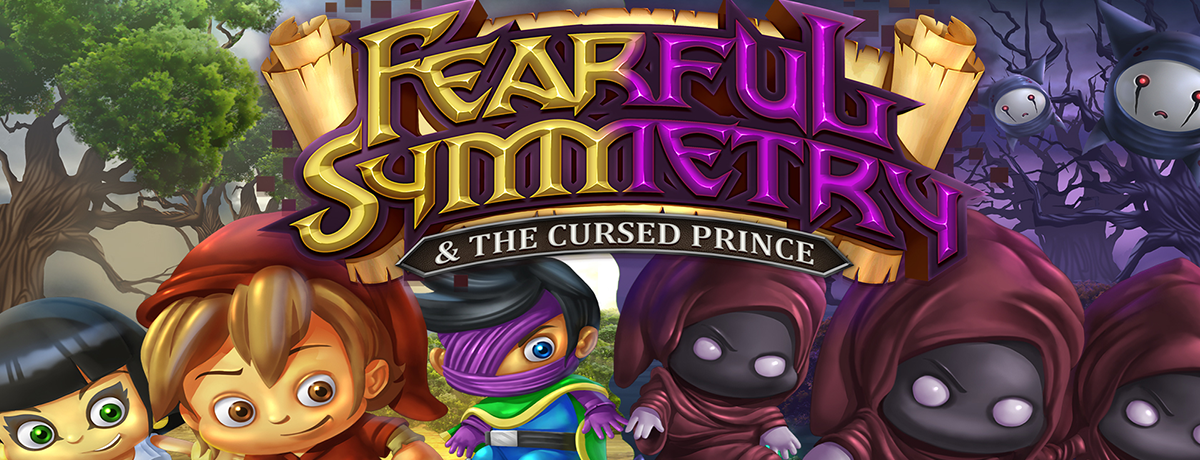
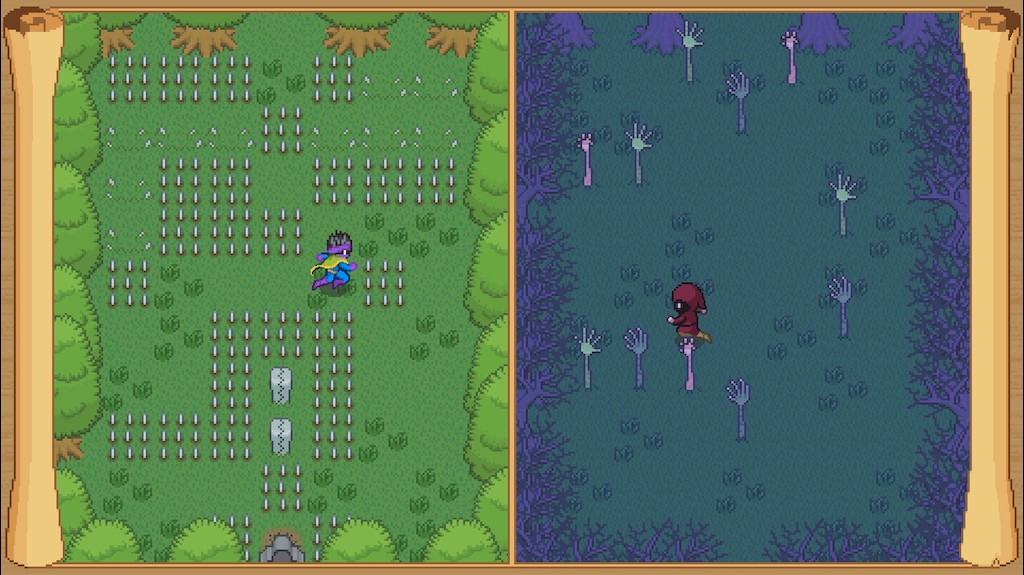
The gameplay of Fearful Symmetry and The Cursed Prince shows its teeth as a mind-twisting puzzler that forces players to think for two characters at once. The unique spin on this puzzle game is refreshing at the same time as being equally frustrating. Taking on two separate screens at once is a welcome challenge for this gamer and one that tends to keep giving throughout its short but sweet campaign. From the added challenges that begin to surface, to the new characters to unlock to help change the gameplay, Gamera Interactive is helping to introduce a distinctive spin on the puzzle-solving genre.

Fearful Symmetry and The Cursed Prince
Fearful Symmetry and The Cursed Prince tells the tale of two universes, forcing the player to guide their hero through parallel dimensions at the same time.

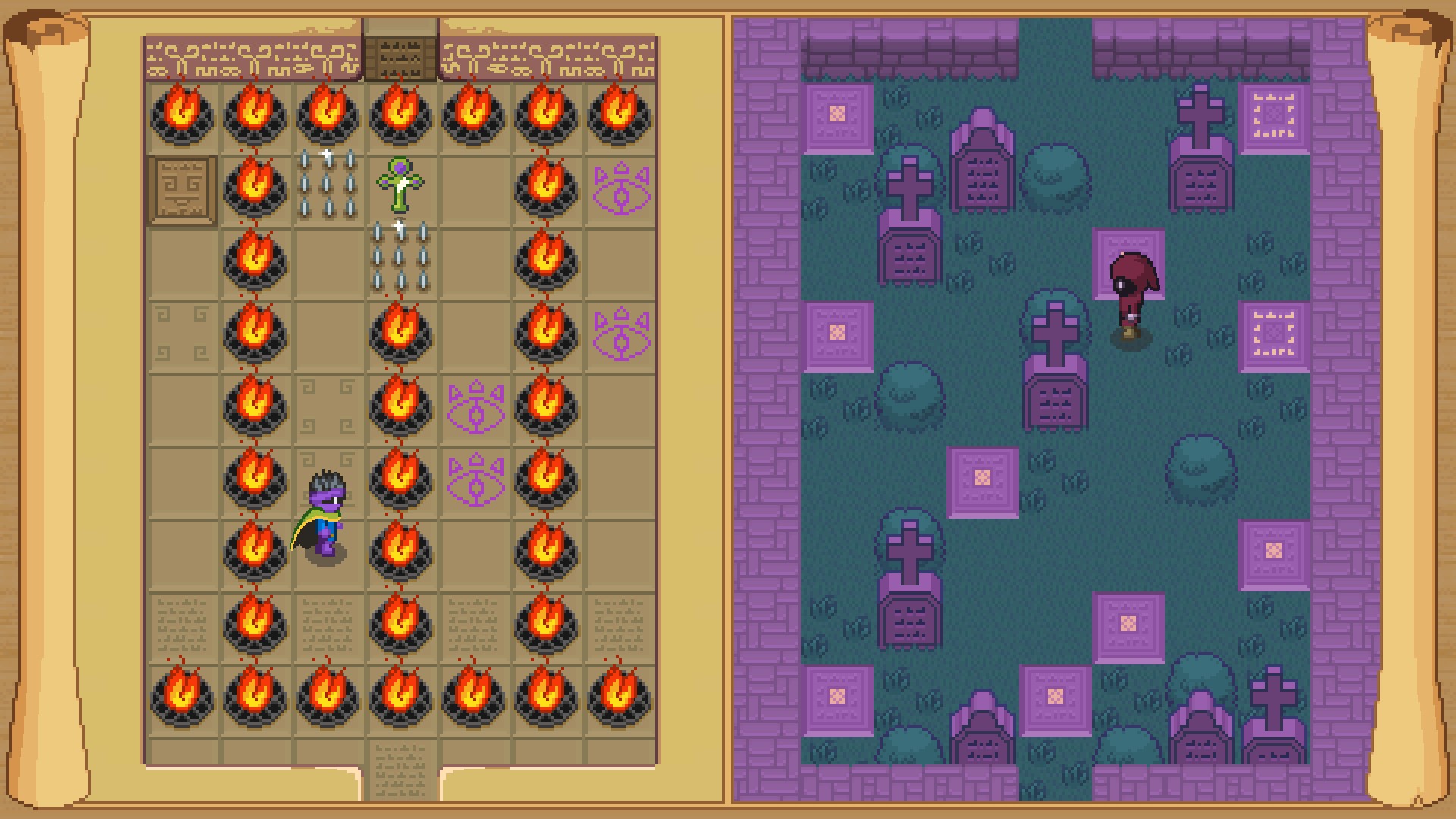
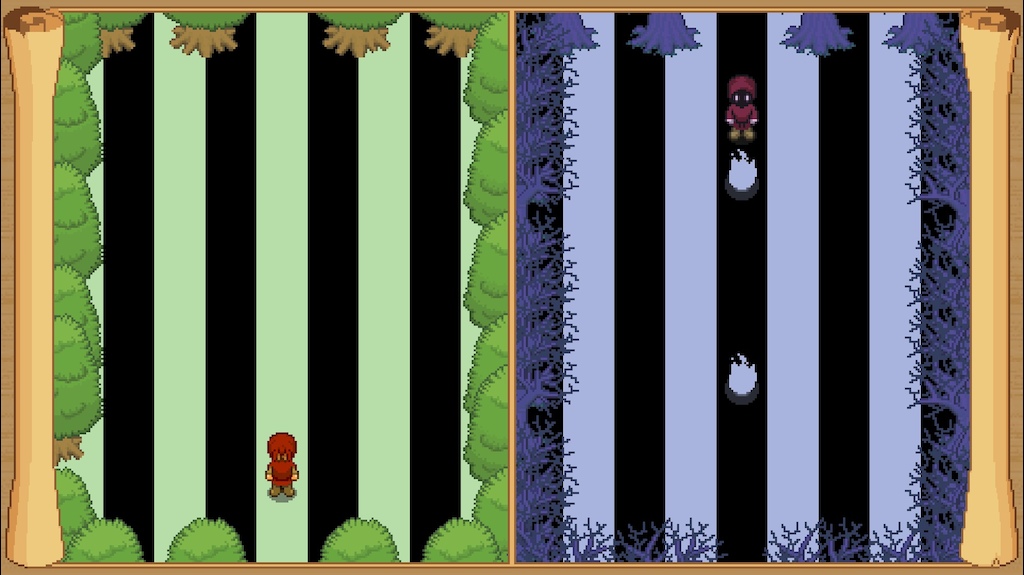
Taking on the role of a prince who snatched the sacred cursed scroll, you’re now compelled to escape this symmetrical universe and return the scrolls to their rightful owner. Where the puzzling comes in is how the challenges present themselves throughout the game. The screen is divided into two symmetrical sides: one light, one dark. Players control their hero on both sides of the screen, navigating each side through dangerous traps and challenges. The trick is that the character on the left makes their way from bottom to top while the right goes from top to bottom. This makes controlling both your dark and light-sided hero quite the thought-inducing challenge.

A Symmetrical Experience

Moving up on one screen will cause the other character to move down, and vice versa. Right is left and left is right, making for a unique twist on what would otherwise be a simple puzzler. As the levels continue onward, more obstacles inevitably present themselves introducing a subtle learning curve. Thinking about your every move twice is a new habit to adapt to, one that is crucial in keeping your character from perishing. There is plenty of time spent on planning your pathway and perfectly avoiding any dangers.

Fearful Symmetry and The Cursed Prince
Though the standard campaign levels are complex and trivial at their own accord, the uniquely designed bonus levels are a step ahead of the campaign dungeons.

While at the beginning of the game where the dangerous obstacles stay stationary, more ghastly spirits and moving objects begin to enhance the strategy. Ghostly AI spawn in or fireball spitting plants cross your path, players must be abundantly aware of what’s occurring on both sides of the screen. If players are unaware of the dangers on one side of the screen or the other, a quick death most certainly awaits. A quick restart keeps the game flowing at an easy pace to keep hacking away at the correct path to success.

Numerous Ways To Play

Though travelling from one side of the dungeon to the other for both sides at once is the main objective, in each dungeon on one side rests a bonus key. Collecting these keys will eventually unlock bonus levels that present even more difficult challenges. However, these bonus levels award players with two new playable characters when specific ones are completed. On top of new and unique characters to play as these bonus levels are excellent ways to drive more hair-pulling puzzles out of your twitching fingertips.

Fearful Symmetry and The Cursed Prince
The first hero is unlocked from the start, after enough bonus levels, two other characters equipped with their own unique abilities offer a different perspective on the puzzling title.

Out of the three characters to choose, each one offers a unique twist on conquering the levels. While traversing through the standard way by walking around the spikes, fire and ghostly enemies in traditional strolling fashion, other unique abilities may be equipped when played as one of the other characters, such as the ability to teleport over obstacles. The initial campaign is relatively short – sitting at about an hour-long. Still, two characters to unlock – each with their own unique skill – and the challenging bonus levels add a bit more depth to the game.

There’s not too much to Fearful Symmetry and The Cursed Prince – but there is some addicting gameplay to be had. Taking on parallel worlds at the same time is a unique twist on the genre, great for gamers of any skill level to take on the challenge.

Wolfenstein II: The New Colossus Review [PS4 Pro] – Welcome Back, Captain Blazkowicz

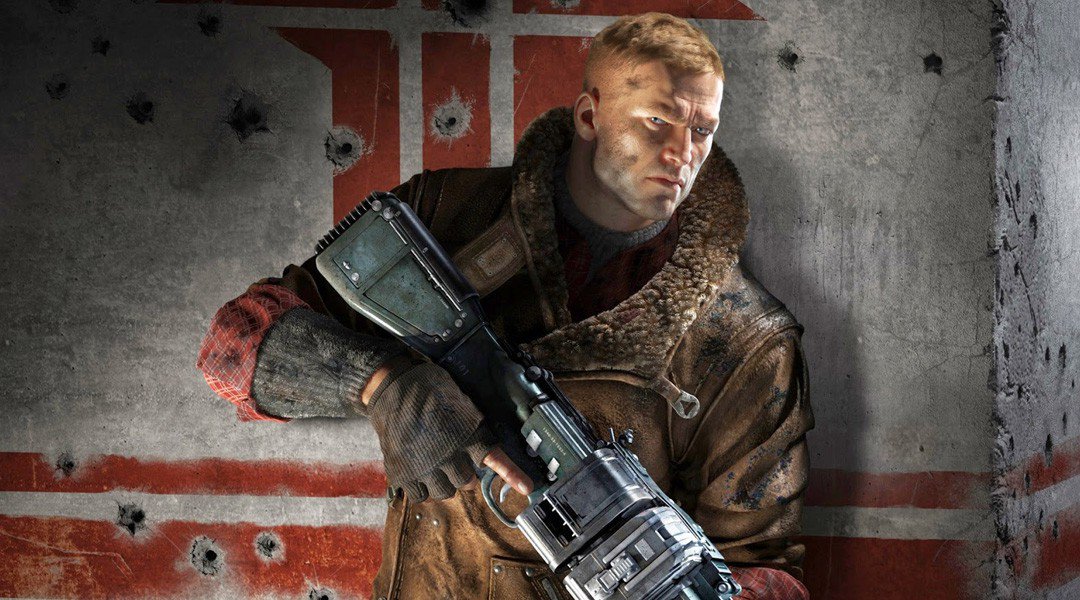
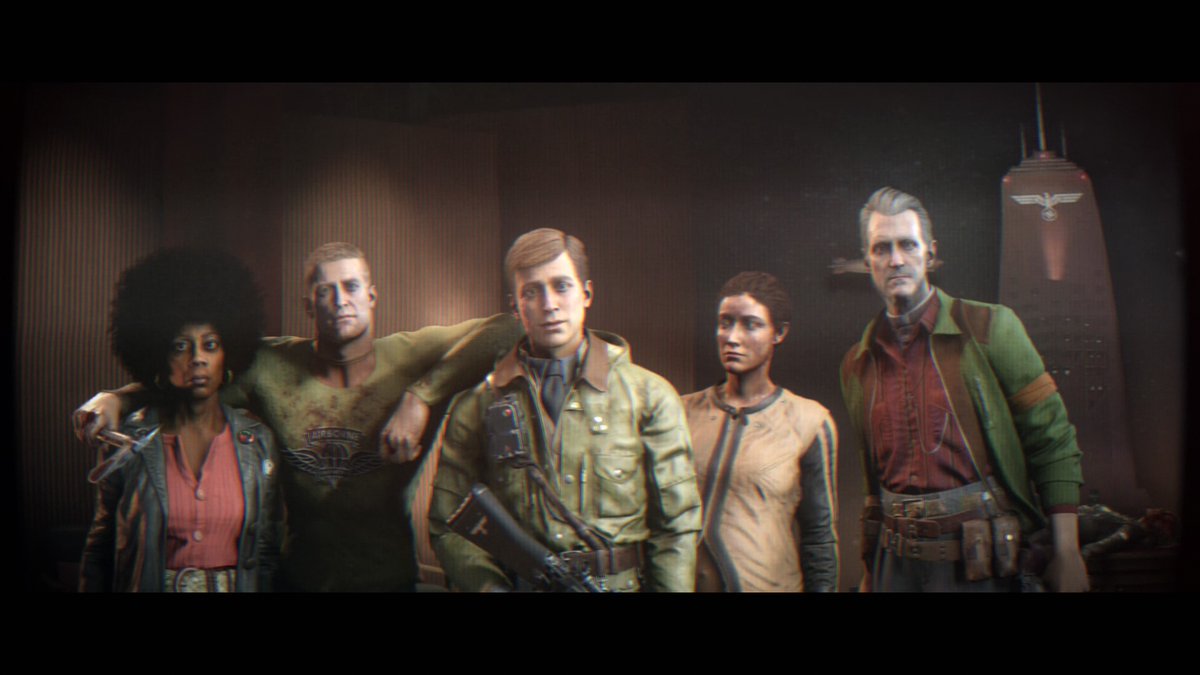
Wolfenstein II: The New Colossus is an excellent sequel to one of the most iconic shooter franchises in gaming. The re-imagining of the classic series takes players back to the Nazi regime, which in an alternate universe has successfully conquered the globe. It’s grounded by the sheer badassery of Captain William Blazkowicz, and the group of revolutionary soldiers fighting for the freedom of the people. The New Colossus beefs up the action and mayhem while taking players through a thrilling narrative filled with plenty of Nazi-slaughtering anarchy.

The Nazi regime continues onward, but the revolution is just getting started.

Coming straight off of The New Order, the story of Captain Blaskowicz and the revolutionaries continues to deliver throughout the sequel. Upon slowly recovering following the events of the predecessor, the story of the Nazi regime continues to unfold while you trail the dreadful right hand of the Führer, General Engel. Throughout her tasteless and morose personality, the writers from Machine Games have done an excellent job in creating a villain so frustratingly real, someone brimming with so much hatred, one can’t help but look forward to the day Blazkowicz finally brings her down. The adrenaline rush that guides players across the surprising and roller coaster of a story is an anchor of the Wolfenstein series; and one that seems to only ripen delectably with age.

Does This Thing Kill Nazis?

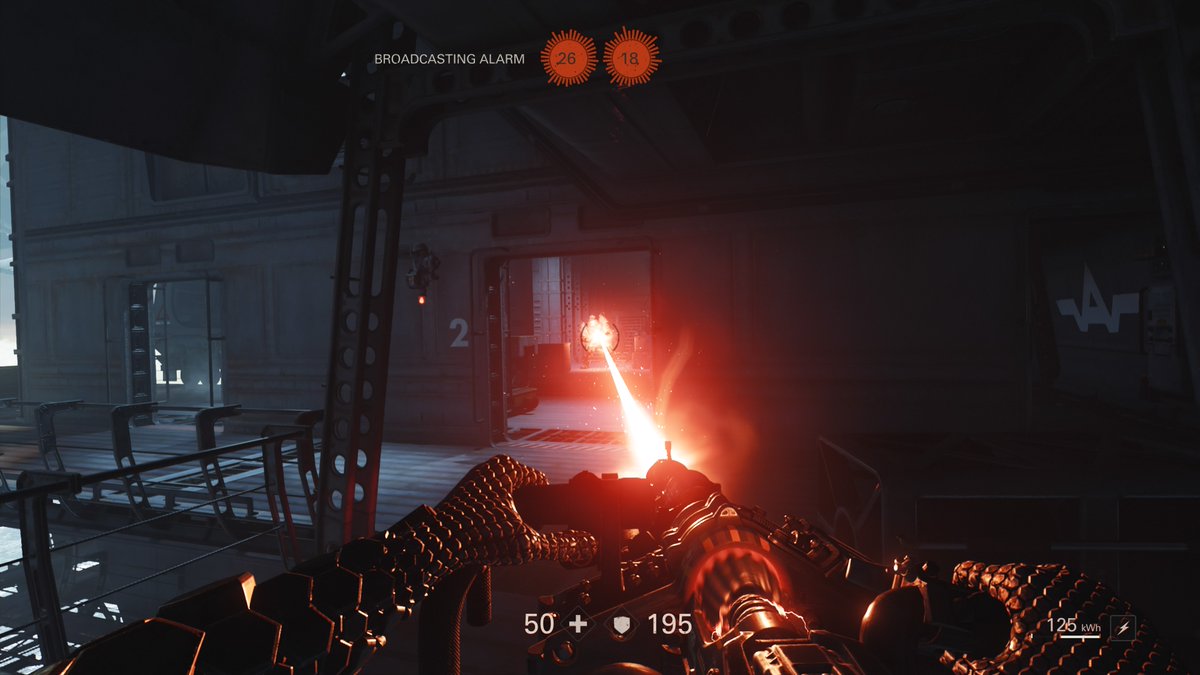
One of the biggest changes from the 2014 release is the ability to hang to all of the weapons BJ discovers. While in The New Order players were forced to start new areas and chapters off with only a limited supply of weapons, once retrieved from fallen enemies, Wolfenstein II allows Blazkowicz to keep his arsenal of unique weaponry throughout the entirety of the game. On top of this little luxury, players also have the option to upgrade each weapon with three various enhancements. Among the litany of different collectables scattered throughout the campaign are weapon upgrade gears, and once applied can completely transform the damage and shooting style of the initial starting weapon.

The enhanced LaserKraftWerk is now a powerful heavy weapon incinerating anything in its path.

Among the weapons to obtain, players of The New Order will notice the lack of the sheet-metal-melting laser weapon, the LaserKraftWerk. While it still exists along with the ability to disintegrate various metal panels, it now comes as a heavy weapon packing a much fiercer punch than before. Though the LaserKraftWerk does not sit in your weapon wheel like before, there is a new useful addition to take its place.

The DieselKraftwerk is a cannon that launches small remote-controlled explosive canisters, helpful for blasting your way through walls, or hordes of Nazi enemies. Among the rest are the usual suspects of weaponry, your shotguns, assault rifles and pistols, all with the ability to classically duel-wield for ultimate carnage.

Hunting Down The Übercommanders

Finding and scavenging for weapons, ammo, health and armour pieces have hardly been touched when compared to its predecessor, including the chance to discover Enigma Cards dropped from commander soldiers. Once obtained, these cards will help open up new side missions, which can award players with rare and powerful gear. There are literally tons of Enigma Cards scattered throughout the campaign, all of which are used to decrypt codes and locate the dreaded, Übercommanders.

New characters make an appearance in the story as the campaign shifts to the US, in towns like New Orleans and Manhattan.

Collecting Enigma Cards is as easy as looting commanders, however, that’s only first step. By using the Enigma Machine back at the home base (a Nazi submarine – Eva’s Hammer), players will need to decrypt a series of codes to gain access to the location of deadly Übercommanders. Seeking out and dealing with these strong foes helps chip away at the Nazi regime stranglehold on the United States, as well as unlock a final mission in the game if enough are completed.

Proof That Single Player Isn’t Dead

Much like the rest of the series, Wolfenstein II pits Blazkowicz against insurmountable odds, leaving no amount of outrageous and over-the-top scenarios out of the exciting campaign. Whether your smashing through a Nazi army riding atop a vicious Panzerhund, or on your way to fight the good fight in space, The New Colossus only adds to the intensity of the series, never once shying from the completely ridiculous. While most games looking to tackle a serious audience would veer from complete insanity and off-the-wall antics, Wolfenstein only strengthens itself as a series from the madness.

Return to ground zero where the Nazi regime dropped the atomic bomb on Manhatten, New York, ultimately forcing the US to surrender.

First-person shooters come a dime a dozen anymore, and with the growing industry standards to pump out FPS titles with an 80% focus on PvP multiplayer, the Wolfenstein series is a refreshing break from the online grind. The New Colossus magnifies the single-player experience with an astounding narrative throughout a magnificently gripping story, complimented with exceptional gameplay. With every intense action in The New Colossus, there’s an equally surprising reaction that keeps the game from losing its edge.

I Fell From Grace Developer Deep Taiga Talks Motivational Practices, More

I Fell From Grace released on December 20th, marking the debut release from indie developer, Deep Taiga. Placing players into a rhyming narrative mystery, I Fell From Grace brings a unique twist to the retro 2D genre.

D-pad Joy recently had the chance to speak with Deep Taiga on topics such as how to stay motivated throughout the long development process, key trends in the industry such as VR, and advice for young developers just starting out as part of our interview series.

What inspired you to get into game development?

Funnily enough, my grandmother said when she heard I was making a game that this is something I had proclaimed I would do back when I was 8. I don’t remember that, but I’ve always enjoyed creative outlets, be it graphic/web design, poetry, CGI animation etc. I love telling a story and making a game affords so much in terms of creating a world for others to get lost in.

What games have you created and which is your favourite?

I fell from Grace is my first creation, so I guess it’ll have to be my favourite!

What advice would you offer for those just starting out?

You can totally do it! But it takes a lot of discipline, time and patience. You’ll feel like walking away from the project numerous times, especially in the beginning (at least I did), but if you stick with it, you’ll get there.

What do you think is going to be a key trend in the games industry this year?

I’m not a guru of any sort when it comes to the gaming industry, so I really don’t know. VR will probably see continued growth in 2018 – which is pretty neat.

What’s your favourite platform to sell games on?

I love PC gaming which is why I chose to make I fell from Grace a PC title primarily.

What are your favourite tools for game development?

The internet! Boy howdy can you learn a lot.

How do you stay motivated to achieve your goals?

There’s a great vlog made by Burnie Burns where he talks about motivation – which I completely agree with. I don’t really believe in motivation. Or at least I don’t believe that motivation is what should be pushing you to do things. What you should focus on cultivating is discipline, which in turn, will often give rise to motivation as a byproduct. If I only worked on my game when I felt like it, it’d be nowhere near finished.

What do you think about VR?

Super cool! And it’ll probably be a major part of gaming going forward, but I don’t think there will be a time anytime soon where that’s the only way to game.

Games console of choice?

Can I only pick one? Goodness… I guess the SNES was pretty great. But then the PS1 had FF7. Maybe it doesn’t really matter… Can I pick two? I’ll pick two.

-END-

You can find Deep Taiga’s debut release – I Fell From Grace – available now on PC at the Steam store.

The Champions' Ballad

Breath Of The Wild: The Champions’ Ballad Review [Nintendo Switch] – Another Grand Reason To Return To Hyrule

An Ancient Verse Known as The Champions’ Ballad


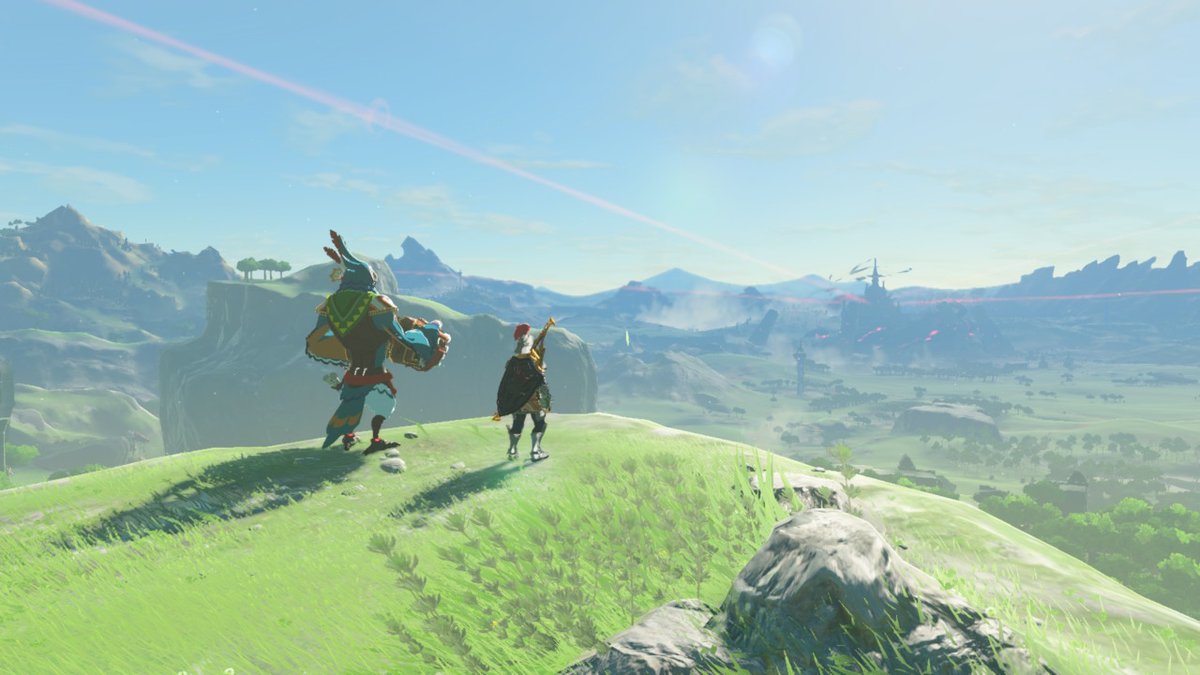
The Legend of Zelda: Breath of the Wild has awed and inspired much of the gaming community since its release in March. While the base game itself packs quite the punch of thought inducing shrines, fetch and grab quests, hundreds of collectibles and the freedom to tackle whatever you wish first, it’s no wonder the fans craved for more. While the first DLC – The Master Trials – which released in the summer, gave fans a few more additional content pieces and challenges, the second DLC – The Champions’ Ballad – provides an all new quests line to the mix as well.

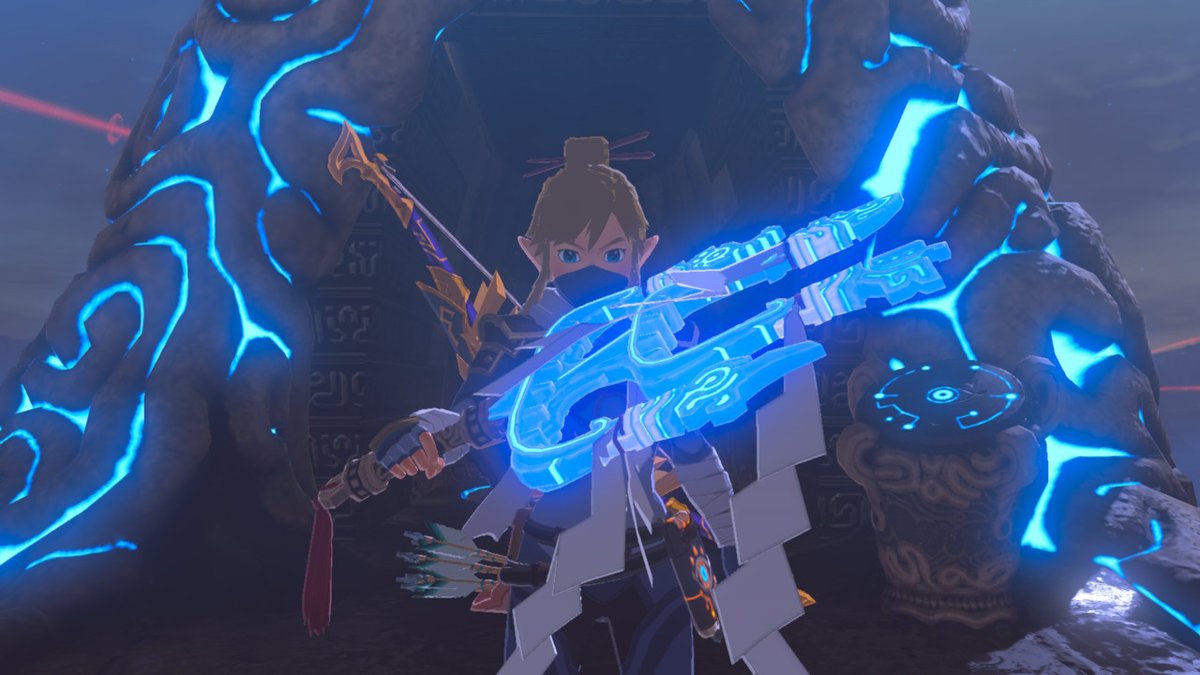
Upon defeating Ganon and taming all four divine beasts, Link will then be summoned to undertake the expansion’s series of story quests, The Champions Ballad. Returning back to where everything started, Link is given a new, exclusive questing weapon – the Obliterator, which will aid players into the forthcoming challenges. While the new expansion doesn’t add any more map to the massive world of Hyrule, it does however, add to the amount of puzzling shrines to the mix. But first, we set our eyes on this new weapon.

The ultra powerful weapon – The Obliterator – puts Link in the middle of quite a challenging task
A Fierce New Weapon

First off, players must complete a series of four challenges using the ultimately powerful weapon, the Obliterator. While this weapon is extremely strong capable of knocking off almost any opponent in one hit, it also has the same effect on Link. While equipping this mystical weapon, players are susceptible to being knocked off with the slightest single hit, but the only way to continue forward is to use this coveted weapon. The first task seems simple enough – Link must clear out four bandit camps that lay in the Great Plateau region of Hyrule.

If the player for any reason leaves the Great Plateau, the quest will discontinue, returning the Obliterator weapon back to where you acquired it, at the Shrine of Resurrection. While the four camps to clear isn’t something that’s relatively new to BoTW, using the new unique weapon adds a completely new twist to the strategy. Link’s melee choices is restricted to only using the Obliterator, but pulling out his trusty bow and arrow is still a viable option. With the nuisance of falling to one strike, keeping your distance is futile in survival.

To unlock each new shrine, players must first accomplish all-new tasks.

The long DLC quest line of The Champions’ Ballad is only starting from there. Once finished with the useful, but dangerous weapon, four brand new challenges open up, which act as the main portion of the DLC. A flurry of new shrines await across the four corners of Hyrule, returning Link back to the four now-tamed Divine Beasts.

Brand New Shrines

As faithful as ever, the accordion playing bard – Kass – once again provides useful information leading up to the whimsical quest line. After a series of discovering new shrine locations by using photos of the locations on the map. Each new shrine delivers trivial challenges exactly as the vast majority of base game shrines did. Granting much more of the same from the open world adventure, the new shrine puzzles are still very much as imaginative as any others in the game, fully utilizing the power of the runes.

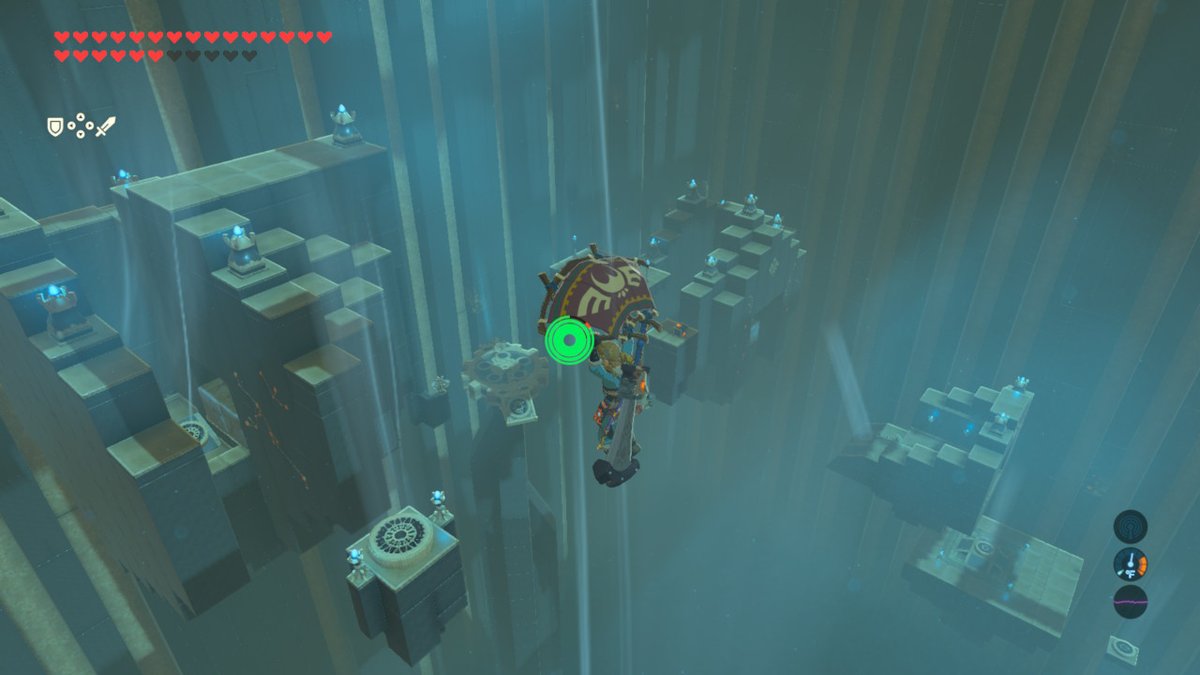
A slew of new shrines provide even more puzzle solving using the many different rune skills.

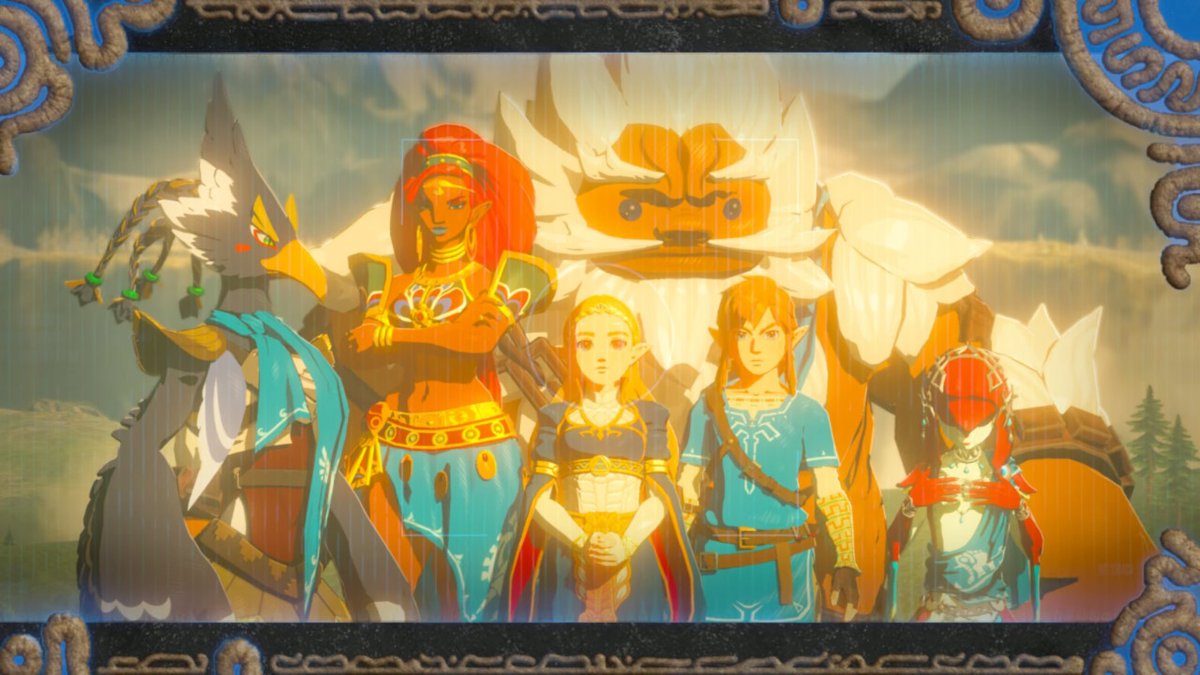
Solving three picture locations, clearing the corresponding shrines and taking on the powerful revived version of the elemental Blight Ganon is the repetitive process of The Champions’ Ballad DLC. While the gameplay comes off as rather tedious, the new quest line takes you through a variety of different challenges for revealing each new shrine. The new cut scenes also provide a bit more back story revolving around Princess Zelda, and the five Champions that surround her.

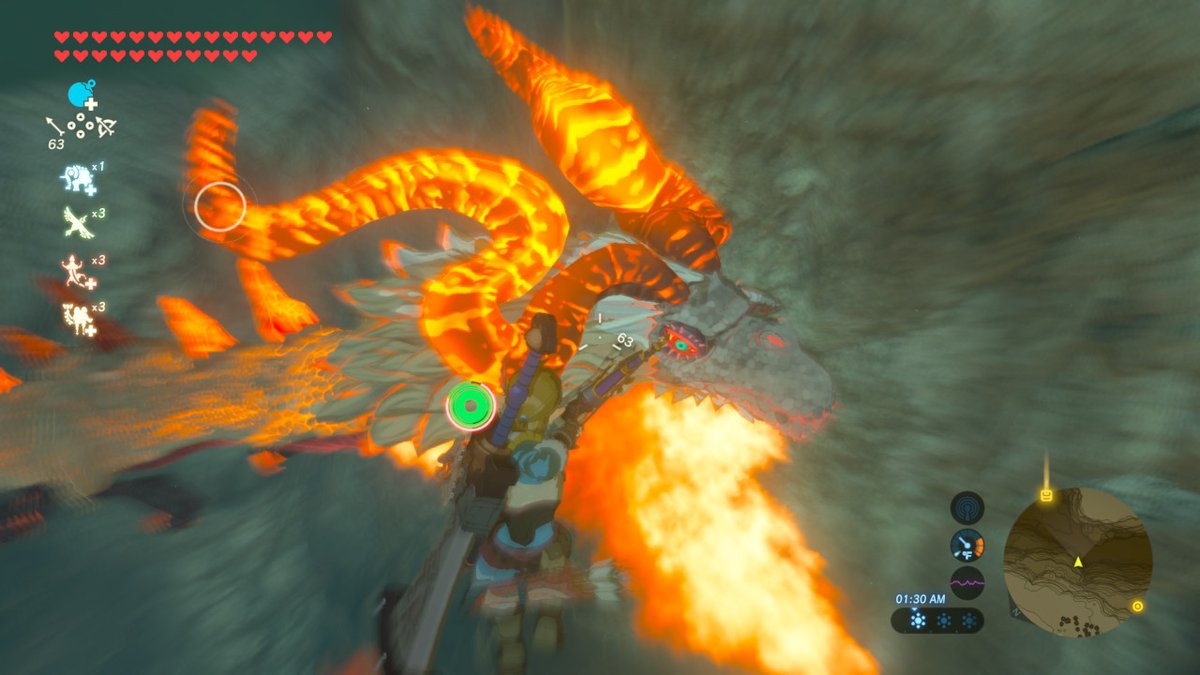
After a long haul of shrine accomplishing and completing new, mostly fun objectives, the DLC closes it out with a brand new style of dungeon. Like the Divine Beasts from the base story, this puzzling labyrinth is by far the most trivial of the Breath of the Wild experience. Following the complicating mechanism of the new dungeon, the DLC finishes with a brutally challenging boss fight, facing off against an all new foe. After conquering what seems like the impossible, the story closes out with a significant sense of accomplishment.
The Champions’ Ballad is a perfect ending to one of the year’s most memorable titles.
Worth the Effort

Though The Champions’ Ballad DLC primarily adds more of the same freedom to go off and accomplish what you will, when you will – it’s still quite refreshing to accomplish more new objectives in Hyrule. Throughout the 5-10 hour-long quest line, players will find themselves back in the same awe-inspiring moments that captured them from the start of Breath of the Wild. And to top it all off, upon slaying the final boss, Link is rewarded with what could only be described as one of the most entertaining experiences in the entire game.