YouTube Video Games Blog – Indie, Switch 2, and More
Back in Time
Author: Chris Wheatley
Writer for Nitchigamer, Raging Gazebo and LunaWolf Gaming, an avid gamer, he'll put together an article to keep the reader engaged, informed and moderately happy for a solid 4 minutes. That my friend, is no easy feat.
Sonic Mania created one of the best platforming experiences in all of 2017, as well as one of the most memorable Sonic the Hedgehog titles since his introduction to the new wave of 3D gaming. And after less than a year of release, Mania has officially sold over one million copies worldwide.
To celebrate the milestone and incredible success of the 16-bit revival of everyone’s favourite blue blur, Sega has announced the release of Sonic Mania Plus – a definitive version of the hit 2017 platformer packed with extra exclusives including new playable characters. To help bring in the new announcement Sega has also unveiled a brand new trailer showcasing the new characters and content, which can be seen below.
The new content featured in the upcoming release of Sonic Mania Plus includes:
Two new playable characters from the Sonic universe – Mighty the Armadillo and Ray the Flying Squirrel – both of which debuted in the 1993 Japanese release of SegaSonic the Hedgehog (Arcade).
All new Encore mode beefs up the replayability by adding new layouts and new challenges to previous zones and levels throughout Mania.
Four player versus modes, as well as ghost time trials, will be added to the competition and time attack modes now allowing you and three of your friends to compete in a unique challenge against one another.
If springing for the physical release of Mania Plus, players will receive an exclusive 32-page art book and a unique reversible cover showing off an old-school Sega Mega Drive cover, all included in slick holographic packaging.
Previous owners of Sonic Mania will have the option of downloading the Encore DLC pack upon release of Mania Plus at a generous price tag of £3.99.
[amazon_textlink asin=’B07BTNCVPC’ text=’Sonic Mania Plus’ template=’ProductLink’ store=’geali01-21′ marketplace=’UK’ link_id=’b841830a-4cb6-11e8-856a-7d65cb239a64′] is set to hit retailers everywhere on July 17th, 2018 for the PS4, Xbox One and Switch – with the DLC also coming to PC.
Starting off on the Sega Saturn as an attempt to bring back the classic Sega Master System, Genesis and arcade games, developed by porting veterans M2, Sega Ages has popped up periodically throughout the illustrious history of gaming.
Sega Ages Switch
However, mostly available solely in Japan these classic titles have been scattered across time in popular classic collections fluttering around on the PlayStation 2 and 3 systems.
Now it’s time for Nintendo to get in on the fun as Sega has officially announced the Sega Ages series is coming to the Nintendo eShop this summer.
Along with the announcement came a reveal of the first 5 games in the lineup to hit the eShop, those being:
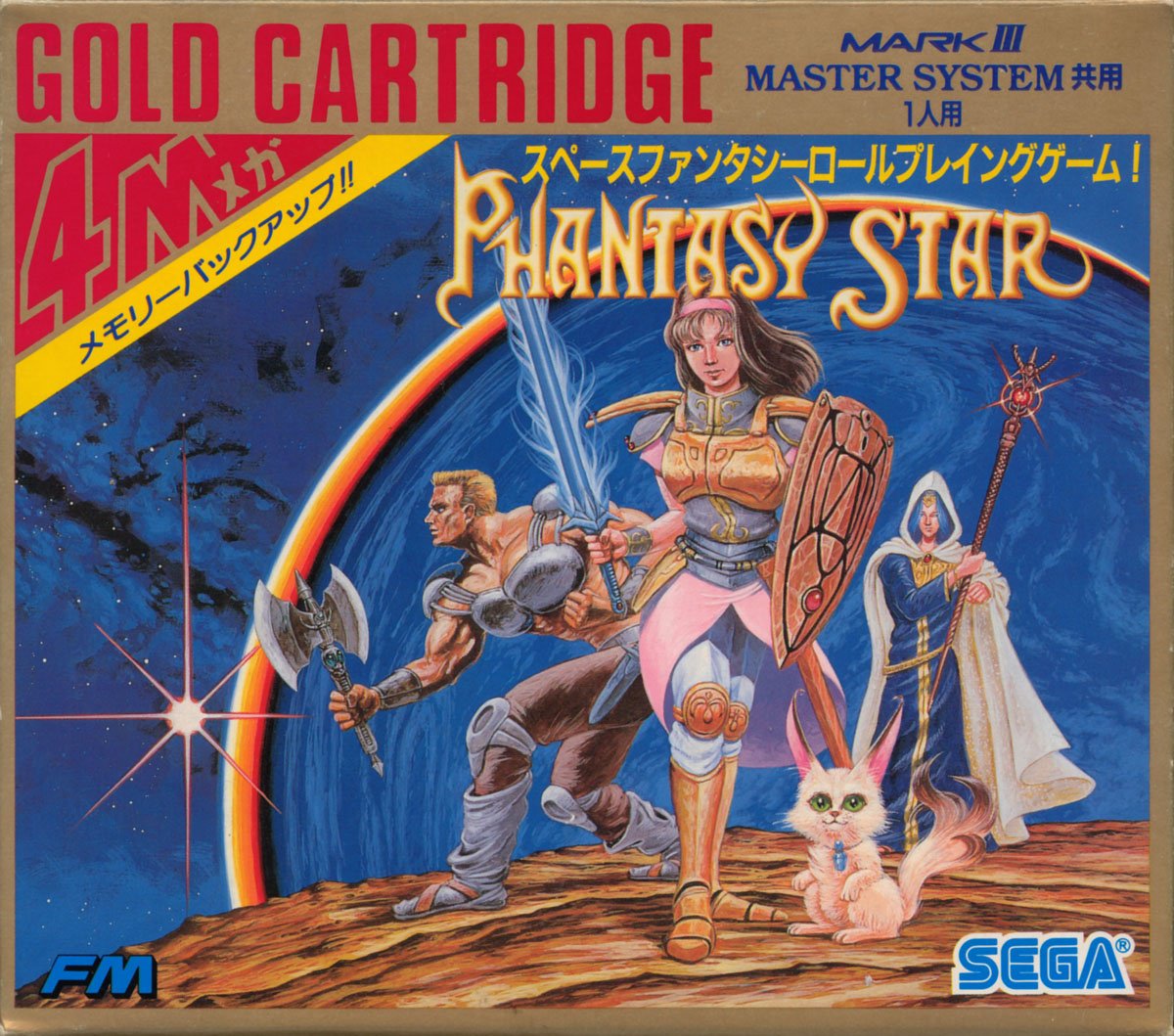
Phantasy Star – One of the first to do it all, this 1987 RPG was featured on the Sega Master System and took players on an enthralling adventure like never before through the distant galaxy of Algol.
Alex Kidd in Miracle World – The original rival to Nintendo’s Super Mario Bros., Alex Kidd in Miracle World is a memorable platformer where players assume the role of the young martial artist in a 2D side-scroller punching your way to victory.
Thunder Force IV – This classic side-scrolling shmup gives an unrelenting challenge of nostalgic chaos and a wider range of manoeuvrability when compared to its predecessors.
Sonic the Hedgehog – The blue blur’s debut into the entertainment world, Sonic the Hedgehog marks the start of taking on the challenge of platforming games with the addition of doing so at blistering speeds.
Gain Ground – For those asking for a bit more strategy, Gain Ground is the arcade action-strategy game that will have you methodically taking out your foes across several diverse eras – past and future – in world history.
Stay tuned for more on the growing lineup of the rebooted series – Sega Ages – as we draw closer to the eShop release, coming summer 2018.
From the developers of the puzzle platformer, Never Alone, E-Line Media in collaboration with Endless Interactive has officially announced their next project titled The Endless Mission.
The Endless Mission – Use That Imagination
Along with the official announcement, we were also teased with a riveting trailer showcasing a bit of the distinctive gameplay found in The Endless Mission:
Here are a few takeaways from the recent announcement:
The sci-fi sandbox game allows players to create an experience using the full flexibility of the Unity engine, manipulating everything down to the code in the game.
It’s from the writing staff of big games like Middle Earth: Shadow of Mordor, Rise of the Tomb Raider and The Crew.
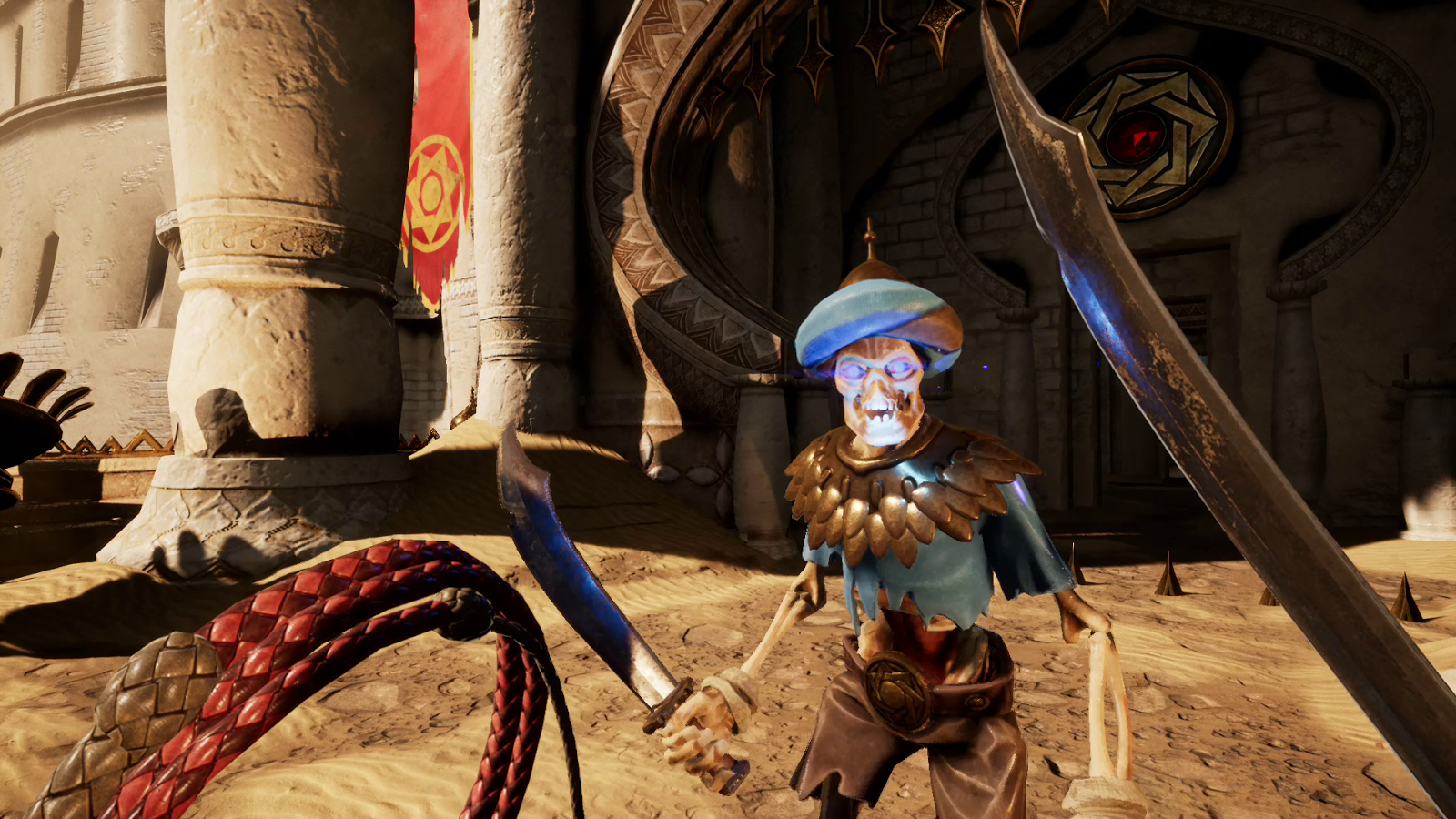
The first person rogue-lite adventure game – City of Brass – combines the exhilarating nature of becoming a swift thief with the action of first-hand combat involving whips and swords.
You make your way through the turbulent ruins filled with valuable riches and treasures in the next release out of Uppercut Games. Backing up the release date announcement, the developers have also released a slick new trailer for us:
Takeaways – City of Brass
A few takeaways from what we know about the whip-lashing, treasure thieving rogue-lite are:
City of Brass is a first-person adventure game giving players the unique combination of handling a bullwhip and a blade to strike down, disarm or trip-up enemies, as well as using the whip to swing to safety or grab out of reach items.
The fast-paced hack and slash gameplay will have players fighting their way through damned souls of the ancient ruined city in hopes of discovering the hidden treasure all packed into an Arabian Nights-style setting.
The rogue-lite style of gameplay allows every playthrough to play differently from the last with shifting streets and the ability to use knowledge from previous playthroughs to push further into the city.
Unique Blessings and Burdens system allows players of all skill levels to adjust various optional modifiers in the game to tailor the experience to the players liking.
Players may also use Microsoft’s streaming service, Mixer, to see themselves involved in live-streamer’s gameplay by either spawning additional enemies or helping out by giving gold or other useful items.
City of Brass has officially been announced for release on May 4th, not long, and it’s coming to the PS4, Xbox One and PC.
The ex-Bioshock developers at Uppercut Games have City of Brass in an Early Access stage for anyone eager for a jumpstart in the quick-thieving action.
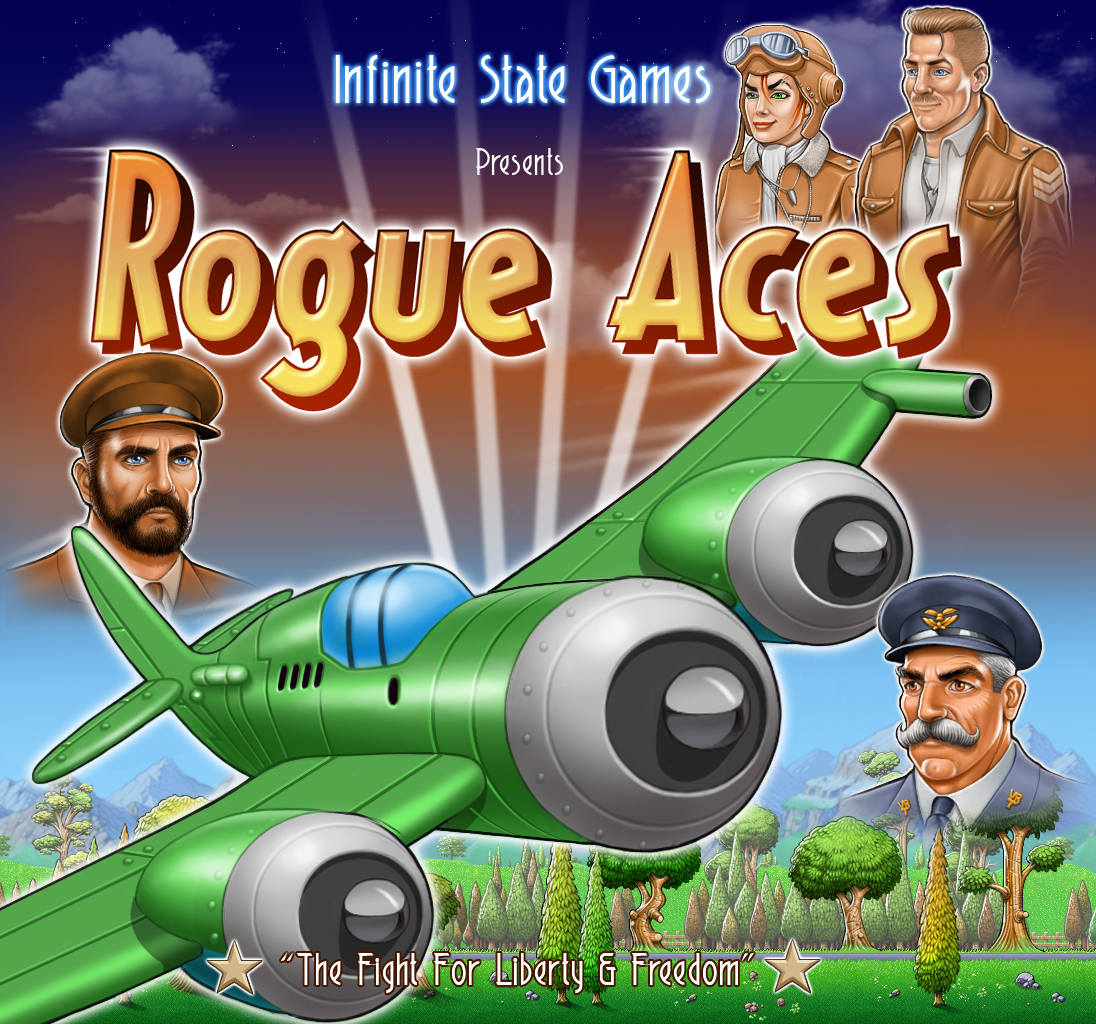
Control the skies and battle your way through blistering aerial combat in the 2D procedurally generated, dogfighting arcade game – Rogue Aces. Set in the slightly historical World War II, players will soar across over 100 hundred missions throughout the dangerous skies riddled with enemy bullets.
Rogue Aces – PS4, PS Vita, Switch
Publishers Curve Digital has announced the release of Rogue Aces with an exciting trailer showcasing the hectic dogfighting you’ll find in the arcade aerial combat title.
Here are a few takeaways from the announcement of Rogue Aces:
Over 100 procedurally generated missions including rescuing prisoners of war or fending off enemy bombers from destroying ally buildings.
Simple but unique control scheme has players adjusting direction and throttle control using only the two analogue sticks.
Limited fuel supply for each plane adds a deal of strategy when replenishing and repairing your bomber during the aerial combat and capturing of enemy bases.
The heated combat and acrobatic manoeuvres provide an excellent pick up and play style of gameplay, good for handhelds!
Releasing on the PS4 and PS Vita with the cross-buy/play platform, and the Switch – Rogue Aces is set for release on April 12th, 2018. With a price of £9.99/€12.99/$12.99, this aerial dogfighter looks like quite the little package of intense arcade chaos on the go.
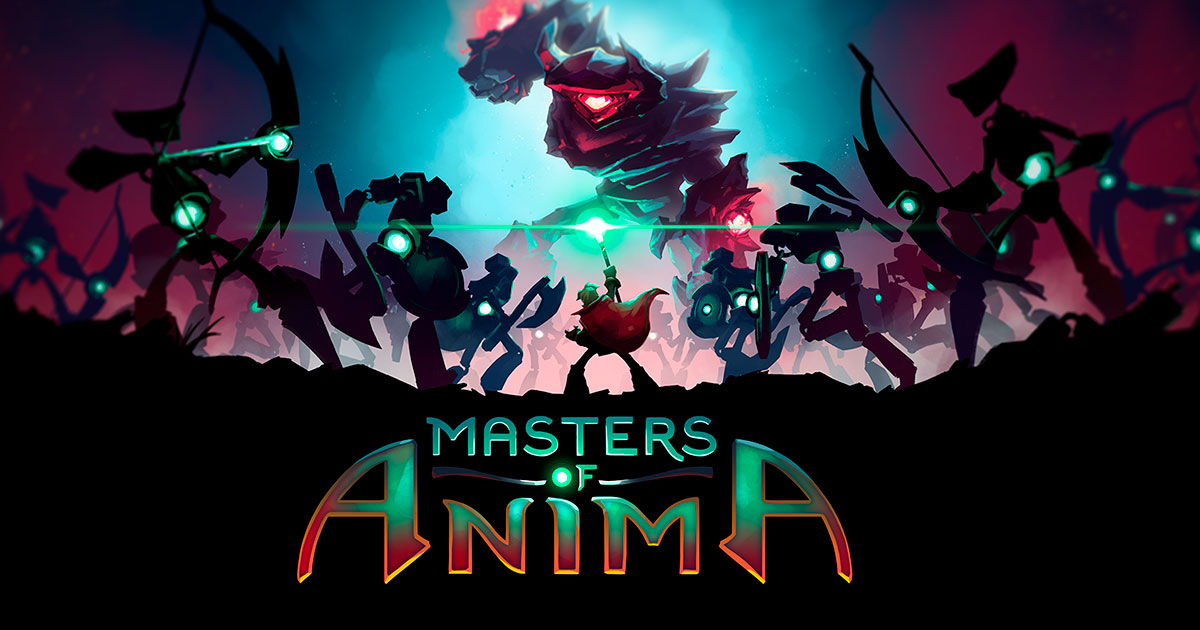
Big news out of Passtech Games – creator of the favourable tower defence title, Space Run – as they have officially announced a release date for their upcoming strategy/adventure game – Masters of Anima.
Masters of Anima – What’s It About?
You raise armies of golem smashing guardians in this new adventure across the magical, and dangerous, world of Spark. Check out the announcement trailer below:
Taking on the role of the Anima apprentice Otto, you’ll embark on an adventure to save your fiancée from the dreadful grasp of the dark lord Zahr and his army of golems. A few takeaways from the official announcement are:
You can control up to 100 Guardian soldiers – each type with their own unique combat style, talents and abilities.
You can conjure up the sacred power of Anima – the life source of everything in the vast world of Spark.
You can learn new skills and abilities with every victory against massive armies and powerful bosses that stand in your way along the journey.
We can expect to see the latest release from Passtech Games – Masters of Anima – hit adventure seekers on April 10th, 2018 on the PS4, Xbox One, Nintendo Switch and PC systems.
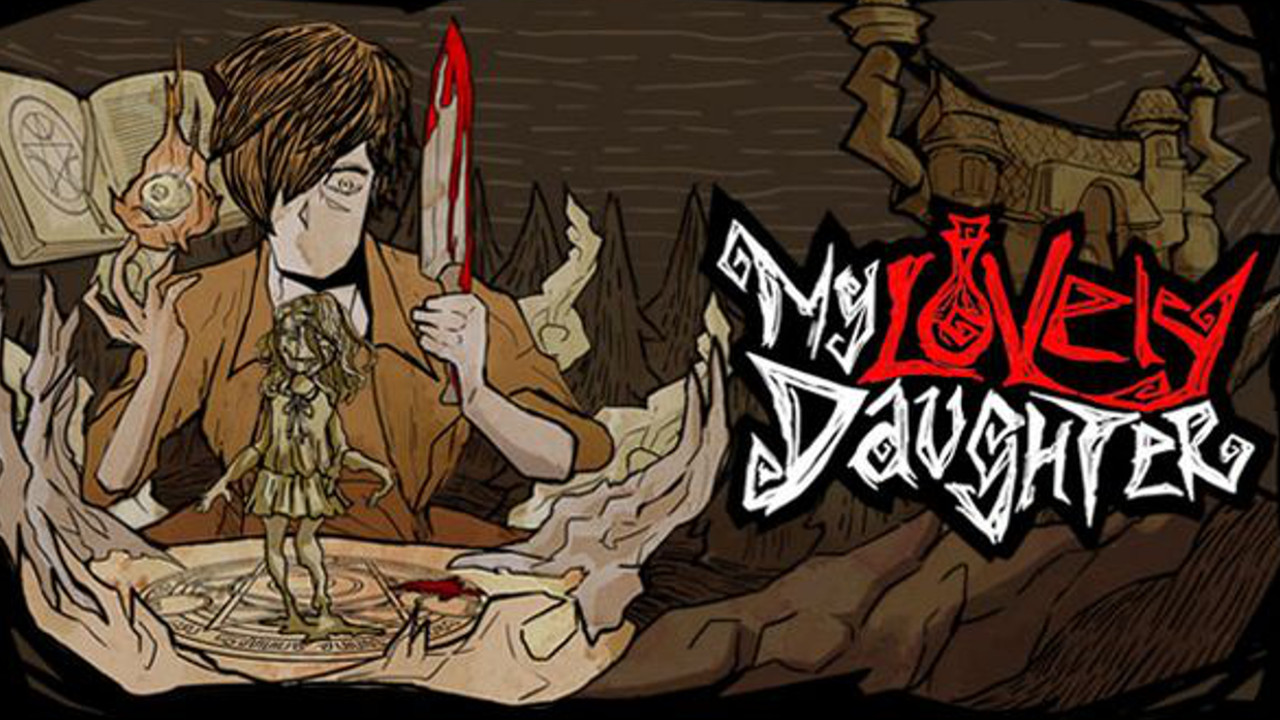
To say My Lovely Daughter is an unsettling story following the depths of how far a grieving father will plunge into alchemist hell might be the only reasonable explanation to describe the grim simulation narrative. Between work/money management, experimenting with alchemy and selfish murder all for the sake of resurrecting your recently deceased daughter – GameChanger Studio delivers an unnerving tale of fiction, but unfortunately comes with a rather tedious concept.
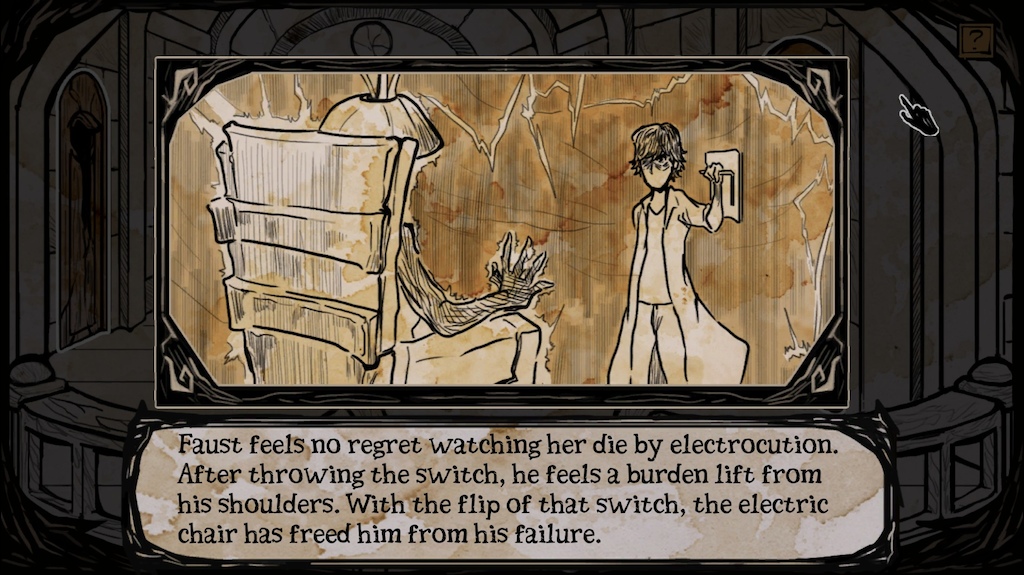
Faust is a man suffering from extreme memory loss discovering his departed daughter immediately upon gaining consciousness. Set centuries in the past, the small village serves as only a slight reminder of who he was, but after discovering the state of his beloved daughter he comes to the realization he, himself, studies in alchemy. The confidence of his abilities only strengthens from there, and off we go on a dark tale about how far a man will go to bring back what he cherishes most.
The idea behind My Lovely Daughter is to use your medieval alchemist abilities to, of course, bring your precious daughter back to the living. If you’re a fan of the anime series – Full Metal Alchemist – we all know what happens when you attempt to bring back the dead using alchemy – but Faust is a desperate man who’s only memories are adrift in the clouds. Slowly he begins to fill in the pieces of his memory as he begins to re-learn the shady process of alchemy.
Tedious Slave-Driving Management
The gameplay requires players to perform a series of tasks which all help to nurture the soul of Faust’s daughter, and eventually use the soul to bring her back from the dead. Players will use materials such as wood, clay, meat and water to transmutate into living homunculus that you’ll lovingly suffocate with work and gifts in order to reach specific affinity levels to add to your daughter’s remaining soul. Creating multiple homunculus will net Faust more income as you send them off into the village to earn a hard day’s wage, as well as grow in experience levels, but showing each one particular affection raises each one’s specific affinity.
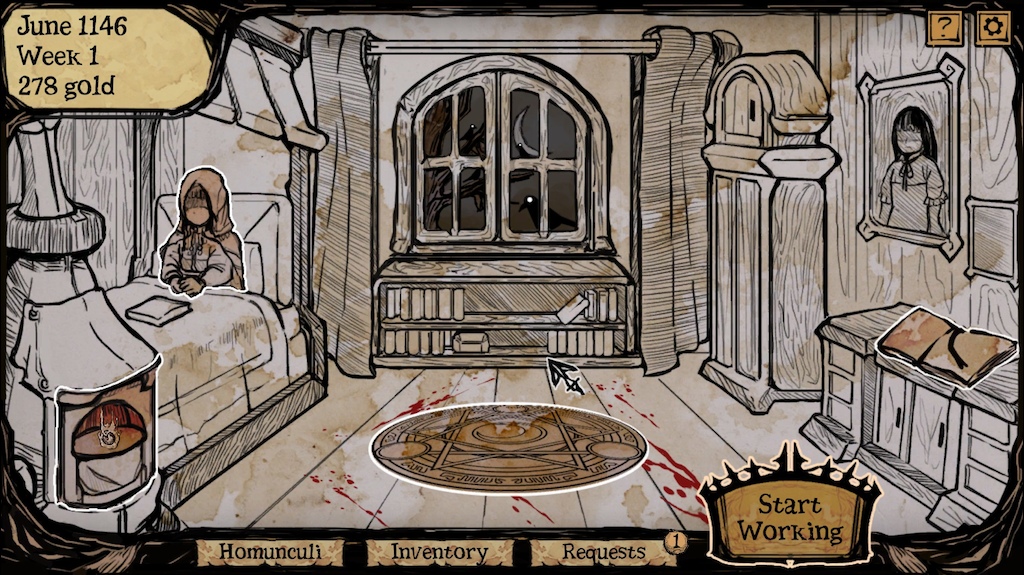
Check up on your daughter’s corpse or begin the fusion, perform alchemy to transmutate new homunculus, check up on your family of homunculus or set off for the 7-day work week.
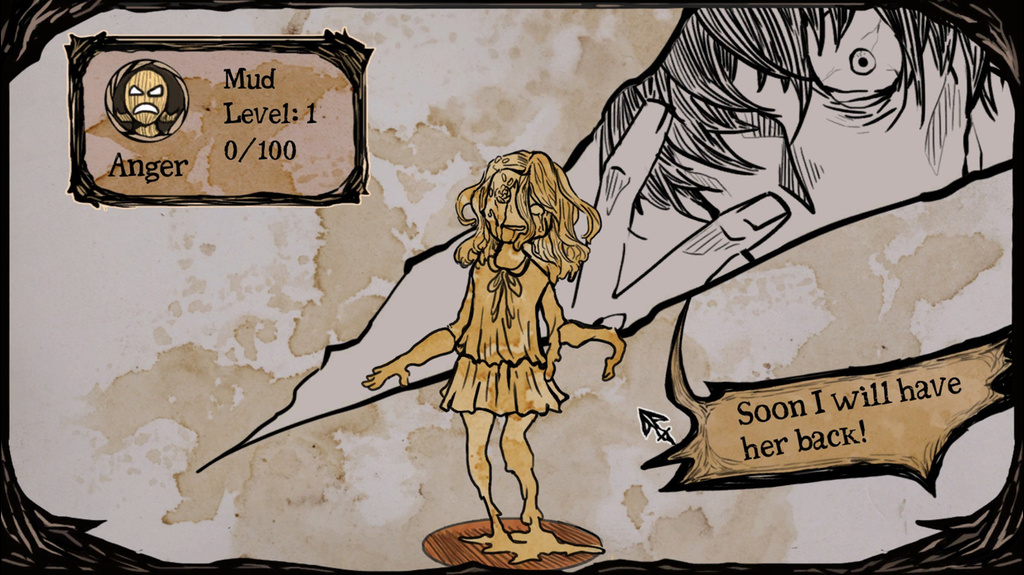
Homunculus comes in a variety of affinity emotions ranging from anger to joy, to sadness and fear – and it’s up to the player to determine which place of employment decreases the affinity levels the least. The affinity tied to every transmutated homunculus is determined based off of the three ingredients used in the alchemy process. The affinity levels increase when particular items are gifted to the daughter-like homunculi, or the player decides to spend some much-appreciated time with the miserable chemistry experiments.
Across the village map lays a number of places to send your precious homunculi daughters off to scrape together necessary gold to keep your loving daughter in a composed form, as well as keep your homunculus collection happy. There are around 2-3 places pertaining to each affinity emotion, like pet grooming for sadness, gardening for joy or smelting for anger. The players send off from their house for a seven-day workweek emulated through a flowing timeline lasting around only less than half a minute. Within this time frame players are able to freeze the clock while they assign their homunculi crew to specific workspaces to earn gold and experience, purchase necessary items and strategize the remainder of the work week. This whole process is fairly easy to grasp early on making for a simple concept, but can grow rather tiresome and feel like a monotonous grind the longer you play.
Possessing a collection of various homunculus each representing a different emotion selfishly puts gold into Faust’s pocket with every passing day. Earning gold allows Faust to keep his daughter’s body from decomposing throughout the weeks spent obtaining crucial alchemy ingredients and perfecting the ancient art. Raising your homunculus affinity levels are important for finding the perfect formula needed to resurrect your daughter which is precisely where players must experiment with sacrificing their many homunculi.
Once created, your homunculus are separated into affinity categories depicting their permanent emotion, such as anger, joy or sadness.
Collecting Your Sacrifices
Between the assortment of alchemy ingredients players will transmutate one homunculus after another in order to nurture, work and inevitably slaughter, in turn adding to your daughter’s overall soul affinity level. To reach your goal you must configure the perfect formula of the affinity emotions that perfectly match the amount of joy, fear, sadness and anger in which make up your daughter’s personality. The higher the affinity level for each homunculi means more of that specific emotion contributes to your daughter’s soul, but only after the homunculus has been mercilessly sacrificed. Every four weeks the player may decide to try to fuse the affinity-collected soul with your daughter – in an attempt to bring her back, but in doing so will apply all current affinity levels making all of your work prior to the fusion attempt a complete gamble.
The constant homunculus experiments, slave-driving mentality from our “hero” Faust, bizarre method of nurturing your twisted alchemy collection and unholy desire to relentlessly slaughter them as quickly as they were created is the entire concept of My Lovely Daughter. While grim as it is, the underlying tone urges players to dig deep within themselves and question: just how important is one’s life compared to another? The pleas and confusion displayed every time you decide to exterminate a homunculus are borderline gut-wrenching knowing this is your only option moving forward in the game. Still, growing a bond with your homunculus and watching as they begin to develop a faint wisp of trust for Faust only to be snuffed out in the name of the one daughter he actually gives a damn about is a tough pill to swallow, time and time again.
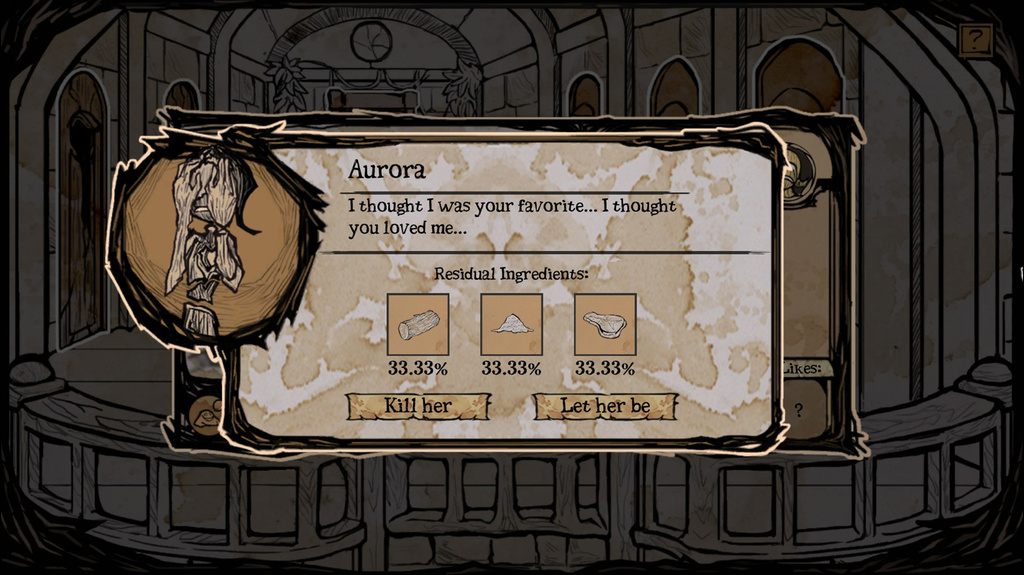
Once players have specific homunculus reaching a high enough affinity level – or things just aren’t working out – Faust may choose to end the bond through sacrifice…Sacrificing isn’t something Faust is exactly hesitant to either, often leading to gritty dialogue of his extraction of the homunculus.
The workload in the village rewards players with a modest pay in gold, but the cost of homunculus gifts, alchemy materials and expensive preservative balm – applying this periodically to your daughter’s corpse is vital in keeping her from decomposing – begins to add up. Aside from the typical everyday workspaces, players may also take on requests from the villagers. Usually asking for a number of specific materials gained from sacrificing your homunculus, i.e. clay, wood, iron etc., players may choose to take on these timed side quests to gain a hefty step forward in your gold total. While not mandatory, these do add a bit more depth to the otherwise tedious gameplay, but nothing to seriously change the overall concept of the game.
The dreadful story and bleak setting of My Lovely Daughter are enough to captivate players interested in experiencing a tale not typically told in video games. However, the constant grind and gambling process to achieve the overall conclusion is what may drive most of them off. While appreciating what the creators of My Lovely Daughter have accomplished in this maturely themed narrative, the gameplay is a bit lacking – let’s say something closer to a semi-strategic visual novel. Though the constant difficult decisions to sacrifice your lonely creations after so much time and effort put forth into bonding with them, and listening to their often depressing stories still somehow manages to weigh heavily on your conscience well after you finish the unique experience that is My Lovely Daughter.
The indie developers at The Behemoth have created a delightfully hilarious RPG strategy game with an addictive, simplistic outlook on the often confusing genre. The shrunken hand-drawn visuals, compelling backing score and hysterical dialogue offer a brilliant experience while combining some of the finer elements from the turn-based category. Build your army to prepare to fend off against absolute absurdity in brutally tactical combat.
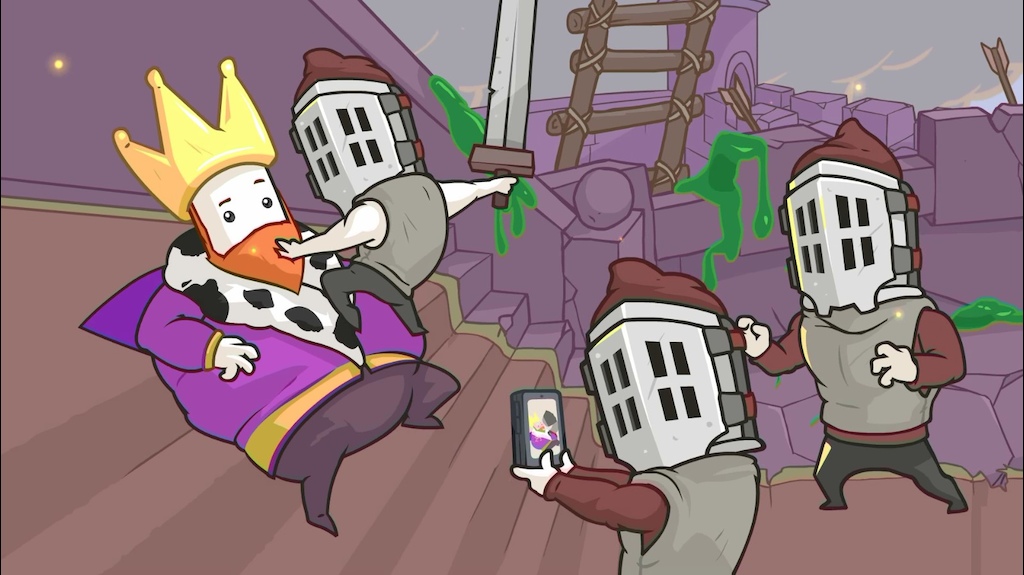
The game itself looks like a direct sequel to The Behemoth’s mega-successful 2008’s comical brawler, Castle Crashers, with unique hand-drawn visuals and off-the-wall humour. The characters that make up your party are as unforgiving as ever, squaring off against foes that only add to the off-beat charm and often greasy humour. Travelling across the sundry map in search of quests and ridiculous enemies sets players into a wagon ride filled with chaotic bouts, side-splitting narratives and combat that ceases to let up.
Within Pit People, you won’t find a team of highly skilled characters looking to overpower their way to victory, but rather a group of unlikely candidates with a rather grim take on life. Combat doesn’t take any unnecessary risks by adding complicating tactics, manoeuvres or abilities, but allows players to meticulously place their characters in strategic positions for the best outcomes. While players won’t have the standard options of defensive or offensive skills per every turn, the turn-based fighting style still manages to give off a fresh sense of tactical gameplay.
A Simple Twist On Strategic Combat
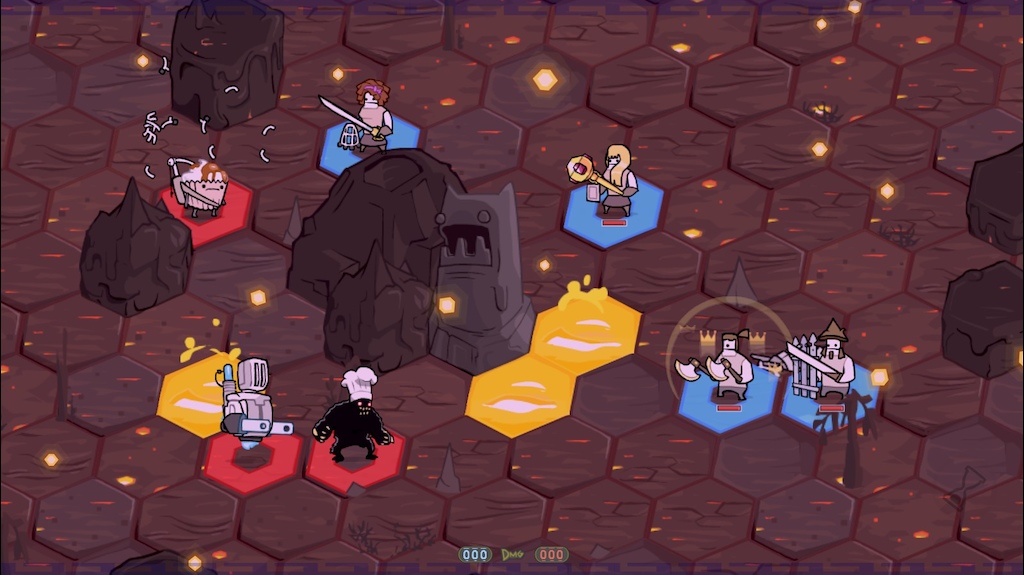
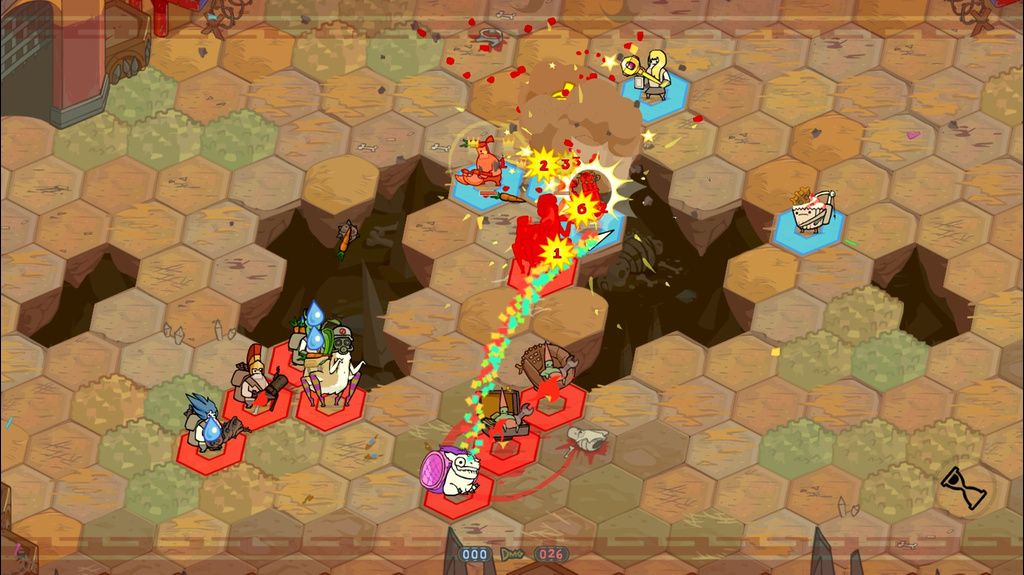
While in combat players simply select which position on the grid each character will move to in sequence. Each turn consists of the player choosing where each player moves to, as well as sitting back as your characters take damage. Your party members think for themselves as they will attack whichever enemy is closest to their position – as well as defend any incoming blows – on the combat grid. Moving around to appropriate positions, pairing your mates up against the weakest enemies and watching your crew take damage is all part of the dance when battling it out in Pit People, adding a broad sense of simplicity to the combat mechanics.
Pit People offers an easy understanding of the strategy inducing turn-based combat.
As your characters and battle companions begin their romp on the fantasy land of Pit People, each successful blow earns a bit of experience. Levelling up is a common occurrence, but never actually leads to any enticing unlockable skills, perks or abilities, but rather stronger and more advanced auto-attacks and a likely much-needed health refill. While the character development in any enduring RPG title will claim it’s a major asset found in the formula of keeping players successfully engaged throughout hours of gameplay, Pit People simply isn’t competing with that. That lack of any real character development is a bit disappointing – especially when live-action combat has been tossed out the window as well – but nonetheless offers yet another unique quirk from the veteran game developer.
The provocative nature of Pit People is borderline raunchy and filled with seemingly crude jokes around every corner. The narrator is an absolute cynic constantly pushing at the integrity of your group of “rough around the edges” heroes. One line after another leads to witty remarks that help keep the overall charm at play throughout the entirety of the campaign. The absurd monsters one will fight may come off a bit misleading at first, but once engaged the battles never seem overly impossible. Futuristic robots, dual wielding uzi sharpshooters or the vibrant unicorn foe barely show much of a difference when it comes to challenge of combat diversity, but does act as a solid form of exciting entertainment.
Nothing absurd about this…
Building your party in Pit People is a major factor in success, as players are able to capture a variety of monsters and enemies throughout their rambunctious journey. Leaving specific candidates left alive last will allow players to trap these beasts – with a simple net of all things – in turn providing players with an opportunity to add them to their squad. There are tons of different enemies and foes to capture throughout your adventure, all with their own unique assets in having them aid you in combat.
Enter The Pit
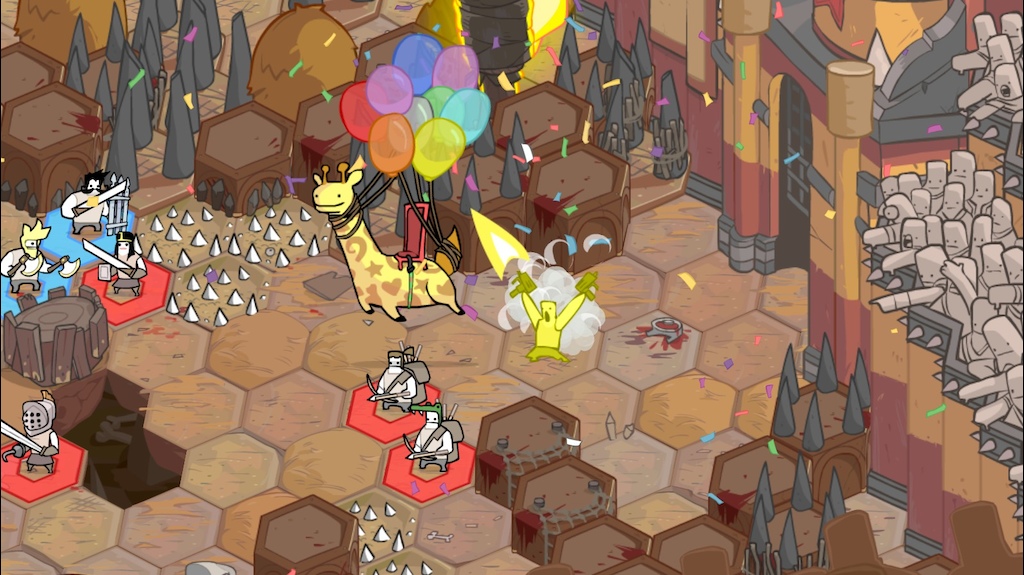
While the campaign is brimming with hysterical dialogue and methods of unlocking more carnage-inducing characters, The Pit mode offers more of a challenge. Taking on unfair waves of enemies or online versus matches provide the same amount of excitement that comes in the campaign, earning gold and levelling up your crew. The Pit offers the same style of combat found in the campaign, so there’s not much in the way of diversity, but facing off against online competition and unique waves of AI foes does offer a good amount of practice for winning those tougher battles down the line.
Entering the Pit allows players to face off against a variety of AI and multiplayer squads while levelling their own party and collecting valuable rewards.
Pit People is a vigorous turn-based title from a veteran indie team – and one in which they strayed from their usual path yet again. Taking on a new title in a genre that hasn’t been seen in their arsenal as of now proves The Behemoth isn’t afraid of taking risks to keep their library fresh and thoroughly enjoyable. The concept, gameplay, simple mechanics and, of course, off-colour humour shine delightfully all along the gruesome path left by your Pit People army.
Exploring the depths of space is an adventure all on its own, so developers really need to dig deep when adding to the flare that is galactic gaming. The Station (not this one!) is a short but sweet tale that follows the relentless curiosities our species seems to have on the vast void of stars, undiscovered planets and distant galaxies.
With attentive puzzle solving and as about as gripping as any story can get in the span of an hour or so, the indie team behind the first-person space station explorer has created an impressively stout adventure that underlines the mysteries of space.
You’re sent to investigate a three-man team of scientists who have gone missing during a top-secret space mission involving interplanetary studies. Upon discovering another race of sentient beings, the team is determined to study the unknown planet caught in a civil war.
Rather than getting directly involved in the unknown alien species’ conflict, the team thought it vital to observe from a distance as the war rages on. That is until the crew turns up silent over the transmitters which is precisely where you come in, a space station recon specialist.
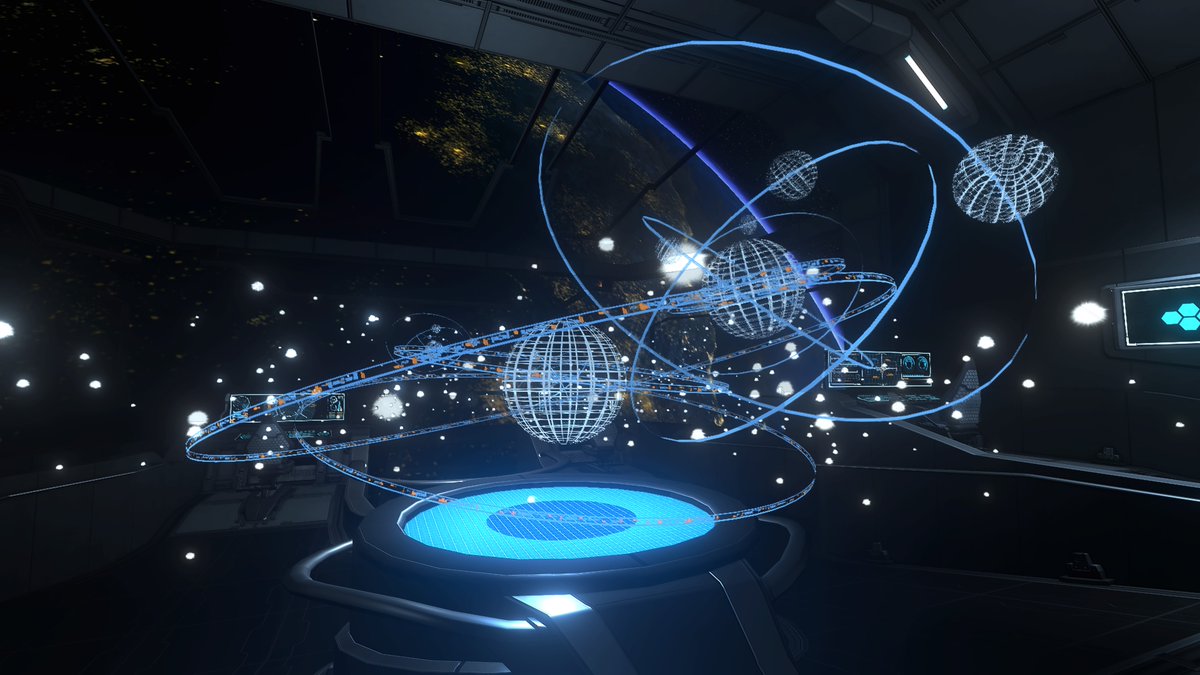
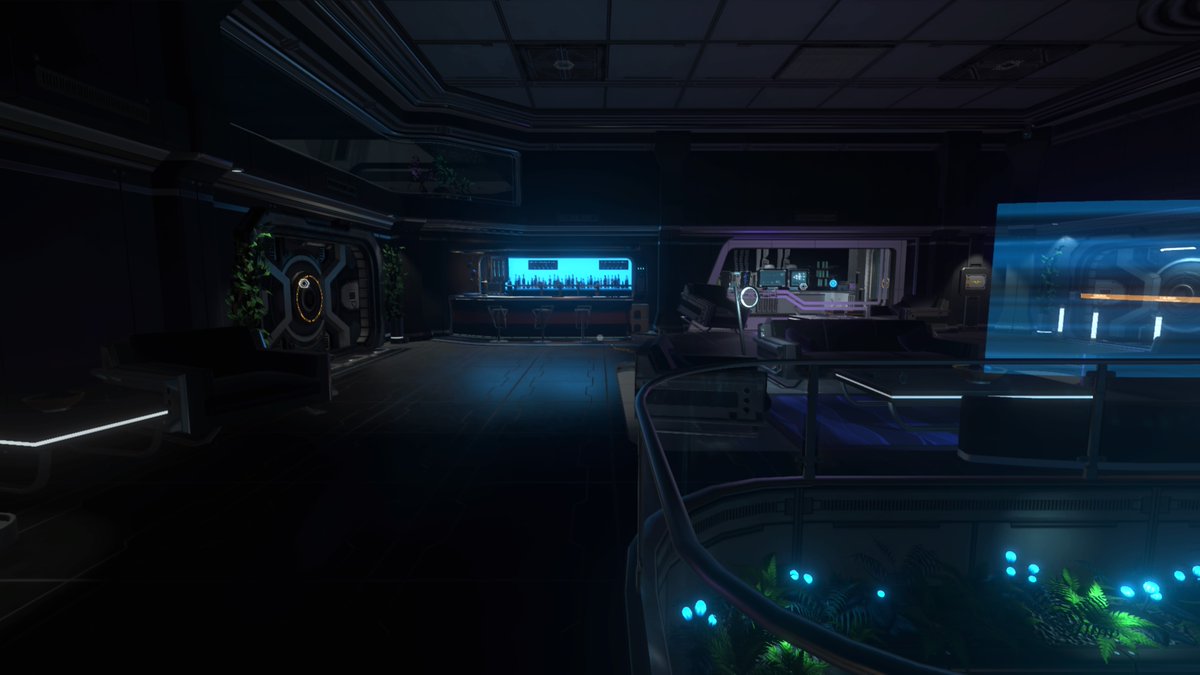
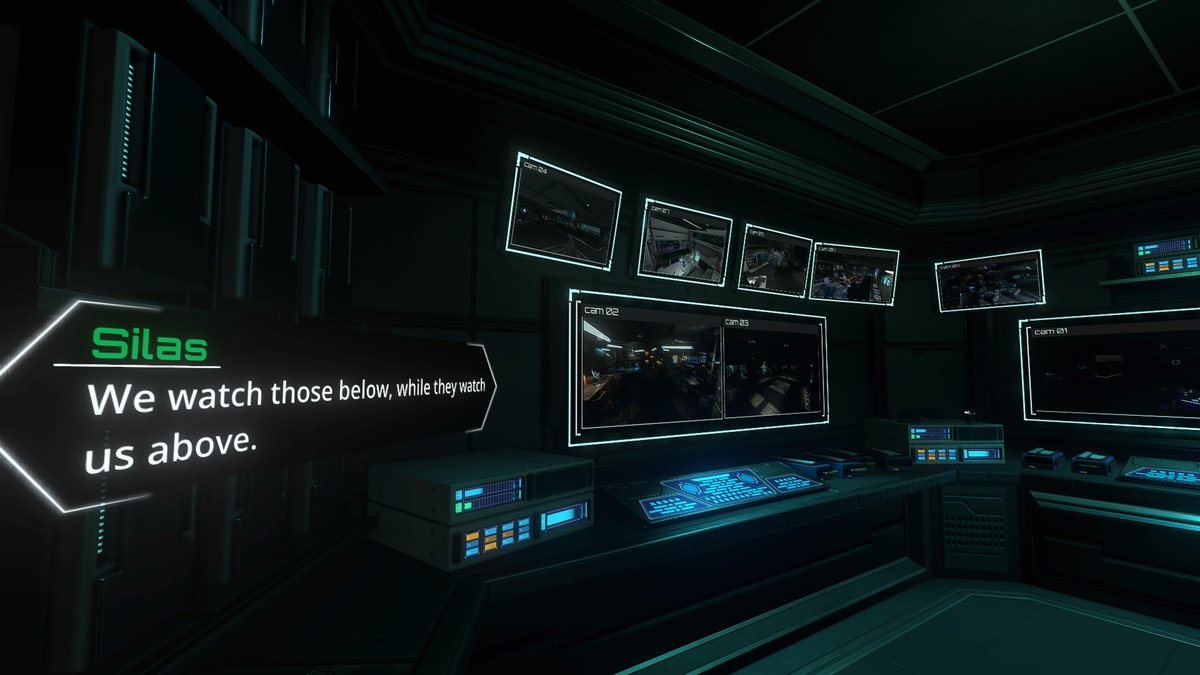
Welcome to The Station – a hidden space station created to study the nearby alien planet caught in the middle of a civil war.
Discover The Truth Behind The Warring Alien Planet
The Station takes players throughout a story that’s told through audio logs recently left behind from the crew, as well as a series of tasks and objectives that will ever so gradually push you towards the truth behind the foreign species.
In its short amount of completion time, however, players will find themselves amidst an intriguing plot line that is never as straightforward as it seems. While collecting pieces of dialogue content like emails and messages, informative audio logs and crucial pieces of equipment, you will continue to progress further into the station uncovering its many secrets.
The game is an honest balance of healthy discourse and thought-inducing puzzle-solving. Tasks lists frequently pop up to remind players of what they should be working on, but most everything else is left to the imagination of the player.
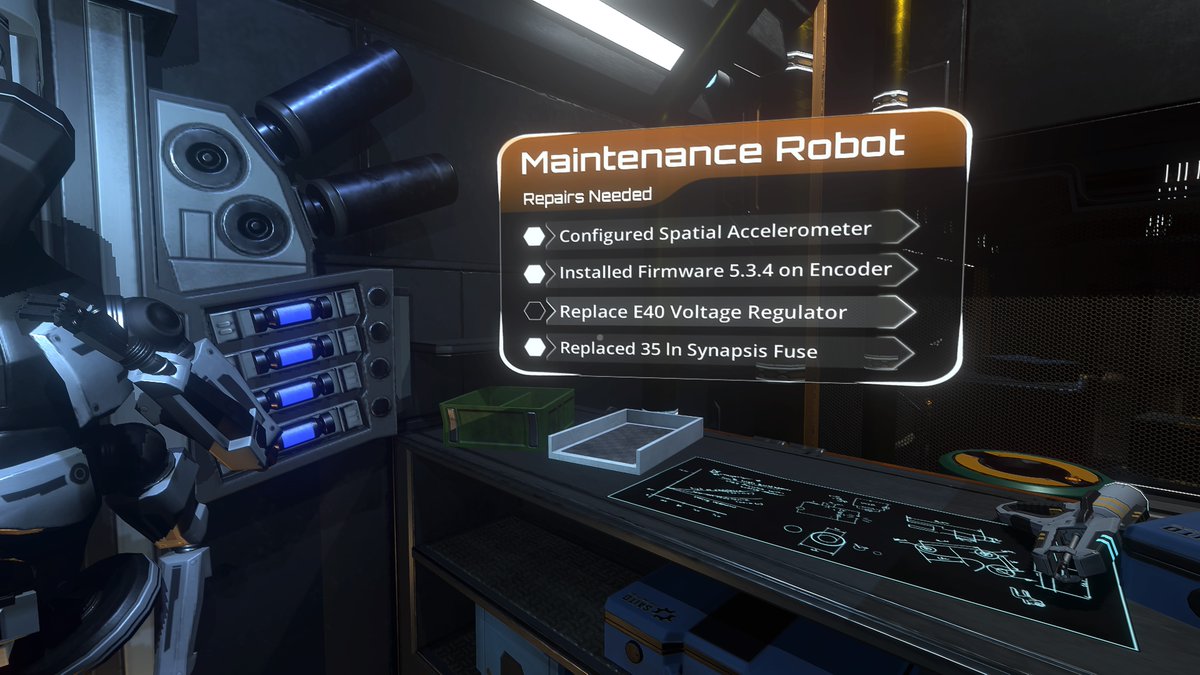
Repairing a maintenance robot by finding and replacing its components, or unlocking the team’s personal lockers by tracing their specific password, are just a few of the random tasks that will allow you to travel further into the station. The simple objective lists may seem easy enough at first, but nothing is ever as it seems when dealing with a failing space station.
Throughout your missions, you will find objective and task lists that help you explore further into the station.
Throughout your linear quest into the lonely space station, the overall mission never changes once. While the length of the game depends entirely on your ability to solve the tedious puzzles of fixing up everything around you or breaking into personal rooms/storage devices, players shouldn’t expect much out of the brisk space adventure.
The story leaves many interesting perspectives on the table with a truly exhilarating ending, but after one time through, nothing else changes and players can easily blast through in less time than an episode of Star Trek.
Uncover truths about the station through recent messages and audio logs left by the three-man team of scientists.
Worth The Trip?
All in all, The Station – as minimal as it is – serves its purpose as a mysterious and involved sci-fi puzzle adventure. The characters thrown into the plotline are interesting enough to keep players intrigued across their short journey, while the puzzles fit nicely into the setting of the lonely and seemingly abandoned space station.
With no outside threats or method of combat, players of all skill ranges can sit back and enjoy the curious and subtle thrills of solving the many mysteries of The Station.
Closers is an action-packed hack ‘n’ slash title that takes the repetitive excitement of side-scrolling action games and sprinkles in a few RPG elements to add to the flavour. As a free-to-play title on Steam, Closers is a perfect start-up for any newbie gamer, but also has enough depth and action-oriented skill sets to draw in the most dedicated of gaming enthusiasts. With the striking anime-style visuals, simple controls paired exceptionally well with the addictive beat ’em up gameplay, Closers is only held back by its somewhat unreliable game servers.
In the not-too-distant future, a powerful alien race known as Dimensionals have taken over in a worldwide invasion. City by city the globe began to suffer, but not everything in it was destroyed. Upon the Dimensionals pouring through the gates leading to another dimension, a psychic type of power known as Phase began to emerge. Affecting a small number of humans, they soon harnessed the power of the Phase energy, acting as the only means to deal with the invading species.
Using Phase Energy At Your Disposal
You take control of the Phase-power-inducing, alien-eliminating teenage group simply known as Closers. Each one of the elaborate characters comes prepared with their own set of skills, equipment and personality. While the story of Closers stays the same with each character, how it unfolds depends on which character you choose to play with. Slashing and phasing your way through hordes of menacing Dimensionals through the deep combat and character customization gameplay, players will discover a truly captivating experience with the heart of an ass-kicking anime.
Each of the teenage Closers team members have their own set of unique skills and abilities using the powerful Phase energy.
Closers is more than a mere solo hack ‘n’ slash title, as it’s held up by a solid MMO foundation with a thrilling co-op experience. Missions are given out in the central hub of the game, allowing players to team up, or go it alone across the constantly evolving story. Closers must always be connected to the online servers when playing, making it a simple task for players to easily hop into co-op missions, but losing connection happened occasionally – causing the entire game to crash out. This takes away from the immersive experience making it difficult to continue forth in the alien exterminating endeavour.
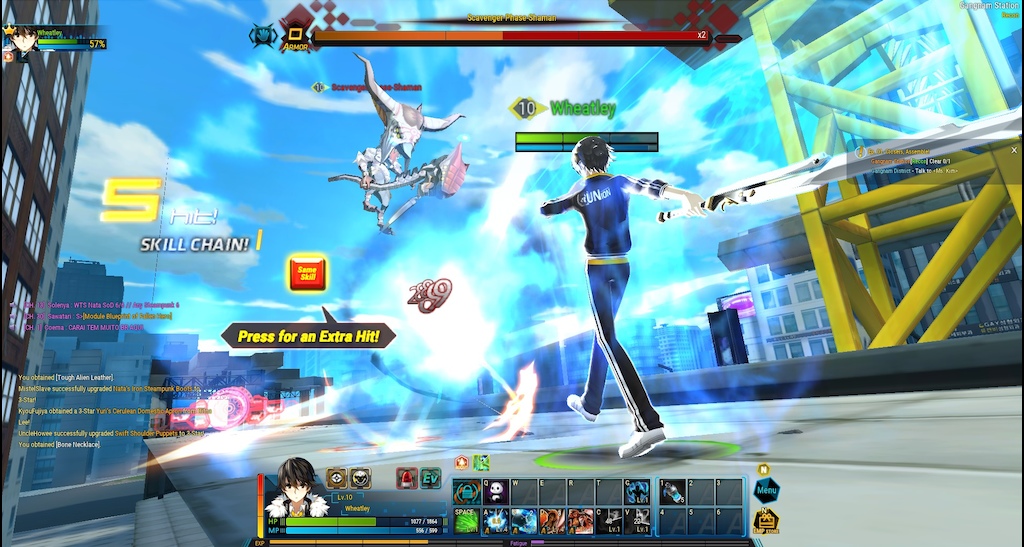
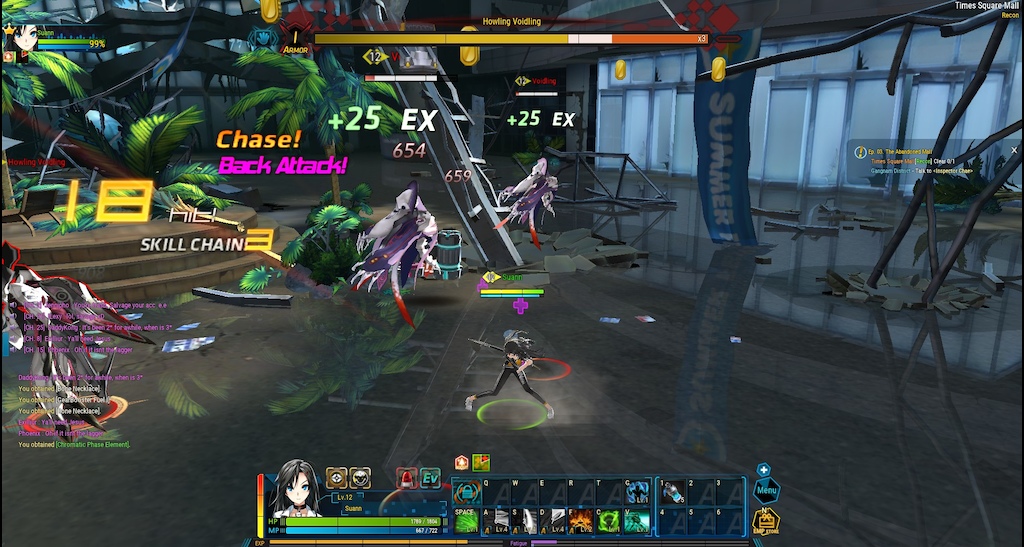
While my time with Closers found a few unreliable spots in the online servers, I was still able to thoroughly enjoy the episodic MMO inspired action RPG. In its semi 2D form, the side-scrolling view made the game feel as approachable as any other button mashing title. Though, the combat tactics dabble a bit further past your traditional beat ’em up strategy, as numerous skills and combos help push the battle further into a well-rounded combat experience. Each character has a set of three unique skills, finishers and a focus mode which adds to the damage dealt. Combining skills and turning them into combos works as the backbone to the battle system in Closers, pushing players to level up their characters and discover the vast amount of abilities, weapons and equipment hidden throughout the campaign.
Laying out combos is important to wipe out the many hordes of Dimensionals invading the New Seoul.
A Rewarding And Expansive Inventory System
As you make your way through Closers, the depth of the inventory system makes itself much more apparent. The many different pieces of stat-buffing equipment, weapons – both melee and ranged – and unique Phase abilities are vital in enhancing if you plan on tackling those hard to beat Dimensionals. Aside from co-oping online or brawling it out with the hostile aliens solo, players are also able to raise a pet within their inventory. Like beloved digital Tamagotchi pets, players will raise these creatures from an egg, into newborn through their adult life. When grown, they will aid you in battle but players must be sure to feed and maintain a healthy environment during their growing stages.
The Dimensionals come in many different forms, growing much stronger as the story progresses.
The 2.5D stylings of the side-scrolling hack ‘n’ slash MMORPG, Closers, is a gratifying experience too readily available to pass up. The free-to-play access and simple combat structure is as easily attainable as any fierce RPG infused beat ’em up can come, and doesn’t seem to be greatly hindered by extra costs and microtransaction packages. The episodic timeline shines in the realm of anime-inspired video games, fueled by the adrenaline-inducing action brought forth by cut-throat battles and an expansive character development system.
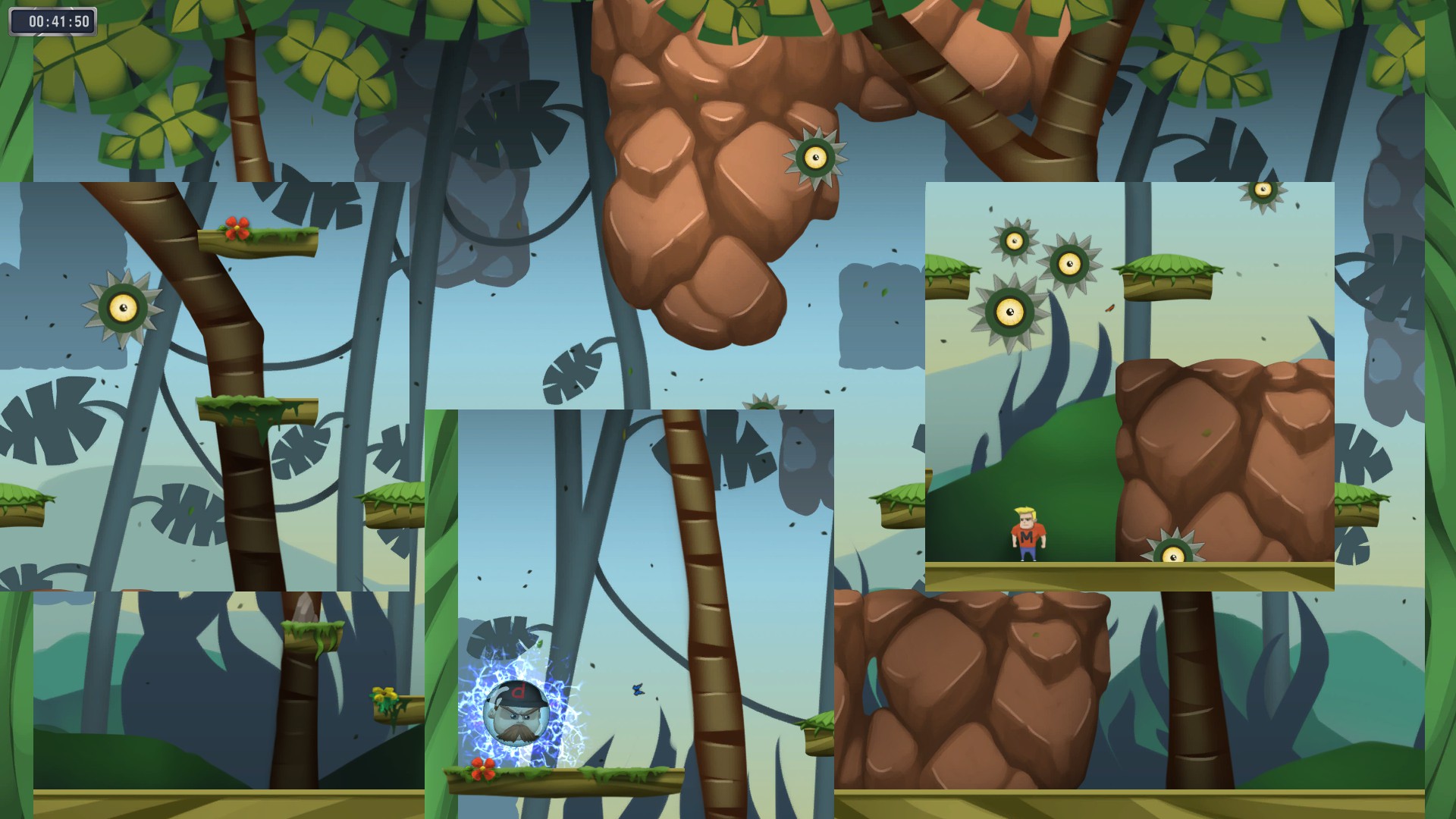
The skewed action in Swaps and Traps brings a delightful new approach to creating something modern and original to the typical standards we see in today’s platforming releases. While the same deadly obstacles and long jumps that help construct some of the best aspects from platformers today still exist in TeamTrap‘s debut release, a new kind of trap lies atop the head of the evil Divider’s head. His magical hat is capable of completely disorienting the screen, giving our hero Mike quite the methodical platforming adventure.
The blonde haired, muscle-bound protagonist is as carefree as they come, but when Mike hears of the theft of the enchanted hat by none other than his nemesis, ‘Divider’, things become a little more personal for our hero. You see, this mystical hat has the powers to change perception right before your eyes, and it’s up to Mike to retrieve the special keys, in turn, capturing the Divider – and his vile, disorienting ways. The story may be completely bonkers and provide very little depth of intrigue yes, but the gameplay does its job to keep you entertained.
Forgettable Plot With Memorable Gameplay
While the plot line isn’t anything to rave about, and the extremely awkward voice-overs strip any sort of justice away from the otherwise slick visuals, the concept behind Swaps and Traps is a doozy. Each stage consists of numerous platforms and treacherous obstacles that the player must evade to reach our dreadful villain, Divider. However, before Divider can be reached – which promptly clears the level allowing access to the next area – players must collect the cursed key(s) in each stage.
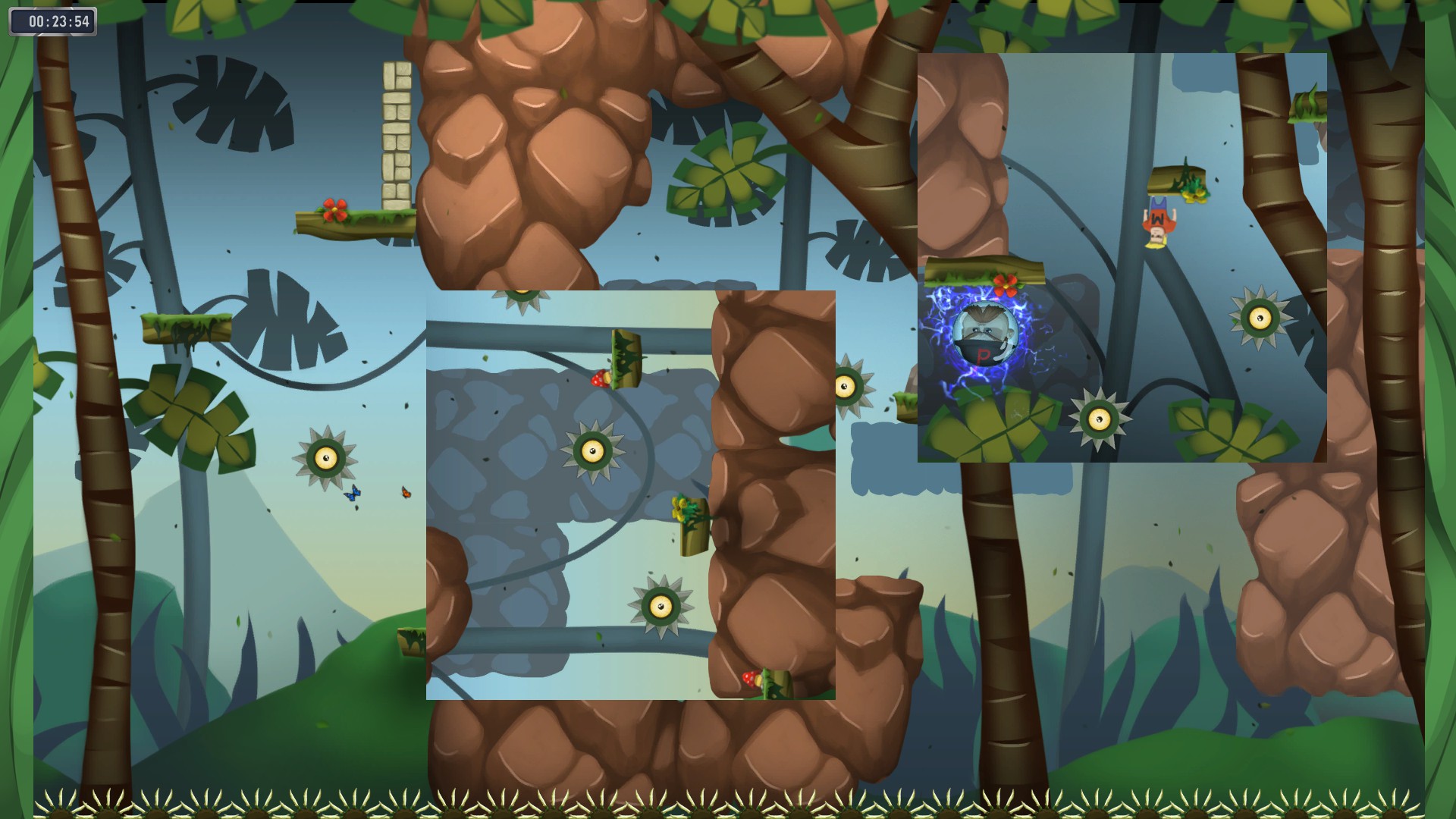
Finding yourself upside down completely changes the way you need to approach each obstacle.
Starting off the game with only one key per stage, Mike leaps and dodges his way around the small screen-sized obstacle course to grab the golden key. Once the key is grabbed, however, is when the levels begin to get interesting. Snatching the key may be the means for clearing the stage, but it also is the “key” element in completely rearranging portions of the screen. Just when you think Swaps and Traps will be your everyday modern platformer, things take a twisted turn and the game really starts to shine.
Taking one portion of the screen and swapping it with a portion on the other side can cause some very confusing, but highly entertaining reactions throughout the game. As you progress, the portions become smaller and more keys begin to appear in the stage, which adds more disorientation to the already bewildering stages. Collecting multiple keys in one stage can add an extra portion to be swapped, or even more puzzle inducing mayhem by rotating an already swapped portion. It’s common to find yourself re-configuring the controls mid-stage to adapt to an upside down platformer.
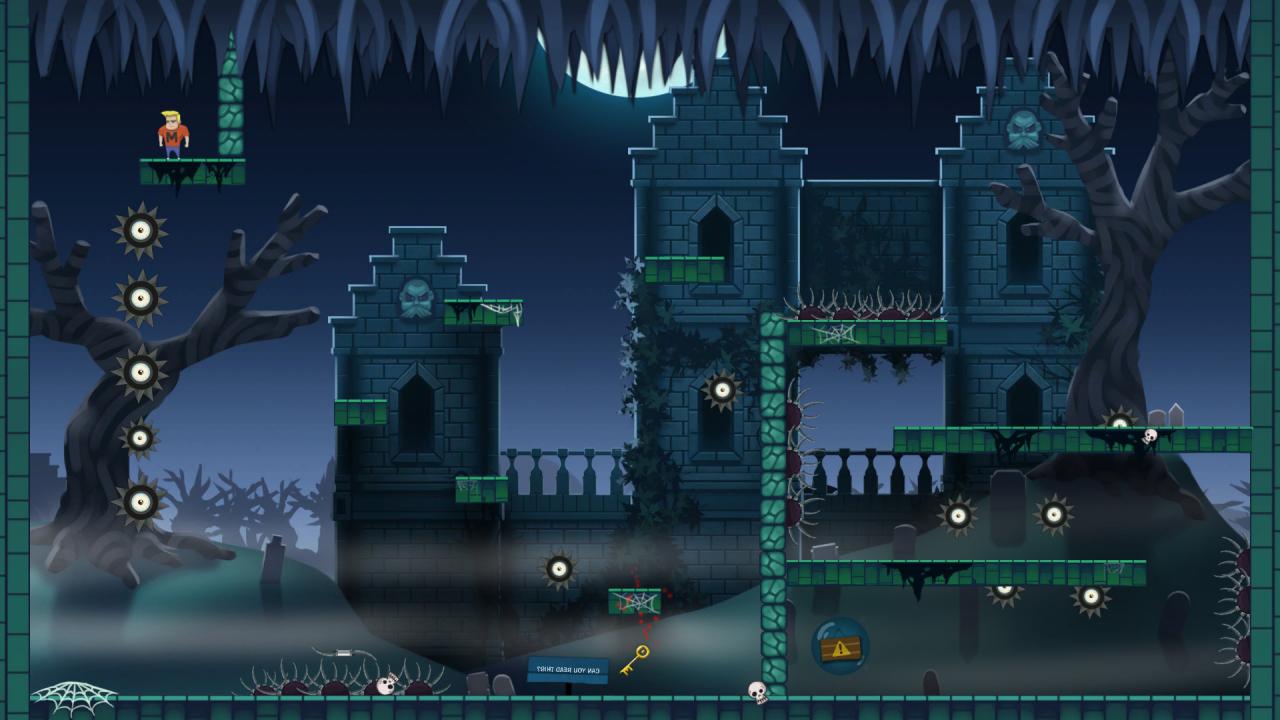
Different themes take you through the story – from wild jungles to dark and eerie castles.
A Disorienting Adventure
As you begin making your way through the stages things become not only more difficult from a platformer standpoint, but upon collecting numerous keys in one stage the utter confusion will begin to set in. Luckily, the developers realize how swapping out sections of the stage, as well as flipping them 180 degrees, can turn a rather straightforward level into an altered mess. Players thus have the option to reference back to the original layout in still photo form. With the press of the button, players can view an image of a particular stage’s original layout, even after sections have been swapped and flipped. As players begin to experiment they will soon discover that blindly leaping into a swapped section can often lead to death.
What really makes Swaps and Traps unique is that the entire stages aren’t completely flipped, but merely particular sections. While most of the stage might stay put after collecting a cursed key, the difficulty lies in the swapped sections that completely skew the player’s perception. Flipping and swapping out sections slows down the game as players try to figure out just how to land in a desired area, but that’s exactly what makes Swaps and Traps so approachable. Like most difficult platformers, our protagonist perishes after only one hit, giving a huge emphasis on trial and error, but the quick retry accessibility makes things much more attainable. The stages are extremely short, sometimes only taking a few seconds to complete, but it may take a few dozen tries to overcome some of the more challenging obstacles.
Gathering keys will continue to disorient the player’s perception of each stage, making for a wildly puzzling platformer.
Tons Of Swapping Fun To Be Had
With up to 30 stages in each of the three chapters and a handful of off-the-wall bonus stages, Swaps and Traps never seems to come short of throwing thought-provoking challenges at the player. The platforming itself is a joy to control making for easy-to-learn gameplay, but the swapped portions of stages add just enough to keep the game thoroughly absorbing. While the story itself is forgettable, and the atrocious voice-over work does more damage than good, Swaps and Traps totally makes up for it with original and over-the-top platforming action.
The immeasurable list of old-school inspired RPG titles seems too dauntless to rifle through, even for some of the most dedicated RPG gamers around. Dragon Sinker follows in line with the rest of the 8-bit moulded titles released from publisher KEMCO, but still manages to provide a few subtle twists to the waterlogged RPG genre. However, I’m just not sold it’s enough to separate itself from the enormous heap of other traditional turn-based RPG titles that consistently overflow the industry.
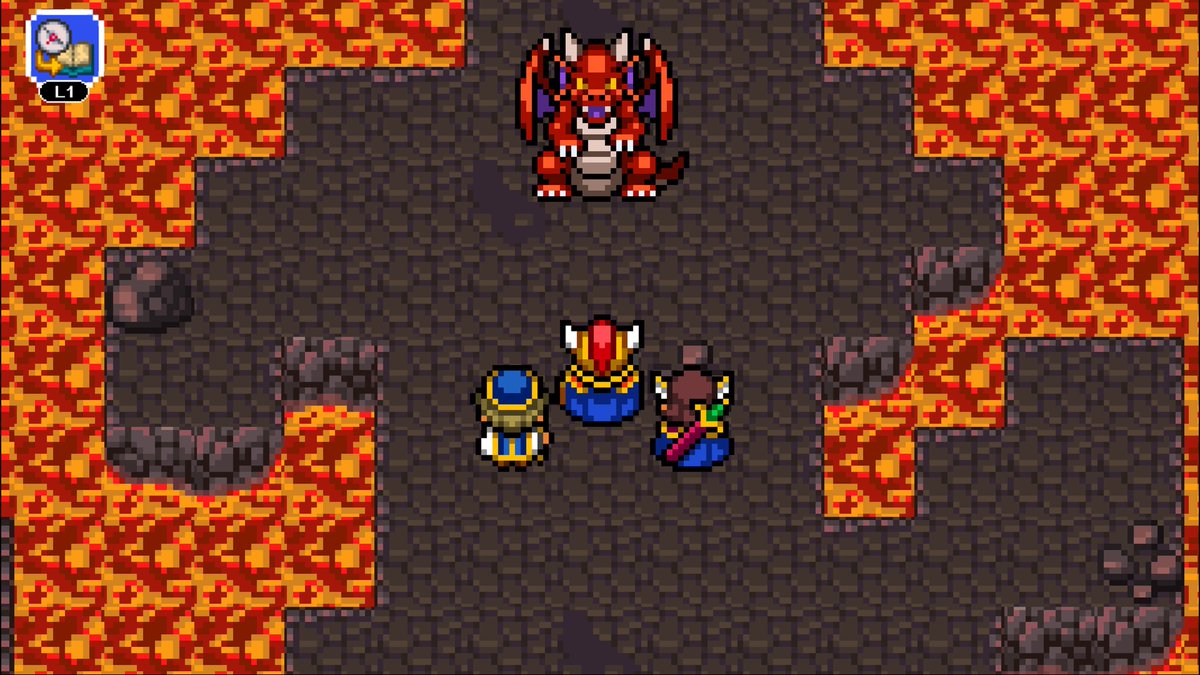
As any enthralling attempt at a fantasy story begins, players are thrust into an epic battle with a mighty dragon foe known as Wyrmvarg. In a vast world where the three distinct races – Humans, Elves and Dwarves – are all divided by racial tension, players will need to find a way to unite the land and take out the dreaded dragon threat, (LOTR, to some degree). Throughout the lengthy adventure, players will find themselves amidst a journey that feels similar to the other nostalgic experiences available. Taking on the many monsters that lurk through the overworld map and its many dungeons in search of the coveted weapons capable of slaying the beastly dragon is nothing close to original, but that doesn’t mean Dragon Sinker isn’t an enjoyable experience nonetheless.
Yet Another Dragon/Fantasy Adventure
The 8-bit pixellated visuals scream nostalgia and take players back to what can only be described as the golden age of RPGs. As you wake from your deadly fight with the dragon enemy – Wyrmvarg – players take control of the human warrior, Abram. As you progress through the story you’ll soon discover your hometown is only a small village in a very vast world. Each of the three races has their own regions throughout the lands, as it comes down to our team of heroes to unite them and take out the looming threat.
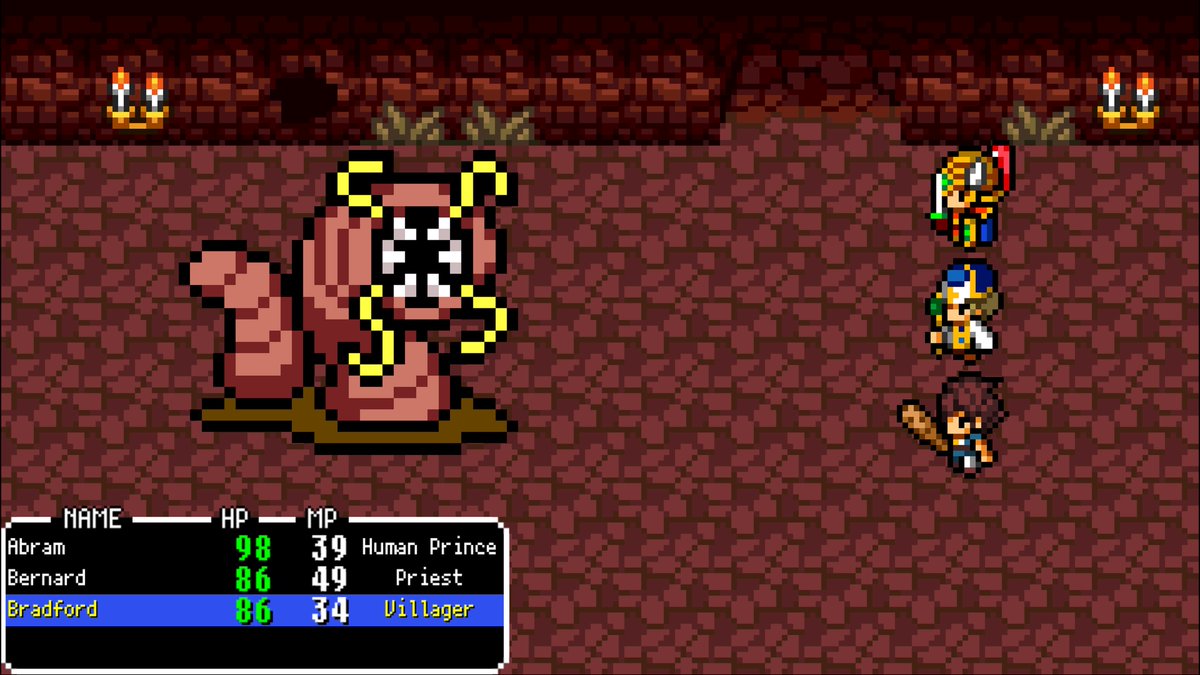
In standard RPG form, Dragon Sinker has players exploring an overhead map in search of villages and dungeons. As you travel from dungeon to dungeon or village to village, random enemy encounters occur bringing up the turn-based battle system. The combat is as traditional as most other turn-based RPGs, as players choose from a variety of physical and elemental attacks for each one of their party members. After each character – up to four in a party – has selected either offensive, defensive, or support tactics, it’s the enemies turn to react. It’s yet another take on one of the most common and simple battle systems found in traditional RPGs and done so in an easy-to-learn fashion.
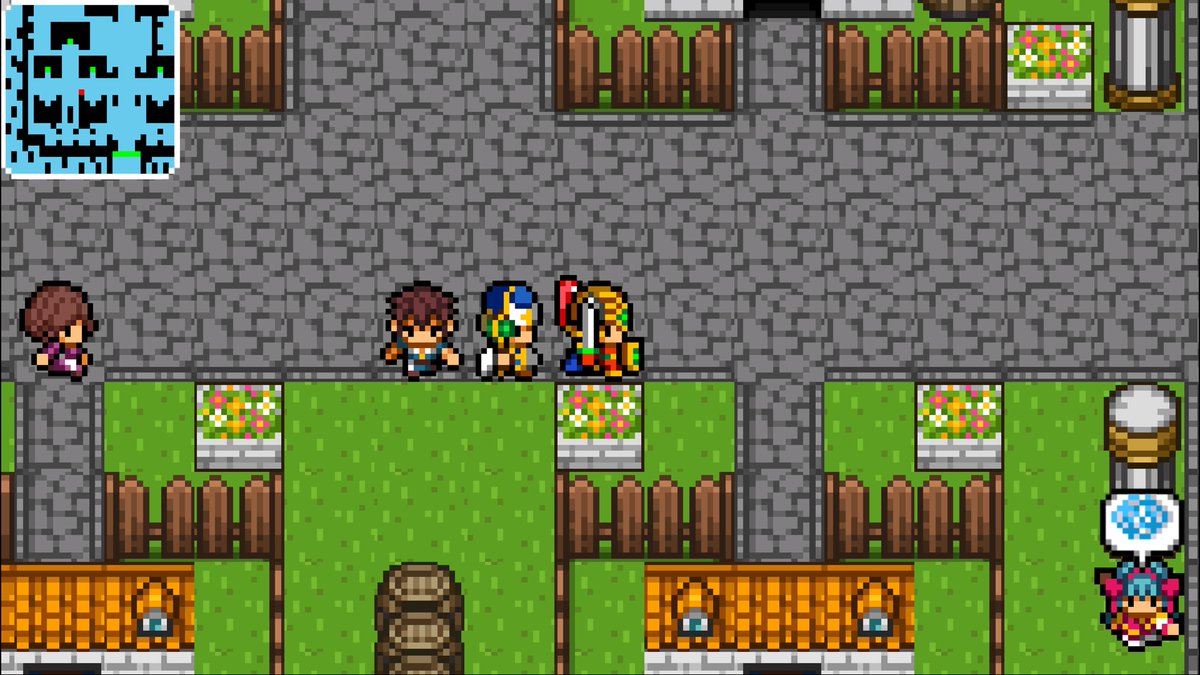
As you meet new warriors your party will expand and grow with a diverse cast of characters.
A Unique Team-Based Party System
Where Dragon Sinker takes a different path from the cookie cutter RPG formula is the unique team system. As distinguished earlier, the game’s world is populated by three separate races. As you continue your journey as a noble human warrior, you will meet characters from both the dwarf and elf tribes. As the legend has it, the dreaded Wyrmvarg was once defeated by a trio of warriors containing one warrior of each race. As you may have guessed, this is precisely what players must accomplish, among other tactics, to take down the fearful beast.
As you begin to build your party, players will become aware of Dragon Sinker’s unique team system. As you acquire new allies they will be paired with one of the three different parties. The player will control all three parties with the ability to swap between them in battle. Each team resembles the Humans, Elves and Dwarves – giving a bit more strategy during the tactical battles. Keeping each of the parties – and party members – distinct with multiple effective skills and abilities, the unique party swapping system helps players switch between weaknesses and other affinities while in the heat of battle.
The turn-based combat system is a staple in the retro RPG era and one that’s not forgone in Dragon Sinker.
A Simple Experience
While the overall tone of Dragon Sinker doesn’t actually add anything new to the retro RPG category, the game still provides a sound and simple experience. Whether you’re a gamer who maybe missed the boat on the 8/16 bit RPG era, or perhaps an RPG enthusiast looking for the next sentimental experience – Dragon Sinker hits a few of those feelings, and rather sharply. Just don’t expect any game-changing moments throughout the brunt of the journey.