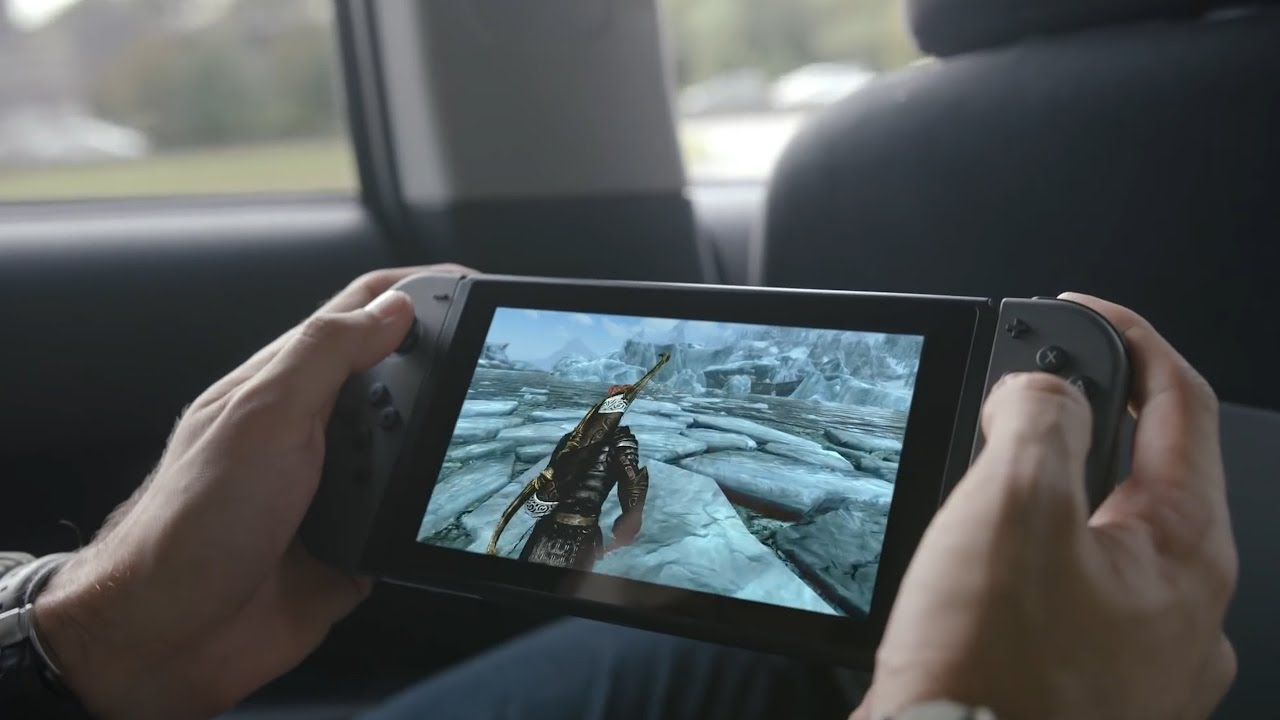
The more I see on this, the less I understand it. It’s like a complex algebra equation, it all seems a little unnecessary and pointless. I loved Skyrim and I love my Switch, but do the two need to be united? Absolutely not. The two are separate entities and can live in complete isolation from one another.
You see, my Switch doesn’t need Skyrim nor does Skyrim need my Switch. Skyrim has had its time, even more so with the recent remake outing, and I loved every single minute of it. But Skyrim fatigue is well and truly in effect; I’ve played enough Skyrim to know I’ve had my fill. There’s nobody out there that hasn’t at least dabbled with it in some variety surely?
The few die-hard Nintendo-only fans out there must (even) have very little interest in this as well. There’s a reason why they buy Nintendo consoles; for their unique experiences. Nintendo offers something different, they don’t conform to the other console cycles or trends. They do their own thing and that’s what Nintendo needs, not to open up the gates to two generation old titles.
Now I’m sure Skyrim will run absolutely fine on Switch and seeing it on a portable platform would be amazing. Sure. But do I need that to justify my purchase by showing how powerful the Switch actually is? I think we all know the answer here. Whichever way I look at it, I just cannot fathom it.
It’s the fact that Nintendo has done the above, by sticking to their guns, that makes them who they are. For better or worse, their loyal fan base will stand by them throughout this as well – I think they’re taking a step away from what they do best though. What I’m saying is: more like Odyssey, less like Skyrim.
It’s not costing them anything to develop Skyrim on their latest console, granted, but surely Bethesda have something better to do with their time as well? You know, like milking us for a re-release of a complete edition of Fallout 4 on PS4/XB1, and not bringing it to the Switch.
Japan is well-known for its eccentric commercials and their love for lycra and spandex on their tokusatsu superheroes; and they have taken their idiosyncrasy a step further and fashioned a lycra-donning superhero, whose duty is to quench the citizens’ thirst with Pepsi—Pepsiman! And yes, they made a video game based on this soda superhero.
Like Tony the Tiger from Frosted Flakes, Pepsiman serves as Japan’s official licensed mascot. It’s a shame Pepsiman never reached the other side of the world, or even expanded beyond the Pacific side of Japan because the West is losing out on a worthwhile advertisement.
And there have been countless console games based on licensed advertisements and, almost all of them, do not compare to Pepsiman’s unyielding explosion of unconditional satisfaction. Take, for example, Burger King’s Sneak King, I did not even bother to invest 5 minutes into it before I popped it out of the disc tray; and now, it is probably shoved beneath broken controllers, collecting dust.
Japanese Pepsi commercial hosting Pepsiman.
Just a little backstory between me and Pepsiman: my adventures with this Japanese mascot started when I was still a padawan in video games and my fingers lacked the dexterity I have now. Walking into the living room, I remember my older brother wide-eyed and slightly perspiring, standing in front of the television playing none other than Pepsiman. I kept my eyes glued to Pepsiman and five seconds later, I collapsed on the ground laughing. The amount of absurdity happening in the video game crucified me into a non-stop chain of choking cackles and pig-snorting giggles.
C’mon, whoever is not tickled by the occasional soprano-pitch wailing, “Pepsiman! Pepsiman!” must not have a soul—well, that’s not for me to judge. I digress. Overall, Pepsiman’s cheesy quirks and easy-to-follow mechanics definitely deserves a high-five for a licensed advertisement game.
Almost similar to Sonic the Hedgehog, Pepsiman’s objective is to run from Point A to Point B whilst avoiding obstacles and collecting treasure points, except the obstacles are flying sofas, banana peels, and angry drivers, and instead of rings, Pepsiman gathers Pepsi cans.
Pepsiman passing through the neighbourhood.
All in total, there are 8 stages in the game; totalling a collection of 800 Pepsi cans. For each can Pepsiman collects his health bar increases along with the countdown timer; giving Pepsiman more leverage.
In most stages of the game, the perspective is played behind-the-back of Pepsiman. Take note, Pepsiman does not stop running and he is constantly on the move. Have you ever played Crash Bandicoot: Warped where Coco Bandicoot is riding her pet tiger on the Great Wall of China? Yeah. Pepsiman is very much identical to that.
The ’90s truly loved their platform games and Pepsiman rightfully belongs in that sphere of love.
With that said, if you grew up in the ’90s and missed out on this, it’s never too late to quench that gap with Pepsiman!
The good folks over at Get Good Gaming have posted a new video that discusses indie games, focusing on their place in the games industry, among other things. As you know, we’re no stranger to these types of games ourselves.
– Takeaways –
Some key takeaways from the discussion ask the following:
Are we undervaluing indie games?
What exactly is an indie game today anyway?
Do indie developers deserve more money?
Why is there this mentality that indie games are not ‘as good’ as AAA games and don’t deserve as much attention?
There’s even a bit in there about TV series True Detective… What’s not to like?
It’s certainly worth a listen – you can check out the full video below.
Who are Get Good Gaming?
At Get Good Gaming, we strive to start conversations that include unique and diverse voices, exploring the many topics that make our chosen field of entertainment so wonderful and, sometimes, so frustrating.
Our Get Good Talks podcast tackles everything. We lay out the facts, and offer up a variety of opinions to incite thoughtful reflection with an engaged audience.
Irony’s a cruel mistress and make no mistake. Just last week, we thought indie platformer Cuphead’s near-unprecedented smash success might signal a welcome change in the air for the gaming industry, particularly during a year abundant with studio closures.
But if the latest development in publisher EA’s fraught era at the helm of licensed Star Wars IPs reminds us of anything, it’s that some trends aren’t so easily bucked as one might hope.
Before this troubling turn of events, the team was hard at work on a new action-adventure set in the universe of Jedi, Sith and Gungans, first teased as a “story-driven” IP upon EA announcing the project in 2016.
Work on said untitled licensed effort will still continue beyond Visceral’s shutdown, however, albeit in the hands of EA Vancouver and with an apparently revised modus operandi: expect less of a “story-based, linear adventure game” and more of a “broader experience that allows for more variety and player agency”.
That’s according to EA’s executive VP, Patrick Söderlund, and while we’ve no idea precisely what he means either, apparently a core focus of the refreshed project will be providing an experience that encourages players to return “for a long time to come”, presumably with extra content atop its “stunning visuals” and “authenticity”.
Shifts in the ‘marketplace’?
Given Söderlund’s emphasis on how much of the rationale behind EA’s tweaked approach has come thanks to the publisher “closely tracking fundamental shifts in the marketplace”, that the move has already prompted more than a few grumbles should come as no surprise.
Relying on focus groups and market trends has its benefits, of course, as anyone on the marketing team for 2015’s controversial Battlefront reboot will surely attest today, but allowing that to hamper creative vision carries equal risks, not least if it means we lose the opportunity for a Last of Us-rivalling tour de force of Star Wars storytelling as a result. And guess what? We like single-player games.
With all that said, it’s worth remembering that we only ever saw brief glimpses of Visceral’s IP in EA’s E3 showreels, so we’ll never know for sure whether the developer’s approach to the project would’ve born fruition or proven misguided in hindsight.
For now, then, let’s keep our thoughts with the enviably creative minds at the fallen studio who’ll now need to seek gainful employment elsewhere. No doubt they’ve bright futures ahead at EA or elsewhere, and we wish them the very best of luck en route.
A music action-adventure set in the recesses of the human mind.
This is how Bedtime Digital Games describe their new game Figment: if you are familiar with Back to Bed, an adorable puzzle game about guiding a sleepwalking man safely back to his bed, you will quickly see the resemblance. (If the title of the game sounded familiar, you probably remember Chris’ preview here).
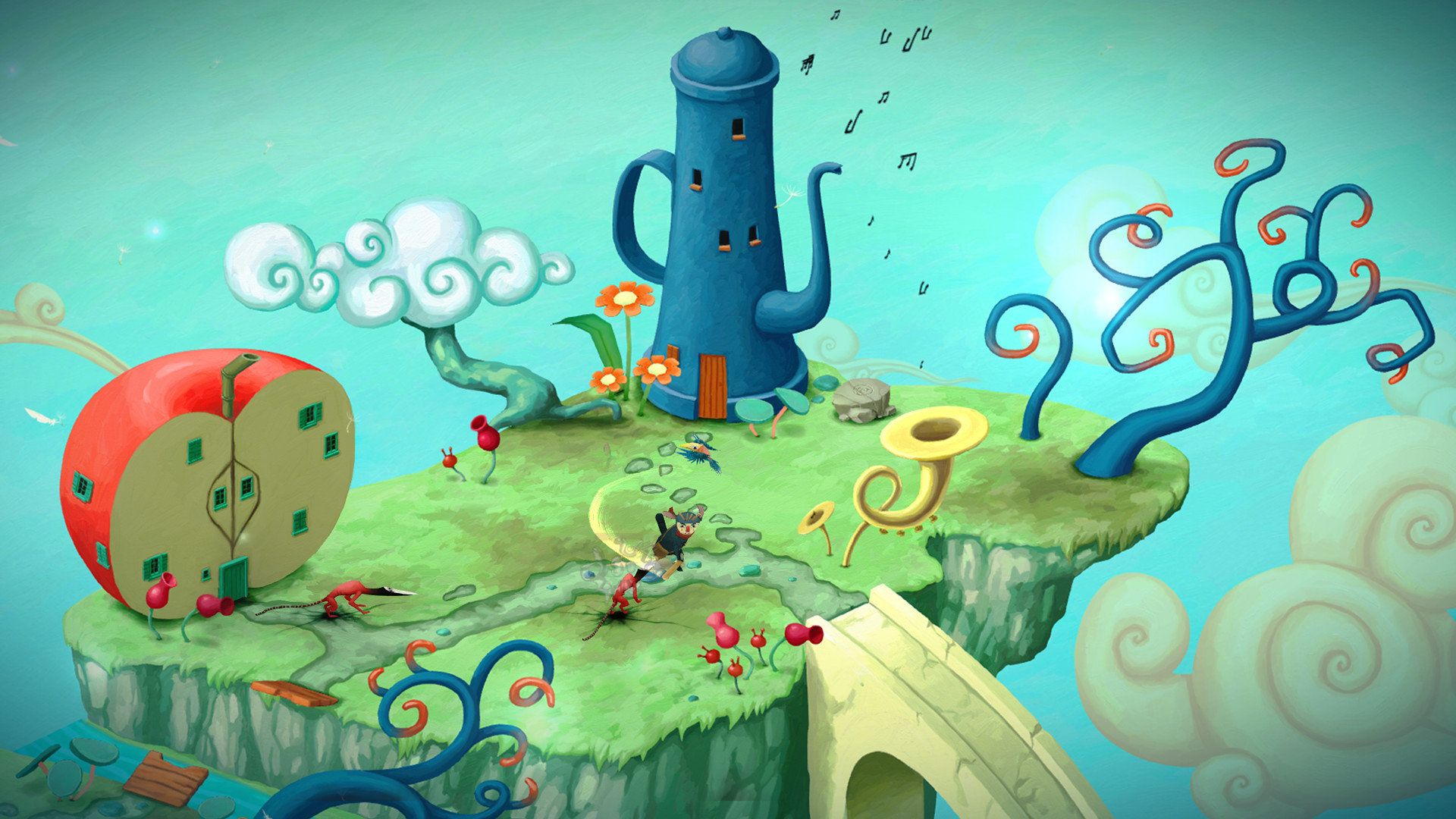
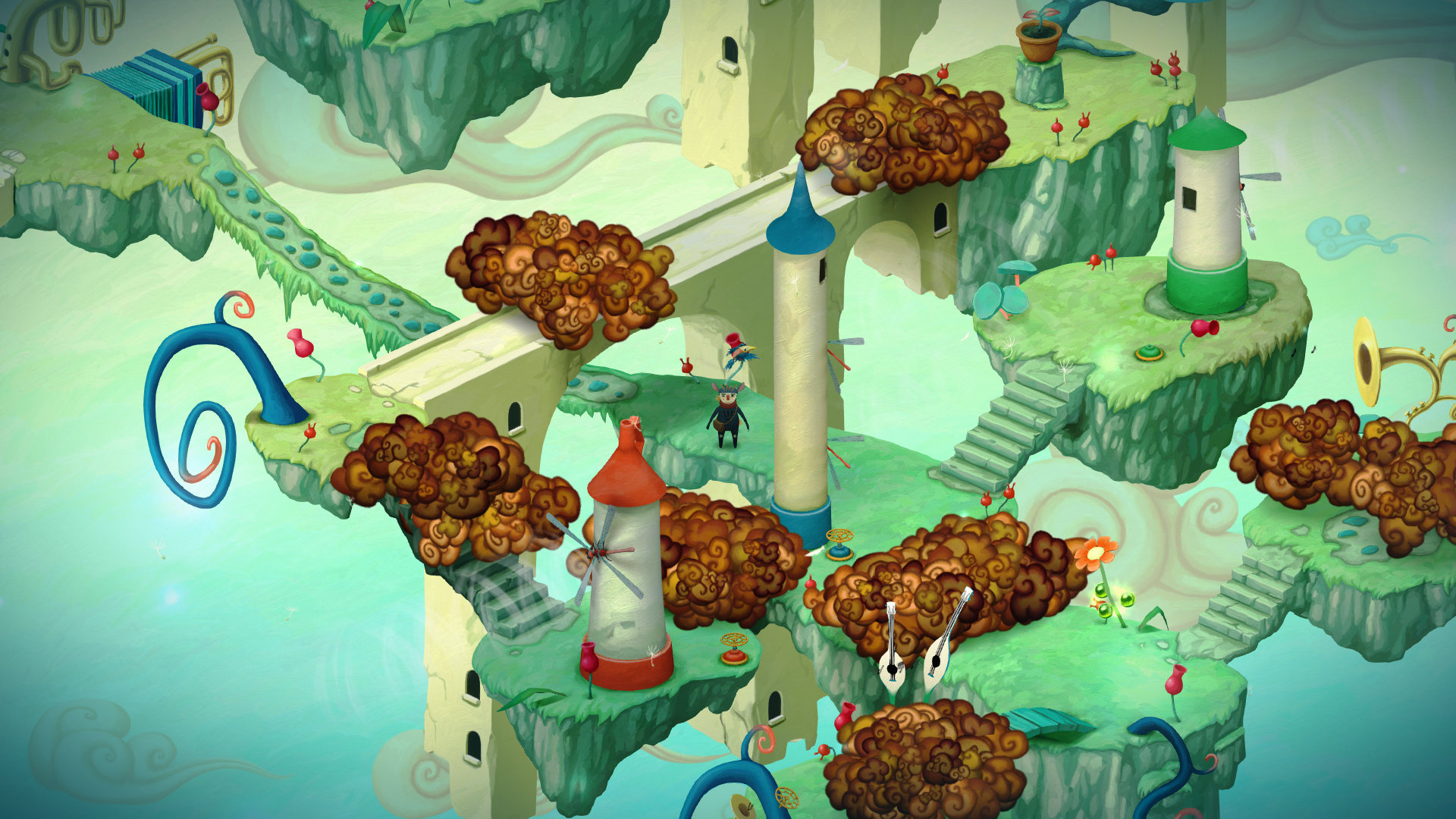
The first thing that hits you when entering the game is its gorgeous hand-drawn art style, which was one of the most prominent qualities of its predecessor as well. Starting with a pretty little house, we meet our protagonist Dusty, a careless and pessimistic character, who doesn’t care much for anybody or anything. His companion, the bird Piper, works as great opposition to him – cheery, optimistic, and creating bad puns all day long. Well, perhaps some of them are clever, I guess.
Dusty’s scrapbook is stolen by a dark, sullen creature – and we learn later it’s a manifestation of a nightmare. Dusty’s mind is set on getting it back, no matter the cost, and Piper chirps that “something is wrong with the mind,” and that we need to fix it; as a kind of foreboding to what this whole ordeal is about. And so the story begins, as we venture into the imaginations of the mind.
The puzzles are interesting, and luckily for me, not too hard.
The game uses some interesting terminology; some of which might seem familiar, but on a very different subject than video games; neurology. Collect endorphins so that the “brain will turn back into yourself again in no time,” pulling you out of whatever it is that’s holding you down. Killing nightmares are a way to release these endorphins – which makes perfect sense since endorphins are basically the stuff that makes you happy. One can also collect endurance neurons, which is basically health points. The game also creates new words such as the “remembrane” – which is a ball of light that represents forgotten memories. They can be collected throughout the game and are also a part of restoring your mind.
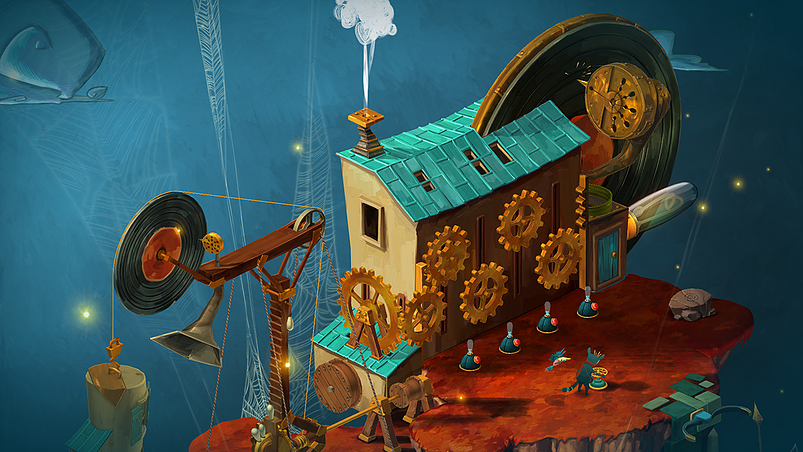
The terminology is there for a reason; as the game world itself is a manifestation of the brain, Dusty and Piper has to traverse through the different parts of the brain in order to fight the different nightmares. The right side of the brain is the creative side, and the scenery adjusts accordingly, with instruments decorated as flowers, creating an absurd yet playful atmosphere. The logical part of the brain, on the other hand, is filled with cogs and clocks, with darker colours. There are really interesting concepts concerning the brain that make it into the game, such as the “train of thoughts” which is an object used to solve some of the puzzles in the logical part of the brain. Very well done by the developers – very clever indeed!
This specific puzzle… I was stuck on it for quite some time. *sigh*
The puzzles get more extensive as you proceed in the game, meaning you need to look around everywhere, backtracking and so on. Some of the puzzles that look dimensional like this remind me of the indie game Monument Valley. However, the puzzles are not too hard, which I liked. I am a fan of progress in games and appreciate not having to be stuck on a puzzle for a longer period of time.
The majority of the game is about solving puzzles, but there’s also a bit about battling enemies or so-called nightmares. In terms of gameplay, Figment shows how the hack ‘n’ slash element can be implemented into a relaxing game successfully. It is simple and straightforward – and patience is key when it comes to defeating your enemies. The nightmares come in the form of human fears, such as disease, spiders, etc, which is interesting, because they are both rational and irrational fears – applying to both parts of the brain!
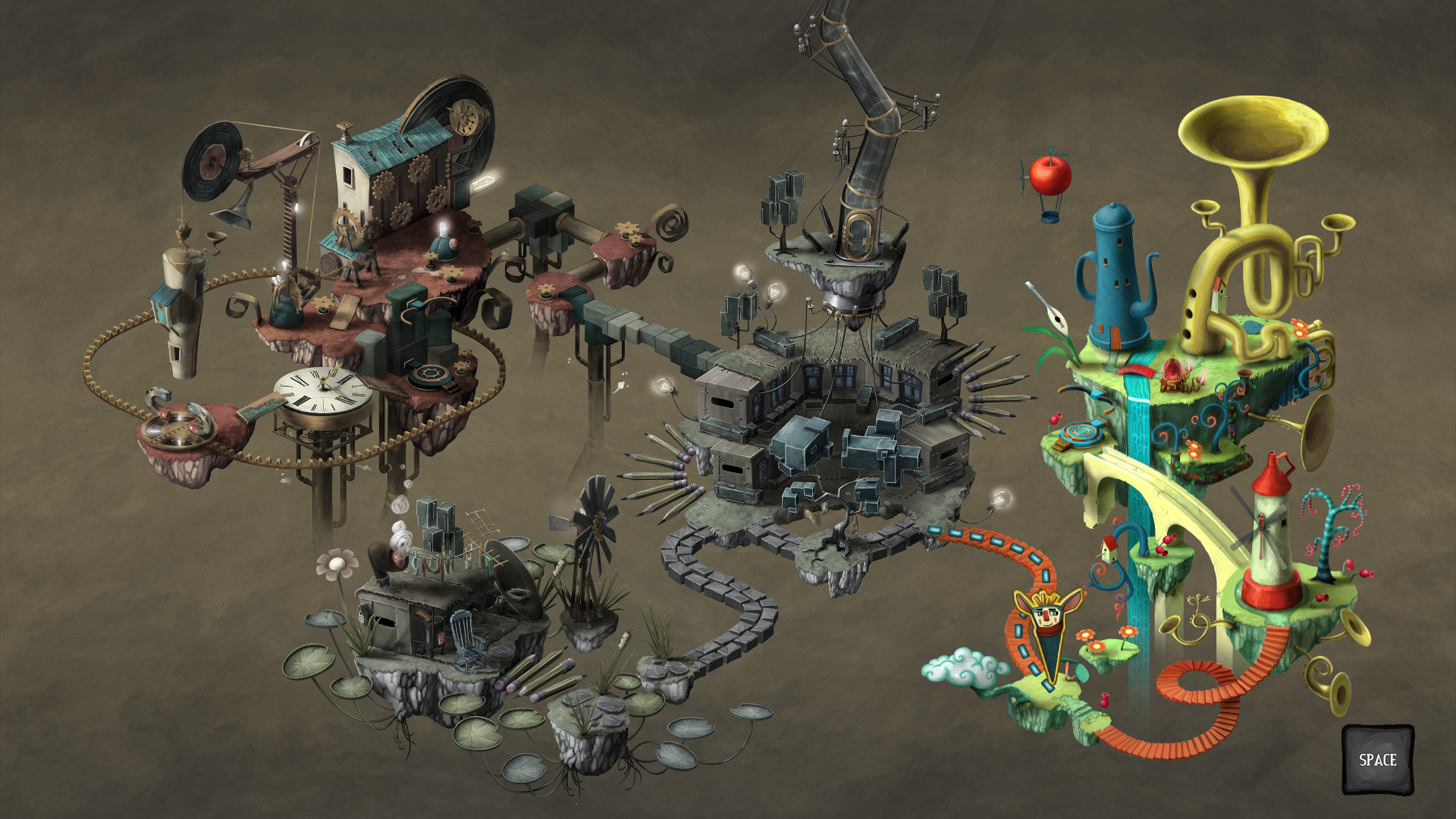
The loading screen is a map of your progress, which is pretty handy. And it is gorgeous-looking too. The universe actually reminds me of the painter Salvador Dali and his painting “The Persistence of Memory.” Do you see the resemblance?
It is clear that Figment is a game that focuses on its musical prowess. And with good reason, too. I loved the sound design in this title. The music changes depending on where you are in the brain and which nightmare you are fighting. The instruments that play in the soundtrack are blended into the scenery in a very beautiful way, and one can clearly see how essential music is to the ethos of this game. It gets better: during the boss encounters they sing songs to you – about what they are, and why they are frightening. The songs are catchy and fun – I really enjoyed them for this reason alone.
Figment offers a unique soundtrack, with specially designed songs – if there ever exists a vinyl of the music, be sure to send it my way, okay? Just sayin’.
Though the game doesn’t contain that much action, it sure is a fantastic adventure game. The levels are imaginative, and gorgeous in an absurd kind of way. Moreover, the way Figment chooses to deal with the distress of the mind is fascinating, and very well done.
As of this moment, the game is only available on Mac, PC, and Linux. Hopefully, it will be available on Xbox, PS4 and Switch soon, because more people definitely need to play this.
The Gran Turismo series has always left racing fans feeling accomplished, trained and ready to tackle the toughest racing courses known to man. The enormous selection of cars and daunting content featured in the series’ Career mode were both namesakes in the long-running racing franchise. With Gran Turismo Sport, the series does away with both, leaving long-time fans a bit sceptical to the change. However, Polyphony Digital manages to create something the genre desperately needs to stay competitive and does so with astounding visuals and sounds, ambitious online competition and a campaign mode geared toward making every player a better, more sound racer.
Taking the racing genre to new heights in online competition
If you’ve played through the beta last week, the layout of GT Sport should look familiar. Opened with a beautiful shot of one of the 160+ racing machines featured in Sport, the options on where to first go seem limitless. With various racing modes like Arcade, Campaign and the online hub of competitive racing – Sport, the best way to tackle this daunting racer is to hone your skills on the track. Campaign mode allows you to do exactly that, tasking you with various driving tactics like conquering S-curves, to full lap time trials.
Without question, GT Sport is easily one of the most breathtaking titles to grace the current generation of video games.
The absence of favourite modes blinded by the glimmer of gorgeous visuals
One thing many fans of the GT series will notice almost immediately is the absence of the traditional career path. While I felt extremely disappointed by this initially, I collected my thoughts, took a few deep breaths and continued forward. The game alone looks and sounds like no other Gran Turismo in the series, which was enough to push me reluctantly further into the game. The exhausts growl, engines rumble and the turbo hiss all breathe fresh life into the series; which before shoved otherwise stale and recycled sounds of below standard racing motors.
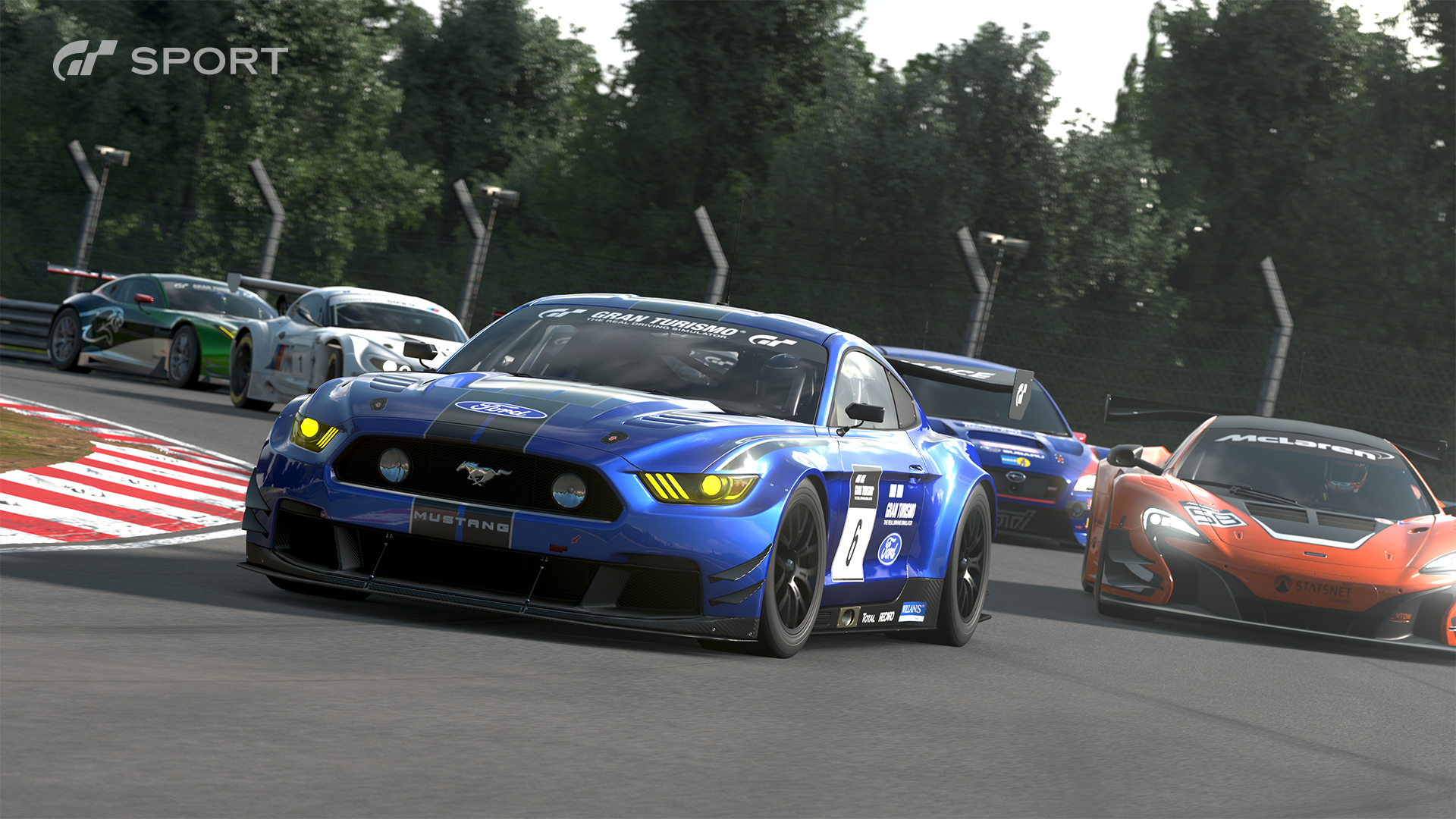
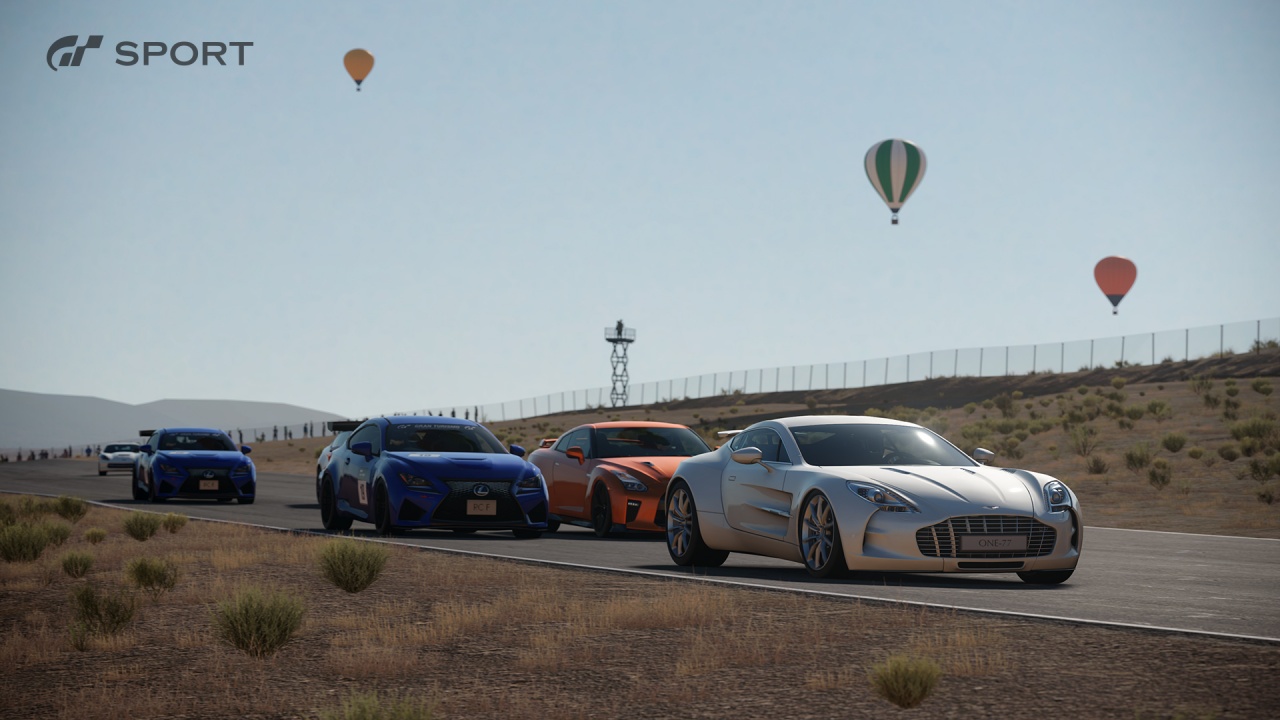
The level of detail found in every car featured in Sport is astounding and, above all, quite appetizing to the eye. The shimmer and gloss, the detail when racing in the cockpit view (which is by far the best looking cockpit camera view I’ve seen in any racing game to date) and liveliness of every course immerses the player into every race. The shadows that graze across the road follow the cars effortlessly as you patiently bend and curve around the course. The details and sharpness of Sport are quite possibly above all other racing games, however, there still lie a few hiccups in the overall production and appearance in the gorgeous racing title.
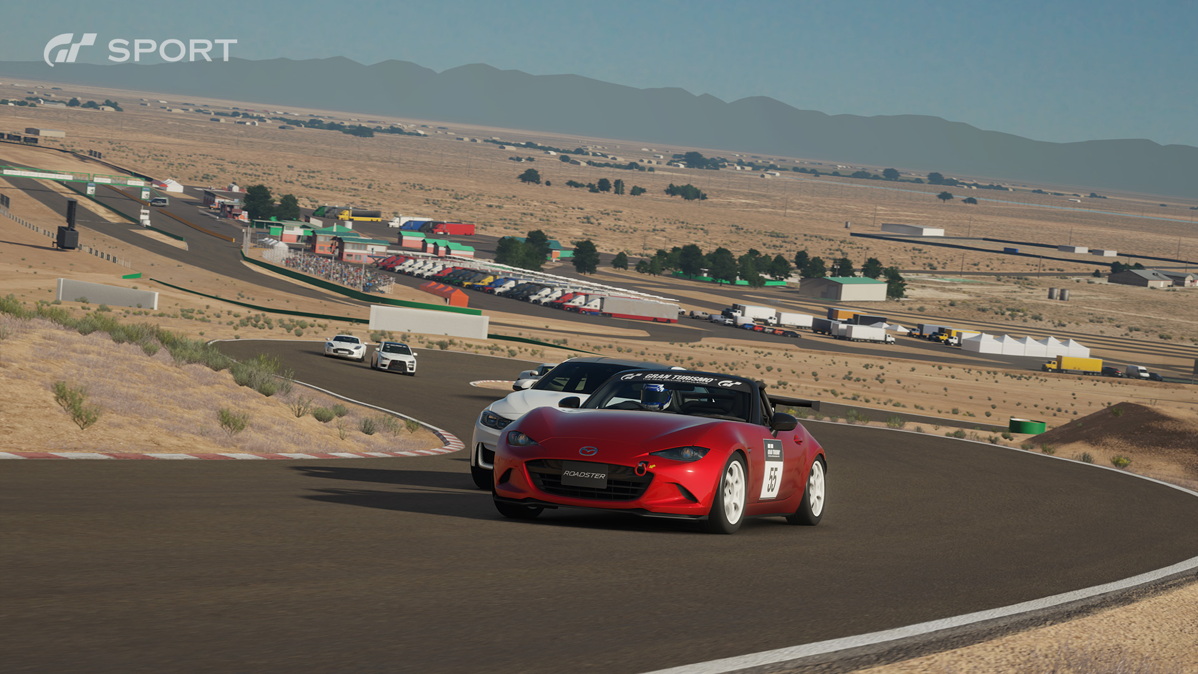
The courses in GT Sport are lively and beautifully rendered for some of the best racing experiences on current gen consoles.
Dynamic weather – something us racing fans have seen a lot of over the past couple of weeks in other new releases – is missing from the formula altogether. The challenge that comes about from slippery and icy courses or dirt stirred up from off-track racers found in other racing sims, which have recently hit the market, is nowhere to be found in GT Sport. The day-to-night cycles which help add a sense of time and endurance to longer races remain untouched in the Gran Turismo series, which easily could have helped push the latest instalment with even more challenges to conquer for the racer.
Making strides in providing enjoyable online races
That being said, this still doesn’t shred the fact that Gran Turismo provides a true racing experience at a high level of competition. In Sport mode, players are free to enter and participate in online races. From daily challenges to legitimate championships, Sport is (obviously) the centrepiece of what this release tries to narrow in on. However, before entering the ring of professional and dignified racing amongst the eager grid of online racers, the player is forced to complete the Racing Etiquette class for proper racing guidelines on how to – more or less – not race like an ass.
The ‘class’ is simply two instructional videos highlighting what counts as proper racing manoeuvres, and what makes you look like the king of all things awful in the world of online gaming. Bumping other racers in the back, boxing racers out around turns, blocking other racers from passing, cutting corners to gain ground; there are tons of rules to follow in the world of competitive online racing in GT Sport, but they do in fact help to make a much more enjoyable experience when diving in online.
Boxing out, blocking cars, ramming other racers, as well as a litany of other misbehaviours will not be tolerated in the competitive ring of online racing in GT Sport.
If stuck with a penalty, the driver is then instructed to slow down for a set amount of time. While the cars are ‘in the penalty’ they appear as a ghost car to help alleviate any further burdens for other racers. If the driver fails to follow the penalties, they seconds begin to add up throughout the length of the race, and the total is then tallied to their overall time; in turn losing a few spots in the final standings. However, if one racer spins out or smashes into a barrier/wall by an unfair racer, there’s not much help to retain the position you previously held. Sure the disobedient racer was punished, but that has little effect on the innocent racer at hand.
Drivers are separated by driver rankings and sportsmanship rankings in online competitions. The driver ranking shows off how fast you are and comes in a rank from S-A-B-C-D-E, with an S ranking as the best possible outcome. The sportsmanship ranking keeps track of your penalties and overall etiquette form, helping to place racers in evenly matched competitions. The proper racers earn better rankings, increasing their score and rank higher amongst the competition rankings.
Though missing the Career mode, there is still tons of content in GT Sport
Throughout Sport mode, there are a handful of options to choose from, most of which are unavailable at this time. The Daily Races is the only option to dive into right now, but once the online championships begin, there are three other events to partake in. For now, Daily Races will do as it helps to build DR and SR points in your driver’s profile. Each day three different courses are available with a broad range of vehicle classes to choose from. Giving players an evenly matched group of racing machines, players are able to enter the race and begin qualifying rounds. Again, there isn’t much to Sport mode right now, but the promise of taking your online racing career further is inching closer with the approach of competitive championships at stake.
The Campaign mode is where players go to learn the basics, and eventually graduate to more difficult challenges. Like other entries in the series, there are loads of tests taking the player through acceleration/braking, tackling s-curves, out-in-out manoeuvres, as well as tons of other useful skills to help build a better racer.
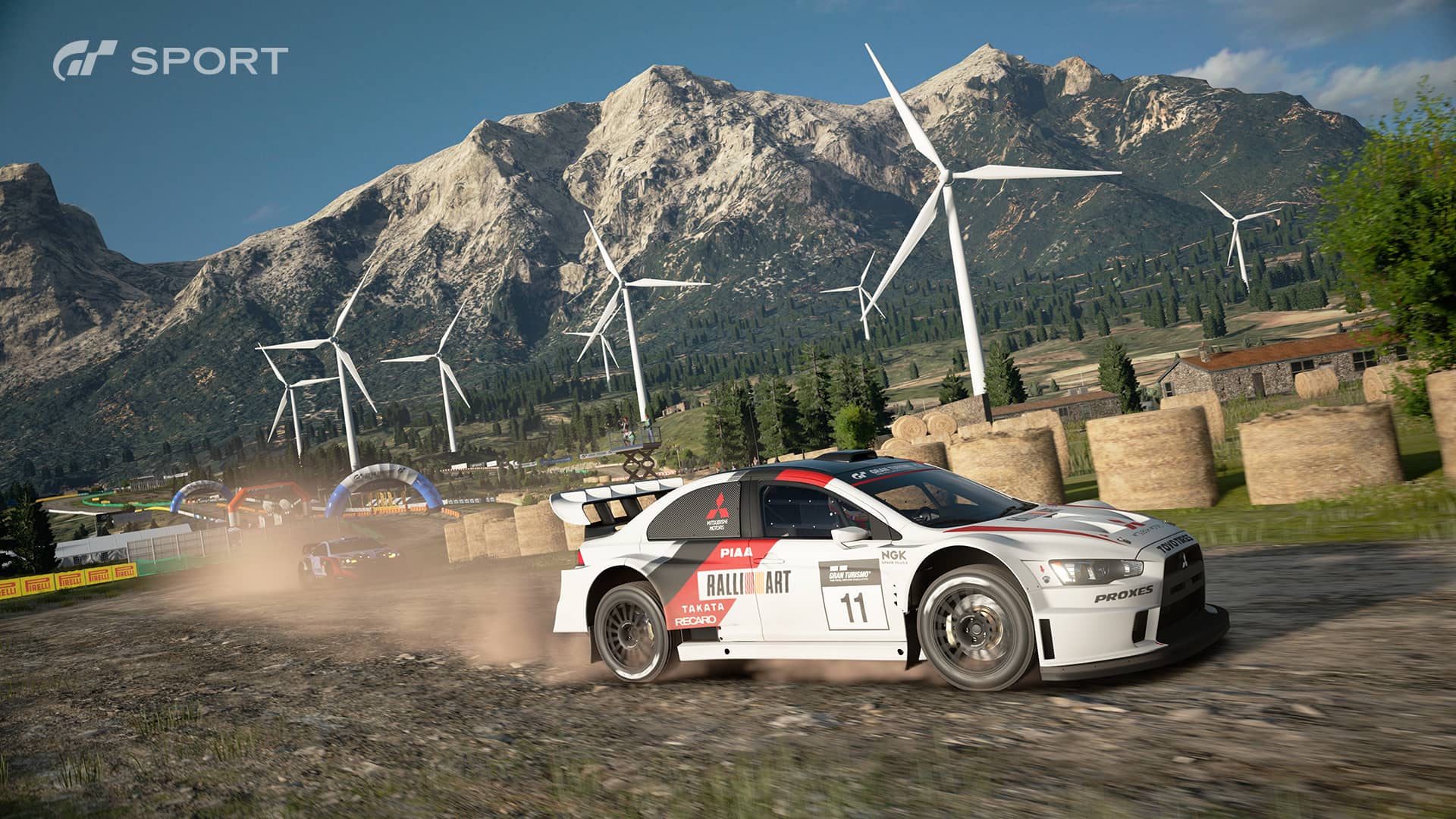
Oval courses, street and popular circuit courses, as well as the beloved rally tracks all make their appearance in GT Sport.
Accomplishing all tests with a bronze time or better will reward the player with a car at random. Aside from the new vehicle upgrade, the knowledge of how to conquer turns and other difficult manoeuvres are enough to help push the player a little further into the depths of the multiplayer experience.
Mission Challenge and Circuit Experience are the other two events found in Campaign mode. Mission Challenge gives players difficult situations usually involving the player behind a handful of spots on a specific sector in a course and urged to place the highest position possible before the finish line. Circuit Experience acts as a practice session for every sector, or an entire lap, in every course, with a gold, silver and bronze time to beat. There are tons of challenges and courses to conquer, of which does help to give some of the playability the traditional career mode provided in previous entries.
In Arcade mode, players will finally have the chance to get down and dirty with AI racers in actual full-scale races. Fans of career mode in the other GT games may find themselves hashing out races here, as it provides the closest familiarity to the missing career mode. The course and car selection may be the smallest ever featured in a Gran Turismo title, but the thrill of competing in this expertly handled racer is well worth the downsizing.
Other modes offered in the game are Brand Central, which is the manufacturing market for all of the cars in the game – where players purchase the cars of their dreams, Scapes which is the shiny and spectacular photo mode and the all-new livery editor. Buying your dream car to take on the road, placing it in gorgeous, jaw-dropping settings, or perhaps covering it with custom wraps and liveries to help personalize your ride, all give Sport a casual approach when the heat of the racing grid is too much to handle. The views and scenery in Scapes present a truly remarkable image, some even looking near identical to real-life photos.
Scapes mode gives players chance to place their dream car into a gorgeous scenic setting and snap the perfect photo.
Throughout Gran Turismo Sport players will race, crash, learn, and occasionally win; all in repeating order. With a strong emphasis on multiplayer racing, and an even stronger swinging hammer crashing down on racing etiquette, I can honestly say my reluctance has subsided almost entirely to the eSports approach. Earning points for your overall driver ranking and sportsmanship ranking, players are easily matched for a better quality of racing.
Find Polyphony Digital’s latest entry in the popular racing series – [amazon_textlink asin=’B00ZG1SVA4′ text=’Gran Turismo Sport’ template=’ProductLink’ store=’geali01-21′ marketplace=’UK’ link_id=’351cec9e-b40a-11e7-a8a4-63dad7f5c6da’] – out now for the PS4.
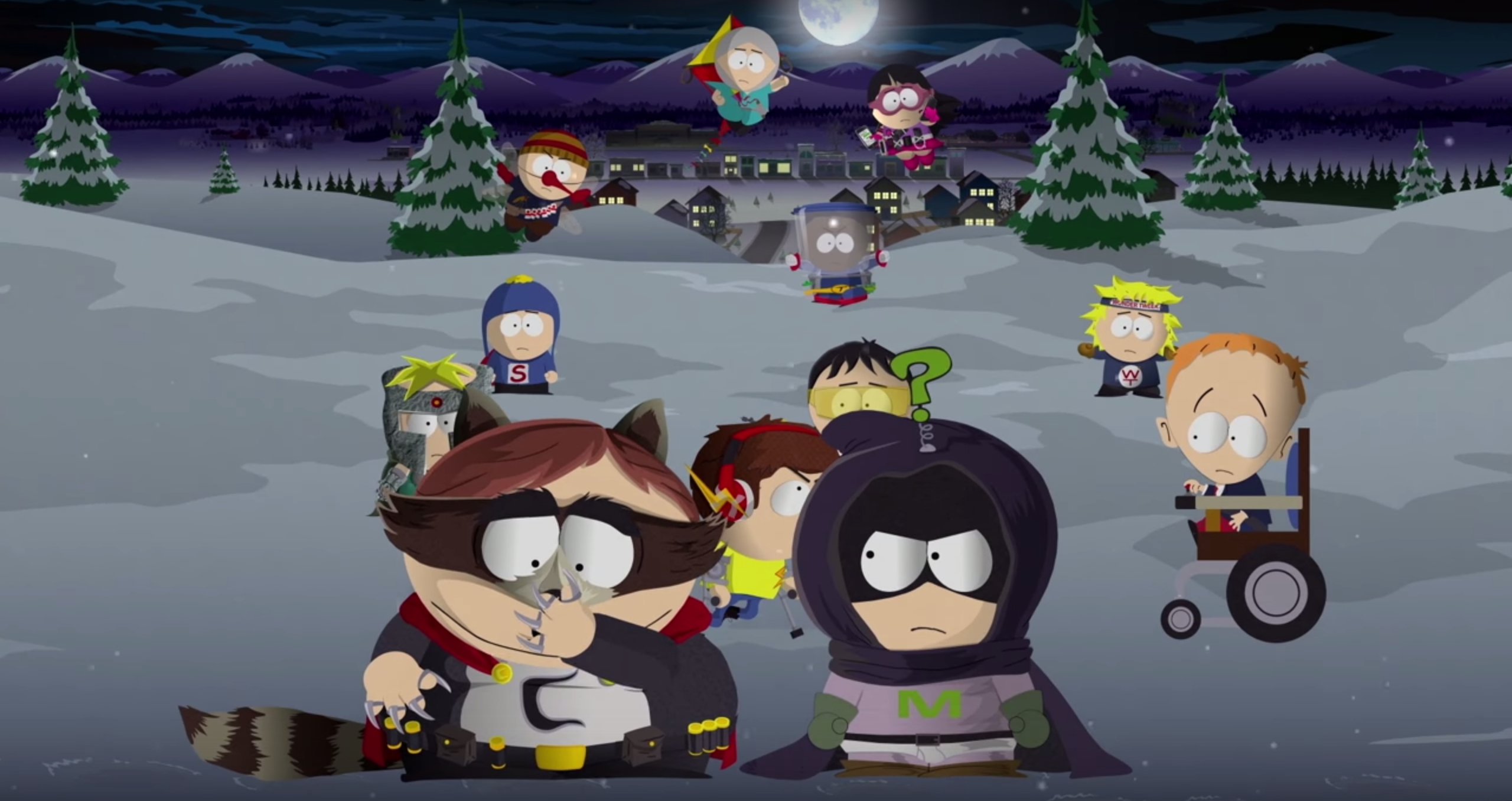
South Park: The Fractured But Whole’s release is right around the corner but many gamers still sit in the dark when it comes to the storyline. The prequel to Ubisoft’s upcoming release – The Stick of Truth – took players through a fantasy world full of aliens, zombies, and of course, the powerful Stick of Truth. Now players will have a chance to play the superhero role as the New Kid in the next instalment of the South Park RPG series.
With outlandish costumes, skills and abilities, as well as the ever-so-popular over-the-top narrative, the creative team behind South Park are back at it again with their new release quickly approaching. Entering Cartman’s new world of superheroes and villains, you’ll take control of a lowly new kid in a new world of fantasy mayhem, fighting enemy sixth graders and of course, tons of fart stomps.
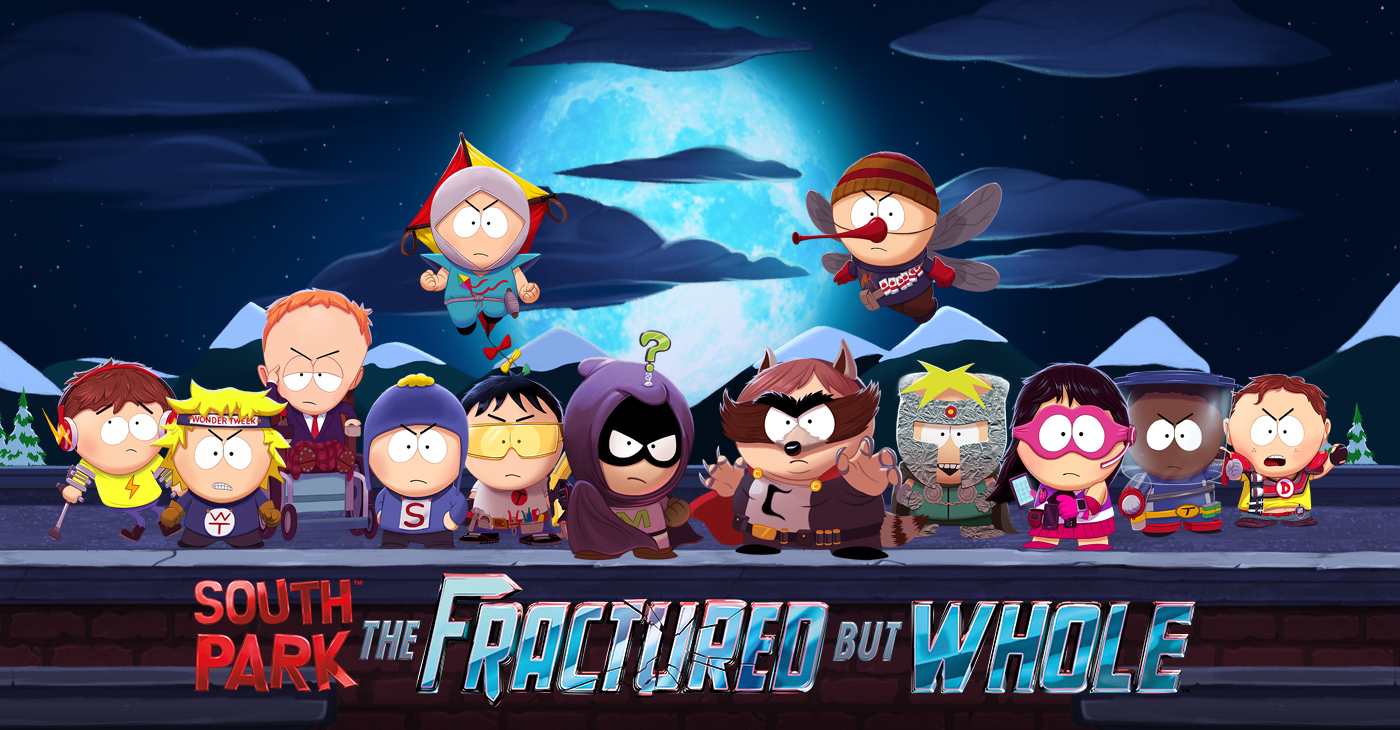
The cast of South Park will fend off evil in a brand new re-imagined superhero world.
Compared to The Stick of Truth – which harnessed the essence of traditional RPG mechanics combined with the hilariously disturbing and all around provocative dialogue – The Fractured But Whole takes this formula and expands on it immensely. With more of South Park to explore, diving into the lives of residents in the fictional Colorado town looks to become more enduring and exciting than its predecessor.
Highlighting the superhero world, the characters don heroic costumes, equipped with gut-wrenching moves and gross abilities. Players also have the option of choosing a starting superhero class, like the Blaster, Speedster, or the heavy hitting Brutalist, which changes the style of your player’s combat approach. Plenty of other stats, buffs and the powerful Ultimate move is sure to provide players with tons of combinations for intense, and excruciatingly side-splitting combat abilities.
South Park: The Fractured But Whole is coming in the wake of the astoundingly successful prequel, The Stick of Truth. The RPG approach to the acclaimed franchise as well as changing the theme of the story from fantasy role-playing to superhero fantasy battles means Ubisoft looks set to devour fans with tons of new content.
The release of The Fractured But Whole is now right around the corner, releasing October 17th on PS4, Xbox One and PC.
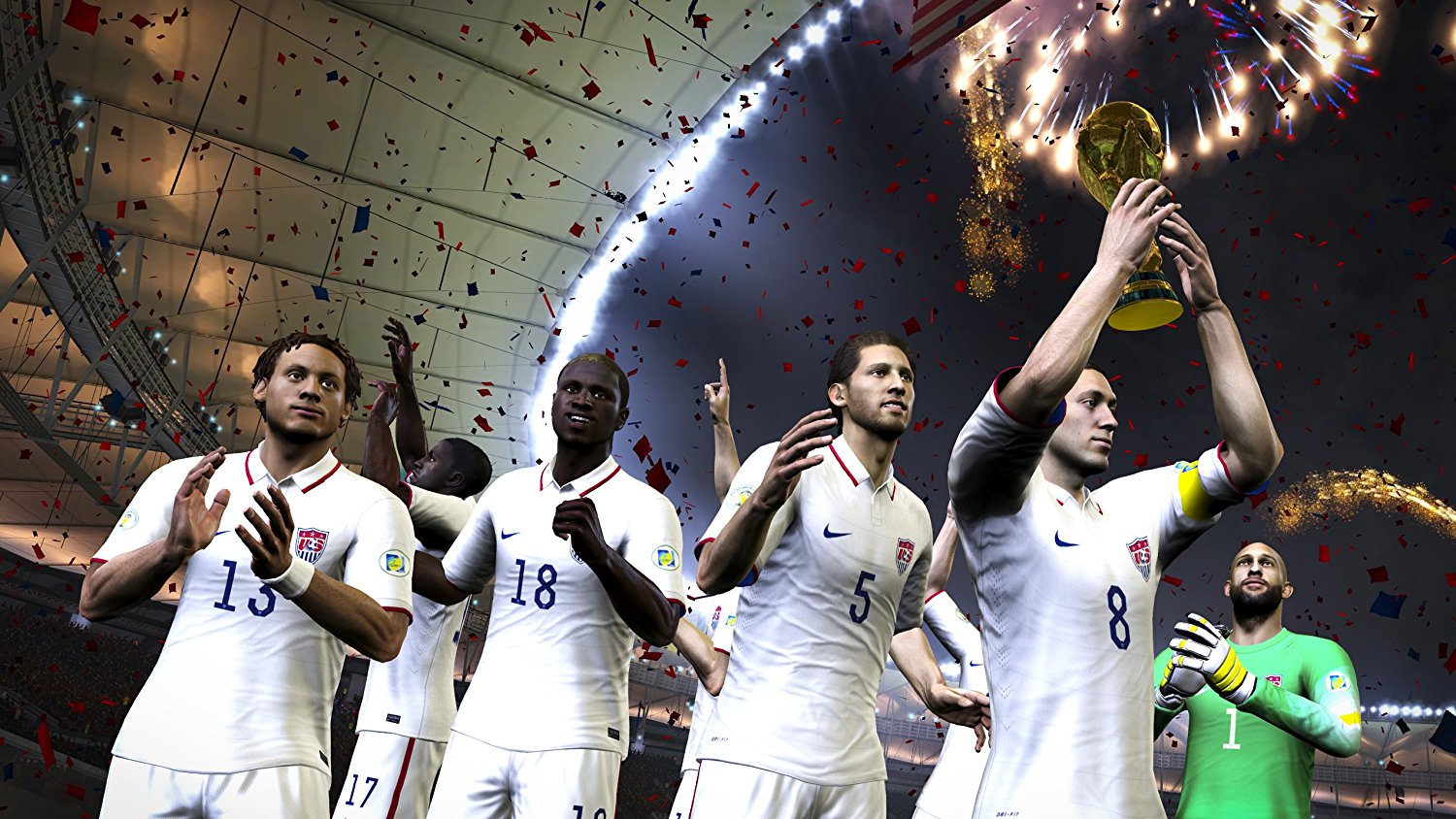
If you pay attention to the sporting world, you probably noticed the shocking news that the USMNT (United States Men’s National Team) has FAILED to qualify for the world cup for the first time since 1986. As a hardcore follower of the sport living in the United States (yes, believe it or not, we exist) this was absolutely heartbreaking. But, we aren’t here to discuss that, we are here to discuss how this event will affect the series of FIFA: World Cup video games that are released every four years.
Facts are facts, the United States is the third biggest country in the world (population), and the average person has more than enough money to purchase a single video game. And living in America, I almost never hear anyone talk about soccer (Football UK readers!) unless it’s time for the World Cup. This is a time where the country becomes united and watches a sport that they usually couldn’t care less about. With this summer sensation of soccer, FIFA releases a World Cup spin-off game along with each event. EA does this to try to capitalize on the worldwide interest in the sport, in order to gain some extra revenue, of course.
Well, with the US not qualifying for the upcoming World Cup, it would not surprise me to see the sales of FIFA: World Cup edition drop off in the US pretty substantially. Like I said above, when the World Cup comes around and the US is playing, almost everyone in the country is paying attention. This upcoming World Cup will be much different, honestly, it wouldn’t surprise me if the 2018 World Cup isn’t covered nearly as much as the 2014 World Cup in the US. Less publicity is never a good thing and with a spin-off title, you only have a tight window of time to make your money.
I know this is all conjecture but what do you guys think? Will the sales of this upcoming FIFA: World Cup edition drop off? Or am I overestimating the effect of the USMNT failing to qualify will have on the game? Let me know in the comments below!
It’s hard to believe now, but there was a time when Call of Duty didn’t rule the FPS roost. Before the first game of the aforementioned FPS franchise was released in 2003, it was the Medal of Honor series that was most gamers’ experience of virtual World War II. MoH kicked off with its first game, released in 1999 on the PS1 by DreamWorks Interactive (now known as DICE) and is notable for having legendary filmmaker Steven Spielberg’s involvement in the game’s design. If that wasn’t enough, the game also boasted music from popular Hollywood film composer, Michael Giacchino. What resulted was a then-immersive war FPS that was released to critical acclaim and set the standard for WWII video games at the time. It also meant the beginning of a video game franchise, with several sequels and spin-offs to follow in the following years. Yet, we will focus on one of those follow-ups here – Medal of Honor: Frontline.
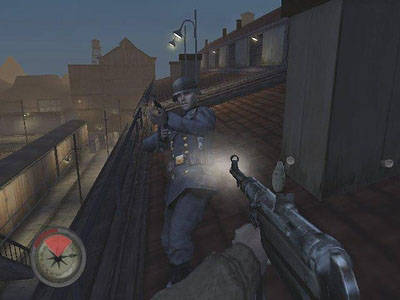
Released for the then-current-gen consoles, the PlayStation 2, Xbox and Nintendo GameCube, the game featured a similar quality in its action setpieces as previous games in the series. Only this time, it was powered by greater technology than the primitive PS1, bringing such historical moments as D-Day and the Battle of Arnhem gloriously to life in ways that had never been done before. I can already hear those who grew up with the Medal of Honor: Allied Assault PC game argue that it was that title that did the cinematic experience better, but Frontline was many players’ introduction to the series as a whole. The opening D-Day level, while not as graphically compelling as today’s games, is still playable, with excellent sound design and voice acting creating an intense atmosphere. The battle reeks of Spielberg’s Saving Private Ryan opening in terms of tone, but since the series’ origins lie with the aforementioned director, it shouldn’t be that surprising.
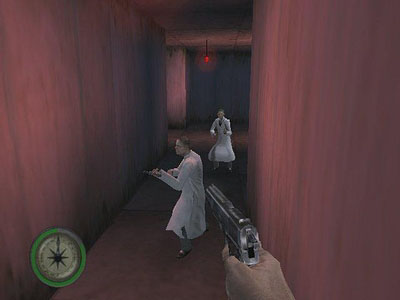
But, as veterans of the game are no doubt aware, the majority of Frontline doesn’t have you fighting huge battles alongside fellow comrades-in-arms but has you as an agent infiltrating Nazi Germany. Frontline pits you in the shoes of soldier-turned-OSS (nowadays known as the CIA) agent, Jimmy Patterson who must go through nineteen deadly missions, from investigating secret German weapons facilities to sabotaging U-boats to obtaining classified Nazi documents. Patterson can safely be described as a mute, WWII-era Rambo, as an overwhelming percentage of these missions involve him having to eradicate entire facilities-worth of Nazi soldiers alone as he goes about his business. The good thing though, is that it is damn well fun, thanks to the combination of an impressive presentation and enjoyable gameplay with a whole host of different weapons at your disposal. From the M1 Garand to the Thompson to the German MP40, gunning down hordes of relentless Nazis is as fun today as it was back in 2002 when the game was released. Yeah, sure, the AI isn’t as up to scratch as that of more modern games, but going through corridors, single-handedly mowing down Nazis with a machine gun or picking them off with a sniper rifle from afar is still as deliciously fun as ever.
Perhaps a glowing difference to the CoDs of today is the game’s lack of a rest-and-recover health system. Instead, the more Jimmy gets shot, the more his health will deteriorate. Medical packs dotted around the levels will refill it. If that weren’t humorous enough a walk down memory lane, then the fact that the game allows you to have multiple weapons in your possession at one time will. Apparently, Jimmy – like many of other of his contemporary World War II FPS protagonists – has superhuman strength and can hold a multitude of heavy weaponry at once, including a machine gun, rifle and bazooka!
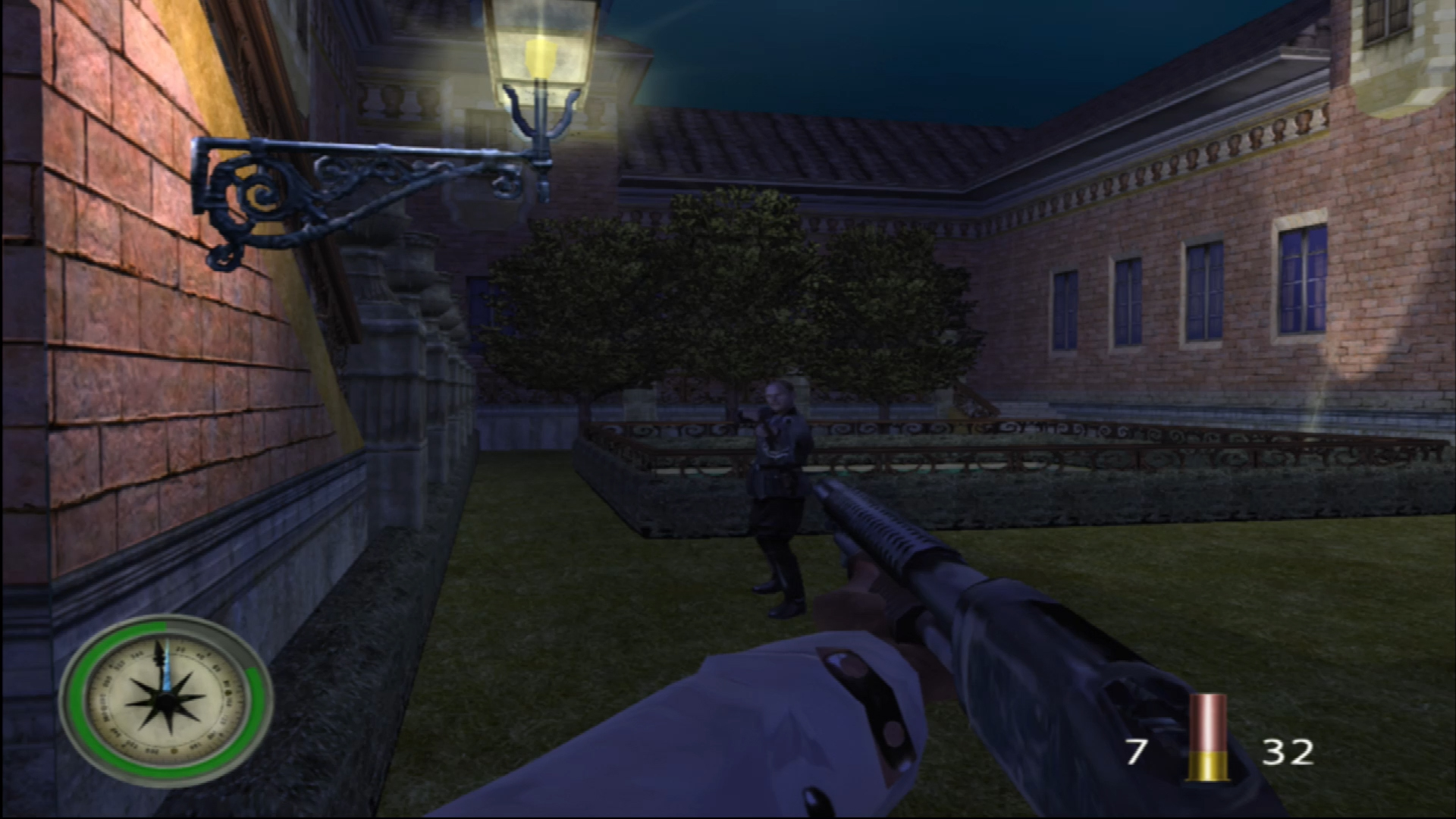
Questionable weapon-carrying aside though, what makes Frontline arguably better in the presentation department than many WWII games that have come before and after it is the music. Like with the first game in the series, Frontline employs the masterwork of composer genius, Michael Giacchino (whose recent film credits include Spider-Man: Homecoming and War of the Planet of the Apes). The brilliance of the music is that it captures the villainy and tyranny of Nazi Germany as well as the humanity and loss in war. In the levels ‘Rough Landing’ and ‘Arnhem Knights’, for example, Giacchino employs a child’s voice which sings sombrely throughout these levels as a dramatic accompaniment to the horrors of war. Then there are the urgent, momentous violins of the manor house mission, which perfectly captures the feeling of being discovered by Nazi soldiers. It was here you had to fight your way through the manor house to rescue your informant. The music is such a character of the game, one wonders whether Frontline would be the same game without it. Regardless, it helps give the game a more heightened sense of cinematic emotion that many more modern WWII games intrinsically lack.
But whatever more recent WWII games may lack, they have much to thank Medal of Honor: Frontline for since it paved the way for their existence. The game scored $95 million in the United States alone and gaming publication Next Generation ranked it as the eighth-highest selling game launched for the GameCube, Xbox and PlayStation 2 between January 2000 and 2006. The game also found great success in the United Kingdom, selling at least 600,000 copies and attaining Platinum status on PlayStation 2.
A year after the game’s release, the first Call of Duty would be released and war-based FPS’s would continue to flourish in the game industry. They continue to do so – and with the big CoD’s return to a World War II-era setting next month (November 2017), it sits as a pleasant reminder of what led to games of its kind. And with the game having a remaster available for the PlayStation Network, there is simply no excuse not to check this one out.
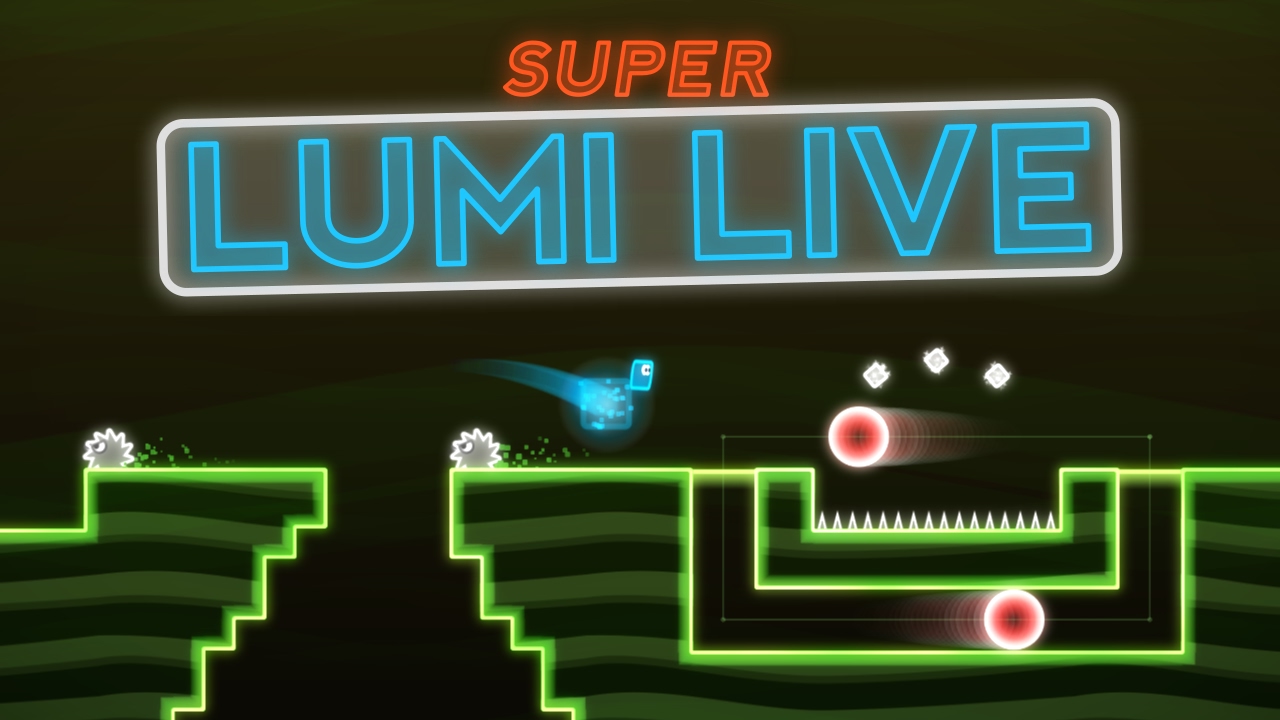
The 2D platformer has become something so popular, so uniformed that keeping track of all the forthcoming releases seems to be more of a chore than it’s worth. Thankfully, there are developers out there keeping the quick-paced genre from losing its edge, tenacity and flavour. Super Lumi Live sticks it to the die-hards of modern platformers and leaves an addicting, lip-biting good time in the depths of a super-sleek neon world filled with deadly hurdles and platforming innovations.
Levels Loaded with Challenges
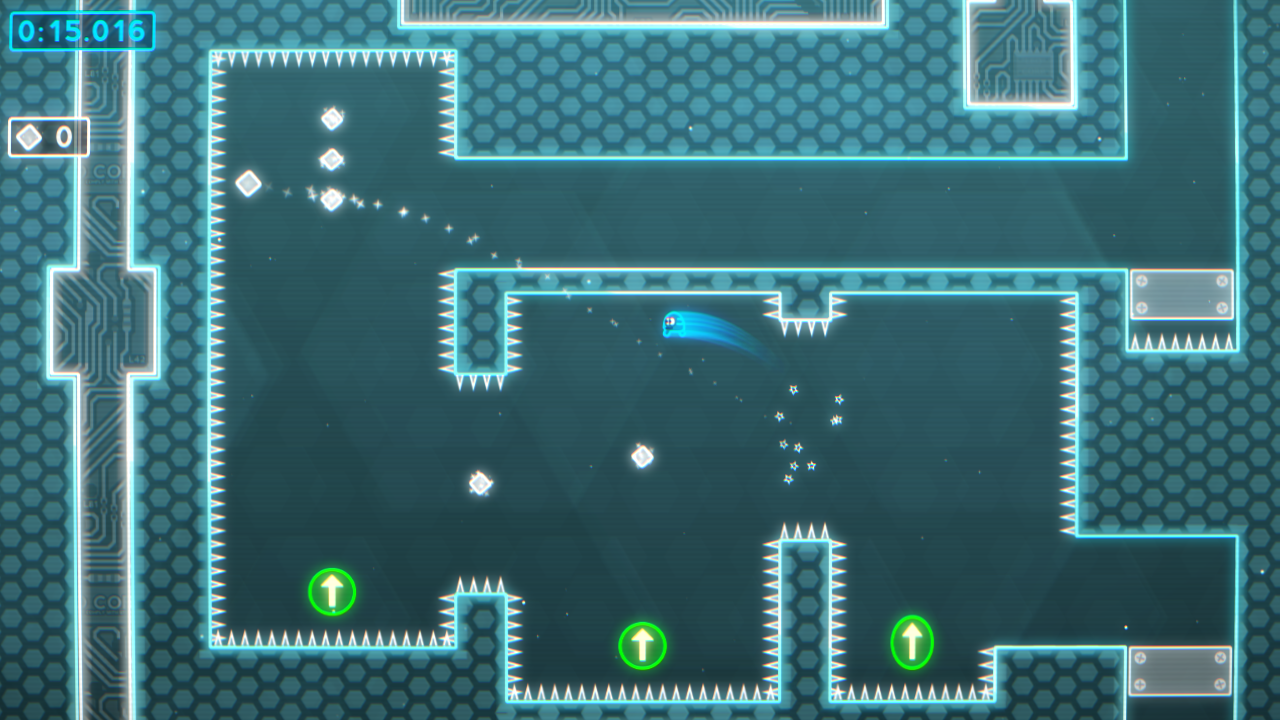
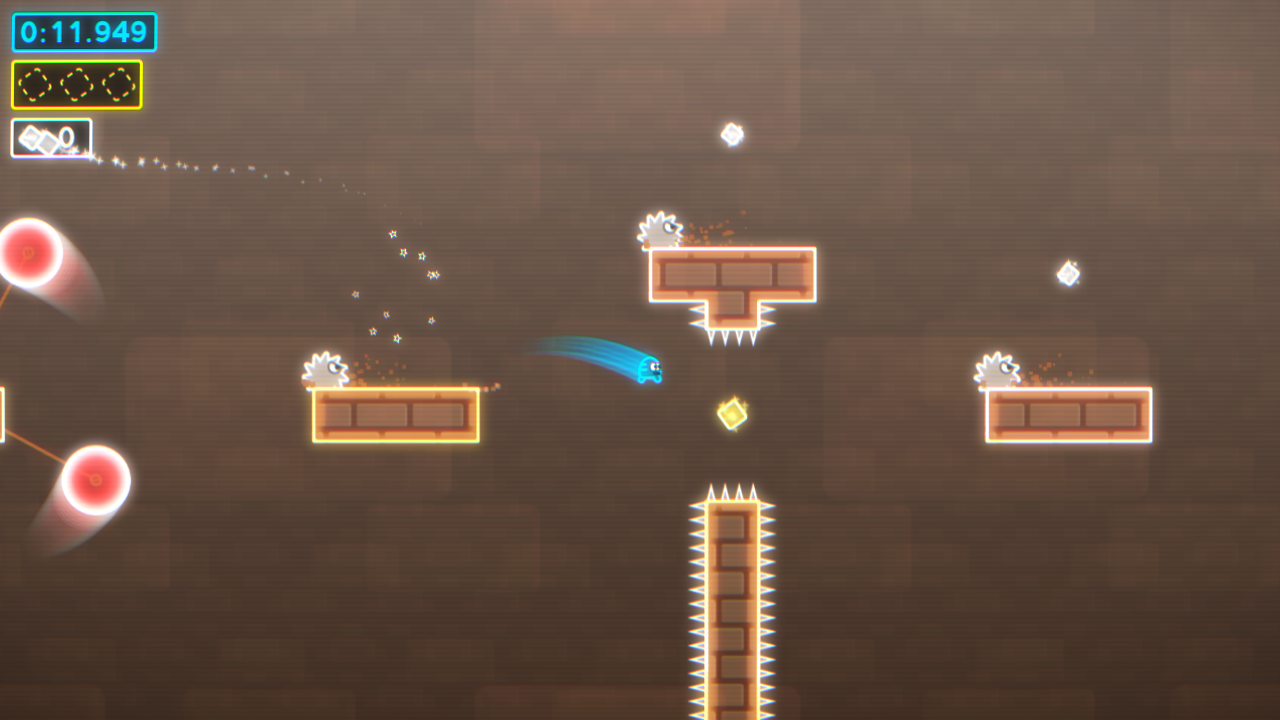
Running through the neon ripped levels, your little blue blob runs, leaps and double jumps their way from one thumb-bruising level to the next. Dodging a slew of obstacles ranging from bobbing spike-beds to shifting platforms, Super Lumi Live does an excellent job of giving the player control. With the absence of the frustrating “slide” annoyance found in many platformers, your blob almost satisfyingly sticks to the ground upon landing from every jump. This is an immensely helpful asset, found in an otherwise tedious and challenging platformer.
Various platforming mechanics are littered across the entirety of Super Lumi Live.
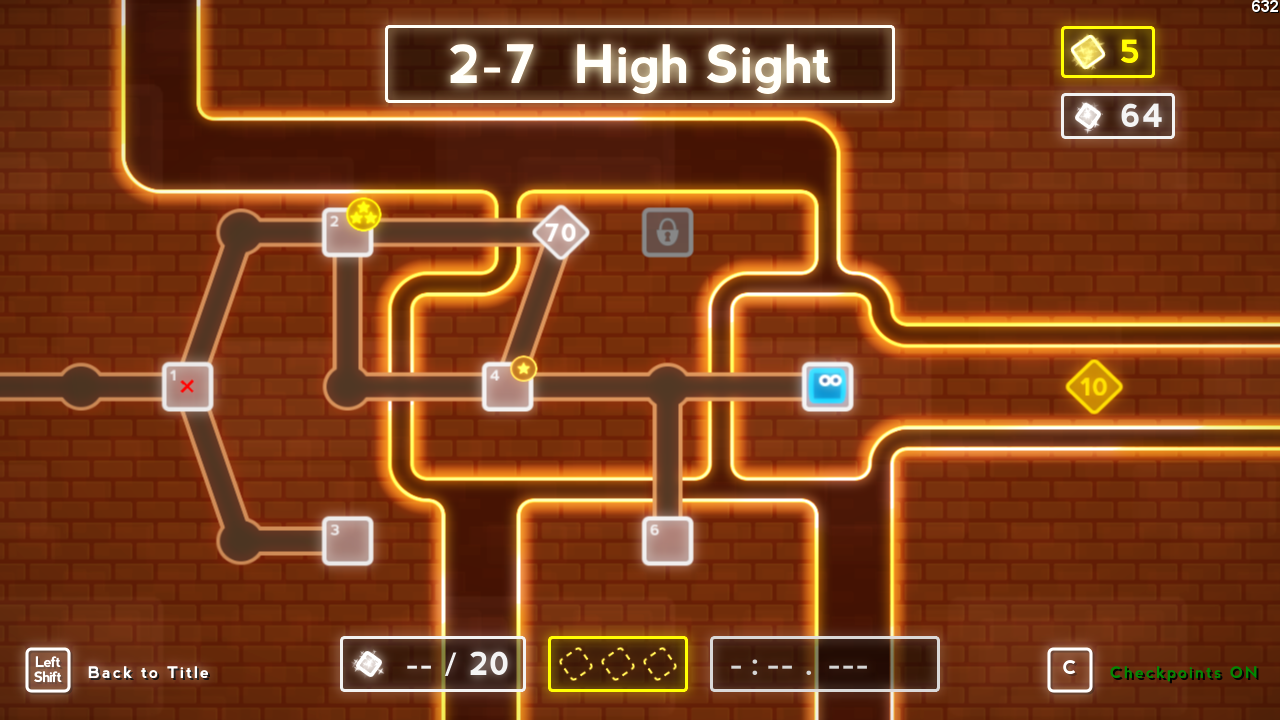
Levels are divided into themed Seasons, with every season containing a handful of numbered levels increasing in difficulty the further you progress. Levels are required to be completed in order to move on to the next. Some also require a specific amount of points to collect throughout the levels in order to unlock. Returning to previous levels and reaching for a higher total of points will provide the player with enough credit to continue forward. The last stage in each season serves as a Boss stage. With a heightened number of difficult obstacles, a lengthier run through and specific techniques to complete the end of the season.
Excellent & Precise Handling
As mentioned above, Super Lumi Live handles with excellent, precise maneuvers, leaving little frustrations with the controls themselves. Those frustrations are found in the level designs to purposely throw players off with unexpected obstacles and dangerous encounters. Whether it’s block dissolving upon touching them, assaulting cannons relentlessly firing upon your helpless blob, deadly ground saws or shifting platforms taking you to an untimely demise if not paying close enough attention, the game is plenty full of quick-acting annoyances to keep the player humble.
Levels are unlocked by either completing levels or acquiring the appropriate amount of points in each stage.
Throughout the levels are dozens of white points – placed in similar fashion to coins/rings in other popular platformers. The rare golden points are often found in hard to reach areas, making for a tedious playthrough for the gaming completionists. Your total number of points of both white and gold are tallied and kept in a score-style fashion at the stage select screen. Newer levels appear as you make your way through the game, and many are designed to be unlocked after the player has accumulated a total number of each color of point. The common numbered stages are unlocked with accordance to the white, while the gold points unlock tricky bonus style stages, not required to complete to move forward in the game.
Conclusion
Super Lumi Live is presented in a unique retro, neon stylized fashion with a modern platforming approach to gameplay. Providing a quality platforming experience, the challenge will turn many casual players off. The levels never feel unfair in any way, but many stages will leave you wondering if you have the knack to stick with it. Not to flush out the satisfying controls and mechanics of the platformer, the game truly shines in this aspect.
Many challenges stand in the way of grabbing that hard-to-reach golden point.
For a quick platforming experience to help bring the hard-core gamer back down to Earth and further question your abilities, Super Lumi Live is that type of hard-hitting title. Falling in line with the “quick to learn, a lifetime to master” areas of gaming, Super Lumi Live precisely maneuvers like a dream, but seems happily stranded in a hellish world of frustrating obstacles and platforming hindrances.
Find the quick-action platforming title, Super Lumi Live, available on Steam for the PC.
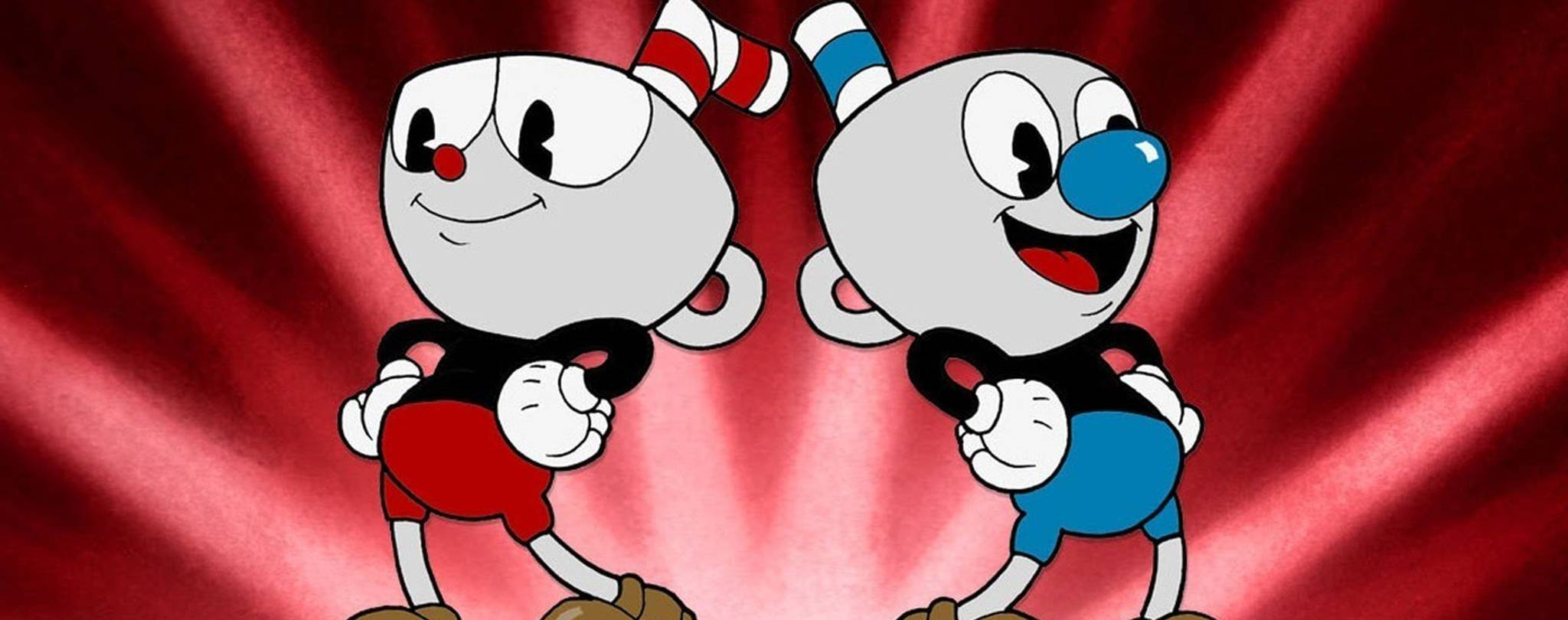
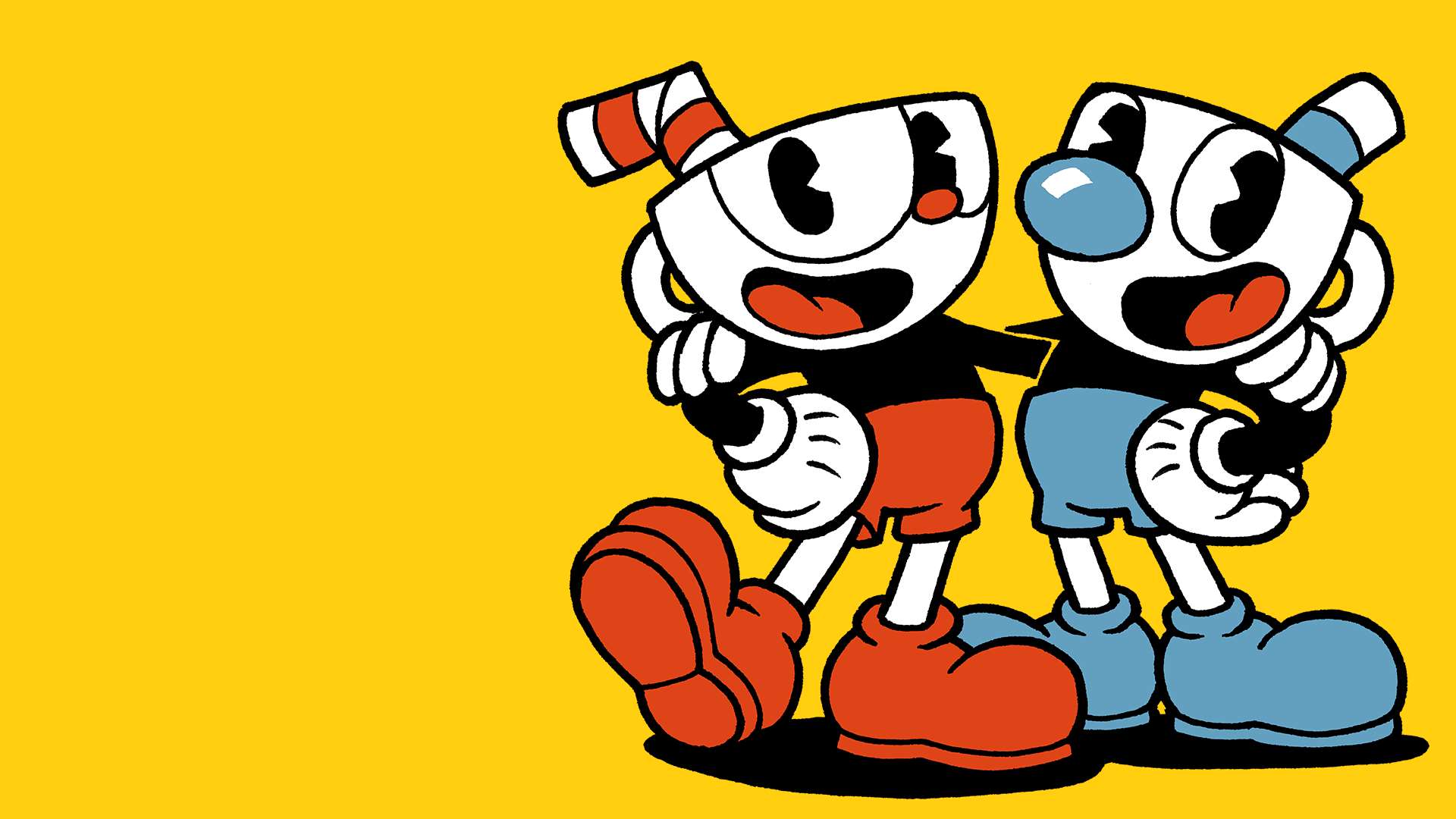
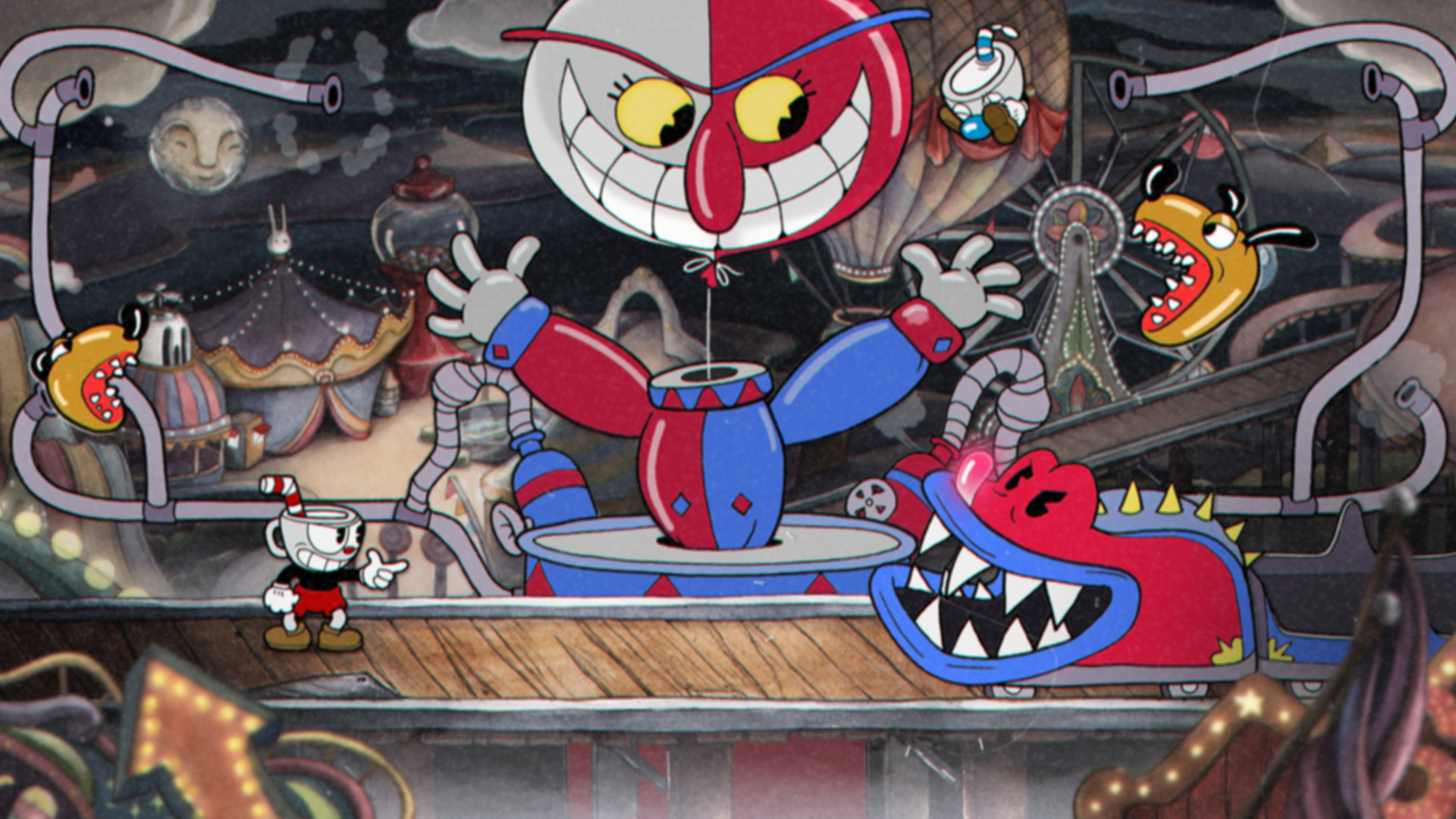
Cuphead takes a classic tale of moral propaganda and turns it into a romp through 1930s era animation that will both delight and challenge in equal turns. The tale follows the titular Cuphead and his unfortunate brother, Mugman, who are enjoying a good time at the Devil’s Casino until one misguided roll of the dice ends with a contract on their souls. But, the Devil tells the now damned duo they might be able to get out of their contracts if they can collect on other souls before their time is up. You can choose to play alone as Cuphead, or bring along a friend to aid you as Mugman during your treacherous journey.
A World Brimming with Bosses
The layout of worlds in Cuphead is fairly simple. You can select from a few run-and-gun levels, or pick form a plethora of battles with devious baddies whose soul contracts you now need to collect. Defeating bosses opens up new sections of each world and eventually allows you to move on to the next. Sounds simple enough, but this dance with the Devil is anything but slow and steady.
On a difficulty scale from Mega Man to Dark Souls, Cuphead hits much closer to the former. To succeed, practice and determination are key because death is practically guaranteed, but difficulty lands a little south of rage quitting. That isn’t to say boss battles don’t offer a very real challenge, but I rarely felt that I wasn’t able to make some progress with each run. It was this keen balance of punishment and progress that kept me aching to try again even after multiple failures. If you fail to complete a fight or stage, the game presents you with a meter showing how close you were to your goal. Depending on how you are doing, this can be both an encouragement or an indicator that it might be time to take a short break before another attempt.
Each boss has multiple attack stages, with an additional stage added if the game is played on Regular difficulty. However, the battles in Cuphead are dynamic enough that players cannot win simply through rote memorization. For example, in some cases, a boss can have varied versions of one attack stage. A particular battle involved a stage where the boss transformed into a zodiac character. I died before completing that stage and the next time around she transformed into a different member of the zodiac, catching me off guard with new attacks. Often, though, bosses follow a set of transformations that can be memorized, though getting through them is anything but simple even with some foreknowledge. Attack patterns can change within stages, and you often find yourself needing to battle against numerous peripheral attacks while at the same time avoiding main attacks from the baddie itself.
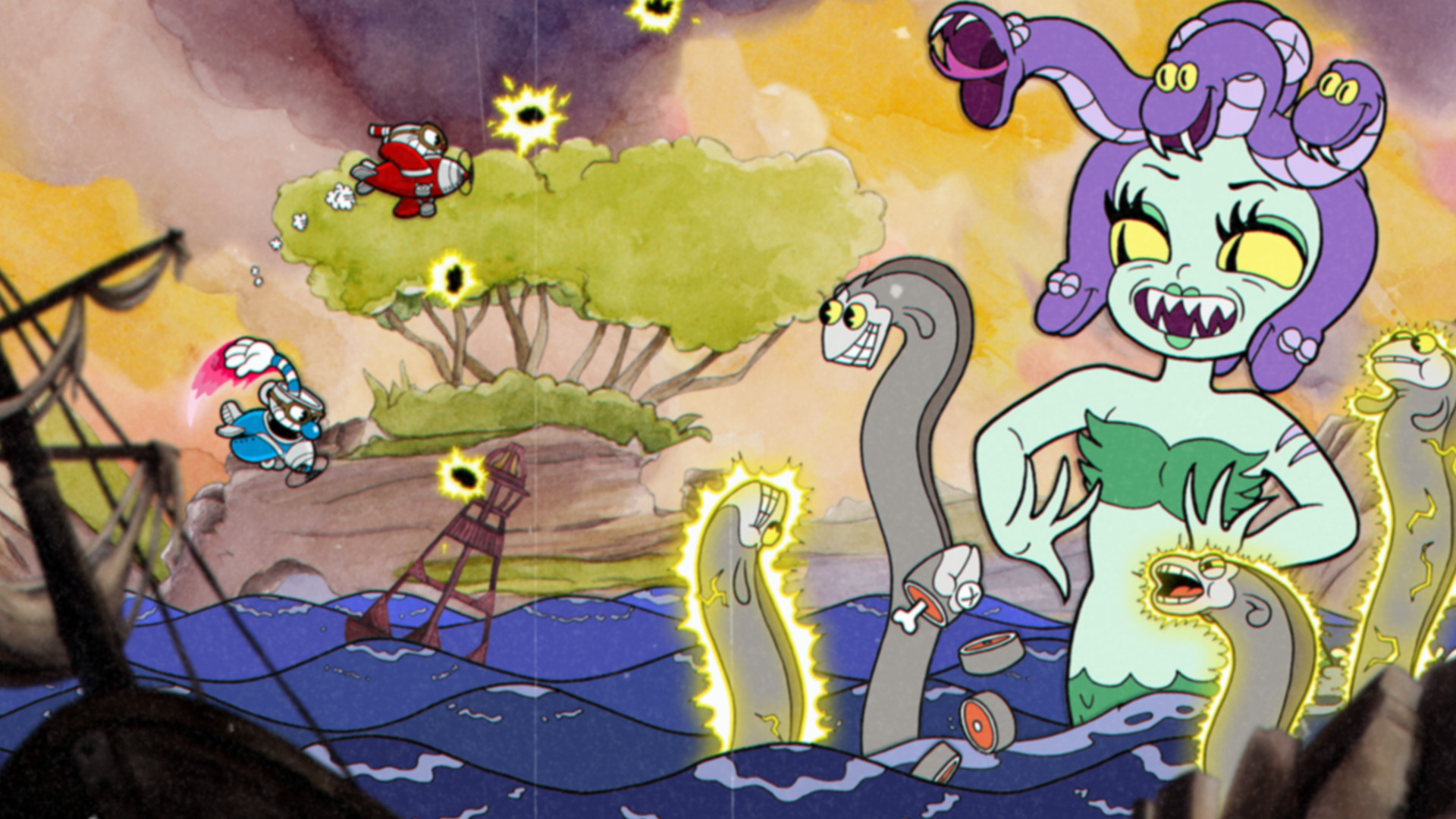
Boss battles are truly a sight to behold and a challenge even for a seasoned platform/run-and-gun aficionado. This is partly due to the intensity of the fights. During one encounter, I had to avoid a train while also dodging glowing horseshoe attacks from a clown riding on a donkey held up by a string. Sounds crazy, but aside from the spot-on 1930s visual aesthetic, Cuphead also solidly replicates the sheer bizarreness of the cartoons of that bygone era. I fought frogs that turned into a slot machine pitching coins at me, and a woman who became an airplane that became a terrifying version of the moon. And that is only a small, incomplete sampling. Somehow, it works. I never questioned the wacky and often unpredictable directions boss battles would go. The whole world is bright and bouncing, sometimes sharp and sinister, life and movement that I can only describe as what Jazz music must look like if animated.
An Arsenal of Abilities & Upgrades
During the course of your battles you will earn coins that allow you to purchase different types of shots that can be equipped during battle. You can even equip two different shots and toggle between them. Each comes with both a plus as well as a minor downside. For example, one shot gives a wider bullet spread and allows you to aim backward, but offers only average damage unless used while aiming behind you. Another allows greater damage but requires more precision. You can also purchase charms that can be equipped as add-on effects or life extenders. For example, early on I purchased a heart that gave me an additional hit point. It, however, also slightly lowered my attack power. The extra hit point saved me more than once, so the slightly lowered attack was worth the price.
The most important move in Cuphead’s arsenal, though, is the Parry. This allows you to jump off of pink-colored objects that appear throughout a level or boss fight. During battle, this allows for more dynamic movement, but it also charges up your Super Meter which, when full, allows you to discharge a number of powerful attacks.
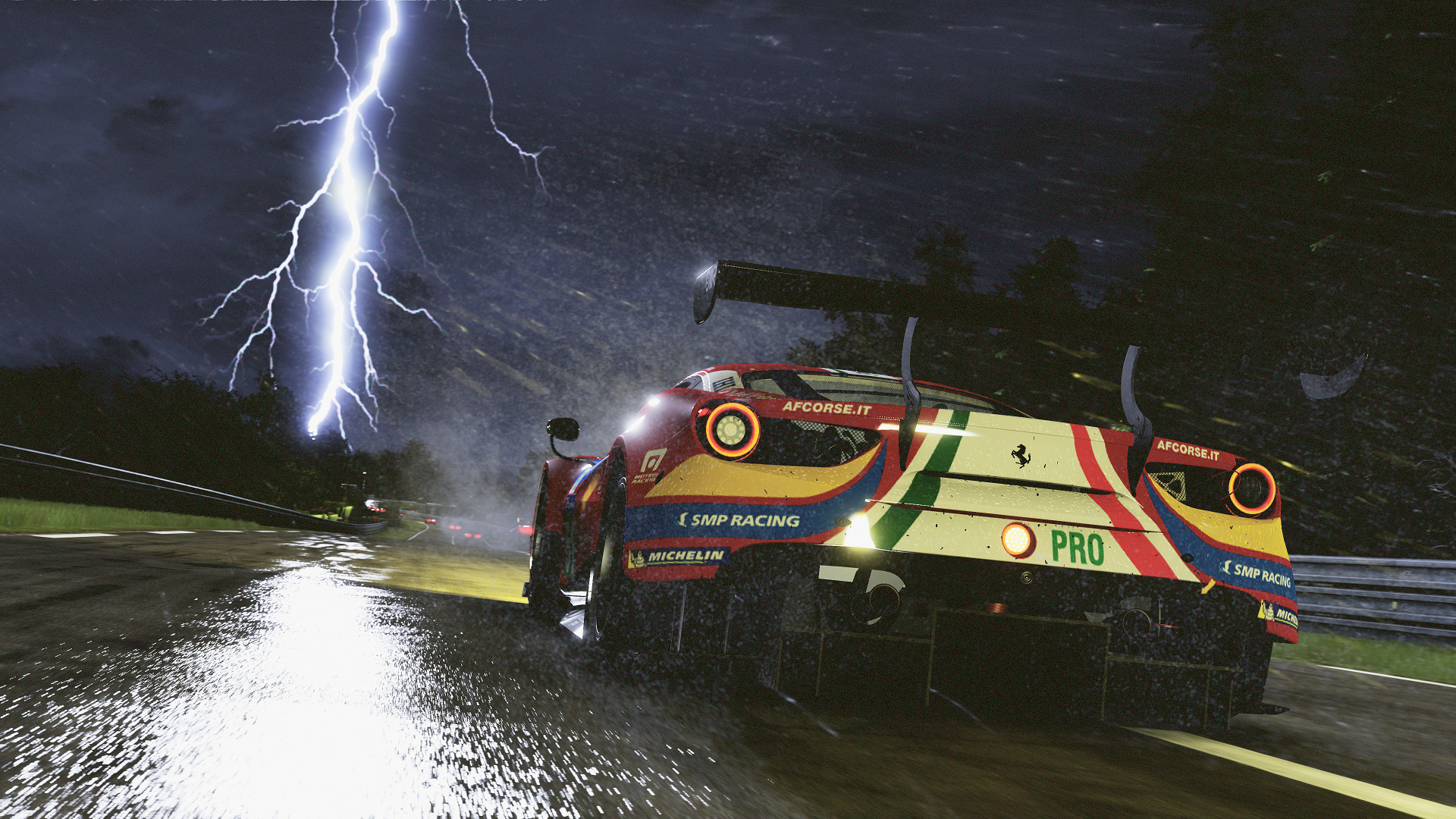
Racing simulation titles take an eager-to-win mindset and meticulously combines the precision and patience of careful maneuvering with high-speeds set on expertly crafted courses. In Slightly Mad’s sequel to their top-notch racing franchise, Project Cars 2 takes these very features and increases the magnitude of competition. Not by adding an increased difficulty on driving and control, but the excellent use of dynamic weather elements and various changes in the course throughout the duration of the race, leaving an attention to detail left out of almost every simulation racer to date.
Up-to-date Racing Mechanics
Firing on all cylinders, Project Cars 2 brings a true racing experience on the current gen systems. The default settings take away any type of racing assists, traction and stability control – leaving a swift, challenging and gorgeously designed racer. With a clear point of official racing rules, regulations and professionalism, cautious navigation plays an important role in the leading to a podium finish.
Every racing event, including the novice go-kart races, provide difficult elements and challenges all across the board.
With a variety of different race modes to explore, you’re offered many different solutions to scratch that racing itch. In the solo mode, you’re able to customize your race in virtually any manner possible. Creating your ideal race, set on the course you desire, blazing through one of the many licensed machines found in the impressive roster of Project Cars 2. Common changes like lap numbers, race limit and number of racers are obvious inclusions, but the weather dynamics is where things really get interesting.
Dynamic Weather & LiveTrack 3.0
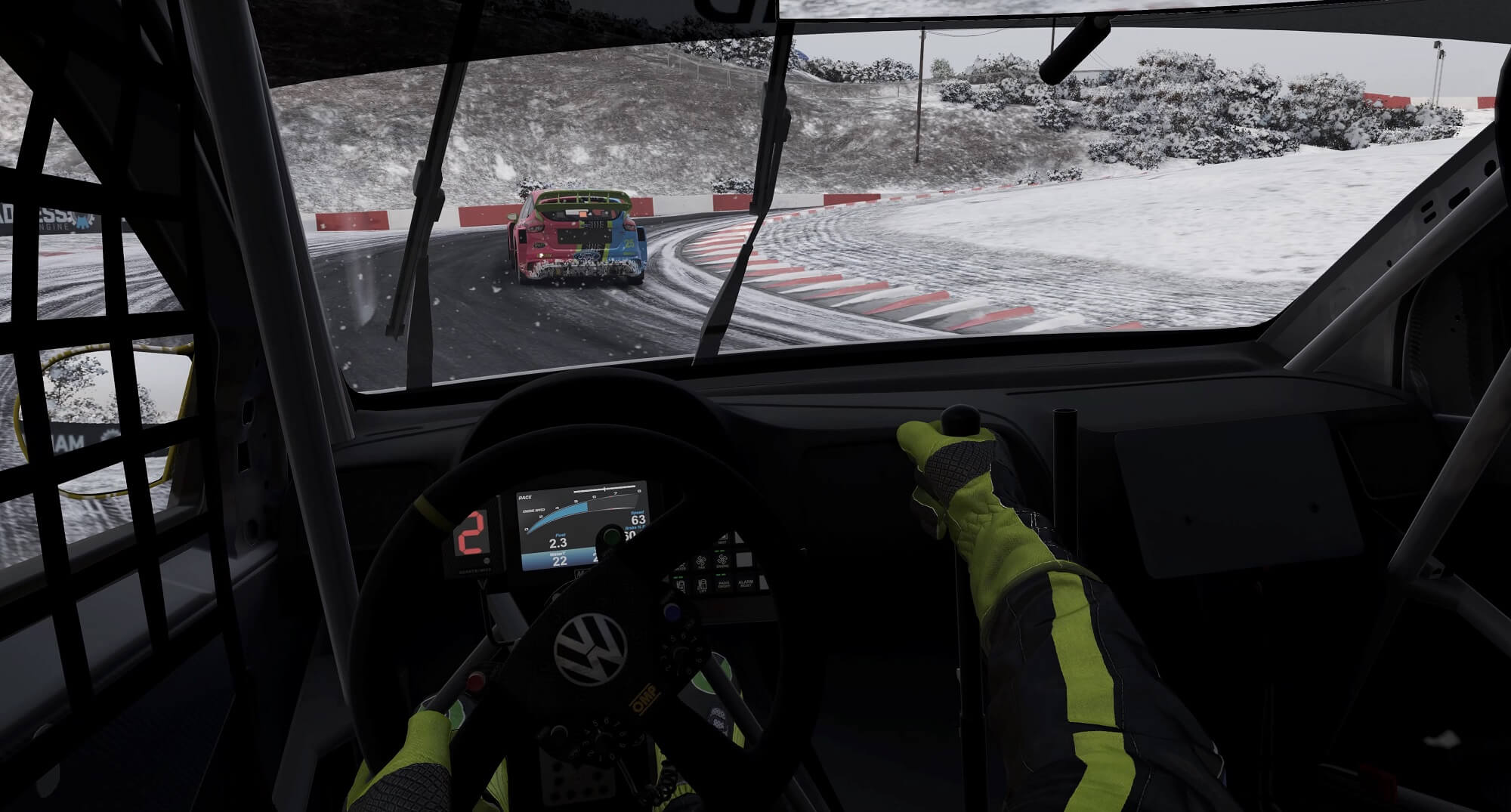
Changing the weather throughout the course of a race provides a heart-stopping thrill outside of the heated competition and challenging tracks. Adding severe rainfall, dense fog or heavy snow accumulation demands more attention to your racing. As rain puddles develop, fog blinds the next hairpin turn, or piling snow no longer makes your previous racing line accessible, thinking on the dime and adjusting your strategy to conquer the ever-changing weather becomes the only viable option to staying ahead of the herd.
The dynamic weather and excellent use of the LiveTrack 3.0 system keeps racers from feeling too comfortable during long race sessions.
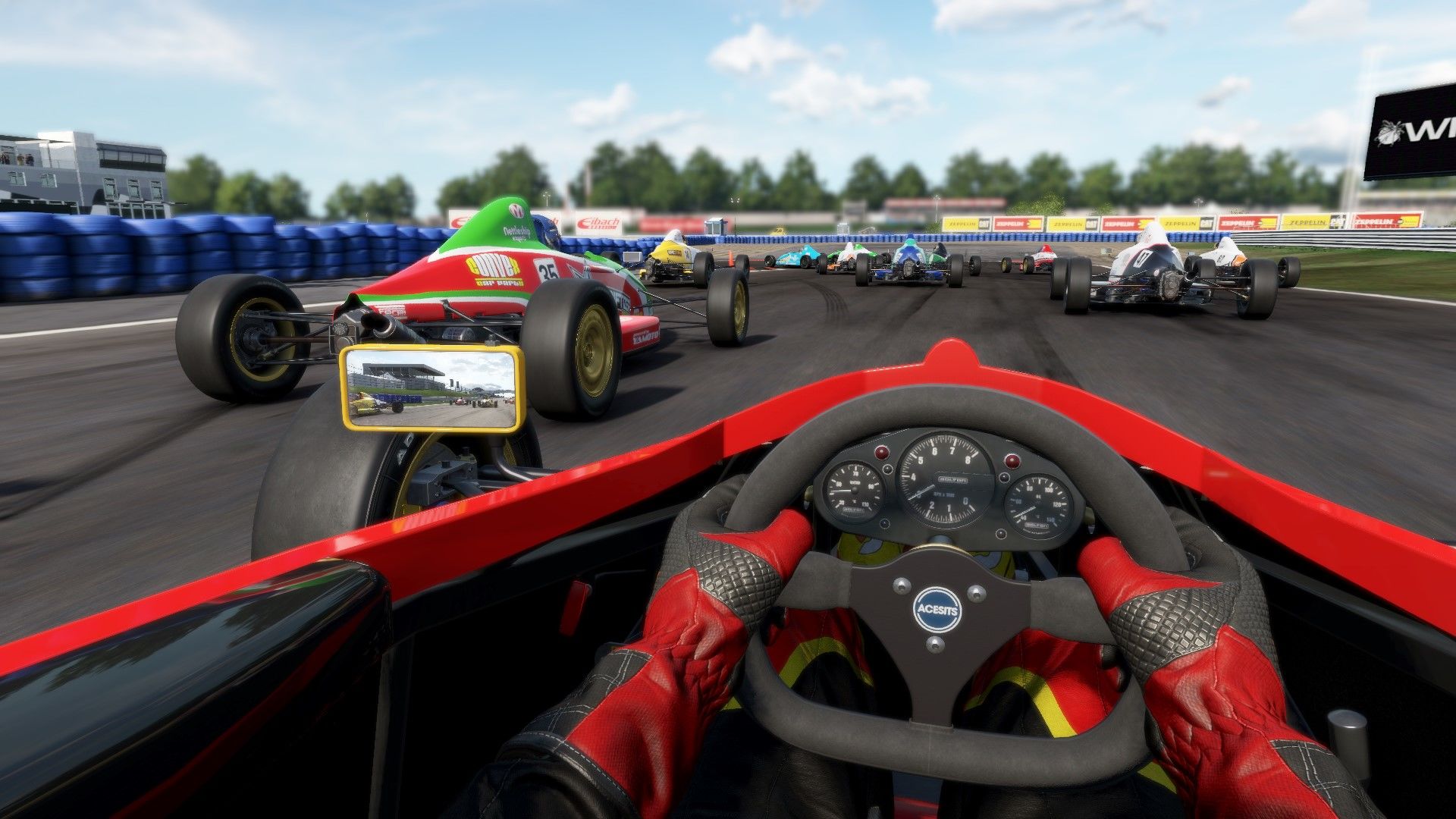
Racing around sharp corners and switch-back driving behind the wheel of a Formula One style racer, or gliding around S-curves in the off-road rally events show off outstanding physics in this modern-day racer. The lighting from sun-up to sun-down colors the lively courses and decorated racecars superbly. Dirt or snow pulled onto the track from cars sliding off-road throughout a lengthy race. Aggressive drivers smashing the throttle to the floor-board waiting eagerly for the smallest chance to take your position. As tires wear, fuel depletes and the mental awareness begins to drain, every turn on the horizon becomes a an exhausting, yet thrilling ritual. As more enduring races take hold, these increasing instances create exhilarating races.
180+ Racing Machines to Conquer
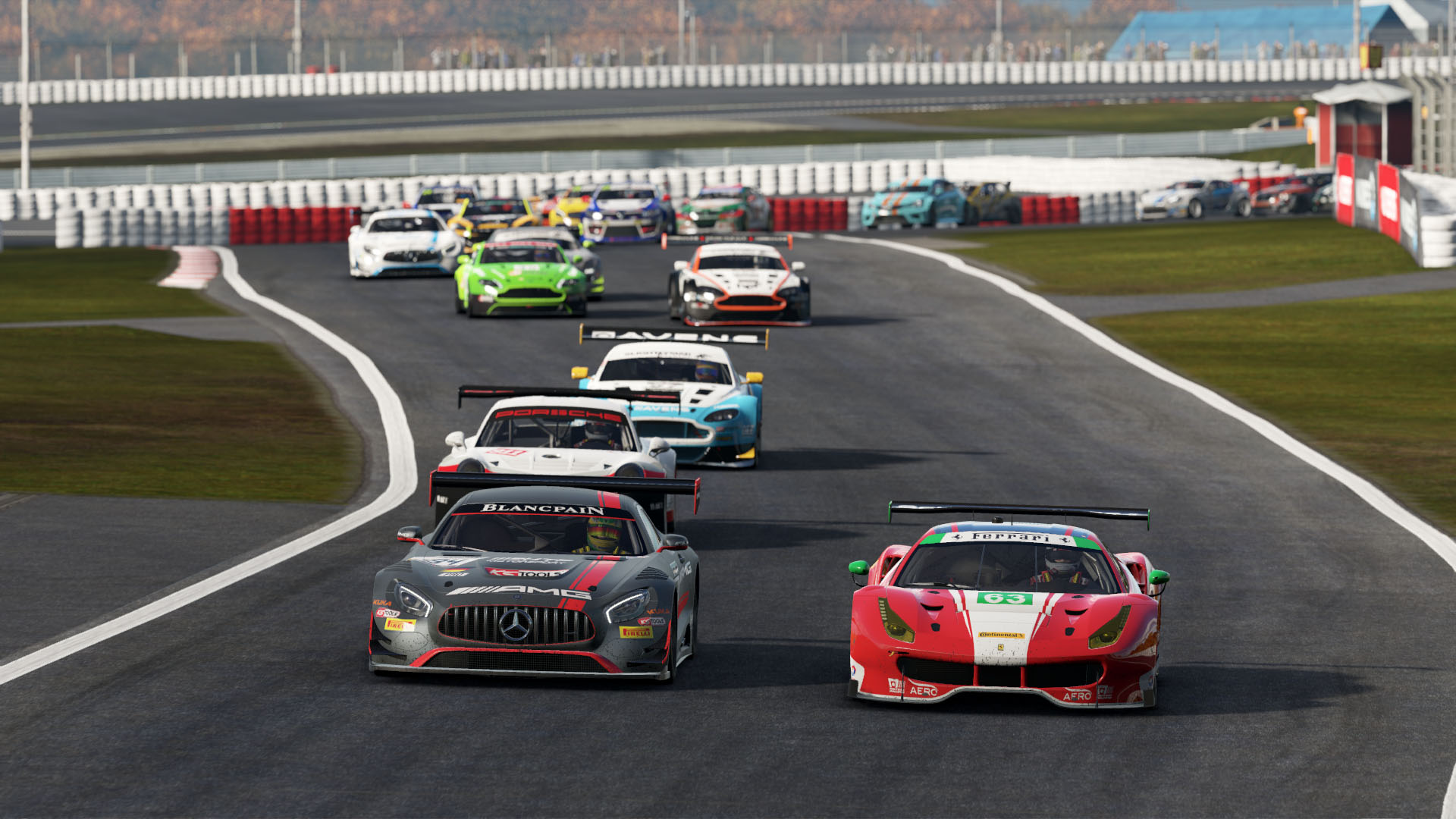
Of course, the difference in dominating the demanding weather and detailed courses could very well rest in one of the 180+ racing machines available. All with intricate details in aesthetics, handling and proper motor sounds; the roster of high-quality vehicles found in Project Cars 2 is next to a perfect list of proper machines. Though you may notice a few left out of the mix (180 is nowhere close to the total amount of excellent racing machines available throughout the generations of racing), the selection that is available brings many different styles of Motorsports to the table.
A wide selection of powerful racing machines are available right from the beginning, ranging from dirt wrestling rally cars to street gripping Indy cars.
Across the board of the Career mode, you’ll find yourself entering tons of championships and invitationals. From novice style go-karts to full throttle Indy cars – and everything in between – Project Cars 2 takes the player through the difficulties of modern Motorsports. The races are there to bring a true sense of competition by providing strategic cornering and acceleration, with a fleet of aggressive professional racers. Not only specified for hard-core racers, there’s a variety of sliders and options to help increase the odds for even the most amateur racers.
Customize to Your Liking
Decreasing lap numbers, giving yourself a boost with stability and traction control turned on, braking and steering assists, as well as the useful feature to decrease the AI difficulty and aggression; while you may not receive the full “racing sim” experience by tweaking these options, it does help ease the frustrations of the professional racing environment. Though designed as a simulated racer, players can easily use a casual approach to Project Cars 2 with the healthy dose of difficulty settings found in the Options menu.
Much like the custom race settings, in the multiplayer modes, you are able to host a number of events with anywhere up to 32 players in a race. A vast amount of customization is available, changing the class of vehicles, the weather and weather patterns, the track and how many laps, on to of tons of other settings. Championships, tournaments and other eSports focused events litter the lobbies creating a true sense of competition available to those outside of the AI challenges.
Players are free to customize many different race options to give a truly unique racing experience not found in most other racers.
Conclusion
Project Cars 2 adopts the formula that brought Slightly Mad into the arms of car lovers everywhere. By pushing the focus on a broader selection of Motorsports, powerful cars and ambitious courses effected by a wide range of weather patterns and settings, the new generation of racing just became deeper than ever. While the car list doesn’t stretch beyond the limits of previous racing simulators who have featured close to a thousand different racing machines – Project Cars 2 does offer a broad selection, nonetheless, respectfully dipping into the wide array of each motor sport featured throughout the Career Mode.
With tons of customizing options, difficulty settings, a moderate selection of racing modes and online competition, and the aforementioned vehicle selection, Slightly Mad’s enhanced sequel is exactly that. An impressively polished adaption to the franchise, adding exciting events like Rallycross, Indy Racing and high-speed oval courses, with a mix of randomized weather occurrences properly keeps the series right on track for continued success.