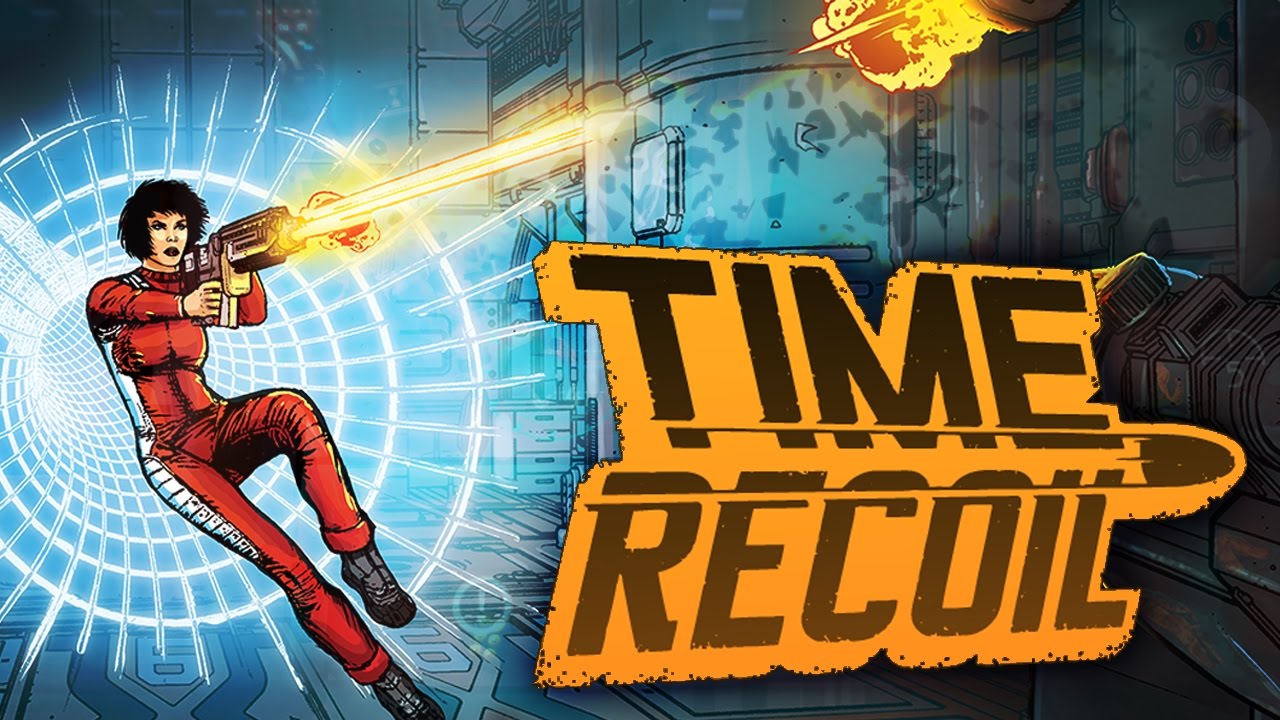
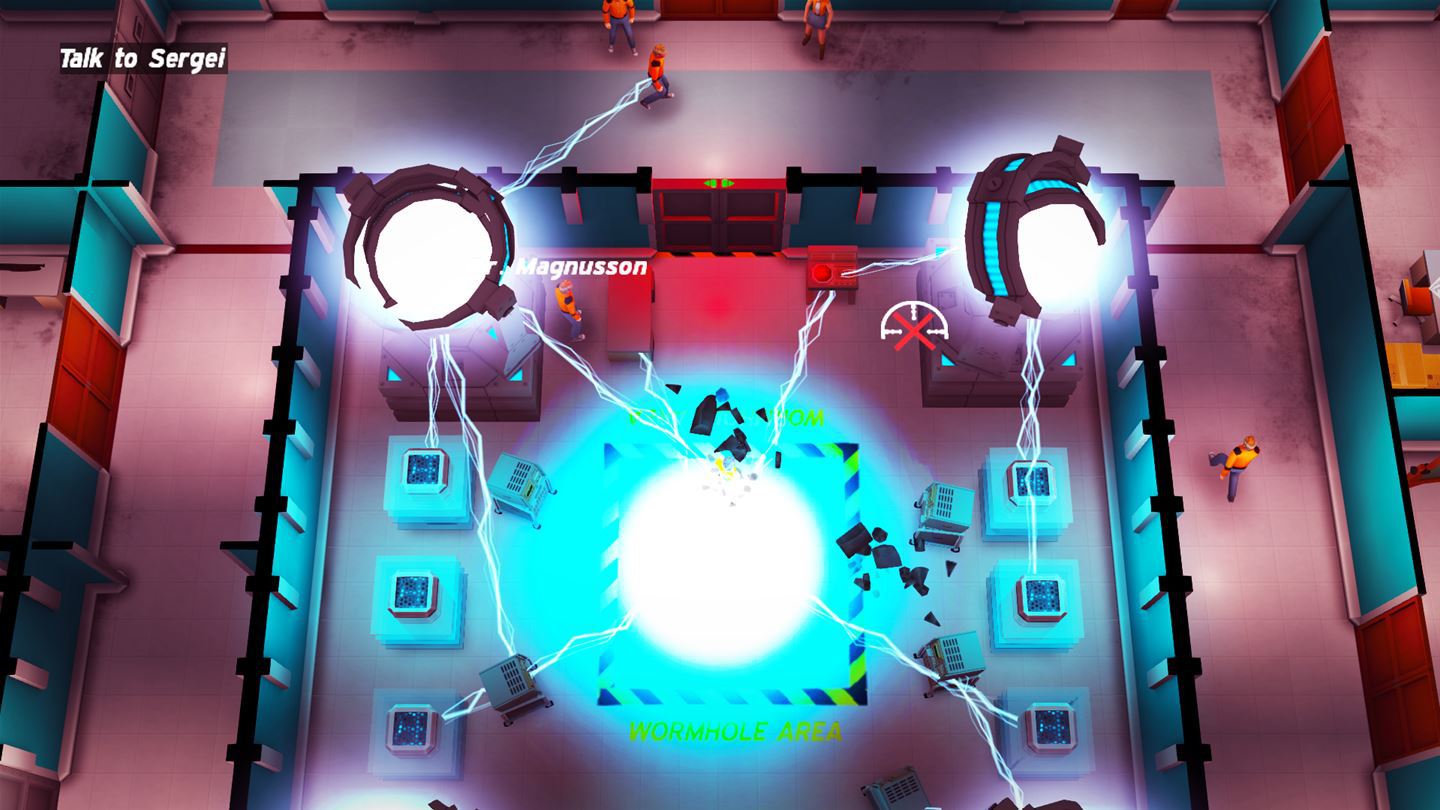
When it comes to the time travel genre, why is it that the inventors always focus on world domination or wreaking havoc? They never put their inventions to good use or help solve world problems. If they didn’t, however, we wouldn’t find ourselves here in the presence of Time Recoil; a twin-stick, top-down shooter on the Switch.
If this sounds familiar then it’s no surprise as Time Recoil is brought to us by the folks at 10tons; the brains behind JYDGE and Neon Chrome. The indie scene is thriving on Switch at the moment and 10tons seem keen to capitalise on this. The big question is, though, does this deserve a place in your Switch lineup?
Short answer is maybe, and the long answer is it all depends on how accepting you are of the games shortcomings. For all it offers, Time Recoil could be so much more and follow through with its premise of time travel. It shows its hand early, reels you in with a promising story but it all drops off far too quickly.
You’re a rescued scientist who has been exposed to time travel experimentation with few side effects. You worked with the now dictator, Mr Time, in the past and have been brought forward into time to prevent him taking over Europe. The problem now being that his whereabouts are unknown, resulting in you flitting between 70’s and 80’s to track him down and put an end to his reign of terror. This suddenly gets a little convoluted, with the missions being a sequence of fetch quests.
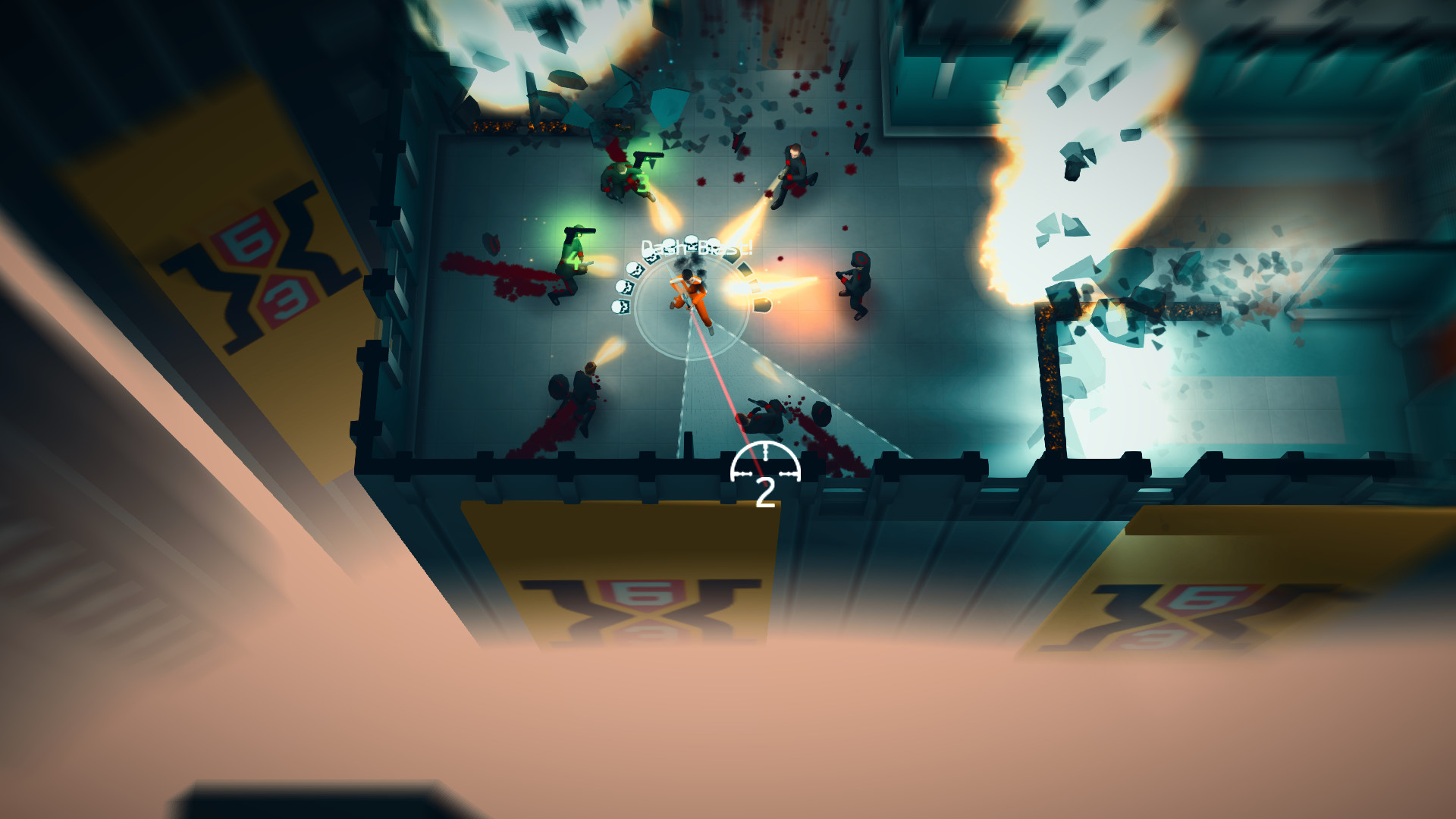
The saving grace of these being the challenge behind reaching your objectives and utilising your time manipulation powers. A consequence of time travel here is that you can’t travel laden with equipment, restricting you to a pistol at the start of each mission with limited ammunition. This pushes you to be both creative and accurate with your shots in order to not waste ammo and build up your powers. Each kill slows down time, and every consecutive kill grants you an ability such as a powerful dash or to cause an explosive rift. Eight consecutive kills will grant you a short bonus of stopping time, with bullets hanging until time resumes and hitting their targets once it has done so.
The problem is, however, being accurate is easier said than done as the sensitivity of the sticks is so high. You often find shots miss their target or that or they embed themselves into a civilian whom you are meant to be rescuing. With relatively few checkpoints, this can easily see you tearing out your hair following numerous deaths. The key to success is through repeated attempts, remembering enemy patterns and placements and remaining relatively unseen. The element of surprise and firing first is of great benefit here.
Time Recoil does look rather nice in both docked and undocked modes with relatively few performance issues in either. It has a charming soundtrack and appearance that is reminiscent of the time periods which you hop between as part of your task. I’d say the same about Time Recoil that I would about JYDGE, however; at a price of £11.99, it’s hard to recommend given that it’s likely to have a short life on your Switch. That’s not because it’s not a good game, it is, but you’ll likely rage quit whilst playing it and mean to come back to it but never do. There are so many other titles out there jostling for your attention that it’s inevitable that this could happen.
We all love bosses. Video game ones, that is, not our office ones. What game wouldn’t be complete without a gruelling, end-of-level monster to truly test our newly acquired skills? To make a good boss requires many different elements, and sometimes we forget about the importance of the music. So, to celebrate all those baddies and their themes, here’s our (my – can’t speak for everyone!) top boss music:
7) Castlevania – Stage Boss
One of the most wonderful and challenging games to play on the NES, Castlevania places you in the shoes of vampire hunter Simon Belmont as he attempts to rid the world of Dracula. The eerie creepy vibe to the levels and the monstrous boss fights deserves a complementing soundtrack, and that’s certainly what it gets.
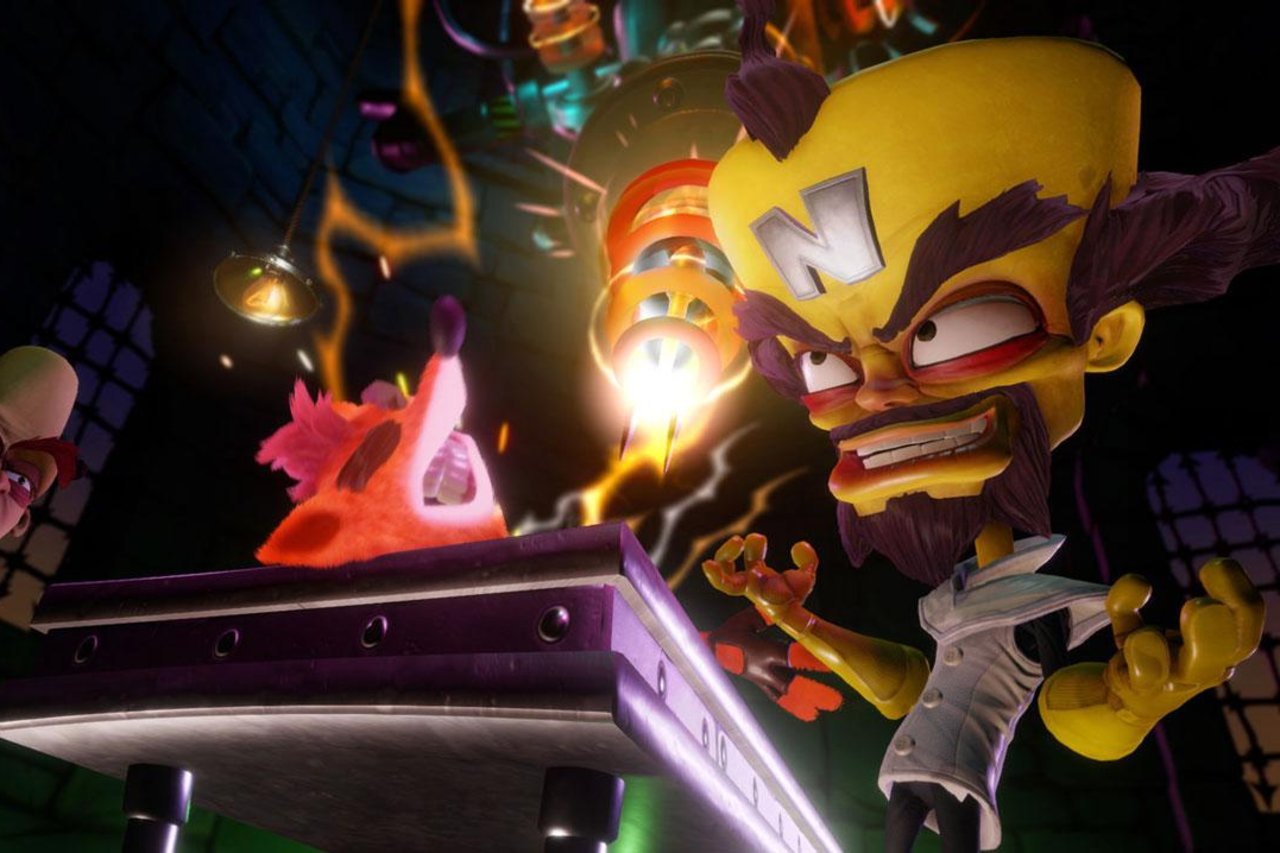
6) Crash Bandicoot – Dr. Neo Cortex
I always loved the Crash Bandicoot music. It was so refreshing moving from the electronic synthesised sounds of the 16-bit wars to something just a bit more uplifting! Still, even with the chirpy melodies, there was still room for something a bit different and atmospheric. A perfect end to the game, some may say.
Who could forget this tongue-in-cheek final boss? Who else in their right mind would choose to fight such an adversary in a glorified wrestling ring? And yet, if you purely listened to the epic music, you’d be none the wiser. A score that still takes itself seriously, yet also hits the nail squarely on.
4) Sonic & Knuckles: Minor Bosses
There are quite a few iconic boss melodies from the Sega Mega Drive (Genesis) Sonic era. However, for me, I always found the music featured in Sonic 3 and Sonic & Knuckles to be just sublime. And this is the cherry on the cake. For me, this is the best boss theme of the series. It’s frantic, intense and energetic, the way a boss fight should be!
3) Super Mario World – King Koopa
A glorious final battle atop of Bowser’s lair, or King Koopa as he’s sometimes referred to. Why do I like this music? The intro builds up perfectly and choreographs with the graphical presentation perfectly. It sets the scene extremely well for the ultimate showdown that is about to come.
2) Pokemon Red & Blue – Gym Leader Battle
Ah, Pokemon, the franchise that took over the world. If you owned a Game Boy, you owned Pokemon. It was one of the biggest driving forces behind the handheld’s success. Facing a gym leader, you always knew it was going to be tough (especially early on), but the music not only casts a sense of importance over the battle, it also motivates you. The tone is exactly spot on for this game.
1) Final Fantasy VII – Boss Theme
I think somewhere it is written: “all roads lead back to Final Fantasy VII.” Though I may be wrong.
There’s only one reason why this enters in at the top spot, and one reason only. And that is purely because of how different it is to the normal battle theme. When you start to hear that iconic guitar riff, you know it’s on… like Donkey Kong. Time to put on your big boy boots because you’re not leaving this fight without earning it.
Do you remember the good old days, when video games put fast hack-and-slashing combat sequences and extensive levelling systems first and a deep narrative with memorable characters second? BigHuge Games certainly banked on gamers holding some kind of nostalgia for those titles of yore with their fantasy RPG Kingdoms Of Amalur: Reckoning. However, depending on your preferences, their ambitious open-world title may appear to have backfired in its retro homage.
You need only sense the feeling of lacking innovation that pervades Reckoning’s storyline to see just how much emphasis it places on its gameplay- you’ll find your character resurrected from the dead into an ancient war between the mortal races and their immortal tyrants, and thanks to your selective amnesia, in essence, you’re given the chance to choose your destiny, branching off into any skill set and reputation that suits your play style. Various fantasy stereotypes like the intimidating wise councils, the ancient royal families and their descendants are employed constantly and regularly, to the point that you’ll find yourself almost completely devoid of empathy or emotive connection to any of the identikit races that you come across.
This sounds like an exciting premise at first, but it’ll quickly become apparent that the supposedly limitless choices at your disposal are markedly more finite than they are in Skyrim. Far from being able to forge your fate and have your name become either one that instils fear or pleasure across the kingdom that lies before you, all of the separate towns and villages just feel like isolated mission areas whose population only have an inclination to you based on the pre-determined actions you perform throughout the entirety of the forty-hour campaign and the various (repetitive) side missions.
The moment that it becomes obvious that your actions are having very little major change on the game world around you is precisely the point at which you’ll realise that Reckoning is far less immersive and compelling to blitz through than any recent RPG legends.
That the game’s graphics are sub-par at best- unlikely to have looked out of place on the PS2 or the original Xbox in a similar vein to Fable– doesn’t help, either. Electronic Arts didn’t place much faith in the Kingdoms franchise based on the underwhelming locales and character models that must surely be the result of a restrained budget.
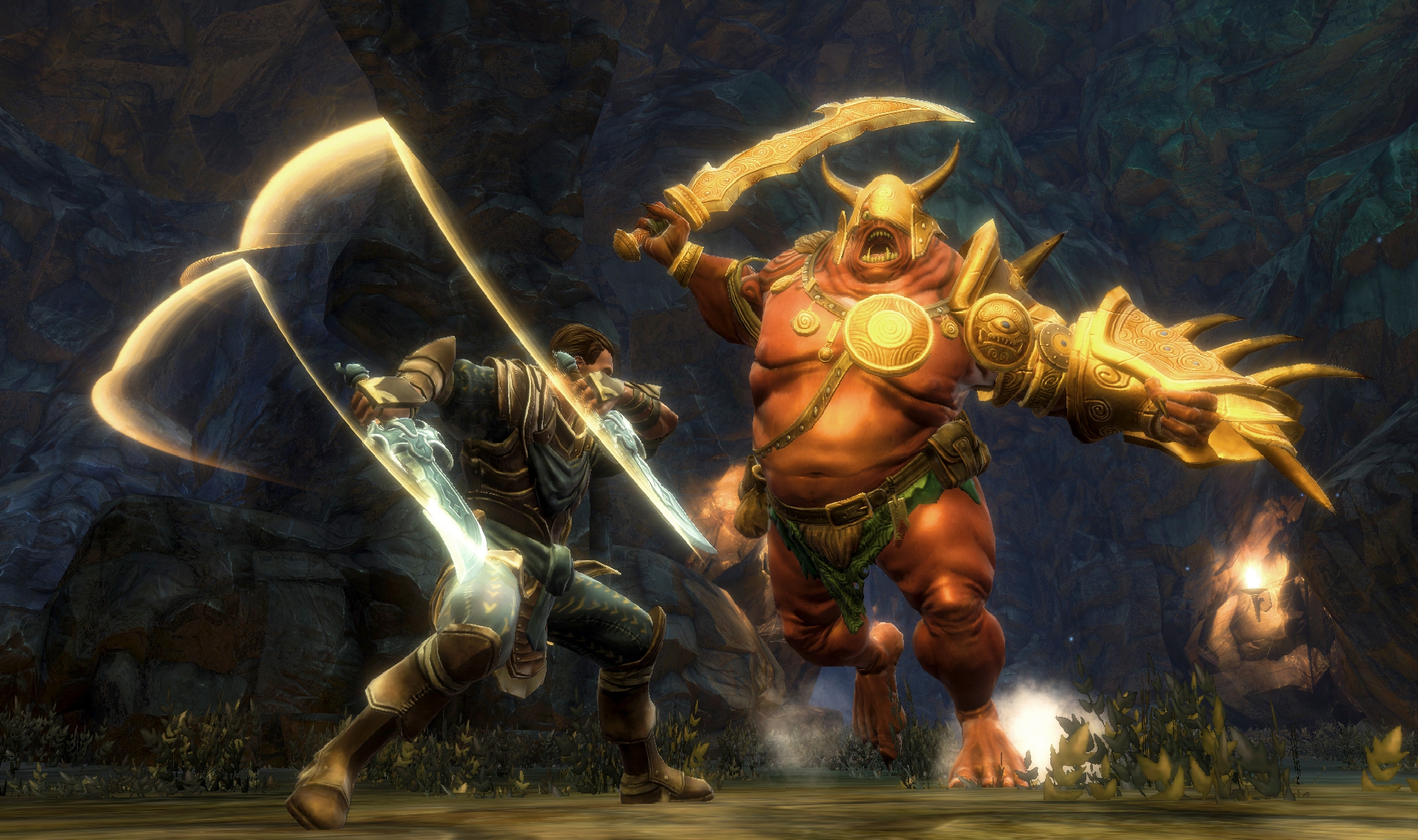
The game’s one saving grace is undoubtedly its fine combat- harkening back to classics like God of War, it’s fast-paced and dynamic (even more so than Skyrim at times), boasting a genuinely arcadey style that is easy to pick up and develop on as you progress your character’s skills and abilities. If BigHuge could have worked on making every element of the game experience as refined and unique as this, we might have ended up with a more satisfactory overall product than we got with Reckoning.
Everything about Kingdoms Of Amalur: Reckoning feels a little dated, its woefully recycled plot suffering the worst in a period where video gaming narratives had evolved to become such deep and engaging experiences. Although if I’m being nice, you still may be able to get some fun out of this.
Hello, true believers! I’ll be presenting this Past Blast in a slightly different format than usual, so without further ado:
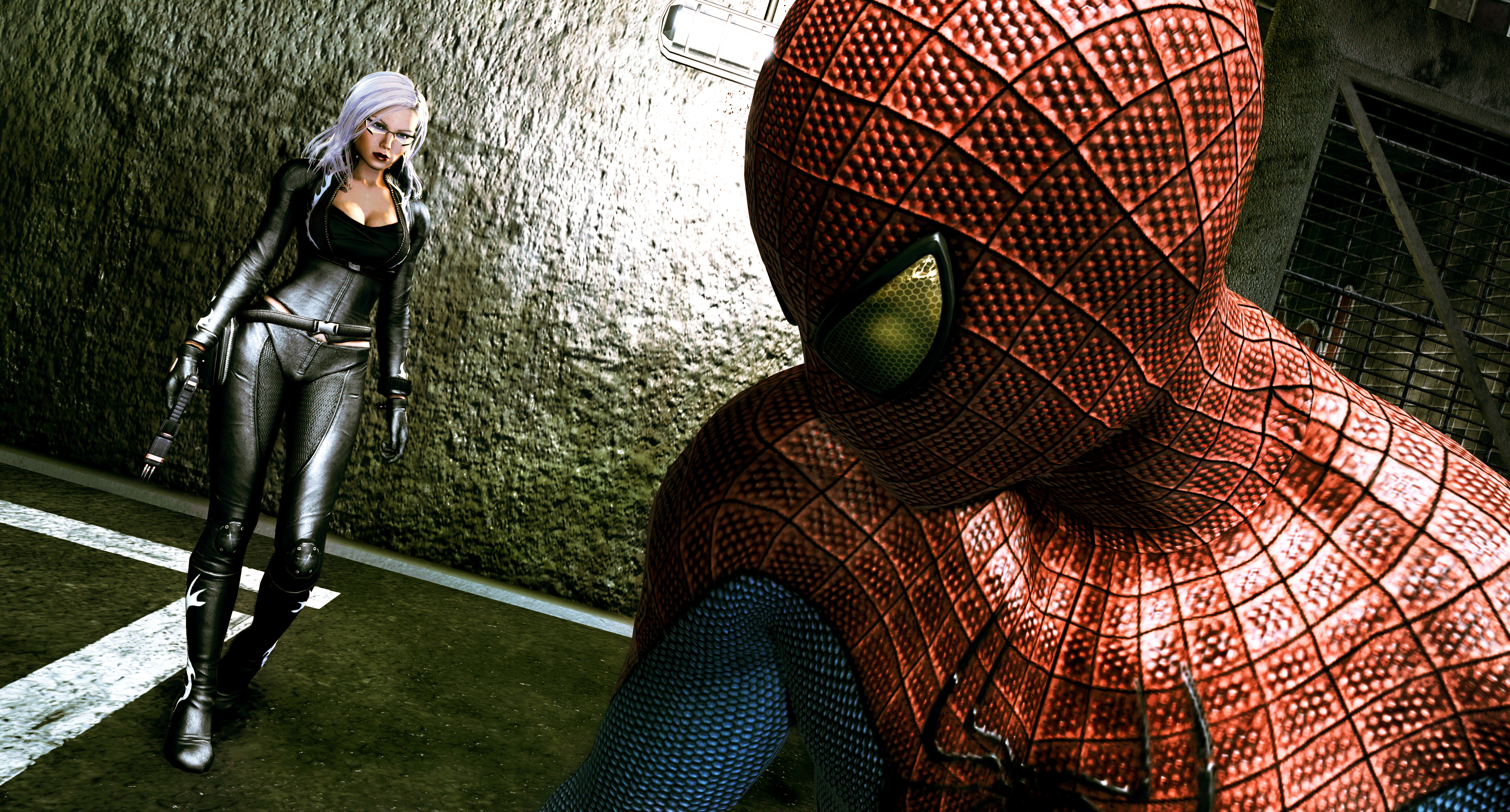
Was The Amazing Spider-Man a good movie game?
The short answer? Heck yes. In fact, I’d go so far as to say that this was the best movie licensed video game that gamers will have seen in a long time, packing a very compelling narrative, solid game-play and plenty of incentives to explore its deep and rich world. This kind of effort from developer Beenox puts previous identikit effortless movie instalments including Monsters Vs Aliens and Green Lantern to utter shame.
Does it match up to Spider-Man 2, Beenox’s other efforts and/or Arkham City?
Right from the off, many of you will no doubt have wondered whether this movie tie-in could possibly live up to what are perceived as the best Spider-Man games, recent Spidey efforts from Beenox and indeed the legendary Batman: Arkham City. What I’ll do first is provide a brief list of the scores I would have given to the past aforementioned games:
Spider-Man 2 (2004): 4/5
Ultimate Spider-Man (2005): 4/5
Spider-Man: Web Of Shadows (2008): 3/5
Spider-Man: Shattered Dimensions (2010): 3/5
Spider-Man: Edge Of Time (2011): 2/5
Batman: Arkham City (2011): 5/5
This is right up there with the best entries in the Spider-Man games roster so far. This almost does for Stan Lee’s Webbed Wonder what Arkham Asylum kicked off for the Dark Knight, yet there is a little too much crawling in repetitive sewers, Oscorp facilities, factories and sewers (oops, did I already mention that?) for this to be dubbed truly as ‘amazing’ a development as the Arkham series.
It’s probably fair to say that this may be the best Spider-Man game of all time, but all the same that doesn’t mean that it’s up on the same level as Batman’s best just yet.
How strong is the game’s storyline? Does it feel like a pointless epilogue?
There was a confidence here, thanks to Marvel’s allowance of creative vision on the part of the writing team, that can’t help but wow the player – even today.
After the events of the film, Peter Parker’s alter-ego is forced to live with the consequences of his actions as his attempts to stop the Lizard have put someone in power at Oscorp who poses perhaps an even greater threat. Surprisingly enough, this man is not Norman Osborn, yet the hints we get at his overarching role in this rebooted universe and the shocking plot twists that occur throughout the game are incredibly effective, doing to the film franchise what the Arkham games did to their self-contained version of the DC Comics universe.
While this game isn’t intended to connect The Amazing Spider-Man to its 2014 sequel, the narrative is a sublime adventure for players to blitz through, really upping the stakes in a way that other movie games could only aspire to.
Will the visuals impress me as much as Arkham City’s did?
Sadly, no. One of the only major faults I can pick out in Amazing are the graphics of the game. Much as Beenox have clearly put a lot of effort into creating a living and breathing replica of a modern-day Manhattan in their engine, the majority of the buildings, characters and environments on offer here are bland to say the very least.
It was never likely going to be possible for a movie game whose budget was sparse, to say the least, to match up to Rocksteady’s sublime, beautiful epic. Nevertheless, it is a shame that we’ve got graphics here that are more reminiscent of 2008’s Web Of Shadows than they are of Arkham.
Does the free-roaming Manhattan work well as an open-world?
Thankfully, this one is most definitely a positive. Although it perhaps doesn’t sport as wide a variety of (divisive) mini-games as the Spider-Man 2 tie-in’s incarnation of the Big Apple, this version of Manhattan is the most believable and realistic rendition of the city yet. Indeed, it truly fits in with the vision of the Marc Webb film reboot.
The new Web Rush mechanic allows for great, fluid navigation of the skyscrapers and roads in a way that no other game based around everyone’s favourite Webbed Wonder has before. Just swinging through Manhattan will feel pretty exhilarating to the vast majority of fans, and the action-packed battles you’ll partake in on the city’s various layers simply enhances the sheer immersion that this open-world exudes every time you boot it up.
Is the combat and stealth gameplay engine just a rehash of the Batman games?
There’s no doubting that Beenox has taken inspiration from the popularity of Arkham Asylum and Arkham City’s gameplay style in their road of development for Amazing. Anyone who’s played either of the aforementioned Dark Knight greats will smell their scent here from a mile off, and as such, there’s no way this licensed title could ever hope to fully top its superhero predecessor in terms of basic innovation.
Again, the Web Rush feature factors strongly into the way that Spider-Man faces his enemies, and for the most part this works marvel-lously (see what I did there?). However, the actual combat-counter system a la Arkham feels somewhat more static than its inspiration – there will be times where you’ll take hits that seemed unfair and the ‘Spider Sense’ alert mechanic doesn’t appear to give you nearly enough leeway. It’s nothing game-breaking by any means, but it does certainly highlight the learning gap between this and the near-perfect mechanics employed over in Gotham City in the past.
What kind of replay value (if any) is there in the title?
As I mentioned earlier, Beenox’s dedication to providing us with a Spider-Man title worthy of the universe’s fanbase has resulted in some brilliant extras being included on top of the campaign. In addition to the obligatory heaping of side missions and character upgrades, there are literally hundreds of comic-book pages scattered throughout the city for Spidey to grab on his travels.
Where other licensed titles might stop there and simply offer a few Achievements or Trophies at certain percentages of collection, the developers take things one step further. Once you’ve collected the required numbers of pages, you’ll actually have the chance to read the stories you’ve pieced together. Yep, from the classic issue of Amazing Fantasy that introduced us to the arachnid wonder to his own title’s first renditions of in-game baddies such as Rhino, Scorpion and Alistair Smythe, there really are some fantastic adventures to learn about or relive here, and it stands testament to Beenox’s attention to detail and nostalgia that they would include such a worthy source of replay value into a movie licensed game.
Conclusion
I think it’s fair to say that no-one would ever have expected The Amazing Spider-Man to be up there with the best games ever. What was a hugely pleasant surprise, though, is that were it not for the stolen gimmicks and lacklustre visuals, I think this entry really came closer than any other Spidey game to being considered for that accolade.
Now, we await next year’s Spider-Man on PS4. How will that turn out? Time will tell. Until then, Excelsior!
Some of the best ‘tycoon’ games put you in tough spots and force you to make decisions. Theme Hospital and Theme Park would ask you to make choices about what items you wanted to buy and where you wanted to place them whilst also asking you to take care of hiring staff and dealing with events, like flu pandemics or broken down rides before they got out of hand.
Party Hard Tycoon is aiming to capture that Theme Hospital vibe here. It asks you plan a party, get the right equipment, food and entertainers into the right venue and then place them accordingly so your bash goes off without a hitch. Sadly, the game is littered with problems, the worst being that there’s no interesting decisions to make and throwing parties isn’t as fun as curing someone of ‘Bloaty Head’.
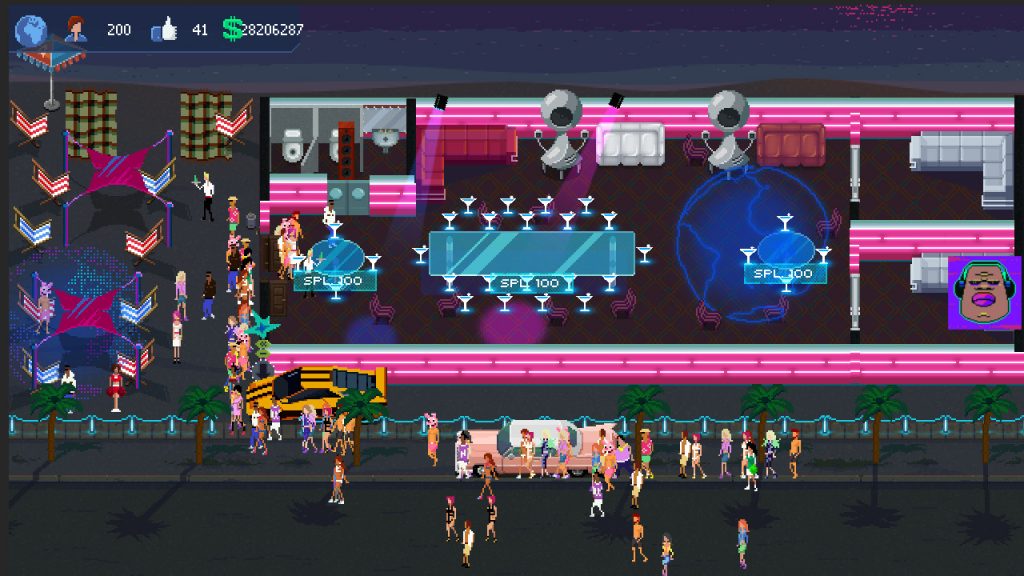
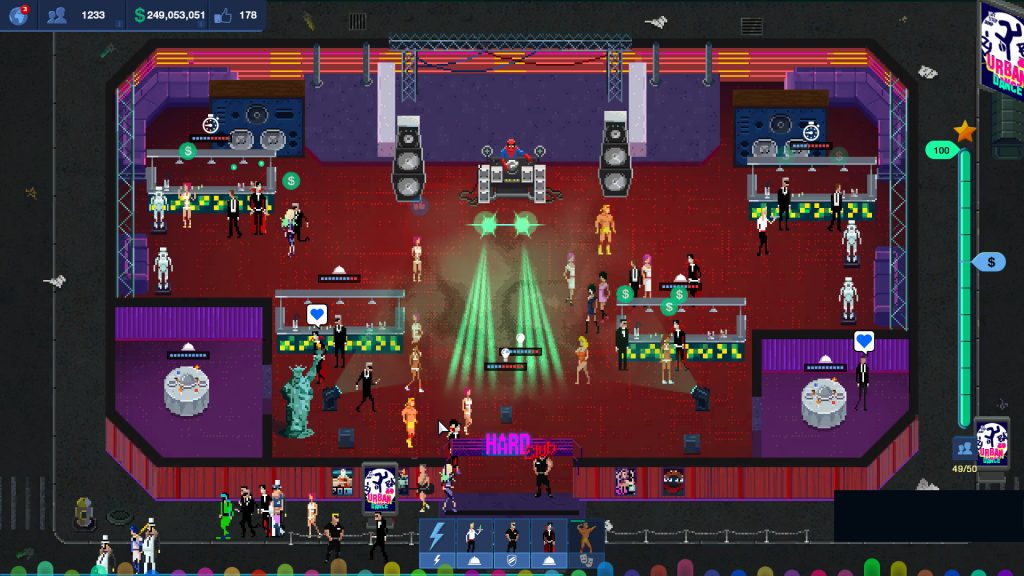
Some positives firstly though. Party Hard Tycoon sure has a style to it, similar to the developer’s previous game ‘Party Hard’. The characters are tiny, pixelated caricatures that are pretty recognizable even though they’re barely larger than 20 pixels tall. Punk rockers, the members of The Village People and a whole host of pop culture icons are recognisable as they rock up to your rocking party.
Throw a party that’s ‘hype’ enough and you’ll eventually have Darth Vader turn up.
The loading screens also contain some lush visuals and the music is pretty good too. Which is handy given that this is a game all about partying, where music is vital, and also given the fact that you’ll be hearing the same tracks quite a few times over.
It’s a setup
So the setup is that you’re a party planner, new to the scene, and you’re looking to make a name for yourself. You set about doing this by… planning parties, obviously. You’ll start with small venues, like houses and rundown squats where only 10 or 20 people will show up.
Along the way, you’ll get some messages from random people who are all about partying and will want you to throw a shindig that meets their certain criteria. For example, some woman wanted me to throw a party that had 2 laser projectors installed at the venue whilst another time a Rastafarian chap wanted me to throw a reggae-themed party that had 4 dining room tables placed for the party goers.
You see, these challenges aren’t really complicated and they don’t force you to do anything ‘exciting’. Placing laser projectors and dining room tables is all about clicking twice and making sure you have enough money to buy the items in question. They don’t really change anything.
Which can be said of pretty much every decision you make in this game. Sure, you’re tasked with hiring a venue, selecting a theme and then hiring three members of staff to help you with the party, but these decisions aren’t interesting. They all make basic sense – if you’re hiring a rundown squat, a punk theme will be good. If you’re hiring a fancy country house, maybe a more ‘classical’ theme would be better suited? The obvious answer is yes.
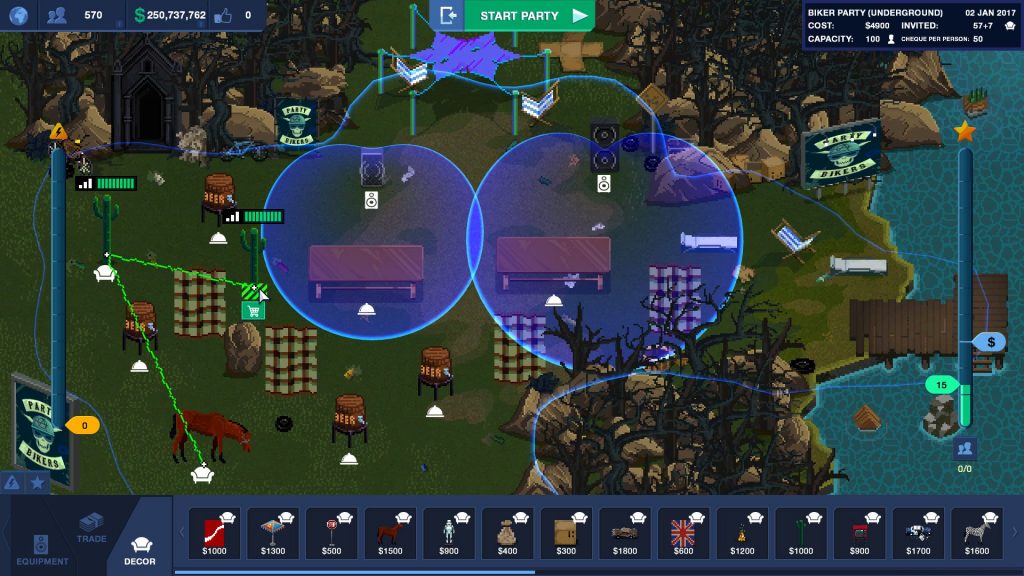
You’re then also asked to place some decorations if you want, but I couldn’t see any tangible benefit to this. Green lines were drawn between the two palms tree I just plonked down, which I assumed was good, but I honestly had no idea.
Buying better gear means you can throw better parties. Which isn’t really much of a strategy, is it?
More importantly, you need to place music equipment and food stations. This is also a boring decision to make because it’s not much of a decision at all. If you can afford a better speaker and if your venue has enough electricity to power it, then you buy the better speakers. If you can buy the fancier food table, do that. The more expensive lasers are more ‘effective’ so grab them. There’s no trade-off, no tough dilemma and no engagement from doing any of this. The better things are better, so it’s better to use them.
Let’s get this party started
After you’ve placed all this stuff you click ‘start party’ and watch as those nicely drawn pixel partiers strut into the venue. This is where a frantic game of plate-spinning kicks off as you try and keep the party running smoothly, right?
No.
The party takes care of itself as whether it goes well or not has been decided already. Remember those ‘better speakers’ I mentioned? They add to the ‘hype’ of the party, with more hype leading to happier revellers. So if you could afford the better gear, your party will be better and if you couldn’t then it won’t. Simple as.
You can do a bit of fudging to make your party go better by telling your staff what to do, but this is, again, a totally unfulfilling series of clicks.
There’s just no reason not to keep telling your photographer to keep taking photos as soon as his cooldown stops. There’s no strategy to ‘using him at the right time’. None. Keep snapping away, Mr Photographer. Keep dancing for everyone, Mr Dancer. Keep refilling the tables, Mr Waiter. Keep on keeping on.
After the party’s finished you get told how many people ‘liked’ it and as a result, you can ‘level up’ as a party planner. This means you can unlock a new venue, a new theme or a new member of staff to use at your next party. This could be interesting, but whilst the venue, theme and staff members differ from party to party, the game never changes.
Does it matter what day you throw a wild party out in the middle of the woods? Yes.
On top of the throwing parties, part of the game has another layer where you stare at a calendar and a map. The idea is that on different days there are different ‘types’ of partier ready to have it large in different parts of the town. So this would be an exciting chance to plan just where you’re going to throw a party and just what sort of party to throw, right? You can see that all of the rich kids are going to be up for it on Tuesday, in the Upper East side of the city. Time to plan a big bash!
Nope.
Waiting to throw the perfect party isn’t actually a part of this game at all. This is because the ‘hot spots’ of where people are actively are pretty random, meaning there’s no planning and no decision making. Also, the venues you have at your disposal don’t move about, meaning that if there’s a large crowd of punk rockers looking to mosh in the South of the city, that’s tough luck. Because the ideal venue is located in the North. So there.
In the end, you’re left with a game that’s really repetitive and doesn’t ask you to do anything of real consequence. There’s no strategy, no decision making and very little impact to your actions. You simply throw bad parties until you can afford better speakers.
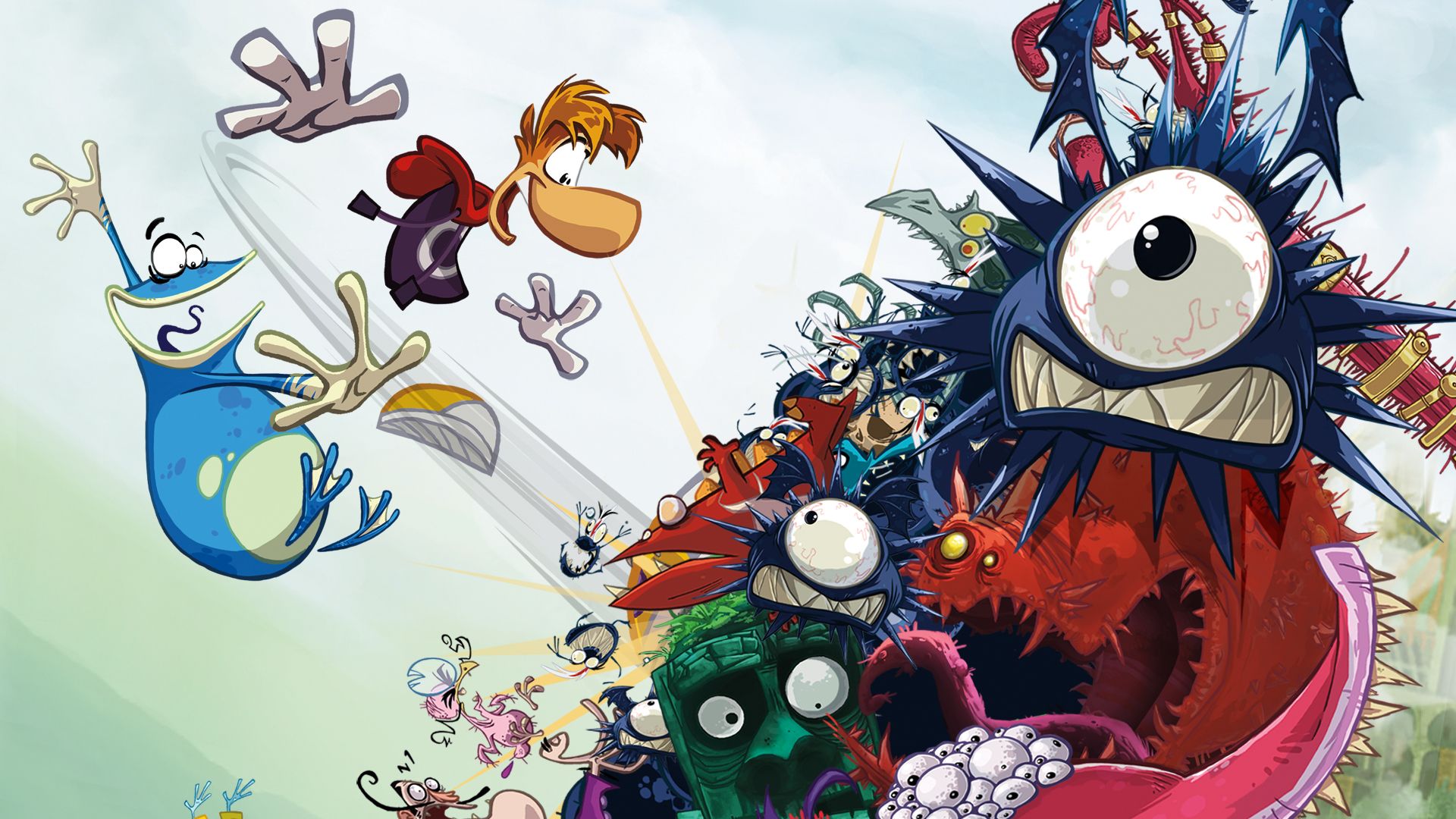
In a world where popcorn-shooters like Call of Duty and Battlefield reign largely dominant over their industry despite their tiresome linearity and woeful storylines, it’s refreshing every once in a while to find a game that doesn’t rely on a formulaic template set down by the past legends of its genre. Those of us who aren’t waiting for the midnight launch for the next COD look to a select group of prized developers who will offer us consistently innovative and thought-provoking experiences: developers like Valve, Rocksteady, CryTech and Capcom, all masters of their respective trades rarely given enough attention by the wider gaming community, but treasured by those with a keen eye for talent. We added Ubisoft Montpellier to the list with the release of Rayman Origins…
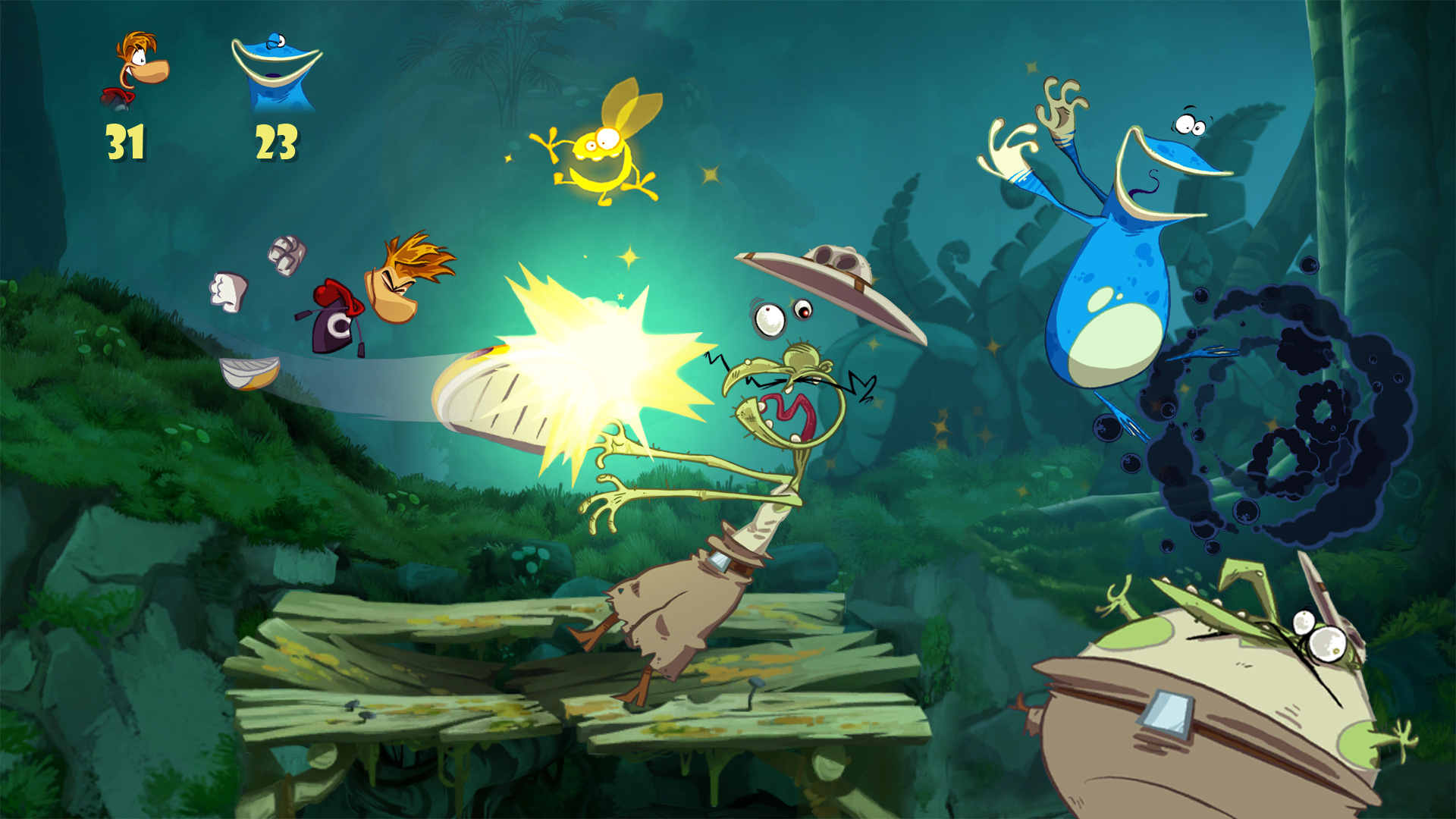
Origins tells a simple tale – Rayman and his buddies are fast asleep, and their snoring awakens a menacing granny and her army of Darktoons, who then precede to capture a handful of Glade Kings and run off into the distance, just begging to be chased. Sound familiar? Yep, there’s more than a hint of the Mario franchise about this one; from the whimsical soundtrack to the fast-paced, rhythmic gameplay, countless elements that have made the iconic plumber’s recent escapades such captivating romps are present here, and as you might expect the whole experience plays out all the better for it.
However, what might come as more of a surprise is just how much Origins has to offer of its own accord. For starters, there’s a great variety in the styles and themes of each of the levels on offer, ensuring that the player won’t ever be stuck with the same repetitive gameplay mechanic for too long, but equally that they’ll get enough time with the thrilling flight sections, the incredibly addictive bonus chase sequences and the oft-hilarious boss battles that they won’t ever be left feeling short-changed either.
Take that generic shooters!
Perhaps even greater an achievement than that, though, comes in the simply sublime animation. The in-house UbiArt Framework engine made specifically for this project works wonders, giving a distinct visual flair to characters, locales and objects throughout every level, and is rendered stunningly in high-definition. You need only watch a trailer or gameplay demo of Origins to get a glimpse at the sheer level of attention and detail that’s gone into each aspect of its graphical style. This was undoubtedly a trend-setter for any development teams who dare to take a new approach to their animations and artwork.
I would offer a word of warning: Rayman Origins is not for the faint of heart. Like the Mario Bros and Prince of Persias of old, this game is not afraid to have you throwing your controller across the room as you fall down that same pit you’ve been trying to conquer for the past hour for a hundredth time. Ubisoft made the opening half of the game deceptively accessible, providing players with a fairly simple bunch of levels that can be breezed through in the best part of five hours, but once you’ve reached the midway point (and believe me, you’ll know when you’re there), the difficulty ramps up dramatically, as you’re forced to scour back through past levels to desperately search for more Electroons that can open up the path to new worlds.
Such an unprecedented shift in challenge is likely to alienate a significant proportion of the game’s younger audience, simply because there are so many titles out there right now which don’t pose so much of a struggle or require as much time to be invested in order to complete them. Personally, I would say that the team at Montpellier should really have balanced out the learning curve of Rayman Origins’s later levels a little better to make the idea of putting the disc back into our consoles for one more go seem a little less daunting.
That said, I commend the studio for sticking to their guns and giving us a ‘hardcore’ platformer that gloriously harkens back to the days of the Mega Drive and the SNES, packing all of the challenge and innovation that made the classics such a joy to play in their heyday. Whether you’re able to beat it or not, there’s absolutely no denying that Rayman Origins is a stunning pinnacle of modern platforming and visual design. Above all, it’s a cracking showcase of what consoles can offer (besides first-person shooters).
The Assassin’s Creed series has covered a broad array of historical time periods, numerous revolutionizing civilizations and provided fans with plenty of towering platforms plunging you headfirst into shallow haystacks. Year after year, Ubisoft released the next entry in the series for the past decade, only acquiring a small number of stand out titles from the Assassin’s franchise. After a year off from the constant barrage of AC titles, Assassin’s Creed Origins relieves fans from the drought with a massive world to explore, set in the earliest days of the brotherhood.
Discover ancient Egypt through the eyes of a Medjay
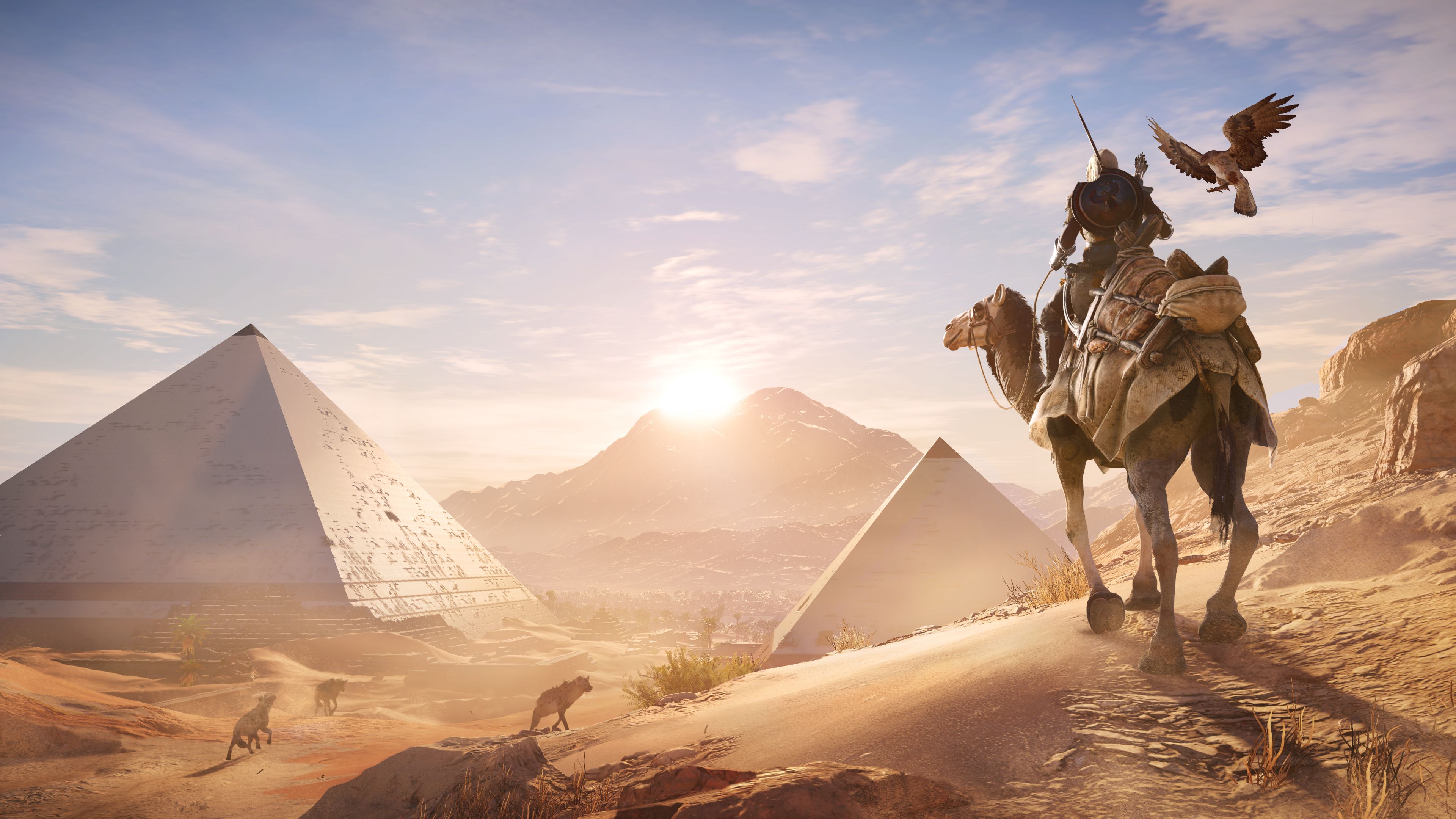
Our newest (or shall I say earliest) assassin goes by the name of Bayek and dons the presence of a Medjay – a sort of royal officer serving the majority of the populace found in Egypt. Acting as protectors not only of the people but of Pharaohs as well – often looked upon as hired mercenaries – Medjay listen to the people and help bring peace and safety to the lands of ancient Egypt. Soon, the death of his son enrages Bayek to chase down the masked ones responsible, in turn learning more about the ancient lands then he may have anticipated.
The world of ancient Egypt is sprawling with enemy hideouts, dozens of viewpoints and tons of sidequests.
The arid scenery of the desert landscape is stunning, and the vastness of the map is daunting, to say the least. The open lands run through countless villages, ancient prospering cities and boundless desert climates reach as far as one can see. It’s no secret the team from Ubisoft took their time on Origins, but the sheer level of detail put into the living and breathing world is far greater than anything we’ve seen from the series. To say the vibrant world of ancient Egypt looks astonishing is nothing short of an understatement. Origins lives and breathes with the ebb and flow of life surrounding the civilization it so graciously clings to and does so brilliantly.
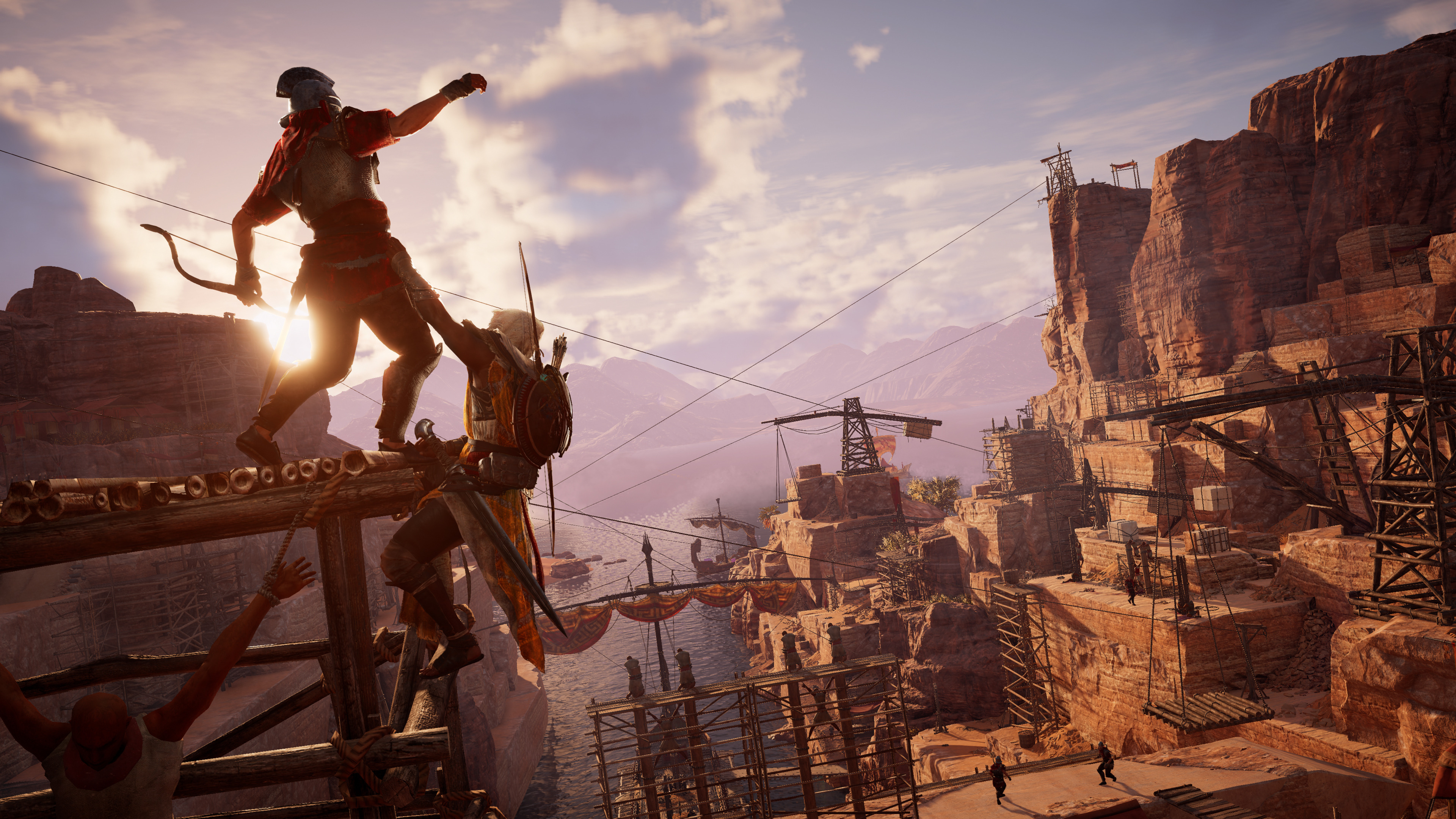
As you run through Egypt and its many territories found in Origins, many new features will begin to surface. The parkour technique has been simplified to one button, while the “marionette” style of character control scheme AC had so faithfully made claim to a decade ago has been completely abandoned altogether. But the true difference from the series doesn’t sit at the controls of Bayek outside of combat but is found in the overhauled mechanics during combat.
Big steps forward in revamping the combat system
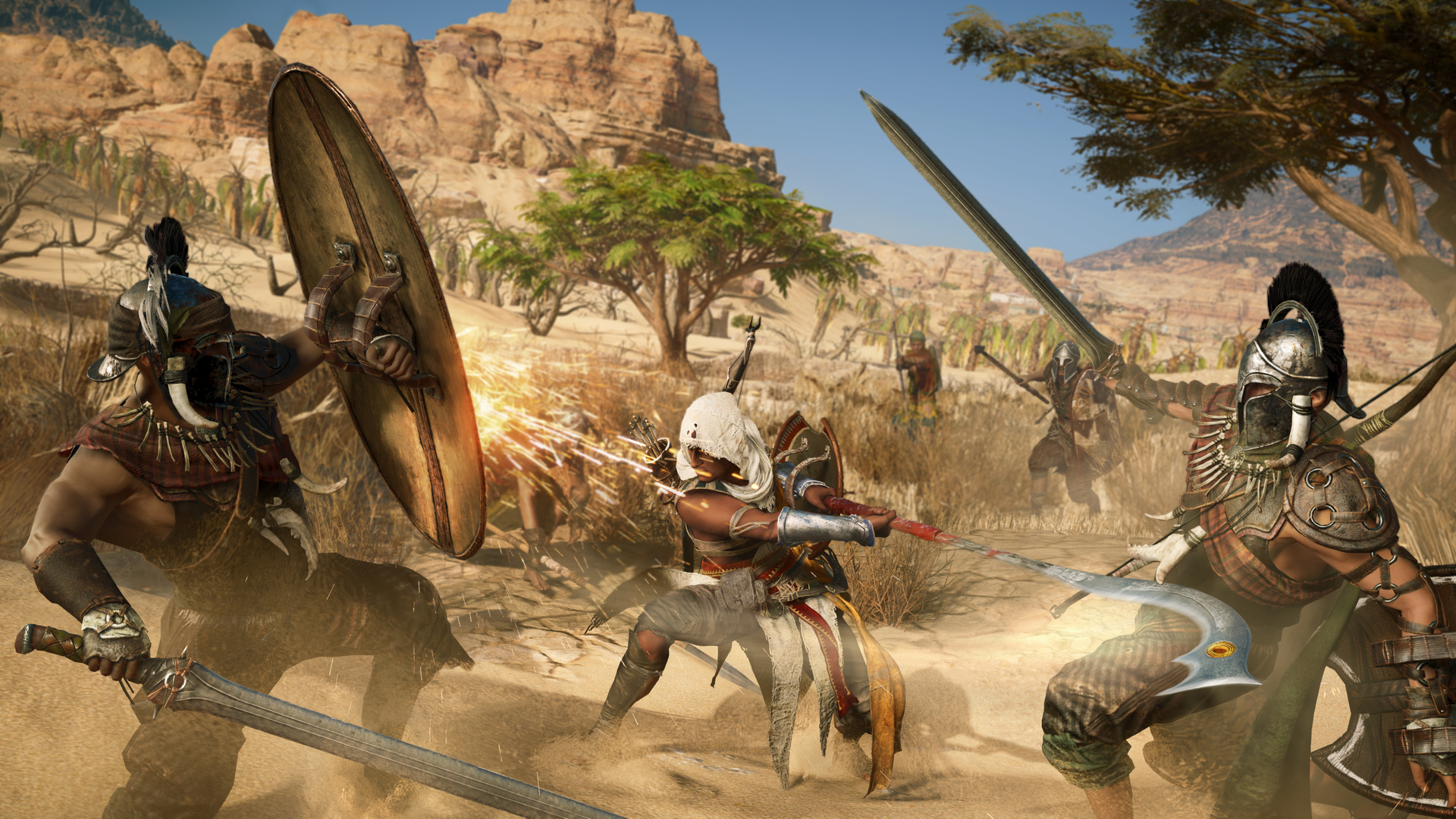
To say the Assassin’s Creed new and improved combat system may have been influenced by outside sources beyond Ubisoft headquarters may become evident to most who have played other titles with similar combat experiences. Ditching the relentless style of attack where assassins would bounce between a dozen or so enemies, parrying each attack one after another in a flashy, ultra-bloody finish. Instead, Origins has the player focusing more on one enemy at a time with combat similar to that of The Witcher 3, or perhaps the Dark Souls series.
The revamped combat system brings a brand new approach to brawling with enemies.
Striking with either a light attack or heavy attack, blocking with your shield, using ranged attacks from a variety of different bows and, of course, pulling off stealth assassinations with the elusive hidden blade; the weapon to which made the assassin brotherhood so deadly. The combat in Origins will have you dodging around your enemy blows while counterattacking with one of many melee weapons to choose from. Be it mace, club, sword or spear, tons of thrilling weapons can be found in the massive world of Egypt.
While older systems and battle mechanics had players swinging their weapons at the perfect time to execute precise and deadly counterattacks, the combat would become stale quickly. Over and over we saw the same enemies, with the same predictable attacks, timing our counterattacks just right to squeeze off as many finishers as possible. Though the system saw tweaks here and there throughout the series, this is the first time it has actually been completely overhauled. And, while it takes away from one of the few aspects that separated the Assassin’s series from other titles in the dense genre, it fits well with the new mould the franchise has taken.
A hint of RPG elements
Skills that Bayek can learn throughout Origins are divided into a three-part skill tree. After each level up through gaining experience points, Bayek is granted one ability point to spend on one of the many enhanced skills and abilities. Becoming a stronger warrior with fierce, new attacks, discovering new skills for the helpful companion, Senu or acquiring various bombs equipped from Bayek’s tool belt are just a few examples of useful skills found from the skill tree in Origins.
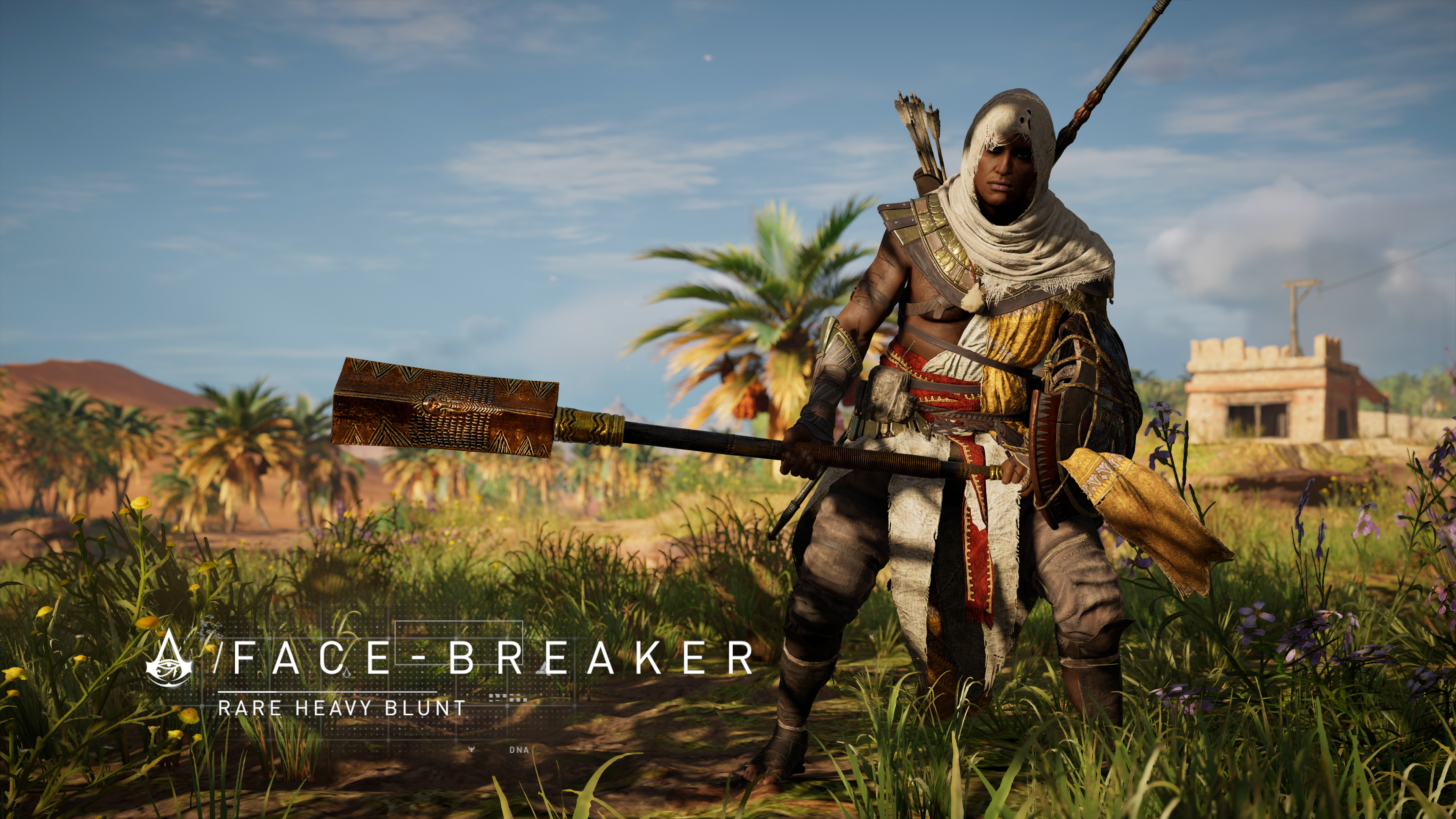
A dash of other useful RPG elements have been added to the game’s weapons system, now with tons of options from heavy, blunt weapons to ferocious attacking swords. No longer must players discard favourite weapons simply because they’re out-levelled and weaker compared to newer finds with the help of the weapon upgrading system. Upgrading your weapons at local blacksmith shops, be it melee or bows, will bring the weapon to Bayek’s current level, for a fee of course. In some cases where players may discover a particular weapon, they’re comfortable using, instead of replacing it down the road, the upgrading system allows them to continue using it effectively at higher levels.
Tons of weapons, upgrades, unique skills and abilities are discovered, rewarded or learned in the massive world of Origins.
Though, in many instances, it may be wise to switch to newer weapons. Coming in three different colours of rarity (similar to the colour coding found in other RPGs, i.e. Borderlands, Diablo, etc.) weapons will be labelled blue if they’re common, purple if rare and gold if legendary. There are tons of different weapons, each with various stat boosts, and all may be dismantled for precious crafting supplies.
While crafting, Bayek is able to enhance various pieces of equipment, which in turn upgrade important stats permanently. There are a total of six different items to enhance through crafting, including the bracer for stronger melee attacks, the breast-plate which raises Bayek’s health or the quiver which increases the number of arrows one can hold. Other pieces raise range attacks, the amount of bombs or other tools held and the power of Bayek’s hidden blade. Each piece of equipment requires a certain amount of crafting materials, typically found through hunting wildlife, or grabbing loot off of enemies. Finding the loot would be rather difficult if Bayek did not have the help of the scouting eagle, Senu.
Scout the endless skies with Senu
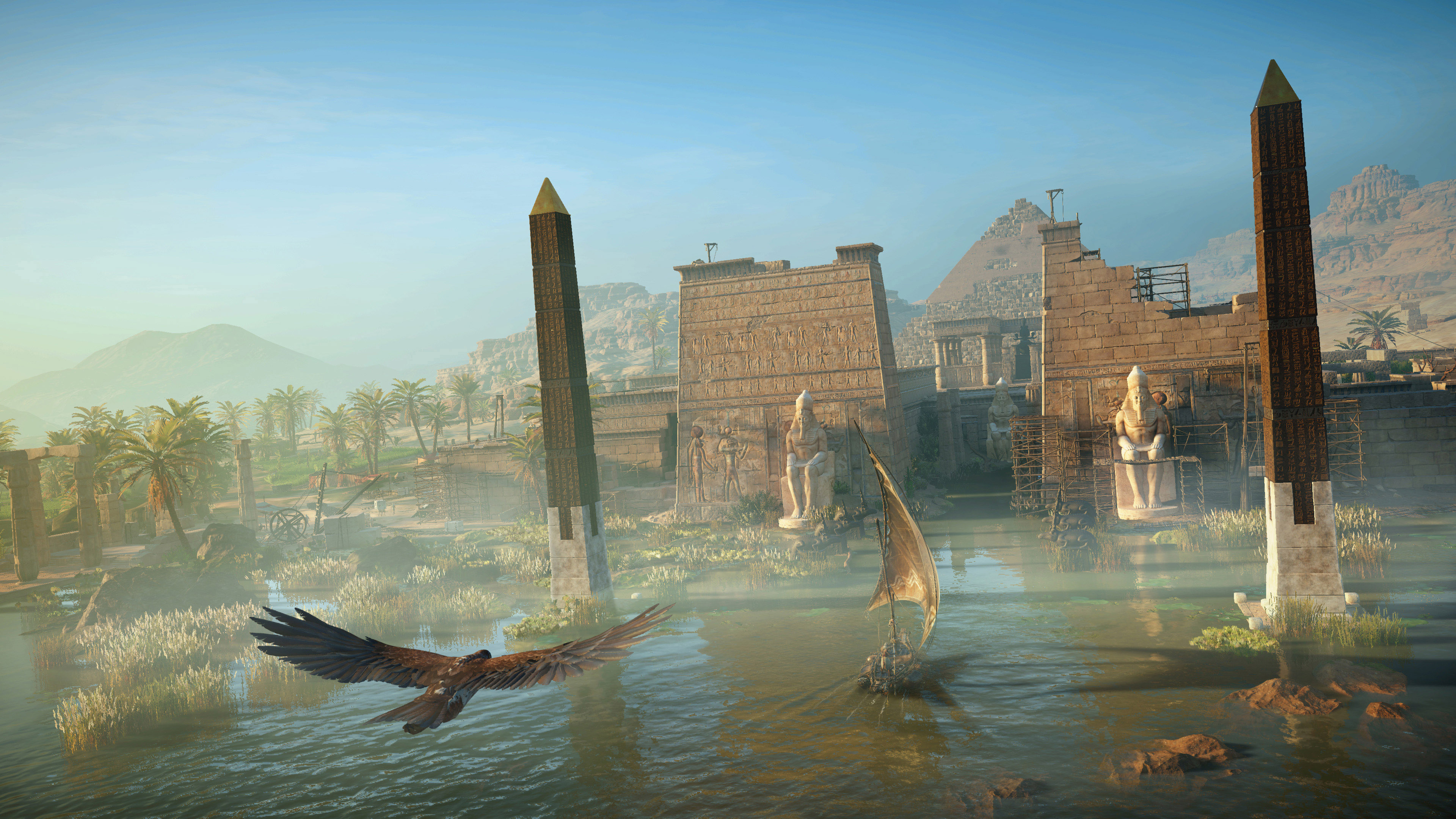
Using Senu is another big change in the series, replacing the eagle vision from previous AC games. Additionally, while flying with Senu, the map icons appear, as well as icons for any nearby crafting supplies, within a certain proximity of your soaring eagle’s sight. Senu has an unlimited distance to scout, and the more viewpoints synchronized, Senu’s sight range is slightly expanded. Aside from pointing out various activities, loot, side quests and crafting materials, Senu is also helpful to provide the player with guard activity and numbers when raiding enemy hideouts.
Explore the skies as Senu and scout for additional quests, important events and necessary items like crafting materials.
Throughout the enormous map that makes up Origins, plenty of side tasks and extra content lay at the feet of Bayek. With the addition of actual side quests, and tossing out the unoriginal and repetitive objective challenges from all of the other releases in the series, Origins stands as the most unique and rewarding Assassin’s title to date. Each sidequest – and there are tons – has a different and interesting storyline, which most are based on real-life instances, legends or myths from the ancient Egyptian era. Many may have players performing simple, and sometimes similar tasks, but all have unique backstories, and plenty of surprises to help ease the gameplay from becoming the same, worn-out cycle of events.
Overview
The massive lands of ancient Egypt sprawl past any other Assassin’s Creed title that has graced the gaming community since its debut in 2007. With a storyline that includes yet another rage-driven protagonist fueled by vengeance and hatred towards Templar forces, the start of the Brotherhood of Assassins is an impressive one. Gorgeous visuals compliment the astounding world of the mysterious Egyptian civilization.
With tiresome gameplay mechanics stripped away and replaced with new and exciting features that show Ubisoft is paying attention to what fans of the series want, Origins gives a lot more than it takes away. The all-new combat system is a delight to master, and gives players a true sense of accomplishment. The crafting and hunting system is an excellent way to continue to strengthen Bayek, on top of the expansive skill tree rewarded through experience points.
Just as one should be careful of judging the contents of a book by the cover art, anyone who grew up in the early days of gaming knows it also isn’t wise to judge a game by its pixel count. Dustbowl, developed by The Pompous Pixel, might look like a blast from the past, but don’t let first appearances fool you. This post-apocalyptic RPG boasts a challenging quest for survival and surprisingly fleshed out gameplay along with the old-school overlay.
Aliens have invaded the Earth, leaving the surface a dust-covered wasteland filled with nightmarish mutants and anyone crazy or desperate enough to remain above ground. You are the son of one of the survivors who helped establish a colony under the earth known as the HUB. Your father is sent out on an important mission that might affect the future of your little, underground community. Not one to wait for your fate, you decide to join the militia and hopefully locate your father and help bring him safely home.
Navigating the world is as simple as clicking on the direction or location you’d like your character to go. Scrolling over a given item, container or location will let you know if you can interact with it. Clicking on a door will either move you in or out or inform you if entry is blocked. Though I was never a particular fan of point-and-click adventures, this works well, especially when investigating your surroundings. You can also toggle walking speed under settings to help make moving around the world map or strolling across rooms a little quicker.
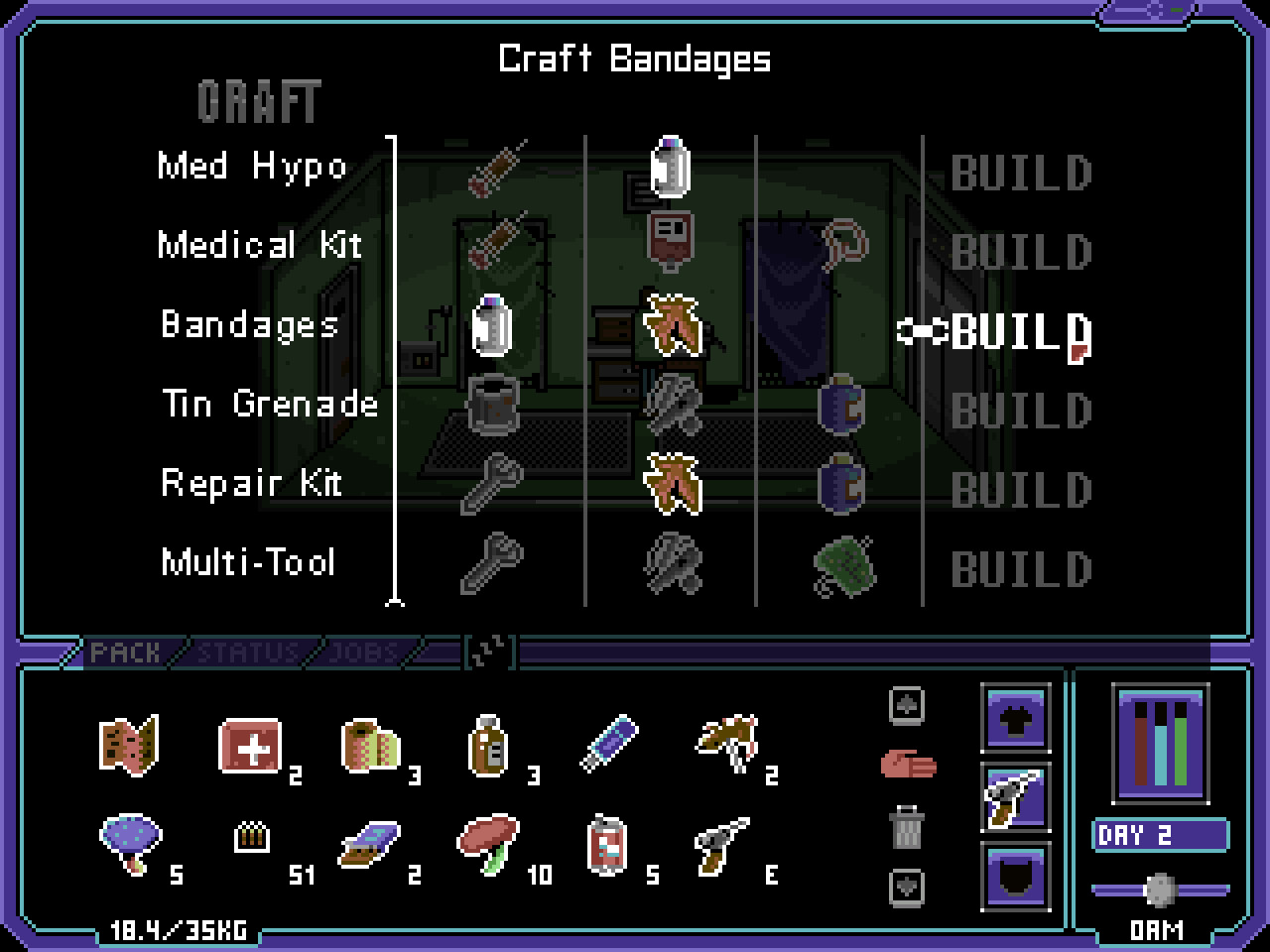
Survival will be your highest priority and the greatest challenge you will face in Dustbowl. There are separate meters for water, food and health. Another meter keeps track of the day and night cycle, ensuring you remember to get enough rest or face the negative consequences. This, of course, means you will need to make certain you have enough supplies as you wander, including basic essentials, health items, armour repair kits, weapons, and tents so you can rest when not back at the HUB. Eventually, this becomes a balancing act between what you need and what you can carry.
You will have a limited number of items you can keep in your pack based on overall weight. Later in the game, this becomes the biggest challenge to your survival. Thankfully, you can buy and sell items when encountering a vendor, or craft certain items when at a workbench,
Crafting is simple and intuitive.
Crafting is simple and surprisingly robust. When you reach a workbench you will see a list of items that can be made and which items will be needed to complete the task. It actually feels quite a bit like something straight out of Fallout 1 and 2, an impression I carried with me throughout the game.
However, while the crafting system is intuitive, the only downside is, as with all the items you collect, scrolling over an item does not provide a description of what it does. For instance, you don’t really know how restorative one health item is over another except through trial and error. This means when crafting, especially initially, you have to make a best guess with some items rather than going off of stats or descriptions.
The only other complaint regarding items, aside from lack of descriptions, is an inability to sort items by function. Instead, all items are displayed in a way that does feel very much like digging through a backpack. The ability to sort items based on function would have helped me track what I had more efficiently, But, perhaps that is more a matter of preference than necessity.
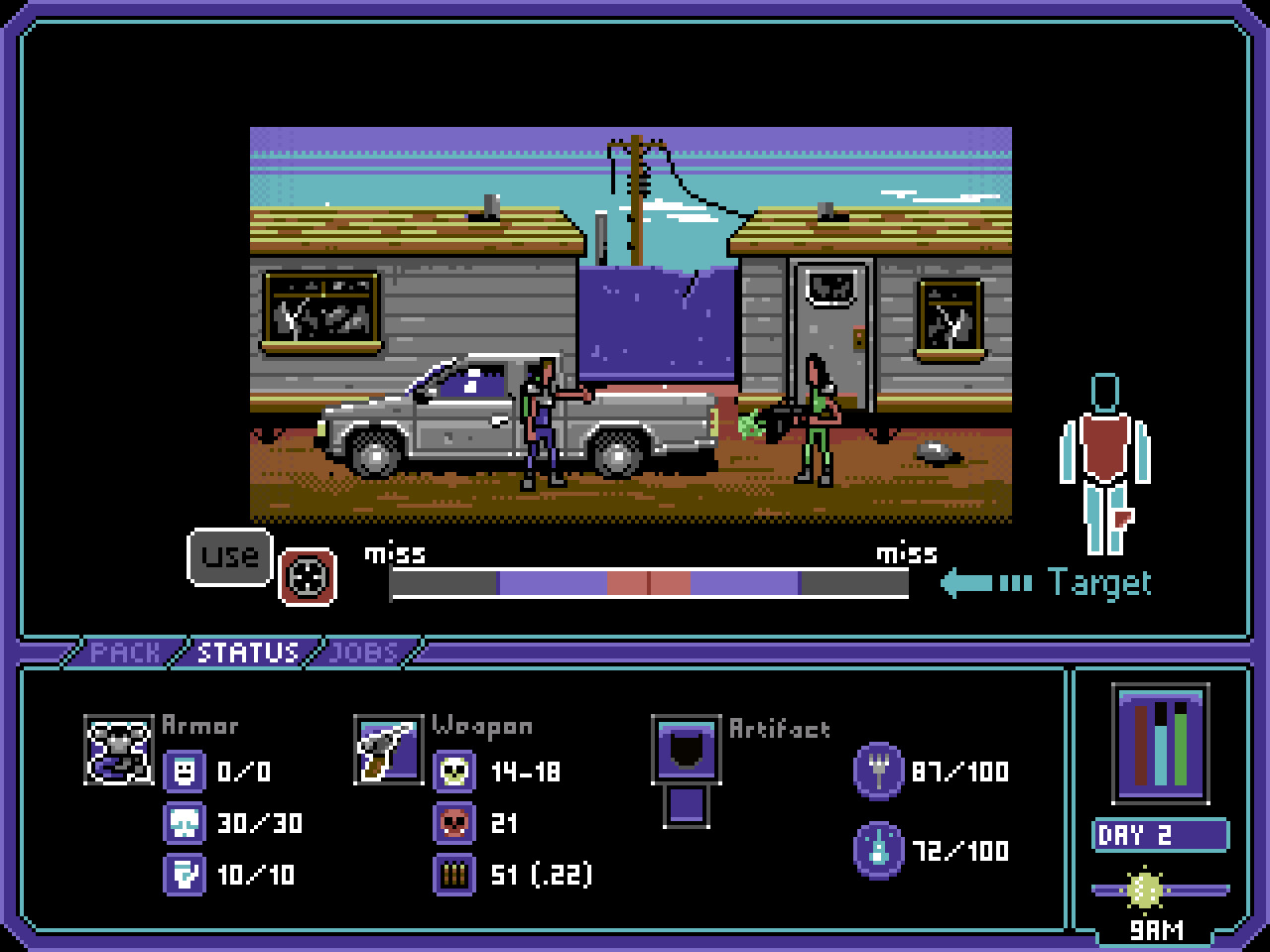
Enemy encounters are randomly generated and combat is simple, but a challenge to perfect. Anyone who played PGA Tour for the SNES will be somewhat familiar with it. Choosing to attack sets off a line that scrolls quickly over a meter marked by three colours: grey (miss), blue (normal hit), and red (critical hit). You can select what body parts you would like to target. The three areas shrink or increase based on the body part you select for attack. For example, the head has a much smaller critical hit area than the torso.
Combat is turn-based and aside from using different types of weapons that allow for higher or lower hit points, it has little variety. That is not to say it necessarily gets old quickly, but the turn-based system does not work quite as well for this type of combat. Once you have the timing down, there is not much of a challenge left. Adding a more tactical approach or changing the combat style to quick turns and adding a block/parry function would add an additional challenge. Adding pros and cons to the weapons would also allow the player to make more informed decisions regarding which weapons to use, particularly if enemies displayed certain weaknesses based on type of assault.
Thankfully, the survival elements overshadow and outweigh anything the combat lacks. But, the major driving force behind your decision to take one more step into the dangerous unknown is the thrill of exploration which Dustbowl captures perfectly.
The world of Dustbowl is rather large considering the game’s engine and is divided into six different quadrants, each having their own style. Aside from the overarching story, you will also have the option to accept quests from NPCs throughout the world, some more outlandish than others. For instance, one of the first requests you are given is locating four stuffed bunnies misplaced by a small child. Complete the quests, and you will receive loot and experience points.
Becoming effective at combat means mastering the timing.
Due largely to the fact your character initially seems rather run-of-the-mill for an adventure title (and looks a bit old to be in his early 20s), it took me a little bit to be able to put myself into his shoes. The dialogue can sometimes fall a bit flat and occasionally suffers from spelling and grammatical errors. Nothing anywhere near as memorable as “All your base are belong to us,” but something that needs to be taken into account for future studio endeavours.
After spending a short time with the game, however, I found myself getting sucked in. Dustbowl manages to tap into the most basic instinct of any curious gamer: I wanted to know what was going to happen next. I wanted to see how far I could go, what new places there were to explore, and what new characters I could meet. Each new character seemed to have a backstory, even ones with whom I spent little time. I could tell the developers invested great amounts of time into considering how these people had lived in this world up until the moment we met, who they were, and what their motivations are.
The game also does a fantastic job of conveying a sense of isolation, particularly in the sound design. Most of the time, you hear only wind or white noise interrupted only by the sound of your own footsteps. Among the old, worn down structures and amid the dust-strewn landscape, the sense of loneliness is palpable.
From the numerous sci-fi easter eggs to the obvious inspiration from games like Fallout and Metro 2033, and the clear level of care put into making Dustbowl a robust and engaging survival/adventure experience, there is no doubt the developers know their audience and are themselves fans of the genre.
Sure, Dustbowl isn’t perfect. A world map would have been handy, but at least the game marks out places you have already explored. Adding item and weapon details, the ability to sort items in the inventory and perhaps greater use of the crafting system regarding weapons would be a welcome addition. A more robust combat system would add a great deal to the game’s overall enjoyment simply due to the fact that you have to engage in it so often. But, the areas Dustbowl gets right (story, a sense of exploration, interesting characters, and a complex survival system), adds up to an impressive entry into the RPG/survival genre.
Let’s get this out of the way: Super Mario Odyssey is the next true 3D Mario game. While the Wii U’s Super Mario 3D World was largely impeccable, there’s no denying it catered towards a more casual audience with its multiplayer-centric focus. The same can be said about New Super Mario Bros. U, and Super Mario 3D Land on the 3DS. With those titles, Miyamoto and co. were looking at ways to make Mario more accessible, while retaining the staples that defined the series. They achieved this outright, but some of the core audience wanted that focus to shift back onto them. Enter Super Mario Odyssey then, a game specifically designed for veterans of the series with a single player-centric focus. It’s fair to say that Mario hasn’t been this good for quite some time… around 7 years in fact.
Super Mario Odyssey Review: Marrying The Princess
Odyssey’s story quickly becomes one we all know and love… Can you guess? Yes, Peach has been kidnapped by the King Koopa but this time there’s a twist: Bowser is now intent on marrying the princess as well, presumably to anger Mario more than anything else. After a crushing defeat then, the plumber finds himself in the Cap Kingdom of Bonneton, a moonlit, fog-shrouded land inhabited by ghosts in hats who speak in old British English – jolly good show, old bean. It’s here that Mario befriends newcomer Cappy and the duo set off to rescue Peach and Cappy’s sister Tiara. That’s pretty much your story. You didn’t expect anything else, did you?
If the games are this good, please keep getting kidnapped.The first thing we were pleased to discover upon controlling Mario was that he has all of his classic moves in this adventure. We mean all of them: the long jump, triple jump, side and backward somersault, the spin jump, the dive forward, you name it, it’s here. The new roll move is a welcome addition too that helps you more easily traverse the larger environments. Most importantly, he feels good to control as he “wahoos!” his way around, with even the pitter-patter of his feet, in some odd way, gratifying. There’s no doubt in my mind that Charles Martinet had a lot of fun with the new material as well – brace yourself for more ravioli-fuelled, dream-dialogue.
Sublime Platforming That Innovates
As for Cappy, he’s much more important to the gameplay than the story, as you’d expect, and adds a range of new moves to Mario’s arsenal, including the cap throw. The cap throw, as you’ll get accustomed to over the course of the game, enables you to attack enemies as well as possess 52 different entities – some of which we simply must not spoil. And it’s superb. The new capture mechanic effortlessly breathes new life into the series, making Odyssey feel fresh, wacky and full of vigour without overshadowing the sublime platforming the series represents. Frogs, Goombas, tanks, Bullet Bills and even a T-Rex, almost everything around you can be captured in the Kingdoms you visit, which serve as the ‘power-ups’ in the game.
The T-Rex’s realistic design was influenced by Super Mario World.The sandbox-style Kingdoms are magical. Tightly packed, and beautifully designed with secrets galore, they house the Power Moons you need to fuel your eponymously titled ship, the “Odyssey”. Collecting enough Power Moons in each Kingdom allows you to travel to the next one in pursuit of Bowser, and is the central objective of the game. You earn these Moons by completing tasks, often small, which range from helping the locals to completing 2D, 8-bit sequences (damn good), to taking down one of the many bosses – there are superb platforming sublevels in every Kingdom to boot. You’ll also notice elements from 64, Sunshine and Galaxy in there.
The gameplay is so varied that none of this ever feels like a chore. It feels immensely rewarding, but deftly balances that sense of challenge as well, ensuring that it’s not a walk in the park either; those that go the extra mile are always rewarded for doing so. The Kingdoms change based on your actions too, which evokes an ongoing sense of progression that beckons you to continue; you will want to explore every nook and cranny. The sense of discovery rivals that of Super Mario World back on the SNES.
Brimming With Creativity
Odyssey is easily the craziest Mario title to date. We know during development that Miyamoto had a hands-off approach, instead offering advice about certain elements, but never fully taking charge. It’s as if the new captain of the ship, Yoshiaki Koizumi, (producer of both Galaxy games) told his team: “Go wild. We can do what we want here – as long as it works.” This unparalleled creative freedom can be felt, and it creates an abundance of ideas, some of which could be used for full games on their own. Yes, the series has always brimmed with creativity, but Odyssey takes it even further. Certain points of the game will genuinely surprise you, and things take place that you wouldn’t necessarily expect in a Mario game, in the best possible way.
Producer Yoshiaki Koizumi – Miyamoto’s apprentice.Odyssey does have a slight niggle though. The motion controls generally compliment the on-screen action very well and are satisfying to use, but every now and then they’re not as precise as they could be.
It’s also worth noting that every single motion-controlled move is not compulsory, you can complete the entire game without them, but they do add extra power to moves. A few of these ‘powered up moves’ are required to get all of the Power Moons. This means that when holding the Switch in handheld mode the motion controls, and a few Power Moons, are off limits unless you shake the entire system. It’s not even close to a serious issue, but isn’t particularly practical out and about and means that playing in tabletop or docked mode is the way to go if you want to get every last collectable. Considering the otherwise flawless production here then, this seems to be overlooked. A minor update turning off motion controls completely could fix this, however.
A Masterpiece
There are so many positives things to say about Odyssey that you couldn’t possibly fit into a single review, but here’s an effusive list of a few of them (no big spoilers, trust me): the pause menu that Mario reacts to, the increased, and highly detailed expressions on his face that further the relationship between the both of you while playing (Nintendo specifically worked on this), the holiday brochure-style maps, the costumes, the assist mode that guides younger, more inexperienced players, the stunning soundtrack full of whimsy and heroism, the fact that it’s the best looking Switch game to date running at a rock solid 60fps, the satirical humour, the bonus mini-games, Pauline, that particular festival, that particular Kingdom, the better than expected two-player mode where one of you controls Cappy – really fun. I could go on…
That’s without mentioning the incredible post-game content: if you want fan service and more to do after seeing the credits roll, you’re in luck. Odyssey may finish at around the 10-hour mark, but what comes next will keep you playing for days on end.
Bringing back 1985.It’s worth buying a Switch for alone. As for being better than Galaxy, well, I’ll be having an internal debate about that one for quite some time. Simply put: this is why we play video games.
Cast your minds back a few years – not to the Third Age, but instead to 2011 – and you’ll undoubtedly recall the release of a licensed superhero epic going by the pseudonym of Batman: Arkham City. Developed by British studio Rocksteady and published by Warner Bros Interactive Entertainment, the follow-up to 2009’s Game of the Year award-winning Arkham Asylum set itself quite the audacious task, aiming to better its forebear via a larger yet densely detailed open-world, enhanced combat mechanics, a wider array of enemy types and above all a canon-eschewing but captivating core storyline.
An Unenviable Challenge
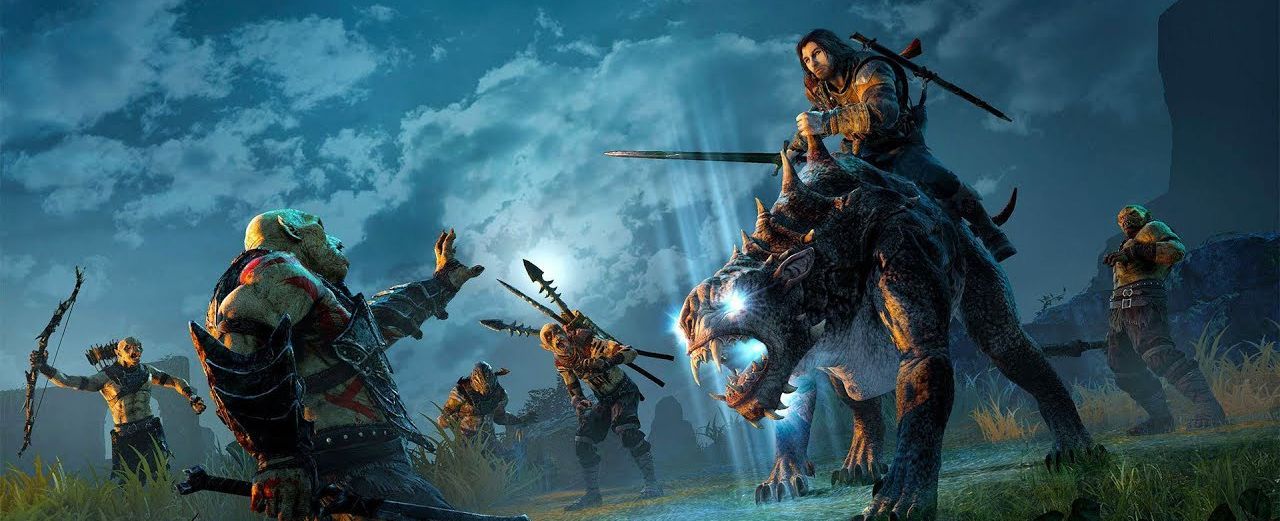
If this unenviable challenge seems vaguely familiar, then it’s with good reason. Fast forward half a dozen years and we find Monolith Productions – again with WB’s stalwart backing – taking much the same approach with their latest project, and surely hoping to reap similarly copious critical praise to that which Rocksteady received upon succeeding in their endeavours. Just as Arkham City took every element of Asylum which worked – the gratifying Freeflow combat, the fascinating exploration of Batman’s psyche and countless other USPs – and expanded upon them tenfold, so too does Monolith’s second action RPG foray into the world of J.R.R. Tolkien up the ante on every front.
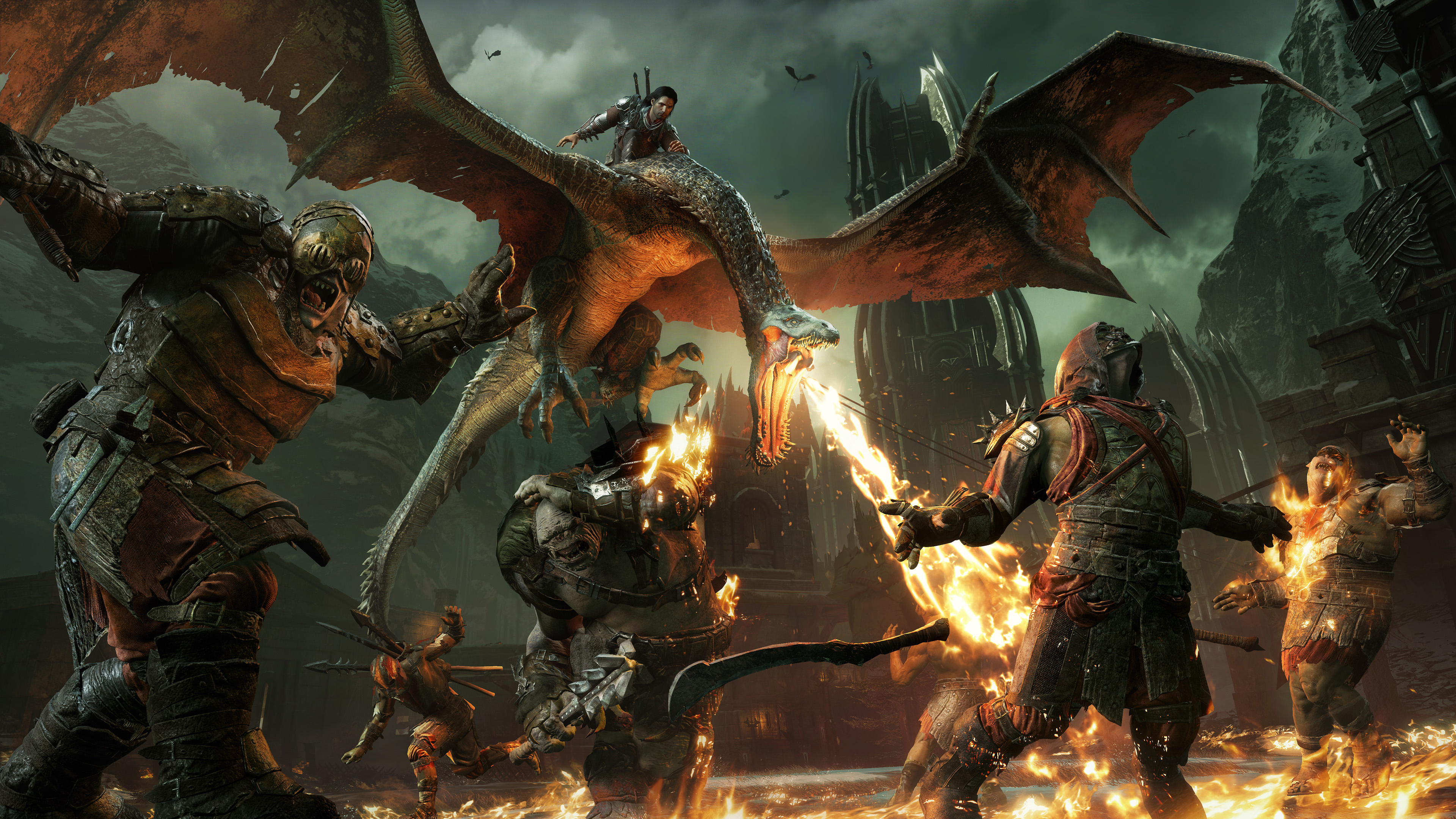
Whereas 2014’s largely acclaimed Shadow of Mordor confined the escapades of its half-Ranger, half-undead Elf protagonist, Talion, to a couple of grimly-lit cities based within the titular region, Shadow of War takes us from Seregost’s snow-capped peaks to the precipice of Mount Doom in Gorgoroth, from Minas Morgul’s sinister cityscape to Núrn’s open forest plains. Whereas Mordor’s intoxicating Nemesis System showed huge signs of potential, War develops this intricate mechanic exponentially, adding dozens upon dozens of extra enemy classes, arenas where victorious Orcs can become spies for your army and seismic fortresses in dire need of new management.
Elevating The Middle-Earth Saga?
But can this unquestionably ambitious follow-up match City’s next-to-universally renowned success in taking its franchise to bold new heights, elevating the Middle-Earth saga to the video game industry’s Hall of Fame? Not quite, yet one can’t possibly accuse Visceral of resting on their laurels either. For instance, aesthetically speaking, some of the human character models – including that of Talion, along with the courageous soldiers he encounters – appear bland and unfinished in cut-scenes, their facial animations a little undercooked. Yet the open-world regions themselves brim with graphical pizazz, Seregost’s snowfall a mystifying beauty to behold and Mount Doom a pitch-perfect copy of that seen in Peter Jackson’s Lord of the Rings film adaptations.
Missions prove equally mixed when it comes to variety and unpredictability. On the one hand, many of the main campaign’s quests prove disappointingly mundane, centring on generic follow-the-AI-leader, stealth antics with none of Metal Gear Solid’s scope for anarchic chaos should the player get spotted or repetitive Nazgul boss battles. On the other, venture off the beaten track and you’ll discover electrifying side ventures such as Balrog showdowns, voyages into Mordor’s past and future via the visions of spider-turned-temptress Shelob or attempts to wrest back control of Middle-Earth’s status quo with its equivalent to Mother Nature (yes, really), to the point where one craves for the core campaign to offer the same level of structural creativity at times.
Simplified Narrative Approach
Indeed, while we’re on the subject of the campaign, the eagle-eyed readers among you might’ve noticed that this reviewer hasn’t dedicated much time to War’s narrative as of yet. Suffice to say that in the wake of having forged a new Ring as the credits rolled last time around, Talion wastes little time – barring a frustratingly inconsequential detour to meet Shelob early on – kick-starting a Mordor-wide resistance to Sauron’s rule, rallying hundreds of possessed Orcs to his side in order to take back each of the realm’s lofty fortresses before overthrowing the Dark Lord once and for all. Now, that might sound like a premise for the ages, particularly to the Tolkien avids here, but unfortunately said plot receives scarce attention throughout War, largely taking a back-seat while you influence the foes of each region, topple its Overlord, rinse and repeat for hours on end.
This simplified narrative approach – or indeed the obvious constraints placed upon Monolith by having War take place within reaching distance of The Fellowship of the Ring – wouldn’t matter so much if the script at least dedicated more time to fleshing out the supporting characters like Gondorian soldiers Idril and Baranor, returning fan favourite Gollum (whose needless cameo barely registers), or even the head Orcs whom Talion possesses like the hilarious Bruz. Instead, those looking to see their relationships with the similarly soulless – no pun intended – Talion developed had best look to the aforementioned side missions for further meat. Acts III and IV reveal how our hero’s antics factor into the events of LOTR, in what frankly comes off as one of the most ridiculous fan faction-esque retcons in recent memory, but little else of note actually happens to any of War’s ‘key’ players, protagonistic and antagonistic alike.
A Dense Open-World
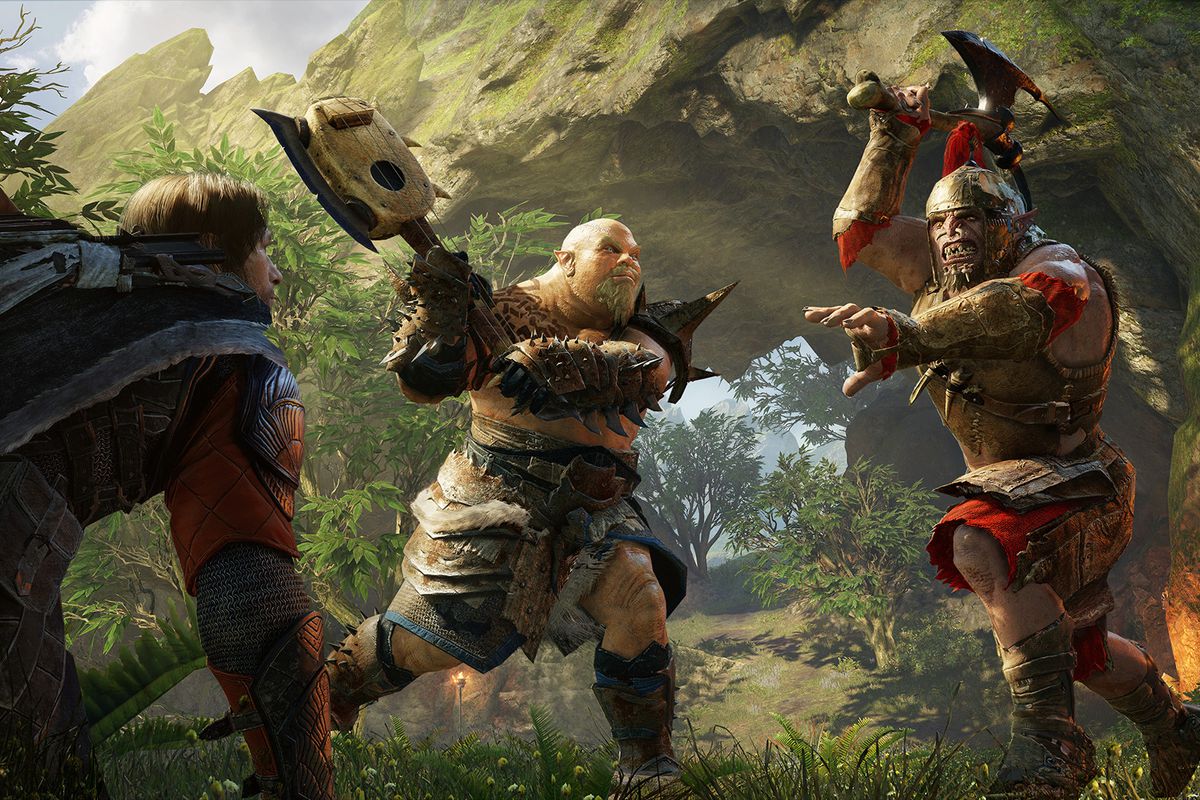
Perhaps story depth isn’t what many fans hoped for here, though, with War’s main draw of course being its overhauled Nemesis System. If LOTR fanatics want to immerse themselves in Middle-Earth, then here lies the most substantial means by which to do so, with the contrasting Orc cultures, fortress defences, enemy weaknesses, tribe dynamics and Warchief challenges of each region providing more than enough of an excuse to plunge hundreds and hundreds of hours into this sprawling RPG’s rich world and become its eventual commander-in-chief. For reasons we shan’t spoil, there’s ample incentive to become an expert in these minutiae by Act IV, where further conflicts mounting in each of your conquered domains put that knowledge fiercely to the test.
With Shadow of War, then, Monolith have largely fulfilled their lofty goals, delivering a dense open-world filled with aesthetic and enemy variety as well as numerous opportunities for total immersion via its staggering Nemesis system and engaging array of side quests. That said, whether its immense strengths on a technical and replayability level are enough to compensate for the disappointing lack of focus paid to crafting a layered fantasy storyline, or multi-faceted characters worthy of Tolkien lore, will depend on what you look for first and foremost out of your gaming experiences; personally, this reviewer could’ve done with more of the latter in order for the second and likely final Middle-Earth outing to stand a chance of topping his Game of the Year shortlist.
It would appear, then, that one developer cannot simply walk into Mordor without struggling to balance the competing elements which they bring along for the ride. Nevertheless, if Shadow of War’s promising improvements upon Mordor’s already potent gameplay formula are any indication of what’s next for Monolith as a studio, then should they choose to return to the world of men, corruptive Rings and cave trolls in the near future, the LOTR franchise’s Arkham City equivalent could lie just around the corner.
Things seem to be getting quite busy in the world of the Switch with big games aplenty heading its way and the eShop also becoming more heavily populated. It’s quite nice to see and, for small games like JYDGE, the Switch is a perfect playground to find its feet and gather a steady following.
Robotic Terminator-Style Bots
10tons are the creative minds behind JYDGE and previous games such as Neon Chrome, another top-down shooter. This, one of their first forays into the world of Switch, comes off the back of many outings via Steam and other outlets. So, what’s the situation?
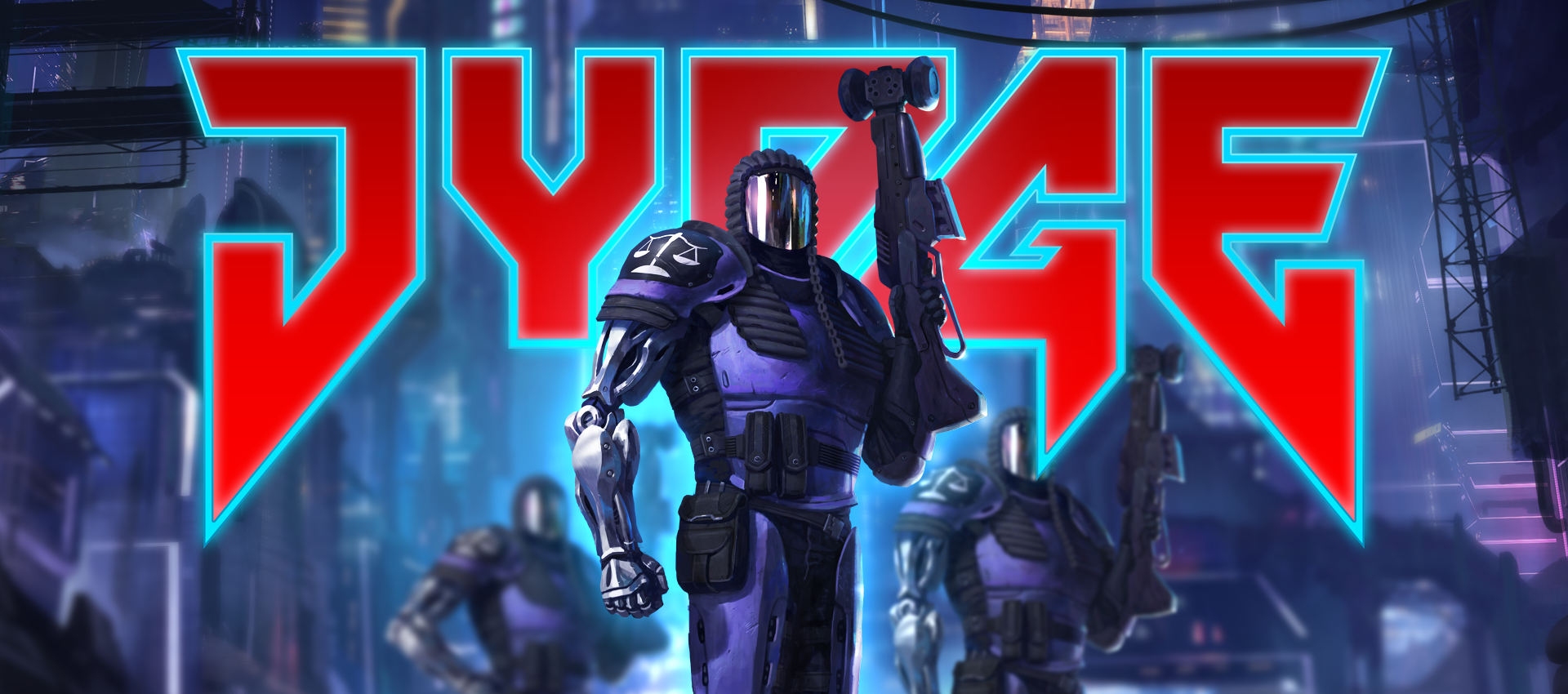
JYDGE is a top-down shooter set in fictional city Edenbyrg and you control one of many JYDGEs which are part of the wider JYDGE initiative. These robotic terminator-style bots patrol the city fighting crime, causing carnage amongst the local criminal organisations. The key hook here being replayability and the ability to tailor the game to your favoured play style.
Justice is here!
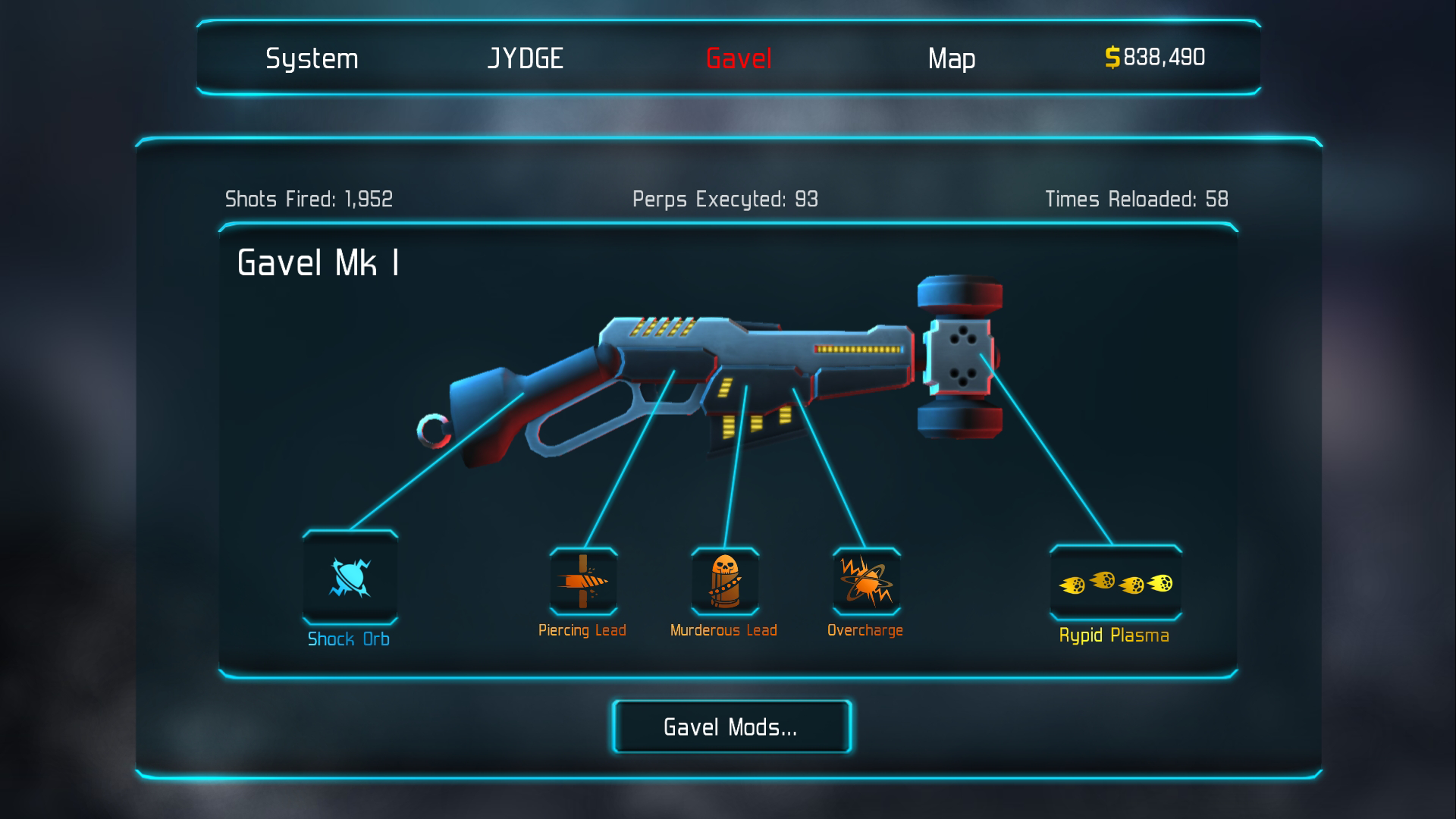
As any self-respected judge will know, you need to have your own trusty gavel with which to exact your justice. JYDGE delivers here as your Gavel is your firearm which is fully customisable, suiting any situation or favoured approach. Upgrades and modifications are unlocked periodically as you progress granting you different perks such as increased fire rate, increased range or indeed a civilian-friendly no damage function. These can also be purchased using the money obtained from looting deceased enemies and confiscating their loot crates.
Exacting Judgement
Each level you play has four difficulty settings with the second being unlocked when you complete the first, this being the Hardcore version. The third being Grim mode and the final being Nightmare mode which is only available once you complete all of the missions once over. All of them have medals to obtain based on your performance and certain unlock criteria, and each is increasingly difficult. These hold the key to progression as each concurrent level requires a certain number to be achieved before you are granted access.
This certainly increases the game’s replay value but only because you are being forced to go back in order to progress. That being said, I do like going back to previous levels once I have spent money on upgrading my JYDGE to show those old crims a thing or two; exacting judgement on them once again.
Upgrades and modifications are unlocked periodically as you progress.
Sneaky Perks
Whilst JYDGE appears simplistic in its appearance and playstyle it can actually be quite tactical should you favour that approach. The run and gun approach can see you turned into a series of giblets all too quickly especially when your stray fire decapitates an innocent civilian waiting to be rescued. Instead, you can equip some sneaky perks (cyberware) such as invisibility whilst standing still and also decreased detection whilst standing in the shadows. The co-op mode also allows you to tackle Edenbyrg’s crime problem as a dynamic duo should you have someone to share Joy-Con duties with.
All-in-all I found JYDGE quite entertaining if a little short-lived. In the space of an evening’s worth of play, I had progressed to the penultimate string of levels with relative ease and little difficulty. It looks rather nice in handheld mode (my only method of play for this review) and my only frustrations were down to my own stupidity when I mistimed a shot or blew myself up. Its art style is also rather appealing with a futuristic neon inspired backdrop your playground for destruction.
My closing thoughts would be surrounding the cost of JYDGE which is £12.99. Is it worth it? I’m not quite sure as it’s the sort of game which you’ll pick up and play for a few days, then potentially abandon. The grind element will put a few people off as they won’t expect this from a top-down shooter, which is a shame as this is JYDGE’s main hook. And, if you were wondering, it is pronounced ‘judge’ the conventional way, albeit spelt incorrectly. You know, because why not…
Don’t be surprised, Chloe, if one day I’m just out of here.
It is time to return to Arcadia Bay for the second episode of Life Is Strange: Before The Storm. It’s been approximately two months since the first episode was released, and I’m glad it didn’t take any longer because the first episode left off at a very tense place.
We know more about Chloe, Rachel, and their relationship – and I’m excited to see where their story is headed, and what crossroads they encounter. In the first episode, Chloe and Rachel ditched school and, long story short, they started a forest fire. Now, we see the ramifications of that, as the new episode starts out at the principal’s office.
My actions in the game got me expelled from Blackwell, but I don’t think you actually have a choice regarding that since we already know from the first game that Chloe had been expelled. Luckily, the principal doesn’t know about the forest fire, otherwise, their fates would have had a very different story.
Chloe, The Exit Wounder.
The new episode is called Brave New World, and that is exactly what Chloe has to adapt to. Along with getting expelled from school, she has to deal with a difficult family situation; the wrath of her mother Joyce and her demeaning stepfather David. Joyce doesn’t know what to do about having a rebelling teenager as a daughter and looks to David for help. Much to Chloe’s despair, he has made the decision to move in. As a result, she drifts even further away.
It’s no secret that our protagonist is leading a challenging life. She repeatedly shows the willingness to sacrifice so much, just in order to feel. Even though Chloe is in many ways the victim here, it is important to note that Chloe continually fails to see that there is actually a world that evolves and exists outside her own. But no, being Chloe isn’t easy. Not at all. Her repeated dreams about her father show how she is still unconsciously dealing with the trauma of losing him. And her dreams are getting more and more messed up.
Rachel has the main role in The Tempest, a play set up by Blackwell’s students.
On a random note; remember Frank’s dog Pompidou? We get to meet him again! AS A PUPPY! Some quality story-elements right there, folks. However, as a natural yet unfortunate consequence of meeting Pompidou the Puppy, we also have to deal with his d-bag of an owner, Frank.
Being a drug dealer, and messing around with the wrong people, we know that when Frank contacts Chloe, it’s never good news. And this time around is no different. Because Chloe owes him money, she is forced to run some errands for him, which could get her into serious trouble. And it does.
I also want to report that Victoria is still a b- … stupid girl. Teenagers will do whatever it takes to get what they want, and that is shown when the students of Blackwell are setting up a play called The Tempest. However, we end up watching it in a not-so-regular way… because something unpredictable always happens.
Sera, the woman Rachel’s dad is having an affair with, is an ominously recurring figure, and we learn what her role is in Brave New World. A huge secret, which I was not at all expecting, is revealed at the end – it blew my mind. Boom-boom style.
There is one thing Chloe is particularly good at, and that is speaking her mind. Or in this case, drawing it.
And also, the menu has changed yet again. After the first episode, the forest (which is the background of the menu) was engulfed in flames. After the second episode, the flame has died out, and we see the aftermath of the forest fire. Almost like a calm Before The Storm. Get it?
In all seriousness, though, things are taking off in Arcadia Bay. This is a story about teenagers slipping from the surface, and how they manage – or don’t – to get back up. The dialogue is still cringe-worthy, yet I am still loving it. And the soundtrack… amazing and on point. As always.
I’m very excited for the last episode, yet I am dreading to see the end of it… I am not ready to say goodbye just yet. I feel empty after this episode. I don’t know what to feel, everything is so scrambled and messed up. I’m intrigued, however, and I’m expecting that the game will mess around with my feelings, even more, when the last episode arrives, with as ominous a title as Hell is Empty.
We get to see the many masks that people put up, so they don’t have to deal with the confrontation of their problems. There’s a life lesson to be taken from this: don’t be so quick to judge other people. Everybody’s got some kind of baggage.






![Super Mario Odyssey Review [Nintendo Switch]](https://nitchigamer.com/wp-content/uploads/2017/10/H2x1_NSwitch_SuperMarioOdyssey_image1280w.jpg)
![Super Mario Odyssey Review [Nintendo Switch]](https://nitchigamer.com/wp-content/uploads/2017/10/s9xuWCYogqnFjRisfDZwHf.jpg "Super Mario Odyssey Review [Nintendo Switch]")
![Super Mario Odyssey Review [Nintendo Switch]](https://nitchigamer.com/wp-content/uploads/2017/10/Super-Mario-Galaxy-T-Rexio-1260x709.jpg "Super Mario Odyssey Review [Nintendo Switch]")
![Super Mario Odyssey Review [Nintendo Switch]](https://nitchigamer.com/wp-content/uploads/2017/10/IMG_4032.jpg "Super Mario Odyssey Review [Nintendo Switch]")
![Super Mario Odyssey Review [Nintendo Switch]](https://nitchigamer.com/wp-content/uploads/2017/10/nintendoswitch_supermarioodyssey_scrn07_e3.jpg "Super Mario Odyssey Review [Nintendo Switch]")