5 Awful Tendencies From Retro Gaming That Will Not be Missed

The 8 bit and 16-bit era of gaming is often referred to as the “gaming wild west” for its amazing ability to create a constant stream of new and weird games. We had not yet figured out how many of the things we take for granted now, first appeared in those eras. Controls, menus, gameplay mechanics even whole genres were totally up in the air with how much variety could be in any one game.

And yet for all the creativity and magic we all remember so fondly now, there are a few things that retro games did that honestly, I think we are best to leave behind. Here are 5 awful tendencies from retro gaming that WON’T be missed.

1) Lives

Lives are an old mechanic dragged over to us from the old arcade days of gaming; it was created in order to get the player to keep putting in money, every time you ran out of lives, that’d be another quarter, please!

And yet we bought it with us? When we transitioned from arcade gaming to home consoles we decided as a collective that we should let lives tag along too. Only now rather than dropping another dollar on the machine to keep going, some games would make us restart a level, losing any collectables we had found or worse yet just ending the game, getting the player to start right from the start – unless you happened to remember the games’ 16 letter-long password which you then had to slowly punch in using a controller (we’ll get to that!). It was a bad time all around.

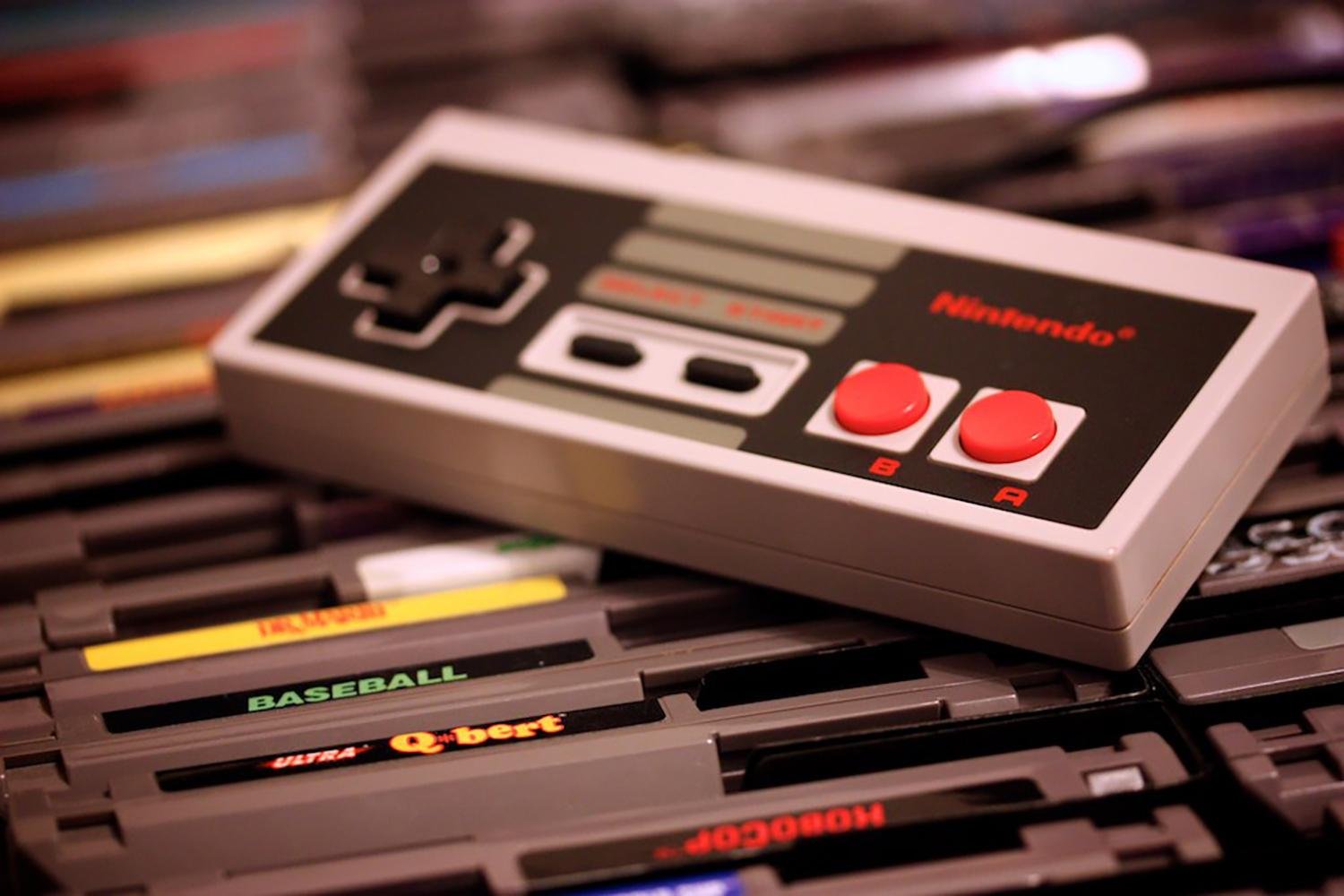
Of course, I am not so naïve to not understand WHY we had lives in retro games. It was pretty simple really, game designers wanted to make very short games that seemed longer. You couldn’t exactly store a ton of data on a NES (Nintendo Entertainment System) cartridge and even back in the 80s games could cost upwards of $60 – game designers wanted you to feel like you got your money’s worth, so they made a punishing life system, that might force newer players to keep playing the same levels over and over. This made the game seem way longer than it really was.

What’s truly mind-blowing is that even some games, launched in 2017, use this ‘lives system’, to limit our ability to progress through the game. Now in some cases like with roguelikes, this makes sense, as it’s an integral part of the game, and without these lives, the genre itself would lose some (if not a lot) of its value. My advice would be if you’re making a platformer or a worse offender of this, an action game, avoid putting in a live system; we’ve outgrown it, we want to see all your game has to offer, not replay the first three levels until something better is released.

2) Game Over!
Damn you!

Losing in a game is inevitable (just like life at times), in fact most of the games I truly love come with a very steep learning curve, the game I normally point to when talking about this is “Demon’s Souls” – a game where you die quite often but the death never feels ill earnt, and the time between death and starting over isn’t too long, so you never have time to dwell on your errors.

So when I say “Game overs were bad” I need to be clear with what I mean. Game overs with a painfully long outro or loading screen following them up, forcing you to sit there for 5 minutes listening to what evil villain you were chasing down laugh at you as the disk struggles to find where you last saved; that’s bad.

Now I will admit this one was more often than not a technical limitation of retro games rather than any sort of design choice. But did they really have to have the game mock me while it forced me to wait? Did you need to laugh at me Castlevania? It just made the action of waiting even more tedious.

Shockingly though this isn’t something that’s completely gone out of fashion, famously Too Human had a amazingly long cutscene every time you died: it was of a Valkyrie coming slowly (very slowly) down to earth, picking your character up and very slowly going back up to the skies. Every. Time. You. Died. The punishment for a player’s death should be to go back to the last checkpoint or the start of a level, you don’t need to add to that by making them wait, waiting doesn’t feel like a good punishment for us dying, waiting feels like a punishment for us buying your game.

3) Passwords

Passwords as a save option were always a fascination of mine, what caused them to not only pop up but become the popular option in games was something I spent a long amount of time reading up on. Let me quickly explain why there were passwords systems, not just continues.

Continues required a programmer to store a lot of the player’s information onto the cartridge the player was using, taking up valuable gameplay space in order to let them continue from where they last stopped. (This was before Zelda came along with its memory chip inside of the cartridge).

However a password eliminates all the issues that saving brings, a password let the programmer skip all of that nonsense, they could just tell the game “If the player puts in this password, teleport them here and give them these items”. Much less space was taken up and as an added bonus it was far easier to program. Not to mention those memory cards in each cartridge sold must have increased production costs a fair amount.

But for some reason, game designers got more and more paranoid that somehow gamers might “guess” their passwords and skip some of their game. To combat this they went to great lengths to make guessing these passwords impossible, the downside of this, of course, is that it also made them impossible to remember and a big pain in the neck to input.

The question quickly comes up of “Why not just use 5 symbols?” I can remember “Monkey, Rabbit, Rabbit, Cat, Monkey.” It’s very unlikely even with a small pool of characters you have to input (A 5 letter password for example) that a player would just get lucky and guess it. If you must give your players a long password, developers really should have made the effort to make it something you could remember, for example, two words stuck together such as “NewHill”. It doesn’t even have to be related to the stage you are skipping to, just making it actual words makes it far easier for a player to remember and to read from a notepad when inputting the password.

I for one am glad that we mastered the art of saving.

4) Leap Of Faith
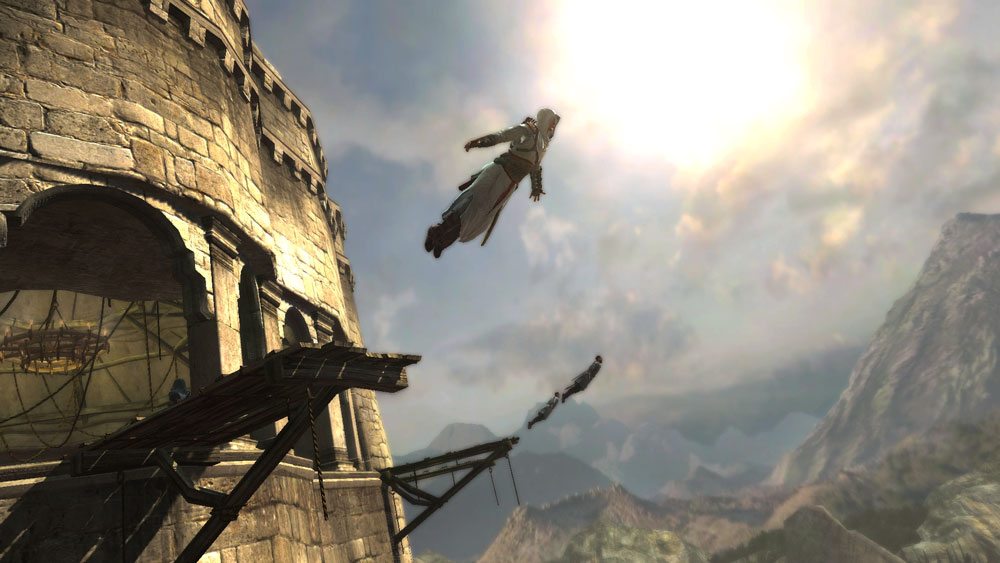
Not this type, no.

This was a weirdly common gameplay choice, wasn’t it? You run to the right, jumping, shooting, battling, and timing everything perfectly, then, you hit a cliff edge. You can’t move the screen any further forwards and all you can see in front of you is…nothingness, just the backdrop of the level. What do I do now? You think to yourself, and then it slowly dawns on you. It’s a leap of faith. The developer wants you to trust them, jump right off that cliff and land on the platform below, that you can’t see, nor have any idea if it’s really there. Worst yet, some developers decide this is the perfect place to put a hole in the ground or a tough enemy to deal damage to you. Hiding information from your players just isn’t good game design.

5) Time Limits

Nothing gets the heart pumping like a sense of urgency, builds excitement as the end draws near, a mountain of fire behind you maybe? A pool of lava. Something chasing you.

On the other hand, nothing is more frustrating than an arbitrary time limit that just straight up kills you once it hits 0. No reason, no way to avoid it, you’re just dead. Move faster next time kiddo. Time limits are just an “anti-fun” way to make a game. Rushing to the end of a level, constantly worrying about if you have enough time to beat the stage stops a player actually enjoying what they are doing. Anything challenging quickly stops being engaging and starts becoming a controller breaking frenzy.

A single level with a time limit, designed around that time limit is fine. In fact, it’s a good way to mix up how a player tackles your levels and keeps them guessing about what future levels might pull out. But far too many old classics had a time limit on every level, forcing the player to keep moving forward, rather than explore or try new things.

If your time limit doesn’t add anything to the experience and instead just takes away from player freedom, it probably shouldn’t be in your game.

So that’s my list folks, do you agree? Disagree? I’d love to hear what you won’t be missing from the past…
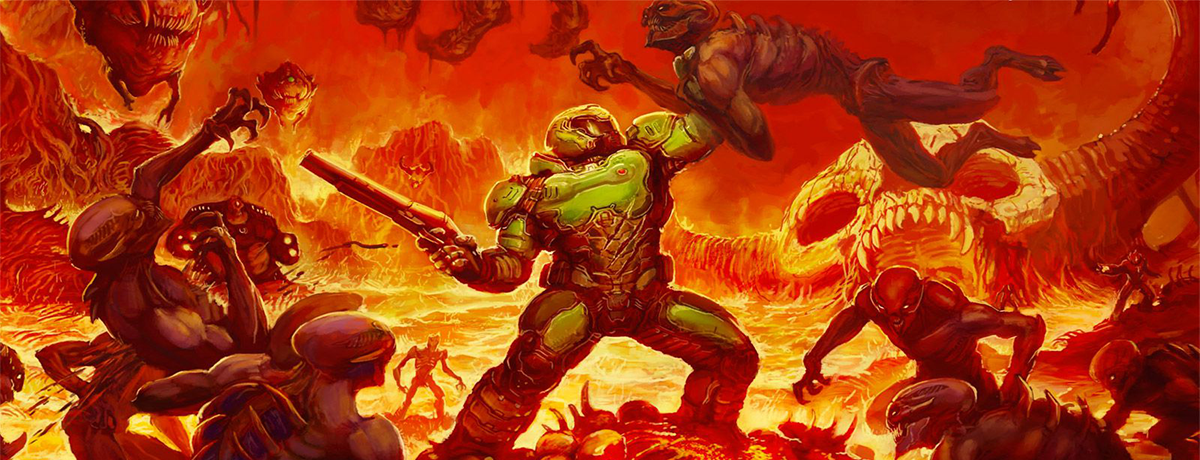
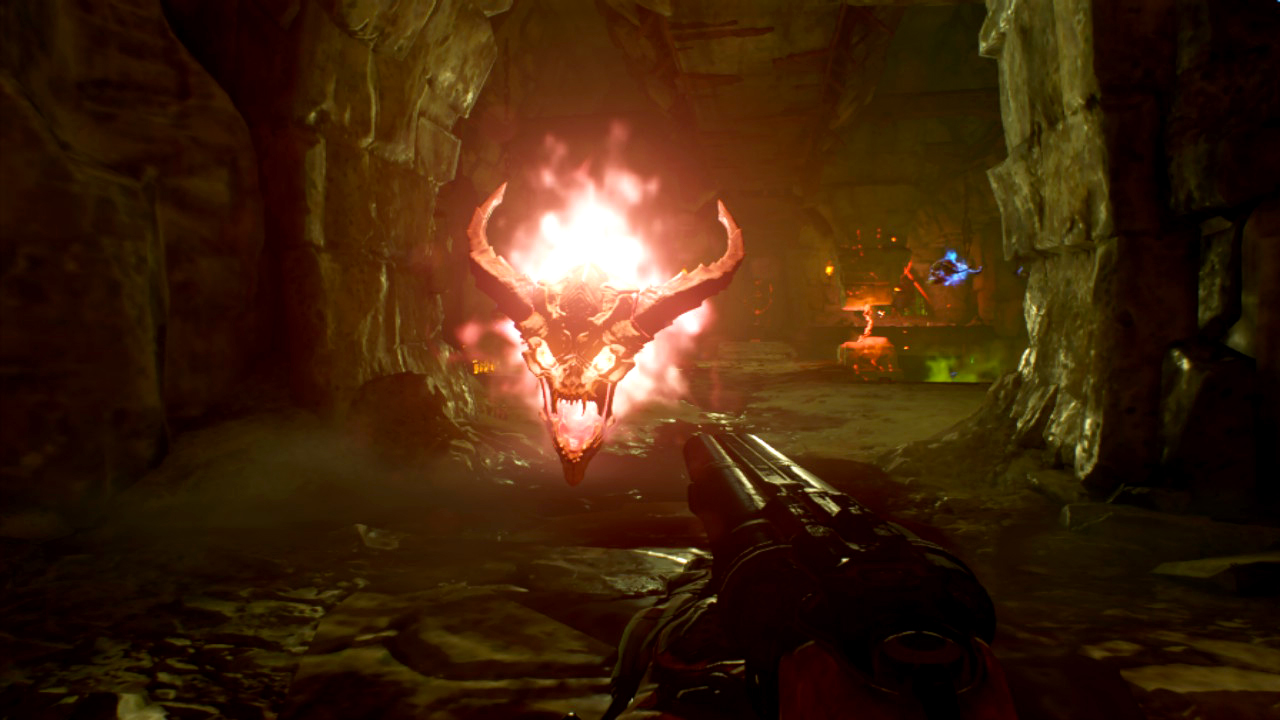
Doom Review [Nintendo Switch] – An Imperfect, Visual Showpiece

The simplest, and yet most fundamental question one can ask about Doom on the Nintendo Switch is this: is it a complete version of the 2016 title running on a portable console? So here you go: yes, principally, it is.

Doom On Switch – Hey Good Looking

While Doom on the Switch doesn’t look as good or indeed run as well as its console brothers – as would be expected looking at the size of the thing – there’s no doubt that seeing it run at all on the Switch’s screen is a bit of a technical marvel. This is a 30fps affair, down from the original 60fps, and with less visual flair and a missing SnapMap editor. But at the same time, it still happens to be a visual showpiece.

Through the very nature of being on a portable, Doom’s visual sacrifices aren’t as noticeable as you would first think. In fact, I found the extent of these compromises only truly apparent when docking the Switch. Admittedly, even then, it still looks good. Considering that many Switch users spend a lot of their time in handheld mode (myself included), it appears that the primary focus of Doom was making it run in portable mode to a respectable level – something the developers Panic Button achieved. Doom reaffirms what we’re all quickly learning then: the Switch may not be that powerful as a home console, but as a portable, it’s a beast.

Doom Nintendo Switch
Nothing can beat the double-barreled super shotgun.

Just One-More-Go

What you get in the overall package is the full, completely awesome Doom campaign with its memorable, and haunting, heavy metal soundtrack, the Arcade Mode that has you competing for top scores on these levels and the multiplayer experience. That’s quite a bit of content right there. I even found myself getting into the often overlooked and sometimes derided multiplayer. It’s an odd hybrid itself, yes, mixing custom loadouts with an old school arena shooter, but its satisfying one-more-go style progression system, along with its relative scarcity, works beautifully in short bursts on the portable.

With all that being said, Doom on Switch can occasionally come across as a bit rough around the edges. I’ve encountered a loud and intrusive audio bug across the main campaign a few times that doesn’t sound all that healthy – even startling me at one point with headphones in. This audio bug can then lower the overall sound levels requiring you to turn up the volume. The loading, at times, could be faster in certain segments of the game and I’ve experienced some minor slow down during particularly heated fights too. Hopefully the developer Panic Button can patch these issues up shortly.

That leaves the high price tag as the last barrier along with how important portability is for you. Although we know, (cough), the South African Nintendo eShop can help you out a little here. You didn’t hear it from us.

Spellspire Review [Nintendo Switch] – A Side-Scrolling Adventure Countdown

It’s nice to play a game that makes you think and keeps you on your toes. Too many games these days can be picked up and played with little thought or attention. Be it a shared concept or control scheme, games can be too familiar sometimes. The best way to beat this? Splice two different genres together.

In steps Spellspire does exactly that; a side-scrolling adventure game that brings the best bits from Countdown with it. Thankfully the maths is nowhere to be seen… Phew.
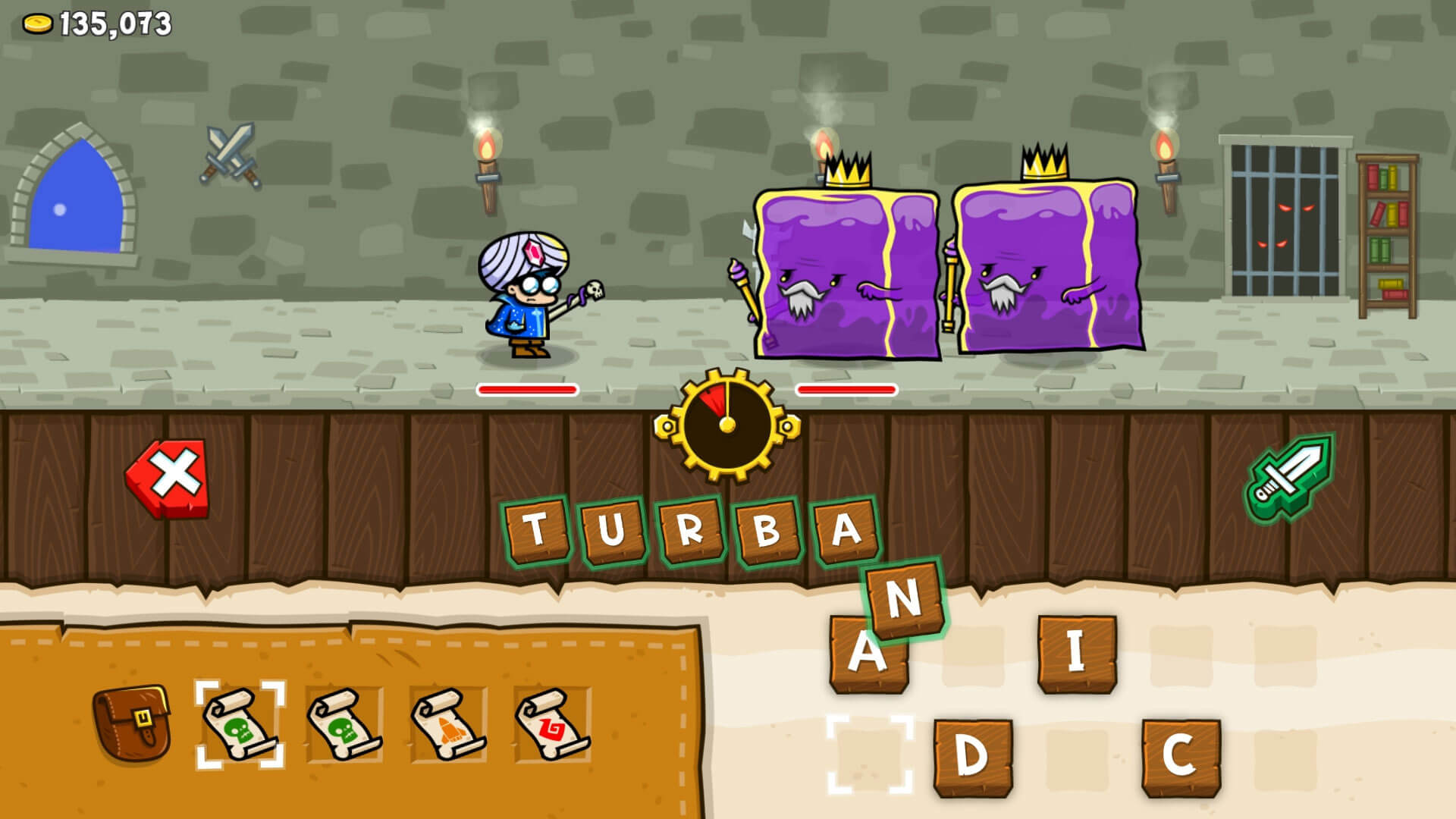
You play as a young wizard who has to travel to the top of a spire and, you can probably see where this is going, you need to create words in order to power your attacks. The bigger the word, the more powerful the attack (No rudies though, not that I tried or anything).

It sounds simple and that’s because it is, and its charm is in this simplicity. As you progress, more enemies stand in your way who get more health and more powerful the further you progress. Thankfully, upon their defeat, they drop coins and leave behind a stash of loot which can be used to power-up your little wizard. Be it a new wand, a robe upgrade or increased health, your gathered loot will enable you to continue scaling the tower.

No naughty words please.

In what seems to be a recurring theme in games from 10tons, your best hope for progression is to revisit previously beaten floors. A higher difficulty setting brings a greater reward upon your second attempt at clearing each floor. The controls are equally as simplistic as the gameplay; you move to the desired letter with the arrow keys and then press the ‘A’ button to select it. Once you’ve built your word you submit it, and that’s about it.

Albeit simple, this can be a bit clunky and the touchscreen option is the best one for the majority of the time. Even playing with the Joy-Cons detached and holding just the screen on its own like a tablet suits the game perfectly.

So, with that in mind, Spellspire is probably best suited to the mobile market as opposed to the console market. Yes, the Switch is portable, but here it feels like the Switch’s capabilities are somewhat lost, maybe wasted.

Having said that though, Spellspire is the epitome of a pick up and play game, meaning you can dip in anytime and carry on where you left off.

Top 5 Video Game To Movie Adaptations

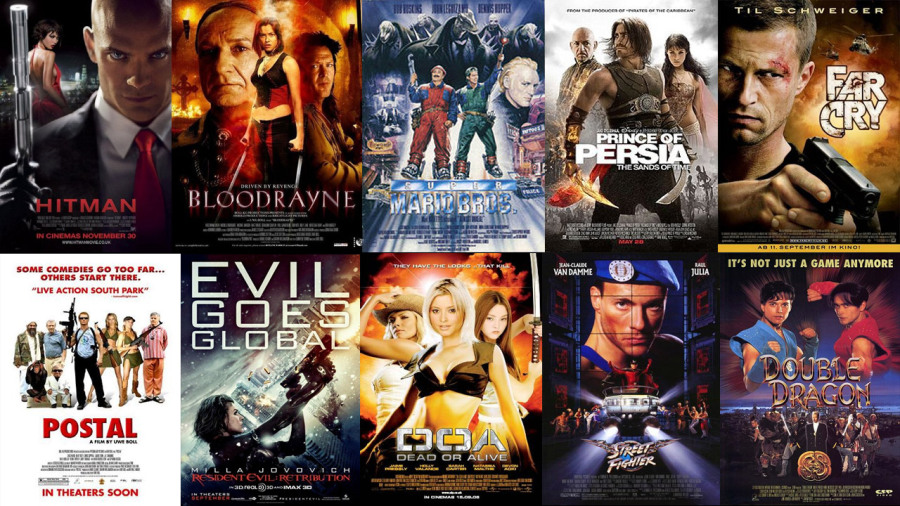
There is a question, which has existed throughout time and space, and an answer that remains one of Earth’s greatest mysteries. No, it’s not THAT question, whose answer is 42, but rather, why can’t Hollywood make a good movie adaptation of popular video games? It doesn’t make any sense to me. The best gaming franchises come gift wrapped with intricately developed characters, storylines, epic set pieces, and established dedicated fan bases. Hollywood has this innate ability to constantly screw things up, but there are a few glimmers of greatness among the pile of failed adaptations. Here is my list of the top five “best” video game adaptations (please note, I’m not saying these movies are perfect…):

Doom

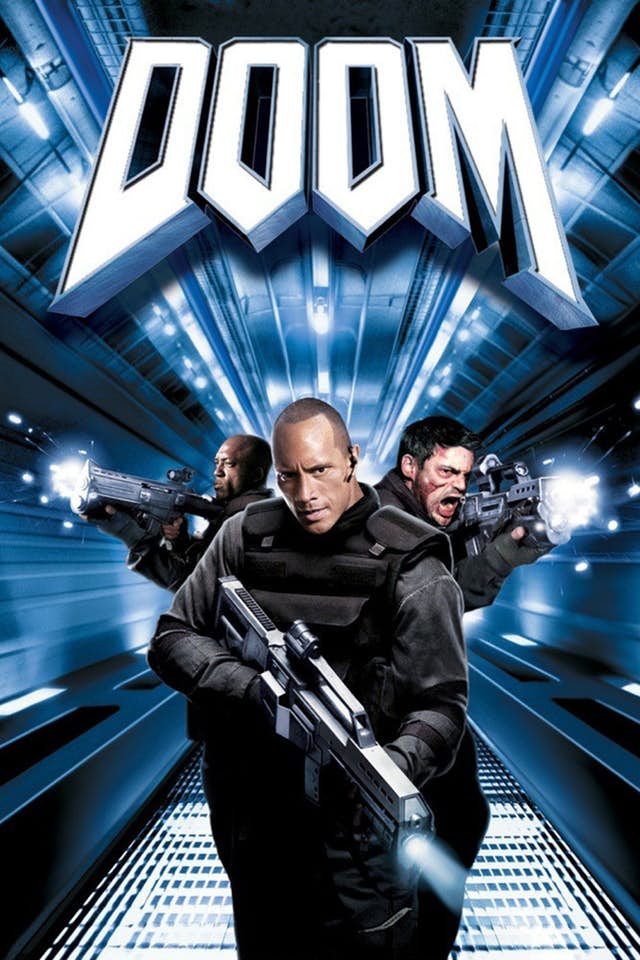
First off, this movie has the Rock, end of story! Ok, the Rock aside, Doom isn’t that bad of a movie. Sure, they changed the story, but that doesn’t really matter; no one ever played Doom for its riveting and salacious story telling. The action was great, the monsters were well-done, and the Rock and Karl Urban were awesome. There was also that twist in the end, which I won’t spoil, that made things fun in the last few minutes. Besides, even if you disagree with all of that, you can’t tell me the first-person camerawork scene, just like in the game, wasn’t awesome to see.

8c504-doom-2005-poster

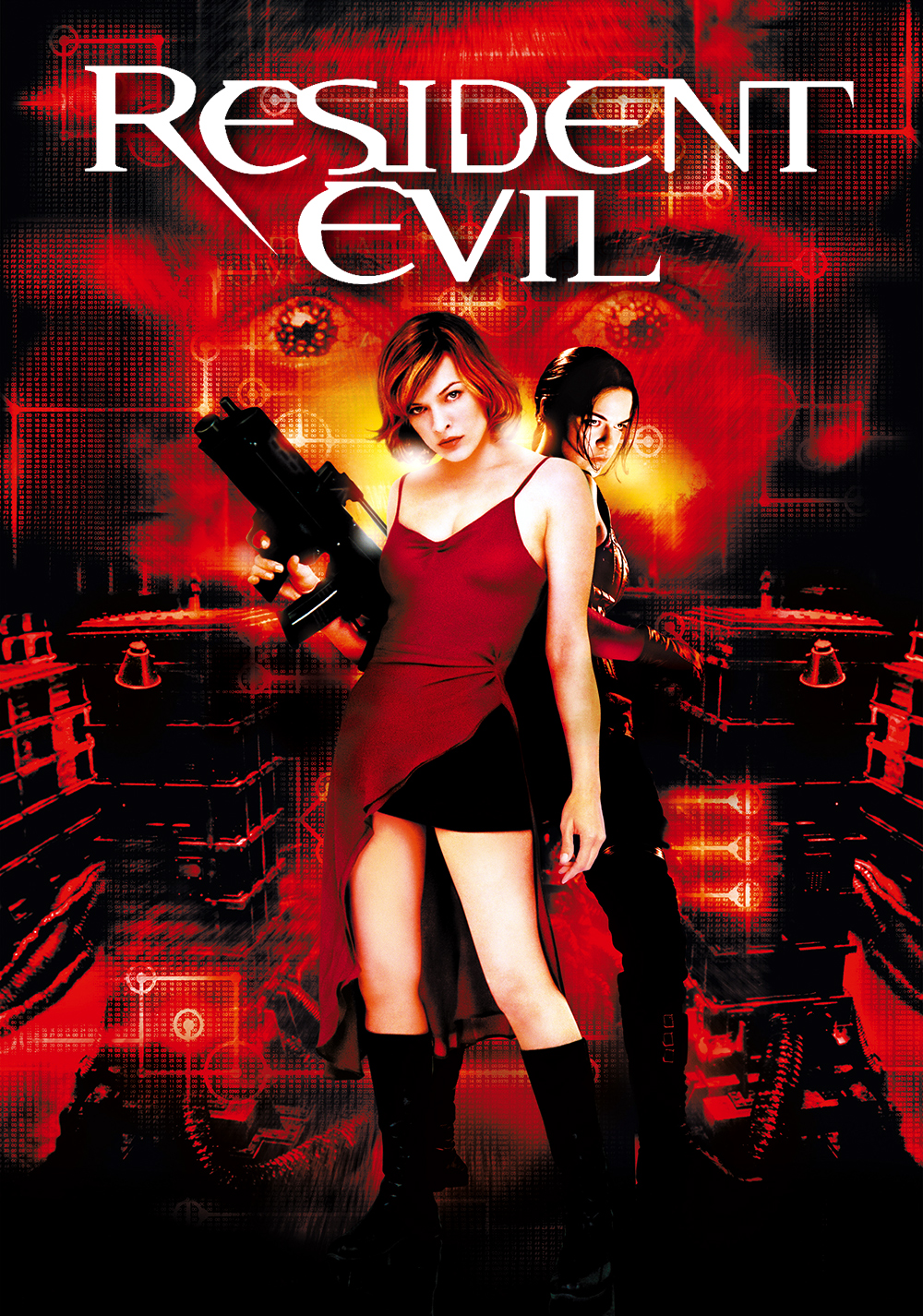
Resident Evil

Two words – Milla Jovovich! That’s all I need to say. The original Resident Evil wasn’t a cinematic masterpiece by any stretch of the imagination, but it was a fun movie regardless. You had kick-ass female characters, great enemies, interesting weapons, and a creepy A.I. that gave me nightmares for years. How amazing was that checkerboard laser scene; you know which one I’m talking about! I fell in love with Jovovich the instant I saw her in The Fifth Element, so it wasn’t a tough sell to get me behind this movie. Paul W. S. Anderson isn’t going to bring home any Academy Awards, but he has consistently made entertaining movies throughout his career. I know people bad-mouth this adaptation, but come on, at least it wasn’t one of Uwe Bolls Crap-A-Thons. Or the latest film in the series.

resident-evil-5317fb65d3687

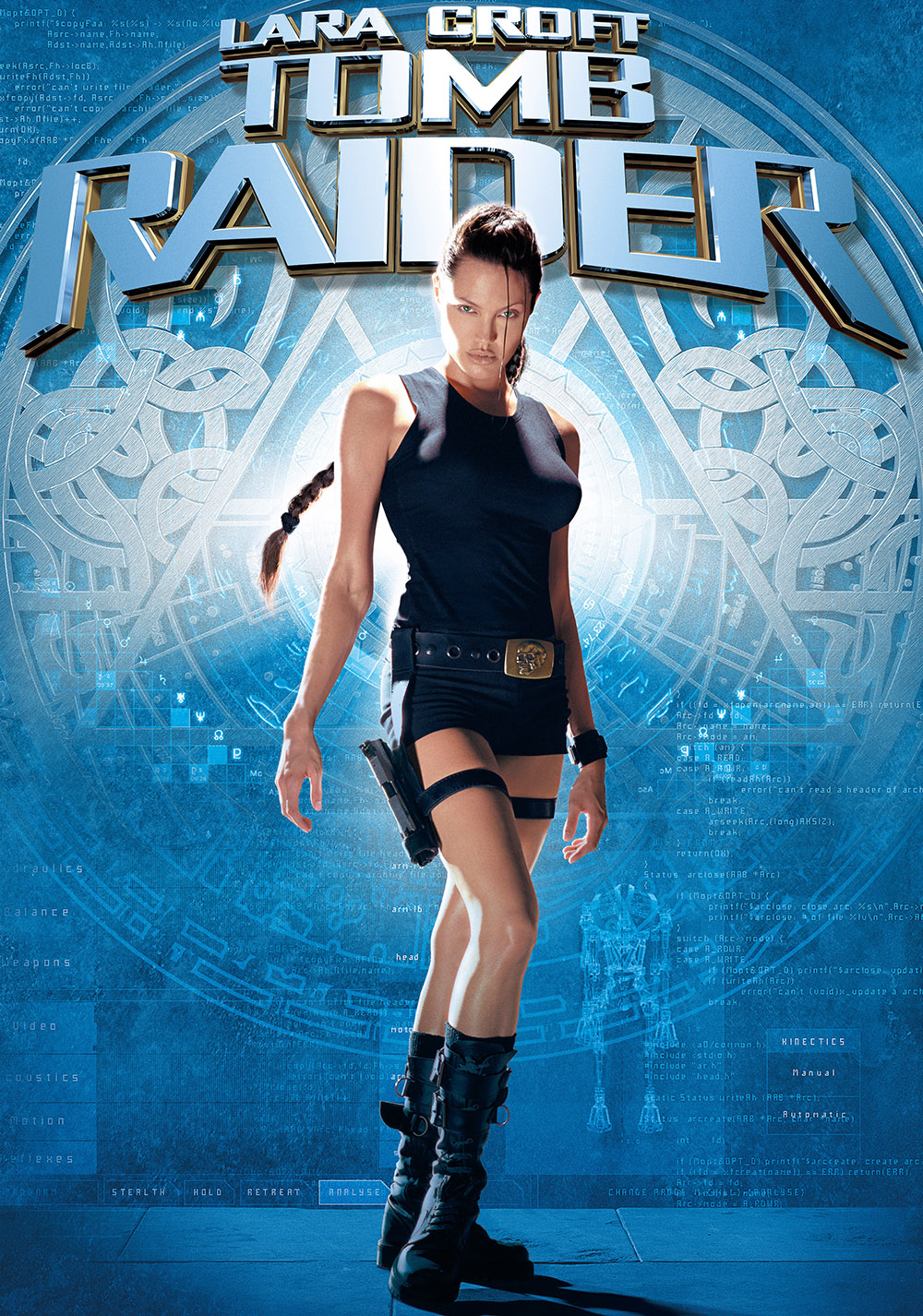
Lara Croft: Tomb Raider

You can say whatever you want about this movie, but back in 2001, Angelina Jolie was the living embodiment of Lara Croft. Just look at the picture below…I’ll wait. Great, now I dare you to say Jolie doesn’t look like she was born for the role. Unfortunately, the perfect casting (also starring Chris Barrie, Rimmer from Red Dwarf!), didn’t come with a perfect script. The movie felt clunky at times, had some questionable CGI, and didn’t really do much to set up the character for long-term potential. What we did get though, was a decent movie, with an amazing cast, and a chance to see our favourite daring adventurer archaeologist come to life for the first time. Let’s hope the reboot fares a little better.

62396Q1E_v3TombRaider1SheetLOAD

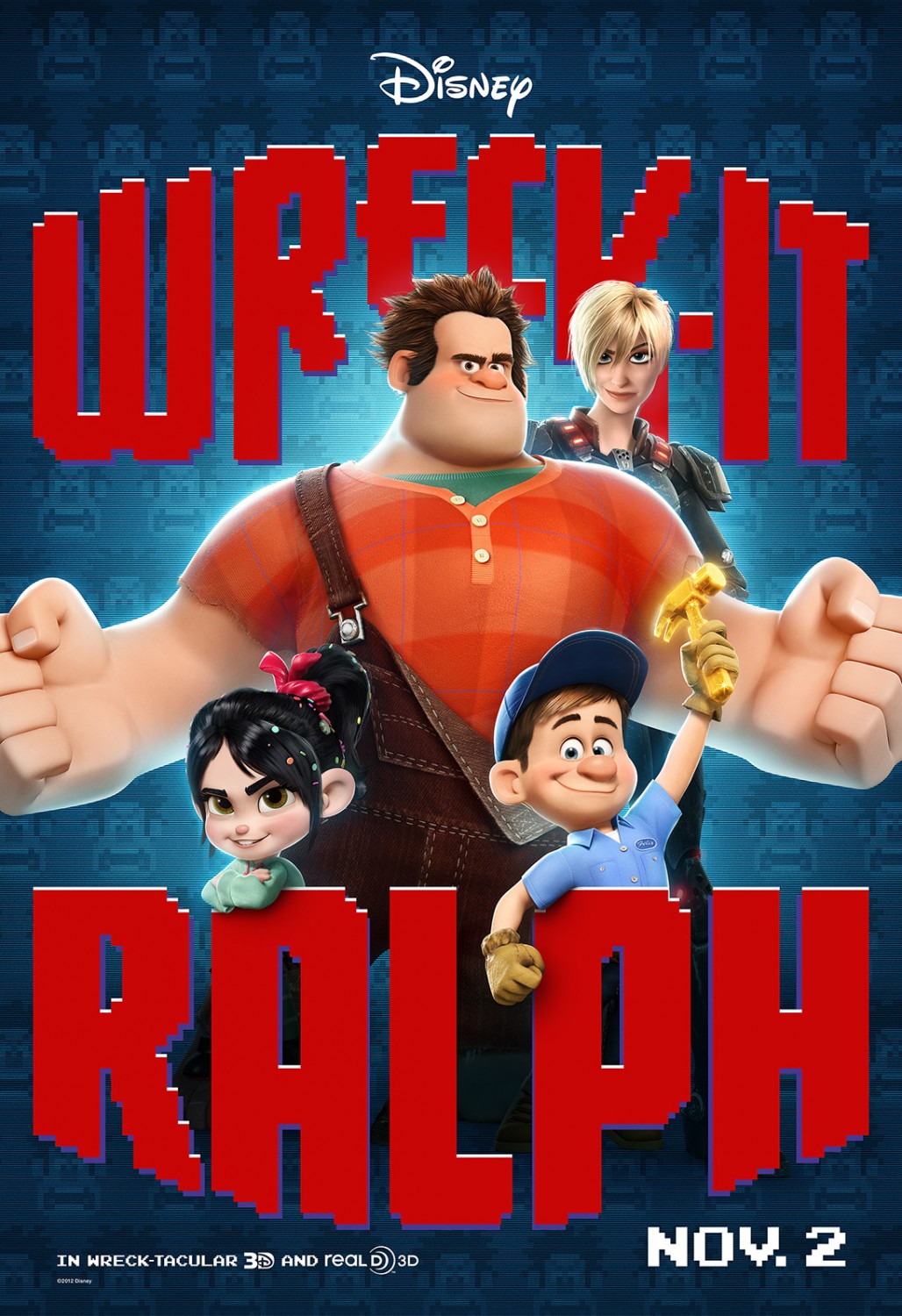
Wreck-It Ralph

Please don’t write in the comments “Jordan, this isn’t based off one specific game, but an amalgamation of many iconic gaming characters!” I get that, OK, but this movie rocked, and was exactly how something of this calibre should be. If you want to see how NOT to do it, just put on Adam Sandler’s unwatchable Pixels; that’s a lesson on how you take some of our greatest gaming icons and turn them into a steaming pile of…pixels! Wreck-It Ralph is incredibly well-written, with our main character voiced to perfection by John C. Reilly. Like most animated movies of the like, it plays exceptionally well to kids, while having inside jokes for adults. Some of the nostalgia references alone in this movie were worth the price of admission; I’ve seen it a few times and I still haven’t caught all the references. If you haven’t seen Wreck-It Ralph, I highly recommend you step away from your gaming PC, put down the Mountain Dew, and go watch it now!

Ralphnew002

Mortal Kombat

This is MY list, so I get to choose MY favourite video game movie – *dodges incoming axes. I absolutely adore the first Mortal Kombat movie and everything in it. Sure, it was cheesy at times, with some notably bad dialogue coming from Luke Cage especially, but the fight scenes and soundtrack were outstanding. I remember grinning ear to ear when I first saw Scorpion and Sub-Zero on the screen; they looked perfect! The Johnny Cage vs. Scorpion and Liu Kang vs. Reptile fights were insane, with choreography orchestrated to perfection. I would say the only misstep came from the Goro fight (though I chock that up to poor animatronics and CGI). As I mentioned, the music in this movie was amazing. With Tracks form George S. Clinton, KMFDM, Fear Factory, The Immortals, Sister Machine Gun, and more, the album went as high as tenth on Billboard’s Top 200 and placed #1 on Top Tastemakers Albums in 1995.  You can’t tell me you weren’t pumped every time “MORTAL KOMBAT” belted out on the title track. It’s a shame the sequel was so terrible and a clear cash grab to sell albums because we never got the true sequel we deserved. Rumors have circled for years of a reboot, but I won’t hold my breath for that.

12275292_1300x1733

There you have it, folks, those are my favourite video game to movie adaptations. I am sure the rest of you have a few different choices, and I would love to hear what they are. Do you absolutely love Silent Hill or Van Dam’s Street Fighter, let us know in the comments below.

Xenoraid Review [Nintendo Switch] – A Fun Vertical Shooter To Take On The Go

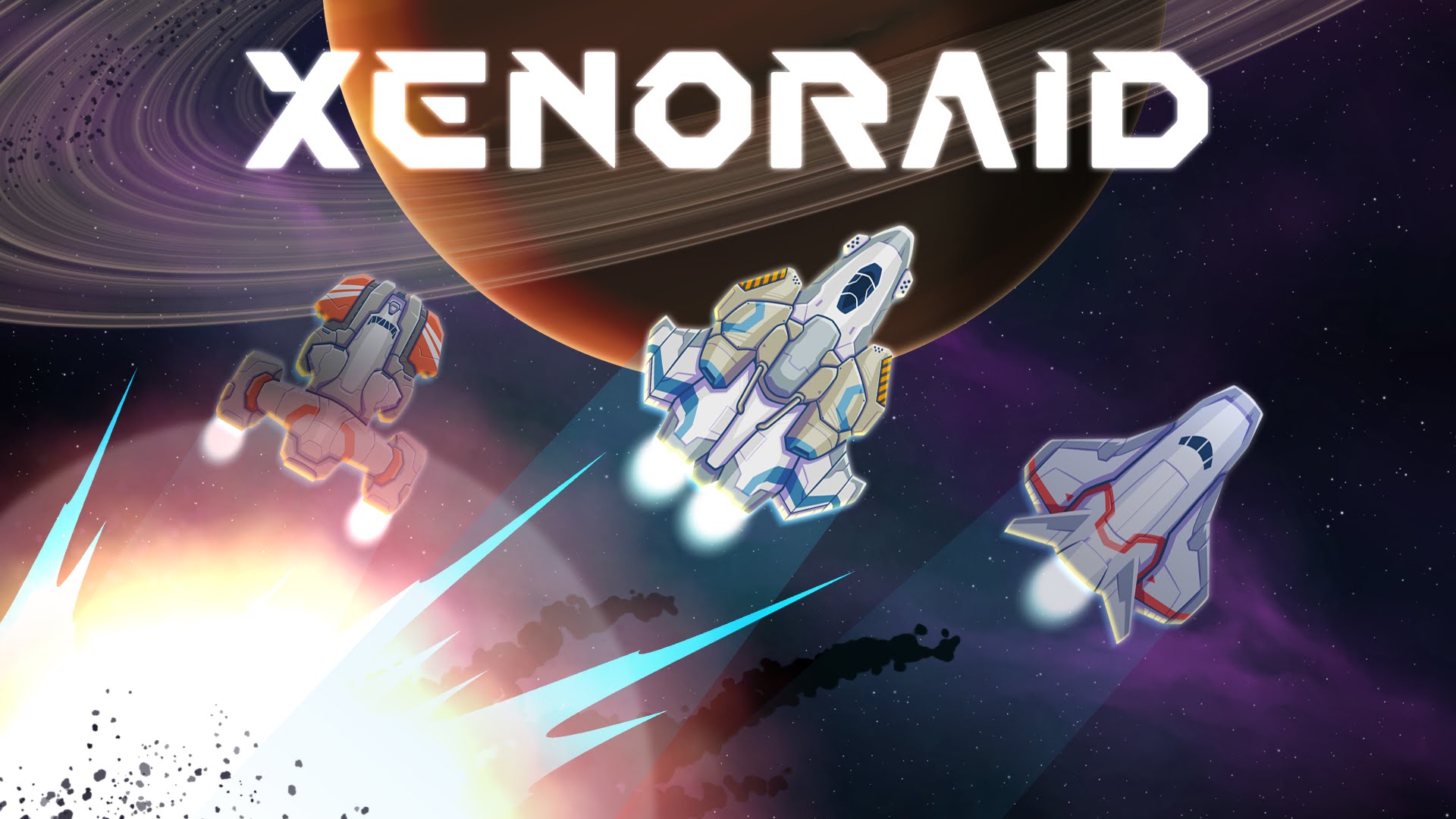
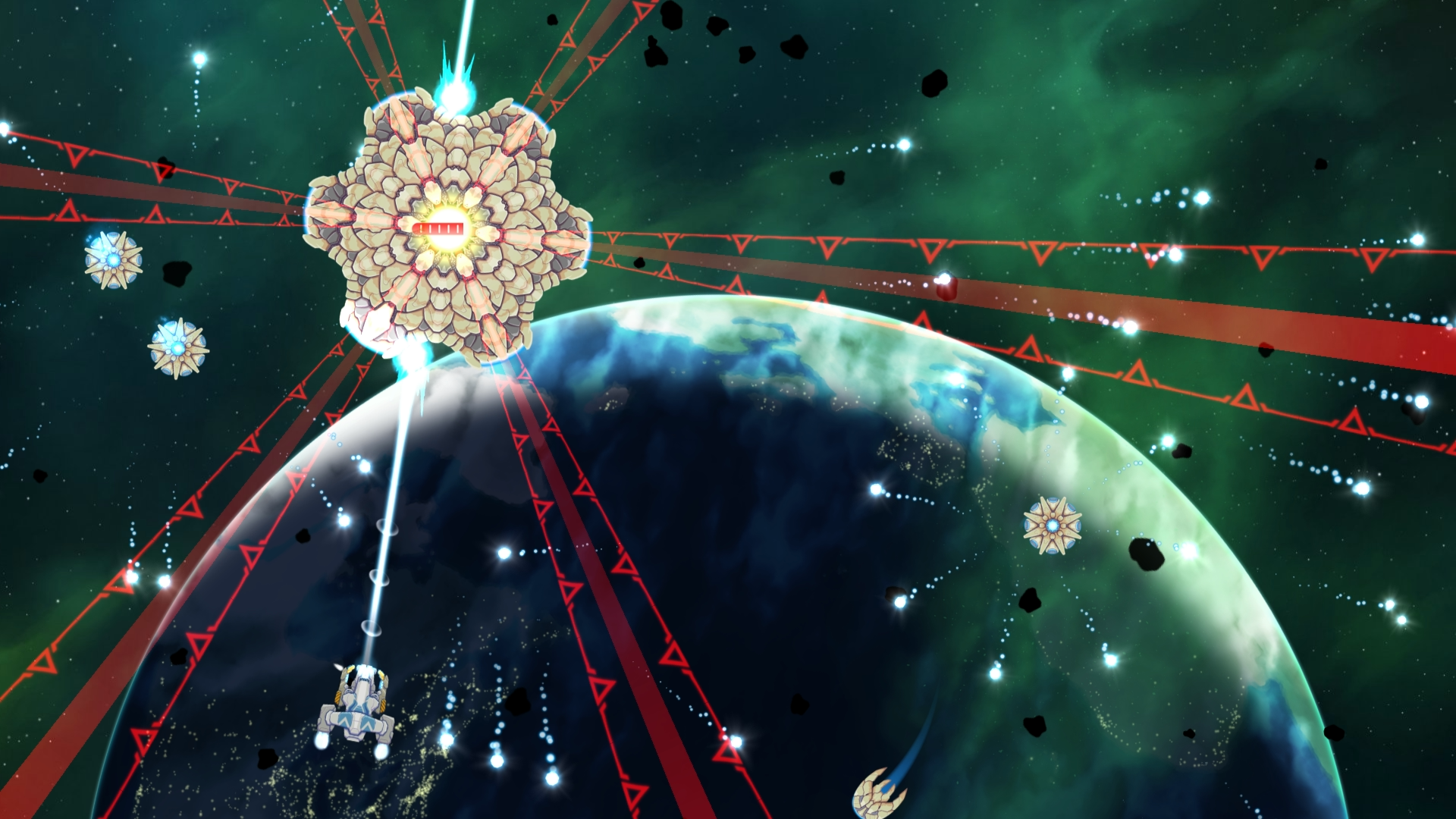
At the exact time that you read this, there will be fifty-three billion vertically scrolling shoot’em up games out on the market available on every system and platform you can think of. I might have just made that up, but after several decades in existence, the vertical shooter has seen a multitude of titles, most disappearing into the nether realm after a brief existence. Xenoraid by developer 10tons, now available on the Nintendo Switch, may have its faults, but the game is a surprisingly fun addition to an excruciatingly crowded genre.

Does anyone actually pay attention to the story in these types of games? Do you sit down and hope for a Game of Thrones level of drama and intrigue? In the case of Xenoraid, don’t expect Battlestar quality of writing as you battle your way through dozens of baddies, hell-bent on destroying you. Simply put, the game revolves around the first space war between Earth and a “superior” alien race. Your new alien enemy would like nothing more than to see you dead, but humans have been playing vertical shooters for years, so we got this.

shot-3

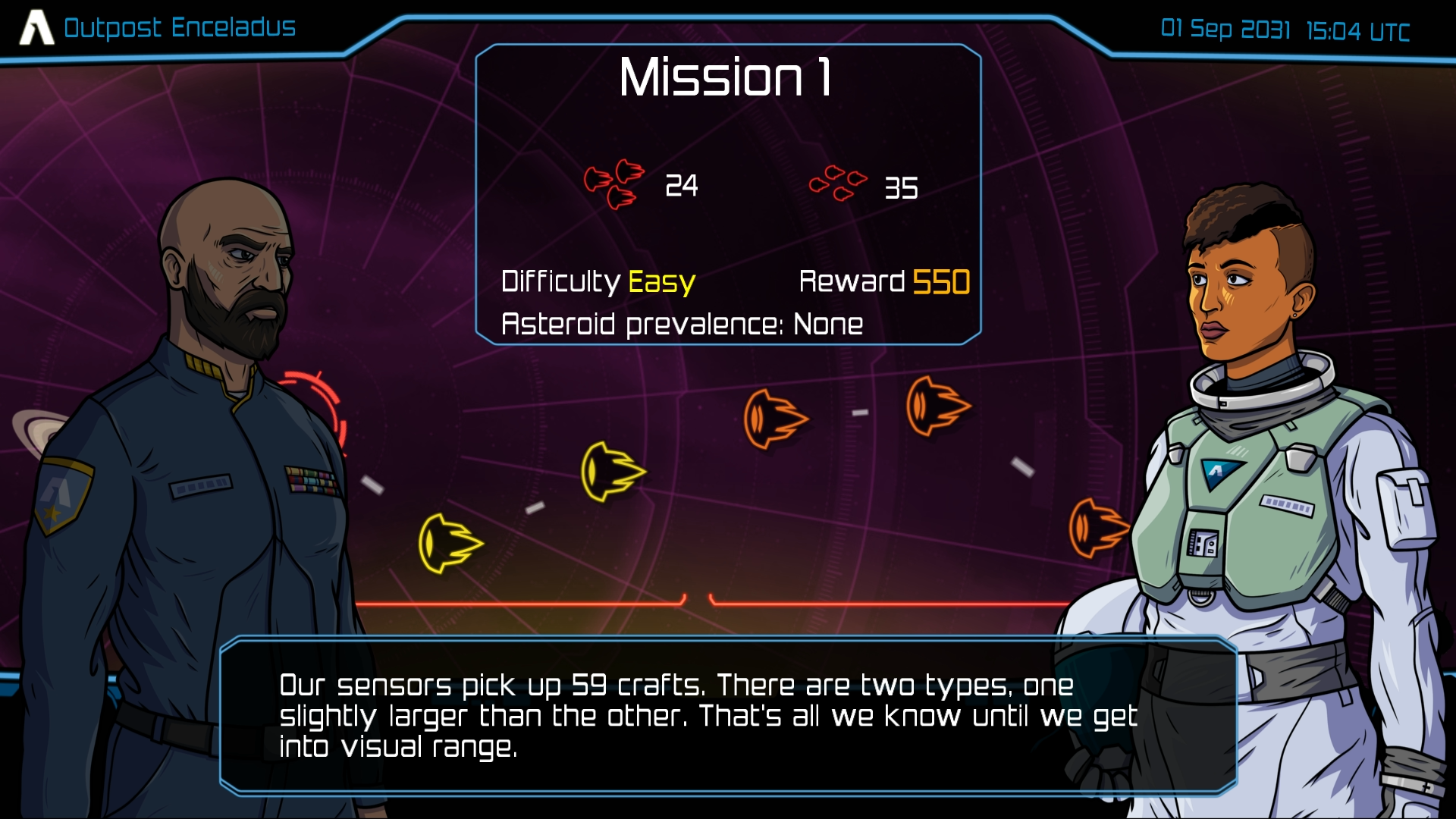
To help ward off the incoming alien raiders, players control four fighters at the start of the game, which you can instantly swap out throughout the course of a mission. As the game progresses, players have the option of buying new ships in varying styles, as well as a wide array of weapons, bombs, upgrades, and boosters. New ships, as well as the aforementioned upgrades, are purchased with credits you pick up in battle.

After each mission, players can repair their damaged ships in addition to the upgrades. Between the repairs and upgrades though, I  feel the game doesn’t yield enough of the credits for everything you would want to do. At one point, I needed to buy a new ship, but couldn’t afford to also repair the damaged ones. I had to go into the next mission with one good fighter, and three that were in various states of disrepair. The fact that you need many credits for upgrades, ships, and repairs, but don’t get nearly enough during a mission, was something I felt hampered the game throughout.

shot-2

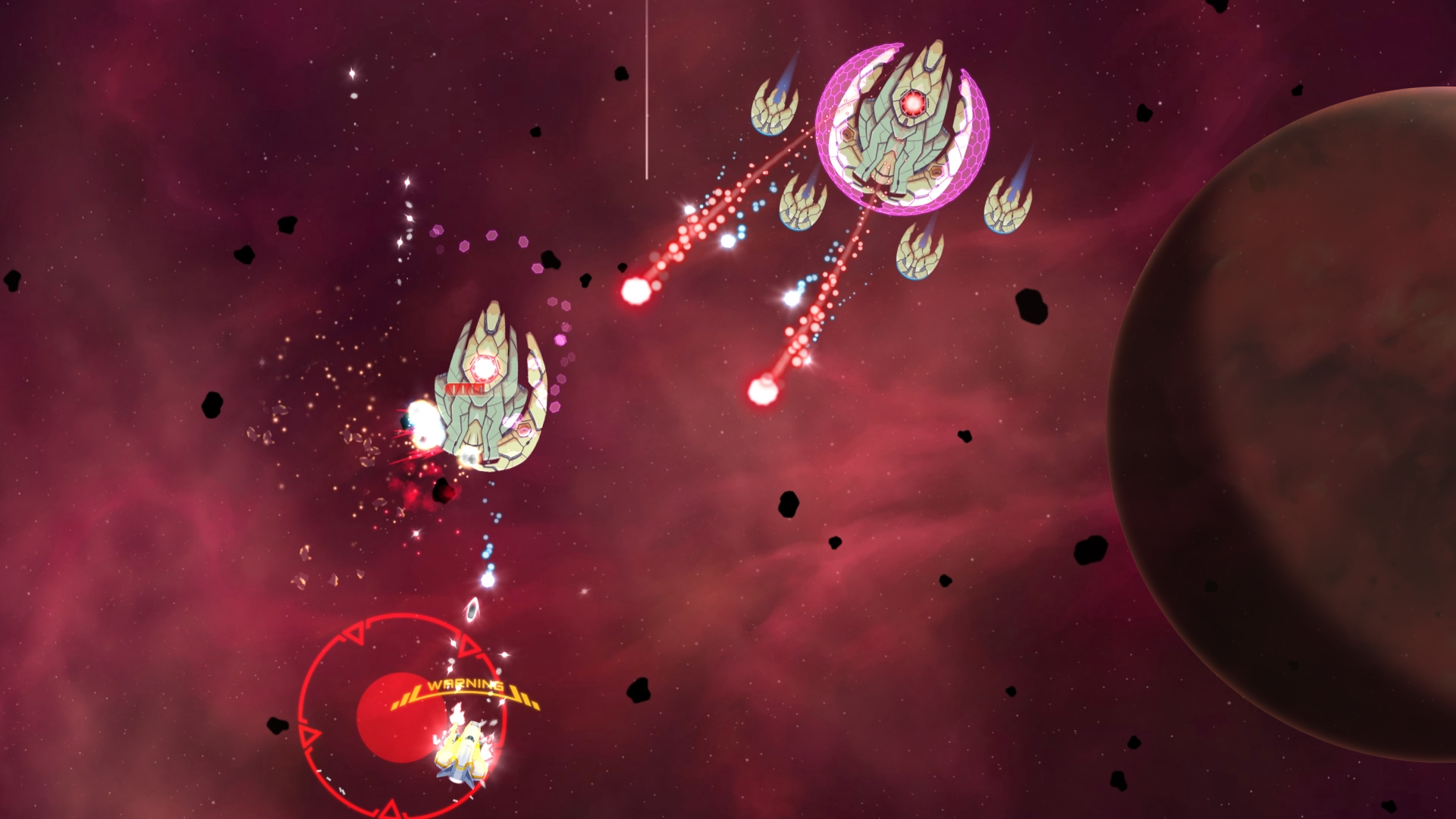
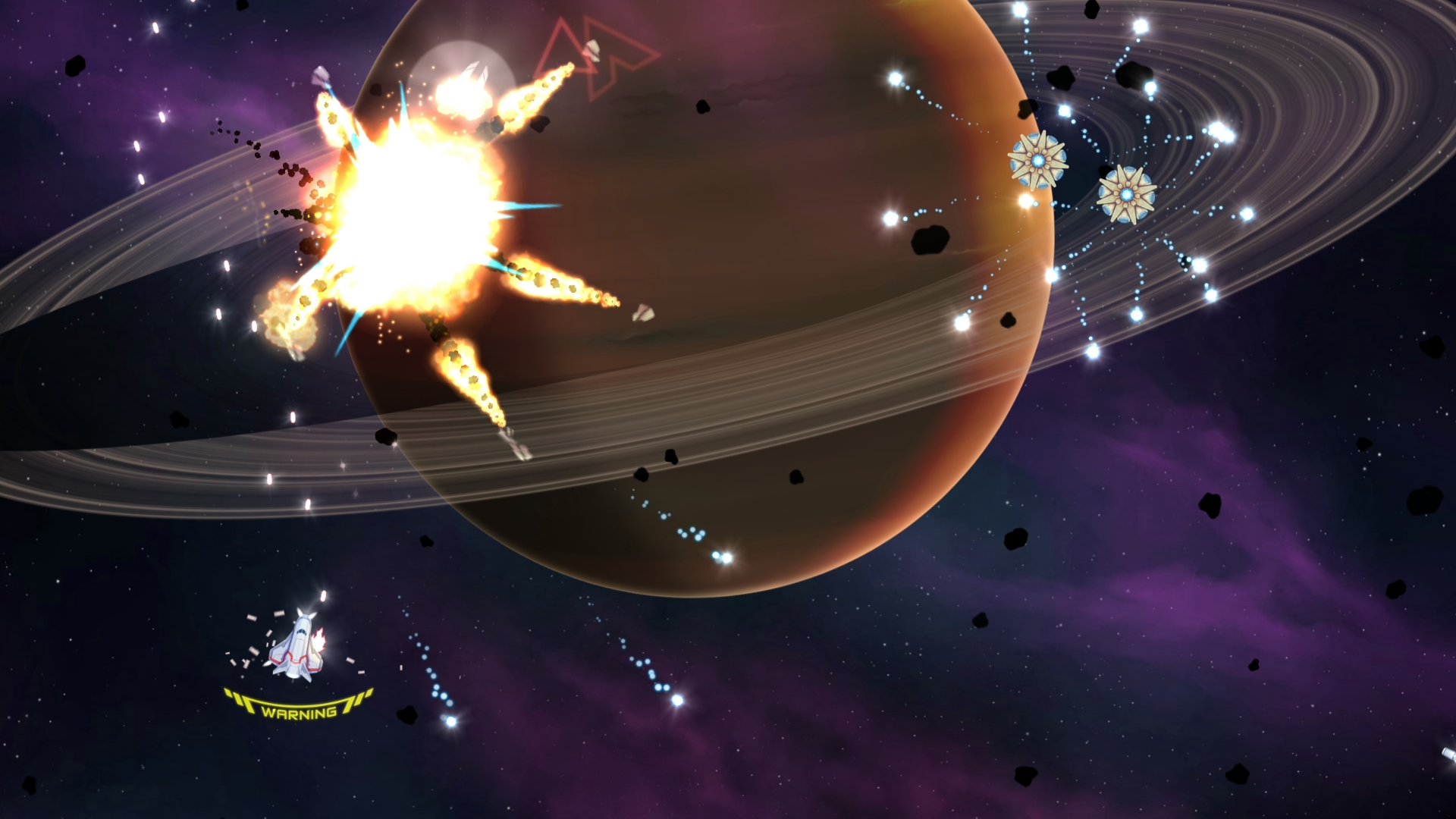
Xenoraid utilizes a randomization tactic; ensuring players can’t “memorize” a level, making it easier to beat. Ships enter the viewing screen at random points, exit, and reappear in different locations. It reminded me of the classic arcade game Asteroids in the way the ships fly through space. I was impressed with the shooting mechanics of the game, which allow you to tilt your ship, shooting enemies at an angle who might be entering the playing field on opposite sides of the screen. Your ships do have a max angle in which they can turn however, which I found slightly frustrating at times when an enemy was just out of reach; I wished they allowed for full 360 firing.

When I first started playing Xenoraid, I felt the game was disappointingly easy. I am not sure if this was in order to give me a false sense of security, but after a few missions, I found myself struggling to stay alive. If anything, I would say the game is a tad uneven in the level design. Sometimes you’re begging for something to shoot, while at other points it gets a little too crowded.

shot-1

The game also features a laboratory, which will allow players to research new weapons and technology to add to their respective fighters. These features can be unlocked/bought using different types of credits, which are picked up during missions. I highly recommend players pick-and-choose what to research carefully, since you have a limited number of special credits. With a lack of credits aside, customizing your ships works really well in Xenoraid. With four ships, players can modify each to best suit their needs. Having a ringer in your corner makes it easier to defeat harder enemies and bosses throughout the over 40 missions.

Another small feature that I thought made the game more challenging was its focus on shooting. In so many games of the like, you simply hold down the trigger button and destroy anything that wanders into the bullet’s path. With Xenoraid, they don’t make it so easy. Holding down the fire button will only result in your guns overheating and shutting down for five seconds as they recharge. At this point, you either have to put your flying skills to the test and avoid everything or switch to a backup fighter in the interim. I found the most effective way of dispatching enemies was short and highly focused bursts, making sure not to overheat your guns in the process.

shot-4

Xenoraid is a good looking game with pretty decent sound design. If you have some friends, all game modes are playable with two to four players in local co-op. I haven’t been able to try this out due to a lack of friends, but I can imagine this feature is fun – though I can also see players getting in each other’s way.

Arelite Core Review [PC] – A World Only A Blacksmith Can Save

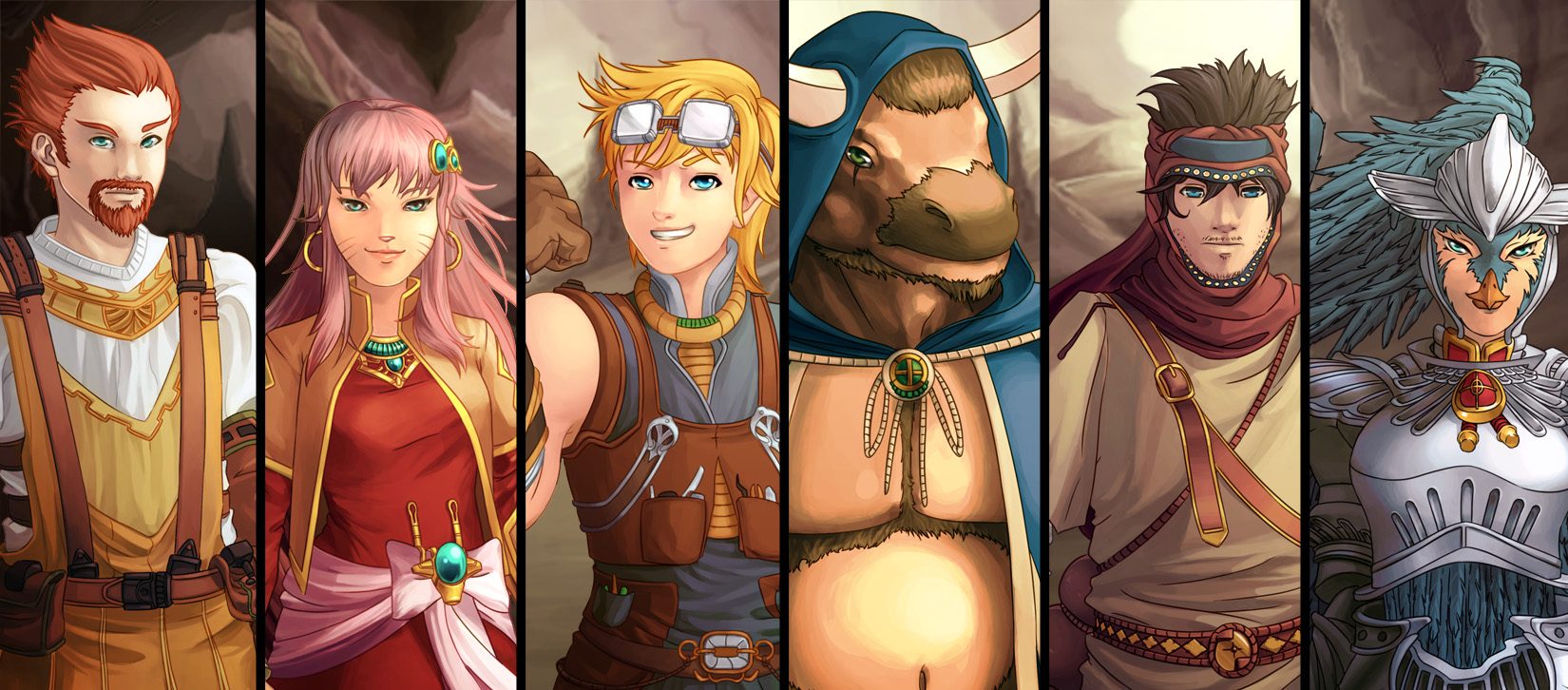
Arelite Core invests players into a journey in which a master blacksmith embarks on an adventure to witness the secrets of other master blacksmiths based around the world. Played in traditional RPG fashion with gorgeously rendered sprites, established turn-based combat, unforgettable characters and a timeless musical score wrap it all tightly together.

In Arelite Core, a master blacksmith – Karden – from the small village of Arreal undertakes a journey to travel around the world to learn the secrets of his trade. From village to village the legendary blacksmith will meet and greet with other master craftsmen, accompanied by his savvy and egotistical battle buddy, Baeme. Picking up other companions throughout your journey and uncovering truths about the dangerous ancient Arelite stones, players will swiftly grasp the mechanics of this familiar looking RPG.

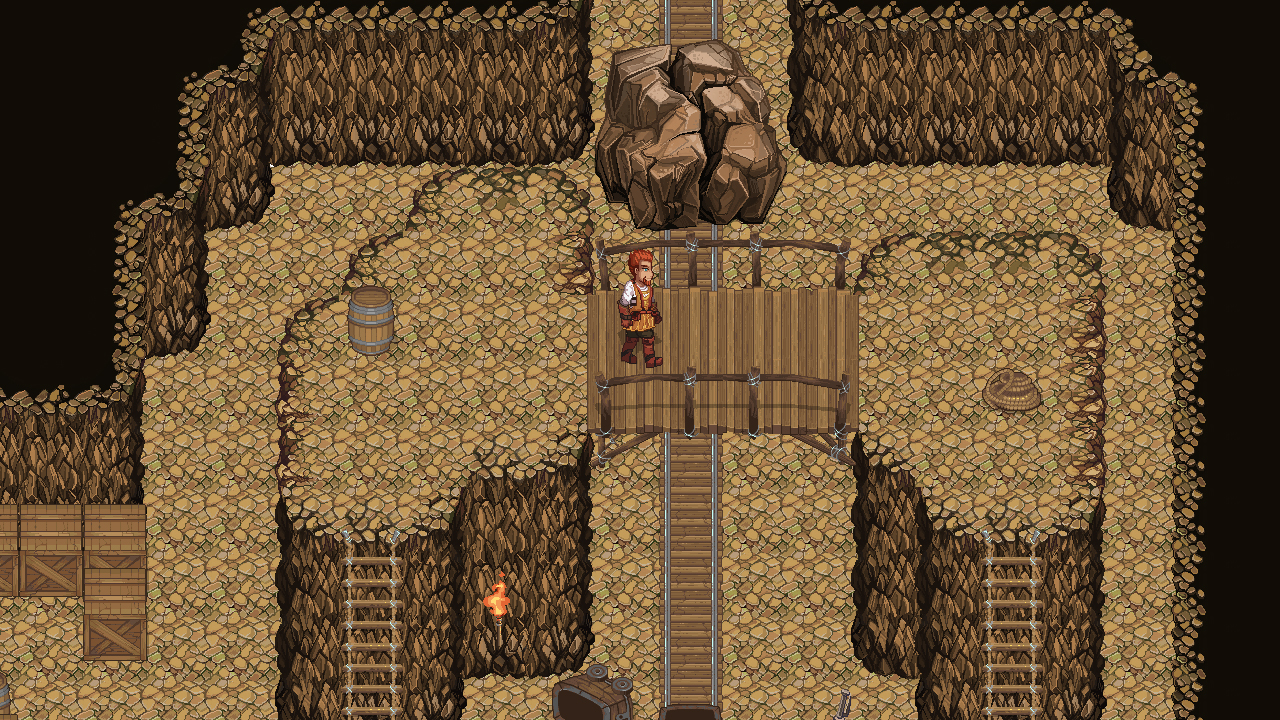
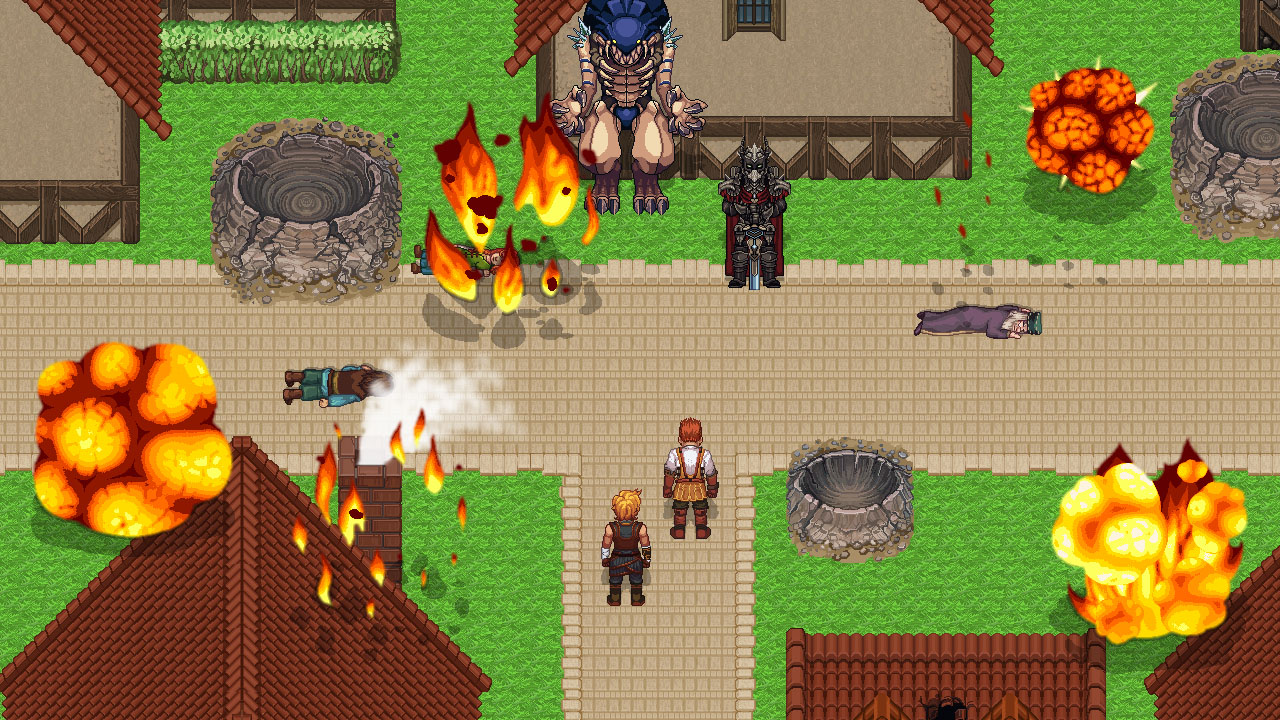
Traversing through dungeons may lead to hidden paths containing helpful items, as well as more monsters.
A Colorful World

As the simple story progresses about the dedicated craftsman and his cocky companion, the lurking dangers of Arelite – an ancient resource used to make absurdly powerful weapons – is now falling into threatening hands. Knowing the power of Arelite, increasing your knowledge and skills as a blacksmith is now crucial in stopping the evil forces and bringing peace back to the world.

The aesthetics of Arelite Core brings back the early years of the adventuring/RPG genre, with colourful and unique sprites, text-based narrative and an enthralling musical backdrop. Exploring, developing your characters/parties and easy-to-learn turn-based combat all provide for a thrilling ride atop the compelling story following the master blacksmith and his faithful and colourful companions.

The open areas and dungeons to roam are familiar in almost every sense of the word when compared to the 16-bit fantasy titles the gaming community remembers so fondly. Unraveling bits of lore and dialogue by talking to the wandering villagers, or bartering with charismatic business proprietors for useful items, armour and weapons are still the standard when entering new areas. Though the game doesn’t offer much difference when it comes to the traditional RPG mechanics, Arelite Core still manages to produce an immersive story full of role-playing tactics and a plethora of evil monsters.

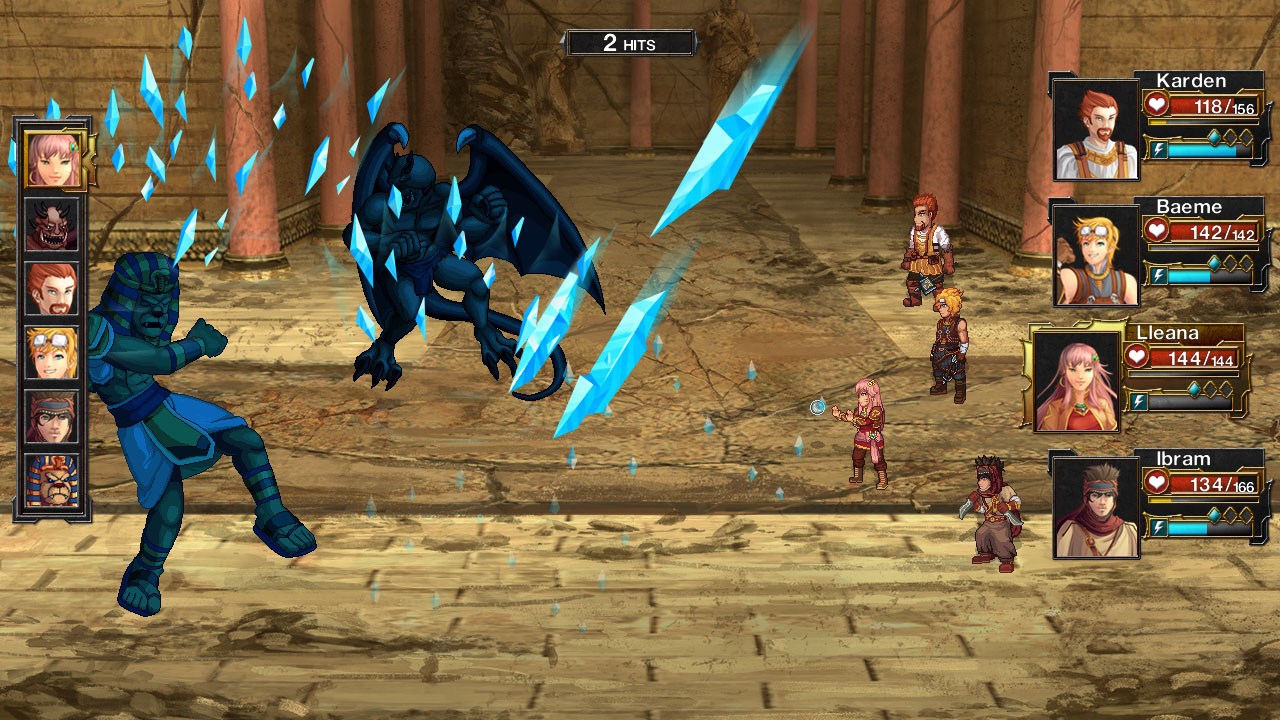
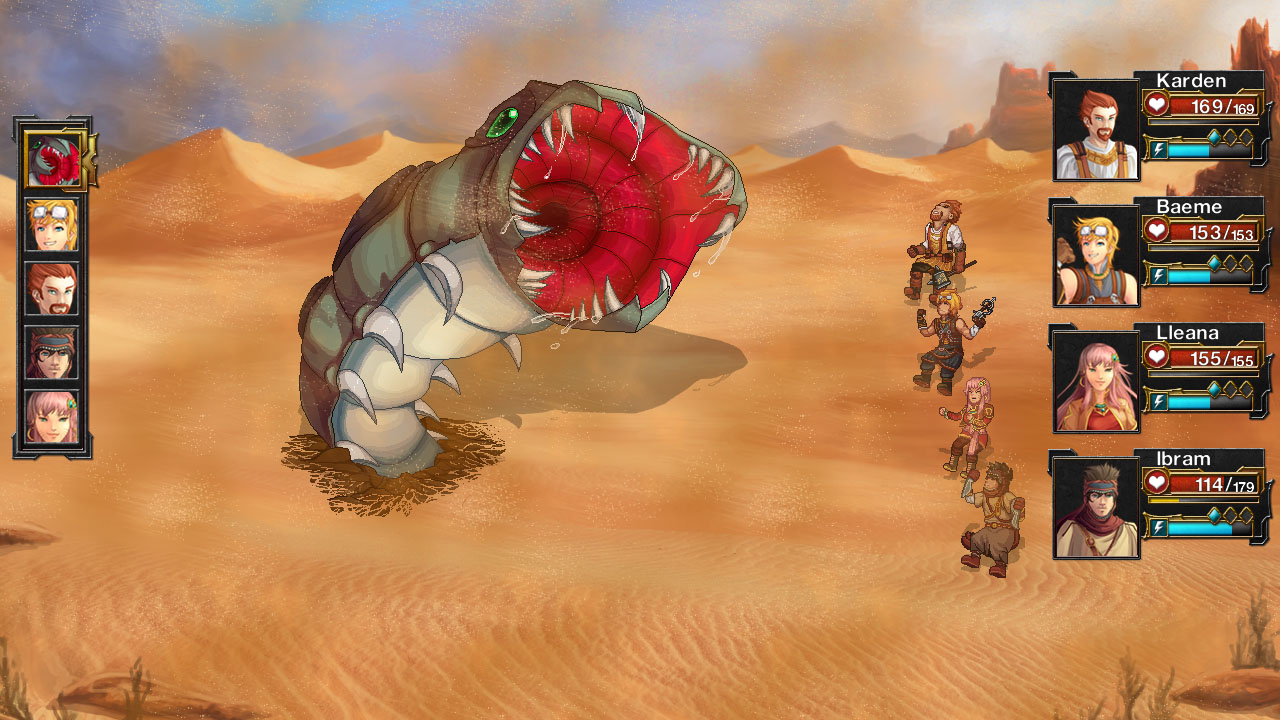
Traditional turn-based combat mechanics bring common tactics found in a heap of other RPGs.
Classic Combat Mechanics With A Few Quirks

The turn-based combat tactics involve all of the strategic – both defensive and offensive – manoeuvres, including physical strikes, magic, healing and special moves known as Blitz. Battles break out once the player (or the enemy) has made contact, spinning players into a bout filled with a number of powerful monsters. Standard strike attacks deal damage using whichever weapon is equipped by each character. By gaining levels and upgrading your characters, new skill points and weapons will increase the strength of these strike attacks.

Other tactics like parrying and the ultra-powerful Blitz moves offer unique abilities to raise defence, recover health or deal massive blows to tough opponents. Parrying acts as a form of defence to prepare the given player a stance against any incoming attacks, but also adds a touch of health to the character as well. With every landed blow or damage taken, each characters’ blitz bar begins to fill. Every time the blitz meter fills, a point is acquired and may be used to initiate a special blitz skill. Powerful elemental attacks, magic abilities like summoning monster allies, or healing/buffing your companions in battle are only a few of the unique tactics available through the blitz system.

The world is in turmoil against a devious threat using the powerful resource, Arelite.
Strengthening Your Stance

Strengthening your party comes in a variety of useful skill and blitz upgrades. Adding skill points earned through multiple levels, three different categories known as Stances – one for each of the three combat moves – are available to increase in a manner of different ways. Increasing the Strike, Parry and Blitz skills provide a number of buffs, percentage increases in strength or defence, more effective blitz encounters or the ability to stun enemies more frequently. These skill categories act as the main form of character development giving each character a unique twist in combat and strategy.

Blitz, strike and parry moves are all vital stances in overcoming the odds, but having a strong weapon equipped can be just as important. Finding weapons happens, but more often players will find more success in forging their own weapons from resources and metals found throughout their journey. Taking gems and metals to blacksmiths will allow players to forge new weapons and armour for each character, also increasing your Smithing level in the process. The higher the Smithing level, the greater the weapons that can be forged at blacksmith shops.

Tons of foul monsters loom in the vast world of Arelite Core.
Arelite Core Review

While traditional RPGs come a dime a dozen nowadays, it’s refreshing to embark on a journey from a different perspective. Playing as the blacksmith with unyielding determination to become the best at his craft is inspiring and charming. Dragon Slumber creates a riveting tale with intuitive perks, skills and useful upgrades. Tons of vile monsters and a cast glowing with interesting dialogue and deep character traits all fit neatly inside this tightly wound RPG. An experience rivalled by so many, yes, but it still brings its own identity to the saturated genre.

Little Nightmares – Secrets of The Maw Episode 2: The Hideaway Review [PS4]

Even though the universe of Little Nightmares has created a tendency to play with fears (some I did not know I had) I nevertheless jump into the second episode of the Secrets of The Maw DLC with both arms and legs, ready to take on whatever it might throw my way.

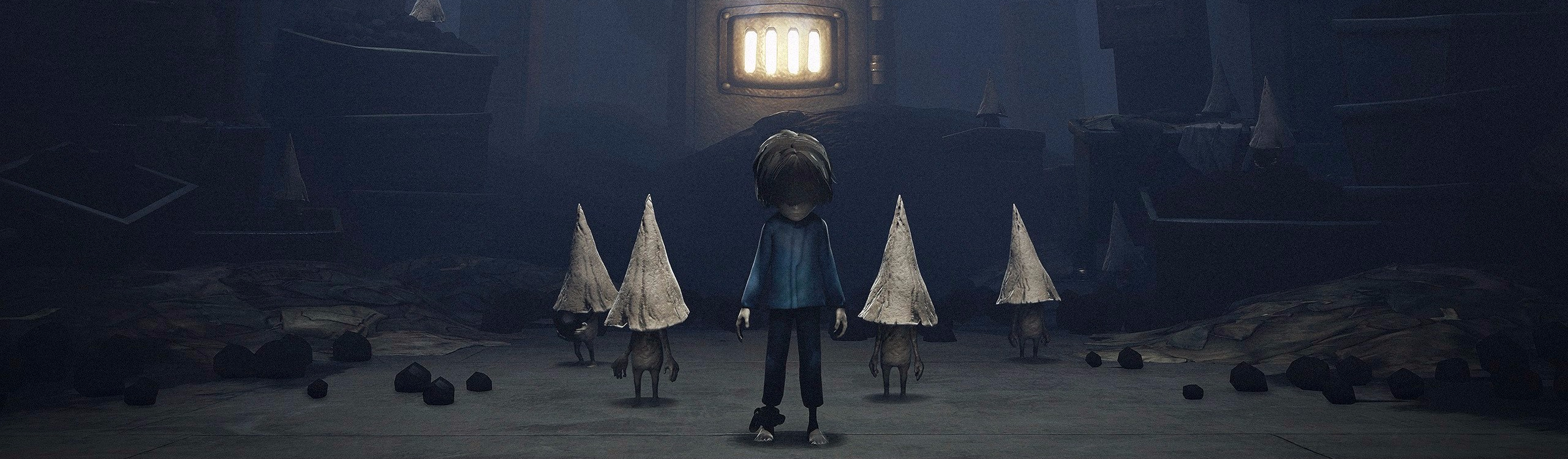
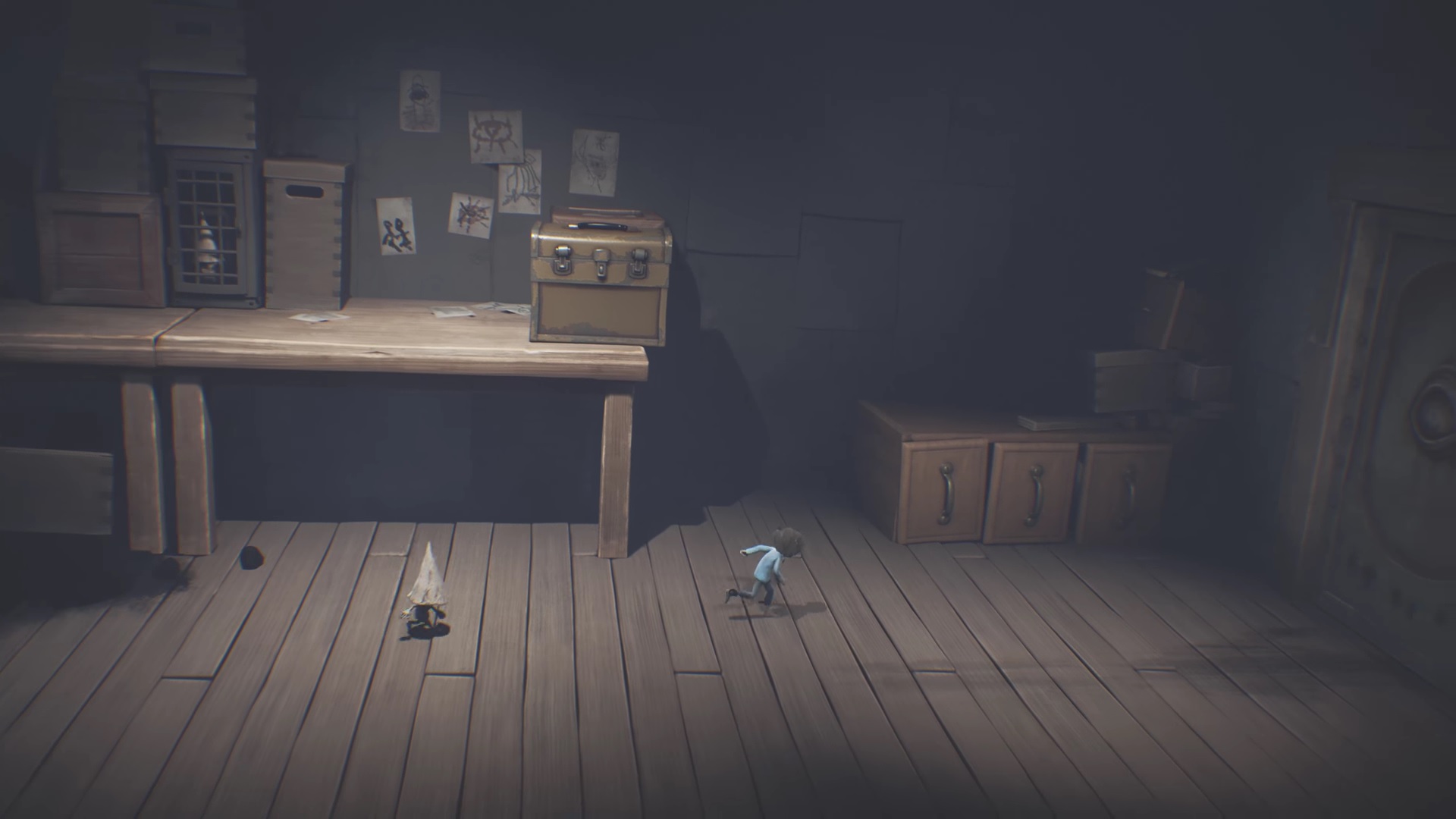
In the new episode, appropriately titled The Hideaway, the story of The Runaway Kid continues. Just by looking at the promo picture, it already tells us a lot of what the episode is about; and as you can see, we encounter the Nomes once more. If you’ve played the original game (if you haven’t: what are you doing here? Go and play all the other stuff before reading this!) you might be familiar with the Nomes: tiny, white creatures that hide in every nook and cranny. When we played as Six, they were pretty much only functioning as huggable collectibles. Now, they serve a much greater purpose. As we have done repeatedly in these two episodes of the DLC, we encounter familiar rooms from the original game. As before, I believe they are filled with nods to how the old story might connect with the new. In addition to that, Mr Long-armed-grabby-hands is back. Yes indeed, with even longer and grabbier hands than before… Or, at least, that’s what it feels like.

together.png
Together forever!

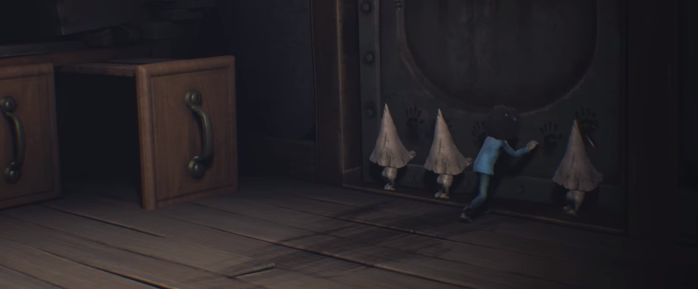
Even though the nomes aren’t much larger in size, they certainly are in numbers this time around. Upon encounter, you hug them (as we are familiar with from the original game) and they start following you – and actually being your adorable little companions for this episode. They are important to the different puzzles – which is new, unexpected and a good surprise. And they also serve a purpose in the bigger picture; which is the heart of the ship, the engine. They remind me of the soot-creatures from the movie Spirited Away, the way they are loyal and hard-working in order to make everything function, because that is their role: they bring coal to the furnace that drives the ship. This is how we, perhaps, learn their function, as we all were probably wondering about earlier in the storyline. At the end of the episode, I feel like I turned The Runaway Kid into The Lord of the Nomes. Which was pretty cool.

Continually, this is where my major problem arrives: the graphics and textual bugs. The nomes would get stuck on things, even though they were moving. Because of this, they would automatically stop following me which is central to progress – it’s a very frustrating bug.

follow me.jpg
This way!

The Hideaway continues the story of The Runaway Kid with minor succession. What I thought would be an interesting episode with more of the elements I love in this universe would turn out to be a rather disappointing affair. However, it offers some intriguing elements like the opportunity of travelling different roads to reach your goal

Very early on in the game, I encountered an audio bug too, which made the speakers on my TV sound as if they were broken (they weren’t). However, restarting the episode made the bug go away and it didn’t reoccur. Apart from that, the sound feels much more intense and powerful in this episode, which leads me to the use of the horror elements – they were not as present as in the first episode, but this episode definitely used the contrast between darkness and light to its advantage. It’s a creepy touch and creates a sense of paranoia we all know so well from this universe.

Even though I am still a bit confused when it comes to the story, the ending of this episode was… Intriguing. Let’s just say that my interest is piqued, and I’m excited to see where it ends. So, grab some popcorn and sit down with me for the last episode of Little Nightmares: Secrets of the Maw – this is going to be juicy.

A final score will be given for Secrets of The Maw at the end.

Looking Back: Top Eight NES Games I Never Beat

For those of us who grew up in the age of Nintendo, there are countless stories of NES games we simply couldn’t beat. Whether they were difficult, poorly designed, or simply made no sense, here is my list of the top 8 NES games I just couldn’t beat:

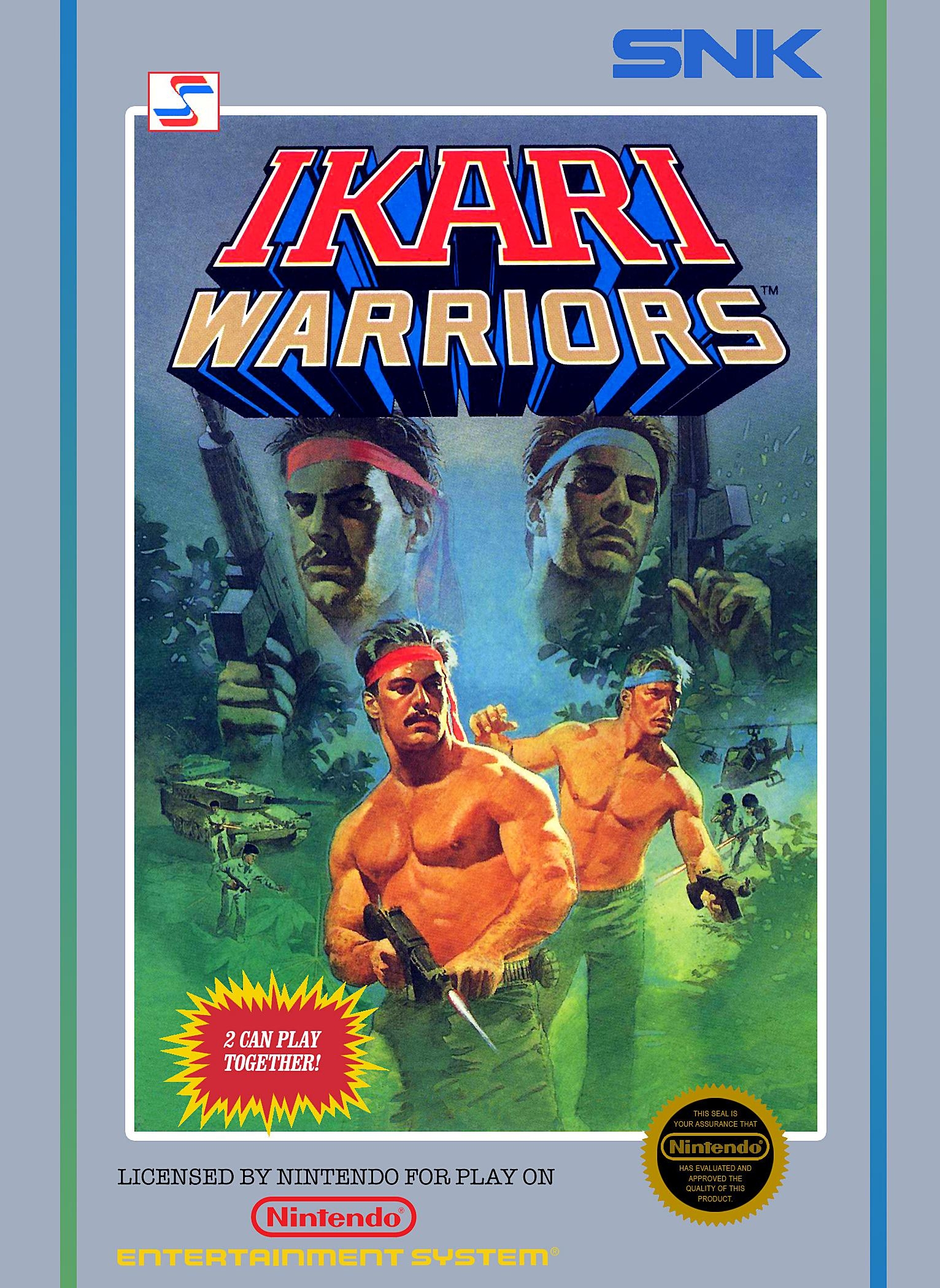
  1. Ikari Warriors – Released in 1987, Ikari Warriors was a formulaic run & gun arcade game, which my brother and I were obsessed with growing up. The game wasn’t necessarily hard, just incredibly long and time-consuming. Each mission lasted forever, and the action never stopped. We spent hours upon hours playing that game and never came close to finishing it. Going at it solo was an exercise in futility and most of the time when playing co-op, one of us would give up, throw the controller, and vow never to play the game again; we always came back.

nes_ikariwarriors

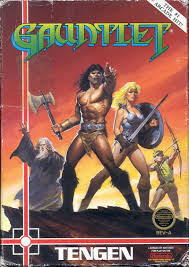
  1. Gauntlet – Everyone knows Gauntlet. The game has had countless iterations on a multitude of platforms, with sequel after sequel popping up every generation. The original game was no slouch in the difficulty department, always finding a way of infuriating you as hordes and hordes of creatures came pouring out from their bullpens. this was only made worse with the constant grunts and moans of your character every time something touched you. I never could beat this game, though; I suppose I never really tried.

gauntlet

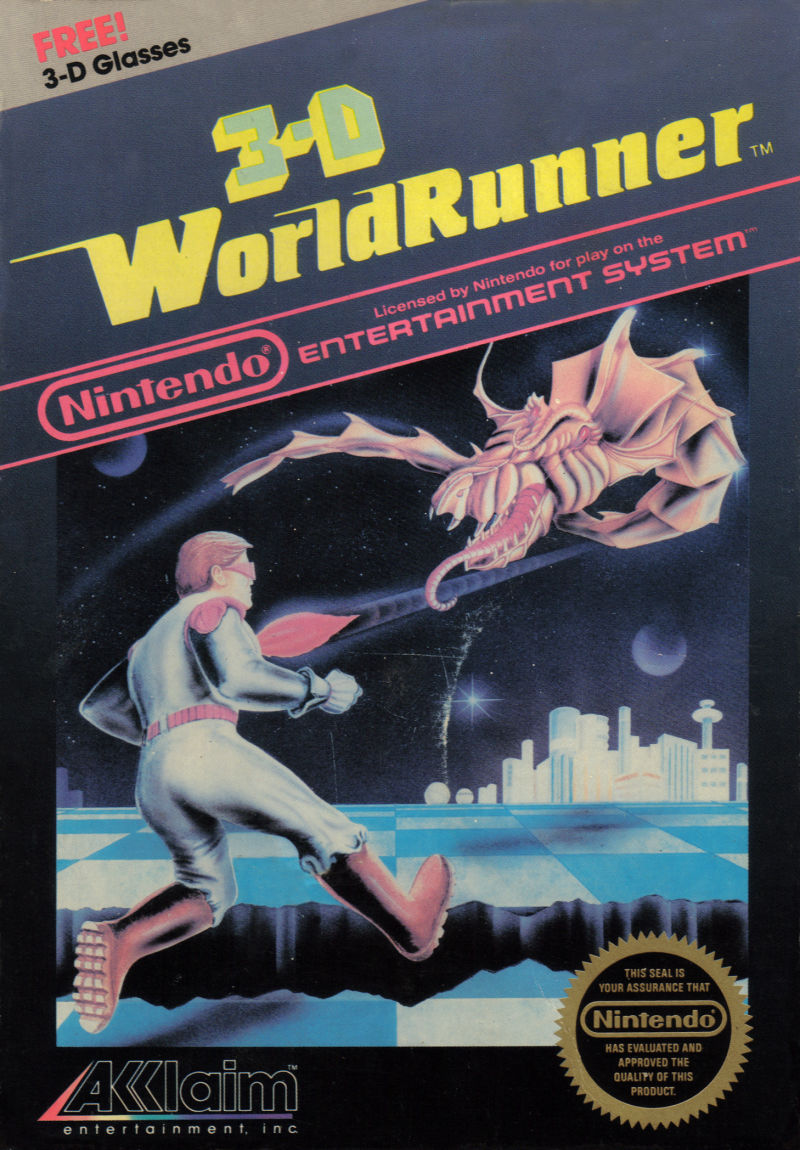
  1. 3D Worldrunner – An unnecessarily hard third-person rail shooter that made me want to destroy controllers on a regular basis. Part terrible level design, mixed with uneven gameplay, and a splash of awkward controls, this game was ridiculous. Countless times a simple jump miscalculation would bring your character to his demise. It was infuriating, especially if you were certain you had made the right move. Although I never came close to beating it, I would pop that sucker back in any time and try again. The music, however, was fantastic!

202533-3-d-worldrunner-nes-front-cover

  1. Ghosts N’ Goblins – RAGE! Pure unbridled rage! This game was incredibly difficult from start to finish. Not only did you have just three lives, but exhausting all those lives, say at a boss fight, would see you start the whole level over again. To this day, I don’t think I’ve made it past level 3. Ghosts N’ Goblins is an NES classic, but I wish Capcom wasn’t a mecca for gaming masochists, hell-bent on destroying your sanity. To be fair, I thought all sequels and iterations thereafter were also difficult in their own right.

ghostsgoblins

  1. Xenophobe – WHAT WAS THIS GAME. No seriously, can anyone tell me the point of this game.  The goal was to eradicate all alien invaders from the various moon bases, planets, ships, cities and more. I can’t tell you why I loved it, but I do know I never did beat it; I don’t even know if there was a real ending or not. To some, this might be an excruciatingly boring game, but to me, there were definitely enjoyable parts; I just can’t remember what they were anymore.

xenophobe

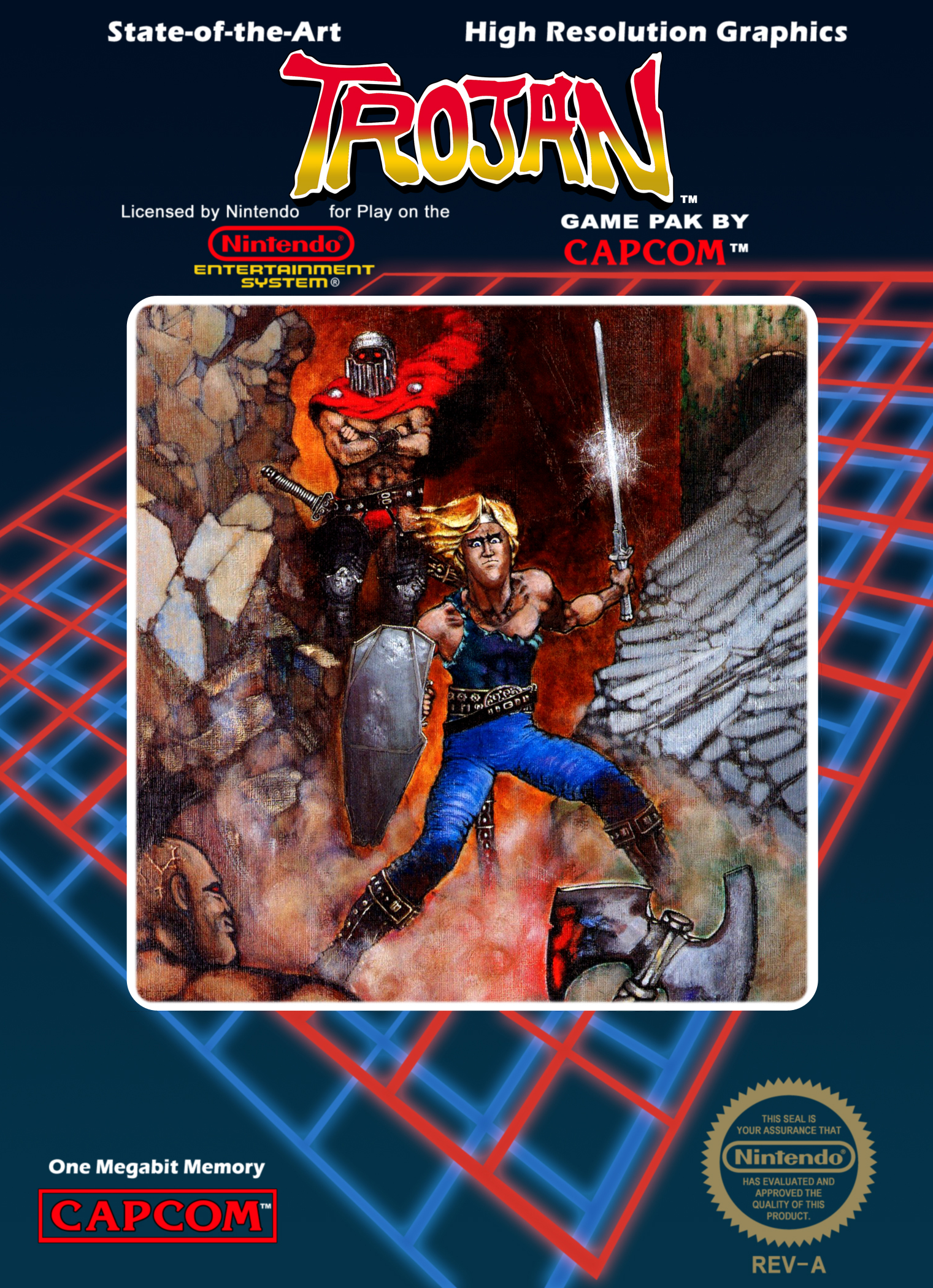
  1. Trojan – Another in a long line of side-scrolling action games, Trojan was never going to redefine the genre. Armed with a sword and shield, you made your way through a post-apocalyptic landscape, battling baddies along the way. Someone probably should have told our hero not to bring a sword to a gunfight, but it all worked out. I found it amusing that your character used an archaic sword, but mixed into the action were enemies with guns and bombs (and swords, maces, axes, and daggers). I’ve always had a soft spot for Trojan but never could beat it. With clunky controls and uneven enemies, the game can give players a run for their money; or whatever they use for currency in the apocalypse.

aTrojanNES

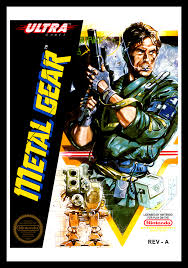
  1. Metal Gear – Has anyone actually played the original Metal Gear lately? I have two distinct memories of this game; one from my childhood when the game hit shelves, and again when I was a teenager and picked the game up after several years of it collecting dust. When Metal Gear first came out, I had no idea how to play. The game is impressively complex for something released on the NES. At the time, I don’t think I made it inside the main compound. Cut to years later, sometime during the mid-90’s and I decided to give my older self another shot. This time, I actually figured it out and fell in love with the game. So many aspects we’ve grown to love in the sequels have their origins (albeit simplistically) in this original instalment. It was fun, suspenseful, dynamic, and well thought-out. To this day, I can remember exactly where I left off; still having no clue how to beat the part I had reached so many years ago. Maybe one day I’ll pick it up for a third time, and finally play it through to the end.

metal gear

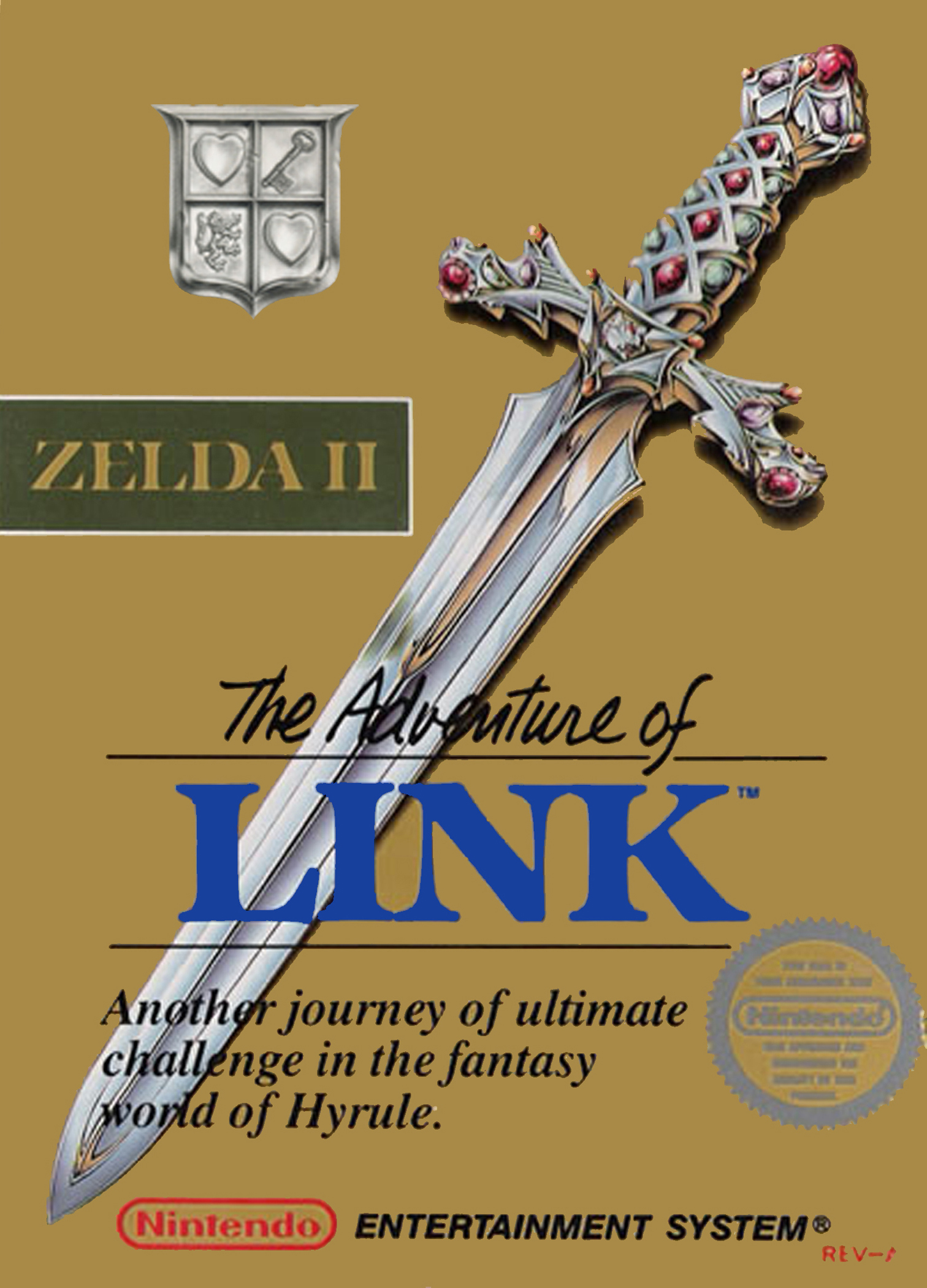
  1. Legend of Zelda: The Adventure of Link – The much-debated sequel to arguably one of the greatest games ever made, has infuriated players for over two decades. There are those who love this game and its fresh take on the original source material, while others simply can’t stand it. I am somewhere in the middle. Growing up, I was never a huge fan. I hated the redesigned overworld, new play mechanics and controls; everything about it seemed off. It was and still is, one of the hardest games I’ve ever played. The combination of twitchy controls and overly difficult enemies frustrated me the most. Half my life I didn’t even think the game made any sense.  I started replaying the game recently, but damn, it’s still exceptionally difficult. If my controllers weren’t over thirty years old, I would have chucked them against a wall out of frustration. Not only did I never beat this game, I never even got past the second dungeon. I also hated the music; there I said it!

Zelda_II_Box

There you have it fellow gamers. I’m curious to know which games stand out from back in the day that you never beat. Did you beat one of the games I mentioned above and want to rub it in my face? Awesome! I look forward to hearing about which games gave you all a hard time.

Honorable mentions: Battletoads, Rambo, Wolverine, and Karnov.

Insane Code On Their (Kind Of) New Racer, 80s Overdrive

Outrun is one of the best arcade racers – nay, one of the best video games, ever made (and played).

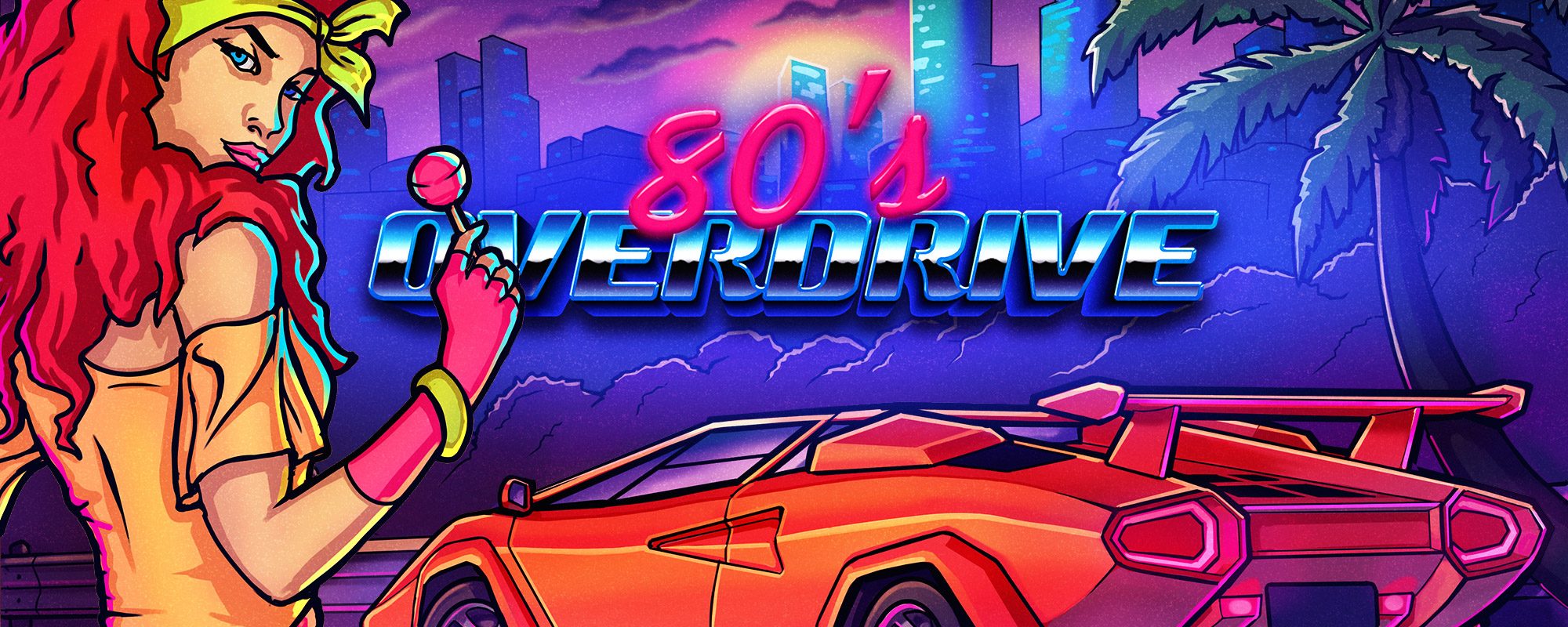
Developed by legendary development studio, Sega-AM2, Outrun took early 3D arcade racers to the next level. 3D arcade racer releases since have been content following Outrun’s lead, but a new 3D arcade racer looks as if it may overtake Outrun’s decades-old pole position. 80s Overdrive is that new 3D (by way of 2D) arcade racer and it looks great.

80s Overdrive is described by its developers, Insane Code, as:

A 2D pixel art racing game, designed to take you back in time to when 8 and 16 bit consoles and arcade games ruled the world. Compete against opponents in career mode to unlock new races, buy new cars and upgrade them with state-of-the-art technologies! Try your skill in time attack mode and see how far you can get in this race against the clock! Create your own tracks with the built-in track generator and easily share them with your friends!

I accidentally happened across 80s Overdrive’s Twitter account a couple months ago and I was immediately gripped by a childlike excitement. However, being a huge fan of Outrun and the racers it spawned, 80s Overdrive sounded to me almost too good to be true. I began to wonder whether or not 80s Overdrive was real or some variety of illusory, retro-flavoured racing oasis in a desert-themed fever dream.

Questioning my grip on reality, I decided to reach out to 80s Overdrive developers, Insane Code. Fortunately, Insane Code informed me 80s Overdrive is real, and they were also kind enough to answer a handful of questions I had regarding the game and their history as developers.

The following contains my questions and their answers:

What’s your development studio’s name and how long have you all been
developing games?

For a long time there was no studio name, as there was no studio! We just started to mess around with game mockups and an engine prototype. Me, I had my design business running and Krzysztof had his programming business. So, it was more of a B2B cooperation. Later on, Krzysztof gained rights to develop and publish for the Nintendo 3DS eShop so we decided to go under his label – Insane Code.

Later on, a second programmer, Marcin, and a tester, Sebastian, joined to help. When it comes to our game development history, we all had over 5 years of experience (including on the Nintendo 3DS), but 80’s Overdrive is our first self-developed and published title.

What games have you developed and for what platforms?

None as of yet. Separately, we worked on mobile, iOS/Android, Sony PSP, PS3, Nintendo DS, DSi, 3DS and Wii games. For example, I worked on Rage of the Gladiator, Hazumi, League of Heroes and many, many more.

Arcade racers aren’t as popular as they once were. Why in 2016 did you begin developing a racer inspired by and modelled after classic arcade racers like Outrun, Rad Racer, Road Rash, and Cruisin’ USA?

Somewhere around the summer of 2015, we had a talk about ideas for games we would like to see and develop. We used to play a lot of 2D racers when we were kids. We loved them and started to wonder if this kind of game made any sense nowadays. So, to bring the memories back, we returned to playing: Outrun, Lotus 3, Crazy Cars/Lamborghini American Challenge, Top Gear Series, Cisco Heat, Jaguar XJ220 and found something interesting. Most of them aren’t arcade games even.

As you play old games they often don’t match what your brain remembers about them. After replaying them nowadays, you often feel disappointed about the frustrating gameplay, graphics, sound. But, there is still something that works. The simple but addictive gameplay mechanism, precise controls and overall feeling of the game which is lost in modern productions. We try to match the good things of the old and minimise the bad.

Are you excited or afraid to release a game the likes of which hasn’t been released in a while?

Both. Anyway, 80s Overdrive is our part-time project. We do have day jobs and our lives don’t depend on 80s Overdrive, so we just took the risk. From the creative point of view, it was worth it. We did fulfil our creative needs. When it comes to success, we will see, but it wasn’t the most important part.

Why the 80s aesthetic? Why not something aligned with more modern tastes?

That’s easy. Modern looking game wouldn’t be “something new”. Isn’t that ironic? We would end up with another NFS or some F2P racing. Also, our creative needs wouldn’t be fulfilled and our nostalgic feelings wouldn’t be satisfied.

One of 80s Overdrive’s trailers features text dialogue and character portraits. Is there a story mode?

Well… I can’t say. There will be a treat for dedicated and patient players. Anyway, too much story in an arcade racing game isn’t a good idea…

What are other gameplay modes available in 80s Overdrive?

There will be 3 game modes:

Career mode in which racers are competing against each other on various, point-to-point style tracks or complete special missions. The player can be also chased by the police.

Time-attack mode (“Outrun Mode”) in which  the player is fighting against the clock and tries to get as far as they can until the time runs out.

The Track Editor in which players can race on their own tracks. Tracks are be made by editing parameters. This generates the track code which can be shared with friends.

Many people on forums have been wondering what the green bar graphic seen on the left side of the player car in trailers is?

You mean green, rounded bar on the magenta background? In Time-attack mode, the player will be able to gain extra time by doing risky overtaking! Depending on how close the player passes traffic, they will be able to get an extra 1-3 seconds. It could be life-saving if you’re running out of time and a fork (junction) is still far away. But, you could also crash into the traffic if you aren’t careful.

What cars can players expect to drive? Is the soundtrack original or will it feature licensed tracks?

6 retro-supercars: Aggressor, De Loan, Intruder Turbo, Penetrator Turbo, Testosterando and Tensor V12. When it comes to music, some tracks are licensed, some are made especially for the game. There are 13 synth/retro wave music scores in total.

Are there any secrets or cheats you want to reveal before release?

No… But be sure to watch Facebook and Twitter carefully… and also please do complete the game 100%!

Will there be any DLC in the future?

If that’s what the audience desires, we don’t see any problems with that. Adding a new car or a visual theme won’t be that problematic. Also the Nintendo 3DS eShop supports updates so… who knows.

Are there any plans to port to Switch or other platforms?

Honestly, we don’t know that yet.

When can players expect 80s Overdrive to be released?

The game was sent to Nintendo Lotcheck. I think that December 2017 is very probable.

END

There you have it. Are you a fan of 3D arcade racers? If so, keep an eye on the 3DS eShop this December for the release of 80s Overdrive.

Until then, check back here at D-pad Joy for news and updates regarding the game.

Looking Back at Lollipop Chainsaw – Saving Classmates, Decapitating Zombies

Grasshopper Manufacture has released a pretty solid library of games. It was set up by gaming luminaries Suda 51, Shinji Mikami and Akira Yamoaka. Shadows of the Damned managed to be an entertaining, chaotic trip through hell. Grasshopper then set its sights on small-town America with Lollipop Chainsaw. But was it a Past ‘Blast’?

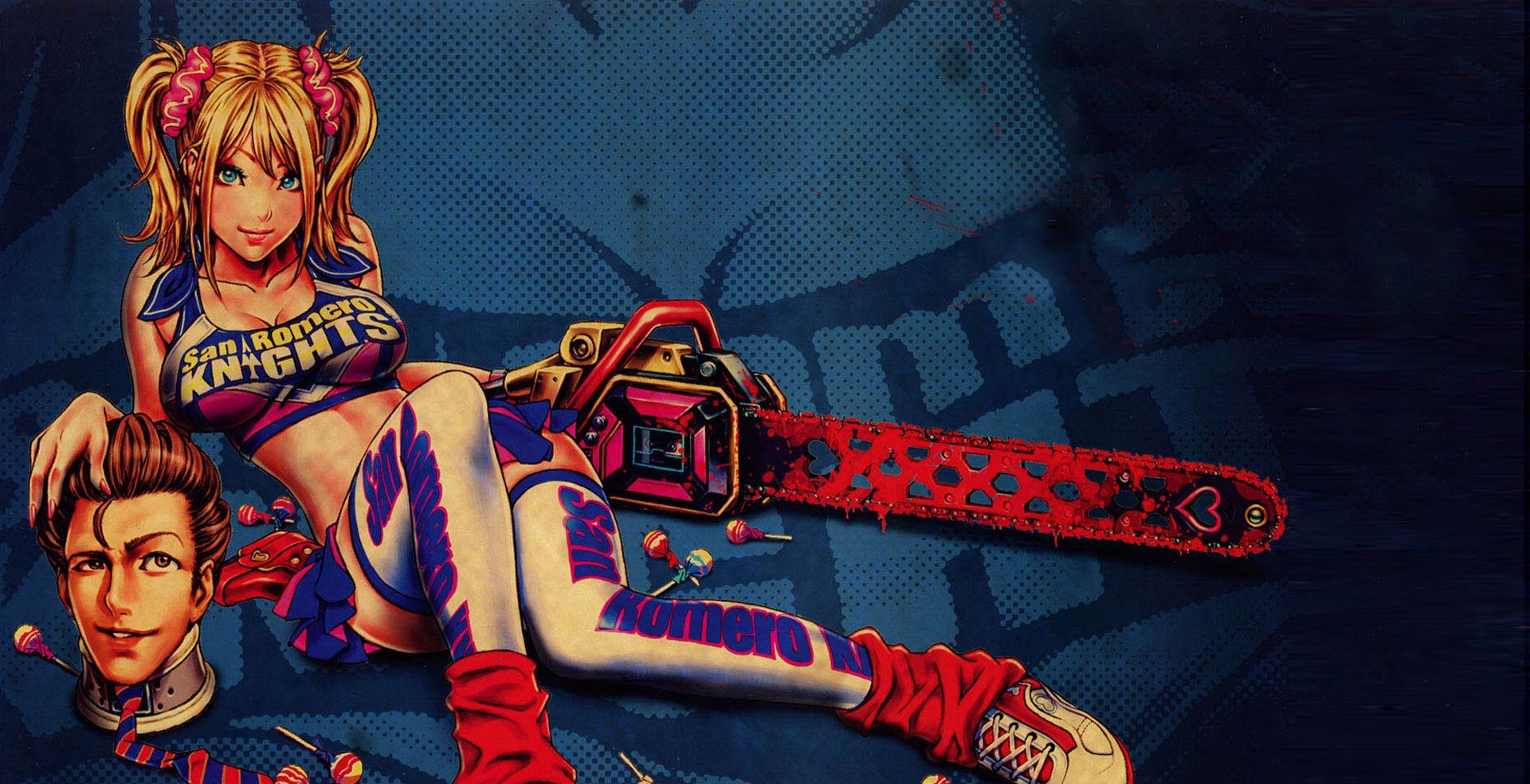
Produced by Kadokawa Games and Grasshopper Manufacture, Lollipop Chainsaw tells the story of all American cheerleader Juliet Starling. Juliet spends her days eating lollipops, cheering and being incredibly annoying while her nights are spent battling legions of the undead with her zombie hunting family. Think Buffy the Vampire Slayer crossed with The Walton’s.

The story, what little of it there is, is penned by Hollywood writer and director James Gunn. Suda 51 sprinkles his trademark brand of lunacy over the proceedings as creative director and overall the writing is pretty funny if at times bordering on highly irritating in the case of Juliet. The tale of severed heads, disco zombies and over-sexualised teens is entertaining enough and delivered with a strong tongue in cheek theme that enables it all to be likeable if you can look past all the upskirts and creepy lollipop sucking from the games’ lead.

Story and writing, however, aren’t Lollipop Chainsaw’s main selling point, and I only mention them first because the gameplay, the meat of the game, is so painfully average. Juliet’s adventure plays out in your basic hack and slash style with the titular cheerleader exploring the games’ six levels, saving classmates, decapitating zombies and eventually taking on an end of level boss.

The basic “light, light, heavy” God of War style gameplay was broken up admirably with some pretty cool moments that I won’t spoil here, but aside from these moments and a few QTE’s, gameplay in Lollipop Chainsaw basically amounts to running through corridors hammering a few attack buttons then running on. Now this wouldn’t necessarily be a bad thing, the previously mentioned God of War and many other titles stick to this formula and are brilliant games, but combat in Lollipop Chainsaw feels incredibly dull and formulaic. After unlocking a few combos I found myself sticking to the same two for the entire game, never experimenting with any others because the combat is so dull that I  was just ploughing through it.

There’s little enemy variation outside of the tried and true “exploding enemy, flying enemy, slow enemy, fast enemy, rinse and repeat” approach to character design which just adds more to this glazed over “hit things until they stop moving” feel of much of the game. There is a few bells and whistles such as the “Sparkle Hunting” mechanic which rewards multiple decapitations at the same time and the inclusion of a few semi-vehicular sections but these trimmings do little to improve the overall experience.

Games like Lollipop Chainsaw live and die by the quality and feel of their combat. God of War worked brilliantly because it made you feel like the most powerful badass in the world, Bayonetta worked because you felt like an agile and magically sadistic killing machine. In Lollipop Chainsaw controlling Juliet in combat, navigation and even in the poorly presented QTE’s just feels like a chore.

It’s clear from the large amount of unlockable costumes and the online leaderboards that Lollipop Chainsaw is a game that’s meant to played multiple times, especially when it can be beaten in around six hours on normal difficulty. This is a great idea and one shared by many games of this type, however, this idea falls down a little when there’s nothing worth actually unlocking from all this work. Outside of the before mentioned costumes and a few pieces of concept art, Lollipop Chainsaw does little to hook gamers in for that third or fourth run through.

It’s not all bad though, the presentation in Lollipop Chainsaw is exceptional. The gorgeous cel-shaded look of the game blends in with its overall comic book feel, hand-drawn hud elements flash up looking like a golden age comic and every inch of the menu system follows this theme. It really looks like a pulp comic from the 1950’s, albeit a far gorier and filthier version.

The boss encounters are the only hint of how off the wall and great this game could have been. Taking cues from music genres Lollipop Chainsaw’s bosses are fantastically designed. One level you’re fighting a punk rock zombie that uses swear words as attacks the next you’re on a flying black metal Viking ship shooting at a severed head covered in corpse paint. These encounters really are entertaining, showing that if this level of detail and thought had been given to the rest of the game it could have been something special. However the gameplay complaints still remain and while these boss fights look and sound great, they’re far too easy and boring to actually enjoy.

Music is also used to great effect. I couldn’t help but grin like a moron when I heard Children of Bodom playing in the background as I dodged lightning bolts being fired from the sky. The section where the Dead or Alive hit “You Spin Me Right Round” booms out while Juliet is using a combine harvester to mow down zombies is also a slice of genius.

It really is a shame about Lollipop Chainsaw. In retrospect, the game had some really funny, interesting moments but none of these occurred when I was actually controlling the game. The music, presentation and the concept of the game are great – it just feels rushed and poorly executed. There is little about the game to recommend to fans of the character action genre that can’t be found somewhere else where it has been done better. Besides the titillation and the gore, there really isn’t much to Lollipop Chainsaw, it’s as if years of eating nothing but Chubba Chubs has made Juliet a little anaemic.

I also wanted to like this game, I really did. I love zombies, I love this type of game and I loved the concept but there just isn’t enough actual game here – and that hasn’t changed years on. In all honesty, if you’re looking for a great character action game with a sexy lead character and insane gameplay, buy Bayonetta.

Star Wars Battlefront 2 Beta Review

Star Wars Battlefront 2 was originally released in the PS2 era of gaming – it was an amazing game. You could play as some of your favourite Star Wars characters, including Darth Vader… Now in 2017, the game has been remade with updated graphics, sounds, and a completely new story.

The Details

Battlefront 2 features 4 different classes, Assault, Specialist, Officer, and Heavy. The Officer, in comparison to the other classes, is the least desirable when you first play the game – but can be quite enjoyable after spending some time with them – after playing the three game modes of Galactic Assault, Strike, and as I call it Starship Shooter. By the way, the Empire looks way better and cleaner in comparison to the ‘Rebel scum’.

The Dark Side Is Better

There has always been this idea that the Dark Side of the Force has a better gym than the “Light” side of the force. This is definitely true for Battlefront 2. In the beta, you can unlock 4, as I call it, champions from the Star Wars series through the dreaded star card system. On the Rebel side, you get Rei (why Rei of all people?), Han Solo (ok a little better). However, on the Dark Side of the Force, you get the mighty Darth Maul, and the best bounty hunter of all time, Boba Fett. You can’t tell me you would rather play with the Rebels when you can get a character like Darth Maul.

Did I Mention The Dark Side Is Better?

Not only are the champions of the Empire/Dark Side more fleshed out but the overall classes you play as and the starships you fly are better too. The Empire may not have advantages in the actual game besides who has the better star card and aim but, 8/10 I would rather play for the Empire. Visually speaking, the Empire looks shinier and more attractive than the Rebels who have been redesigned to look more like an actual army.

Galactic Assault Is Way Too Long

Taking cues from Battlefield 1’s Conquest mode, Battlefront 2 has a similar mode: Galactic Assault. Honestly, it’s not that great. It holds true to the original Battlefront game by being a third-person shooter, sure, but this doesn’t mix well with the long-range exchanges with the enemy team. The shorter version has the third-person option too, but you can go into first-person – the maps are smaller, however! I believe the shooting style should be flipped for these game modes.

But Starship Shooter Is Beautiful

The Starship Shooter mode wins the Silver medal out of the game modes. The controls are awkward at first, until you learn how to use the right analogue stick to move your ship around. The left analogue stick helps with manoeuvrability, but I only really use this when I’m being shot at. Again, the Empire ships look and feel better than the Rebel ships.

Final Thoughts

Battlefront 2 has a lot of potential to be a great game. No doubt. How patient players will be to grind star cards and how much DLC EA releases for this game, however, is the key point here. Star Wars fans deserve a lot more character and map variety in this version of Battlefront 2.

Why Not Join The Dark Side? We Have Better Ships

Want to know why this game will cause you to join the Dark Side? Check out my YouTube video where Yoda goes into the step by step process of how he joined the Dark Side of the Force. I will see you in the game! Thanks for reading.

Horizon Zero Dawn: The Frozen Wilds Review [PS4 Pro] – An Icy Return for the Nora Warrior

Enter the dangerous lands of The Cut

Earlier this year, Guerilla Games launched their new IP set throughout a vast and gorgeous postapocalyptic world in Horizon Zero Dawn. The adventure/RPG took players on an enduring journey 1,000 years into the future where humanity has devolved back to tribal living conditions – only to find themselves an outcast in a world overrun by the many ravenous and hostile machines. Months later, the gaming community uncovered the sacred hidden truths about the ancient world before the fall of civilization and craved more from the Nora warrior, Aloy. Meet The Frozen Wilds.

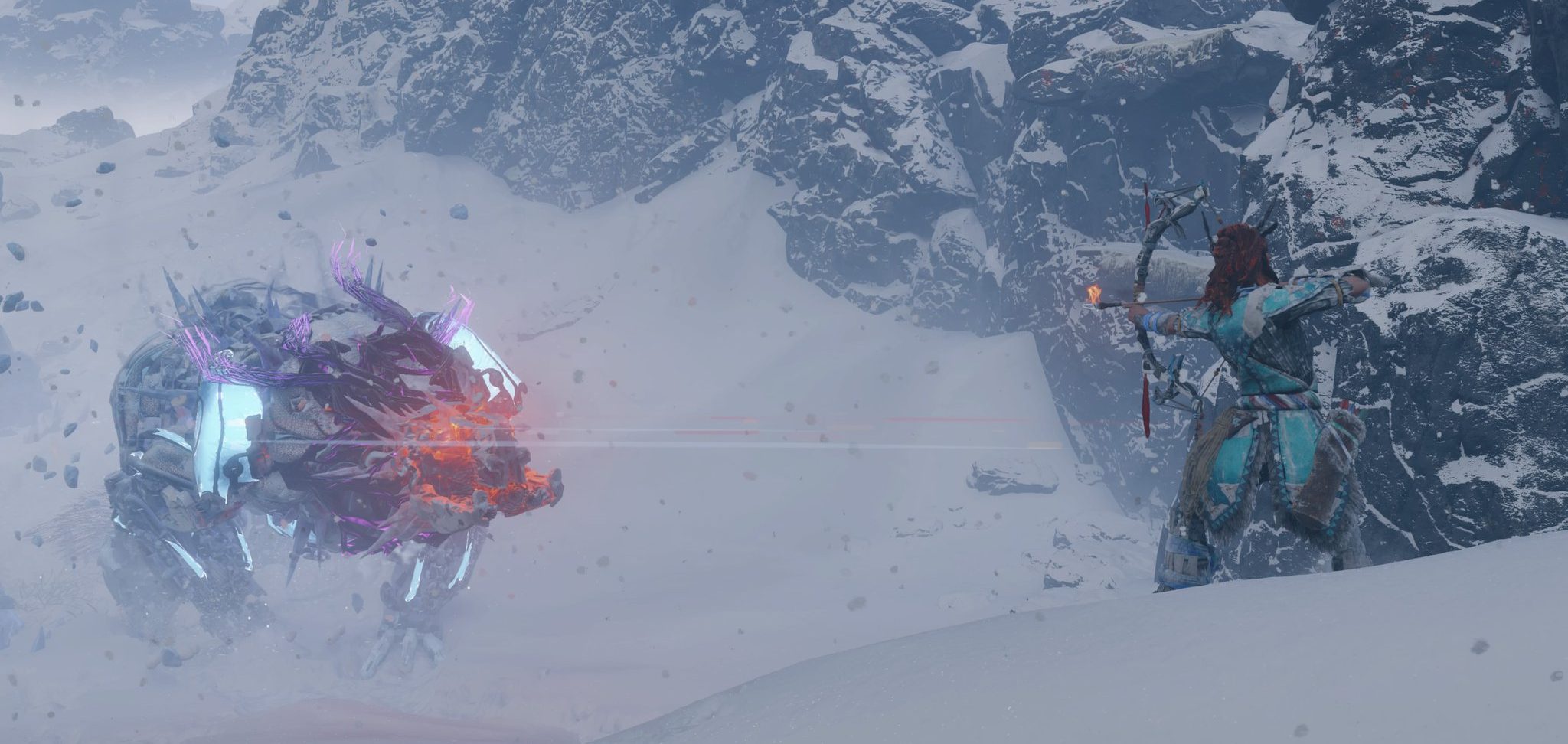
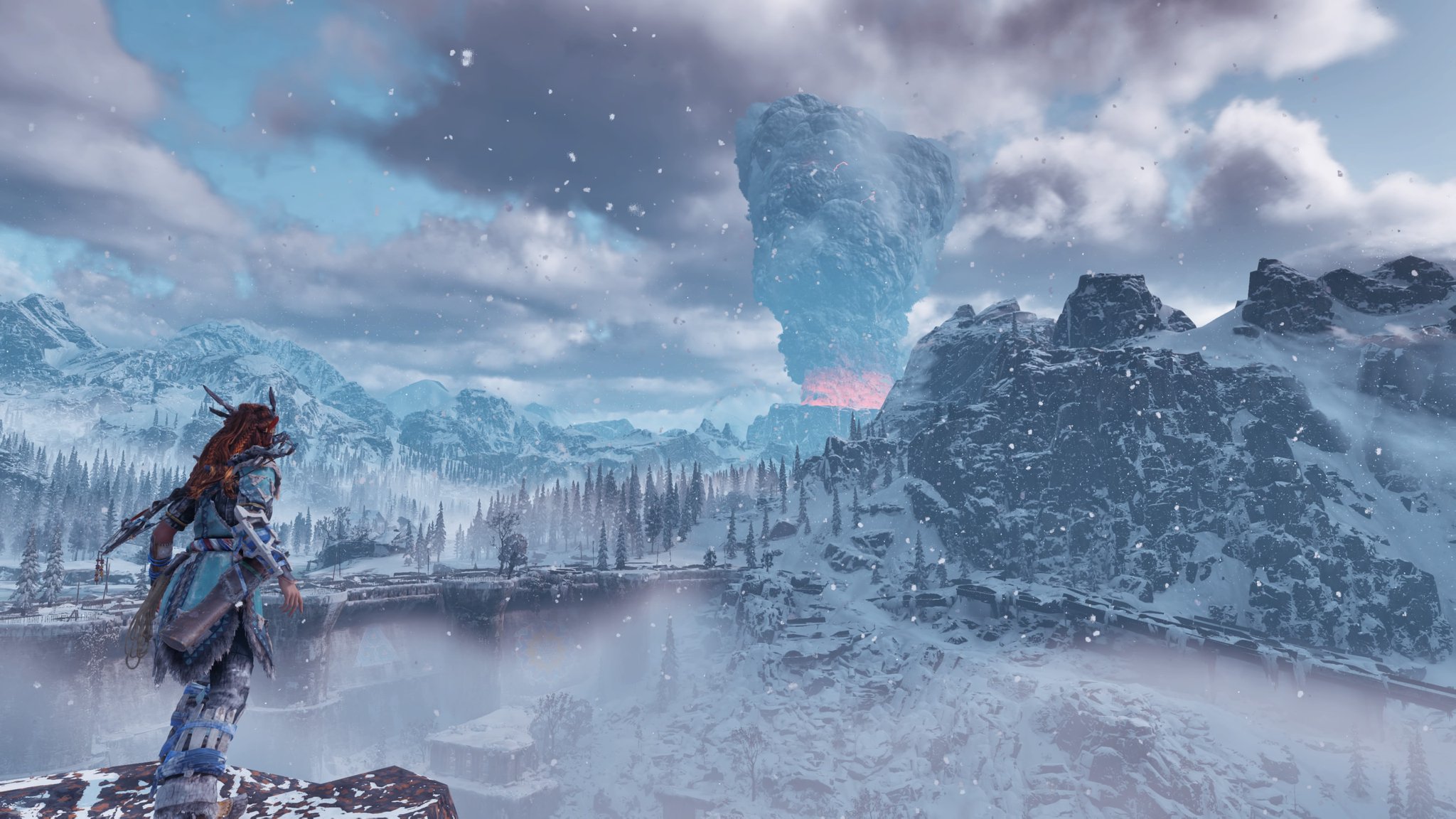
The icy region of The Frozen Wilds glitters the screen with heavy snowflakes and tundra-like conditions. The Banuk tribe has settled up north in Song’s Edge, a village just before The Cut – a snow-covered territory ravaged by never-before-seen machines, frozen peaks, mountain ranges, and the looming threat known as Thunder’s Drum. A billow of smoke suffocates the sky on the far edge of the map, but reaching the volcanic mountain comes with its own string of both physical, and spiritual, challenges.

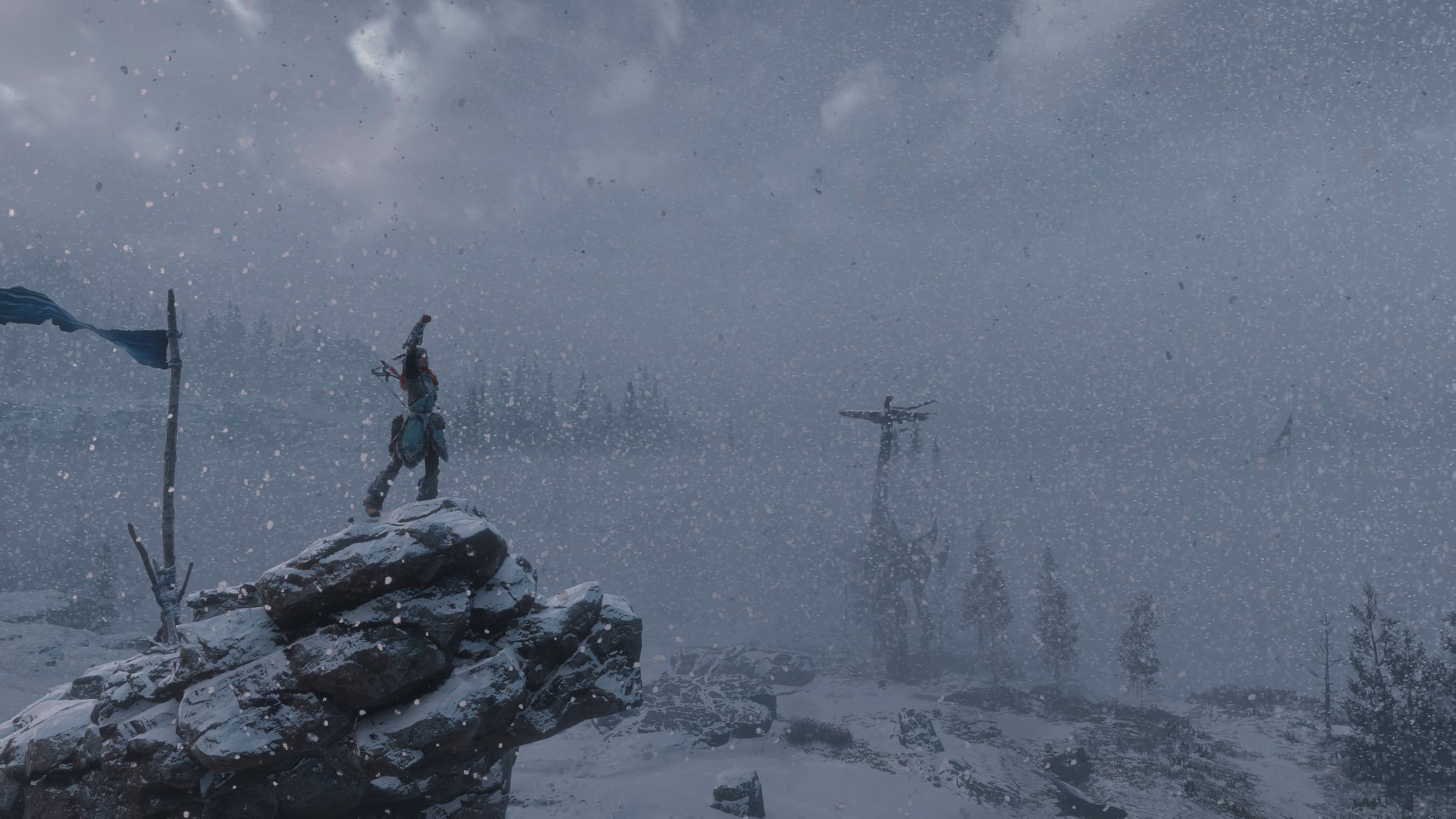
The snowy peaks of The Frozen Wilds is an impressive sight, even with the billowing smoke of Thunder’s Drum.

Within the frigid lands of the Cut, Aloy will spend her time completing various tasks and objectives, similar to what she accomplished in Zero Dawn. Along with a new area of the map to explore, new weapons, outfits, characters and, of course, tribe-slaying machines, all await in the sizeable expansion to one of this year’s top releases. Adding more depth to the complex and driven personality of Horizon’s protagonist, Aloy will dive further into the truth surrounding the confusing relationship between the rationally intelligent machines, and their curious, and otherwise unstable, human creators.

The looming threat of Thunder’s Drum

Through the main line of quests featured in The Frozen Wilds, you’ll be introduced to the Banuk settler’s striving to survive in the snowy regions. Led by the chieftain, Aratak, Aloy finds her determination to discover what made the machines so hostile at the feet of the stout and fearless Banuk chieftain. With countless Banuk warriors lost to Thunder’s Drum in previously failed missions, very little hope rests in the dwindling tribe too proud to give in. Luckily, the fierce and persistent Nora warrior sheds any doubt that may inhibit her natural instincts to discover what lies in the depths of the scorching bowels of Thunder’s Drum.

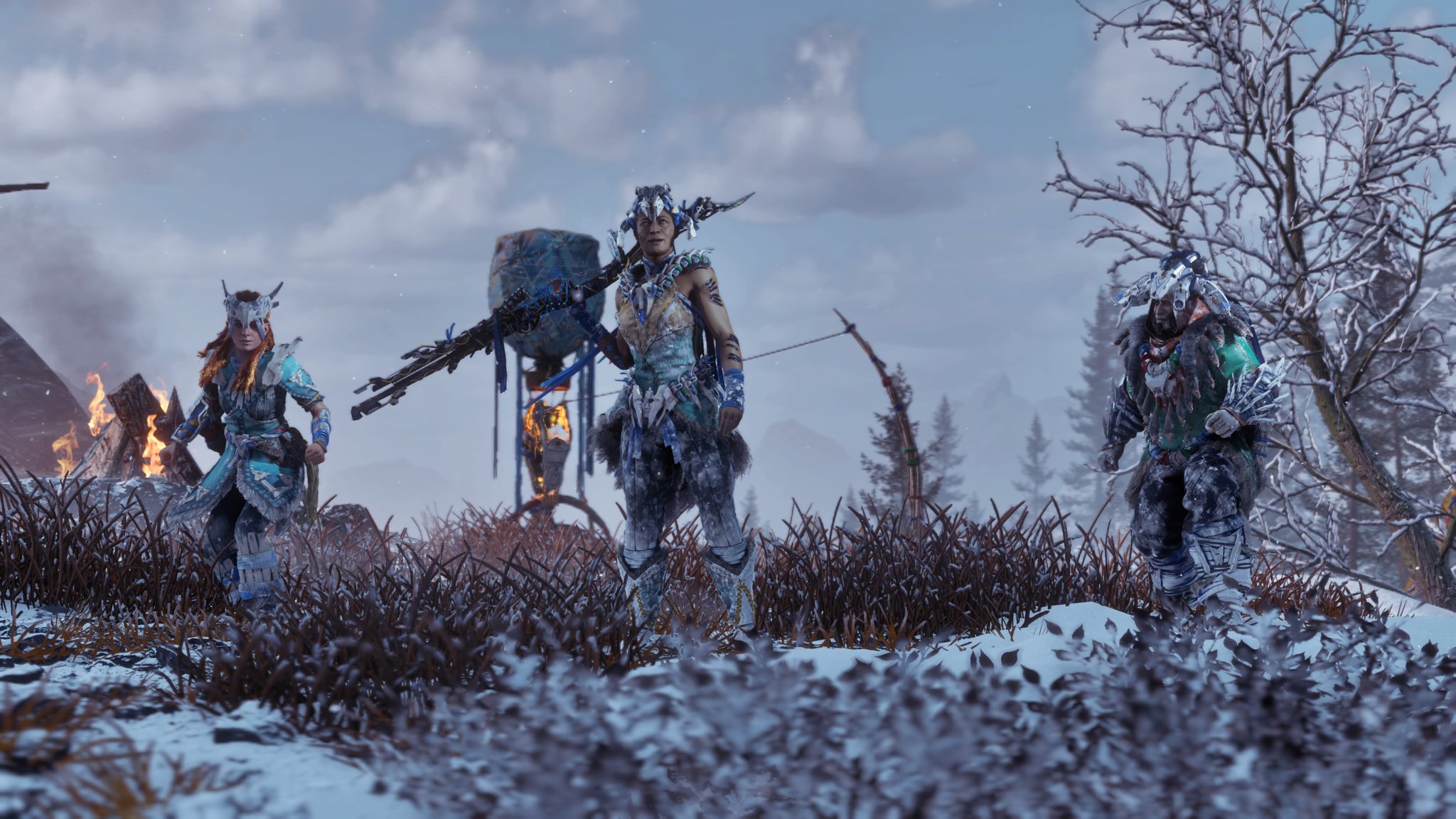
Aloy finds new companions – Chieftain Aratak and Shaman Ourea – in the Banuk settlement, Song’s Edge.

The weapons earned from proving your worth to the Banuk reflect the growth and perseverance our beloved heroine so faithfully exhibits throughout her encouraging story. The Forgefire relentlessly engulfs targets in a rage of flame dealing severe, close-range fire damage, while the Icerail freezes enemies with crisp ice damage in a short-distanced stream of frosty mist. Jolts of electric energy launch from the dominant Stormslinger, adding a useful long-range weapon to the list of cutting-edge weapons found in the treacherous wilderness of The Cut.

In addition to an arsenal of elemental weapons, a fourth skill tree has been added to accommodate the increased level cap. Focused on various travelling aspects of the game, players are now able to grant Aloy with a variety of new skills and abilities. Gathering loot while mounted on an overridden machine, or striking from the back of your travelling companion with the Dismount Strike attack are only a few examples of the added perks to Aloy’s skill tree. Many of these new abilities provide useful and tactical approaches to increase travel time, storage space and repairing your hard-earned, overridden machine mount.

The new Tallneck viewpoint in The Frozen Wilds will first need to be reactivated before climbing atop the roaming machine.
Persevere against all odds

At the core of The Frozen Wilds Aloy finds herself in the midst of a lopsided war between the Banuk warriors, and another corrupt, machine-controlling virus, known as Daemon. Located in the depths of Thunder’s Drum, the Banuk have made their courageous run to infiltrate the mysterious plume of smoke, only to retreat empty-handed, and under-manned. Aloy will be put to the ultimate test of strength and will to determine if she has what it takes to uncover the secrets that lay within the volatile mountain. With the help of the spiritually obedient Shaman, Ourea, players will traverse the frigid lands in search of the hidden mysteries that make up the world Aloy so tenaciously pursues.

The frozen regions of The Cut opens players up to a new cast of keen and colourful characters eager to task Aloy with adventurous missions and reward her with extravagant loot. New hunting missions, side quests including an exciting new Tallneck viewpoint errand, as well as new bows and outfits crafted from the rare and exclusive resource, Bluegleam, are scattered throughout the snow-covered tundra. However, with improved weapons and skills comes new enemy machines, the likes that no warrior has faced before.

Scorchers and the virus corrupted Daemonic Machines are weak but persistent adversaries, while Fireclaws and Frostclaws are enormous and agile machines that deal corresponding elemental damage, often in rapid succession. All of these machines are capable of receiving healing waves generated by the new corrupted Control Towers, which must be destroyed or carefully overridden to reverse its healing effects. These towers are sprawled across the frost-riddled Cut, typically guarded by hordes of hostile machines.

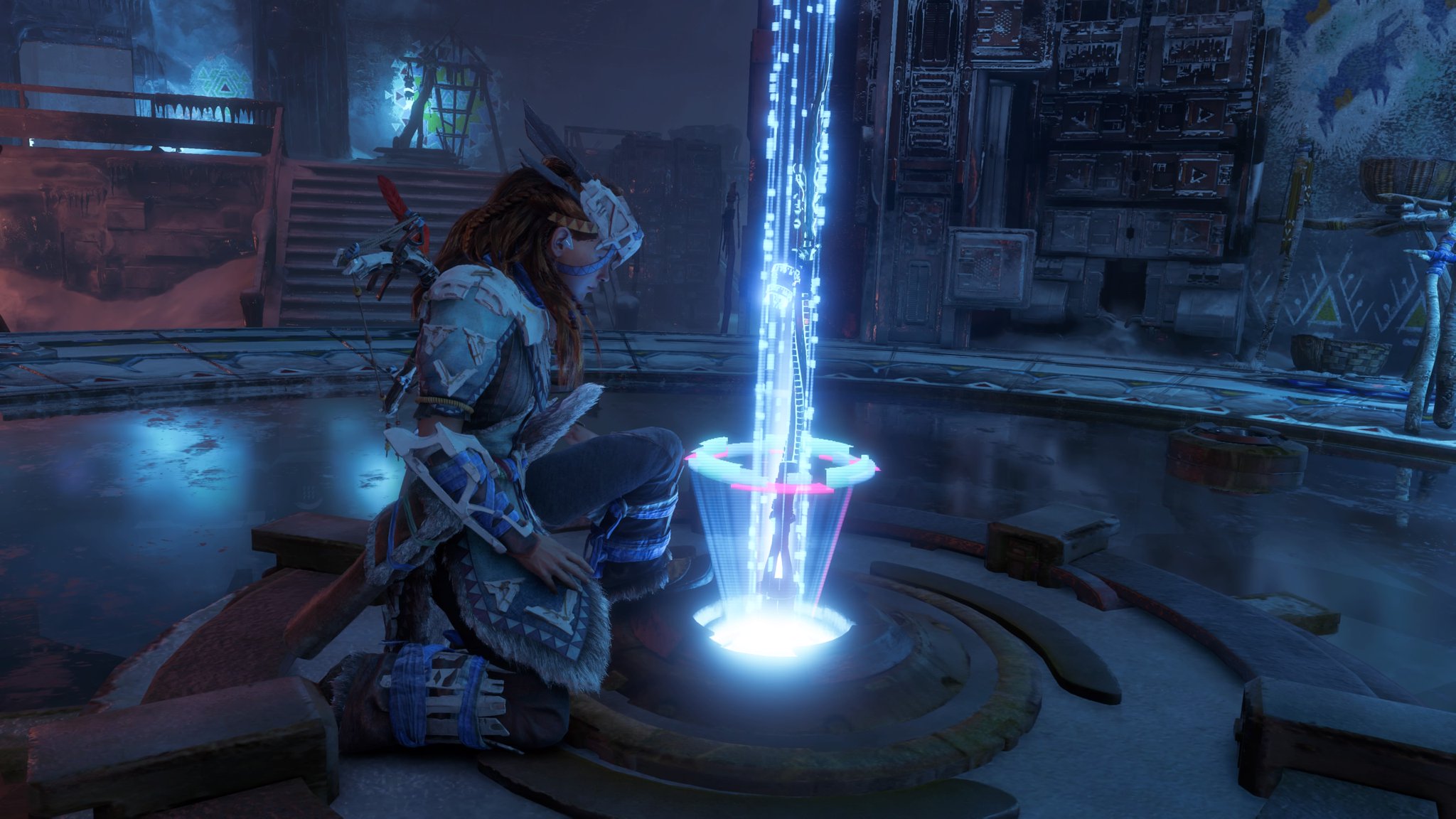
A handful of puzzles await in the Cauldron that rests in the belly of Thunder’s Drum.
Survive. Prevail. We are Banuk.

Horizon Zero Dawn has proven that the courage, confidence and determination of a young, fierce woman, who is overwhelmed with curiosity and under-appreciated by the culture around her, is enough to overcome even the most perilous odds. The Frozen Wilds expands heavily on the brave and righteous protagonist, bringing with it a tale revealing a spiritual Shaman devoted to bringing peace back to the lands in the name of her God, a chieftain too proud and mentally resilient to give in, and a sole survivor achieving everything she can to unravel the mysteries of a world overrun by unpredictable threats, and a dark, catastrophic past.