Anime fans will be happy about this one. The Seven Deadly Sins: Knights Of Britannia game is coming exclusively to PS4 on February 9th, and Bandai Namco have just released a pre-launch trailer to build the hype up some more:
The Seven Deadly Sins: Knights Of Britannia
In case you didn’t know, The Seven Deadly Sins is a Japanese manga series that was later turned into an anime series in 2015 – it was then licensed for an English release by the mighty Netflix.
Knights Of Britannia allows you to fight with Meliodas, King, Ban and the other Seven Deadly Sins and play the anime stories of over 100 quests across Britannia.
The adventure mode allows you to roam around the land with Hawk Mama to find out where the other Sins are. There are side-quests to complete and you can perform the special character attacks called ‘Sin Action’.
In the duel mode, you can face off in traditional arenas set in locations from the anime; there’s both 1 vs 1 and 2 vs 2 modes. You can customise your character with magic crystals and there are 20 playable characters available – with an online mode as well.
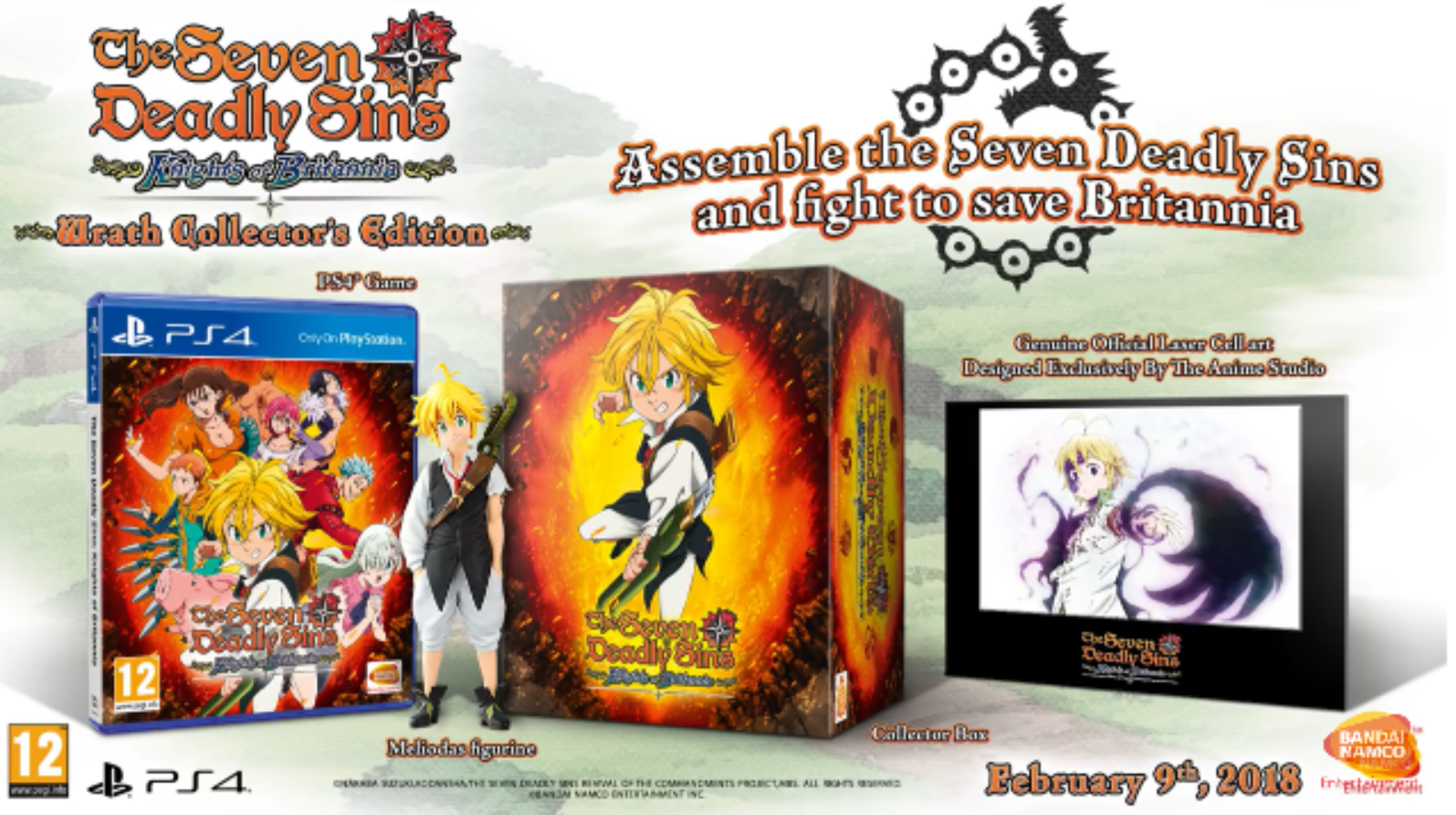
There’s a physical version on its way called The Seven Deadly Sins: Wrath Collector’s Edition which features this shiny lot for super fans:
The Seven Deadly Sins: Knights of Britannia Full Game
Genuine Official Laser Cell Art, designed exclusively by the anime studio
12cm (4,7“) figurine of Meliodas by Banpresto
Collector’s Box
You’ll see recreations of some of the fights from the show along with battles from the second season Revival of The Commandments. It’s looking fun from the trailer already, so hopefully, it’ll turn out to be a winner.
The upcoming PvP horror game called Hunt: Showdown from Crytek studios is now playable… if you have a code that is. Let’s get you guys caught up:
Hunt: Showdown launched a Closed Alpha yesterday (30th) for Twitch streamers only.
Throughout the day the game was consistently in the top 5 most viewed games on Twitch.
Showdown has received universal praise from streamers from the first day of the Alpha. With popular Counter-Strike and PUBG streamer Shroud saying it “has huge potential.” Additionally, popular YouTuber JackFrags said that Showdown is “a winner.”
If you’re not a streamer than fret not. The Closed Alpha is now live for the public… if you have the code.
No code? No worry! You can sign up for the Closed Alpha by following this link.
If you’re curious about what Hunt: Showdown is all about, a trailer is down below for your viewing pleasure!
So, will you guys be trying out the Alpha for Hunt: Showdown?
Space sims come and go but have never really opened players up to the extreme amount of vastness and endless amount of stars that dot our galaxy. Formerly known as Paragon, Jumpdrive offers the chance to set out into the great unknown and make discoveries at your own pace. Unfortunately for players short on time due to their busy schedules of adult life, school and work, Jumpdrive offers little to no shortcuts when traversing through the stars in this gutsy space exploration title. After all, the universe is infinite.
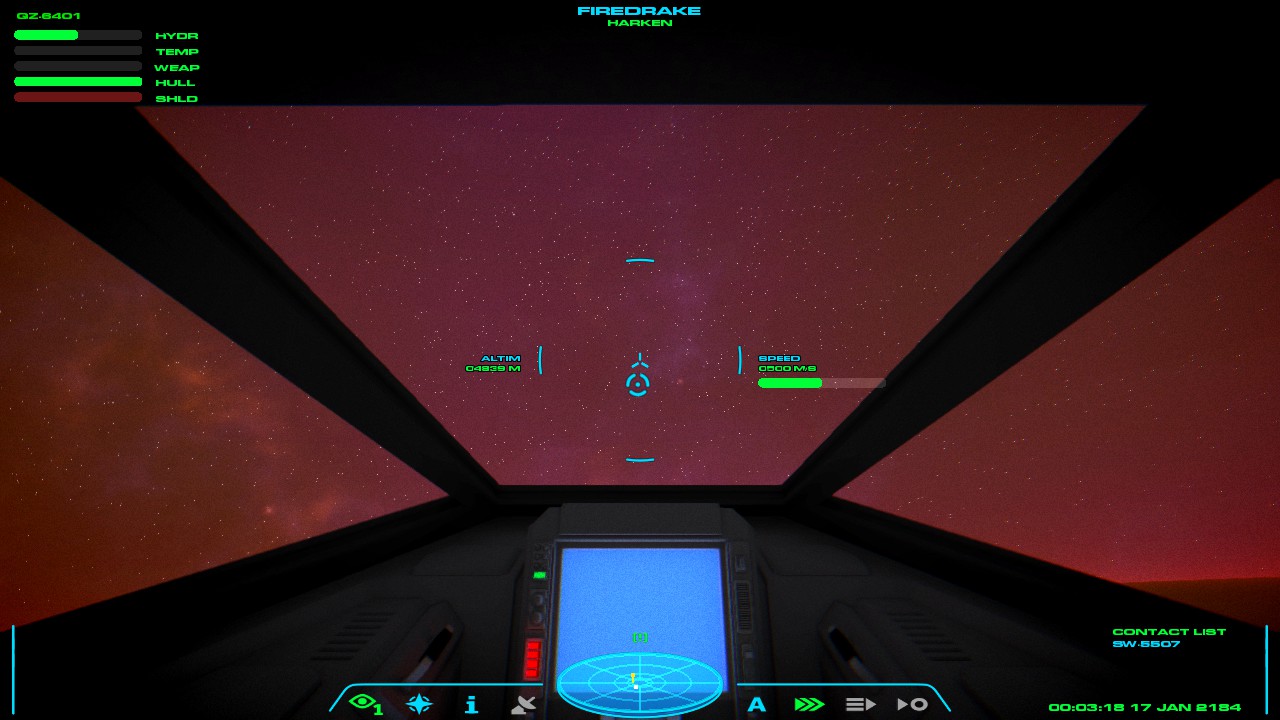
Sitting in the cockpit of your space shuttle, the instructions of the controls read across your screen. The basic click controls are simple enough, but then the game cuts you loose. The objective of Jumpdrive? Not sure… Explore? Sit in your speeding shuttle and wander through the stars for countless hours hoping to come across a unique discovery, or perhaps engage in an epic space battle? We can only hope so, anyway.
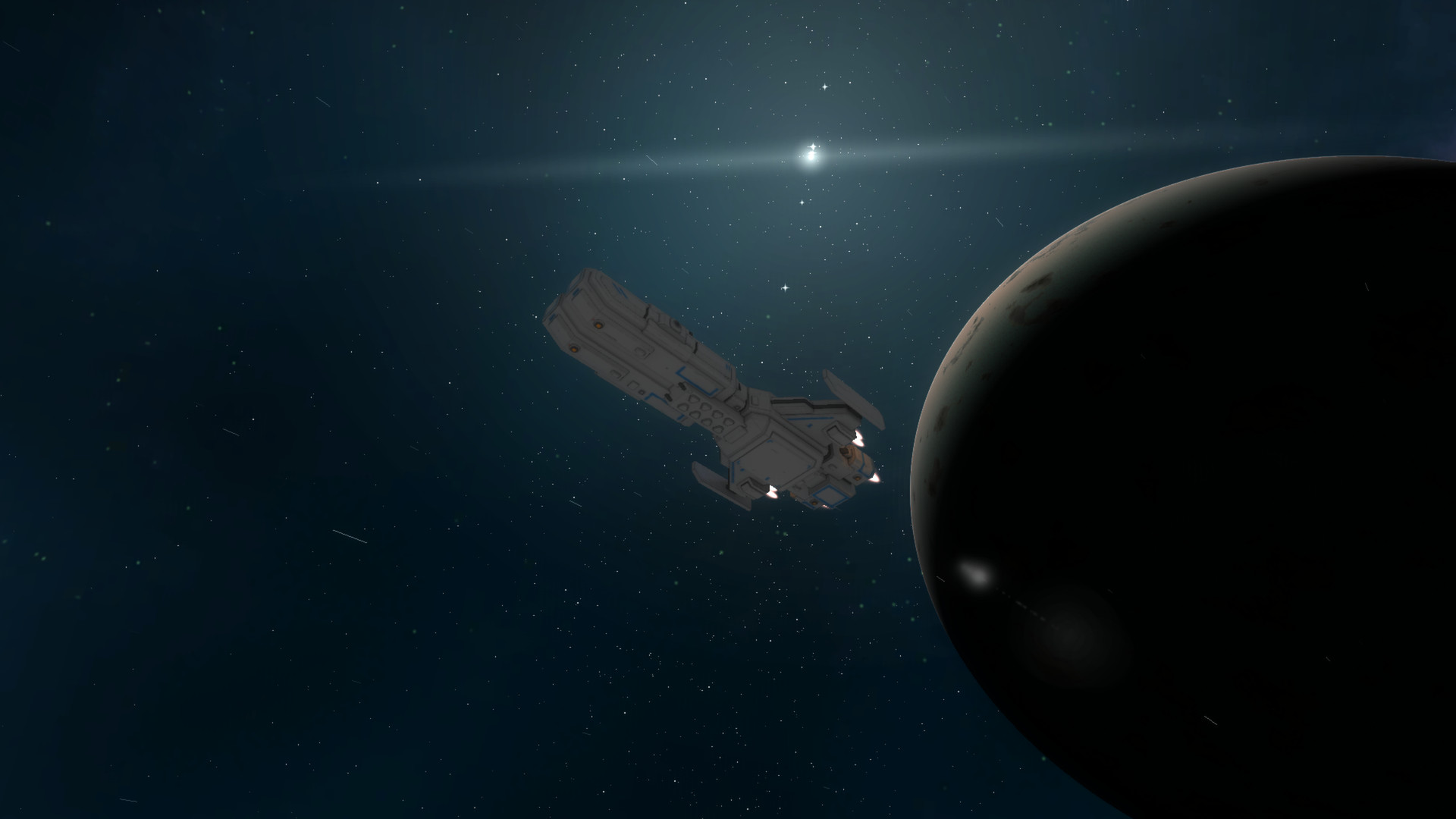
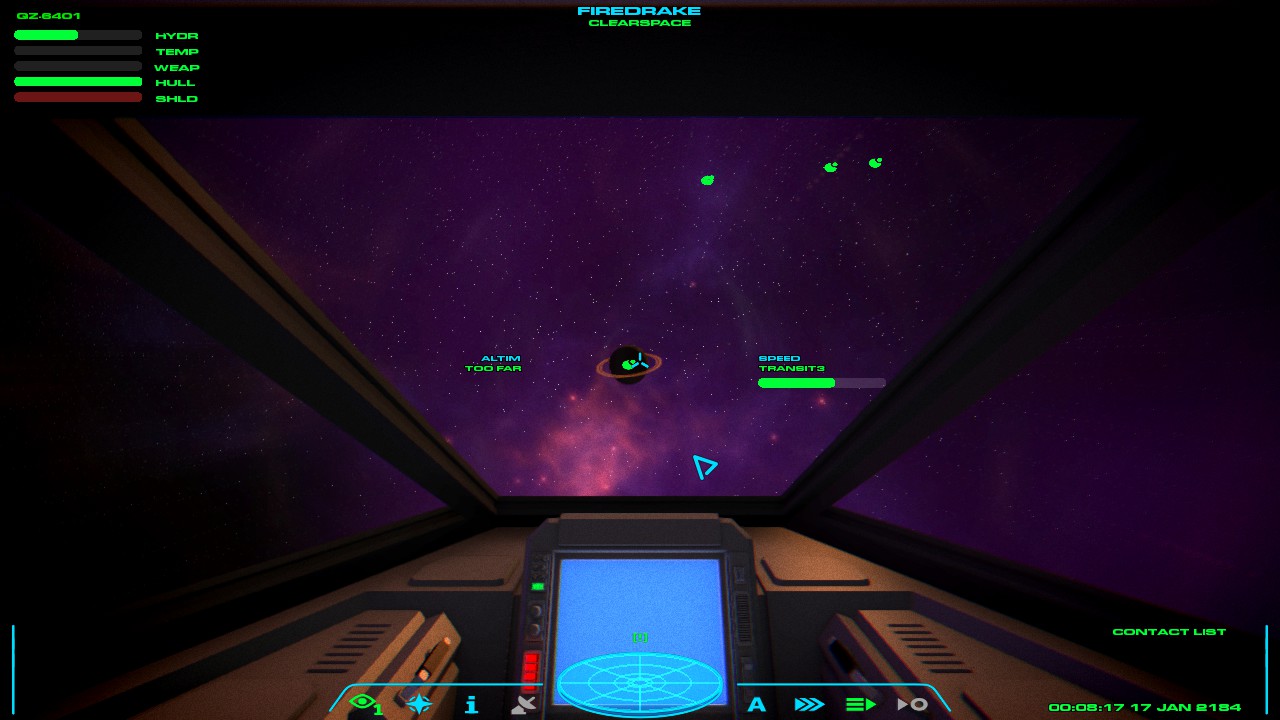
When pulling out of the gravity bubble that surrounds planets, players may then switch to an increased mode of travel, Transit Mode.
The purpose of Meteoric Games‘ Jumpdrive is to simply explore the enormous procedurally generated galaxy, picking up on anything that may cross your path. Distant missions with handsome rewards, long space expeditions to the other side of the galaxy, or fending off your shuttle from enemy ships, anything seems possible in Jumpdrive, but at what cost? The sheer amount of the universe seems endless as the developers express the ability to explore through a galaxy brimming with millions of stars and planets. Let me be perfectly clear: Jumpdrive is for the hardcore space exploring enthusiasts. Pouring in tons of hours to travel great distances, slowly immersing yourself while travelling in real-time to your next objective is an average day when living out your astronaut dreams in Jumpdrive.
Jumpdrive: How Do You Travel Through Space?
There are three basic controls when travelling from one objective to the next. When still in one planet’s gravity bubble, players may only use Maneuver Mode. This mode acts as the slowest mode of transport, used to travel around planet surfaces within the gravitational field. After exiting the planet’s atmosphere, or gravitational bubble, players may then engage in Transit Mode. Used for quicker travel between planets, Transit Mode will most likely be your main mode of travel.
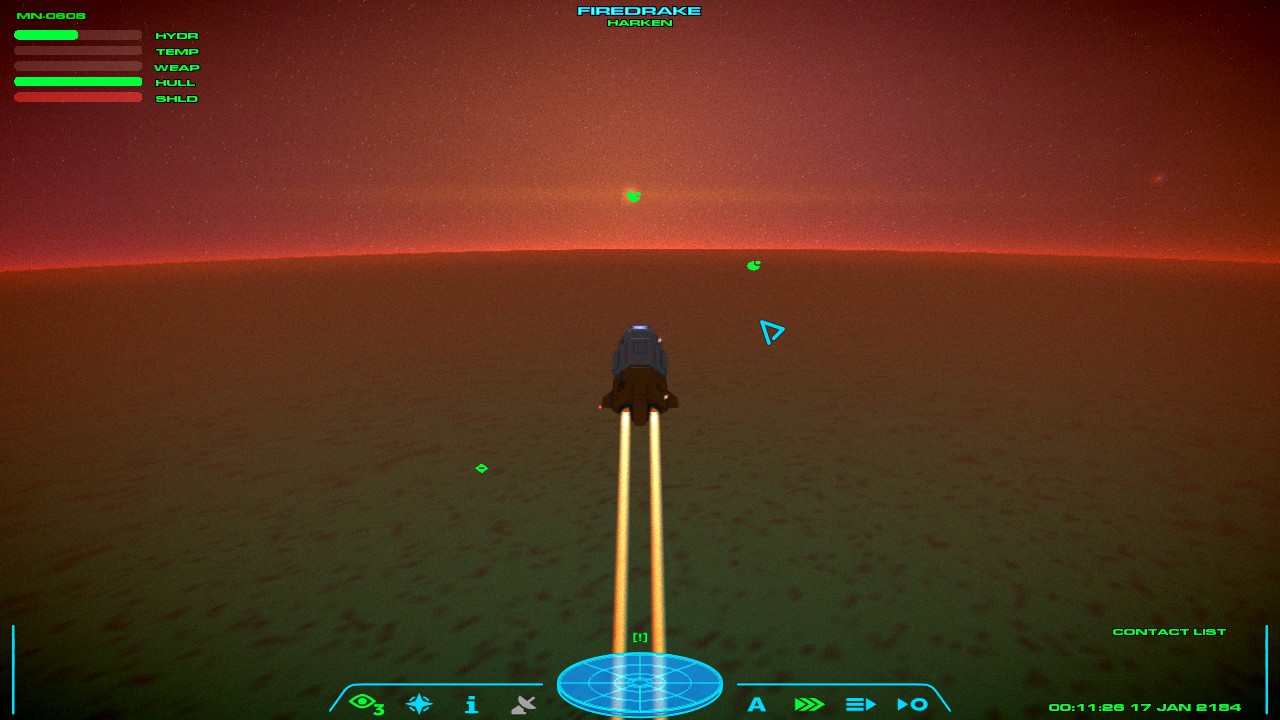
Many green blips mark your objectives and other planets/space stations throughout the systems.
Last but not least, Jump Mode is the hyper speed setting to jump between different solar systems. Though a much quicker method of travel, players will need to meet the specific item requirements, e.g. hydrogen stock, as well as a jump drive installed on their shuttle. The three modes are accessed simply by clicking on one of the icons next to your radar at the bottom of the player’s screen, offering for quick and easy switching between modes on the go.
Objectives are found when following the green blips that are scattered throughout the open universe. Either when docking on planets or space stations, completing the various missions given to you will net cash rewards, which can be used to purchase upgrades or even new ships. Though from what I experienced with my time in Jumpdrive, the missions are standard fetch and grab or destroying enemy ships, but the amount of ground (or space) to cover is remarkably vast. I can easily see one losing most of their day spent completing a handful of objectives spanning across a number of different solar systems.
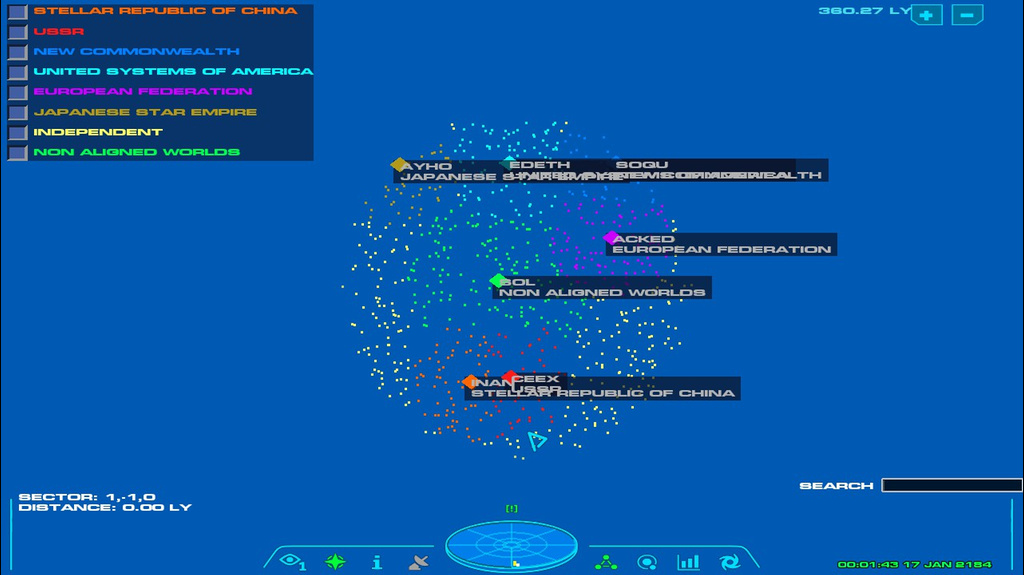
Plot your destination on the galactic map and use Jump Drive to travel between solar systems.
While Jumpdrive is astonishing in size, the visuals are no conversation starter. Though there’s not much to gaze upon when deep in the blackness of space, planet surfaces and textures when in sight are grainy, bleak and boring. I suppose that’s not exactly the point of Jumpdrive but it still manages to break some of the immersion when descending into a planet’s atmosphere. Still, the view of colors amidst the star-dotted sky is a sheer joy to stare at while endlessly drifting into the void.
So Much To Do, So Little Time
So, what is the point of Jumpdrive? Is there any storyline, plot twists or ending in sight? The answer is yes, but it all comes down to the player involved. With Jumpdrive you are offered a chance to create your very own space legacy in this massive space explorer, and take it for as long as you please. Players have a completely open experience from the start, whether they’re engaging in combat, completing various mission objectives, purchasing new ships and parts, or simply exploring the vast darkness of space.
The distant visuals of space are breathtaking in Jumpdrive, adding a thrilling sense of depth to the enormous space sim.
Jumpdrive is an impressive space sim, but if one thing is certain, it only appeals to a relatively small audience. Those hindered by time and, in my case, an ever-growing backlog of other titles, simply won’t find it in their schedule to continue on this vast journey through the great unknown.
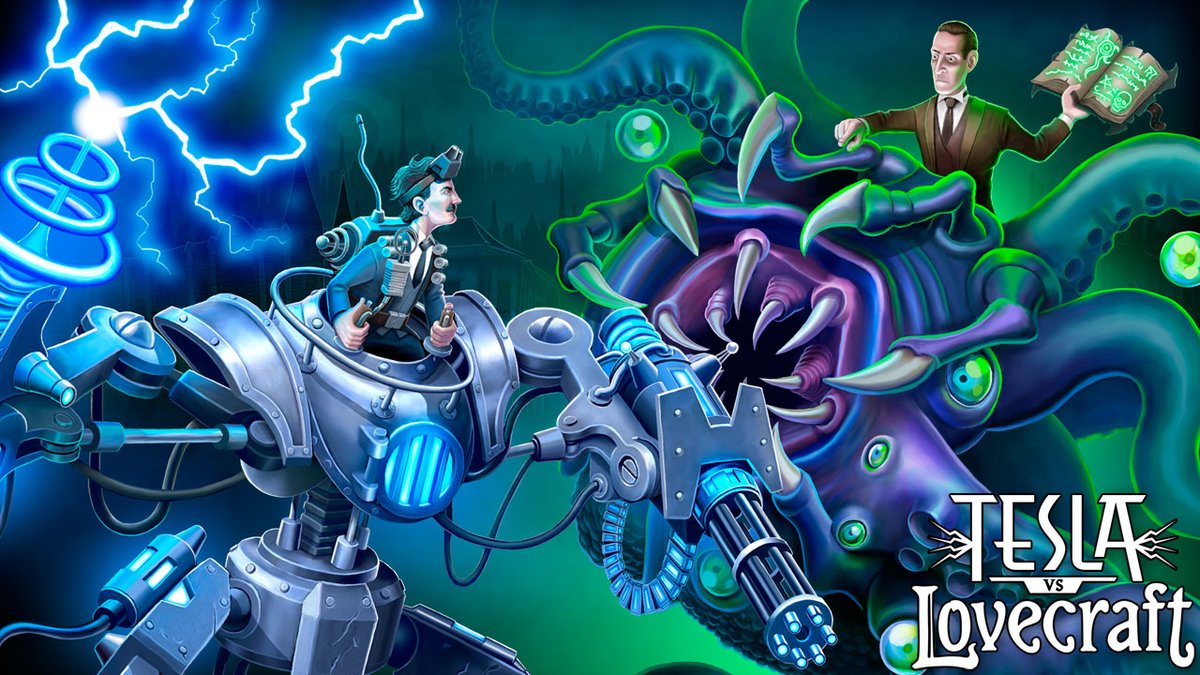
The unimaginable technological feats of Nikola Tesla combined with the sci-fi horror fiction of H.P. Lovecraft – 10tons has added yet another adrenaline-fueled twin-stick arena shooter to their already impressive library. Strap on your teleport pack and prepare to face off against Cthulhu, and its many hordes of demonic enemies in this monstrous arena shooter – Tesla vs. Lovecraft.
As you take on the role of none other than the electric-wielding genius, Nikola Tesla, the minions and fiendish creations of the coveted sci-fi writer, H.P. Lovecraft, begin to take over the world. Distraught by Tesla’s electric inventions, Lovecraft takes matters into his own hands to stop Tesla and his inventive actions. Harnessing the power of his very own creation, Cthulhu, Lovecraft unleashes waves of nightmarish monsters on our hero Nikola, but that won’t stop Tesla from fighting back.
Angered by the inventive actions of Nikola Tesla, H.P. Lovecraft unleashes his army of monsters on the world.
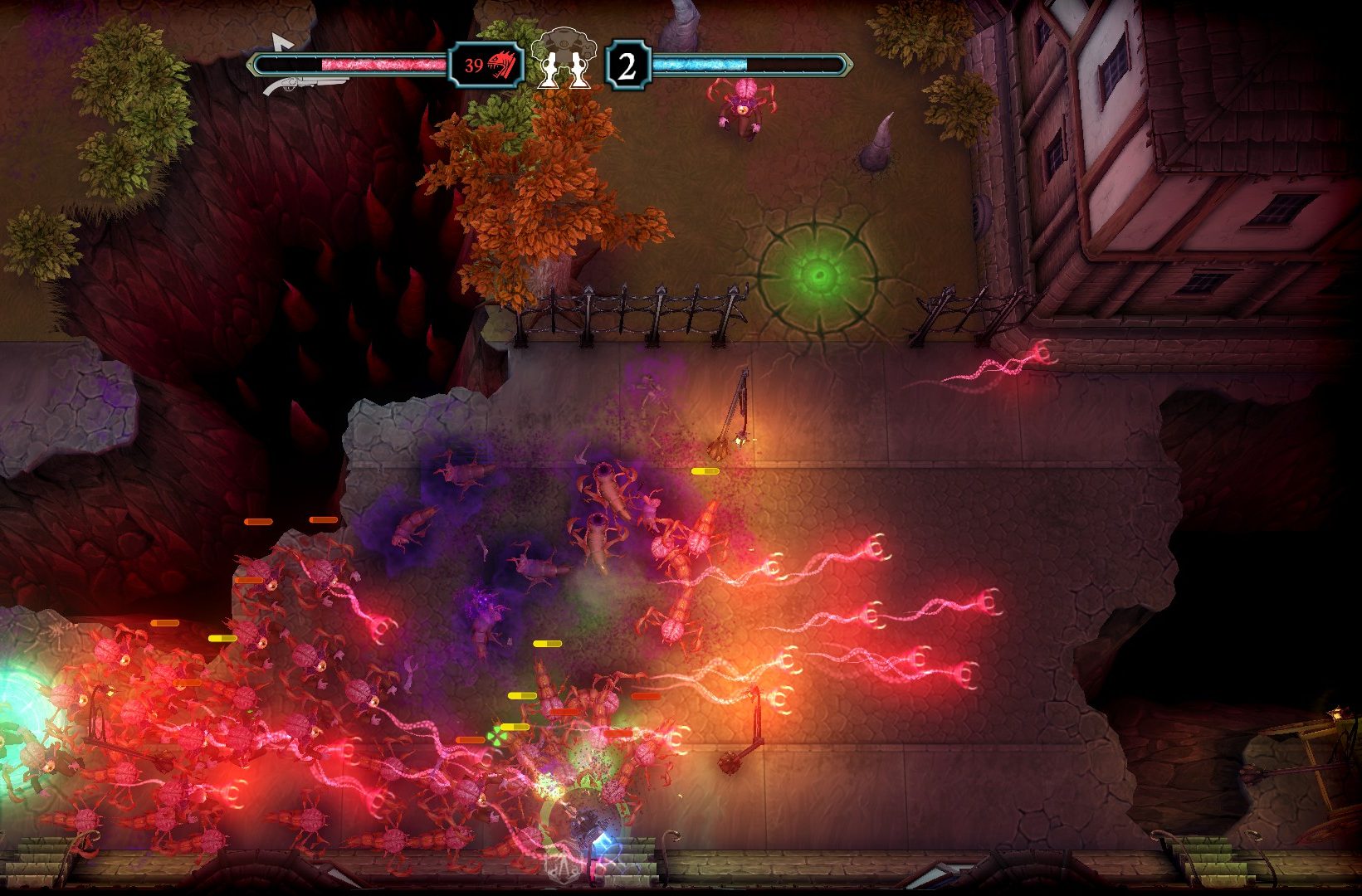
The story of Tesla vs. Lovecraft is completely out of this world, but that only strengthens the energetic gameplay that backs it all up. This top-down arena shooter is as exciting as it is weird, providing players with a wildly entertaining experience from start to finish. From blasting through walls of grotesque monsters with Tesla’s super-sleek electric weapons, to running a full assault in the powerful Mech suit, this twin-stick shooter is as intense as they come. Tesla vs. Lovecraft is smooth, addictive and keeps pushing the player forward by unlocking satisfying perks and abilities to take your reign to the highest degree.
Tesla vs. Lovecraft: Sci-Fi Shooting Mayhem
Throughout the many stages of the campaign, Tesla’s main goal is to wipe out all enemies in each level. The enemy bar at the top of the screen not only shows the player how much longer the stages are, but how many enemies are currently on the map as well. Once you hit an empty bar and zero enemies left, the stage is complete. It’s a simple concept that’s worked for decades across the popular genre, but Tesla vs. Lovecraft – like all unique indie titles – has what it takes to gracefully stand out from the crowd.
Enemies swarm in this ultimate twin-stick shooter – Tesla vs. Lovecraft.
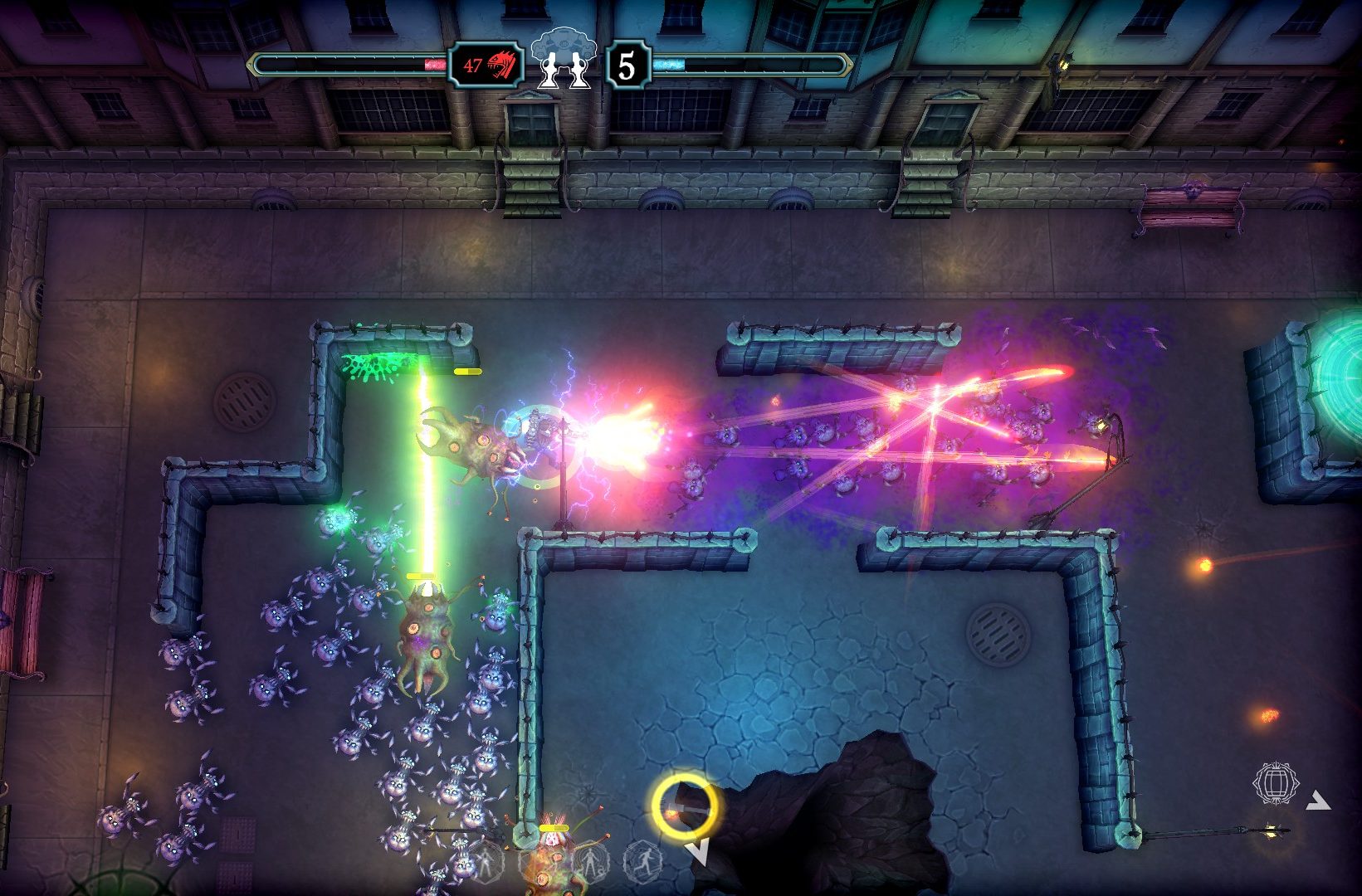
The levels in Tesla vs. Lovecraft offer a wide arrange of size and obstacles in various settings across the campaign. Some act as small areas barely filling up more than the entire screen, while others have the players running through alleyways, courtyards and city streets, searching for the next player-boosting perk. Along with primary weapons and abilities, players will keep things interesting with other consumables like health packs, armour shields and unique enhancements like fire bullets. After a few short training levels, the player is granted the Quantum Teleport backpack which allows Tesla to teleport a short distance, as well as through most fences or other obstacles. Now all Nikola needs is some weaponry.
Tesla vs. Lovecraft creates a unique arcade feel with unlimited ammunition rounds, a vast array of awesome weapons to pick up, mighty abilities and character customizing perks. Weapons like pistols, revolvers, gauss rifles, shotguns, repeater shotguns and the beloved Tommy Gun are found throughout the levels during your campaign. Randomly spawning during each stage, players are only permitted to carrying one weapon at a time. Running over a different weapon than you have will automatically replace your current weapon, often leading to unwanted weapon switches.
With the intense action and splashing array of colours flooding the screen, it’s easy to lose sight of what’s what. The developers have done a substantial job in colour-coding items based on whether they’re weapons, power-ups or mech parts, but there may still be some visual confusion that slightly hinders the overall gameplay. Whether or not you accidentally swap a quick-firing Tesla blaster for a slow 2-shot shotgun, you still have a few options to keep the action in your favour.
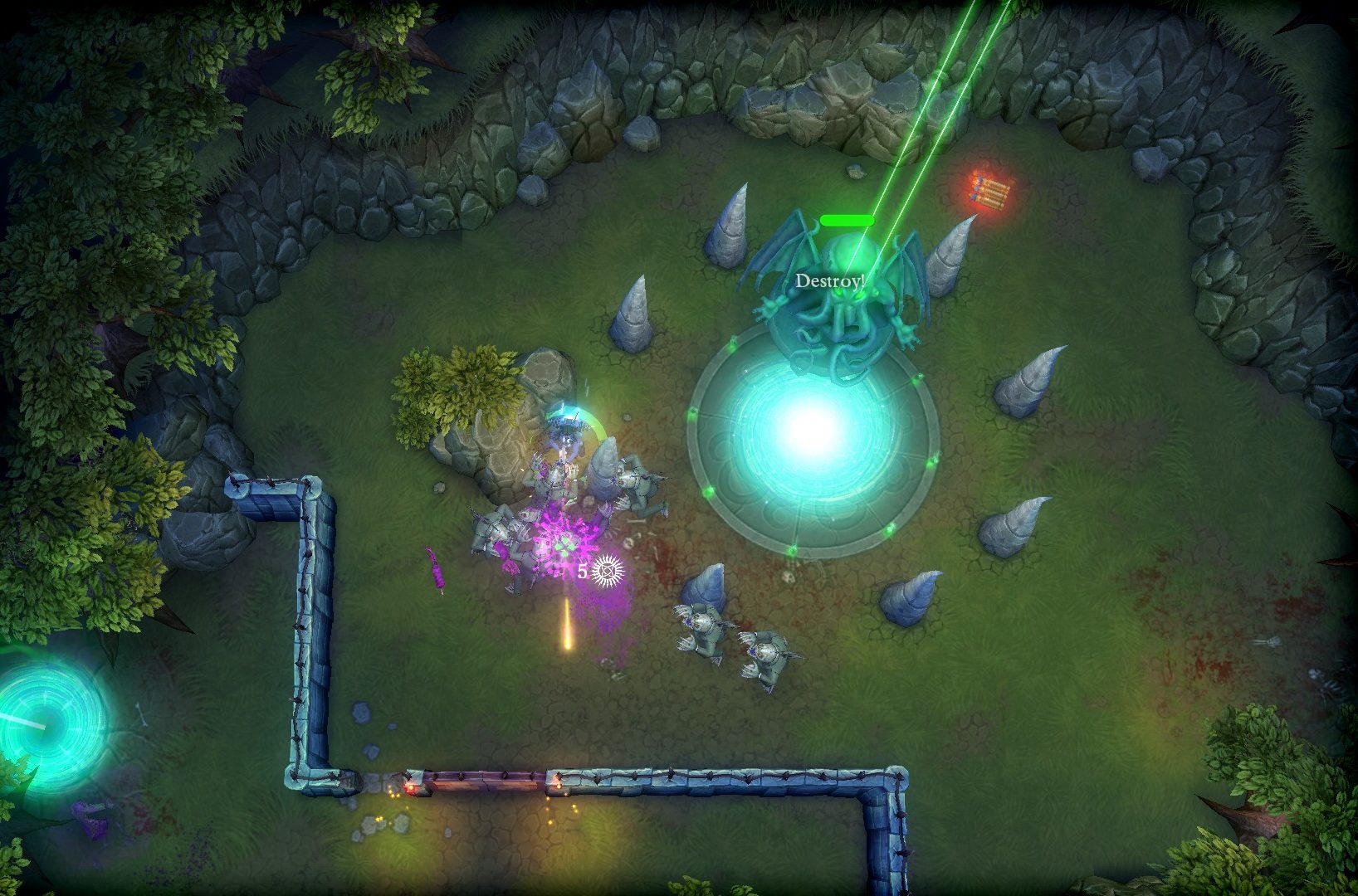
Along with the many waves of enemy monsters, Cthulhu statues will appear which endlessly spawn enemies until they are destroyed.
Strengthen Tesla’s Skills With Unique Perks and Abilities
Along with the many weapons to find and unlock throughout the game, players also have many perks and abilities to trigger. In typical arcade fashion, every stage starts Nikola Tesla off at level one, growing through the ranks as you mercilessly slaughter Lovecraft’s army. Leveling up comes quick, as stages typically last anywhere from 20 seconds to a few minutes, as players wipe out hundreds of enemies in one stage. As you gain each new level, players are awarded a perk point and may choose between two randomly selected perks.
Increasing movement speed, adding bullet penetration, a higher chance of acquiring more power-ups, or unleashing lightning strikes every few seconds are only a few of the perks available throughout the game. Starting off with a limited number of perks, more are unlocked as you progress further in the game. Gaining anywhere from 5-10 levels in one stage is an average run in Tesla vs. Lovecraft, allowing players to enhance Tesla in unique ways for every single level.
Unique perks help develop Tesla across each level, like having the ability to ricochet bullets off of walls.
On top of the useful and semi-permanent perk to choose from, powerful abilities also come into the mix when fending off the hordes of Lovecraftian nightmares. Spawning randomly in each stage, much like the standard weaponry, players may only equip one ability at a time. However, unlike standard weapons, these abilities are capable of dealing massive amounts of damage to the many waves of enemies. Using a massive sword to slash through a thick crowd of enemies, unleashing a flurry of static shock, or an AoE nova attack act as some of the unique abilities found in each level. Not similar to the unlimited ammunition found with primary weapons, abilities have a limited number of uses, making for more strategic actions.
Lay Out Some Carnage With The Mighty Mech Suit
With all of this talk about unlimited ammo, character developing perks and game-changing abilities, these are nothing when compared to the deadly and outrageously fun Mech suit. Invented by none other than Tesla himself, this Mech suit is the ultimate table turner. Once unlocked – which is relatively early in the game – players will start each round with the assaulting Mech suit intact. After about 10 seconds or so, the Mech suit explodes into six pieces, all scattered throughout the stage. Once players pick up each part, the rampage is back on for another 10-or so second run, or until the Mech takes enough damage.
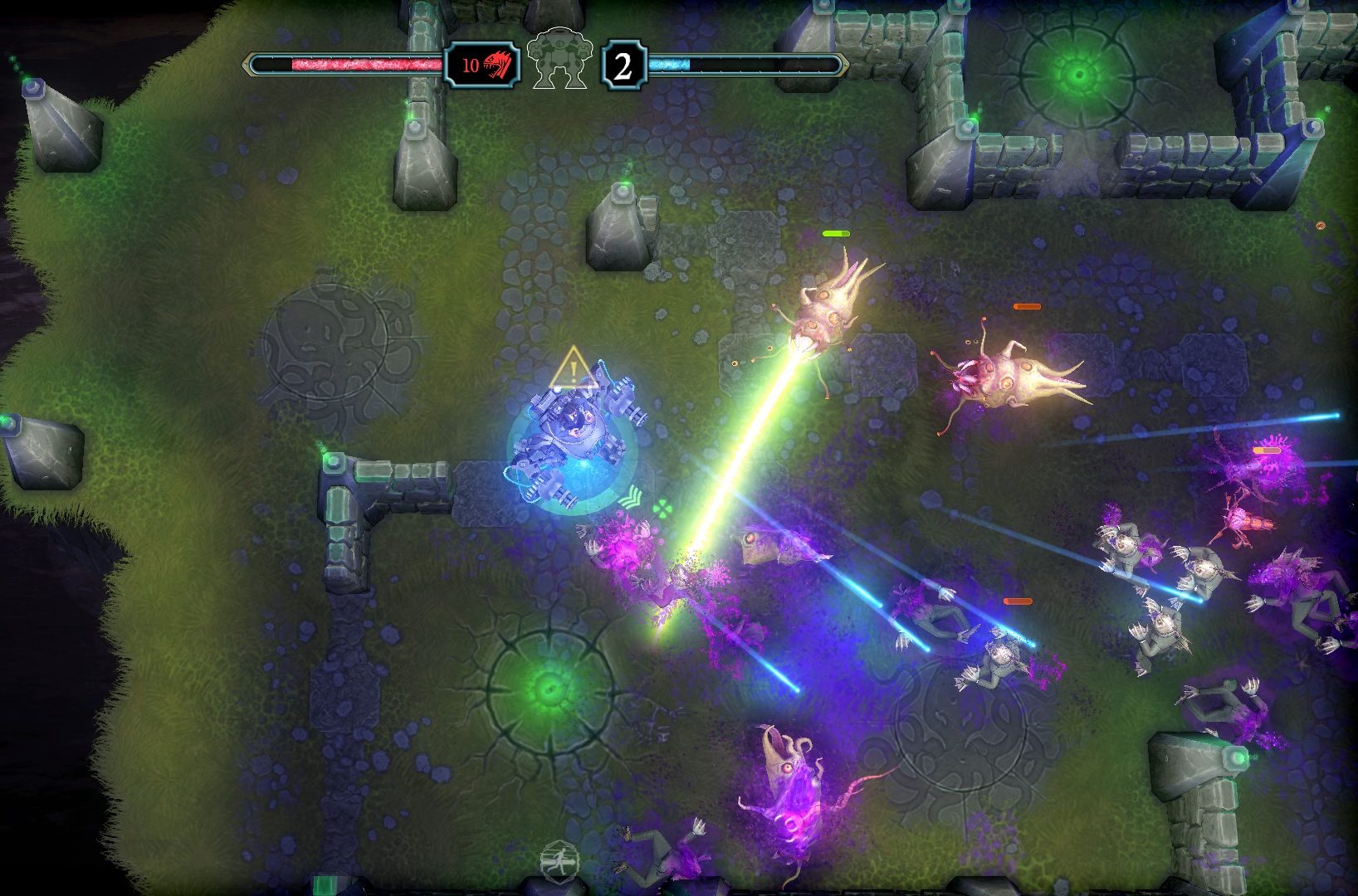
The Mech suit is not only extremely powerful but all-too satisfying as well. While firing the duel cannons works perfectly fine against the many waves of monsters, walking through them and crushing walls and barriers bring the carnage to a maximum level. It’s easy to get carried away once the Mech suit is engaged, effortlessly wiping out any helpless monster standing in your path.
The Mech suit is the ultimate weapon for slaying an enormous amount of monsters quickly.
Tesla vs. Lovecraft is a rampage inducing, action-packed sci-fi arena shooter that stands tall amongst titles of similar stylings. With the unique perk and levelling system, smooth controls, one-of-a-kind story, devastating abilities and Mech suit, 10tons graciously hands over an experience of science and horror like no other game has before. Throughout the game’s many, many levels available through three different areas, plenty of monster slaying, Mech-suit-smashing mayhem awaits at your fingertips in this latest twin-stick arena shooter.
With the ever-popular action adventure category of video games becoming more and more saturated throughout the years, developing teams are finding new ways to push the envelope for the repetition-riddled genre. After making a name for themselves with titles like DmC: Devil May Cry, Enslaved: Odyssey to the West and Heavenly Sword – Ninja Theory is back with another gripping action experience; but doing so by tackling the dark and merciless journey of a Viking warrior, aided by her haunting curse of psychosis and mind-rotting visions in Hellblade: Senua’s Sacrifice.
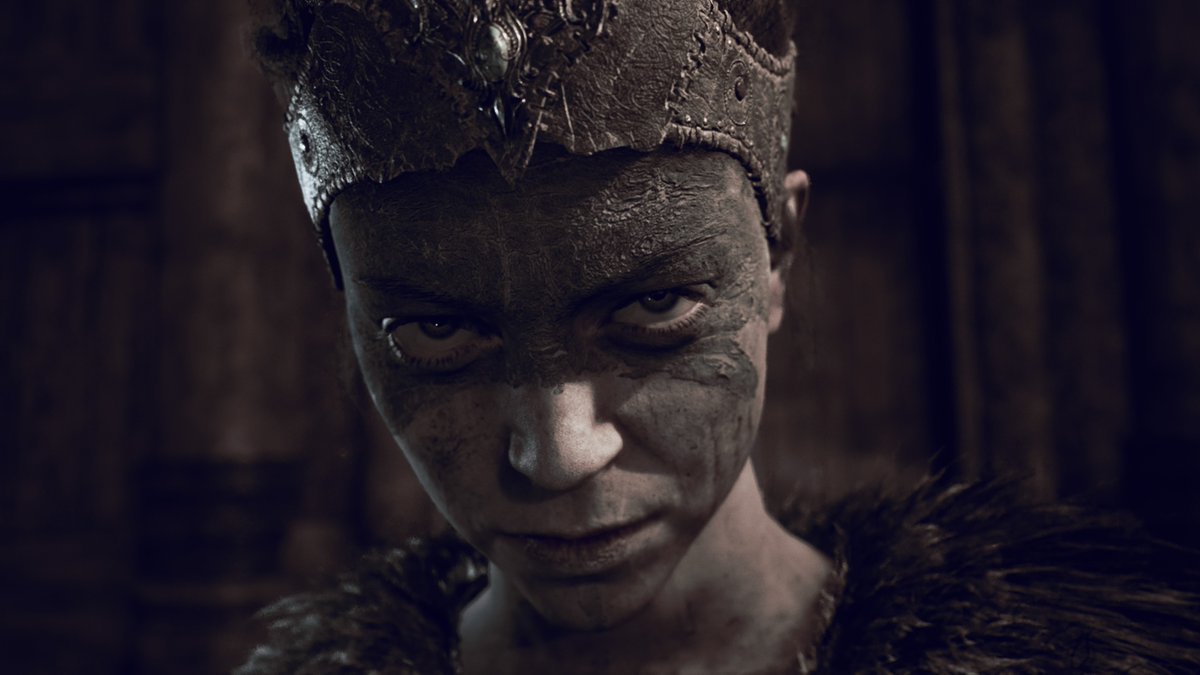
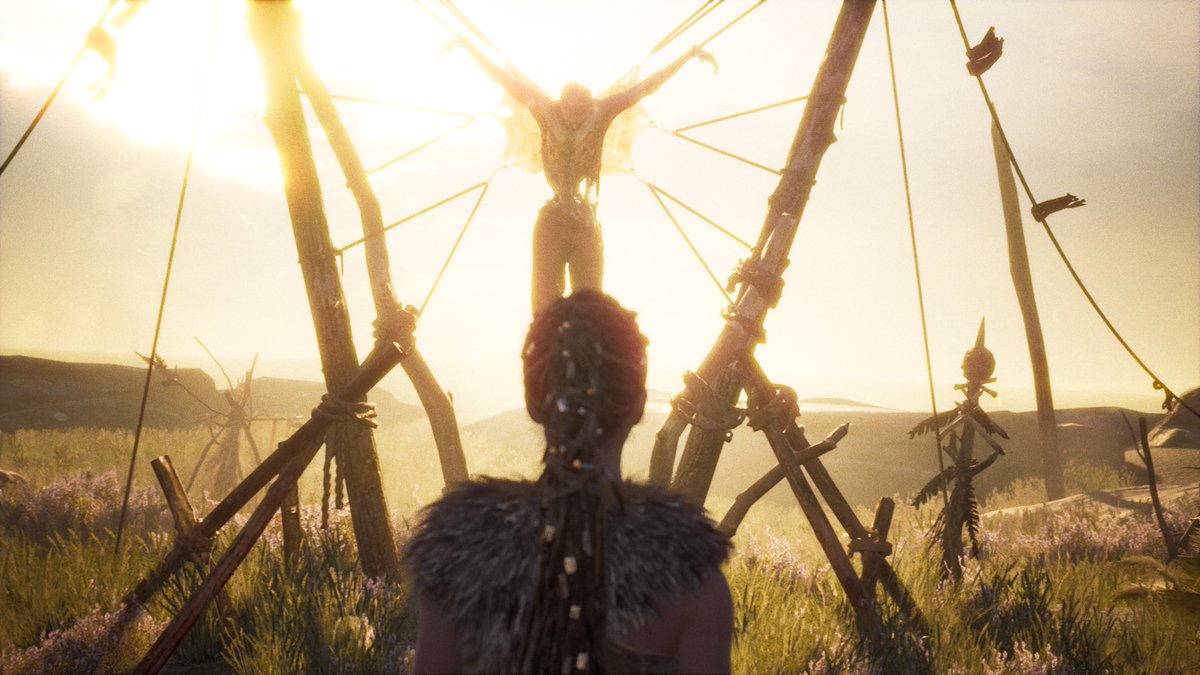
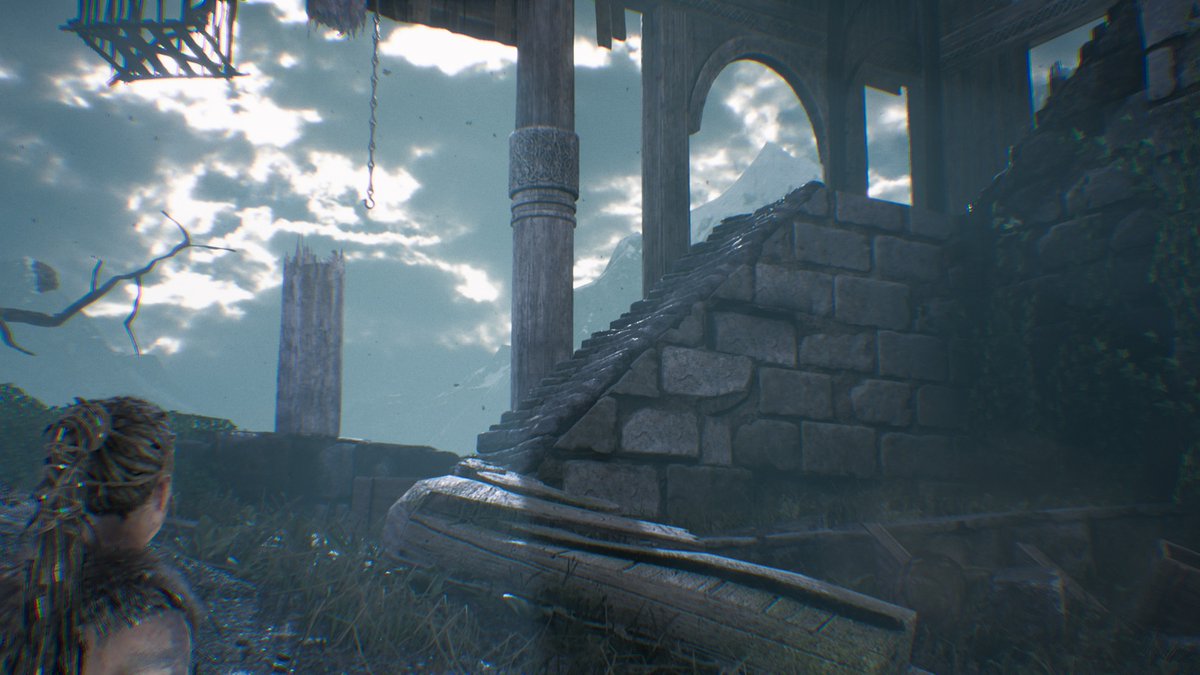
Playing as the Viking warrior – Senua – you’ll embark on a disturbing journey to the depths of Helheim.
The path of Senua is a violent and disturbing one, bringing to life the realism of psychosis and interpreting what it’s like perceiving an alternate reality from what’s right in front of the player. The team at Ninja Theory did their research regarding this mental disorder, and it shows dramatically. The entire run-through of the 7 hour or so long campaign is brimming with haunting whispers, flickering lights and distant movements, ever pushing the twitching reality of Senua’s chaotic, and broken mind.
Hellblade: Senua’s Sacrifice – Fighting the Curse of Psychosis
The game is extremely linear, following a given path of intricate puzzle-solving and staged combat experiences. The dark story of the Viking warrior and her quest to Helheim to bring her loved one back to the living is as endearing as any love story, but permeates with evocative dialogue, enveloping sounds and troubling imagery. The puzzles featured are innovative and unique to the story of Hellblade, but add a much-needed sense of depth to the overall gameplay. If not for the ever-present puzzles to solve, the staged combat doesn’t quite fill Hellblade with sword swinging hack ‘n’ slash battles like other titles from the Ninja Theory catalogue.
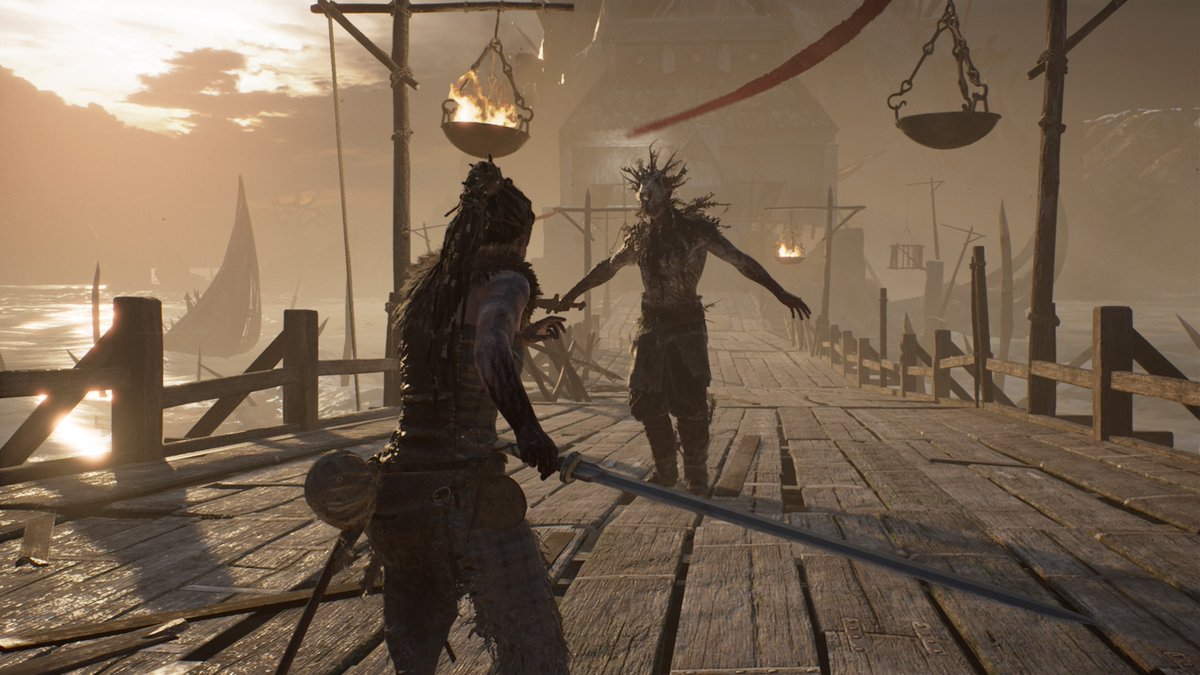
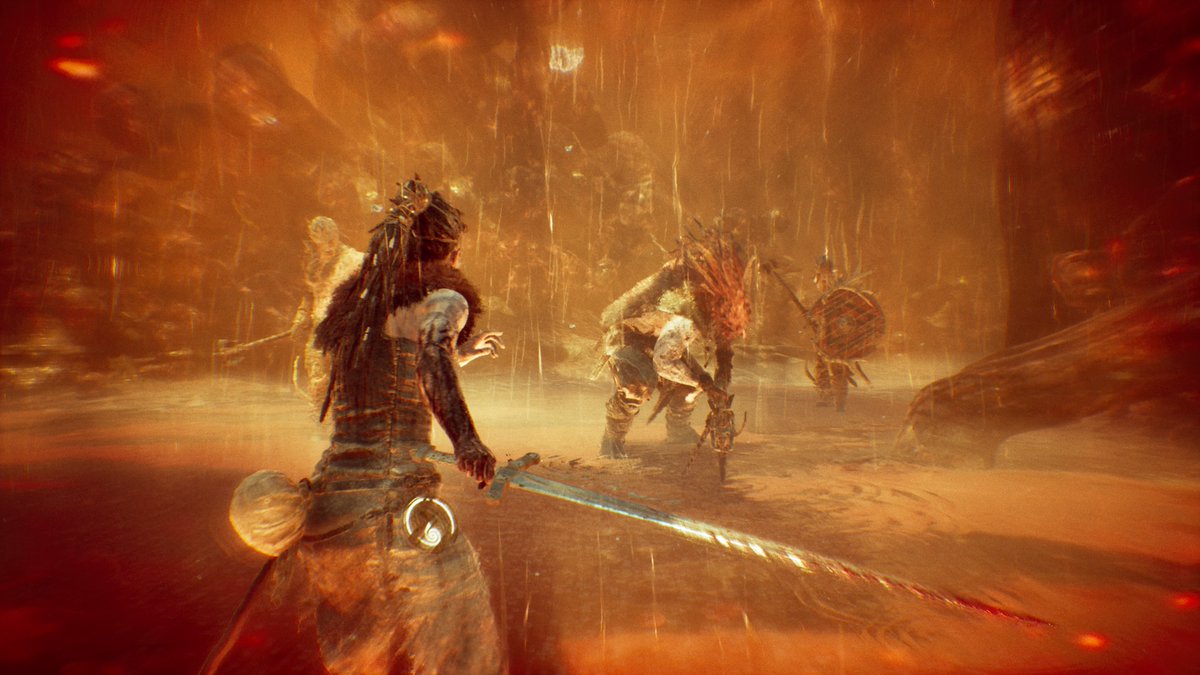
Throughout Hellblade players will be faced with brutally grotesque monsters in the staged hack and slash combat.
As you begin your journey to Helheim, the grave voice narrates over your slow trek to one new area after another. Hellblade is fueled off the drawbacks of psychosis. The constantly shifting reality of the scenery surrounding Senua is the source to figuring out the many puzzles, by either finding specific shapes scattered somewhere in the world, discovering and aligning segments of a symbol to create the full image or finding other discoveries hidden deep within the Viking world.
As you progress through, the combat in Hellblade will soon enough be introduced. Appearing in front of your from the ashes, enemies come in a handful of different forms. Quick acting sword swingers, shield-wielding brutes and giant warriors bringing down a heavy blade with extreme force are all part of the family of opponents found in Hellblade. Senua fights with a standard mode of attack, with both a light and heavy attack, a melee kick and, of course, the useful dodge technique.
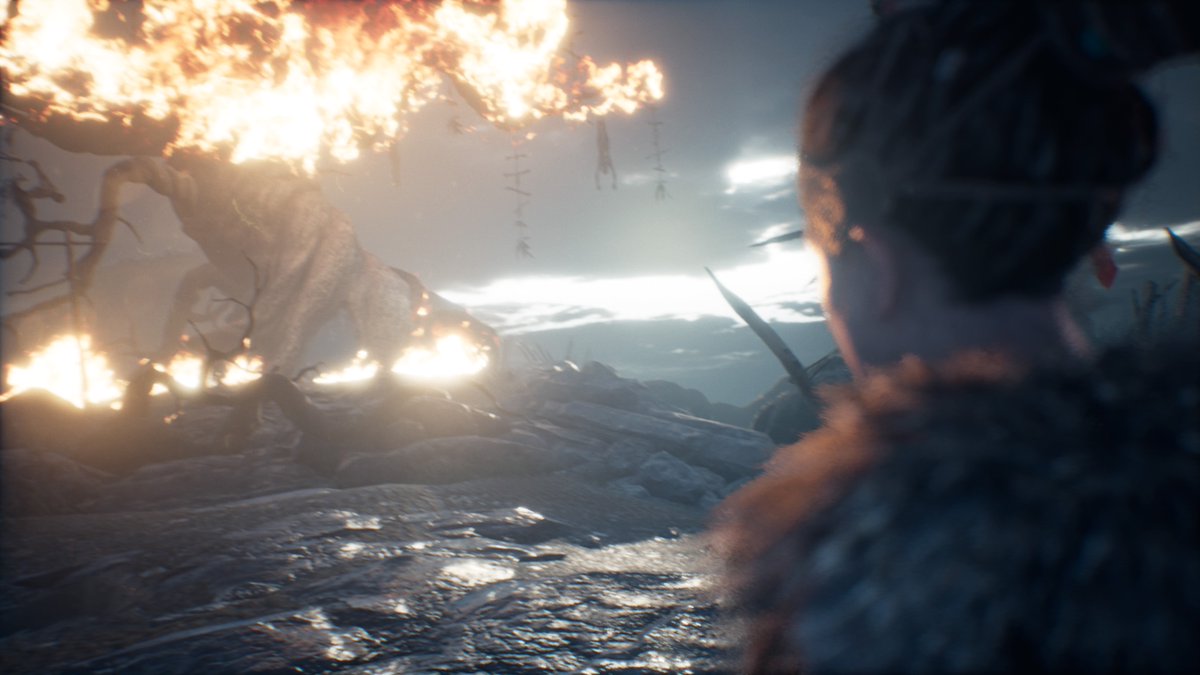
Illusions from psychosis haunt Senua throughout her deadly journey to Helheim.
Along with the defensive tactic to roll or sidestep, Senua is capable of blocking attacks with her sword, as well as performing a parry move to open up an attack window for extra damage. I mention this parry technique because the game simply fails to do so. What seems like an important combat ability, parrying is only discovered by the player when they time a perfect defence against an enemy’s attack. On top of the parry technique and other essential combat manoeuvres, Senua also has the ability to use her focus skill in combat.
Focus. Use Your Inner Eye
The focus skill while outside of combat allows Senua to “focus her inner eye” on important details and symbols throughout the journey. The focus technique is the primary ability to solving the puzzles that riddle Senua throughout her story. That being said, puzzle-solving is not the only occasion Senua will use this secret skill. During combat, using the focus skill – which is charged by connecting Senua’s attacks – will slow down time for a few moments, increasing the number of strikes Senua can land on her opponents. Though simple and unembellished, the what seems like shallow combat mechanics provide an incredibly exciting and thrilling experience when engaging in the vile monsters that come to take Senua’s life.
Using the focus mode, players will need to solve puzzles by paying close attention to details in Senua’s surroundings.
The curse that follows Senua throughout the game is both mental and physical. While the whispers and cynical chants eat away at her mental stability as she undergoes her harrowing journey, the physical torment endured from failing is just as disturbing. The lingering fear of losing your progress is a significant weight the player must carry as the black plague on Senua’s arm crawls upward with every player death. Once the webbing plague reaches Senua’s head, the game is over and the player must start from the beginning. Luckily, with a selection of combat difficulty, text-book staged combat and relatively short story length, starting over doesn’t seem as much of a chore as it sounds. Of course, there are some who claim that losing your progress never actually happens after numerous deaths, but is merely a bluff from the developers.
Senua will often find herself against multiple enemies at once, but using focus in the midst of battle will allow a brief period of slowed down enemy movements.
Impressively Evocative
The winding and distraught road of Hellblade: Senua’s Sacrifice is something so powerfully stirring that playing through the linear campaign multiple times still feels fresh and thrilling. The isolated quest to defeat the horrors of Helheim, overcome the dark curse that haunts Senua and return her loved one back to the living is as enthralling as it is disturbing. The realism and time spent on providing an accurate reflection of what it means to wield the curse that is psychosis is impressively alone, not to mention the astonishing visuals and sound effects. Ninja Theory took their time with this one, and it shows, as Hellblade: Senua’s Sacrifice is easily one of the most memorable experiences from 2017.
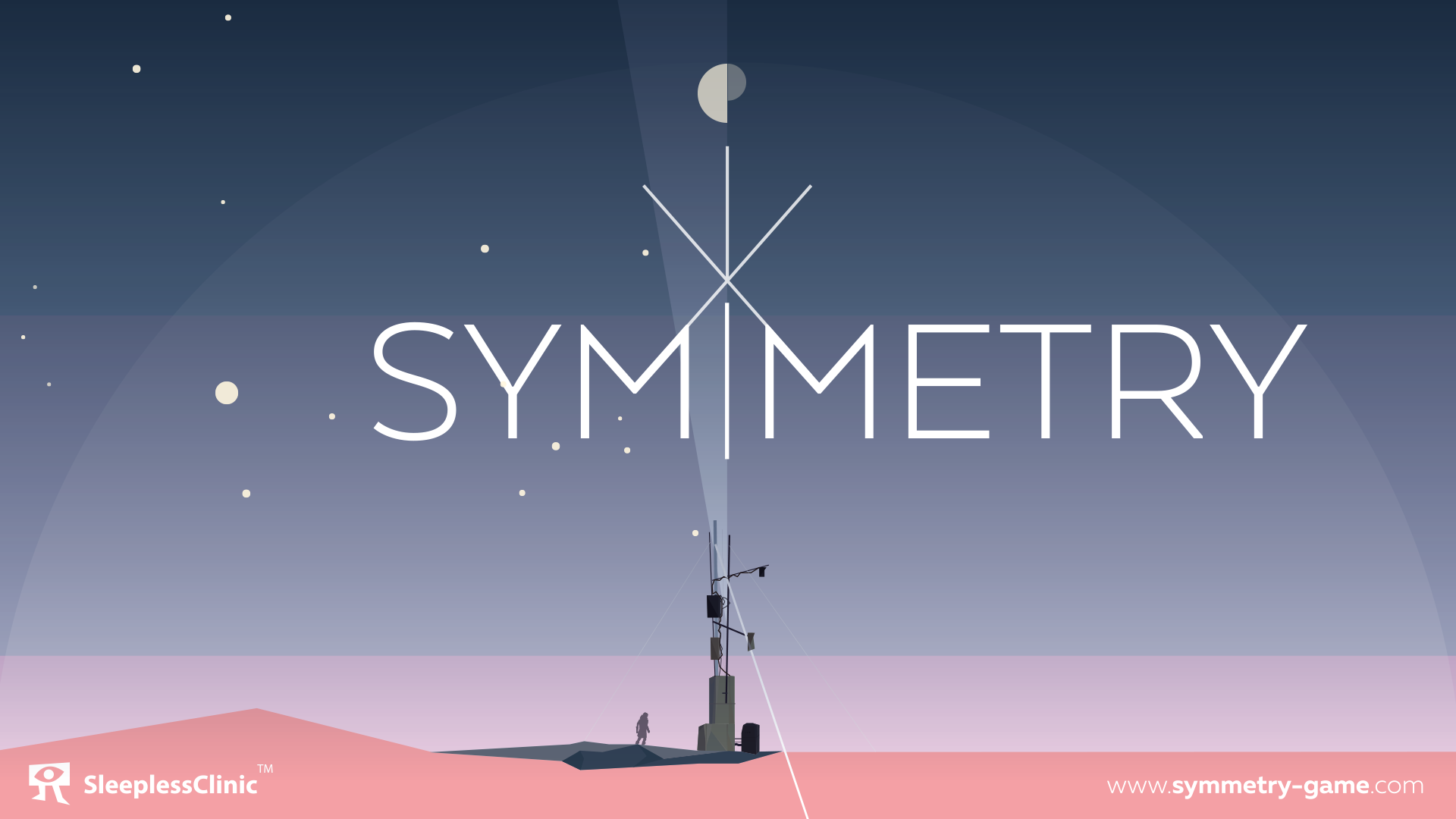
Survival management sci-fi game Symmetry or (SYMMETRY) launches February 20th on PS4, Xbox One and PC – but what’s it all about?
By Grabthar’s Hammer
Set in a retro-futuristic universe and developed by Sleepless Clinic, Symmetry combines a brooding sci-fi storyline with fundamental life or death consequences.
“One wrong choice, someone dies. Run out of time, someone dies. And when one of the survivors die, you must make the ultimate decision, dispose of the body, or cannibalize it.”
The central goal is to manage a team of survivors whose spaceship has crashed on an abandoned planet, light years away from any sort of rescue. Your job is to help the crew withstand the desolate, freezing cold environment while safely fixing their ship. Time is of the essence then:
Indie developer Sleepless Clinic hopes the hand-drawn pastel Vector graphics and atmospheric score ensure this one is a pick-me-up next month.
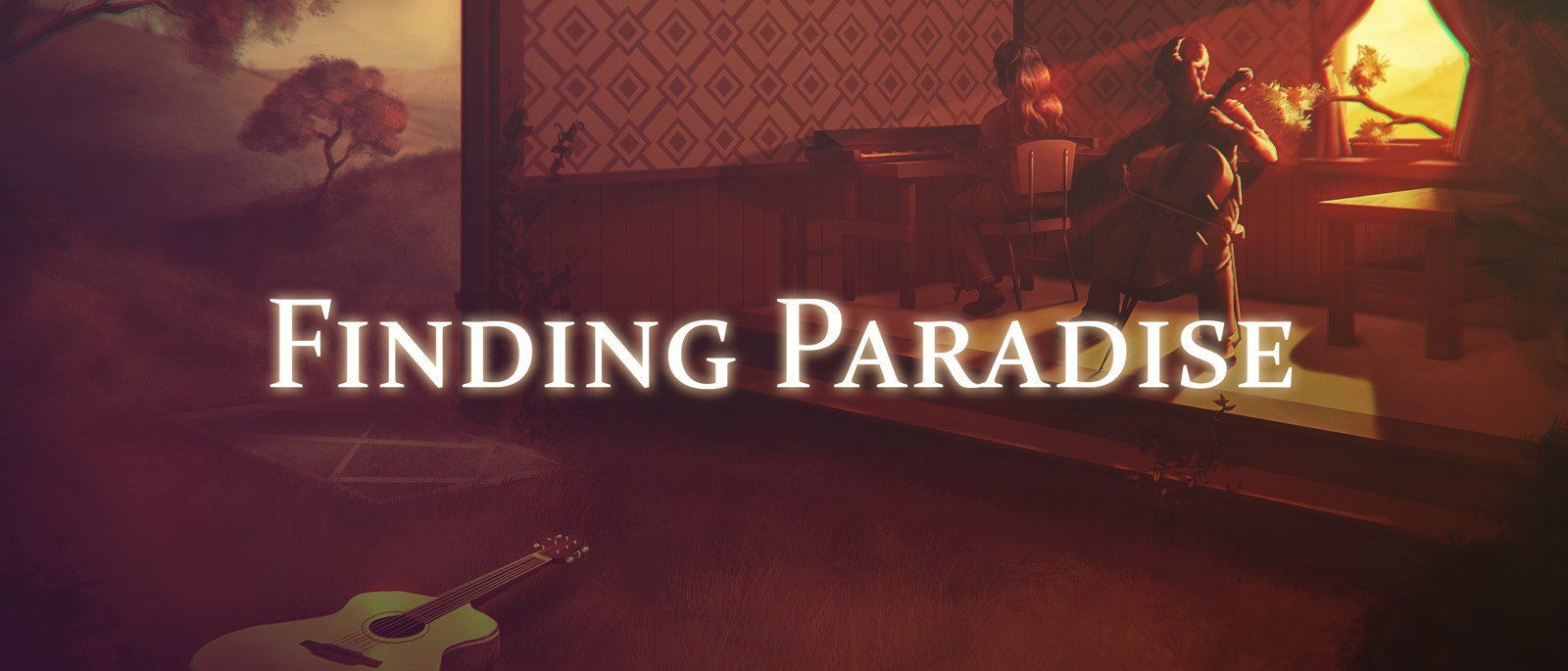
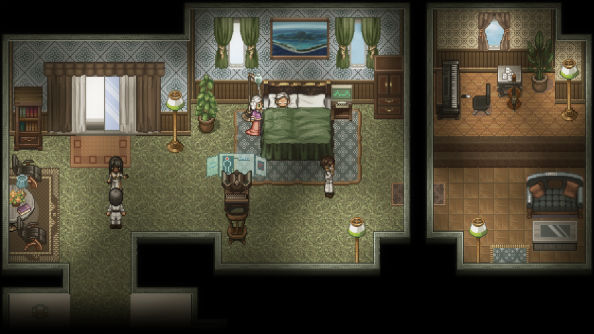
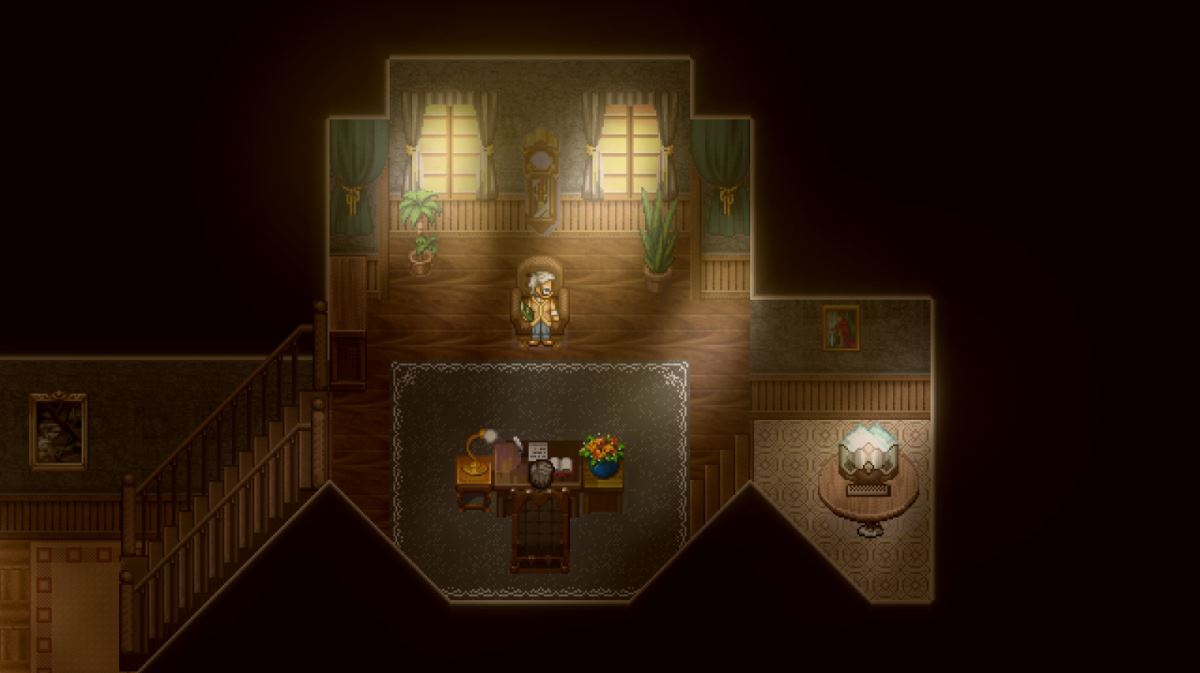
Six years ago, a game that would forever change the way I view storytelling in games was published. To The Moon was an emotional rollercoaster, with incredible narrative and musical elements. Now, the time has come for its sequel – Finding Paradise. Kan Gao and the team behind Freebird Games has returned to continue the journey of reflecting upon memories, brilliant life philosophy, and last but certainly not least; putting us in an emotional imbalance.
If you’re familiar with both of these games, you might also have encountered A Bird Story, a short narrative about a boy and a bird with broken wings. We learn that his name is Colin Reeds, and in Finding Paradise, he has come to the point where his time on earth is coming to an end. A dying old man, he becomes the patient of Dr Eva Rosalene and Dr Neil Watts, two lovable scientists who work for the Sigmund Corporation, a peculiar organization that helps dying people fulfil their lifelong wish. However, not literally. They travel through the memories of a person’s mind in order to make them think that their wish is fulfilled. The task of fulfilling Colin’s wish will turn out to be much more difficult for Dr Rosalene and Dr Watts than they first expected.
The scientists are what they call Memory Traversal Specialists – they travel through a person’s memories ranging from early childhood to late adulthood, to alter them and make them think that they have fulfilled this wish. Through altering the memories, they are able to nudge the person in the right direction, helping them to make decisions that will make their wish come true. With that said, the scientists are on a tight schedule – the patient might pass away at any moment. The clock is an important as well as a recurring symbol, as time is truly of the essence.
“Some stories aren’t meant to be told… they are meant to be kept.”
Colin feels that he hasn’t lived a fulfilled life, but desiring what you cannot have is perhaps something the majority of us will inevitably encounter during a lifetime. However, in Finding Paradise, one can change that. But only to a certain degree. Consequently, fulfilling one’s desire will ultimately replace another. Questioning the morality behind these patient’s decisions, the game explores both sides of the coin. What if the person you love actually desired a future that didn’t necessarily include you?
To The Moon, A Bird Story, and Finding Paradise all exist within the same universe. Therefore, some of the scenery might seem familiar if you’ve played the previous games. This is a really nice way of connecting the stories and shows good attention to detail. As I started the game, I immediately felt just how much I had missed these two scientists. The brilliant synergy between Dr Rosalene and Dr Watts are as funny and on point as in To The Moon. The dialogue is so incredibly well written, with puns and jokes filled with references to various movies and games. I absolutely love it. Finding Paradise had some hilarious moments where I sat laughing out loud. The two characters become a very nice counterweight to the heavy atmosphere of the game. As we delve deeper and deeper into the mind of Colin Reeds, the turn of events are as absurd and abrupt as the thinking mind itself.
How are we to live our lives?
“With the right accompaniment… anything can be a melody.” One cannot simply talk about Finding Paradise without talking about the incredible music that embraces this world. Like in all of Gao’s creations, the games are always complemented by a song that becomes a recurring theme. The song and the music compliment the characters in a really special way, and I can’t describe it further unless you have played the previous games because then you know what I’m talking about. Kan Gao’s musical creations are masterpieces that fit perfectly with the games. As a nice way of really implementing it into the universe, some of the characters (except for the scientists) each play their own instrument, and in a nice way, each theme is introduced by the characters themselves. The trailer shows you an example of the music, and when I watched this again, all the emotions I experienced when playing came rushing back to me:
In the end, I think it is also important to take from this that people never really know what they want at any given time. We all want to live a fulfilled life; but how can we define that, when each individual may want something different? The definition of a fulfilled life has faded in Finding Paradise, as we reflect on the fact that we are all dealt different cards in life. The important part is making the best out of what you have, and who you are.
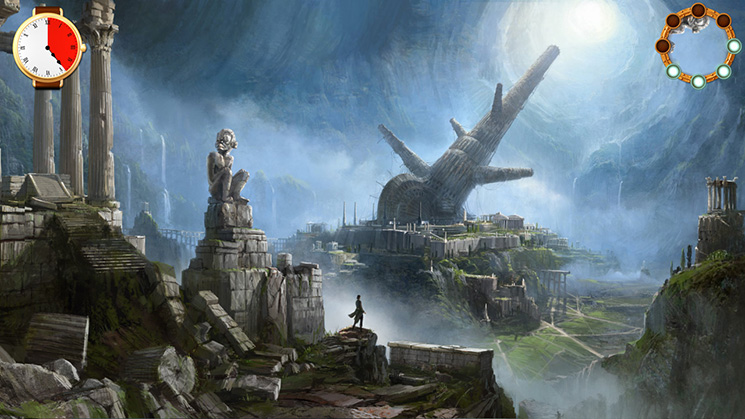
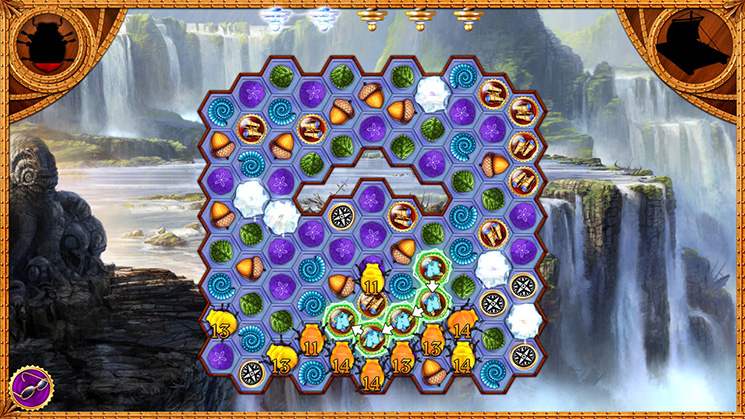
It’s no secret that I’m a little tired of mobile games being ported over to the Switch (and every other console). If you missed it, please check out my review for Dustoff Heli Rescue II and read my thoughts on the matter. Once again, I‘m faced with a five-year-old game, previously released for everything from Windows to iOS and Steam, and I have mixed feelings. Azkend 2: The World Beneath by 10tons, is yet another match-three puzzler among a million, but even though it’s ported from a mobile version, I find myself slightly addicted to it. The game isn’t perfect, and a part of me would never have paid for it on mobile, but even I can admit when something is downright fun, polished, and a good time overall.
Azkend 2: The World Beneath
I’m going to start by laying out the story as I always do, but why this game needs one at all is beyond me. Mini-rant time! Why do puzzle games have a story? I never understood a developer’s need to justify simple match gameplay by writing a whole convoluted backstory behind it. It’s a PUZZLE GAME, not a swashbuckling adventure. With that said, Azkend 2 actually has a nifty backstory for players, even if it has no point to the actual game.
As the protagonist, you’re sailing from Liverpool to New York, when out of nowhere, your ship is pulled down to the unknown depths of the sea. Turns out, you’ve travelled to the centre of the earth, where ancient civilizations and wonders never before seen by man await you. If this were Tomb Raider or another one of Nathan Drake’s adventures, it would be awesome, but it’s not. It’s a match puzzle game, plain and simple.
Azkend 2: The World Beneath
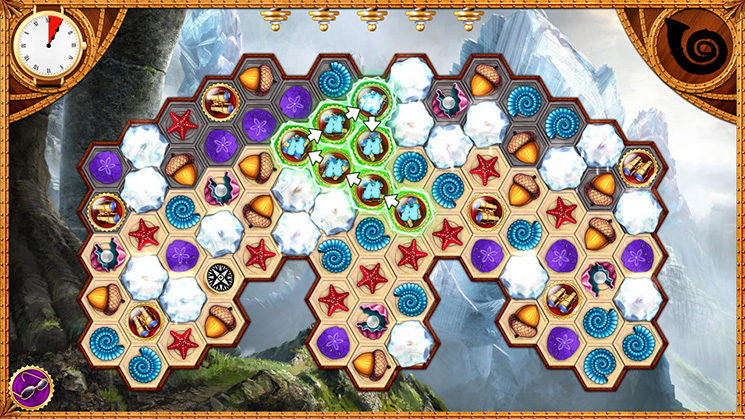
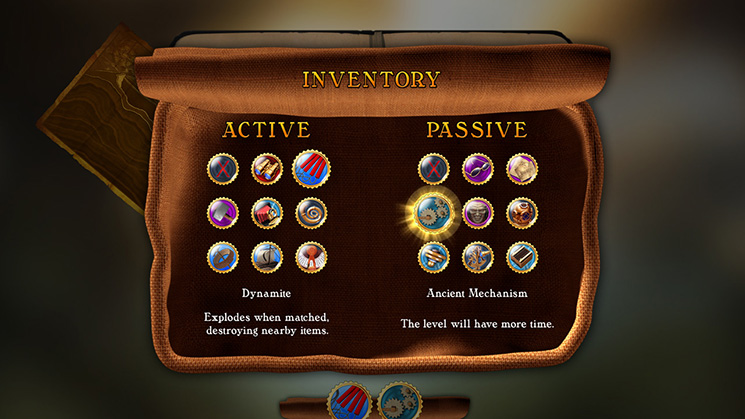
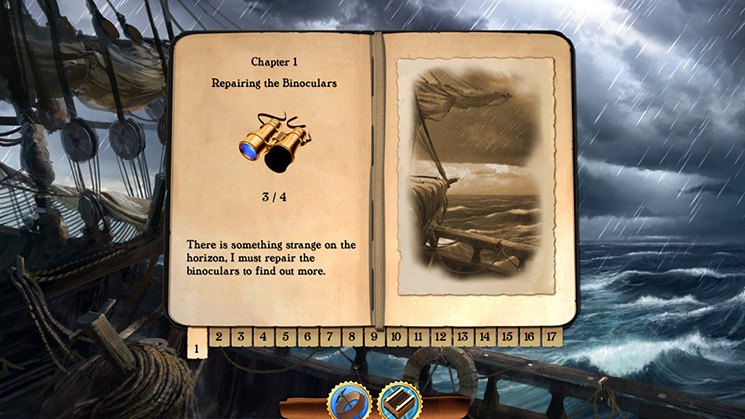
As you navigate this mysterious world via cutscenes, you must seek out and find/fix objects needed to get home. In order to do this, you simply play the game. Each completed level yields a piece of object X, which when put together, can be used to aid in your quest. Each object has some kind of power or trait that can have an effect on the game board. For instance, the binoculars, when matched three or more, will cause random tiles to fall off the board (that’s a good thing), or matching three or more dynamite sticks will cause surrounding tiles to be blown away. Although I feel the story behind finding these objects is unnecessary, the actual usefulness and implementation of them is outstanding. The collectable power-ups add another dimension to the simple match puzzle premise.
Azkend 2: The World Beneath
In between rounds, players are treated to beautifully drawn cutscenes that propel the story further. While in these scenes, you get to take part in hidden object minigames. This aspect of Azkend isn’t overly sophisticated but definitely adds another layer to a tired genre. With over 60 levels in story mode alone (plus time trial and medal modes), 10tons has packed a lot into this little game.
Azkend 2: The World Beneath
Azkend 2 plays well using the Joy-Cons, but speed and accuracy do suffer slightly (levels are timed). Luckily, this is the Nintendo Switch, and with it, comes a nifty touchscreen. The game works even better in handheld mode, and using your finger on the touchscreen is incredibly more efficient than a controller. The game plays well when docked, but I personally loved the ease at which I could match tiles while using the touchscreen. I should also note, in docked mode, the subtitles (which can be turned off), appeared to stretch beyond the edges of my television. When I played it in handheld mode, the text was normal. Most likely, a port issue, but it has zero effect on the play mechanics.
The soundtrack is described as “cinematic” by the developers, and I actually agree. The incomparable Jonathan Greer (Owlboy OST, Sparkle, etc), recorded music that you’d normally find on an epic adventure game, and I really enjoyed it. There isn’t much in the way of visuals in match puzzle games, so the fact that we get a great original score fees like a treat. It’s a little thing but goes a long way in elevating the experience.
Azkend 2: The World Beneath
As I have said countless times with other mobile ports, this is an old game with an even older premise. Although 10tons does offer a slightly fresh take on the genre, players shouldn’t go into it thinking they’re getting anything unique. However, as I have also stated in the past, this is the Switch, so no matter how tired a concept may be, this little wonder console can breathe fresh air into things that have gone stale.
I’ve been playing video games since the early ’80s, ever since I got my very first Colecovision system. Since then, I have owned countless consoles along with a plethora of games. Thinking back to the good ol’ gaming days of yore reminds me of all the things younger kids today will never know about. From getting your NES cartridge to play just right, to waiting for the next issue of Nintendo Power, gamers of this generation can’t begin to fathom what we put up with in the early days. Here are a few of the things from back in the day that the youngins of today will never know the pleasure (or displeasure) of.
In no particular order:
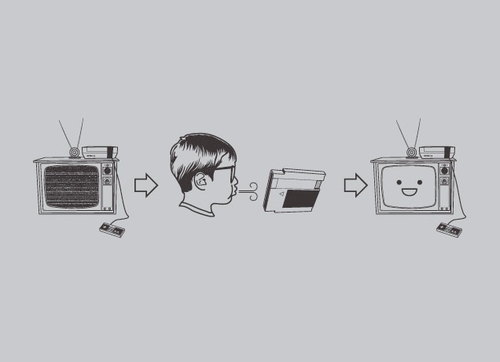
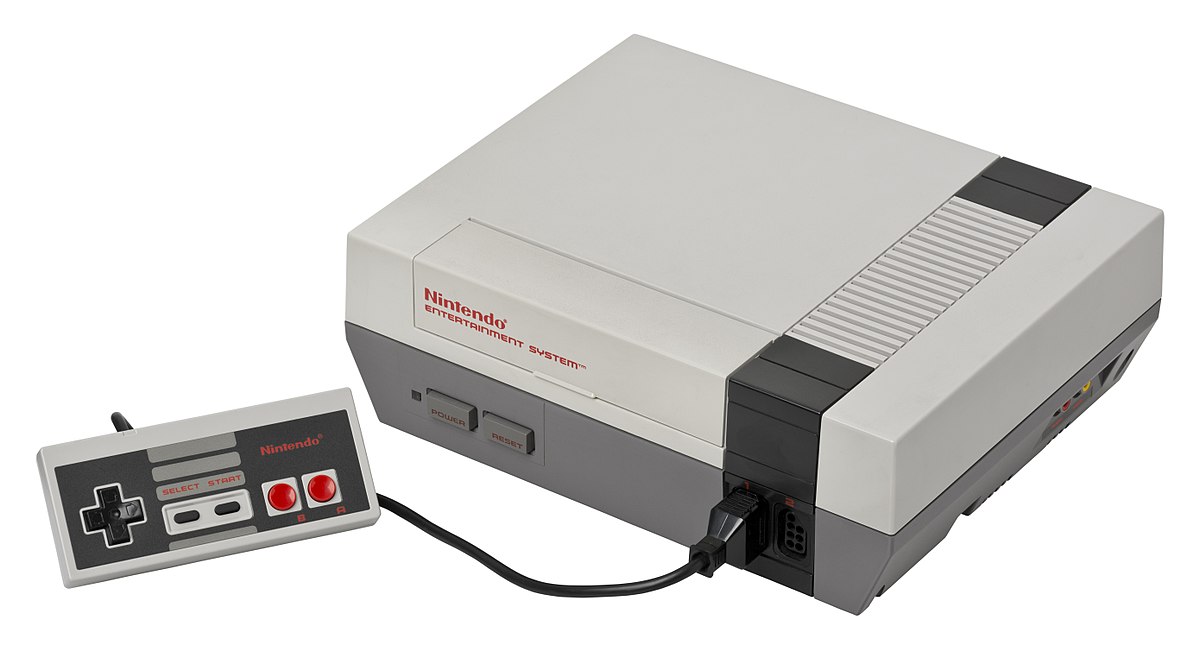
Blowing in the NES cartridge to get it working – We ALL had our own system getting an aging NES game to work. For me, I first had to blow in it, then, I had a specific way of inserting the cartridge that I knew would get the games working every time. Who can say if this actually increased the chances of success, and yet to this day, we all still blow in the cartridge with the hopes that our 30-year-old carts will light up screens once more. There was something special about the way we got our NES games to work over the years, even if it was all for nothing.
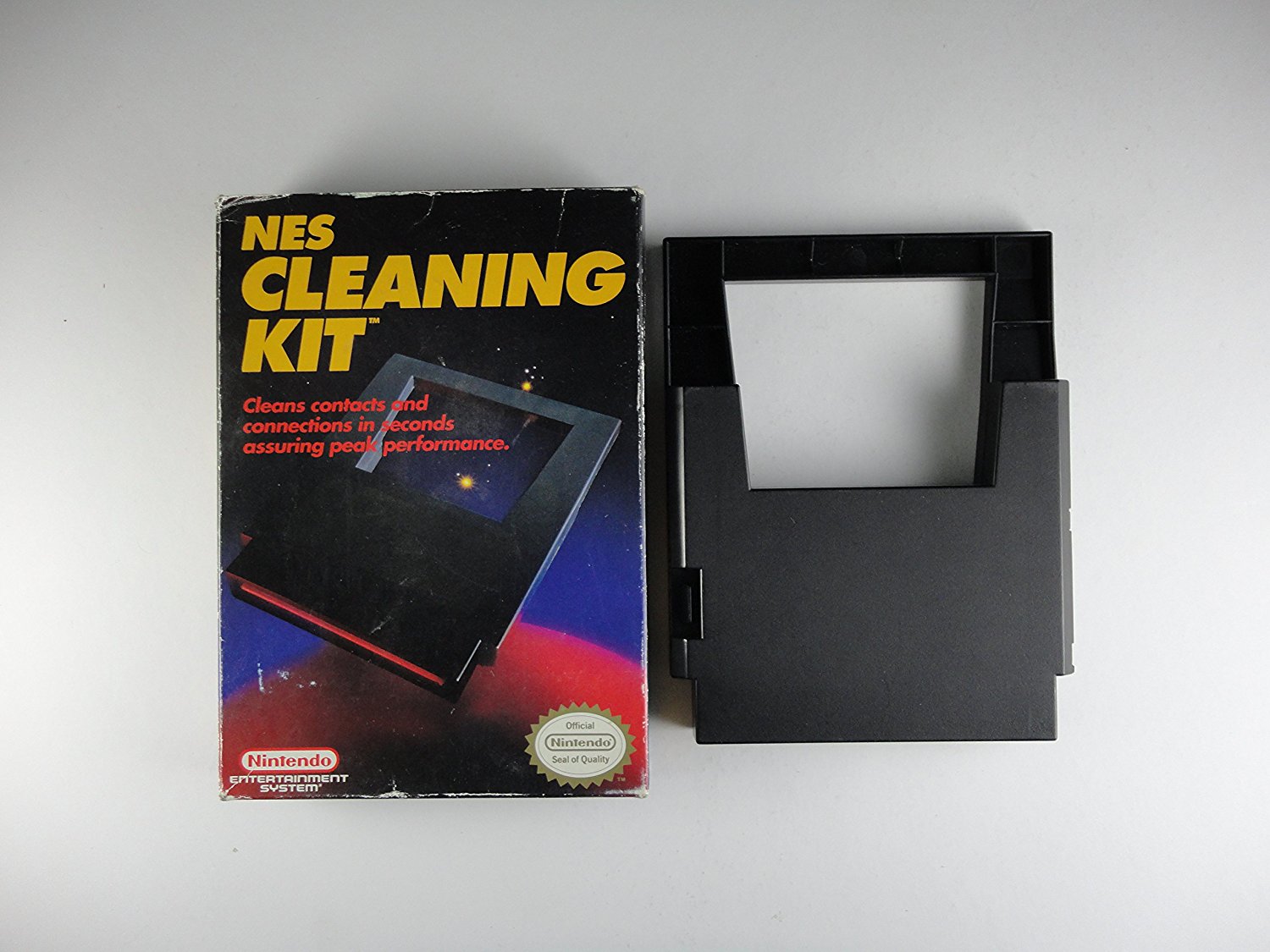
Cleaning kits – Continuing with the NES, who out there remembers that acidic cleaning solution you were supposed to rub on the actual chip of the cart? NES carts could get dusty if stored wrong, causing the game to load improperly. Several cleaning kits were on the market back in the day, but I‘m pretty sure they were doing more harm than good. The one I remember having, consisted of some kind of mystery solution and a flat cotton applicator. You simply soaked the cotton with the mystery solution and wiped it back and forth on the circuit board. Thinking back on it now, that sounds insane. This black gunk would always come off, but I just know I was wiping off something important. To this day, I can’t believe I put some weird chemical on my precious games, even if it got the Nintendo Seal of Approval. That was a thing, look it up!
Throwing controllers in a fit of rage – Say what you want about ’80s and early ’90s tech, but that stuff was built to last. I can’t tell you how many times I threw my controllers in a fit of rage. Those little plastic enablers bore the brunt of my wrath as I attempted some of the most infuriatingly hard games ever. If I saw someone doing that today, I think I would have an aneurysm on the spot. It costs $70 plus tax for a Switch Pro Controller, so you can better believe that thing is never leaving my hand with any measurable velocity. Come to think of it, it’s a shame, because I always found controller throwing to be rather therapeutic.
Wired Controllers – Let’s stay on controllers for a moment shall we? Back in my youth, controllers required a wire that connected them to their respective consoles. Cords were never long enough; they significantly hampered the distance we could sit from the television. Wireless adapters eventually came to market, but they were never commonplace, and I’m sure they cost a hefty buck or two. Gamers today have no idea how good they have it with the freedom of movement cutting the cord has wrought. I was actually stunned when I saw third party manufacturers offering up a cheaper, wired pro-controllers for the Switch. I know it’s significantly less money, but I just can’t see myself buying one. Once you’ve tasted the delight of wireless gaming, it’s exceptionally difficult to ever be tethered again.
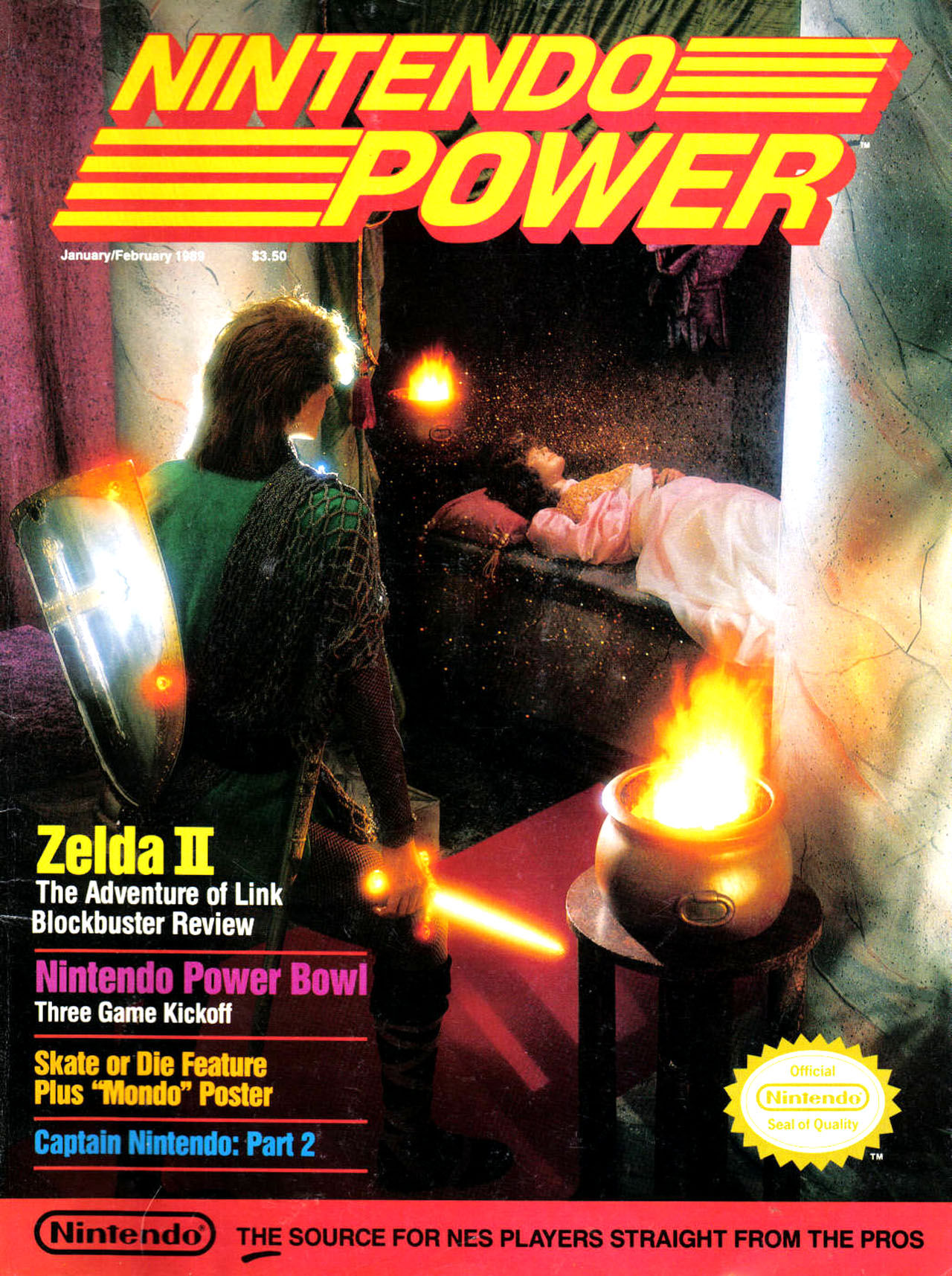
The Anticipation of my next issue of Nintendo Power Magazine – Nintendo Power ceased publication a short while ago, but its legacy will last a forever. I adored that magazine and the heavenly content contained within. The covers were beautiful, sometimes containing live action pictures of our favourite animated characters. I think my favourite was this Zelda II cover (shocker), which looked like a modern day cosplayer keeping watch over a sleeping Princess Zelda. This was where we got all our news, tips, tricks, and previews for everything coming out in the near future. I can’t remember when I stopped my subscription (decades ago), but even I was teary eyed when they announced the end of publication back in 2012. It was certainly the end of an era, and gamers who never grew up with it are definitely missing out on a piece of gaming history.
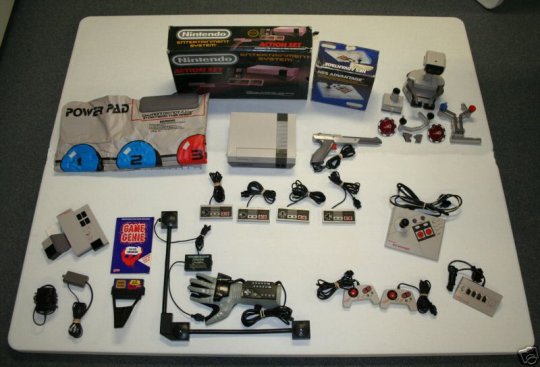
Crazy peripherals – There’s one thing you can’t deny about the early days of video gaming: companies had no idea what consumers wanted. There were so many different kinds of accessories and peripherals to get people lured in. Nintendo, always the innovator, offered up some choice accessories of their own. Let’s name a few: Zapper, R.O.B, NES Advantage, Power Pad, Game Genie, Super Scope 6, Power Glove, LaserScope, NES Max, and the Joycard Sansui SSS are just a couple of examples of what the Big N released. There are dozens more to choose from, most of which, didn’t really aid in increasing the gaming experience. Sure, we have accessories and peripherals today, but none as whacked out as some of the offerings from over two decades ago.
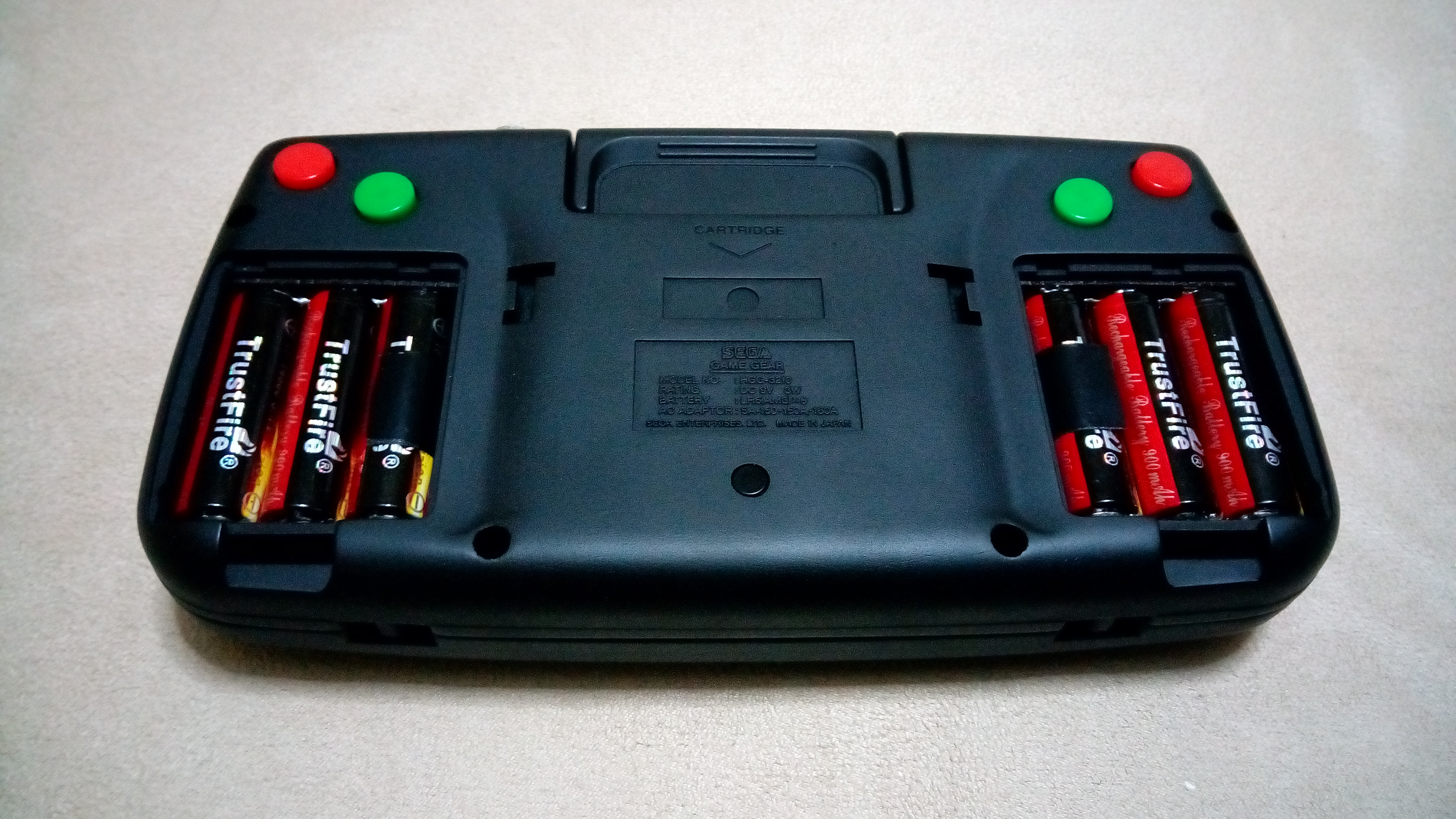
Batteries, Batteries, Batteries – Today’s portable devices use rechargeable lithium-ion batteries. Once the charge is gone, simply plug in your device (or battery pack) into the wall, and boom, you have a fully charged machine in no time. This, as we all know, wasn’t always the case. If I am not mistaken, the original Game Boy needed four batteries, while the Game Gear tipped the scales at a whopping six. I can’t imagine having to keep a healthy stock of double and triple A batteries just to play my favorite games on the go. The bulk of handhelds back then were already oppressive, but with the added weight of a billion batteries, they became more cumbersome than I feel they were worth.
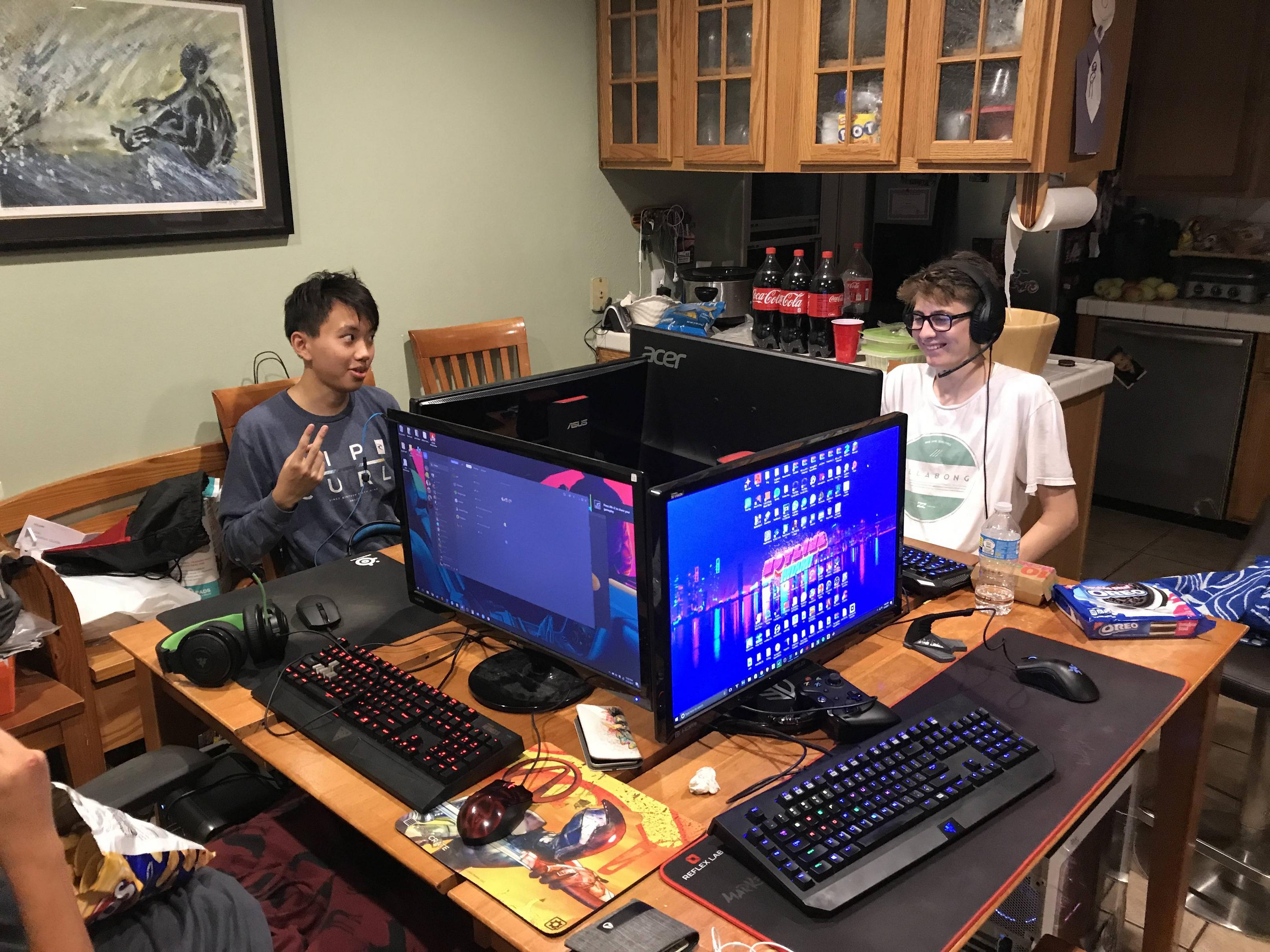
LAN parties! – Playing your friends online these days is as simple as turning on, logging in, and press start. As long as you pay the monthly PS Plus or Xbox Live subscriptions, you can play people all over the world in an instant, for as long as your bladder will allow. If you wanted to play your friends back in the early ’90s, however, you had to have a LAN party. For those youngsters who have no idea what that is, please allow me to explain. The internet was a fledgeling thing back then, and most companies didn’t have dedicated serves for gamers to use. Instead, if we wanted to play one another, we had to tote our computers to a friend’s house and wire them all up together. Once linked together, we could go to town on some awesome Duke Nukem 3D. I feel it’s important to mention that flat screen monitors weren’t a thing yet, so along with our heavy PC towers, we also had to lug very large and heavy monitors. LAN parties were annoying, frustrating, time-consuming, and tedious, but damn, were they fun as all can be. I love the fact that I can play anyone, at any time, and in any place in today’s gaming world, but I’ll go on record, as saying there was nothing more fun than a whole bunch of my friends coming together and playing some awesome ’90s PC greatness.
There you have it fellow gaming enthusiasts, just a few items and experiences that this generation missed out on. Wired controllers and buckets of batteries are things I can definitely do without, but sometimes I just want to sit down, play a NES game, and throw the controller while reading a Nintendo Power as I slip on a Power Glove surrounded by my friends at a LAN party nerd-fest galore. I miss those days!
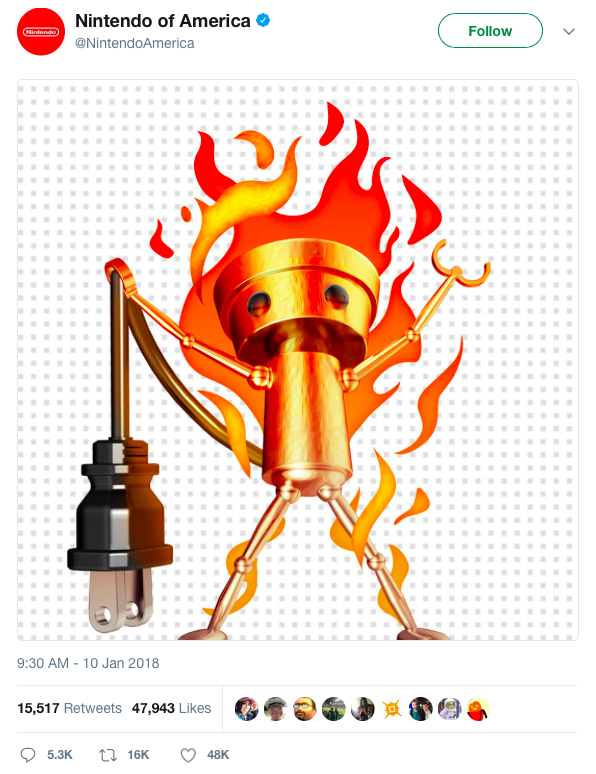
On January 10th Nintendo of America’s Twitter was aflame after this ambiguous tweet:
Gamers everywhere wondered what prompted Nintendo to tweet a picture of a flaming Chibi-Robo. Was a new Chibi-Robo game on the horizon? Nope. It turns out Nintendo was just hyping fans for today’s surprise Nintendo Direct Mini. Despite not mentioning Chibi-Robo, Nintendo did announce a slew of new Switch releases.
January Nintendo Direct (Mini) Rundown
Here’s the full rundown for you, reader:
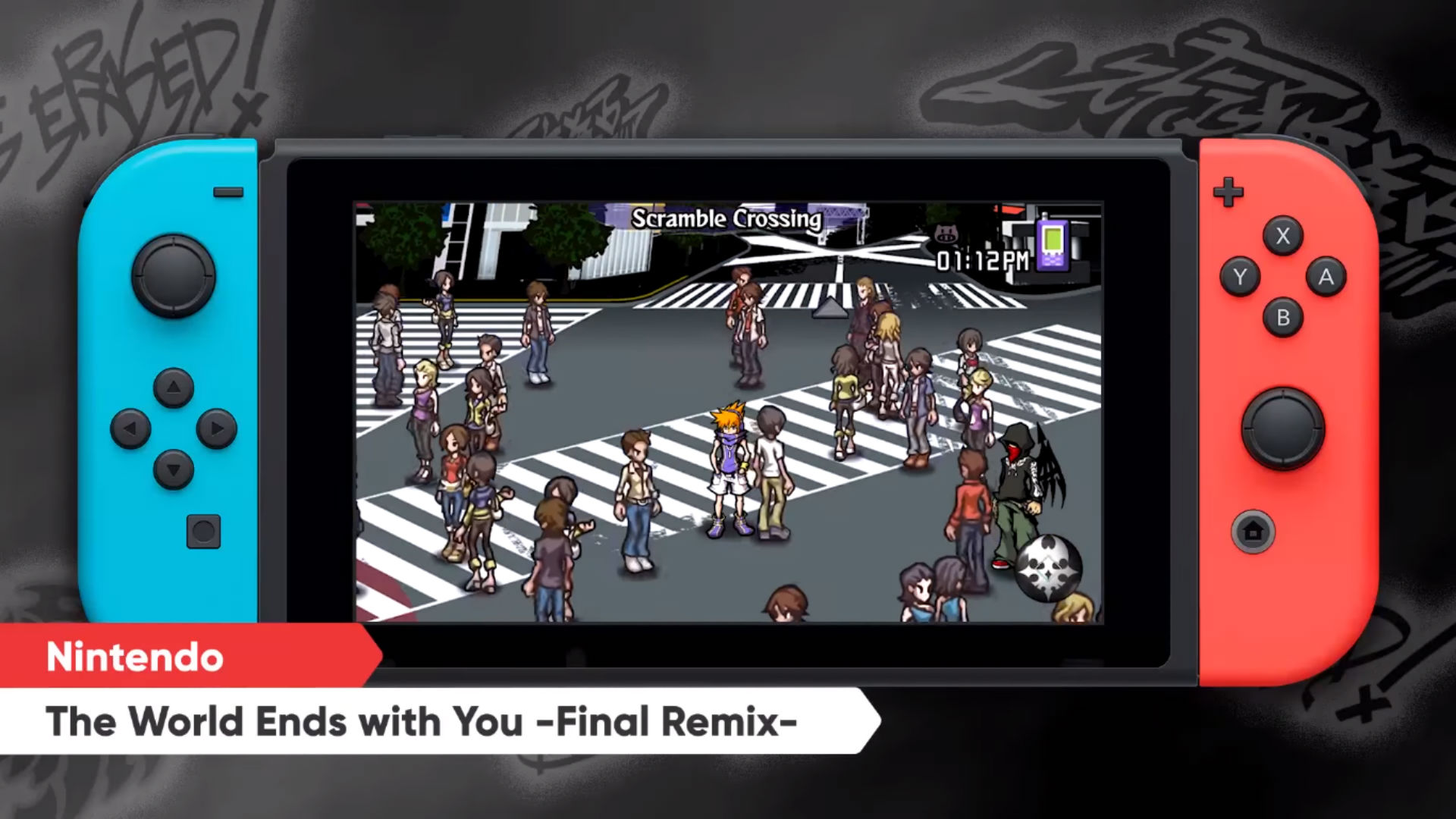
The World Ends With You Final Remix / 2018
One of Nintendo DS’ greatest titles, The World Ends With You, will be re-released on the Switch sometime this year. In addition to a new, Switch-exclusive scenario, The World Ends With You Final Remix will feature both touch controls resembling those of the original DS release and new Joy-Con controls. No specific release date was given, but The World Ends With You Final Remix will be released in 2018.
Pokken Tournament DX DLC / January 31st, March 23rd
New Pokémon fighters will soon appear in Pokkén Tournament DX. Battle character Aegislash will be available for download on January 31st along with the support Pokémon set Mega Rayquaza and Mimikyu. On March 23rd a new battle character, the famous Blastoise, and a new support Pokémon set featuring Mew and Celebi will be available for download. Both sets of Pokémon will be released as part of the Deluxe Battle Pack now available for purchase. While you won’t have access to the new Pokémon until their release dates, you will be given a new set of avatar items upon purchase.
Kirby Star Allies / March 16th
Nintendo presented a new trailer for the already announced Kirby Switch title featuring two of Kirby’s new abilities: Artist and Spider. Now Kirby can paint Waddle Dee and other enemies into a world of pain using the artist ability, or Kirby can spin a web around foes à la Spiderman. A new co-op mode will also allow players to mix and match abilities.
Dragon Quest Builders / January 2018
Experience the world of Dragon Quest your way in the Minecraft-flavored Dragon Quest RPG. The cross-platform hit is making its way to the Switch later this month, but a demo is now available for download in the eShop as well.
Hyrule Warriors: Definitive Edition / Spring 2018
It’s both the Wii U and 3DS Hyrule Warriors in one. The Switch’s definitive version of Hyrule Warriors will include all the exclusive content featured in both the Wii U and 3DS versions of Hyrule Warriors. New to the definitive edition are Breath of the Wild-themed Link and Zelda costumes, and a same-screen co-op mode.
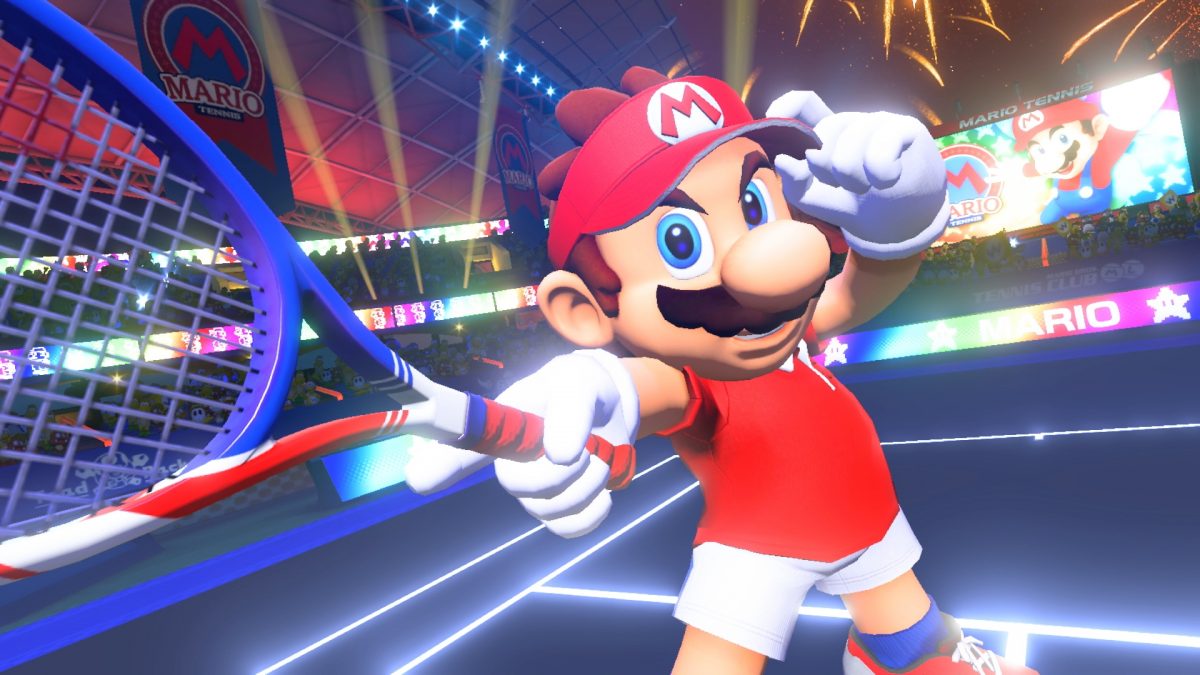
Mario Tennis Aces / Spring 2018
The developers of the great Mario Tennis titles, Camelot, are at it again with a Mario Tennis title for the Switch. Mario Tennis Aces will feature the series’ first story mode since GBA title Mario Tennis: Power Tour, complete with boss battles and mission-based gameplay. The story mode looks ‘ace’…
Ys VIII: Lacrimosa of DANA / Summer 2018
RPG fans rejoice! Ys VIII: Lacrimose of DANA is making its way to the Switch this Summer. Ys VIII features a real-time battle system, a base-building mechanic, anime-style cutscenes, and an epic narrative.
Super Mario Odyssey Update / February 2018
Luigi’s opening up a new world for Mario to explore in Super Mario Odyssey’s free upcoming update. The update features post-game content where Luigi sources Mario to either find or hide balloons. Finding and hiding balloons brings with it international scoreboards where players around the globe can find other players’ hidden balloons and compare high scores.
Also included in the Super Mario Odyssey update are new costumes for Mario and new filters for snapshot mode. The update will be free.
SNK Heroines Tag Team Frenzy / Summer 2018
SNK Heroines Tag Team Frenzy will feature female characters from SNK’s prolific catalogue of fighting games. Players will be able to customize fighters with different costumes and accessories.
Mario + Rabbids Kingdom Battle DLC / Spring 2018
A new challenger approaches in Mario + Rabbids Kingdom Battle and he is bringing all the jungle heat… and a banana boomerang (?) with him. Yes, Donkey Kong will be available for download this Spring.
Payday 2 / February 27th
The earlier announced Switch port of Payday 2 will release on February 27th along with a timed-exclusive new character: Joy. Joy brings with her hacking perks sure to make quick work of any security firewalls.
Fe / February 16th
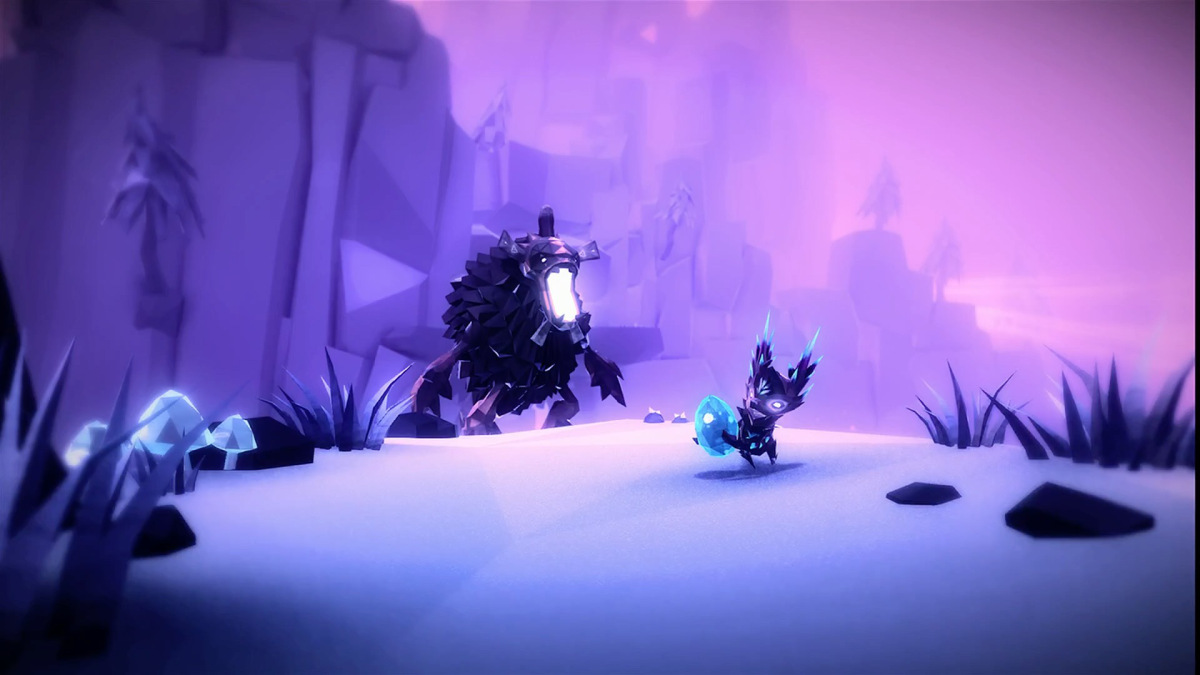
This platforming adventure allows players to explore a huge 3D world. Heavy emphasis is placed on music as players use it to unlock abilities and battle foes. Fe will be available for purchase on February 16th.
Celeste / January 25th
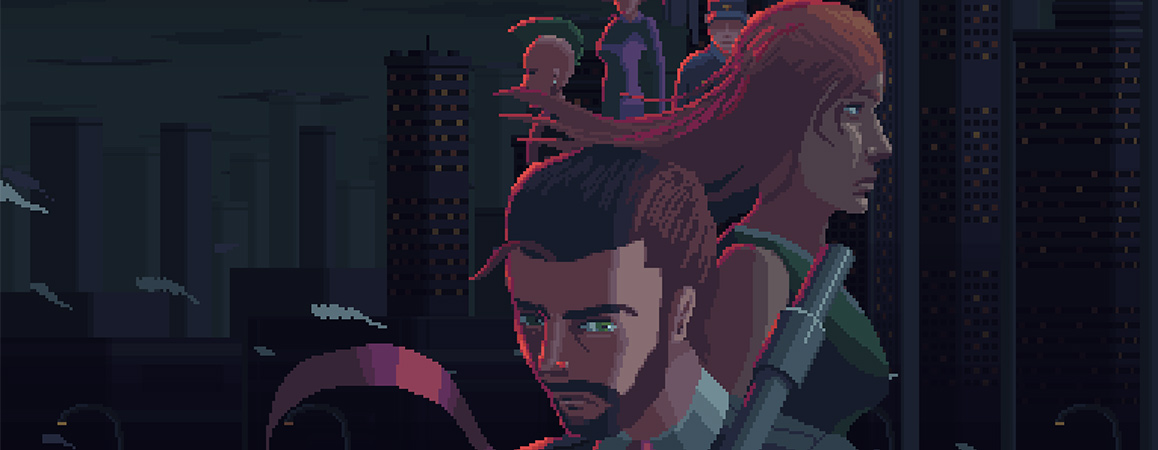
Celeste is a 2D action-platformer featuring lovely pixel-based graphics. Play as Madeleine and help her ascend Mount Celeste using an air-dash and other abilities. Celeste lets players fully customize game difficulty allowing for both easy runs and impossibly difficult runs too.
Donkey Kong Country: Tropical Freeze / May 4th
Another Switch port of a Wii U game, Donkey Kong Country: Tropical Freeze introduces Funky Kong as a new playable character with his own unique abilities.
Dark Souls Remastered / May 25th
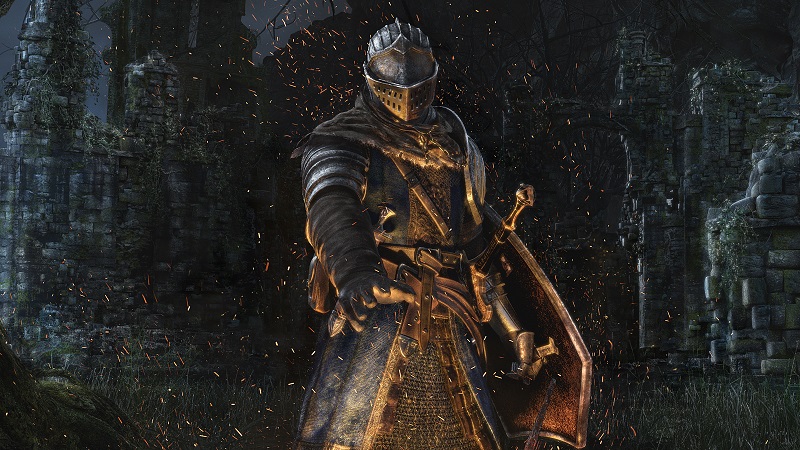
A trailer was shown for Dark Souls Remastered, but it didn’t include any details regarding changes or new gameplay. All that’s known about Dark Souls Remastered is its release date then: May 25th, 2018.
That wraps it up for the January 11th Nintendo Direct Mini. Are you excited about any of the titles showcased? Are there any games you were hoping to see that didn’t make the cut?
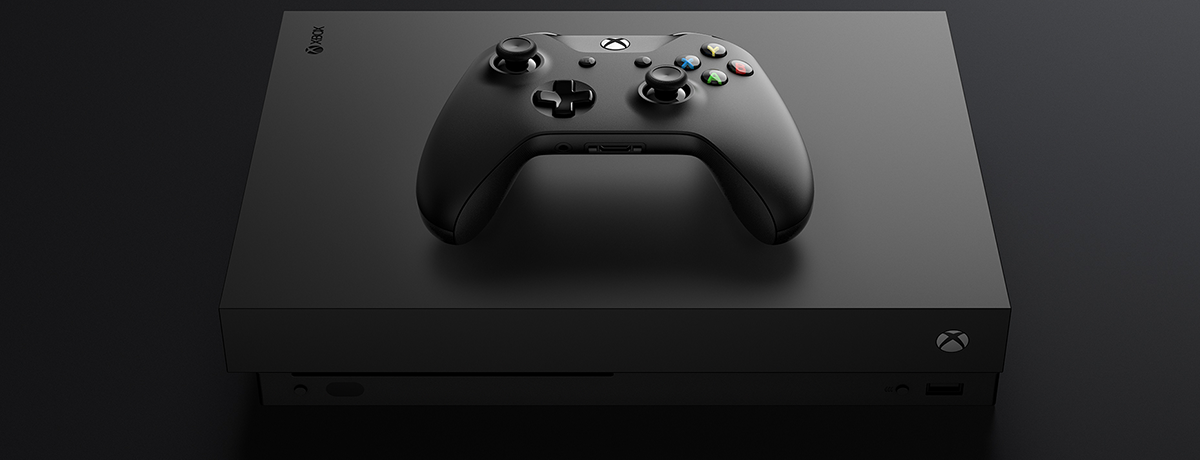
From the days of the original Xbox, I have always been an early adopter of Microsoft’s gaming consoles. I was even lucky enough to get an Xbox 360 at launch because my parents waited in line with me on release day. I’ve gone through the fat original Xbox controllers, got the red ring of death on multiple 360s, and have dealt with the VCR sized design of the Xbox One. I guess you could argue I’m an Xbox fanboy (if you have too much time on your hands). But, with the Xbox One X release, Microsoft has entered new waters in the home console market, with a mid-cycle upgrade for their current console generation. The real question regarding this new era of the home console market: is the Xbox One X a worthy enough upgrade to justify its princely $500 price tag?
A couple of weeks ago I decided to take the plunge on the Xbox One X and a new 4K HDR TV. It wasn’t cheap, but I’m the type of guy who likes to be up to date with new tech. It’s an expensive habit to have… With that being said, after fiddling with my TV settings, I found an image that suited my needs. Now, it was time to try out some games.
Xbox One X Enhanced Games
The games I currently own that are “Xbox One X Enhanced” are FIFA 18, Skyrim, Gears of War 4, and Fortnite. I’ll just come out and say it, some of these titles enhancements are pretty minor, and don’t add much to the overall experience. For example, Skyrim gets a resolution boost to an adaptive 4K resolution. But, with it being a 10-year-old game, the difference between the standard Xbox One version and the Xbox One X version isn’t that eye-catching. The same can be said with FIFA 18, in fact, the X version is no different than the PS4 Pro version. They both support a 4K resolution boost with HDR, but FIFA has never been that amazing looking of a game to begin with. These enhancements only slightly boost the overall look from the standard version.
However, with all that being said, for every game with mediocre enhancements, there are also games with amazing enhancements. Gears of War 4 and Fortnite are the only games I’ve played on the console that I would say are a night and day difference from their standard versions. Gears of War features updates across the board with resolution, upgraded textures, HDR, and new ways to play like a 60fps mode for the campaign. When I hopped on Gears and loaded up the campaign to start my Insane difficulty run, I was instantly blown away by how much better the game looked. It honestly felt like a fresh experience, even though I’ve already played the campaign upon its initial release.
What About Fortnite?
For Fortnite, the enhancements are a nice touch, with a near 4K resolution and upgraded textures, but the real benefit comes with how much better the game actually runs comparing it to the standard Xbox One version. Before I upgraded to the X, I was still using my “Day One Edition” Xbox One and she was a trooper. She had a faulty disk drive, and a Kinect that would never want to listen to me. But, throughout all my hours gaming, few games I played ran as poorly as Fortnite did. With textures not loading properly to not loading at all, to the game running at a pretty much always sub 30fps (especially in the pre-game lobby,) Fortnite was not a fun experience on my original Xbox One (I hear PUBG runs even worse). Well, I’m happy to report that since playing on the X, Fortnite has been my most played game since – it looks great and runs dramatically better.
So, with all this in mind, should the average consumer run out and buy an Xbox One X? I’m going to say no. My reasoning behind this is that I find the X to be a niche product. I say this because you can still play everything you can play on an X with an original Xbox One. Additionally, there are still more unenhanced titles than enhanced titles, with some of the enhanced titles not really making a huge difference from the standard version of the game.
Final Thoughts
If you want the best Xbox experience possible, then yes, you should run out and purchase an Xbox One X. But, if 4K graphics along with some other visual quirks don’t entice you, then no. I would not recommend you upgrade your current Xbox console. It’s not for everyone then, but if you’re an Xbox fan, then it’s worth the deep dive because you’re getting the best Xbox experience you possibly can.
I Fell From Grace released on December 20th, marking the debut release from indie developer, Deep Taiga. Placing players into a rhyming narrative mystery, I Fell From Grace brings a unique twist to the retro 2D genre.
D-pad Joy recently had the chance to speak with Deep Taiga on topics such as how to stay motivated throughout the long development process, key trends in the industry such as VR, and advice for young developers just starting out as part of our interview series.
What inspired you to get into game development?
Funnily enough, my grandmother said when she heard I was making a game that this is something I had proclaimed I would do back when I was 8. I don’t remember that, but I’ve always enjoyed creative outlets, be it graphic/web design, poetry, CGI animation etc. I love telling a story and making a game affords so much in terms of creating a world for others to get lost in.
What games have you created and which is your favourite?
I fell from Grace is my first creation, so I guess it’ll have to be my favourite!
What advice would you offer for those just starting out?
You can totally do it! But it takes a lot of discipline, time and patience. You’ll feel like walking away from the project numerous times, especially in the beginning (at least I did), but if you stick with it, you’ll get there.
What do you think is going to be a key trend in the games industry this year?
I’m not a guru of any sort when it comes to the gaming industry, so I really don’t know. VR will probably see continued growth in 2018 – which is pretty neat.
What’s your favourite platform to sell games on?
I love PC gaming which is why I chose to make I fell from Grace a PC title primarily.
What are your favourite tools for game development?
The internet! Boy howdy can you learn a lot.
How do you stay motivated to achieve your goals?
There’s a great vlog made by Burnie Burns where he talks about motivation – which I completely agree with. I don’t really believe in motivation. Or at least I don’t believe that motivation is what should be pushing you to do things. What you should focus on cultivating is discipline, which in turn, will often give rise to motivation as a byproduct. If I only worked on my game when I felt like it, it’d be nowhere near finished.
What do you think about VR?
Super cool! And it’ll probably be a major part of gaming going forward, but I don’t think there will be a time anytime soon where that’s the only way to game.
Games console of choice?
Can I only pick one? Goodness… I guess the SNES was pretty great. But then the PS1 had FF7. Maybe it doesn’t really matter… Can I pick two? I’ll pick two.
-END-
You can find Deep Taiga’s debut release – I Fell From Grace – available now on PC at the Steam store.