Demon's Souls servers

R.I.P. Demon’s Souls servers

Today is the 28th February 2018 and today is a very sad day. It’s the day that the Demon’s Souls server(s) officially shuts down. The unsuspecting phenomenon that not only created a sub-genre but changed the landscape of gaming forever. Once a niche title, now a more popular than ever series – it wasn’t always like that.

R.I.P. Demon’s Souls Servers

Demon’s Souls was developed by From Software and is a spiritual successor to their King’s Field series. Development started in 2006 but word got around the office that the project was turning into a failure, one coder got wind of this, and that coder was none other than Hidetaka Miyazaki.

With little experience working on games and with From Software already deeming the project a failure, the company was happy for Miyazaki to have creative control over the project. In an interview with The Guardian back in 2015, Miyazaki had this to say:

“The project had problems and the team had been unable to create a compelling prototype. But when I heard it was a fantasy-action role-playing game, I was excited. I figured if I could find a way to take control of the game, I could turn it into anything I wanted.

Best of all, if my ideas failed, nobody would care – it was already a failure.”

With no one at From Software caring and Miyazaki heading the project, this ‘failure’ would turn out to be one of the most original titles of the Seventh Generation. It’s a fine example of ‘Videogames as Art’.
Demon's Souls
Demon’s Souls

The game is bold, uncompromising and took decades of game design, scrunched it up and threw it at a wall. With dynamic difficulty being introduced to more and more games around this time, Demon’s Souls took that concept, but instead of the game getting easier when you die, the game got harder.

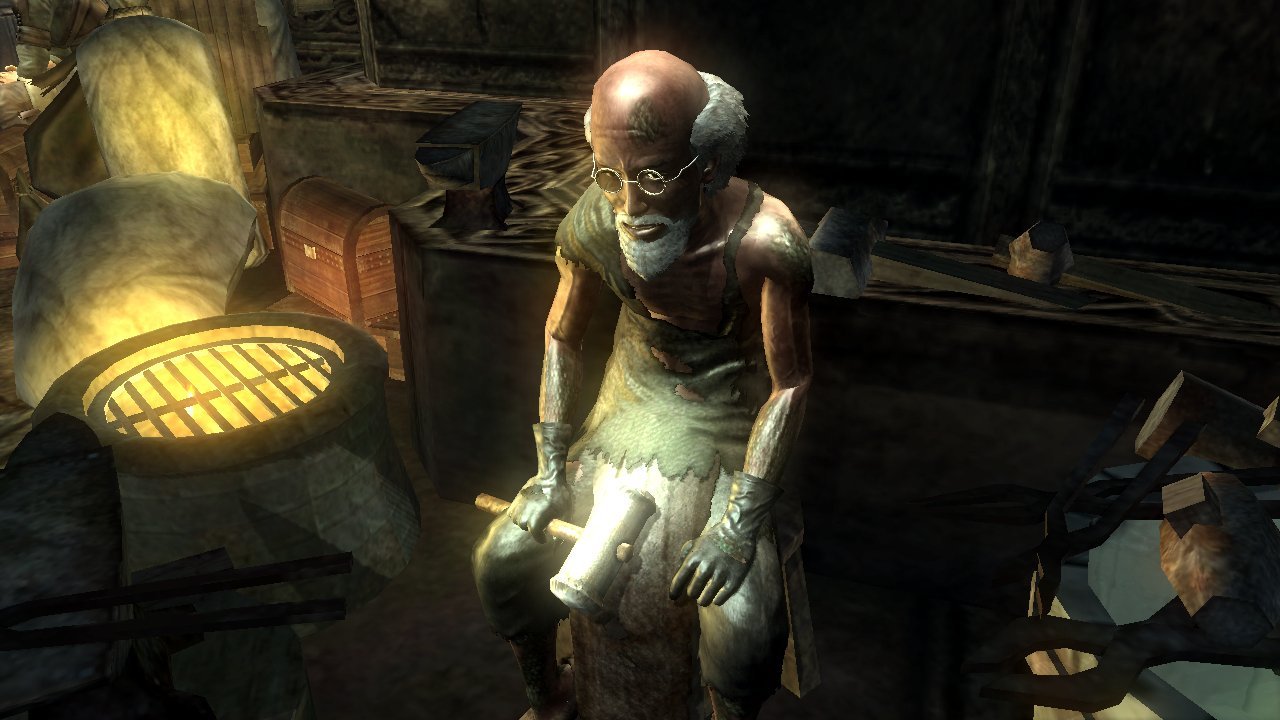
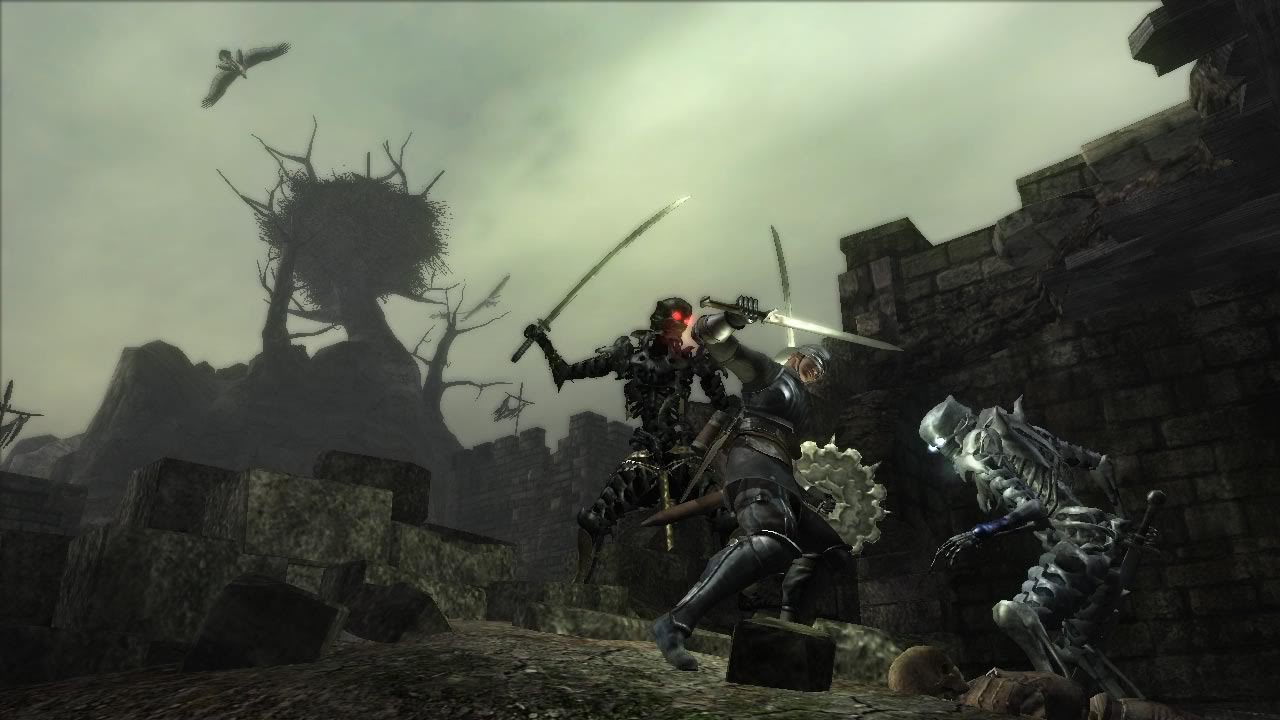
The title features some of the best boss battles in any game: the Fool’s Idle being more of a puzzle, Maiden Astraea committing suicide, False King Allant having a move that de-levels your character and King Allant, the final boss being a sorrowful blob. Messages left by other players either helping you or sending you to death. Vendors being murdered by an NPC when you are not within the Nexus (the hub). The ability to aide, invade or be invaded by other players. A story that’s ambiguous, told through snippets of dialogue and item descriptions; all these ideas and mechanics cement a sense of dread and a forbidding atmosphere.

Servers come and go, so why is it a big deal that the Demon’s Souls one is getting shut down?

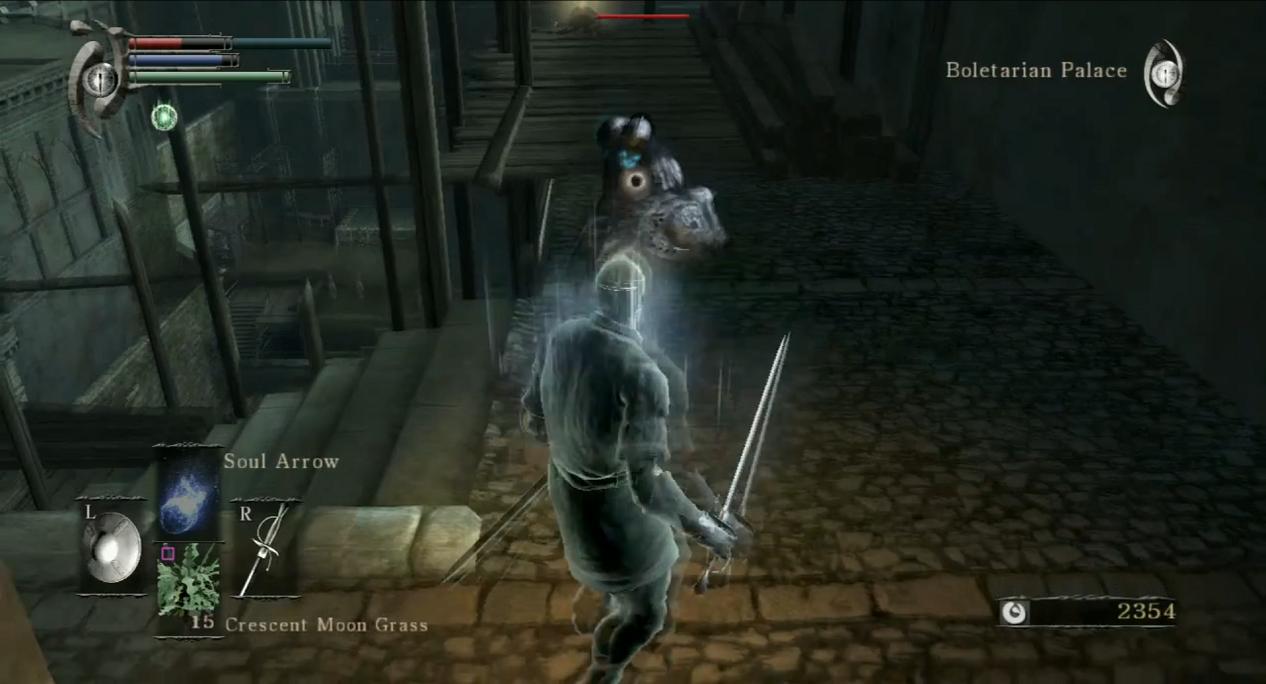
The game is single-player with online components within it, but the online component is actually integral to the experience. Hitting a sword on a random wall because a message told you it was an illusion. The fear when someone invades your game. The scattered Red Blood signs showing you other players’ demise or the ghostly glimpses of other players that fade in and out of view. Memories.
Demon's Souls
Demon’s Souls

The World Tendencies will no longer function that change events within the game either. Finally, there is The Old Monk Boss, which forces you in a PVP match; now it will just be a Black Phantom instead. The game is still enjoyable without the above sure, but it will now be like a flower without petals.

It’s not just the experience though, it feels like the end of the beginning. The end of the start of something new, something original and something now that’s been imitated.

So, goodbye Demon’s Souls server; the game is there, but your soul has gone.
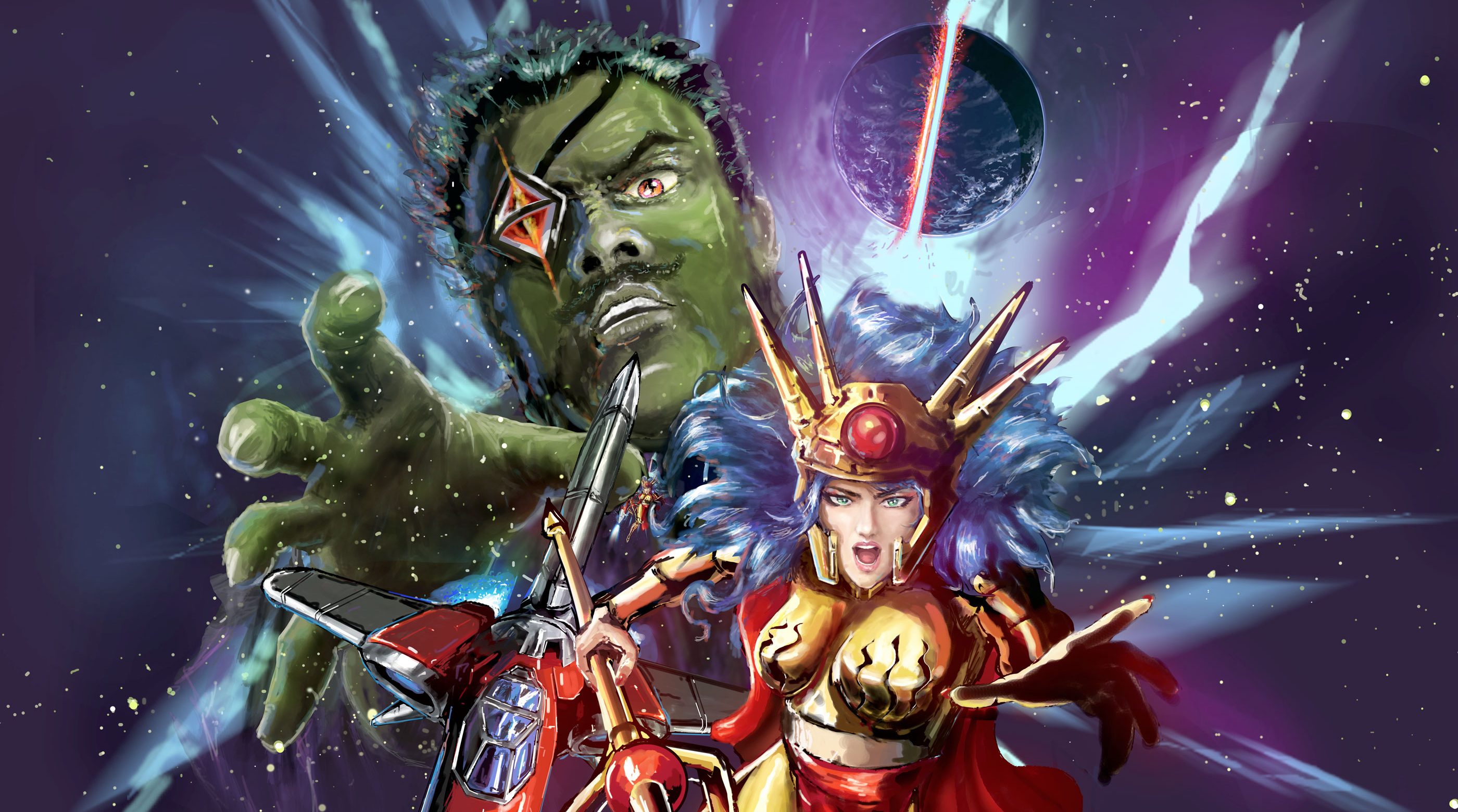
Starsceptre 2.0

Starsceptre 2.0 Update: A Thank You To The Fans

When Starsceptre originally released it was to introduce a retro shmup with a new kind of control – Tilt ‘n’ Shmup. What I realized early on was not many people liked tilt, favouring touch instead.

Starsceptre 2.0 Update

The more I looked into it, the more I realized I needed to rework the game to give the ship the freedom of the whole screen that gamers were yearning for.

As a result, I redesigned, not just the controls, but the powerups too because when the ship moved around its rear became unprotected.

Starsceptre 2.0

Backwards canons and beams meant destruction happens behind you now as well as in front.

One of the secret features, built-in from day one, was a hidden code screen, accessible from a flashing star on the main menu screen. Clicking that took you through to an 8Bit controller whereby you could try out a 10-digit code to see what you could unlock.

Starsceptre 2.0

Retro gamers who knew the original Konami Code unlocked some additional weapons to start the game better off. And if you don’t know the Konami code, here it is:

Up, Up, Down, Down, Left, Right, Left, Right, B, A then Start.

But I also used this mechanic to unlock players for the game who had supported us since day one. Gamers, reviewers and game devs were selected to become unlockable Avatars on the home screen using a unique Konami-type code.

Starsceptre 2.0

Getting Starsceptre to launch and now to redesign has taken 2 and a half years of coding in my spare time on my commute to and from work. Coding on the iPad meant I could code and test straight away without needing to sit down at a computer. It’s been this approach that led me to make my dream of finally making a shmup that people could play. I hope you enjoy playing the updated game available on iOS now!

Richard Morgan

8Bit Magic Games

Starsceptre is currently at its lowest price of £0.49 GBP/$0.99 USD/€0.49 EUROs/¥1 CNY until the 7th March.

The Darkside Detective Review [Nintendo Switch] – A Mystery Worth Solving

I tend to harp on the overly simplistic ports that have inundated the Switch since its release. The one to ten-year-old ports that have crowded the eShop can be annoying, and it’s that over crowdedness which can bury a great indie game under all the clutter. If you can manage to wade through all of the nonsense, you might just be lucky enough to find The Darkside Detective, from Spooky Doorway and Isometric Dreams. I simply adore everything about this title, with the story, humor, music, and overall premise of this game overjoying me. What could easily be dismissed as yet another title from a bygone era, is actually one of the more fun and entertaining titles in the Switch library.

The Darkside Detective Review [Nintendo Switch]

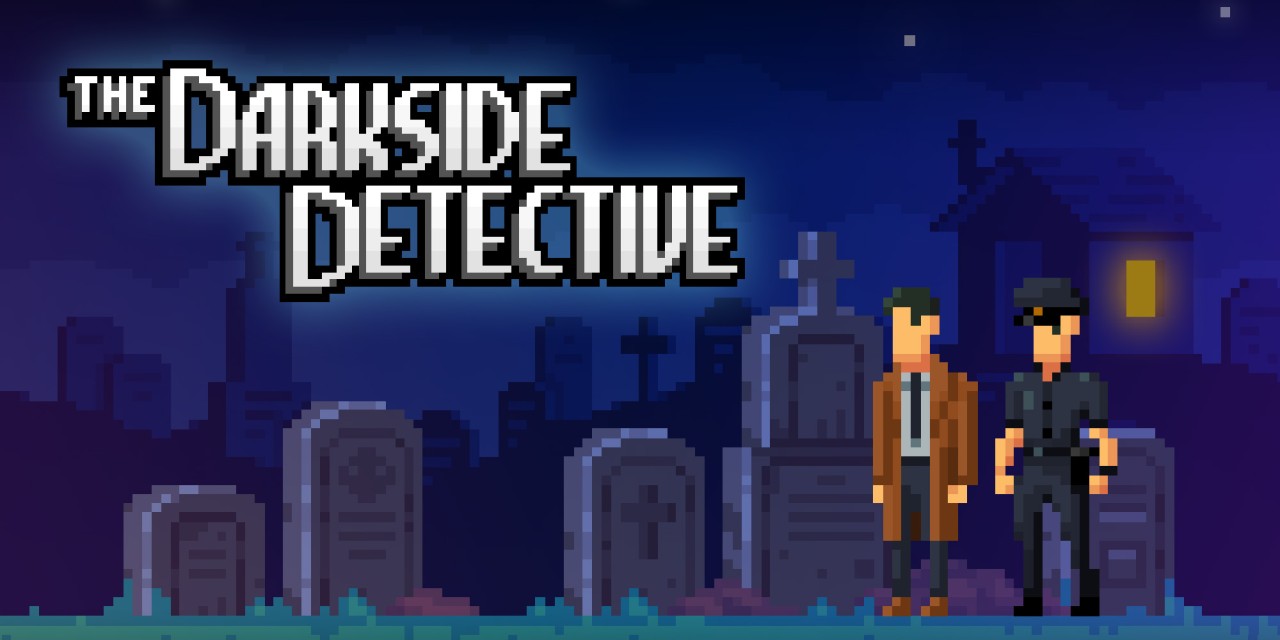
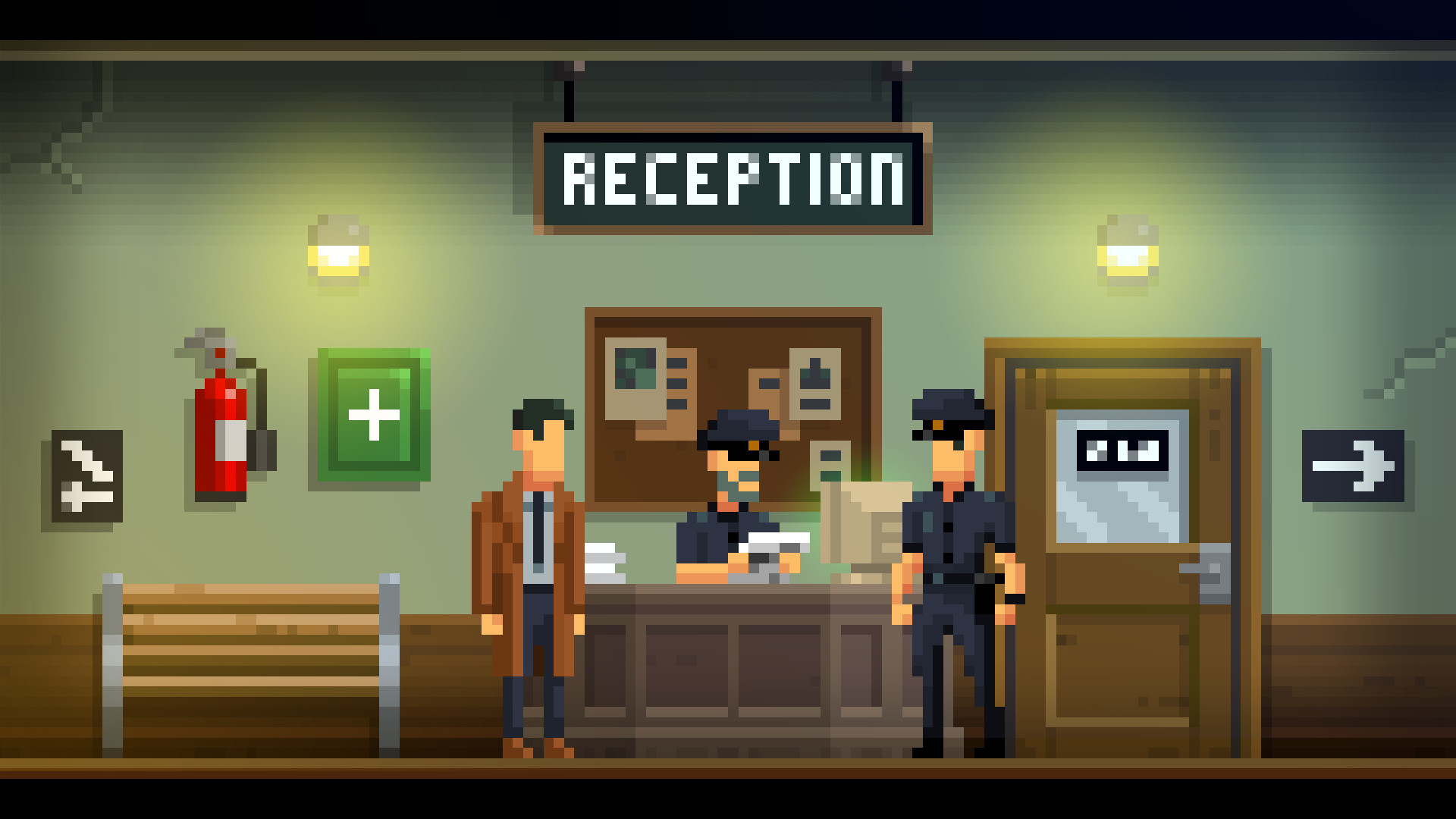
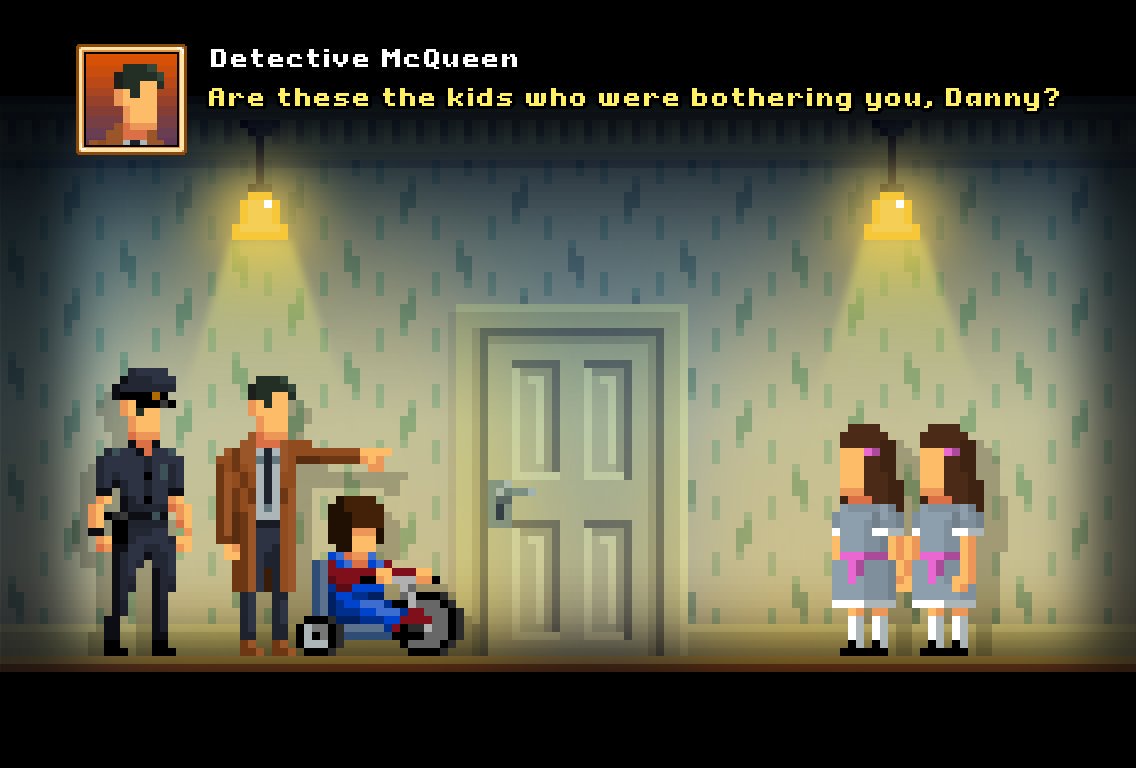
The Darkside Detective is a cross between the The X-Files, Kolchak, and Twin Peaks, and follows around Detective Francis McQueen as he attempts to solve mysteries of the supernatural. Following the Detective on his cases is officer Dooley, a dim-witted, but hilarious beat cop who adds little help to the case, but a whole lot of entertainment to the player. As the pair work on cases involving members of the occult, ghosts, monsters, and the paranormal, the detective must put all the pieces together to uncover the mysteries of the Darkside.

The Darkside Detective

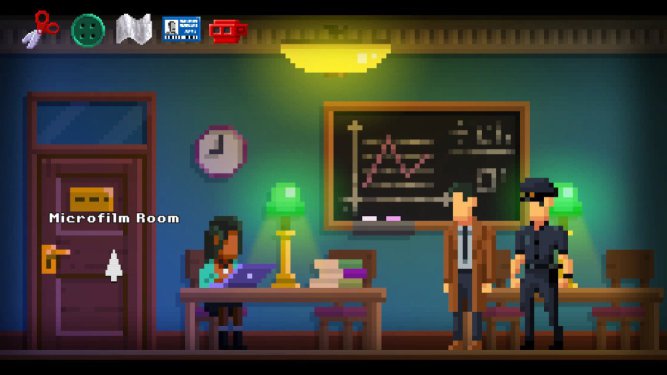
The game is rather simple at its core, and is mostly a point/drag and click adventure. There’s no free movement, but rather you click on the direction or room you want to go and the slide changes. Each room and environment (which are all beautifully animated), can be interacted with and searched for clues. As you hover the pointer over objects and people, you’re given the option to either talk, examine, or take. It’s very important to listen to everyone, as clues to the case could, and most likely would, be blurted out.

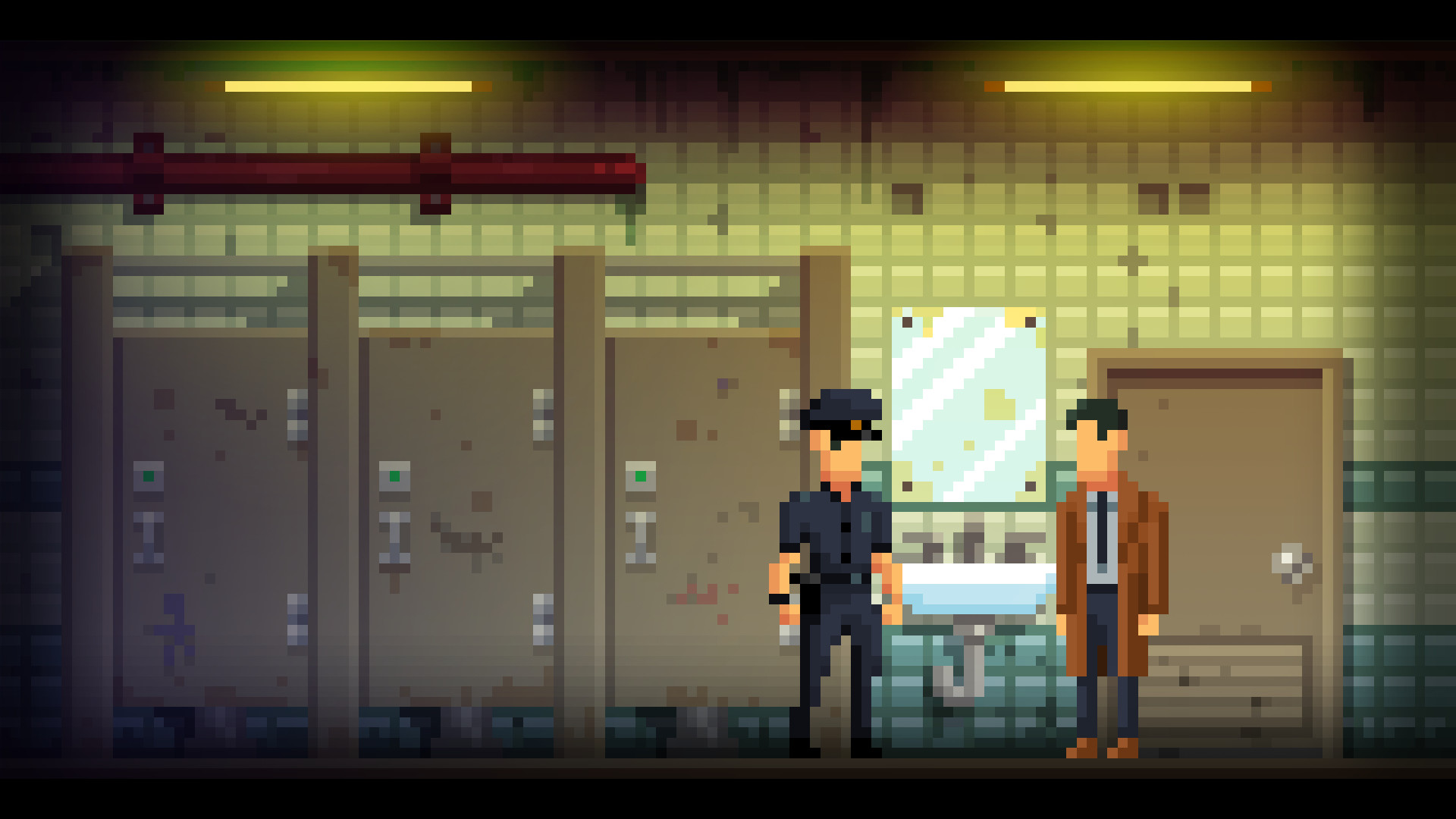
From haunted police stations, spooky libraries, and eerie subway tunnels, the town of Twin Lakes where this is all set is unique and filled with mysteries. McQueen must make his way throughout each location in order to solve the case, and the objects you find can be combined in order to help. A missed clue or object could mean endless searching for what you’re supposed to do next. The game is about being a detective, so go and detect!

The Darkside Detective Review
The Darkside Detective

Making the overall experience even more enjoyable is a laugh-out-loud tongue in cheek humor. From the names/puns of the missions and characters to the witty banter, I found myself bursting out into laughter on more than one occasion. I don’t want to ruin any of the funny lines, but in one instance, McQueen and Dooley are standing in a room with a giant marble statue of an angel. Click on the statue, and Dooley simply blurts out “Don’t Blink.” For any Doctor Who super-fan such as myself, that little reference is just about as close to perfection as a nerd can get. These pop culture references and humorous one-liners pop up throughout the game and help to set the adventure apart from similar titles.

The Darkside Detective Review
The Darkside Detective

The only true negative I can think of is that it’s all too easy. There are only six cases to get through, and I was already on case four by day two. The only time I felt challenged was when I failed to find an important object or didn’t talk to someone and missed a vital clue. This isn’t a bad thing necessarily, but as someone who is in love with the game, I really wanted the journey to last longer. It’s my hope that the developers release some new cases in a future DLC pack.

When I say I am in love with this game, I mean everything about it, including the music. As I was playing in handheld mode, the music sounded amazing. I slapped on some Bose headphones, and the experience magnified. From composer Ben Prunty, the man behind games such as FTL and Gravity Ghost, the music in Darkside Detective is just beautifully done. Befitting the supernatural tone of the game, Prunty’s score is some of the best music in recent gaming memory. Just remember, this is a simplistic game, so the fact that they put this much effort into the music really shows the passion surrounding the project.

The Darkside Detective Review
The Darkside Detective
Secret of Mana HD

Secret of Mana remake version 1.02 announced

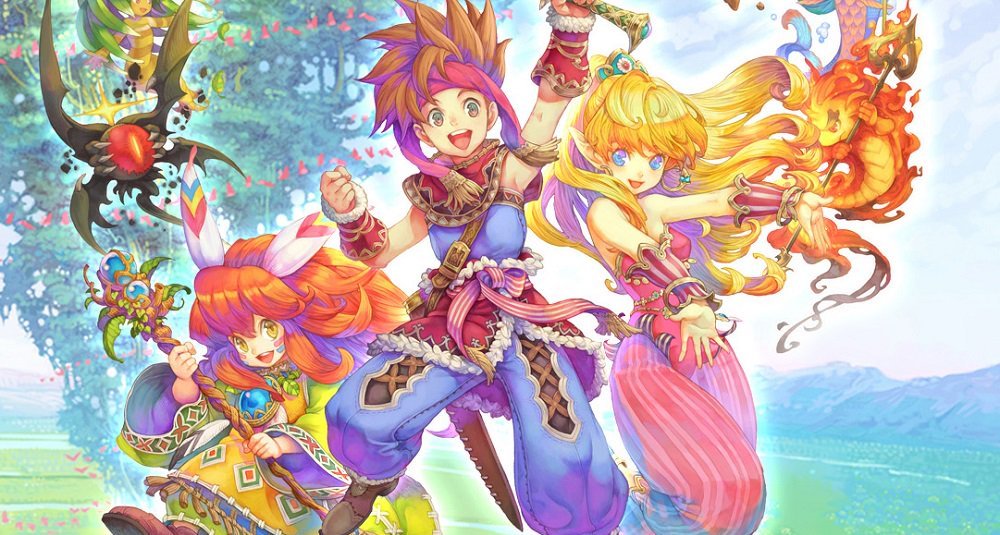
Secret of Mana was released on the Nintendo Entertainment System all the way back in 1993, (the same time Europe received Streets of Rage 2) and a remastered edition has recently been released on PlayStation 4, PlayStation Vita and PC.

Secret of Mana HD Remake

The remaster adopted 3D graphics, voiced characters and some new content too. The biggest criticism of the title thus far though, appears to be the horrible optimization, specifically on PC, although it doesn’t look great for any of the versions. The game is said to crash constantly and there are animation problems aplenty, which gives the impression of a rushed to market product.

On that note, Square Enix have announced version 1.02 for the PS4 in early March and it’s due out on PC and Vita soon. The patch fixes many errors, such as black-out screens, colour changes, movement errors and more.

Here’s everything it does:

  • Fixed common application error.
  • Fixed personality colour change error.
  • Fixed black screen after character revived at 0 HP mistake.
  • Fixed an error in which a conversation won’t finish in some specific locations.
  • Fixed an error that had characters fall into the first floor of a dungeon to the next.
  • Fixed an error that slowed an enemy during an assault or magical cartoon.
  • Left the bow weapon trajectory when assaulting particular enemies.
  • Added a guide to display how players can switch the Ring Control screen.
  • Added an icon to display the character currently employing a ring.
  • Added a display of the effect of a Ring.

Hopefully this patch fixes the many performance problems of the game so that fans can fully enjoy the experience offered by Square Enix. I know things will never be like 1993 again, but this can be much, much better!

Yes, Mobile Gamers Are ‘Real’ Gamers

In South Park and The Simpsons we’re shown as internet trolls, in Future Man we’re a lowly janitor still living with our parents, and in The Big Bang Theory, we’re a group of gangly and awkward nerds with social anxiety. The stereotype of a “gamer” is not one that is often shown with tact. Often these characters are reduced to a trope that is tired, lazy, and incredibly inaccurate. It would be easy to blame these portrayals on the “others” who don’t play games, but the problem is only exacerbated by the sense of ego and console class wars that the gaming community has seemed to foster.

If you scroll through the comments section of any big gaming site you’ll notice there’s often a litany of rallying cries around the “PC Master Race,” or the declarations of the death of the “Xbone” or the idiotic ineptitude of both “Nintendo and Sony fanboys.” As a community, we have created a toxic class system in which one console, or more broadly speaking one medium, has power and a status above another. For example, there is an entire Wikipedia page dedicated to the idea that PC gamers are ‘superior’ to their home console counterparts. The PS4, Xbox One, and Nintendo Switch are subservient. Do PC games look and run better? Yes, if you have the right set-up they generally always will, (the technology advances at a quicker rate). Does that, therefore, make a PC gamer better than everyone else? Of course it doesn’t. Even within the said latter console communities, there is a further hierarchical debate considering power, portability, and exclusives.

It’s this very immaturity that propagates the gaming industry into not being taken as seriously as it should be. This ‘class’ system has done more than just fueled poisonous debates about which console or platform is the ‘best’; it has also stunted the very definition of a “gamer” and is a key reason why the industry as a whole is still looked down on when compared to films, books and TV. It has created a rubric for what constitutes a “good” game and has set in place a structure for how serious or dedicated a gamer is based on their choice of system.

Yes, Mobile Gamers Are 'Real' Gamers

Under these guidelines, it would be a stretch to consider anyone who plays three hours of Candy Crush Saga a day on their phone a “gamer”. A game on a device that is graphically substandard and comparatively low-powered. And yet the gamer is sinking the same amount of time in as someone who is playing a game purchased on Steam. Obviously, comparing the capabilities of a PC and the gaming abilities of an iPhone is a fool’s errand, but does that mean we should discount someone who chooses this type of user experience? That should be celebrated, or at the very least tolerated, but is instead often crucified by a community that is seeking to organize their players by superficial graphics and frame rates.

With The Legend of Zelda: Breath of the Wild winning Game of the Year at the D.I.C.E. Awards, we have definitely made an effort to discount the power of the console – the Wii U and Switch stand nowhere near the other platforms when it comes to frame rate or graphics. Let’s extend this trend to mobile gaming and acknowledge that people who seek enjoyment from a mobile device are putting their knowledge of power behind them and simply embracing the game experience. If they devote ungodly amounts of time to Alto’s Adventure on the iPhone, they are no less a “gamer” than someone who spends an equal amount of time playing Overwatch.

In a 2015 study by the Entertainment Software Association, they reported that four out of five homes owned a device to play games on. Further, 42% of Americans played video games regularly. This is not a community that is devoted to one system, but a population that is spread out over many different gaming experiences. I’ve personally played games on every format imaginable: a “gamer” is a “gamer” if they’re dedicated to playing games. Like a “reader” of books is a “reader”, regardless of the length of the book.

We should celebrate our wide range of mediums if only so our portrayal in the mainstream is not so inaccurate and narrow. We should put the console/system ‘war’ (the silliest war I’ve ever heard of) behind us and admit that wherever, whatever platform we choose, we’re all just gamers trying to navigate an increasingly harsh reality.

Naruto: Ultimate Ninja Storm

Remastered trilogy of Naruto: Ultimate Ninja Storm is seemingly coming to Switch

It’s time for every Switch owner to go grab a bowl of ramen because everybody’s favourite Ninja is finally coming to the new Nintendo console (we think). Let’s get you guys caught up:

Naruto: Ultimate Ninja Storm Trilogy

  • In the Summer of last year, Bandai Namco released Naruto Ultimate Storm Trilogy and Legacy for Xbox One, PS4 and PC. These titles are both collections of the highly popular fighting games based on the hugely popular anime Naruto.
  • The trilogy collects all 3 titles of the last gen Naruto Ultimate Ninja Storm fighting games, while updating their graphics and including all of the DLC for each respective title. On the other hand, The Legacy edition contains everything listed above, plus the recently released Naruto Ultimate Ninja Storm 4 and all of its DLC.
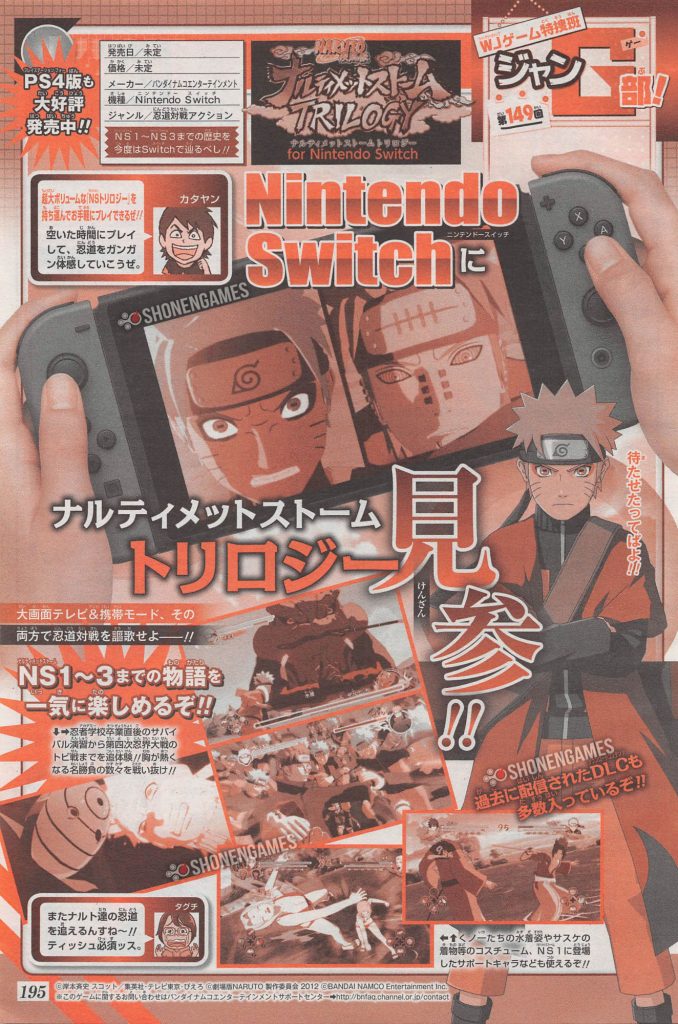
  • Well, as of now it looks like only the trilogy will be released on the Nintendo Switch in Japan, with no word if the Legacy edition will be coming as well.
  • This news comes from an ad in the Japanese magazine Shonen Jump, which announces the upcoming release in Japan.
  • Although, this ad does not release any information about an upcoming release anywhere else other than Japan. The trilogy already has localized versions out there on other consoles. So, I personally think its just a matter of time until we see this title released on the Switch in the US and EU.

Naruto: Ultimate Ninja Storm

Does the prospect of the Naruto Ultimate Ninja Storm Trilogy on Switch excite you? Or are you guys bummed that it’s not the Legacy edition? Let me know in the comments below!

Phoenix Wright: Ace Attorney

Past Blast: Phoenix Wright: Ace Attorney

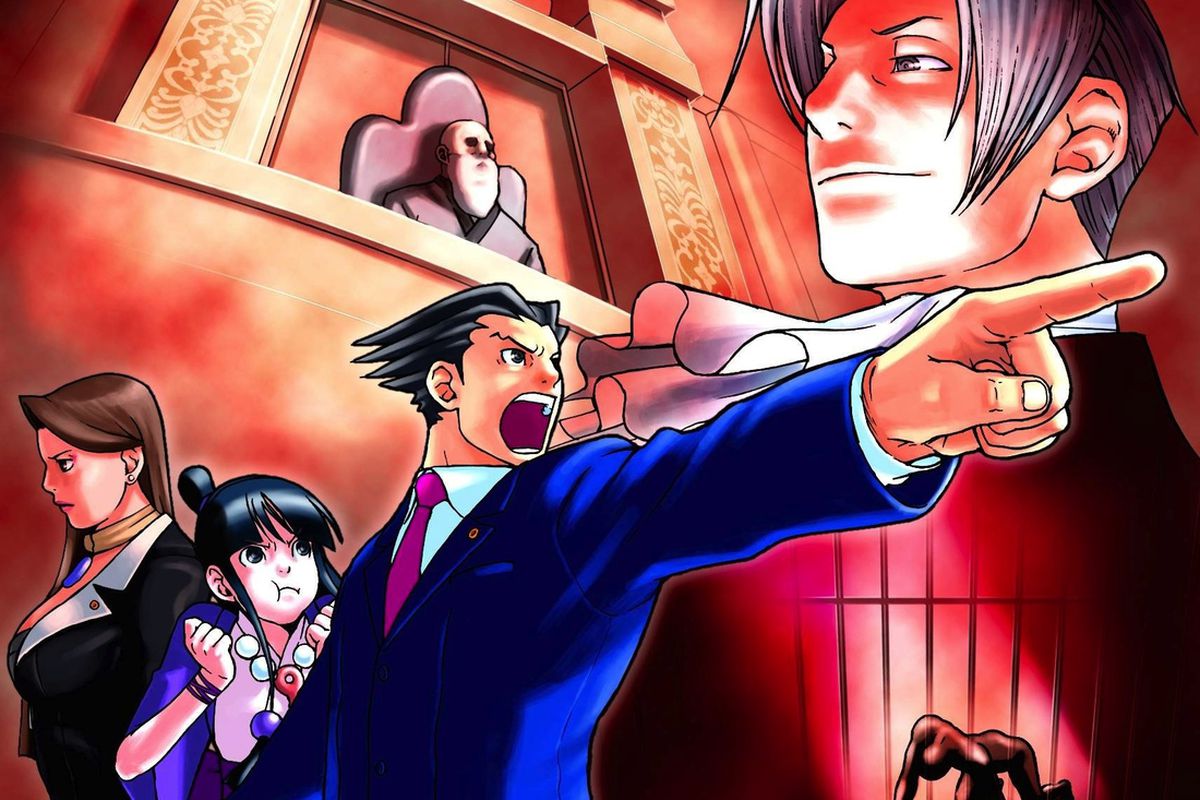
Phoenix Wright: Ace Attorney, from Japanese giant Capcom, was produced for the Nintendo DS in 2005, or rather, an enhanced remake was. While it’s not all that common knowledge, the game was actually first conceived for the Game Boy Advance in Japan, way back in 2001. There was also a popular port of the title on Nintendo’s archaic, yet somehow fondly remembered WiiWare service in 2010.

Phoenix Wright: Ace Attorney

The first game in the series centred on the eponymous Phoenix Wright, a budding new attorney learning the ropes of the courtroom. What struck many, myself included, was that the story was good – really good. This was essentially a lawyer simulator turned into a game but, arguably, (and in this writer’s opinion), the title features some of the best writing in one to date.

Phoenix Wright: Ace Attorney
A Nintendo DS screenshot showing both screens in use.

‘Gameplay’ wise, you were tasked with finding contradictions within a witness’s testimony. This started off simple, but quickly became complex, with players often running the scenes through their head and asking questions such as: “How did they get there if they were also somewhere else at the exact same time? Something doesn’t add up.” Then, once you were sure enough of your own conviction, you could make yourself feel stupid/empowered and shout “Objection!” at your DS, or TV, depending on which version you played the game on. (Fear not, you could also just hit a button if you were feeling a little bit awkward on that crowded bus to work).

It was this spark of simple genius that made the game so compelling. If you were W-right (see what I did there? Ok, I’ll grab my coat), you saw your witness squirm in front of you, trying anything to convince you that they didn’t kill him or her. What made it even better was when the opposing prosecutor, Miles Edgeworth, came into the fray with a smart ‘get out’ for the witness – upping the ante considerably. Ensue a battle of wits until the very end, all in the name of justice. Like a Sherlock Holmes vs Professor Moriarty encounter. And really, there isn’t much better than that.

Phoenix Wright: Ace Attorney
The visuals were blown up on WiiWare.

Tie all this in with the aforementioned sagacious writing, sometimes silly, often hilarious, thought-provoking and incredibly dark when it wanted to be, and what you had was a game many had not ever experienced before. (It would be remiss of me not to mention the music that plays when Wright brings the justice):

But it wasn’t just the cases which were superbly put together in Phoenix Wright: Ace Attorney, it was the surprising depth of the characters as well – each had hours of intriguing backstory that would deliciously expand over the course of the game(s).

Nick himself, for instance, was a captivating protagonist. His quirky, yet determined to succeed and find the truth manner (something his creator Shu Takumi once admitted was based on himself) made the journey a truly thrilling ride. Wright’s character and position would subtly continue to develop over the games, from rookie to outright veteran in the later adventures. (Sorry, no major spoilers here!).

Let us not forget Miles Edgeworth either, a fan favourite of the series, and rightfully so. Edgeworth would end up becoming the anti-hero construction we all know and love in fiction. He would help Phoenix in the courtroom, but would nevertheless remain a formidable opponent who Wright had to prove himself to again and again; however improbable the events that unfolded!

That’s without mentioning the rest of the cast: the loveable yet struggling to achieve Gumshoe, the endearing and curious Maya. Manfred von Karma… All of these characters felt alive.

Phoenix Wright: Ace Attorney
Ace Prosecutor Miles Edgeworth.

This writer remembers getting to the last case of Phoenix Wright: Ace Attorney for the first time (many years ago), not knowing the series always ended on such an epic dénouement; the scale of it all hit me. That final case (and just wait until you play the others) is something to see; tense, absorbing and yes, moving. It’s comparable to the final court scene in the film A Few Good Men.

Admittedly, never having played Phoenix Wright: Ace Attorney on the DS, it was a series I had always wanted to try, but never got around to. Bigger names always stole my attention whenever I got close. For me then, it was on WiiWare where the natural love began. The rest is history: Ace Attorney remains one of my favourite games (and series) to this very day. There’s no doubt it gets more attention than ever, but it’s still a pretty niche series.

Phoenix Wright: Ace Attorney
‘Rise from the Ashes’ was a bonus case created for DS.

So, you’ve never played it? That’s ok, it’s never too late! Copies for the DS can be few and far between nowadays, so the best bet is to pick it up on 3DS or on iOS devices. As for the future of the series, we now know that Capcom is working on a new Ace Attorney title for the Switch. There are rumours circulating that an ‘Ultimate Edition’ of sorts is in the works too. But, as ever, we’ll have to wait and see on that.

Indeed, while we wait, if you’ve played the masterpiece that is Phoenix Wright: Ace Attorney already, why not share your memories with us below? With that said, I think it’s time to finish Spirit of Justice myself. Have a good weekend all.

Her Majesty's SPIFFING Review

Her Majesty’s SPIFFING Review [Nintendo Switch] – Quintessentially British

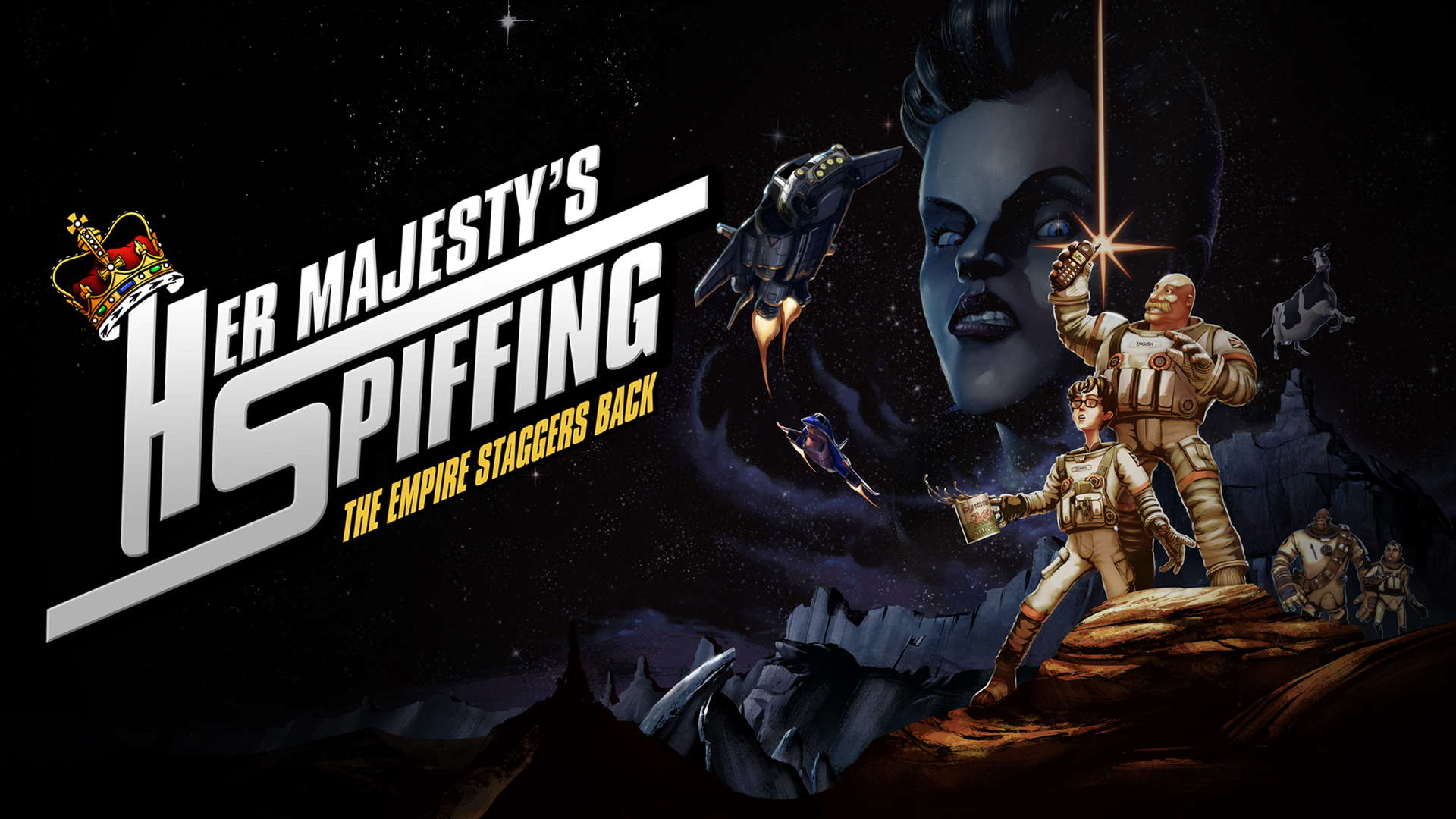
If anyone needed an example of how to make light of a difficult situation, then they may well look the way of Her Majesty’s SPIFFING (HMS). The Brexit vote split the country almost precisely in half, so what better subject matter to cover in a satirical video game format?

Her Majesty’s SPIFFING Review – Nintendo Switch

With the outcome of the vote the same in this fictional universe, the Queen has decided to exercise her power to dissolve parliament and rule the country by herself. And what would any self-respected queen do upon her first day in office? That’s right; launch a space exploration program. More specifically the SPIFFING initiative, standing for Special Planetary Investigative Force For Inhabiting New Galaxies.

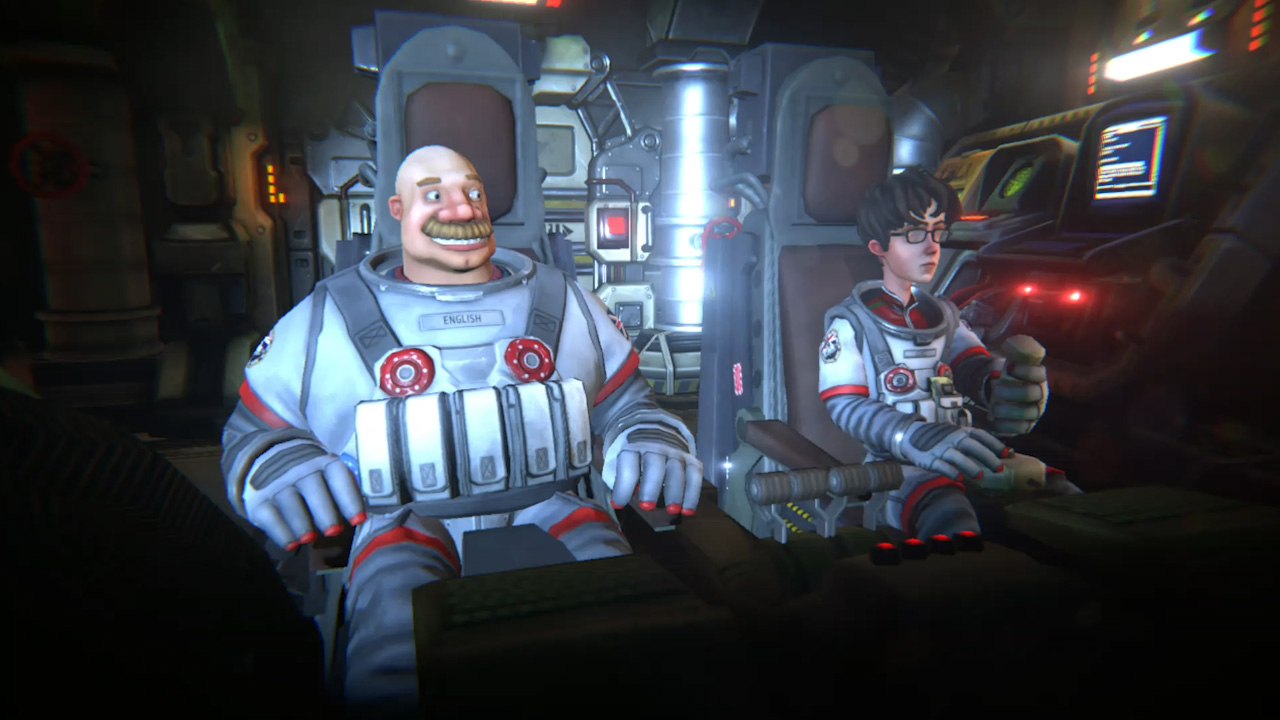
In charge of this brave exploratory mission into space is Captain Frank Lee English and at his side is his Welsh counterpart Aled. As the name suggests, Frank is the epitome of British-ness and loves a good cup of tea and living up to as many stereotypes as possible in a short space of time. HMS is a puzzler set in the ship on which Frank and Aled travel in their attempt to find pastures new for Britain to expand its Empire once more.

Her Majesty's SPIFFING Review

This plays out much like other puzzlers that have come before it, not too dissimilar to the games by Telltale and harking back to puzzle games of old such as Monkey Island. Completing puzzles keeps you on course to reach your destination and sees you fishing a metal detector out of a litter tray, sending frogs to sleep and tipping hot tea over Aled. It’s a fun game that takes a tried and tested mechanic and gives it a light-hearted twist, not taking itself too seriously.

The stereotypes it relies on to incite humour can sometimes border on cringy, but I think it just about gets away with it. The puzzles can often be obscure, leaving you scratching your head and traipsing around the ship trying to find a solution. If there was one thing I had to say about HMS is that it is over far too quickly. I know it is only one episode of what will hopefully be a succession of outings for the team at Billy Goat Entertainment, but I finished it in super quick time. If the game had multiple outcomes, which it doesn’t, then it would have a bit more longevity. Without that replay value is very limited, but the humour it gives you just about carries it through.

Kinect Star Wars

Looking Back At Kinect Star Wars

How much of a Star Wars fan are you? In all cases but for its LEGO adaptations, that was the question that needed to be asked to anyone who wondered whether they should buy a game based around George Lucas’ iconic sci-fi saga in the past.

For those gamers who didn’t know their Sarclaccs from their Sandcrawlers, their Ewoks from their Emperor Palpatine or (for shame) their Biggs from their Jar-Jar Binks, it was easy to reply that they wouldn’t ‘get’ the mythos and context of the complex storylines. By doing this, LucasArts could essentially narrow down the audience of these adaptations to a dedicated few hardcore followers. Strangely enough, though, I can’t help but think that entering Kinect Star Wars without expectations taken from some of sci-fi’s greatest adventures will make it much less disappointing as a video game experience than for the long-term fans who will surely already have picked it up.

Looking Back At Kinect Star Wars

The set-up for the game is simple enough: C-3PO and R2-D2 have returned to the Jedi Archives after the events of Return Of The Jedi, to document past Jedi adventures and galactic happenings, allowing the player to step back in time and experience these recorded events in order to aid the hapless droid duo. There’s certainly no risk of a lack of immersion as you boot the title up, the menu interface and the various halls suitably fitting the visual style of the films; if anything, one of the most impressive elements of Kinect Star Wars is Lucas Arts’ dedication to accurately representing the series lore by using a variety of much-loved characters, locales and battles to jog some of our favourite childhood memories. From Starfighter battles above Coruscant to speeder bike chases in crowded forests, there really is enough for every player to recognise and engage with, whether they’ve been with the series since its launch in 1977 or simply have a passing interest in it.

Kinect Star Wars

Ah, Kinect. Microsoft’s motion peripheral had a rough time, attaining the odd few enjoyable releases such as Child of Eden and The Gunstringer but never having them meet such success that they ever topped the charts. Part of the camera’s plight must surely have come from following in the trail of the Wii, a fully-featured motion console which had a head start of almost five years on it, yet on a more basic level, the lag and slow responsiveness which has been increasingly reported by gamers can’t have helped matters either.

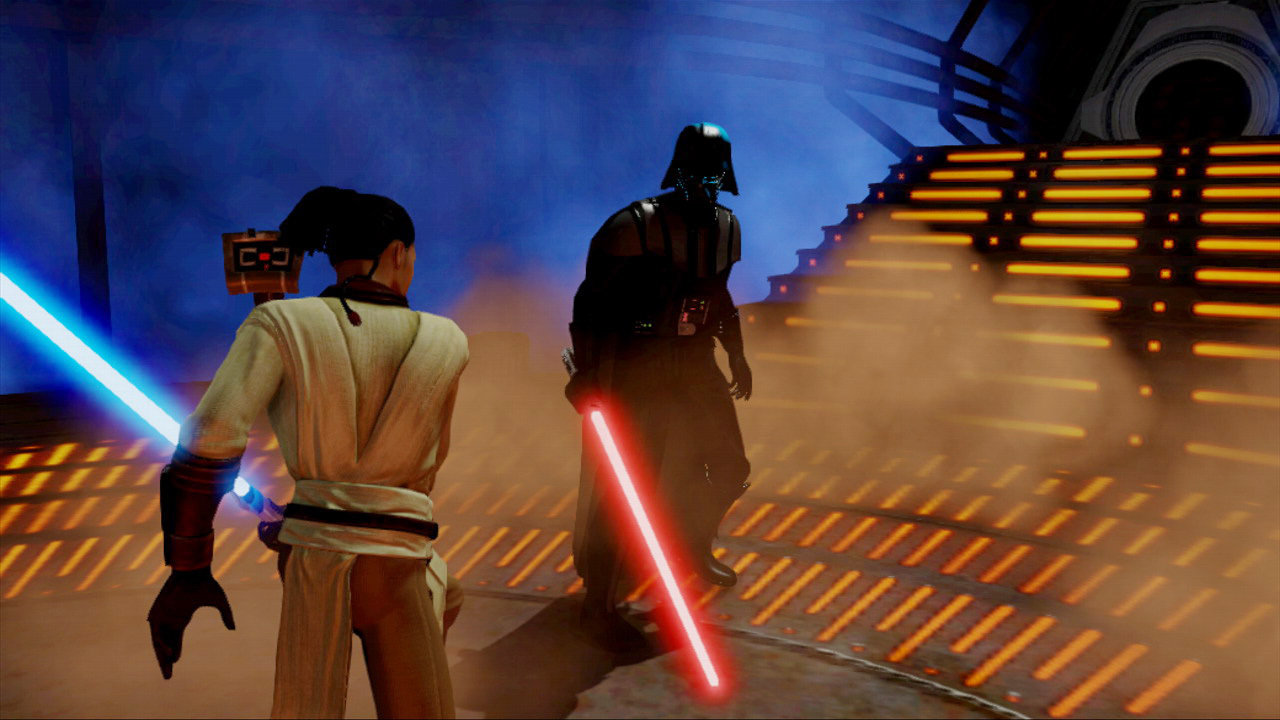
No matter how much the marketing team now try to get around it, the fact is that when we as gamers glimpsed a Jedi Knight leaping from a shuttle onto the streets of Naboo, smashing through droids and tanks galore until he headed straight into a thrilling confrontation with Darth Vader himself, we rightfully expected Kinect Star Wars to be the first true ‘hardcore’ Kinect title. What fans did not want to see, then, was a repetitive main campaign full of monotonous corridors where waves of enemies await and the choppy frame rate of the battles threatens to see their characters knocked out within seconds of meeting an adversary holding a saber rather than a blaster. Sadly, we’ve got the latter.

Kinect Star Wars

After a dozen or so odd repeats of the same predictable, tiresome battle in environments which are recycled to the point that we might as well be playing Episode I for the original PlayStation, everything begins to grate. What initially starts as a lighthearted gameplay mode good for some laughs despite its quirks becomes an infuriating challenge in its final stages, rendered close to unplayable by the glitchy final flight sections, all as a result of the restricted functionality of its source controller. Whether we should put the blame on Microsoft for making their hardware so difficult to work with lest the player stand up, or LucasArts for choosing to place such a focus on the Jedi conflicts is up to debate; nonetheless, it is an oversight that cannot be forgiven.

The ‘Jedi Adventure: Dark Side Rising’ storyline that covers the three sets of missions you partake in on two different planets and a battle cruiser is essentially the equivalent of a Star Wars Greatest Hits compilation, for better or for worse. Whereas in Mass Effect 3 the clear inspirations of Lucas’ grand universe were merely foundations for new and innovative adventures, here the screenplay writers become so reliant on the events of the prequel trilogy that they fail to come up with any interesting ideas of their own. What we get here, then, is a narrative beset with all of the dumb CGI gimmicks and over exaggerated dialogue that plagued the much-scorned Episodes I-III, not helped at all by the faulty gameplay pervading every section except the on-rails vehicular battles (which in themselves ask little but for the player to swing arms to point their cannons at enemies which then fire automatically).

Kinect Star Wars

The gameplay experience does not end with the brief five-hour story quest. There are four further modes that await, too – ‘Podracing’, an effective take on the hovercraft competitions from the Phantom Menace; ‘Rancor Rampage’, a fun if basic chance for players to vent their rage on famous planets like Felucia as the monstrous giants from Return of the Jedi; ‘Duels of Fate’, an expanded version of the drawn-out lightsaber battles that does little to ease the pain of the lag problems from the campaign; and ‘Galactic Dance-Off’, the much-vaunted Dance Central rip-off that actually does the job of providing fun music numbers pretty well, even if the shreds of dignity left within you after buying this are sapped away as you dance to ‘We No Speak Huttese’. As party diversions go, there are certainly many worse places to head than here, but the problem is that the supposed target audience for Kinect Star Wars really wasn’t looking for a new party game when they saw it announced.

As ironic as it might seem, LucasArts appears to have almost completely isolated themselves from any major demographic of players with their choice of format for Kinect Star Wars. Those who have been living in a galaxy far, far away from the realms of Lucas fandom are unlikely to be won over by this as a family title due to the admittedly geeky nature of its premise. If they do try it out, then they’ll find a barely enjoyable bunch of add-on modes sure to liven up a gig only if all else fails.

On the other hand, those fans like me who have been searching the skies for battle stations disguised as moons and awaiting the chance to tell friends that “those are not the droids they’re looking for” will probably be too shocked at the abysmal graphics, the cheap-budget set of identikit voice actors and the lacklustre storyline to even attempt to forgive the blatant shortcomings of the lightsaber duels and the downright insulting riffs of much-loved moments from the saga.

Dragon Sinker Review [PS4] – Charming, Simple and Wistfully Sound

The immeasurable list of old-school inspired RPG titles seems too dauntless to rifle through, even for some of the most dedicated RPG gamers around. Dragon Sinker follows in line with the rest of the 8-bit moulded titles released from publisher KEMCO, but still manages to provide a few subtle twists to the waterlogged RPG genre. However, I’m just not sold it’s enough to separate itself from the enormous heap of other traditional turn-based RPG titles that consistently overflow the industry.

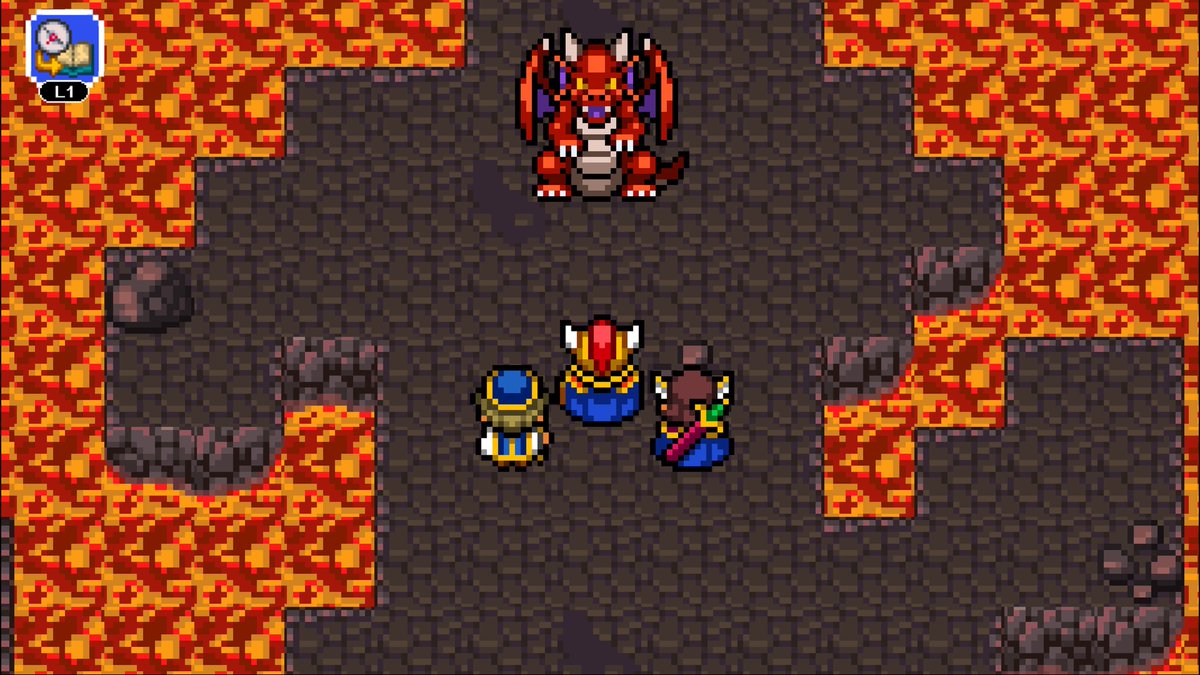
As any enthralling attempt at a fantasy story begins, players are thrust into an epic battle with a mighty dragon foe known as Wyrmvarg. In a vast world where the three distinct races – Humans, Elves and Dwarves – are all divided by racial tension, players will need to find a way to unite the land and take out the dreaded dragon threat, (LOTR, to some degree). Throughout the lengthy adventure, players will find themselves amidst a journey that feels similar to the other nostalgic experiences available. Taking on the many monsters that lurk through the overworld map and its many dungeons in search of the coveted weapons capable of slaying the beastly dragon is nothing close to original, but that doesn’t mean Dragon Sinker isn’t an enjoyable experience nonetheless.

Yet Another Dragon/Fantasy Adventure

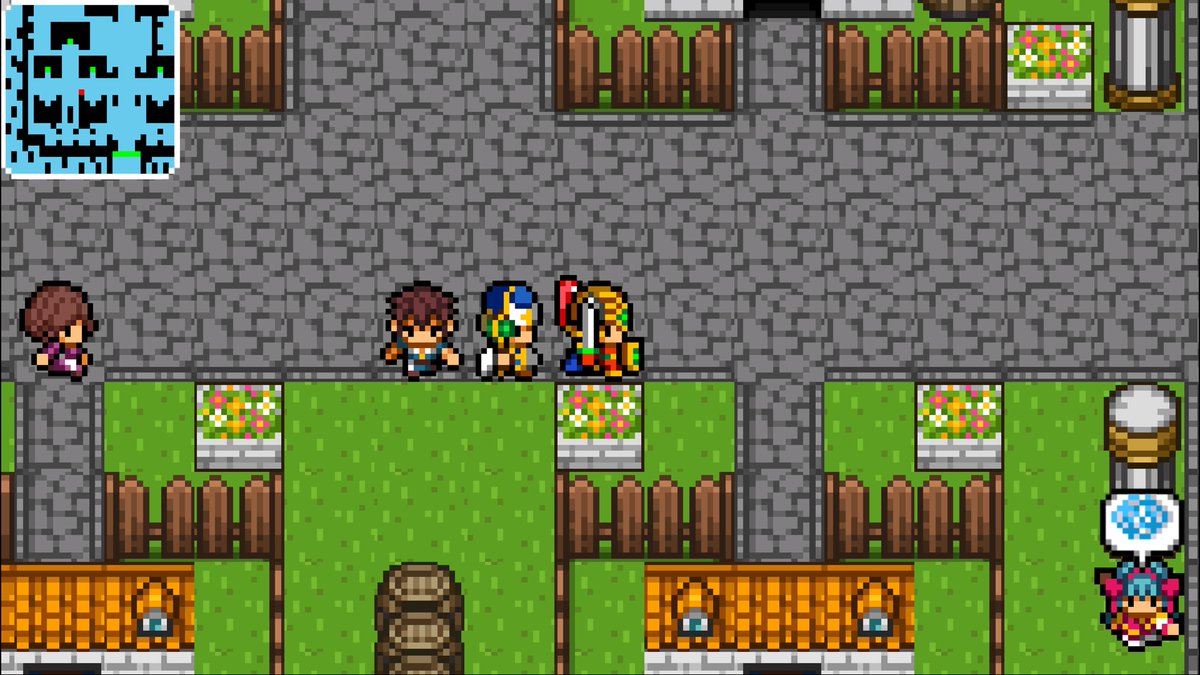
The 8-bit pixellated visuals scream nostalgia and take players back to what can only be described as the golden age of RPGs. As you wake from your deadly fight with the dragon enemy – Wyrmvarg – players take control of the human warrior, Abram. As you progress through the story you’ll soon discover your hometown is only a small village in a very vast world. Each of the three races has their own regions throughout the lands, as it comes down to our team of heroes to unite them and take out the looming threat.

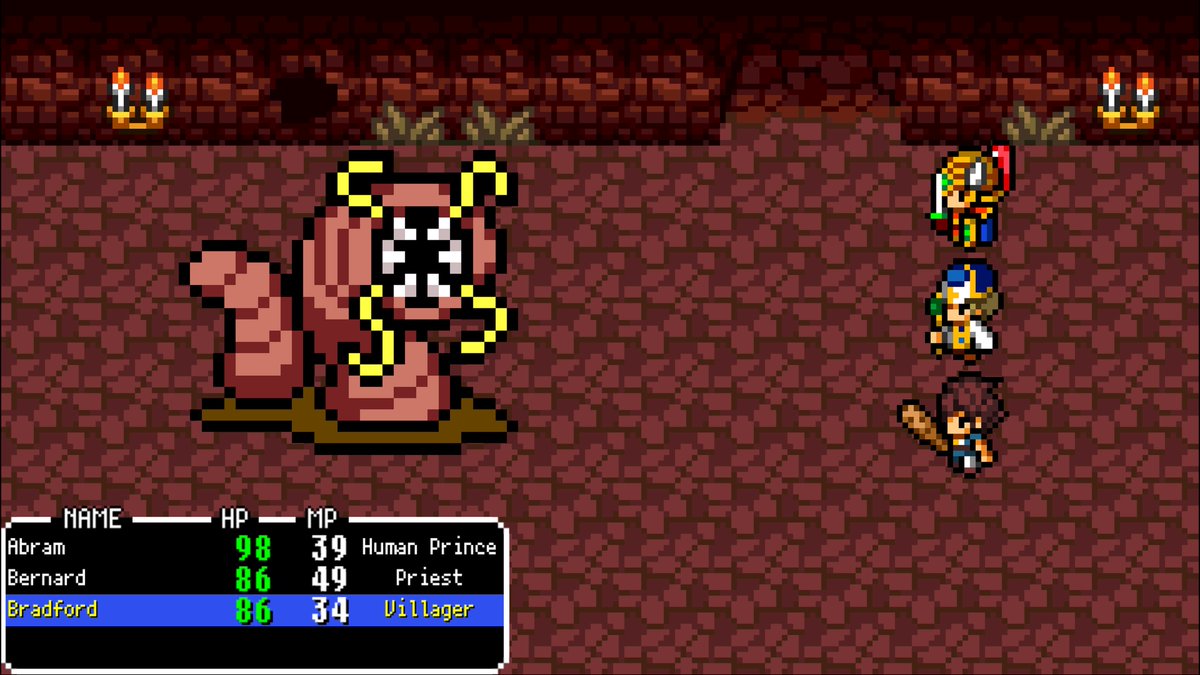
In standard RPG form, Dragon Sinker has players exploring an overhead map in search of villages and dungeons. As you travel from dungeon to dungeon or village to village, random enemy encounters occur bringing up the turn-based battle system. The combat is as traditional as most other turn-based RPGs, as players choose from a variety of physical and elemental attacks for each one of their party members. After each character – up to four in a party – has selected either offensive, defensive, or support tactics, it’s the enemies turn to react. It’s yet another take on one of the most common and simple battle systems found in traditional RPGs and done so in an easy-to-learn fashion.

Dragon Sinker Review
As you meet new warriors your party will expand and grow with a diverse cast of characters.

A Unique Team-Based Party System

Where Dragon Sinker takes a different path from the cookie cutter RPG formula is the unique team system. As distinguished earlier, the game’s world is populated by three separate races. As you continue your journey as a noble human warrior, you will meet characters from both the dwarf and elf tribes. As the legend has it, the dreaded Wyrmvarg was once defeated by a trio of warriors containing one warrior of each race. As you may have guessed, this is precisely what players must accomplish, among other tactics, to take down the fearful beast.

As you begin to build your party, players will become aware of Dragon Sinker’s unique team system. As you acquire new allies they will be paired with one of the three different parties. The player will control all three parties with the ability to swap between them in battle. Each team resembles the Humans, Elves and Dwarves – giving a bit more strategy during the tactical battles. Keeping each of the parties – and party members – distinct with multiple effective skills and abilities, the unique party swapping system helps players switch between weaknesses and other affinities while in the heat of battle.

Dragon Sinker Review
The turn-based combat system is a staple in the retro RPG era and one that’s not forgone in Dragon Sinker.

A Simple Experience

While the overall tone of Dragon Sinker doesn’t actually add anything new to the retro RPG category, the game still provides a sound and simple experience. Whether you’re a gamer who maybe missed the boat on the 8/16 bit RPG era, or perhaps an RPG enthusiast looking for the next sentimental experience – Dragon Sinker hits a few of those feelings, and rather sharply. Just don’t expect any game-changing moments throughout the brunt of the journey.

You can find Dragon Sinker on the PS4/Vita, Steam via PC, Google Play and the eShop for the 3DS.

System Shock remake on hold

The problem with free money is that it’s so easy to spend. You can get easily comfortable and before you know it, the rug has come from underneath and you have nothing.

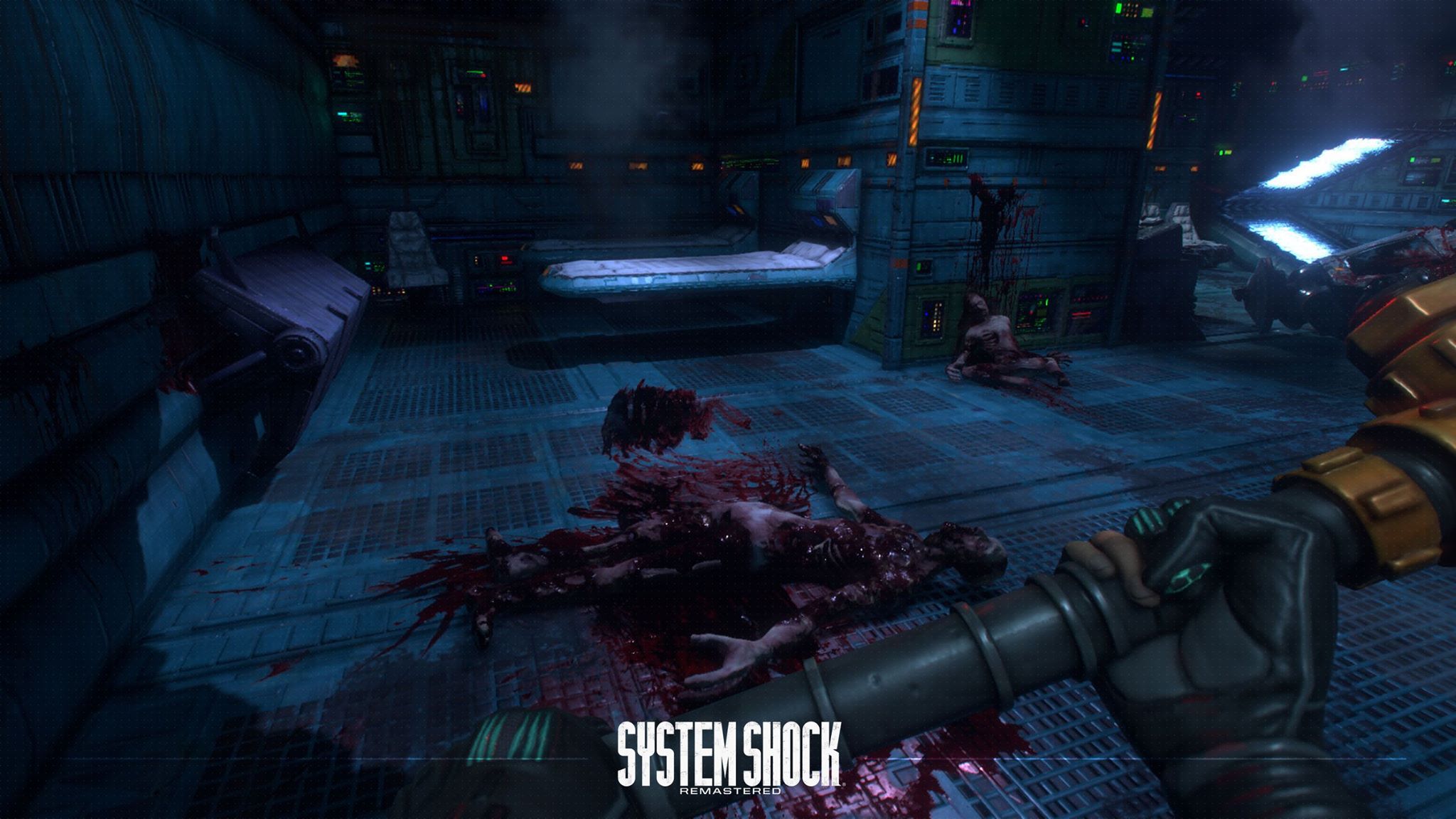
System Shock Remake

A hard truth developer Nightdive Studios have found out this week by holding development on the much-anticipated remake of System Shock – due to using up the Kickstarter funds.

CEO Stephen Kick wrote in a letter to backers the following:

“Maybe we were too successful. Maybe we lost our focus. The vision began to change. We moved from a Remaster to a completely new game. As our concept grew and as our team changed, so did the scope of what we were doing and with that the budget for the game. We began a long series of conversations with potential publishing partners. The more that we worked on the game, the more that we wanted to do, and the further we got from the original concepts that made System Shock so great.

Ultimately the responsibility for the decisions rests with me. I let things get out of control. I can tell you that I did it for all the right reasons, that I was totally committed to making a great game, but it has become clear to me that we took the wrong path, that we turned our backs on the very people who made this possible, our Kickstarter backers.”

Nightdive Studios Kickstarter goal was $900,000, but they were surprised when they ended up raising $1.35m. Did their ambitions get in the way? Hopefully there’s a silver lining on the way for everyone.

The Padre

The Padre is coming to Early Access

When I was in college, my friends and I broke into an old, abandoned insane asylum for children. Even with the company of friends, we all couldn’t deny the haunting feeling in there.

The Padre On Early Access

The damp floor absorbing each footstep as we tenderly inspected the empty corridors and rooms. There was foliage growing from the walls and the various discarded artefacts sporadically laying around that we had intruded on. The sense of exploration, curiosity and ambiguity of what happened within those walls made for a frightful yet delightful experience.

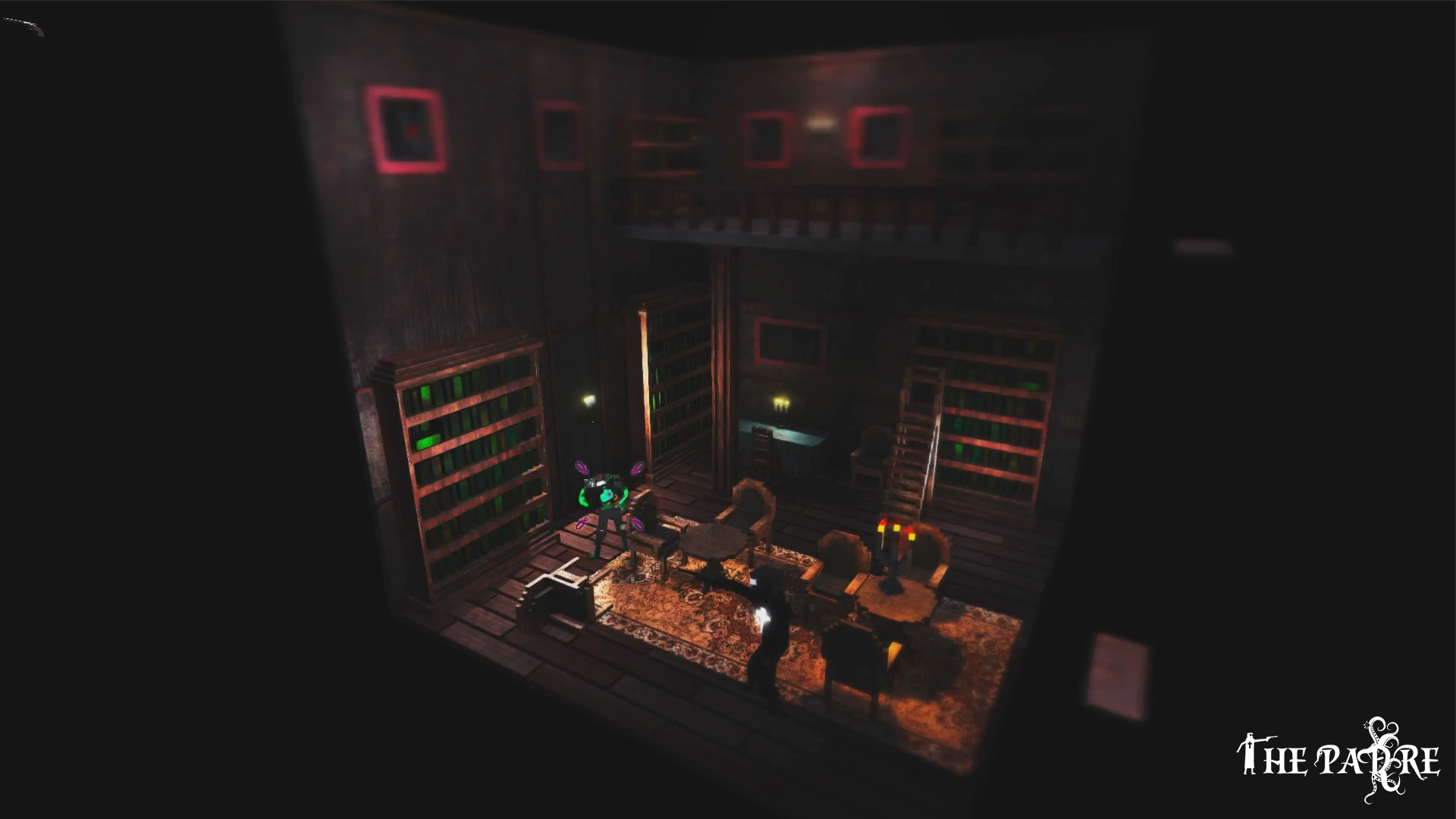
Developer Shotgun with Glitters‘ upcoming game ‘The Padre’ has you play as Catholic Priest isolated in a haunted mansion. You must navigate through his flashbacks to find the meaning of the sacrifice he has made in this Lovecraftian-inspired horror:

Coined as a ‘Point ‘n Click Survival Adventure Game’ and marketed as a game not for everyone due to the difficulty of the puzzles, this game already leaves an impression. With its blocky, expressionless aesthetic adding more ambiguity than clarity, it seems like an unusual choice, yet perfectly fitting for a Lovecraftian horror.

If this game captures anything like my journey inside the insane asylum, this will be an adventure that will stick with you – you will tell your grandchildren.

The Padre is coming to Early Access on 22nd of February and if the game is successful enough, console ports will follow.