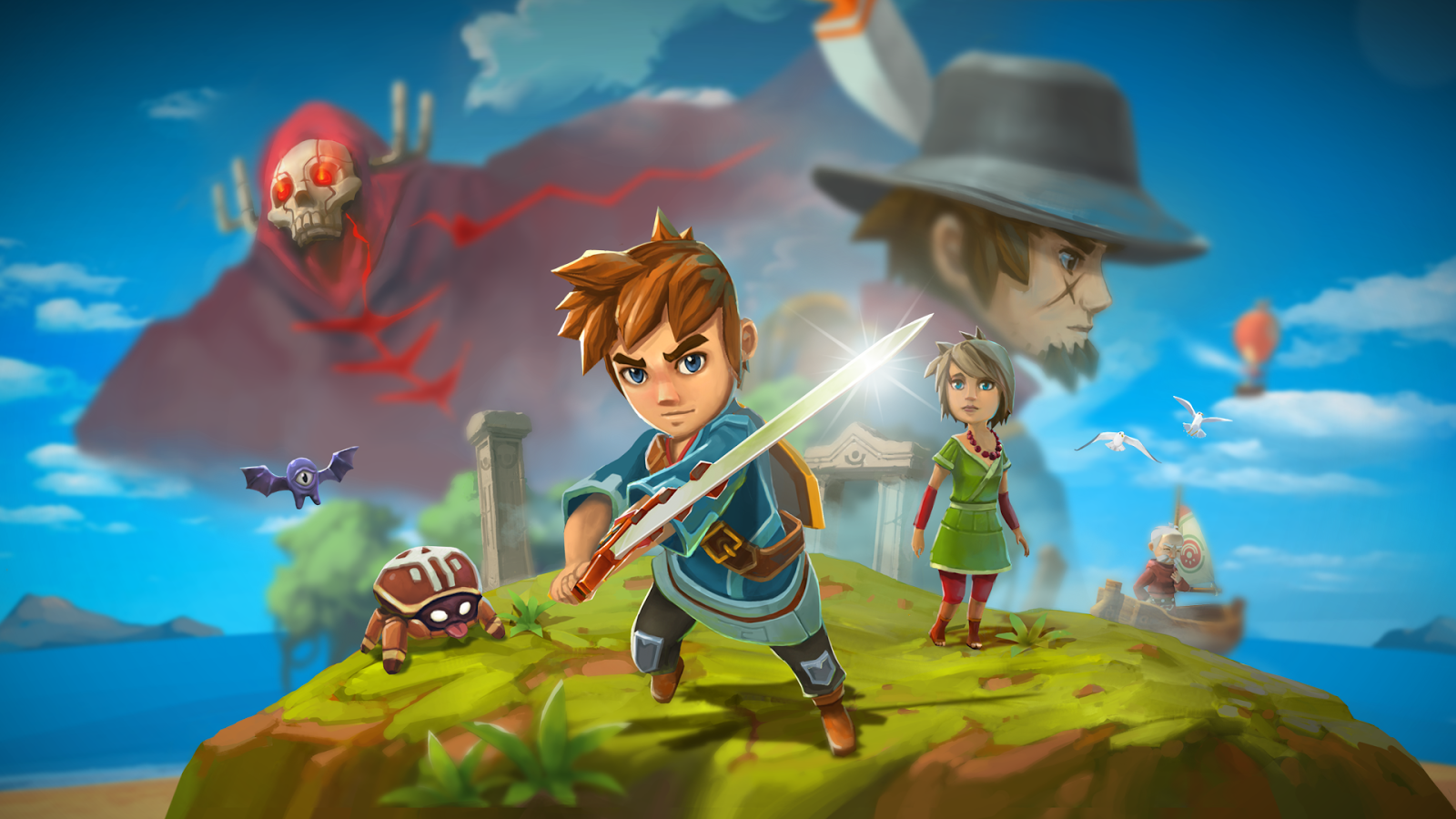
Let’s get the obvious out of the way then, shall we? Yes, Oceanhorn: Monster of Uncharted Seas has borrowed quite a lot from a certain other famous series – The Legend of Zelda can be seen throughout, quite clearly. But does that mean it’s, by default, a bad game? Not at all. If you want to create a great experience, you look at the best in the industry for a few hints on how to do that. So that’s what the game’s developer, Cornfox & Bros., have done.
The isometric Oceanhorn features the puzzles, combat, and exploration you’d very much expect from a developer who’s been inspired by Zelda. In particular, The Wind Waker is the ultimate muse here – we even get to see our young protagonist sailing triumphantly across the impressively rendered ocean. However, Oceanhorn isn’t a soulless cut and paste affair, make no mistake, it’s full of its own charm, character and heart.
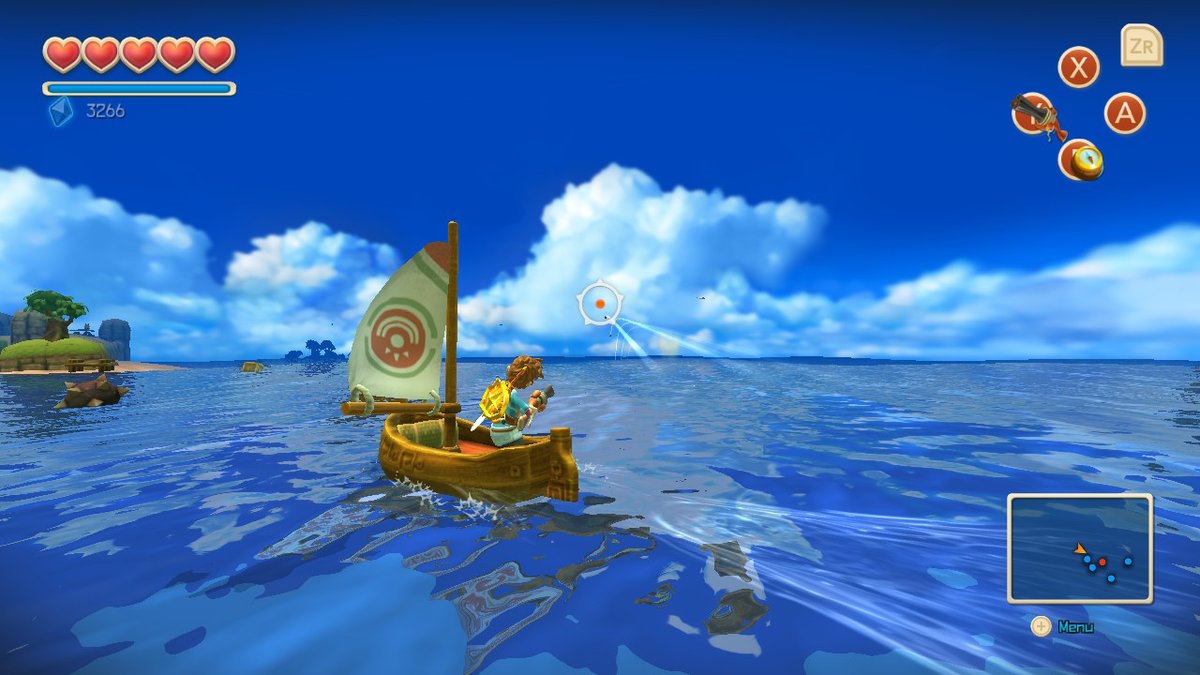
You’ll need to discover and sail to new islands to get anywhere in the game. We say sail, but this is pretty much an interactive loading screen with the ability to fire at enemies with your gun while you wait. In other words, you don’t control the boat like in Wind Waker and you can’t freely explore the oceans – this is not something we expected from a small indie title, but it’s worth pointing out. Once you arrive at these islands you’ll sometimes find towns where you get to meet the friendly folk in Oceanhorn. Mingling with these people helps to flesh out the story and culture of the world as you search for your missing father. You’ll be able to buy items, such as heart pieces and arrows, in the shops you find as well.
Over the course of the ten hours or so that Oceanhorn lasts, you’ll encounter puzzles that consist of placing objects onto switches, blowing up secret walls, setting alight torches and pushing boxes into the correct place. There were very few times where we found ourselves stumped by the puzzles – they do repeat the same ideas quite often – but they were still fun to solve. The dungeons, where most of these puzzles can be found, aren’t overly complicated either, but they’re still rewarding to complete, especially as making your way through each of them grants you a power-up that enables you to advance further in the game. These upgrades include the ability to throw bombs, shoot arrows or even conjure spells and are useful in battles.
The combat, that can be found everywhere in the game, is simplistic though. Most times it does feel as if you can blindly mash the attack button, with very little in the way of strategy, to win. Lobbing a volley of bombs at your clumsy enemies is equally efficient in this regard. The one saving grace of the battle system? The experience you acquire after you defeat foes (and complete in-game challenges), allows you to level up and gain new perks. This is something we really liked, and it helped to differentiate the game from its evident inspiration.
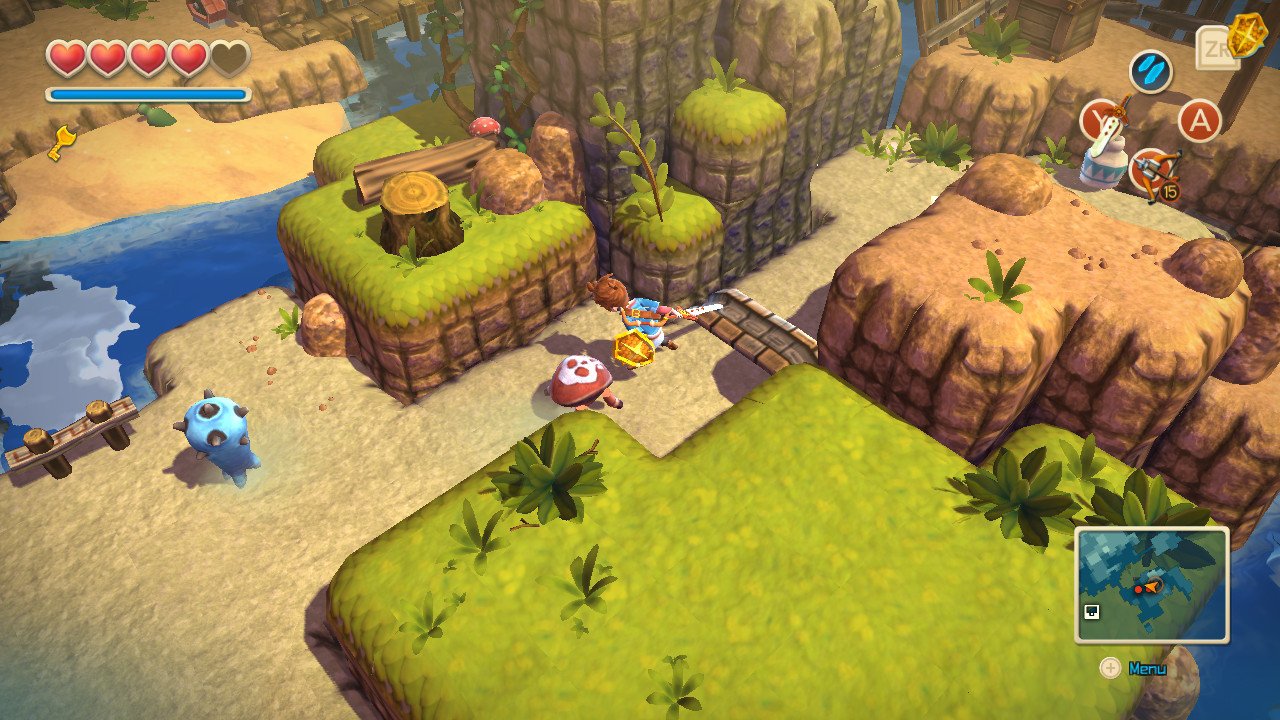
Oceanhorn has landed on the Switch four years after its iOS debut, so by now the character models – and their facial expressions – are a bit dated. However, the overall presentation is impressive on the hybrid console. The game runs seamlessly at 60 fps / 1080p in docked mode and at 60 fps / 720p in portable mode, (both look great, although we mainly played on the Switch’s lavish screen for comfort). Visually then, what you’re getting is a clean, colorful and bold image – it’s certainly the definitive version of the game.
Oceanhorn’s soundtrack is a treat to the ears as well. Backed up by industry legends like Nobuo Uematsu, (Final Fantasy) and Kenji Ito (Mana), along with Cornfox’s own talented Kalle Ylitalo, it won’t be long before you start appreciating the music this group has created. From whimsical and heroic themes, to dark and mysterious ones, there are some beautiful, and powerful, compositions in here. You can get a taster below of the main theme, composed by Uematsu himself.
Oceanhorn: Monster of Uncharted Seas is an enjoyable game, and it’s perfect for those just getting into the action-adventure genre. It doesn’t quite hit the lofty heights of a Zelda title, but it’s a damn good attempt that’s full of soul. The combat and puzzles might be too simple for those expecting more, but the stirring soundtrack, great visuals and sheer amount of love that has gone into the game mean it’s defintely worth a go.


 Published by Sega, developed by Novotrade International, and released in 1992, this game provides a vibrant mesh of the 90’s color palette. There is already another dolphin game on this list (HINT: it is also set under the ocean) and I seriously considered if I should add Ecco the Dolphin, but this game is just too brilliant not to add on this list. So voila! Going back to the color scheme, at times it may look pretty harsh to the eyes – it is from the 90’s – but overall Ecco the Dolphin’s gameplay would unease and relax the high-strung mind.
 Winner of the Seumas McNally Grand Prize for ‘Best Independent Game’, at the 2009 Independent Games Festival, scoots in Blueberry Garden. It also won ‘Best Innovation’ for the 2008 Swedish Game Awards. Alas, this delectable montage of awesomeness is developed by Erik Svedäng, and personally, I feel that its soundtrack made Blueberry Garden even livelier. If it were not for Daduk’s composing prowess, this game would have been just another independent game amongst Steam’s stockpile of undeserving games.
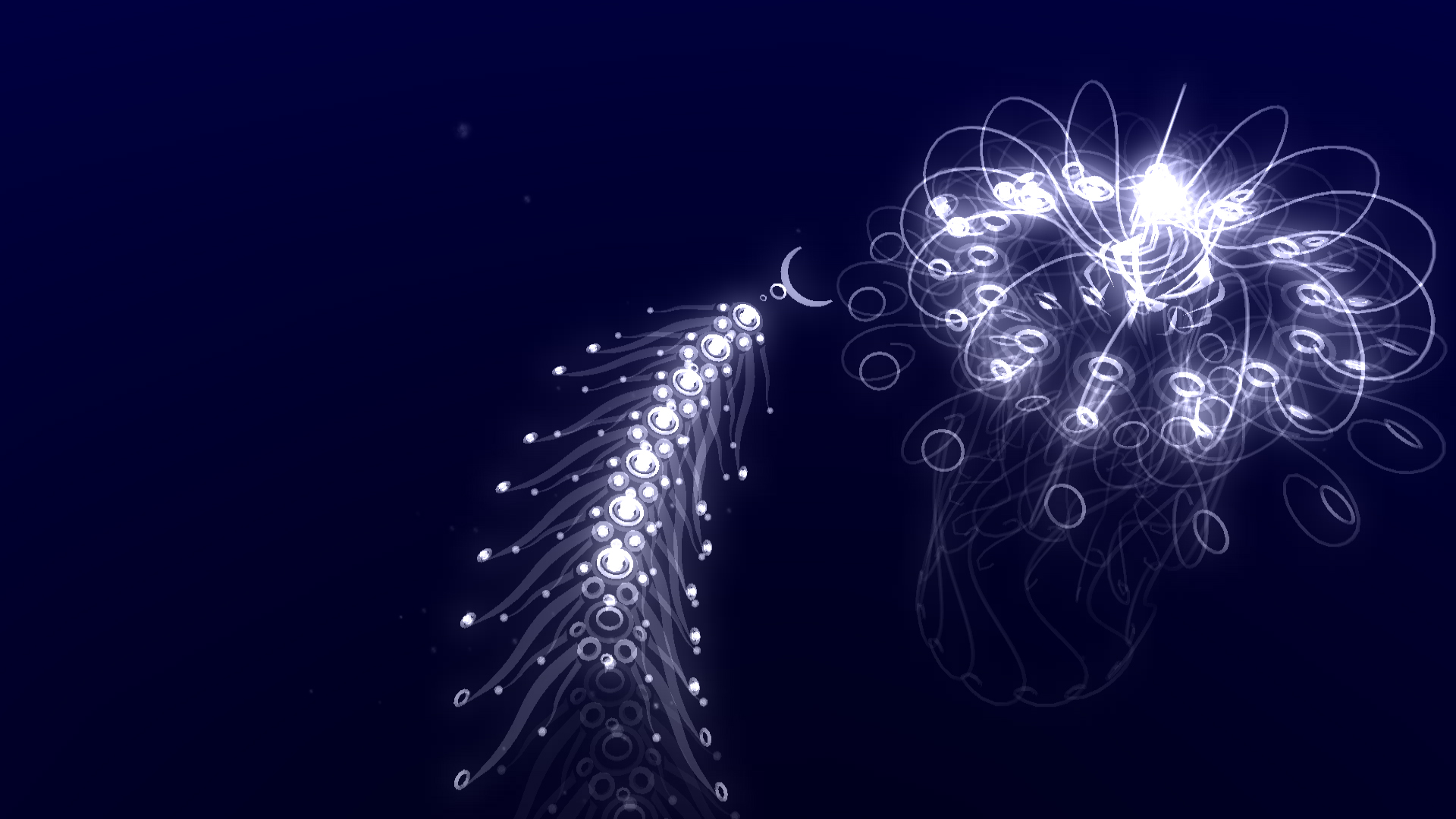
 Developed by Thatgamecompany, Jenova Chan and Nicholas Clark originally released flOw as a free flash game in 2006, which I vaguely remember playing back then. Fast forward to 2007, flOw was made available for the PS3, and later on SuperVillain adapted the game and released it for the PlayStation Portable as well in 2008. The free flash version received 100,000 downloads within the first two weeks. Such hits would only mean that flOw is definitively breathtaking or utterly stupid; good thing it’s the former.
 Usually in most video games (especially in RPGs), they give players a lot of room for customizing their characters, from lime-green beards to ice-blue cataract eyes. But I feel there is always a limit with just accessorizing these characters with physical attributes, a true customization should start from the very root of life: the cell.