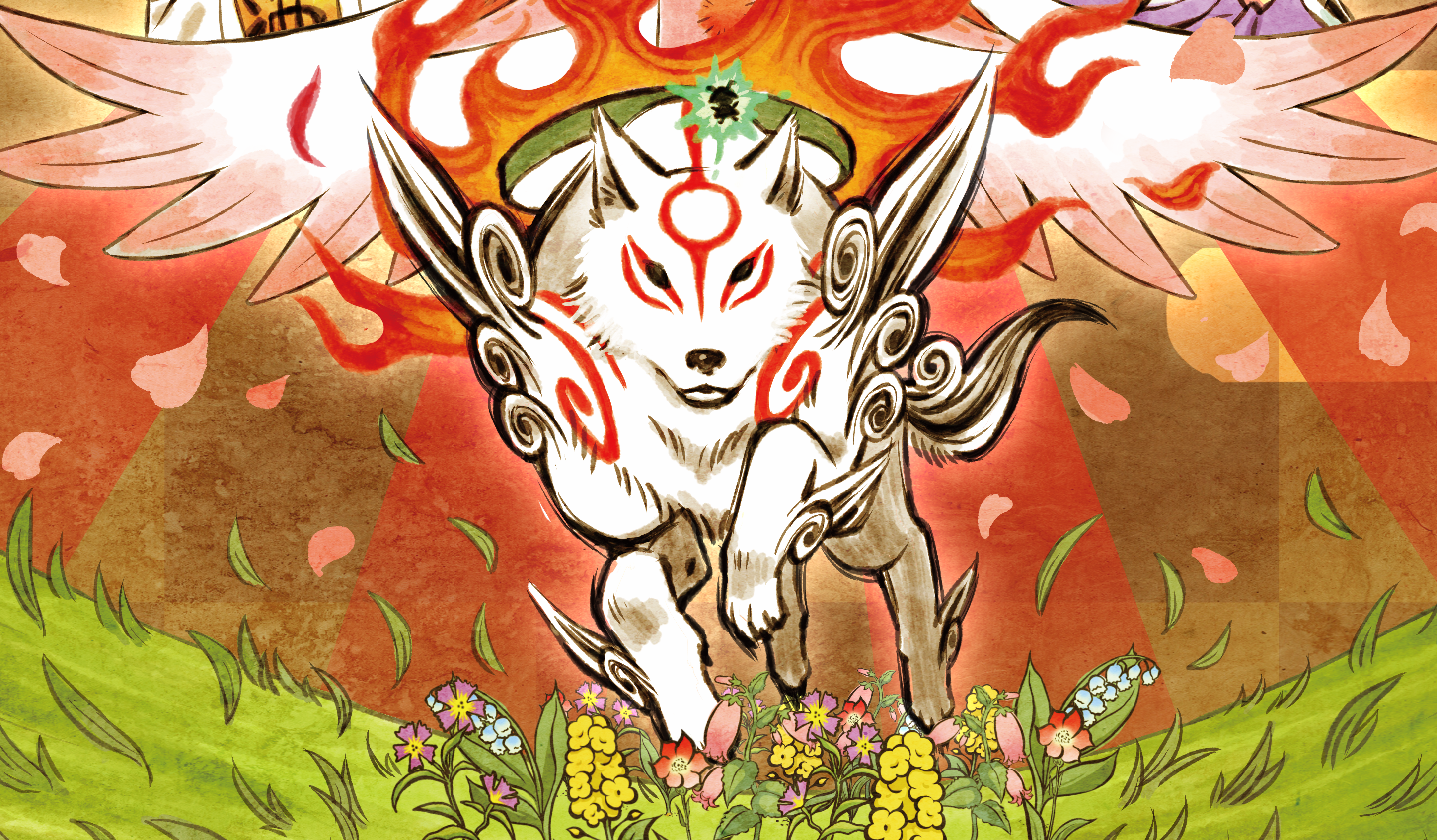
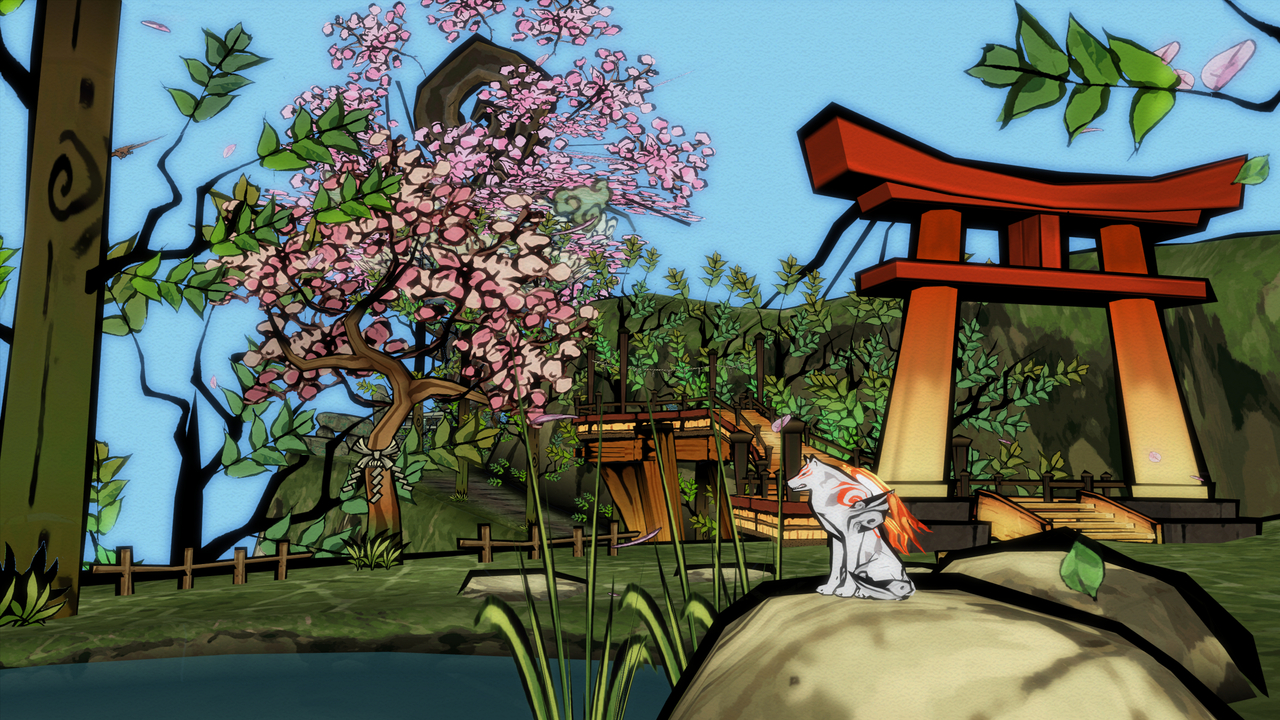
Surprise! Okami HD is coming to PS4, Xbox One and PC in 4K

Ok, so you’re not that surprised, considering the cat was let out of the bag just days ago

But yes, the masterpiece that is Okami is coming to PS4, Xbox One and PC both physically and digitally. There’s no Switch version, oddly.

The original game was released to critical acclaim back in 2006 and was hailed as one of the best games ever created.

What’s new exactly?

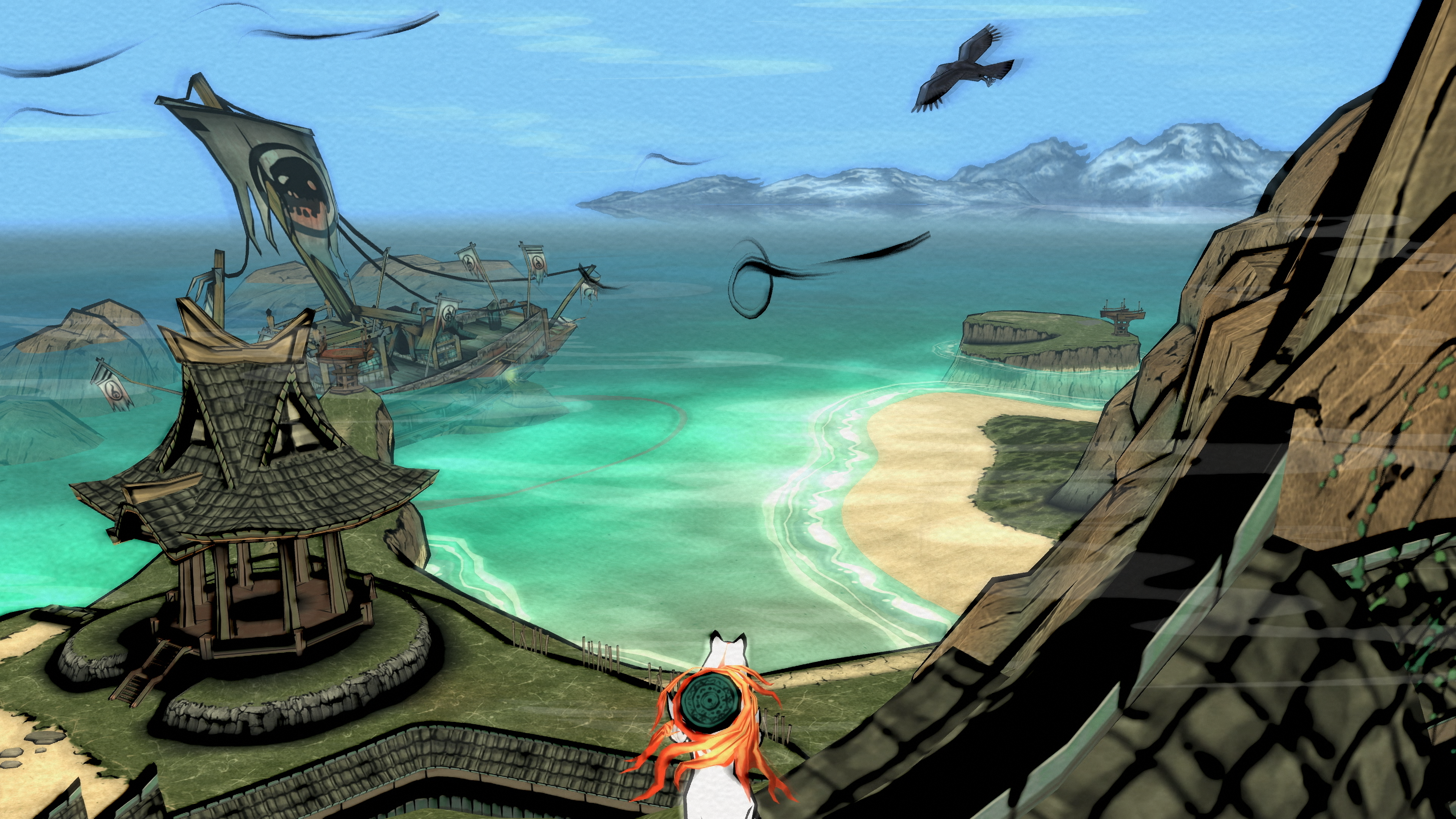
The graphics have been updated to take advantage of modern high resolutions, (as we predicted). Okami HD will be compatible with the Xbox One X and PS4 Pro, featuring 4K graphics on those systems, as well as PC.

Players will be able to choose between playing in a modern widescreen format or the original 2007 release’s 4:3 ratio. Interactive loading game screens from the original game are also included.

Okami HD

What’s it about?

You take on the role of Amaterasu, the Japanese sun goddess who inhabits the form of a legendary white wolf Shiranui on a quest to defeat Orochi, an eight-headed demon and tyrannical monster responsible for turning the world into a ruined wasteland.

Players must use Amaterasu’s magical abilities and an arsenal of items, attacks and Celestial Brush techniques to restore the land of Nippon to its previous glory full of life and colour.

Along the way, Amaterasu will be called upon to help a cast of quirky, (seriously quirky), characters and defeat a bevy of brutal enemies to rid the land of Orochi’s curse.

When and how much!?

Okami HD will be available digitally for all formats for £15.99 / €19.99 / $19.99 on December 12th, 2017. Simply, if you’ve never played it before, there’s no better time.

Scarlett’s Dungeon Review – A Short, Zelda-like Adventure (PC)

Retro indie titles are a dime a dozen nowadays, and Steam is the hub of almost all of them, releasing thousands of titles annually, many of which follow themes from past video game history. PC game developer – Joan Ginard Mateo from the one-man studio, Indie Brain – has created the next Zelda-esque title, leaving vague memories of nostalgic adventure and familiar gaming mechanics found throughout Scarlett’s Dungeon.

Scarlett's Dungeon Review
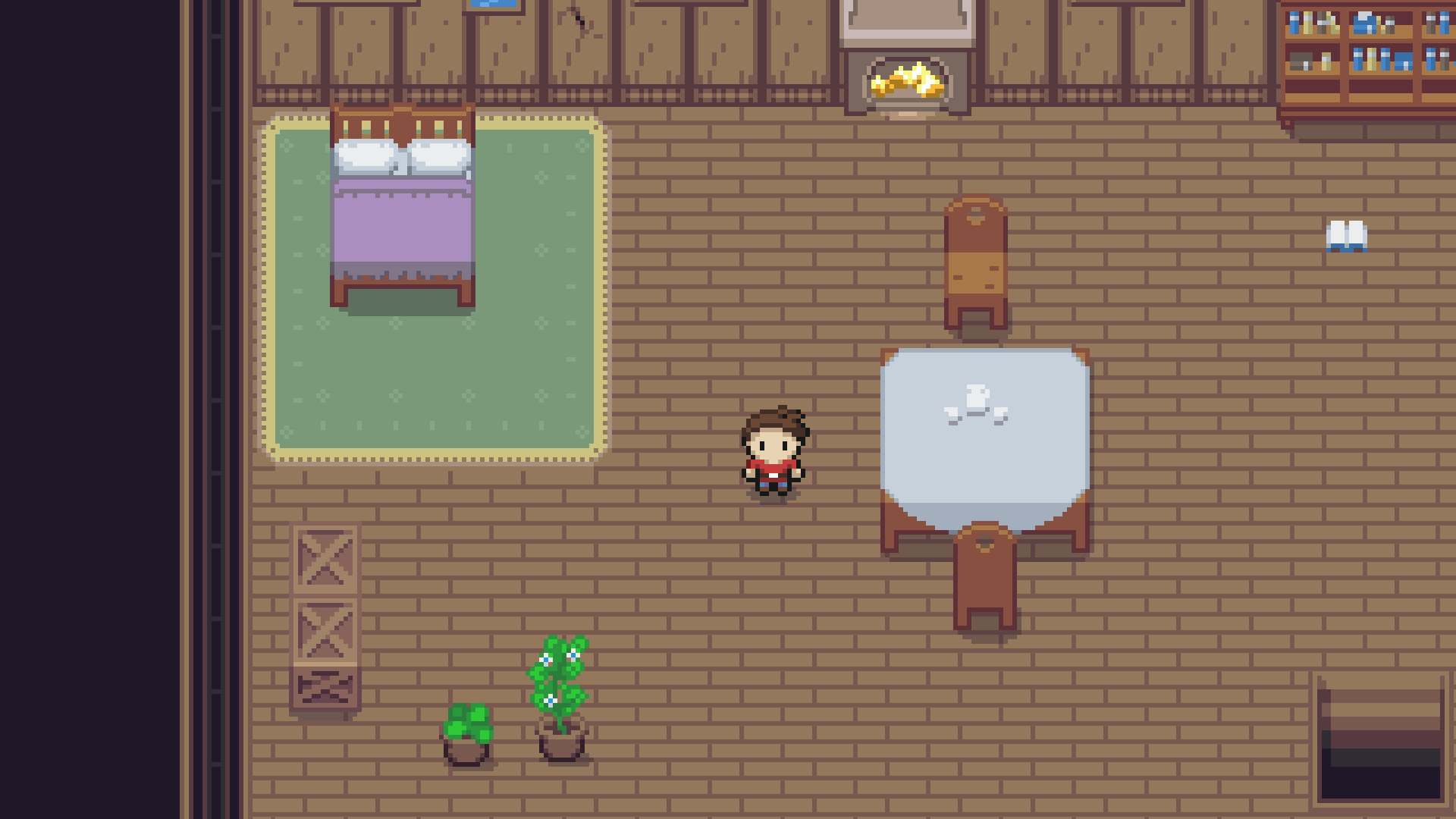
Once awake, Scarlett leaves her home to find her parents.

Waking up in a similar fashion to the original pixellated adventure title found in the NES cartridge library, Scarlett exits her house and ventures into the small village of Palette Town (yes, you read that correctly Pokémon fans). An all-powerful God has kidnapped a number of the town’s villagers, including Scarlett’s parents. Claiming that the ultimate being is waiting on the 15th floor, you’ll make your way through the procedurally generated dungeon levels, which ultimately ends abruptly and rather quickly.

Equipped with your sword, Dash ability, money bag and infinite escape ladder, you’ll head below to the dungeon area filled with monstrous robots that await ahead. A basic sword swipe and the helpful dash skill is all Scarlett needs to fend off the terror that awaits her beloved family. After receiving the necessary items from the kind townsfolk, you’re set to journey forth into the treacherous dungeons that lie below.

Scarlett's Dungeon Review
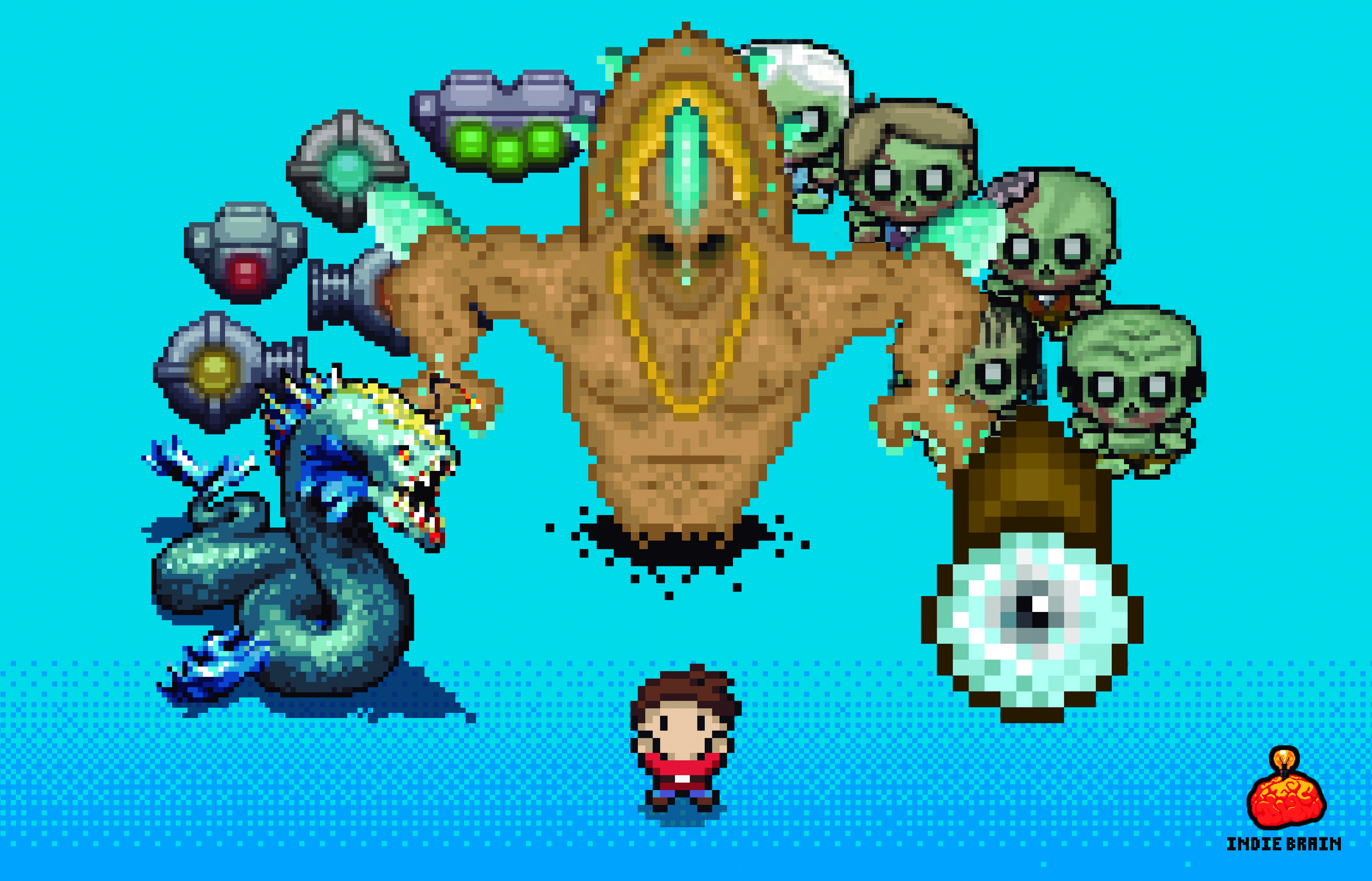
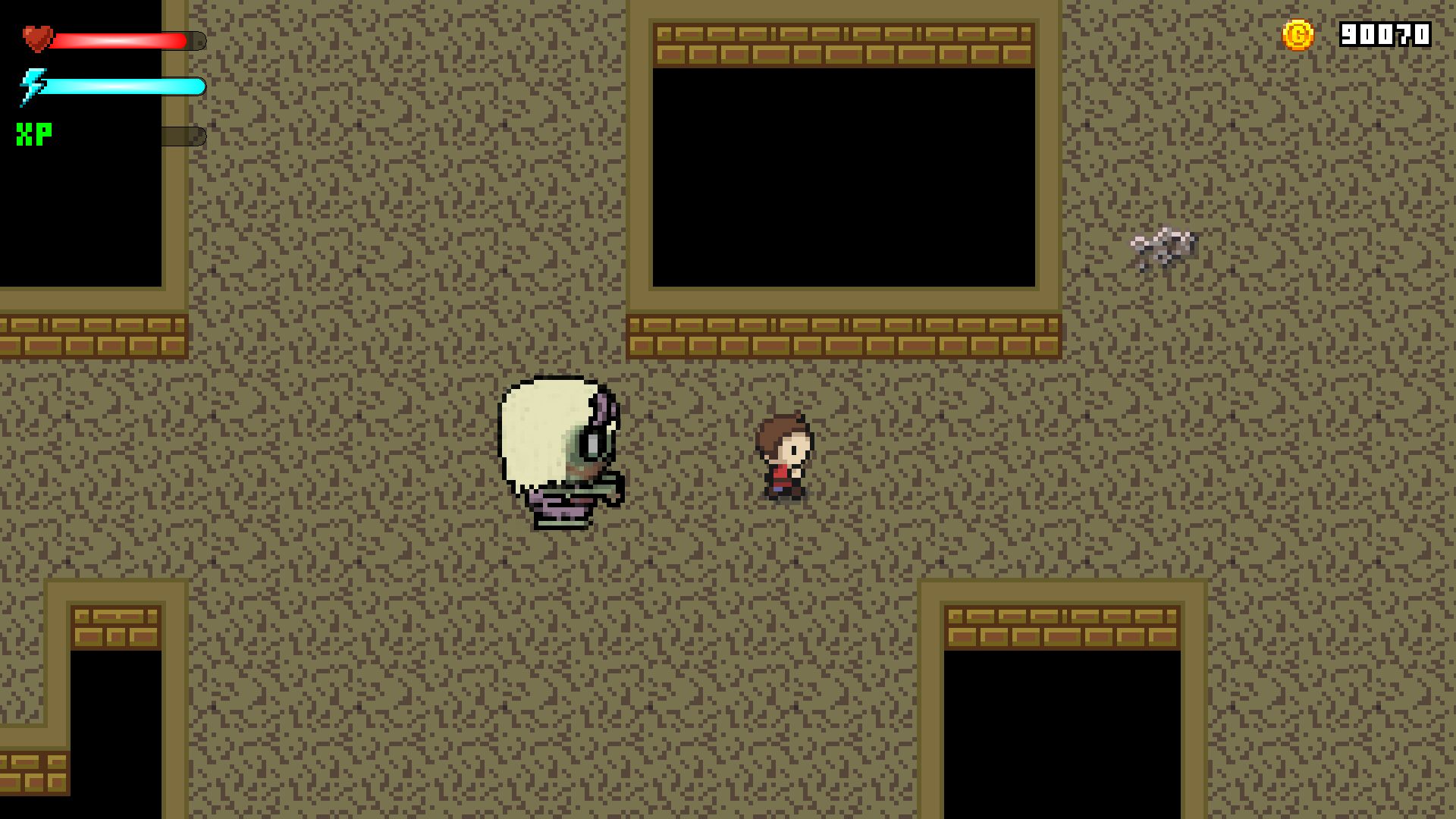
Many imaginative monsters are found throughout the randomly generated dungeons.

In Zelda-like style, the player proceeds to run around procedurally generated, maze-like dungeons, fighting off unique monsters while gathering valuable coin to help increase your weaponry. The gameplay – much like the storyline – is simple. Swift strikes from your sword, a very helpful dash ability to get you out of hairy situations and a levelling up system which essentially only adds to your strength and a dash of health upon gaining a new level.

Keeping your trusty Infinity Rope, you’re able to return to town while traversing any part of the dungeon, except of course, for the boss rooms. When in town and your coin bag is nice and full, you are able to purchase a new sword, ability or health items to help prepare yourself for the increasing dangers in the dungeons. This proves crucial as the game continues because every time you perish you restart from the beginning of whatever floor you died on; with the same amount of health you had when you originally entered the floor. This is especially dangerous when entering boss areas with extremely low health, since returning to town – or even previous floors for that matter – are not available when facing bosses.

Scarlett's Dungeon Review
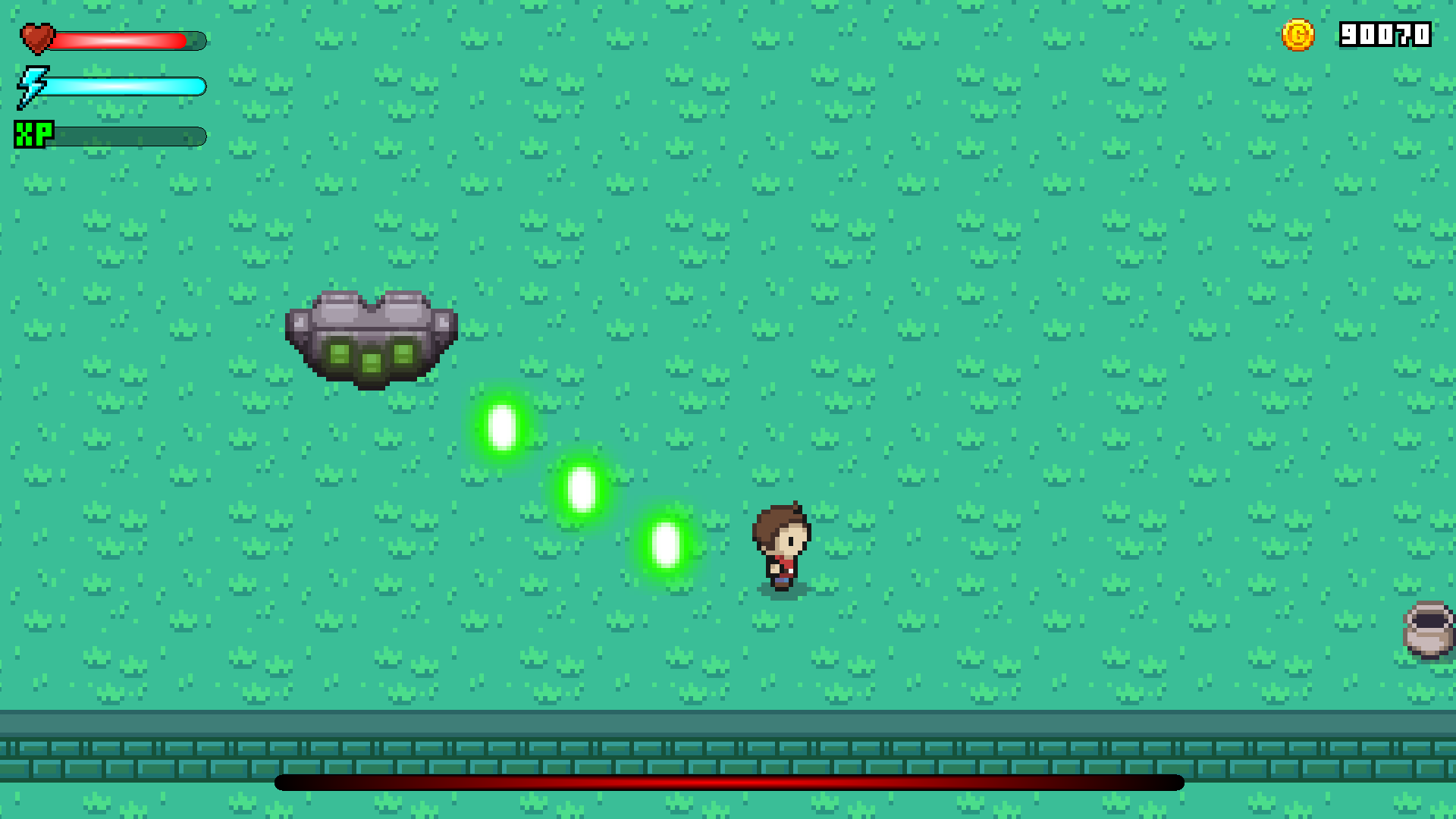
The bosses have different approaches for defeating them.

Every fifth floor a boss appears – and by doing the simple math – the final boss is waiting on floor 15. There are only 2 bosses to fight through before the end… Keep in mind this title was created by one solo college student, working through the trials of developing their first title. Though short and quirky in its own right, the action of dash-dodging and sword-swinging against diverse enemies creates enough of a challenge to keep most gamers entertained, even if it’s only for a short session.

Scarlett’s Dungeon Review: The Bottom Line

There’s not much in store for story and gameplay in Scarlett’s Dungeon – and what is there bares major resemblances to our beloved Hylian hero. Still, there’s a certain quality of simple comfort for a game that lasts all of an hour (or more if you explore every dungeon to the last pixel). If you’re looking for a quick fix of old school Zelda-like action, pick up Scarlett’s Dungeon on PC. It’s out this September 2017.

Scarlett's Dungeon Review

Shadow of War ferries late developer to Grey Havens with tribute DLC

Every production cycle brings its fair share of character-testing trials and tribulations for the studio(s) involved, but few quite as arduous as what the team behind licensed fantasy RPG Middle-Earth: Shadow of War has endured in recent months.

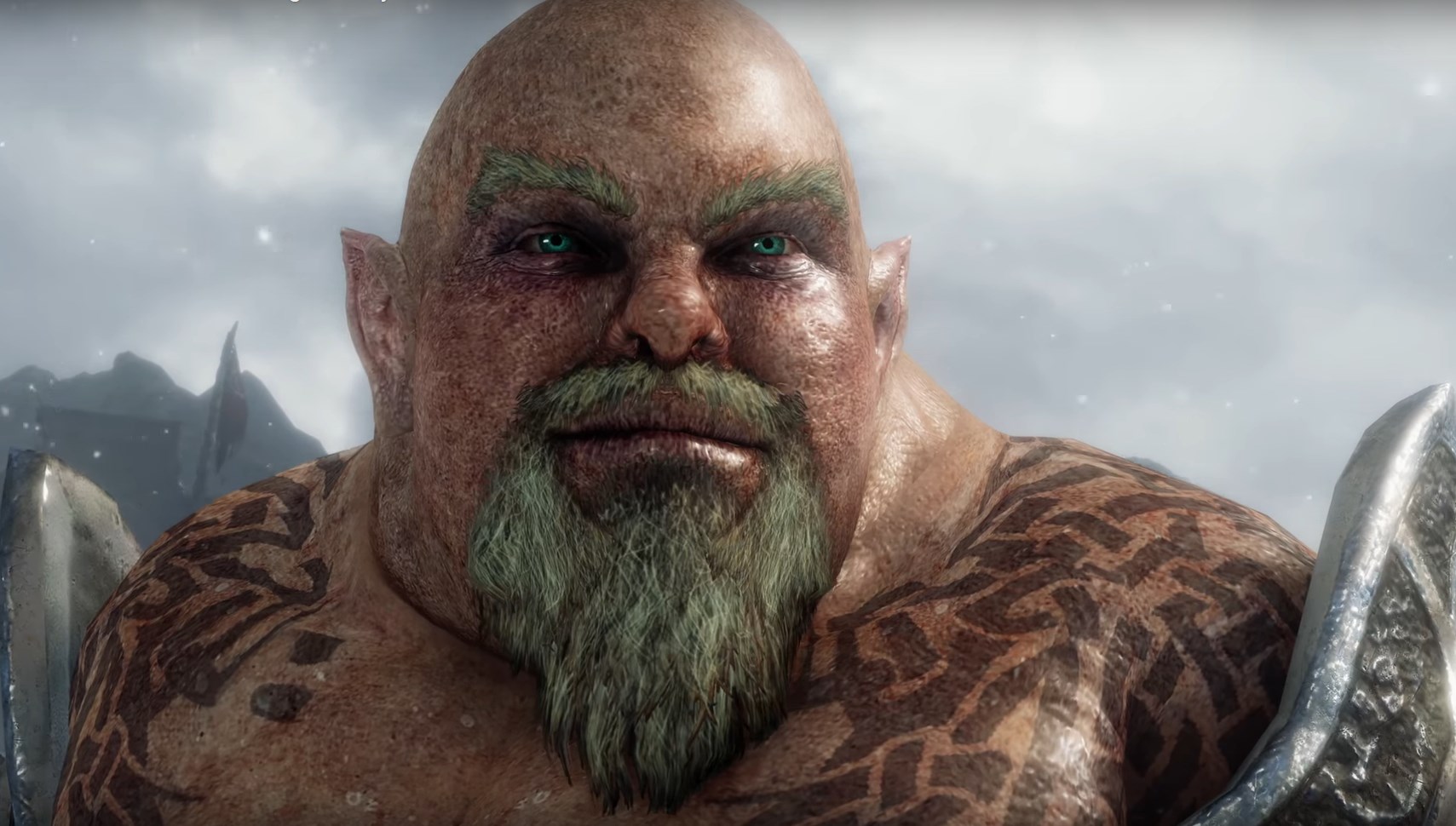
Last year saw the untimely passing of leading developer Michael Forgey, who died of a brain tumour at the age of 43. These heartbreaking circumstances must doubtless have knocked everyone involved at WB Interactive Entertainment and Monolith Productions for six, but to their credit, they’ve devised a fitting in-game homage to their fallen comrade-in-arms…

Takeaways:

  • As a tribute to Forgey and a means by which to raise funds for his grieving family, the Shadow of War team has unveiled the Forthog Orc-Slayer DLC, introducing a new supporting character – modelled on the late executive producer’s likeness – who’ll march into battle alongside protagonist Talion to reclaim Mordor from the clutches of the Dark Lord Sauron, mowing down countless hapless Orcs en route.
  • The £3.99 / $4.99 DLC package caused tremors among the Middle-Earth fan community, however, when some spotted small print in the DLC’s trailer (below) hinting that its funds wouldn’t reach the Forgey estate if collected in certain US stores or other worldwide retailers.
  • WB later resolved the matter though, confirming $3.50 of the $4.99 on each sale would go to the family provided the sale occurred in a participating state. “Neither Warner Bros. Interactive Entertainment nor Monolith Productions will profit from any sales of the Forthog Orc-Slayer DLC regardless of the territory in which that DLC is sold,” the studio said.

Clarifying their position on what could’ve fast become a contentious and arguably disrespectful dilemma is a wise move on publisher WB Interactive Entertainment’s part, placing the onus first and foremost on individual video game retailers to step up to the plate and participate in this charity initiative, or face the reputational impact should they refuse.

Commemoration

Whether the aforementioned freebie DLC package serves as a satisfactory commemoration, bidding an uplifting farewell to the man who’ll sadly never reap the fruits of his labour, will scarcely affect the finished product’s overall quality, nor the ongoing debates over its microtransactions, but if nothing else, Fogey’s legacy will live on in style this autumn.

You can send a donation to the Fogey family at their Youcaring page here, and check out the gameplay trailer debuting his Shadow of War counterpart in all his Orc-besieging glory below. Stay tuned to D-pad Joy for all the latest coverage on the title’s development and our review as its executive producer’s final project hits Xbox One, PS4 and PC this October 10th.

Realistically, what can we expect from Nintendo’s Direct this Wednesday?

In case you missed it the big N is holding their next, coveted, Nintendo Direct this Wednesday, the 13th September at 11 pm (that’s UK time). We’re looking at midnight for Europe and 3 pm Pacific time.

As with every Direct, before it’s shown, the excitement tends to build to ridiculously high levels online. Enthusiasm and passion are brilliant things. No arguments. But they can also lead to disappointment, sometimes culminating in folks on the internet ‘stating’ that there was nothing to see. Or our ‘favourite’ comment we see thrown at all of the big three from time to time: “No gamez”.

Some Directs are better than others, that’s for certain. But it also helps to go in with realistic expectations. So, what do we know, and think, will actually be shown over the course of the 45-minutes-long presentation?

Nintendo Direct: What We Know

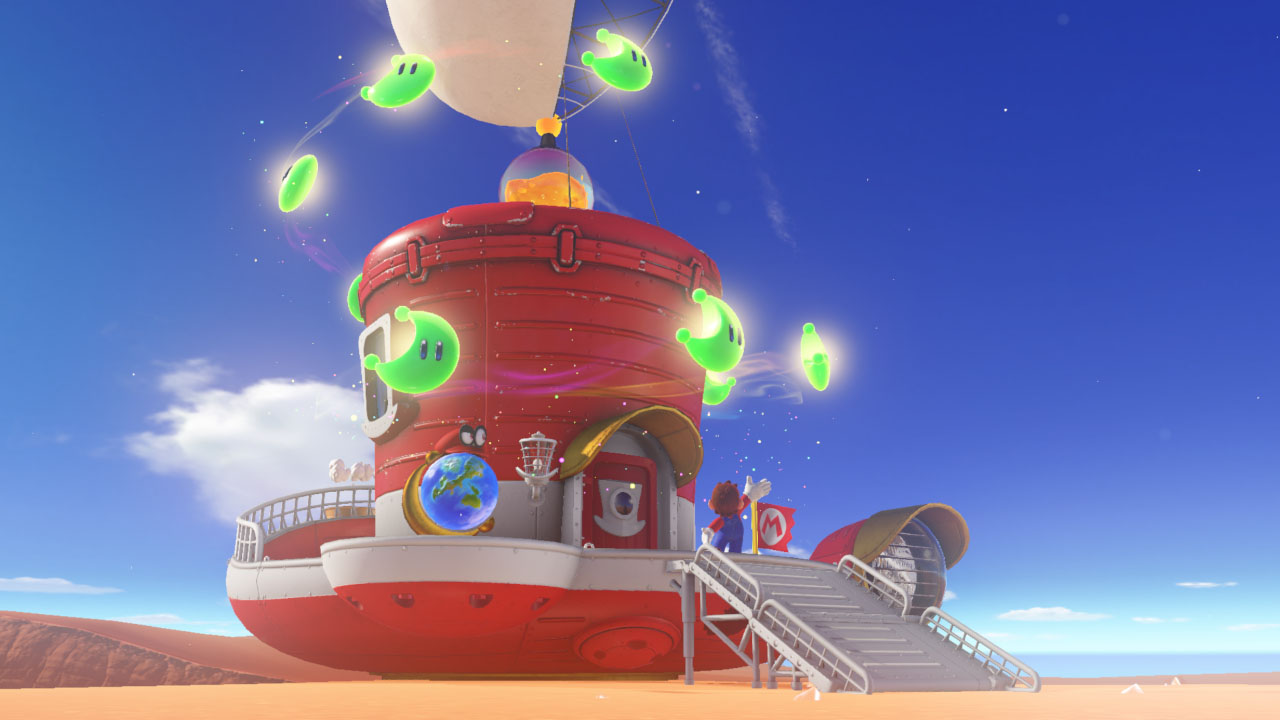
Super Mario Odyssey has been confirmed for starters, and we expect a good amount of time to be spent on it too. It’s released at the end of next month and is Nintendo’s next flagship 3D Mario title. It’ll be an essential game to ensure Switch consoles are under the Christmas tree.

Nintendo Direct: Super Mario Odyssey

We also know that both 3DS and Switch games, to be released “in the coming months”, will get some time in the spotlight. Nintendo confirmed this on Twitter, which is good news for those that aren’t too keen on the individual 3DS and Switch Directs that we’ve seen in the past. But that’s all we know for sure.

Nintendo Direct: What We Think

In terms of those 3DS games, we’d expect to see a final showing for Metroid: Samus Returns, released this Friday and Mario & Luigi: Superstar Saga + Bowser’s Minions, the remake of the classic first game in the series out October 6th. That Kirby 3DS game that we know nothing about other than it’s a “multiplayer action game” should show up as well. It is Kirby’s 25th anniversary after all. Finally, Pokémon Ultra Sun and Ultra Moon will definitely be in there.

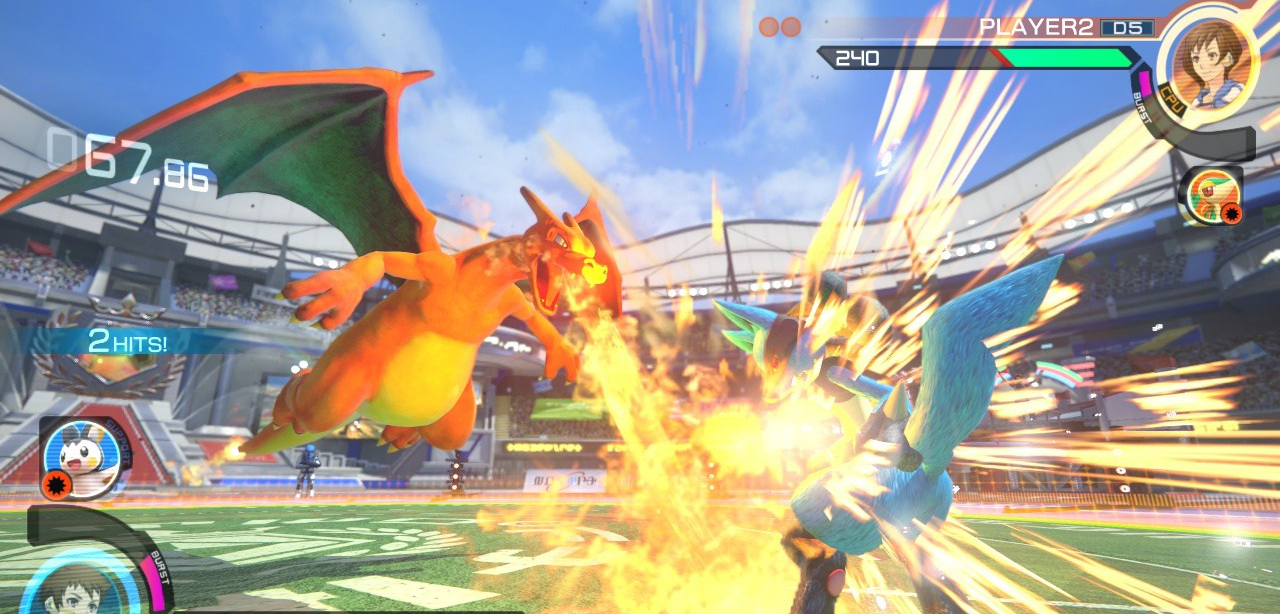
As for Switch, other than Super Mario Odyssey, details about the new Arms update, featuring Lola Pop, should be coming. A release date for Xenoblade Chronicles 2 may well be in there. (We hope). Fire Emblem Warriors (New 3DS and Switch) will probably get a new trailer showing off some unannounced characters before its release on October 20th. The enhanced port of Pokkén Tournament DX, the Tekken Pokémon game for Wii U, to be released on the 22nd September, will most likely feature too.

Nintendo Direct: Pokkén Tournament DX

What about new games?

They’re the most exciting thing of all. Well, we don’t expect to see many here in all honesty. A Bayonetta Switch announcement could be on the cards, in some form. A third game if we’re very lucky. Bethesda has also been teasing an unannounced game, but whether it’s for Nintendo consoles or not, that remains to be seen. Bottom line: we wouldn’t expect any new AAA Nintendo games we don’t already know about. Unless they’re Wii U ports, (for example Smash Bros.).

A bonus something might be in there and perhaps we’ll get more on that Animal Crossing mobile app. For now, though, take a deep breath, relax, and keep expectations real. It really does make surprises, if any, that much better.

Until Wednesday.

Outcast: Second Contact shows off the world of Adelpha

A new video released for Outcast: Second Contact, by game developers Appeal, shows us the world of Adelpha in a little more depth. Oh, and it happens to be the “cradle” of an ancient alien civilization named Talans.

We also get to see some of the core gameplay on offer, in which exploration plays a big part. Sacred portals, called Daokas, let you travel freely to the four corners of Adelpha, from the start of the game, as you search for your crewmates and the lost terrestrial probe.

To successfully complete your mission (and the hundreds of side quests!), you will need to gain the trust of the local inhabitants. Talk with people, negotiate with rich merchants, save oppressed farmers, take on dangerous predators and even undergo a mystic ritual with the Shamaz priests of Adelpha. Every Talan has a unique history and personality.

You take on the role of Cutter Slade, an elite soldier sent to an alien planet as Earth’s last chance, (we’re always doomed, right?). It’s there that you’ll explore a world that merges science and magic, native cities, and enemies that won’t go down without a fight. Fundamentally, it’s about making the right choices in a world that has its own individual ecosystem, because the fate of two universes depends on your success – no pressure.

Outcast: Second Contact is a remake of the 1999 game that was originally released for PC. This time around it’s out on PS4, Xbox One and PC in October of this very year.

Check it out below:

Kevin Giguere From Dragon Slumber On Being An Indie Developer

We got the chance to sit down and speak to indie developer Kevin Giguere from Dragon Slumber. It’s here we discussed indie game development, wider trends in the games industry and much more.

Kevin Giguere is a programmer with over 15 years of programming experience, and the founder of Dragon Slumber, an indie game development company set in Quebec, Canada. As an indie developer, he has created a retro JRPG called Arelite Core and a 3D runner racing game called Astral Traveler.
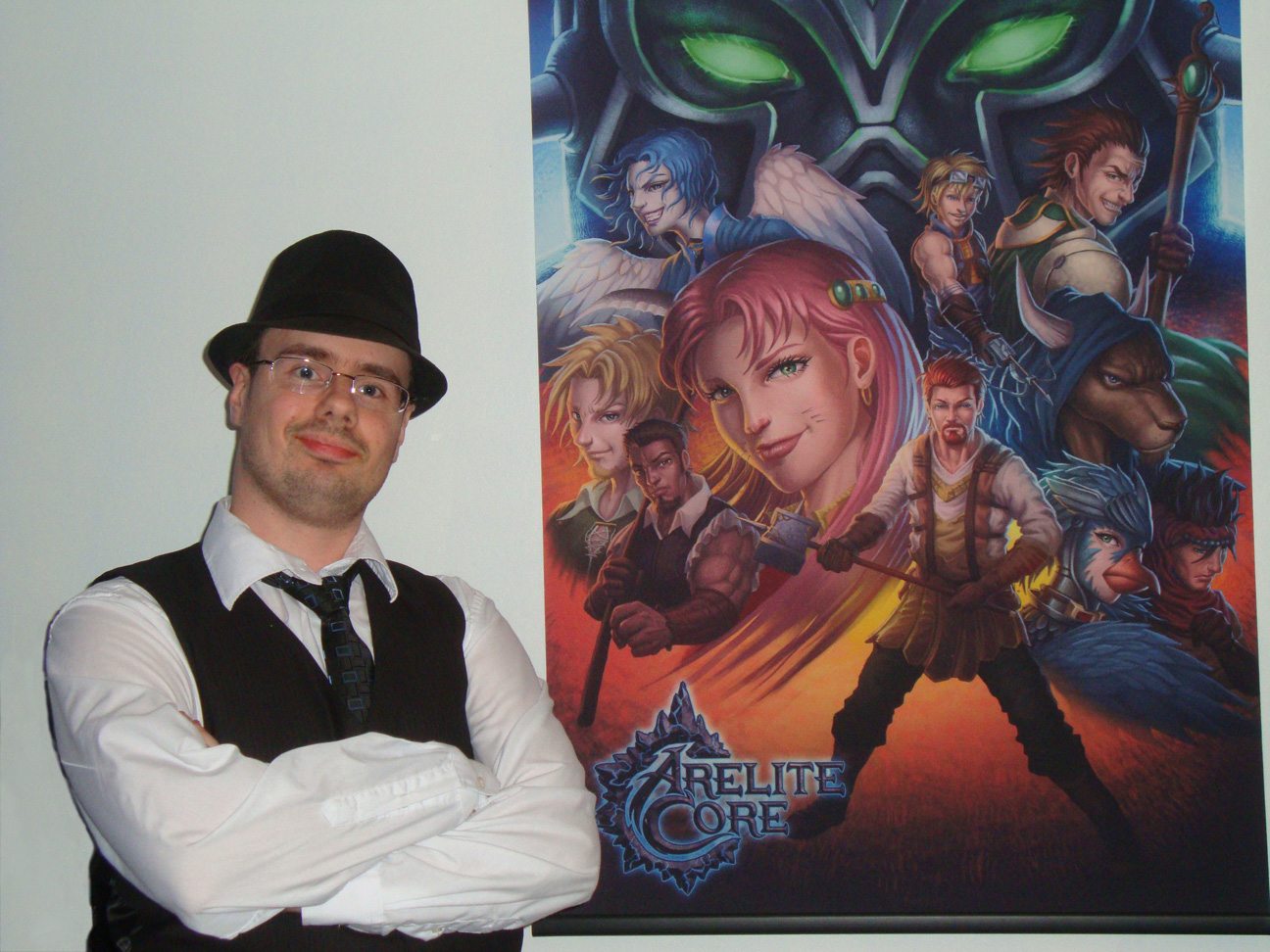
Kevin Giguere Indie Developer

What inspired you to get into game development?

I was always into video game creation, even as a young kid. My older cousins have multiple anecdotes of me drawing level maps and asking them to illustrate some aspects of them. As a teenager, I learned Basic and started making a few (terrible) games, as well as creating my own maps for Warcraft and Doom. I eventually went to college to get a programming degree, although anything gaming related I had to learn on my own.

What games have you created and which is your favourite?

I have worked on over a dozen commercial games over the course of my career. During the mid-2000s, I worked as a programmer for a flash game development company. We made weekly promotional games for brands like Spongebob Squarepants and Avatar, so very small in scope, usually only a few weeks of programming.

As an indie developer, I am publishing my second title Astral Traveler on September 13th, 2017, but my first game Arelite Core will always have a special place in my heart. I worked on that one for over four years and invested about 50k of my own money into it. It was a long, painful project, but it also taught me so much about the industry and bringing a project like this to its full completion.

What advice would you offer for those just starting out?

First of all, if you want to make a profit on your game, do your research. There are thousands upon thousands of games being released each year, so if your game doesn’t hit home, you’re likely to get lost in the shuffle. Everyone feels their idea is special, but really the right game at the right time, as well as a flawless execution, are the first steps that can lead the way to success.

Networking with other industry professionals is a key component as well. I think Arelite Core would have struggled a lot less in the market if I knew the people I do now who have helped me out on every aspect of development and promotion. It’s important to remember that everyone has a project they care about, so don’t just ask for help but actually, get invested in the community.

Finally, don’t wait until the last minute to put your game out there, start talking about it as early as possible. Communication is key and you need to talk with your audience, not at them. That means listening to what they’re saying and reacting accordingly.

What do you think is going to be a key trend in the games industry this year?

I think financial viability is becoming an issue for a lot of developers, both in the indie market as well as for AAA publishers. Gamer expectations are through the roof due to so much competition, so it costs more to produce games. However, game prices themselves aren’t going up that much, with bundles becoming the prevailing method to get new games for a lot of players. This is leading to more alternate ways of making money, from crazy premium bundles, to loot boxes, exclusive pre-order DLC, and so on.

On the indie side, I think outreach is being done a bit differently as well. For instance, I stream the development of my games on Twitch and I have a Patreon which greatly helps me out as well. I think for a lot of full-time developers, diversifying their approach is becoming necessary to be able to sustain themselves. For every success story, there are thousands of forgotten titles.

“I think financial viability is becoming an issue for a lot of developers, both in the indie market as well as for AAA publishers”.

What’s your favourite platform to sell games on?

Since I’ve only released PC games thus far, I’ll have to answer Steam. The ability to control your game and to update it at any moment makes a world of difference, I can put out a patch for a found bug within minutes, which I believe would be more difficult on other platforms.

Conversely, I think mobile is the most dangerous platform because it’s so easy to get lost in the shuffle. I’ve seen people work on games for years, release for free and only see a few hundred downloads. I think there is money to be made, but unless you’re Flappy Bird levels of lucky, you absolutely need the right market strategy and that takes a lot of investment.

What are your favourite tools for game development?

I’m really enjoying Unity, I find it really easy to use as an engine and it lets me accomplish a lot in not too much time. It’s not without its inconveniences, such as code optimization issues and requiring a very specific structure, without which games end up lagging really fast, but overall I would recommend it to most developers out there with a good grasp on programming, whether your project is 2D or 3D. And it’s free, can’t beat that price.

However, the tool I am known to use the most is Open Office Calc (or Excel), which really came in handy on Arelite Core to create enemy stats, inventory items, story segments and so on. On Astral Traveler, I actually use it to create levels themselves, setting the elements up in the spreadsheet and then converting them to a json file which can be read by the engine. Sometimes tools really can do a lot more than expected with a few tweaks.

How do you stay motivated to achieve your goals?

When I officially became an indie developer in 2013, I decided to throw myself into them entirely, including whatever sacrifices would be needed. That includes 80 hour work weeks, reduced contact with friends and family, and investing tens of thousands of dollars out of pocket in the case of Arelite Core. Then, in January of this year, I quit my job to dedicate myself full time to my passion.

Because I invest so much into the creation of these games, I can’t really afford to not work on them and I think that really helps drive me forward, including in those stressful moments where nothing is working as planned. If I don’t release and sell games, I can’t afford a home and food, simple as that. I also think having realistic expectations can help motivate me, knowing what I can expect in terms of sales and reception, and learning to create better games moving forward.

Being an indie game developer is about making sacrifices, and I think a lot of people are not ready for that. But if you know what you’re getting into, I think it makes the process a bit more tolerable.

Which events do you recommend indie developers showcase their game at?

Depending on the scope of the game, events can be cost prohibitive. I went to PAX East 2016 to showcase Arelite Core, which ended up costing around four thousand dollars over all. I can honestly say that it didn’t drive enough sales to warrant the expense, at least not directly.

However, I did get to meet with numerous game industry people through the indie megabooth initiative, and I signed a distribution deal for my game as well. For me, that event was an opportunity to network and plan long term beyond the launch of Arelite Core.

I think the important thing is to understand what your goal is when attending an event. You can use them to test your game and get feedback or meet people, you can even make a few direct sales.

What do you think about VR?

I recently got an Oculus Rift and for the little time I’ve had to play it, I absolutely love it. I think the ability to use your hands in a 3D space provides a lot of opportunities, but like any other control scheme, the games need to be built around that. Robo Recall does a fantastic job at that, it’s a first-person shooter where you hold your guns and can throw them around, as well as grab robot enemies in front of you to tear them up. It makes the player feel like an action hero in a way that holding a controller couldn’t accomplish.

I’m glad that the costs are going down, and am really hopeful that within a few years, VR will be in more households, in a more customer friendly way. I don’t think it’ll replace the platforms already out, but I’m definitely looking forward to more high-quality VR titles.

Games console of choice?

The SNES by far my favourite console and it has definitely influenced me a great deal as many will have gathered from the look of Arelite Core. Games from that generation are so well focused, building upon the NES era into longer and more in-depth experiences without being any less approachable.

I also love that the time between powering up your console up to playing the game is almost instantaneous, as opposed to consoles nowadays which take forever both from the console booting and the games preloading so much information.

Thanks for your time Kevin. It’s been a pleasure.

Thank you!

Our review of Astral Traveler will be up on the site shortly.

South Park plunges down rabbit Whole (again) with difficulty slider debate

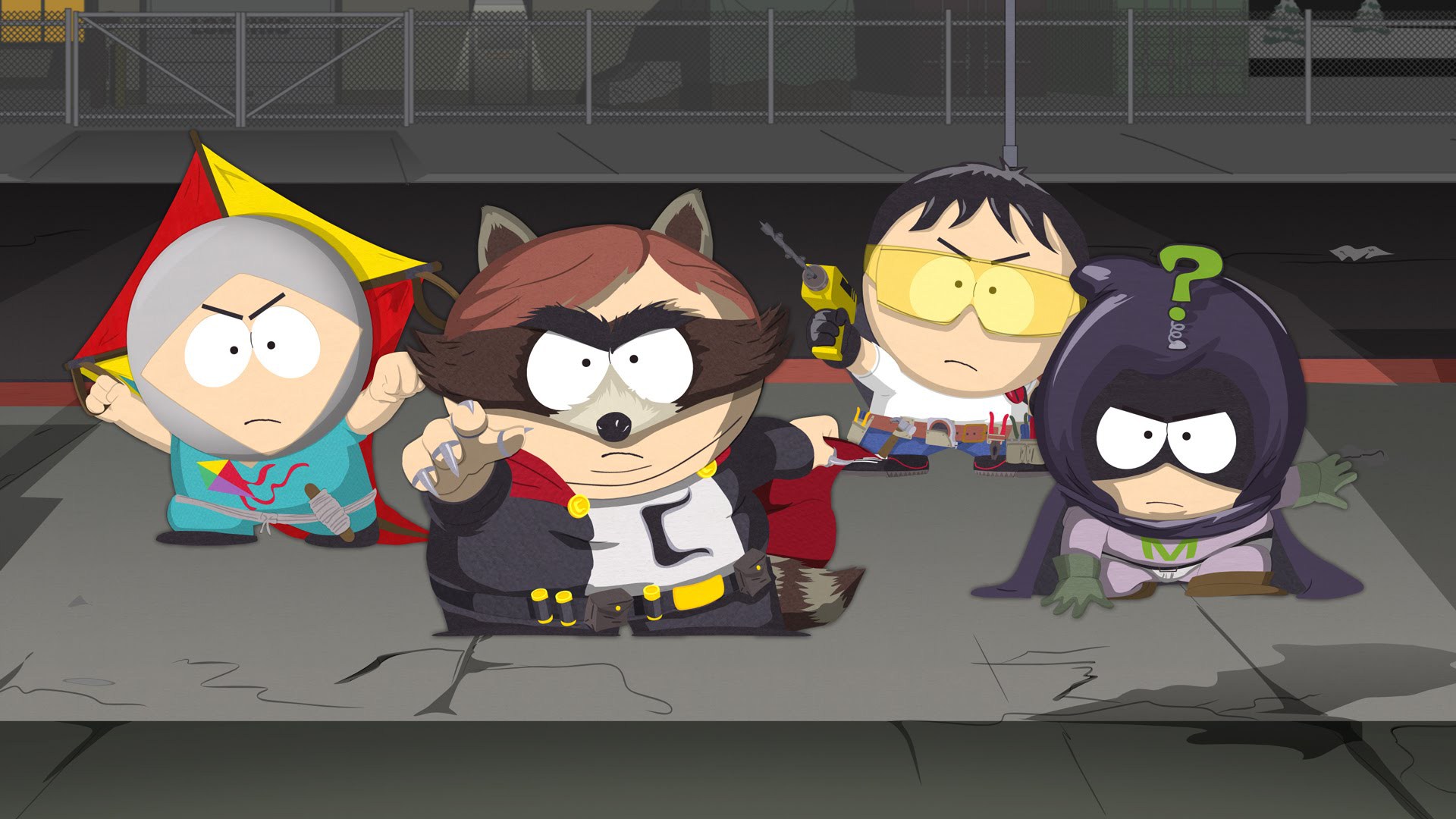
A new gameplay feature for impending licensed RPG South Park: The Fractured but Whole has – predictably – began ruffling feathers from the moment the news broke online.

Takeaways:

  • The second entry in the series, following The Stick of Truth, will pack a difficulty slider represented by an avatar whose skin tone shifts according to how tough a challenge players want.
  • Move the slider to the left for an easier play experience and said avatar’s skin will gradually brighten until becoming a Caucasian white at its furthest notch, while heading towards the right will have the opposite effect, eventually transforming the innocuous South Park resident into a black kid instead.
  • Thankfully our ever-sensitive ally Cartman provides a rapid consolation on the superheroic battlefield The Fractured but Whole lays before you shortly afterwards, assuring us that the paradoxically inclusive choice “doesn’t affect combat” so much as “every other aspect of your whole life”, in this case meaning the amounts of money available to your character and how other NPCs react to them.

Such ‘gags’ are always bound to split cultural commentators down the middle, eliciting shrugs or chuckles from just as many schools of criticism as they will cries of outrage.

Let us know your thoughts below, and stay tuned for all the gossip on The Fractured but Whole as we near its sure-to-be-explosive-in-more-ways-than-one launch on PS4, Xbox One and PC this October 17th.

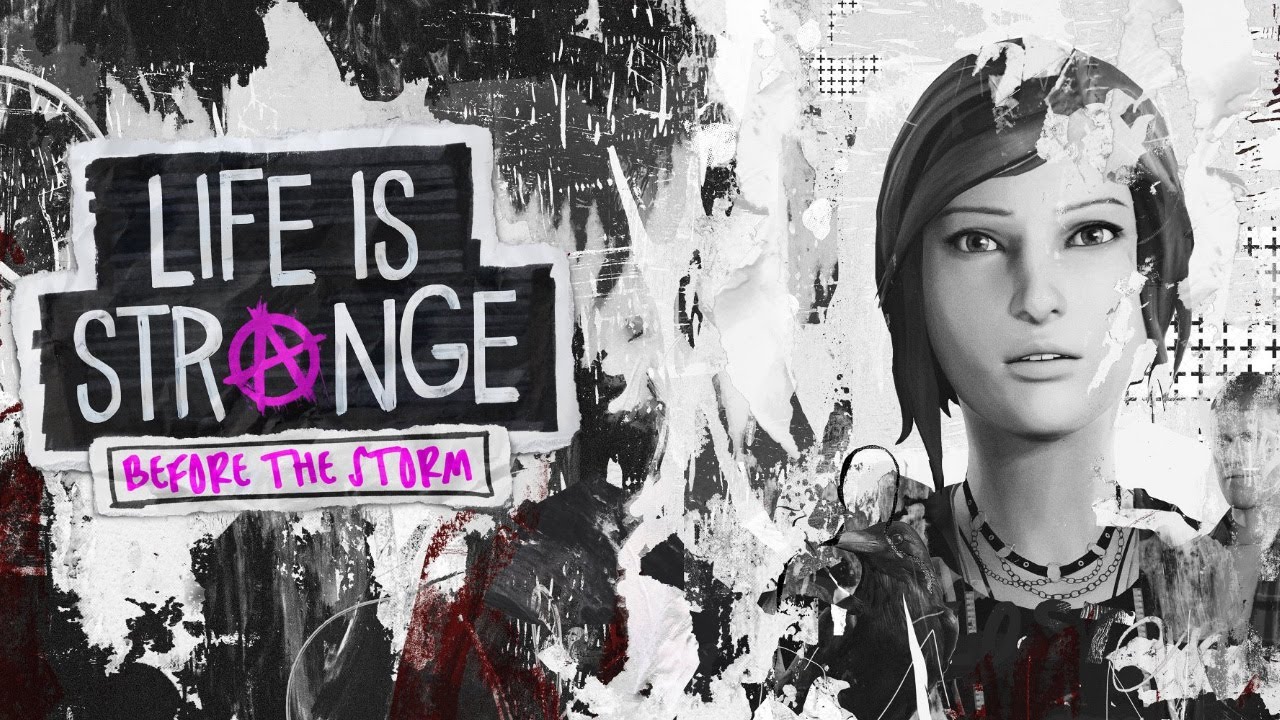
Life Is Strange: Before the Storm

Life Is Strange: Before The Storm Episode 1 Review (PS4)

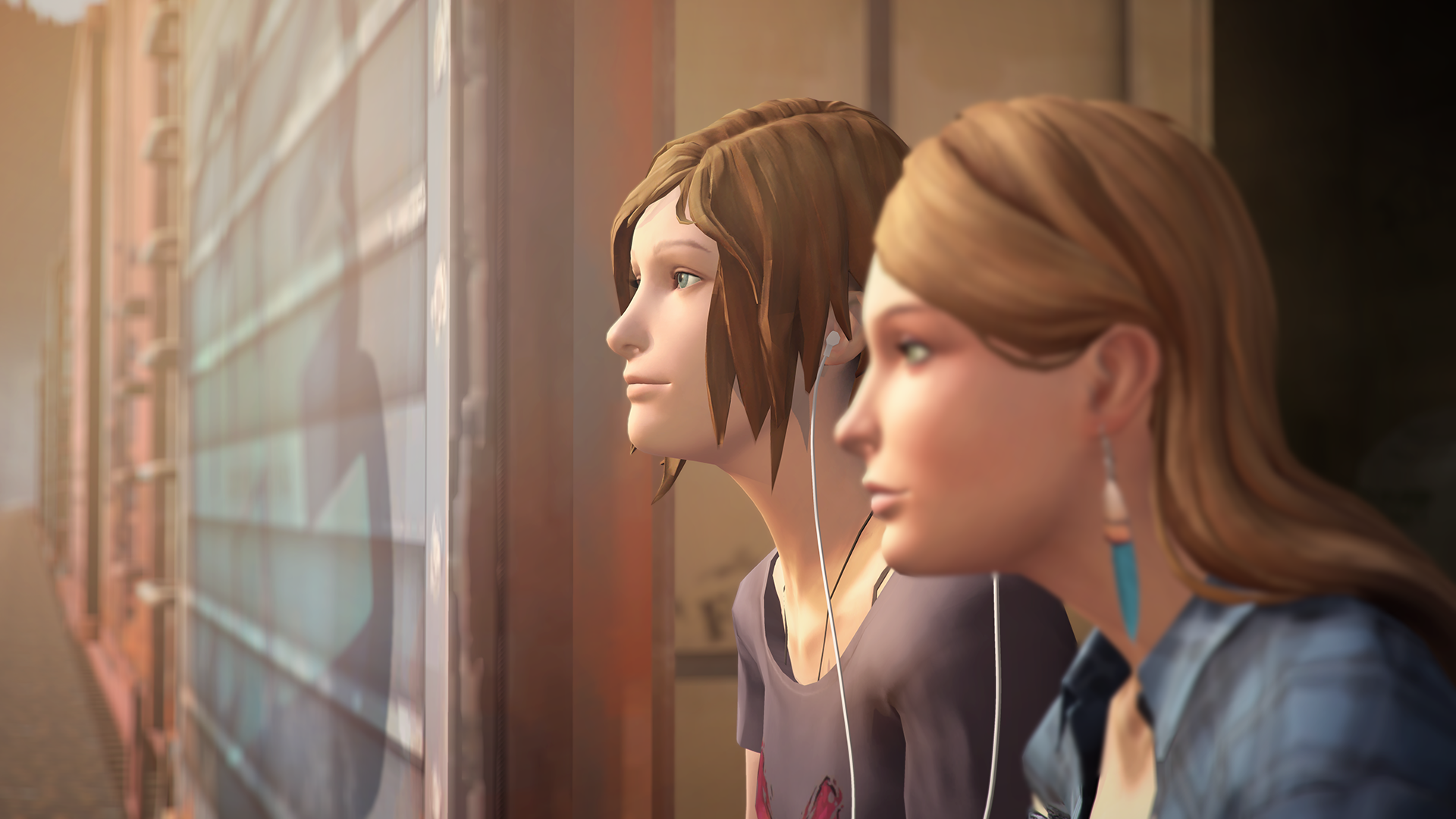
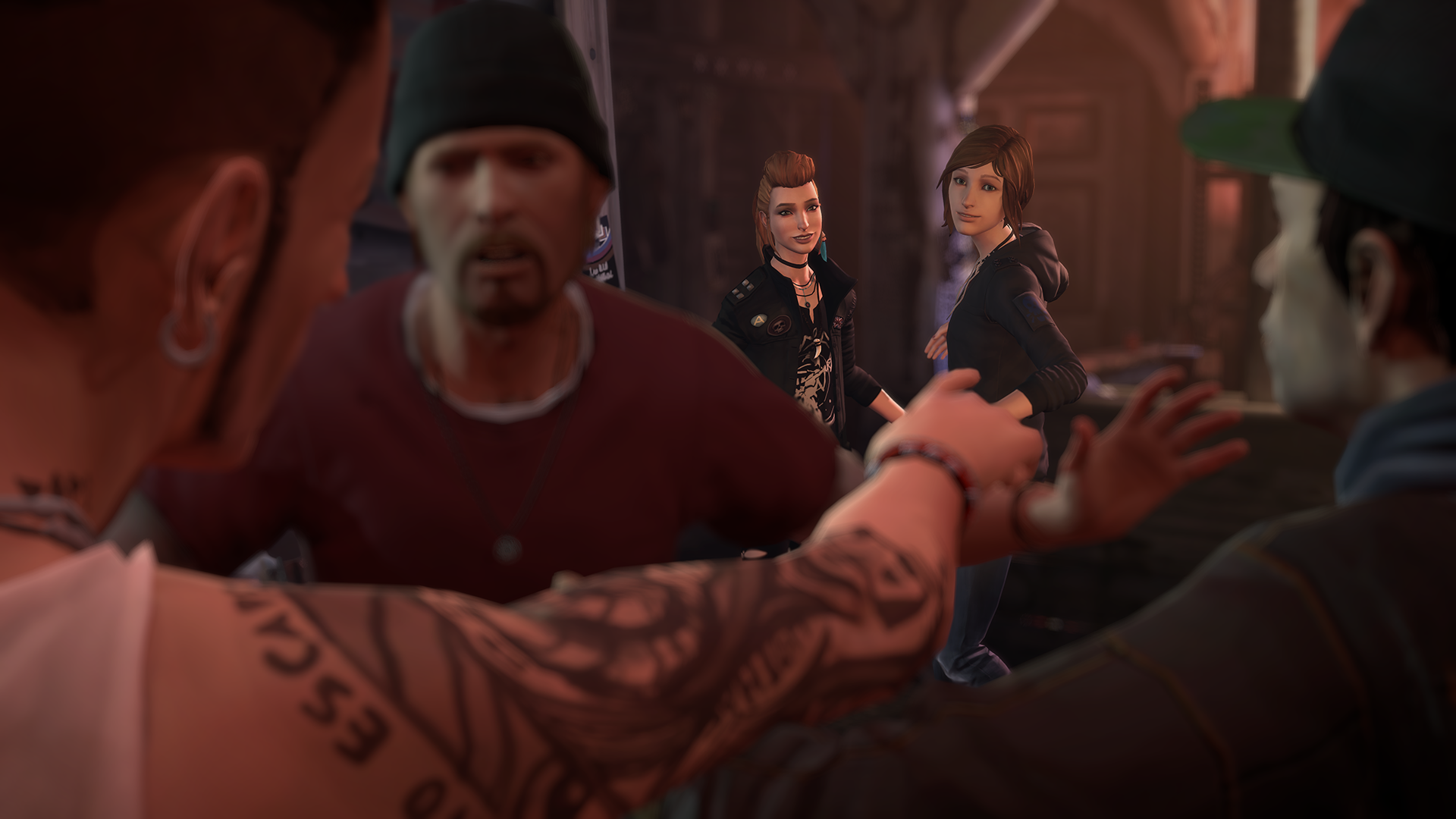
As a prequel to Life Is Strange that came out in 2015, Life Is Strange: Before The Storm tells the story of the 16-year old Chloe Price, Max Caulfield’s best friend in the first game. Which, in certain circumstances, I guess they still are. Chloe is a rebel, who forms a relationship with Rachel Amber, the popular girl at school, who is beautiful and is destined for success. However, we already know Rachel’s fate: it is a sad and unfair one. But now she is here: alive and kicking. After playing a whole game searching for her, it is nice to finally be able to meet her. This time around, we get to learn even more about this lost girl. We know she has a secret that will strengthen her relationship with Chloe, that takes their friendship to a new level. Because this is not just a story about Chloe, it is also the story of Rachel. Together, they will overcome their demons in Life Is Strange: Before The Storm.

The time has come for us to return to Arcadia Bay. I choose to believe that many of us have mixed feelings about this. In light of Max’s ability, we rewind time and are now in an Arcadia Bay where Max is in Seattle to go to school and has not moved back to start at Blackwell yet. Chloe tries to get in contact with her (judging from the information on her phone) but is replied with silence and rejection.

Life Is Strange: Before the Storm
New adventures ahead!

One cannot talk about the Life Is Strange games without mentioning the fantastic soundtrack – and how the music is used to match the protagonist’s personality. I love how they have adapted the music to fit Chloe’s personality better. Ranging from hard rock to indie, it reflects her mood – even though it fluctuates like the bounce of a ping-pong ball.

While speaking of our protagonist, let me just address the elephant in the room right away. The biggest problem had nothing to do with the game itself – but rather the stuff that happened in the making of it: Chloe’s voice. If you don’t know about this, let me explain: because of the long strike in the Screen Actors Guild, Chloe’s voice from the first game, Ashley Burch (who also gave her voice to Aloy in Horizon Zero Dawn and Tiny Tina in Borderlands 2), had to make a heartbreaking sacrifice because of this strike:

“I broke off a little piece of my soul when I did the first Life Is Strange and put it in Chloe”, she says to Kotaku.

Rhianna DeVries is the voice actress who has now given her voice to the 16-year old version of Chloe, and I’ve got to admit… I hear the difference, and I sadly have to say that I’m not a fan. There is something off about the way Chloe says things. And it may just be me that’s being real sensitive about the whole thing – because I really liked Chloe in Life Is Strange. Either way, this is a discussion with a lot of different stories to it and is not something I will discuss further here. There were big shoes to fill, and I guess that the outcome is better than no game at all. Because so far, this is a good game.

Unlike the first game, which had 5 episodes, Life Is Strange: Before The Storm has 3. But in return, they are longer. The game is as beautiful as it always has been. For example, you’ll notice how the main menu changes after you’ve played the first episode! I like little details such as that. Speaking of details, the last game had a butterfly (representing the never-ending cycle of life, and also represents the mind and our ability to change it when necessary) as the autosave symbol. Now, it’s a bird: the symbol of freedom and perspective. Which describes Chloe pretty nicely. While those might be only tiny details – they are interesting changes, and worth paying attention to, I think.

Life Is Strange: Before the Storm
Rebel Yell.

There is also a new important feature to the game, which replaces Max’s ability. This was highly discussed among fans when Square Enix announced the release of Before The Storm – Max’s ability was such a big part of the game, so what would they replace that with? Well, instead of rewinding time, Chloe’s ability is pretty obvious if you just think about it: her mouth. Yup. The Backtalk Challenge occurs either when you get in a fight, persuade them, etc. Sometimes, the person with the best argument wins. And other times, the more the comment hurts, the better. The more you explore the scenery, the more information you have to talk about. Gather information from what the other person is saying, only to turn it around and use it against them. It almost felt like a psychology session, where I learned about how humans use language as a weapon against each other.

This episode is a very promising start to a new adventure with Chloe. Life Is Strange is about teenage life, and all the love, hurt, rebellion, conflict, and drama that follows it. Life Is Strange: Before The Storm is no different. They are games about life experiences. Even though I was sceptical at first, it has already managed to pull me back into its universe – I am really excited to see what’s next, and how the story of these two girls unfold. Obviously, we know how it turns out, but I am excited to see more of the road that it leads up to!

Just a friendly tip: If someone asks you to play dungeons and dragons with them… say yes.

Warhammer: End Times – Verminitude

Fatshark manages super-sized expectations in Warhammer: Verminitude 2

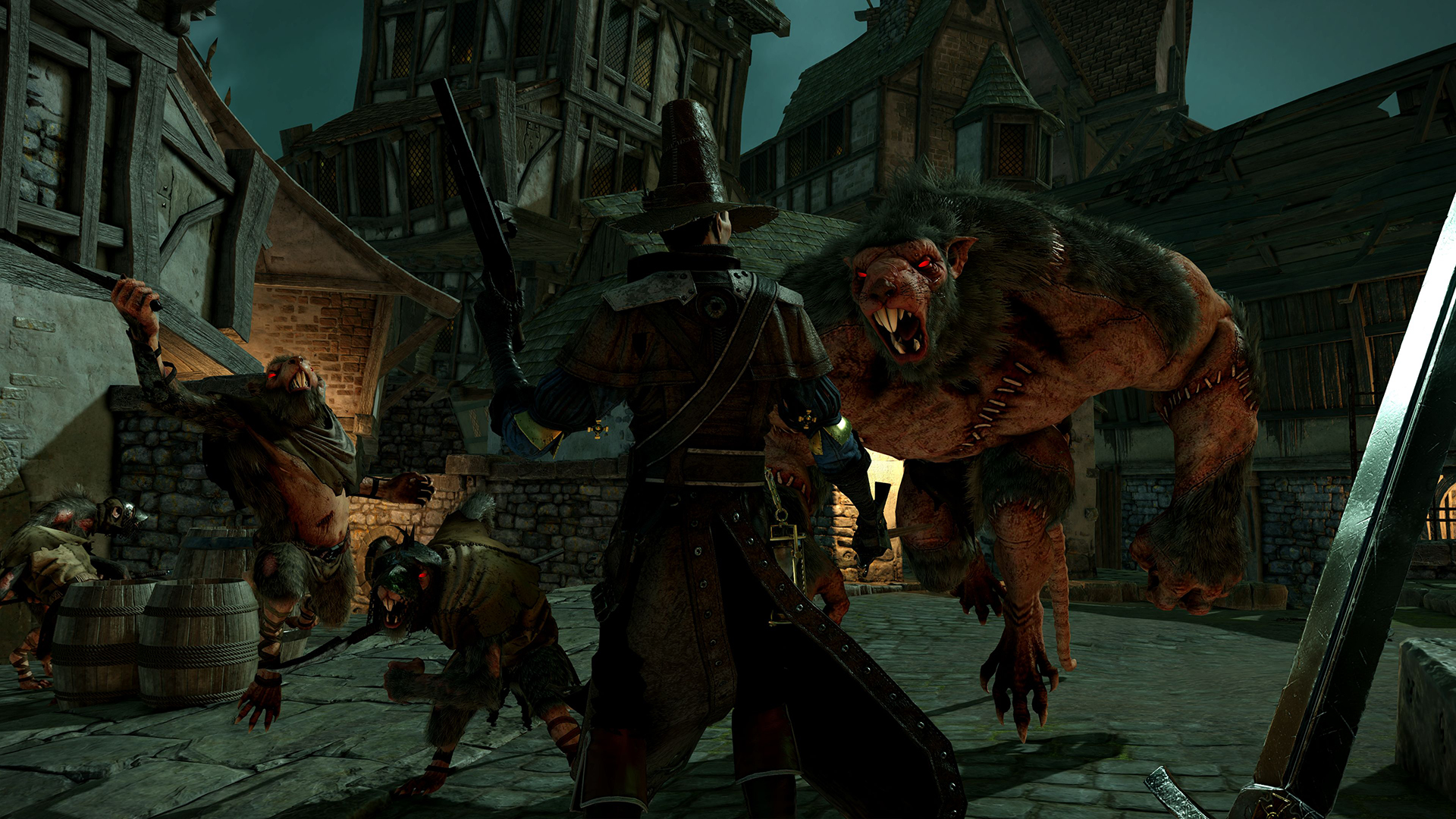
Unlike many indie studios out there focused on crafting original IPs to suit their own creative visions above all else, Swedish developers Fatshark haven’t shied away from delving into pre-established universes in the slightest since their 2008 birth. The team leapt headfirst into Capcom’s Bionic Commando brand with platformer Rearmed 2 in 2011, then presented a bold new take on survival horror with 2014’s Escape Dead Island. But easily their most esteemed project to date has been Warhammer: End Times – Verminitude, a multiplayer-centric FPS set in the realms of the titular table-top strategy saga. Earning itself a strong 80% Metacritic score in 2015, this apocalyptic adventure built no shortage of goodwill for a brand with a hit-and-miss track record for video game adaptations, making the studio’s just-announced next project, Warhammer: Verminitude 2, a no-brainer…

Takeaways:

  • Yes, you’ve probably already guessed it – Fatshark is hard at work on Warhammer: Verminitude 2 as we speak over the interwebs.
  • Some Warhammer diehards are already speculating that the narrative will herald from the physical strategy game’s classic Old World setting, rather than End Times’ Age of Sigmar.
  • As for the current-gen consoles set to grace themselves with this likely long-in-development fantasy experience in the near future, expect to see Verminitude 2 hit PS4, Xbox One (and PC).

That’s essentially our lot for now, with plenty more details promised by Fatshark for Verminitude 2’s worldwide gameplay reveal this October 17th. In the meantime, be sure to take a gander at the long-awaited sequel’s debut trailer below, and let us know in the comments whether the title might end up in your online shopping basket come 2018.

Meet Red Dead Redemption 2’s understudy – L.A. Noire hits VR, Switch and more

As the hallowed philosopher Jagger – and Dr. Gregory House – once said, you can’t always get what you want. Until May of this year, Rockstar Games’ fan base was eagerly anticipating the autumn launch of Red Dead Redemption 2, the long-gestating follow-up to the hit 2010 Western shooter, only for the studio to delay the project that month to spring 2018.

But for better or for worse, we’ve now learned that Rockstar doesn’t plan to completely starve its community of new content during this extended wilderness period; instead, they’re reviving an arguably long-forgotten IP for mainstream current-generation hardware and emerging platforms alike, bringing period detective dramas back into cultural discourse…

Takeaways:

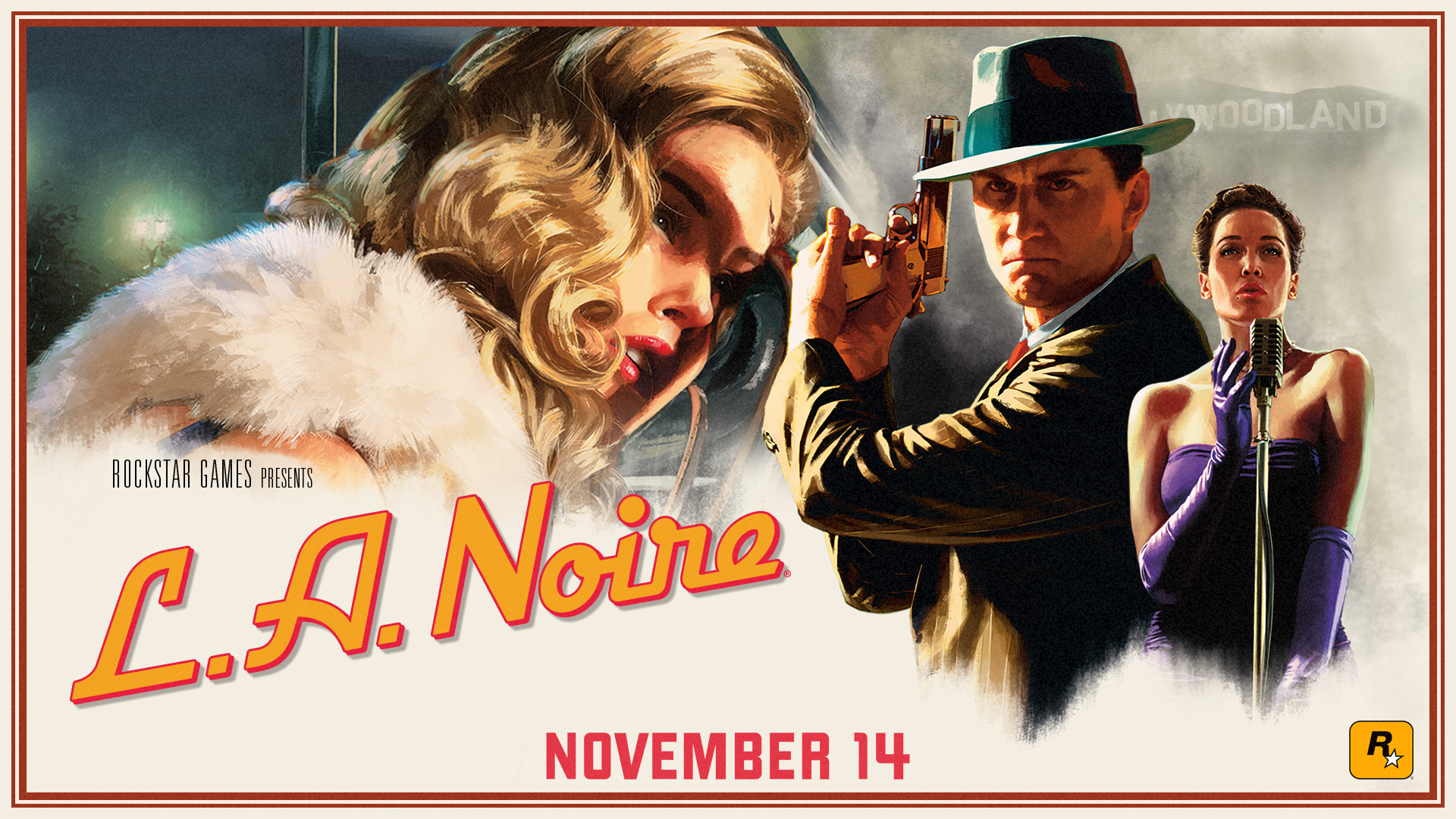
  • Remember L.A. Noire, the studio’s 2011 third-person-shooter centring on slow-burn detective investigations and packing some of the most uncannily realistic facial animations ever seen by the industry? If so, and if you’ve craved a return to WW2 LA but ditched the 360 / PS3 version when you traded in those consoles, then take solace in the news that the title’s making a comeback with a full-fledged remake. Just as we predicted!
  • Creatively dubbed L.A. Noire once again, the upgraded version of the mystery-driven thriller will launch this November on Nintendo Switch with bonus features like a gesture-based Joy-Con mode, touch-screen controls and widened camera angles, plus on Xbox One and PS4 in 1080p – and Pro / X in 4K – with “cinematic camera angles”, enhanced graphics, superior textures and more technical touch-ups.
  • Whereas both of those remakes will simply feature the title’s original campaign and all of its subsequent DLC, a VR edition – L.A. Noire: The VR Case Files – is also inbound with all-new re-workings of seven classic cases from the 2011 narrative, allowing budding detectives to solve heinous murders aplenty with a full 360-degree outlook on each crime scene.

Try as they might, it’s safe to say Rockstar will have a tough time at best to convince their most ardent sceptics of the value of a high-resolution but otherwise largely unchanged re-release of a half-decade old project, especially one which split opinion at the time of release – with some critics maligning its padded narrative – moreso than recent GTA or RDR entries.

That said, given the publisher’s statement back in February 2012 that they were “considering what the future may hold for L.A. Noire as a series” and the lack of subsequent updates on what lies ahead for the brand, those who did adore the original title six years ago might well have to make do with what they get here. As for those who didn’t contribute to its original 5m sales, they won’t find a better opportunity to discover what all the fuss was about than this.

Keep your magnifying glass trained firmly on D-pad Joy in the coming weeks and months for plenty more news on the return of L.A. Noire this November, the belated but no less anticipated launch of Red Dead Redemption 2 next spring and the all-but-guaranteed resurgence of the GTA franchise – no matter how much fake news surrounds its assured development – in the not too distant future.

Okami “HD” is, probably, coming to PC, PS4, and Xbox One

Okami might well be coming to PC, PS4 and Xbox One later this year… How do we know this? The Korean Ratings Board, of course.

It’s ever-useful for leaking information on the latest games we’re not meant to know about. Ahem.

The beloved Okami first launched on PS2 in 2006, before making its way to the Wii in 2008, and finally to the PS3 in 2012. So it’s looking around the right time for another go.

We’ve already had the game in HD once with the aforementioned PS3 experience, so what this version offers differently is up for discussion. Maybe we’re actually looking at a 4K rendition? Or is this simply a re-release for the latest consoles and PC gamers who missed out?

I have a feeling we’ll find out soon enough.

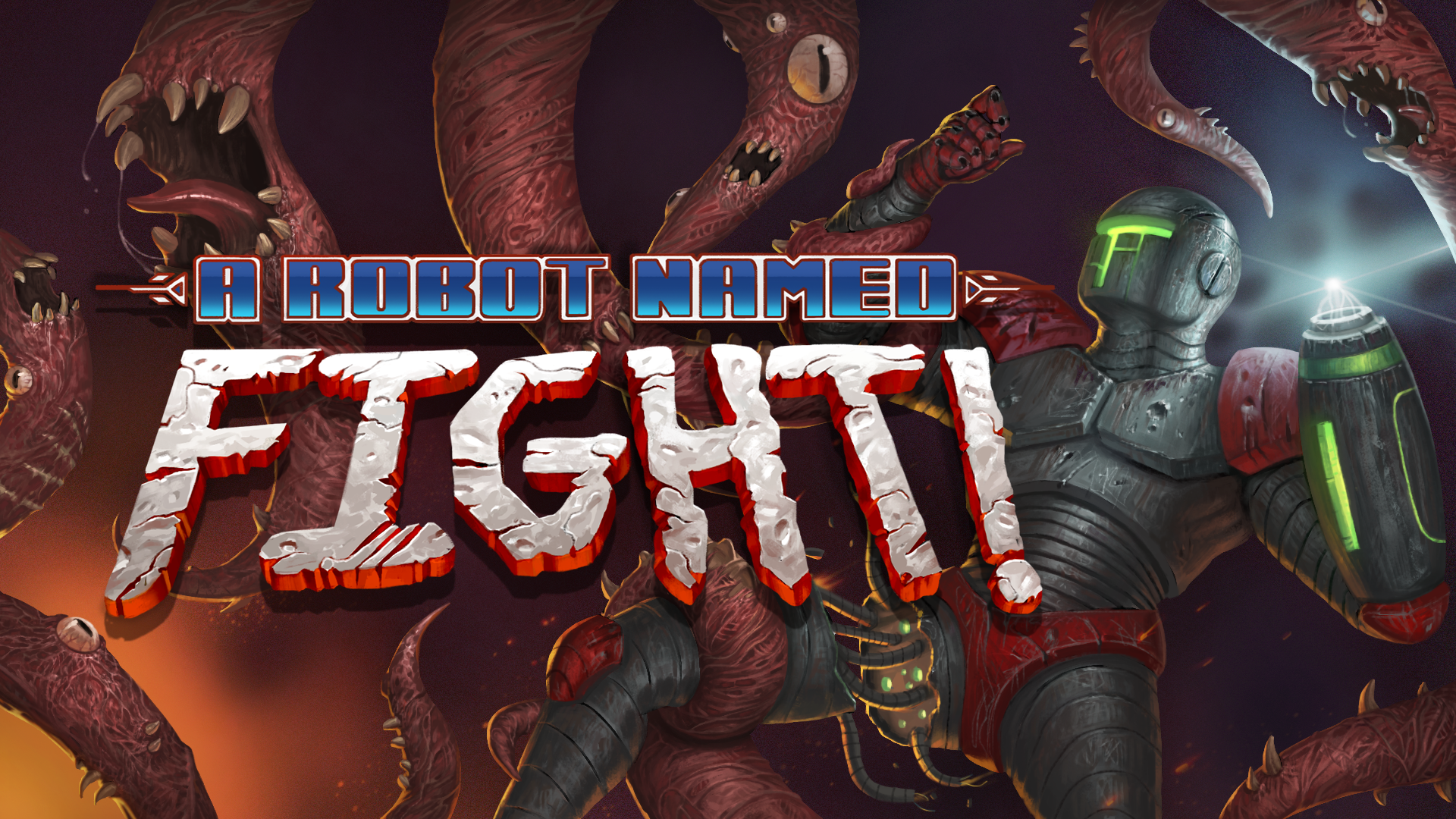
A Robot Named Fight, Metroidvania/roguelike hybrid, is now available on Steam

A Robot Named Fight is out today on Steam, everyone. Alien abominations, labyrinthine levels, and permadeath await you. If that’s your thing.

Combining the Metroidvania and roguelike genres, A Robot Named Fight aims to hit the sweet spot between retro and modern platformers.

As for the story, well, thousands of years have passed since the mechanical gods ascended and left the lower robots to cultivate the world, you see. Unfortunately for those left behind, something terrible is stirring among the stars: the “Megabeast”, a pulsating moon-sized orb of flesh, eyes, mouths and reproductive organs – unleashing its children onto the world like an unstoppable plague… How nice.

In the game, you play as a lone robot tasked with retrieving wartime artefacts deep beneath the surface of your planet. It’s here that you’ll explore a procedurally-generated underground world that’s full of monsters and power-ups.

Super Metroid fans, enjoy this trailer:

You can grab A Robot Named Fight on Steam now (both Windows and Mac) for $7.49 – 25% off the game’s retail price. The sale will end a week after launch (on September 14th).