Anima: Gate of Memories - The Nameless Chronicles

Anima: Gate of Memories – The Nameless Chronicles out June 19th

It was to my delight when I saw BadLand Publishing rebrand themselves and announce Anima: Gate of Memories – The Nameless Chronicles (a mouthful, so let’s abbreviate it to AGMTNC).

Anima: Gate of Memories - The Nameless Chronicles

Anima: Gate of Memories – The Nameless Chronicles

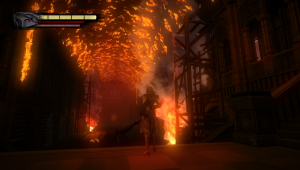
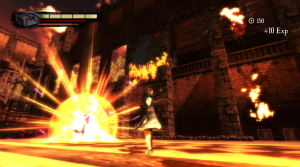
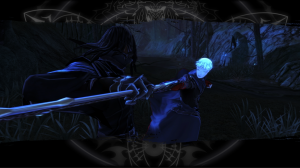
It’s a third-person action RPG hack and slash in which you level up and unlock combos and moves. Much to my surprise, this game sets you as a reoccurring boss from the first game (in the series) called The Nameless, an immortal cursed to walk the worlds until the end of time.  Shadows from his past come back to haunt him… and you’ll find secrets of The Nameless as well as the Gate of Memories.

Anima: Gate of Memories - The Nameless Chronicles

Like the first game, you’ll have skills trees, artefacts and weapons to unlock, a vast universe to explore with deep characters and lore. This time there is a feature that says, ‘Use the Hand of Tanathos, a unique action system that allows The Nameless to improve any attack.

I’m excited, the first title is something of a hidden gem. It wasn’t perfect, some of the jokes were off, the platforming was frustrating, the controls in combat lacked a responsiveness at times, but the game certainly made up for in its good points: the world, characters, lore, interesting bosses and changing of perspectives. It’s a middle tier game, a tier of gaming you struggle to find these days.

Anima: Gate of Memories - The Nameless Chronicles

My only concern with AGMTNC is that the ability to switch characters on the fly is more than likely gone, but hopefully, that coat of polish the first game lacked will be present. AGMTNC (that’s still a mouthful isn’t it?) will be out on Xbox One, PS4 and Steam June 19th.

No doubt the console physical releases will come packed with a soundtrack CD and manual.

Henry The Hamster Handler Review [Nintendo Switch] – A Simple Yet Challenging Rhythm Game

In a time dominated by an ever-growing number of expansive open world games, it’s occasionally nice to sit back with something simple. There are a lot of small games for the Switch, a good amount of which can, unfortunately, be written off as cash grabs. Simplicity, however, doesn’t always have to mean bad.

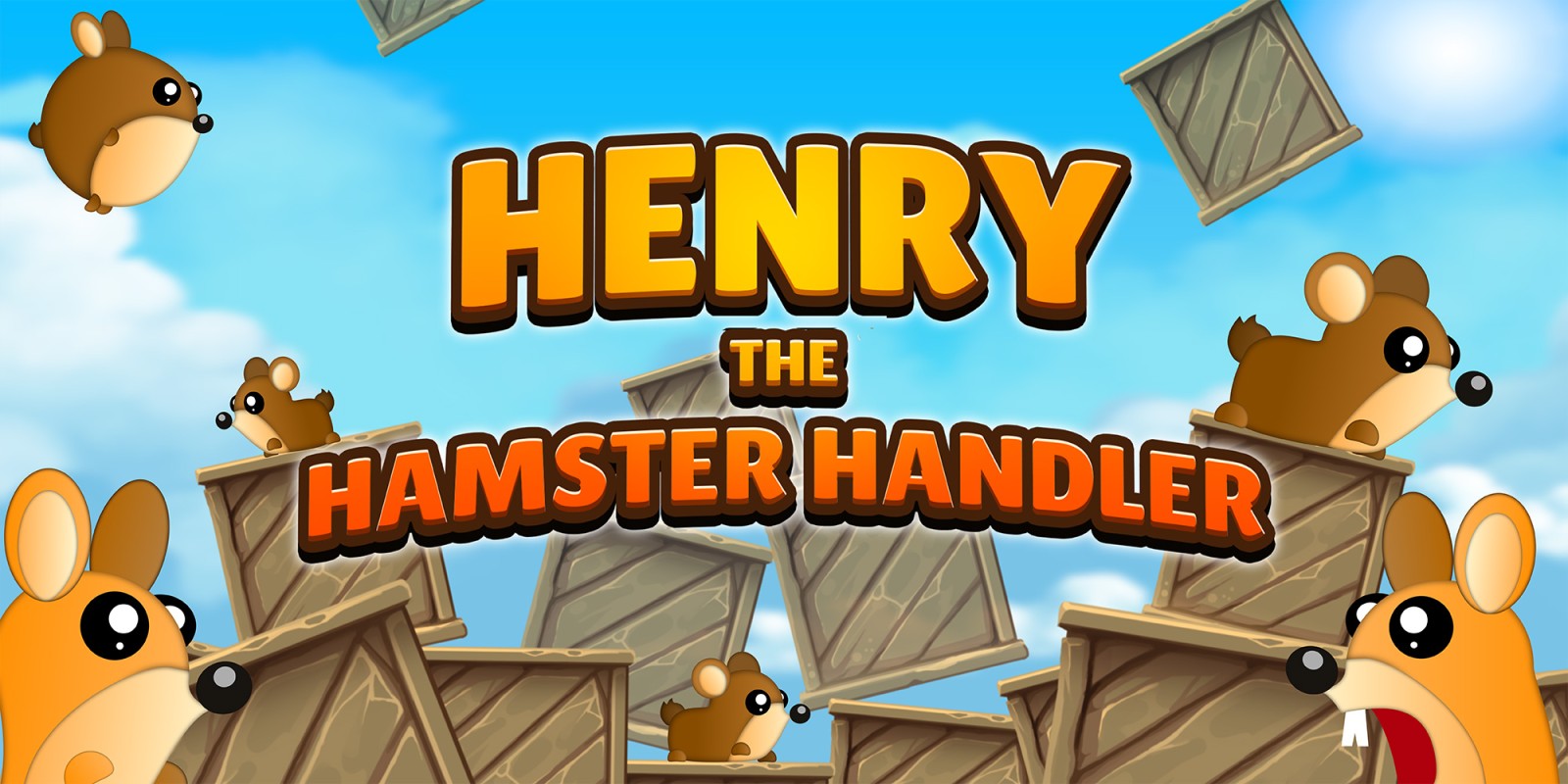
Pong is simple, and yet one of the most iconic games ever created. Henry the Hamster Handler by Pocket Money Games is not going to reach the icon stratosphere like Pong, but it is a simple game that packs in a lot of complex fun.

Henry The Hamster Handler Review

Henry The Hamster Handler Review

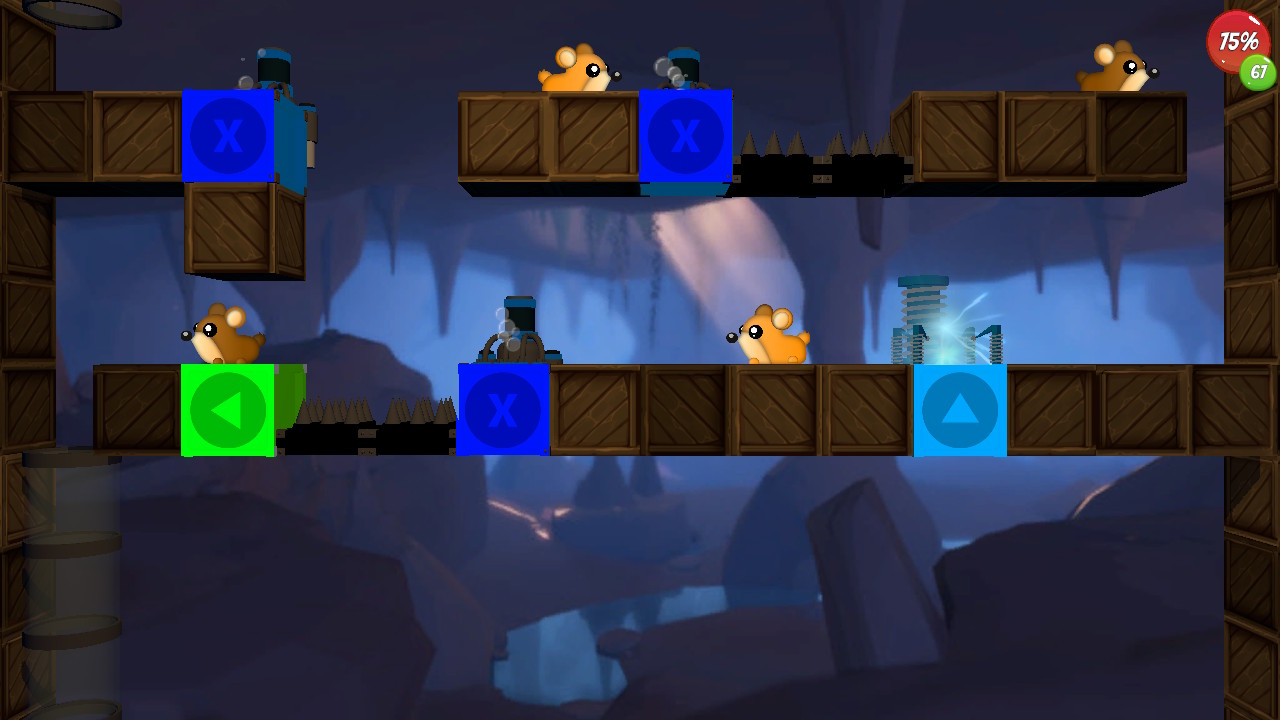
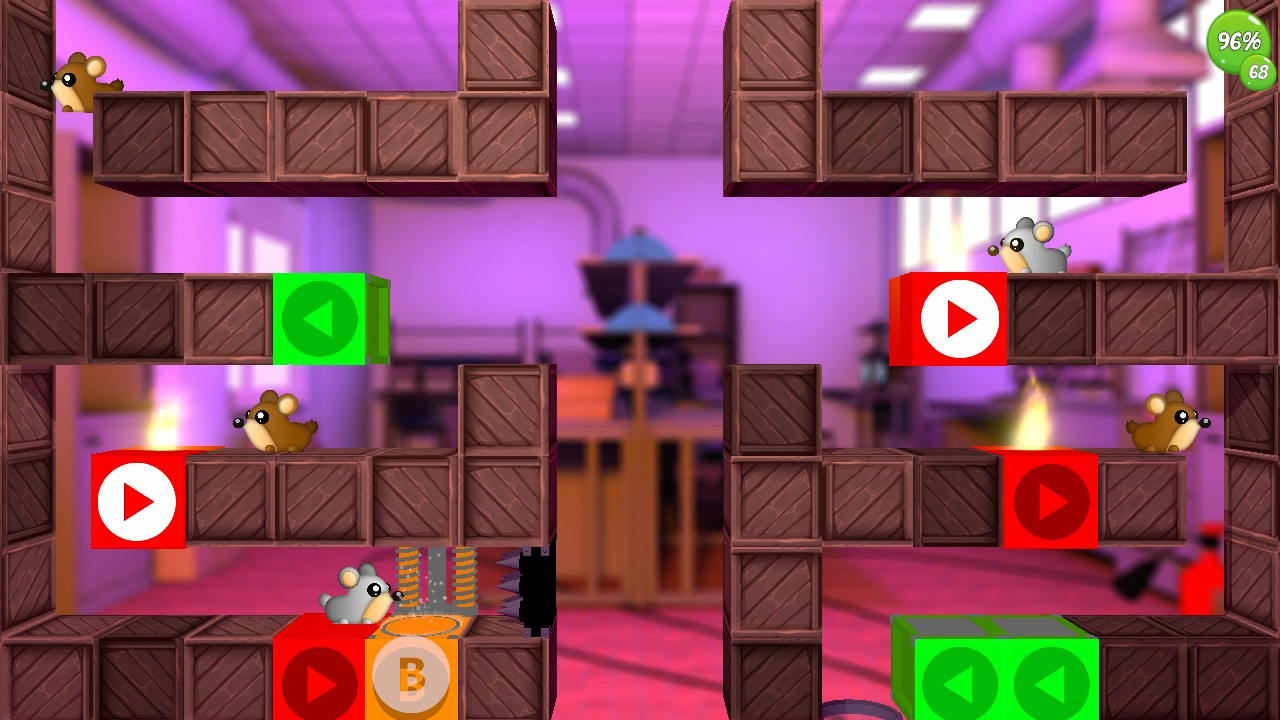
The game’s premise is basic; make sure the furry little nuggets of joy reach their destination without getting eviscerated. The Hamsters walk at an even pace across the stage with various obstacles in their way.

You the player must press the correct Joy-Con button when prompted in order to allow the little ones to proceed without impediment. Fail to do so, and you’ll immediately see your new friends burned, gassed, crushed, vaporized, or fall to their deaths. If a majority don’t make it across the danger zone intact, the stage will automatically be lost.

There are three hundred levels, each one with increasing difficulty and speed. Like most classic rhythm games, you have to get into the groove or you’ll get overwhelmed pretty quickly.

The first couple of levels ease you into the play mechanics, but I found myself scrambling to hit the correct buttons pretty soon out of the gate. As you can guess, the hamsters keep coming, forcing you to act fast or face the consequences. Things got so intense, I definitely became anxiety-ridden on more than a few occasions.

Henry The Hamster Handler Review

There’s really not much else to the game. Hamsters drop down, and the human must ensure they make it safely to the goal. Fail to do so, and you have to restart the stage. There are no frills, no bonus menus, and no options to speak of. This is as simple as it gets, but don’t let that fool you into thinking it’s not worth your time.

Battle Royale: The New Zombies?

Weekend Thoughts: Is Battle Royale The New Zombies?

We’re almost halfway through the year which can only mean one thing: inevitable disappointment when the sun doesn’t make a significant appearance again during the summer months.

That and the fact that we are a very short time away from this year’s E3 convention which is already shaping up to be quite the show. We’ve already had some pre-show leaks thanks to the Canadian arm of Walmart listing some potential upcoming games early, but hopefully, there are some big surprises still in store!

There are also many questions that need answering this year; what games will carry the Xbox One X forward? How will Nintendo approach 2018 and will Sony have any surprise hardware up their sleeves?

Battle Royale: The New Zombies?

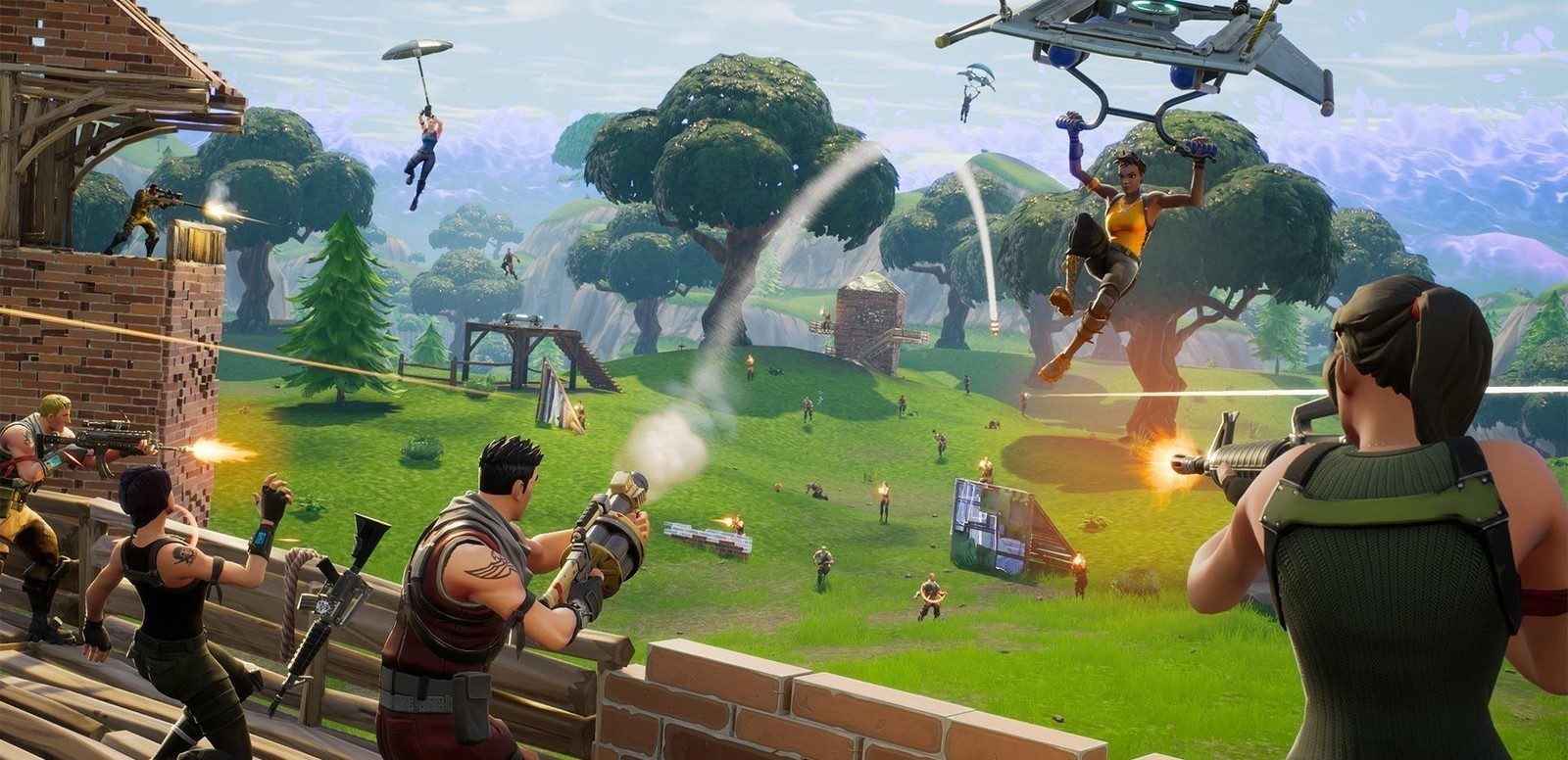
Alas, this article isn’t just about the big E3 build up. No, it’s about something more concerning; there’s an epidemic on our hands. We thought the zombie craze was bad (somehow there’s life in the old limbering corpse yet) but I feel that the ‘Battle Royale craze‘ is going to be far more significant.

When I say significant, I don’t necessarily mean positive either…

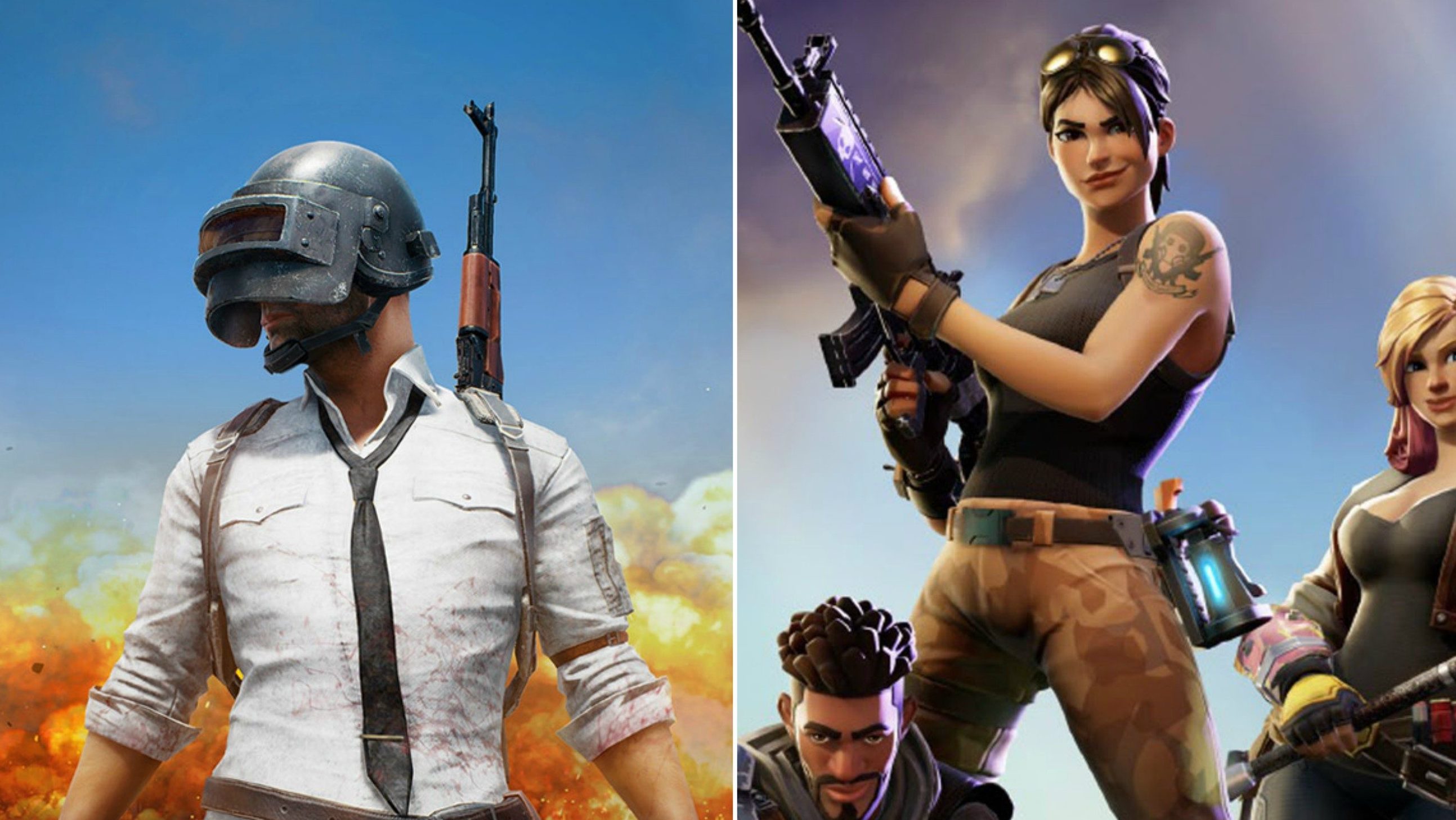
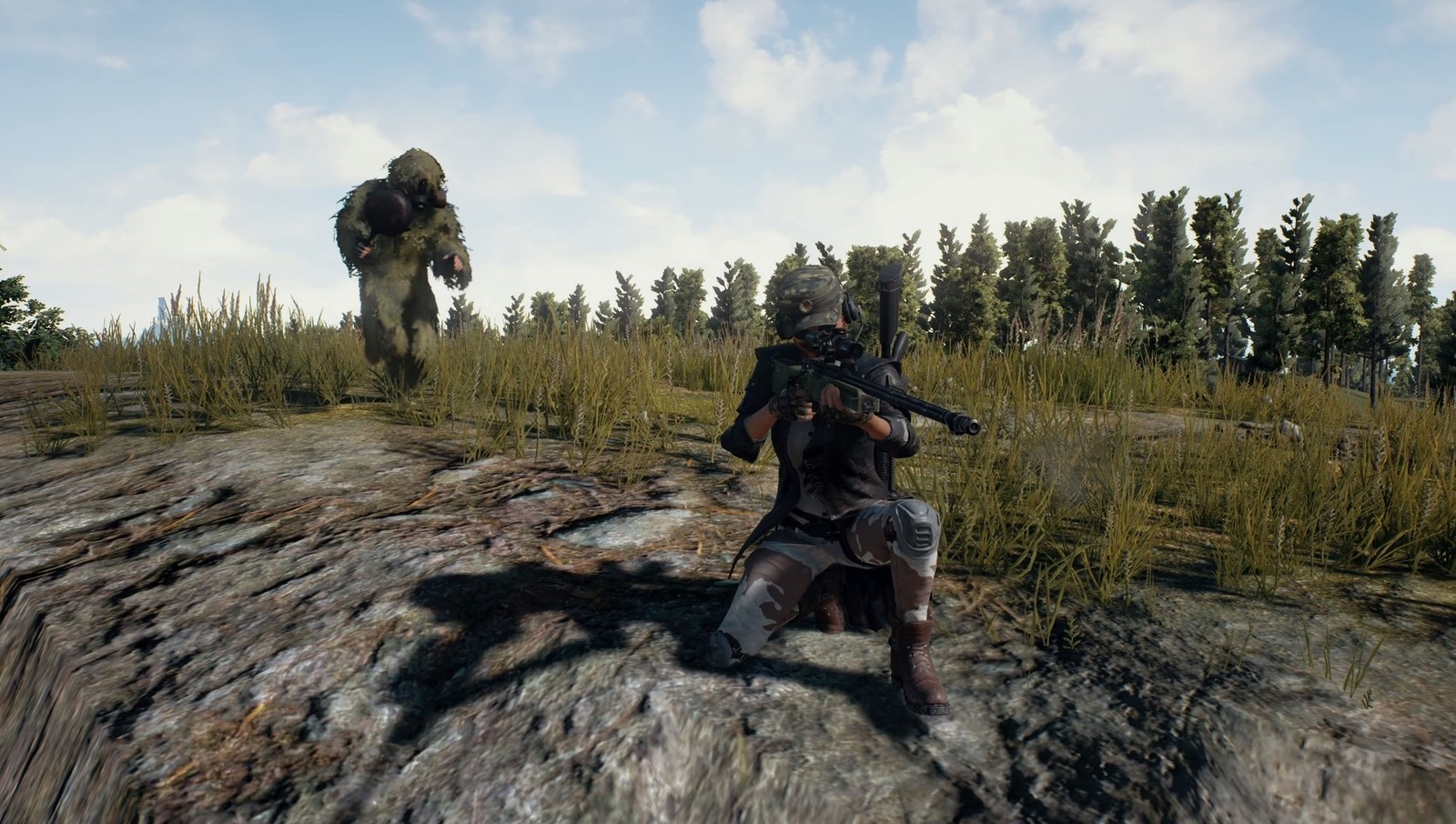
Before we get off on the wrong foot though, I’m not here to deny the popularity or success of the likes of PUBG or Fortnite. They have seen masses of players and followers flood over various platforms and social media alike, which is perfectly acceptable.

Weekend Thoughts: Is Battle Royale The New Zombies?

Likewise, it’s nice to see something a little different and it gives more people a choice when it comes to their online shooters beyond the likes of the usual Call of Duty or Battlefield.

What I don’t like though, is that we are starting to see people jump on the Battle Royale bandwagon and rush to have their own version of this mode included. From a business perspective, I can see why they would do this. If it brings in the numbers and also the money, then, of course, they will try to get in on the action.

However, when it is a detriment to an existing formula and series, then I don’t think mimicry is the best form of flattery in this instance. You see, it’s all well and good that the upcoming Black Ops game has a battle royale mode, but at what cost?

The single player campaign may be expendable to them, and others, but what about those who want a single player mode? There are some, myself included, who like playing the single player mode from the Call of Duty franchise and, without it, they may not even play it.

Weekend Thoughts: Is Battle Royale The New Zombies?

Without question, variety is the spice of life and that is certainly true in the games industry as it is nice to have something different and, without innovation, it would be a very boring marketplace indeed. But as Fortnite, or PUBG for that matter, aren’t direct competitors for the big hitters out there and are doing their own thing, just let them be. Appreciate them for what they are, and leave them be.

Others can mind their own business, continue with business as usual and try to innovate rather than renovate which is something that is lacking in the industry if you ask me; innovation. Heck, why can’t we try and innovate when it comes to campaign and single player modes to keep things fresh? Treyarch has said there’s plenty of value in their upcoming outing, but that’s in modes that are looking a little tired now.

Maybe make the campaign more expansive, more dynamic and more engaging. Give it some worth beyond a warm-up or prelude to the online modes perhaps?

But we shall have to wait and see if anyone else jumps on the hype train that is running 24 hours a day to destination Battle Royale. Do you like Call of Duty making this bold move or are you one of those who will refrain from playing Black Ops 4 because of this?

Let us know in the comments below.

Space Hulk: Deathwing Enhanced Edition

Out now – Space Hulk: Deathwing Enhanced Edition

What is that sound? That distorted surge making my eardrum cling to all hope; is that my own breath exasperating? I think it is.  As I stand here in this cold and withered mausoleum it is the walls that regain my memories of the past five minutes.

Walls decorated with blood tell me of the battle I just participated in, but it is the floor, it’s the floor that tells me of the outcome. The red reservoir populated with bone and sinew speaks of a Genestealer ambush. As I spectate the carcasses, I notice familiar pieces of steel sporadically scattered throughout the turmoil.

Steel frames occupied by men, my men, noblemen now nothing more but an object amongst a clutter of death. It is I who is left standing, it is I who is alone, and it is I who is victorious.

Space Hulk: Deathwing Enhanced Edition

Space Hulk: Deathwing Enhanced Edition

Being a gentleman from Nottingham, it only seems right that I write a news piece about a Warhammer 40K game – this time it’s Space Hulk: Deathwing Enhanced Edition.

Made by the Nottingham-based board giants Games Workshop, it happens that my best friend is a graphic designer for them as well. And no readers I can’t get you a discount.

But a long time ago I use to play Space Marines with my father along with Hero Quest (yeah, sit down board game nerds), I painted the figures with him too – my father not being too impressed when I painted one completely in gold with my child-like imagination.

Space Hulk: Deathwing Enhanced Edition

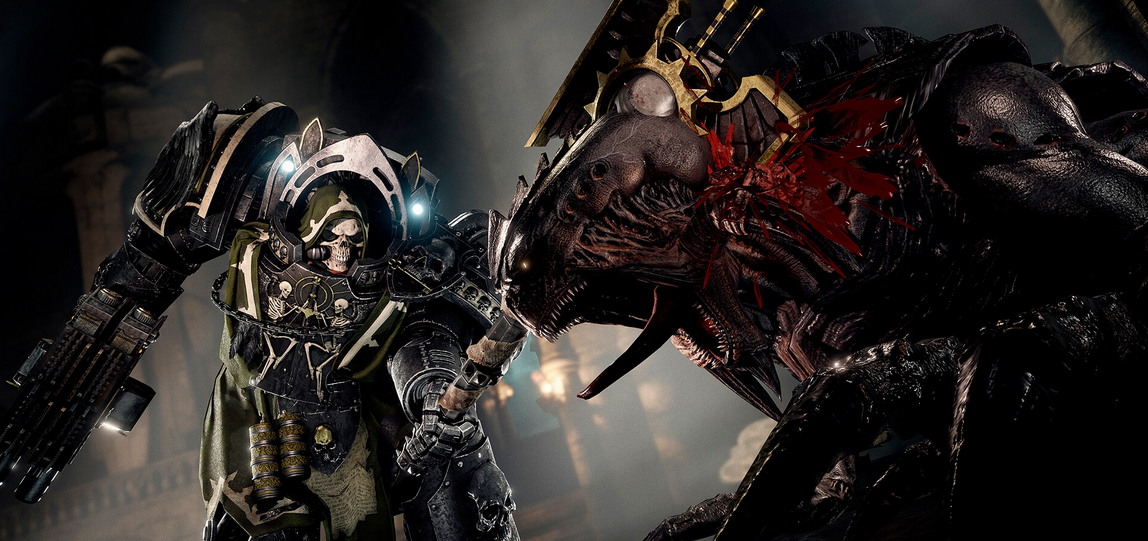
So, anyway, an enhanced version of Space Hulk: Deathwing has you fight through hordes of Genestealers in claustrophobic confines that the series is known for. You gain new skills, abilities and weapons along the way in both single and multiplayer modes.

Key Features Of The Enhanced Edition Include:

  • Play as a Space Marine Terminator, including a powerful new class – the Chaplain and his powerful Crozius Arcanum power mace
  • Customize each class in solo and multiplayer and unlock devastating weapons, including an expanded arsenal exclusive to the Enhanced Edition
  • Plunge into the Space Hulk and experience a desperate battle against the Genestealers, including new, deadlier enemies
  • Special Missions bring infinite replayability to both solo and multiplayer modes, with randomly-generated objectives and enemy spawns for every game chapter

The original version received average scores at best, so hopefully, the Enhanced Edition irons out some of the kinks and makes for a more polished and overall better gaming experience. No doubt the game will be somewhat successful with Warhammer’s loyal community pushing its sales.

Space Hulk: Deathwing Enhanced Edition is out on PC and PS4 now. For the Emperor!

Bloodstained: Curse of the Moon Review

Bloodstained: Curse of the Moon Review [Nintendo Switch] – Hello Old Friend

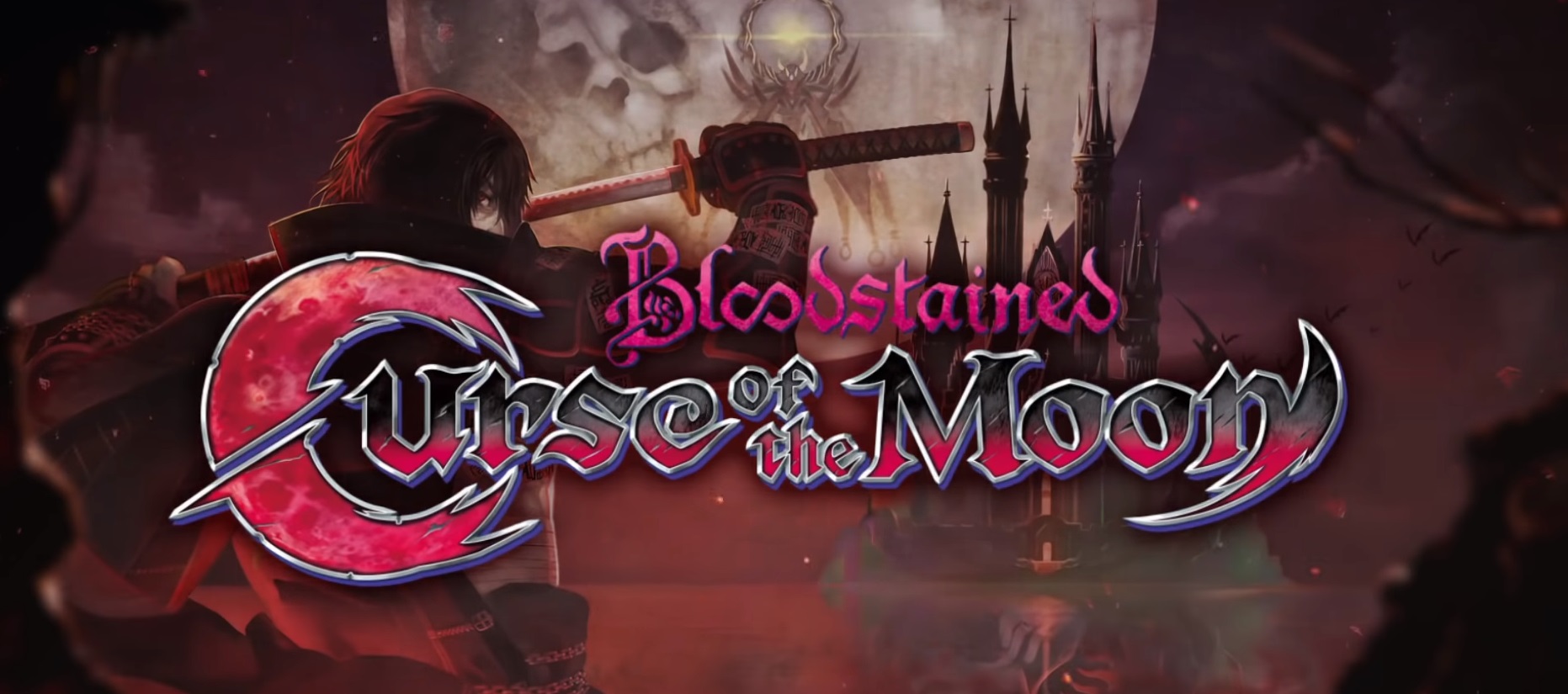
It has been far too long since I experienced a Castlevania game. It wasn’t until I played Bloodstained: Curse of the Moon that I realised the full meaning of that statement either. Regardless of what Konami wants to do with the ‘Castlevania’ name, this is what the real future of the franchise now looks like. And it’s looking bright.

Let me just say, though, that it’s an increasingly common trend in the games industry. That being where the original creator, (Koji Igarashi in this case), has to fight back for the same individual and creative control they once knew. I won’t digress any further on that point, don’t worry, but it’s great to see a positive outcome in such a mad, fickle world.

Bloodstained: Curse of the Moon Review

So, here we are with Curse of the Moon and the short answer is: it’s essentially everything you might expect and want from a ‘classic’ Castlevania game. What I mostly mean by classic is the absence of the Metroidvania exploration and, to a degree, upgrades we all know and love. That’s not a bad thing at all…

What we have instead are levels, with multiple paths within them, that all nevertheless lead to the same ending point. At the end of the levels are challenging bosses that remind you of how tough video games of the past used to be. You’ll have to fight your way through endless creatures of the night and avoid nasty traps to get there as well.

You might even ‘battle across a bridge’ or ‘through a room’. Sorry, I couldn’t resist.

Bloodstained: Curse of the Moon Review
Zangetsu in action

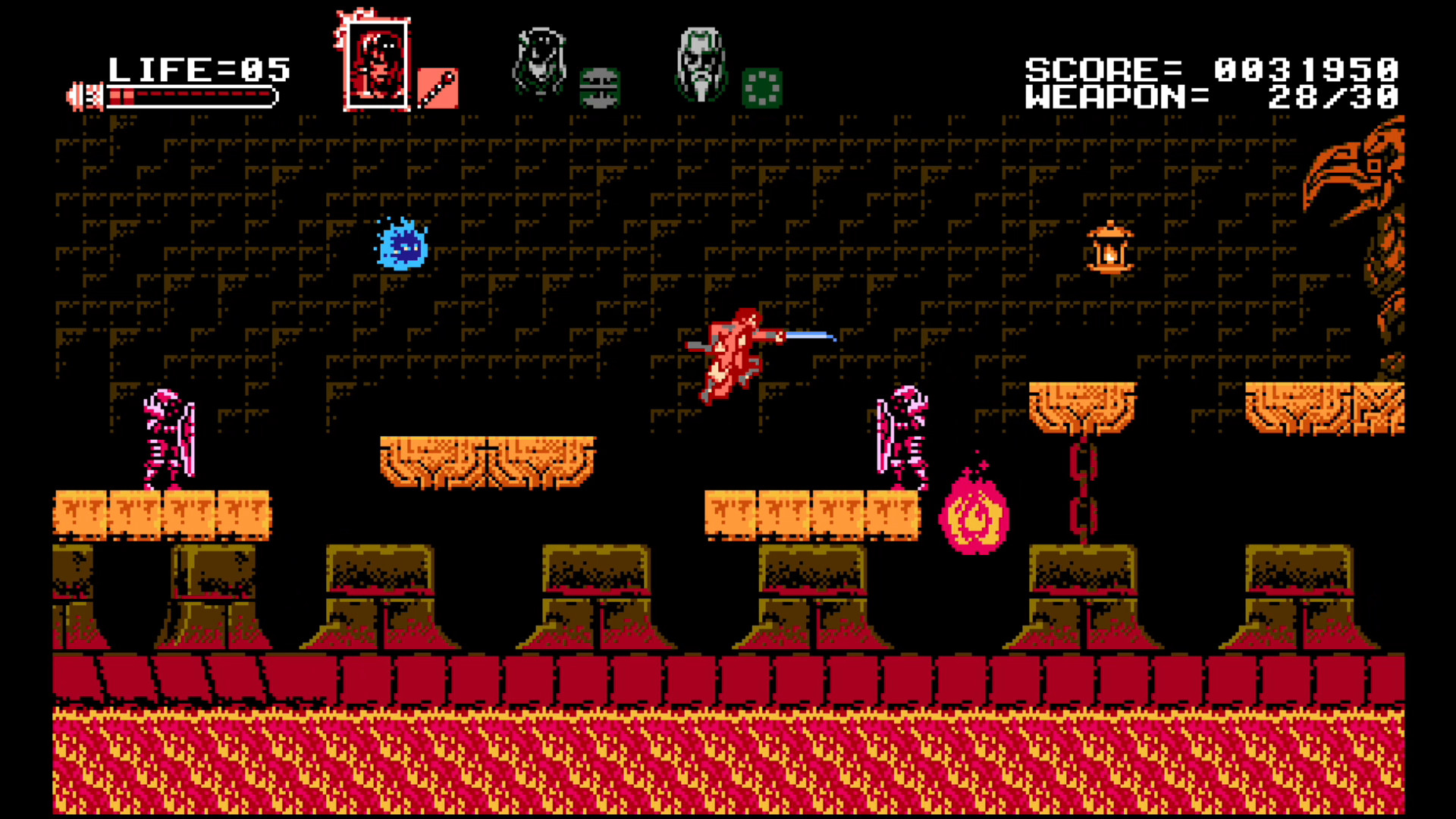
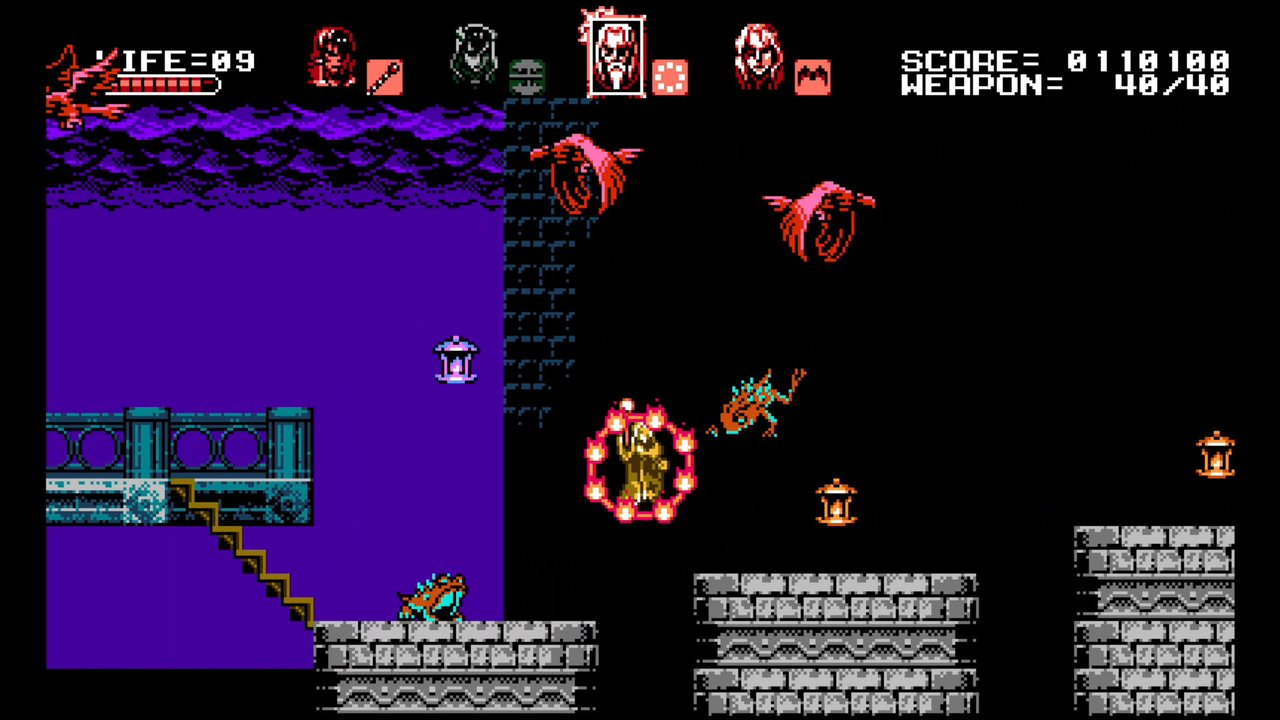
Fundamentally then, what Iga and the extremely talented Inti Creates have produced here recaptures the magic of the very first 2D Castlevania games from the NES and SNES days. That includes an awesome soundtrack (of course), gorgeous 8-bit graphics and the ability to control four different characters. The latter is an area in which Castlevania III: Dracula’s Curse is fondly remembered for.

Four Characters, Eight Stages

In Curse of the Moon, we have the exorcist Zangetsu who fights with a sword, the heroine Miriam who deploys the classic whip, the latest ‘incarnation’ of Dracula called Gebel, (although not officially), who can turn into a bat or summon them from his cape and, lastly, the alchemist Alfred who can use powerful magic. Each of these characters is unlocked at the end of the preliminary stages. All of them have individual life bars too, making things a bit easier.

You’ll be switching between the group to get through the eight stages, although, for a first playthrough, Miriam’s range of attack with her whip is a safe bet. There are also diverging points on each of the levels that can only be accessed through certain character abilities. Finding these points will take you through a variety of scenarios that keep Curse of the Moon feeling fresh.

Bloodstained: Curse of the Moon Review
This magic spell is essential

It wasn’t until I completed the game twice on ‘Veteran’ (Spoilers: there are multiple endings), that I truly started to understand where each character excelled. Basically, the more deaths I endured, the easier it became. Yes, there is certainly a high difficulty to overcome in Veteran (probably not as tough as some of the older Castlevania titles), but purists will most likely love every masochistic second of it.

Veteran Or Casual?

Have no fear though. Players that are new to the series or just want to take a smoother ride are also well looked after with the ‘Casual’ style of play. Casual removes the dreaded knockback from enemies and lives are unlimited. The game asks you whether you want to change the style frequently, encouraging either more challenge or a break from the stress. This is a great implementation.

I can’t say Bloodstained: Curse of the Moon does anything truly new for the series, but sometimes that’s perfectly ok. What it does do, however:

  1. Recreates the classic games, to brilliant effect
  2. Continues the dormant legacy of the wonderful Castlevania series
  3. Makes the wait for Ritual of the Night much harder

For most people, that will definitely be an enticing proposition worthy of their time and money.

World War 3

Is World War 3 the Battlefield killer?

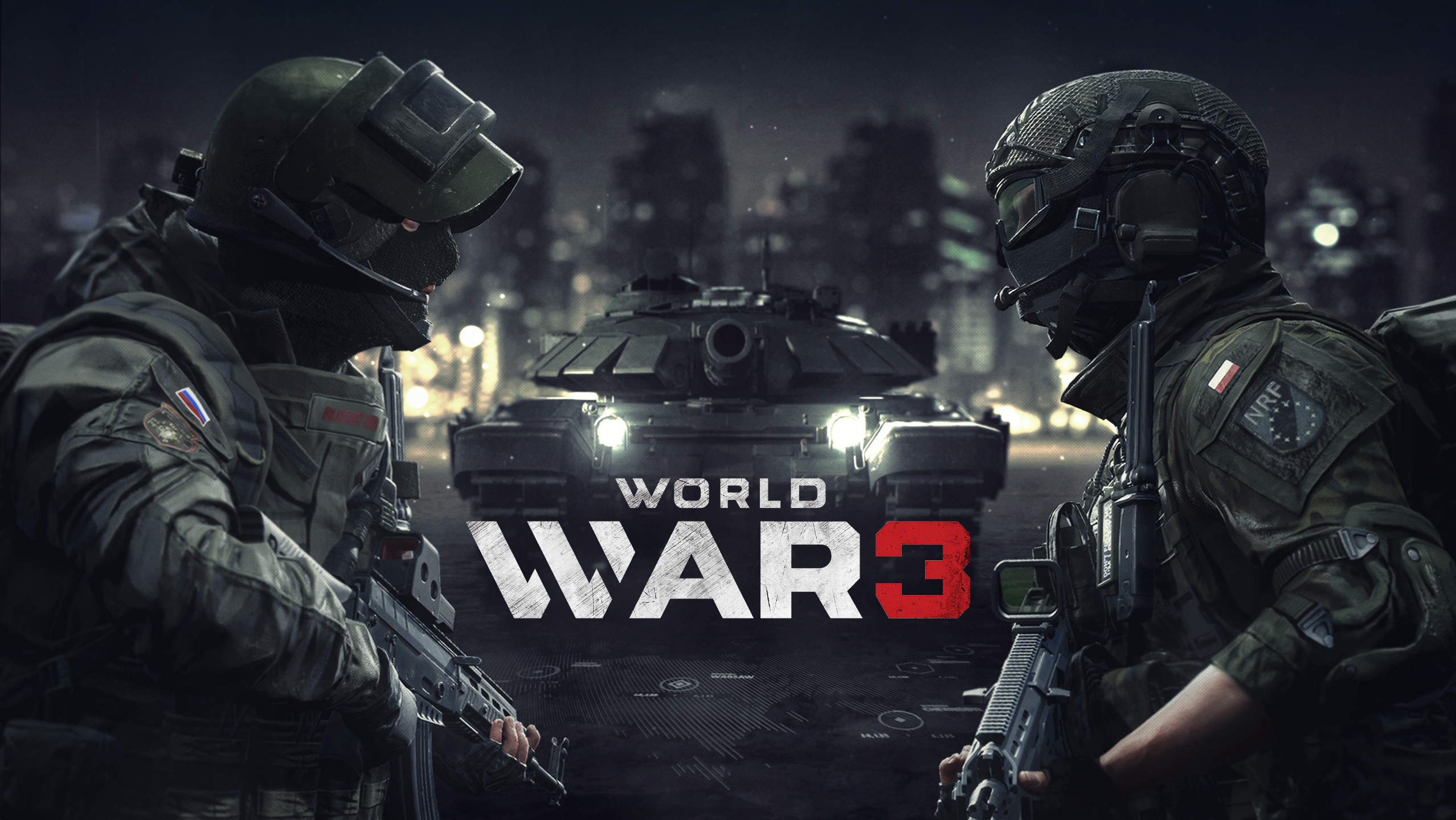
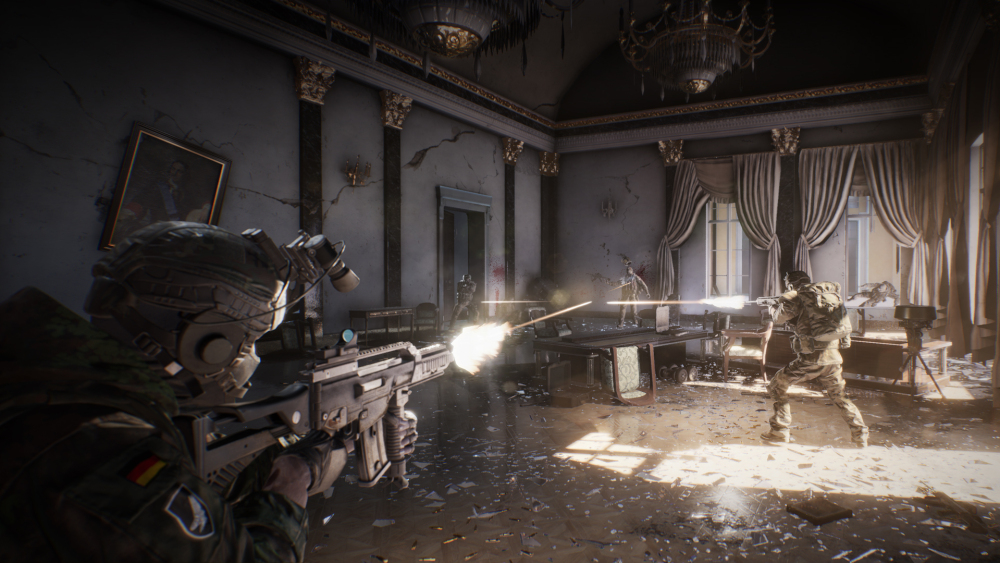
Indie studio The Farm 51 announced their new game this week in World War 3. It’s a large-scale modern day/near future FPS that takes place in… you guessed it, World War 3.

Farm 51 is keeping a tight focus with WW3, the game will only have two different modes at launch. With the first one being a large scale strategic team-based mode called Warzone, that Farm 51 promises will have “large-scale combined arms battles with infantry, armoured vehicles, and drones.”

The second mode will be a Battle Royale mode called Recon. This mode will be smaller in scale compared to the grand size of the Warzone mode and will be focused more on looting, surviving and squad play.

New Kid On The Block

Additionally, WW3 is going to have some unique gunplay that Farm 51 seem to be bragging about.

They’re claiming it will be “The most authentic bullet vs. armour system in the FPS genre to date,” that will include “Ballistics, a weight system, full body awareness, and an extensive customization system – all affect the gameplay in a meaningful way.”

World War 3

However, what I find most interesting about the announcement of WW3, is the fact it was announced right after the very controversial reveal of Battlefield V.

To me, it looks like Farm 51 found a prime opportunity to take the spotlight away from the more mainstream large-scale military shooter, and put their title out in the forefront.

And, their strategy seems to have pulled off. All over the internet, Battlefield fans are saying WW3 looks like the game they wanted BFV to be.

Some are even calling it the spiritual successor to the very well received BF4. What’s even more surprising is that major Battlefield YouTubers in LevelCapGaming and Westie are covering the game, seemingly as a backup plan for their channel just in case BFV does fail.

From the modern setting to the realistic approach, the large-scale warfare, a battle royale mode etc. WW3 seems to be the title that Battlefield fans wanted.

With all this in mind, WW3 has a real chance to seize a large portion of the currently divided Battlefield right from under EA and developer DICE.

The real question is: can Farm 51 pull off this bold move? They have never developed anything this ambitious in scale and scope before, with the other titles they’ve developed being, Get Even, Painkiller: Hell and Damnation, and Necrovision.

None of these titles come close to scale and size of what they’re trying to accomplish with World War 3. It will be very interesting to see if the game will live up to the immense hype that has already been generated in just the past couple of days.

Will Farm 51 actually ‘take down’ the Battlefield franchise? We’ll find out soon when World War 3 launches in Early Access on Steam later this year.

Accessibility In Indie Games

Infernium Developer Highlights Importance Of Accessibility In Indie Games

The need for accessibility in games is not exactly a new discussion. AAA titles regularly implement basic accessibility features such as contrast controls, subtitles, and multiple control scheme settings.

However, the need for further improvement in the industry has recently come to the forefront.

Everything from the need for exhibitors at conferences to take accessibility into account when setting up booths, to the need for controllers that can be used by gamers of varying abilities has demonstrated that while efforts are being made, the industry still has a ways to go.

This is especially true for indie developers. As indie titles become more important for the long-term future of the gaming industry, accessibility will become something indie developers will need to begin to take into account.

Of course, with all the financial and time constraints on small developers, this is not an easy task.

We recently had the opportunity to speak with Carlos Coronado, developer of recently released indie survival horror, Infernium.

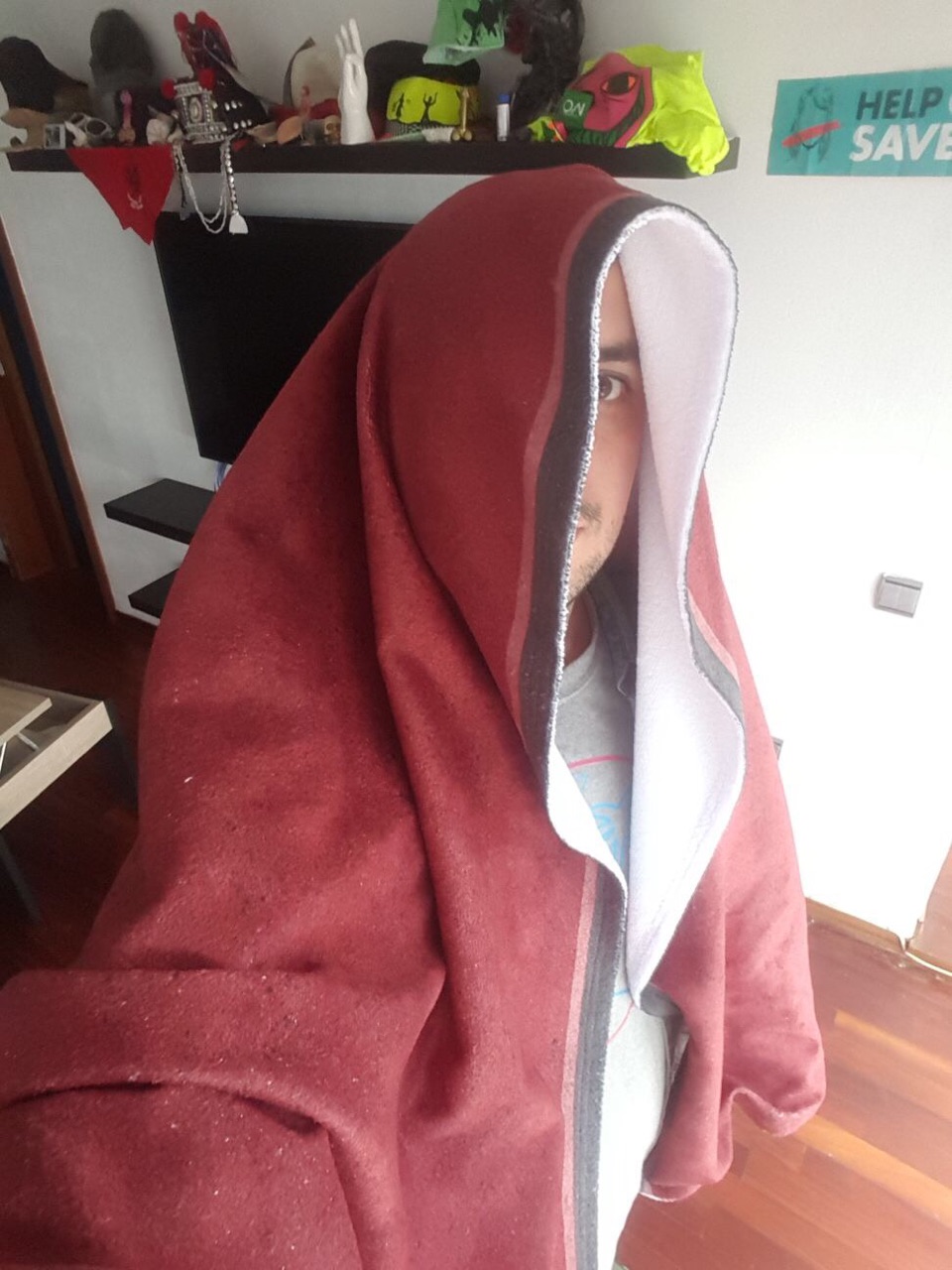
Carlos Coronado
Carlos Coronado

Carlos currently teaches at the University of Barcelona. He began his journey into the gaming industry by making the Warcelona mod for Left 4 Dead 2. He dove into indie game development in 2014 with his award-winning MIND: Path to Thalamus. After that, he developed Annie Amber for Gear VR and then started Infernium. He is also a scuba diving and sailing enthusiast.

Following the recent accessibility update for the Nintendo Switch version of Infernium, we decided to ask Carlos about his interest in accessibility in games: what made him interested in accessibility and what challenges it posed or benefits it brought as an independent developer.

We also got a brief description of what his next project will be after Infernium.

First off, before we get into the topic of accessibility, I have to ask you how you came up with the concept for Infernium? A PAC-Man inspired survival horror is definitely a unique premise.

What caused you to bring those two ideas together?

Well, I had always wanted to make a horror game but none of the ideas I had “clicked” with me. However, while doing my first-night dive in Apo Island (Philippines) I was amazed by how beautiful, calm, and at the same time scary the experience was!

I remember going out to the water and, even before putting on my scuba gear, I said to my diving buddy, “I know my next game is going to be a beautiful horror game where you see the enemies from a mile away!” So yeah, it was then when I had the idea, and the Pac-Man element came naturally while developing it.

The setting and concept of Hell are central to Infernium’s story, though it is certainly a version of Hell which has an element of beauty not commonly associated with purgatorial or eternal punishment.

Why did you choose Hell as a setting, and why did you decide upon this particular imagining of it as opposed to a more traditional, Dante’s Inferno version?

As I said, that diving experience was key. Aside from that, gameplay always comes first in my games, and I always try to think about settings that allow me to be very creative while generating cool gameplay mechanics. Hell was like a big sandbox for me, and the twist of making that Hell beautiful allowed for a greater level of creativity. The beautiful environments add an interesting psychological element. The game teaches you that the more beautiful an environment is, the more dangerous it is! This creates a contrast between what you see and what you feel that really drives players crazy, and I love that.

It is entertaining watching YouTubers and Streamers playing Infernium and witnessing them totally distrust the beautiful environments!

Now, onto accessibility, something you have been very vocal about. I have seen you discuss it with fans on your Twitter account and you have highlighted Infernium’s accessibility features on the game’s Steam page.

Even before your last accessibility update, Infernium offered not only sound but visual cues indicating a nearby enemy, as well as from which direction that enemy was approaching; a feature that is not incredibly common.

With the update, you have allowed more intermediate accessibility settings, including slowing game speed by decelerating enemies, or removing them altogether.

What made accessibility so important to you as an independent developer?

Yes! I must say I had no idea about video game accessibility before meeting Kait Paschall. She moved to Catalonia with her husband and while they were searching for a place to live they stayed in mine. During those months she got really interested in the development of Infernium and she introduced me to accessibility for video games.

She made me see that with a little effort on my part the player base would be much wider, and therefore I could sell more copies! For example, she explained the game would be 100% playable for deaf gamers by simply adding the red screen visual alarm when you start getting chased. This was the first one but the list goes on and on.

After the release of the game, I also experienced something that made me change my mind again and introduce even more accessibility features. For example, I saw my girlfriend (she is not a gamer) playing the game with the PC Mod “No Enemies” downloaded, and she was constantly telling me how great the experience was for her. She didn’t care about the challenge, but just walking in the game and seeing how everything was connected was a huge experience for her.

I also noticed the most downloaded mods for PC were all mods that made the experience more accessible for people, so I thought it was a good idea to make those options available to everyone, and that’s what I did with the accessibility menu. It basically adds 4 new options you can enable and disable anytime: No Enemies, Slower Enemies, More Tutorials, and No “Perma Death”.

Obviously, it is not how I intended players to enjoy the game but, hey, who the f*** am I to tell people how they have to play or enjoy!

After looking more into accessibility in games, I realise I took for granted how many features were already being implemented by AAA titles, such as allowing contrast controls, the ability to remap control schemes, subtitles, and making intractable objects obvious.

Do you think smaller, independent developers have a certain disadvantage when it comes to implanting these types of features?

In the AAA market, everything in terms of game-feel is sorted out. I mean, those are titles developed for really, really wide audiences! That’s why accessibility is taken for granted.

On the other hand, indie titles are more experimental and willing to risk more. I think that’s why most indies don’t think about accessibility features.

However I don’t really think introducing accessibility features is going to make your game ‘less indie’ or worse, and that’s something we all need to work on and spread. If indie devs realise accessibility features = money, more and more indie titles will introduce accessibility features.

Do you think smaller developers have an obligation to make certain their games offer at least basic accessibility features? This would entail at least some of the guidelines outlined here.

I think there is a thin red line between accessibility features and good game design. I think when you are designing good games and mechanics you don’t realise most of the time you are introducing accessibility features without even knowing!

That’s great, but we should work so that aside from good design, game devs also take accessibility into consideration.

What are some elements of Infernium that perhaps have not been mentioned specifically that you implemented to help make the game more accessible for players?

The in-game maps! I love those and no one is talking about them! Every time you visit a new area of the game you can search for a map sketched by someone in the past and if you take your time to read the map you can literally gather all the useful info: where the enemies are, where the light is, where the next map entrance is… It is super helpful if you are willing to invest the time to read the maps. Here is a guide made by a user showing all the maps.

Another “feature” I am really proud of is the crowdsourced Wiki! It’s literally filled with info, including a guide, tips, secrets and even the complete lore story in order. It is a way of getting yourself in the world of Infernium without even buying the game.

Where do you see yourself improving on accessibility in Infernium, or in future titles?

I’d say reducing the number of buttons/controls the player needs to interact with the game.

I’ve already been prototyping my next project. It is going to be a 2D sidescroller game about revitalising corals underwater. Think about Flower but in 2D with Limbo’s art style and controlled with only one joystick!

Where do you think the gaming industry as a whole stands regarding accessibility? Do you think improvements still need to be made and, if so, where do you see a need or needs that have not yet been met?

I see day by day more and more positive messages about accessibility are being spread.

I can say: “Hey! Put accessibility features on your game!” but few will listen. Instead, if I say: “Hey, In the first weekend after the accessibility update on Switch the game has sold as many copies as in all it’s life on sale”. Then more devs will listen.

In the future, I see accessibility features as something being taught at universities and eventually becoming common enough that it will be taken for granted in every game.

Final question: What advice do you have for aspiring independent game developers in general, and then regarding how they might make their games more accessible given the challenges indie developers often face?

My advice is that if they want to implement accessibility features, they need to do so early on in the development. It is easier and more elegant. It is way more complicated to introduce accessibility features once all the design is done and maybe even not worth it depending on the kind of game you are making.

In general, I would advise them to try to have short development cycles and never spend more than one year working on a single project. It makes you go nuts!

Indie Developers At The Forefront

While the gaming industry continues to evolve, concerns over making certain all gamers of all abilities will be able to learn from, play and experience more and more of what the industry has to offer will continue to rise to the forefront. There is always room for change and room to make things better.

If Carlos is any indication, indie developers may once again be at the forefront of the gaming revolution, just as more and more unique and clever content arises not from AAA titles, but from small developers with a passion to make great games that everyone can play.

Epic Loon

4 player platformer Epic Loon brings back beloved couch co-op; releasing end of June

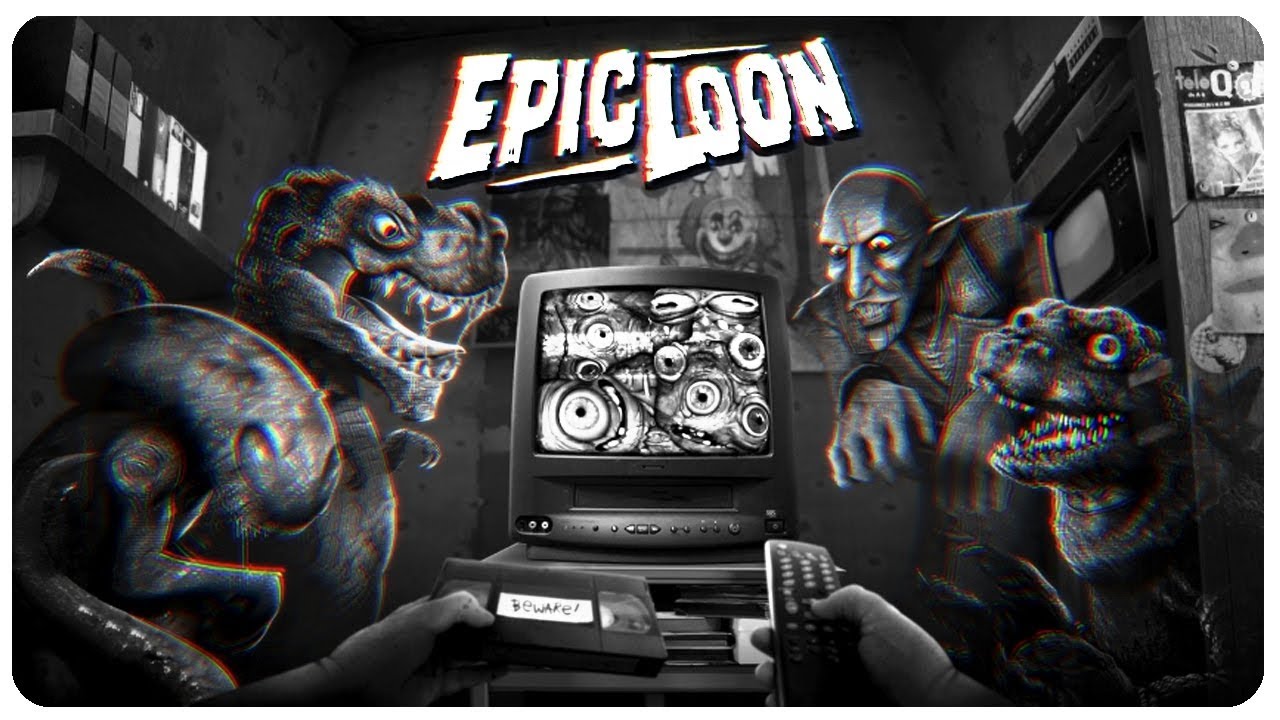
Fighting iconic terrors like Godzilla and Alien from the classic VHS film era is due to hit the video gaming world in the upcoming co-op platformer, Epic Loon.

Gather your friends and choose to partner up or battle each other in engaging and completely bonkers gameplay from French developers Macrales Studios.

Epic Loon Brings Back Beloved Couch Co-Op

Here are a few takeaways surrounding the premise and mechanics of the upcoming indie title:

  • Teaming up with up to four players in local co-op, players will take on the role of the vile alien species born from the coveted VHS cleaner tape determined to wipe out the collection of quirky renditions of VHS classics, such as Nosferatu, Jurassic Park and Godzilla.
  • Two separate gameplay modes will have players either teaming up for a co-op adventure or duking it out in competitive ‘Battle Mode’ across various classic film settings.
  • Revitalizing the local couch co-op experience brings forth a vintage style of gameplay to help match the retro ambience.
  • With over 350 levels to master and unique game modes like Hardcore difficulty and Speedrun settings, players will find themselves amidst a bizarre action platformer overflowing with content.

Epic Loon will come crashing down on the classic VHS scene after the start of summer on June 28th, 2018. The Switch, Xbox One and PS4 are all seeing console releases of the alien swarming co-op platformer, as well as a launch on PC.

Stay tuned for more on the classic film destroying couch co-op title, Epic Loon, as we near the official release next month.

The Rise of Independent Voices article

Weekend Thoughts: The Rise of Independent Voices

In the beginning, computers were functional but not intuitive. With invention came innovation and today the world is walking around with personal computers in our pockets.

Technology’s ease of use has lowered the barrier of entry for game developers; it has democratized video game development and given the power to the people.

The Rise of Independent Voices

Software like Game Maker Studio, Unity, and Stencyl have opened the gateways for amateur hobbyists and small indie studios to tell a story and create an experience that, just fifteen years ago, would’ve been restricted to mass-market video game titans.

We are at a time when indie games are at their most prosperous and the call to action is here to begin filling the void of diverse, untold stories. In the 90s we got games with male protagonists or female protagonists with busty tops and wide bottoms. Granted the men were in peak physical form as well.

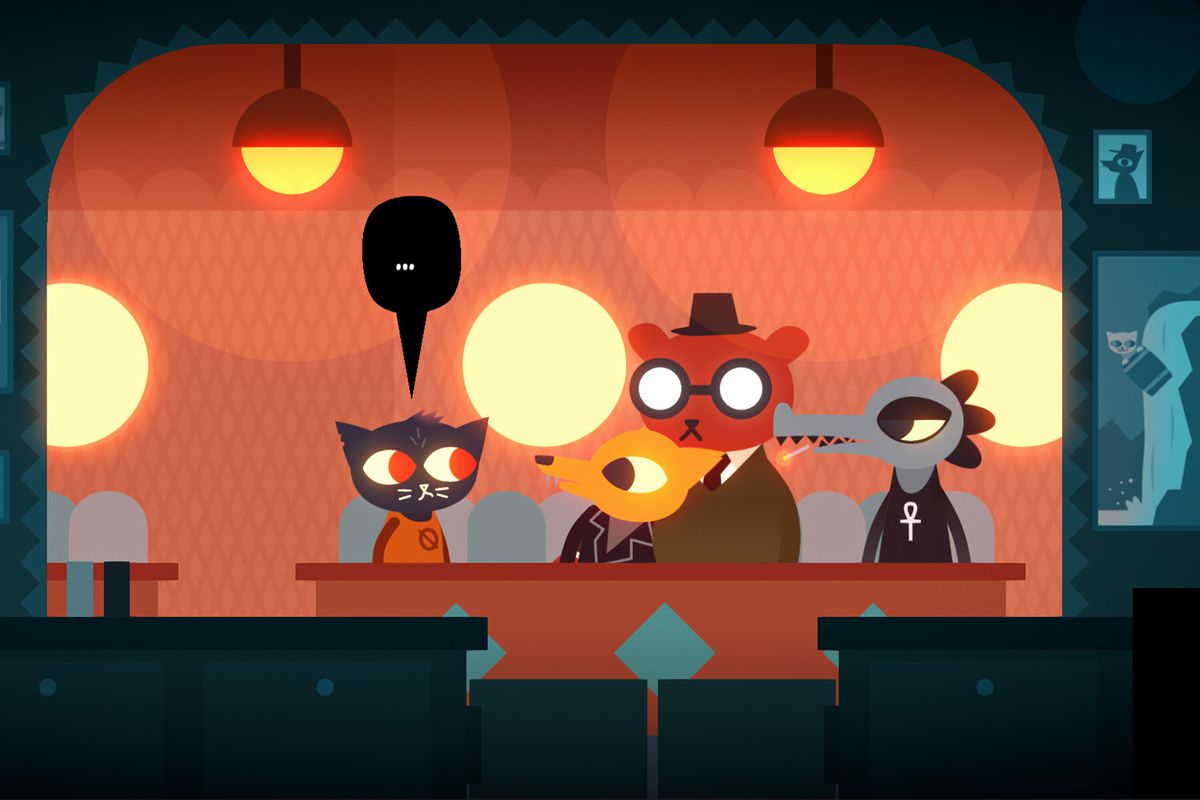
Today, we still carry this tradition onto a new generation, but also sprinkle in protagonists like Mae, a twenty-year-old cat college dropout, from Night in the Woods and Madeline trying to scale the titular mountain in Celeste.

The innovations in game development have opened the door for these types of representations, which can only be helpful in expanding the longevity of video games and growing the possible market.

Gameplay Ideas

It’s not just representation of characters, either. Indie games have become a breeding ground of new gameplay ideas from fresh perspectives.

The shooter is a genre that is as old (if not older) as the people playing them. It’s gotten faster, it’s added locked-on aiming, it’s added a battle-royale mode, but it hasn’t truly evolved in any monumental way since the second Halo brought playing online to the mainstream.

The Rise of Independent Voices
Superhot

That changed or is in the process of changing, with the help of indie titles leading the charge.

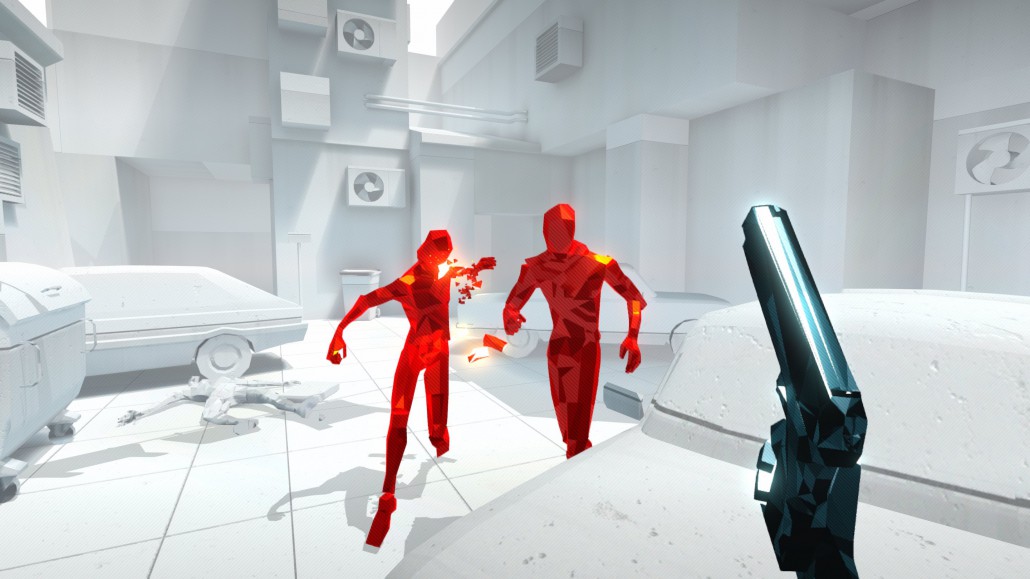
Superhot, a game that blasted onto the scene in 2017, introduced the idea of syncing your own movement with the game’s speed. They added a new perspective to the genre and created new opportunities to interact with FPSs.

Call of Duty slaps a fresh coat of paint onto their engine each year, but Superhot took the shooter genre and created a new way to play and think about killing your enemies.

An Influx Of Indie Game Developers

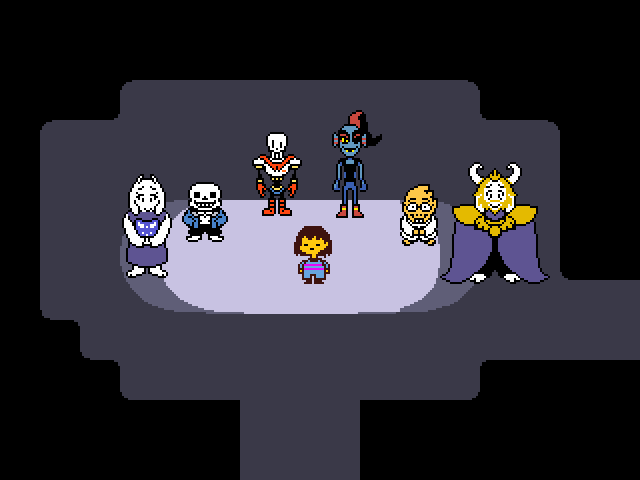
Indies have redefined characters and gameplay, but the biggest space that has developed from an influx of indie game developers is story. Games like the aforementioned Night in the Woods, Firewatch, and Undertale have tackled political issues and stories that would never dare be addressed in a AAA title.

The Rise of Independent Voices
Undertale

The ease of technology afforded by innovation has opened the market for indie video game developers to contribute their voices to the gaming scene. They have brought with them new characters, gameplay, and stories that can now appeal to a vast number of niche markets that were once thought to be unattainable from the AAA perspective.

Power has been given to quieter voices in the past few years and with Steam and Switch leaning hard into indie games, the roar doesn’t look to be silenced anytime soon.

Discworld Noir

Past Blast: Discworld Noir [1999] – Pratchettean Comedic Fantasy

The 90’s were something of a golden age for the Graphic Point-and-Click Adventure.

From the likes of Revolution Software’s Beneath a Steel Sky and Broken Sword to LucasArts’ Indiana Jones and the Fate of Atlantis and The Curse of Monkey Island, many who grew up playing these narrative-heavy, puzzle-solving games look back on this era fondly.

Indeed, reflecting on such an era makes one lament how relatively unpopular the genre is nowadays. There are many theories surrounding the genre’s downfall – the rise of DOOM and the fast-paced action game was more fun and more instantly rewarding than the slow-paced, puzzle-solving brain-scratchers that were Point-and-Clicks, some say.

Or, perhaps, the genre simply suffered from overexposure – after all, a ton of Adventure Games were released during the 90’s and many were predictable and samey in their game mechanics (point cursor here, collect an item, combine with this item, talk to character here) that the genre merely became stale.

Heck, a great deal of Point-and-Click adventures used LucasArts’ SCUMM engine in their games so maybe it’s no wonder if that was the case.
Discworld Noir

Past Blast: Discworld Noir

Thus, when Discworld Noir was released in 1999, it’s no surprise the game fell under the radar for most people. It was at this point that far more fast-paced and insta-rewarding 3D polygonal platform and shooting games were ruling the gaming roost on such platforms as the PC and Sony PlayStation.

In addition, the publisher was folding just as the game was being released, meaning it received little to no promotion. This is a shame – because many missed out on what is arguably one of the funniest and inventive narrative-driven video games in existence.

Based on the late author Terry Pratchett’s comical fantasy universe, The Discworld, Discworld Noir mixed traditional character archetypes and themes from 1930’s film noir with Pratchett’s strange and humorous world to create a unique take on both of these things respectively.

Add to the mix gameplay based around a notebook and clues (and smells – more on that later) as well as the occasional object puzzle and you got yourself a success – if not the most obvious one.
Discworld Noir

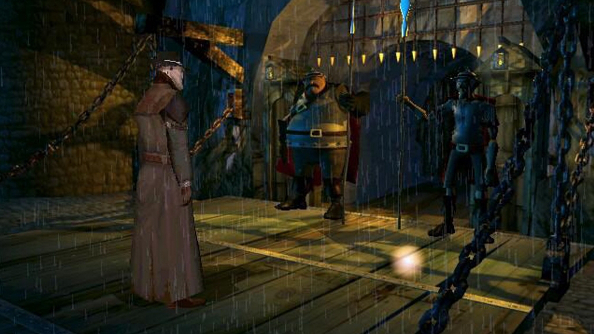
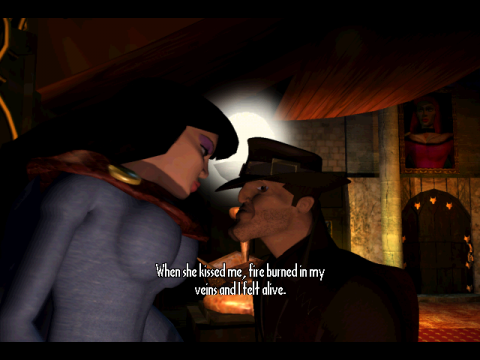
The game’s story centres around the adventures of the Discworld’s first and only Private Detective, Lewton (a seeming nod to famous 1940’s film producer, Val Lewton) who, in traditional Noir fashion, has a fateful meeting with a femme fatale, Carlotta von Uberwald.

Asking Lewton to investigate the disappearance of her lover, Mundy, this sets the fledgeling Private Eye on a long case that will take him all over Ankh-Morpork, the Disc’s greatest city, in a plot that thickens by the hour.

In fact, it would be accurate to say that, out of the three Discworld video games developed by Perfect Entertainment, it is the most in-depth and engaging in terms of its narrative, with a few plot twists and interesting characters along the way that keep things fresh and interesting.

Whereas the original Discworld and its sequel, Discworld II: Missing Presumed…!? reflected the quirky and light-hearted tone of Pratchett’s earlier work with obvious fantasy parodies and even nods towards the absurdities of game design, Discworld Noir captures the relatively mature tone of Pratchett’s later work, especially from the ‘Watch’ novels.

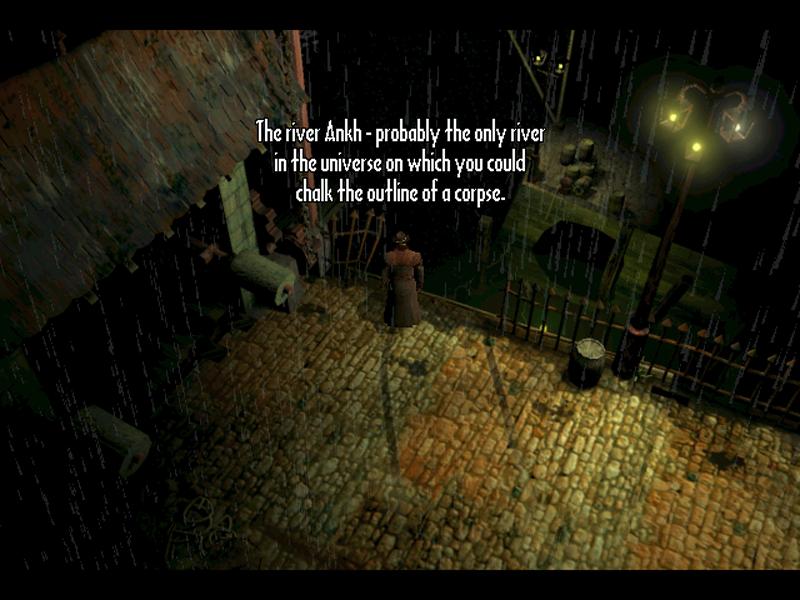
Gone are the two-dimensional, zany cartoon visuals of the first two games – in their place are realistic 3D pre-rendered graphics that create a darker atmosphere. Indeed, the whole game takes place during night.

This is a different Discworld game, for sure – but it’s in these differences that the game truly shines.
Discworld Noir

The crux of the gameplay revolves around visiting locations from the game’s overworld map (the city of Ankh-Morpork which appears in most of the novels), interacting with characters in these locations and asking them questions to proceed the case.

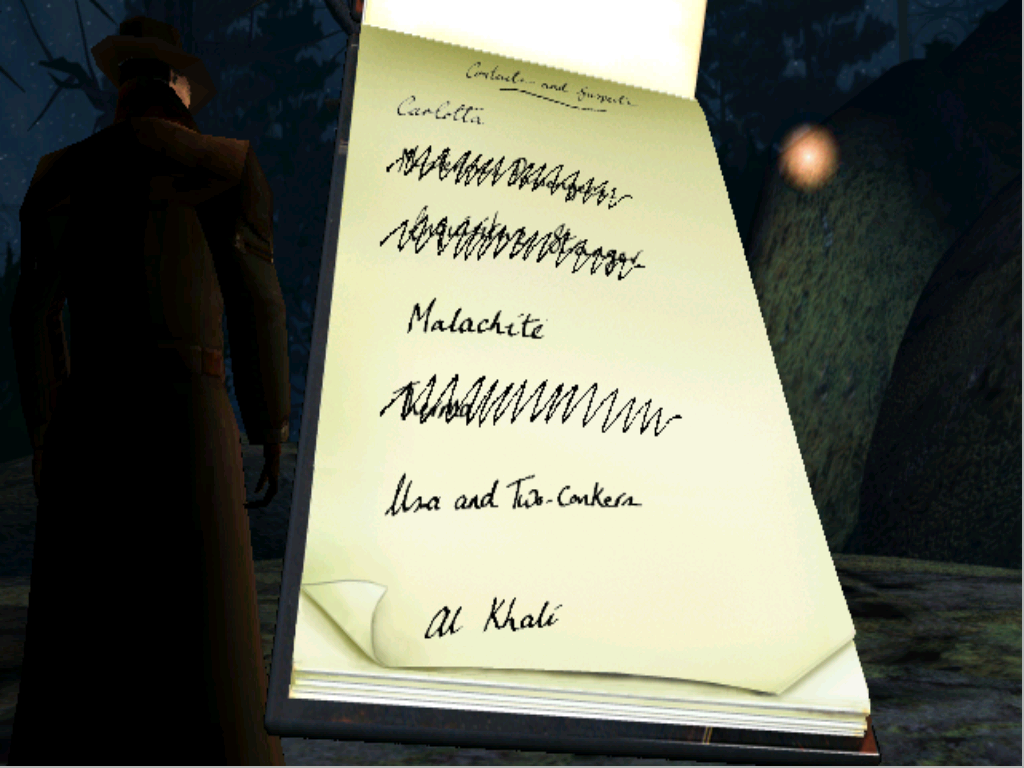
The player asks these questions through a simple menu of dialogue choices but more frequently through the use of Lewton’s notebook. When Lewton hears important information or potential leads, he will automatically note it down in his notebook.

The presentation of the notebook is satisfying, with players able to freely flick through the pages and choose a subject to grill the character with by simply clicking it. Often, the path forward is illuminated by thinking about what subjects to ask the character about and in what order.

Part of the way into the game, Lewton obtains the ability to switch into a werewolf and out again at will – this allows him to track different scents and smells that can help with his investigations.

This, again, adds another dynamic to the gameplay, encouraging the player to use their brains and think about the various tools in their arsenal that can be used to crack a puzzle or situation.

It makes that moment when you do figure out a puzzle all the more satisfying. Where traditional object puzzles are concerned, many players will find relief in that they are relatively sparse, particularly in regards to the previous two games which were notorious for their overuse of this mechanic.
Discworld Noir

The presentation in Discworld Noir is visually impressive, and especially so given this is a video game released in 1999. From the music (the main theme of which employs old-style sombre saxophones) to the dark brooding setting, the game beautifully exudes the atmosphere of 1940’s film Noir.

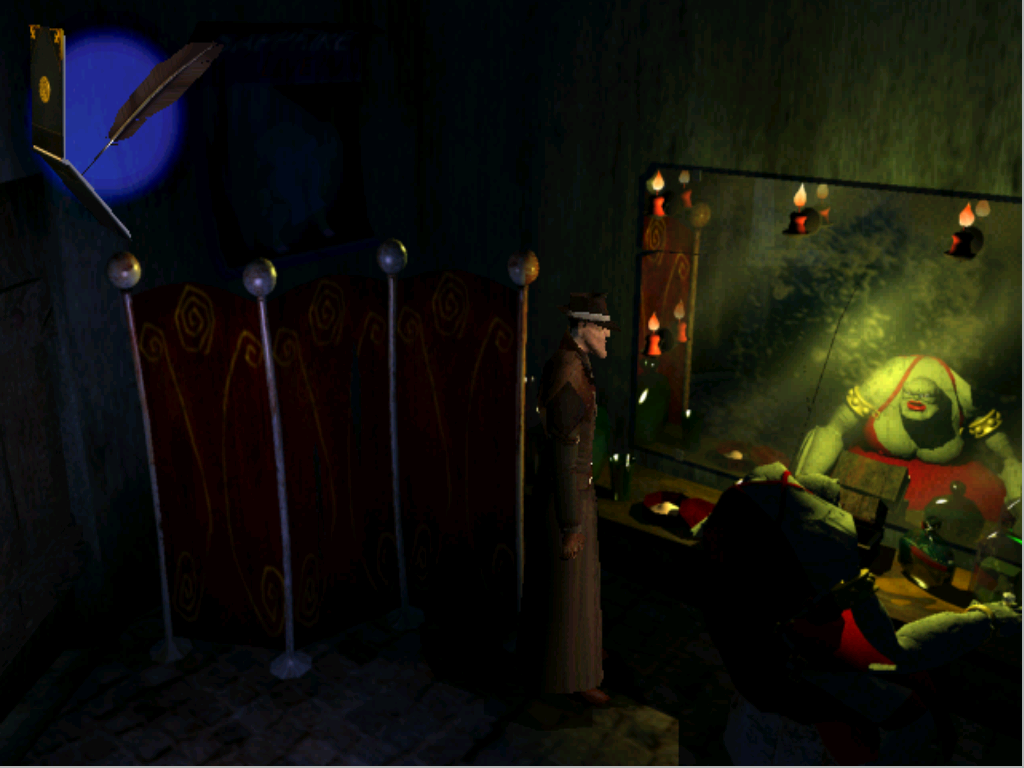
Like with many games of its era, it utilises pre-rendered backgrounds for its various locations and characters, giving it a significant edge which wouldn’t have been achieved had the developers decided to use 3D polygonal graphics.

In fact, the only 3D polygonal character in the game is Lewton himself. Admittedly, some of the pre-rendered character animations can look a bit robotic and unnatural sometimes – and especially so, compared to the exuberance of today’s graphical technology.

Regardless, it works and doesn’t detract from the game. What does help is the game’s high-quality voice acting – which is even more impressive when you realise that four actors are providing the voices to over seventy different characters.

The stars include Irish comedian Rob Brydon (who masterfully provides Lewton’s ‘hard-boiled dialogue’ among other voices), Kate Robbins, Robert Llewellyn and Nigel Planer.

All four of these extraordinary talents are experienced UK comedy actors and it shows. The delivery of the dialogue is great, the voices varied and wonderfully executed and the comedic timing is on point.

Each character is uniquely brought to life and, with a game that revolves around character and dialogue, it’s good that they got that right.
Discworld Noir

But ultimately, Perfect Entertainment got a lot of things right with Discworld Noir.

It’s one of those rare gems that will not only appeal to a niche audience (fans of Terry Pratchett) but also to those who enjoy adventures games in general – particularly if you like your fantasy with a twist.

The fact that the game flew underneath the radar during the time of its release is simply criminal. It’s so unique in its premise – mixing Pratchettean comedic fantasy with film Noir themes – and its plot so deep and engaging that it is undoubtedly worth playing today.

While players have experienced considerable difficulty making the game work on newer versions of Windows, you can find a workable solution on lead game designer Chris Bateman’s blog. Trust me when I say it’s worth the effort.

Homo Machina

It’s time to touch Homo Machina

Homo Machina is a mobile game coming to iOS and Android. But wait, what’s it all about? Well, read on.

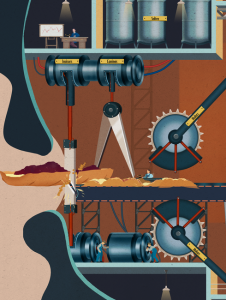
Simon, like all the workers in the pressure wing, needed to ensure that all pipes are regularly maintained and that the pressure is stable enough not to cause unwarranted or abnormal changes.

It takes a special person like Simon to do his job. Many people would lose focus and motivation simply of the mundanity, but Simon never did.

He, like others in the workplace, knew the importance of the role, neither big nor small, grand nor grotesque, each role was as pivotal as the next.

Every component within this machine must be operational and work efficiently otherwise they, like the company, will cease to exist.

Homo Machina And Dr Kahn

Homo Machina

I imagine somewhere along the line, we’ve all seen the images of Dr Fritz Kahn’s medical illustrations, more than likely in some biology class – you know the images, the ones of our autonomy being operated on by little tiny workers.

These images are so iconic and for good reason too, they help you understand the human anatomy by making it relatable and satirical. Entertain, Educate and Inform.

Parisian multimedia studio Darjeeling understand the relevance in Dr Kahn’s work and how important it is to educate people in the workings of our body in an easily digestible (pun intended!) way by developing Homo Machina, a mobile game adapted by his work.

Homo Machina

Looking at the game you can’t help but think if the Dr was alive today, to see his images come to life in an interactive medium would have done him proud – almost like his work was intended to be.

The interactive media of video games is a great way of educating children. Most children love to interact with things, making this an important step for video games to be taken seriously as an art form.

Hopefully, we’ll see more games like this, we’ll see parents downloading this game for their children, and we’ll see it being used in schools because education should be fun, it should be engaging, and it should be entertaining.

Homo Machina uses simple game mechanics allowing the game to be accessible from the ages of 7-77. The game focuses more on the art style and poetic narration to create a more educational experience than your typical gaming experience.

Homo Machina

The game is only a touch away (pun intended again), as it’s available now on Google Play and the App Store; for parents out there, why not sit down and enjoy it together with your child, who knows, you might learn something yourself?

Wizard of Legend

Wizard of Legend is the #1 selling title on the US Nintendo eShop

No, you did not misread that title card. A small $15 indie title is currently selling more digital copies than the recently released Zelda spinoff, Hyrule Warriors: Definitive Edition on the US Nintendo eShop.

Wizard of Legend

You might be asking yourself by now, what is Wizard of Legend? Where did it even come from? Well, that info and more news about this surprise hit are listed below.

Let’s get you guys caught up:

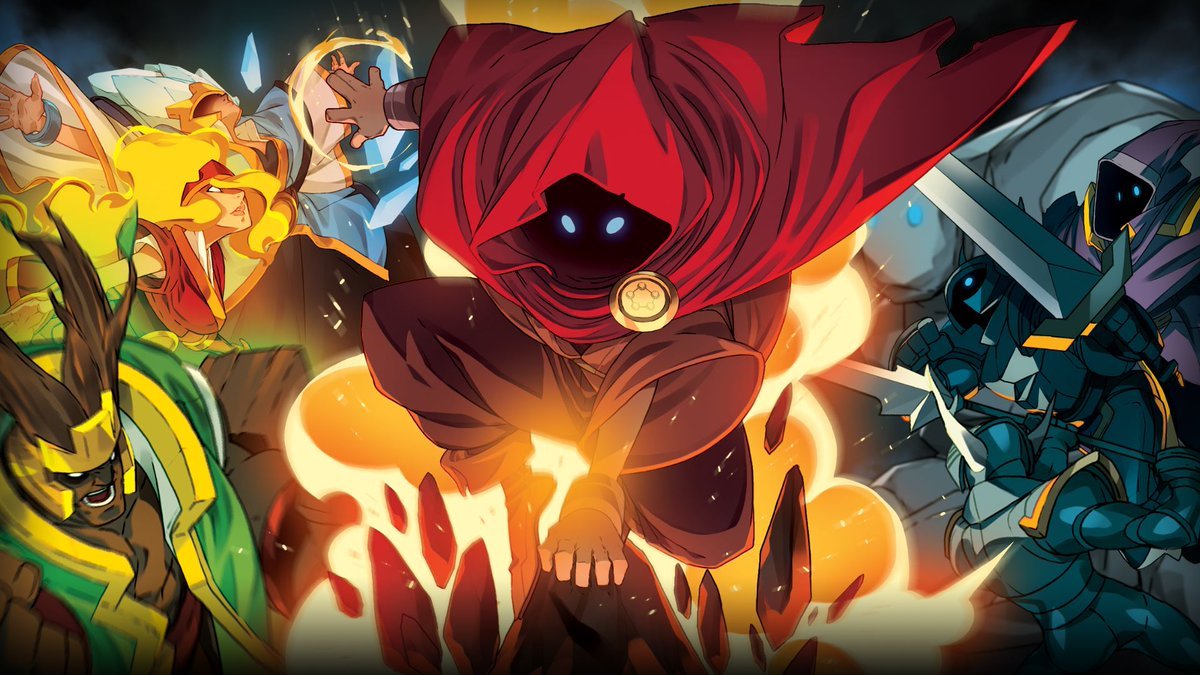
  • Wizard of Legend is a pixel art, spellcasting, co-op, roguelike title, where you and a buddy clear out dungeon after dungeon to become more powerful. All this dungeon clearing will help you eventually become… a wizard legend!
  • WOL features over 100 spells, relics, and cloaks. All of these options let you fully customize the play style of your Wizard to your liking.
  • An arena style mode is also included in WOL. Where you and your co-op partner can face off against each other, to see who is the more skilled spellcaster.
  • Developer Contigent99 released Wizard of Legend on all major platforms on May 15th for $15.99.
  • Lastly, on Metacritic WOL is being well received, sitting at a solid 78%.

So, have you guys been playing Wizard of Legend? If so, in your opinion, does the game itself live up to its lofty sales numbers?

Let me know in the comments below!