Viewpoint: The Top 10 Trailers From Nintendo’s E3 This Year

It’s safe to say that Nintendo has put on a great E3 show this year. With a line-up of games from their top IPs, along with a nice sprinkling of third-party support from Skyrim, Mario + Rabbids Kingdom Battle, FIFA 18, and Rocket League – Nintendo is on the mend. To celebrate this rebirth of sorts, we’ve put together their best trailers from the show, the ones which filled us with giddy joy – something Nintendo is quite adept at.

Metroid Prime 4

It’s just over 40 seconds long, but that was enough to explode the internet. The confirmation that Nintendo is finally working on a new Prime game is what fans have been waiting for – 10 years and counting. This was their best kept secret.

Mario + Rabbids Kingdom Battle

Mario + Rabbids Kingdom Battle was one of the biggest surprises (unless you read the web), first revealed at Ubisoft’s E3 conference. The idea of Mario and Rabbids coming together doesn’t instantly fill us with joy, however, once we saw some gameplay that showed remarkable similarities to the excellent XCOM games, we were sold.

Yoshi

A charming game for a charming character. Yoshi, that’s the name for now anyway, is coming to the Nintendo Switch next year. If the music in this trailer doesn’t make you smile, then surely the stylish, yet cutesy graphics will. Good to see you back old friend.

The Elder Scrolls V: Skyrim

Skyrim on your Switch, with the Master Sword in tow. Think about that. ‘Take a Walk’ shows off the potential of having a huge fantasy adventure playable on a much smaller screen – wherever you want. Passion Pit’s vocals help highlight this glorious fact.

Xenoblade Chronicles 2

Epic sci-fi action on your Switch in time for Christmas. Nintendo not only showed the world and characters in Xenoblade 2 in much greater detail than we had seen before, but also proudly revealed that the game would in fact make 2017 – something we believed wouldn’t happen. Lovely.

Kirby

Much like Yoshi, Kirby returns with a new adventure literally titled ‘Kirby’. Whether this is the working title, or the game serves as a soft reboot of the series, we don’t know yet. What we do know is that the delightful game is hitting the Switch next year. Stay tuned Kirby fans.

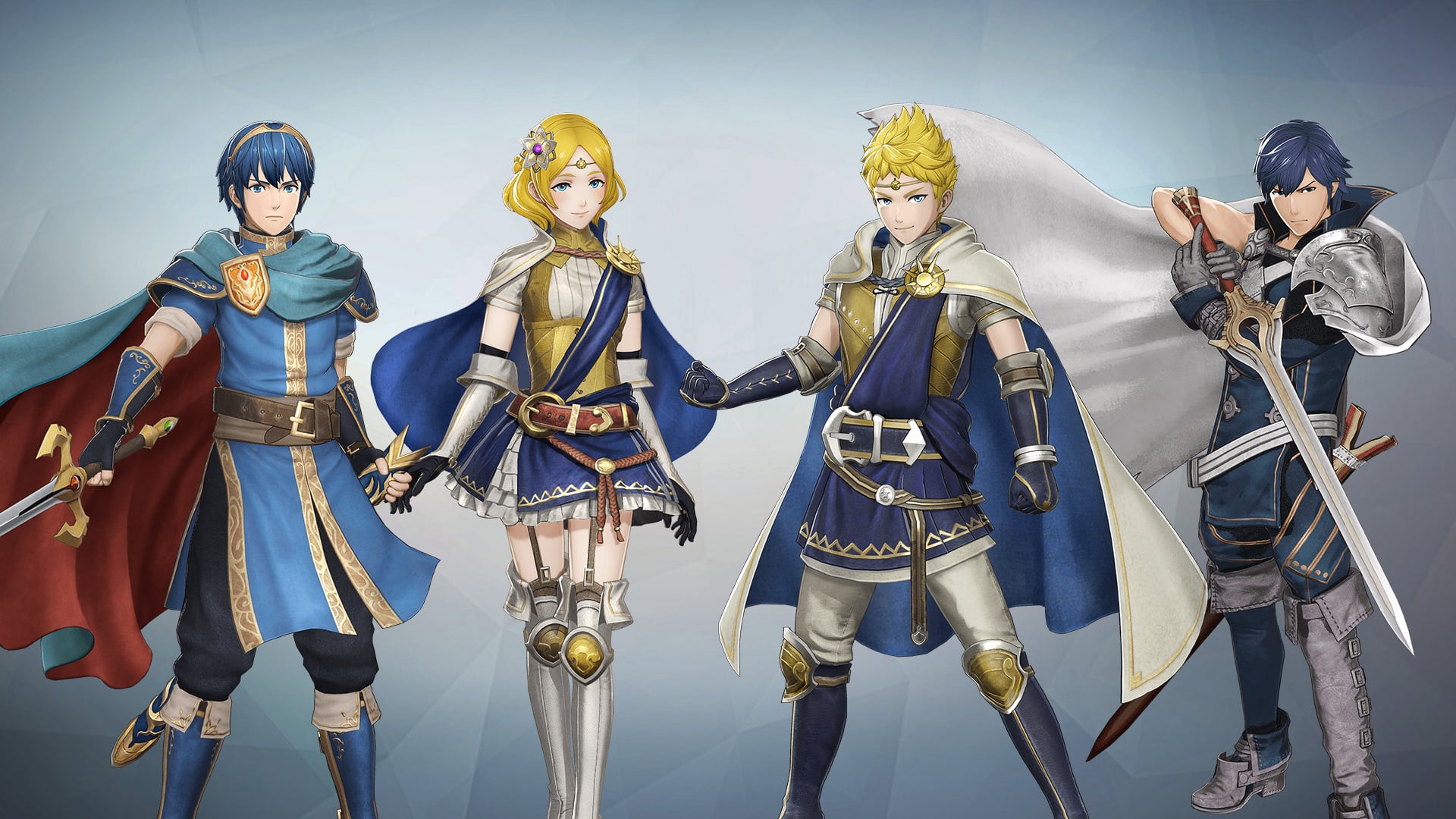
Fire Emblem Warriors

An assortment of Fire Emblem characters, classic and new, meet in the hack and slash game Fire Emblem Warriors. Nintendo’s E3 trailer satisfyingly showed us these folks coming together to fight a powerful new evil. It’s hitting your Switch this fall, because you need more to play!

Rocket League

A short but sweet trailer that showed us Rocket League finally coming to the Switch. This writer has never played the game before, so it seems like a perfect chance to dive in. Exclusive cars, items and cross-network play were also confirmed. The holiday season is getting busy to say the least.

Metroid: Samus Returns

We’ve got to have a 3DS title in here somewhere, right? Nintendo slyly announced Metroid: Samus Returns to the screams of forgotten Metroid fans all around the world on their Treehouse stream. They presented us with a 2D side-scrolling, sci-fi action game that harkens back to the gaming days of yore.

Super Mario Odyssey

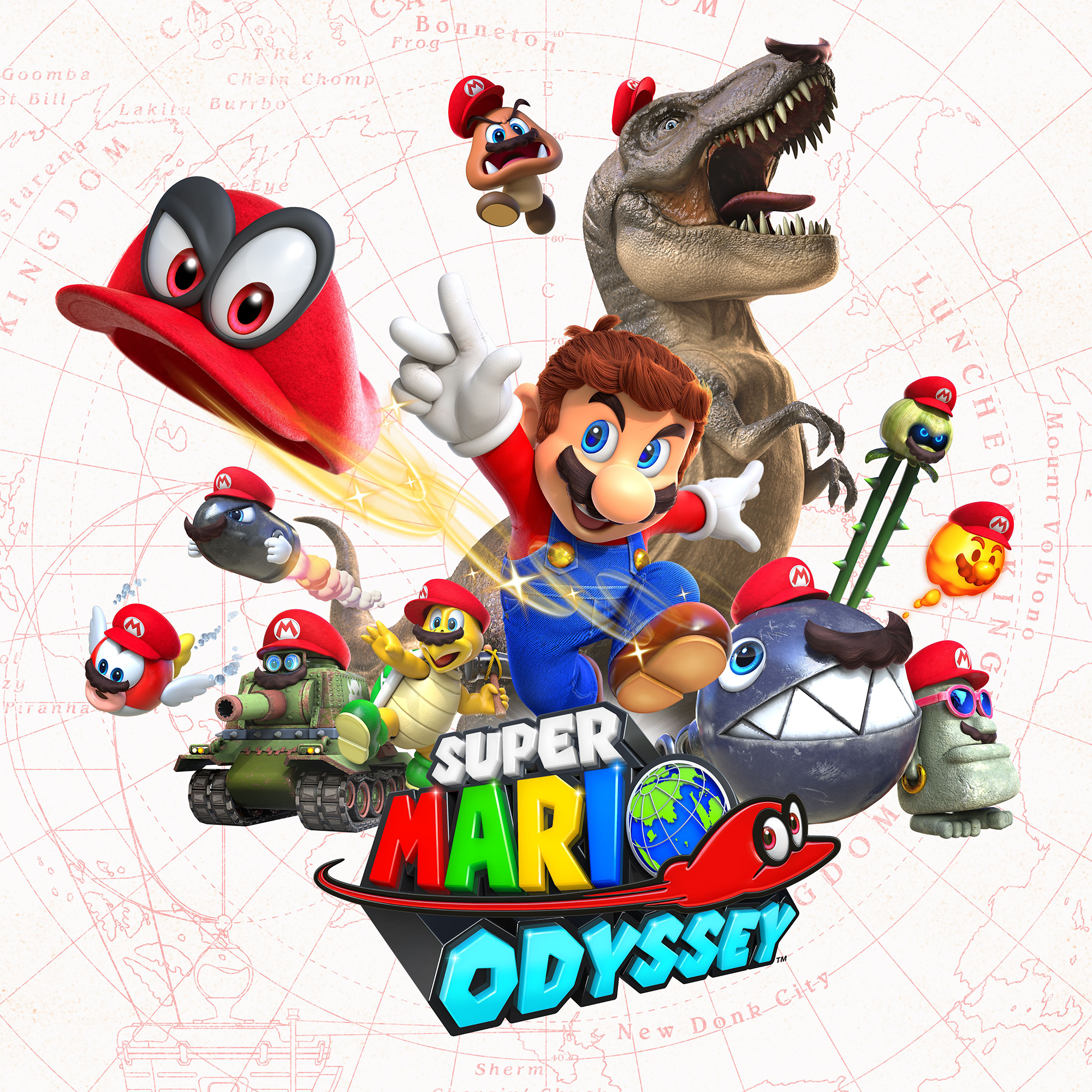
A Tyrannosaurus rex in a Mario game? Yep. A catchy new song called ‘Let’s Do The Odyssey’? Check. A Bullet Bill with a moustache? You got it. Super Mario Odyssey’s E3 trailer showed a more playful, wacky and confident Nintendo than we’ve seen for a long time. This one will certainly stay in the memory.

That about covers it. Did you enjoy Nintendo’s E3 this year? What was your favourite trailer? Let us know in the comments below!

Viewpoint: Fire Emblem Fans Are Spoilt For Choice

‘An evil dragon appeared bringing chaos and destruction’, cue the Fire Emblem Warriors announcement trailer at Nintendo’s Spotlight E3 conference.

Let’s face it, Fire Emblem fans have been spoilt for choice this year with Fire Emblem Echoes: Shadows of Valentia (on Nintendo 3DS), the mobile game Fire Emblem Heroes and now Warriors. I’m all for more Fire Emblem as a fan, but is it too much at once?

Back to Fire Emblem Warriors for a second. It’s being developed by Intelligent Systems, and Koei Tecmo and it’s an homage to fans of the franchise, chock-full of easter eggs and characters (Marth and the lovely Chrom to name but a few) from different worlds and time periods. It’s a hack and slash action game much like Hyrule Warriors in terms of gameplay and the fact you’ll be taking on hordes of enemies.

The weapon triangle, leveling up, special moves/critical hits and the pairing of characters, which are famous in the series, are back in Warriors. Aesthetically, the special moves look glorious as you slaughter enemies with sword strokes (obviously this will depend on your character!).

The story follows two twin siblings, embarking on a journey to kill an evil dragon in order to protect their people. Standard stuff, but it’ll work. Here’s Nintendo’s short synopsis on the E3 Trailer:

Clash with legions of soldiers and fierce monsters as Marth, Xander, Corrin, and other Fire Emblem heroes unleash over-the-top-powerful Dynasty Warriors-style moves.

I’m happy to see Warriors shaping up so nicely and I think it will be great fun to play, although, again, I’m surprised at how quickly they got this game out (granted that it’s not your average FE). Hopefully, the Fire Emblem series won’t be churned out every year like some franchises though…

I understand that Fire Emblem is a big IP for Nintendo (now it is, thanks to Awakening), but what about other grid-based games and IPs? A new Advance Wars game would be welcomed and I’d like to see Code Name: S.T.E.A.M. on the Switch too. Can you imagine how good that would look? Drools. (Maybe that’s just me?) I think it’s time to take a few more risks again basically – the biggest strength the company has is their creativity and innovation after all.

Overall, I was very pleased with Nintendo’s E3 Spotlight, it must be said. I just want to see Nintendo go full-out with their creativity, and hopefully that’s the path they’re going down. Maybe less Fire Emblem in the future and more Advance Wars (something, please!) would scratch my itch.

What do you think? Am I right to worry about the Fire Emblem IP being used to much? Let me know in the comments below.

Fire Emblem Warriors will be released on Nintendo Switch in Fall 2017.

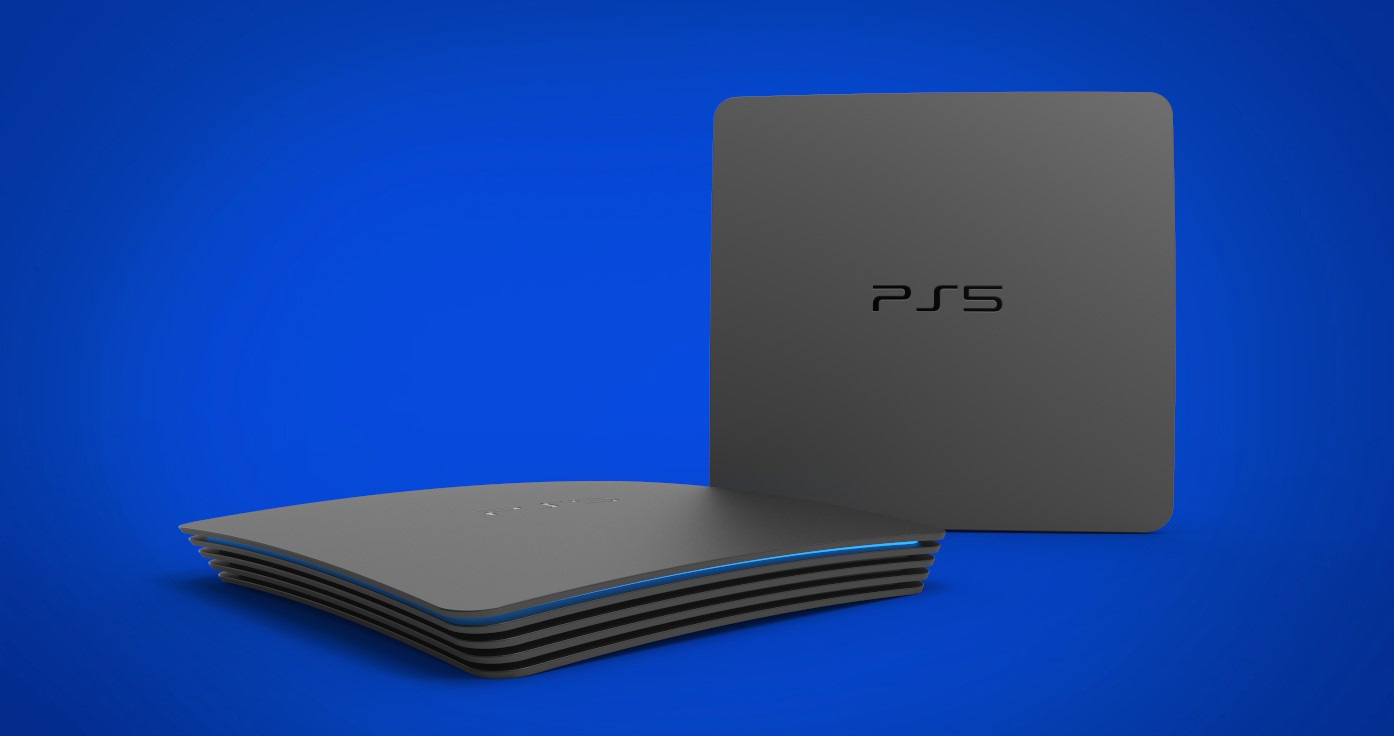
Viewpoint: After a slightly dull E3, what if PS5 launched in 2018?

An air of uncertainty seems to be building in the games industry. We’ve seen Microsoft reveal their Xbox One X, giving us an insight into their plans for the future. But that only brought about more questions than it did answers for many, one such question being how long can we expect our ‘normal’ consoles to last? More pertinently; what are Sony’s plans and can we expect to see a PlayStation 5 any time soon?

My initial reaction to the latter question would be no, but when you think about it a little more it doesn’t seem that farfetched. Inevitably the Xbox One X will unsettle Sony somewhat as, based on specs alone, it’s a much better proposition than its counterpart; the PS4 Pro. Sony were the first to offer their 4K capable version of the latest consoles, with Microsoft taking somewhat of a backseat before showing their hand. Maybe this was a lesson learned from the launch of the Xbox One or a tactical ‘Let’s wait and see what they do’ approach.

Sony find themselves in a tricky situation here as they will want to stand by PS4 Pro and the PS4 itself for as long as possible, giving consumers justification their money was well spent. By the same token though, they will want to compete with Microsoft and give their fans the best experience they can. So do they stick to their guns or look to out-muscle Microsoft by kick starting a new generation of consoles? If you think about it, PS4 will be five years old in 2018 so some people might be getting twitchy thumbs.

It’s a fine balance that needs to be struck by Sony as the appeal of home consoles is to not have to upgrade or buy new hardware for as long as possible without feeling outdated. On the flipside, both Sony and Microsoft seem to think the future of console gaming lies in progressive upgrades rather than new consoles altogether so their next step would need to be a considered one.

All said and done, new shiny hardware is an enticing prospect and there’s always a thrilling buzz surrounding a new console launch which people get caught up in. In order for that to be achieved though this needs to be a launch timed correctly otherwise it could fail before it even launches. The difficulty here being, if PS5 launched in 2018, how much longer would PS4 be supported? New hardware can’t be held back by the limitations of the previous console, but owners of the previous machine can’t suffer from not having a machine that gives them the latest and best titles. Imagine PlayStation owners being told that the Last of Us 2 is coming out but only for PS5 and won’t run on PS4. I don’t think that would go down very well.

But if this meant that Sony stayed in front of the pack, would this be a risk worth taking? They were considered to be the winners of this generation cycle so would their best bet to be at the forefront of the next wave of consoles in order to keep their dominant title? Only they can make that call but the success of a console ultimately lies in the availability of games and their quality so they wouldn’t want multi-platform titles running better on a rival console. Nor would they want their exclusives to be held back due to hardware constraints.

Whichever way you look at it, you can see both pro’s and con’s for both sides of the argument so it’s a debate which will divide the opinions of many. Personally, I don’t think we’ll see PS5 launch next year and I don’t think we’ll see typical console generations anymore. I think we will start to see slightly upgraded versions available every few years, much like the Xbox One X, giving us more power for bigger and better titles.

If Sony are happy that PS4 and the Pro are enough to keep them afloat, then they must be confident in their upcoming catalogue of titles, such as God of War 4, Uncharted: The Lost Legacy and Days Gone to name a few.

What do you think dear reader? Is it time to bring out the PS5, or is it way too early. Let us know in the comments below!

Viewpoint: I predict that Transference will be a mindf**k of a game

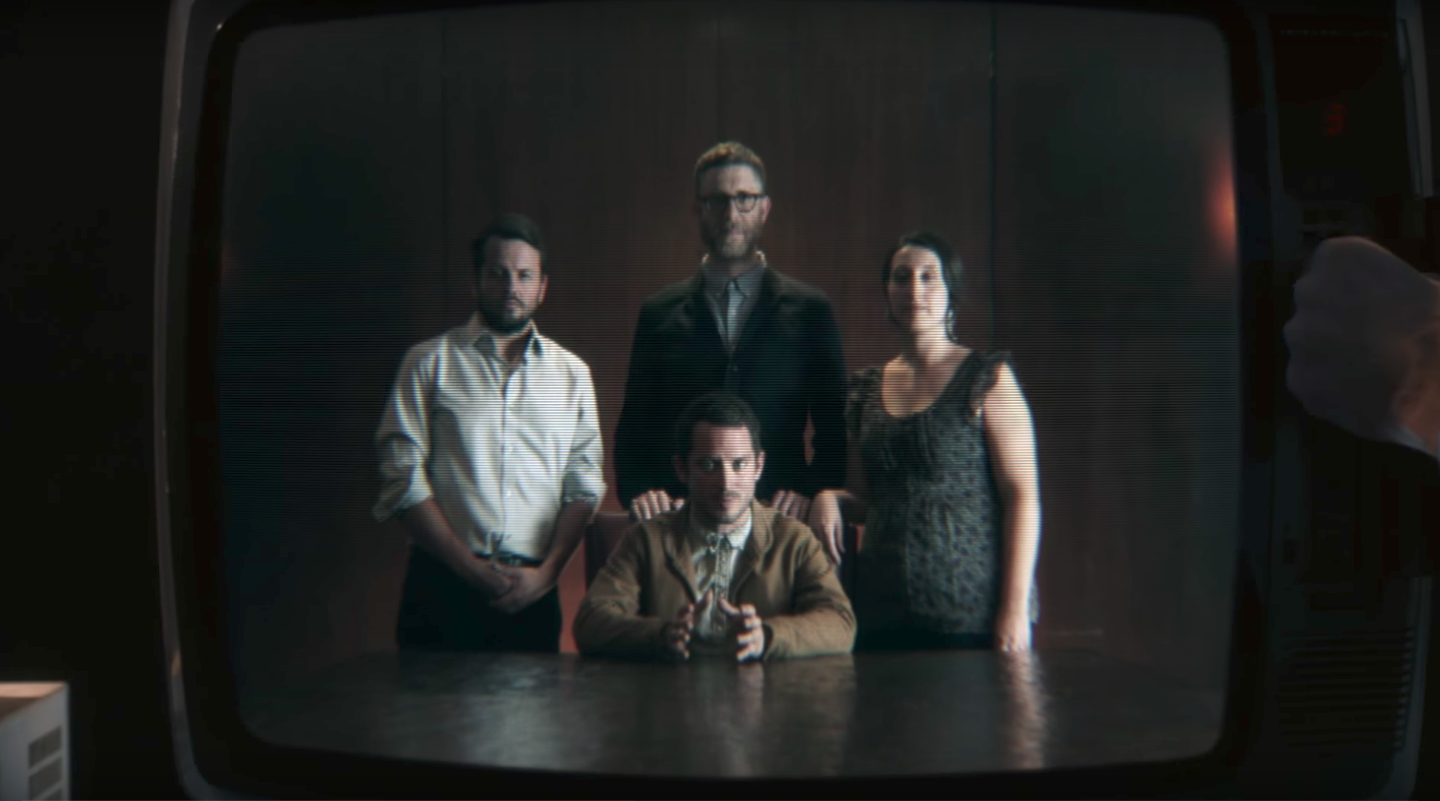
TVs within TVs, within TVs, within TV… Where do I begin? Transference is a new IP that was announced at Ubisoft’s E3 conference. It’s all about immersion and pushing the boundaries of storytelling:

You can for the first time as a player feel like you are in a movie. That’s a really good word for it, we want you to take the gear and still feel unsettled.[…]

Transference was produced by Elijah Wood’s team at SpectreVision. Here’s what they had to say:

We stumbled across some fascinating research that had begun in the late 90’s. Essentially, neuroscientists had figured out a way to upload brain data, trauma, emotions memories to digital space. Now we’ve gone and taken the next logical step, and with Ubisoft, we’ve created in virtual reality one such test subject. So we’d like you to come join us and experience the Walter Test Case for yourself.

The trailer instantly reminds me of The Matrix, with Master Reboot’s narrative (but in an everyday setting) and a slice of Black Mirror for good measure. Transference to me looks more scary than any sci-fi thriller/ horror game I’ve played as it sounds (we didn’t see much gameplay, they kept their cards close) unnerving and uncanny – I predict that it will be a mindf**k of a game and an experience to remember (especially as it’s for VR!).

According to the E3 announcement we can expect the mysterious game to come out Spring 2018.

What are your thoughts – is the idea of the game too scary? Or like me, can you simply not wait?

Let us know in the comments below!

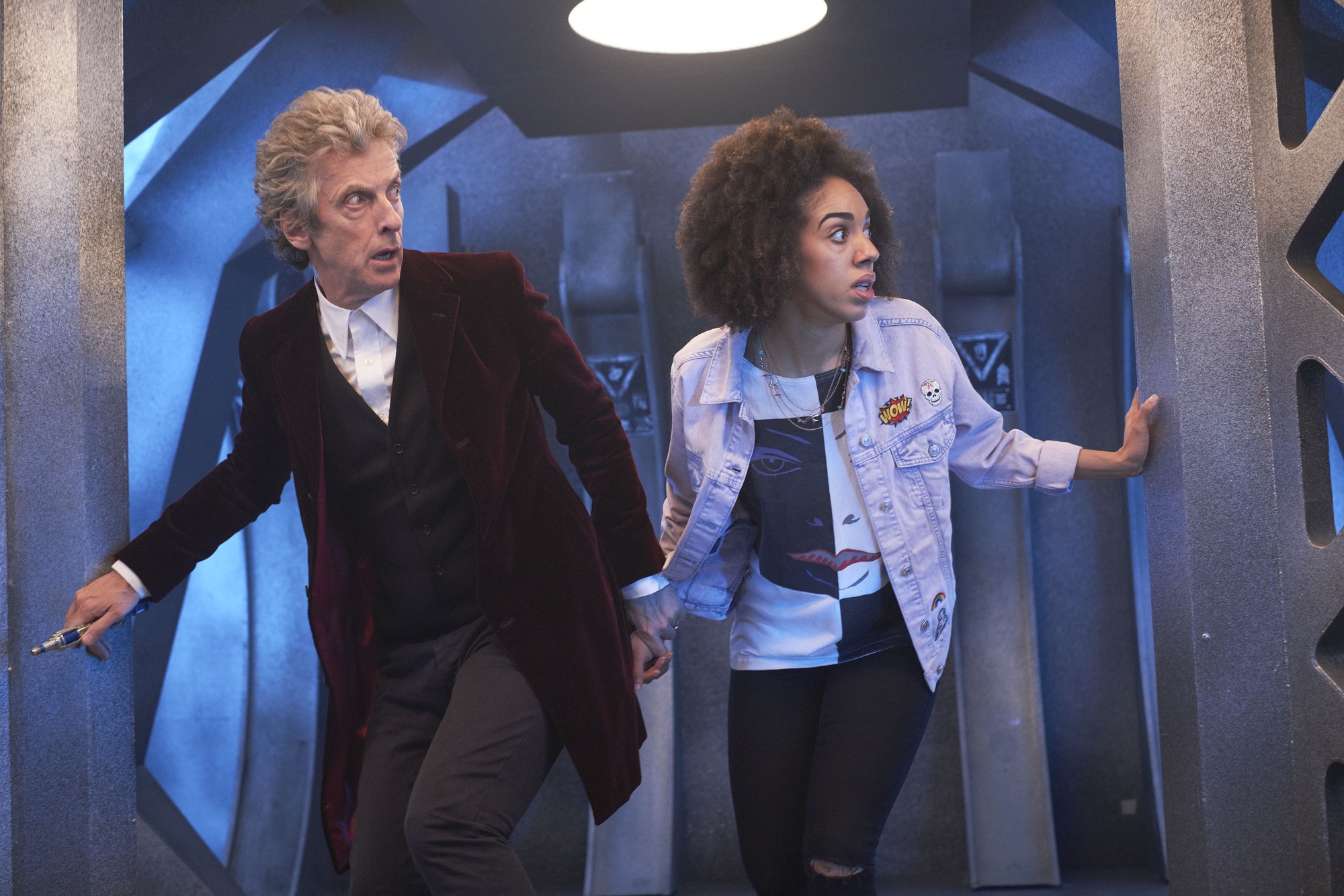
Viewpoint: 5 Reasons Why A Doctor Who Game Can’t Work

I present to you 5 reasons why a Doctor Who game can’t work. (Believe me, I would really want it to).

THE CHARACTERS: Any fan of Who will be able to safely say that one of the show’s most impressive traits that has secured its place in television history for forty-eight years now is its character drama.

When the programme returned in 2005, it placed a central focus on the life of Rose Tyler, a teenage shop worker who found herself caught up in the life of a time-travelling alien. We followed Rose and the Doctor over the course of thirteen episodes, witnessing the tragic destruction of the planet Earth, the invasion of London by the Slitheen, the horrifying effects of the return of a lone Dalek on the Time Lord and ultimately his startling regeneration prompted by love and loyalty from his most devoted companion. More than ever before in the ‘classic era’, Russell T Davies placed a distinct focus on the companion and each of the emotional ramifications of these ground-breaking events on her, something which made for brilliant television seven years back and still rings true with Steven Moffat’s interpretation today.

Now, unless game developers have plentiful cut scenes to the point of Metal Gear Solid, Doctor Who video games are going to have to tone down the focus on the emotions and actions of the protagonists to the point that much of the heart of the show may be removed in the process, thus possibly leaving us with a dull imitation of the programme rather than a realistic depiction.

THE VISUALS: A simple one to explain, really: until BBC Worldwide actually invests some proper time and cash into making the graphics of a Doctor Who video game look as if they were intended for a current-generation console release rather than for the PlayStation 2 or GameCube in 2004, we’re never going to be able to be totally satisfied with the results of the final product. We had the atrocious 2010 frankenstein creature that was Return To Earth for the Nintendo Wii, and the hideously retro style of the Layton-alike DS effort Evacuation Earth. We need a modern game with modern graphics.

THE MYSTERY: Ever since An Unearthly Child kicked off the show’s extraterresterial and time-shifting exploits with its romp to the age of cavemen in 1963, fans have been constantly amazed at what the BBC can achieve in terms of Who’s special effects budget and rendering of alien worlds and past/future timelines. As soon as you move into the video games industry, then, you’re given an obligation to try and match that sense of wonder and mystery that comes every time the Doctor and his companion step outside the TARDIS doors, an obligation which BBC Worldwide ignored as they brought us spaceship corridors, junkyards which are hugely reminiscent of Earth’s and other lifeless environments.

who-31.jpg

Eternity Clock at least used multiple time periods and incarnations of London (as well as Storm Cage, an alien prison), a more daring set of locations than any past endeavour by developers, yet that was still fairly lacking in ambition on SuperMassive’s part. Nothing will surprise me quite as much as the show can when I walk out of those blue police box doors, and that that will always be the case in Doctor Who video games.

THE SCRIPT: Once again, this comes down to the format of the episodes in their modern day context, but to an extent it relates back to the ’63-’89 era too. If you go back and look at any single story of Who, I guarantee that you’ll be able to find some great one-liners that come back to haunt the characters later (“It is returning…it is returning through the dark…and then, oh but then…he will knock four times…”), romantic or family-based heart-warming dialogue to bring the audience together in joy or laughter (“I’ll suffer if I have to kill you.” “More than the entire universe?” “Yes.”

The grand extent of the humour in Return To Earth was the Cyber-Men demanding an AI be converted, only for her to keep retaliating with “But I do not want to be converted”. Really?

witch.jpg

THE PLOT RESOLUTIONS: How can you ever top the huge cliffhangers the show has in video game? It’s in moments like these where Doctor Who shines totally as a television show, and which convince me that there is no way of accurately portraying the drama in a gameplay-focused product without losing a whole heap of what makes it great along the way.

What are your thoughts reader, can there ever be a good Doctor Who game?

Viewpoint: Remakes vs. Re-masters – which is more desirable to gamers?

Releasing previous titles seems to be something that is less common these days, but there is still a case to be made for bringing old titles back to life using new technology. When it comes to this, there are two routes to go down; re-master the old game or remake it entirely from the ground up. Both of which have their pros and cons, but which truly represents the series and brings the heritage of it back to life?

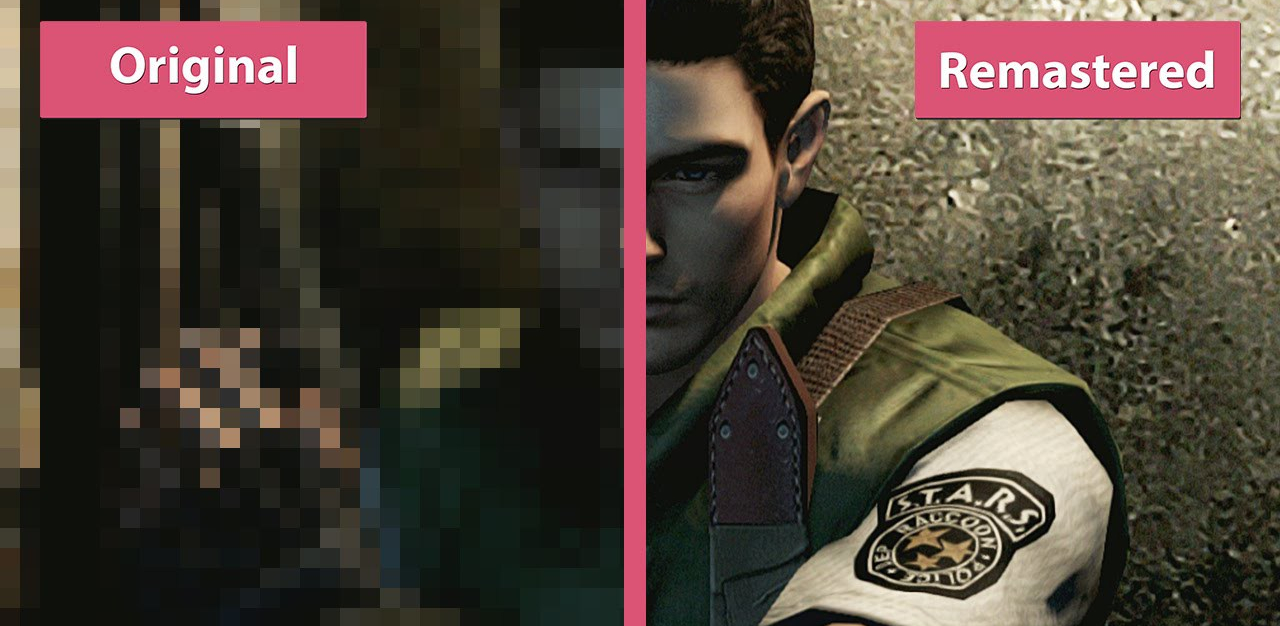
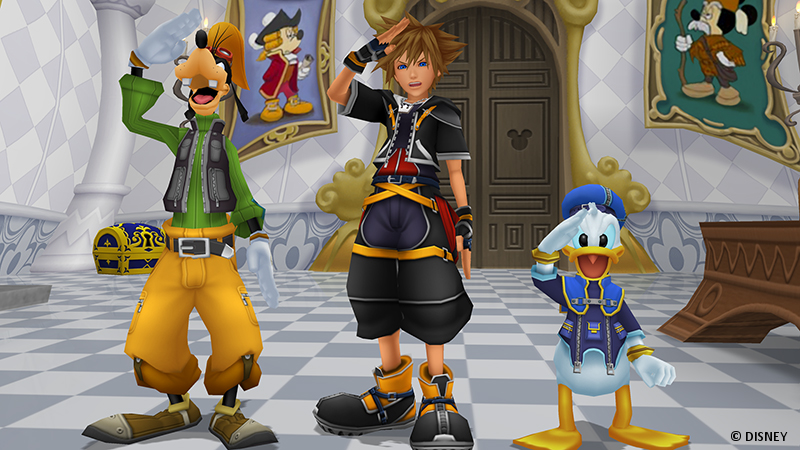
Generally speaking re-mastered titles have been given a bad rap when they have launched, predominantly in the last generation of consoles when PS2/Xbox games were brought to PS3 and Xbox 360. Take for example when the Splinter Cell titles were re-released on PS3; not much effort was put into these to make use of the new hardware or do the series much justice. Of course, there are exceptions where an old title can bring countless more hours worth of entertainment to new consoles, much like the Kingdom Hearts re-releases where bugs were ironed out and the graphics were given a new lease of life.

But there’s potentially an argument there in itself when it comes to a re-master; how far should they go to re-master the game and how much of the original should they keep in? Nostalgia is a funny thing and playing a poorly produced re-release, or one that doesn’t stay true to the original, can ruin the memories and attachment to a series for some gamers. We can all remember one bug or another from a previous game (before mandatory/automatic updates were a thing) which will forever stick in our brains, so if we remove these are we ruining the originality of the game?

KH2FM

It’s a tricky decision to make as this will probably split gamers right down the middle in terms of what they do and don’t want from re-mastered games. Personally I’d like the game to retain some of its originality, not completely overhauling the graphics, but to at least eradicate the bugs so it runs perfectly when it may not have done first time around.

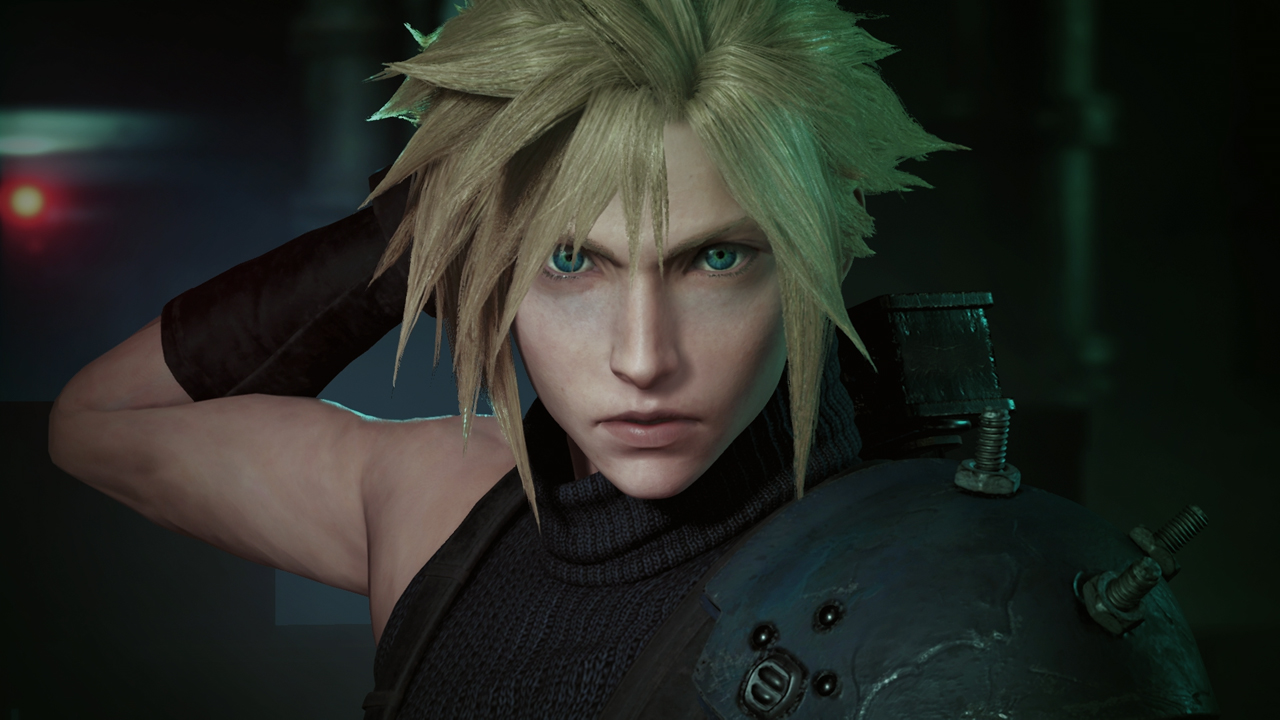
With that in mind though, would they not be best simply recreating the game from the ground up and using the old game as inspiration to update the game to current standards? One key example of this is the upcoming, and still quite secretive, remake of Final Fantasy 7. Not much is known about this game yet, but we do know that it will be overhauled and updated to modernise/bring it in more in-line with more recent Final Fantasy games. One of the main updates would be that the battles will now be more dynamic and open, rather than the traditional turn-based system used in the original.

If you asked me, I’d be more than happy to see this given a new lease of life using modern technology but keeping the fundamentals of the original. I’d want the turn-based combat to remain, yet more cinematics and the characters brought to life with voice acting, which they didn’t have previously. If you remake the game, you’re taking the game away from its roots in my eyes, and I would rather leave it as it was than potentially play this remake and it ruin my memories and feelings towards the original.

Yet there will be people who will welcome this with open arms and will love to see the game re-imagined and worked on by a new team with some fresh ideas that can make the game feel like it is brand new. So the question is: who do you please? Do you please the people who would like the roots of the game to be kept? Or do you aim the game at those who would like the game to be re-made from the ground up?

cloud ff7

Somewhere along the line it will all boil down to costings and which developers can be trusted to work on a beloved series or franchise as not to tarnish its reputation. It would also depend on its success, as the developers would not want to spend huge amounts of money on something that may flop, so should they spend money on re-masters or remakes at all?

When we are on the eve of having the most powerful home console delivered to us in Project Scorpio, and PS4 Pro already pushing 4K gaming, should we be focusing on bringing new content to the forefront? This time and money could be used better elsewhere in bringing us new IP’s, new experiences and ensuring the future of console gaming is secure. When all is said and done, don’t we have enough to play without bringing games back from the past?

That itself is a debate in itself for a different day, but I for one would like to think that we are moving on from the remake/re-master trend and begin to focus our attention on the future. Let’s celebrate what we have to come, not what we had, and embrace the new experiences that are yet to come.

Viewpoint: E3 2017 Predictions – The Evolving Battle for Next-Gen

E3 2017 is fast approaching and like every year gamers want to know what they can expect aside from the official plans announced by industry giants Sony, Microsoft and Nintendo. This article is going to focus on what we believe the console colossuses have in store for fans this year.

Based on what we know, it looks like E3 2017 will focus heavily on content and services over new hardware aside from Microsoft’s big reveal of Project Scorpio. Even Microsoft, however, will focus most heavily on features and titles rather than the raw power of the new system in order to stay ahead of Sony in the console market.
playstation

Sony:

With Microsoft showing off “Project Scorpio”, Sony will need to demonstrate they still have a competitive edge. However, likely they will play their hand close to their chest, emphasizing content over new hardware. We can expect to see a vast array of new titles, with special emphasis on approaching AAA hard-hitters such as The Last of Us 2, Death Stranding, God of War, Uncharted: The Lost Legacy, and Days Gone.

With the recent release of the PS4 Pro, and the PS4 still sitting under the average five-year system lifetime, it would be prudent for Sony to keep any big announcements about the next system (tentatively, the PS5) under wraps until after this year’s conference. The new importance placed on S-model systems, in the same vein as Apple’s iPhone launch model, is likely to extend the launch window for new generations. After releasing an upgrade to it’s current gen system, Sony has to keep consumers feeling like the upgrade was worth the purchase, and announcing a new system so soon would likely inspire those not yet convinced they need a 4K capable system to simply wait it out. Or, delay their purchase until the launch of the PS5 when they can get the Pro at a discounted price.

Sony will likely also hold off on releasing a new version of PSVR, which already had a performance upgrade of sorts with the PS4 Pro. PSVR has done well overall, selling more than 915,000 units as of February of this year. Sony will continue to ride this success, giving additional incentives for consumers to embrace the headset, and rewarding early adopters. We will likely see a PSVR and PS4 Pro bundle offered at a discounted price, along with an expanded library and a couple of larger titles. The motion controllers are long overdue for an upgrade, however, so it will not be surprising if Sony announces a newer model. Better controls matched with more titles and a couple of AAA hard-hitters will help move Sony’s VR headset into more homes and build consumer confidence.

One of the major questions about Sony’s conference, that has been circulating the internet recently, is whether Sony will make a major announcement concerning the Final Fantasy VII remake. Of course, making any predictions about the remake is a little like playing darts in the dark. Our gut instinct would be “no,” but during an interview with Gematsu back in January, FFVII Remake director Tetsuya Nomura revealed plans to divulge more information on both FFVII and Kingdom Hearts III some time this year:

“We’re steadily progressing on production. While we are making them, I apologize that the wait will be a bit longer for Kingdom Hearts III and Final Fantasy VII Remake. I am very sorry, but to that degree I will make a game that will meet your expectations.

“Last year, I didn’t put out much information on either title, but this year I want to show our progress at an event somewhere. The release of the titles themselves still have a way to go. But there are many titles releasing this year, if you can wait for any ‘surprises.’”

So, it wouldn’t be too far fetched to speculate that some new gameplay footage will make its way into this year’s E3 presentation. Though the game is still in progress (and would be a spectacular launch title for the next-gen PlayStation), it would still be a strong card to play for Sony this year even if only to give fans a little more to chew on.

Finally, will Sony announce a replacement for the PS Vita? With their recent removal of the PlayStation Now streaming service from the system and the overall poor sales (only a little over 15 million units sold world-wide), along with the rise of mobile gaming, it seems likely Sony plans to continue to deemphasize the handheld. At most, we might see a remodeled Vita with only slightly better specs, or more colors, but likely Sony is trying to move away from the handheld market altogether and won’t put much weight on the system aside from titles announced that will also be available on the Vita.
facebook

Nintendo:

We already know that Nintendo plans to focus heavily on Super Mario Odyssey, much like they did at E3 2016 with The Legend of Zelda: Breath of the Wild. The other two titles that will garner most of the attention will be the upcoming fighting game ARMS and the squad-based multiplayer Splatoon 2.

Much like last year, Nintendo will showcase only a handful of new titles aside from those mentioned above, with the usual reveal of a reboot or new iteration of an older title. Likely, Nintendo will try to freshen things up by bringing back a recognizable, but less often updated classic akin to a new Kid Icarus.

In March of this year, My Nintendo offered rewards celebrating the 5-year anniversary of Kid Icarus: Uprising, which released in 2012, including videos and discounts on the Kid Icarus series. The series has had few entries, but has maintained a strong following over the years. While this doesn’t necessarily point to the arrival of a new Kid Icarus for the Switch in 2017, Nintendo would be remiss to let the opportunity pass by and a new adventure for Pit would add to a strong lineup for the new system. If a new Kid Icarus is already in development or in the planning stages, we will definitely hear about it at this year’s E3.

Aside from games, we will finally hear details on the Switch’s online service, which will launch later this year. One of Nintendo’s major focuses since the Wii has been interconnectivity and bringing people together around their system. There will be heavy emphasis on how this new service will benefit buyers not only through online multiplayer but through connectivity services such as chat, sharing, daily task management or life-style management integration, and streaming services.

The Switch has already done incredibly well in sales, with consumers purchasing 2.74 million units from March 3 to March 31 alone. Nintendo knows what works well for them, so we can expect more of the same this year, and likely until Nintendo sees another sales slump similar to that of the Wii U.
MlkexPU

Microsoft:

Project Scorpio.

Right, but you already knew that.

Microsoft will be using their new system as their heavy-hitter. This means a handful of (tentative) launch titles will be announced along with the big system reveal in order to wet the appetites of fans. We will finally get to hear the actual name of the system, its price, and release date. This presentation will likely not focus too heavily on specs (which have already been publically released), but more on demonstration and some developer spiels on how much they love working with the system (as we have come to expect). You can also reasonably presume to see the new Forza running in crisp, clear 4K resolution as a demonstration of the system’s power and performance since the series tends to run in two-year cycles. However, Project Scorpio likely will not take up a major portion of the presentation so Microsoft can focus on two areas in which they either already have the competitive edge on Sony, or on which they are trying to build an edge.

Backwards compatibility has become a major focus and Microsoft has been giving fans what they wanted with the XBOX One by building a library of XBOX 360 games that can be played on the system. A few strong titles added to this collection (preferably a few from the original system) will be a major selling point for both the XBOX One and Scorpio, and will help bolster the image Microsoft has been building of being a more consumer-friendly company than their competitor.

Another major focus will be features that will build off of the original pitch for the XBOX One, which was making the console the center of the home. Though this pitch never materialized, largely due to the failure of the Kinect, integration with Microsoft’s digital assistant Cortana could truly put the system at the center of the living room. Users could utilize the system much like Google Home or Amazon Echo, except with the added benefit of controlling console features. If the system’s Cortana integration will be able to use features when the TV is off, then this would give Microsoft a way to push consumers to keep the console connected to the internet at all times. The original “always on” requirements for the XBOX One did not go over well with consumers, so Microsoft had to take a step back. If the system could be utilized as a hub for things such as home control, home monitoring, or even voice search using Cortana when the TV is off (either through a Bluetooth speaker or system speakers), then consumers would have motivation to keep the system connected online at all times without it being a requirement.

We can also expect to see what Microsoft has up its sleeves regarding virtual reality. Now that Microsoft has had the leisure of observing Sony’s success with VR, E3 2017 will be an ideal time to announce plans for their own dive into the VR market. Microsoft announced a partnership with Oculus in 2015, and it is unlikely that the company would sever that relationship to go on it’s own when working with Oculus has already proven lucrative. The partnership gives Microsoft an edge on the PC VR market they might not have if they went solo. We can expect to hear about future Microsoft cooperation with Oculus for PC. In addition, Microsoft is more likely to announce a lower-end headset for use with the XBOX One and Scorpio consoles created in cooperation with Oculus much like Samsung has done with the Gear VR.

Conclusion:

Microsoft has the greatest opportunity this year to direct the future of the console market, particularly if they can achieve the home-integration they originally envisioned for the XBOX One. Sony will press harder on the content side using variety as a selling point for their existing systems. Nintendo will carry on with the same structure they used last year and we can expect to see at least one new title (a new Kid Icarus seems likely, but we shall see).

The battle for the latest and greatest next generation system is evolving. Upgrades are coming faster, but in smaller leaps with the introduction of S-model systems. But, raw power alone will no longer cut it. Companies have to demonstrate an ever-increasing stream of content, interconnectivity and home integration. This E3 might not feature any huge surprises on the hardware front, but it will definitely set the stage for the future of the ongoing competition for console king.

Viewpoint: The Future of Nintendo: 3DS vs. Switch

It’s that time of year where most of the gaming headlines are focused on this year’s upcoming E3 event, wondering how Microsoft and Sony will approach their respective conferences. It’s no secret that we’ll already see more on Project Scorpio and Sony are keeping quiet as it stands. As for Nintendo though, their approach is the same as it has been for the last couple of years; we’ll do our own thing.

Nintendo seem to be a law unto themselves lately, keeping a distance from the constant arms race that Microsoft and Sony are engaged in an attempt to outdo one another. Whilst they will have a strong presence at E3, Nintendo have elected again to have a special E3 Nintendo Direct presentation instead. Undoubtedly, this will have many announcements for the Switch including more on Super Mario Odyssey and other familiar franchises.

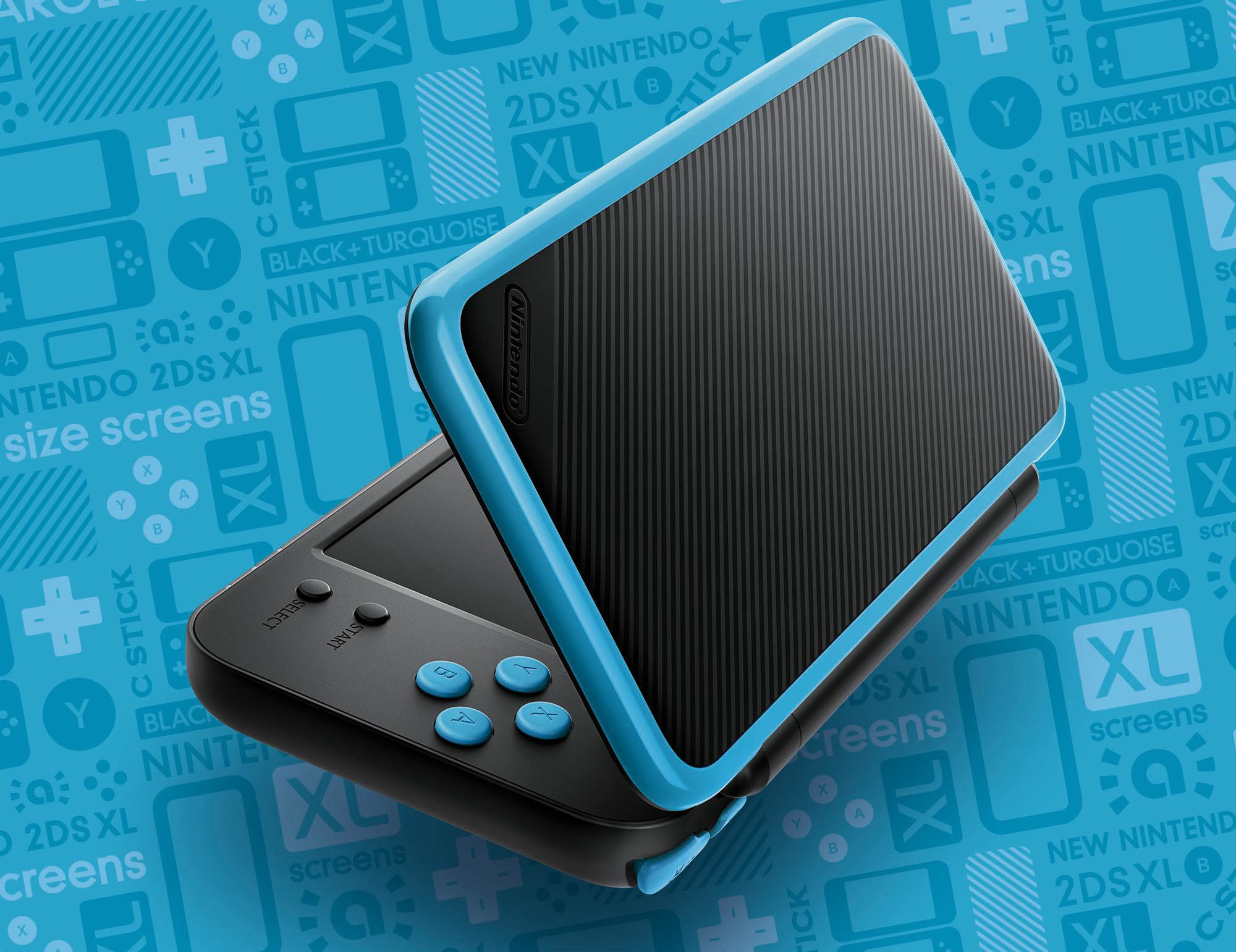
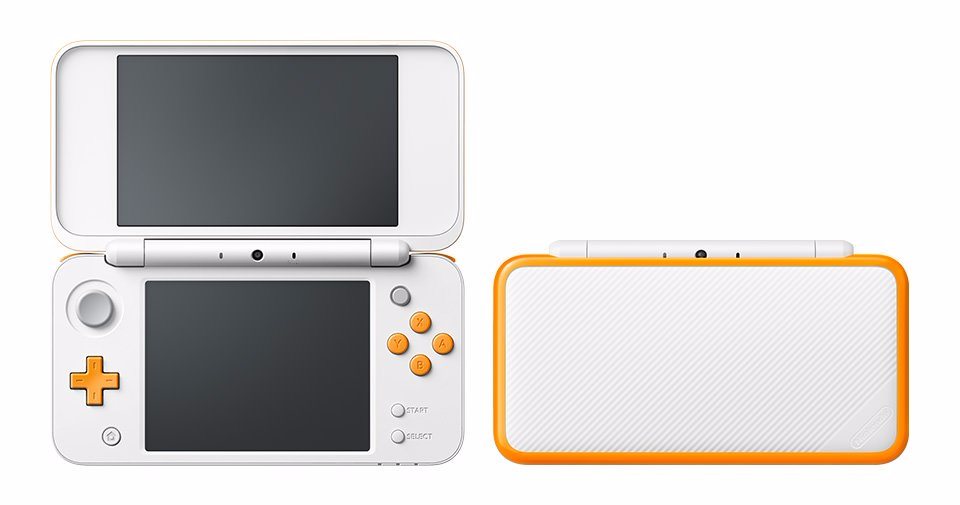
But whilst the Switch may take up the majority of the conference where will the 3DS fit in, or the recently face lifted 2DS? You see the Switch allows gamers to enjoy their latest titles in various ways; docked or undocked, inside or outside the home. So with that in mind, what does the future hold for Nintendo? Will they look to wind down their record-breaking handheld console in favour of the Switch, or allow both to flourish in their own right?

New 2DS

Nintendo face an interesting problem here as the Switch has proven to be very popular already. Many had questioned its popularity, but it has already flown off the shelves with limited availability in many regions. Granted, the launch line-up was limited but there are already some enticing games on the horizon which Switch owners can look forward to playing. Yet out of the blue with little warning, the new-look 2DS was announced which raises questions for both the 3DS and Switch.

The 2DS now falls in line with the tried and tested design of the 3DS, no longer looking like a doorstop. From the promotional images that have been released, it wouldn’t surprise me if many favoured one of these new units over the 3DS. With 3D gaming being a trend that has well and truly passed, it wouldn’t surprise me if many opted for this version or if Nintendo did start to end production of the 3DS itself.

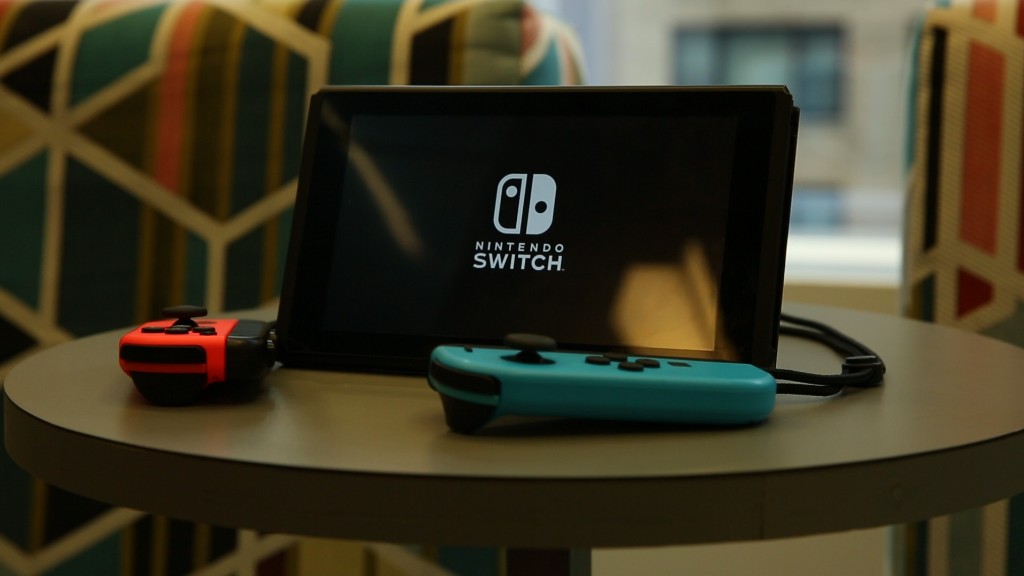
But even then, does the Switch not offer a more viable option for mobile gaming? With the ability to take your home titles with you whilst you travel, you’re not getting a watered down version of the title to fit the portable platform. Granted, the 3DS/2DS would be more convenient size-wise and potentially have a longer battery life, but wouldn’t you rather have a better experience on a bigger and better screen?

These are questions purely based on the actual units themselves, but when you think about the games line-up it would surely make more sense to opt for the Switch. Personally, I own a Switch and have owned a 2DS and 3DS in the past. Even at this early stage, when the catalogue is relatively small, I would prefer to have a Switch and use that for portable gaming. Why would I need two devices that can offer the same function?

170302192617-nintendo-switch-1024x576

For example when Super Mario Odyssey comes out for the Switch, would you need a Mario game to come out on the handheld platform? I couldn’t see much demand for handheld spin-off, or a port of the Switch title onto the handheld when you could take the Switch with you. Of course, not every 3DS/2DS owner will have or want a Switch but surely Nintendo would want to support their latest console? What’s more, isn’t the idea of the Switch to offer the perfect solution to handheld gaming so you don’t need two devices?

Of course, there’s nothing to say that Nintendo can’t continue their handheld dominance and the Switch be a success at the same time. I think the Switch was a marker for their future however, and expect to see the Switch take priority for the handheld market. I wouldn’t want to feel that I was missing out on something only available on the 3DS/2DS nor would I want ports of Switch games to hold back their release. Granted this would be very unlikely, but Nintendo have got to please both audiences somehow.

I’m sure Nintendo will look to bring some exciting announcements to the table at their Direct showing for E3, some of which may clarify the future for both their console avenues. For all gaming fans, this year’s E3 could be the biggest and most exciting in recent years.

Viewpoint: A Look Back at Ocarina of Time

As I write this, there’s no doubt countless Zelda fans are enjoying the open-world brilliance of The Legend of Zelda: Breath of the Wild. You don’t need to even play the game to see that its making its place in gaming history, with a large number of gaming publications giving it scores of 9 and 10. But before this game hit the shelves, there was only really one other Zelda title that made as much noise. The true pioneer of the 3D action-adventure, it revolutionary lock-on targeting system, its excellent combat and puzzle-solving…there could only be one game that fits the description. That game, my friends, is The Legend of Zelda: Ocarina of Time.

legend_of_zelda_ocarina_of_time_9

It’s crazy to think that, just over two decades ago when it was released in 1998, that this was the very first 3D Zelda title. We may have become accustomed to seeing our green-garbed hero, Link, in three-dimensions now, but it was unimaginable back then. Before Ocarina of Time, the previous major Zelda was A Link to the Past, yet another 2D top-down adventure that garnered almost universal acclaim and a commercial success. If poorly done, Ocarina of Time could have been a cringe-worthy moment in the franchise’s life. Fortunately for us, this was far from the case and Nintendo truly outdid themselves here.

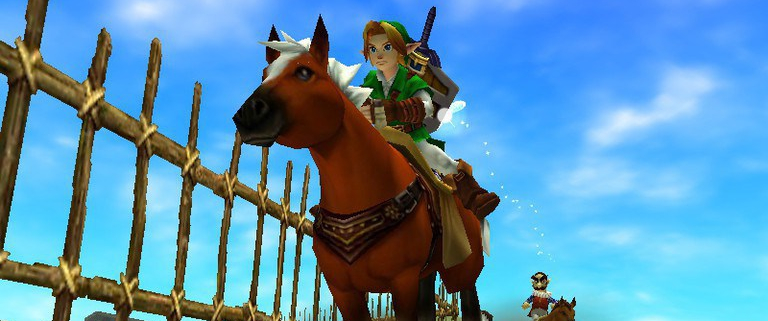
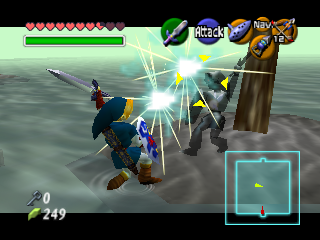
The game was revolutionary in how it combined so many elements in one 3D package; adventuring, combat, puzzle-solving, and horseback riding. The adventuring, in particular, was helped by the then-impressive presentation – cinematic graphics that showcased a diverse fantasy world, with some of the most iconic music in gaming. The moment when you first step out onto Hyrule Field, you hear its grandiose melody and realise that the in-game world is your oyster is one you’re likely not to forget.

765377-the-legend-of-zelda-ocarina-of-time-nintendo-64-screenshot

Ultimately it was OoT‘s impressive set pieces that made up for what is essentially a simple plotline. As Link, you must stop the evil king, Ganondorf from taking over Hyrule. Aside from small twists along the way, that is essentially the crux of the tale. But the simplicity of the plot can be excused simply because of a) the wonderful characters, Princess Zelda et al and b) the aforementioned setpieces.

This game is the first to give Zelda an actual personality. In previous games, she was just your stereotypical wise maiden who was an object to be saved by our elf-like hero. Here, Zelda is a far more endearing character who is a mischievous, naive young child at the start, but a responsible and knowing badass adult by the game’s end. This brings me then to the set pieces. One of the coolest setpieces of the game is Link’s transition from a young child to a growing adult. As a kid, watching Link become conscious as an adult after the time skip was one of the best things ever – and still is. Not only do we see a slightly different Hyrule than before, but this newly grown-up character can use a different set of items than his younger self, adding some variety to the gameplay. Then there is the famous horseback riding where adult Link can travel across Hyrule with his trusty steed, Epona. There are so many elements to this game that I could go on forever. I could, but I won’t. Even if I would love to do so!

Since the game was re-released and given a graphical overhaul in 2013 on the 3DS, there is now a whole new generation of gamers experiencing the game’s majesty. Just like I grew up playing the re-release on the GameCube and was completely spellbound from beginning to end, so will many others in the years to come.

Viewpoint: Why Mechanics in Games Aren’t Everything

To many, mechanics are absolutely paramount when it comes to assessing or critiquing their favourite video games. And while the very basis of this article is to dismiss this as a somewhat ill-informed notion, it is easy to understand why. Every game, even the most narrative driven ones, all share a common trait in that they are interactive. Interactivity is what separates games from all other forms of art, and to many, also elevates them. So, it makes sense. It makes sense that people that would be harsh on games that they feel aren’t mechanically sound. Functionality is imperative. However, though I do agree that it is important that a game works as an inherently interactive experience, I don’t necessarily agree that mechanics are the be all and end all of achieving this.

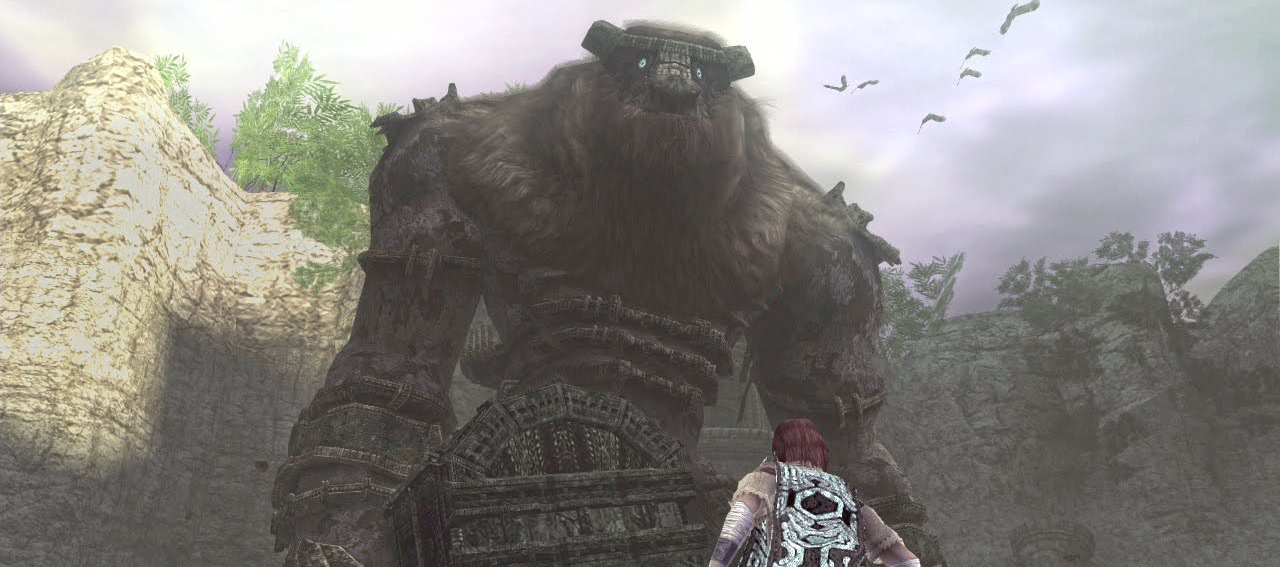
A game does not have to be mechanically perfect to work. There are numerous examples of excellent games that excel in other areas. Let’s look at something like Shadow of the Colossus. An absolute critical darling, considered by many to be one of the greatest examples of video games as an art form and lauded as a masterpiece in the gaming community. Nonetheless, even the most ardent fans of SOTC will admit that it isn’t exactly perfect from a pure gameplay perspective. Sure, it functions fine, but there are moments when the gameplay can feel relatively stiff. Some moments are even frustrating. People who have played it know this, yet the vast majority of people who have played it still concur that not only is it an outstanding artistic work, but that one of its biggest successes is creating a sense of emotion within the player, not through its core mechanics but from the feelings it manages to evoke from being interactive. It would not work as well in any other medium.

Wander, the player character, is designed in such a way that seeks to make the player feel as if they are in his shoes. He holds his sword in a noticeably awkward fashion. He will stumble and fall as he attempts to fight a colossi. Wander isn’t some pumped up, muscle-bound badass, but an everyman that the typical player can relate to. Sure, he has his own very specific (not to mention morally ambiguous) motivations for undertaking his quest but it is the way he is presented to the audience that makes people feel cordially towards him. Wander’s stallion companion, Agro is likewise programmed to make him feel more like a horse in real life than one you would commonly find in a video game. The relationship you build with him throughout the game feels like a genuine one. (SPOILERS)… There is a reason that his death often ranks highly on the lists of the saddest moments in gaming.

This is just one of the many aspects from Shadow of the Colossus that are just as, if not more so, memorable than the core gameplay that the game possesses. To write about them all would be an entirely different article in and of itself.

12.jpg

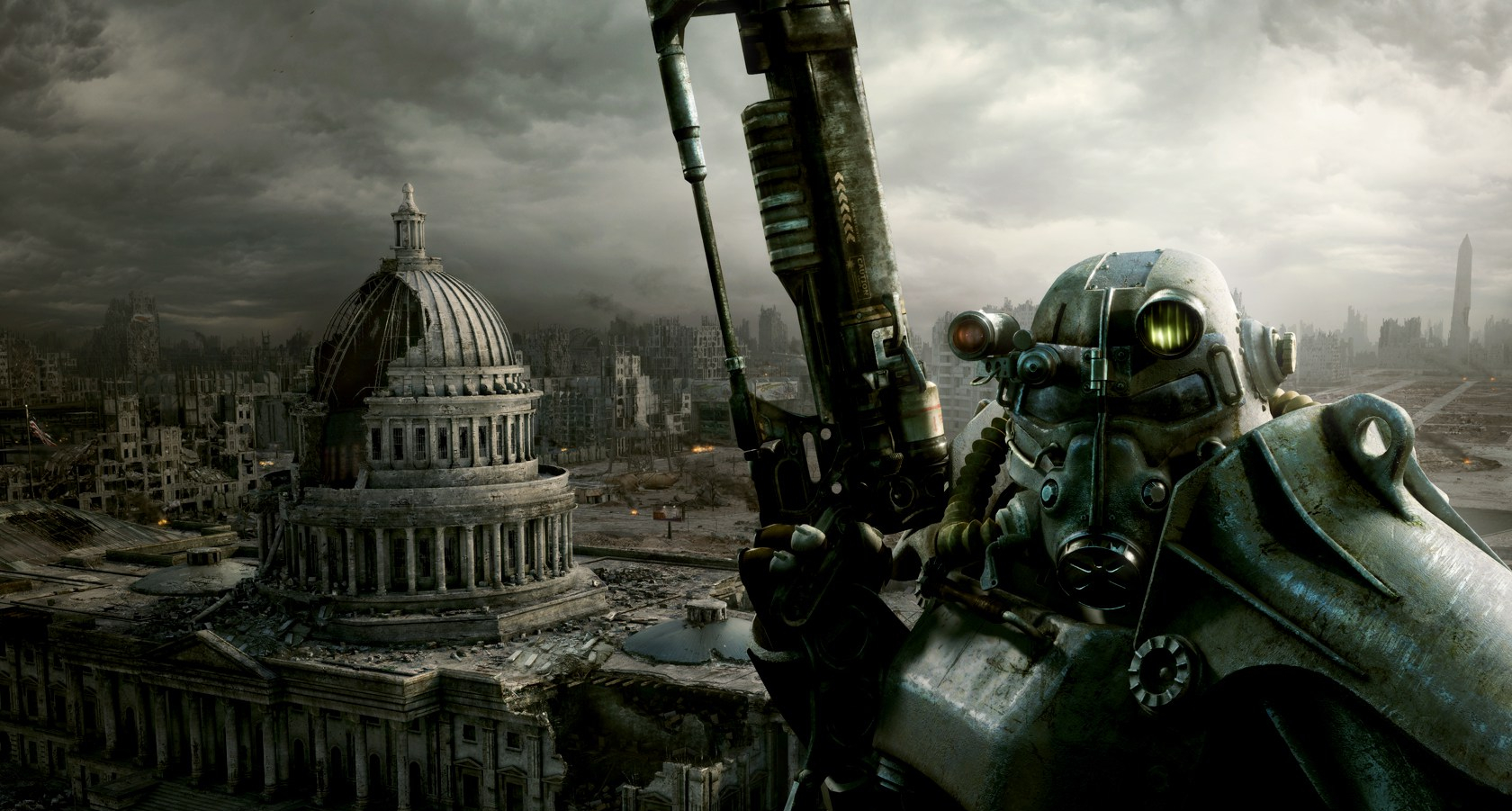
Is Shadow of the Colossus an anomaly? While it is extremely unique in many ways, the fact that its popularity stems from much more than its mechanics is not. Take Fallout 3 and Fallout: New Vegas for example. Both games were incredibly popular, but it was the giant, interesting and jam-packed sandbox world plus the sheer sense of adventure and immersion, that the games elicit in the audience, that got people coming back. The clunky shooting mechanics, stiff dialogue and wooden voice acting tend to be not as well-remembered, purely because of how engaging and indelible the setting was. There are numerous other examples of incredibly popular and/or acclaimed games where this is the case: The Last of Us? The mechanics are solid, but they are not the strongest aspect of the game by any stretch. Silent Hill 2? The atmosphere and associated lore are what generally sticks with the audience the most. Bioshock? Much like the aforementioned Fallout games, it’s the settings that tend to resonate more with players rather than the admittedly solid gameplay.

This can even extend to sports games, a genre where one would assume mechanics reign supreme. Take the outrageously popular FIFA games as an example. This is a series where describing the gameplay as unrefined would be an understatement. There are so many little issues that at times render the games a controller breaking level of frustrating. Yet, people still flock to it. Why? Is it because it’s an excellent simulation of what it’s like to play the world’s most popular sport? I would argue no, it’s because it’s an excellent simulation of the atmosphere and culture surrounding the world’s most popular sport. The games are impressively polished. People can put up with some maladroit mechanics here and there as long as they feel, consciously or otherwise, that they can project themselves into a convincing recreation of their favourite sporting environments. This was even the case back in the PS2 era, when Konami’s Pro Evolution Soccer series had a significantly more satisfying play experience to the FIFA franchise, yet the latter still regularly outsold the former.

None of this is to say that basic mechanics aren’t important. They absolutely are. They’re the bread and butter of the majority of gaming experiences. Nonetheless, the aspects previously mentioned in this article can, in some cases, prove to be every bit as important as the overall mechanics. Implementing these facets in an efficacious way can be the difference from a solid, enjoyable game and a true great of the medium.

What do you think reader? Let us know in the comments below.

Viewpoint: The Psychology of Indie Games – How Small Developers Have Been Revitalizing the Horror Genre

Some of us play games for fun, some for family time, some for competition, and some of us like to have our wits and our desire to ever sleep again scared out of us for our own, personal enjoyment. Fans of horror games no doubt have AAA titles such as Resident Evil and Silent Hill to thank for pushing the genre into the mainstream and coining the now oft-used phrase “survival horror.” But, over the years the general mainstream horror genre has suffered from a loss of direction (think back to Resident Evil 6 before Capcom rebooted the series). The industry at large has failed to truly reinvent the genre after longtime fans became tired of the same old tropes, even when well-executed (think The Evil Within). But, as the larger studios have struggled to hit the mark, the indie game industry has managed to not only revive the horror genre, but infuse it with a fresh sense of dread, dark curiosity, and existential concepts that will keep you up at night.

Horror has always been about human frailty and probing what makes an individual through picking each aspect apart: the body, the emotions, and the psyche. Though funding issues often plague the hopes of smaller developers, not having to recover the higher budgets of AAA titles gives indie creators greater freedom to explore some of the more obscure concepts high-end developers often obfuscate. Unbridled by the pressures of larger investors, smaller developers have managed to zero in on what many bigger horror entries are missing: a sense of genuine internal trepidation brought on through feelings of mental dissonance and the subtle (sometimes not-so-subtle) use of the uncanny.

Home, a game that puts the player into the shoes of a man who might be as physiologically unstable as any of Edgar Allen Poe’s narrators, tells it’s story largely through a sense that something is out of place (namely the timeframe, but also some key piece of knowledge the game never quite divulges). This sensation leaves the player with a perplexed and disquieted feeling similar to someone who might have just noticed their mind slipping a bit. The effect is small and subtle, but terrifying, and all this is accomplished in a span of only around a couple of hours in an entirely old-style, pixelated world.

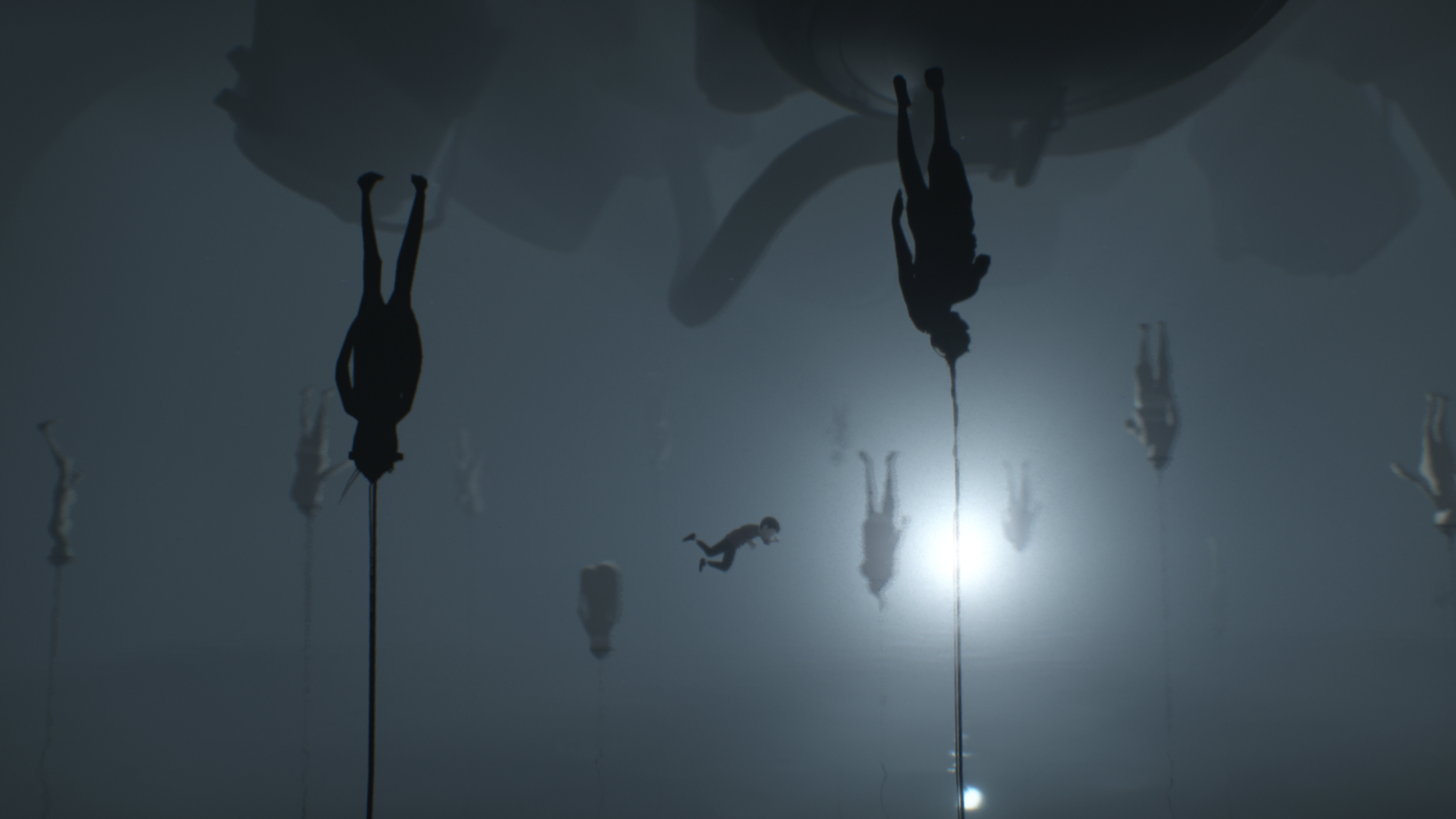
The horror of not knowing the full story and the feeling of a lack of control it produces in the player was well utilized by developer Playdead in Limbo and, more recently, Inside. In fact, Inside thrives on this feeling of displacement juxtaposed with puzzles that require the player to literally control the minds of the people around them. The fact the gamer is taking on the role of what appears to be a little boy adds to the sense of helplessness and lack of control. The ending toys with the player’s psyche even further by literally dumping the player at the end of the game with no more knowledge than that with which you began, even though your character has literally become entangled with a mass of other minds (and bodies). This sense of psychological disorientation is just one way indie horror has succeeded in tackling a major element of the horror genre often left out or unsuccessfully implemented by AAA titles.

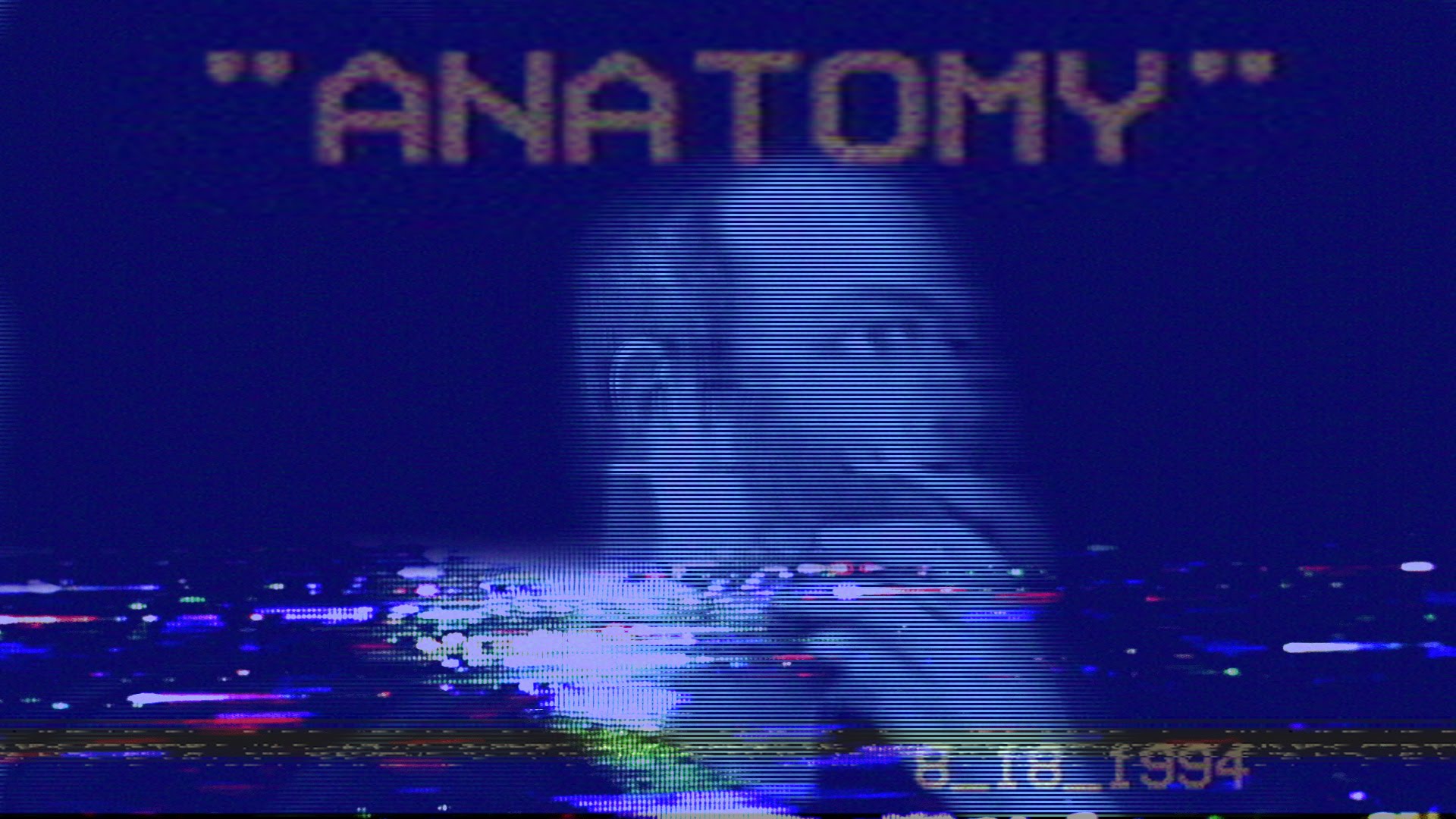
Anatomy

But, of course, some larger indie titles manage to get the feel right, perhaps due to the passion and determination needed to succeed in the independent market. Layers of Fear is a larger indie title that accomplishes on a more grandiose scale what entries like Anatomy by Kitty Horrorshow did on a more subtle note: create a sense of disquiet through over-familiarity with the mundane. Certainly a (possibly) haunted mansion isn’t exactly breaking new ground in the horror genre, but Layers of Fear managed to meld the psyche of the protagonist with the very building the player walks through, much like Anatomy does with a single family home. Though the stories are different, and Layers of Fear eventually takes on a more Alice in Wonderland level of distortion, both games succeed in amplifying common feelings of familial and domestic entrapment, and the fear of being unable to escape our own minds with all our worst memories and regrets, literally changing the mundane into an uncanny manifestation of the disorder in our own minds.

Of course, there are many other independent titles that deal cunningly with the terrors of cognitive dissonance that can result from everyday emotional trauma, depression, and feelings of entrapment. Titles such as Neverending Nightmares and Notes of Obsession both deal with these common enough passions and mental states from the angle of a horror title. Games like Outlast 2 and Soma go a step further, removing the player from reality to such a degree that they are then forced to question how much of our mental state dictates who we are, how we act, and what makes us human. If our minds are undependable like the players experience in Outlast 2, or if similar to Soma our humanity is as fragile and transferrable as a computer program, what does it mean to be human, and how can we really ever know who and what we are?

The indie gaming industry is not an easy place to find success in general. The difficulty in acquiring the proper funding, the need to locate a good publisher, advertising the game and hitting the right notes for the title to be widely successful make the path particularly difficult. Developers of horror titles have the added difficulty of an oversaturated market. The internet is inundated with would-be developers hoping to cash-in on the next great scare fest. But, while being a small developer is a hard road, the horror genre has seen an overall boon within the small games market thanks to the determination, creativity and passion of small developers. We can only hope the path eventually becomes a bit smoother, and more titles like the ones above can make their way across platforms into our homes, and into our nightmares.

Viewpoint: Project Scorpio has caused quite a stir, but is it really a blow aimed at Sony?

I thought I would let the dust settle somewhat before tackling Project Scorpio head-on because, let’s be honest, it’s caused quite a stir. The inferno that is the console war does not need any more fuel adding to it, but Microsoft seemed intent to deliver their next blow in the battle of attrition between them and Sony. But is it really a blow aimed at Sony? From what I can tell, Microsoft is putting an end to all the bravado and aiming to deliver the best experience possible for their fans.

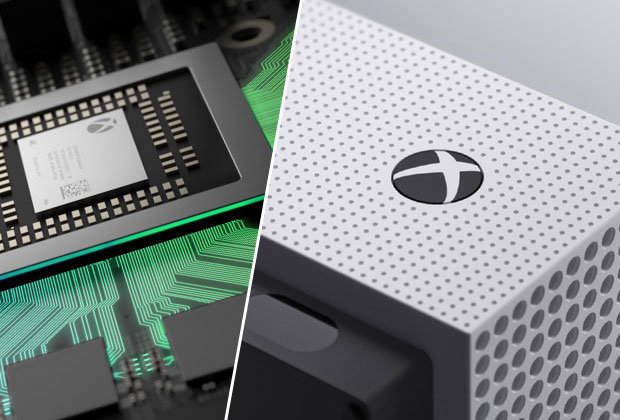
It came as no real surprise when Scorpio was announced as a mid-generation upgrade rather than a successor to the Xbox One. Much like the PS4 Pro was for PlayStation fans, Project Scorpio will give One owners an opportunity to upgrade to a 4K capable machine. And, in my eyes, that’s what Scorpio is; an opportunity to be part of the next step in console evolution.

As technology evolves and becomes more affordable, our demands inevitably increase and create a natural cycle. Old technology becomes redundant with new and better technology replacing it within an undetermined time scale. Take the advent of HD as an example, this was the big pull and selling point for the last generation of consoles and gave us a real reason to upgrade to a newer console. Is that not what Scorpio is now trying to achieve much like the 360 did with HD but with 4K?

I’ve seen many an article and video blasting Scorpio saying it’s nothing more than a weak gaming PC in disguise and a gimmick, almost unnecessary. But I don’t see this as a problem as that’s what consoles are at the end of the day; lower spec PC’s offering a convenient gaming package to those that don’t want to fork out for a £1000+ gaming machine. Why build something yourself, when you can play the same games (albeit at a lower quality) in a pre-built unit that fits perfectly with the rest of your home entertainment collection?

Granted, it comes at a somewhat earlier stage in the current generation’s cycle than most were expecting, but Scorpio is the aforementioned convenience. We can now have native 4K gaming in a home console with no self assembly required. 4K was always inevitable, but imagine the outcry if we had to wait until the next generation of consoles before we could experience native 4K gaming. Yet when that opportunity is offered, it’s not good enough.

xbone

Before I penned this article, I conducted a poll on Twitter to see what the general consensus of my followers was regarding Scorpio. I expected the worst and only a small amount voted, but the results surprised me. Out of 90 votes, 70% of people said that they liked Scorpio and would buy it with 10% saying they wouldn’t buy it and 20% saying they liked it but wouldn’t buy it. Most people stated that the main reason for their excitement was being able to play games in 4K without the need to build a PC, justifying the above point.

Now it would be silly not raise questions over the cost of Scorpio as this will be a potential sticking point for most, myself included. Microsoft have already said that Scorpio will be a “Premium console” but the price will not be astronomical. Now this doesn’t really settle those pricing doubts, but let’s say worst case scenario it costs circa £450, that will be significantly less than a comparable PC. Of course this won’t be upgradeable, but for the foreseeable future this will surely future proof your console experience.

Personally, I’m really excited for Scorpio. I can see why some people may raise concerns over the quality of games suffering for the sake of running at 4K but I cannot see that happening. Now more than ever, gamers are more savvy with their purchases so developers can ill afford to deliver a game that runs at 4K, yet fails to deliver a meaningful experience. Nor can Microsoft afford to have another questionable launch on their hands.

If I were a gambling man, I’d back Scorpio to be big. I think Microsoft are confident that they are onto something and I think this year’s E3 will be very interesting indeed…