Viewpoint: Are We Impatient for Next-Gen?

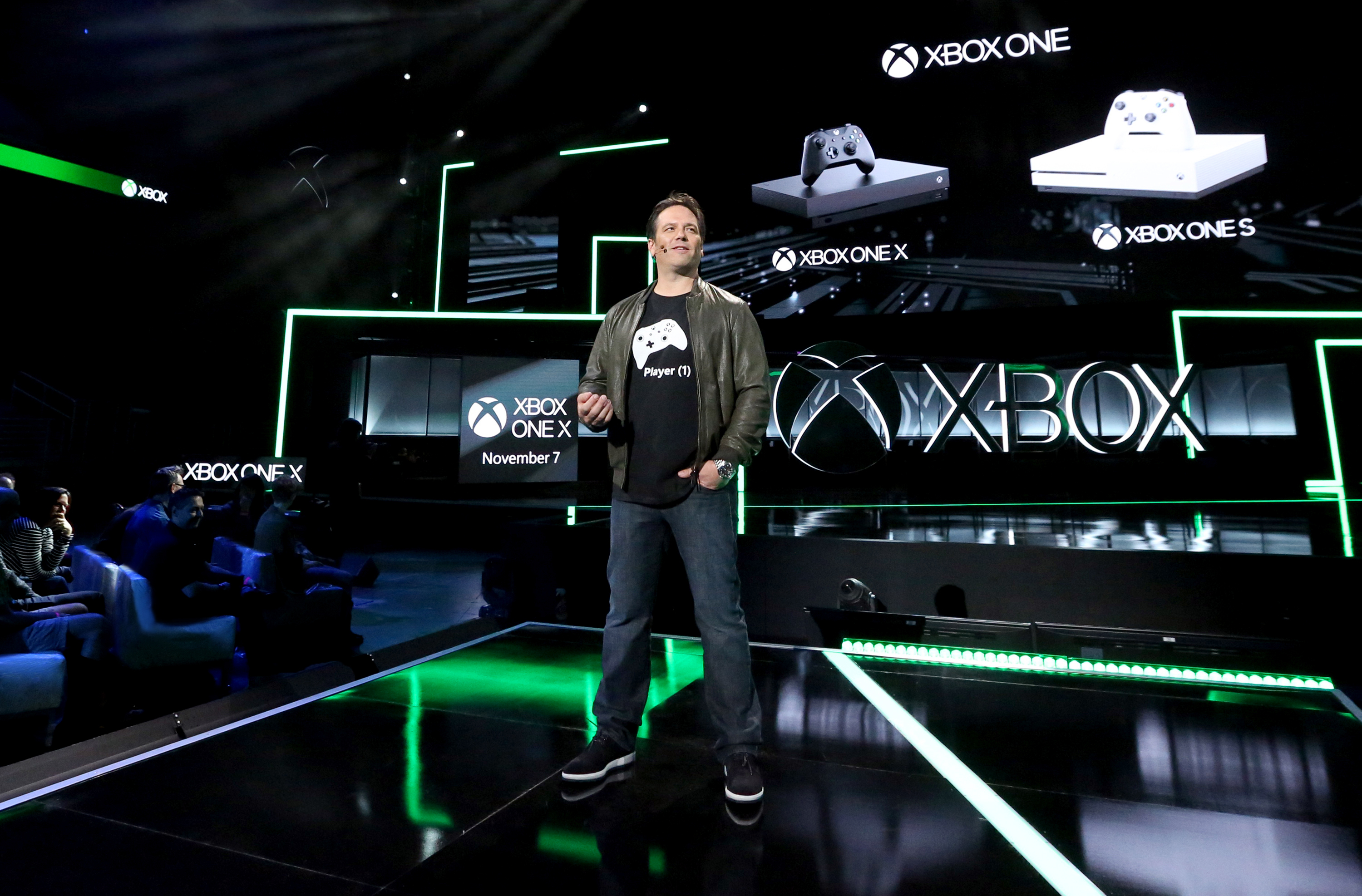
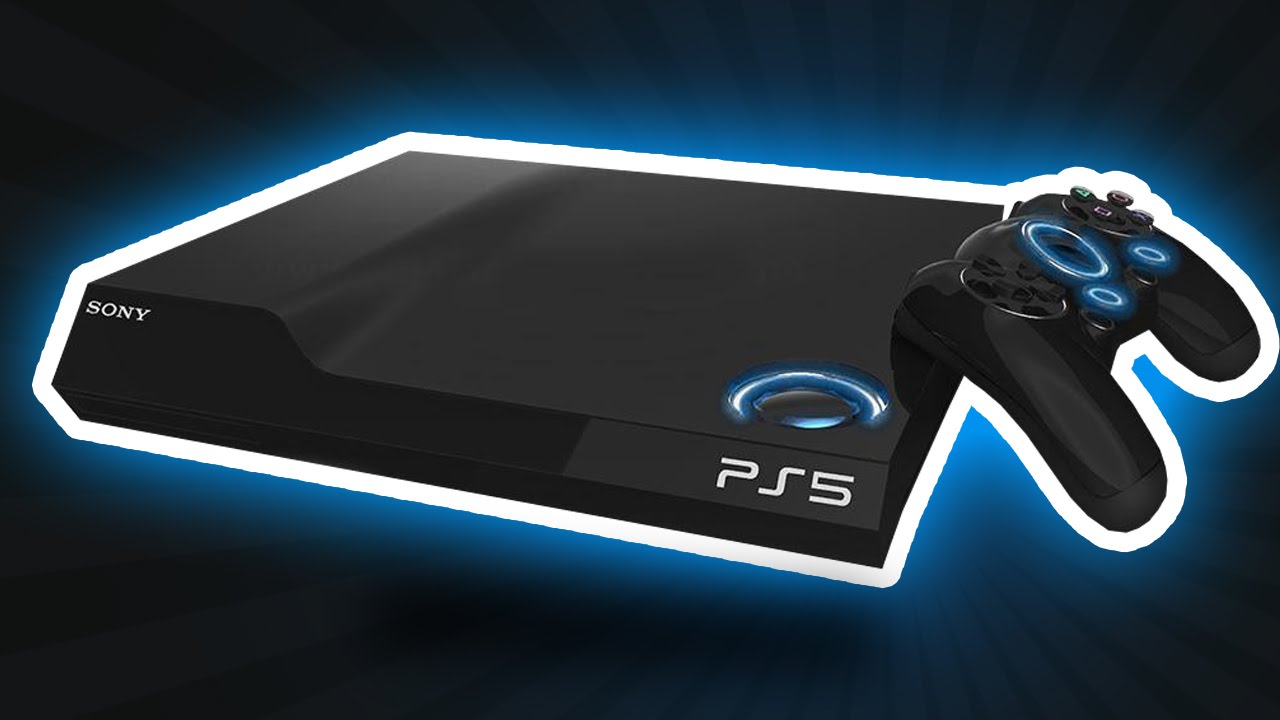
After the Xbox One X’s showing at E3, it seems quite a few people are eager for Sony to (now) show off the PS5. Whether this is because they want a new experience or they just want Sony to have the most ‘powerful console’ on the market again, I’m not sure. Just so you know, I’m not eager for their next console at all. Yes, the inevitable rumors to come may seem exciting, but this urgency to surge forward to the next-generation of consoles is shaping the attitude of its consumers.

Ever since the release of the PlayStation 2, Xbox, and GameCube, there has been an exponential growth in the video game industry; distributing new game titles and expanding on old ones. Soon enough, video games were not just for stress-free fun anymore, it became a market, a race, a business.

Just take a glance at developers investing their titles on a specific video game console. Both companies invest in one another to produce more capital. Even now, most Facebook games operate on a pyramid scheme which prevents a player from advancing unless they recruit their friends and family. Therefore it is no surprise that we have already begun because it serves as a bridge to rapid consumerism; creating a new wave of gamers that are impatient and greedy.

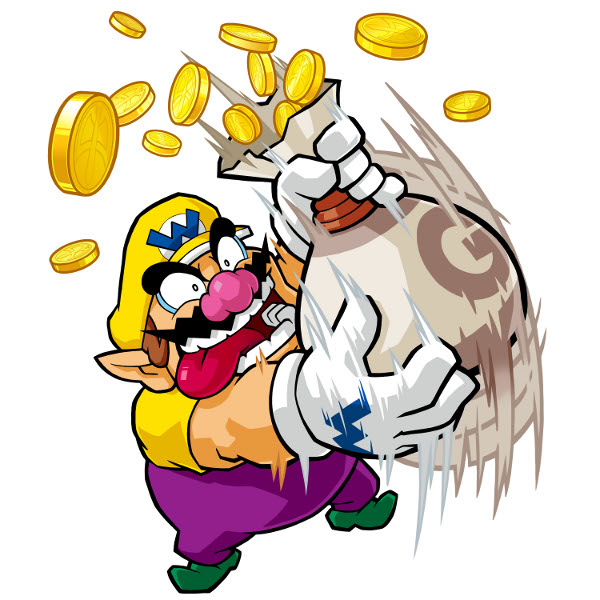
Wario

More so, the gaming community itself is empowering this which generates a factual hearsay; turning inklings into truths. 2017 is not even over and we’re already hearing that some gamers are clamouring for the PS5 – do you really want another console right now? Seriously? All of this sounds too familiar, like a scandal excerpt running aghast across cashier aisles; displaying the same gossip on different magazines.

Another thing: when I look at my current library of games to complete, I’m pretty shocked at the sheer number of them. There are some that will take weeks to complete, some even months, that’s not to mention quite a few of these have DLC on top of the base game. I’ve spent a lot of money on these games… they need to be completed before I move on. It’s just a waste of money if I don’t finish them. Surely there are many people in a similar position?

As for the next generation of consoles, they can can wait. 2017 already has a wonderful lineup for new video games to come. So relax, the consoles we have now should suffice for a good while yet. Patience is a virtue, and instead of leaning towards the precipice to catch a glimpse of what’s ahead, everyone should take a step back, slow down, and enjoy the present view. It’s quite pretty.

What do you think? Are you ready for the next wave of consoles? Or is it too soon?

Viewpoint: Games that Relax Moods – Part I

Sometimes it is freeing to lay down on soft soil and gaze at the ever-expanding universe above; feeling all the stress unwind from our bones and evaporate into the midst of the night. Granted, such an event is peaceful and relaxing, but busy people often deprive themselves of such natural gratification. Some might even find it outlandish and bizarre that their fellow men and women cluster stars and label them after mythical creatures. But who can blame their dry logic? Yet, matching a gaze across the eternal abyss is not the only method in relaxation. There are so many others…

Yes, here are some video games that relax your senses. Break free from those cigarette breaks, and just pick up one of these titles. Your GABA (a chemical in the brain that induces relaxation and helps eliminate stress) receptors would be very grateful.

Ecco the Dolphin

Published by Sega, developed by Novotrade International, and released in 1992, this game provides a vibrant mesh of the 90’s color palette. There is already another dolphin game on this list (HINT: it is also set under the ocean) and I seriously considered if I should add Ecco the Dolphin, but this game is just too brilliant not to add on this list. So voila! Going back to the color scheme, at times it may look pretty harsh to the eyes – it is from the 90’s – but overall Ecco the Dolphin’s gameplay would unease and relax the high-strung mind.

The main protagonist is a bottle-nosed dolphin, Ecco. Players will plunge into the ocean using Ecco as he traverses the depths, looking for the root of the storm that killed his fellow sea friends. Feel free singing to fellow clams and other sea creatures, and back-flipping in the air to your heart’s content.

Pokémon Snap

What is it with me and Pokémon? No, what is it with us and Pokémon? Ever since Nintendo announced that we can collect and pocket our own monsters, everyone jumped the wagon. It became a global addiction-pandemic, and that is why a Pokémon game is on this list, just for the sake that it has caused a macro obsession… right?

With that said, Pokémon Snap takes home the cake for its peace-loving ways. What is so different about Pokémon Snap is its method of catching Pokémons. Instead of enslaving these creatures, Pokémon Snap uses a camera to capture images of them in their natural state. My heart flutters whenever I snap a picture of Butterfree, I can almost empathize with the Pokémon as it quietly exclaims its liberty that it is free from buttery human hands. And yes, our hands are buttery, okay maybe not butter, but our skin produces natural oil (Sebum) to keep us moisturized.

Blueberry Garden

Winner of the Seumas McNally Grand Prize for ‘Best Independent Game’, at the 2009 Independent Games Festival, scoots in Blueberry Garden. It also won ‘Best Innovation’ for the 2008 Swedish Game Awards. Alas, this delectable montage of awesomeness is developed by Erik Svedäng, and personally, I feel that its soundtrack made Blueberry Garden even livelier. If it were not for Daduk’s composing prowess, this game would have been just another independent game amongst Steam’s stockpile of undeserving games.

If you want to soar through the sky and forget about your worldly troubles, then pick up Blueberry Garden, because when a game does not bother you with its plot and you find yourself playing it regardless, then it must be doing something right. I, for one, did not even get vexed about where I had to go, I just solved puzzles left and right as I led Mr. Pelican-Man through lavender skies and gentle grounds. I also remember dying in this game, and man, they made drowning look like he was sleeping on a tempur-pedic mattress.

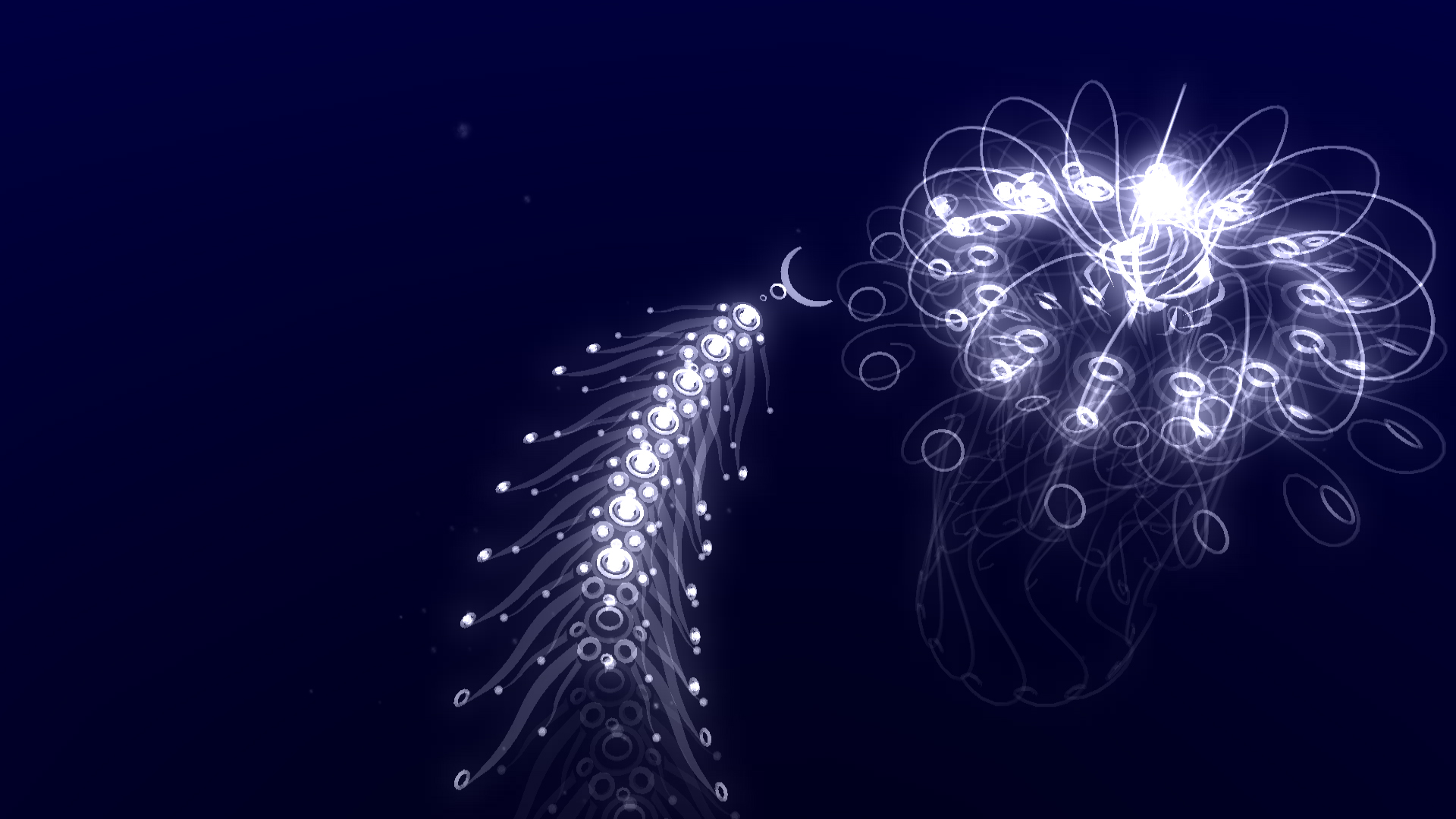
flOw

Developed by Thatgamecompany, Jenova Chan and Nicholas Clark originally released flOw as a free flash game in 2006, which I vaguely remember playing back then. Fast forward to 2007, flOw was made available for the PS3, and later on SuperVillain adapted the game and released it for the PlayStation Portable as well in 2008. The free flash version received 100,000 downloads within the first two weeks. Such hits would only mean that flOw is definitively breathtaking or utterly stupid; good thing it’s the former.

Back in the hay days when Nokia phones were shaped like block-sized adapters, there was once a game that thrived within that cellular phone, and it was Snake. The simple concept of Snake is emulated by flOw. In the game, the player starts off as a molecular snake-like parasite – a very tiny one. Once he or she scoffs down other parasites in the cytoplasm, his or her parasite grows another segment; elongating the body until the player ceases to stop playing the game itself. Ultimately, you are the main predator in the game and everything else is prey, and without having to worry about other opposing adversaries, flOw makes for a very relaxing game.

Spore

Usually in most video games (especially in RPGs), they give players a lot of room for customizing their characters, from lime-green beards to ice-blue cataract eyes. But I feel there is always a limit with just accessorizing these characters with physical attributes, a true customization should start from the very root of life: the cell.

Published by Electronic Arts, Spore gives us that option. Now, players have the ability to develop their own species in the infinitesimal biological level. There are five stages in the game: the Cell stage, the Creature stage, the Tribal stage, the Civilization stage, and the Space stage. Each stage has a specific objective, and players must complete this objective in order to advance to the next evolution. Unlike previous games in this list, Spore has a main goal, and that is to reach a super massive black hole and obtain the “Staff of Life”. In the back of my mind, I am starting to think this game is really fitting for anyone suffering from delusions of grandeur or god complexes, then I chuckle to myself because in the end, everyone wants to be their own God one way or another.

You can look forward to more ‘Games that Relax Moods’ in Part II coming soon! Which games relax you reader?

Viewpoint: Why I’m Optimistic About the New Spider-Man Game

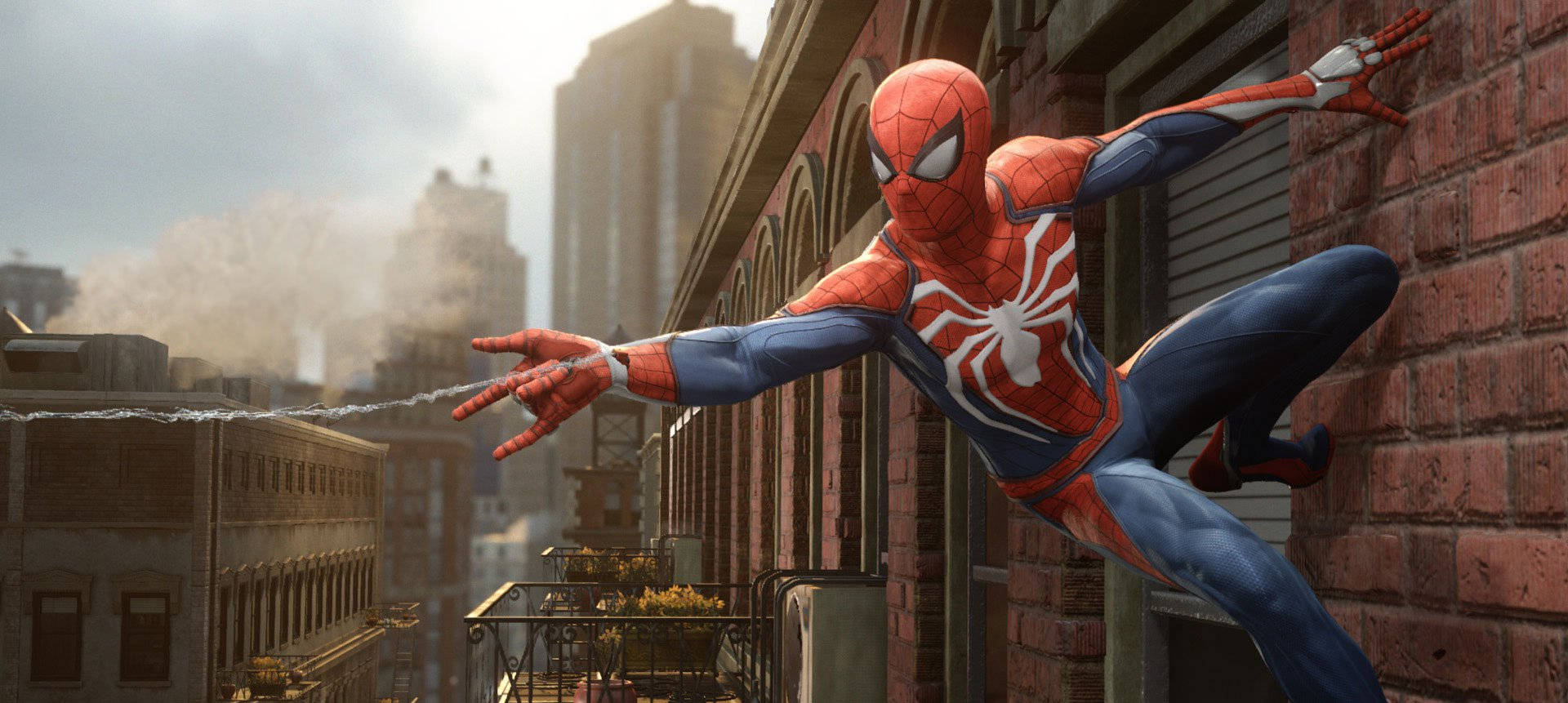
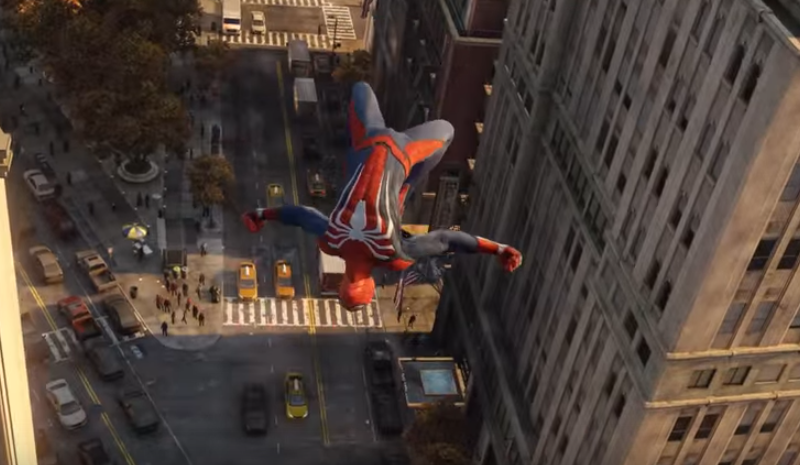
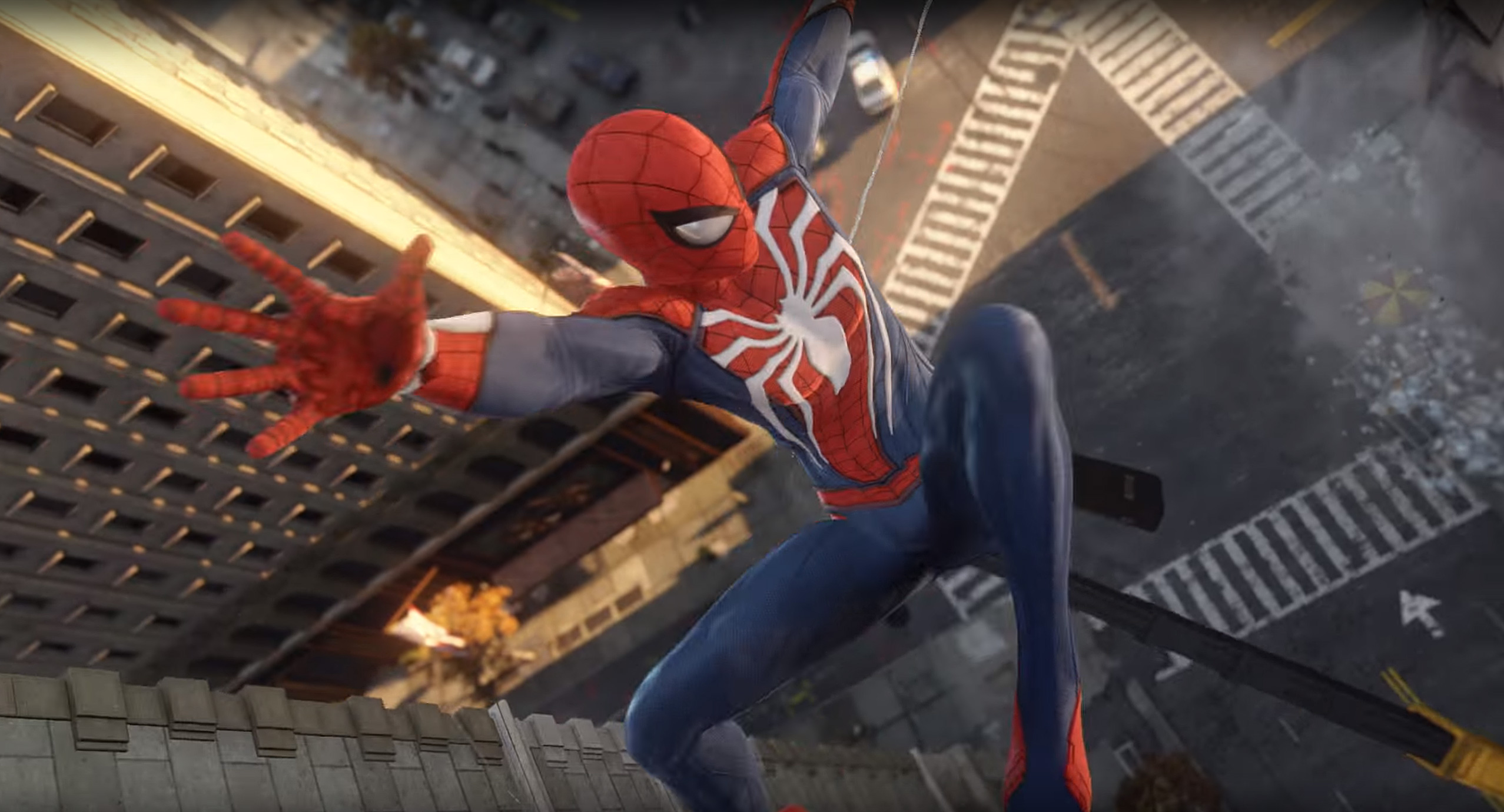
One of the most impressive games of E3 2017 was undoubtedly that of Insomniac’s Spider-Man. The presentation was a visual feast, showcasing a mission where our favourite web-slinger subdues goons at a construction site, and then chases down a helicopter containing lesser-known Spidey villain, Mister Negative. Many would argue that this was the icing on the cake for Sony’s already impressive E3 presentation, and secured them the crown for the whole event. Combining all the key elements that make Spider-Man great – his agility, flexibility, web-slinging and wisecracking humour – could Insomniac give us the best Spider-Man video game in a while?

The question isn’t easy to answer. After all, a game can look as pretty as it wishes, but its the gameplay and feel of the game that truly counts. As far as the combat and swing mechanics of the game are concerned, it would seem that Insomniac’s effort takes cues from Beenox’s much-derided effort, The Amazing Spider-Man 2 and the Batman: Arkham games. No better is this exemplified than in the stealth section we were given at E3. Spidey can perch from high-up areas (in this case, the girders) and take out his enemies from above using stealth attacks. The difference between Batman and the wallcrawler though is noted, as you have a unique repertoire of attacks at your disposal.

SpiderMan2-1400x788

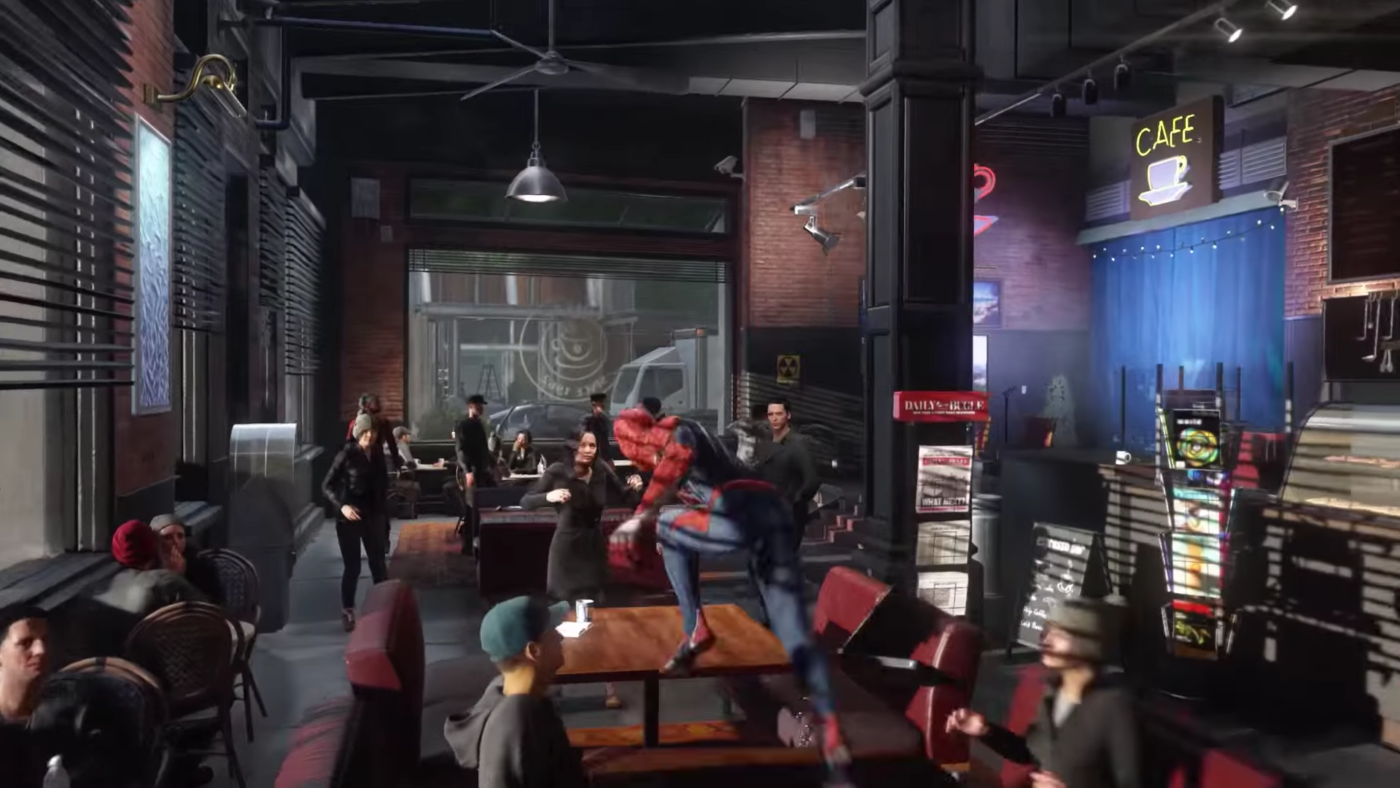
Like Bruce Wayne, Peter Parker is also a dab hand at creating useful gadgets. The clip showed him plant a device on the wall that yanked an unsuspecting thug off his feet and pasted him onto the wall with web fluid. Another example showed him leap from a girder and quietly faceplant a thug into submission, aided by his incredible spider-like agility. So, while Insomniac is taking cues from Rocksteady’s take on Batman, they are at least doing so in the right way, implementing the unique characteristics of Spider-Man in combat situations.

Where web-slinging is concerned, the demo showcases a superbly weighty swinging mechanic. As I have already stated, the swinging appears to take its inspiration from Beenox’s Amazing Spider-Man 2, but this is no bad thing since the swing mechanics of said game were its best feature. Here, the wisecracking web-slinger is just as agile and flexible as he has been in previous instalments. What’s more, the web-swinging is based purely on the skill of the player. Insomniac confirmed on Twitter that skilled players will be able to swing much faster than what was demonstrated. They merely wanted to keep the helicopter in view for purposes of the presentation. If Insomniac truly pull off a skill-based web-slinging mechanic, this could make getting around New York a real joy.

spider-man-ps4-e3-2016-teaser

One of many areas that The Amazing Spider-Man 2 failed to get right was its lacklustre story. The game, which already felt rushed, conjured multiple story threads that all had nothing to do with the other – it ended abruptly and was treated carelessly. Cletus Kassady, a deranged immoral serial killer in the comics, was reduced to a uncharismatic machete-wielding vigilante who eventually becomes an Oscorp experiment run amok – Carnage. There was Kraven too, who acted as your mentor for much of the game before finally turning on you in the end (spoilers!). But while the game tried some original things, it was poorly executed and created a plot as convoluted and messy as the film on which it was based.

Insomniac’s Spider-Man has a chance to create something truly better. For one thing, they’ve cast Peter as a relatively experienced 23-year-old crime-fighter, much unlike the inexperienced teenager depicted in recent games. Secondly, the appearance of lesser-known villain, Mister Negative, signifies that Insomniac aren’t just going to rely on the tired old A-Listers of Spider-Man’s rogues gallery, like Green Goblin and Doctor Octopus to carry the story. That, combined with the new Spider-Man suit, shows us that the game is being taken in a new and refreshing direction.

spider-man-2

All in all, Insomniac’s Spider-Man shows much promise and could prove to be the reinvigoration that the Spidey games need. The demo showed all the hallmarks of a fun and engaging action game with visual flair and style to boot. If the folks at Insomniac can manage to craft a unique and equally engaging narrative and carefully implement the combat and swinging mechanics, we could be onto something here. Excelsior!

Viewpoint: More Accessibility in Games is Important

Many gaming communities pride themselves on being “inclusive”. While one can endlessly discuss what that term actually means, I have to chosen to focus on a certain type of inclusiveness: game accessibility – the one that should be way more evident than it actually is. With a quick search on Google, there is no reason to doubt the existence of articles and websites that offer information and measures on accessibility in games. However, I personally was not aware of how extensive this issue was. If you’re in the same boat as me, I encourage you to continue reading.

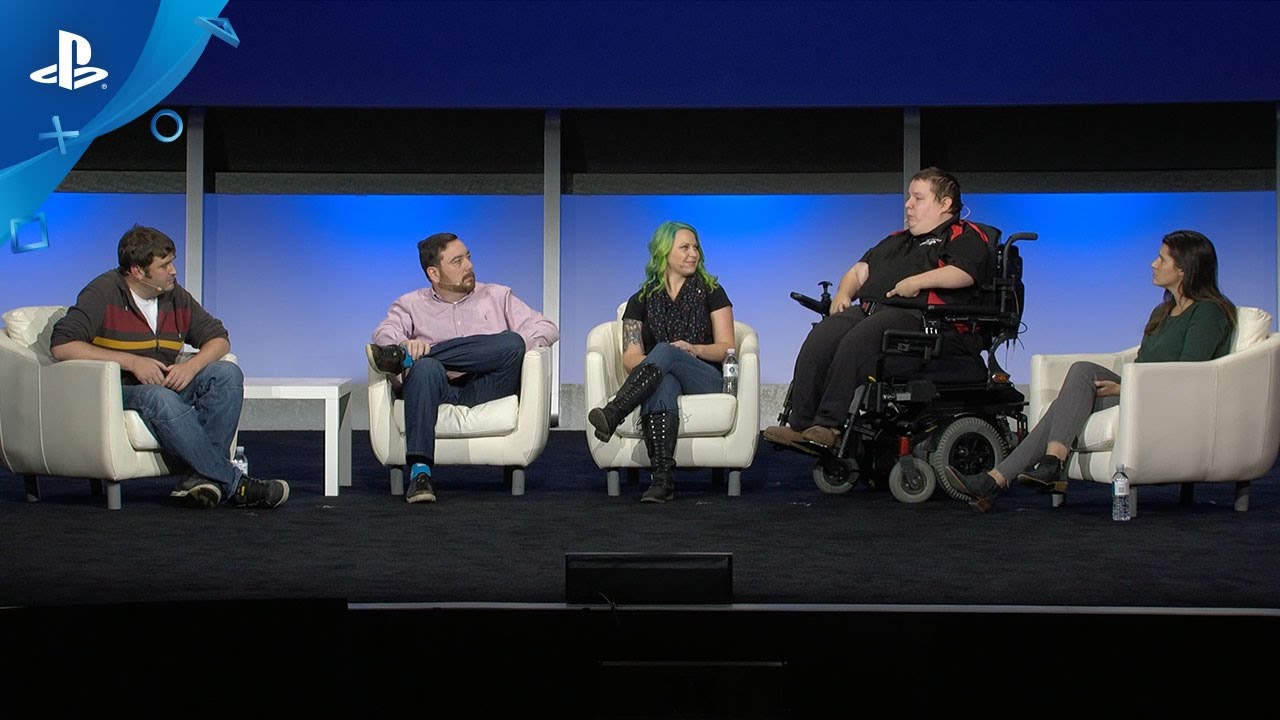
Recently, a friend showed me a YouTube video of Naughty Dog, PlayStation, and Josh Straub, one of the spokespersons for gamers with disabilities, talking about some of the efforts being made in the video game industry – it was essentially about how these small achievements make a huge difference for these gamers.

“What developers need to realize is that these games do more than just entertain the disabled. First of all, they provide an escape from the doldrums of being disabled. And second of all, they provide a social space where instead of being judged by physical appearance we’re purely judged by the action that we do and the things we produce in the game.” – Josh Straub.

Since there are so few gaming companies out there that don’t acknowledge the problem that not everybody can play their games, I believe there are more people out there like me who are not aware of this.

According to PR Newswire20% of casual gamers, that means one in five, have a mental, physical or developmental disability. Keep in mind, we are talking about disabilities ranging between bipolar, dyslexia, blindness, broken arm, and cerebral palsy – in other words, when they made this survey, they had a very wide grasp of the word “disability”. Either way, I still think it is important to acknowledge any type of disability, as it affects in a larger aspect how exactly we perceive games.

maxresdefault

An example could be the development of virtual reality, which is a major step forward in the gaming world. However, when we think about the accessibility of said VR, it is not that big of a step. There are many who aren’t able to try this revolutionary way of gaming because of a disability rendering them unable. Furthermore, this does not just apply to this new way of playing games, but also the traditional way too. While this is a subject that one could write a dissertation about, I only choose to highlight some important points.

According to the PR Newswire survey, games relieved disabled gamers of stress, it lifted their mood, and served as a distraction from issues related to the disability. It also functioned as a way to improve concentration and mental workout – each benefit varied from the type of disability. Upon acknowledging the fact that we all live different lives, have different life stories, we therefore obviously play games for different reasons. While many non-disabled gamers might relate to the same benefits of playing a game, and perhaps play games for the same reasons, I think it is important to acknowledge the fact that the same source of outlet has a major difference in accessibility.

“When I turn on a game like Uncharted, I’m not confined to a wheelchair. I’m a swashbuckler treasure hunter like Nathan Drake. That brief period of escape is why accessibility is so crucial, because the more games that offer that, the more people with disabilities will be able to escape and have better lives.” – Josh Straub.

Slowly, but surely, more developers are starting to listen. In a dialogue with Straub, Naughty Dog and PlayStation took what they heard into careful consideration, and started to introduce some important changes. Keep in mind that these are only a few of the many changes they introduced:

  • They added a color-blind mode in the multiplayer section of the game
  • The camera has lock-on features – this focuses on using only one joystick controller
  • Upon pressing down one button, the game will act as though you are pushing it down repeatedly

Naughty Dog should be proud of themselves for stepping forward as a role model when it comes to accessibility, making games available for as many gamers as possible. This goes to show how some video game developers are able to be considerate of their audience, by working towards the goal that every player should receive the same gaming experience. While there are still a lot of developers that could do a lot better in this regard, it’s good to take what we can get at the moment, and help bring the discussion into the light.

In my opinion, the fact that huge gaming companies that work alongside Naughty Dog do not talk loudly enough about this angers me. It creates an unnecessary unfairness that wasn’t meant to be there in the first place. 

lp-pad-xbox-controller
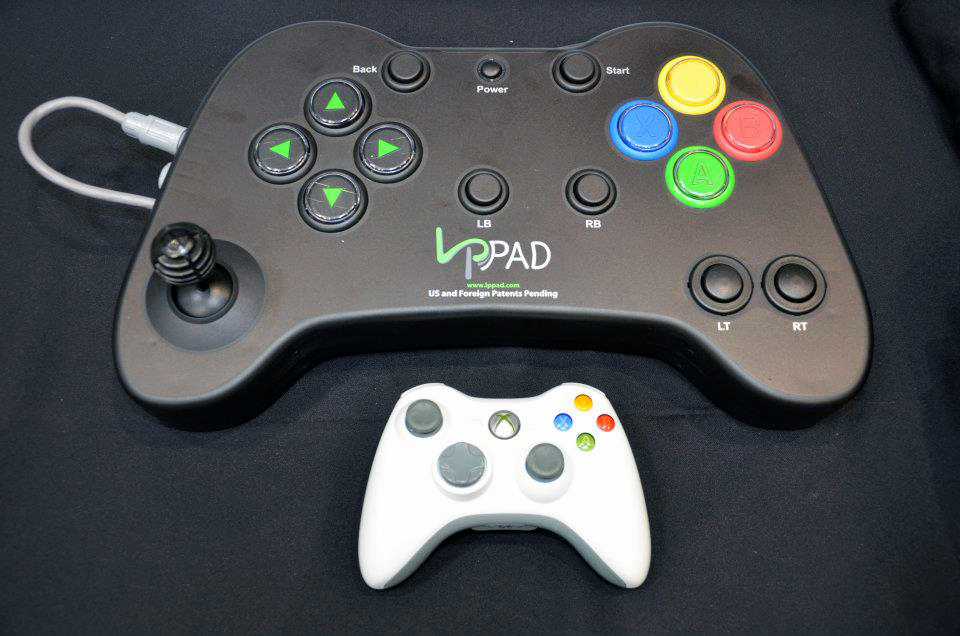
The LP Pad – an Xbox compatible controller made for gamers with little to no manual dexterity: designed to sit on the lap of the user. Picture taken from amsvans.com – you can read more about this controller here

As more game developers take into consideration the fact that people require different means of accessibility, the inclusiveness of the gaming community will expand. I think that with the right attitude and awareness, the goal is easily achievable. With further development, games will be available to a wider audience – everybody wins. We would thrive on a community where everybody receives an equal gaming experience. There are so many fantastic games out there: let’s include everybody in the fantastic world that is video games. I will never take for granted the opportunity I have to play any game, however I want, ever again.

You can read more about why and how accessibility matters here. You can also find the AbleGamers Foundation’s Game Accessibility Guidelines here.

Viewpoint: FIFA 18 For The Switch Has Me Worried

FIFA is finally coming back to a Nintendo home console. Yes, it’s been a long time Nintendo fans, just about five years to be exact. After FIFA and Madden both sold poorly for the Wii U, EA sports pulled support for the console. That was all the way in 2012, but with the recent release of the Nintendo Switch, EA is giving it another go. This time they’re taking a more cautious route, and are only releasing FIFA 18 for the Switch. Which honestly looks like EA is taking a test run with the console this year, and the downgraded version of FIFA they’re about to release shows just that.

With the announcement of FIFA for the Switch came a decent amount of anticipation from sports gamers, who are looking for a quality sports gaming experience on the go. But, it did not take long for the bad news to start leaking out. Literally a couple of hours after the Switch version was announced there was a rumor that it was just a port of the 360/PS3 versions of the game (thank god that turned out to be false.) Secondly, came the news that the game will NOT run on the Frostbite engine like the Xbox One and PS4 versions do. Instead, FIFA 18 for the Switch will use a “custom-made” engine to adapt with Switch’s different methods of play.

This is concerning. FIFA for the Xbox One and PS4 didn’t even start feeling like a “Next-Gen” soccer experience until they upgraded the engine for FIFA 17. So, straight off the bat, FIFA for the Switch is not only going to look worse (as expected) but play dramatically worse as well. The Frostbite engine upgraded the visuals, the AI, the ball and player physics, the atmosphere, the look of the pitch, etc. The ‘switch’ from the Ignite engine to the Frostbite engine really has changed the game of FIFA for the better. Also, the Frostbite engine was able to run on the Xbox 360 and PS3, which the Switch is clearly more powerful than. Now, obviously the Xbox One/PS4 version of Frostbite EA is using couldn’t work on the 360 and PS3, but the fact that Frostbite could run on the 360 and PS3 just shows how scaleable that engine is. So why can’t it run on the Switch? Just some food for thought.

the journey

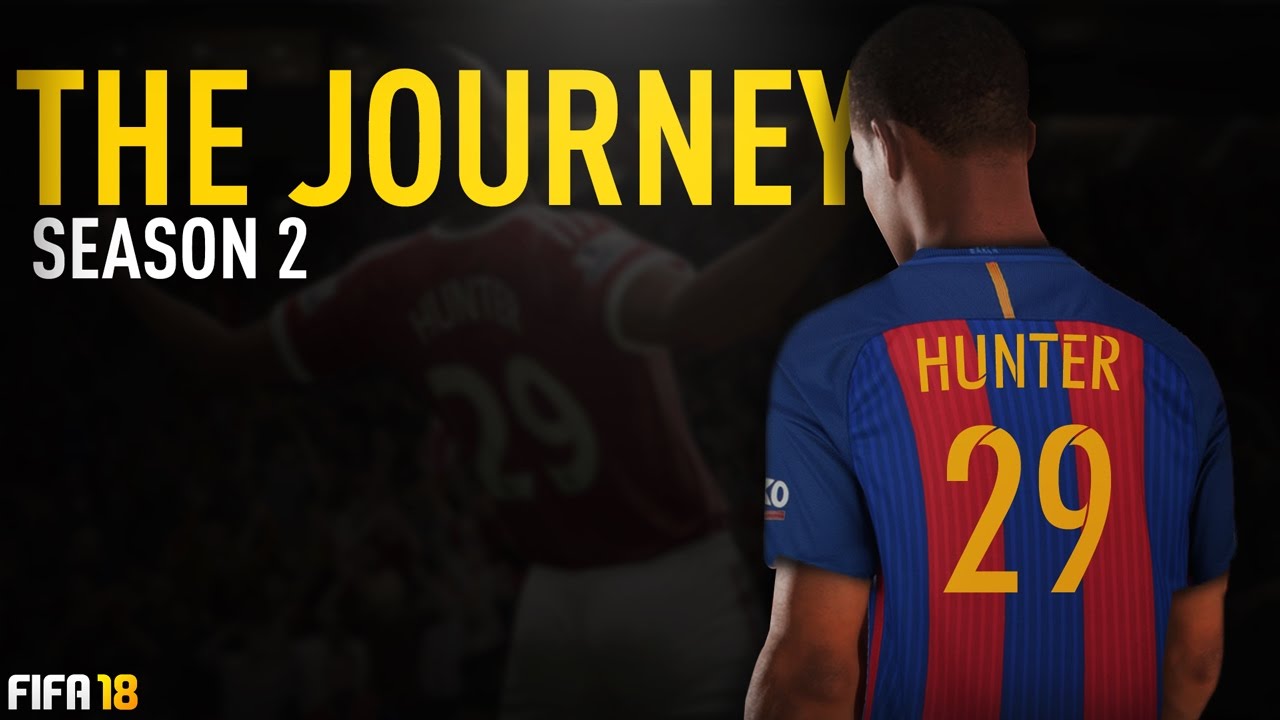
Thirdly, the Switch version of FIFA 18 will not have the game mode called “The Journey.” Which is a cinematic story mode where you take control of a young teenager, named Alex Hunter, and guide him through the English Premier League. While I was not a fan of this mode, and thought it was essentially just a rip off of the movie Goal: The Dream Begins, I won’t deny its wide appeal. EA says this mode is linked exclusively to the Frostbite engine, so it wont be on the Switch version. Well….. my question for EA is: why not? If you can make a custom build of the whole base game and all its other modes for the Switch, why can’t you guys do the same thing for the “The Journey” as well? This just makes EA look lazy or too scared to put money into the Switch version of the game.

Lastly, and my main concern for the game, is how it actually plays. I started playing the series back with FIFA 14 on the Xbox One, and I can tell you, gameplay is all that really matters. I was hopeful with their new custom-built engine that they were going to keep the action on the pitch as close to the Xbox One/PS4 versions as they possibly could, but from what I’ve been reading from the E3 demos, that does not seem to be the case. Gameplay is king, and if FIFA 18 on Switch really does play like the 2014-2016 Xbox One/PS4 versions, then unfortunately I will not be buying this version of the game. Which is a shame, because if FIFA 18 sells poorly on the Switch, it would not surprise me to see EA pull the product from the console. Just like they did with the Wii U and Vita versions.

Just to be clear, I would never expect FIFA 18 on the Switch to be a like-for-like with the Xbox One and PS4 versions. The Switch just isn’t powerful enough for that. But, that shouldn’t give EA permission to put out a half-assed product. This puts Nintendo fans in a hard spot because if they don’t buy this version of FIFA for the Switch, then they might never get another version of the game. I own a Switch and an Xbox One, I’ve considered buying both versions of the game to support the Switch. But, for the same price point of $60 for the Switch and Xbox version, I cannot justify spending the same amount on a much lesser version.

So, Nintendo and FIFA fans, what are your thoughts on FIFA 18 for the Switch? Will you be picking it up or will you not support it at all? Let me know in the comments down below!

Viewpoint: Why crowd-funding is an excellent idea

There is a massive shift in the gaming industry and it’s happening right now; it’s called crowdfunding. For the small minority who haven’t heard, this basically means that a developer has put out an advert seeking money in order to kick-start their gaming project. Sites like Kickstarter cater for this and many developers often exceed their funding goal with plenty to spare.

But what does this actually mean for the industry? And what does it mean for us as consumers? Well, read on and we’ll explore what effect it is having, and will have, on the gaming industry.

Gamers are in control

Remember all those times you have complained that the same titles are getting shipped out mercilessly, just in different packages? Well now you might be able to have your say on what does and doesn’t get released. Publishers usually quash smaller developers because they think their idea has no merit and is too small for them to bother about. Well not any more. This system results in games being published, even those with big budgets, without a publisher even being involved.

Gamers will get rewarded

We hear all the time how big companies are ever grateful of the customers who buy their games, but what do we really get in return? In comparison to them raking in the big money, it’s pretty much nothing. So, if we put our cash into a game getting developed and produced, we are now get rewarded for doing so. People who put in the right amount of money may end up being part of the production process, being part of the testing procedure or they simply receive a copy of the game before the release date.

Gamers become part of something

How awesome would it be to be able to say, “I funded this game, I brought it to life”? To share an experience with family or friends which you played a part in would be something huge, tied with the above point, those who fund titles could be onto something big in terms of their return.

Creative titles will become more common

The current batch of games we’re seeing is becoming stale, fast. With crowd-funding however we will begin to see people creating titles that are creative, fun and completely free of any sort of regulation by big companies. There will be no conflict of interests or poor marketing because the developer will be in full control of the whole project.

New genres may appear

In a similar light to new creative titles, this type of funding may finally mean we will step away from our obsession with guns and constant f-bombs and see some new genres come to the table. Granted many new games may just be a different spin on existing genres but imagine the endless possibilities smaller companies may actually be able to come up with.

Games will have a guaranteed audience

Think about it; people who put money in a project want to see the end result and will ultimately buy into it once complete. Those who fund a game will buy it and play it when it is released to see how their money has been spent. Similarly, if you raise enough cash to start working on your project then you know there’s an audience out there for it, but if you don’t, then it might not be worth developing.

On the flipside however, if a project does go under then it is very unlikely that investors will see any of their money back – but this is this risk people are seemingly willing to take. For what it unlocks in terms of potential and scope for the future I think this is a completely viable method of seeking capital for gaming projects worldwide. If it means a more fair, unique and open marketplace then I support this 100%.

What about you? Let us know in the comments below, if you please.

Viewpoint: Why don’t we finish games?

If there’s one thing I have a habit of doing, it’s not finishing my games before moving onto the next. It’s something that I’ve never really thought of before, but I recently cast my thoughts to my pile of shame. Being honest, we all have one, some larger than others, but we’re all guilty of leaving one or more games unfinished. When I look at mine, there are some games on there that you wouldn’t expect either; GTA V, The Witcher 3 and Mass Effect 3 to name but a few.

So why is it? Why can’t I finish a game before moving onto the next? When you look at the three that I’ve mentioned, it’s clearly not because of their lack of quality, so what could it be? The common denominator for those three would be that they are all games with long stories and feature many hours worth of gameplay before reaching a conclusion. With that in mind, are they too long and are other games for that matter?

Now this is probably a question that isn’t asked too often when we see far too many games that don’t overstay their welcome. But with that in mind, is a game that lasts between 50-100 hours as off-putting for some as those that last 10 hours? Dedication of time to gaming is something I suspect most gamers will struggle with these days, and some games can feel disjointed if not played continuously. There’s nothing worse than playing a game and coming back to it at a later date and not knowing what’s going on, (agreed, ed). So is that the problem; is there not enough draw in games these days to keep you hooked to the end?

Think of it this way: how many games share a similar control scheme or share the same mechanics? A number of games lend ideas from one another, giving the industry an air of familiarity regardless of the genre. You need to feel lost when starting a new game to keep you learning how to play it, so if you start a game with a sense of familiarity, your interest levels are bound to drop.

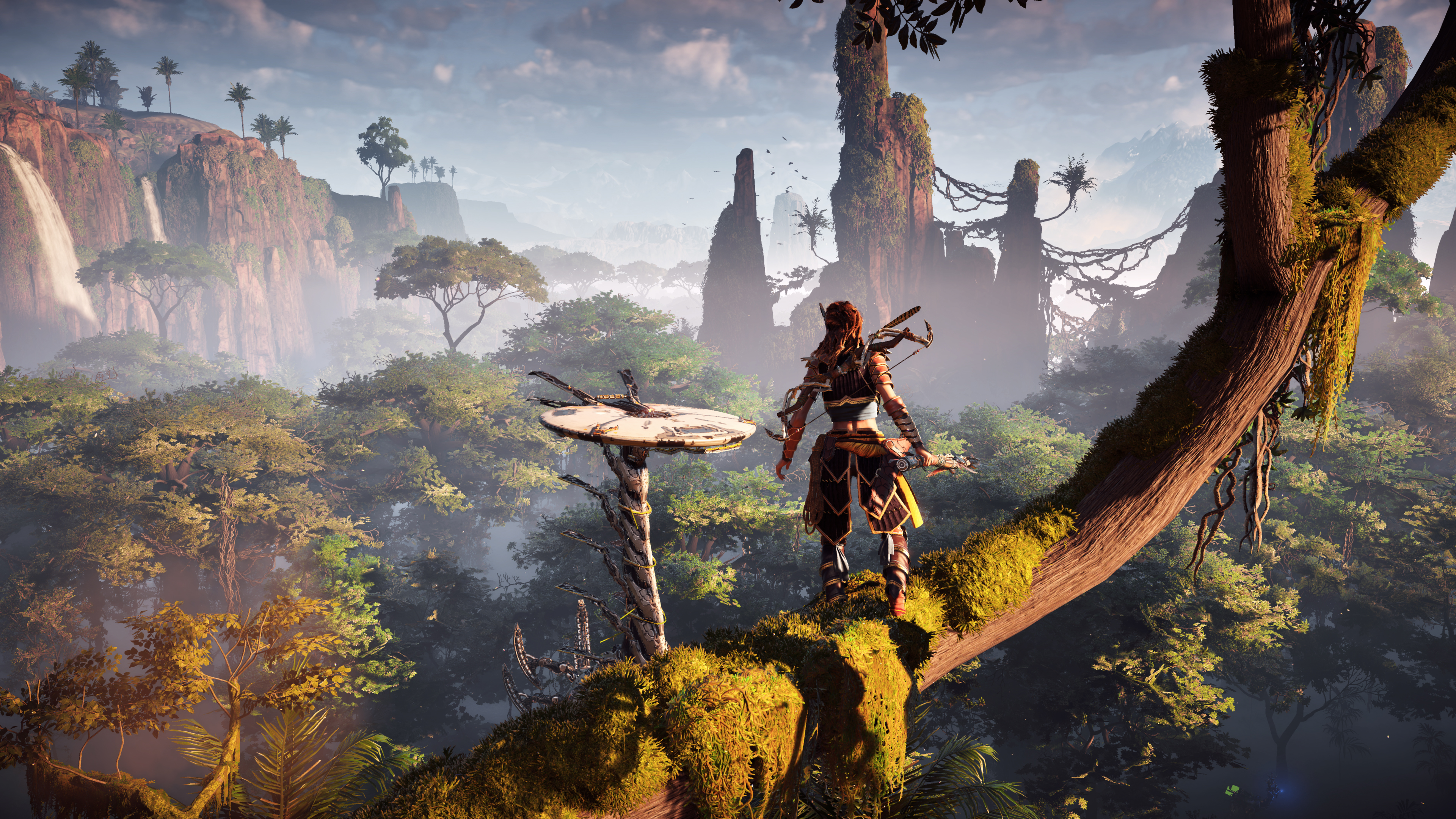
I recently started playing Horizon Zero Dawn (I know I’m way behind here) and since starting it, I’ve never once felt comfortable. By that I mean I have a constant sense of anxiety when entering a new area of the map; I never feel like I have the upper hand over the mechanical beasts. Robotic animals and dinosaurs are something new, something we’ve never seen before so require different tactics to overcome.

This is getting out of hand…

This is what keeps us coming back to a game, not one that has rinse and repeat enemies whose design took less than five minutes to finalise. I can honestly say Zero Dawn is one of my favourite IPs on any console to date and it’s not just any old open world game. I could easily forgo other games until I finished it, and there are a number of other games out there that could fight for a spot in the disc drive.

That in itself is a problem – look how many games get crammed into the same release calendar at any one time. If you look in particular at the holiday season, everyone fights to be the number one seller at Christmas. Of course, games need to generate revenue but surely a game needs to be launched to give people enough time to savour it? I don’t think enough games launch over the course of the infamous ‘summer drought’, which would be a perfect time to give people exposure to a new title.

The selection of games we have to choose from isn’t a complaint as such, it’s great to see so many, but I think we only suffer as a result. I love getting excited about new games just like the next guy, but I always question when I’m going to fit them in given that games are getting longer and longer.

Just look what we have coming out from October onwards; Assassin’s Creed Origins, Shadow of War, Super Mario Odyssey and Crackdown 3 to name but a few. These are all games I want to play, and will at some stage, but it’s impossible to have them all going on at any one time. So this, most of all, is the main reason why I don’t think we complete games as often as we used to before moving on.

Having new games is great, but they need to be released to give us, the gamers, enough time to enjoy them to their fullest. It’s no surprise that many opt to wait for games to drop in price before picking them up, which is a shame, as this does not support the developers as much as we should be able to.

What do you think reader? Let us know in the comments below, if you please.

Viewpoint: How the Beyond Good and Evil 2 reveal represents the ever-changing nature of the games industry

2003 was a simpler time for gaming. A transitionary time of sorts. True widespread online accessibility was still a few years away and though technology was advancing rapidly, consoles and PCs weren’t the true technological behemoths that they are today. There were no trophies or achievements to display proudly. Things were different. Games, or rather, peoples’ attitudes to them were different too, at least on a rudimentary level. There were less variables to consider. This, coupled with the fact that titles were simply cheaper to make at the time, meant that studios, in general, were more willing to take risks.

This brings us to Beyond Good and Evil. Considered by some (myself included) to be a classic of its generation, it is nevertheless easy to see why the game may have gone on to struggle financially. The game is often consigned into the miscellaneous genre of the “Action Adventure”, where games that can be difficult to pinpoint are regularly forced to tread. In reality, Beyond Good and Evil is a mesh of various genres, with platforming, stealth, third-person combat, exploration, and even photography thrown in for good measure. Add in a large dose of anthropomorphic characters and a linear structure and the game doesn’t come across as being overly marketable.

This all led to a dichotomy of sorts, wherein the aforementioned aspects proved to be detrimental to the game’s overall sales performance, with Ubisoft considering Beyond Good and Evil to be a financial failure, despite its receipt of widespread critical acclaim. The bust was big enough for Ubisoft at the time to scrap any future plans for a continuation of the series, even though the game ended on a cliffhanger of sorts, as the game’s director, Michel Ancel, had originally envisioned it to be the first instalment in a trilogy.

The game, of course, went on to attract a large cult following throughout the years, adjoining with the likes of Earthbound and Killer 7 as titles whose mediocre sales didn’t reflect their overarching popularity amongst the gaming community. The fanbase grew as word of mouth spread. Clamours for a follow-up were abundant. A short tech demo was released in 2008 but nothing concrete had been shown until now; 14 years after the original game’s initial release, not only do we finally have official confirmation of a Beyond Good and Evil sequel, but also actual confirmation on what the game will entail, albeit the details remain minimal for the time being.
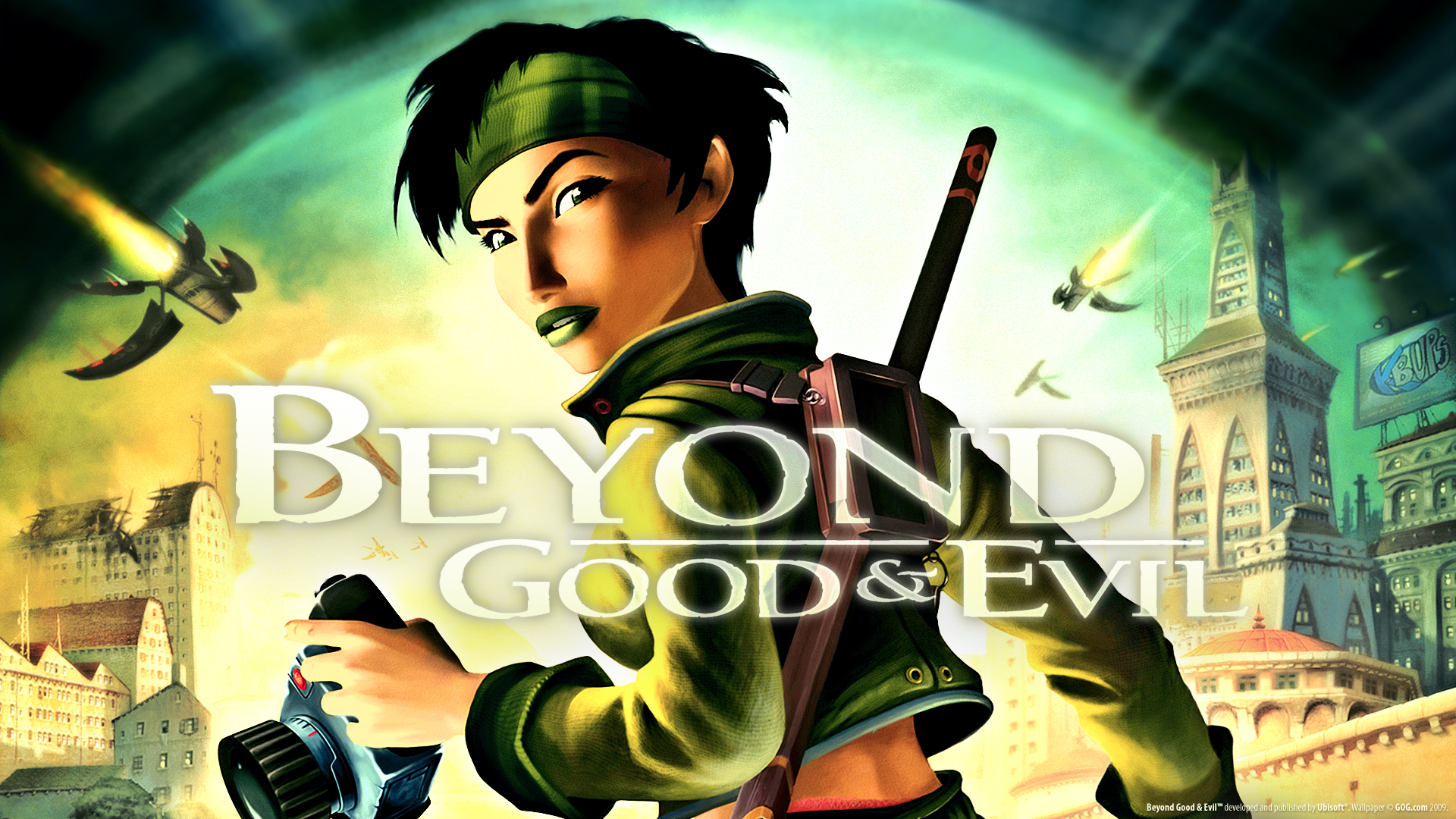
As a fan, it should obviously be both encouraging and exciting to have learned of such an announcement (and it is). However, along with nervous anticipation upon viewing the trailer at E3, one of the primary emotions I felt was that of concern. 14 years is a long time by any reasonable standard, but in an industry that moves as quickly as the games industry it can seem astronomical. The relative innocence of previous generations are gone and the even though the specifics we have for Beyond Good and Evil 2 are scarce at the moment, they nonetheless, in my opinion, reflect that.

First and foremost, let’s address the somewhat puzzling choice to release this game as a prequel rather than an outright sequel, despite there still being questions left unanswered from the first game. Of course, it is important to note that we still know very little about the game, however, on the surface, this seems largely disappointing. Ubisoft have gone on record in the past, stating that they won’t release a game that doesn’t have the potential to be made into a franchise. The games industry has always been dominated by franchises to a certain extent. However, in an age where the majority of the more esoteric experiences tend to come mainly from the indie circuit, and new IPs are more and more scarce from AAA developers, the decision to deviate from the game’s original storytelling plan and instead focus on something new could be seen as a form of risk management. There will, no doubt, be some form of appeasement for long-term fans of the original, but the choice to not continue with the plot is hard not to be considered a disappointment.

Likewise, as previous stated, the original game was released during a time of transition in the industry. Sandbox games were gaining popularity, but still in their relative infancy, with the revolutionary Grand Theft Auto III being released only two years previously. As things stand today, the sandbox genre, along with online multiplayer, are arguably the two most popular aspects in gaming, with major studios often eager to emphasise one or more of these two components. Ubisoft, being the enormous company that they are, are no different.

The original Beyond Good and Evil was “open world”, yes, but the game was essentially linear, and the map acted as more of an extended hub world rather than a proper sandbox, to a certain extent mimicking the format of a classic Legend of Zelda game. With news that the prequel will feature a “vast and seamless online playground”, it is clear to see that Ubisoft are reluctant to release the game without maximising its appeal to an audience as large as possible. The primary purpose of anything a studio releases is to make money, so this makes sense. Ubisoft are also more than entitled to do what they want with an IP they created. However, it is unfortunate that the changes they are making don’t seem to ring true with the original tonality of the game. Speaking of tone, the inclusion of a foul-mouthed, cockney monkey in the trailer seemed to be some way off the more measured atmosphere the first game possessed. I would view this as being more a curious creative choice as opposed to anything to do with the current gaming zeitgeist, but it is nonetheless an oddity.

None of what I have written in this article is a criticism per se, merely a set of observations. It is early days yet, and, despite some of the suspicions I have described, there are reasons to be optimistic too. The trailer itself, despite not featuring any gameplay, was an impressive aesthetic accomplishment. Pairing this with the idea of having a vast world and/or universe for exploration does, also, seem like it could possess a certain appeal. Indeed, the fact that the hugely talented Michel Ancel is back as its director is also an encouraging sign, especially when you can see that the game is clearly such a passion project for him. The question remains, however; can Ancel and Ubisoft manage to deliver a financially successful title that not only manages to draw in new players, but also stays true to the original game and its loyal fanbase? Only time will tell, and I for one am eager to find out.

Viewpoint: Are Games Losing Their Touch with Final Bosses?

It’s hard to argue whether or not final bosses are necessary in video games today. They’ve been a part of gaming for so long that they’re essentially the modus operandi in the overall design of video games.  It’s always about getting to that final boss and rejoicing at the sight of rolling end credits; as they slowly roll down the screen you reminisce about your tantalizing journey and everything it took to take that sucker down. It’s a great feeling but as innovation continues to grow in the gaming industry, the whole “final boss” complex seems tired and outworn. Especially when they’re not fleshed-out and come off as anti-climactic or uninspired.

Look at Uncharted 3: Drakes Deception.  You went through so many epic moments, from a burning chateau in the middle of France to falling out of a moving airplane and yet you’re greeted at the end with a less than impressive final boss that has you fist-fighting against Talbot, who isn’t even the main antagonist but a trusted henchman of Katherine Marlowe. It was bland and disappointing especially when the events prior to that confrontation were so larger-than-life and filled with adrenaline. Did Uncharted 3: Drakes Deception need a final boss or at least one in the traditional sense? Games these days quickly resemble Hollywood-like production values, Uncharted series is proof of this and their becoming more and more sophisticated as time goes on but they’re losing their touch with final bosses. Do we even need final bosses?

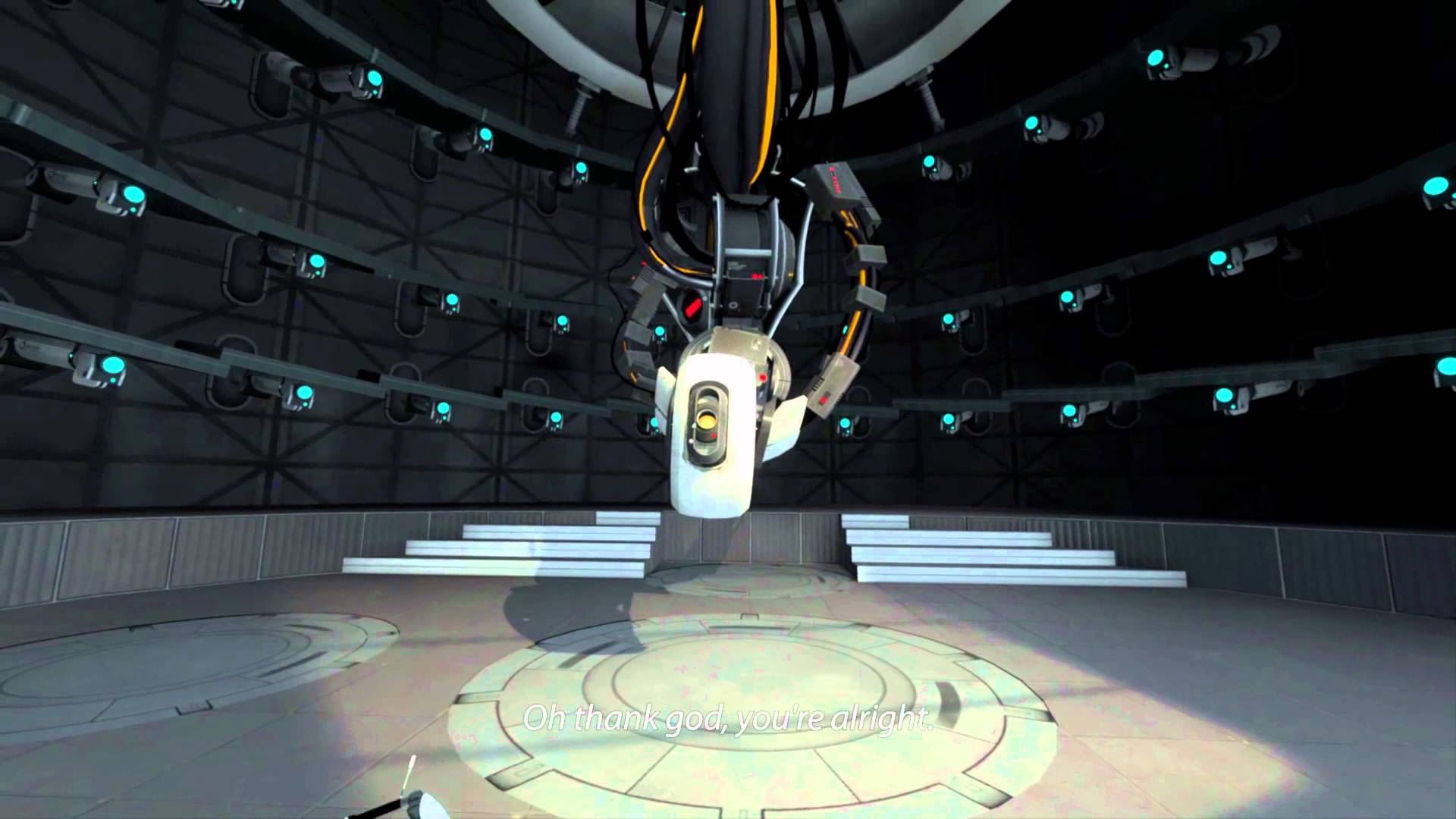
Portal 2 was a tour-de-force, combining laugh out loud scriptwriting with intuitive gameplay mechanics, it also had a simple yet hugely entertaining final boss that still resonates with me to this day. The reason why this final boss worked was because it had you use many of your acquired abilities that you have been using to get to this point and it remained relevant and consistent with the story. Not to mention it was uproariously funny to play.  Many games these days fail to reach this stage of quality because they usually, manipulatively, shoehorn a final boss at the climax just to make the gamer feel some sense of closure. We need more games that utilize the “final boss” sequence as not just a way to just end the game but to successfully conclude a story and involve the player in this experience.

maxresdefault.jpg

Of course, some games organically require final bosses or else it just doesn’t “feel right”, a good friend of mine says that “a game like Metal Gear Solid without some sort of ending boss wouldn’t feel right.” Understandably so, games like Mario or top-down shooters stick to this formula because it’s a trend that has been established since the very beginning. A game without a final boss often gets criticized and accused of being a rushed game and it’s quite ludicrous. A game that closes with an ambiguous ending like the Coen’s Brothers’, No Country for Old Men or Sean Dirkin’s Martha Marcy May Marlene would be refreshing, and if done right, could be really impactful and far more meaningful than a dull, lifeless quick-time event.

Perhaps we’re not up to that stage yet where developers are ballsy enough to deviate from the exhausted formula but we’re getting there, slowly but surely. That’s not to say all final bosses this generation are bad, but I would like one day to see a different approach, a fresh new take on ending a story that makes me feel like I did something important and impactful. Whether it’s a game like Heavy Rain or Halo, it’s imperative that the game must end memorably and not end just because you reached the final stage.

Viewpoint: Trophies and Achievements have ruined gaming

Most of you, consciously or unconsciously, will already have formulated an opinion about this piece based upon its title and I don’t blame you. It is a bold statement I agree, but it is one that carries a lot of merit whether or not we choose to admit it or not. I’ll wager that many of you are disagreeing with this title thus far and that’s ok, but prepare to have your minds officially changed by the end of it…

Let us rewind several years before the current batch of consoles arrived in our living rooms, and to some extent, right at the beginning of the PS3’s life cycle. We had no achievements or trophies to brag about, helplessly chase or horde like a hyperactive child who hordes sweets. Consider this for a moment; were our experiences tarnished or worsened because of this? That’s right, no they were not.

Our cherished memories of retro titles is something that we will hold forever and we played them endlessly without any sort of reward in terms of achievements or trophies. Instead, we sufficed with our names at the top of a local leaderboard and personal satisfaction of completing a title on the hardest difficulty.

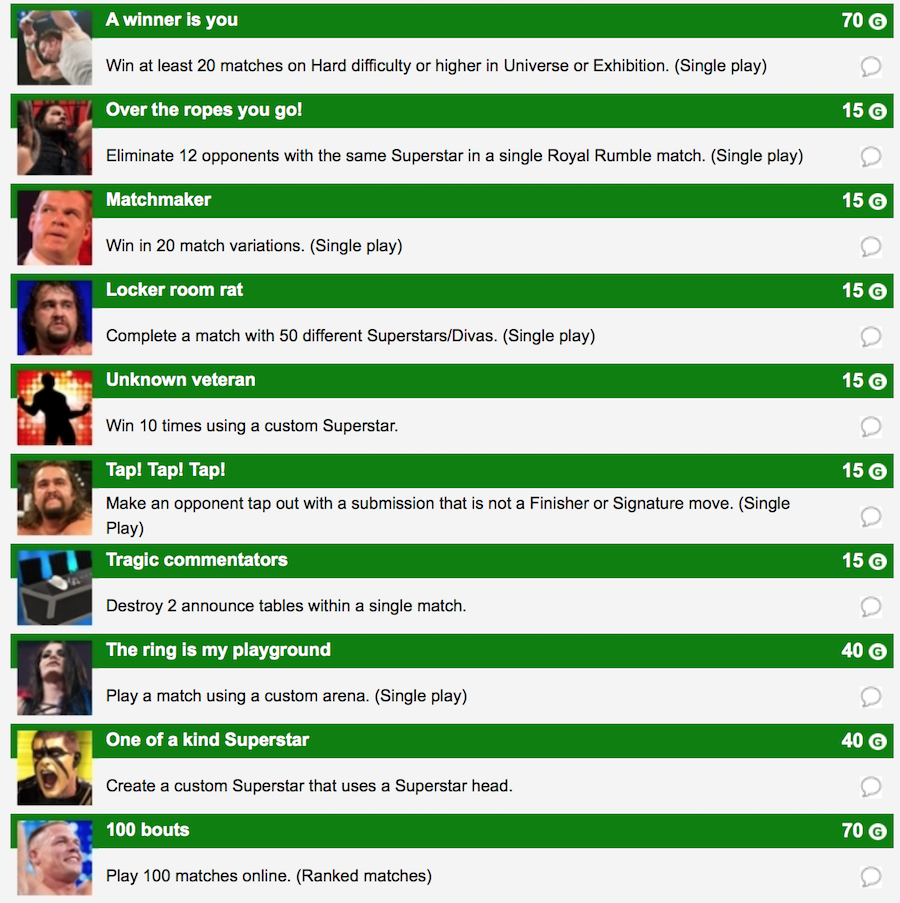
Now what do we have? An expectancy that a certain tune will sound every time we complete a given action and we seek them aimlessly like zombies who get off on this noise. Has this changed us? You bet it has. Any new game now has these capabilities which we have come to expect, and if someone dares not to include them then there would be hell to pay.

WWE-2K16-XboxPS3-Achievements-2
We don’t need these

Games that aren’t treated to trophy/achievements are snubbed, regardless of their quality, based on the fact that players will not ‘earn’ anything while playing them. We’ve all done it at some point because, think about it, what is one of the first things we do when we load up a new game? We scour the list of achievements and trophies to see which we can pick up the easiest.

This might seem like a simple thing but it is something that is drawing attention away from the quality of the game and towards the end product. In some cases, it makes us try and play a game as fast as we can just to get all the rewards before friends and colleagues in order to have temporary bragging rights, therefore reducing the experience.

This isn’t even just a problem with new games either, the problem has extended back to older games that get re-released via digital downloads or HD remakes. We can’t even play older games on modern consoles without developers and publishers whetting people’s appetites for achievement gathering.

It simply gives us no incentive to go back and play old games without trophies and achievements, thus ruining the experience all round. I can’t deny the fact that I have even fallen foul to this menace and it has undoubtedly changed my gaming habits forever I fear. So, when it comes to the next batch of consoles and games, I sincerely hope that we return to gaming simply for the entertainment and not have to worry about gathering rewards for completing the simplest of tasks. Although, I highly doubt this will happen.

What do you think?

Viewpoint: Why I’m worried about the Xbox One X

Now before I start, I want to make something very clear: I’m a huge Xbox supporter. I’ve followed them since the beginning, since the times when Halo was just becoming a thing. I have lost many, many hours to gaming on the Xbox family of consoles, sometimes almost religiously. I have a ridiculously large Gamerscore that is way too important to me. I live and breathe Xbox basically. However, I would be lying if I said that I was confident about the upcoming Xbox One X.

I’m worried for several reasons, but the biggest is the price of the machine. At $499, Microsoft will have to pray to the gods to get this console sold in any meaningful numbers. I understand that it will be ‘the most powerful console’ on the planet. I understand that it offers ‘true 4K’ – but that’s not enough. Very few people are going to be interested in a console launching at that price, no matter the power. Further to this, the original Xbox One launched at the same price, and look where that got Microsoft.

So what about the games? A new console launching at that price should have a few big hitters to convince people to jump in right? Nope. Sorry, but a shinier Forza 7 isn’t enough to make me want to spend $499. I love Forza, but it isn’t enough. I’ll get the regular version of the game on the Xbox One S, thanks. What about a new Halo game to really push the machine and entice gamers in? Nope. No sign of it. A huge mistake by Microsoft. As for third-party games like Assassin’s Creed Origins and Anthem, they look great, but they’re the same games on other platforms looking slightly better. It’s not enough to make me want to splash, like I did with the Nintendo Switch, because of the fact it offered something different. (My first Nintendo console by the way!).

813qnPOBsML._SL1500_
This is the console to beat

That brings me nicely to my next point. I possess a very powerful PC that can push almost all of the modern games to their limits. That’s the system I go to when I really want to see my games looking prettier than ever. And it’s glorious. The Xbox One X therefore, seems oddly placed to me. Why would I play games on there, when they would look better on my PC? That’s not to mention that almost all PC games are cheaper in the first place. So that leaves us with exclusives being the key reason why anyone would purchase the Xbox One X. Well, as we’ve already discussed, the exclusives don’t really exist. At least not yet. By the time they’re ready, surely we’ll be looking ahead to the next Xbox anyway?

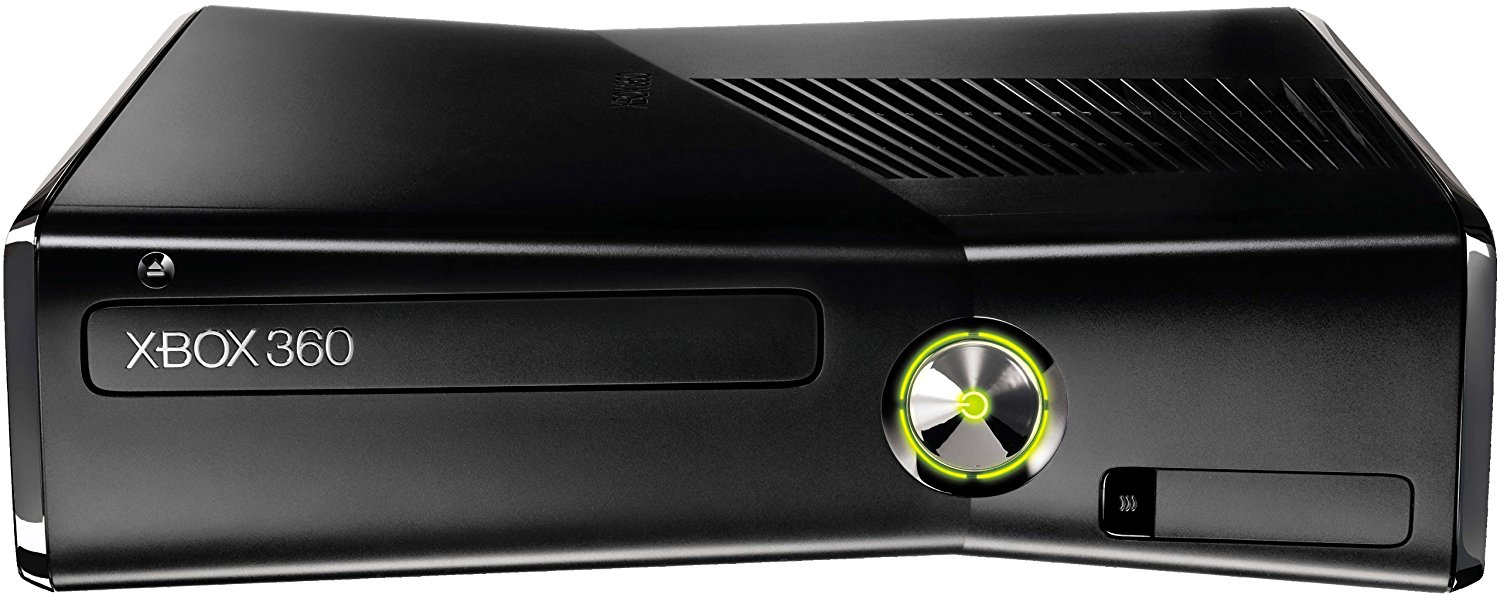
There’s no doubt in my mind that Microsoft is proud of the Xbox One X. It’s a machine they’ve created for hardcore console gamers. But I can’t help but feel it’s more a response to Sony and their (largely pointless) PS4 Pro than anything else. It seems that the claim to have ‘the most powerful console’ on the planet was the goal, without much thought on how that was actually going to be sold. The Xbox 360 was a great console, but it had very little to do with its power. It was the amazing games and the great price that helped to make it such a beloved console. No killer exclusives and a very high price are major deal-breakers for any console, ‘midlife’ upgrades or not. The whole console is redundant before it’s even been released in my opinion, and I don’t like to say that at all. As someone who loves the Xbox family, I’m pretty worried that this is going to be a failed attempt, pushing Microsoft even further back in relevance.

What do you think?

Viewpoint: Dragon Quest: The Most Underappreciated JRPG in the West

We all know who the kings of the JRPG throne are. Final Fantasy, Tales, Pokémon, they’re all at the tip of the tongue. However, when you ask someone what’s the greatest JRPG series of all time, they’ll seldom mention Dragon Quest. This is for good reason – after all, the series only made the international jump outside of Japan and the US in its eighth main installment in 2005. Since then, Square-Enix has been remaking the titles for Nintendo’s handheld consoles, the Nintendo DS and 3DS, introducing the games to a whole new generation in Japan and overseas. Yet, still, DQ hasn’t attained the same international success as their contemporaries. The original Dragon Quest – known as Dragon Warrior in America – was one of the stalwarts of its genre and even somewhat inspired the Final Fantasy series.

DQ8-3DS_08-12-15

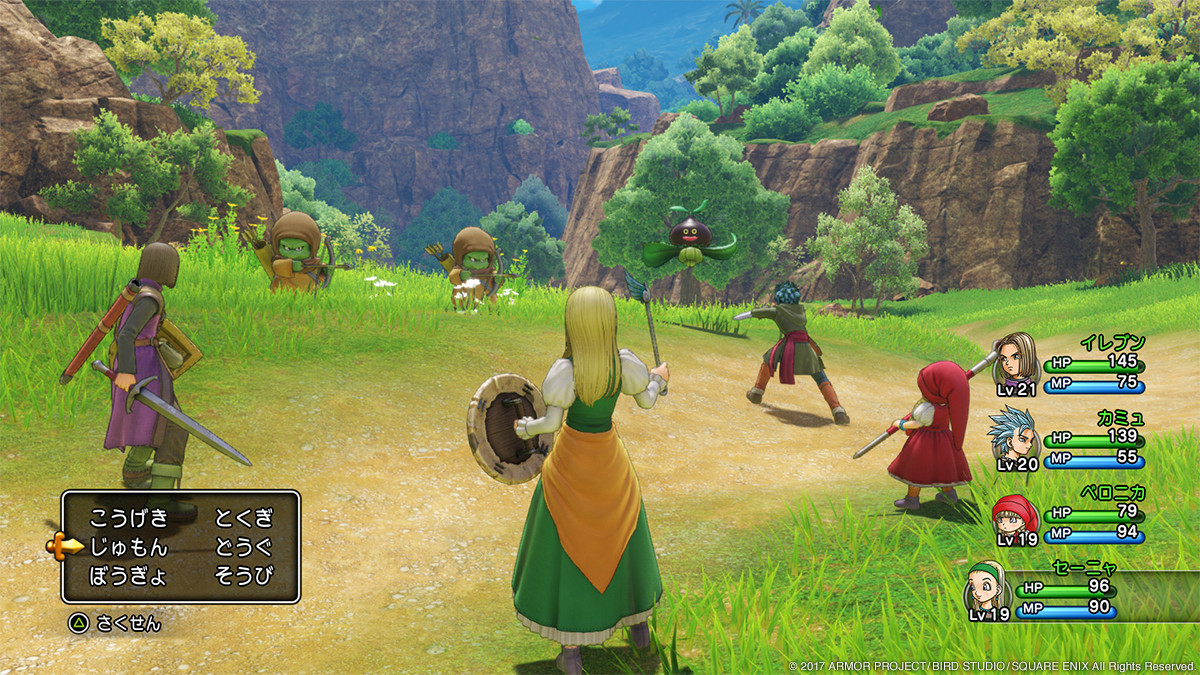
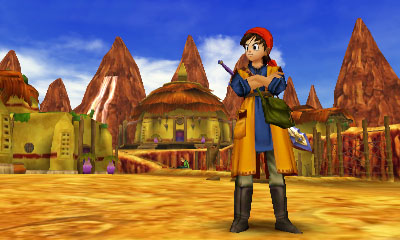
The main premise of the Dragon Quest games mirrors that of many other JRPG videogames. You play as a designated hero who must save the world from some superpowered threat with the help of a ragtag bunch of party members. Usually, the hero is a mute, and his/her name is decided by the player, not the game script. But another thing that is unique to DQ is its cartoony, anime look.

In fact, that may be the source of its lack of popularity in the West, says Square-Enix’s Yu Miyake in a 2016 interview: “Mature gamers look at it and feel like it’s a kids game. When you actually play the game, it’s a little complicated for children to play, but it’s kind of been a hurdle for grown ups to get into it.” As likely as this is, it’s also a big shame since the series’ cartoony visuals – brought into existence by Dragon Ball artists Akira Toriyama – are actually a large part of what gives the games their signature charm. Toriyama’s art give Dragon Quest a unique, colourful identity, while bringing to the table stories that are relatively mature in nature.

49495-Dragon_Quest_V_-_Hand_of_the_Heavenly_Bride_(US)(M3)(XenoPhobia)-5

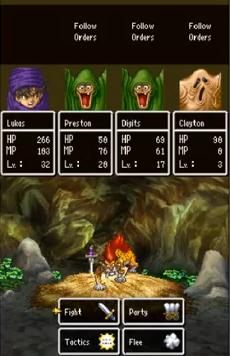
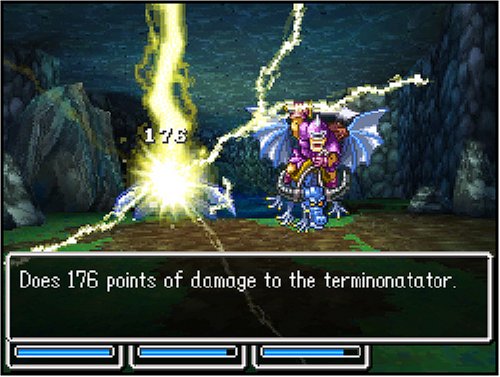
To many of those who have played Final Fantasy, the battle system in DQ can seem rudimentary in comparison. No limit breaks or summon spells to be found here, you have ‘Attack’, ‘Magic’ and the ‘Psyche Up’ option to buff up the damage of your attacks. There’s no waiting on the ATB bar – there is just the traditional turn-taking commonly associated with the genre. But the real element that the series thrives upon is strategy in these battles. Much of the battling relies on the teamwork of your characters, knowing when to attack, when to buffer your teammates’ attacks and how to work your team effectively overall.

As the game stories progress, the battles do indeed become more complex to play and this is aided, in part, by an ever-increasing difficulty. Perhaps not a turn-on for some gamers. But the mature stories, ranging from ‘childhood to adulthood’ to ‘corruption’, as well as the unique monsters and memorable characters draw many more in, especially in Japan.

518ci9AZd3L

Another key cause of Dragon Quest’s lack of popularity in the West is Square’s lack of effort in localizing the games. The long-running games company only started localizing the series in Europe with Dragon Quest: The Journey of the Cursed King which was released in 2006, 2005 in the US. This meant that many players missed the first eight games in the series. While the US did receive the first four games for the NES, they did not receive the DQ games released for the Super Nintendo, skipping an entire console generation – which meant that finding dedicated fans for the series would be hard.

The SNES was also the console generation where the US received FFII (IV in Japan) and III (IV in Japan), which meant that JRPG lovers had found their home with Final Fantasy. Then there was the series stalwart that was FFVII, which received a release in Europe as well as the US, and proved to be a critical and commercial success in those territories. This release as well as its successors stabilised the franchise, making it a household name in the West, putting it to the top alongside franchises such as Pokémon and Mario. The continued success of Final Fantasy, often bearing a relatively mature visual style to DQ, has ensured its popularity and has more than likely overshadowed DQ, even as the remakes and new games cross over to our shores. Simply put, Dragon Quest hasn’t had much time to establish itself.

Given the series’ questionable success in the West, who knows whether the next game in the series, Dragon Quest XI, will receive a Western release. The fact remains that Dragon Quest is a highly overlooked franchise and deserves more attention than it does. As with any truly great JRPG series, the games are fun and engaging with rich storytelling and diverse mature themes that far defy the series’ cutesy art style. If you haven’t checked out a Dragon Quest game yet, then you would be wise to do so. You won’t regret it.