Middle-Earth: Shadow of War Review [Xbox One] – Bold New Heights?

Cast your minds back a few years – not to the Third Age, but instead to 2011 – and you’ll undoubtedly recall the release of a licensed superhero epic going by the pseudonym of Batman: Arkham City. Developed by British studio Rocksteady and published by Warner Bros Interactive Entertainment, the follow-up to 2009’s Game of the Year award-winning Arkham Asylum set itself quite the audacious task, aiming to better its forebear via a larger yet densely detailed open-world, enhanced combat mechanics, a wider array of enemy types and above all a canon-eschewing but captivating core storyline.

An Unenviable Challenge

If this unenviable challenge seems vaguely familiar, then it’s with good reason. Fast forward half a dozen years and we find Monolith Productions – again with WB’s stalwart backing – taking much the same approach with their latest project, and surely hoping to reap similarly copious critical praise to that which Rocksteady received upon succeeding in their endeavours. Just as Arkham City took every element of Asylum which worked – the gratifying Freeflow combat, the fascinating exploration of Batman’s psyche and countless other USPs – and expanded upon them tenfold, so too does Monolith’s second action RPG foray into the world of J.R.R. Tolkien up the ante on every front.

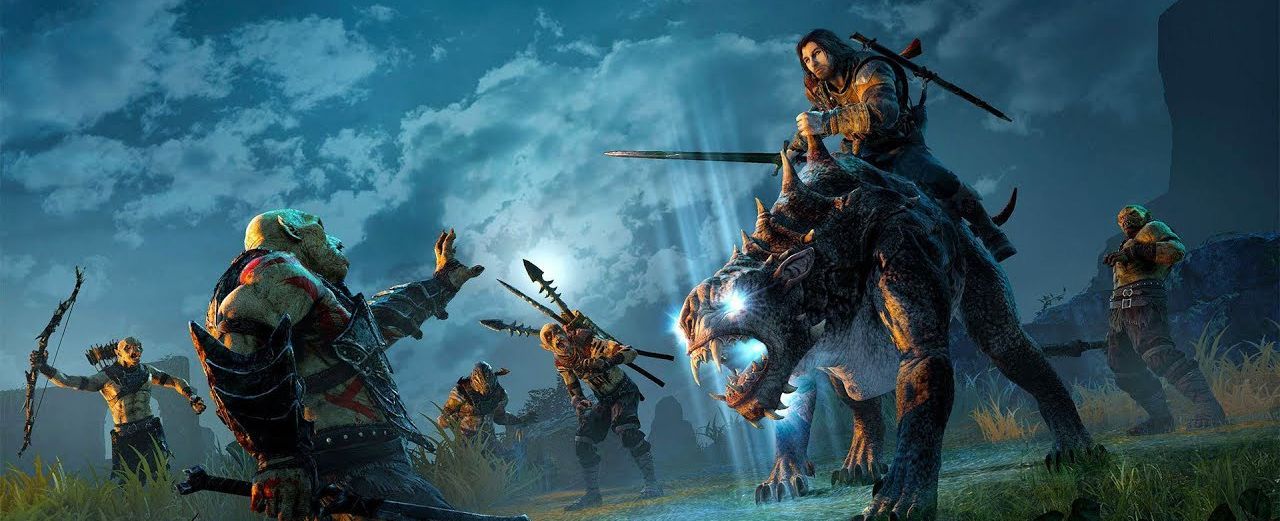
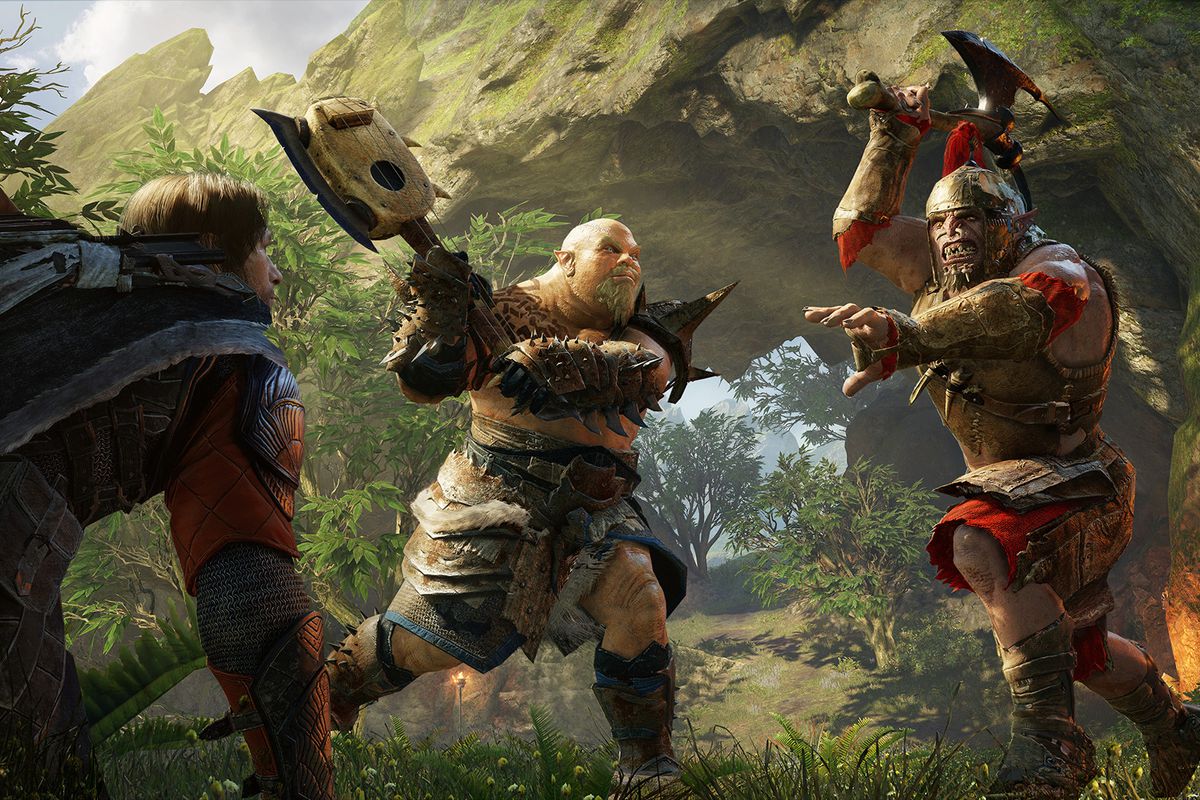
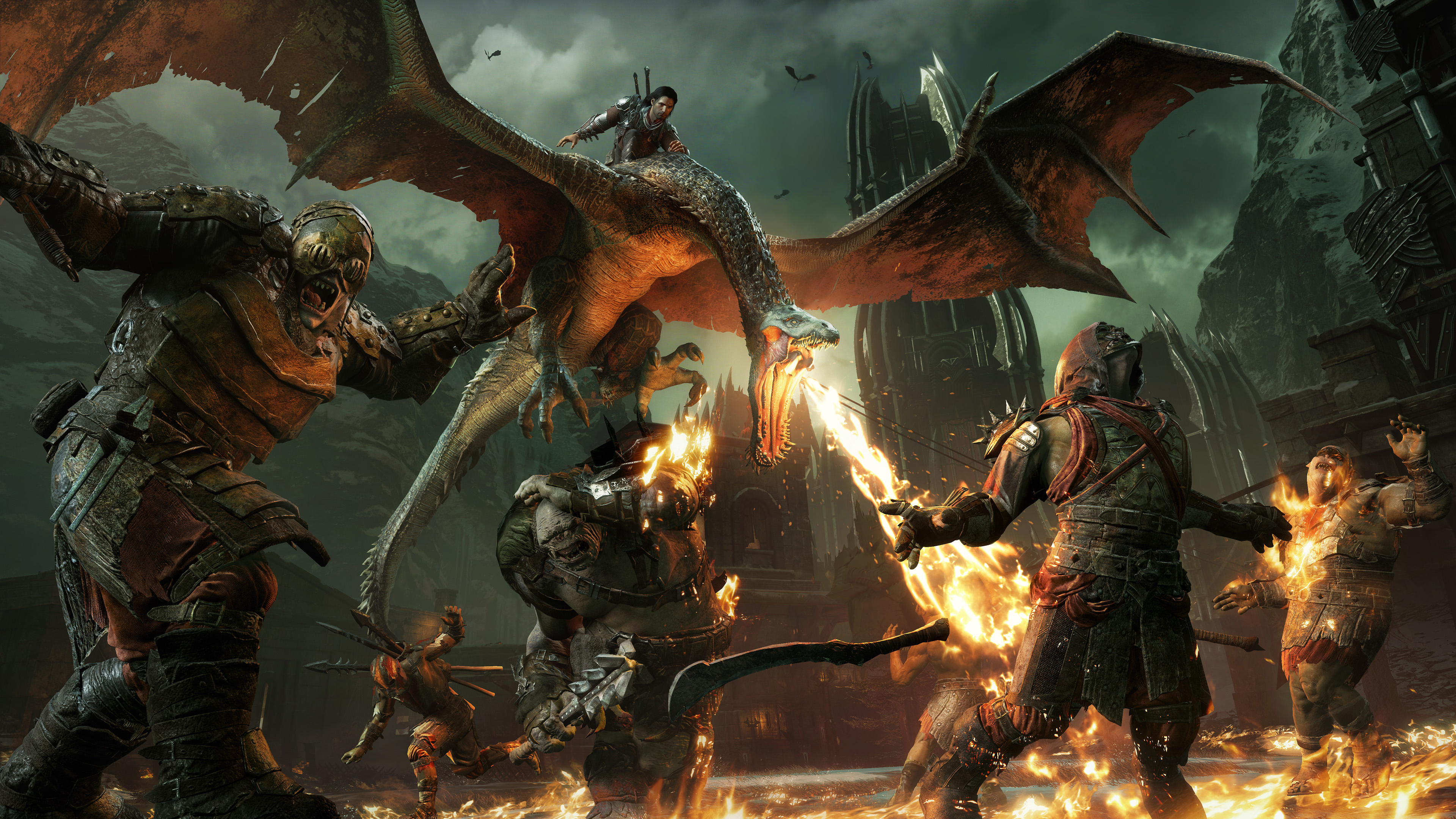
Whereas 2014’s largely acclaimed Shadow of Mordor confined the escapades of its half-Ranger, half-undead Elf protagonist, Talion, to a couple of grimly-lit cities based within the titular region, Shadow of War takes us from Seregost’s snow-capped peaks to the precipice of Mount Doom in Gorgoroth, from Minas Morgul’s sinister cityscape to Núrn’s open forest plains. Whereas Mordor’s intoxicating Nemesis System showed huge signs of potential, War develops this intricate mechanic exponentially, adding dozens upon dozens of extra enemy classes, arenas where victorious Orcs can become spies for your army and seismic fortresses in dire need of new management.
SOW 2.jpg

Elevating The Middle-Earth Saga?

But can this unquestionably ambitious follow-up match City’s next-to-universally renowned success in taking its franchise to bold new heights, elevating the Middle-Earth saga to the video game industry’s Hall of Fame? Not quite, yet one can’t possibly accuse Visceral of resting on their laurels either. For instance, aesthetically speaking, some of the human character models – including that of Talion, along with the courageous soldiers he encounters – appear bland and unfinished in cut-scenes, their facial animations a little undercooked. Yet the open-world regions themselves brim with graphical pizazz, Seregost’s snowfall a mystifying beauty to behold and Mount Doom a pitch-perfect copy of that seen in Peter Jackson’s Lord of the Rings film adaptations.

Missions prove equally mixed when it comes to variety and unpredictability. On the one hand, many of the main campaign’s quests prove disappointingly mundane, centring on generic follow-the-AI-leader, stealth antics with none of Metal Gear Solid’s scope for anarchic chaos should the player get spotted or repetitive Nazgul boss battles. On the other, venture off the beaten track and you’ll discover electrifying side ventures such as Balrog showdowns, voyages into Mordor’s past and future via the visions of spider-turned-temptress Shelob or attempts to wrest back control of Middle-Earth’s status quo with its equivalent to Mother Nature (yes, really), to the point where one craves for the core campaign to offer the same level of structural creativity at times.

Simplified Narrative Approach

Indeed, while we’re on the subject of the campaign, the eagle-eyed readers among you might’ve noticed that this reviewer hasn’t dedicated much time to War’s narrative as of yet. Suffice to say that in the wake of having forged a new Ring as the credits rolled last time around, Talion wastes little time – barring a frustratingly inconsequential detour to meet Shelob early on – kick-starting a Mordor-wide resistance to Sauron’s rule, rallying hundreds of possessed Orcs to his side in order to take back each of the realm’s lofty fortresses before overthrowing the Dark Lord once and for all. Now, that might sound like a premise for the ages, particularly to the Tolkien avids here, but unfortunately said plot receives scarce attention throughout War, largely taking a back-seat while you influence the foes of each region, topple its Overlord, rinse and repeat for hours on end.

This simplified narrative approach – or indeed the obvious constraints placed upon Monolith by having War take place within reaching distance of The Fellowship of the Ring – wouldn’t matter so much if the script at least dedicated more time to fleshing out the supporting characters like Gondorian soldiers Idril and Baranor, returning fan favourite Gollum (whose needless cameo barely registers), or even the head Orcs whom Talion possesses like the hilarious Bruz. Instead, those looking to see their relationships with the similarly soulless – no pun intended – Talion developed had best look to the aforementioned side missions for further meat. Acts III and IV reveal how our hero’s antics factor into the events of LOTR, in what frankly comes off as one of the most ridiculous fan faction-esque retcons in recent memory, but little else of note actually happens to any of War’s ‘key’ players, protagonistic and antagonistic alike.
SOW 3

A Dense Open-World

Perhaps story depth isn’t what many fans hoped for here, though, with War’s main draw of course being its overhauled Nemesis System. If LOTR fanatics want to immerse themselves in Middle-Earth, then here lies the most substantial means by which to do so, with the contrasting Orc cultures, fortress defences, enemy weaknesses, tribe dynamics and Warchief challenges of each region providing more than enough of an excuse to plunge hundreds and hundreds of hours into this sprawling RPG’s rich world and become its eventual commander-in-chief. For reasons we shan’t spoil, there’s ample incentive to become an expert in these minutiae by Act IV, where further conflicts mounting in each of your conquered domains put that knowledge fiercely to the test.

With Shadow of War, then, Monolith have largely fulfilled their lofty goals, delivering a dense open-world filled with aesthetic and enemy variety as well as numerous opportunities for total immersion via its staggering Nemesis system and engaging array of side quests. That said, whether its immense strengths on a technical and replayability level are enough to compensate for the disappointing lack of focus paid to crafting a layered fantasy storyline, or multi-faceted characters worthy of Tolkien lore, will depend on what you look for first and foremost out of your gaming experiences; personally, this reviewer could’ve done with more of the latter in order for the second and likely final Middle-Earth outing to stand a chance of topping his Game of the Year shortlist.

It would appear, then, that one developer cannot simply walk into Mordor without struggling to balance the competing elements which they bring along for the ride. Nevertheless, if Shadow of War’s promising improvements upon Mordor’s already potent gameplay formula are any indication of what’s next for Monolith as a studio, then should they choose to return to the world of men, corruptive Rings and cave trolls in the near future, the LOTR franchise’s Arkham City equivalent could lie just around the corner.
Gran Turismo Sport Review – An Impressively Polished Racing Sim [PS4]

The Gran Turismo series has always left racing fans feeling accomplished, trained and ready to tackle the toughest racing courses known to man. The enormous selection of cars and daunting content featured in the series’ Career mode were both namesakes in the long-running racing franchise. With Gran Turismo Sport, the series does away with both, leaving long-time fans a bit sceptical to the change. However, Polyphony Digital manages to create something the genre desperately needs to stay competitive and does so with astounding visuals and sounds, ambitious online competition and a campaign mode geared toward making every player a better, more sound racer.

Taking the racing genre to new heights in online competition

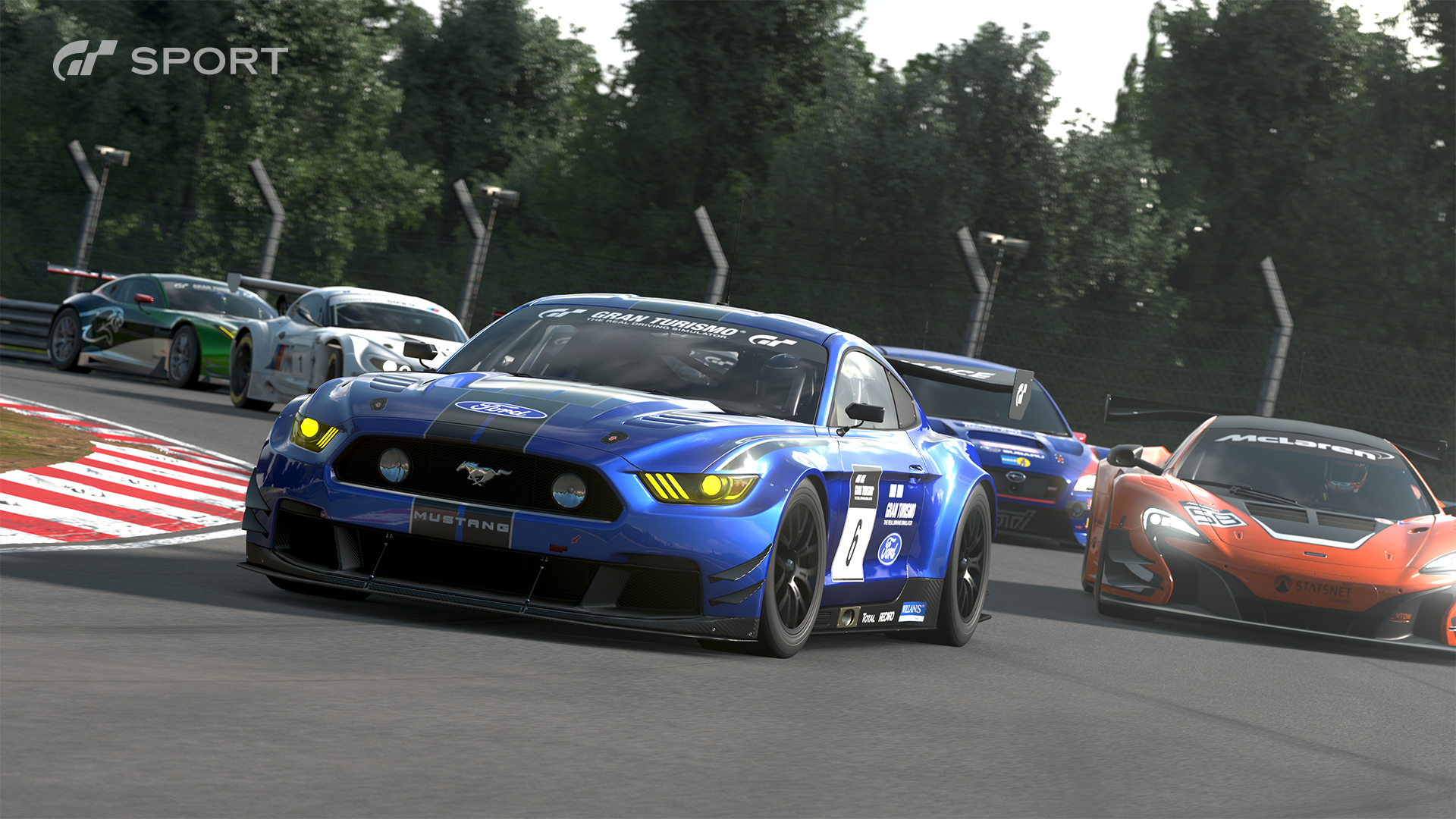
If you’ve played through the beta last week, the layout of GT Sport should look familiar. Opened with a beautiful shot of one of the 160+ racing machines featured in Sport, the options on where to first go seem limitless. With various racing modes like Arcade, Campaign and the online hub of competitive racing – Sport, the best way to tackle this daunting racer is to hone your skills on the track. Campaign mode allows you to do exactly that, tasking you with various driving tactics like conquering S-curves, to full lap time trials.

gt sport6.jpg
Without question, GT Sport is easily one of the most breathtaking titles to grace the current generation of video games.

The absence of favourite modes blinded by the glimmer of gorgeous visuals

One thing many fans of the GT series will notice almost immediately is the absence of the traditional career path. While I felt extremely disappointed by this initially, I collected my thoughts, took a few deep breaths and continued forward. The game alone looks and sounds like no other Gran Turismo in the series, which was enough to push me reluctantly further into the game. The exhausts growl, engines rumble and the turbo hiss all breathe fresh life into the series; which before shoved otherwise stale and recycled sounds of below standard racing motors.

The level of detail found in every car featured in Sport is astounding and, above all, quite appetizing to the eye. The shimmer and gloss, the detail when racing in the cockpit view (which is by far the best looking cockpit camera view I’ve seen in any racing game to date) and liveliness of every course immerses the player into every race. The shadows that graze across the road follow the cars effortlessly as you patiently bend and curve around the course. The details and sharpness of Sport are quite possibly above all other racing games, however, there still lie a few hiccups in the overall production and appearance in the gorgeous racing title.

gt sport2.jpg
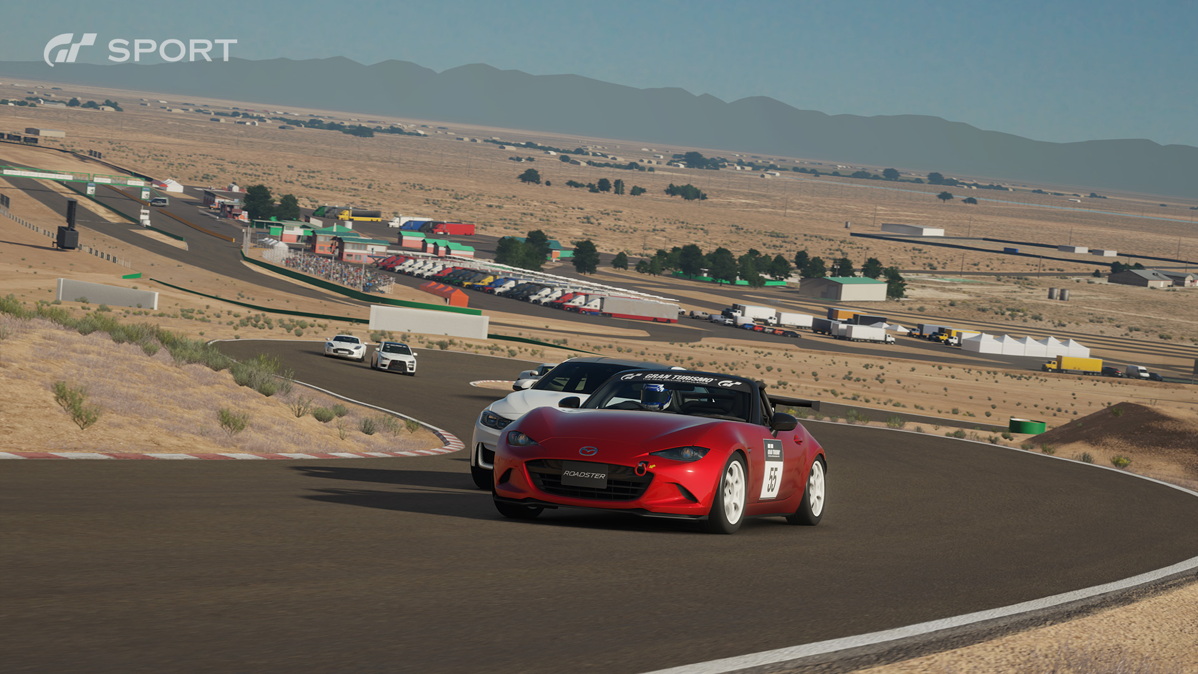
The courses in GT Sport are lively and beautifully rendered for some of the best racing experiences on current gen consoles.

Dynamic weather – something us racing fans have seen a lot of over the past couple of weeks in other new releases – is missing from the formula altogether. The challenge that comes about from slippery and icy courses or dirt stirred up from off-track racers found in other racing sims, which have recently hit the market, is nowhere to be found in GT Sport. The day-to-night cycles which help add a sense of time and endurance to longer races remain untouched in the Gran Turismo series, which easily could have helped push the latest instalment with even more challenges to conquer for the racer.

Making strides in providing enjoyable online races

That being said, this still doesn’t shred the fact that Gran Turismo provides a true racing experience at a high level of competition. In Sport mode, players are free to enter and participate in online races. From daily challenges to legitimate championships, Sport is (obviously) the centrepiece of what this release tries to narrow in on. However, before entering the ring of professional and dignified racing amongst the eager grid of online racers, the player is forced to complete the Racing Etiquette class for proper racing guidelines on how to – more or less – not race like an ass.

The ‘class’ is simply two instructional videos highlighting what counts as proper racing manoeuvres, and what makes you look like the king of all things awful in the world of online gaming. Bumping other racers in the back, boxing racers out around turns, blocking other racers from passing, cutting corners to gain ground; there are tons of rules to follow in the world of competitive online racing in GT Sport, but they do in fact help to make a much more enjoyable experience when diving in online.

gt sport5.jpg
Boxing out, blocking cars, ramming other racers, as well as a litany of other misbehaviours will not be tolerated in the competitive ring of online racing in GT Sport.

If stuck with a penalty, the driver is then instructed to slow down for a set amount of time. While the cars are ‘in the penalty’ they appear as a ghost car to help alleviate any further burdens for other racers. If the driver fails to follow the penalties, they seconds begin to add up throughout the length of the race, and the total is then tallied to their overall time; in turn losing a few spots in the final standings. However, if one racer spins out or smashes into a barrier/wall by an unfair racer, there’s not much help to retain the position you previously held. Sure the disobedient racer was punished, but that has little effect on the innocent racer at hand.

Drivers are separated by driver rankings and sportsmanship rankings in online competitions. The driver ranking shows off how fast you are and comes in a rank from S-A-B-C-D-E, with an S ranking as the best possible outcome. The sportsmanship ranking keeps track of your penalties and overall etiquette form, helping to place racers in evenly matched competitions. The proper racers earn better rankings, increasing their score and rank higher amongst the competition rankings.

Though missing the Career mode, there is still tons of content in GT Sport

Throughout Sport mode, there are a handful of options to choose from, most of which are unavailable at this time. The Daily Races is the only option to dive into right now, but once the online championships begin, there are three other events to partake in. For now, Daily Races will do as it helps to build DR and SR points in your driver’s profile. Each day three different courses are available with a broad range of vehicle classes to choose from. Giving players an evenly matched group of racing machines, players are able to enter the race and begin qualifying rounds. Again, there isn’t much to Sport mode right now, but the promise of taking your online racing career further is inching closer with the approach of competitive championships at stake.

The Campaign mode is where players go to learn the basics, and eventually graduate to more difficult challenges. Like other entries in the series, there are loads of tests taking the player through acceleration/braking, tackling s-curves, out-in-out manoeuvres, as well as tons of other useful skills to help build a better racer.

gt sport4
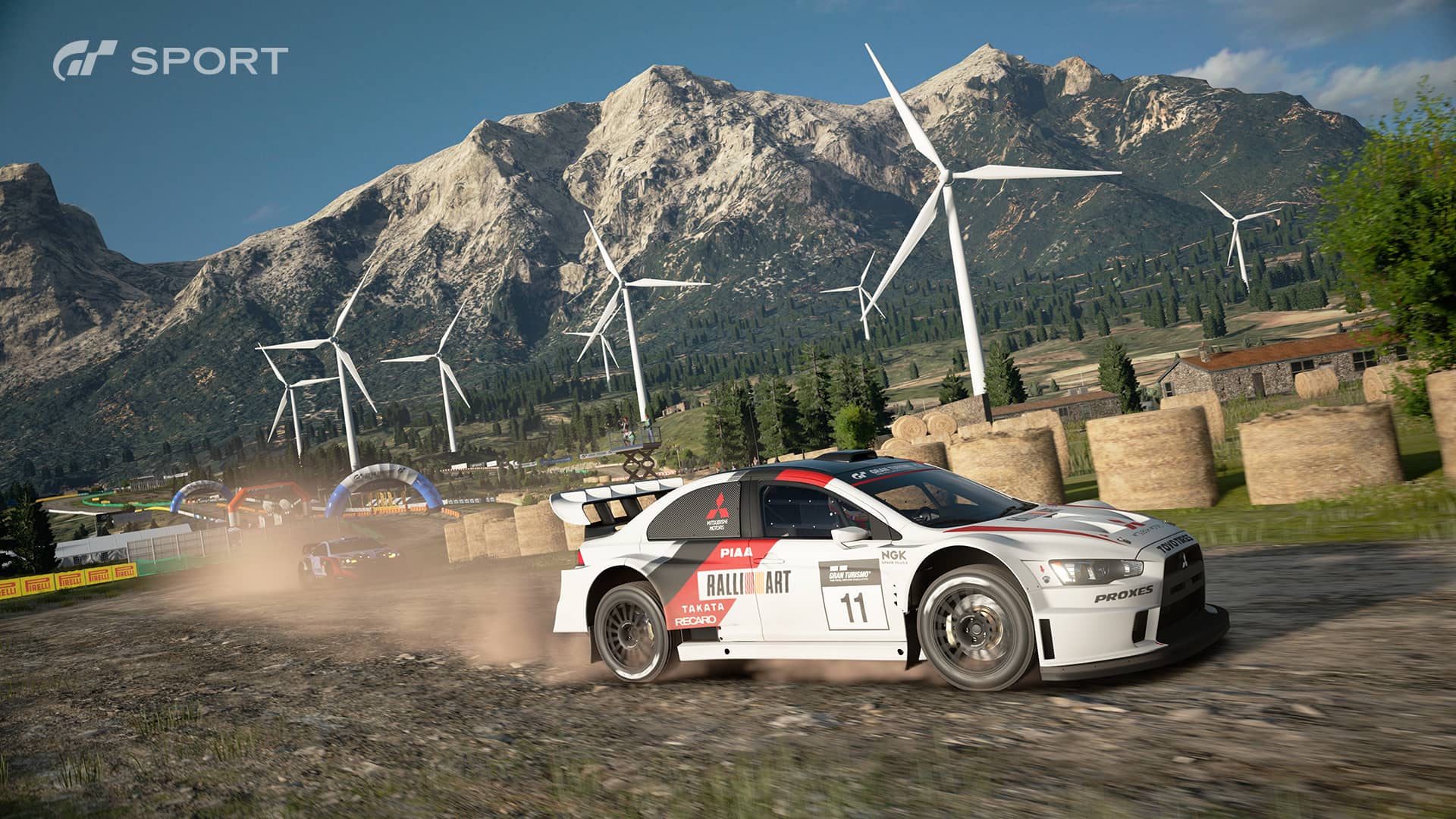
Oval courses, street and popular circuit courses, as well as the beloved rally tracks all make their appearance in GT Sport.

Accomplishing all tests with a bronze time or better will reward the player with a car at random. Aside from the new vehicle upgrade, the knowledge of how to conquer turns and other difficult manoeuvres are enough to help push the player a little further into the depths of the multiplayer experience.

Mission Challenge and Circuit Experience are the other two events found in Campaign mode. Mission Challenge gives players difficult situations usually involving the player behind a handful of spots on a specific sector in a course and urged to place the highest position possible before the finish line. Circuit Experience acts as a practice session for every sector, or an entire lap, in every course, with a gold, silver and bronze time to beat. There are tons of challenges and courses to conquer, of which does help to give some of the playability the traditional career mode provided in previous entries.

In Arcade mode, players will finally have the chance to get down and dirty with AI racers in actual full-scale races. Fans of career mode in the other GT games may find themselves hashing out races here, as it provides the closest familiarity to the missing career mode. The course and car selection may be the smallest ever featured in a Gran Turismo title, but the thrill of competing in this expertly handled racer is well worth the downsizing.

Other modes offered in the game are Brand Central, which is the manufacturing market for all of the cars in the game – where players purchase the cars of their dreams, Scapes which is the shiny and spectacular photo mode and the all-new livery editor. Buying your dream car to take on the road, placing it in gorgeous, jaw-dropping settings, or perhaps covering it with custom wraps and liveries to help personalize your ride, all give Sport a casual approach when the heat of the racing grid is too much to handle. The views and scenery in Scapes present a truly remarkable image, some even looking near identical to real-life photos.

gt sport3.jpg
Scapes mode gives players chance to place their dream car into a gorgeous scenic setting and snap the perfect photo.

Throughout Gran Turismo Sport players will race, crash, learn, and occasionally win; all in repeating order. With a strong emphasis on multiplayer racing, and an even stronger swinging hammer crashing down on racing etiquette, I can honestly say my reluctance has subsided almost entirely to the eSports approach. Earning points for your overall driver ranking and sportsmanship ranking, players are easily matched for a better quality of racing.

Find Polyphony Digital’s latest entry in the popular racing series – [amazon_textlink asin=’B00ZG1SVA4′ text=’Gran Turismo Sport’ template=’ProductLink’ store=’geali01-21′ marketplace=’UK’ link_id=’351cec9e-b40a-11e7-a8a4-63dad7f5c6da’] – out now for the PS4.

Super Lumi Live – A precise, neon platformer [PC]

The 2D platformer has become something so popular, so uniformed that keeping track of all the forthcoming releases seems to be more of a chore than it’s worth. Thankfully, there are developers out there keeping the quick-paced genre from losing its edge, tenacity and flavour. Super Lumi Live sticks it to the die-hards of modern platformers and leaves an addicting, lip-biting good time in the depths of a super-sleek neon world filled with deadly hurdles and platforming innovations.

Levels Loaded with Challenges

Running through the neon ripped levels, your little blue blob runs, leaps and double jumps their way from one thumb-bruising level to the next. Dodging a slew of obstacles ranging from bobbing spike-beds to shifting platforms, Super Lumi Live does an excellent job of giving the player control. With the absence of the frustrating “slide” annoyance found in many platformers, your blob almost satisfyingly sticks to the ground upon landing from every jump. This is an immensely helpful asset, found in an otherwise tedious and challenging platformer.

4-test_knockers
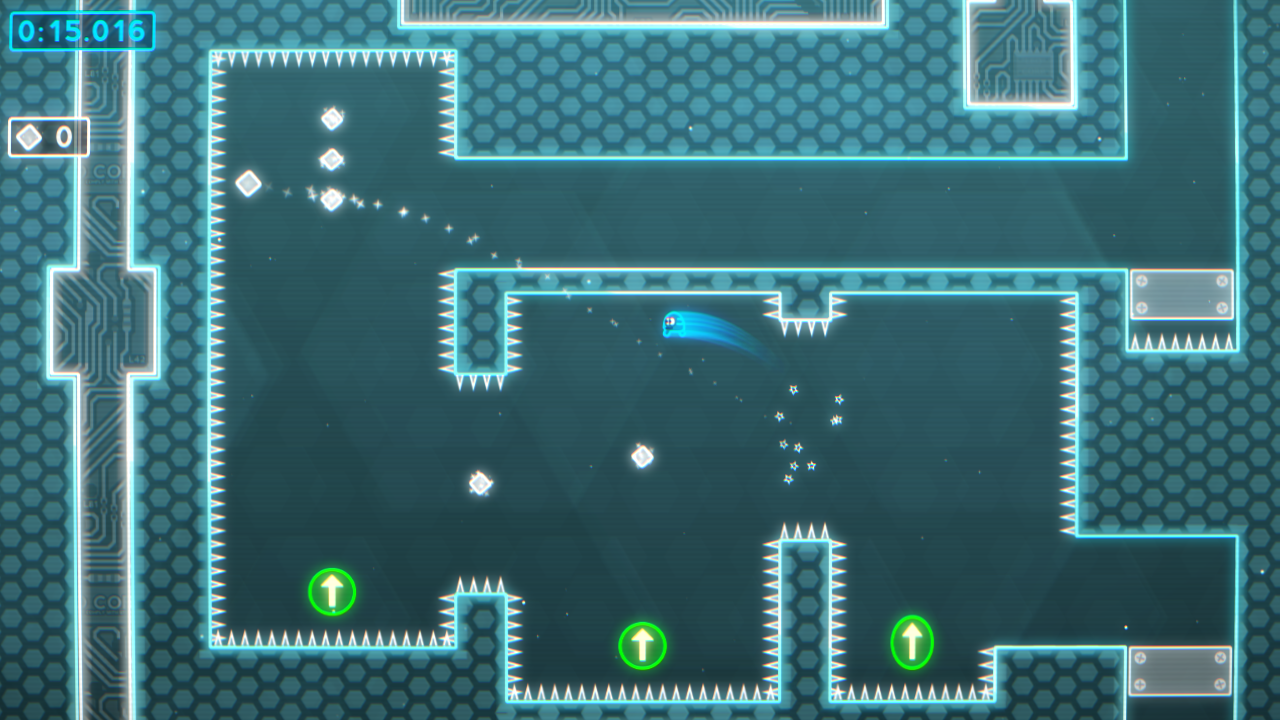
Various platforming mechanics are littered across the entirety of Super Lumi Live.

Levels are divided into themed Seasons, with every season containing a handful of numbered levels increasing in difficulty the further you progress. Levels are required to be completed in order to move on to the next. Some also require a specific amount of points to collect throughout the levels in order to unlock. Returning to previous levels and reaching for a higher total of points will provide the player with enough credit to continue forward. The last stage in each season serves as a Boss stage. With a heightened number of difficult obstacles, a lengthier run through and specific techniques to complete the end of the season.

Excellent & Precise Handling

As mentioned above, Super Lumi Live handles with excellent, precise maneuvers, leaving little frustrations with the controls themselves. Those frustrations are found in the level designs to purposely throw players off with unexpected obstacles and dangerous encounters. Whether it’s block dissolving upon touching them, assaulting cannons relentlessly firing upon your helpless blob, deadly ground saws or shifting platforms taking you to an untimely demise if not paying close enough attention, the game is plenty full of quick-acting annoyances to keep the player humble.

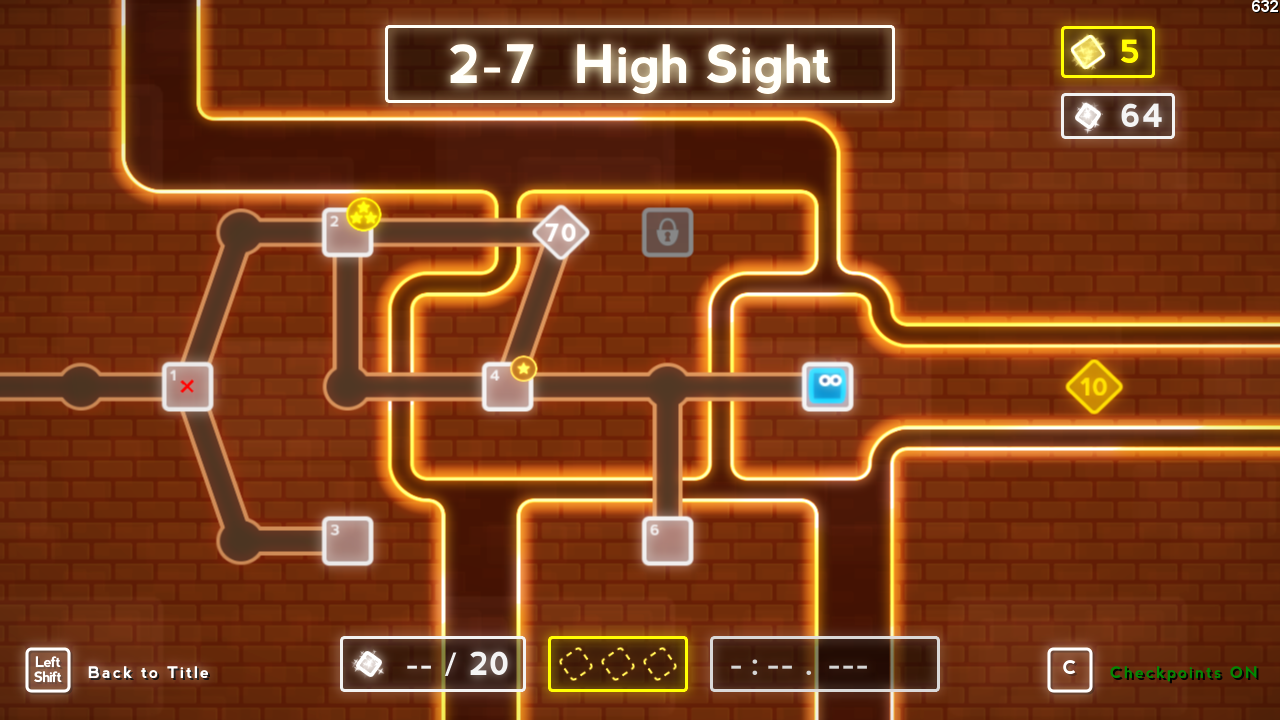
mapscreenw21.png
Levels are unlocked by either completing levels or acquiring the appropriate amount of points in each stage.

Throughout the levels are dozens of white points – placed in similar fashion to coins/rings in other popular platformers. The rare golden points are often found in hard to reach areas, making for a tedious playthrough for the gaming completionists. Your total number of points of both white and gold are tallied and kept in a score-style fashion at the stage select screen. Newer levels appear as you make your way through the game, and many are designed to be unlocked after the player has accumulated a total number of each color of point. The common numbered stages are unlocked with accordance to the white, while the gold points unlock tricky bonus style stages, not required to complete to move forward in the game.

Conclusion

Super Lumi Live is presented in a unique retro, neon stylized fashion with a modern platforming approach to gameplay. Providing a quality platforming experience, the challenge will turn many casual players off. The levels never feel unfair in any way, but many stages will leave you wondering if you have the knack to stick with it. Not to flush out the satisfying controls and mechanics of the platformer, the game truly shines in this aspect.

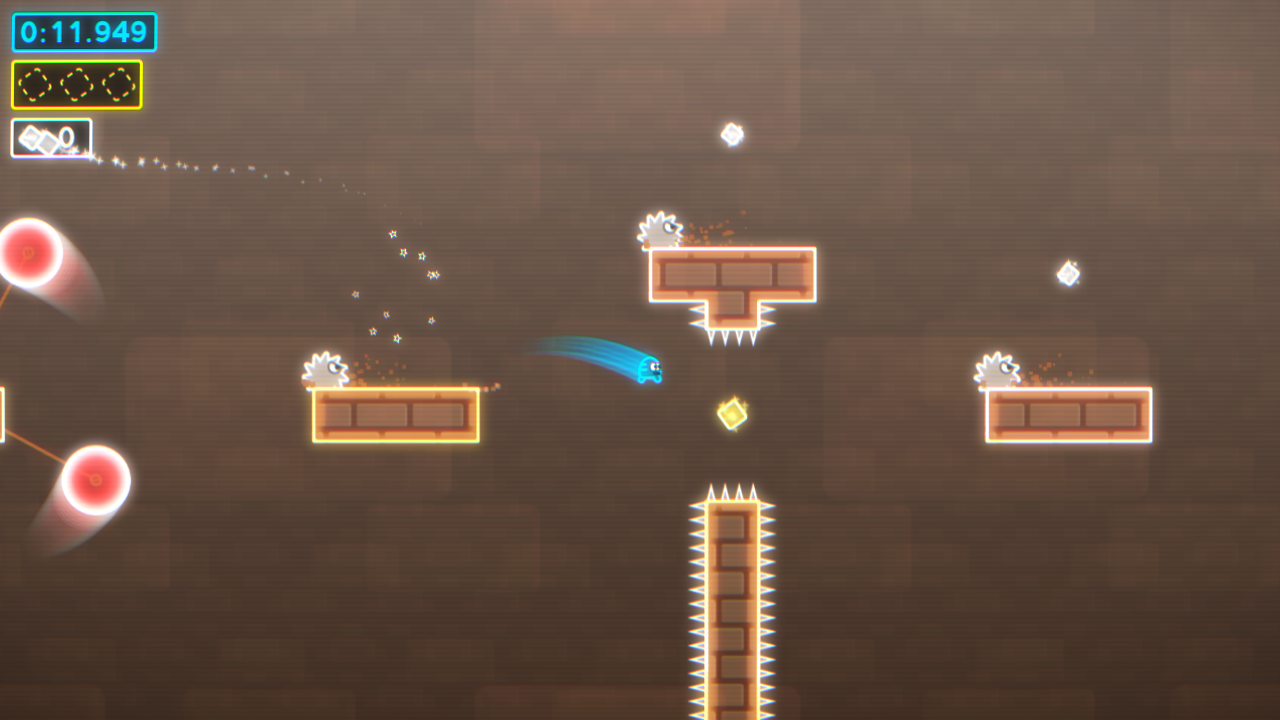
highsight1.png
Many challenges stand in the way of grabbing that hard-to-reach golden point.

For a quick platforming experience to help bring the hard-core gamer back down to Earth and further question your abilities, Super Lumi Live is that type of hard-hitting title. Falling in line with the “quick to learn, a lifetime to master” areas of gaming, Super Lumi Live precisely maneuvers like a dream, but seems happily stranded in a hellish world of frustrating obstacles and platforming hindrances.

Find the quick-action platforming title, Super Lumi Live, available on Steam for the PC.

techtroid-rating6

Cuphead Review: A Devilishly Good Time [Xbox One]

Cuphead takes a classic tale of moral propaganda and turns it into a romp through 1930s era animation that will both delight and challenge in equal turns. The tale follows the titular Cuphead and his unfortunate brother, Mugman, who are enjoying a good time at the Devil’s Casino until one misguided roll of the dice ends with a contract on their souls. But, the Devil tells the now damned duo they might be able to get out of their contracts if they can collect on other souls before their time is up. You can choose to play alone as Cuphead, or bring along a friend to aid you as Mugman during your treacherous journey.

A World Brimming with Bosses

The layout of worlds in Cuphead is fairly simple. You can select from a few run-and-gun levels, or pick form a plethora of battles with devious baddies whose soul contracts you now need to collect. Defeating bosses opens up new sections of each world and eventually allows you to move on to the next. Sounds simple enough, but this dance with the Devil is anything but slow and steady.

On a difficulty scale from Mega Man to Dark Souls, Cuphead hits much closer to the former. To succeed, practice and determination are key because death is practically guaranteed, but difficulty lands a little south of rage quitting. That isn’t to say boss battles don’t offer a very real challenge, but I rarely felt that I wasn’t able to make some progress with each run. It was this keen balance of punishment and progress that kept me aching to try again even after multiple failures. If you fail to complete a fight or stage, the game presents you with a meter showing how close you were to your goal. Depending on how you are doing, this can be both an encouragement or an indicator that it might be time to take a short break before another attempt.

Each boss has multiple attack stages, with an additional stage added if the game is played on Regular difficulty. However, the battles in Cuphead are dynamic enough that players cannot win simply through rote memorization. For example, in some cases, a boss can have varied versions of one attack stage. A particular battle involved a stage where the boss transformed into a zodiac character. I died before completing that stage and the next time around she transformed into a different member of the zodiac, catching me off guard with new attacks. Often, though, bosses follow a set of transformations that can be memorized, though getting through them is anything but simple even with some foreknowledge. Attack patterns can change within stages, and you often find yourself needing to battle against numerous peripheral attacks while at the same time avoiding main attacks from the baddie itself.

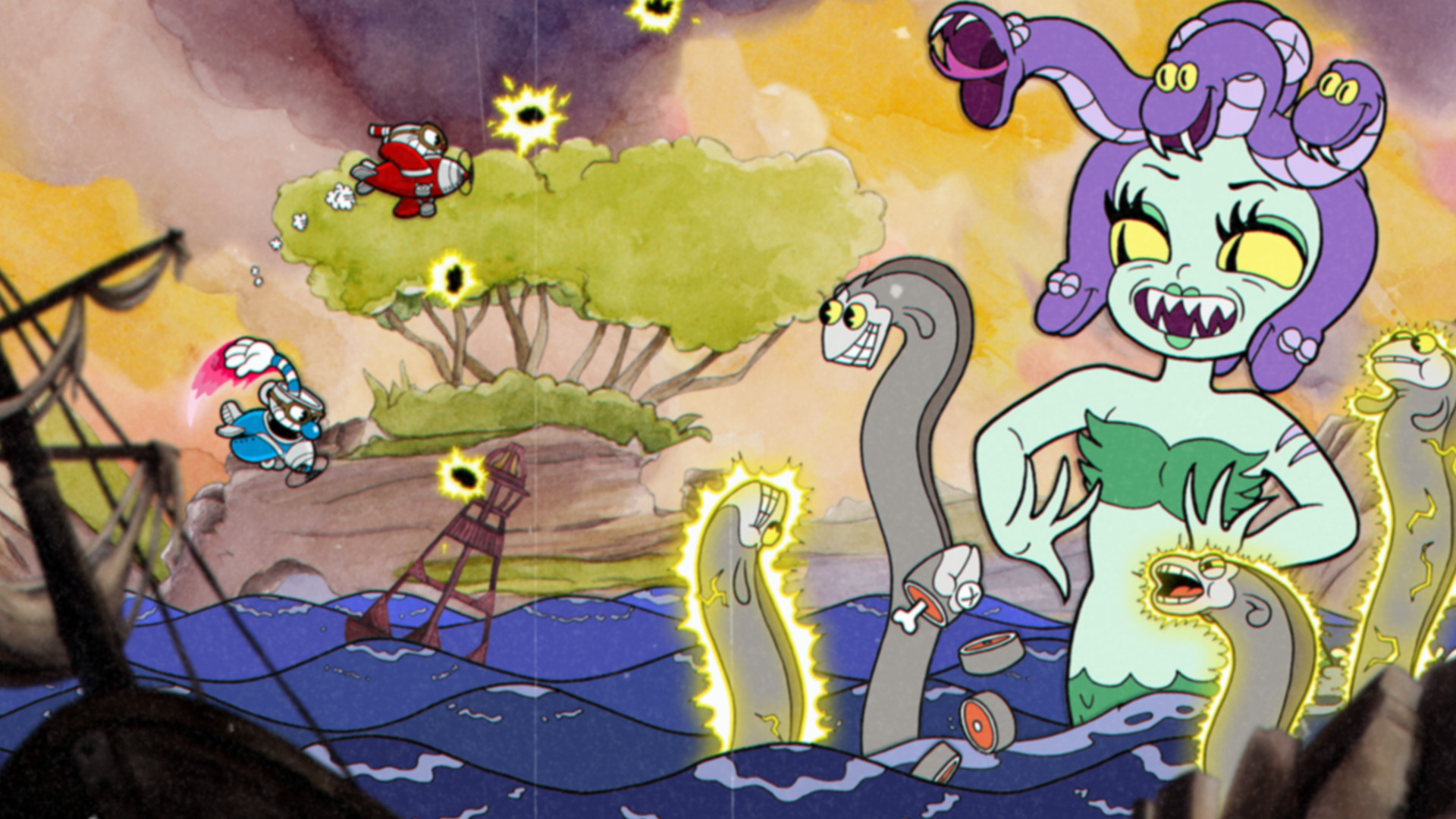
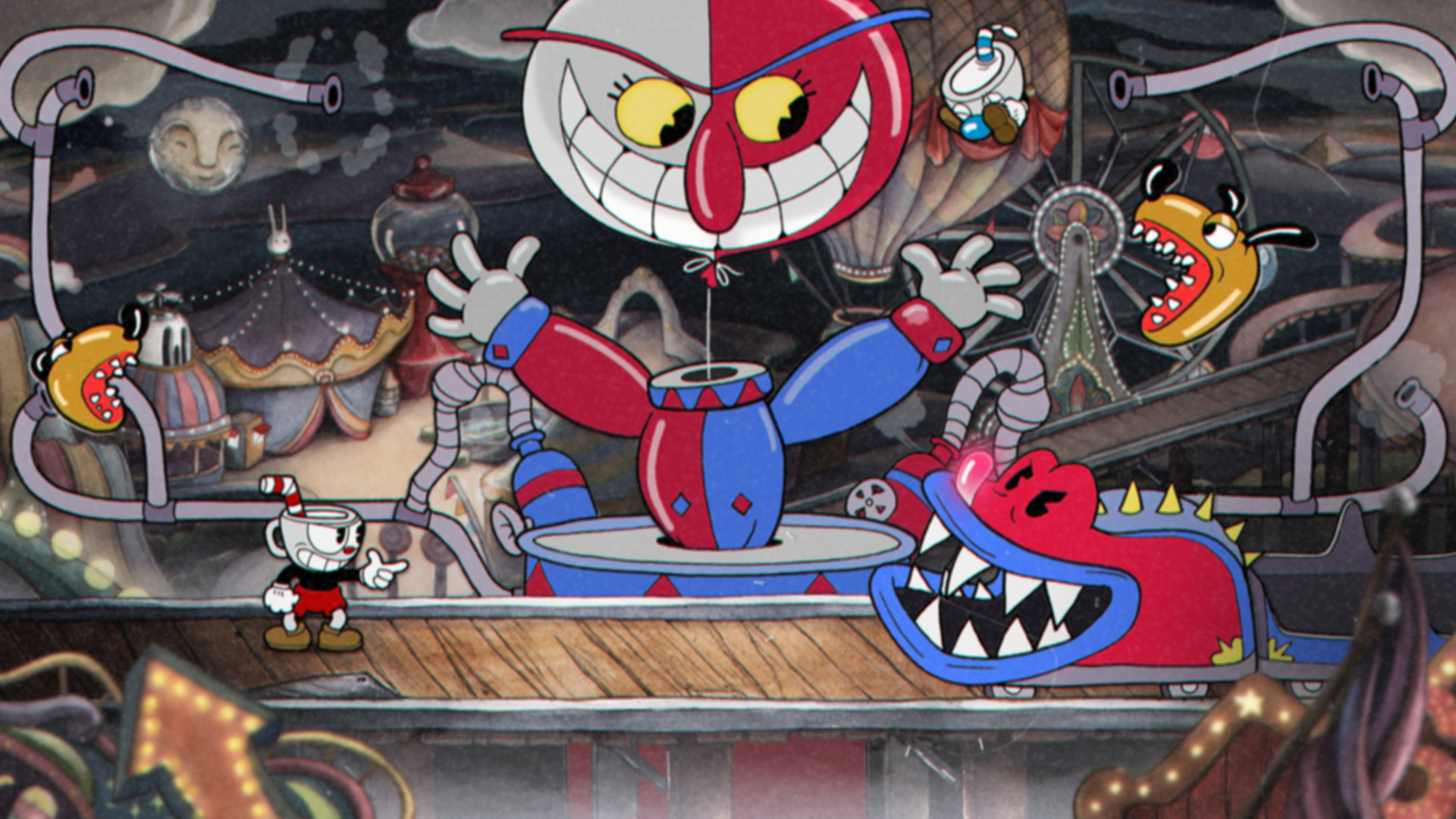
Boss battles are truly a sight to behold and a challenge even for a seasoned platform/run-and-gun aficionado. This is partly due to the intensity of the fights. During one encounter, I had to avoid a train while also dodging glowing horseshoe attacks from a clown riding on a donkey held up by a string. Sounds crazy, but aside from the spot-on 1930s visual aesthetic, Cuphead also solidly replicates the sheer bizarreness of the cartoons of that bygone era. I fought frogs that turned into a slot machine pitching coins at me, and a woman who became an airplane that became a terrifying version of the moon. And that is only a small, incomplete sampling. Somehow, it works. I never questioned the wacky and often unpredictable directions boss battles would go. The whole world is bright and bouncing, sometimes sharp and sinister, life and movement that I can only describe as what Jazz music must look like if animated.

ss_ae3db08c403209d868e52ae513540e1ba0489302.1920x1080

An Arsenal of Abilities & Upgrades

During the course of your battles you will earn coins that allow you to purchase different types of shots that can be equipped during battle. You can even equip two different shots and toggle between them. Each comes with both a plus as well as a minor downside. For example, one shot gives a wider bullet spread and allows you to aim backward, but offers only average damage unless used while aiming behind you. Another allows greater damage but requires more precision. You can also purchase charms that can be equipped as add-on effects or life extenders. For example, early on I purchased a heart that gave me an additional hit point. It, however, also slightly lowered my attack power. The extra hit point saved me more than once, so the slightly lowered attack was worth the price.

The most important move in Cuphead’s arsenal, though, is the Parry. This allows you to jump off of pink-colored objects that appear throughout a level or boss fight. During battle, this allows for more dynamic movement, but it also charges up your Super Meter which, when full, allows you to discharge a number of powerful attacks.

ss_615455299355eaf552c638c7ea5b24a8b46e02dd.1920x1080

Project Cars 2 Review – Racing Against the Elements [PS4 Pro]

Racing simulation titles take an eager-to-win mindset and meticulously combines the precision and patience of careful maneuvering with high-speeds set on expertly crafted courses. In Slightly Mad’s sequel to their top-notch racing franchise, Project Cars 2 takes these very features and increases the magnitude of competition. Not by adding an increased difficulty on driving and control, but the excellent use of dynamic weather elements and various changes in the course throughout the duration of the race, leaving an attention to detail left out of almost every simulation racer to date.

Up-to-date Racing Mechanics

Firing on all cylinders, Project Cars 2 brings a true racing experience on the current gen systems. The default settings take away any type of racing assists, traction and stability control – leaving a swift, challenging and gorgeously designed racer. With a clear point of official racing rules, regulations and professionalism, cautious navigation plays an important role in the leading to a podium finish.

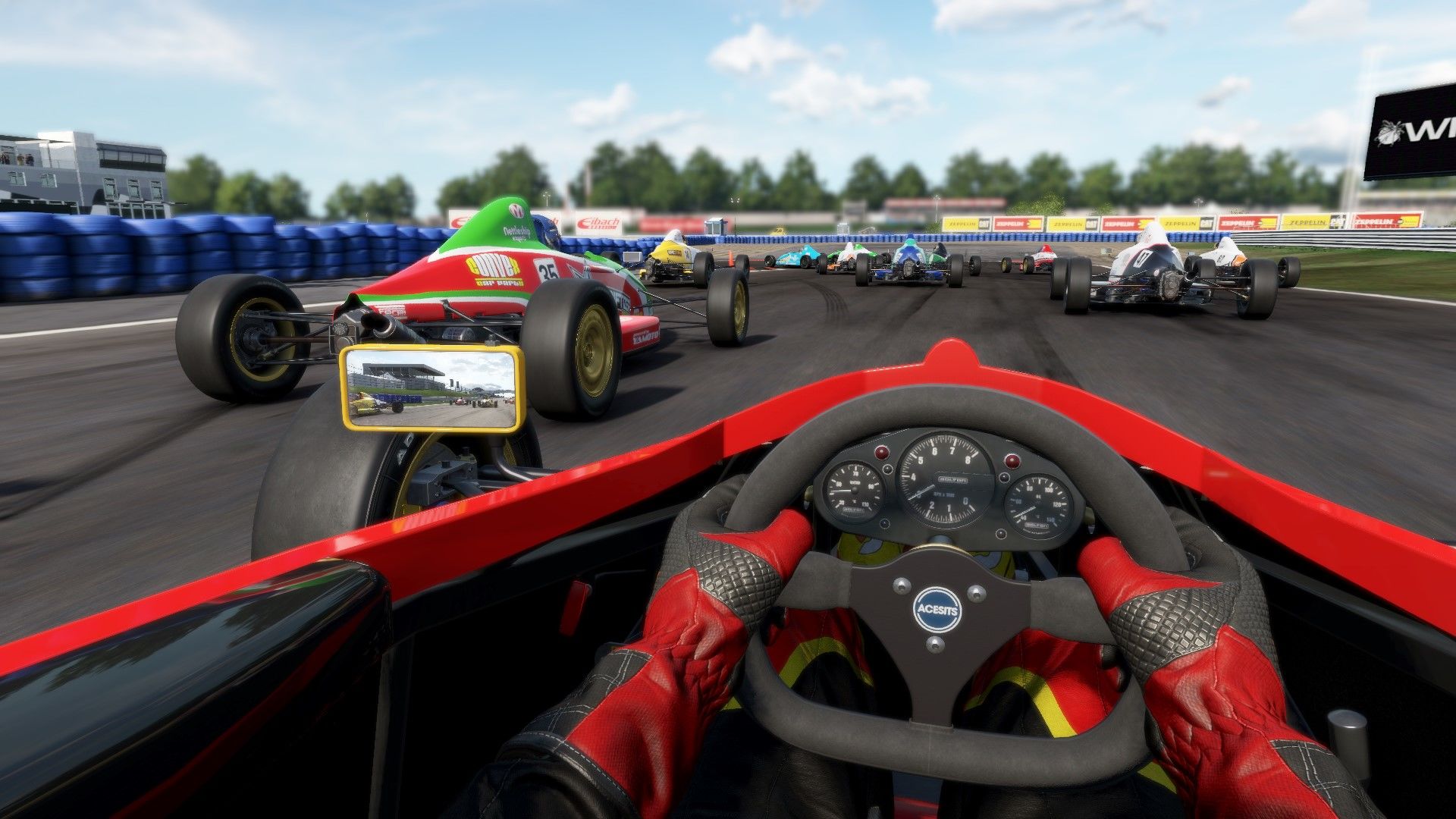
novice karts.jpg
Every racing event, including the novice go-kart races, provide difficult elements and challenges all across the board.

With a variety of different race modes to explore, you’re offered many different solutions to scratch that racing itch. In the solo mode, you’re able to customize your race in virtually any manner possible. Creating your ideal race, set on the course you desire, blazing through one of the many licensed machines found in the impressive roster of Project Cars 2. Common changes like lap numbers, race limit and number of racers are obvious inclusions, but the weather dynamics is where things really get interesting.

Dynamic Weather & LiveTrack 3.0

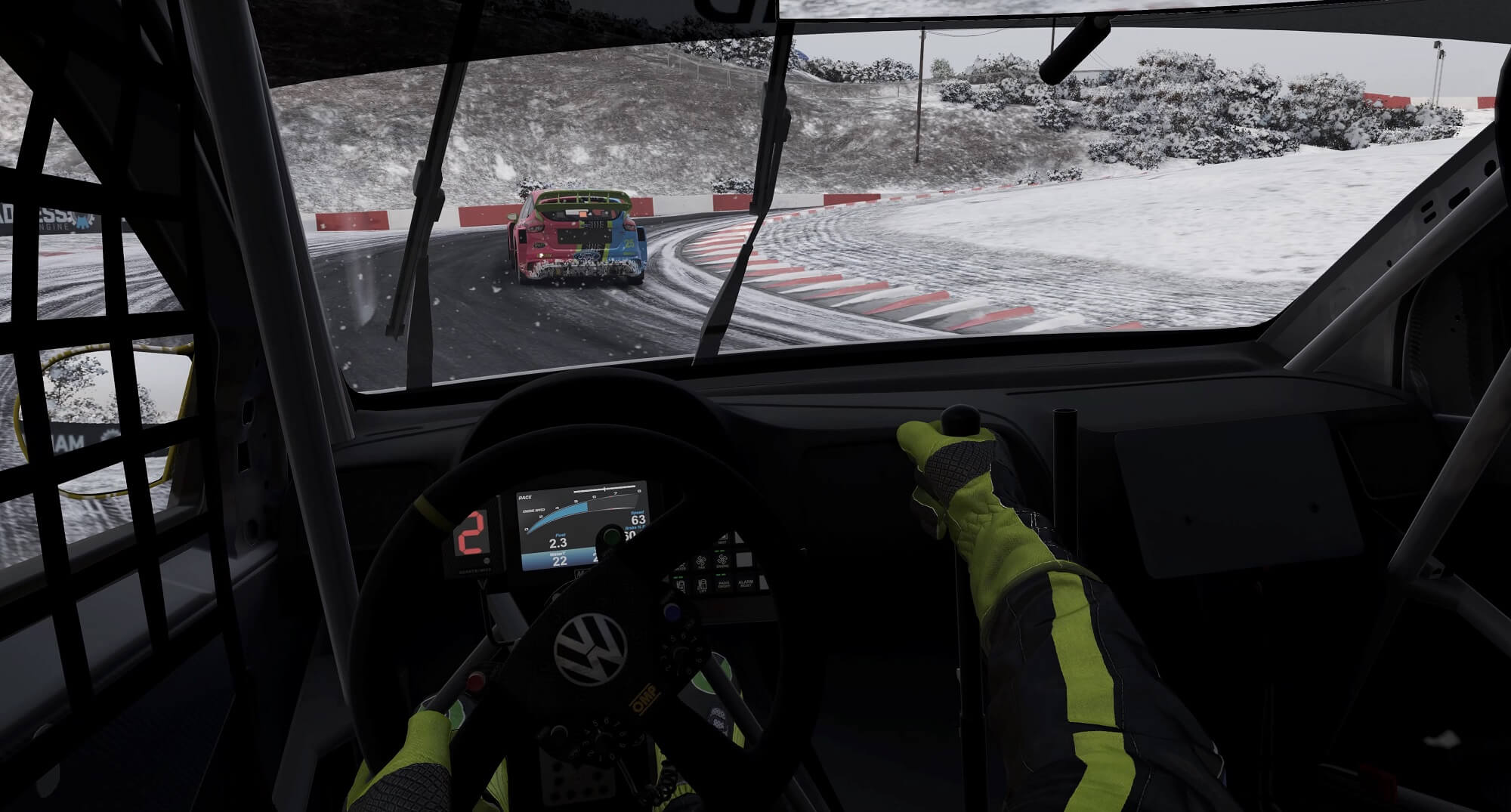
Changing the weather throughout the course of a race provides a heart-stopping thrill outside of the heated competition and challenging tracks. Adding severe rainfall, dense fog or heavy snow accumulation demands more attention to your racing. As rain puddles develop, fog blinds the next hairpin turn, or piling snow no longer makes your previous racing line accessible, thinking on the dime and adjusting your strategy to conquer the ever-changing weather becomes the only viable option to staying ahead of the herd.

Project2
The dynamic weather and excellent use of the LiveTrack 3.0 system keeps racers from feeling too comfortable during long race sessions.

Racing around sharp corners and switch-back driving behind the wheel of a Formula One style racer, or gliding around S-curves in the off-road rally events show off outstanding physics in this modern-day racer. The lighting from sun-up to sun-down colors the lively courses and decorated racecars superbly. Dirt or snow pulled onto the track from cars sliding off-road throughout a lengthy race. Aggressive drivers smashing the throttle to the floor-board waiting eagerly for the smallest chance to take your position. As tires wear, fuel depletes and the mental awareness begins to drain, every turn on the horizon becomes a an exhausting, yet thrilling ritual. As more enduring races take hold, these increasing instances create exhilarating races.

180+ Racing Machines to Conquer

Of course, the difference in dominating the demanding weather and detailed courses could very well rest in one of the 180+ racing machines available. All with intricate details in aesthetics, handling and proper motor sounds; the roster of high-quality vehicles found in Project Cars 2 is next to a perfect list of proper machines. Though you may notice a few left out of the mix (180 is nowhere close to the total amount of excellent racing machines available throughout the generations of racing), the selection that is available brings many different styles of Motorsports to the table.

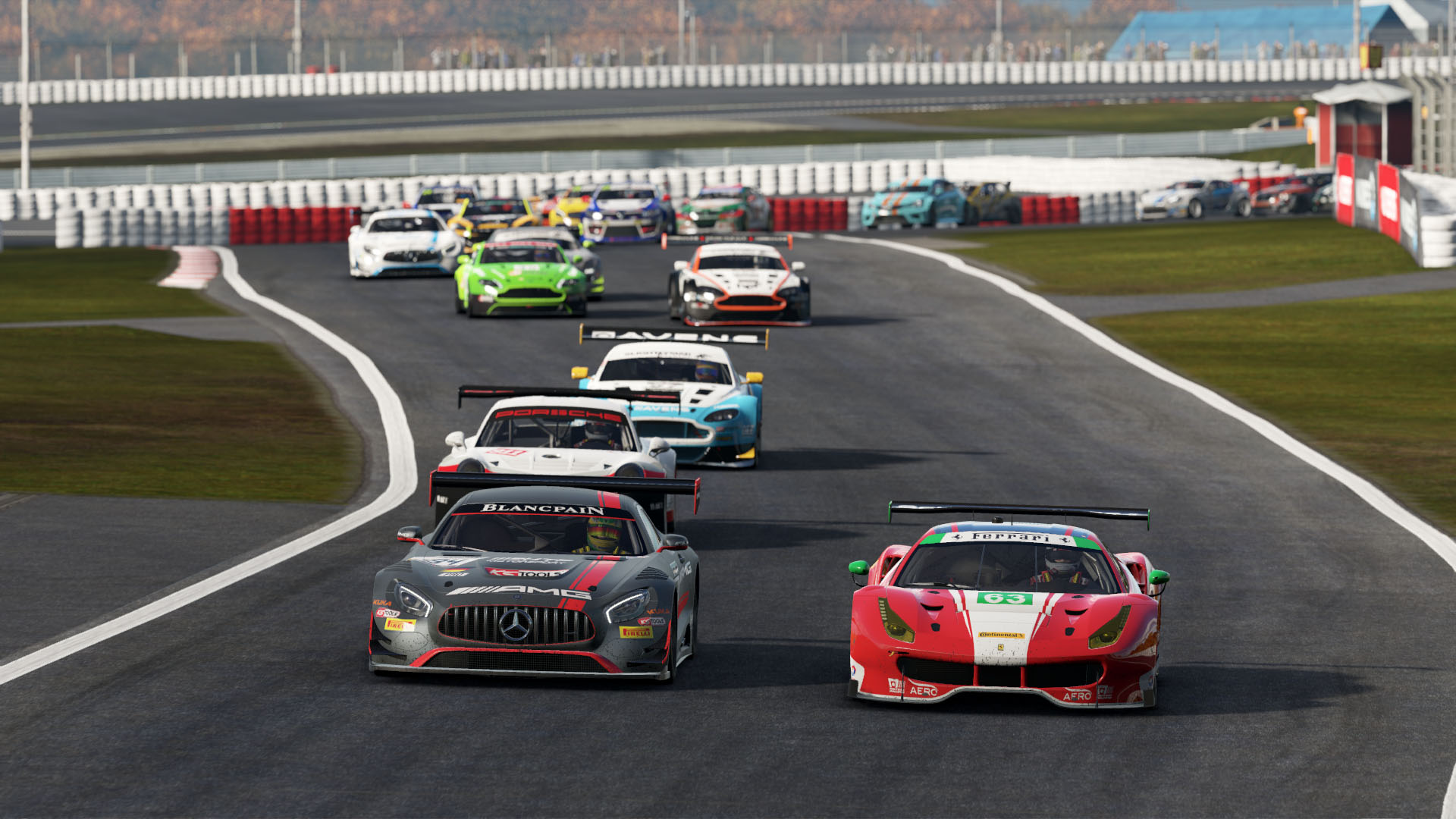
Project3
A wide selection of powerful racing machines are available right from the beginning, ranging from dirt wrestling rally cars to street gripping Indy cars.

Across the board of the Career mode, you’ll find yourself entering tons of championships and invitationals. From novice style go-karts to full throttle Indy cars – and everything in between – Project Cars 2 takes the player through the difficulties of modern Motorsports. The races are there to bring a true sense of competition by providing strategic cornering and acceleration, with a fleet of aggressive professional racers. Not only specified for hard-core racers, there’s a variety of sliders and options to help increase the odds for even the most amateur racers.

Customize to Your Liking

Decreasing lap numbers, giving yourself a boost with stability and traction control turned on, braking and steering assists, as well as the useful feature to decrease the AI difficulty and aggression; while you may not receive the full “racing sim” experience by tweaking these options, it does help ease the frustrations of the professional racing environment. Though designed as a simulated racer, players can easily use a casual approach to Project Cars 2 with the healthy dose of difficulty settings found in the Options menu.

Much like the custom race settings, in the multiplayer modes, you are able to host a number of events with anywhere up to 32 players in a race. A vast amount of customization is available, changing the class of vehicles, the weather and weather patterns, the track and how many laps, on to of tons of other settings. Championships, tournaments and other eSports focused events litter the lobbies creating a true sense of competition available to those outside of the AI challenges.

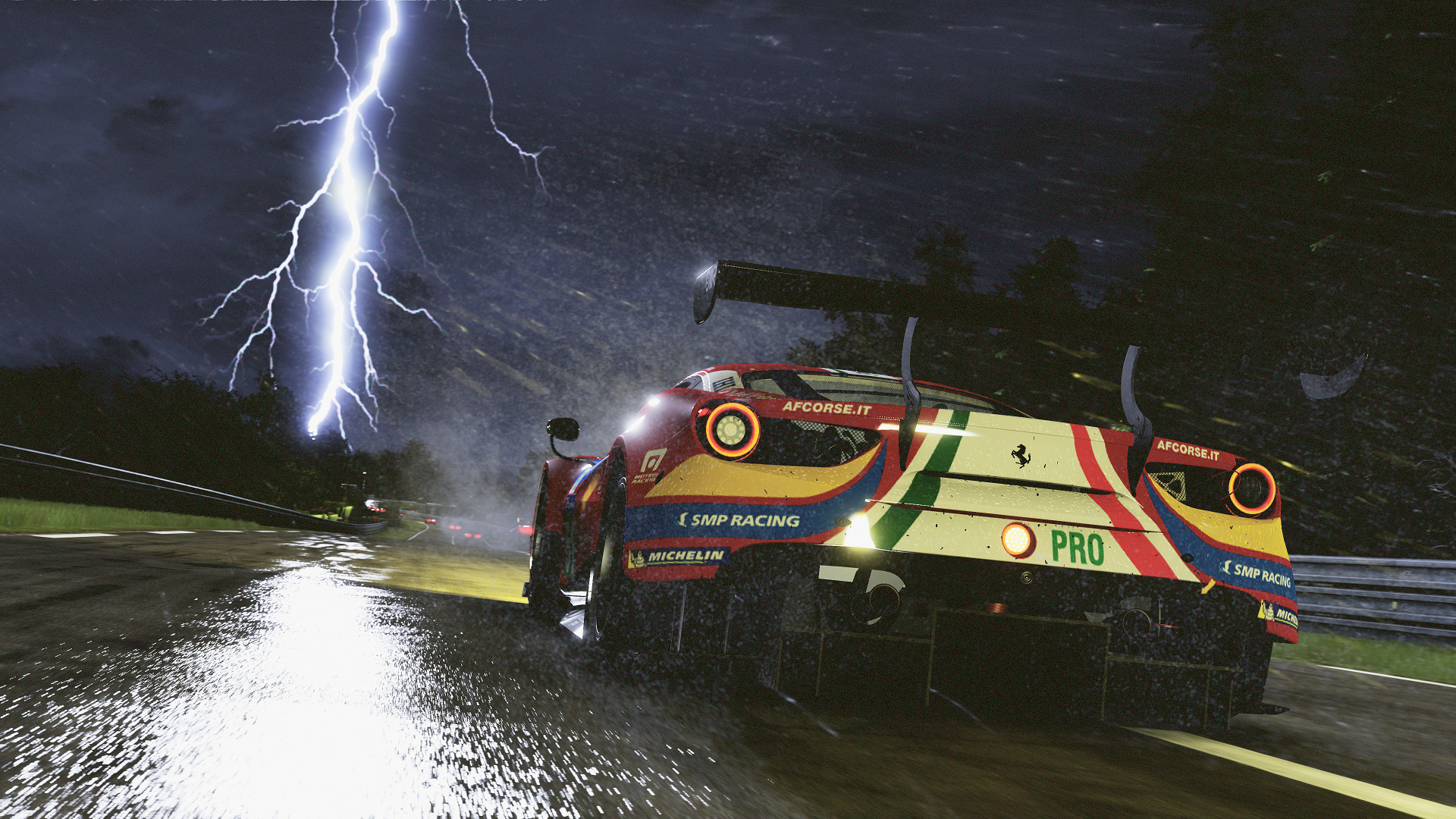
Project-CARS-2-Ferrari-488-TheAdmiester.jpg
Players are free to customize many different race options to give a truly unique racing experience not found in most other racers.

Conclusion

Project Cars 2 adopts the formula that brought Slightly Mad into the arms of car lovers everywhere. By pushing the focus on a broader selection of Motorsports, powerful cars and ambitious courses effected by a wide range of weather patterns and settings, the new generation of racing just became deeper than ever. While the car list doesn’t stretch beyond the limits of previous racing simulators who have featured close to a thousand different racing machines – Project Cars 2 does offer a broad selection, nonetheless, respectfully dipping into the wide array of each motor sport featured throughout the Career Mode.

With tons of customizing options, difficulty settings, a moderate selection of racing modes and online competition, and the aforementioned vehicle selection, Slightly Mad’s enhanced sequel is exactly that. An impressively polished adaption to the franchise, adding exciting events like Rallycross, Indy Racing and high-speed oval courses, with a mix of randomized weather occurrences properly keeps the series right on track for continued success.

techtroid-rating8

Antiquia Lost Review – A familiar fantasy RPG [PS4]

Antiquia Lost shows off its deep roots from the early years of the Final Fantasy saga, but deep down the game sits quietly with a mold of its own identity. Powerful and heroic characters mixed with emotionally charming plot lines and dialogue, Antiquia Lost brings a surprise nostalgic experience to the broad circle of traditional RPG titles.

Deep Roots

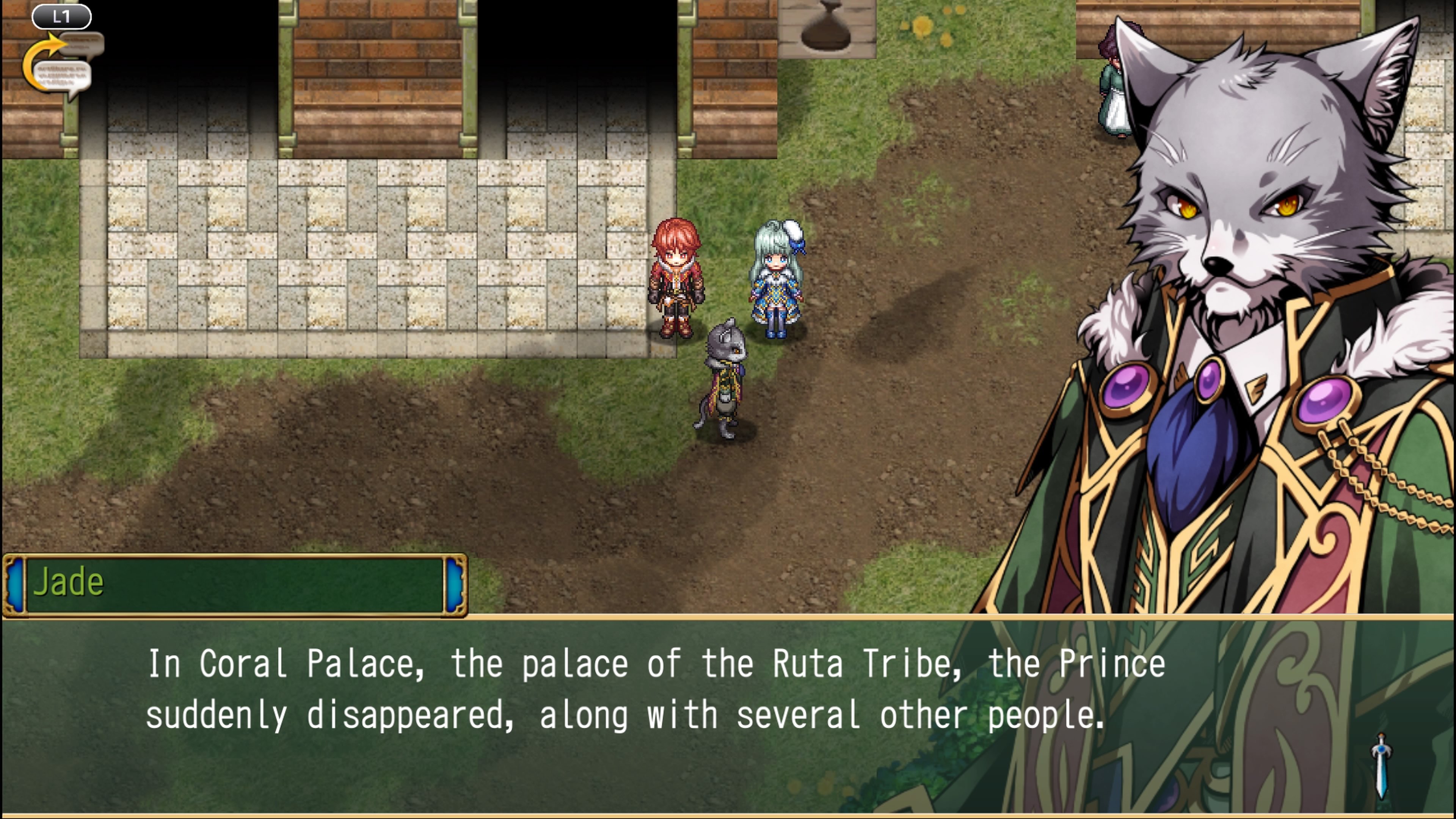
Starting the game in the small town of Crysta Village, you take control of Bine – a red-haired demon hunter engaged in the beginnings of a warm and exciting adventure. With the help of his mysterious power and newly acquired friends, you’ll dive deep into the fantasy world full of intriguing towns and villages, dungeons, as well as plenty of turn-based battles along the way.

Antiquia Lost Review
Bine and his cast of powerful allies are full of interesting and eventful dialogue moments in the charming story.

Lunaria and Safira hail from the goo-like people of the Ruta tribe, Jade – an elder of the cat-like species from the Eeth tribe and the protagonist Bine is home to the Fai tribe. Each represents one of the three elements being Earth, Fire and Water. The peaceful tribe lives in harmony with one another in the vibrant world of Antiquia Lost, until important figures from all over the lands begin to disappear. Venturing to the Capital City with your trusted group of friends, you’ll begin to uncover the truth behind the mysterious disappearances that are taking place.

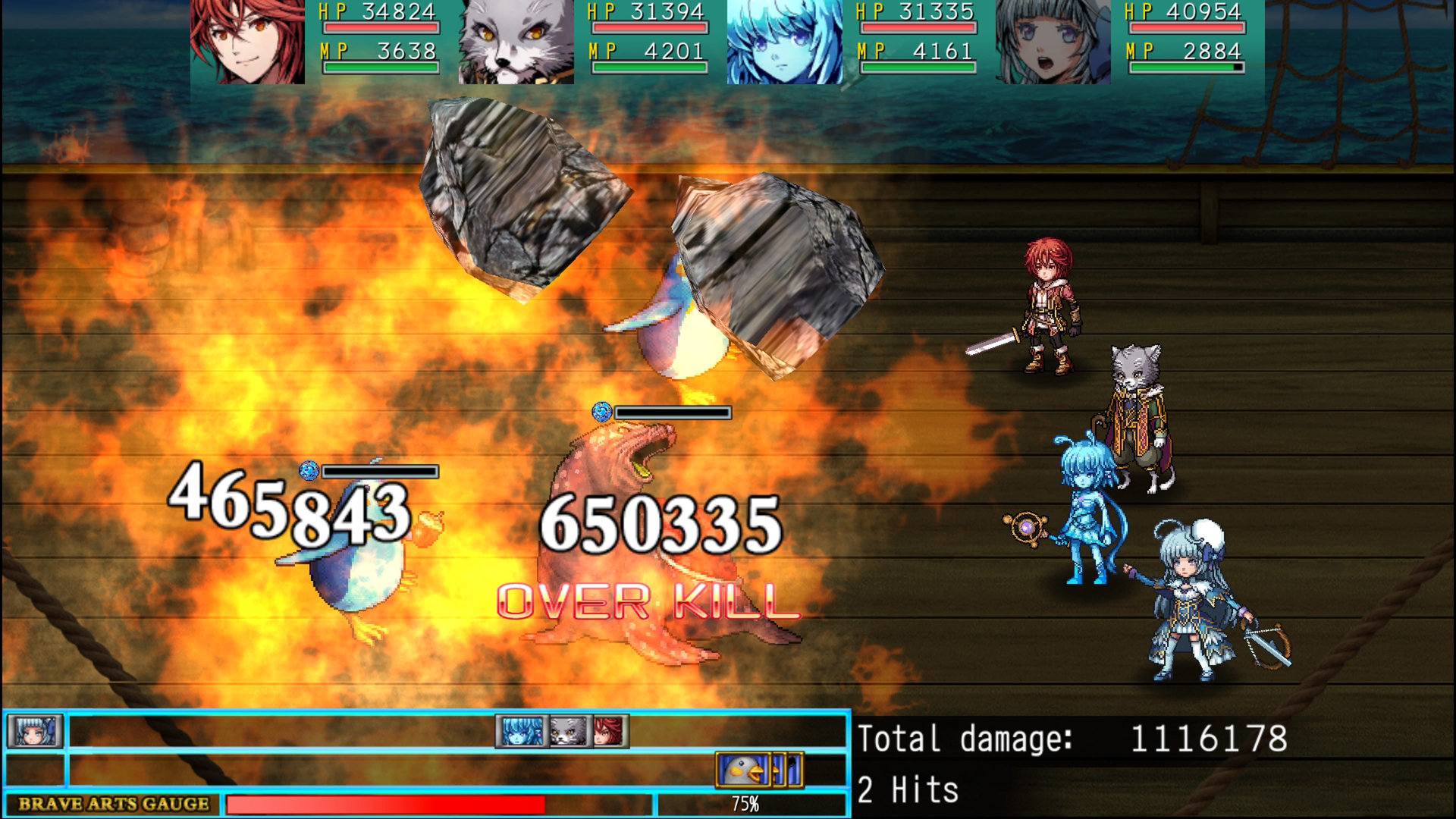
The battle system is set up in a traditional turn-based RPG format, only now with a few enhancements and quirks that help keep the game original. Each character in your party is capable of common physical attacks with whatever weapon is equipped, and of course various magic spells ranging from fire attacks, healing water abilities to ancient powers and the unique Brave Arts ability. Random enemy encounters occur throughout the sprawling world map, rewarding the player with experience points, useful items and equipment and tasty gems which act as Lunaria’s special method of leveling up.

Antiquia Lost Review
Many different physical and magical abilities are crucial in defeating the monsters found throughout the world.

New or Robust?

The storyline in Antiquia Lost doesn’t offer anything new or robust coming out of the stale isometric RPG genre, but creates a wonderful cast of friends and dialogue to keep fans of cheesy narrative lines and fantasy tales playing throughout the campaign. Talking with your party members during down time in between quests will give you the opportunity to either boost your status with each individual – or lose trust – based on the response you choose in dialogue selection areas. Paying attention to each ally’s personality will give subtle hints as to which direction to take the conversations.

Traveling from town-to-town, each small village has a number of villagers, some with additional side quests to add to the playability. Traversing back through previous areas in search of a lost item, piece of equipment or even a stray sheep, more often will result in ending these side quests with a powerful demon fight to cap off your short journey. Once you’ve fully explored the current village or dungeon to your desire, the option to move along with the story remains in your trusty quest log for quick ease of use.

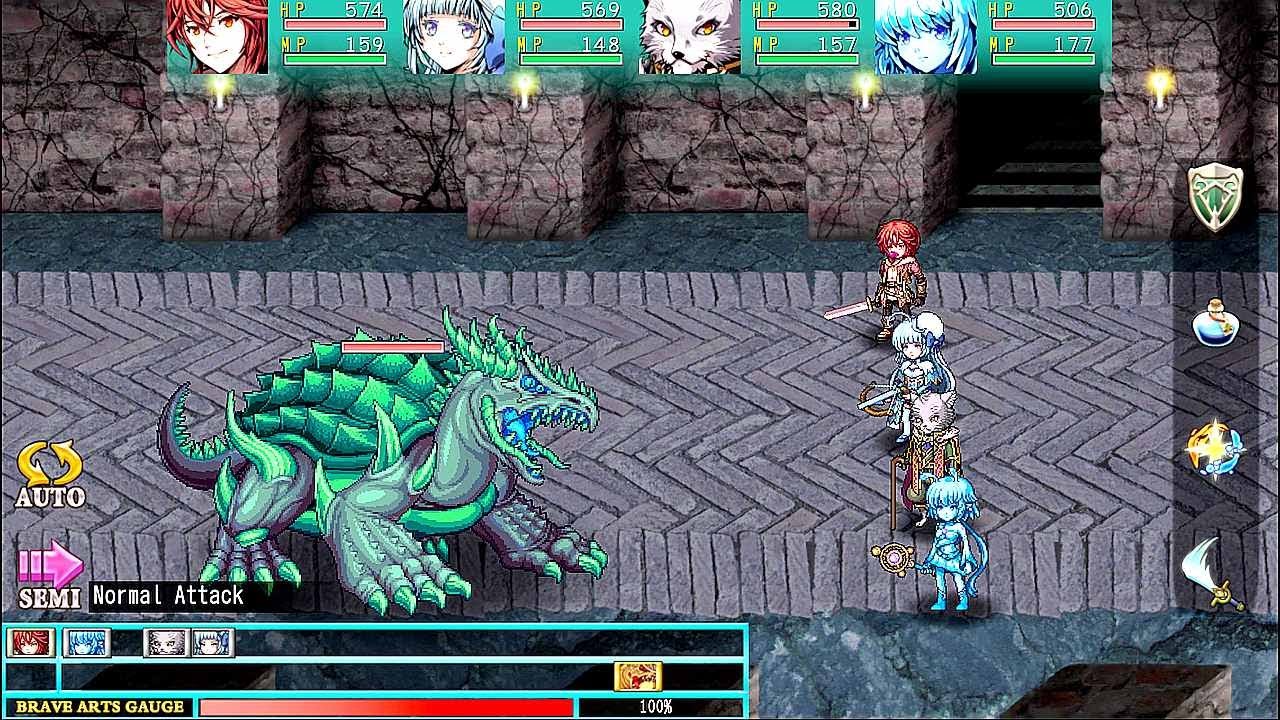
As your party members battle their way through waves of enemies, gaining vital experience and gems to help build the power of their abilities and other attributes, enemy encounters become increasingly more difficult, featuring various forms of every monsters. Color-coded by specific strengths and weaknesses, some monsters require unique weapons to be defeated, while others just require more persistence and strength.

Antiquia Lost Review
Boss battles require careful strategy and powerful skills to defeat the monstrous enemies.

Antiquia Lost Review

Using your attacks and defenses to your advantage is crucial, such as strategically using multiple-hit skills to strike down every enemy in specific rows and columns. These techniques prove useful against large mobs of enemies that out-number your party.

A large variety of supporting items are also present, curing status ailments, healing items and various fruits to help boost important stats in your characters. These fruits can be grown in potted soil kept in your inventory. After obtaining seeds labeled for specific skills – i.e. strength, vitality, speed, attack , defense etc. – as well as other rare items, you’ll plant them in one of the desired planting pots located in the inventory menu. After the timer ticks down, the fruits are ready to be harvested and saved for a time in need to help sway the tide of battle in your favor.

You can find Antiquia Lost available now on the PS4/Vita on the PS Store, mobile devices on the App Store and Google Play, and Steam.