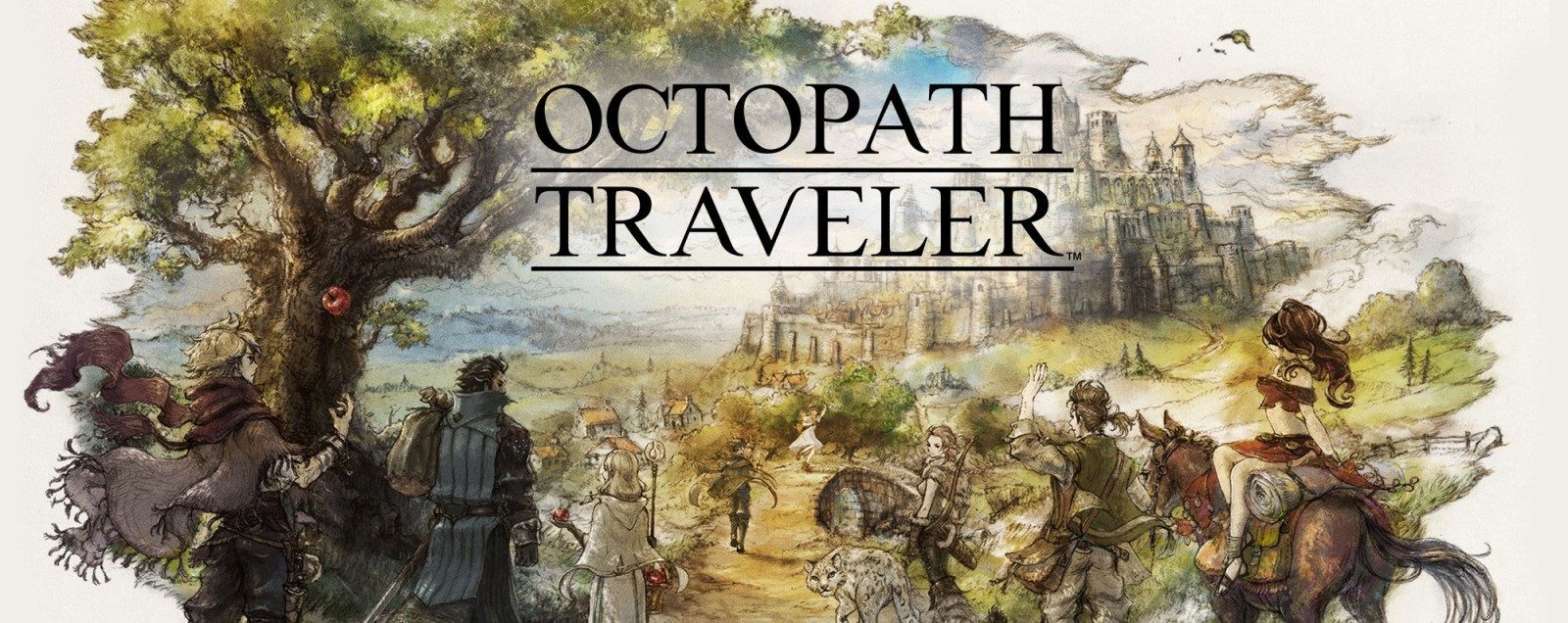
5 Likes And Dislikes Of Octopath Traveler

5 Likes And Dislikes Of Octopath Traveler

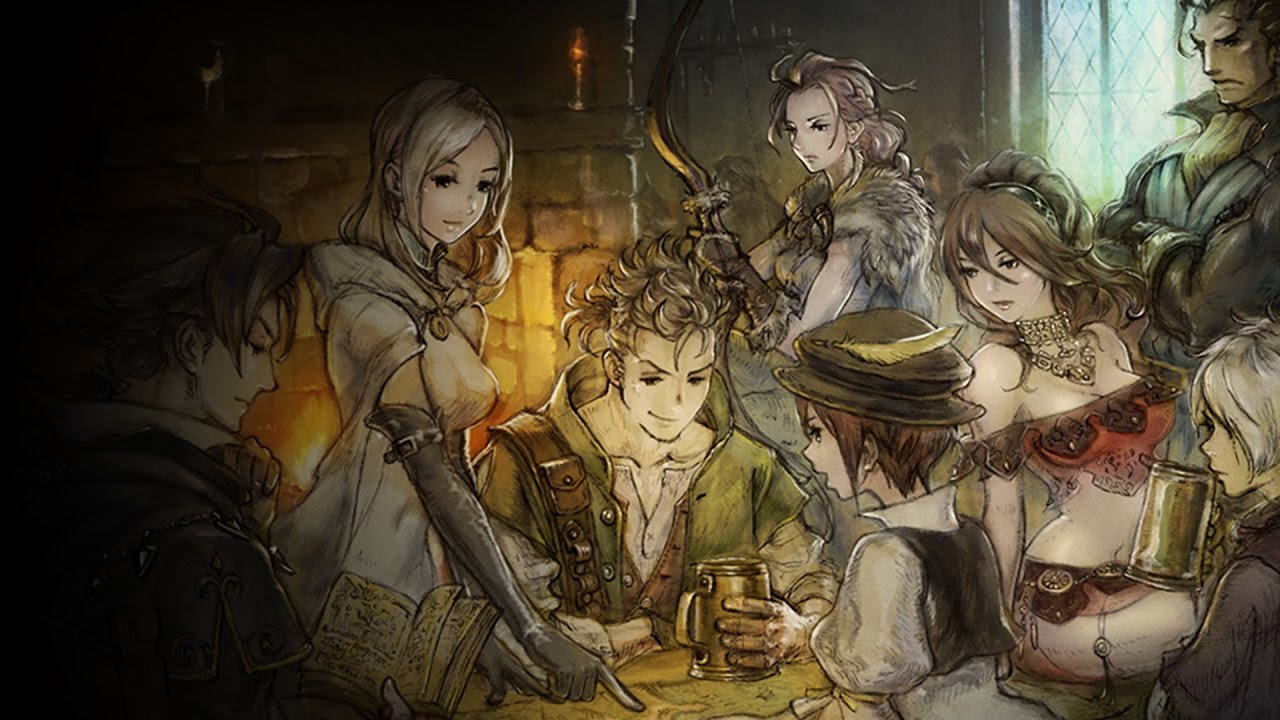
Octopath Traveler really takes me back to the old days of gaming, which is probably why I spent 30 hours of my vacation week playing it through.

Oddly, I am not a fan of the RPG game genre. I’ve never even played a Final Fantasy title. Initially, I had reserves when playing the demo version earlier this year. Despite those reserves, I purchased a copy of the game and gave it a try.

5 Likes And Dislikes Of Octopath Traveler

It turns out that I really do enjoy Octopath Traveler. With that being said, nothing is perfect. Here are five things that I love about Octopath Traveler and five things that I don’t.
5 Likes And Dislikes Of Octopath Traveler

Positives

  1. You choose your path
    • At the start of the game, I was able to choose one of eight characters. Each which their own unique backstory and abilities. As the player, it was nice to find the character that suited me best. Shortly thereafter, I began to add the other characters to my party as I progressed. Who I chose and when was completely up to me and it made me feel like I was in complete control of my journey.
  2. The game is beautiful
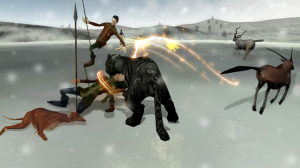
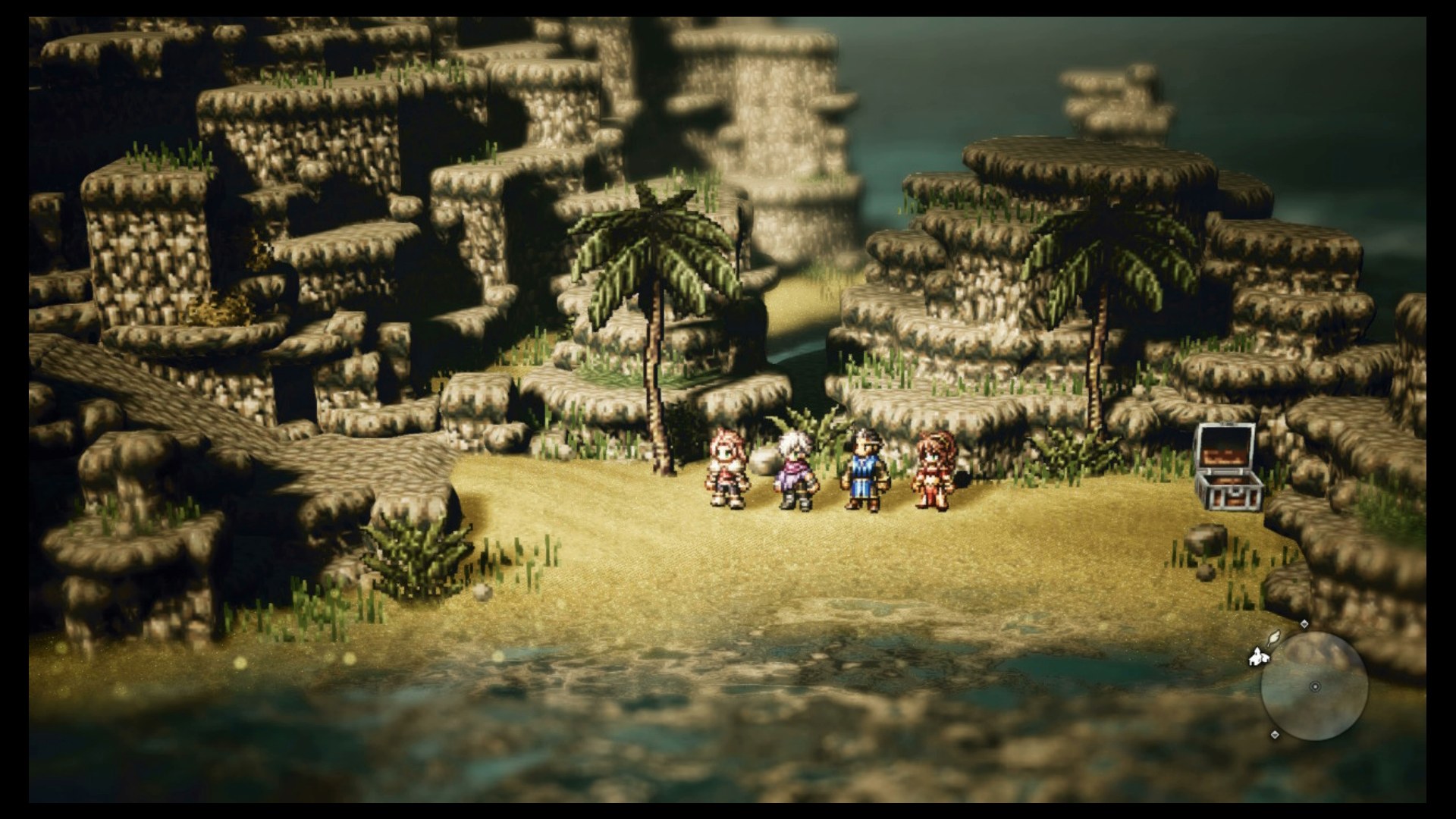
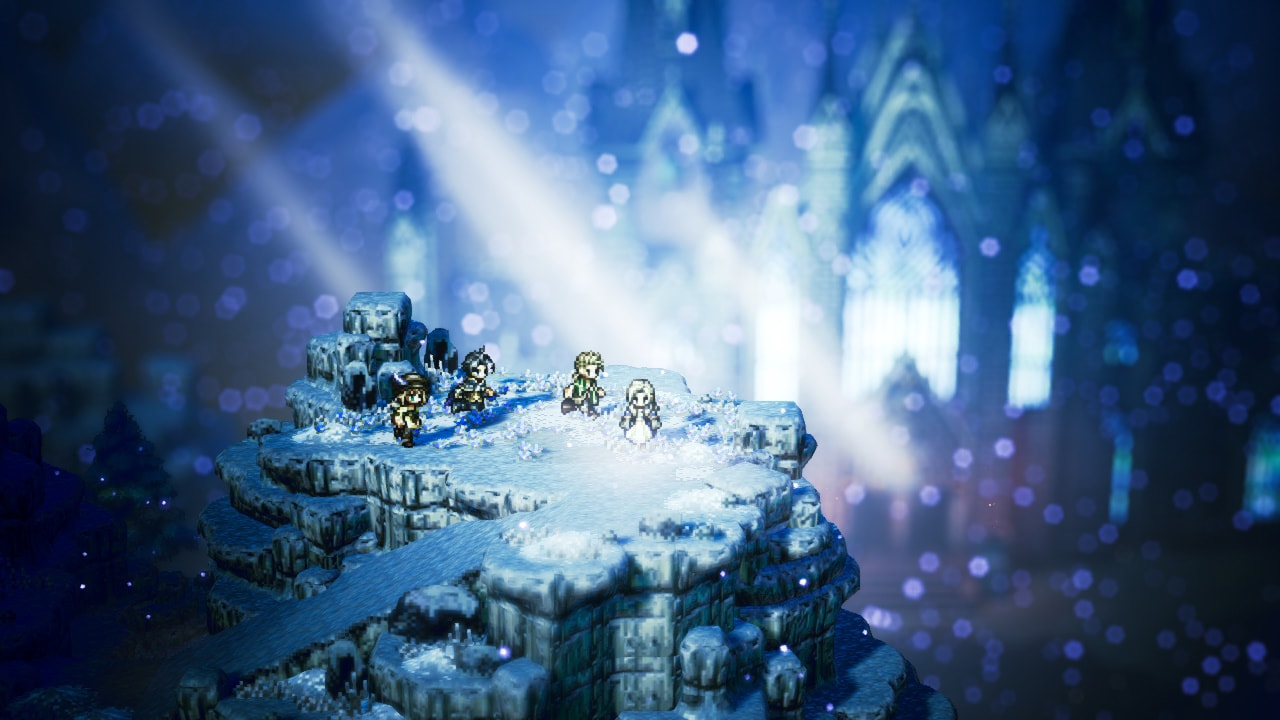
    • As I mentioned earlier, Octopath takes me back to the 90’s with its 2D sprites mixed with 3D modelling. It really shows off the beautiful landscapes and the artistic touch. What I really love about the setting is that each area looks completely different. The grassy areas really come through with the sunlight and shadows. The snowy areas are covered in white giving you a completely different tone. The game just looks amazing.
  3. Combat is easy to pick up
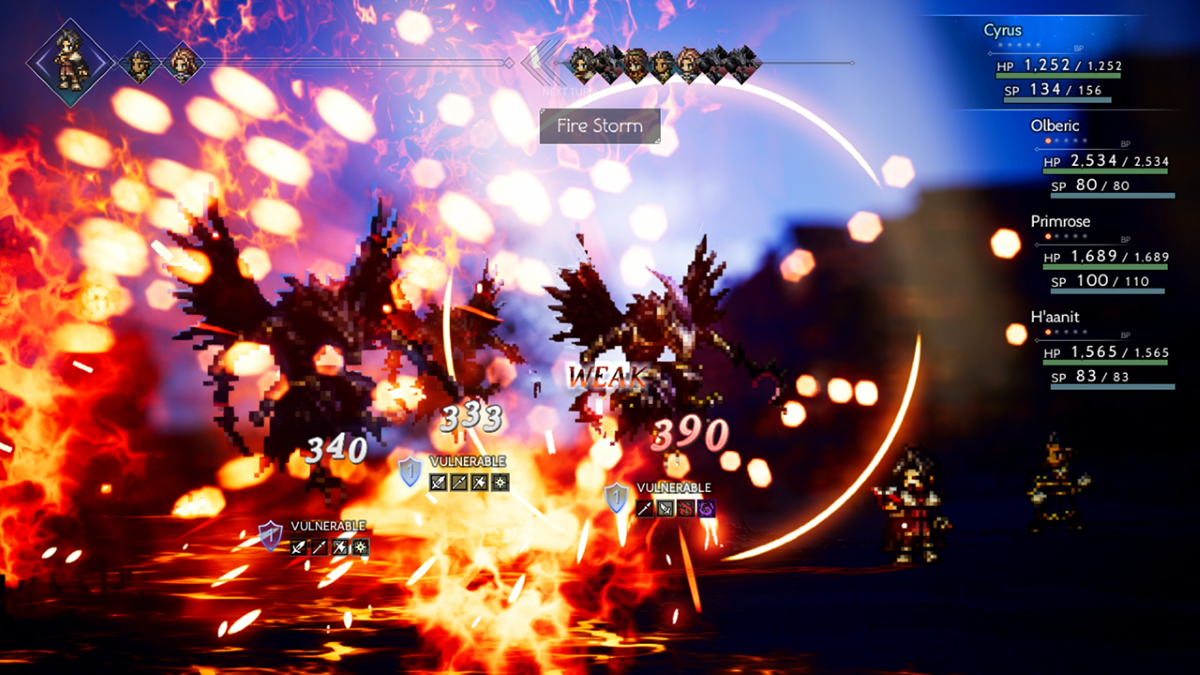
    • The combat system was easy to pick up but challenging enough to keep me coming back. Each enemy has a weakness that I could exploit with a given attack. If I hit that weakness enough times, it created a break in the attack flow. This gave me an extra round to attack and took one away from the enemy. This type of combat made me experiment with different attack types to find as many weaknesses as I could. Boss fights really put me to the challenge as they forced me to think my attacks through. Coming from someone who doesn’t play RPG’s, I had to grow into my strategy.
  4. Path actions
    • Each character has something called a path actions to use to their advantage. I started the game with Therion who can steal items from townspeople. He is also equipped with a talent of picking locks. Both come in handy for gathering useful items in battle or when I need a little extra money from selling items. There is another character named H’aanit who can provoke people into battle. She can also capture the beasts that she battles and use them to fight by her side. This really came in handy for building her HP and gaining a power boost in battle. Each character has their own unique ability and if used right, they all add something positive to the team.
  5. The soundtrack is amazing
    • The soundtrack is amazing! What else can I say here? That is all!
5 Likes And Dislikes Of Octopath Traveler

Negatives

  1. Random battles
    • One of the things I have always disliked about RPGs were the forced battles. I know it’s these battles that help you progress but ultimately, they waste time. Octopath has random battles throughout and it can be frustrating when advancing toward a boss. If there was a mechanic to turn it off, I would probably use it at certain points…
  2. Interaction among characters
    • Despite having eight characters to choose from, they hardly interact with one another. They meet initially and agree to join each other on their quests. As I played the story, rarely did they have dialogue other than a minor thought exchange here and there. I am unsure if they will ever truly come together and mesh as a unit. I guess I will have to find out but, so far, the story lacks an engagement.
  3. Grinding
    • I must say it was tough to start the game without any type of boost. In 2018 it’s rare for a game to force a player to grind. Loot boxes and microtransactions are aplenty today giving players boosts and power-ups in games. Octopath stays true to the word as I could only grind my way to the top, just like the old days. As of this writing, my top character is at level 31 and I think the top dungeon is level 45. I still have a way to go.
  4. Stories can drag
    • There is a lot of dialogue in this game which was expected. In the beginning, it especially drags. Most of it comes from the back story of the characters and how much dialogue is needed to introduce them. I decided to gather all eight characters one after another, so it really dragged early on for me. Maybe If I played through a few bosses before going to gather everyone, it would have been a bit different.
  5. Gameplay variety
    • I enjoy the gameplay, but there isn’t much variety to it. The premise is basically the same with each character. You find a character, you use your path actions, you fight a boss and you move on. I understand the need to introduce each character’s story and actions but, it could have been introduced in a more enticing way.
5 Likes And Dislikes Of Octopath Traveler

Overall, I really do enjoy Octopath Traveler and I commend Square Enix for their contribution. For any Nintendo Switch owner, I would say that this is a must-have game.

For me, it’ll have me taking a second look at the RPG genre. I need to know what the hype is around Final Fantasy. It’s time!
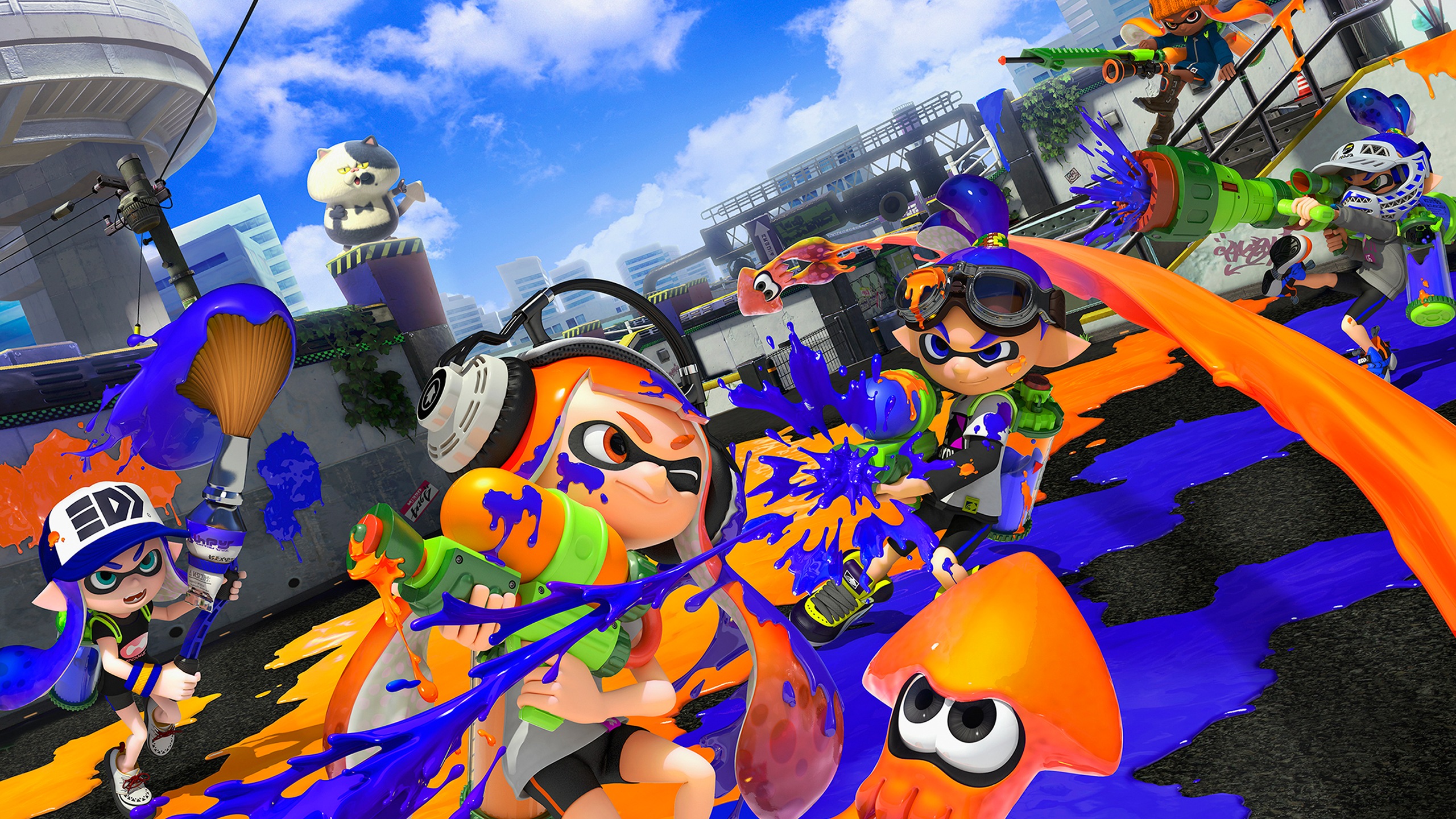
Splatoon 2 Is The Most Unique And Fun Multiplayer Experience I’ve Had In Years

Throughout my middle school days up until today, I have always been a big fan of multiplayer shooters. I’ve put plenty of hours into all the major franchises, from Halo to Battlefield and Call of Duty. Here’s the problem with playing these games for the past 10 years or so: they’re all different games, but they all have very obvious similarities. From identical game modes to similar movement abilities, to carbon copies of guns from one game to another, everything starts to feel a bit samey after a while.

For the past couple of years, I’ve been waiting for a new shooter to grab my attention and bring a breath of fresh air into the multiplayer shooter realm, and Splatoon 2 has been the answer to my prayers.

Having never owned a Wii U, I never got the opportunity to play the original Splatoon. In fact, with the advertising and all the bright colours, and ‘kid-ish’ looking characters I assumed that Nintendo was just making a multiplayer shooter for the young crowd. So, I immediately wrote the game off and never really thought about it again.

That lasted up until the Switch’s announcement press conference, where I was immediately sold on the console. I’m not going to lie though, I was worried about the lack of titles that were announced.

turf war
‘It’s just for kids?’ Ignorance!
Even after owning my Switch for months, I was still very sceptical of Splatoon 2. To be honest with you, I was not planning on buying it at all. That was up until one of the Splatfest demos for Splatoon 2. I said “why not”, and gave it a download. After a few matches of figuring out the game’s mechanics, I was hooked. I believe that Splatfest was live for about three hours, and I played it for almost the whole allotted time. No joke, right after the Splatfest ended, I immediately put in my pre-order.

You’re probably asking: what is it about Splatoon that separates it from other shooters, Trevor? Well, I’ve been thinking about that myself, and the answer is that Splatoon is such a unique experience that almost everything it does is different from any other mainstream shooter. Let’s first start off with the fact that everything you do in a match helps your team.

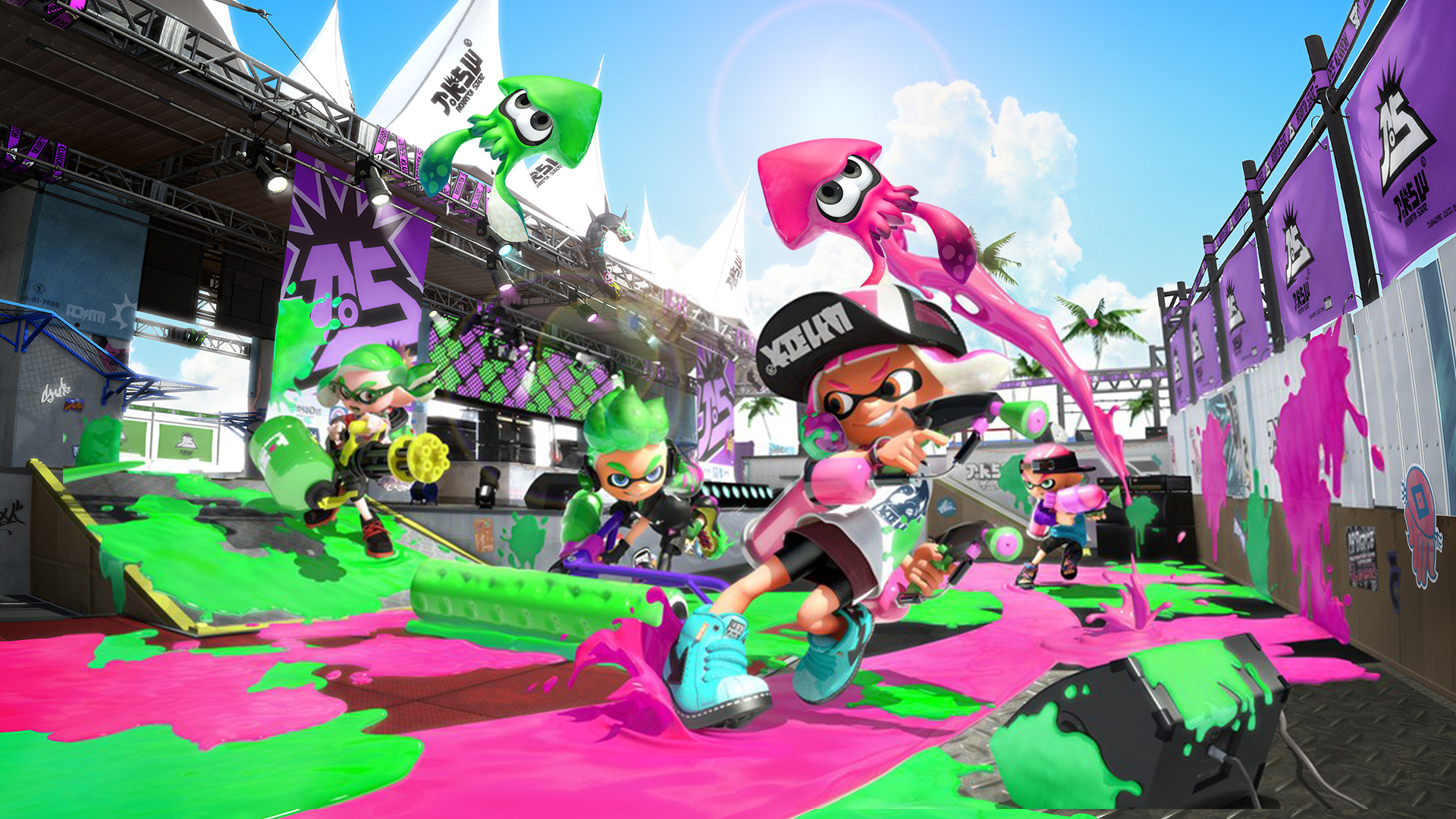
Let’s use my girlfriend as an example, she averages only about 1-3 splats (kills) a game, and she is almost always at the top or near the top of the team. How is that possible? It’s because in Splatoon getting splats (kills) is nowhere near as important as marking your territory by spreading your ink (paint) all over the map. In the most popular game mode “Turf War” that is the objective, not getting as many splats as you can, but covering the map as much as possible in your coloured ink.

In fact, Splatoon doesn’t even have a “team deathmatch” game mode, it’s all objective based. As long as you’re spraying your ink everywhere, you’re helping your team in one way or another. Basically, you’re doing something productive all the time, and that’s saying a lot in comparison to other shooters out there.

Secondly, the replay value is unreal. In Splatoon the map rotation changes every two hours of real time for each mode. This means you can be playing the same couple of maps for two hours straight and then the rotation changes, which makes the game feel like a fresh new experience all over again. The next thing you know it’s 4 hours later; your whole day is gone. Trust me I’ve done it.

In addition to this, the game has multiple different ranking systems. It has its standard 1-50 levelling system that all other shooters have, where you rank up over time through gaining experience points. It also has a competitive mode, which has its own ranking system altogether. This system is very reminiscent of the classic Halo 2 ranking system that got people hooked back in the original Xbox days. In Splatoon, the rankings start at C- and can go all the way up to the highest of S+. You go up in rank by winning and can go down in rank by losing.

sp2
As expected, there is very little grey here.

Thirdly, is the customization. Your inkling “character” is unique and you can customize how they look and what they wear. In fact, I have yet to see an inkling that is identical to mine. This adds a level of personality to the game that most other shooters don’t have because in those games you’re either generic soldier A or B. In Splatoon’s main hub world there are many shops that hold new clothes/weapons for your character. Each piece of clothing is different, because each one has its own stat boosters attached to it.

So, you can spend hours trying to find the best outfit to fit your play style. Just like the maps, the clothing items update every couple of hours, so you’re always on the hunt for that new piece of gear. Then comes the weapons – in Splatoon every weapon feels different from the other. From the guns, to paint brushes and paint rollers, every weapon has its own play style and pro and cons. It’s up to you to find out what you like best, and what works with your play style. Personally, for me, I’m all about the Slosher, the unstoppable paint bucket, and the Splat Dualies, which are essentially akimbo submachine guns.

Last but not least are the game’s mechanics: how it feels. Running at a smooth 60fps, going around inking your territory, sliding in and out of squid-form and blasting your way through your enemies just feels amazing and responsive. This is one of the fastest-paced and smoothest feeling shooters out there, in my opinion. If you have a Switch, you should probably go out and get the game. It’s one of those special Nintendo experiences that won’t ever get the same amount of attention that Mario, Zelda, Pokémon or a Smash Bros. game does. Most importantly of all, it feels fresh, unique, and pretty courageous too. For me, those qualities are what I look for nowadays.

What do you guys think of Splatoon 2 so far? Have you picked it up yet?

Past Blast: Chase The Express – Staying Above 50mph

What to say about the 90’s? Take That, Shell suits, Cassettes, the rave culture, Brit-pop, The X-files, The Outer-Limits, Steps, Strange but True, Sony PlayStation, VHS, Eclipse clothing, tramlines, the ear stud, Pokémon, Nintendo vs. Sega, Eerie Indiana and the Hollywood Blockbuster action movie.

In the 90’s, TV, clothing, music, brands and movies were events; they meant something. One burst out of nowhere, full of high octane action and was all thrill; that movie was the legendary ‘Speed’ starring Keanu Reeves, Sandra Bullock and Dennis Hopper. An action movie that defined a generation with cheesy dialogue, a simple plot and a 1 hour and 56 minutes adrenaline rush.

I imagine any youth of today may laugh at the above comments on Speed, yet, I’m not kidding. Speed was the must-see movie that even had its own simulator. Speed later influenced one of gaming’s beloved franchises: Metal Gear Solid. With the first Metal Gear Solid soundtrack ripping off the Speed soundtrack (seriously, someone should have been sued) and Metal Gear Solid 2’s Fat Man being inspired by Dennis Hopper’s character.

But there was one game that feels like Speed the game just without the staying above 50mph, being on a bus and Sandra Bullock – that game is Chase the Express.

Covert Ops: Nuclear Dawn (let’s be honest, that title sounds like a prog album) in America, was developed by Sugar and Rockets, and published by Sony Computer Entertainment in Japan/Europe and Activision in America. It was released in the dawn of the new Millennium for the PlayStation.

You play as Jack Morton (maybe I’m reading into it too much but the main character from Speed is called Jack) a NATO officer sent to board the Blue Harvest, a train carrying the Ambassador that’s been hijacked by the KGB who now have access to nuclear bombs.

You are the sole survivor of your team after missiles strike your helicopter, nevertheless, you’ll see many characters on the way, Christina Wayborn – one the ambassador’s special police, Philip Mason – the ambassador’s secretary.  As Jack, your job is to stop the terrorists and ensure none of the nuclear bombs are detonated.

Ok, but what about the gameplay? I hear you say that – I was going to tell you if you calm down and listen. Patience is a good thing.

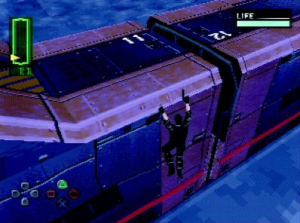
Chase the Express is a third-person action game with puzzle elements and item management. It features the obligatory tank controls suited for the fixed camera angles you’d expect from a game of the genre and time; however, the environments are modelled in 3D meaning you can slightly alter the camera angle.

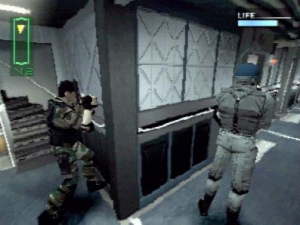
The puzzles are your typical ‘find item, and place item in said obvious place’. Firearm combat auto aims at an enemy with a ring that will appear around them – changing to a darker colour, it indicates you can deal more damage and if you run out of ammo you always have your fists.

Stealth mainly consists of you walking to one of the side cabin, waiting for a geezer to walk past, and walking out while his back is turned. Another option is popping out of cover with an action roll or dodging certain attacks; you Souls veterans will feel right at home. The game does it’s best to mix the gameplay up with controlling the speed of a train to match another train, multiple scenarios/endings and a bomb disposal section where the wirecutter is the slowest machine I’ve had the pleasure of enduring.

The highlight of this game is by far the dialogue, writing and voice acting; it’s so terrible in that PlayStation 1 way that it provides the game entertainment and lots of charm. The lines are delivered vacantly with no emotion and are disjointed. The writing – there is a section where you speak to a character about how to disarm some missiles, his reply is just “Screwdriver”. Screwdriver… Genius.

That’s the joy of this game, it doesn’t try to be something spectacular because it knows it isn’t, the gameplay doesn’t try to wow you with some special mechanic because it’s all a poorly done version of something else, the writing and acting isn’t going to blow your mind and they know it.

What the game is, is entertainment, time out of your life for 4-5 hours. In that very 90’s way, it knows what it is and what its goal is, to entertain; not too much, but enough –  it doesn’t swallow your life in the process. If this was a 90’s movie, it would come in a triple VHS with ‘Money Train’ and/or ‘Daylight’; it’s that calibre of video game.

It cost me three pounds. If there is any PlayStation one fans/collectors who haven’t played this game and they want something they can hammer out in a day or two – give it a blast. I’ll be back soon.

Past Blast: L.A. Noire – Fresh Yet Strangely Familiar

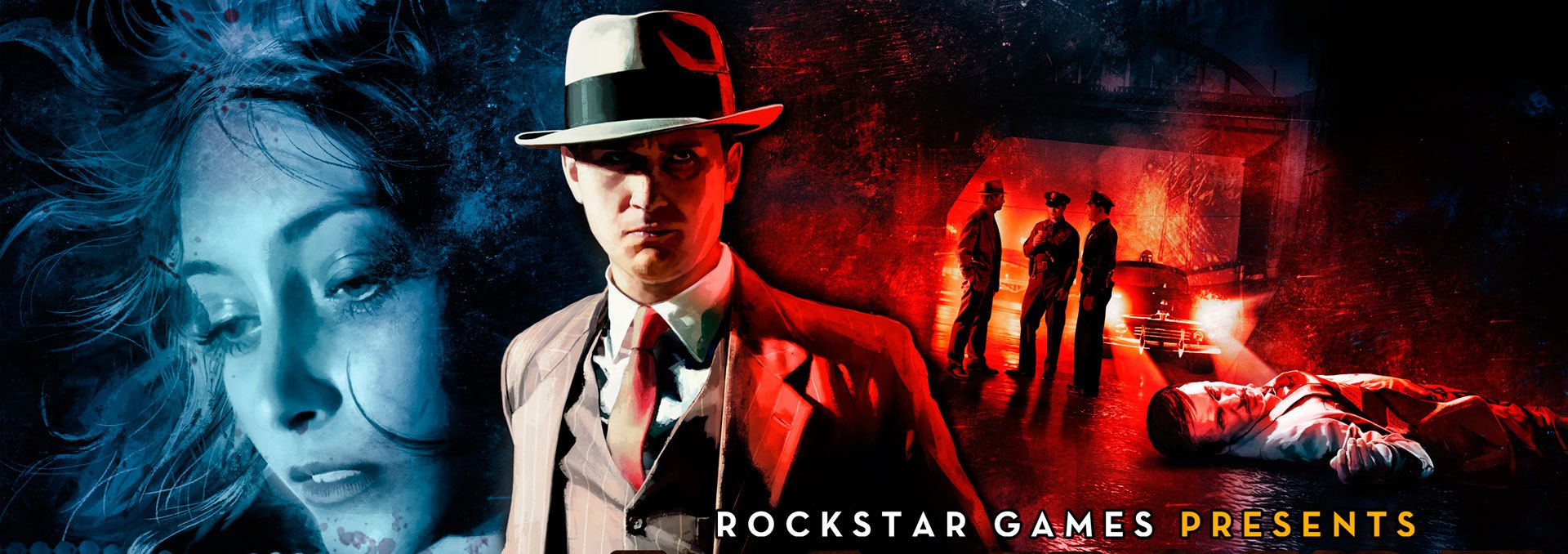
Ok, let’s get this out of the way, to begin with. This isn’t Grand Theft Auto for the 40s. L.A. Noire is not about running over pedestrians. It is a little more highbrow in fact. From the setting through to the story-telling via the gameplay, it all feels fresh, and yet strangely familiar.

Welcome to 1947 Los Angeles. You assume the role of a detective. Solving cases and swigging coffee are your forte, and you’re there to get the job done. You spend most of your time talking to witnesses and searching for clues, trying to solve cases of Arson, Vice and Homicide.

While you can hijack cars and explore the city, the main focus of the game is its strong narrative. This is beautifully complemented by the animation and voice acting. Talking about the animation specifically, Rockstar made use of the impressive MotionScan technology that really captures minute facial expressions, taking virtual acting to another level.

The cutscenes were tightened and more polished than the Grand Theft Auto series too. All of these improvements mean the narrative, was and is, conveyed in a sublime fashion.

John Noble.jpg
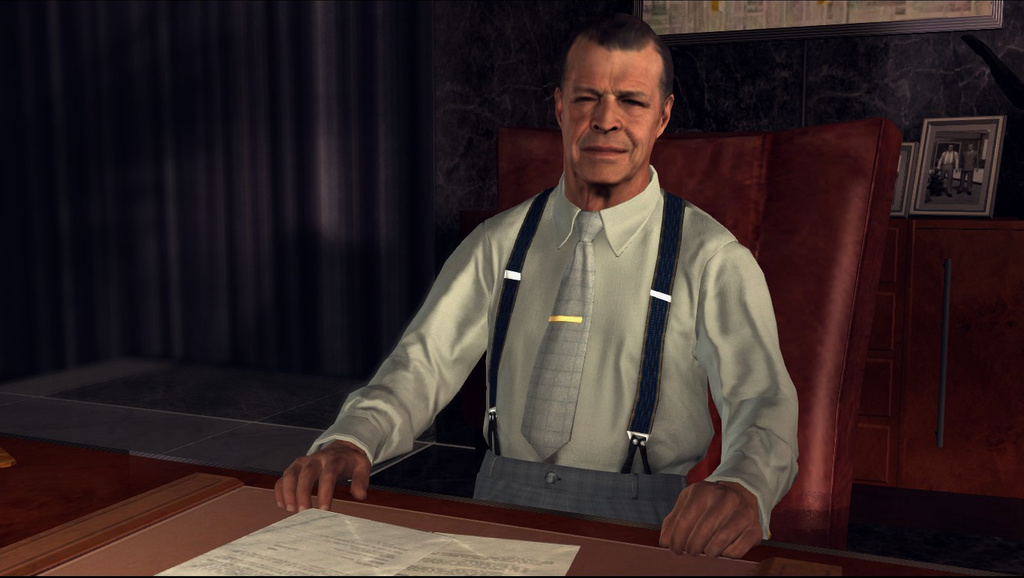
Even the mighty John Noble was in it.

But how does the gameplay fair? Well, oddly enough the advanced animation actually becomes crucial here, especially when talking to witnesses. You have to examine witnesses movements and facial expressions when talking to them, trying to figure out if they’re lying. This sort of concentration the game demands only serves to further draw you into the compelling plot.

Comparisons may be drawn with past PlayStation 3 hitter Heavy Rain, in the sense that if you do read the situation wrongly, it can impact your progress within the game. But unlike the BAFTA-winning hit, LA Noire seems to take the complete experience to another level. The action sequences that complement the investigative gameplay work very well too, (as you’d expect from Rockstar).

Even though it felt more like LA Confidential as opposed to film noir, it was an awfully good game (haters begone!).

My Child Lebensborn Review [Android/iOS] – A Heartbreaking Journey Through War

My grandmother was 21 years old when the Second World War ended. Even though she was not herself a child born of war, she remembers the stigma and negative attitude that existed around children with a German father and Norwegian mother; the war didn’t necessarily end for some of these poor children. I remember her telling me stories that for her family, it was the drastic change in society that made the biggest impact.

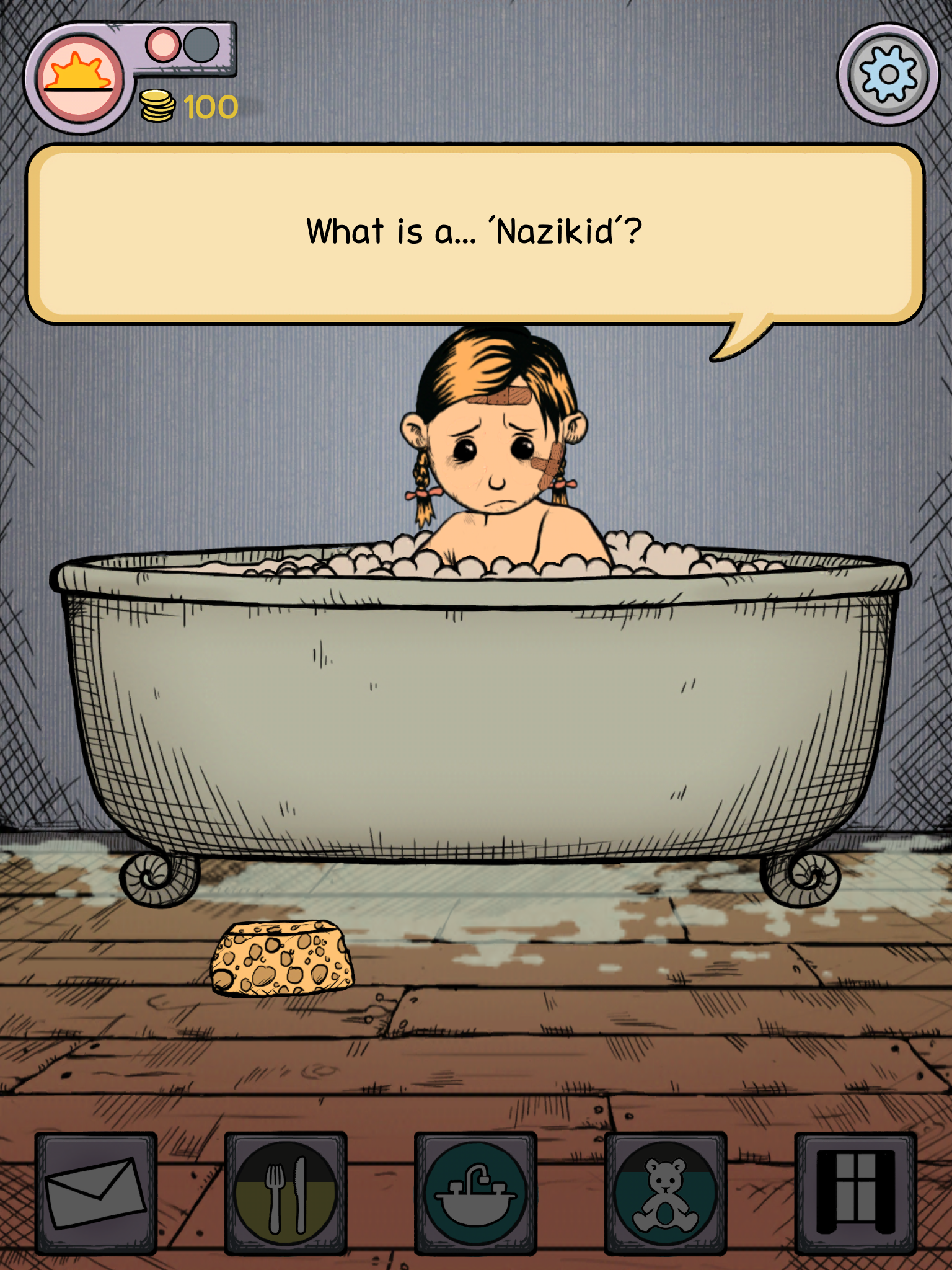
Before I continue, let me explain the word “Lebensborn”. During World War 2, children of German soldiers and Nordic women were registered to the Nazi’s “Lebensborn” program and were just one of many examples of the Nazi’s twisted look on race and genes. When the war ended, the Lebensborn children became especially vulnerable to injustice and abuse, both through adoptions and placement in children’s homes and by the treatment from general society.

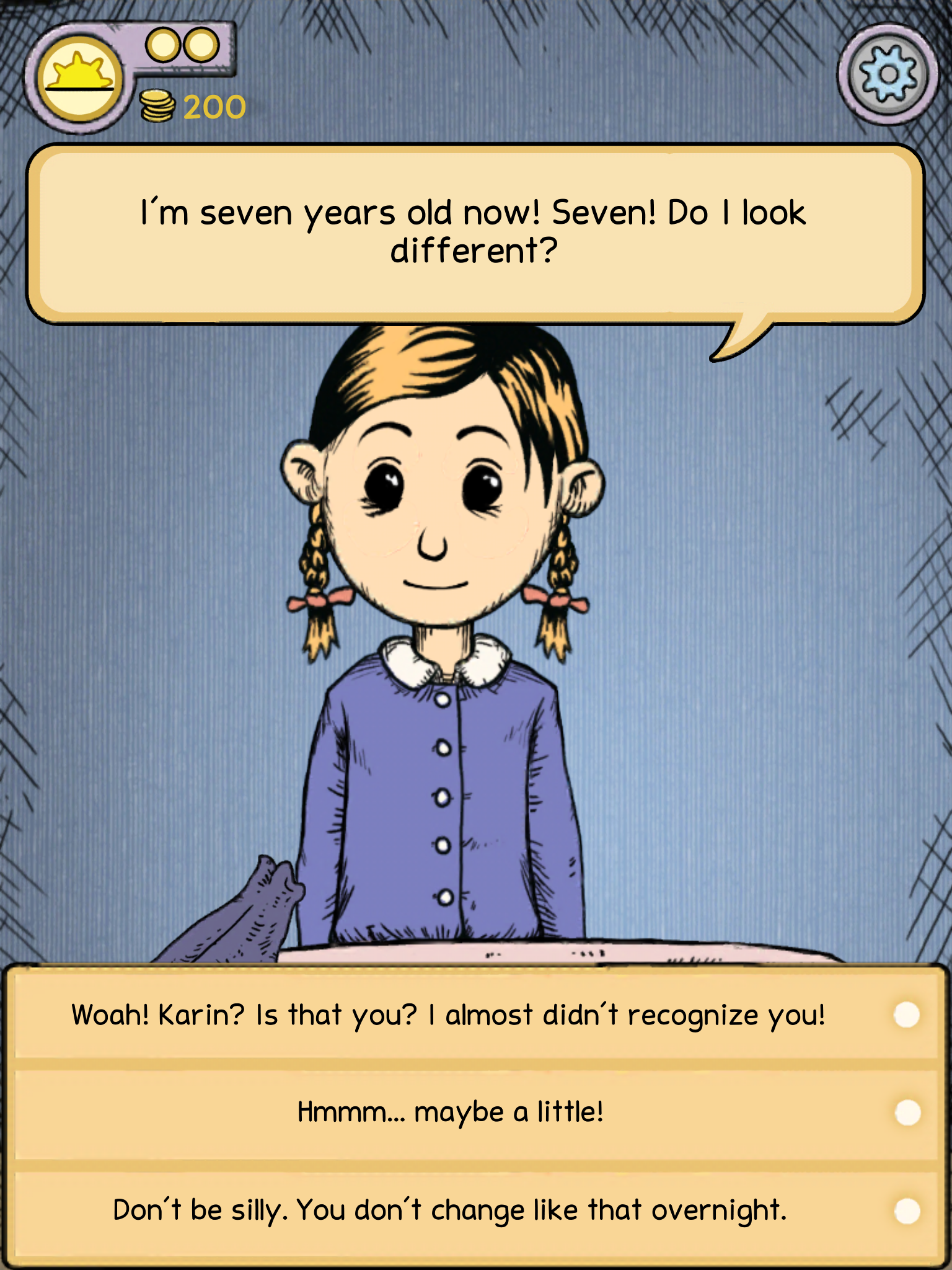
Made by the Norwegian game developers Sarepta Studio (also the creators of Shadow Puppeteer), My Child Lebensborn tells the difficult story about children born of war, and the hardship of surviving the aftermath of the Second World War in Norway. You adopt either Karin or Klaus, young children abandoned by their parents. As the sole caregiver for the child, the player has to help them survive in a post-war society filled with hate.

20180520_211355000_iOS
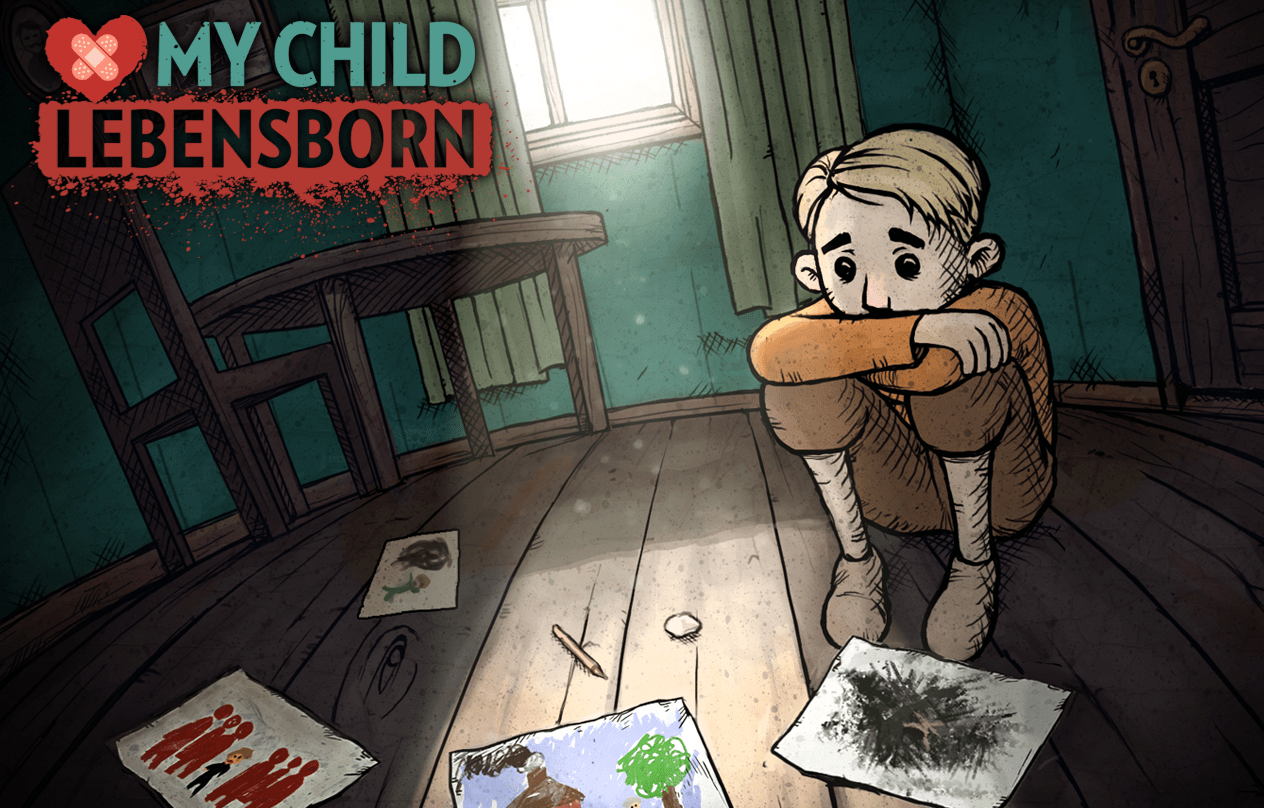
The game has a lovely hand-drawn art style.

My Child Lebensborn is a story-driven nurture game, where each day is split up into four parts, morning, midday, afternoon, and night. During each part of the day, you have two or three “energy bars” – each action you take depletes one of these bars. I have to feed Karin, give her baths and take care of her; reminding me very much of Tamagotchi in terms of gameplay. This also involves buying and making the food, fixing her clothes, and reading bedtime stories.

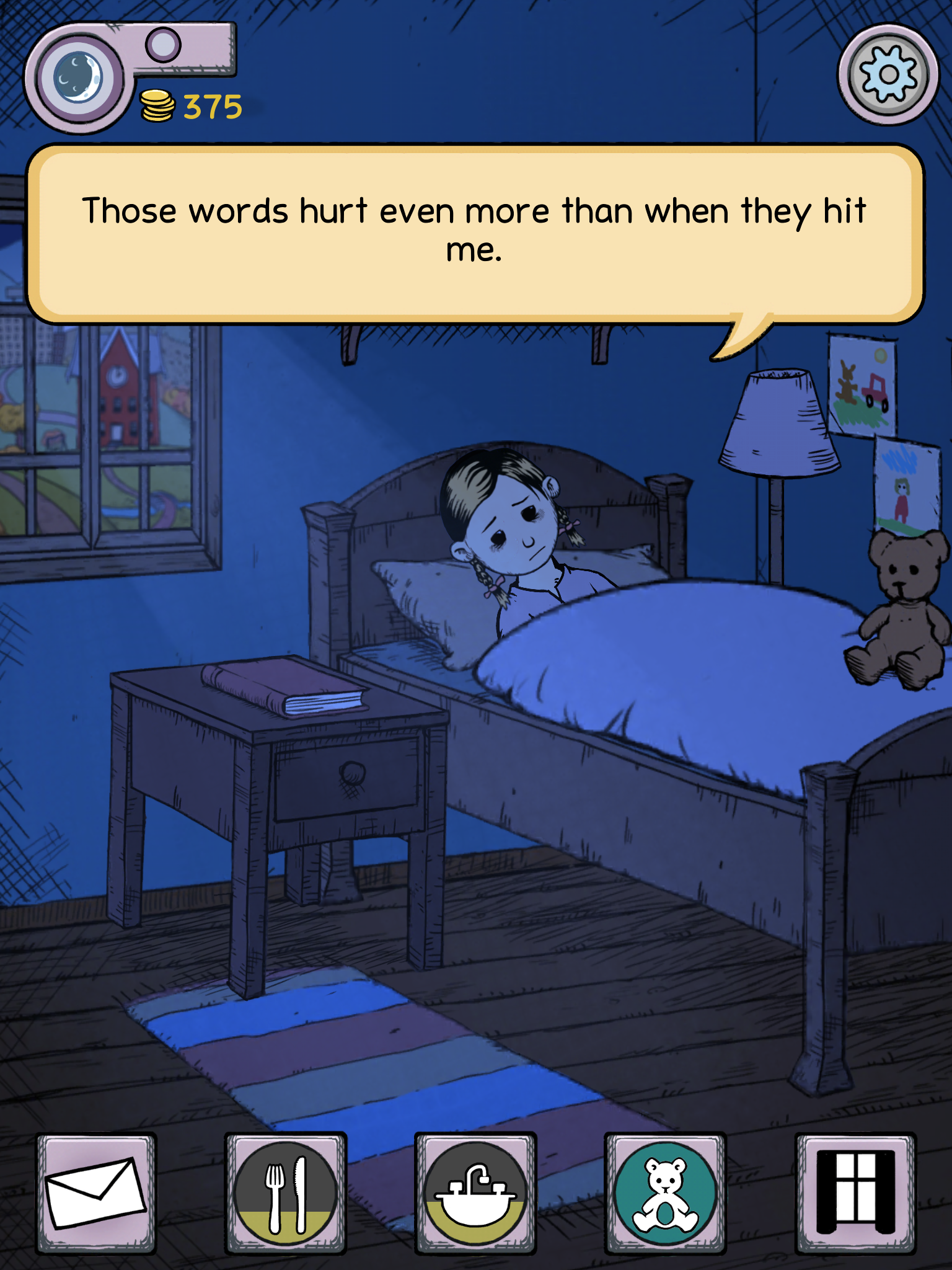
Karin goes from being a happy child, feeling hopeful and eager to meet the future – to becoming a child that questions her own existence, the spark of life taken from her. And it is my job, as her protector, to restore it. Weighing your choices carefully is important because they shape and form the child as a person – will you fix Karin’s clothes because they were ripped up by the mean children at her school, or read her a bedtime story to calm her down after other the kids were picking on her? Work overtime to earn more money for food or go home to a child that is lonely and scared?

Prioritising is painful in this game, and I constantly wish that I had more time. The dialogue is as sweet and joyful as it is brutal and honest, and it’s up to the player to balance resources and the child’s emotional needs, where each choice you make will have an impact on the child’s personality and view on life.

20180604_092033000_iOS.png

Parenting a child born of war is far from easy; as the child becomes older, Karin eventually starts to question her own history, wanting to know more about her parents, and why the other children at their school are being so mean to her. This is where the interesting parts of the game come in; the events that happen in My Child Lebensborn are based on real events, which makes them all the more powerful. While it baffles me that people have the ability to be so cruel to a child – or to anyone for that matter – it hurts me even more that I feel helpless to do anything about it.

Because of the game’s design, the only downside would be the inevitable pattern of repetitiveness. Except for some days that carry special events, most days are exactly the same gameplay-wise. Because of that mechanism, I felt like the story went a little bit too slow. When I wanted to know more about the story, I still had to finish every chore before I could move on to the next day, which was frustrating when the storyline peaked. But I guess it’s like that by design; we’re supposed to be on edge, eager to see how the road is being paved for this child.

20180604_094042000_iOS.png

You don’t have to be a Norwegian to play this game, nor have much knowledge of the country’s history. Even though this is a story being told from a small corner of the world, they are not exclusive to Norway – children from all over the world suffered the same fate, regardless of the conflict, where they are, or what their cultures are.

Why Is Video Gaming So Complicated Now?

Two buttons and a directional pad, that’s all we needed back in the day to play our games. The NES, released in 1985, was simple by today’s standards but contained an almost endless amount of fun and intricate games. There were no shoulder buttons, touch pads, or motion controls built in. The phrase more power never passed through the lips of the gaming community, nor did developers need to design overly complicated play mechanics, just to pack their Magnus Opuses with a cornucopia of actions and abilities. As the industry upgraded to 16-bit, games were still fun, even as developers were starting to make them more complex. Jump ahead to today’s world of video gaming, things have gotten so complicated, so over-bloated, that games have stopped being fun, and turned into a commitment.

The Complification Factor

With increasingly powerful hardware, overstuffed controller designs, and epic game times of over a hundred hours to complete, I find myself shying away from certain modern gaming franchises. Here are just a few reasons why games stopped being a fun journey, and have transformed into an overwhelmingly anxiety-ridden experience.

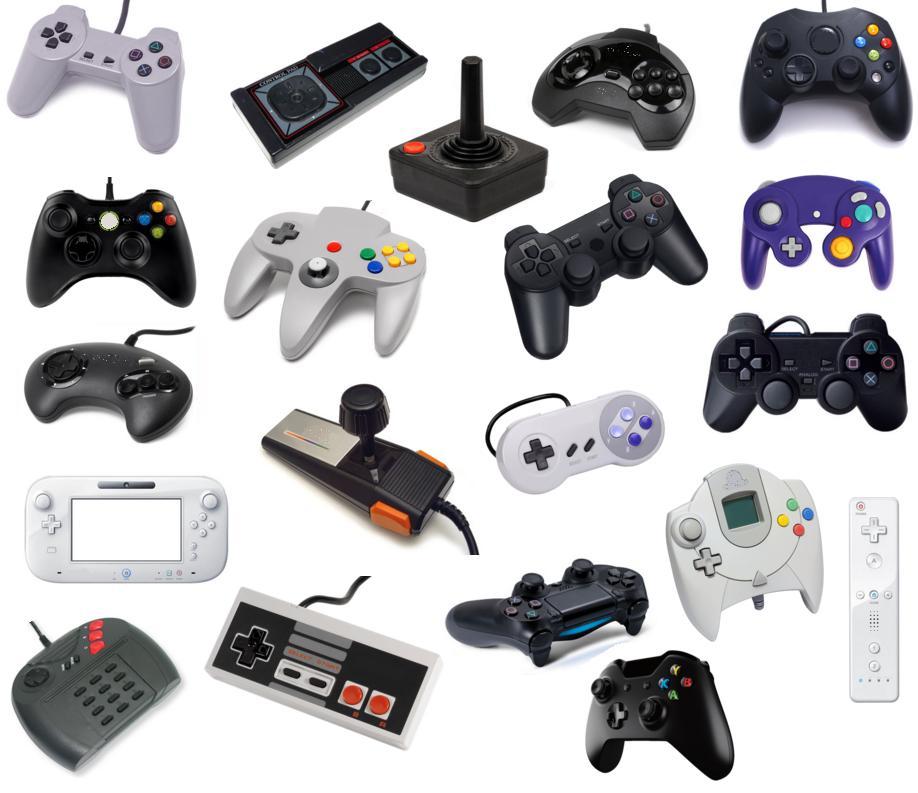
Since I brought up controller design, I might as well finish that argument to start. With each successive console release, controller redesign is always front and centre. Granted, current models have only received slight modifications over the last generation, but it took a lot to get there. We have gone from two buttons to over eleven in certain cases. Microsoft’s latest Xbox Elite Controller is truly a masterpiece in design, but with the ability to customize the buttons and the fact that it’s touted as the “ultimate gaming controller,” it’s all a bit too much.

controllers

I have to admit, I loved the simplicity of the original Wii Remote; the controller bucked the trend and it made playing a fun experience. I can’t tell you how many times when playing a modern epic like Horizon Zero Dawn or a smaller indie game such as Xenorade, I’ll continually hit the wrong button(s). It’s hard enough to remember everything you have to do in a game, but to memorize what each of a controller’s multiple buttons do at any given moment is frustrating.

Game experiences are too long, and unfortunately, I no longer have the time to dedicate to a hundred-plus hour extravaganza anymore. Popular franchises such as Fallout, Assassin’s Creed, and Mass Effect can take a lifetime to finish, and countless more hours to reach a hundred per cent (if that’s even possible). I feel guilty enough as it is playing normal length games, but a commitment that long is insane.

I am no longer a kid or in college, and I certainly can’t justify spending that much time on anything, let alone a video game. I can see it now, written on my tombstone, “Never accomplished anything in life after playing too many epic games.” These blockbusters take so long to complete because they are overloaded and filled with dump-truck loads of extraneous stuff. Players often get sucked into a rabbit hole of side quests everywhere they turn. Just to be fair, you all know I love the Zelda franchise, but even Breath of the Wild suffers from needing far too much of a commitment.

catsleep

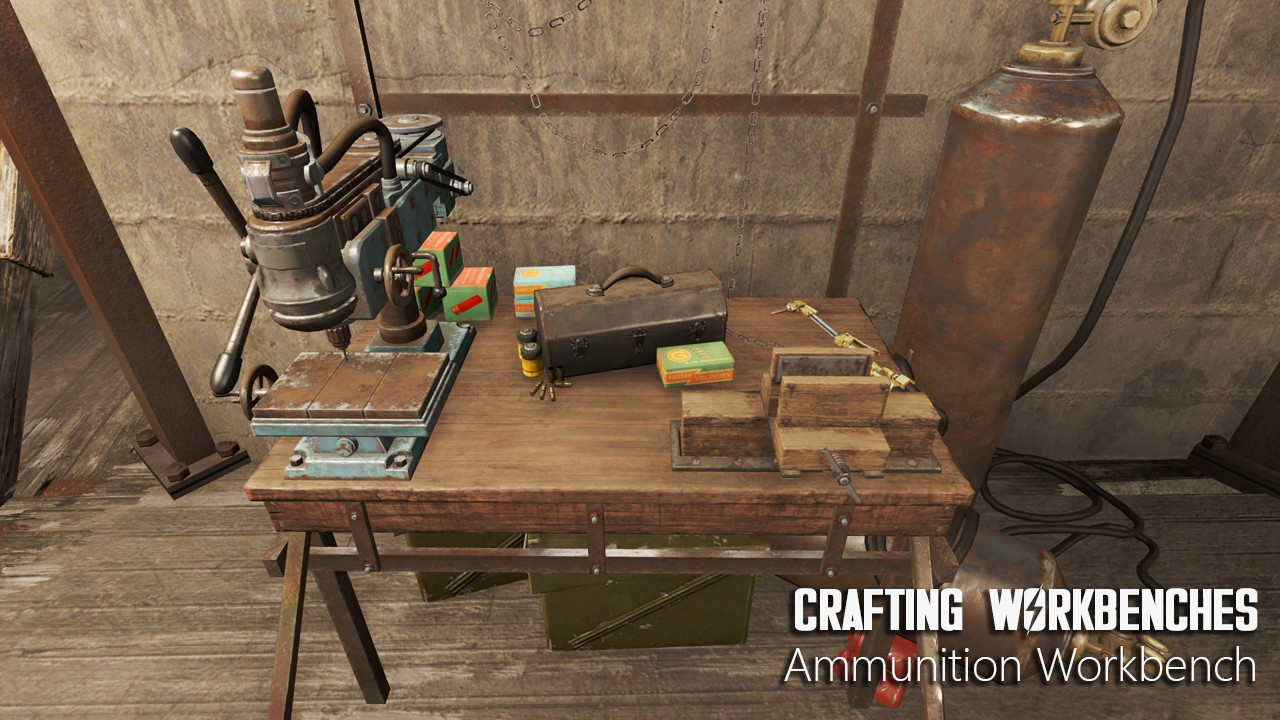
Speaking of over-bloated and overwhelming experiences, I am getting a little tired of games that require constant upgrading and modifying. From weapons to uniforms, hair colour and eyebrow placement, players have the option to modify and craft everything in these games. Watching a friend play the latest Fallout was nerve-wracking. I don’t mind a little bit of tinkering here and there since it can be fun, but when there are hundreds of things you can change, it takes away from the overall experience. I don’t want to spend a million hours turning my pulse rifle into a bad-ass, steampunk death machine; I just want to select my pre-designed gun, blow the crap out of something, and move on. I don’t mind side missions too much, but when a game is stuffed with a thousand of them, and there is little payoff, I find it to be a waste of time and energy.

crafting

Hey kids, I hope you got your allowance this week because buying the full price game doesn’t mean you get the full price experience. I am not sure when gaming became less about the adventure and more about making money, but we’ve reached the apex of greedy corporations nickel and diming gamers with pay-to-win loot crate acquisitions. EA just got in trouble for it and removed the pay feature from Battlefront II, but we all know it will be back.

Speaking of Battlefront II, it’s terrible; the game is clunky, boring, and looks like EA threw it together during a drunken holiday party. The fact that the full game wasn’t in place was even more of a slap in the face. Gaming used to be about fun, excitement, and the allure of a great adventure; now all we get is greed, contempt, half-ass developments, and developers who seem more like the mafia than beloved imaginariums.

expensive

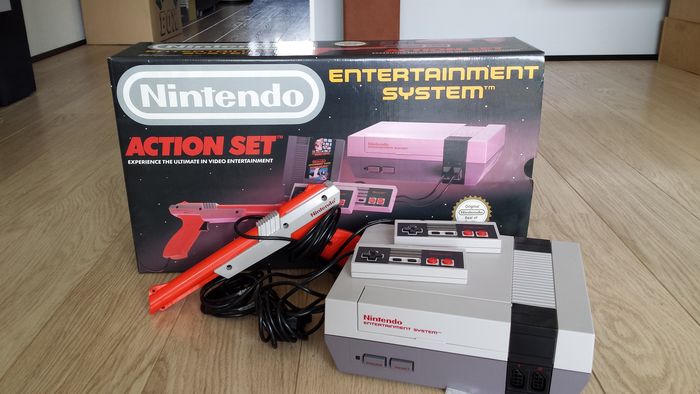
Continuing on the greed front, we used to get stuff when we bought a system. The NES and SNES came with a game and two controllers; even the PS1 had a fun demo packed in. Today we get nothing extra but a list of things we need to buy. From the console, extra controllers, games, online subscriptions, separate charging stations, carrying cases, and protective covers, the amount one could initially spend is astronomical.

When the price of the system itself starts at three to four or even five hundred dollars, all the extra accessories become a luxury most people can’t afford. This is why I didn’t buy a Switch right away, and why I can‘t see myself buying PlayStation VR anytime soon. Call me weird, but I have this thing where I enjoy eating and buying the essentials in life over an extra Joy-Con or Pro controller.

nes package

In the eighties and early to mid-nineties all you had to do was hook up a console to the TV, insert the game, and press power. There were no startup screens, multimedia hubs, camera peripherals, Kinect sensors, VR helmets, or social media postings to worry about. Games could be epic without being convoluted. It says a lot when a thirty-plus-year-old game is just as enjoyable as its modern-day iteration. I am not saying I don’t enjoy the modern epic because that would be a flat-out lie. I love games and gaming today, but I sometimes yearn for the days of my youth, when video games were simple, where fun and whimsy came at no extra cost.

Thanks for reading. You can find our YouTube channel here: https://m.youtube.com/channel/UCtnEK25byIp-yBx-eLTkcbQ

How Your Parents Bought Their Video Games

How Your Parents Bought Their Video Games

As I was downloading a game onto my PlayStation 4, it dawned on me that the process in which we purchase video games is nothing like the bygone days of my youth. Back in the ancient times of the 80’s and 90’s, we had to go to places called stores, which were constructed of bricks and mortar, and staffed by human beings from all walks of life.

These hallowed halls contained gaming wonders and often times, you could overhear the finest of nerd conversations and debates.

It not only saddens me that those days are most likely over (with a couple exceptions), but it makes me weep for the younger generation who will never know what that experience was like. For all those who don’t know what video game buying was like oh so long ago, I am going to list all the places and experiences from my childhood where one could go to treat themselves to a cacophony of gaming.

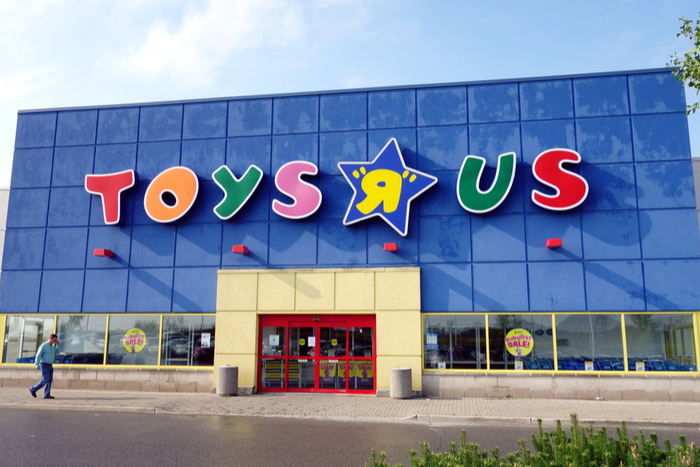
Toys R’ Us

I feel like I should start with Toys R Us as they only recently went out of business, and younger gamers might know what this was like. I can’t say if the store changed the way it sold games in recent times, but back in the day, it was an interesting experience.

Finding your way to the video game section was always fun because you got to pass all the awesome toys on the way. Once you got to the correct aisle, there were, in fact, no games to actually take. Instead, where games should be, buyers would find tiny slips of paper. You’d take the slip you wanted, bring it to the register to be scanned and paid for, and sent to a waiting area by a storeroom. You’d hand your receipt to the employee who would disappear momentarily before returning with your game.

It was a unique experience, most likely put into place to curb theft, but It always felt like an adventure. Nothing was more heartbreaking then locating the game you wanted, only to find there were no more slips of paper, just a sad sold-out sign. Toys R’ Us would also have systems on display before they were released; I’ll never forget the first time I saw the Nintendo 64 at my local store and nearly lost it over how amazing the system was!
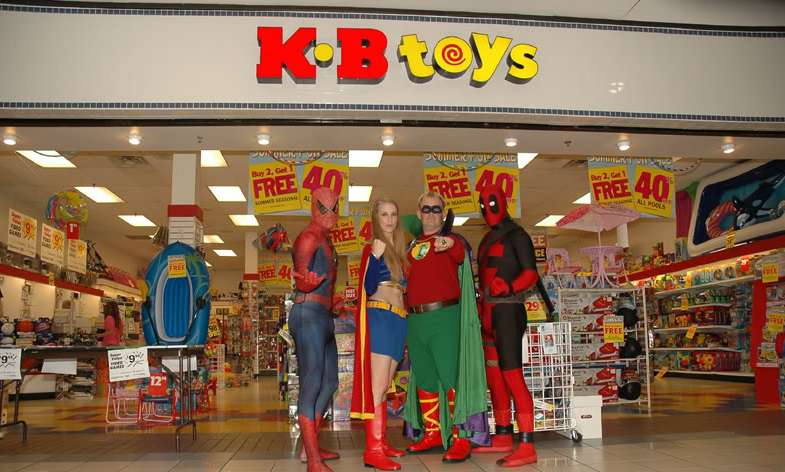
KB Toys

KB Toys was a staple in practically every mall in the United States up until they declared bankruptcy in 2008 and disappeared. They were small toy stores but always had a special charm to them that I can’t quite put my finger on. I pretty much went to KB Toys for the sole purpose of either buying Star Wars figures or video games. They had a wall of Star Wars toys that would make any nerd weep and always had a figure or two that was harder to find. Their gaming section was pretty much non-existent, however.

Everything they had was located behind the counter, so you’d have to ask if there was something you didn’t see. I always found it slightly impersonal, but reliable in a clutch if a game was sold out elsewhere. If memory serves me, they were also a tad more expensive than other places, which is probably why I mostly stuck to the Star Wars figures. It’s been years since I’ve seen a KB Toys let alone walked into one, but a trip to the mall was never complete without walking down its disorganized aisles of fun.

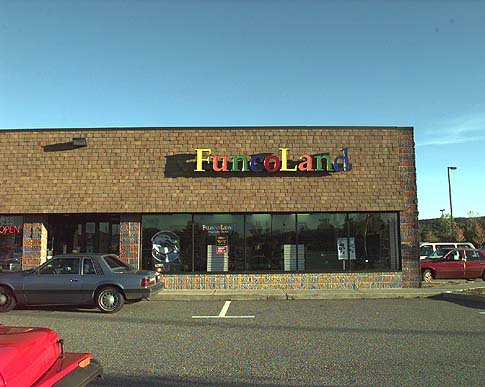
Funcoland

I don’t know if this was a New York thing, or if they existed across the country, but Funcoland was a unique experience, to say the least. Not really a place where you’d go to buy new games, as they were definitely more expensive than other retailers, but they were one of the only places in town to buy older games and systems. If you were looking for an original gold cartridge of The Legend of Zelda, that was the place you’d find it. They had quite the collection and usually had a few systems hooked up to play. In fact, they had a ton of systems visitors could try out and waste hours hopping from one to another.

This was a store where the true gaming fans went to play old games, strike up good conversations, and perhaps walk out with a classic they hadn’t thought about in years. It should also be noted they all looked slightly run down, which further added to their magic. Like KB Toys and Toys R’ Us, Funcoland no longer exists, but retro-gaming stores of today owe a lot to this pioneering gaming utopia.

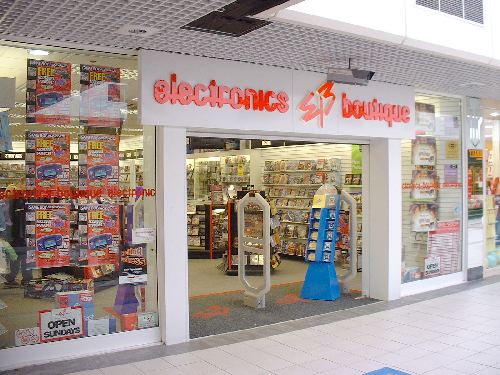
Electronics Boutique

Another mall staple and a place that’s near and dear to my heart! EB, as it was known back in the day, was my home away from home. It was well-lit, clean, and always stocked with the latest and greatest. This was the place I bought 90 per cent of my gaming needs. I can’t think of a time where I didn’t walk in to buy something but ended up there for hours just talking to the employees about all things geeky and gaming. There were systems set up to play and everyone had a great time. It was our Central Park, our hangout spot.

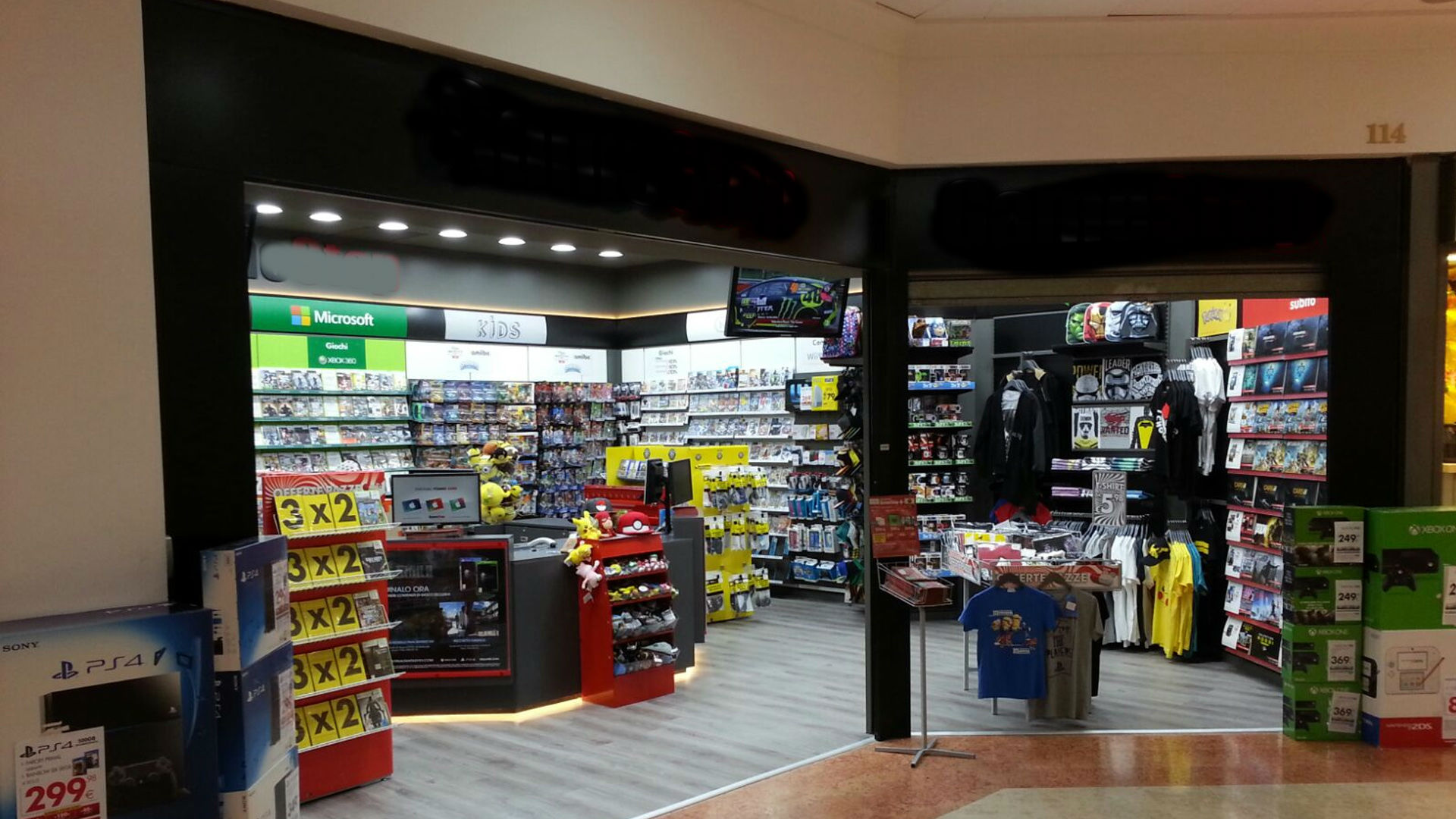
I loved EB so much, I ended up working there for a couple of summers when I was in high school. Walking into a GameStop today is almost exactly like the experience gamers would have had back in the EB days. The layouts are similar, the staff have the same vibe, and it’s probably the number one place to buy used games. There is, of course, a reason for this, which brings me to…

Babbages

Babbages has a long and storied history, which is shocking when you think about it. I did not like Babbages when I was younger. They were also a mall mainstay but palled in comparison to Electronics Boutique. Whereas EB was big and bright, clean and inviting, Babbages was small and dark, dirty and off-putting. The staff was usually not as friendly (or knowledgeable), but they tried their hardest to compete. Over the years, Babbages has been bought and sold, changed its name, and tried to reinvent itself.

Eventually aquired by Barnes & Noble (they also bought Funco as well), back in the late 90’s, the entity formally known as Babbages went public and was renamed, you might have guessed, GameStop! That tiny hole in the wall store has become one of the biggest names in gaming retail, which is mind-boggling to me.

In a WWE vs. WCW move, GameStop even purchased formal Rival EB Games (Electronics Boutique) for a whopping $1.44 billion back in 2005. GameStop is a great place and I enjoy my visits, but the evolution it took to get to where it is today is staggering.

Next time you enter a GameStop, take a minute to think about the history that goes along with it. Buying a game or a system isn’t just about the purchase, it’s about the experience. The sights and sounds of a retail store are unique and magical in their own right. With their acquisition of ThinkGeek, GameStop stores are even more wonderous than ever before.

Heart And Soul

I’m pretty lazy these days, so if I can purchase a digital download or a physical copy of a game online, I probably will, but sometimes I really miss doing it the old-fashioned way. A good gaming chat is hard to come by these days, and the conversations you strike up with people while waiting in line or behind the counter can’t be recreated with an online purchase. Buying video games may be more convenient these days, but the heart and soul of it all is an endangered activity.

Shenmue Laid The Foundation For Today’s Games

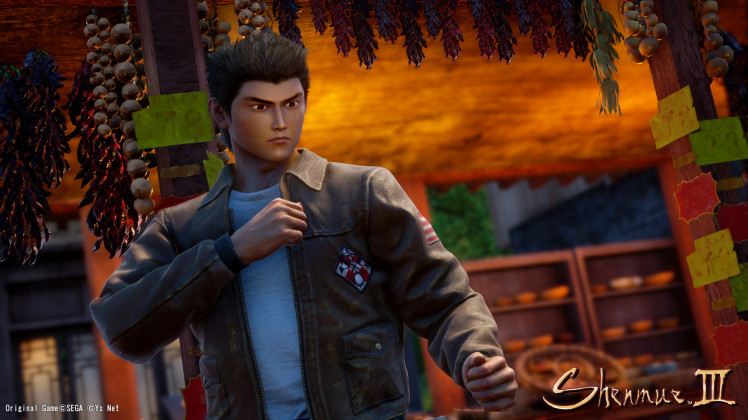
The Shenmue III train is still very much moving and, for those who have been awaiting its arrival, it’s a joy. Gee, has it really been that long? It’s enough to make one feel old.

shenmue-3

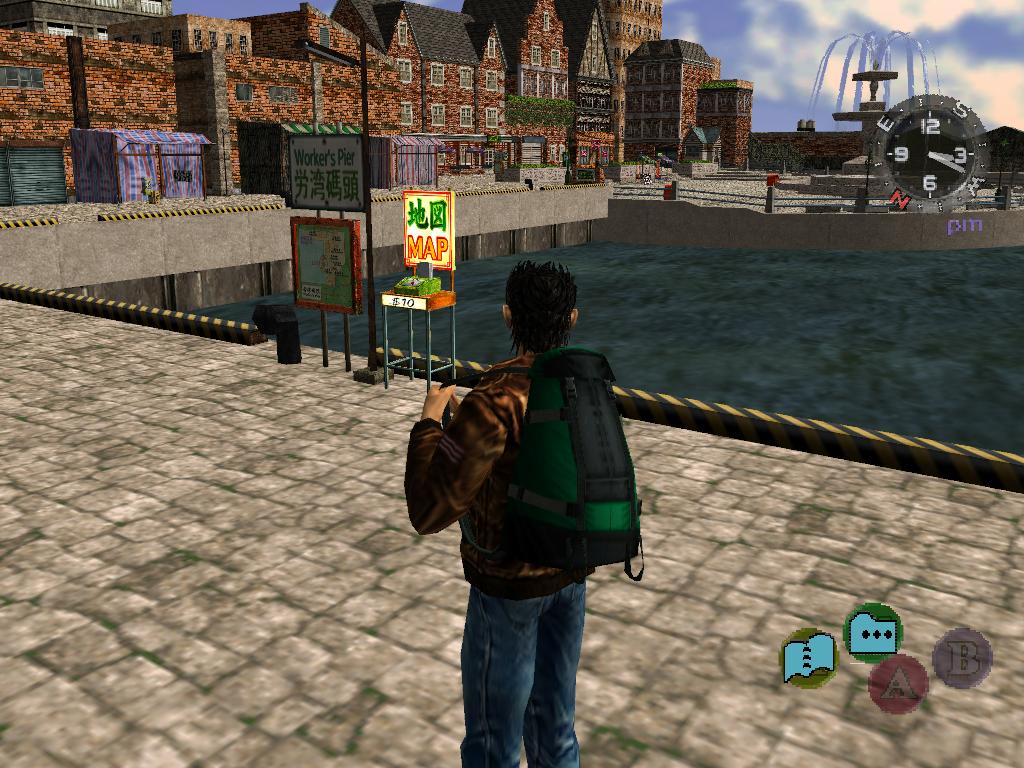
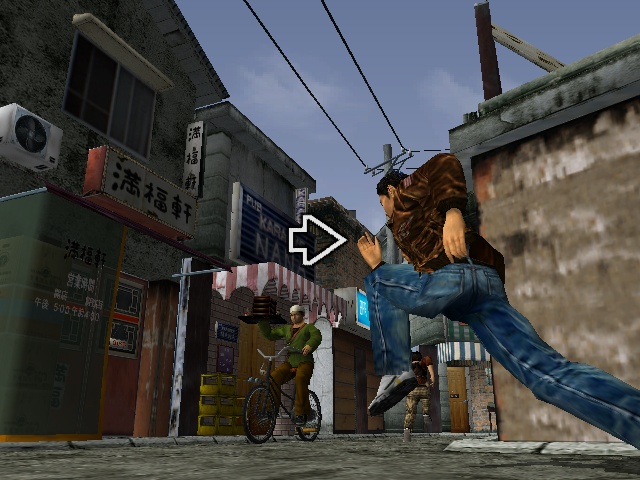
But the passion of the Shenmue fanbase is justified. For those who grew up playing the game and its sequel, they were more than just your average video games. They were an experience. Excuse the cliché, but that’s really the only way to describe it. While the main crux of the plot – young martial artist Ryo Hazuki is on a quest to avenge the death of his father, who died at the hands of Lan Di – is rather rudimentary in nature, the game’s exploration of East Asian culture was not. The game was the first to create a free-roaming, realistic depiction of Yokosuka, Japan and a number of areas in Hong Kong in the first and second games respectively.

How Shenmue Laid The Foundation For Today’s Games

So much painstaking detail had gone into the environments, each packed with hundreds of non-player characters, creating a truly immersive atmosphere. Before these games came along, there had never been in-game environments like these. What made things feel a little more real and down-to-earth was the fact there was a lack of reliable ‘fast travel’ methods (although options to fast-travel to certain locations was included at certain points in the sequel) and you were forced to ask various non-player characters where to go instead of relying on a minimap and indicator. In some instances, kind passers-by would actually lead you to your destination. A small detail perhaps, but it added up to the realistic world all the same.

There can be no doubt that the world of Shenmue led to the creation of such open-world sandbox-style hits such as Grand Theft Auto, although even games such as these have failed to achieve the same realism and detail that the Shenmue games achieved.

Shenmue_II_00081

But when it came to the realistic world, one cannot neglect to mention Shenmue‘s weather and time system. Nowadays, with the myriad of open-world adventure games out there, day-and-night cycles and weather systems are often taken for granted, but back in 1999, when the original game was released, it was something incredible and never-before-seen in a video game. A geeky fact is that the algorithmically-generated weather in the game was developed in accordance with the meteorological records of Yokosuka in 1986 (the year in which the first game’s story is set). But just as there are day-and-night cycles and weather systems, the games were among the first to implement scripted daily routines for non-player characters.

The most obvious examples of this being put into practice in modern games are, of course, the Elder Scrolls and Fallout titles by Bethesda Softworks. But the level of detail in Shenmue was stunning. Characters might leave their houses in the morning to head to the park and then head to the stores – and when it was raining, they’d remember to carry their umbrellas. They weren’t just mindless NPCs given a random walking pattern – they felt real and part of the game’s world.

One of the most rewarding aspects of the Shenmue games – the first, in particular – was discovering hidden dialogue and scenes just by being in the right place at the right time. It could be a scene with a fellow martial artist who teaches you a new fighting move or just a scene that further enhances the relationship between Ryo and another character. Either way, it felt satisfying, because, like real life, if you missed the opportunity to find those moments, they were gone for good. For ardent fans of the game, it just gave them another excuse to replay the game and find out what they missed.

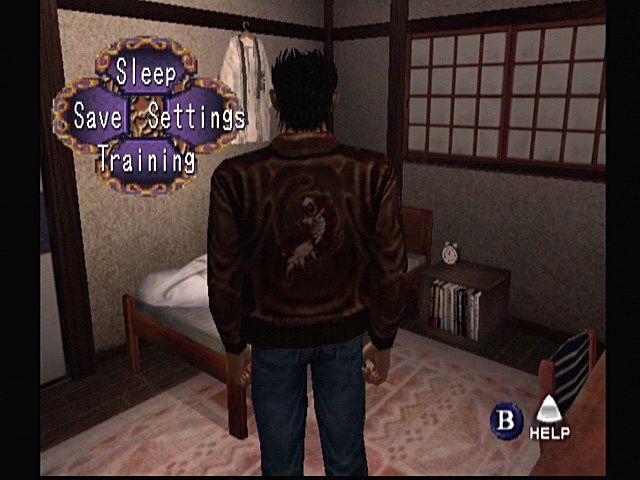
45601-shenmue-dreamcast-screenshot-ryo-s-room-is-where-you-can-save

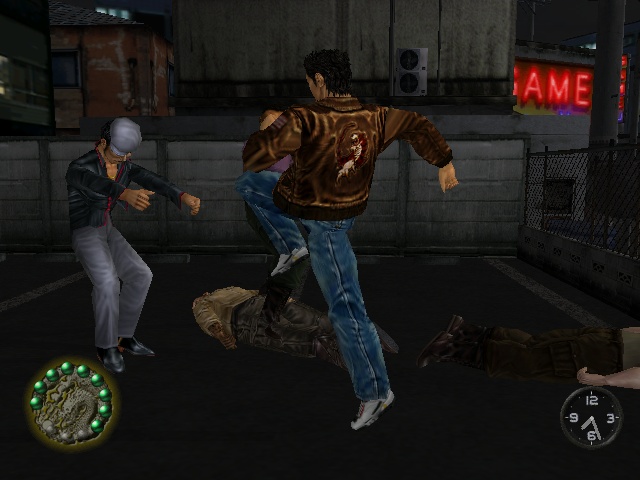
But while Shenmue‘s exploration is often heralded, its competence in mish-mashing various genres was what also made it great. During the course of the story within each of the two games, when Ryo encountered an enemy, the game would switch into a battle mode. Based on the Virtua Fighter fighting system, it was a great deal of fun due to the range of moves available and genuinely making you feel like a badass martial artist.

As has already been mentioned, Ryo could further expand his arsenal of fighting moves when encountering certain friendly NPCs or during the course of the game’s narrative. Trying out new moves on your foes offered that undeniable childlike “Woah, cool” sentiment. And when the games weren’t having you explore detailed locales and punching thugs’ faces, it was having the player engage in the famous (or ‘infamous’, depending on the person) Quick-Time Events, which have since become a common trope in video games. It allowed the player to actually take part in the games’ various action-packed scenes rather than being a mere spectator.

These QTEs were a true test of the player’s reactions, with many of said scenes often involving Ryo running along a set path and dodging people and objects in populated city streets. Perhaps what was most rewarding about these sections was that failing or succeeding them would often change the story slightly (although, in some cases, failure would result in the conventional ‘Game Over’ and force the player to retry). This is particularly evident in the second game especially. When a thieving kid steals your bag, you are sent to chase him. If the player succeeds in tapping in the correct button prompts at the right time, they will keep up with the thugs and thereby, immediately find their bag. However, a series of incorrect or poorly-timed button presses result in the player losing the kid and having to ask about town for his whereabouts and find him themselves.

Although not always implemented in this manner, QTEs have since been featured in such popular games as Resident Evil 4 and God of War. While it was classic games like Dragons’ Lair that originally introduced such a feature, it was Shenmue that introduced them in their modern cinematic form and it was the games’ creator, Yu Suzuki, who coined the term ‘Quick-Time Event’.

168-Shenmue-14

Looking back at the Shenmue games, it’s amazing to see how well they have held up since their release in 1999 and 2001 respectively. The in-depth realisation of Asian culture, the impressive animation and the mixture of different gameplay styles were truly ahead of their time. Therefore, it’s just as impressive to see how these elements have been utilised in games that came out after Shenmue‘s glory days. Given that Yu Suzuki’s fan-funded (and long-awaited) Shenmue III is due out in 2018, it’ll be even more interesting to see what the game has learned from the sandbox-style video games of present and recent times.

Since the game will be playing on significantly more advanced hardware than the Dreamcast, in the form of the PS4, it will be amazing to see how such an incredible experience as Shenmue will be upgraded on it. Regardless, it will be utilising elements of gameplay that the series itself introduced to the mainstream gaming market. The games, therefore, should be remembered for doing so.

What are your thoughts on the Shenmue games? Will you be playing Shenmue III when it’s finally released? Discuss in the comments below.

Turning Hollow: Games And Difficulty

Turning Hollow – The Seal of Quality

“Hello again, Chosen Undead.

“I am Jack Boyles. I am losing my humanity. I am turning Hollow.

“We should exercise more prudence when it comes to the modern age of Video Games. We hath forgiven too long and our acceptance is too high. Acceptance of defective, and deficient and fragmentary games; allowing these attributes to slowly become normality. Souls are spent, only to await patiently for the game to be patched, stitched and sewed together.

“The seal of quality has all but faded from time. The seal of quality was guaranteed, a mark of honour, but with the rise of AAA games force releasing and online services with a lack of quality control; the seal has broken. Many hath scoured for the seal, for all whom hath foraged hath lost humanity.

“Won’t thee aide me in my quest?

“Cooperation may assist me to hold on to my humanity, assist me holding on to my cause…

The Seal of Quality

“Masses hath been delivered into this world only knowing of this tactic. As for I, I hath seen better times, a time during which the seal existed. In that period, developers could not manipulate their games with Hexic rituals like today.

“Games had to be made to withstand the test of time, to be made with calibre; as once fashioned, could not be altered. Delays were accepted, unlike the delays that inhabit this age, today delays can turn people Hollow. We can’t wait for anything.

“The games from the bygone age can still be played today and will remain the status as they did back when they were first crafted. As for modern games, once the server is closed the game cannot receive the Hexic spells to alter it – leaving a patchless pile of shame.

“An abundance of AAA publishers and developers make haste to deliver their games, acquiring the souls of many. Many AAA games materialize as buggy, shattered and unplayable until the first patch is liberated, yet that may last several moon circles. What are thou thinking? Is thou thinking those companies fabricate gigantic games, so it’s too be expected, and I concur, but with the emancipation of Breath of the Wild and God of War, tis now inexcusable to witness faceless characters and NPC’s swimming on fresh air.

Reminds me of my first kiss…

“Tis not just the AAA publishers and developers either. The absences of quality control of the independent scene must be held accountable too, with Steam and console eShop releases unimaginable. Such abominations like Fidget Spinner Simulation, Art of Stealth and Life of Black Tiger diminishing the worth only for the acquisition of souls.

“With video game development software readily available and in most cases free. This has given us more games than ever and with smaller team’s producing unique titles. This has also created many people releasing asset flip games. There is no quarrel in an indie developer using asset packs as a tool, but many have taken advantage off this and been making games from nothing but asset packs; no original content, no original ideas, just cut and paste.

Based on a True Story…

“When the youth of this age re-buy the equipment of their childhood to soak in nostalgia; they will not get that same experience from their childhood, what they will get are faceless characters and NPCs swimming on fresh air. Their childhood will be debauched and distorted.

“Will you aide me in finding the Seal, will you aide me to salvation?”

Night Trap

Night Trap Is Reborn And I Finally Played It

The original Night Trap released in 1992 for the Sega CD. At the time I was only 5 years old, and as I grew older, the game always seemed to elude me. Part of the reason was that I never owned a Sega CD, Panasonic 3D0 or Sega 32X until just last year.

The other reason is my stubbornness to never buy a disc-based game unless it’s complete. Needless to say, I have always wanted to play it and I never had a real shot at it.

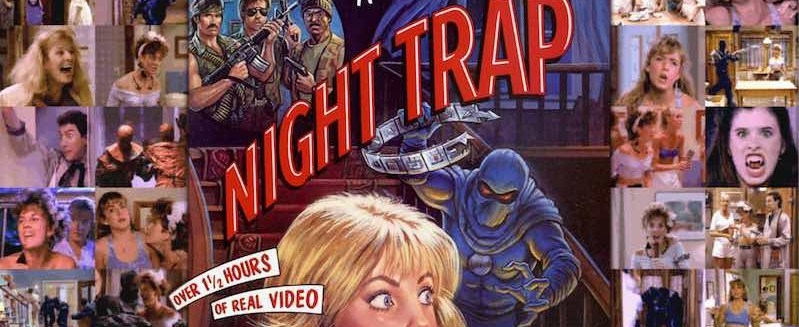
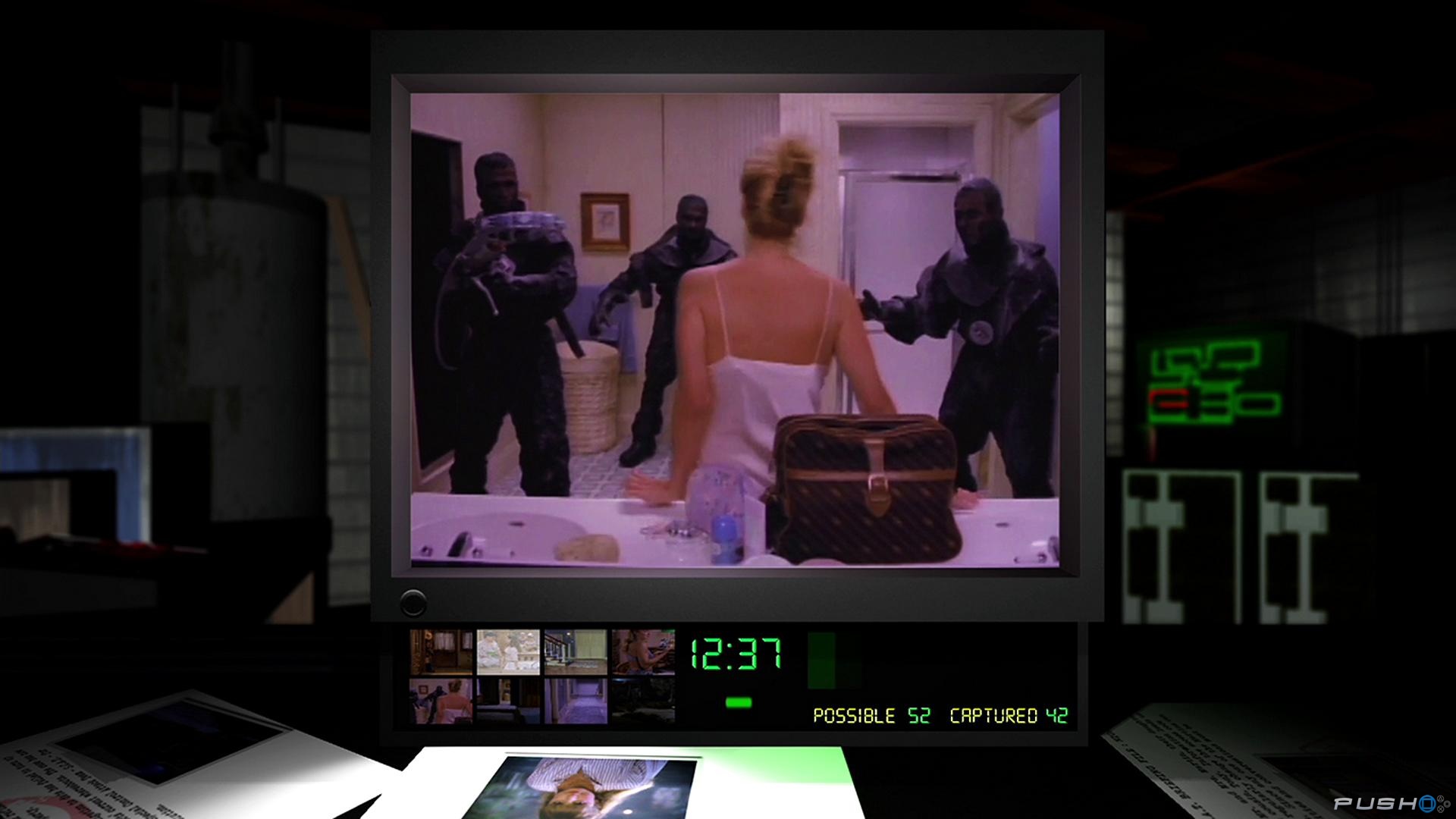
Night Trap is an interactive experience which uses full-motion video. You are a special agent that is tasked with surveillance duty as you watch a group of co-eds in a house. The girls are in danger from a bunch of weird vampire creatures. The actual game is very basic and repetitive as most full motion games were. You switch between camera angles and activate traps to capture the vampire creatures. Each trap you set triggers a different video scenario. As I type this article, the game doesn’t sound very exciting at all but, you have to understand this game’s history.

Night Trap 1

In 1993, Night Trap was the centre of attention at US Congress hearings. Along with Mortal Kombat, Night Trap had parents on edge about violence and sexual content in video games. It wasn’t every day that kids saw inadequately clothed women being kidnapped on their game consoles. Looking at the games we have today though, Night Trap is like a serving of soft serve ice cream. My how the times have changed. Nonetheless, it’s one of the things that lead to the ESRB or Entertainment Software Rating Board that is so prominent today.

Night Trap 2

This all took place during an infamous time in gaming history where Nintendo and Sega were in the heat of a console war. Sega was on fire and Nintendo was doing their best to keep things clean. It was during the 1993 hearings that then chairman of Nintendo Howard Lincoln stated that “Night Trap would never appear on a Nintendo console”. Fast forward to 2018, and Night Trap is announced for release on the Nintendo Switch.

This will be the second re-release of the game as Limited Run Games released 5,000 copies for the PlayStation 4 last year. I picked up a collector edition and Limited Run was nice enough to also send me a digital code.

Finally, I got my chance to see what the fuss was all about. It took me all of about 20 minutes to realize that Night Trap is not a good game. I do appreciate the cheesy 80s style video and costumes. I am a sucker for classic VHS style charm. I also appreciate developer Screaming Villains for reworking the game from the ground up. While the experience isn’t great, Night Trap will always have a special place in my heart.

All in all, Night Trap is a cult classic that sparked a real debate about content in video games. It will always be a nice part of video game history. Night Trap is set to go up for pre-order at Limited Run Games today. Unlike the PS4 release, there won’t be a release limit.

Game Streaming

What Game Streaming Means For Indies

Ubisoft co-founder Yves Guillemot recently said in an interview, “I think we will see another [console] generation, but there is a good chance that step-by-step we will see less and less hardware.”

More recently at E3, EA introduced Origin Access Premier, a Netflix-for-games streaming service which gives players access to more than a handful of games for a flat, monthly rate. Even Xbox has already started to play with Game Pass and by the end of the decade, I’m sure more publishers will announce their own services, as well.

What Netflix did to movie theatres and DVD players and what Spotify did to CD players and radio, streaming game services will inevitably do to the PlayStation and Xbox consoles (at this point Nintendo plays by its own rules so let’s move them aside for now).

There’s a very possible future where a smart TV and a game controller will be all anyone needs to load up Square Enix’s probably-coming streaming service and dive straight into Octopath Traveler. But what does this mean for indie games?

Octopath Traveler
Octopath Traveler

In order for this to be successful publishers will need to beef up their library in order to compete with each other and they may find (as Netflix has found with their premium content) AAA games to be too complex to pump out quickly enough.

Indie games could be the solution. Steam already offers an experience in which indie games populate most of their storefront, peppered in with extremely popular AAA titles. It would be easy to see EA mirror this infrastructure and bulk up their EA Originals line to try to curate a better offer for their Origin Access Premier service. This creates tremendous potential in the growth of the indie market.

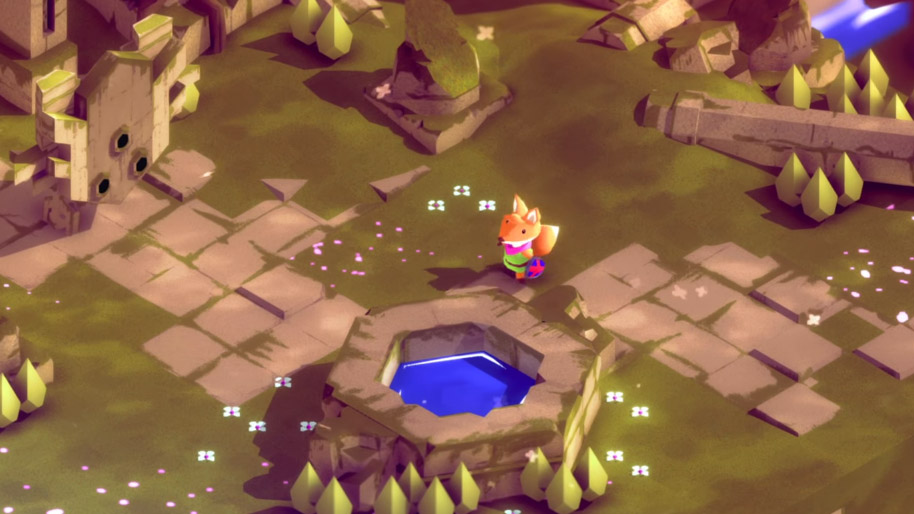
However, in this console-less transition, indie games might begin to suffer an image problem too. It’s not unreasonable to think indie games will be held to a higher, possibly unfair standard. By removing price tags and putting all games on a level playing field, games like Tunic will be given the same scrutiny from players as Halo Infinite.

Tunic logo
Tunic

When players are paying the same base price for an indie game as they are for an AAA game, will they be okay with the obvious size and graphical disparity? Will gamers be upset if indie games make up the bulk of any prospective streaming? Gamers who already play a wide breadth of games may instantly think this won’t be a problem, but for the gamer who only plays Call of Duty annually, will they be upset that they’re paying for a service that keeps offering them indie games?

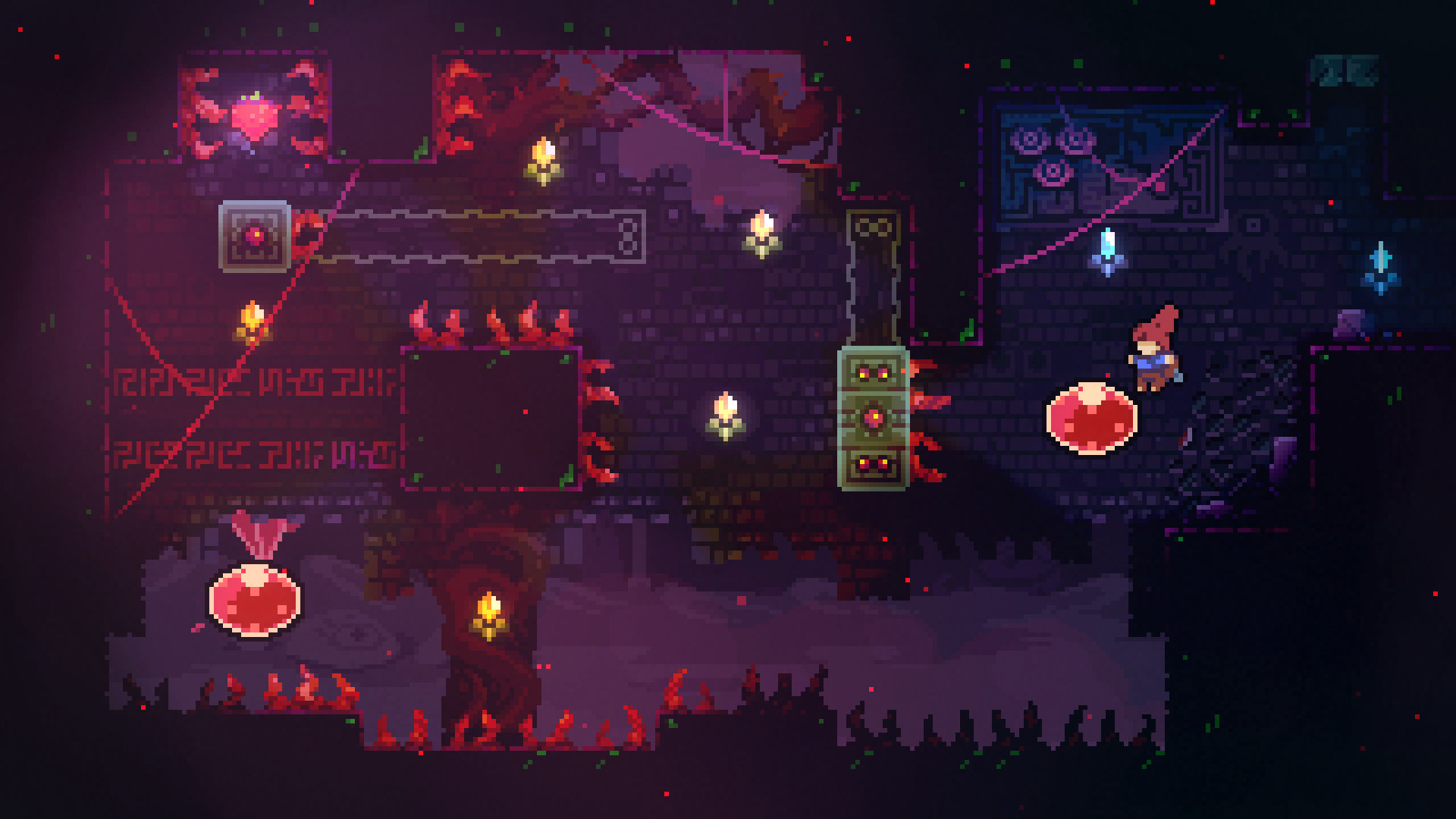
Celeste
Celeste

On the flip side, this could be an opportunity for that Call of Duty player to try their hand at smaller stories. There’s no extra work required to boot up Celeste when none of your friends are online and play a few levels in-between shooting matches.

Indie games could see a boom in their audience as they are paired next to games that they would otherwise not be associated. There can be tremendous potential to appeal to audience that wouldn’t otherwise choose to buy the game, but plays it now because they’re handed the experience for free.

The outlook may be bleak for consoles, but the future is uncertain for indie games. There could be tremendous potential to take advantage of future streaming services as long as they hold fast to their quality and create fun experiences.

Lust For Darkness Review PC

Lust For Darkness Review [PC] – A Flaccid Attempt At Erotic, Lovecraftian Horror

From 50 Shades of Gray all the way back to Chaucer’s Canterbury Tales to the biblical story of Samson and Delilah, humans have always been intrigued with sex, attraction, and the social boundaries around the delights of the flesh.

Lust For Darkness Review PC

Lust for Darkness, developed by Movie Games Lunarium, attempts to combine erotic fiction with themes reminiscent of H. P. Lovecraft. Unfortunately, Lust for Darkness takes hold of some of the more sordid tropes of the erotic fiction genre, without taking advantage of the Lovecraftian themes, or even the gaming medium itself. Thus, leaving the experience feeling flat.

Your wife is kidnapped by a sex cult bent on opening a portal to a world of eternal pleasure named, wait for it, Lusst’ghaa. To be fair, the game explains the word “Lust” comes from the experiences of that world, not the other way around. But, this alone speaks volumes about the quality of the in-game storytelling, which, unfortunately, never fares any better than your typical discounted bodice ripper.

Without giving much away, you end up with a woman is kidnapped, the woman is then raped, and she then develops what appears to be an extraordinary example of Stockholm’s Syndrome. I am not one to feign offence, so I realize this is a standard trope in erotic fiction, but the story never really progresses above this, nor is there really much story to speak of in general.

There are sections of background info you can find throughout the game that give more details on the cult itself, which were actually quite interesting. These extra bits of story told through text were never quite enough to make up for the lack of story in a playthrough, but it did demonstrate to me that the developer put far more thought into the tale than the player ever gets to experience directly. I hope if the developer chooses to move forward with another title, they can add in more of this type of storytelling as a part of the game experience rather than in the form of side collectables.

Gameplay was similarly thin. Most of your time is spent simply wandering about, which would have been fine had there been a more detailed experience or plot. But, as it is, you find yourself only in a handful of run-ins with the baddies of Lusst’ghaa. These are very short run sequences reminiscent of Amnesia. However, these are so few and fleeting, the game rarely engenders a true sense of dread or terror. I was able to make it through each one without much trouble. Similarly, the puzzles are also few and far between, and so simple that can be solved in a matter of minutes.

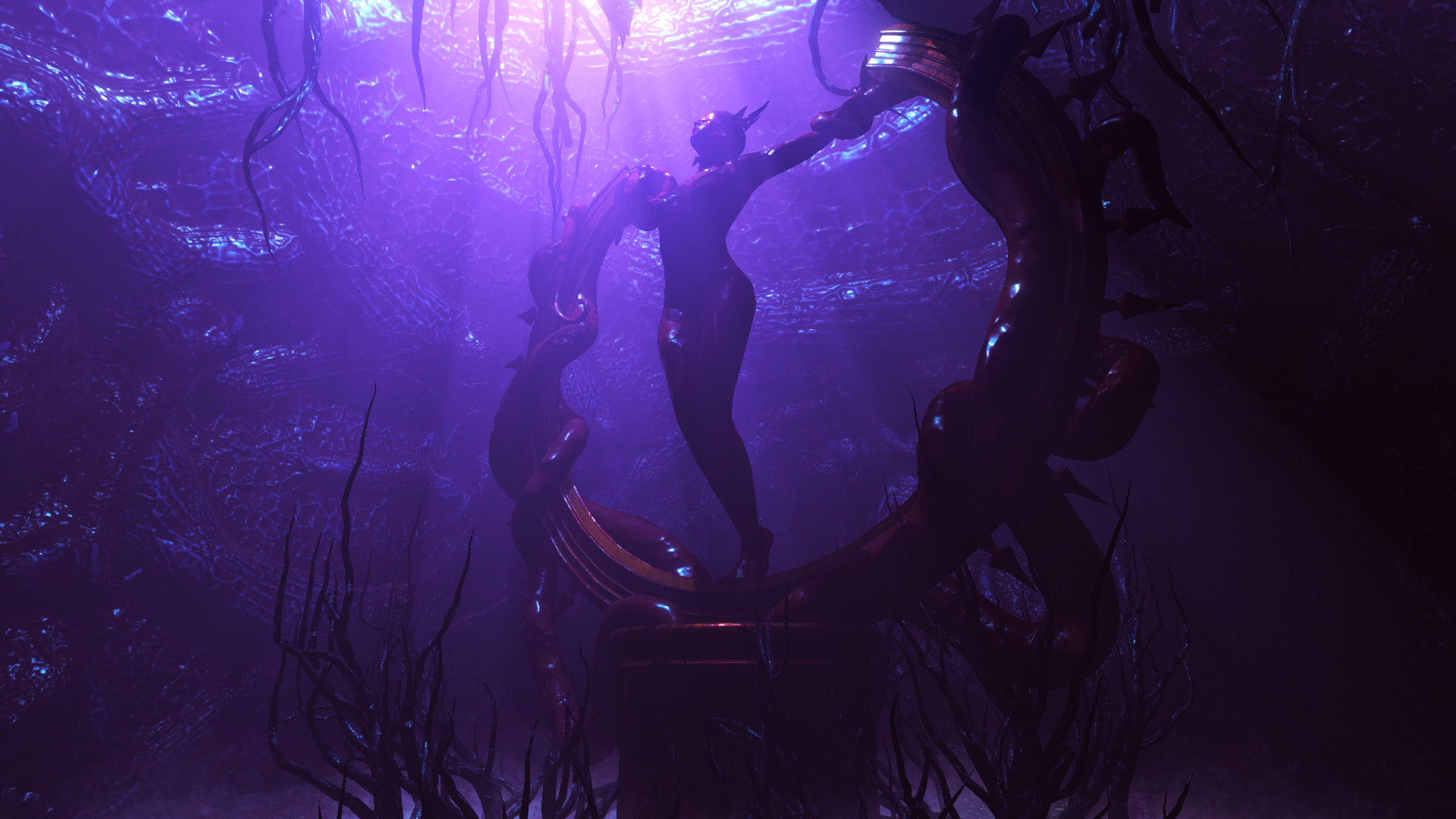
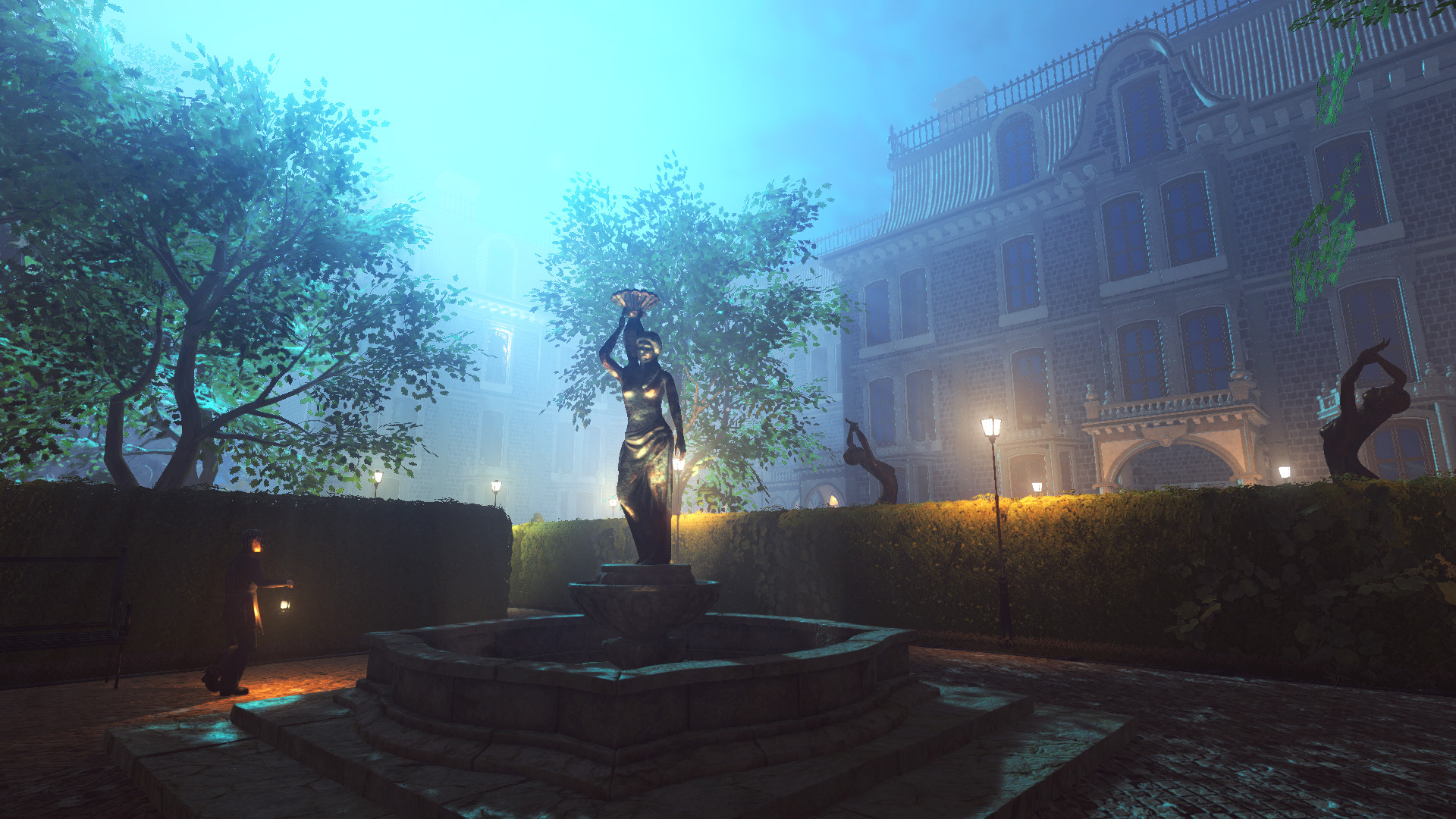
To the developer’s credit, however, the game looks gorgeous and it is clear much time and thought were invested in everything from the numerous nick-knacks and items of decoration scattered across the extravagant mansion, to the purple-hued caverns of Lusst’ghaa, to the various masks you will see the cult members donning prior to their upcoming ceremony.

ss_7bf8414f9583b165969336ccf238056c34e5332e.1920x1080

It is the clear attention to visual detail, along with some of the interesting background info you can discover along the journey, that makes me think Movie Games Lunarium has potential to develop an interesting title. But, Lust for Darkness is not that title. The game comes in at around three hours in length, but the short experience still feels hollow and offers little to nothing to encourage a second run-through unless you feel compelled to locate all the little snippets of extra story detail.