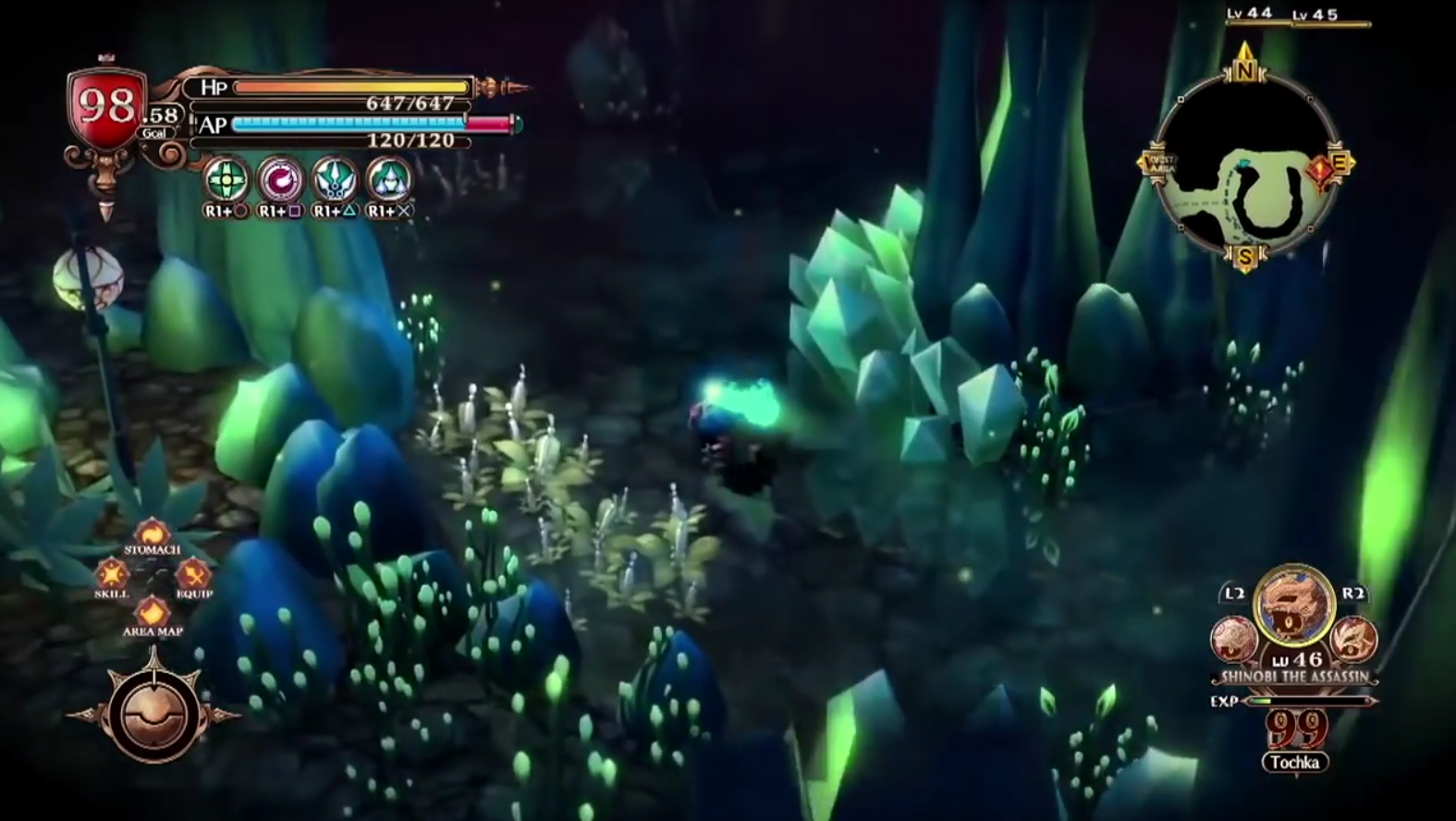
The Witch and the Hundred Knight 2 will be arriving exclusively on the PS4 in 2018. But what’s it about exactly, I hear you ask?
You play as the Hundred Knight on their journey through a witch-ravaged world. Young girls are contracting a strange illness and awakening as witches, causing some problems across the region of “Kevala”.
Luckily, on the Hundred Knight’s side are two sisters: Amalie, an agent of an organization who opposes witches; and Chelka, the witch who awakened in Amalie’s younger sister, Milm. Stil with me?
It’s an action RPG where you have to delve through dungeons and landscapes covered with fiends and monsters. It’s also important to chain attacks together with the weapon system that welcomes weapon-change mid-combat.
Let’s get this out of the way: Super Mario Odyssey is the next true 3D Mario game. While the Wii U’s Super Mario 3D World was largely impeccable, there’s no denying it catered towards a more casual audience with its multiplayer-centric focus. The same can be said about New Super Mario Bros. U, and Super Mario 3D Land on the 3DS. With those titles, Miyamoto and co. were looking at ways to make Mario more accessible, while retaining the staples that defined the series. They achieved this outright, but some of the core audience wanted that focus to shift back onto them. Enter Super Mario Odyssey then, a game specifically designed for veterans of the series with a single player-centric focus. It’s fair to say that Mario hasn’t been this good for quite some time… around 7 years in fact.
Super Mario Odyssey Review: Marrying The Princess
Odyssey’s story quickly becomes one we all know and love… Can you guess? Yes, Peach has been kidnapped by the King Koopa but this time there’s a twist: Bowser is now intent on marrying the princess as well, presumably to anger Mario more than anything else. After a crushing defeat then, the plumber finds himself in the Cap Kingdom of Bonneton, a moonlit, fog-shrouded land inhabited by ghosts in hats who speak in old British English – jolly good show, old bean. It’s here that Mario befriends newcomer Cappy and the duo set off to rescue Peach and Cappy’s sister Tiara. That’s pretty much your story. You didn’t expect anything else, did you?
If the games are this good, please keep getting kidnapped.The first thing we were pleased to discover upon controlling Mario was that he has all of his classic moves in this adventure. We mean all of them: the long jump, triple jump, side and backward somersault, the spin jump, the dive forward, you name it, it’s here. The new roll move is a welcome addition too that helps you more easily traverse the larger environments. Most importantly, he feels good to control as he “wahoos!” his way around, with even the pitter-patter of his feet, in some odd way, gratifying. There’s no doubt in my mind that Charles Martinet had a lot of fun with the new material as well – brace yourself for more ravioli-fuelled, dream-dialogue.
Sublime Platforming That Innovates
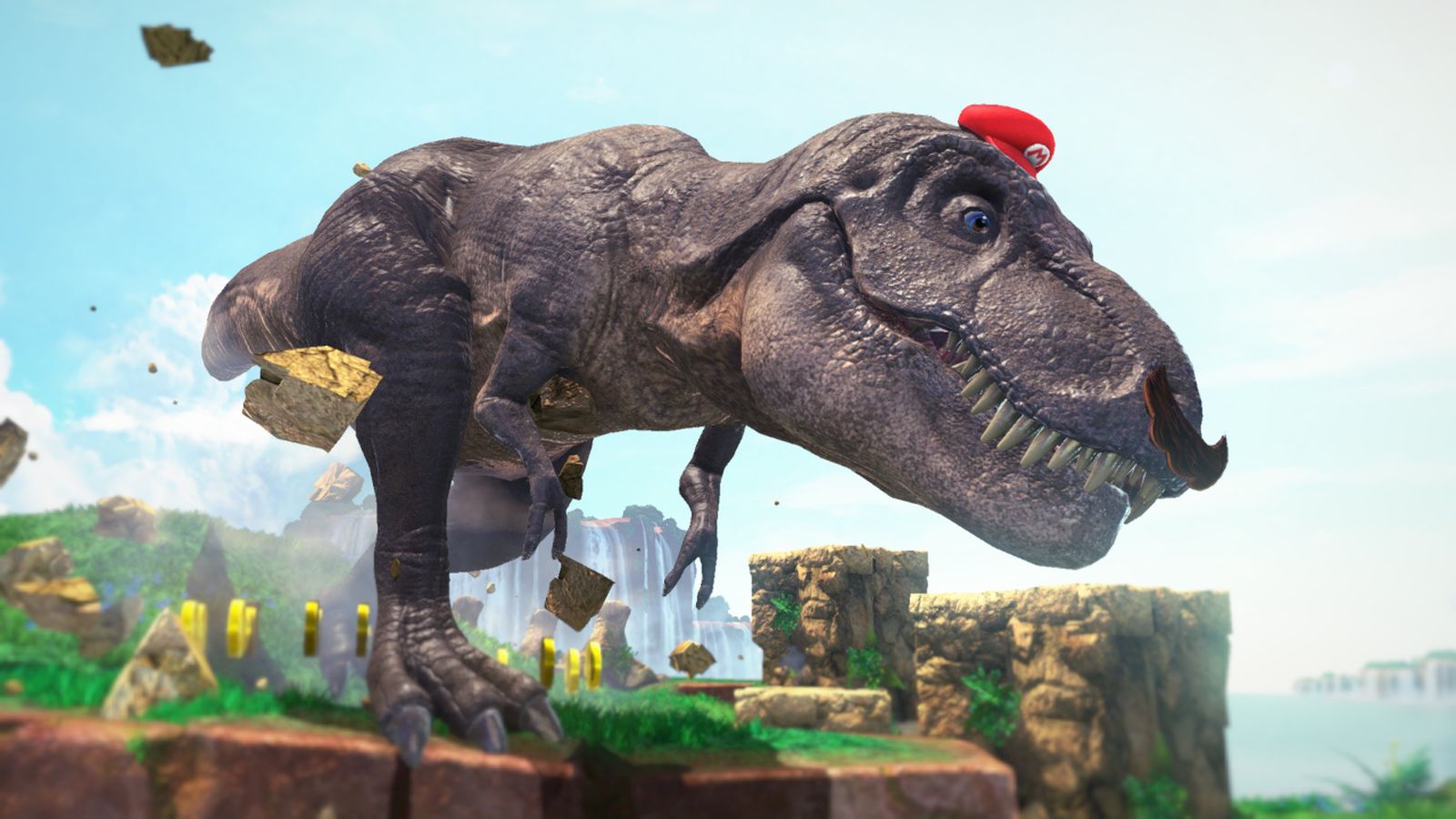
As for Cappy, he’s much more important to the gameplay than the story, as you’d expect, and adds a range of new moves to Mario’s arsenal, including the cap throw. The cap throw, as you’ll get accustomed to over the course of the game, enables you to attack enemies as well as possess 52 different entities – some of which we simply must not spoil. And it’s superb. The new capture mechanic effortlessly breathes new life into the series, making Odyssey feel fresh, wacky and full of vigour without overshadowing the sublime platforming the series represents. Frogs, Goombas, tanks, Bullet Bills and even a T-Rex, almost everything around you can be captured in the Kingdoms you visit, which serve as the ‘power-ups’ in the game.
The T-Rex’s realistic design was influenced by Super Mario World.The sandbox-style Kingdoms are magical. Tightly packed, and beautifully designed with secrets galore, they house the Power Moons you need to fuel your eponymously titled ship, the “Odyssey”. Collecting enough Power Moons in each Kingdom allows you to travel to the next one in pursuit of Bowser, and is the central objective of the game. You earn these Moons by completing tasks, often small, which range from helping the locals to completing 2D, 8-bit sequences (damn good), to taking down one of the many bosses – there are superb platforming sublevels in every Kingdom to boot. You’ll also notice elements from 64, Sunshine and Galaxy in there.
The gameplay is so varied that none of this ever feels like a chore. It feels immensely rewarding, but deftly balances that sense of challenge as well, ensuring that it’s not a walk in the park either; those that go the extra mile are always rewarded for doing so. The Kingdoms change based on your actions too, which evokes an ongoing sense of progression that beckons you to continue; you will want to explore every nook and cranny. The sense of discovery rivals that of Super Mario World back on the SNES.
Brimming With Creativity
Odyssey is easily the craziest Mario title to date. We know during development that Miyamoto had a hands-off approach, instead offering advice about certain elements, but never fully taking charge. It’s as if the new captain of the ship, Yoshiaki Koizumi, (producer of both Galaxy games) told his team: “Go wild. We can do what we want here – as long as it works.” This unparalleled creative freedom can be felt, and it creates an abundance of ideas, some of which could be used for full games on their own. Yes, the series has always brimmed with creativity, but Odyssey takes it even further. Certain points of the game will genuinely surprise you, and things take place that you wouldn’t necessarily expect in a Mario game, in the best possible way.
Producer Yoshiaki Koizumi – Miyamoto’s apprentice.Odyssey does have a slight niggle though. The motion controls generally compliment the on-screen action very well and are satisfying to use, but every now and then they’re not as precise as they could be.
It’s also worth noting that every single motion-controlled move is not compulsory, you can complete the entire game without them, but they do add extra power to moves. A few of these ‘powered up moves’ are required to get all of the Power Moons. This means that when holding the Switch in handheld mode the motion controls, and a few Power Moons, are off limits unless you shake the entire system. It’s not even close to a serious issue, but isn’t particularly practical out and about and means that playing in tabletop or docked mode is the way to go if you want to get every last collectable. Considering the otherwise flawless production here then, this seems to be overlooked. A minor update turning off motion controls completely could fix this, however.
A Masterpiece
There are so many positives things to say about Odyssey that you couldn’t possibly fit into a single review, but here’s an effusive list of a few of them (no big spoilers, trust me): the pause menu that Mario reacts to, the increased, and highly detailed expressions on his face that further the relationship between the both of you while playing (Nintendo specifically worked on this), the holiday brochure-style maps, the costumes, the assist mode that guides younger, more inexperienced players, the stunning soundtrack full of whimsy and heroism, the fact that it’s the best looking Switch game to date running at a rock solid 60fps, the satirical humour, the bonus mini-games, Pauline, that particular festival, that particular Kingdom, the better than expected two-player mode where one of you controls Cappy – really fun. I could go on…
That’s without mentioning the incredible post-game content: if you want fan service and more to do after seeing the credits roll, you’re in luck. Odyssey may finish at around the 10-hour mark, but what comes next will keep you playing for days on end.
Bringing back 1985.It’s worth buying a Switch for alone. As for being better than Galaxy, well, I’ll be having an internal debate about that one for quite some time. Simply put: this is why we play video games.
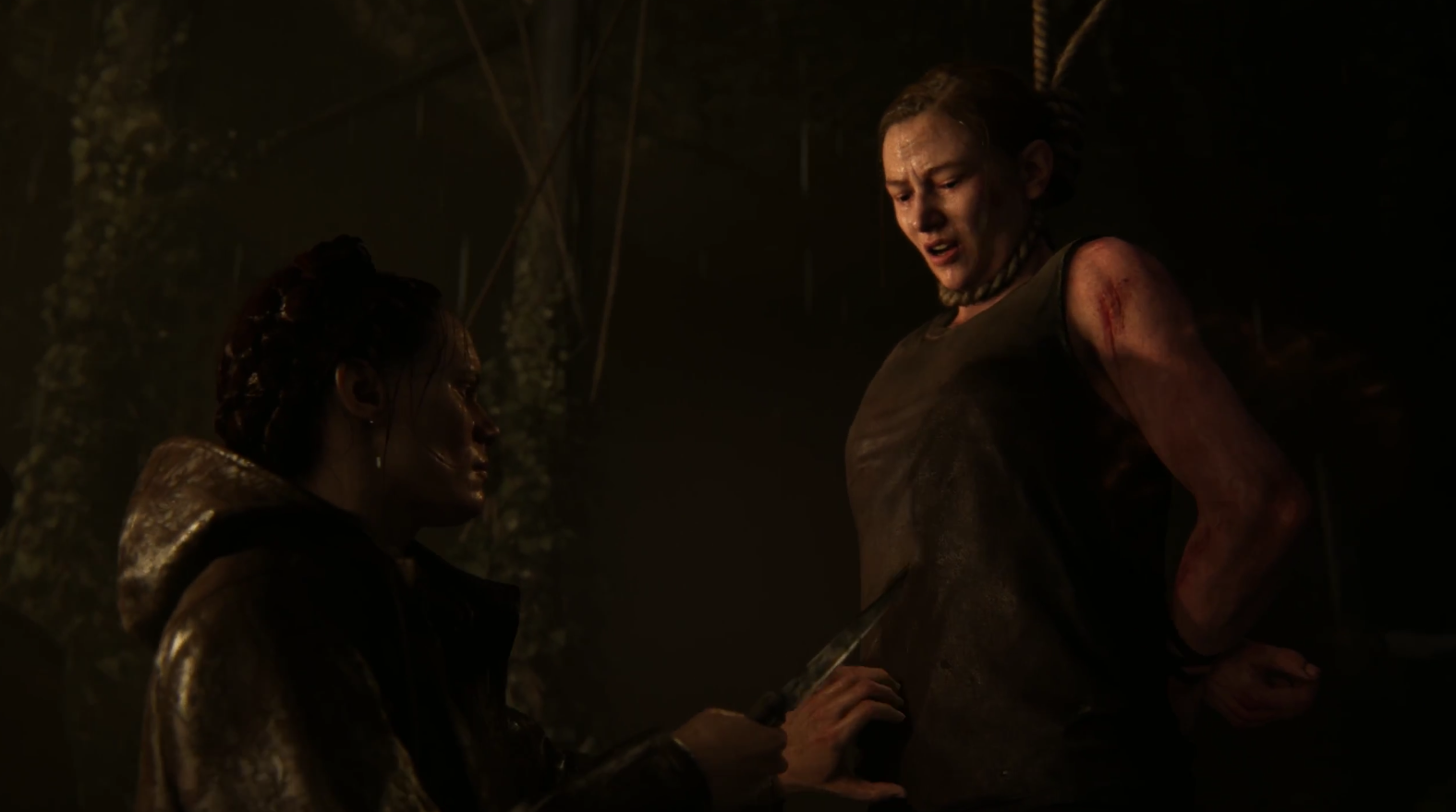
It’s here. We’ve been bestowed with a new The Last of Us Part II trailer from Sony’s conference at Paris Games Week 2017 – a little earlier than we predicted. It’s dark, ominous and pretty bleak, but this is the apocalypse right – what did you expect?
You can enjoy the 5 minutes-long trailer below.
The Last of Us Part II is expected to be released ‘next year’ on PS4/Pro, although with Naughty Dog at the helm, you can expect delays too – and if it’s to improve the quality, then we’ve no problem with that. Take your time…
Anyway, you can be confident that the finished game, although grim, will most likely be one of the best gaming experiences of the year.
Cast your minds back a few years – not to the Third Age, but instead to 2011 – and you’ll undoubtedly recall the release of a licensed superhero epic going by the pseudonym of Batman: Arkham City. Developed by British studio Rocksteady and published by Warner Bros Interactive Entertainment, the follow-up to 2009’s Game of the Year award-winning Arkham Asylum set itself quite the audacious task, aiming to better its forebear via a larger yet densely detailed open-world, enhanced combat mechanics, a wider array of enemy types and above all a canon-eschewing but captivating core storyline.
An Unenviable Challenge
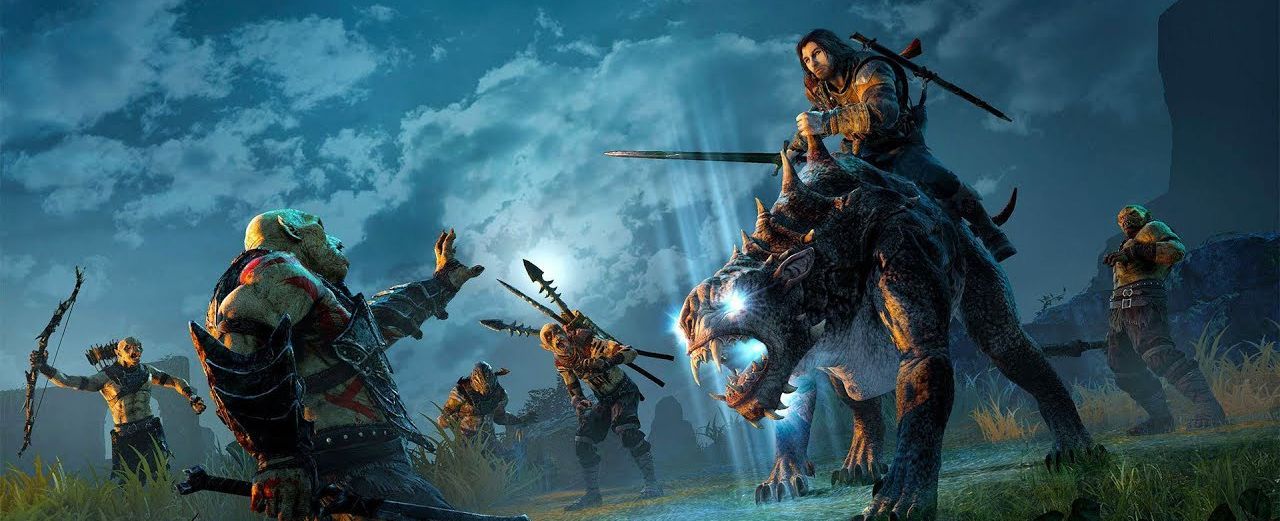
If this unenviable challenge seems vaguely familiar, then it’s with good reason. Fast forward half a dozen years and we find Monolith Productions – again with WB’s stalwart backing – taking much the same approach with their latest project, and surely hoping to reap similarly copious critical praise to that which Rocksteady received upon succeeding in their endeavours. Just as Arkham City took every element of Asylum which worked – the gratifying Freeflow combat, the fascinating exploration of Batman’s psyche and countless other USPs – and expanded upon them tenfold, so too does Monolith’s second action RPG foray into the world of J.R.R. Tolkien up the ante on every front.
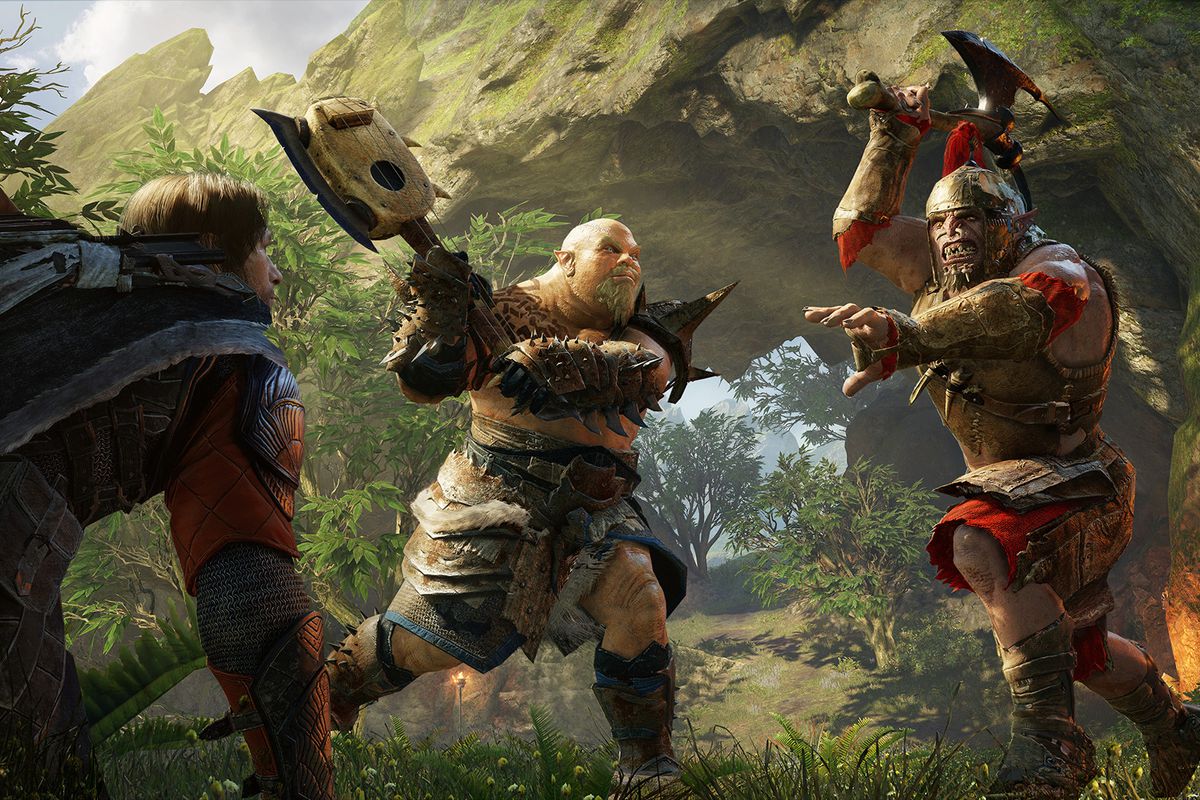
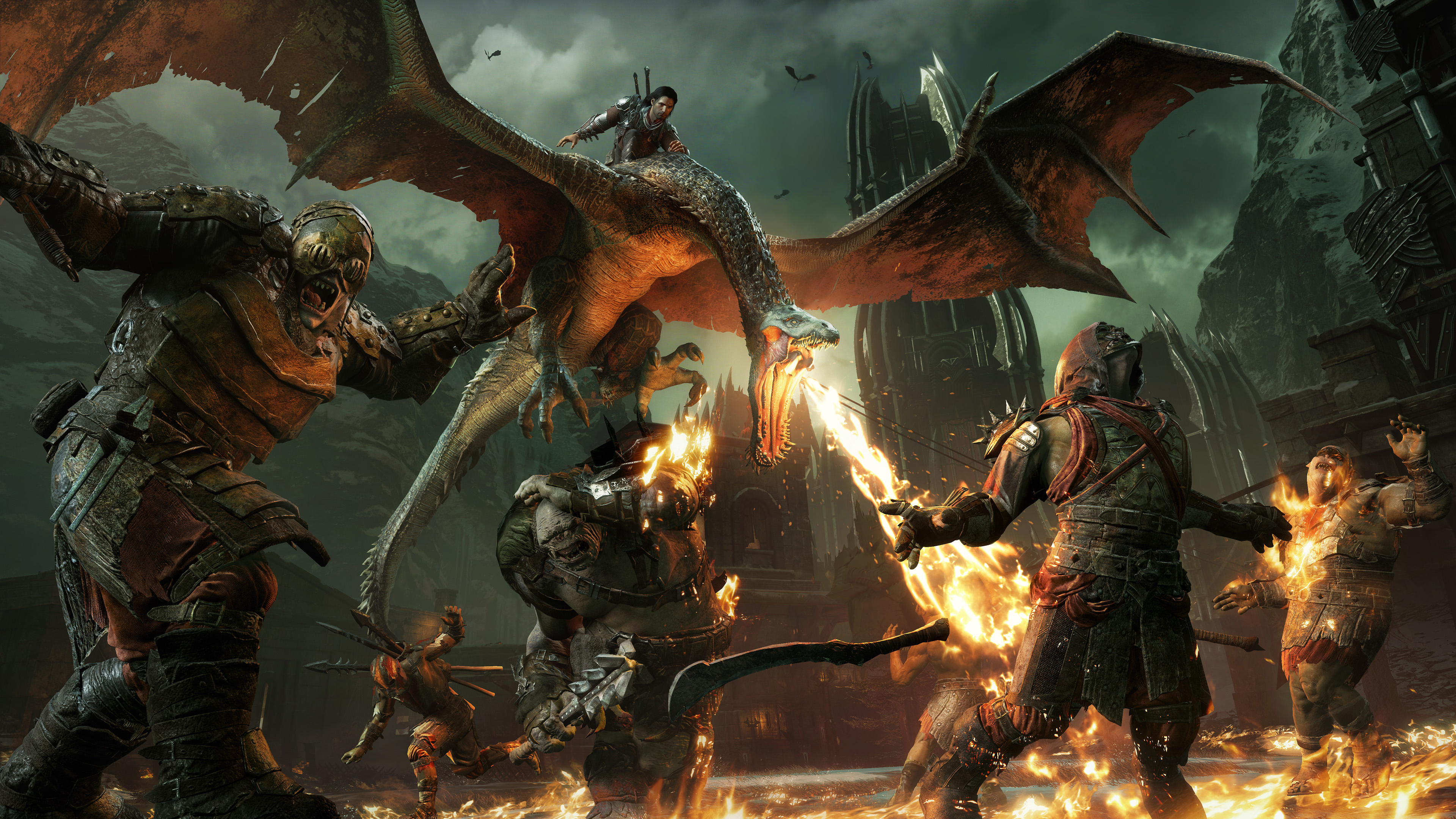
Whereas 2014’s largely acclaimed Shadow of Mordor confined the escapades of its half-Ranger, half-undead Elf protagonist, Talion, to a couple of grimly-lit cities based within the titular region, Shadow of War takes us from Seregost’s snow-capped peaks to the precipice of Mount Doom in Gorgoroth, from Minas Morgul’s sinister cityscape to Núrn’s open forest plains. Whereas Mordor’s intoxicating Nemesis System showed huge signs of potential, War develops this intricate mechanic exponentially, adding dozens upon dozens of extra enemy classes, arenas where victorious Orcs can become spies for your army and seismic fortresses in dire need of new management.
Elevating The Middle-Earth Saga?
But can this unquestionably ambitious follow-up match City’s next-to-universally renowned success in taking its franchise to bold new heights, elevating the Middle-Earth saga to the video game industry’s Hall of Fame? Not quite, yet one can’t possibly accuse Visceral of resting on their laurels either. For instance, aesthetically speaking, some of the human character models – including that of Talion, along with the courageous soldiers he encounters – appear bland and unfinished in cut-scenes, their facial animations a little undercooked. Yet the open-world regions themselves brim with graphical pizazz, Seregost’s snowfall a mystifying beauty to behold and Mount Doom a pitch-perfect copy of that seen in Peter Jackson’s Lord of the Rings film adaptations.
Missions prove equally mixed when it comes to variety and unpredictability. On the one hand, many of the main campaign’s quests prove disappointingly mundane, centring on generic follow-the-AI-leader, stealth antics with none of Metal Gear Solid’s scope for anarchic chaos should the player get spotted or repetitive Nazgul boss battles. On the other, venture off the beaten track and you’ll discover electrifying side ventures such as Balrog showdowns, voyages into Mordor’s past and future via the visions of spider-turned-temptress Shelob or attempts to wrest back control of Middle-Earth’s status quo with its equivalent to Mother Nature (yes, really), to the point where one craves for the core campaign to offer the same level of structural creativity at times.
Simplified Narrative Approach
Indeed, while we’re on the subject of the campaign, the eagle-eyed readers among you might’ve noticed that this reviewer hasn’t dedicated much time to War’s narrative as of yet. Suffice to say that in the wake of having forged a new Ring as the credits rolled last time around, Talion wastes little time – barring a frustratingly inconsequential detour to meet Shelob early on – kick-starting a Mordor-wide resistance to Sauron’s rule, rallying hundreds of possessed Orcs to his side in order to take back each of the realm’s lofty fortresses before overthrowing the Dark Lord once and for all. Now, that might sound like a premise for the ages, particularly to the Tolkien avids here, but unfortunately said plot receives scarce attention throughout War, largely taking a back-seat while you influence the foes of each region, topple its Overlord, rinse and repeat for hours on end.
This simplified narrative approach – or indeed the obvious constraints placed upon Monolith by having War take place within reaching distance of The Fellowship of the Ring – wouldn’t matter so much if the script at least dedicated more time to fleshing out the supporting characters like Gondorian soldiers Idril and Baranor, returning fan favourite Gollum (whose needless cameo barely registers), or even the head Orcs whom Talion possesses like the hilarious Bruz. Instead, those looking to see their relationships with the similarly soulless – no pun intended – Talion developed had best look to the aforementioned side missions for further meat. Acts III and IV reveal how our hero’s antics factor into the events of LOTR, in what frankly comes off as one of the most ridiculous fan faction-esque retcons in recent memory, but little else of note actually happens to any of War’s ‘key’ players, protagonistic and antagonistic alike.
A Dense Open-World
Perhaps story depth isn’t what many fans hoped for here, though, with War’s main draw of course being its overhauled Nemesis System. If LOTR fanatics want to immerse themselves in Middle-Earth, then here lies the most substantial means by which to do so, with the contrasting Orc cultures, fortress defences, enemy weaknesses, tribe dynamics and Warchief challenges of each region providing more than enough of an excuse to plunge hundreds and hundreds of hours into this sprawling RPG’s rich world and become its eventual commander-in-chief. For reasons we shan’t spoil, there’s ample incentive to become an expert in these minutiae by Act IV, where further conflicts mounting in each of your conquered domains put that knowledge fiercely to the test.
With Shadow of War, then, Monolith have largely fulfilled their lofty goals, delivering a dense open-world filled with aesthetic and enemy variety as well as numerous opportunities for total immersion via its staggering Nemesis system and engaging array of side quests. That said, whether its immense strengths on a technical and replayability level are enough to compensate for the disappointing lack of focus paid to crafting a layered fantasy storyline, or multi-faceted characters worthy of Tolkien lore, will depend on what you look for first and foremost out of your gaming experiences; personally, this reviewer could’ve done with more of the latter in order for the second and likely final Middle-Earth outing to stand a chance of topping his Game of the Year shortlist.
It would appear, then, that one developer cannot simply walk into Mordor without struggling to balance the competing elements which they bring along for the ride. Nevertheless, if Shadow of War’s promising improvements upon Mordor’s already potent gameplay formula are any indication of what’s next for Monolith as a studio, then should they choose to return to the world of men, corruptive Rings and cave trolls in the near future, the LOTR franchise’s Arkham City equivalent could lie just around the corner.
Fantasy Flight Games has recently announced they will be entering a new gaming market: video games.
Since their founding in 1995, Fantasy Flight Games has been producing critically-acclaimed card and board games. Now they are focusing their experience on games with a new development studio called Fantasy Flight Interactive.
Fantasy Flight Interactive will be led by the video game industry’s Tim Gerritsen, former Studio Director of Irrational Games, famous for his work with Bioshock Infinite, the original Prey, and Rune.
Fantasy Flight Games
Development plans have not yet been officially released, but Fantasy Flight Interactive has said they will focus on developing new titles as well as video game adaptations of Fantasy Flight Games board and card game franchises.
Fantasy Flight Interactive’s unannounced projects already in development are being developed for PC but they plan to expand development to other platforms in the future.
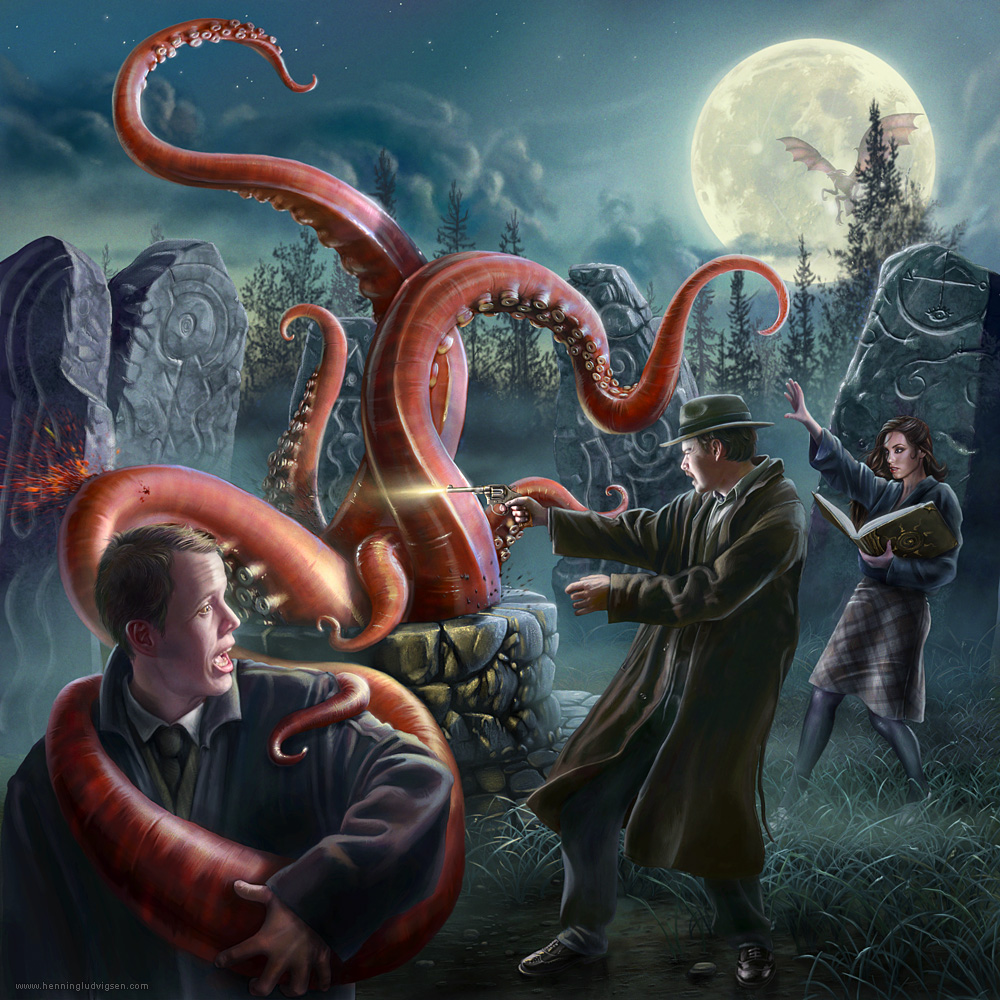
Many of Fantasy Flight Games’ board and card games have included licensed adaptations of franchises like Fallout, The Witcher, Call of Cthulu, Elder Scrolls, and X-COM, so it’s exciting news.
Things seem to be getting quite busy in the world of the Switch with big games aplenty heading its way and the eShop also becoming more heavily populated. It’s quite nice to see and, for small games like JYDGE, the Switch is a perfect playground to find its feet and gather a steady following.
Robotic Terminator-Style Bots
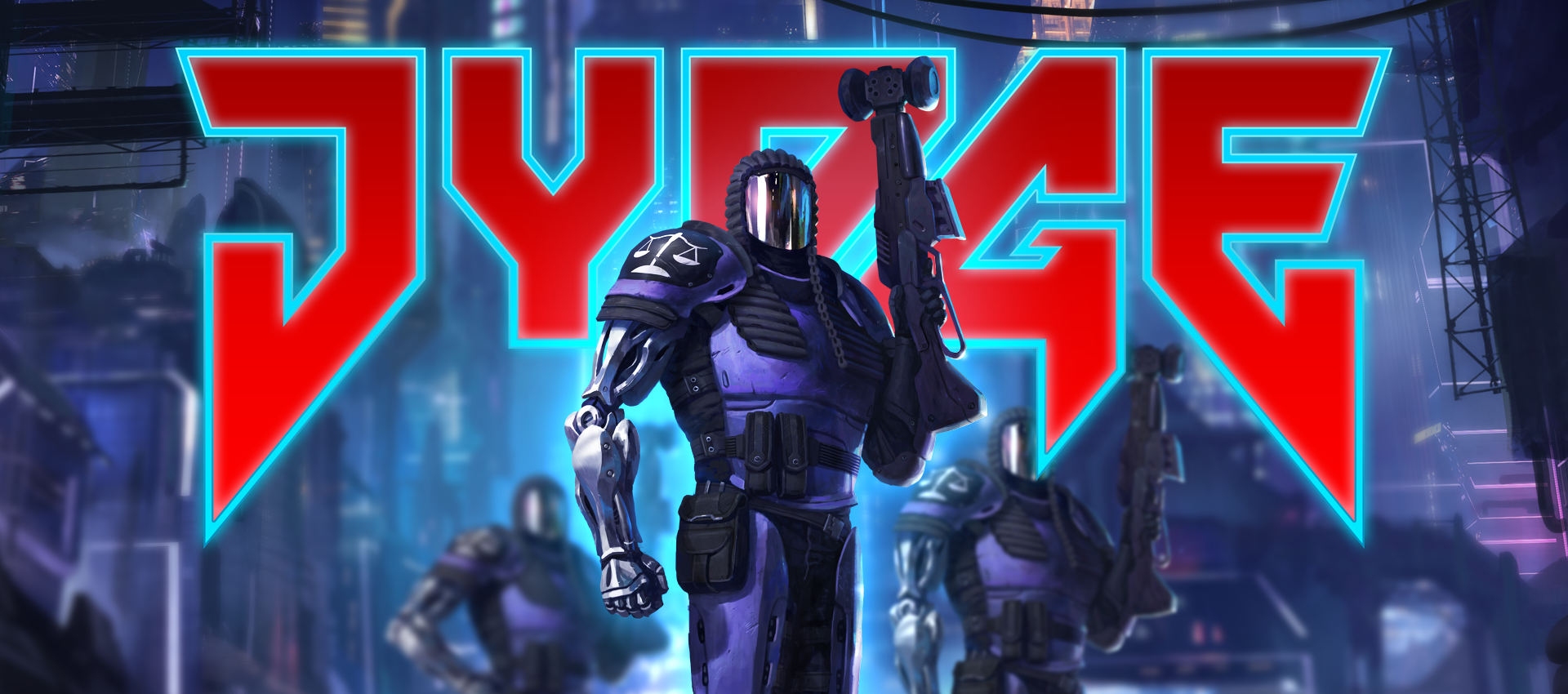
10tons are the creative minds behind JYDGE and previous games such as Neon Chrome, another top-down shooter. This, one of their first forays into the world of Switch, comes off the back of many outings via Steam and other outlets. So, what’s the situation?
JYDGE is a top-down shooter set in fictional city Edenbyrg and you control one of many JYDGEs which are part of the wider JYDGE initiative. These robotic terminator-style bots patrol the city fighting crime, causing carnage amongst the local criminal organisations. The key hook here being replayability and the ability to tailor the game to your favoured play style.
Justice is here!
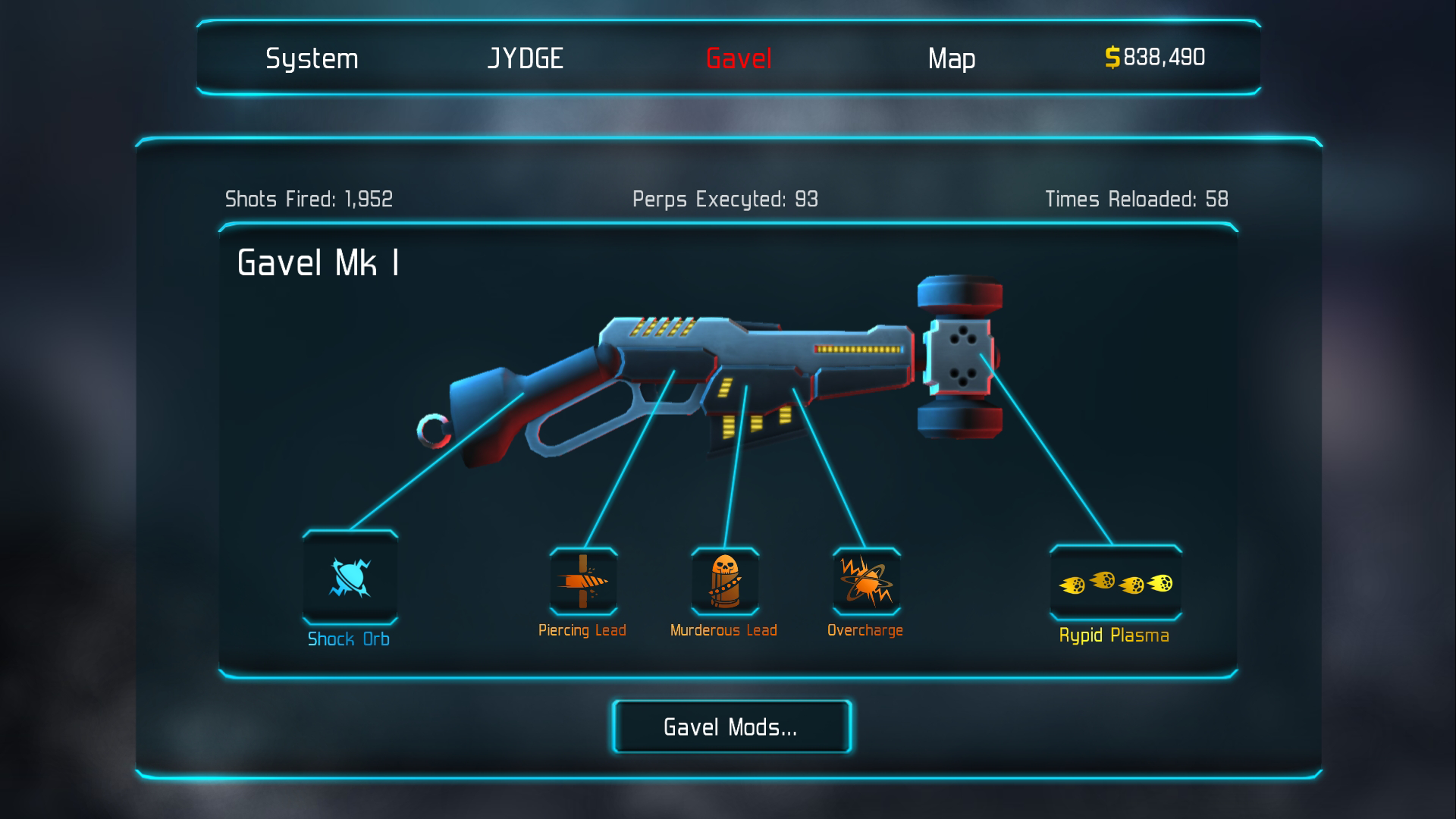
As any self-respected judge will know, you need to have your own trusty gavel with which to exact your justice. JYDGE delivers here as your Gavel is your firearm which is fully customisable, suiting any situation or favoured approach. Upgrades and modifications are unlocked periodically as you progress granting you different perks such as increased fire rate, increased range or indeed a civilian-friendly no damage function. These can also be purchased using the money obtained from looting deceased enemies and confiscating their loot crates.
Exacting Judgement
Each level you play has four difficulty settings with the second being unlocked when you complete the first, this being the Hardcore version. The third being Grim mode and the final being Nightmare mode which is only available once you complete all of the missions once over. All of them have medals to obtain based on your performance and certain unlock criteria, and each is increasingly difficult. These hold the key to progression as each concurrent level requires a certain number to be achieved before you are granted access.
This certainly increases the game’s replay value but only because you are being forced to go back in order to progress. That being said, I do like going back to previous levels once I have spent money on upgrading my JYDGE to show those old crims a thing or two; exacting judgement on them once again.
Upgrades and modifications are unlocked periodically as you progress.
Sneaky Perks
Whilst JYDGE appears simplistic in its appearance and playstyle it can actually be quite tactical should you favour that approach. The run and gun approach can see you turned into a series of giblets all too quickly especially when your stray fire decapitates an innocent civilian waiting to be rescued. Instead, you can equip some sneaky perks (cyberware) such as invisibility whilst standing still and also decreased detection whilst standing in the shadows. The co-op mode also allows you to tackle Edenbyrg’s crime problem as a dynamic duo should you have someone to share Joy-Con duties with.
All-in-all I found JYDGE quite entertaining if a little short-lived. In the space of an evening’s worth of play, I had progressed to the penultimate string of levels with relative ease and little difficulty. It looks rather nice in handheld mode (my only method of play for this review) and my only frustrations were down to my own stupidity when I mistimed a shot or blew myself up. Its art style is also rather appealing with a futuristic neon inspired backdrop your playground for destruction.
My closing thoughts would be surrounding the cost of JYDGE which is £12.99. Is it worth it? I’m not quite sure as it’s the sort of game which you’ll pick up and play for a few days, then potentially abandon. The grind element will put a few people off as they won’t expect this from a top-down shooter, which is a shame as this is JYDGE’s main hook. And, if you were wondering, it is pronounced ‘judge’ the conventional way, albeit spelt incorrectly. You know, because why not…
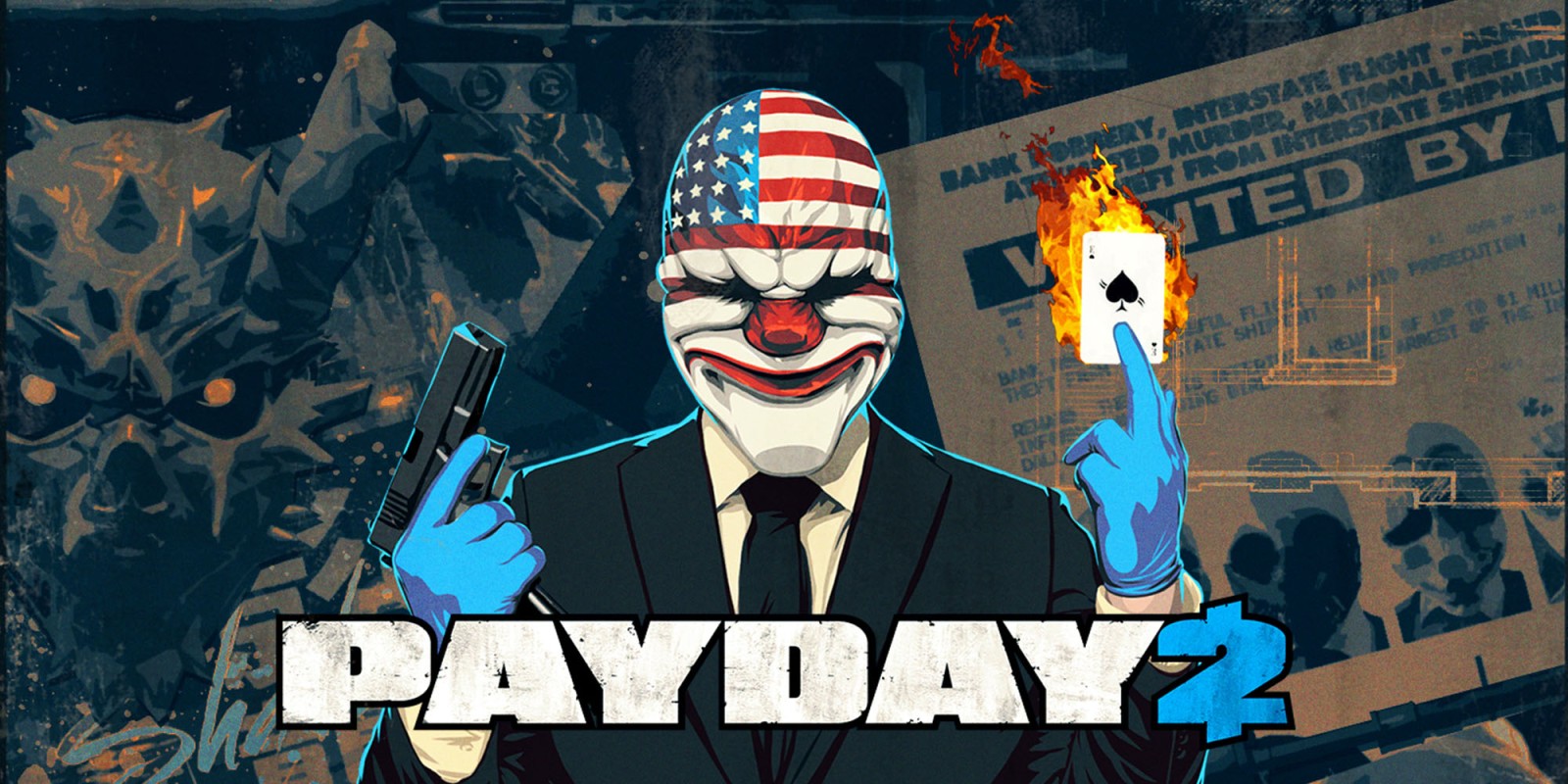
Overkill Software has reassured Switch owners that the development of heister Payday 2 is going smoothly.
Payday 2 on Switch – A Long Wait?
It’s certainly been a while since we heard anything – the game was announced for Switch in a Nintendo Direct back in April – so it’s justified that doubts began to creep in.
Luckily the studio has updated us all via a new video with producer Almir Listo. Details are still rather scarce, but everything looks like it’s coming along nicely.
Payday 2 is due to be released on Switch this winter. Although a delay still seems probable. There’s also a special surprise on its way too, but we won’t know what that is until later on. Stay tuned.
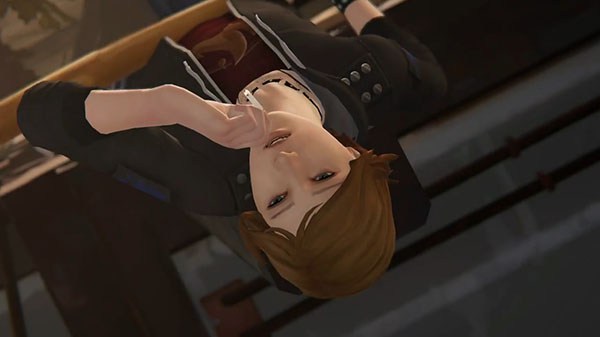
Don’t be surprised, Chloe, if one day I’m just out of here.
It is time to return to Arcadia Bay for the second episode of Life Is Strange: Before The Storm. It’s been approximately two months since the first episode was released, and I’m glad it didn’t take any longer because the first episode left off at a very tense place.
We know more about Chloe, Rachel, and their relationship – and I’m excited to see where their story is headed, and what crossroads they encounter. In the first episode, Chloe and Rachel ditched school and, long story short, they started a forest fire. Now, we see the ramifications of that, as the new episode starts out at the principal’s office.
My actions in the game got me expelled from Blackwell, but I don’t think you actually have a choice regarding that since we already know from the first game that Chloe had been expelled. Luckily, the principal doesn’t know about the forest fire, otherwise, their fates would have had a very different story.
Chloe, The Exit Wounder.
The new episode is called Brave New World, and that is exactly what Chloe has to adapt to. Along with getting expelled from school, she has to deal with a difficult family situation; the wrath of her mother Joyce and her demeaning stepfather David. Joyce doesn’t know what to do about having a rebelling teenager as a daughter and looks to David for help. Much to Chloe’s despair, he has made the decision to move in. As a result, she drifts even further away.
It’s no secret that our protagonist is leading a challenging life. She repeatedly shows the willingness to sacrifice so much, just in order to feel. Even though Chloe is in many ways the victim here, it is important to note that Chloe continually fails to see that there is actually a world that evolves and exists outside her own. But no, being Chloe isn’t easy. Not at all. Her repeated dreams about her father show how she is still unconsciously dealing with the trauma of losing him. And her dreams are getting more and more messed up.
Rachel has the main role in The Tempest, a play set up by Blackwell’s students.
On a random note; remember Frank’s dog Pompidou? We get to meet him again! AS A PUPPY! Some quality story-elements right there, folks. However, as a natural yet unfortunate consequence of meeting Pompidou the Puppy, we also have to deal with his d-bag of an owner, Frank.
Being a drug dealer, and messing around with the wrong people, we know that when Frank contacts Chloe, it’s never good news. And this time around is no different. Because Chloe owes him money, she is forced to run some errands for him, which could get her into serious trouble. And it does.
I also want to report that Victoria is still a b- … stupid girl. Teenagers will do whatever it takes to get what they want, and that is shown when the students of Blackwell are setting up a play called The Tempest. However, we end up watching it in a not-so-regular way… because something unpredictable always happens.
Sera, the woman Rachel’s dad is having an affair with, is an ominously recurring figure, and we learn what her role is in Brave New World. A huge secret, which I was not at all expecting, is revealed at the end – it blew my mind. Boom-boom style.
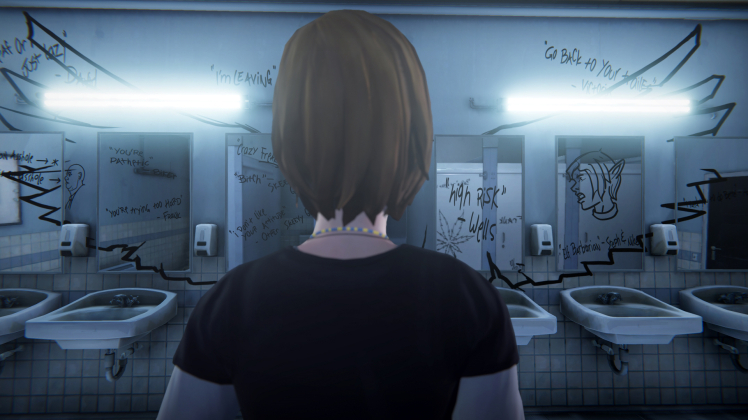
There is one thing Chloe is particularly good at, and that is speaking her mind. Or in this case, drawing it.
And also, the menu has changed yet again. After the first episode, the forest (which is the background of the menu) was engulfed in flames. After the second episode, the flame has died out, and we see the aftermath of the forest fire. Almost like a calm Before The Storm. Get it?
In all seriousness, though, things are taking off in Arcadia Bay. This is a story about teenagers slipping from the surface, and how they manage – or don’t – to get back up. The dialogue is still cringe-worthy, yet I am still loving it. And the soundtrack… amazing and on point. As always.
I’m very excited for the last episode, yet I am dreading to see the end of it… I am not ready to say goodbye just yet. I feel empty after this episode. I don’t know what to feel, everything is so scrambled and messed up. I’m intrigued, however, and I’m expecting that the game will mess around with my feelings, even more, when the last episode arrives, with as ominous a title as Hell is Empty.
We get to see the many masks that people put up, so they don’t have to deal with the confrontation of their problems. There’s a life lesson to be taken from this: don’t be so quick to judge other people. Everybody’s got some kind of baggage.
Slightly underrated gem L.A. Noire can now be seen in 4K… If you go full screen on a 4K enabled monitor, that is.
What Are You Doing Phelps!?
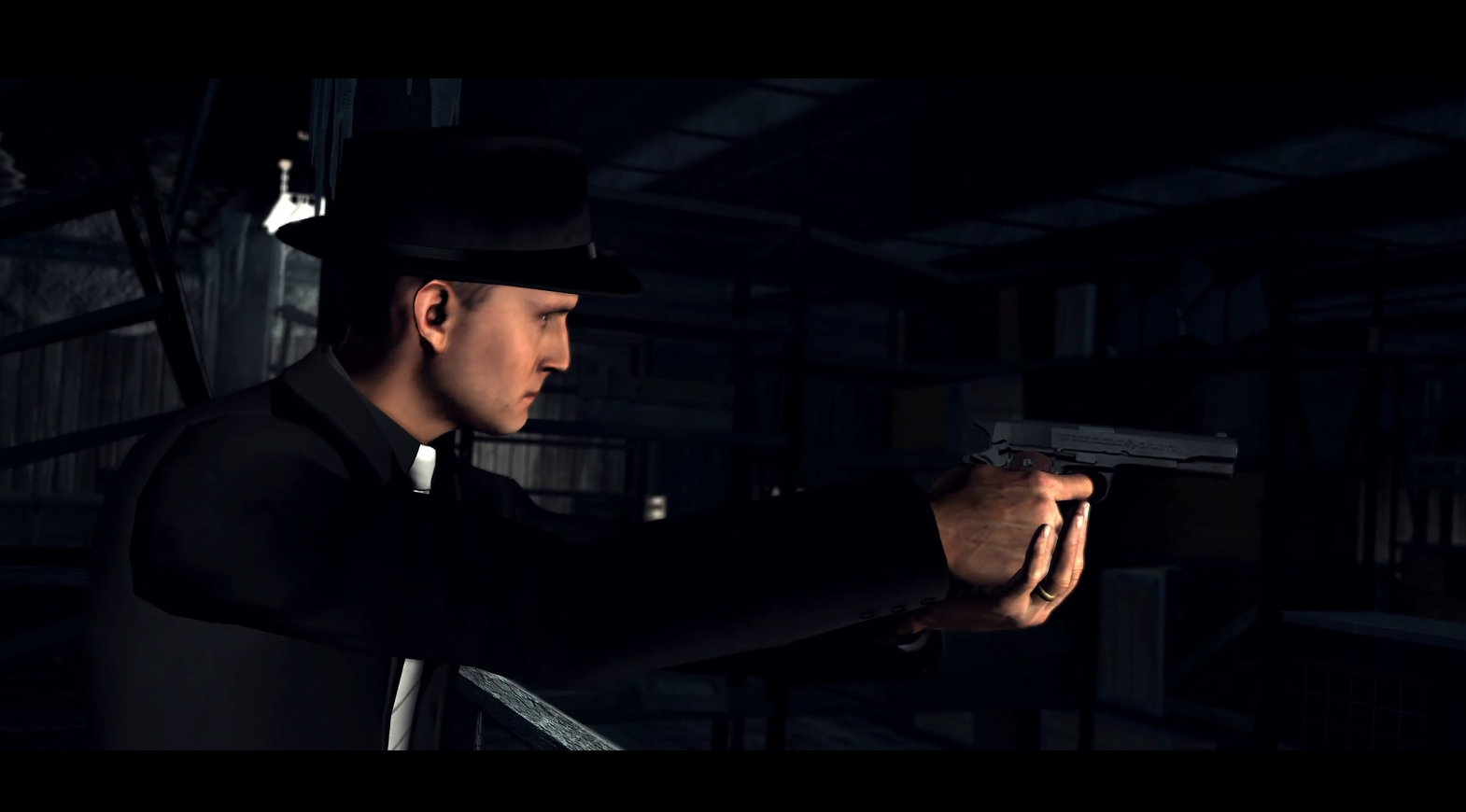
The snazzy new trailer shows detective Cole Phelps and his rise through the LAPD ranks as he investigates a string of crimes in 1947 Los Angeles. Everything, as should be expected, looks better than ever.
L.A. Noire is out for the PS4, Xbox One, and Nintendo Switch on November 14th. A VR edition will also be available for the HTC Vive called L.A. Noire: The VR Case Files – it features seven select cases rebuilt for VR. Hopefully, the VR version will make its way over to PS VR too.
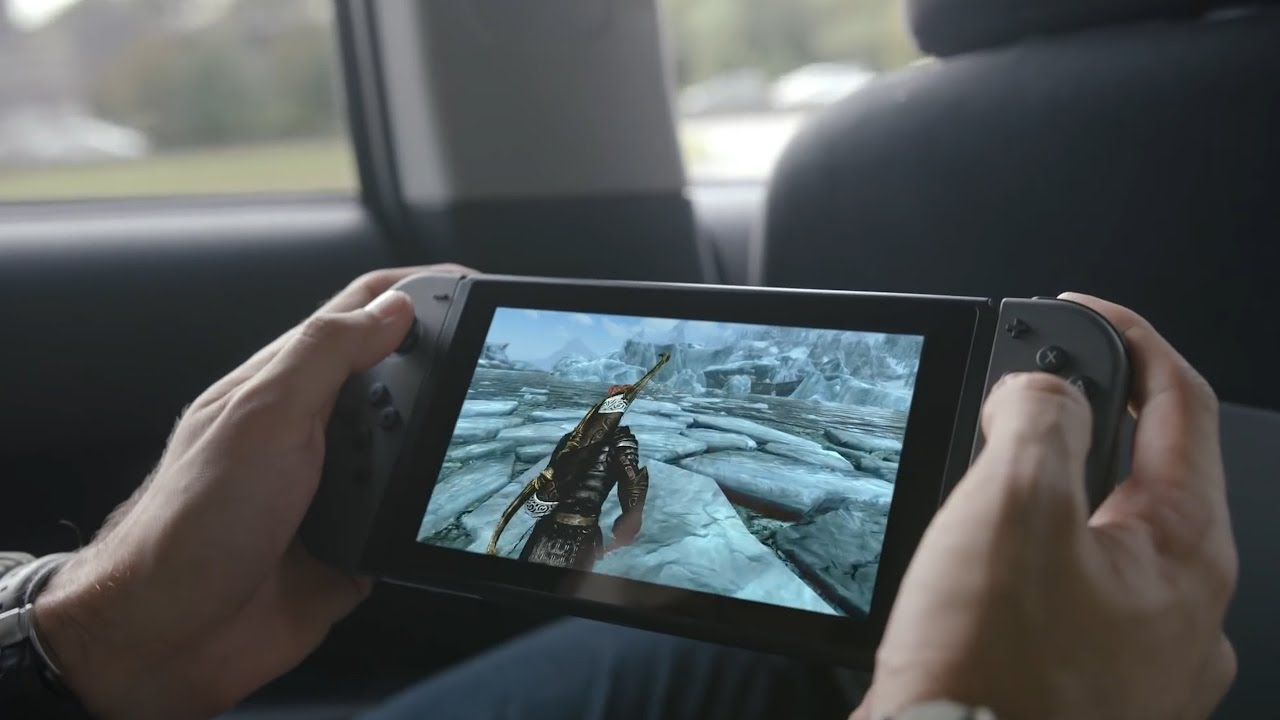
The more I see on this, the less I understand it. It’s like a complex algebra equation, it all seems a little unnecessary and pointless. I loved Skyrim and I love my Switch, but do the two need to be united? Absolutely not. The two are separate entities and can live in complete isolation from one another.
You see, my Switch doesn’t need Skyrim nor does Skyrim need my Switch. Skyrim has had its time, even more so with the recent remake outing, and I loved every single minute of it. But Skyrim fatigue is well and truly in effect; I’ve played enough Skyrim to know I’ve had my fill. There’s nobody out there that hasn’t at least dabbled with it in some variety surely?
The few die-hard Nintendo-only fans out there must (even) have very little interest in this as well. There’s a reason why they buy Nintendo consoles; for their unique experiences. Nintendo offers something different, they don’t conform to the other console cycles or trends. They do their own thing and that’s what Nintendo needs, not to open up the gates to two generation old titles.
Now I’m sure Skyrim will run absolutely fine on Switch and seeing it on a portable platform would be amazing. Sure. But do I need that to justify my purchase by showing how powerful the Switch actually is? I think we all know the answer here. Whichever way I look at it, I just cannot fathom it.
It’s the fact that Nintendo has done the above, by sticking to their guns, that makes them who they are. For better or worse, their loyal fan base will stand by them throughout this as well – I think they’re taking a step away from what they do best though. What I’m saying is: more like Odyssey, less like Skyrim.
It’s not costing them anything to develop Skyrim on their latest console, granted, but surely Bethesda have something better to do with their time as well? You know, like milking us for a re-release of a complete edition of Fallout 4 on PS4/XB1, and not bringing it to the Switch.
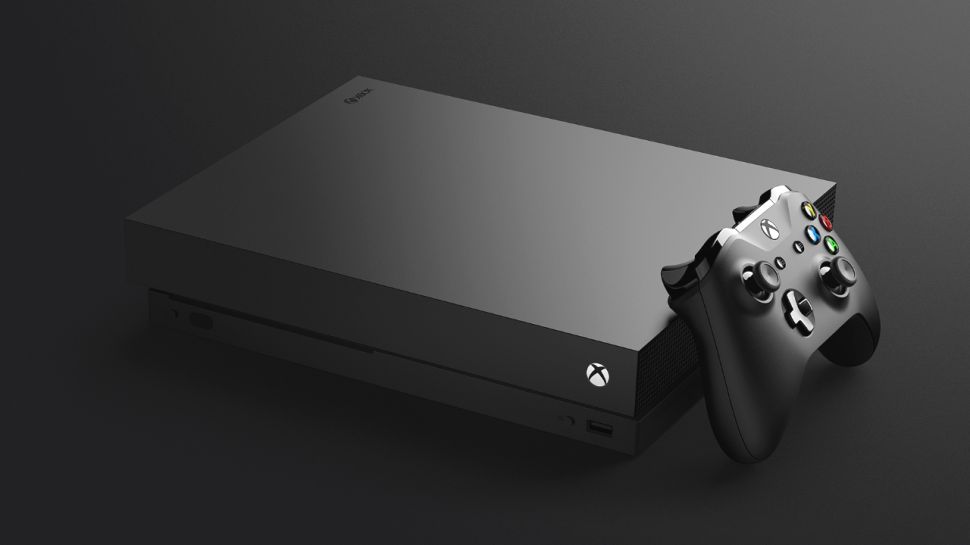
In a new interview with GamesRadar, [originally from Xbox: The Official Magazine] Microsoft has spoken about the increase in power the Xbox One X provides, and what that means for developers and gamers alike.
Xbox One X: “Feel True Power”
Dave McCarthy, Xbox’s general manager, had this to say on the new console:
So if you’re an existing Xbox One user, I think whenever you’re ready to make the jump, developers are going to take advantage of the high-end capabilities of it. We think it’s a compelling combination of power, performance, compatibility, and also design.
There is a big difference with 40% more processing power, in terms of ensuring that consistent frame rate, including that frame buffer that’s going to get you all those 4K textures, ensuring the spatial audio is going to be at a premium for you.
Asked what effect the Xbox One X would have on the wider gaming landscape, McCarthy replied:
I think there’s a round of storytelling that it’s really going to unlock for a lot of developers. You saw Patrick Söderlund talk a little bit about that, both in the EA Play conference and when he was introducing Anthem from BioWare [at Microsoft’s conference]. There’s an immersion factor to true 4K. Like, you feel the heat come off those cars in Forza. The weather effects are stunningly real, and you find yourself sort of immersed in these experiences.
The Xbox One X isn’t far away now and launches on the 7th November worldwide for a princely £449.99/$499.99. Will you be diving into the extra immersion reader? Let us know in the comments below.
Super Mario Odyssey is released tomorrow on Switch and the reviews are coming in thick and fast. The general consensus: Mario’s latest adventure is another audacious masterpiece.
While we don’t believe that Metacritic should always be taken as an absolute, it’s worth noting that Odyssey is currently sitting at 97 on the site – the same score Breath of the Wild ended on.

![Super Mario Odyssey Review [Nintendo Switch]](https://nitchigamer.com/wp-content/uploads/2017/10/H2x1_NSwitch_SuperMarioOdyssey_image1280w.jpg)
![Super Mario Odyssey Review [Nintendo Switch]](https://nitchigamer.com/wp-content/uploads/2017/10/s9xuWCYogqnFjRisfDZwHf.jpg "Super Mario Odyssey Review [Nintendo Switch]")
![Super Mario Odyssey Review [Nintendo Switch]](https://nitchigamer.com/wp-content/uploads/2017/10/Super-Mario-Galaxy-T-Rexio-1260x709.jpg "Super Mario Odyssey Review [Nintendo Switch]")
![Super Mario Odyssey Review [Nintendo Switch]](https://nitchigamer.com/wp-content/uploads/2017/10/IMG_4032.jpg "Super Mario Odyssey Review [Nintendo Switch]")
![Super Mario Odyssey Review [Nintendo Switch]](https://nitchigamer.com/wp-content/uploads/2017/10/nintendoswitch_supermarioodyssey_scrn07_e3.jpg "Super Mario Odyssey Review [Nintendo Switch]")