Floor Kids Review [Nintendo Switch] – A Hip, Head Bobbing Good Time

The rhythmic genre found in gaming has recently been regarded as that of a sore spot to much of the gaming community. Sure, we have excellent parties to throw revolving around Rock Band and Dance Dance Revolution, but how long has it been since either of those titles or any of the other music-based titles have been even remotely relevant in recent memory? Well, leave it to the Nintendo Switch to bring back the curve of rhythmic button smashing, but instead of hardy rock ‘n’ roll, we now have hip break-dancing in, Floor Kids.

While the overall premise of Floor Kids is straight forward enough – break-dance to the backtrack, pull off slick combos and moves by pressing the appropriate buttons at the right time, earn enough points to win – the game provides an excellent combination of modern edginess and trivial gameplay. Players choose their break-dancer from a selection of characters whose attributes range in four different skill classes. The four classes are also the four styles of break-dancing moves players can pull off in the break-dancing battles.
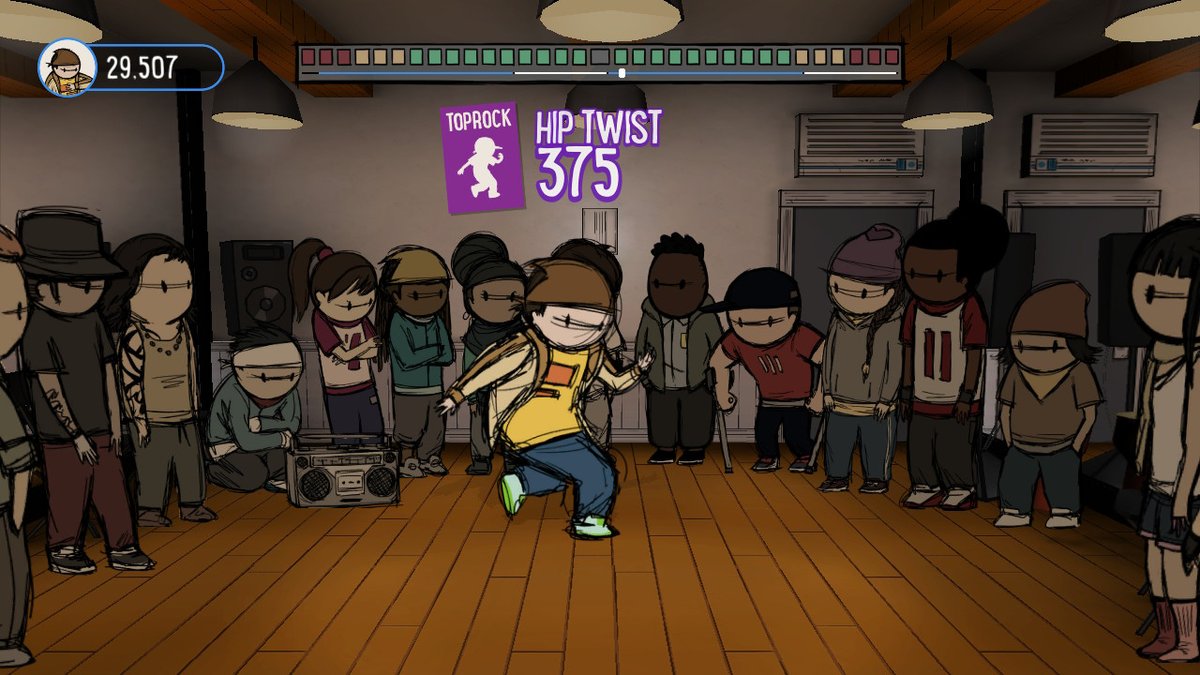
Popping off combinations of top rock and down rock moves is as easy as keeping the beat of the song with the proper face buttons.
Time to Bust Out Some Moves

Top rock, down rock, power moves and freezes are the four move sets each player has available to them. Top rock has players dancing at a standing position, on two feet, while Down rock takes the agile break-dancer down on all fours. Each of these two positions have four separate dance moves for every one of the eight playable characters, and are accomplished by tapping one of the four face buttons in coordination with the beat of the song. Simply tapping one of the buttons will have players performing top rock, but holding the down motion on the left analog stick while tapping a face button switches to the down rock position. An easy configuration that keeps the dancer from going idle and losing precious points.

The other two positions are Power and Freeze, but these two are performed in slightly different methods. Power refers to the dizzying motion when break-dancers spin for what seems like an eternity on their head, shoulders or hands. By rotating the left stick in either direction, the dancer then begins their own rendition of the power position. By holding down either the L or R shoulder buttons, the dancers will change into an alternate power move to add even more flavour to the performance.

Lastly, the freeze stance is the act of holding a position completely still in the middle of the song. By holding down one of the four face buttons along with the corresponding direction on the left analogue stick, the character will hold out a freeze move. These are crucial to time perfectly, as holding them out too long will result in the dancer toppling over, thus ending a combo and losing points. Combining the freeze moves together is especially fun, watching as your dancer seamlessly shifts from one handstand position to the next.
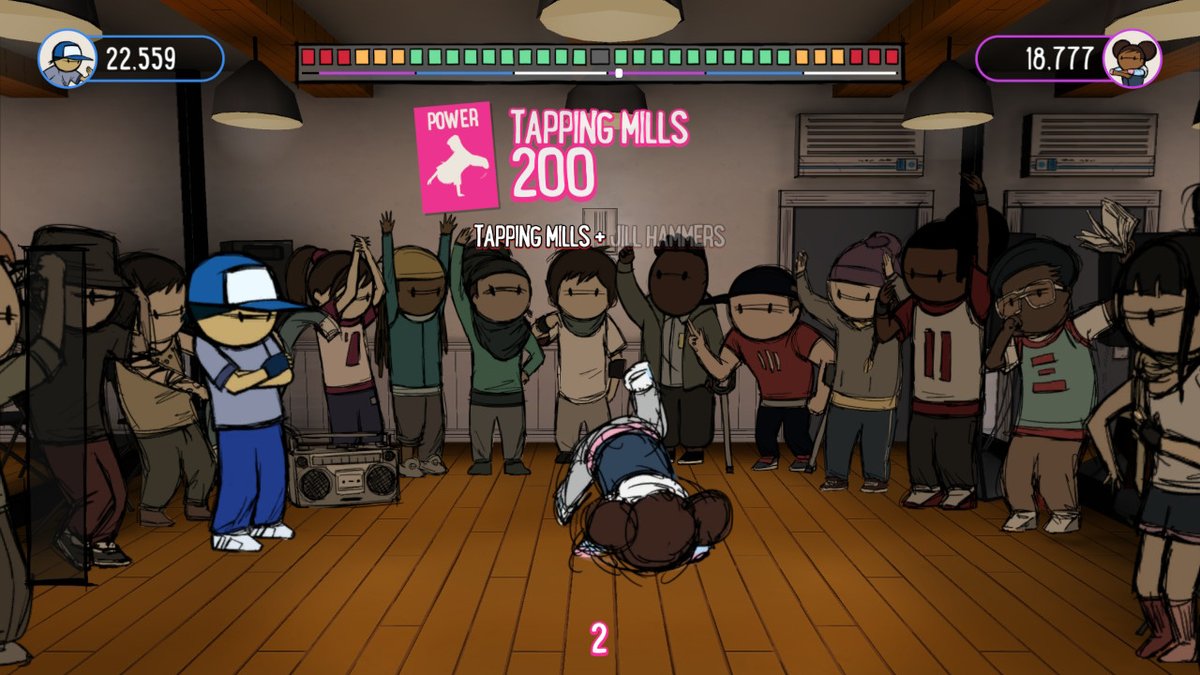
The four different stances take the dancers between flashy dance moves, even spinning atop one’s head.

Combining and switching between the four different stances successfully strings together combos and accumulates points. Bouncing your fingers to the beat while changing between moves is rewarding and all-too captivating of a ride. Watching as your hand-sketched character throws down their best moves to the DJ Kid Koala tracks, you can’t help but bob your head along to the beat. As cultured and fun the combo busting break-dancing is, however, the solid tapping beat rarely, if at all, changes rhythm from song to song. What does change is the snappy chorus parts that, if done properly, deal a huge portion of points to your overall score.

Tons of Awesome Tracks to Kick It To

Every song in Floor Kids lasts around 3 minutes or so, and each has two unique chorus sections. Taking place about halfway through and one at the end, the chorus sections mix up the strategy by adding distinct beats to the song at hand. By tapping in the correct positions (marked with an ‘X’ on the screen) players will add a bit more swagger to the dancing routine. While the overall beat stays the same – though the songs indeed change – the chorus acts as the game-changer in the songs.
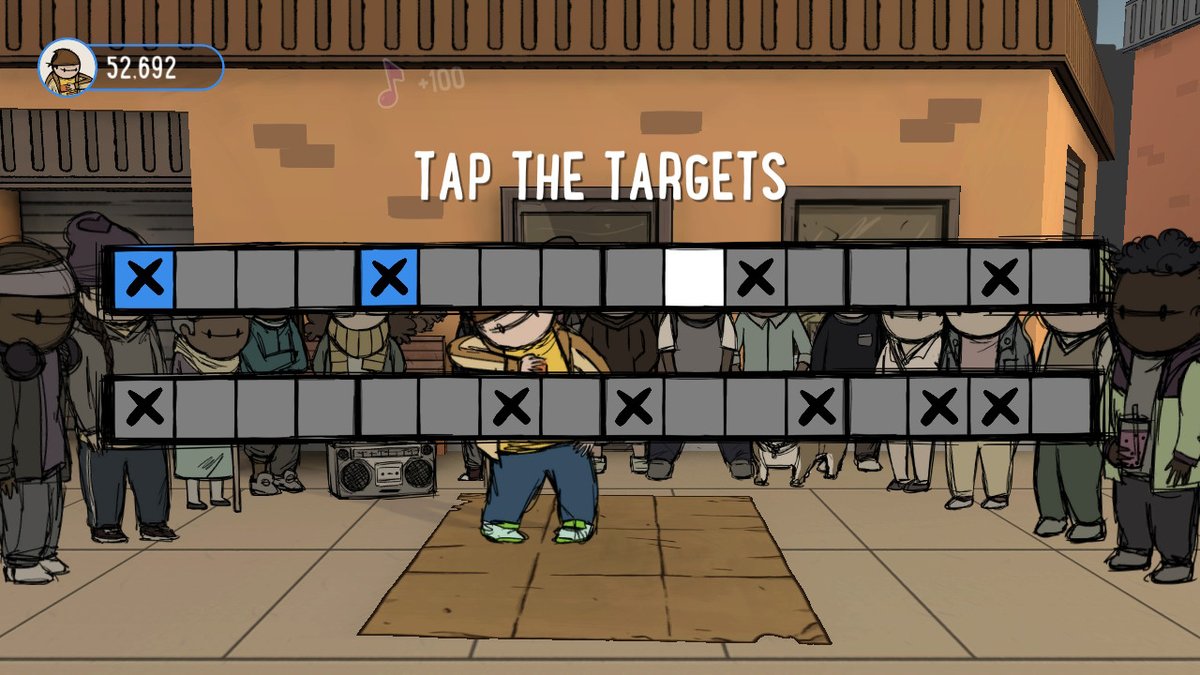
The chorus sections require the player to hit the desired notes at appropriate moments in the song.

The lay of the land, so to speak, in Floor Kids is divided into a flurry of different settings in which these break-dancing battles take place. Each setting has three different songs to get down and earn your place on the cardboard. Players are scored out of a 5 star rating system based on their total score. By unlocking a certain amount of stars in total, the following venue then opens up. From grocery stores and art centers, to arcades and music studios, Floor Kids has a variety of settings, each with their own unique character to unlock.

At the start of the trivial campaign, players choose one of the eight playable characters, which then locks the unchosen seven. After obtaining 3 or more stars on certain levels, characters will unlock pieces of Breakdeck cards. Four pieces of the card deck will unlock a new character, each one varying in specific skills. While the progression system found in Floor Kids is a nice touch to the otherwise simple campaign, the ease of unlocking all of the characters hardly presents a challenge. Good thing the tunes are extra catchy.
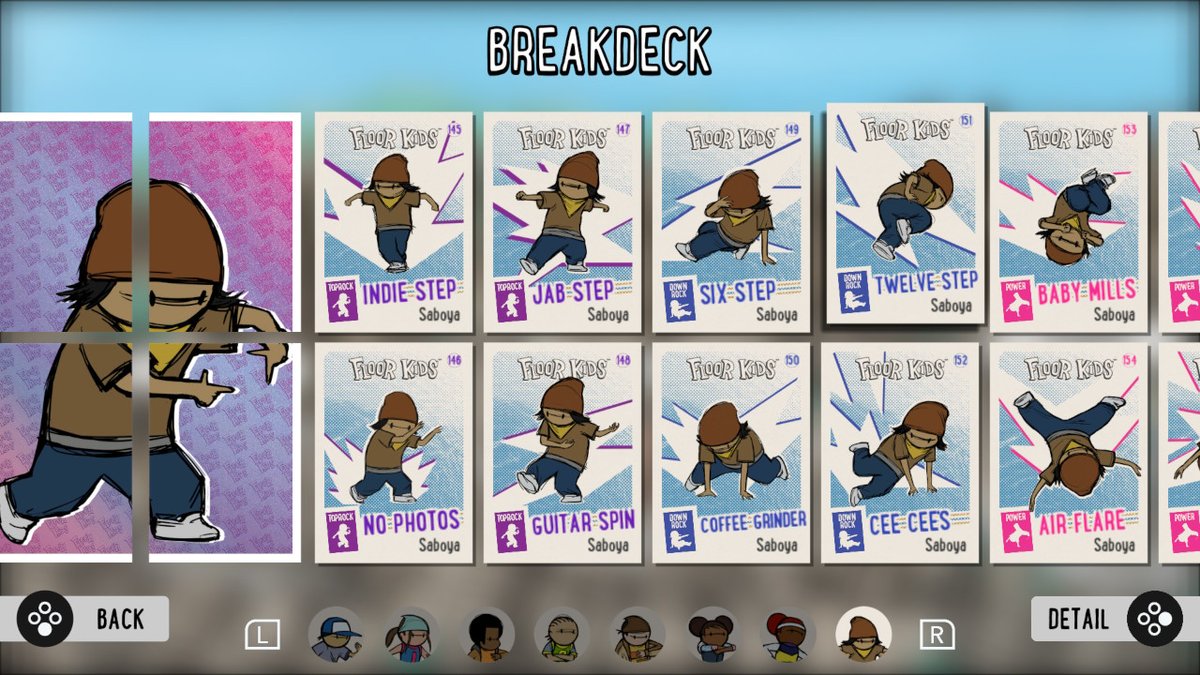
In single-player mode, characters are unlocked in the Breakdeck by achieving high enough scores to earn a piece of a character card.
Let the Battles Begin…at the Scratch of the Record

For those looking to indulge in a little friendly competition with friends, a multiplayer Battle mode is available. Each player will choose a character of their liking and set out to dance like they’ve never danced before. In battle mode, each player has two chances to strut flashy moves in retaliation to their adversary, but not without a little dangerous interference from said foe.

While engaging in break-dance combat, looking for crowd requests for extra points to boost your score and keeping every move fresh and “crispy”, the opponents are capable of hurling giant fireballs – known as “Burns” – at the dancer on the floor. The opponent player taps any button to the beat to fill up their burn meter, and once full the player is then ready to launch the burn ball away. However, the dancing player, if paying attention, can trigger a shield to completely block the Burn attack when timed perfectly.
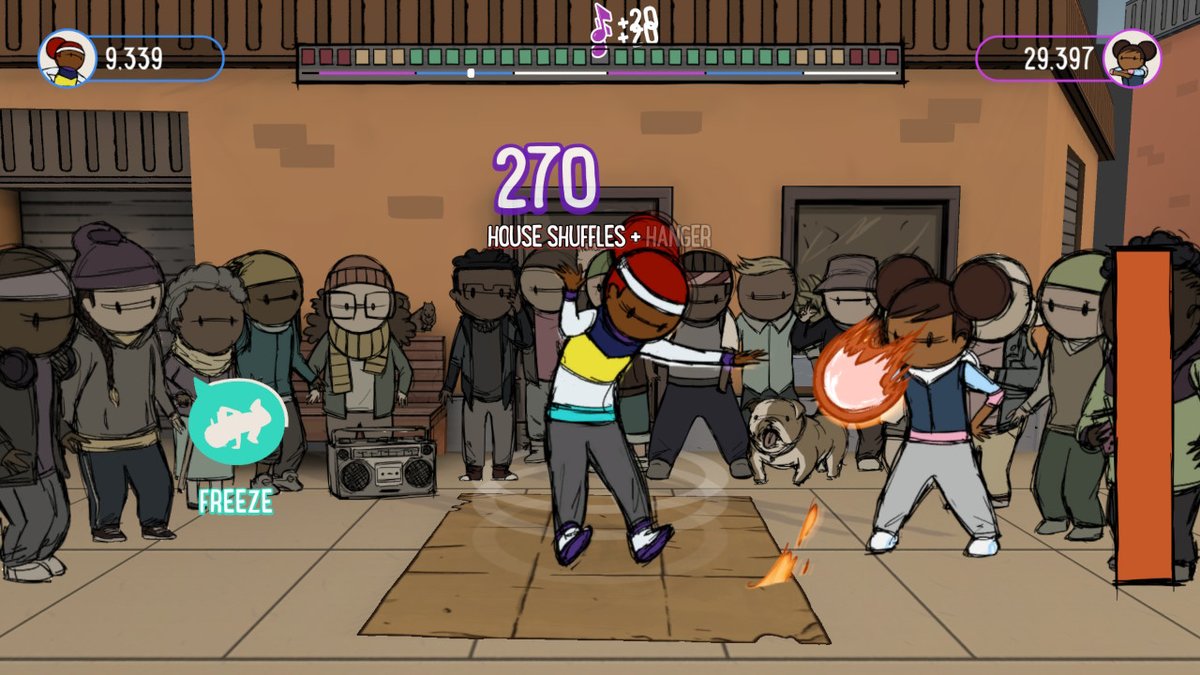
In Battle mode, the dancer on break is able to build up their “Burn” meter and launch disrupting fireballs at their opponent.

With this unique added element, the two player battle mode really shines. The dances are tense and hectic, way more than the simple idea would lead on. Pumping to the beat, switching stances to the crowd’s liking and keeping your guard up from the inevitable “burn ball” headed your way is truly a rewarding phenomenon if accomplished successfully. Not many rhythm games have this much depth of competition in such a simple sequence of events, but Floor Kids absolutely delivers a remarkable 2-player experience.

All in all, Floor Kids is an excellent addition to anyone’s Switch library. A cute little game with modern hip-hop tunes, and a method of dancing that, until now, haven’t seen very much light of day. The rhythmic stylings of Floor Kids revive a genre that seems to have drifted away with the likes of Rocksmith and SingStar. Easy enough for anyone to pick up and play, the beat-bopping tunes and awesome sketched-out visuals from the creative mind of the artist, JonJon, Merj Media has provided a unique form of entertainment to the ever-growing selection of Switch titles.

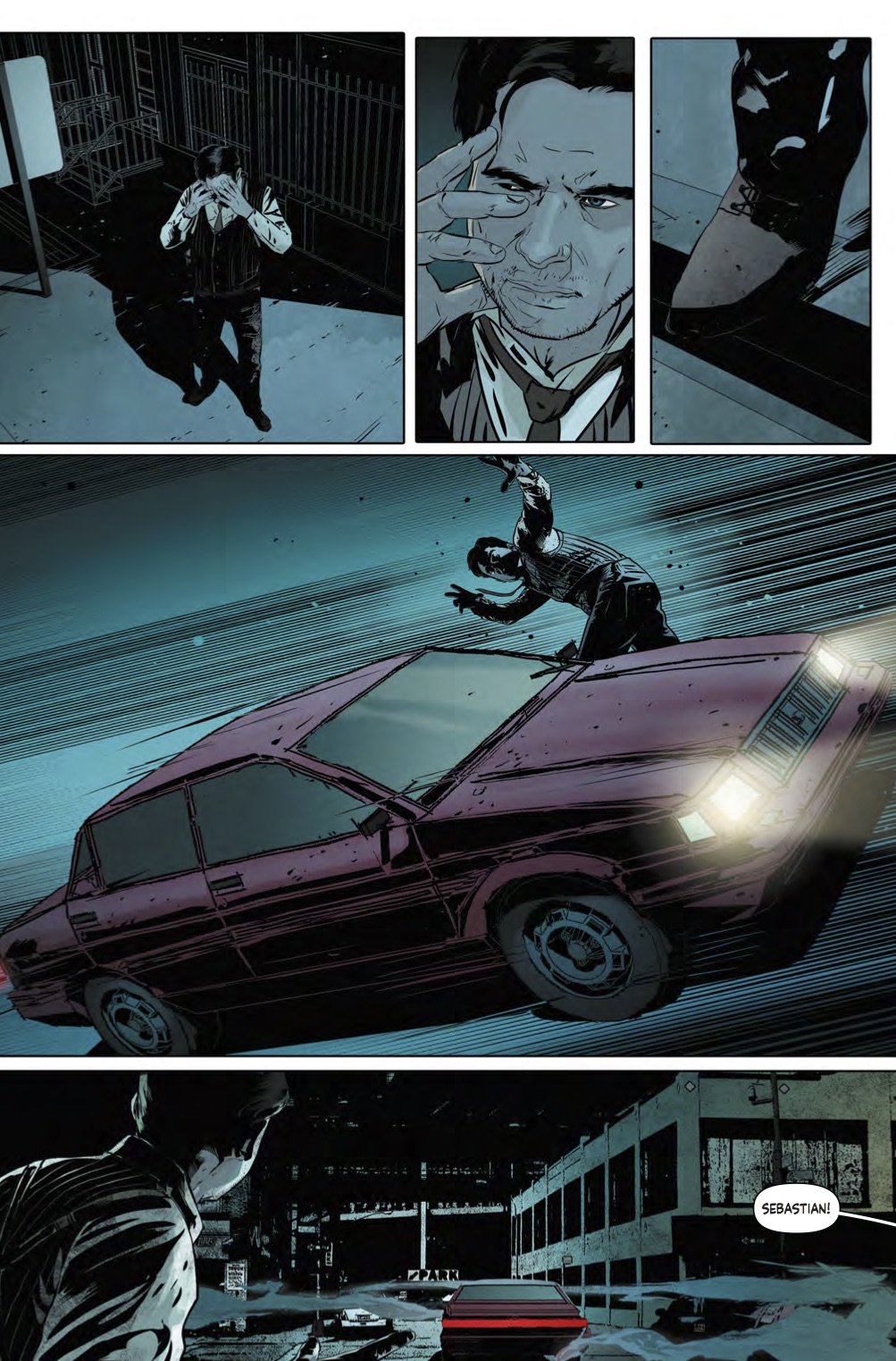
The Evil Within: The Interlude

The Evil Within: The Interlude Review [Comic] – A Hauntingly Jarring Bridge Between Games

Note: While we don’t normally review comics, this is a particularly notable one that bridges The Evil Within games together – so it’s worth our time. Meet The Evil Within: The Interlude.

Human beings have always been an inquisitive species. We are never satisfied with the information presented to us and are constantly seeking the unknown and the hidden. As with all of humanity, when I watch a movie, play a game, or read a great book, I too need to know more. I want to learn the story of what happened in the events leading up to and then after the main narrative is finished; it’s the history behind it all that fascinates me the most. I must find out where these characters have been and what will become of them when a writer’s pen has become silent. For fans of The Evil Within, and those whose brains are just as inquisitive, you’re about to get a little more of the story surrounding Detective Sebastian Castellanos and his struggle to maintain his grip on reality.

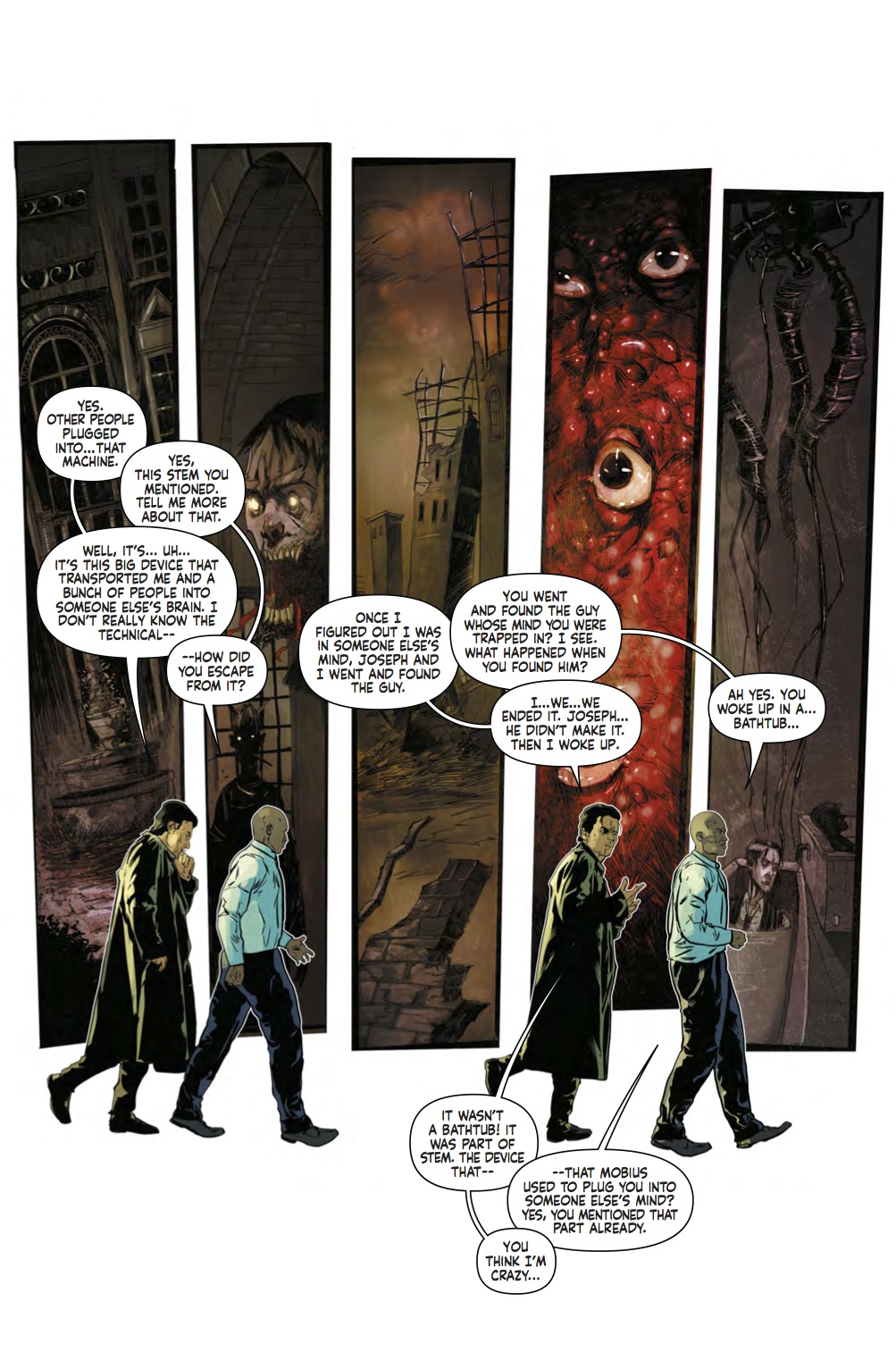
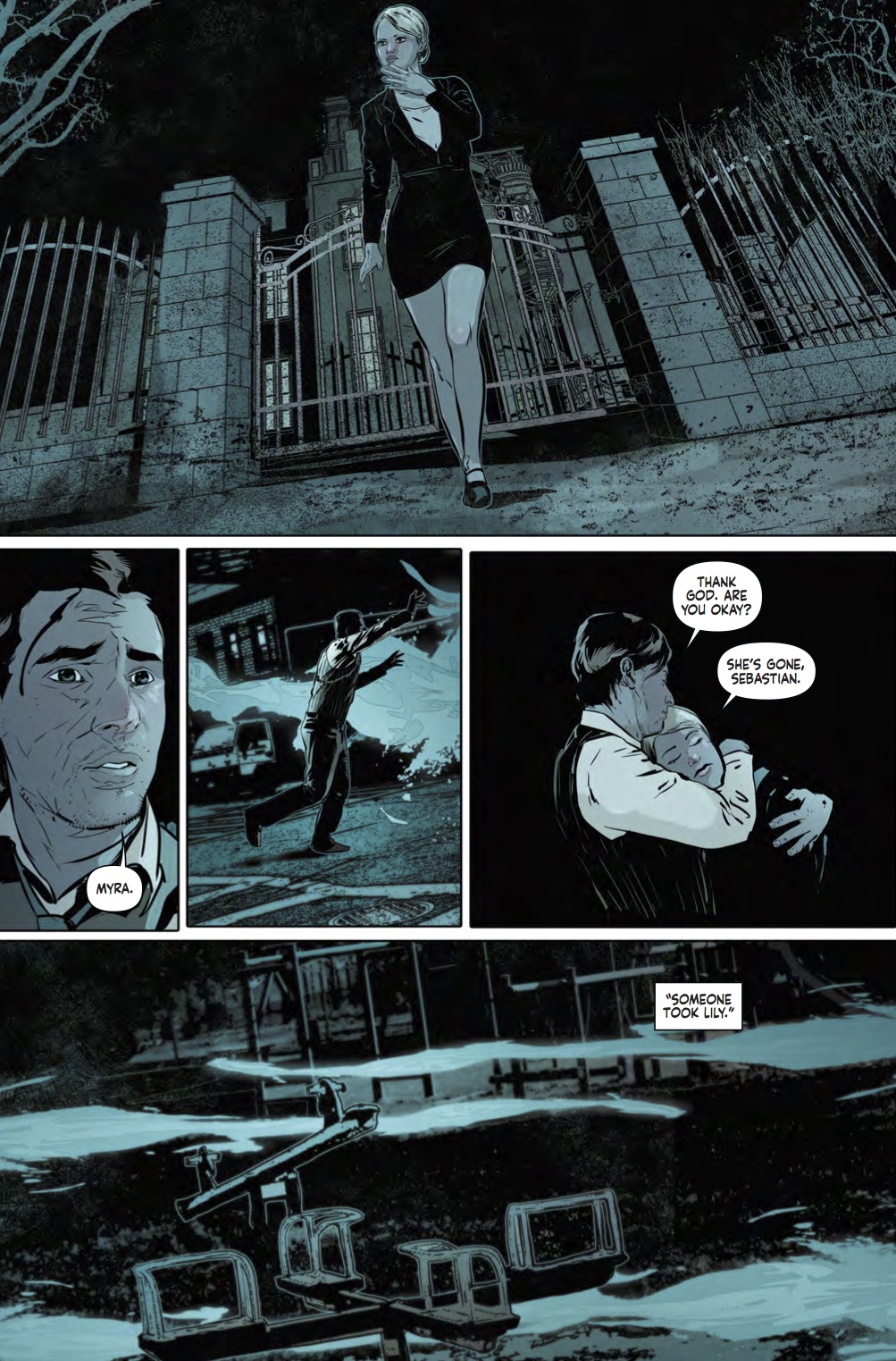
The Evil Within: The Interlude is a two-part comic continuation of the game that bears its name, bridging the gap between the first and second instalments. Maintaining the same esthetic players are used to, Writer Ryan O’Sullivan and artists Szymon Kudranski and Damien Worm have constructed a continuation to the story at hand, all the while, leaving readers with a deep anticipation for the sequel.

The Evil Within: The Interlude

For those who have never played The Evil Within, I won’t spoil anything, but I highly recommend you give it a shot. It’s only recently that I had an opportunity to try the first in the series; as survival horror goes, it’s fantastic. The game has a way of making the player exceptionally uncomfortable, with grotesque backdrops and Silent Hill inspired manifestations throughout.

Just as in the game, Interlude has a way of jarring the readers with sudden time cuts and brutal imagery, leaving one to ask themselves if what they’re seeing is real. Like our protagonist, Det. Castellanos, I too felt like I was beginning to fall down the rabbit hole of mystery and desperation. Was I, like the detective, going crazy? Is what we see with our own eyes the real thing, or are we trapped inside the Matrix, desperately trying to claw our way out?

The Evil Within: The Interlude

Ryan O’Sullivan’s writing doesn’t reveal too much to the reader and allows you to second-guess everything. Mr. O’Sullivan has a way of luring you in and then warping your sense of reality without warning.  I felt as if the writer was keeping a dark secret, but refused to tell me out of some spiteful pleasure. For those familiar with O’Sullivan’s Turncoat graphic novel, you will notice a similar writing style that hooks the reader without divulging too much too quickly.

The artwork by Kudranski and Worm has a bleakness to it that can be a bit off-putting, in a good way. I felt truly uncomfortable reading this at times; it was as if what I saw was taunting me in a way. To maintain that level of paranoia and fear in comic form, just like in the game that inspired it, is a testament to the skills of those involved in its creation.

The Evil Within: The Interlude

Although I had to read a few spoilers to get a sense of what this comic referenced from the first game, I am now incredibly excited for the sequel and the continuation of this mind-bending story. As the reader, you’re not supposed to know what’s real and what’s not, but Interlude acts as a perfect bridge in which to cross over into the unknown. If The Evil Within and The Evil Within 2 are centred around a twisted world, intricately woven together like a dark and sinister quilt, Interlude is the bloody thread that binds it all together.

If you’ve never played the original game, I highly recommend you do so first, before reading this short but engrossing comic. By the time I finished part 2, there seemed to be more questions than answers, but that’s just how something of this nature should be. Readers will get their appetites teased, but the main course of answers to this Pandora’s Box will come when you close the book and pick up that controller.

Please note, I’ve kept this review spoiler free (both game[s] and comic), and ask that those commenting below please do the same.

Tennis in the Face Review

Tennis in the Face Review [Nintendo Switch] – A Bit Of Light Relief?

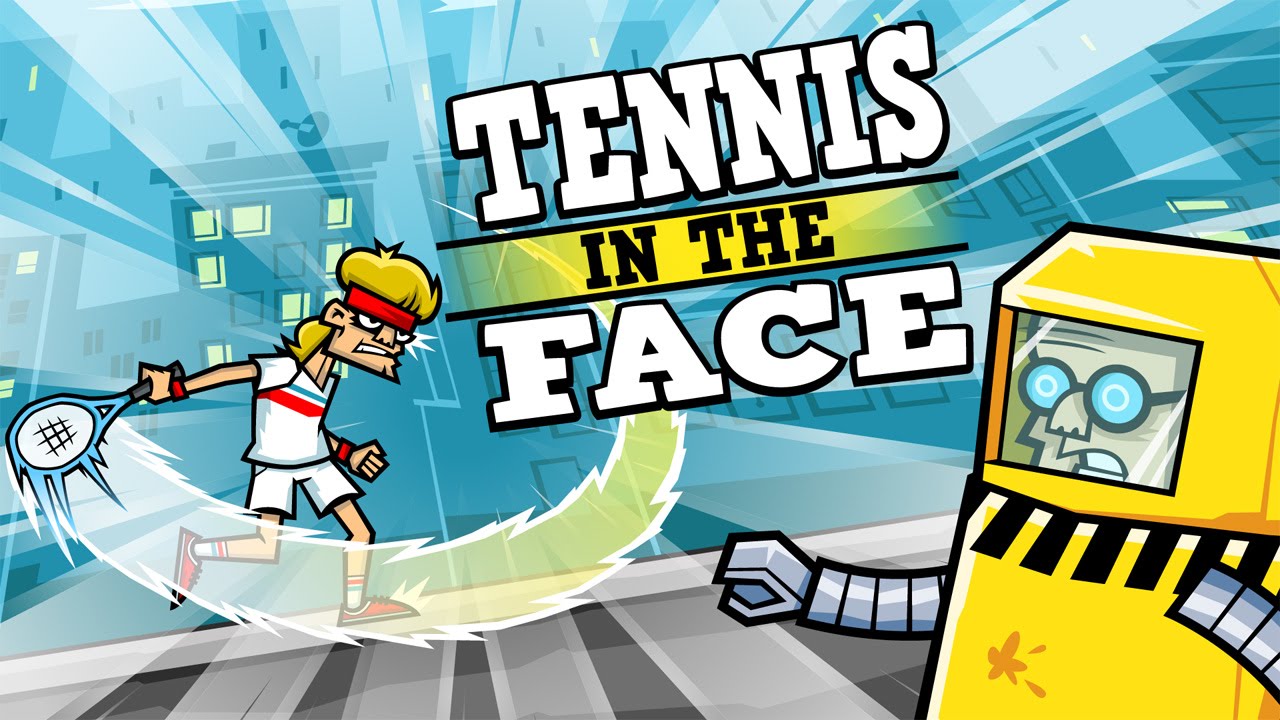
As someone who enjoys sports, there has always been one that is my Achilles heel; tennis. Not that I don’t enjoy watching it or partaking in the yearly Wimbledon hype, I’ve just never been able to play it. So when it comes to any form of tennis games I’ve always avoided them. That is until now. In what appears to be their continuation of service to the Switch, 10tons bring us their latest instalment to the console; Tennis in the Face.

Albeit a very light-hearted take on the tennis world, Tennis in the Face is an entertaining experience which sees you whacking tennis balls at unsuspecting victims. The clue is in the title really… The story goes that Explodz Inc, the manufacturer of an addictive energy drink, has taken over an unnamed city. It is your job, as ex-tennis superstar Pete Pagassi, to save the city from evil clowns, corrupt business folk and hipsters to name but a few. I knew there was something untrustworthy about those hipsters…

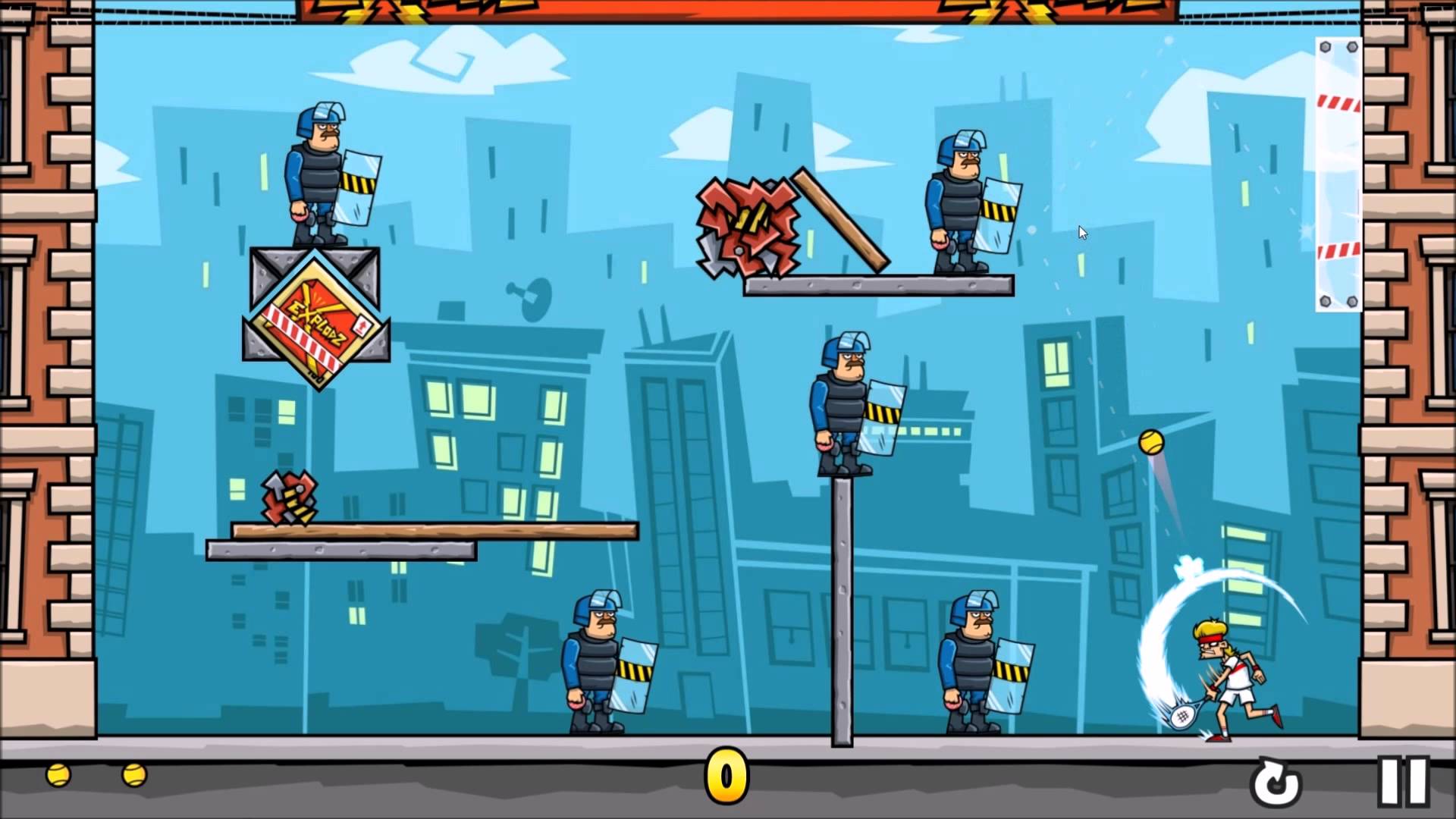
Each set of enemies have different quirks and defences; some cannot be attacked head-on, others take more than one hit to knock down. The task is to find the most efficient way of taking all enemies in each level down in the most efficient way, using as few tennis balls as possible. There are environmental hazards and objects which will both help and hinder you along the way.

Tennis in the Face
Tennis in the Face

Blocks of ice will shatter upon impact, opening up new routes, whilst crates of Explodz will explode when hit, knocking all down within blast range. Altogether there are over 100 levels to complete, each having a crown to collect from it when a certain score is surpassed. Collecting crowns grants you access to the next area of the city before your penultimate showdown with the Explodz factory.

The mechanics within the game are nothing new or ground-breaking but prove to be entertaining nonetheless. Your balls only bounce a finite amount of times (oo-er) meaning you have to find the sweet spot where they hit as many targets as possible before disappearing. This is both a fun and annoying challenge in equal measures.

The only nuance that I found here is that the game is better when using the touchscreen controls, which I don’t like. Given this has been on the mobile platforms this makes sense but if you’re gaming on the Switch it would make sense, to me, to opt for the use of sticks and buttons.

Soldiers of the Universe Review [PC] – A Rather Uninspiring FPS

First-person shooters have developed a sort of stigma over the years of being linear, cover and shoot forms of entertainment, primarily focusing on war in realistic scenarios. Soldiers of the Universe follows this mechanic almost religiously, giving new definition to the term “linear”. Infiltrating Middle-Eastern terrorist organizations across Syria and Istanbul, independent developers, Rocwise Entertainment, bring a sobering experience to the ‘duck and cover’ genre of FPS games.

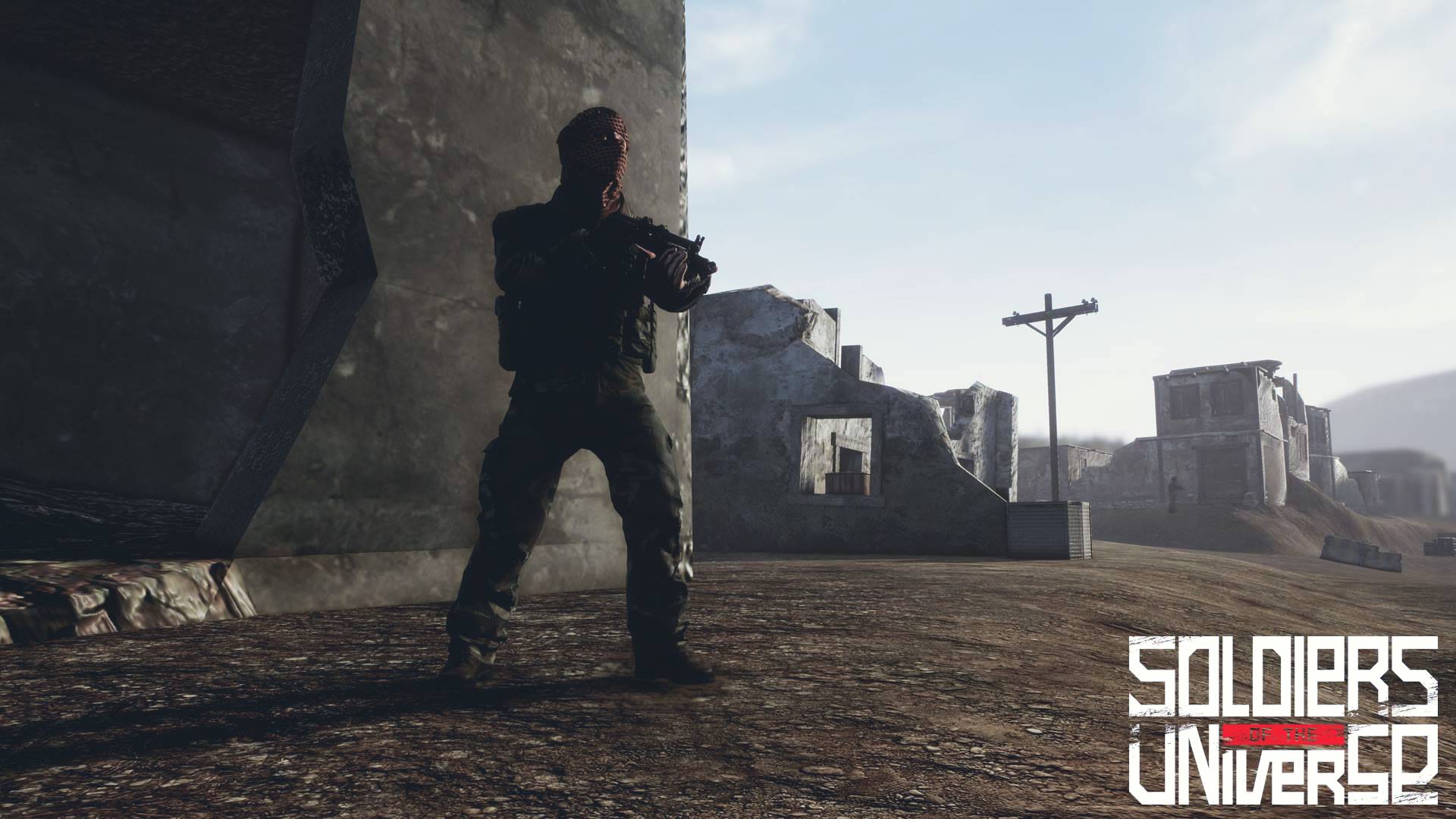
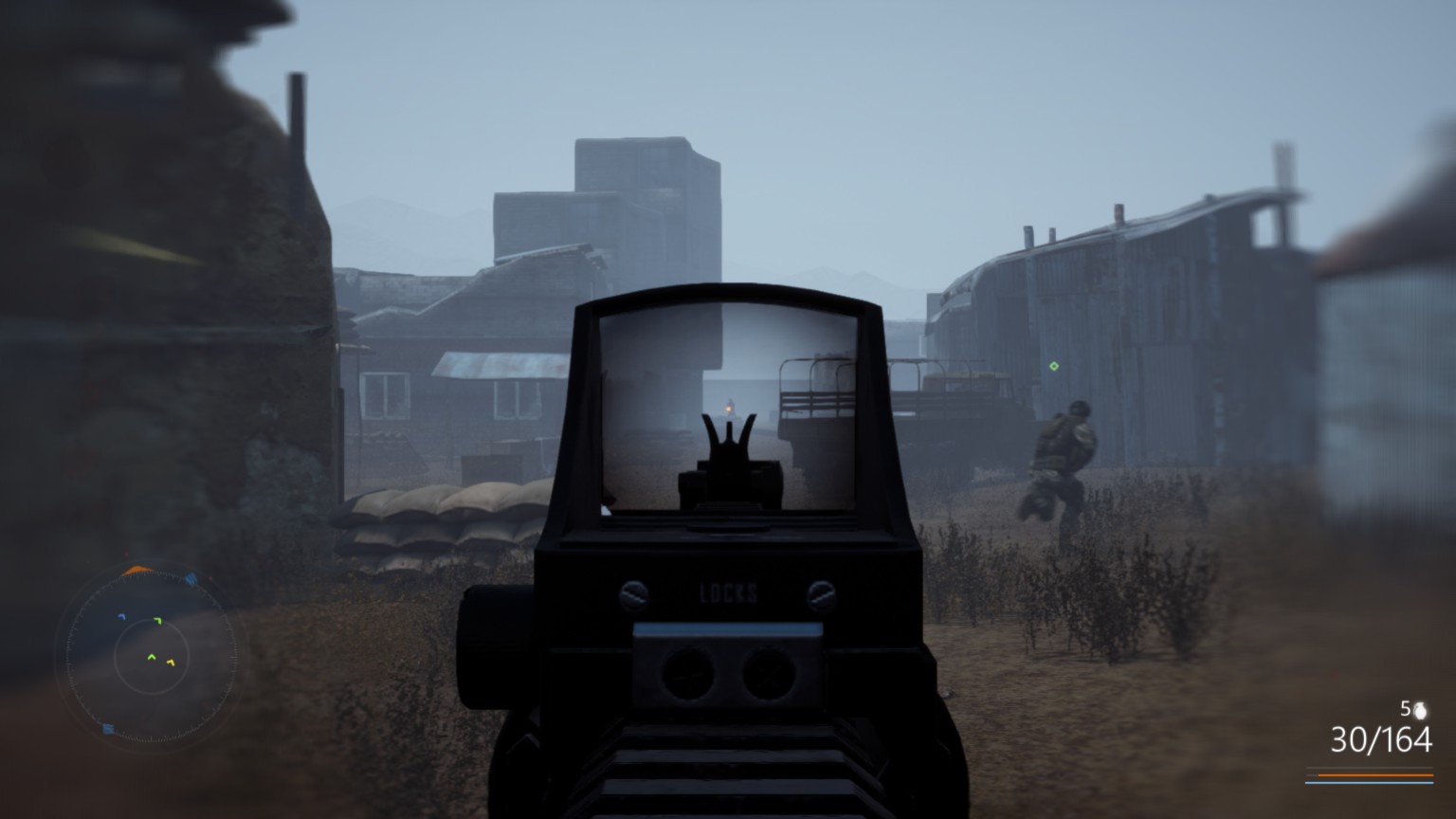
The visuals in Soldiers of the Universe take advantage of the Unreal 4 engine, but do little for content featured in the dull shooter.

Soldiers pits the player in with a colourful group of specialized comrades all with their own unique skills and dialogue. Though there’s not much dialogue throughout the course of battle, each character supposedly has their own style of play. Throughout my time with Soldiers I found myself running through the same old routine of following the completely linear path while the three members in my party blindly ran around corners into raging gunfire. Luckily for them, they’re rendered invincible, and mostly not targeted by enemy forces, thus leaving me to follow unsuspectingly into instant death encounters.

The story behind this “narrative-driven” shooter takes players through rugged and uninspired settings, holding the hands of the squad throughout the game. There are no secrets, hidden areas or objects, or any incentive to tread off of the linear questing, which is filled with un-lively, statuesque AI enemies. Gunning after the major Middle-Eastern terrorist organizations, players – and their dull squad – will fight through waves of tactless opponents throughout a dim range of maps.

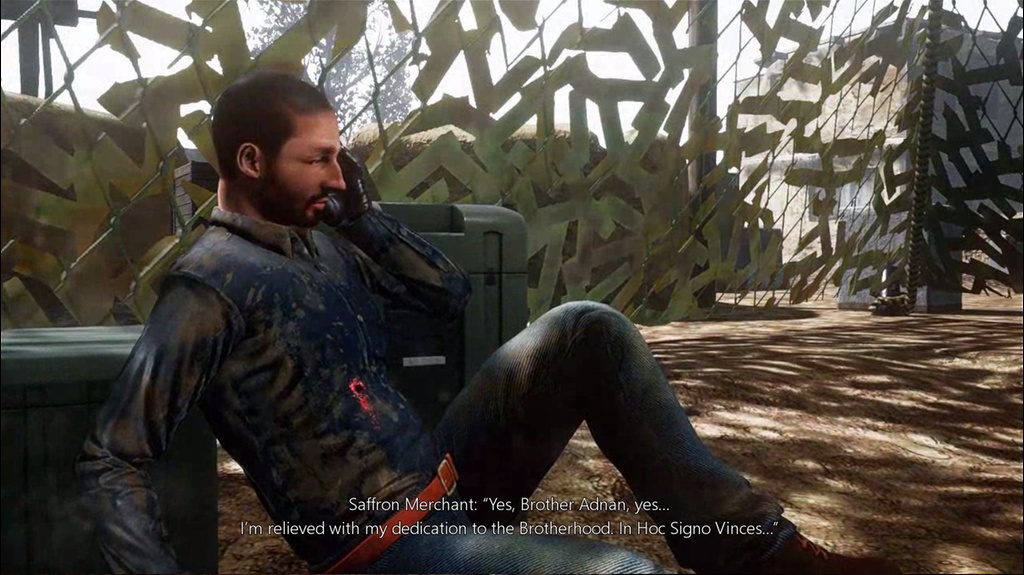
The story behind Soldiers of the Universe is dull and mostly full of un-suspenseful moments.
Straight To The Point

Traversing through the maps is a breeze, with only one objective and one route to go, proceeding forward is literally the only option. There are instances of areas, which, in other shooters would be filled with loot, secret items and intel – Soldiers brings a barren wasteland. Empty homes are completely abandoned without anything interesting to investigate. Not even pieces of broken furniture or other household items were added to the game, leaving an unfinished, and un-rewarding experience to the FPS.

The emptiness of Soldiers is only scratching the surface of the limitations found in the linear campaign. While following your squad, like clockwork, every 20 seconds or so a handful of enemies began firing down upon you. What’s different from most shooters we see nowadays, is the enemies will switch to better cover, flank, or at the very least, act as though they resembled a human being. The enemies in Soldiers are as boring as they come, standing in place firing away at our hero. Only to reload would some of the terrorists hide in front of cover, but this is the actual extent of how motionless these enemies are. Hiding behind cover to regenerate your health was easy and fluid knowing none of the enemies dare move from their position.

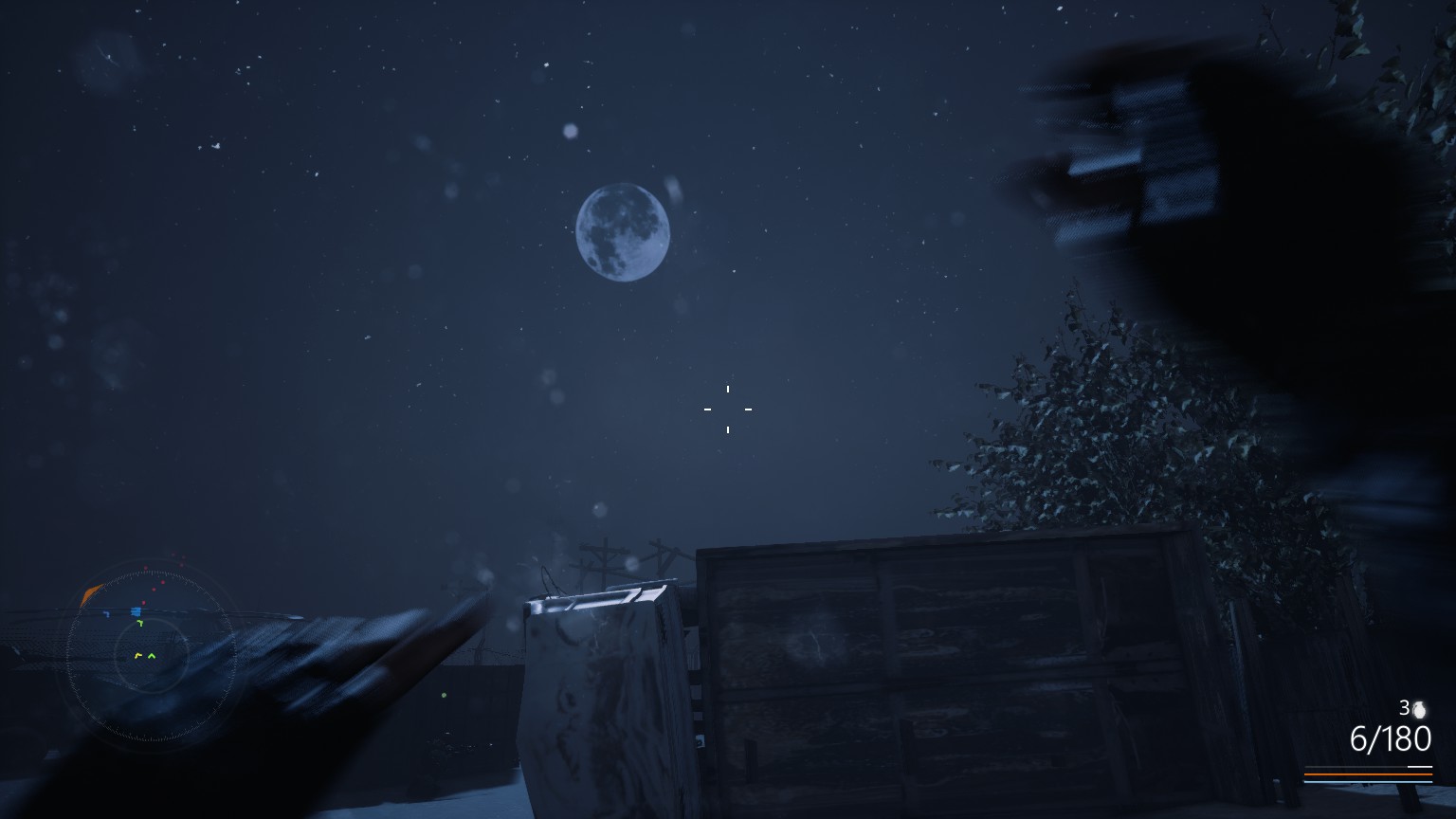
Some missions have players completing objectives at night, providing a subtle sense of change in the otherwise rote gameplay.
Where’s The Arsenal?

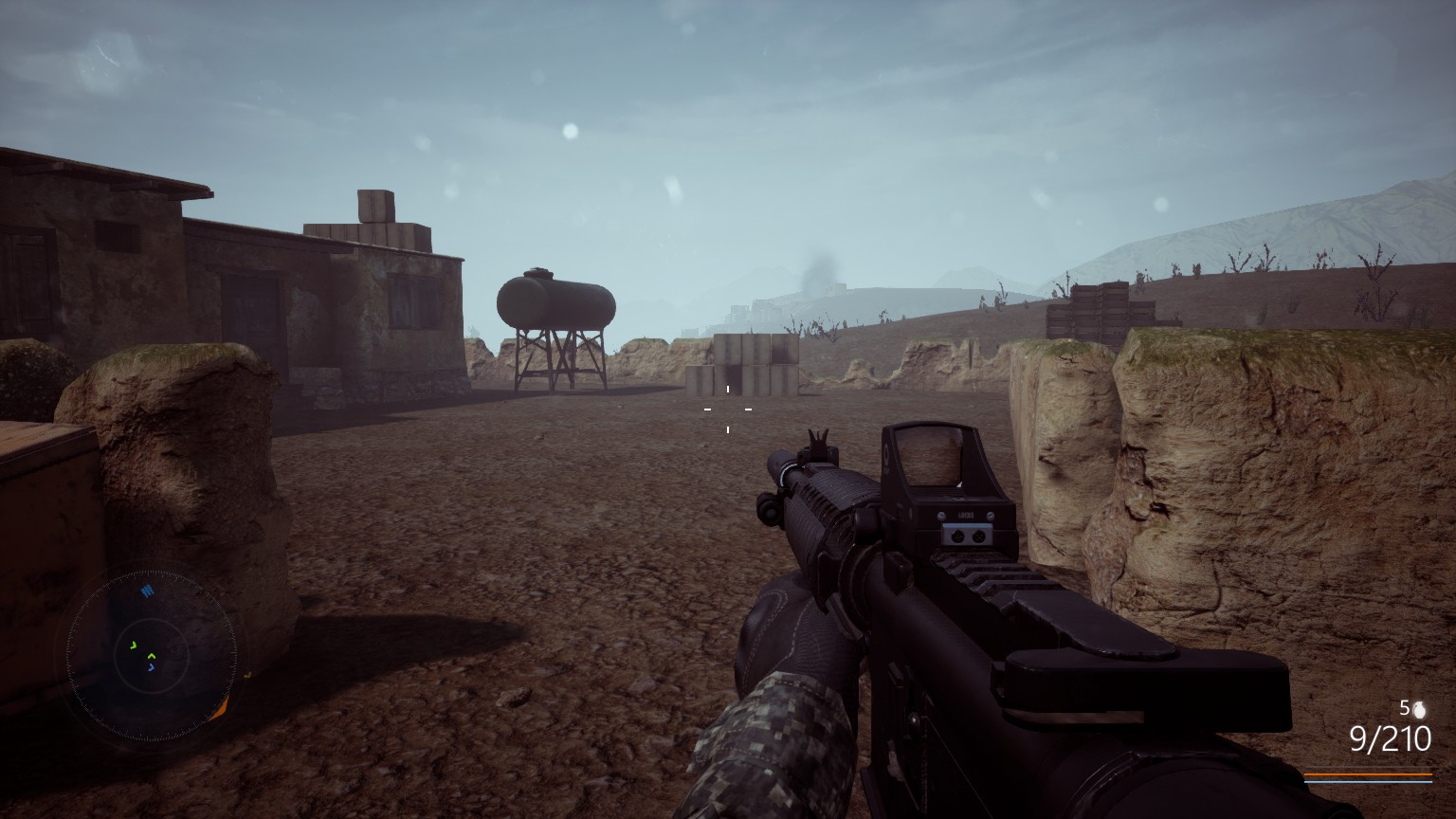
Starting a mission will net you three various weapons throughout the following objective. Typically two types of assault rifles equipped with scopes, and a sidearm pistol. Looting enemies for their weapons is a no go, and any sort of special ammunition ceases to exist. There is the grenade option, as what would a war game be without some impactful explosion to throw around? Finding ammo is as easy as refilling from one of your support members of your squad, as they have an unlimited amount of free ammunition. Of course, there are also ammunition crates scattered throughout the levels – these being the only interactive objects found in the maps – but there’s not much need to go out of your way for these when it’s easier to simply track down your squadmates and reap the same results.

The lack of discovering more weapons or explosives is a real sore spot in Soldiers of the Universe. Many fans would agree that unlocking or finding secret or powerful weapons is a massive adrenaline rush in many of the FPS games around. Forcing the player to adhere to specific weapons hinders any sort of unique experience found in shooters. Gamers love options; to have these stripped away feels cheap and presents a lacking atmosphere filled with predictable moments time and time again.

Enemies stay in position while you’re clumsy squad mates blindly run into enemy fire, showing off the number of issues with the AI in Soldiers.

As mentioned above, the maps are lacking creativity and content only pointing the player in the direction of your sole objective. The minimap and all of its minimalistic detail show a whopping three types of icons: you and your squad mates, upcoming enemy forces and the ever-present, but completely pointless ammo crates. The red arrow acting as the compass surrounds your mini map and points towards your objective; for anyone who is having trouble following the stale and linear path of the questline.

Though many FPS titles follow the same formula, most accomplish some sort of exciting essence in a dramatic storyline. Soldiers of the Universe – though it plays decently smooth and offers sub-par graphics utilizing the power of Unreal 4 – provides a lacking experience that can easily be left in the backdraft of stumbling shooters. Surrounding all of the negatives Soldiers has to offer, there is promise of something far greater from the indie development team, RocWise Entertainment. Let’s just hope future endeavours from the team prove more worthy than their tediously linear shooter, Soldiers of the Universe.

Star Ghost Review [Nintendo Switch] – A Unique And Challenging Space Shooter

With so many games hitting the Nintendo Switch lately, it’s easy to dismiss a title without giving it much of a chance. I’ll admit, when I first fired up Star Ghost by developer Rainy Frog, I instantly wrote it off as another in a seemingly vast pit of Switch indie games. This action game seemed unplayable and so radically different from your typical side-scrolling shooter, that I turned off the system and left it so for quite some time. Here’s the thing though: As reviewers, we are duty bound to give every title fair treatment, and to ensure we deliver an honest and accurate assessment. I reluctantly picked up my Switch once more, and after opening my eyes, I found myself quickly becoming obsessed with its simple yet unique style of gameplay.

The game starts immediately with an overview of the crisis at hand. The Metagon Empire has arrived and is threatening to annihilate the entire human race, and it’s your job to stop them. Aiding you in this peril-filled task is the “most advanced starfighter ever built!” It’s a simple story told repeatedly, but luckily, that’s where Star Ghost deviates from other titles in the genre.

Star Ghost Screenshot 8

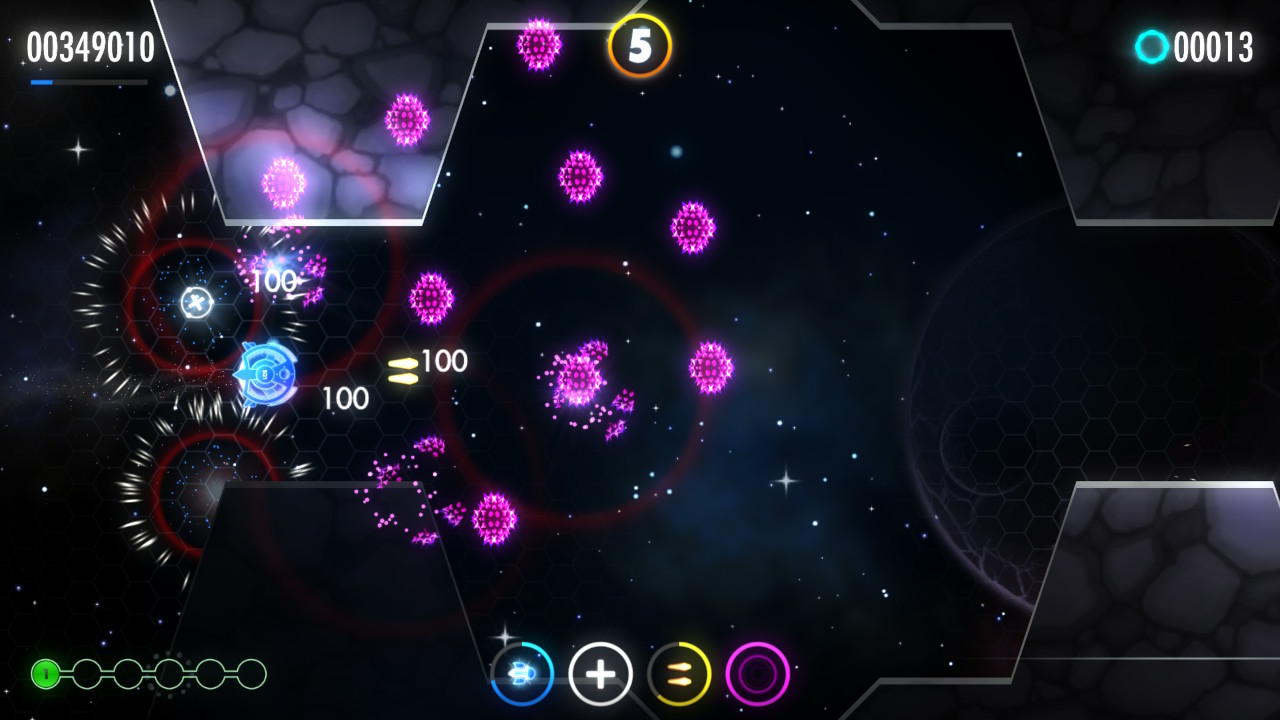
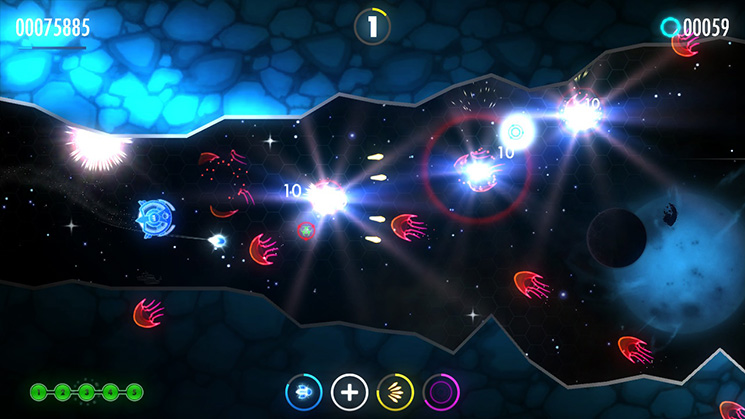
The control scheme is excruciatingly simplistic. Your ship is constantly moving forward on its own, only pausing for a split second when taking on damage. Weapons all fire automatically without prompting. The player, which is you, can only control the vertical axis of the ship; by pressing the A button, your craft floats to the top of the screen and releasing it causes the ship to fall to the bottom. This is what threw me off at first; I had almost zero control over any aspect of the ship, and it was very frustrating.

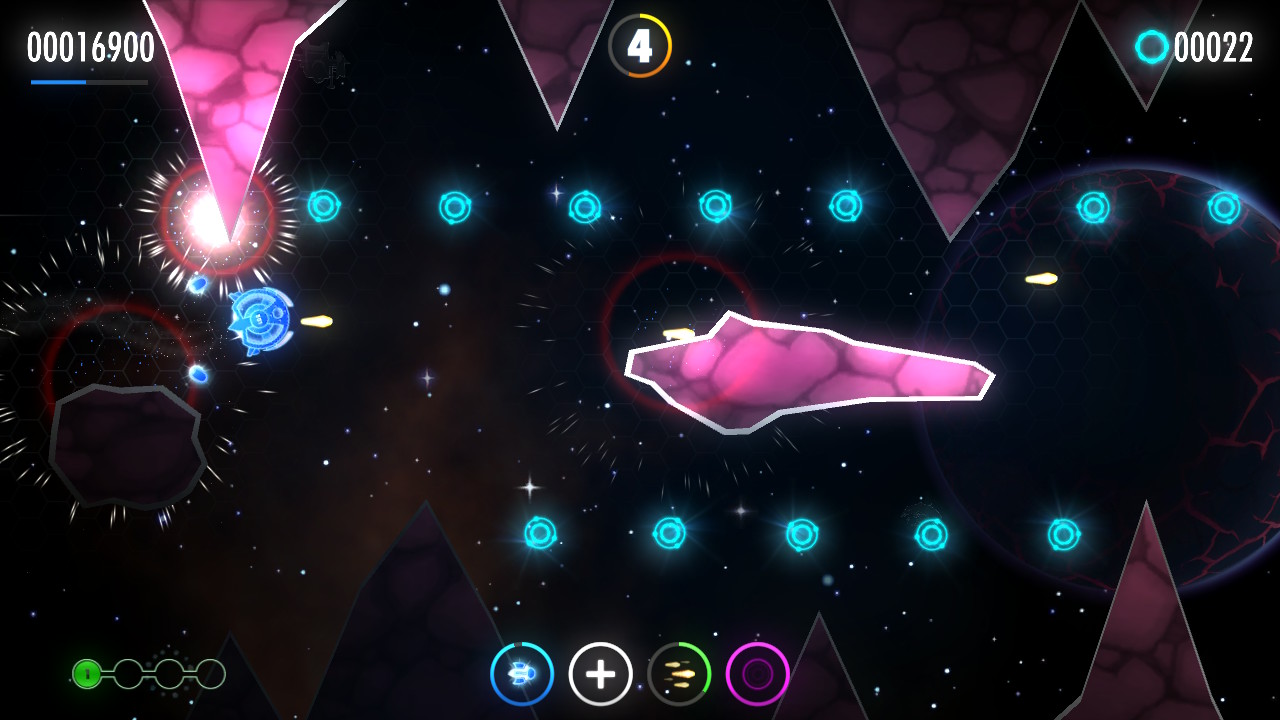
Once I started to play more of the game, I realized that the very thing I found annoying became very freeing. As soon as you cease to worry about navigation and weapons control, you’re free to concentrate on everything else around you. It’s, for this reason, I am hesitant to call Star Ghost a cross-screen shooter. To me, this game has all the makings of an arcade platformer that has been dressed up like a shooter. It’s crucial to know exactly when to raise your ship up or lower it down due to incoming enemy fire and deadly flying objects. There are points in the game where you have to navigate through slim openings between two points, where crashing into a wall is guaranteed if you’re not guiding the ship in the exact right spot.

Star Ghost Screenshot 10

As I mentioned, players can’t control their weapons. You start with a single shot, fired off at regular intervals (about 1.5 seconds apart). You can control the angle of the blasts, but it’s very limited in range. As you destroy enemies and objects, your ship can pick up credits as well as ship and gun modifications. Eventually, your ship’s fire rate will increase exponentially, and the single shot can increase to five with instant upgrades. In later missions, my ship also became equipped with rockets, while in others, I acquired a spread of high-powered lasers. Players are also given the option to purchase upgrades at the completion of each mission, based on the number of credits acquired.

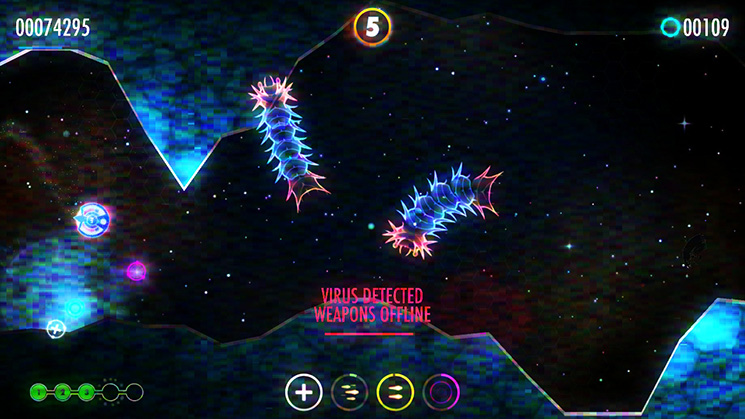
The only other thing you can control is a tractor beam, which radiates outward from the centre of the ship, pulling in all surrounding credits and weapon mods. The tractor beam can also be upgraded, increasing in size to allow the ship to pull in more of the good stuff. Players need to be mindful though, because all upgrades have a timer which will run out, causing a downgrade to the previous level; this cycle will continue to occur until you’re either back where you started, or the timer is extended by picking up more power-ups. Players beware; your ship can also pick up floating viruses that temporarily shut down all weapons and tractor beams. Pick this up at the wrong time, and you can find your ship flying through a haze of enemy fire with no way of defending yourself.

ghost 2

Star Ghost is an arcade game through and through; once you die, that’s it, end of story. As soon the game over sign hits, players must start all over again from the very beginning. This aspect of the game is another example of what I found infuriating and highly frustrating at first. It wasn’t until I collected enough credits that I realized you could in-fact continue from your current mission. It costs 50 credits to continue, which means players must carefully choose how they spend them at the end of each mission. I know some will find this aggravating, but I found it added a greater challenge to the overall game.

Composer David Wise has created all the original music for the game. For those who aren’t familiar, Mr. Wise was the mastermind behind the music from the famed Donkey Kong Country series (among others). Wise has found himself a cult following, and if you’re familiar with his work, it’s clear why people love him.

ghost 1

The game gives off a simplistic vibe but is actually quite beautifully drawn and animated. There is a myriad of enemies and space fairing debris, all of which utilize rich colours and fluid movements. One of the most interesting aspects of the game is the inclusion of dynamic level generation; every time you play a mission, it will be different. Players will ultimately have a unique experience each time they head into the unknown.

Seven: The Days Long Gone Review [PC] – Part Fantasy RPG, Part Techno-Dystopian Drama

Seven: The Days Long Gone is an enthralling mishmash of genres that feel surprisingly at home together. Part isometric Assassin’s Creed, part fantasy RPG, and part techno-dystopian drama, the game plays to all the best aspects of each without feeling overstretched or fragmented.

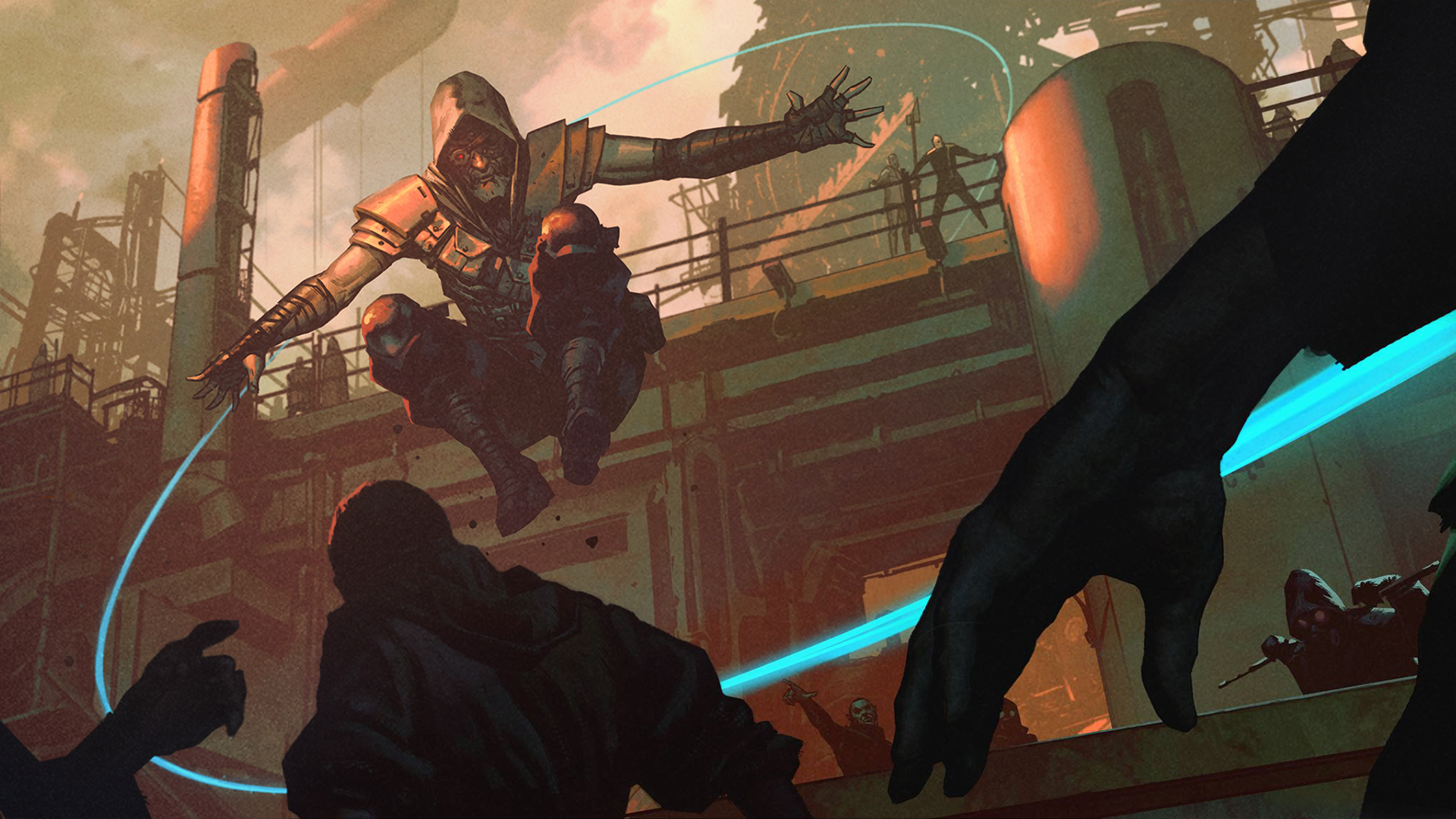
Players will take the role of master thief Teriel who has made a living off of pilfering and looting. In the world of Seven: The Days Long Gone, however, this doesn’t seem as bad of a job as one might think. The “ancients” abandoned the earth for the stars long ago, leaving behind the dregs of humanity to make their way as best they can. After pulling off a particularly high-profile job, Teriel finds himself unwillingly recruited by the emperor and shipped off to a prison island called Peh to find and recover a lost spacecraft. Oh, and as a part of this deal you also equally unwillingly find yourself possessed by a daemon, an inter-dimensional being that will serve as Teriel’s guide and instructor at the behest of the emperor.

Teriel demonstrates his skills as a master thief from the get-go, and his catlike reflexes and dexterous parkour-like traversing allow you to tackle the surrounding world more like a jungle gym than your typical RPG. Teriel comes with a plethora of abilities that allow you to make your own way and accomplish missions through various paths. For example, do you need to sneak into a mansion to steal an artefact? Well, if marching through the front door and ripping your enemies apart with your daggers isn’t your style, then try sneaking in through a skylight, or finding a handy ventilation system to serve as a handy skywalk. You can steal a key from the guard, or break in using your handy drill. Just don’t get caught. If you do, though, try setting up a few traps and let them help you dispatch the oncoming onslaught as you watch with glee.

One of the most exciting features of the game is that you won’t need to wait until you’ve invested tens of hours into it before you can take advantage of a myriad of abilities including hacking, sneaking, looting, stealth kills, and trap building / disabling. Instead, you will spend time increasing the effectiveness of these skills, as well as adding new ones such as magic abilities. You will also be able to steal, craft or buy new gear that will help with both defense and protection.

New abilities are obtained through installing skill chips right into your brain, as one might expect in a dystopian technological future. The chips allow for certain upgrades to be slotted in, making Teriel even more of a force to be reckoned with, and don’t think you won’t need all the brawn and ability you can muster.

Seven: The Days Long Gone does a great job of letting you know the dangers of Peh are nothing to be taken lightly. Get caught pickpocketing and you’ll find yourself swarmed by angry guards faster than you can shout “help me!” If you are in a private area and look like an outsider, you better watch your back. Guards and even fellow prisoners can be hyper vigilant, and just because you think no one is watching doesn’t mean they aren’t.

Making your way around Peh is no easy task, even though the island is quite small. Gates that require a visa block numerous areas. The visas cost quite a bit, making sneaking past the gates more affordable, and also a better way to stick it to the system that left you on this island to begin with. The Visas, by the way, must be ingested and fused with your biology. If you try entering a gate without one, you will be lit up like a Christmas tree on fire. So, learning to take full advantage of your stealth abilities will be a boon.

Seven_The_Days_Long_Gone_02

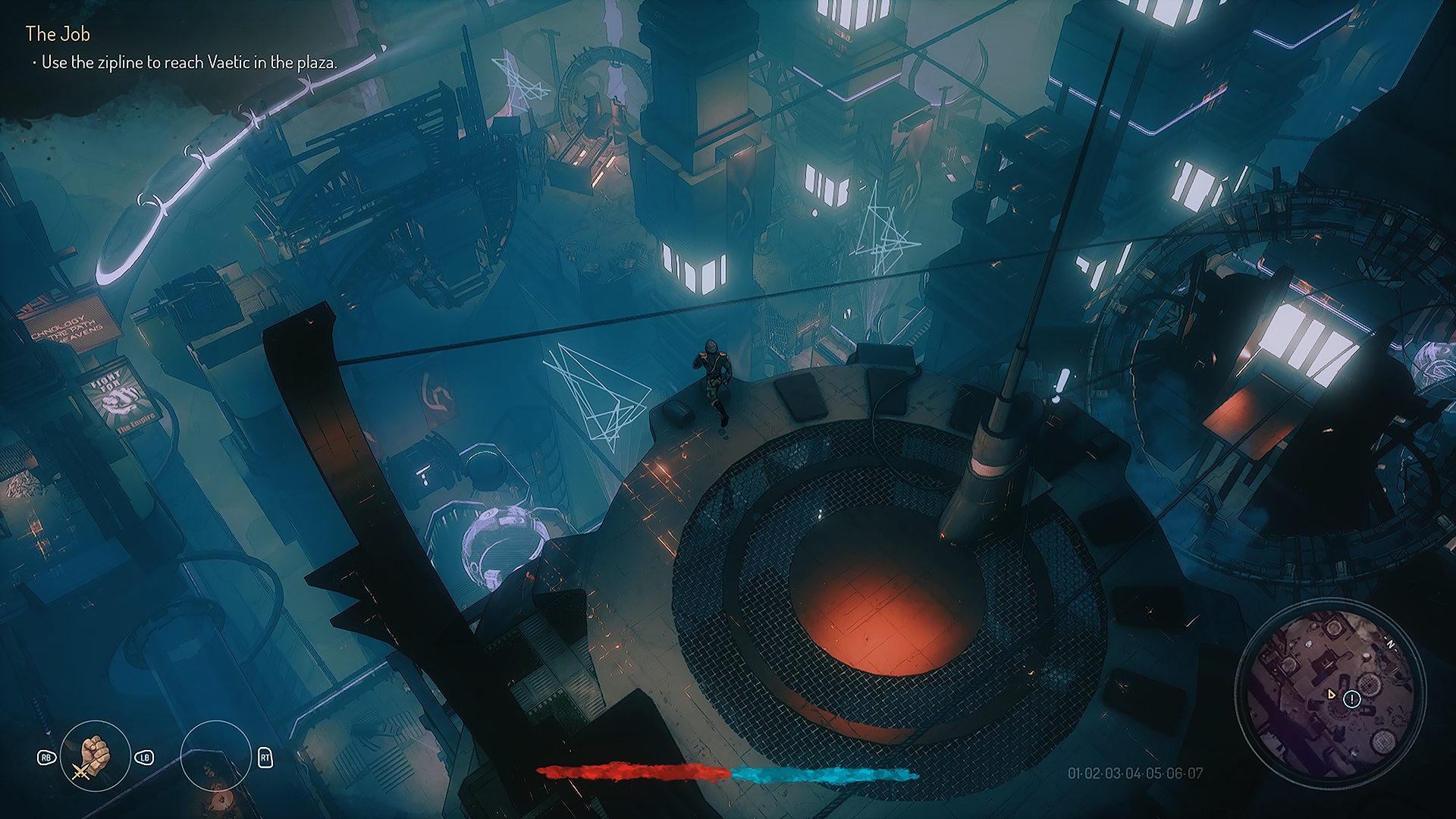
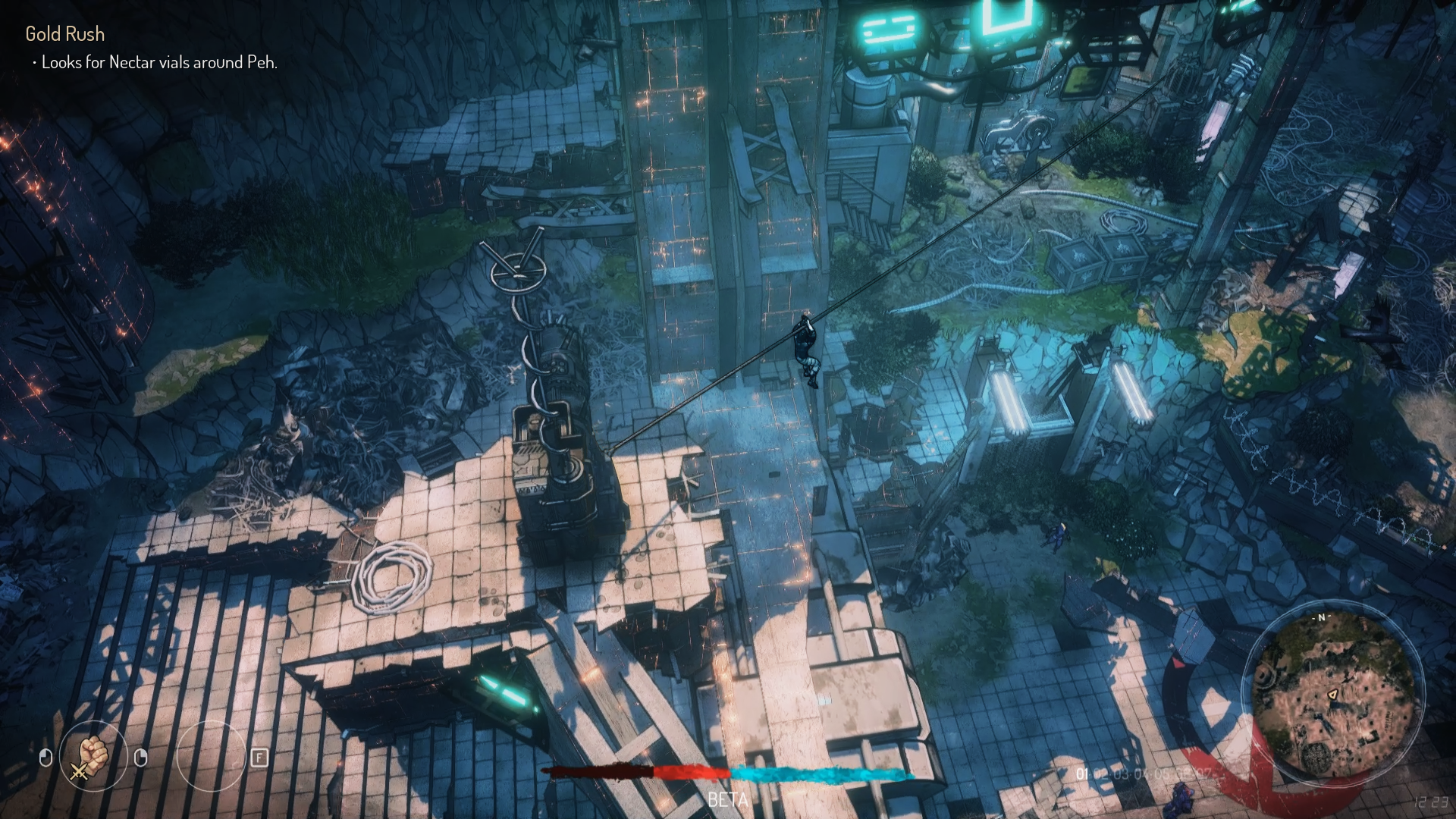
The isometric view is perfect for stealth, making tracking guards and sneak kills simple. Teriel also has a sense ability that will highlight objects of interest, slow time, and also expands your viewpoint beyond what is immediately around you. This ability goes a great deal toward helping you plan the best routes and discover where to go when it does not seem apparent from the map, which feels far less useful than it should.

The Island of Peh is filled with a mix of oddity, beauty, and menace. Grass covered areas filled with old hovels and wooden walkways exist alongside fluorescent streetlights and flickering signs, resembling something out of Blade Runner or Final Fantasy VII.

The voice acting is good, and the myriad of strange and fantastical characters you run into help bring Peh to life. It becomes easy to see what the world has come to in this far-flung era, presented in a small microcosm of rebels and thieves, adventurers and provocateurs. The island, though small in reality, feels like a grouping of very different cultures all in one place, making discovering each new area a thrill.

Since the game’s launch, developer Fool’s Theory has done a swell job of releasing updates to fix numerous bugs that were still within the game at launch. During my time, however, I still ran into a few glitches, as well as a few minor issues with combat.

Seven_The_Days_Long_Gone_07

On occasion, I would move in for a sneak kill and initiating the attack would instead cause Teriel to leave the crouch position and head into a full-fledged assault, alerting any nearby guards to my presence. I dubbed another glitch the “sticky loot bug.” Seemingly at random, when I looted a crate or a deceased NPC, I would “stick” to them after completing the task, preventing me from moving away. Though, this might have been connected to using a controller rather than the keyboard and mouse. The game will naturally detect whichever you are using. At one point, the screen froze during an attempt to open a door using the controller to make the selection. I then was able to use the mouse to select the action, and the game progressed as usual. So, the “sticky loot bug” may be connected to using a controller. As of right now, the only way I was able to fix the sticky glitch was to go to a previous save and hope for the best next time. Perhaps, until it is fixed, forgoing the use of a controller would be your best bet.

The combat controls, though exhilarating and usually well-designed, can be a bit slippery. A few doomed attempts ended when I accidentally rolled off a cliff or fell off a high-rise along with one of my victims. So, though generally easy to use, the controls could still use a bit of tightening. But, overall, this didn’t majorly distract from my enjoyment of the game.

Seven_The_Days_Long_Gone_08

Seven: The Days Long Gone feels like an assortment of genres that should have been a standard long ago. I wondered why more RPGs didn’t entail stealth kills and the freedom to roam the rooftops like an assassin. The story is interesting, the discovery of new areas is compelling, the risk you take just trying to explore the island and accomplish your missions is rewarding, and the combat is oh, so fun.

Seven: The Days Long Gone is developed by Fool’s Theory and available on Steam.

80s Overdrive Review [Nintendo 3DS] – Speed Kills

The 80s, a decade unparalleled in its excesses and style. There’s nothing quite as “big” as the 80s, and arcade racers from the 80s are no exception. Games like Outrun and Chase H.Q. did everything bigger, better, and faster than the racers before them. Outrun and Chase H.Q. featured sports car sprites driving at speeds in excess of 200 kmh on winding roads through cities, deserts, beaches, and canyons.

As the 80s ended and the 90s began, racers started trading sprites for 3D-rendered graphics. With the high-powered PCs and consoles of the early 00s, racers further distanced themselves from their 80s predecessors. Realism in racers became a trend and it is a trend which persists today. Some modern racers still opt for wild and loose arcade physics, handling, and speed, but the majority of modern racers favour simulation gameplay with realistic physics, handling, and speed. Regardless of gameplay, both the arcade and simulation racers of today often feature realistic 3D graphics. Rarely do gamers get a new racing game which looks, plays, and sounds like it came from the 80s. Fortunately, gamers have recently been blessed with that rare occurrence by means of 80s Overdrive.

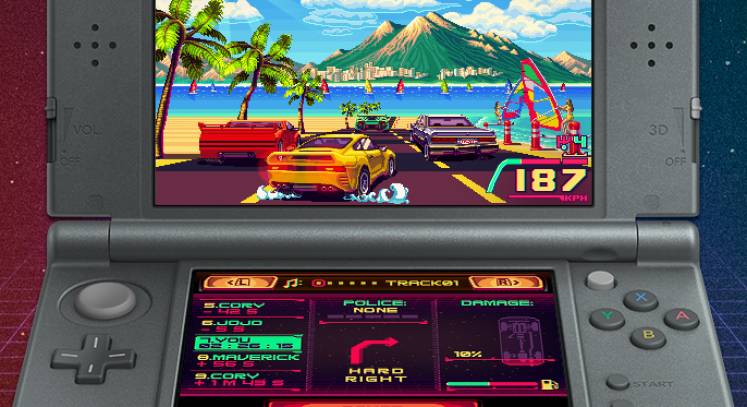
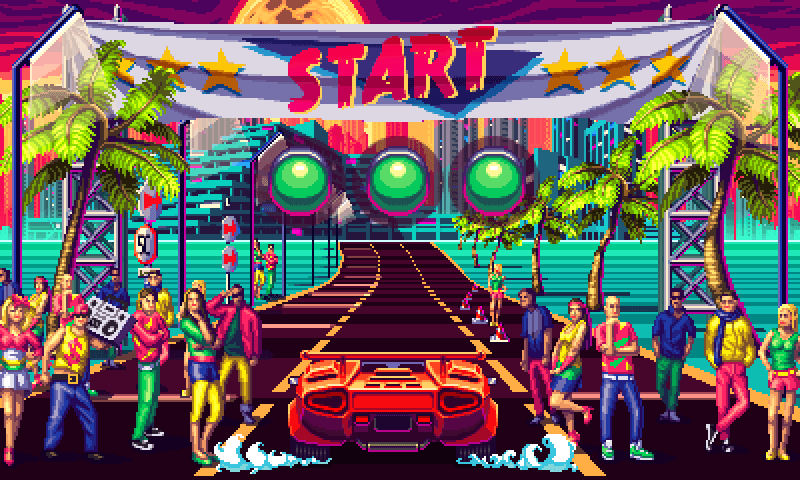
80s Overdrive is a 3D arcade racer using sprite-based graphics. Everything in this game is beautiful. The cities, trees, and beaches on the horizon you’ll forever be driving towards and the traffic you pass along the way all look great. Each car the player can drive, of which there are a handful, look like their real-world counterparts albeit in sprite form.

80s Overdrive’s high-quality visual presentation pairs well with its high-quality retro-wave soundtrack. Featuring artists like Vectorwolf and Vocoderion, 80s Overdrive’s soundtrack fits the “80s by way of 2017” aesthetic perfectly. Unfortunately, as good as the soundtrack is, it falls short when racing in the “Time Attack Mode”. Like Outrun, at the beginning of the race you can choose what song you want to listen to, but the time attack mode race goes on for much longer than whatever song you choose. Eventually, the song ends and is followed up by a few moments of awkward silence before looping. It’s a small nitpick, but the repeating song and loop grow tiresome. A random song feature would be a nice touch here, keeping things fresh.

80s Overdrive

Besides the audio, time attack mode is a lot of fun. Time attack mode is 80s Overdrive’s “Outrun mode”. Players race the clock as they dart from the beach to whatever is on the horizon. Closely passing traffic while carefully avoiding collision nets players more time on the clock. All the extra time is a big help because 80s Overdrive’s time attack mode features a huge map with an almost infinite number of different routes. Time attack mode is a lot of fun and just as addictive as Outrun, imbuing players with a sense of accomplishment as they get a little closer to the goal with each subsequent race. Developers Insane Code claims there to be a reward for players who 100% time attack mode, but I honestly haven’t been able to do it yet. Time attack mode is difficult as is, but a couple of bugs make racing even more difficult. More on the bugs later.

Time attack mode is just one of 80s Overdrive’s gameplay modes. 80s Overdrive also features a career mode where players race NPCs for cash to buy more cars and car upgrades. Career mode is fun because it mixes things up with each race. Some races have more difficult routes with lots of twists and turns, other races have a lot or very little traffic, and some races will see players trying to outrun police while trying to maintain pole position.

Career mode occasionally presents players with the option to take on “missions” to pick up a number of collectables on the track, place above or below certain NPC racers, or deliberately wreck into other NPC racers. I noticed a lot of the missions present little risk but maximum reward. The missions are just another way to line your virtual pockets and access vehicle upgrades including faster speeds, better handling, nitrous oxide boosts, and a police scanner.

At first, the career mode is easy, almost too easy, but it picks up as players progress through the different races. The police chases make things difficult because the police will pull out in front of a player and hit their brakes. If players fail to avoid rear-ending the police, they will likely be set back several places in standing and maybe even get arrested if too slow to recover from wrecking.

The third game mode is a track editor. While you never do more than adjust sliders affecting different parameters to develop a track, a code is given uniquely to the developed track. Theoretically, players can take this unique code and share it with other players either in person or online, giving others the opportunity to race on player-designed tracks. I can’t decide whether this method of sharing a created track is appropriate because it holds true to the way people would share cheat codes with each other in the 80s and 90s, or whether it’s just inconvenient. It would be nice to be able to share created tracks on a server or even race other people online, but that’s an expensive proposition for developers. Maybe if 80s Overdrive does well, 80s Overdrive 2 will include multiplayer or PvP features. Cross your fingers.

80s Overdrive

Now for the bugs I mentioned earlier. Making the races difficult regardless of which game mode are the vehicle upgrades. Yeah! It’s weird. Typically vehicle upgrades make racing games easier but in 80s Overdrive it only kind of works that way.

Sure, maxing out your vehicle’s top speed will give you a leg up on other racers, but safely driving through each race without accidents becomes difficult. As I began to surpass speeds of 250 kmh, I found my surroundings chopping up and stuttering at a speed just as insane. It’s a framerate issue. Despite 80s Overdrive’s graphics being lovely to look at, the graphics just don’t do a good job of handling speed. Framerates dip as speed increases and the screen fills up with different assets. The graphical issues aren’t game-breaking, but they are frustrating and work as an artificial difficulty.

The only other problem I noticed was a sound issue in the “Elite City” track. It didn’t happen often but occasionally I would be speeding towards the horizon and a very sudden and very loud sound would just scream at me from my headphones. The sound resembled the sound the player car makes as it’s careening around a corner, tires squealing, only louder. The problem was I wasn’t careening around any corners when the squealing would sound, and the sound was so much louder than other sounds in the game. Even without my headphones I experienced the same sound quirk. The good news is I didn’t experience the bug on any other tracks.

80s Overdrive is currently available in the NOE 3DS eShop and will be available in the NOA eShop on December 14th. No plans have been announced for release in Japan or ports to other platforms.

Call of Duty: WW2 Review [PC] – A War To Sit Out?

Another year, another Call of Duty. This time we are transported back to World War 2, fighting with the First Infantry Division from Normandy until they crossed the Rhine. So, should you step off on the beaches or sit this war out?

War Never Changes

From the onset of CoD: WW2 the story feels like a “been there, done that” moment that lasts about 10 hours (on normal).  This is due in part to the flood of WW2-centric shooters that started a decade ago, though they have waned to be more “advanced or future” in recent years. It is also due to WW2 being one of the most fleshed out historical moments in recent human history (movies, books, games, you name it).

The story revolves around you and you platoon fighting across all the major encounters of the Western Theater: Normandy, taking Paris, Battle of the Bulge, Crossing the Rhine, all the while dealing with drama caused by current and past events. This would work if you felt any connection to the characters, but sadly they all fall into a stereotyped role with mediocre writing to back them up.

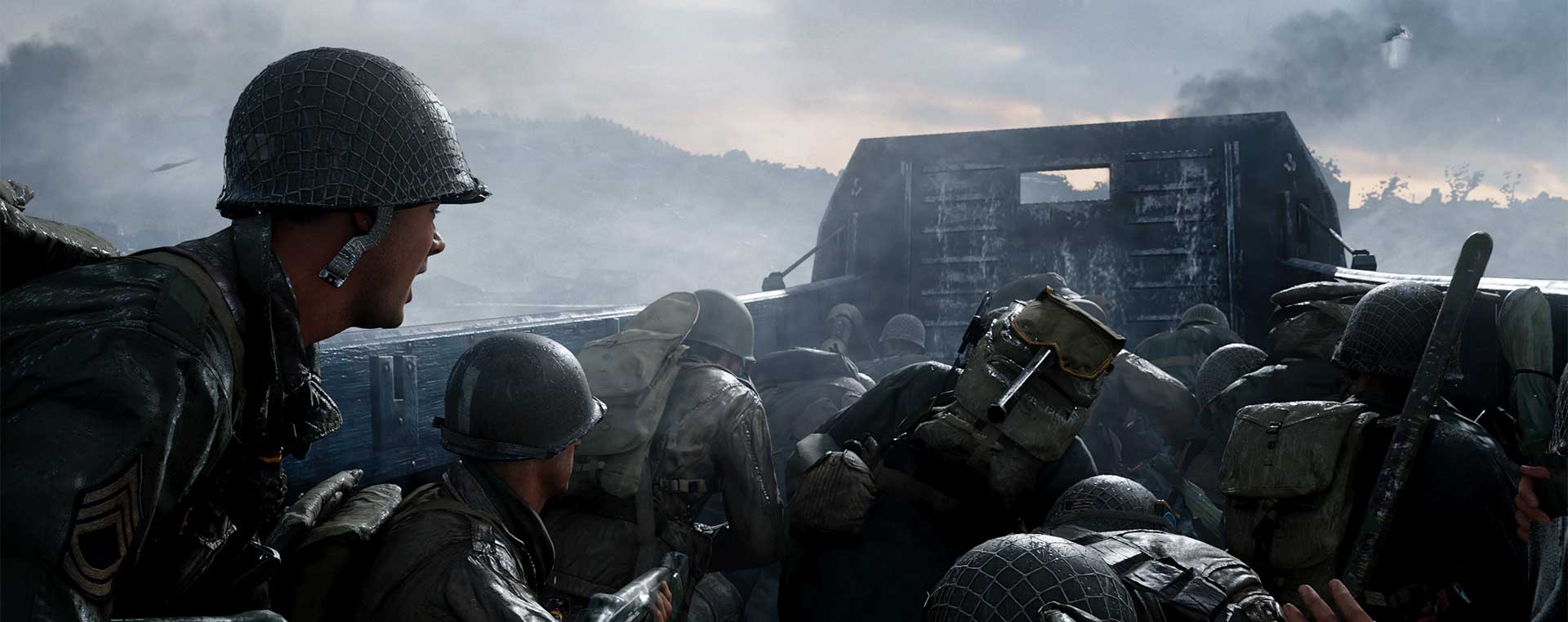
But the campaign in CoD has normally been about the big moments and this version has plenty of big moments, from storming the beaches to sitting in an MG nest mowing down swarms of enemies.  These are fun standalone events, few moments in gaming can be as thrilling as a well-done D-Day (and also as grim and gory) or as one-offs. The problem here is that every stage seems to place you behind an MG against a swarm of enemies, it stops being fun at that point.

Despite the games short fallings on the development side, the optimization seems to be solid. I played it on my dated PC, a GTX 780 and an old SATA HDD, and load times were fine, it had minimal frame problems even during high-intensity moments. CoD isn’t pushing any graphical boundaries but it looks good. The only gripe I have here is that the gun sounds are not the best.

A Band of Brothers

The core experience, and longevity, of CoD, lies with the multiplayer experience and if you have liked CoD in the past you will enjoy what this game has to offer again.

When you start playing you’ll be asked to pick one of five divisions: Infantry, Airborne, Armored, Mountain and Expeditionary.  Each one has a different starting loadout and has different weapons they are suggested to use, but you can unlock any you want along the way.  Each also has a different modifier for their weapon – I started as Airborne and could place silencers on my submachine guns – it’s a small and interesting feature that gives each class something a little different.

There didn’t appear to be any major network problems in the games I played (my connection is 150 down/25 up) with empty spaces being filed quickly, no disconnects on my part and generally, the games ran smooth. I will, however, add that I am playing the game after nearly a month of being released and I had heard and read about network problems on launch.

There are two problems, however, that still stick out. First, the map design just doesn’t feel great. Many times I felt like 90% of the map was going unused in favour of just running at the opponent’s spawn location then, when the spawns flipped, doing that again. This does vary depending on the game mode but I always seemed to find a few people trolling around in spawns until they flipped.

The second is simply it doesn’t do anything new, or at least new enough to be earthshattering. You level, unlock things, prestige and repeat. A tried, true and frankly boring progression system. It works as intended and has for years but that doesn’t mean changes can’t be made to freshen the experience for veteran players. How is this new? Yes, there are daily, weekly and speed quests to complete but that isn’t why people want to play CoD online, they just want to enjoy some good old fragging.

Need for Speed Payback Review [PS4 Pro] – Bringing Down The House

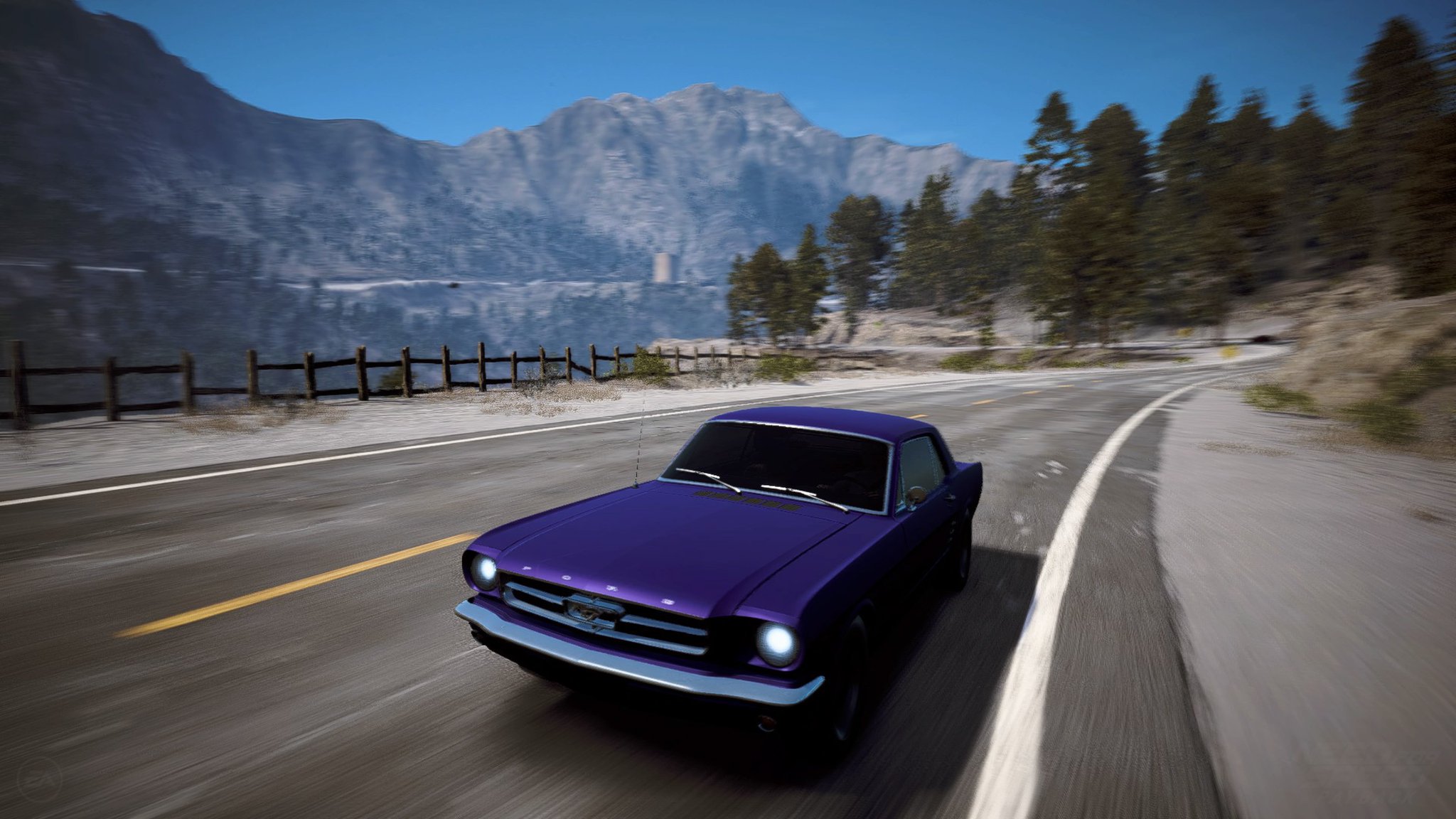
The Need for Speed franchise has driven players all over fictional cityscapes, mountain passes, smokey forests and desert stretches. Need for Speed Payback doesn’t change any of that, but substitutes the realistically rendered cutscenes from the 2015 entry, back to the animated cast and arcade style racing. Tyler, Mac and Jess team up and partake in a variety of heated events from classic arcade street and drag racing, to off-road and drifting trials, all to take down the boss who runs the city of Fortune Valley, The House.

In the wide-open world of Fortune Valley, Tyler Morgan reigns supreme as the “best racer in the city”. His two close partners, Jess – the cops smashing, escape artist, and Mac – the off-road, thrill-seeking Brit, team up and find themselves stacked against the odds when facing off against The House – an Organized crime syndicate that secretly runs Fortune Valley, the trio is betrayed by the top street racer of the criminal organization, Lina Navarro.

Fueled by revenge, Tyler rounds up his crew and begin to infiltrate the underground racing scene n Fortune Valley. In hopes of getting closer to The House and Navarro, the skilled trio of racers will take down local street racing gangs all across the widespread map. Earn your spot in the streets, juice up your collection of powerful street machines and race your way to earn the ultimate payback on The House.

The vast world of Fortune Valley has more than just casinos and deserts to drive through.

The huge map featured in Payback drives the player across busy Las Vegas-styled city streets, red canyons mixed with desert landscapes, rich mountains and lush valleys. Race events like time trials, sprint and circuit races, drags, arcade-style checkpoints and police chases will fill the county of Fortune Valley in no time. The map is riddled with various objectives for Speed Runs, Speed Traps and high-soaring stunt jumps. Other locations like tune-up shops, gas stations and car dealers will also unlock the more you explore, or the more money you earn.

Sliding from side-to-side

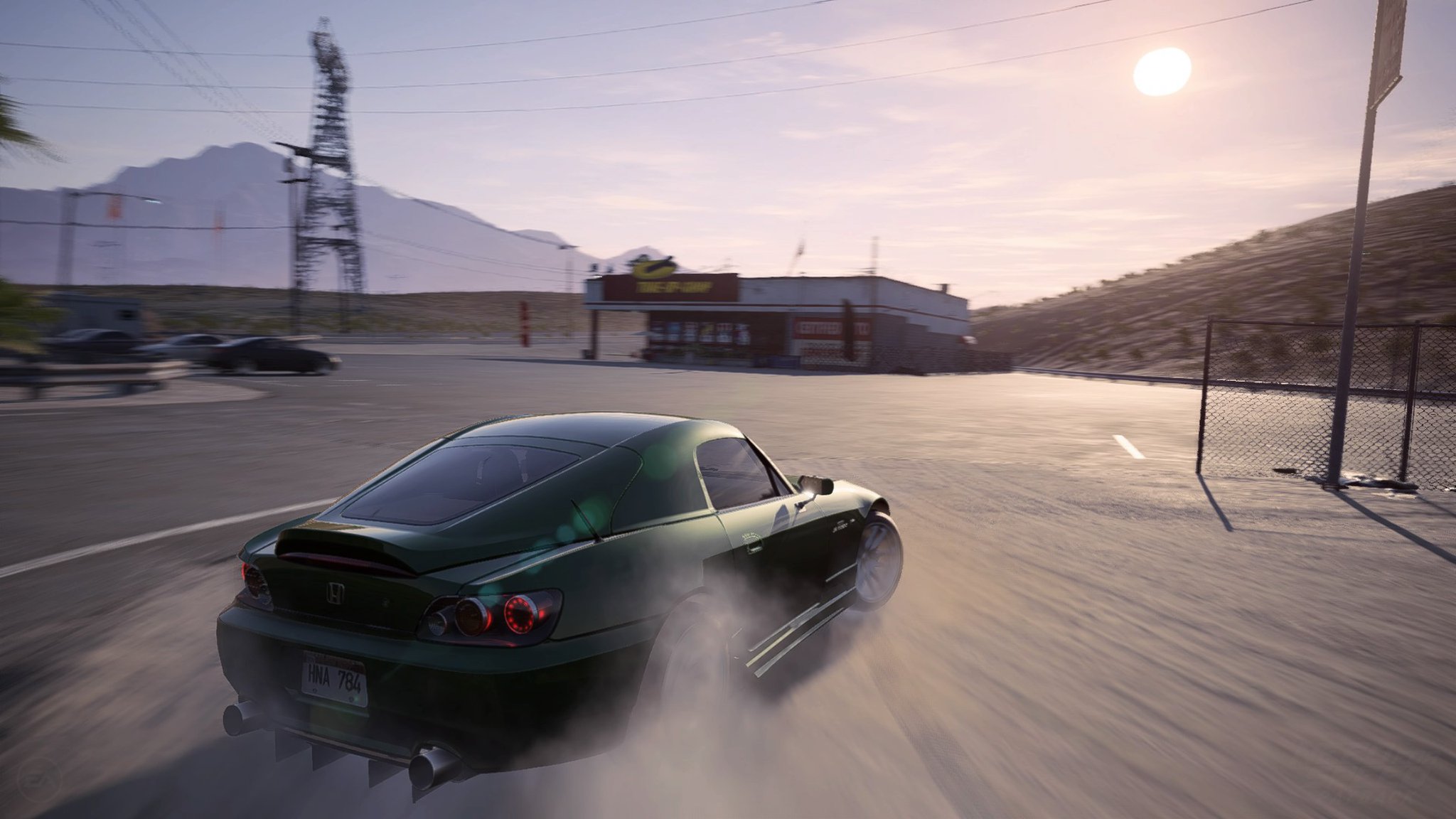
The car handling in Payback is driven towards the arcade style of the racing spectrum, featuring easy-to manoeuvre drifts, slides and hard turns. Though unrealistic, there’s plenty of entertainment and exciting thrills that come in almost each and every race. The cars are broken down into a handful of classes which act as the main portion of the difference in handling and overall driving. Drag, street race, off-road, drift and runner are the five categories to which you can equip your selected car with.

Races are the primary category, using the most of every performance part available, from high-speed to blurring acceleration, on the dime handling and quick-acting braking. Taking players through circuit races around various parts of the map, sprint races from point A to point B, and even high-speed pursuits to escape from law enforcement. Tyler is in charge of these events, as well as top speed drag races in Fortune Valley.

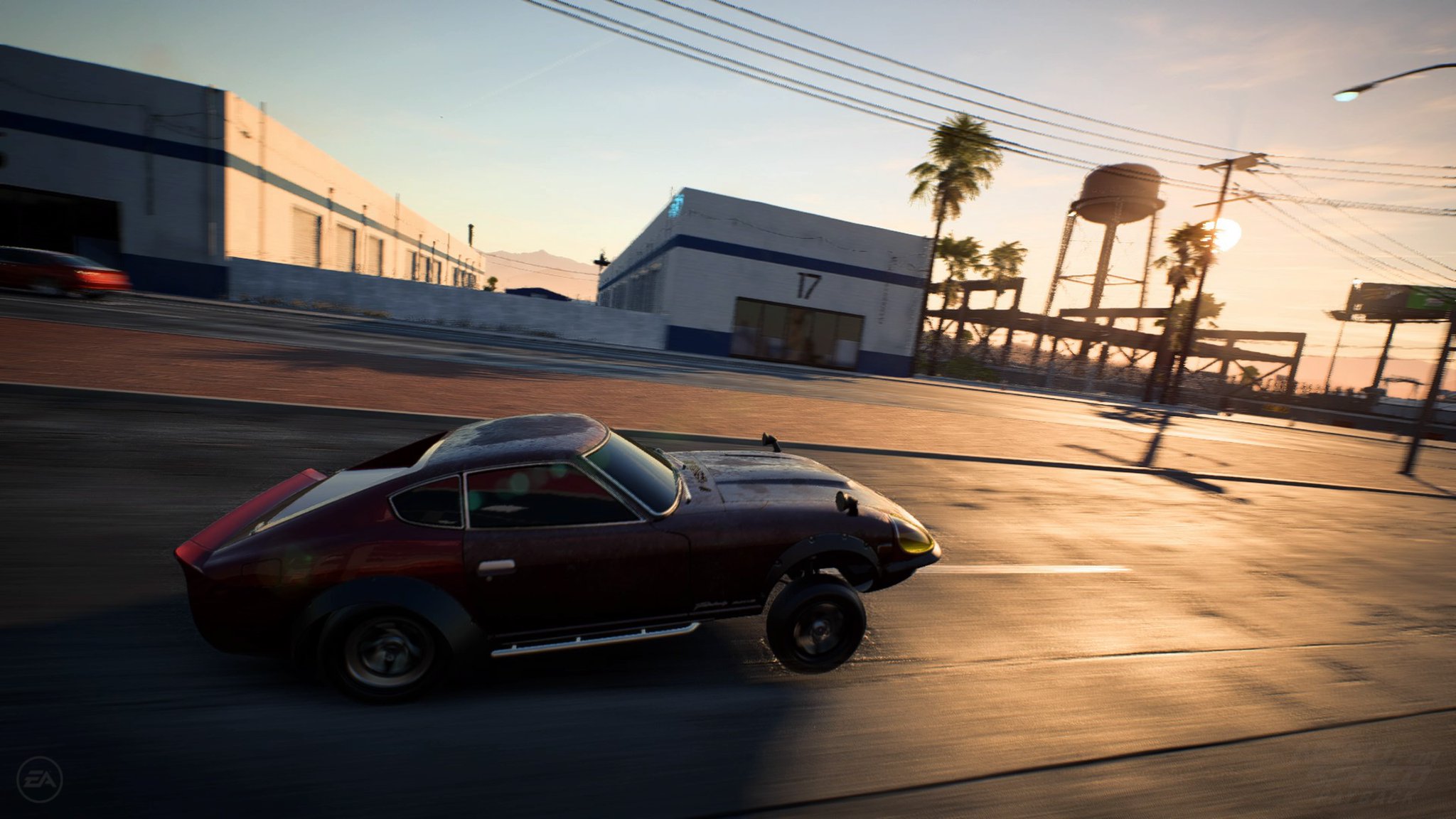
Sliding and drifting around turns is as easy as they come and serves as a crucial form of taking hard corners.

Drag races have been tweaked in almost every Need for Speed title since they first made their appearance in the 2003 Underground title. Still focusing majorly on the car’s tachometer and manually shifting gears, quick reflexes are required to achieve a perfect shift. However, the race countdown before the race has players revving their engines in an attempt to place the needle for a perfect launch on the green. Once the throttle is engaged, cars burn tread, lifting their front ends up into the air. Perfect shifts and well-timed nitrous bursts will have players screaming past busy streets, civilian vehicles and opponent racers.

Taking the racing off-road

The quick-hitting drag races and adrenaline-inducing street racing events bring the heart and soul of the long-running racing franchise. Drifting and off-road races have been included in a healthy amount of NFS titles in previous years, most notably the focus on car sliding drift competitions. Taking the wheel as Mac, the high-speed cornering of drift events feel slick and easy to navigate, but virtually no change between vehicles. Sliding through turns, ripping the e-brake and guiding the nose of your ride around the inside curve feels comfortable and never giving the player a lack of control. This may sound great in writing but comes off slightly diluted and unimpressive as far as diversity in vehicle manoeuvrability.
Drag racing to drifting to off-road hill hopping makes for a diverse racing experience.

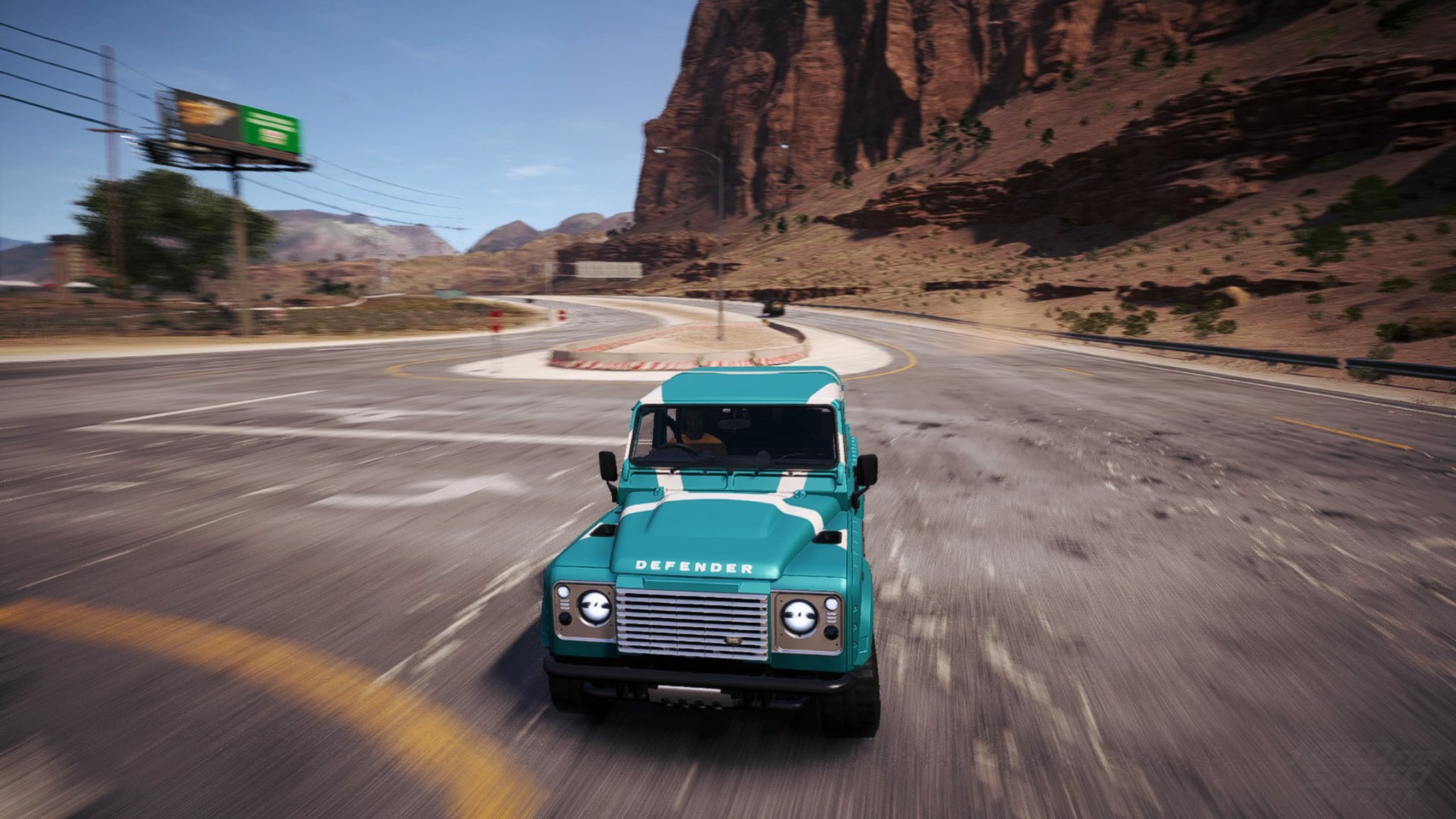
In the off-road events, players will tune a 4×4 vehicle, which could range from a smooth and flashy Subaru WRX to the hulking Ford F-150 Raptor. Dirt roads and huge jumps line the racing course with excessive airtime and rough rally style racing. These events are hectic and require skill to manoeuvre across the deep valleys and rocky terrain. Cutting across the course, finding the fastest way to the finish and smashing into your opponents serves as a nice change from the tight cornering and high speeds of street racing.

Building your derelict cars from the ground up

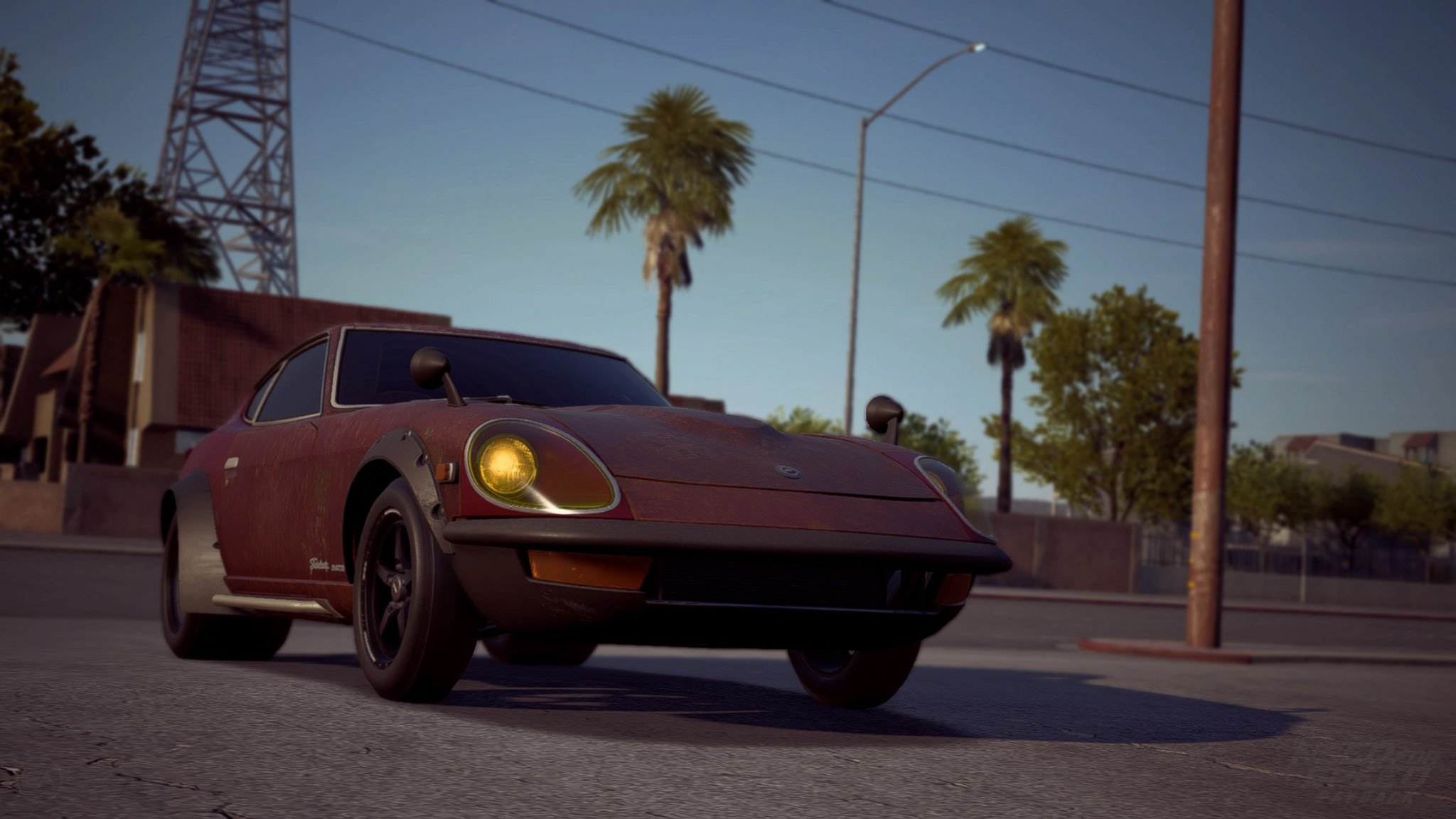
Aside from drifting, off-roading and drag racing across the vast map of Fortune Valley, there are also collectable poker tokens and the more valuable derelict car parts. Upon defeating a leader of each street racing gang, you’re rewarded with the first of five clues to a secret derelict car. The first clue reveals what car you’re investigating, as well as adds four more clues required to complete the build of the vehicle. Clues are small circled areas on the map to which the player needs to discover the location and unveil the hidden part by approaching the derelict item. After all of the clues are found, players may then select the derelict cars and categorize them to one of the five racing categories.
Many different derelict car parts can be found all over Fortune Valley, collecting them all will grant you a new car.

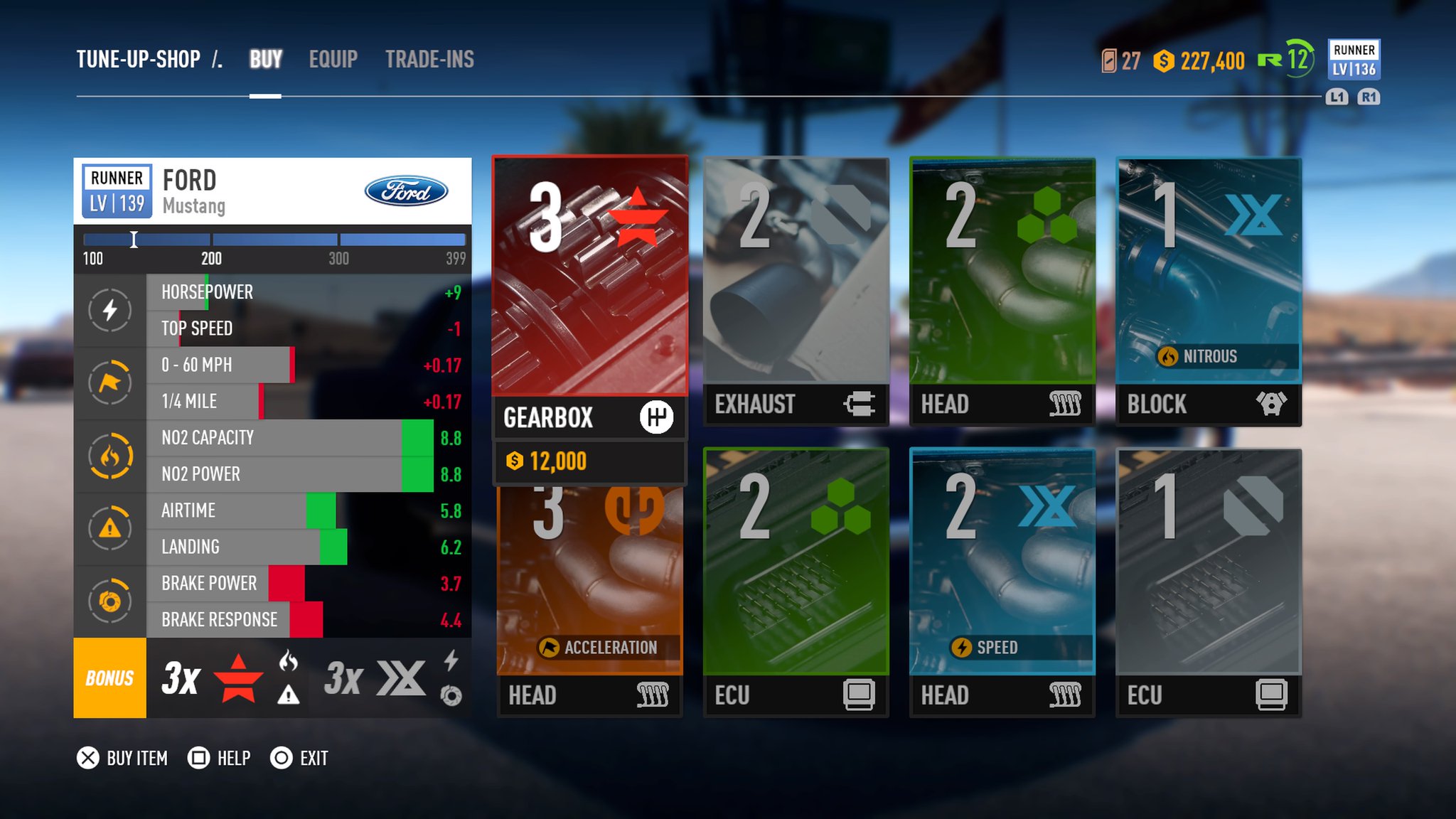
Upon receiving derelict cars or purchasing a new ride, players will then be inclined to improve its performance and upgrade their racer. The obvious choice is to spend hard-earned cash and improve your car by purchasing speed cards. The tune-up shops update randomly about every 10 minutes and a diverse selection of speed cards is available, from new exhaust and headers to enhanced turbos and brakes. Each card alongside its performance part also has one of 5 brands (or the stock part), and some also come with a performance bonus attachment. The brands act as a bonus when three or all six performance parts are equipped with matching brands.
After each race or event players are also rewarded with a mystery speed card which is revealed after the selection. Equipping, selling for cash or trading it in for coveted part tokens are your three options with what to do with every part you’re not using. Part tokens are another interesting way to receive other, sometimes more powerful speed cards through a “slot machine” style mini-game. With three wheels across the board, each one is labelled with a brand, performance part and bonus stat. Players will spend three-part tokens and select one of the three wheels on the selected part, brand or bonus, roll the other two wheels at random, and thus the gamble begins giving you a shiny new speed card.

Adding performance parts to your ride is done by equipping randomly generated Speed Cards which are loaded with extra bonuses.
A familiar NFS experience

The open world and diverse racing events in Need for Speed Payback are relentless in providing a thrilling experience. The story is brash and full of tiresome, predictable characters. The racing is tilted closer to the arcade side of the spectrum, leaving a controllable drifting, jumping and high-speed racing. Upgrading your car selection via speed cards is nifty and keeps things a little more randomized when visiting tune-up shops. Derelict cars provide a unique spin on the series with search-and-find missions and reward players with collectable cars. All-in-all Need for Speed Payback brings another familiar racing experience delivered by Ghost Games, with slight tweaks and enhancements for an exciting racing experience.

Crimsonland Review [Nintendo Switch] – A Fun And Bloody Top-Down Shooter Gone Portable

With technology improving at an exponential rate, it seems like a no-brainer that developers would mine their old IP for titles that are deserving of a second chance at gaming life. With the re-release of Crimsonland by 10tons on Steam in 2014, fans of the original and those just discovering it got a chance to play a fun top-down shooter classic with better graphics, higher resolution, and enhanced designs. Now released on the Nintendo Switch, gamers can enjoy this fantastic port on the go.

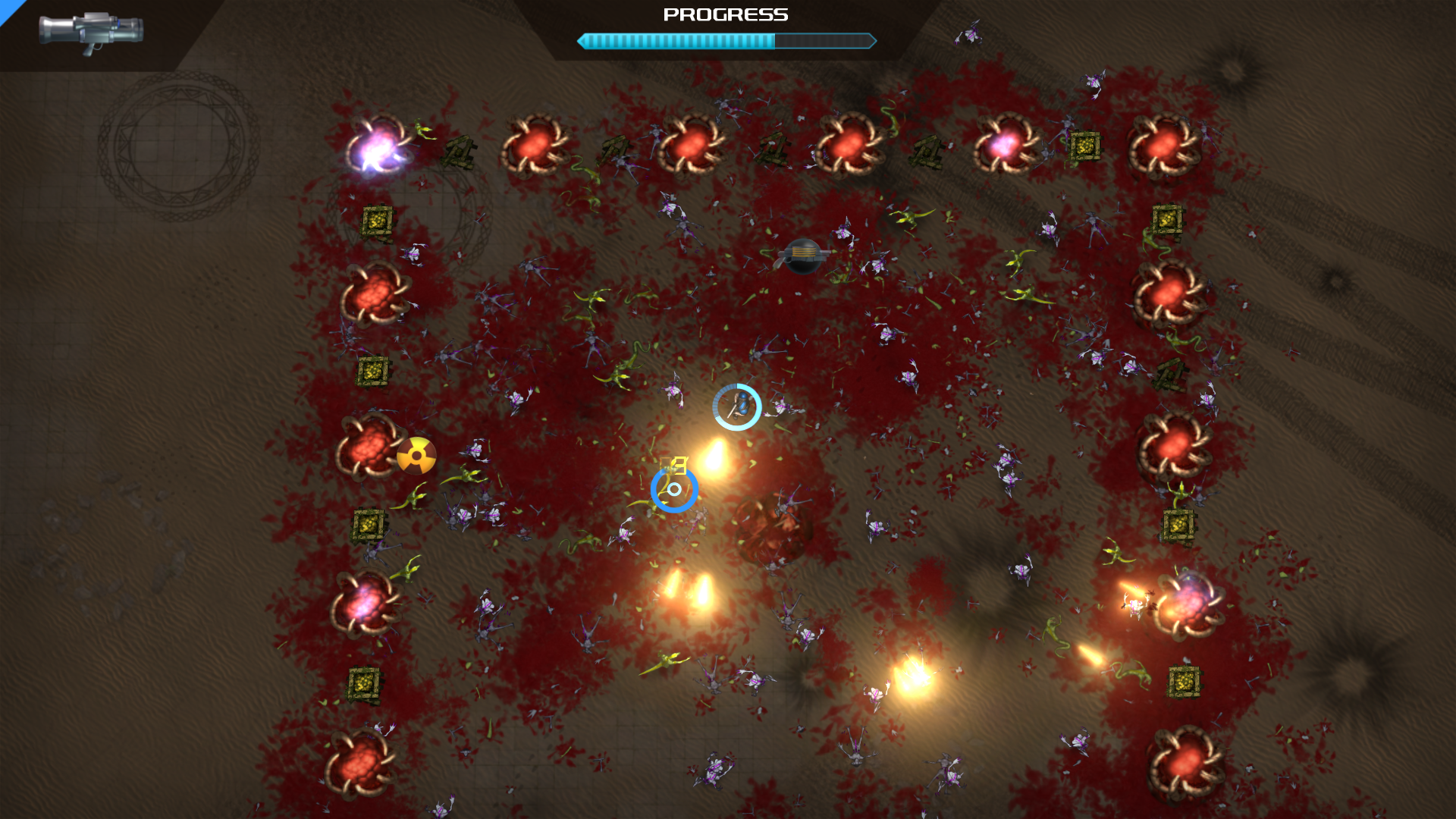
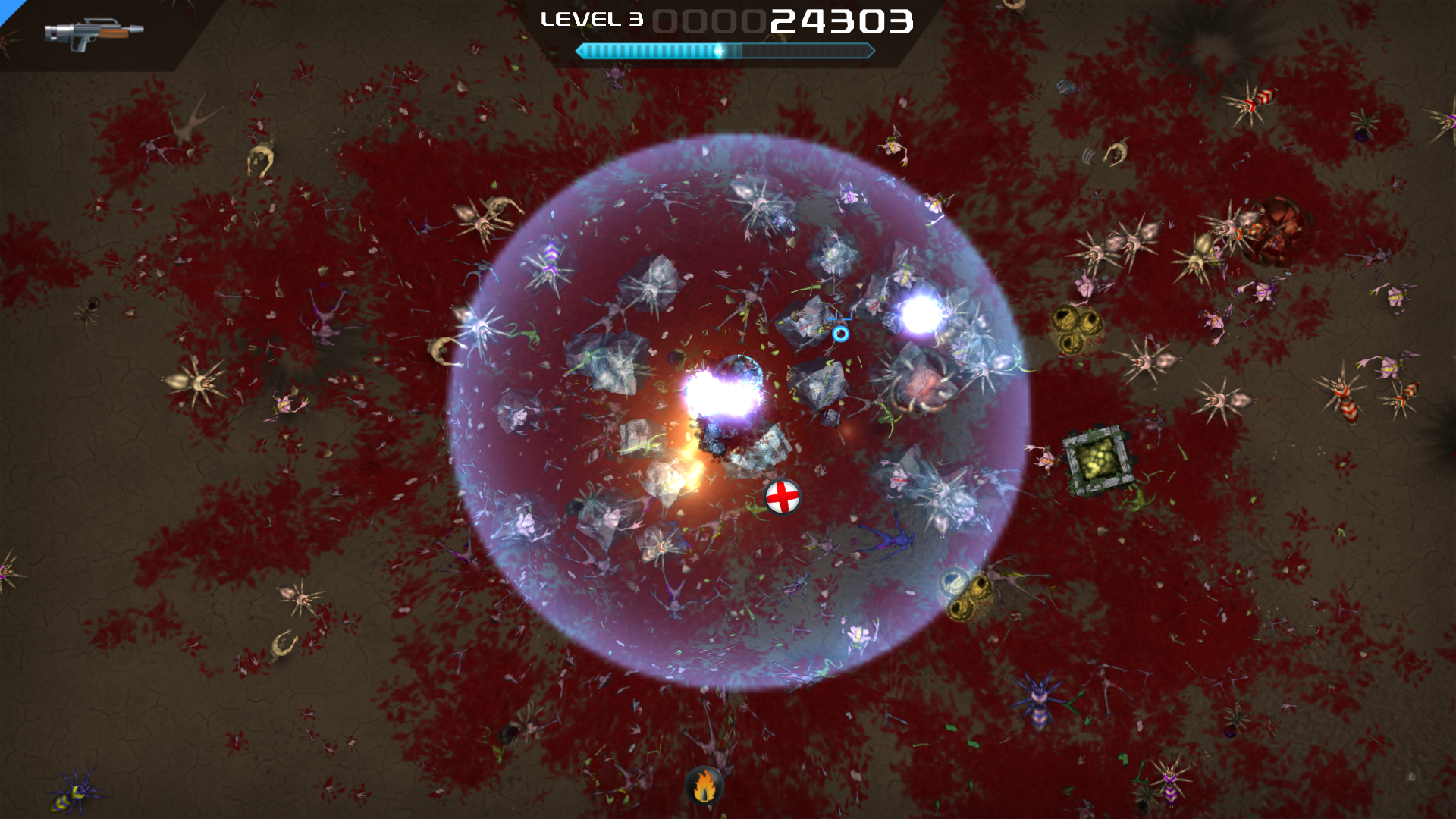
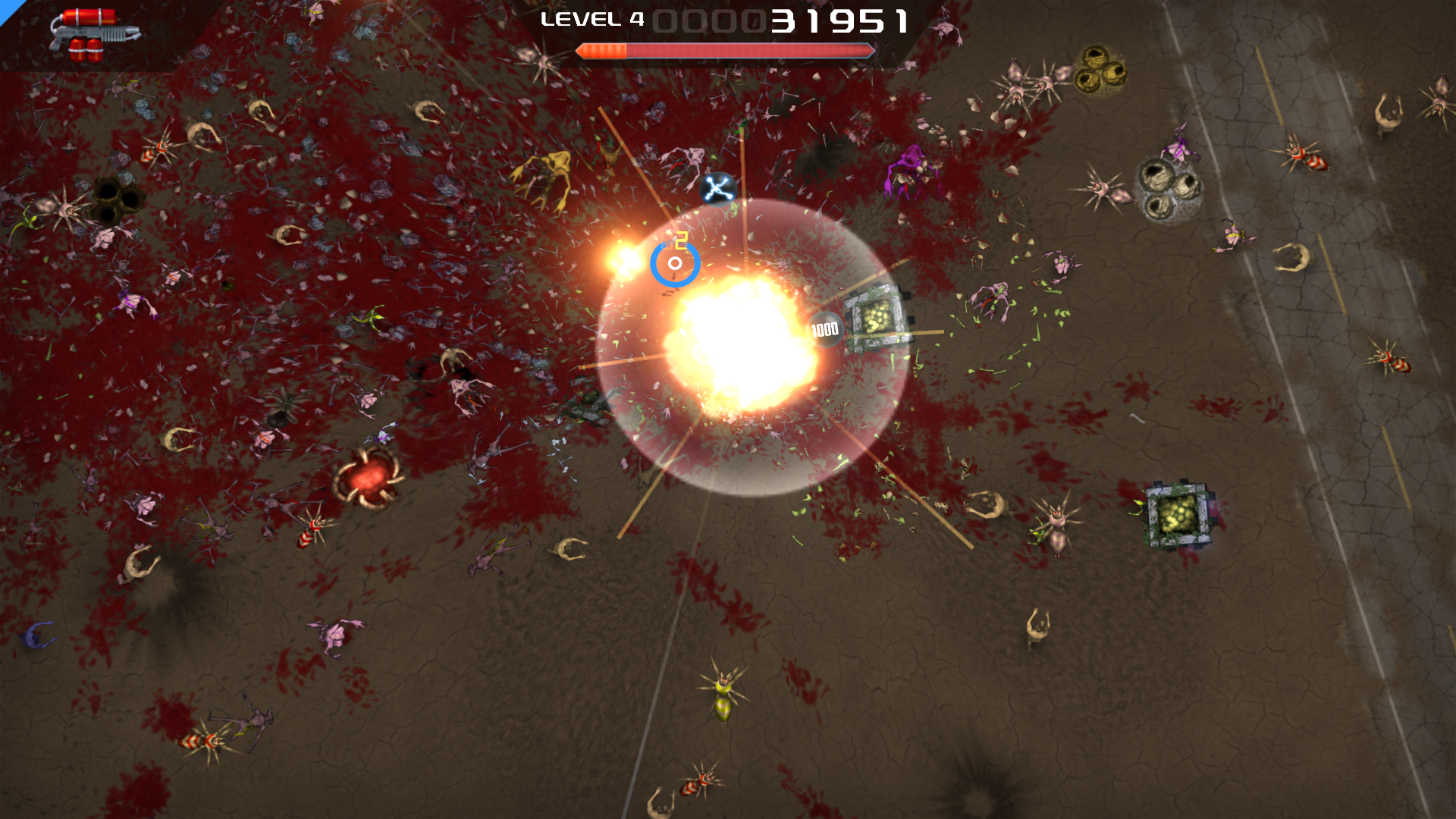
Crimsonland first hit the PC scene way back in 2003, and like most top-down shooters, the premise is simple; shoot everything that moves before it kills you. With a 360-degree shooting ability, players have to gun down hundreds of little baddies ranging from zombies, aliens, spiders, demons, lizard men, and more. Enemies come at you in all directions, moving rather quickly to box you in and cut off an escape route. Making things even more difficult are nests and other monster dens which pop up randomly, spewing forth countless monsters hell-bent on your demise.

nests

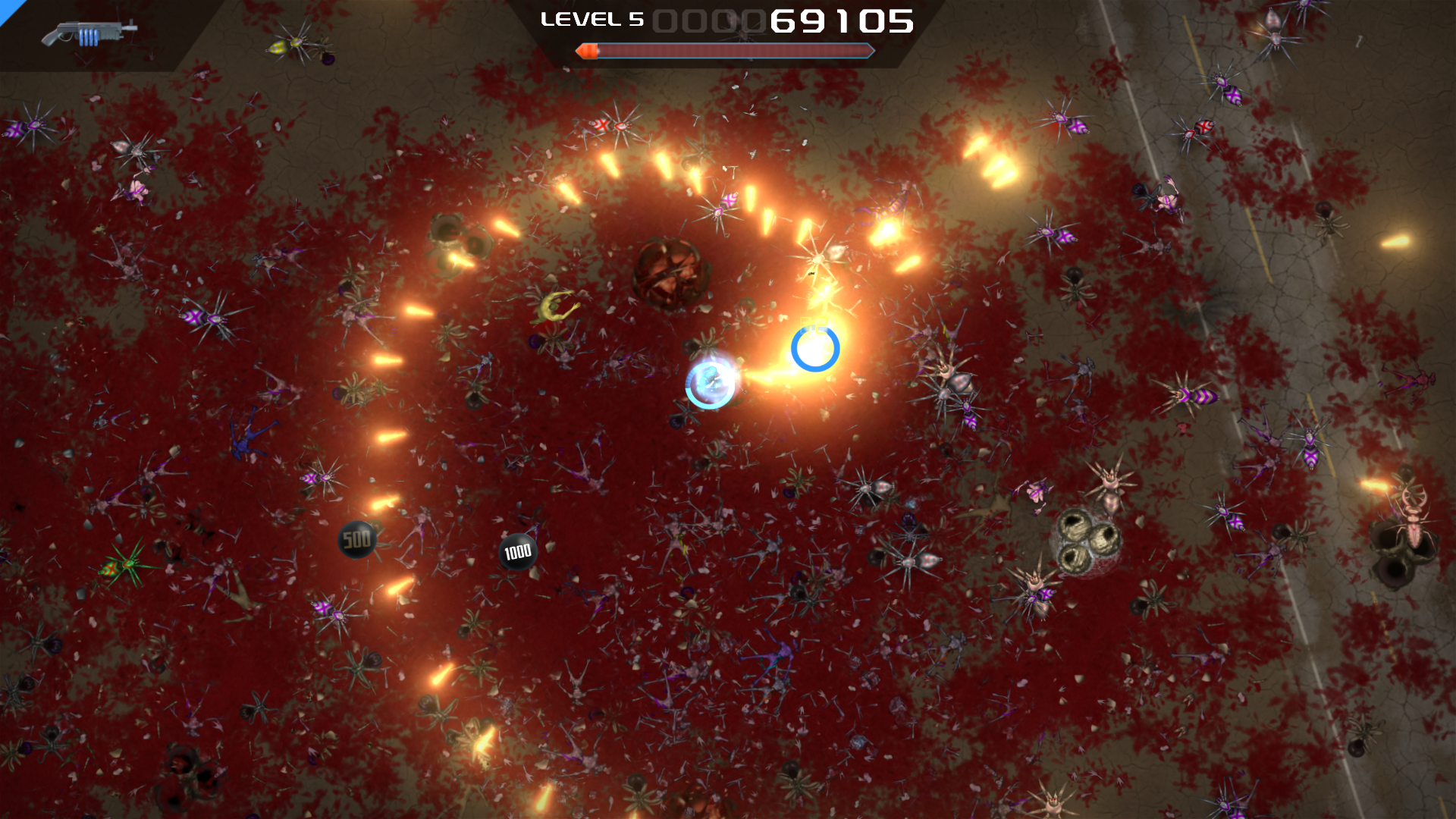
Aiding you in your quest to annihilate everything on screen is a collection of thirty weapons and fifty-five “perks”, which are unlockable throughout the game. Players can kill their foes with pistols, shotguns, flamethrowers, ion cannons, rocket launchers, mini-guns, rifles, and more. I highly enjoyed the selection and found myself strategizing on which ones would be better for each mission. Weapons randomly pop up after shooting enemies, allowing players to simply walk over them to equip. I recommend you hurry and pick them up though, as they’ll disappear after a few seconds.

Think of perks as special abilities that appear at random times throughout each mission. Players are given four choices, with each option sporting an amusing icon and a brief description. Once a selection is made, it automatically goes into effect, combining with other perks already in use. These abilities can range from shooting poison bullets, reloading faster, running at double the pace, emitting harmful radiation to nearby enemies, and more. There are so many in fact, it can be difficult to choose which ones you want over another at any given moment. Perks add a fantastic dimension to the game, giving players a huge advantage in defeating the hordes of baddies coming for them.

Complimenting the aforementioned guns and abilities, are special power attacks which players can pick up at random. These short burst items allow your protagonist to freeze everything on the screen, blow up nearby monsters instantly, turn your weapon into a temporary super killing machine, health increases, and more. I can’t tell you how many times I was saved at the last second by one of these conveniently timed Hail Marys.

crimson3

Unlocked items can be reviewed via the Extras menu located on the main landing page. Players beware, however, as all weapons and perks are not created equal; I found that I actively avoided certain ones because I felt they became a detriment to winning. Case in point, the blow torch. Unlike the flamethrower, players must get insanely close to enemies for this weapon to do any damage, but by doing so, you risk dying at a much faster rate. Certain perks are also a gamble; choosing “Grim Deal” bestows upon players sixty-six percent more experience points, but it kills you instantly. If players choose the “Highlander” perk, you don’t lose any health when attacked, but there is a five percent chance of instant death. Don’t worry, there are way more helpful perks then ones requiring you to make a deal with the devil.

It’s a good thing Crimsonland offers such a wide variety of weapons and perks because there isn’t much variety when it comes to the actual gameplay and missions. The backgrounds are predominantly the same throughout, with only slight variations in colour schemes and the missions are all just running and gunning until everything moving but you is dead. Although the game is insanely fun, I did find myself getting a little bored of doing the same thing over and over for sixty quests. I would have liked a little more variation in level design (ok, any variation at all!), and perhaps some different gameplay thrown into the mix. Don’t get me wrong, Crimsonland is still intense, and it isn’t easy, but something different to look at would have been a nice touch.

crimson2

Aside from the sixty-level quest mode, no top-down shooter would be complete without a rock solid survival mode. Players slowly unlock each one, with all five becoming available once the quest missions are completed. Aside from your basic “kill as many as you can before you die” option, each of the other offerings come with their own unique challenges and obstacles. If you’re looking for a challenging survival mode, Crimsonland is your game; I got my butt handed to me on several occasions, shamefully not lasting long at all!

If you’re tired of going at it solo, players have the option of local co-op that can support up to four players. I wasn’t able to try this, but I definitely could have used the help on several occasions. There are so many baddies coming at you, it can get pretty overwhelming at times. The game also has dedicated leaderboards, which give players an option to check global rankings and scores amongst friends. It’s a nice little addition that ups the competitive nature of the game.

crimson1

This is all to say, the game isn’t perfect. I mentioned my displeasure on the monotony of the backgrounds and the missions in general, but there are a couple of other gripes I have with this title. For starters, I didn’t like how slow your character moves. The game allows you to speed everything up with an option in the gameplay menu, but it didn’t seem fast enough. I found myself “willing” the speed perk to pop up so I could run around faster. There were times I died because I couldn’t get away from a massive horde fast enough.

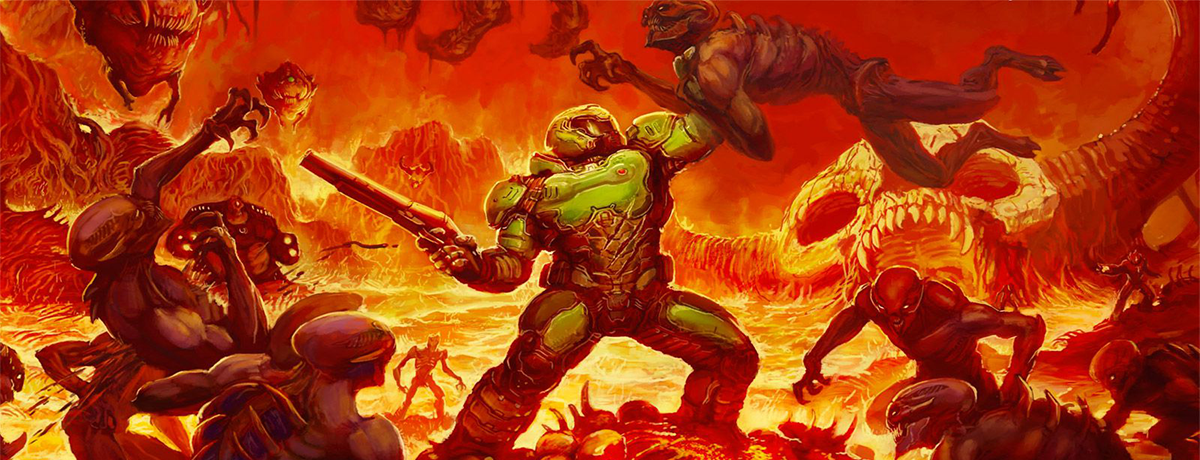
Doom Review [Nintendo Switch] – An Imperfect, Visual Showpiece

The simplest, and yet most fundamental question one can ask about Doom on the Nintendo Switch is this: is it a complete version of the 2016 title running on a portable console? So here you go: yes, principally, it is.

Doom On Switch – Hey Good Looking

While Doom on the Switch doesn’t look as good or indeed run as well as its console brothers – as would be expected looking at the size of the thing – there’s no doubt that seeing it run at all on the Switch’s screen is a bit of a technical marvel. This is a 30fps affair, down from the original 60fps, and with less visual flair and a missing SnapMap editor. But at the same time, it still happens to be a visual showpiece.

Through the very nature of being on a portable, Doom’s visual sacrifices aren’t as noticeable as you would first think. In fact, I found the extent of these compromises only truly apparent when docking the Switch. Admittedly, even then, it still looks good. Considering that many Switch users spend a lot of their time in handheld mode (myself included), it appears that the primary focus of Doom was making it run in portable mode to a respectable level – something the developers Panic Button achieved. Doom reaffirms what we’re all quickly learning then: the Switch may not be that powerful as a home console, but as a portable, it’s a beast.

Doom Nintendo Switch
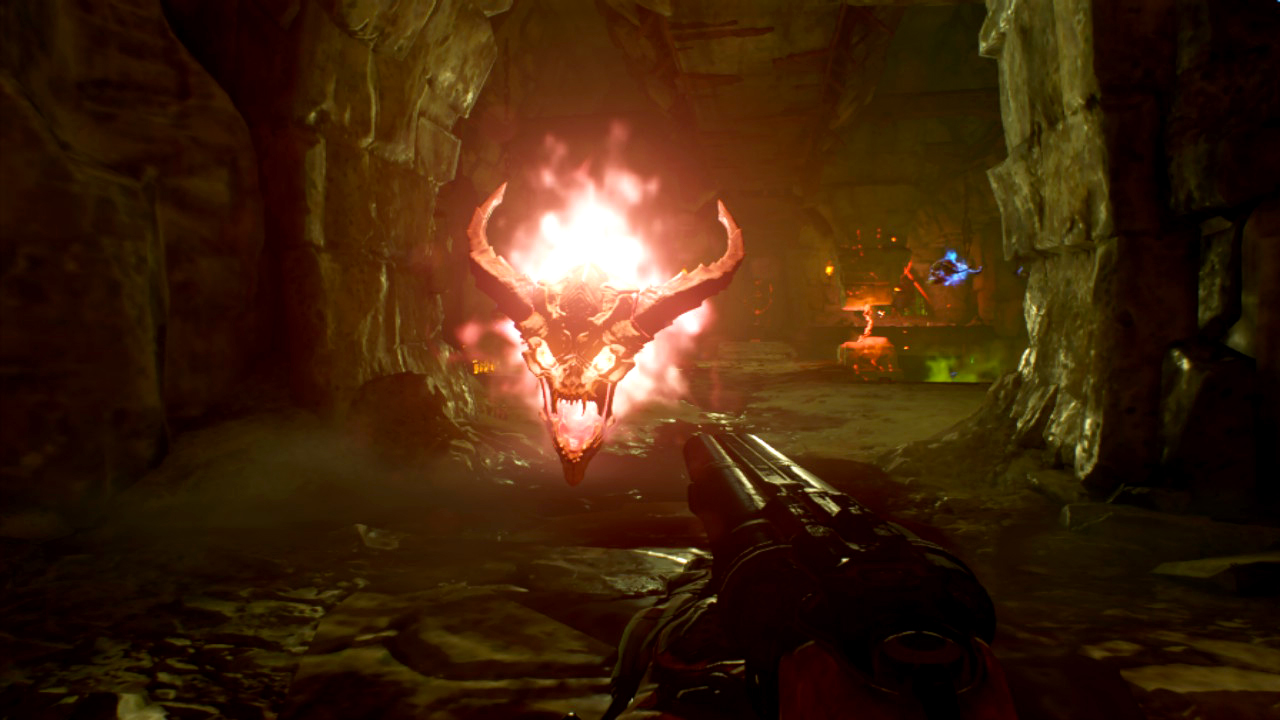
Nothing can beat the double-barreled super shotgun.

Just One-More-Go

What you get in the overall package is the full, completely awesome Doom campaign with its memorable, and haunting, heavy metal soundtrack, the Arcade Mode that has you competing for top scores on these levels and the multiplayer experience. That’s quite a bit of content right there. I even found myself getting into the often overlooked and sometimes derided multiplayer. It’s an odd hybrid itself, yes, mixing custom loadouts with an old school arena shooter, but its satisfying one-more-go style progression system, along with its relative scarcity, works beautifully in short bursts on the portable.

With all that being said, Doom on Switch can occasionally come across as a bit rough around the edges. I’ve encountered a loud and intrusive audio bug across the main campaign a few times that doesn’t sound all that healthy – even startling me at one point with headphones in. This audio bug can then lower the overall sound levels requiring you to turn up the volume. The loading, at times, could be faster in certain segments of the game and I’ve experienced some minor slow down during particularly heated fights too. Hopefully the developer Panic Button can patch these issues up shortly.

That leaves the high price tag as the last barrier along with how important portability is for you. Although we know, (cough), the South African Nintendo eShop can help you out a little here. You didn’t hear it from us.

Spellspire Review [Nintendo Switch] – A Side-Scrolling Adventure Countdown

It’s nice to play a game that makes you think and keeps you on your toes. Too many games these days can be picked up and played with little thought or attention. Be it a shared concept or control scheme, games can be too familiar sometimes. The best way to beat this? Splice two different genres together.

In steps Spellspire does exactly that; a side-scrolling adventure game that brings the best bits from Countdown with it. Thankfully the maths is nowhere to be seen… Phew.

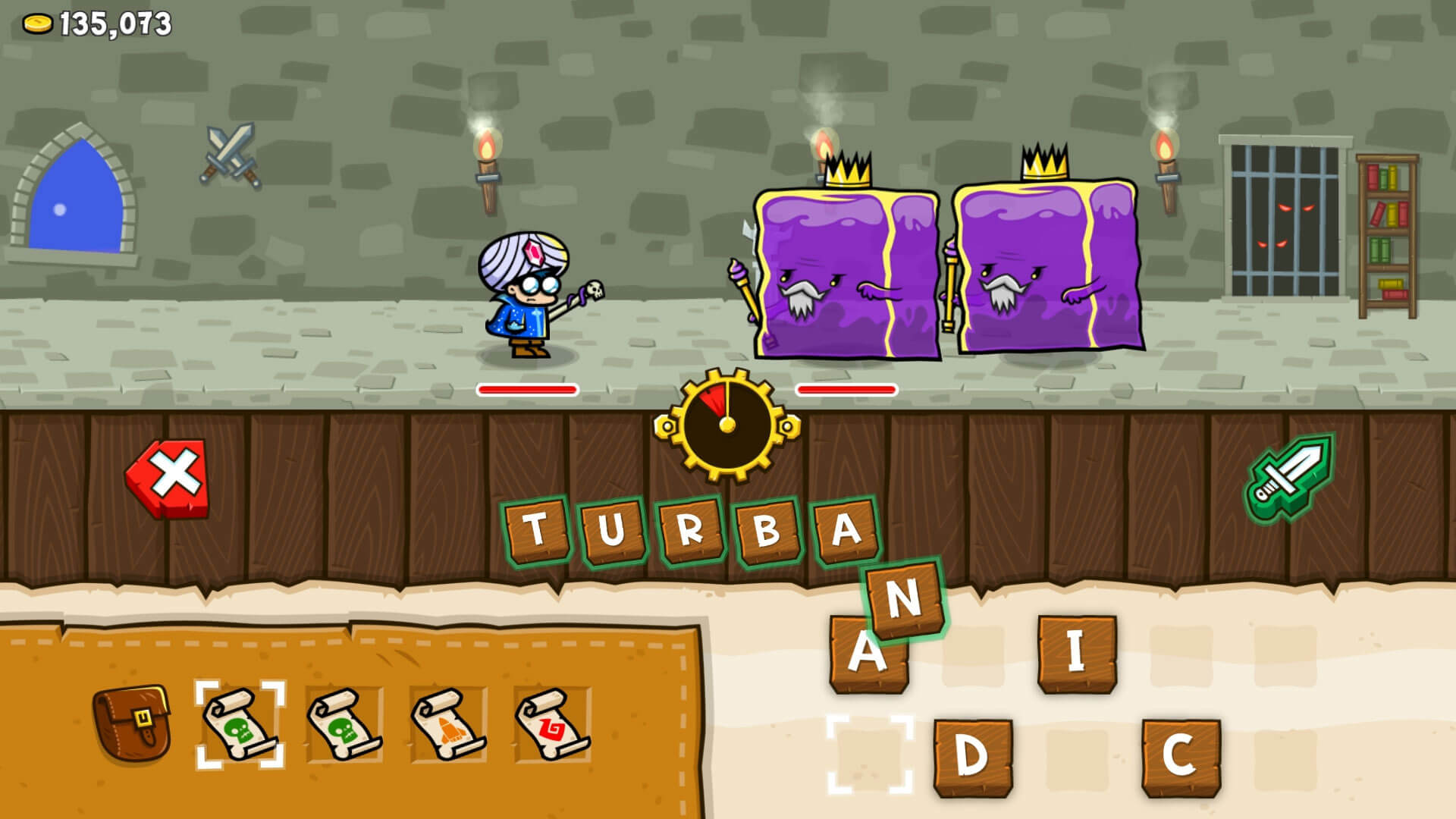
You play as a young wizard who has to travel to the top of a spire and, you can probably see where this is going, you need to create words in order to power your attacks. The bigger the word, the more powerful the attack (No rudies though, not that I tried or anything).

It sounds simple and that’s because it is, and its charm is in this simplicity. As you progress, more enemies stand in your way who get more health and more powerful the further you progress. Thankfully, upon their defeat, they drop coins and leave behind a stash of loot which can be used to power-up your little wizard. Be it a new wand, a robe upgrade or increased health, your gathered loot will enable you to continue scaling the tower.

No naughty words please.

In what seems to be a recurring theme in games from 10tons, your best hope for progression is to revisit previously beaten floors. A higher difficulty setting brings a greater reward upon your second attempt at clearing each floor. The controls are equally as simplistic as the gameplay; you move to the desired letter with the arrow keys and then press the ‘A’ button to select it. Once you’ve built your word you submit it, and that’s about it.

Albeit simple, this can be a bit clunky and the touchscreen option is the best one for the majority of the time. Even playing with the Joy-Cons detached and holding just the screen on its own like a tablet suits the game perfectly.

So, with that in mind, Spellspire is probably best suited to the mobile market as opposed to the console market. Yes, the Switch is portable, but here it feels like the Switch’s capabilities are somewhat lost, maybe wasted.

Having said that though, Spellspire is the epitome of a pick up and play game, meaning you can dip in anytime and carry on where you left off.