When I was a young kid, I went down to South Florida every December to visit my grandparents. They spent winters down there to avoid the three straight months of extremely cold weather, and I certainly didn’t mind getting a momentary reprieve as well. The two of them lived in what could best be described as an efficiency motel, where their room had a kitchen and acted like a pied-a-terre of sorts.
All of their friends were there, and there were nightly events and activities for the residents. One of my favourite activities (and I must preface this with the fact that I was six), was Bingo night. They had one of the old school metal cages that housed the balls, and cards that must have been in circulation for decades. Every time I think of Bingo it reminds me of that time long ago.
Bingo Review Nintendo Switch
Jump to today, and developer Starsign has released their version of BINGO for the Nintendo Switch with a little twist. It doesn’t have the same appeal as playing in that Florida Motel, but the game certainly has its charms.
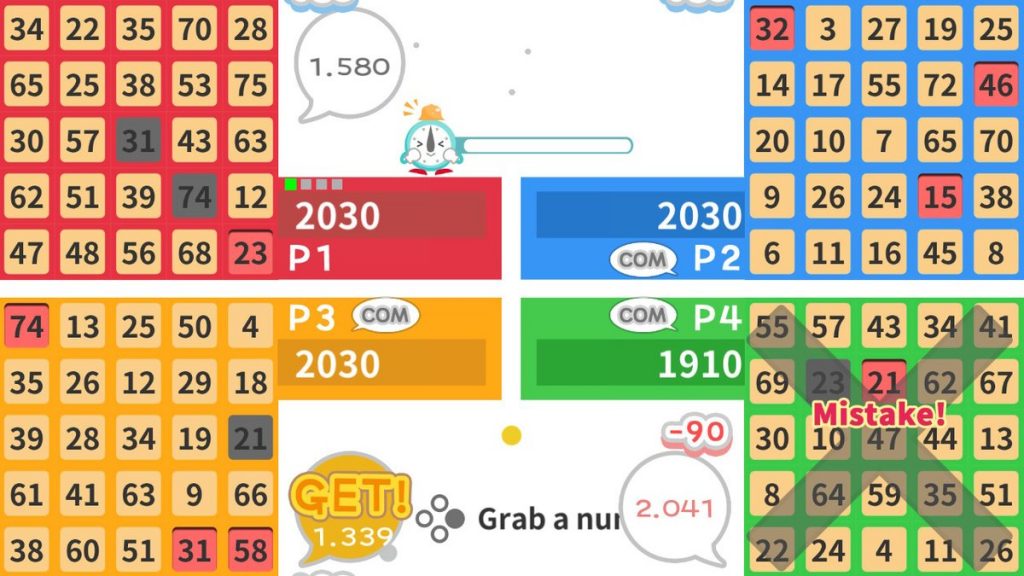
There are four different modes to choose from, each accommodating up to four players. If you don’t have any friends around, you’re forced to play with the computer, which is not nearly as fun. Players can choose from Classic BINGO, Buzzer BINGO, Slide BINGO, and BINGO Poker, with each mode having its own set of rules and play mechanics.
Bingo Review Nintendo Switch
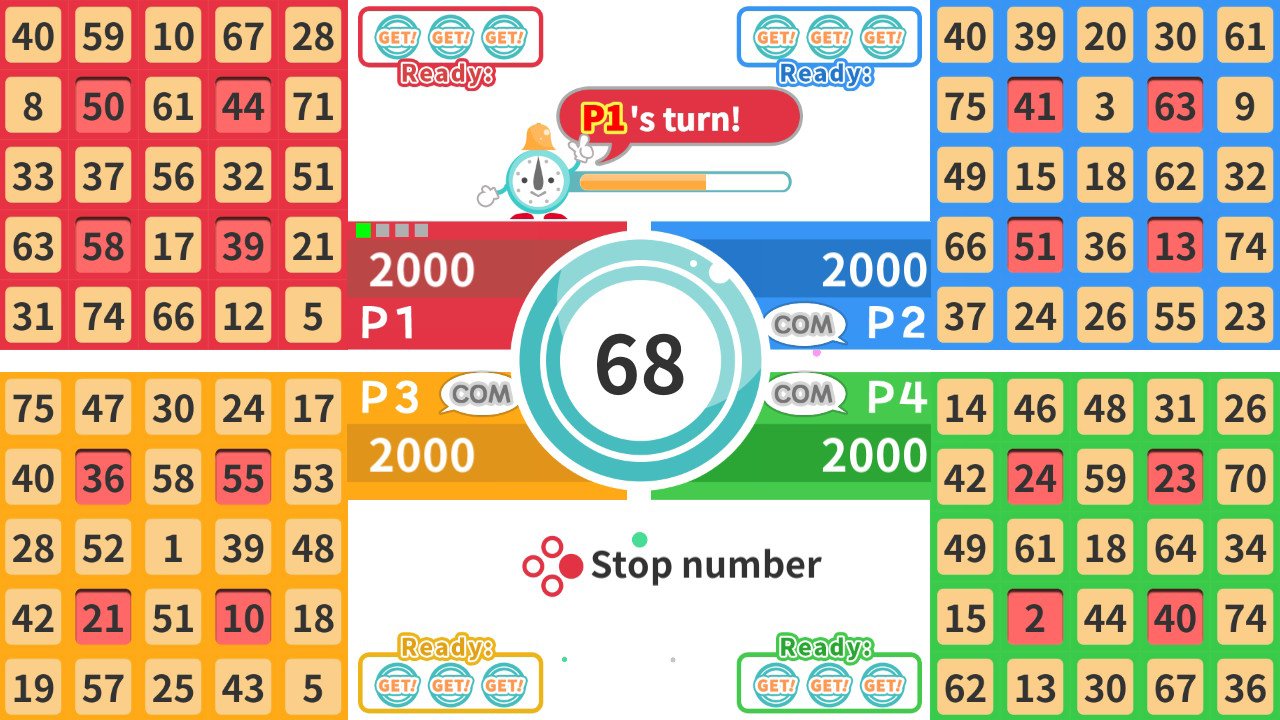
Classic BINGO is just as it sounds. The numbers come up as usual, and when you can complete a row, you win. Buzzer BINGO pits players against each other, where everyone must scramble to grab the numbers as they pop up on screen. You must be quick on the draw, or you’ll be left in the dust. Slide BINGO is a game in which you move the rows around to align the red tiles on your card to make a winning row. Finally, there’s BINGO Poker, a game in which you try to get a BINGO using both the pre-existing red tiles and the new numbers you get. However, when you acquire a new number, you must throw away one your existing numbers in return.
There really isn’t much else to say about this one. It’s definitely designed to be a party game for when you have a group of people together. Playing it solo with just the computer as my opponent quickly became boring and tedious. Without the comradery of a group of friends, I simply didn’t have any interest in playing for any length of time. With basic designs and a no-frills soundtrack, there was only so long I could tolerate playing by myself.
Bingo Review Nintendo Switch
There is a niche market of consumers who will pick up this title, most notable being the board game types if I had to guess. There is nothing inherently wrong with it, but the game will most likely come and go with a whisper of remembrance.
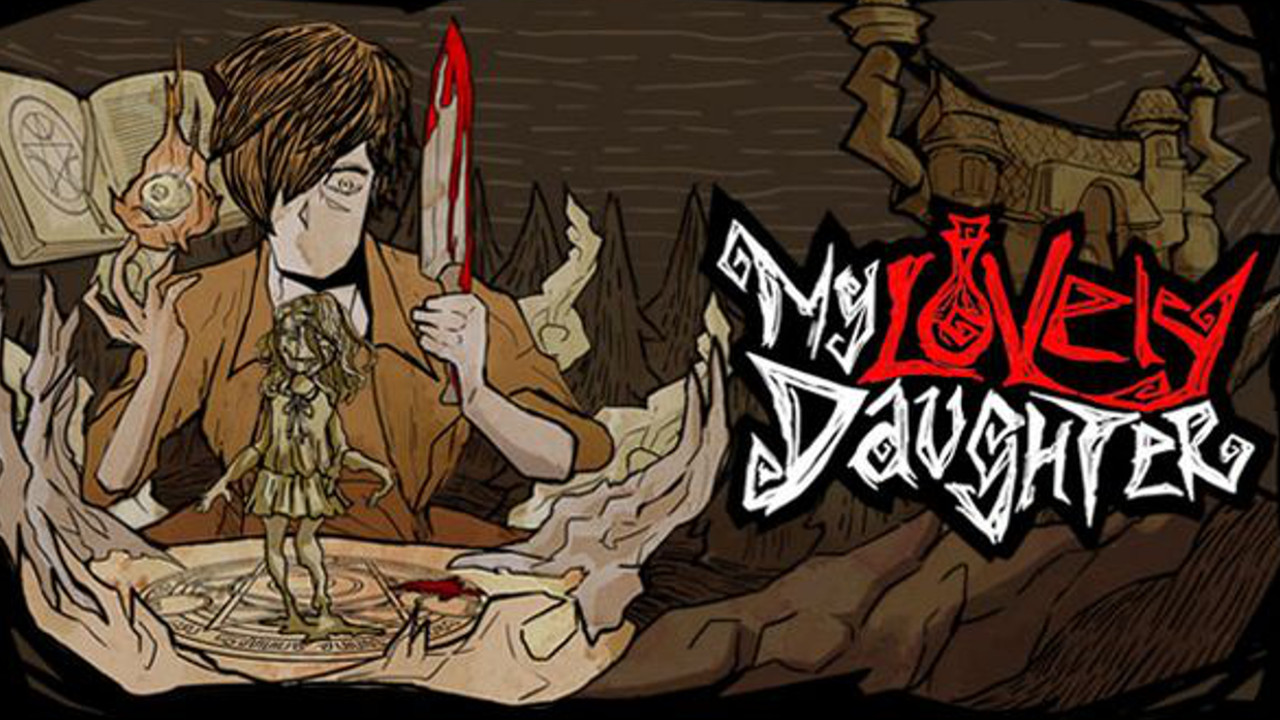
To say My Lovely Daughter is an unsettling story following the depths of how far a grieving father will plunge into alchemist hell might be the only reasonable explanation to describe the grim simulation narrative. Between work/money management, experimenting with alchemy and selfish murder all for the sake of resurrecting your recently deceased daughter – GameChanger Studio delivers an unnerving tale of fiction, but unfortunately comes with a rather tedious concept.
Faust is a man suffering from extreme memory loss discovering his departed daughter immediately upon gaining consciousness. Set centuries in the past, the small village serves as only a slight reminder of who he was, but after discovering the state of his beloved daughter he comes to the realization he, himself, studies in alchemy. The confidence of his abilities only strengthens from there, and off we go on a dark tale about how far a man will go to bring back what he cherishes most.
The idea behind My Lovely Daughter is to use your medieval alchemist abilities to, of course, bring your precious daughter back to the living. If you’re a fan of the anime series – Full Metal Alchemist – we all know what happens when you attempt to bring back the dead using alchemy – but Faust is a desperate man who’s only memories are adrift in the clouds. Slowly he begins to fill in the pieces of his memory as he begins to re-learn the shady process of alchemy.
Tedious Slave-Driving Management
The gameplay requires players to perform a series of tasks which all help to nurture the soul of Faust’s daughter, and eventually use the soul to bring her back from the dead. Players will use materials such as wood, clay, meat and water to transmutate into living homunculus that you’ll lovingly suffocate with work and gifts in order to reach specific affinity levels to add to your daughter’s remaining soul. Creating multiple homunculus will net Faust more income as you send them off into the village to earn a hard day’s wage, as well as grow in experience levels, but showing each one particular affection raises each one’s specific affinity.
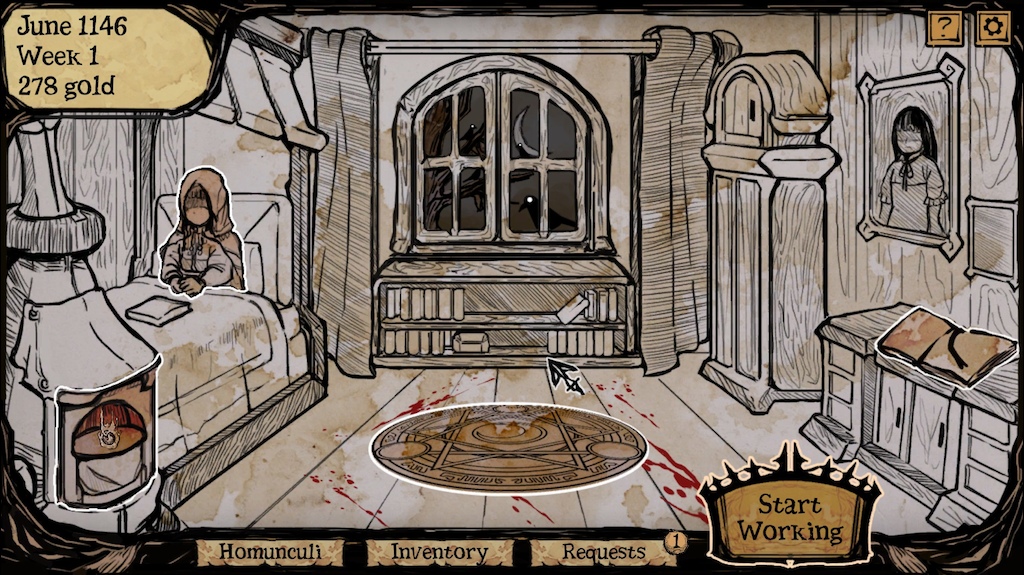
Check up on your daughter’s corpse or begin the fusion, perform alchemy to transmutate new homunculus, check up on your family of homunculus or set off for the 7-day work week.
Homunculus comes in a variety of affinity emotions ranging from anger to joy, to sadness and fear – and it’s up to the player to determine which place of employment decreases the affinity levels the least. The affinity tied to every transmutated homunculus is determined based off of the three ingredients used in the alchemy process. The affinity levels increase when particular items are gifted to the daughter-like homunculi, or the player decides to spend some much-appreciated time with the miserable chemistry experiments.
Across the village map lays a number of places to send your precious homunculi daughters off to scrape together necessary gold to keep your loving daughter in a composed form, as well as keep your homunculus collection happy. There are around 2-3 places pertaining to each affinity emotion, like pet grooming for sadness, gardening for joy or smelting for anger. The players send off from their house for a seven-day workweek emulated through a flowing timeline lasting around only less than half a minute. Within this time frame players are able to freeze the clock while they assign their homunculi crew to specific workspaces to earn gold and experience, purchase necessary items and strategize the remainder of the work week. This whole process is fairly easy to grasp early on making for a simple concept, but can grow rather tiresome and feel like a monotonous grind the longer you play.
Possessing a collection of various homunculus each representing a different emotion selfishly puts gold into Faust’s pocket with every passing day. Earning gold allows Faust to keep his daughter’s body from decomposing throughout the weeks spent obtaining crucial alchemy ingredients and perfecting the ancient art. Raising your homunculus affinity levels are important for finding the perfect formula needed to resurrect your daughter which is precisely where players must experiment with sacrificing their many homunculi.
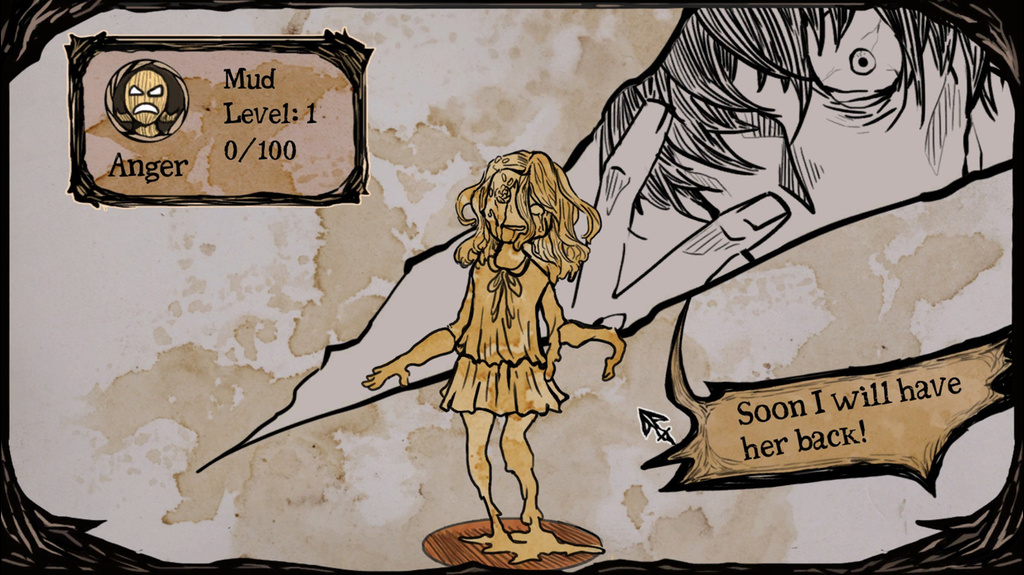
Once created, your homunculus are separated into affinity categories depicting their permanent emotion, such as anger, joy or sadness.
Collecting Your Sacrifices
Between the assortment of alchemy ingredients players will transmutate one homunculus after another in order to nurture, work and inevitably slaughter, in turn adding to your daughter’s overall soul affinity level. To reach your goal you must configure the perfect formula of the affinity emotions that perfectly match the amount of joy, fear, sadness and anger in which make up your daughter’s personality. The higher the affinity level for each homunculi means more of that specific emotion contributes to your daughter’s soul, but only after the homunculus has been mercilessly sacrificed. Every four weeks the player may decide to try to fuse the affinity-collected soul with your daughter – in an attempt to bring her back, but in doing so will apply all current affinity levels making all of your work prior to the fusion attempt a complete gamble.
The constant homunculus experiments, slave-driving mentality from our “hero” Faust, bizarre method of nurturing your twisted alchemy collection and unholy desire to relentlessly slaughter them as quickly as they were created is the entire concept of My Lovely Daughter. While grim as it is, the underlying tone urges players to dig deep within themselves and question: just how important is one’s life compared to another? The pleas and confusion displayed every time you decide to exterminate a homunculus are borderline gut-wrenching knowing this is your only option moving forward in the game. Still, growing a bond with your homunculus and watching as they begin to develop a faint wisp of trust for Faust only to be snuffed out in the name of the one daughter he actually gives a damn about is a tough pill to swallow, time and time again.
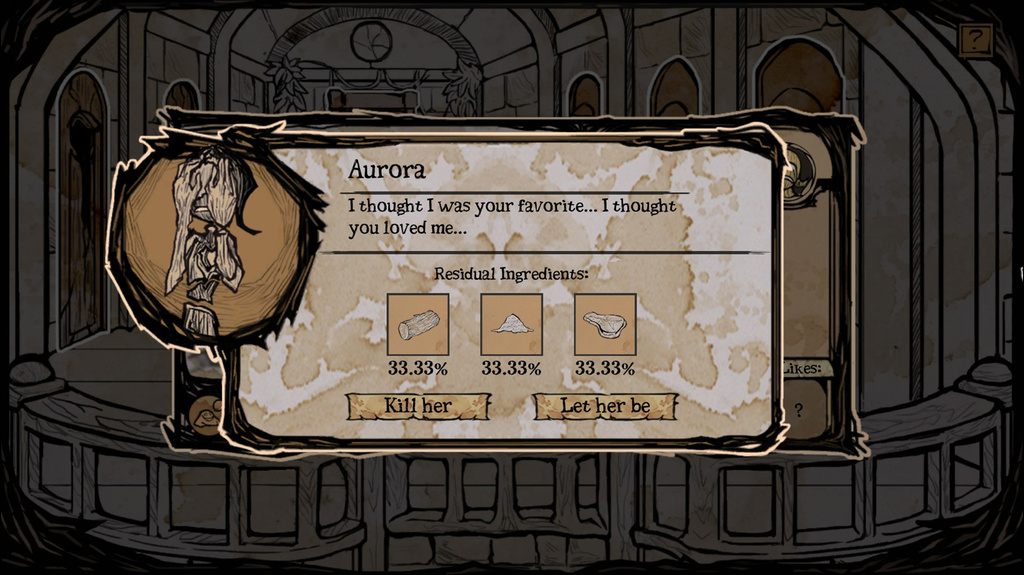
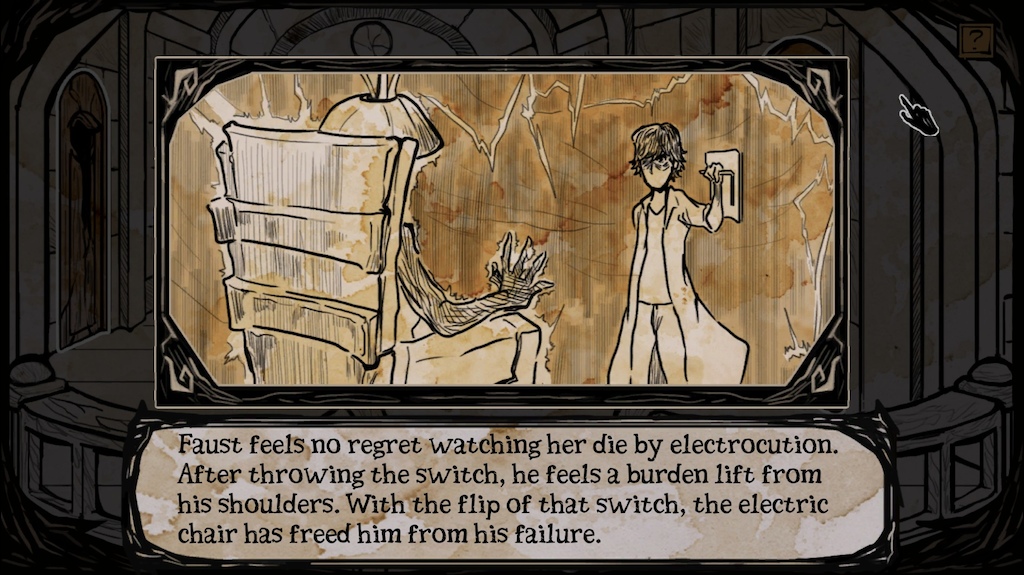
Once players have specific homunculus reaching a high enough affinity level – or things just aren’t working out – Faust may choose to end the bond through sacrifice…Sacrificing isn’t something Faust is exactly hesitant to either, often leading to gritty dialogue of his extraction of the homunculus.
The workload in the village rewards players with a modest pay in gold, but the cost of homunculus gifts, alchemy materials and expensive preservative balm – applying this periodically to your daughter’s corpse is vital in keeping her from decomposing – begins to add up. Aside from the typical everyday workspaces, players may also take on requests from the villagers. Usually asking for a number of specific materials gained from sacrificing your homunculus, i.e. clay, wood, iron etc., players may choose to take on these timed side quests to gain a hefty step forward in your gold total. While not mandatory, these do add a bit more depth to the otherwise tedious gameplay, but nothing to seriously change the overall concept of the game.
The dreadful story and bleak setting of My Lovely Daughter are enough to captivate players interested in experiencing a tale not typically told in video games. However, the constant grind and gambling process to achieve the overall conclusion is what may drive most of them off. While appreciating what the creators of My Lovely Daughter have accomplished in this maturely themed narrative, the gameplay is a bit lacking – let’s say something closer to a semi-strategic visual novel. Though the constant difficult decisions to sacrifice your lonely creations after so much time and effort put forth into bonding with them, and listening to their often depressing stories still somehow manages to weigh heavily on your conscience well after you finish the unique experience that is My Lovely Daughter.
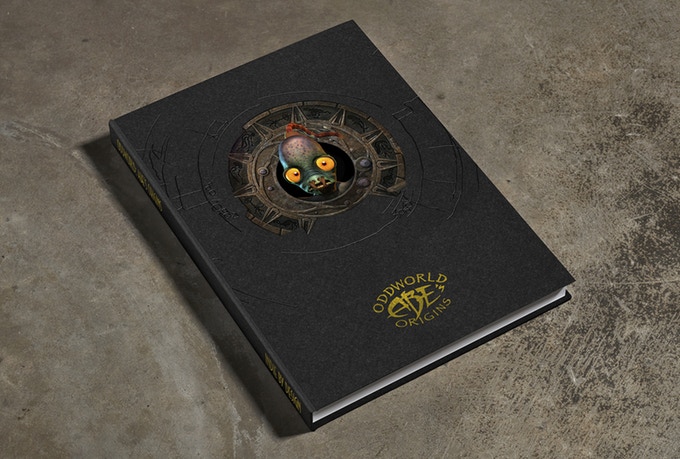
Ok, so there was no Oddworld: Soulstorm to be found, (as we speculated). And from what we can tell, the big tease from Oddworld Inhabitants today seems to have been over Oddworld: Abe’s Origins: a new book that, shockingly, celebrates the origins of Abe – it’s via Kickstarter. That’s pretty cool, but we’re sure there’s more news on the way for Soulstorm (it’s apparently out this year).
Nintendo’s Nindies Showcase Spring 2018
What about Nintendo? What did they announce today at their Nindies Showcase? Well, in short, lots of great indie titles will be heading to the Switch, including the following:
Fantasy Strike – out summer
Banner Saga 1 and 2 – TBA
Banner Saga 3 – out summer
Just Shapes and Beats – out summer, first on Switch
Garage – out spring, first on Switch
Lightfall – out spring, first on Switch
Pool Panic – out 2018, exclusive to Switch
Bomb Chicken – out summer, first on Switch
Lumines Remastered – out spring
Reigns: Kings and Queens – out spring
West of Loathing – out spring, exclusive to Switch
Pode – out spring
The Messenger – out summer
Garage – out spring, first on Switch
Mark of the Ninja Remastered – out fall
Bad North – out summer, first on Switch
You can catch the brief Direct-style showcase here:
It’s worth mentioning that some of these indie titles are bigger than others (Banner Saga, for example), but overall, it was another strong commitment from Nintendo to put the smaller guys out there front and centre on the Switch.
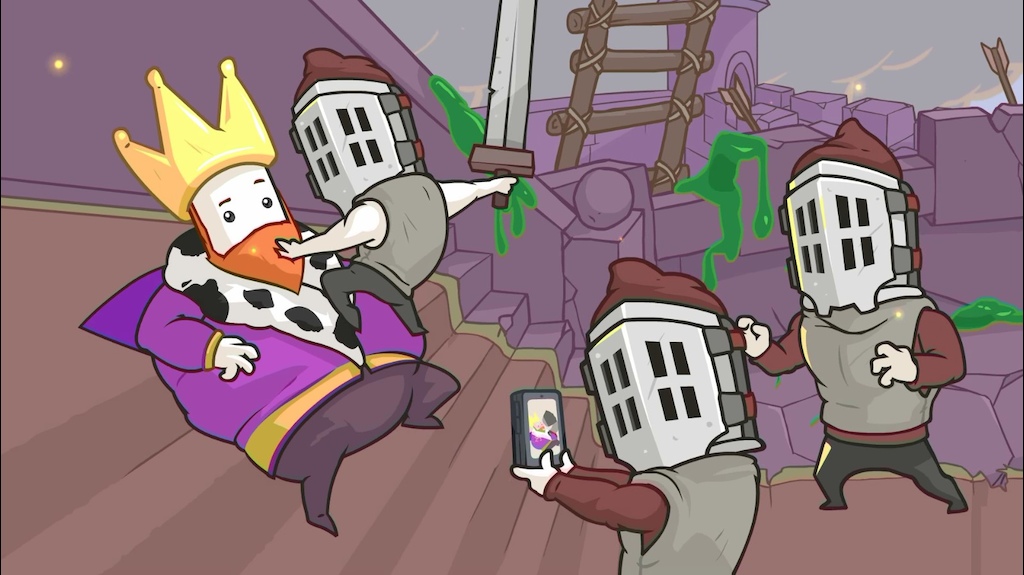
The indie developers at The Behemoth have created a delightfully hilarious RPG strategy game with an addictive, simplistic outlook on the often confusing genre. The shrunken hand-drawn visuals, compelling backing score and hysterical dialogue offer a brilliant experience while combining some of the finer elements from the turn-based category. Build your army to prepare to fend off against absolute absurdity in brutally tactical combat.
The game itself looks like a direct sequel to The Behemoth’s mega-successful 2008’s comical brawler, Castle Crashers, with unique hand-drawn visuals and off-the-wall humour. The characters that make up your party are as unforgiving as ever, squaring off against foes that only add to the off-beat charm and often greasy humour. Travelling across the sundry map in search of quests and ridiculous enemies sets players into a wagon ride filled with chaotic bouts, side-splitting narratives and combat that ceases to let up.
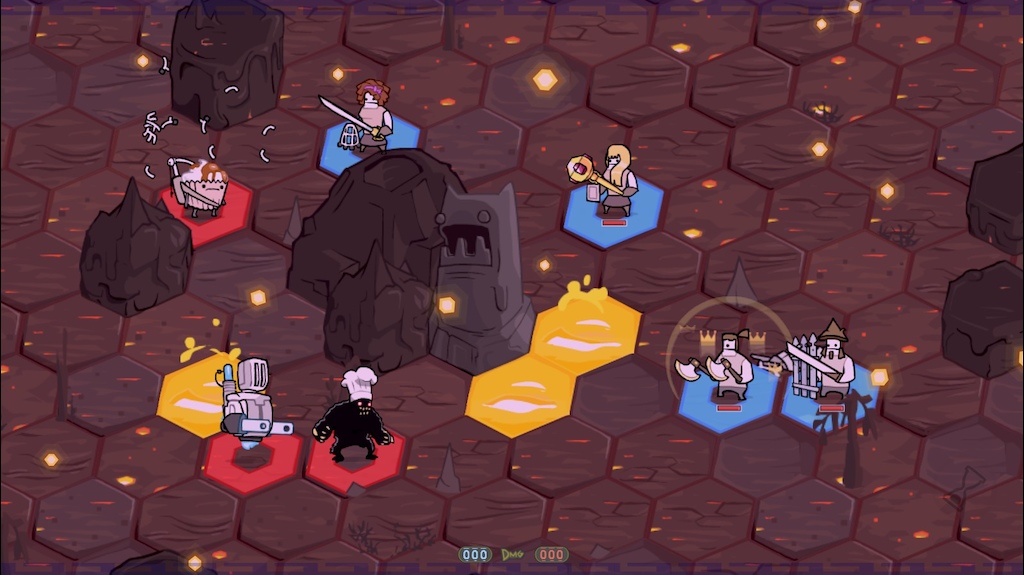
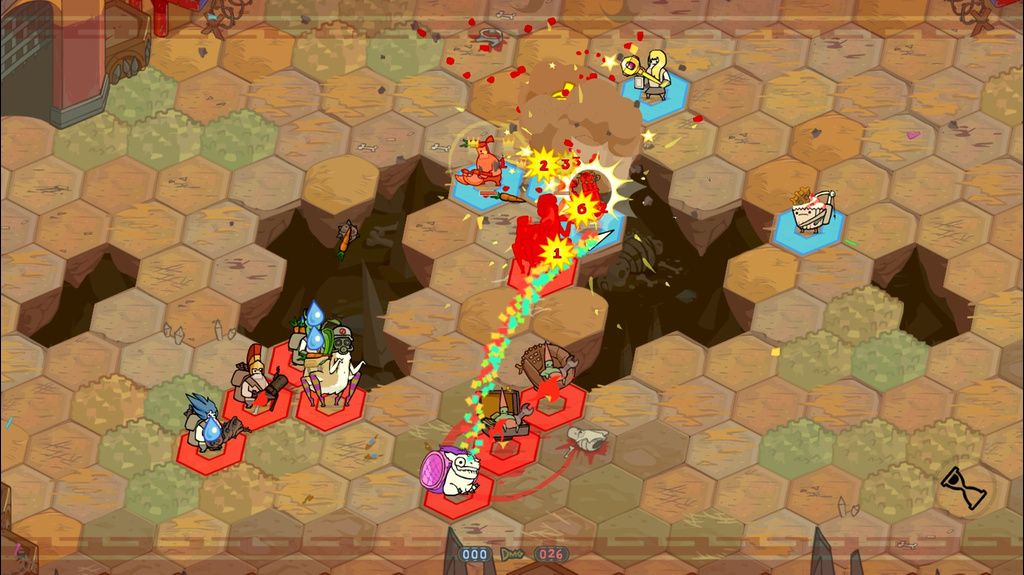
Within Pit People, you won’t find a team of highly skilled characters looking to overpower their way to victory, but rather a group of unlikely candidates with a rather grim take on life. Combat doesn’t take any unnecessary risks by adding complicating tactics, manoeuvres or abilities, but allows players to meticulously place their characters in strategic positions for the best outcomes. While players won’t have the standard options of defensive or offensive skills per every turn, the turn-based fighting style still manages to give off a fresh sense of tactical gameplay.
A Simple Twist On Strategic Combat
While in combat players simply select which position on the grid each character will move to in sequence. Each turn consists of the player choosing where each player moves to, as well as sitting back as your characters take damage. Your party members think for themselves as they will attack whichever enemy is closest to their position – as well as defend any incoming blows – on the combat grid. Moving around to appropriate positions, pairing your mates up against the weakest enemies and watching your crew take damage is all part of the dance when battling it out in Pit People, adding a broad sense of simplicity to the combat mechanics.
Pit People offers an easy understanding of the strategy inducing turn-based combat.
As your characters and battle companions begin their romp on the fantasy land of Pit People, each successful blow earns a bit of experience. Levelling up is a common occurrence, but never actually leads to any enticing unlockable skills, perks or abilities, but rather stronger and more advanced auto-attacks and a likely much-needed health refill. While the character development in any enduring RPG title will claim it’s a major asset found in the formula of keeping players successfully engaged throughout hours of gameplay, Pit People simply isn’t competing with that. That lack of any real character development is a bit disappointing – especially when live-action combat has been tossed out the window as well – but nonetheless offers yet another unique quirk from the veteran game developer.
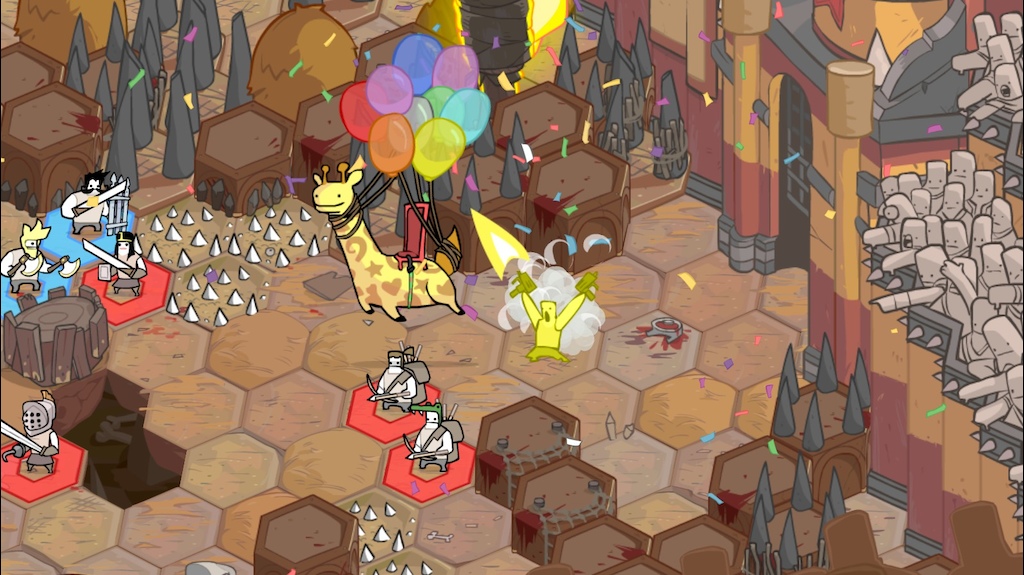
The provocative nature of Pit People is borderline raunchy and filled with seemingly crude jokes around every corner. The narrator is an absolute cynic constantly pushing at the integrity of your group of “rough around the edges” heroes. One line after another leads to witty remarks that help keep the overall charm at play throughout the entirety of the campaign. The absurd monsters one will fight may come off a bit misleading at first, but once engaged the battles never seem overly impossible. Futuristic robots, dual wielding uzi sharpshooters or the vibrant unicorn foe barely show much of a difference when it comes to challenge of combat diversity, but does act as a solid form of exciting entertainment.
Nothing absurd about this…
Building your party in Pit People is a major factor in success, as players are able to capture a variety of monsters and enemies throughout their rambunctious journey. Leaving specific candidates left alive last will allow players to trap these beasts – with a simple net of all things – in turn providing players with an opportunity to add them to their squad. There are tons of different enemies and foes to capture throughout your adventure, all with their own unique assets in having them aid you in combat.
Enter The Pit
While the campaign is brimming with hysterical dialogue and methods of unlocking more carnage-inducing characters, The Pit mode offers more of a challenge. Taking on unfair waves of enemies or online versus matches provide the same amount of excitement that comes in the campaign, earning gold and levelling up your crew. The Pit offers the same style of combat found in the campaign, so there’s not much in the way of diversity, but facing off against online competition and unique waves of AI foes does offer a good amount of practice for winning those tougher battles down the line.
Entering the Pit allows players to face off against a variety of AI and multiplayer squads while levelling their own party and collecting valuable rewards.
Pit People is a vigorous turn-based title from a veteran indie team – and one in which they strayed from their usual path yet again. Taking on a new title in a genre that hasn’t been seen in their arsenal as of now proves The Behemoth isn’t afraid of taking risks to keep their library fresh and thoroughly enjoyable. The concept, gameplay, simple mechanics and, of course, off-colour humour shine delightfully all along the gruesome path left by your Pit People army.
Ah Payday 2, you’re probably one of the most controversial games ever made. Not by the content of the game itself, but how developers Overkill have handled the production and post release of their most successful title to date.
Payday 2 On Switch
Where should I begin with the controversy surrounding this Payday? Let’s start from the beginning. Payday: The Heist is a cooperative FPS that is focused around doing robberies and large scale cons, it launched all the way back in 2011 for PC and PS3. This title was a surprisingly big success for Overkill Studios, by selling over 700,000 copies since launch. With this newfound success and large amount of cash, Overkill Studios took just under two years to make a sequel in Payday 2.
Overkill launched Payday 2 for almost all platforms in August of 2013 with some lofty ambitions. First off, Overkill stated they have plans to support Payday 2 for 4 years. This means consistent updates, enhancements, and DLC add-ons from 2013-2017. This is a promise that Overkill has actually gone through on, with support surprisingly being extended all the way into 2019.
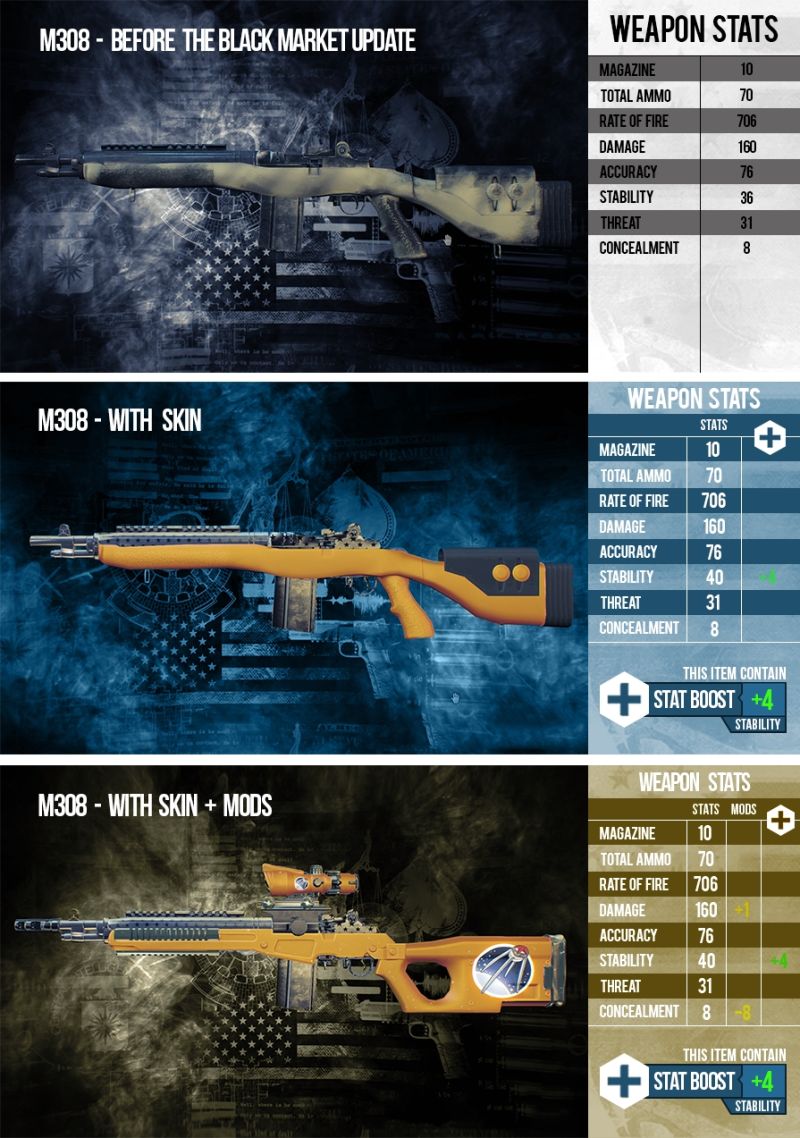
Secondly, Overkill promised its fan base that there will be no form of microtransactions throughout the lifespan of Payday 2. Well… that lasted for about two years until Overkill went back on their promise to their community, and added microtransactions (called the Black Market) into their game. This caused fan outrage like the gaming world has only seen a few times. The community was not only upset that they were lied to, but the fact that the microtransactions that were added into the game were stat boosted weapons and gear. This means the more you spent on these microtransactions, you’d end up with a better overall character than a free player. This is a mechanic known in the gaming community as “Pay2Win.”
Payday 2 On Switch
With this outrage came all sort of bad press for Overkill, not only were they getting lambasted by the gaming media, but there was a gargantuan drop off in player counts for Payday 2. All of this controversy made Overkill remove all microtransactions all together from Payday, and start giving out free content in an attempt to win the community back. But, the dust was only settled for so long before the console community started to get fed up with Overkill themselves.
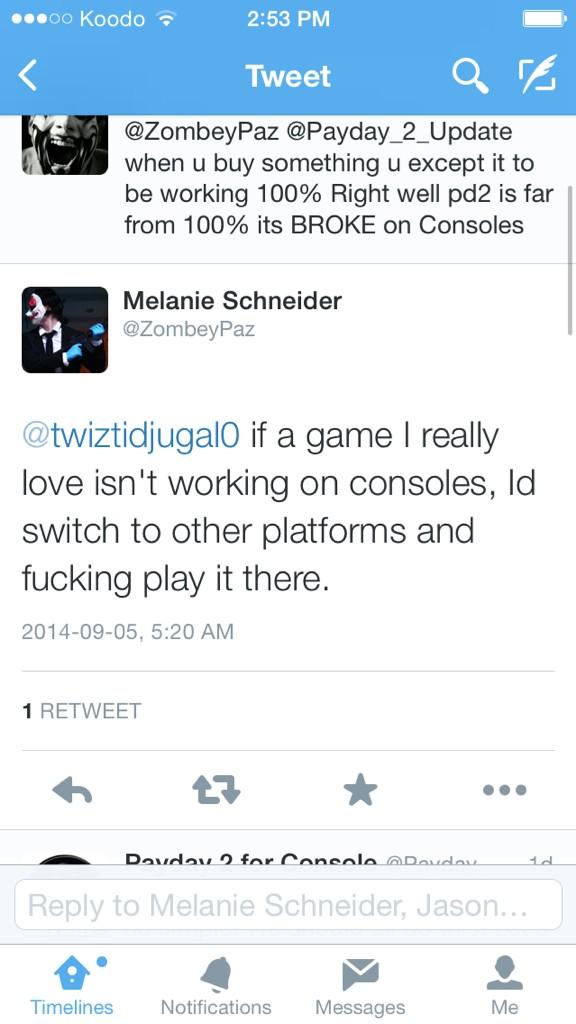
Shortly after the microtransaction controversy, came the console controversy. The Xbox One and PS4 players were abandoned by Overkill Studios for over 400 days. No updates, no new content for over a year. When these players were promised a game that would be supported for years to come. What made matters even worse, is when console players complained to the developers about the update issue, they were treated to a response of “go to other platforms and fucking play it there.” As you can probably understand, this caused even more outrage. This finally led Overkill to start taking care of the console versions of their game, in which they now update on a semi-regular basis.
Even with all of this background noise about the developer, I was optimistic for the newly released Nintendo Switch version of Payday 2. What excited me about Payday on the Switch is the fact that the Switch is starving for first-person shooters. With the only other big FPS title on the system being the excellent DOOM. So, I took a risk, and went out and purchased the Switch version of Payday 2 on launch day. To be honest with all of you, I regret it… for the most part. And truthfully, I don’t like to moan about things unless I think there’s a problem.
Payday 2 On Switch
Instead of getting an up-to-date port of Payday 2, Switch owners got a version of Payday that is behind in content compared to the PS4 and Xbox One versions. All in all, the Switch version of Payday 2 is almost a full year behind in content and updates compared to the PC version. Now, Overkill did say they will be patching the Switch version to get it lined up with the other console versions in terms of content. But, with their reputations with patches and updates for us console players, who knows if this patch is ever going to come out.
To make matters even worse, the Switch version itself suffers from loads of technical issues. With frame rates dropping to the low 20s whenever there are any form of alpha effects on screen (smoke, explosions etc.) Additional issues include not being able to connect with other players online, game crashes, heists not being able to progress past a certain point, and useless/unhelpful A.I. companions. But, the most glaring issue above all else for the Switch version, is the lack of voice chat.
Yes, you read that right, you cannot communicate with your online companions in the Switch version of Payday 2. This game is built on coordination and cooperation between you and your squad mates. Without being able to communicate with them, the higher tier heists become almost impossible to complete. And, yes the Nintendo Switch does have a companion voice chat phone app for this very feature. This makes the exclusion of this feature even more inexcusable. I personally don’t know how you can ship a cooperative title like this, without any form of communication for your community. So, good luck to any of my fellow Switch Payday players on beating any heist with a difficulty level of ‘Mayhem’ or above.
Even with all of Payday’s faults on the Nintendo Switch, I would be lying to you if I said I haven’t had any fun with it. The core gameplay of Payday is adrenaline-pumping, exciting and fresh. There are very few titles out there that focus plainly on executing heists. This is what makes Payday such an unique and appealing experience to so many people. There is nothing out there similar to it.
Payday 2 on Switch is generally fun to play, but I still cannot recommend you go out and purchase it (especially at the current $50 price tag.) There are still too many glaring issues, and the development team behind it dosen’t give me any confidence for long term support.
So, what do you guys think? Will Overkill Studios actually take care of their Switch port of Payday 2? Or will they just let it fade away over time? Let me know in the comments below!
Perhaps hoping to piggyback off the promotion of Pacific Rim: Uprising, Marvelous Games brings their PSP, Japanese exclusive game about mech suits to the PS4 and PC with middling results. A lack of captivating gameplay, setting, or story stifles any chance of elevating this interesting concept above a sub-standard shooter.
Assault Gunners HD Edition Review PS4
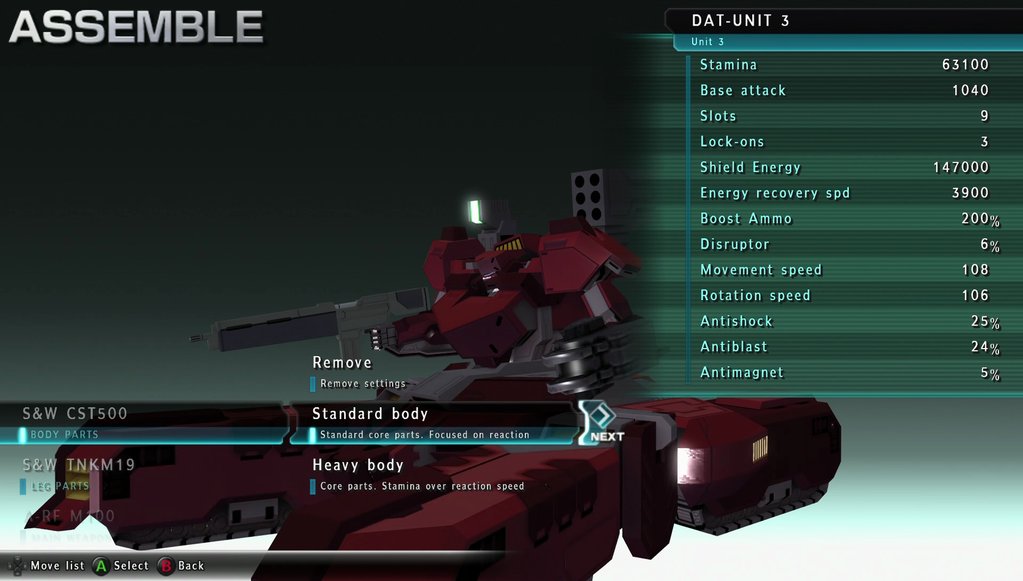
If it wasn’t already clear from the early 2000s’ graphics, just starting this game immediately signals it’s a port from a previous generation (in this case a handheld) – the menus are navigated with the D-pad. Though scrolling through menus becomes more tedious this way, the variety of menu and customization options is worth it if you’re determined to play the game. Before starting one of the 20 main levels (or additional two DLC packs), the game lets you select a difficulty, set friendly fire, and modify your supporter settings.
Assault Gunners HD Edition Review
In addition, the game allows you to personalize your units and manage your troops. Even seeing this pared-down version of an RPG-system is a welcome addition and a benefit to the game as a whole. However, this feature only became apparent to me after seeking it out and was not explained in-game, which would’ve been nice since the end of each stage listed various bonuses and supplies you collected from the level.
Though some may argue that video games have become too easy and straightforward, this lack of communication is frustrating (and it doesn’t help that all of the voice acting is in Japanese) and a flaw across many of the game’s aspects. There is clearly love, or at the very least effort, put into the story but the narrative never finds a compelling way to explain itself. Beyond slapping quick scrolling text (a la Star Wars) before every mission, there is little else directing the players’ motives. Who are these people? Why should we care? It seems the developer thought about those questions but buried them deep within the aforementioned menus to never be found unless the player is digging for them.
Assault Gunners HD Edition Review
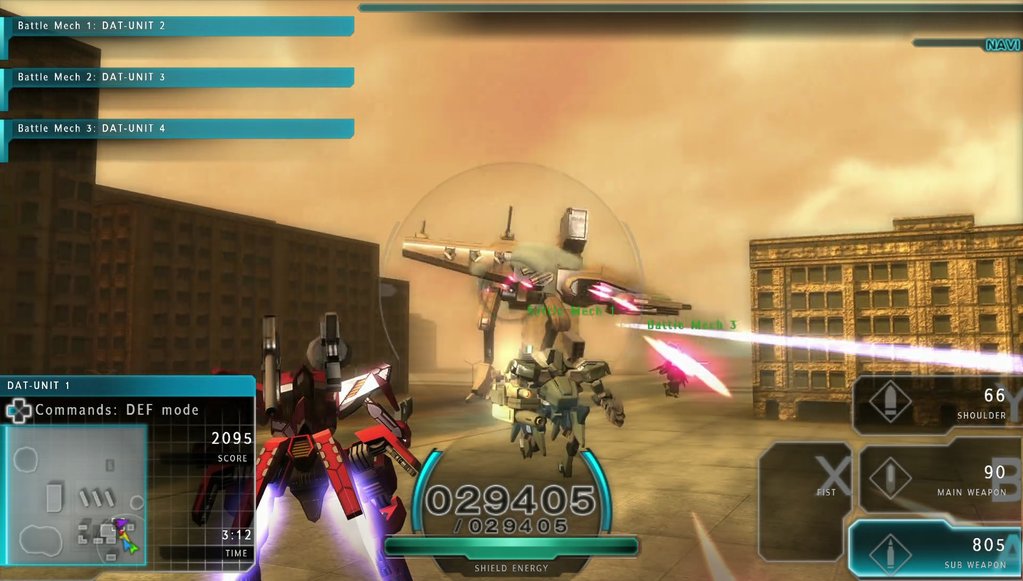
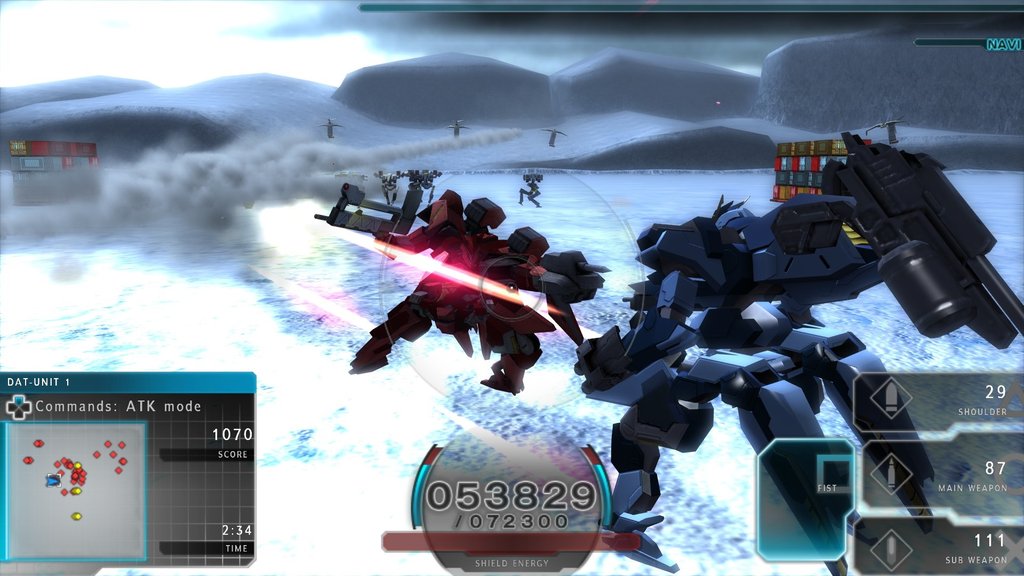
In addition, I often found it hard to determine whether my bullets or missiles were hitting their projected targets. If the attack struck (and the combatant was weak enough) the enemy would poof off the screen. For enemies that couldn’t be one-shotted, they merely absorbed the attack until, like the others, they just disappeared. I didn’t feel as if I was learning. I was just shooting until I cleared the stage. It wasn’t until the timer threatened to countdown and flunk me that I found any bit of fun, challenge, or variety of play. Those moments, however, were too scarce and most of the time I felt as if I was just mashing buttons and walking around the various arenas with no clear objective.
Assault Gunners HD Edition Review
Button mashing can be fun, but the game has to have more diverse environments to explore or ambience to set the mood. It didn’t help that as you marched your mech suits across the mostly flat stages, the music was bland and consistently played a similar tune. At times it was disjointed with the action; other times it faded into the background. It wasn’t fully a failure, but not even close to a success.
Exploring the depths of space is an adventure all on its own, so developers really need to dig deep when adding to the flare that is galactic gaming. The Station (not this one!) is a short but sweet tale that follows the relentless curiosities our species seems to have on the vast void of stars, undiscovered planets and distant galaxies.
With attentive puzzle solving and as about as gripping as any story can get in the span of an hour or so, the indie team behind the first-person space station explorer has created an impressively stout adventure that underlines the mysteries of space.
You’re sent to investigate a three-man team of scientists who have gone missing during a top-secret space mission involving interplanetary studies. Upon discovering another race of sentient beings, the team is determined to study the unknown planet caught in a civil war.
Rather than getting directly involved in the unknown alien species’ conflict, the team thought it vital to observe from a distance as the war rages on. That is until the crew turns up silent over the transmitters which is precisely where you come in, a space station recon specialist.
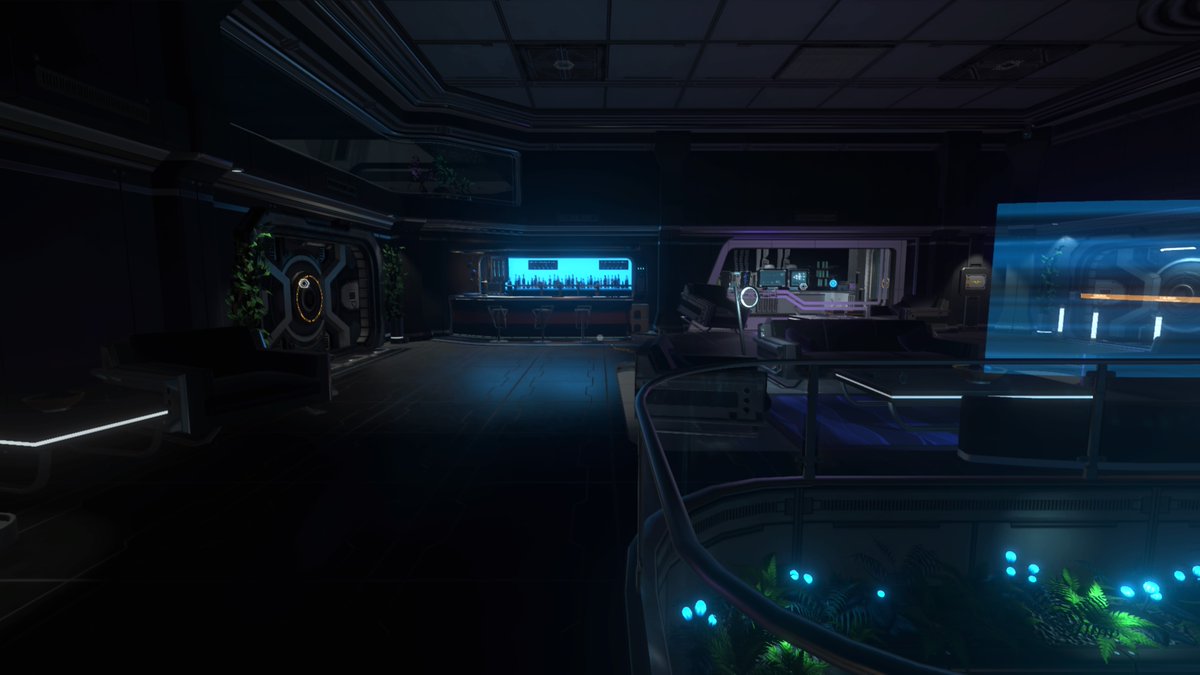
Welcome to The Station – a hidden space station created to study the nearby alien planet caught in the middle of a civil war.
Discover The Truth Behind The Warring Alien Planet
The Station takes players throughout a story that’s told through audio logs recently left behind from the crew, as well as a series of tasks and objectives that will ever so gradually push you towards the truth behind the foreign species.
In its short amount of completion time, however, players will find themselves amidst an intriguing plot line that is never as straightforward as it seems. While collecting pieces of dialogue content like emails and messages, informative audio logs and crucial pieces of equipment, you will continue to progress further into the station uncovering its many secrets.
The game is an honest balance of healthy discourse and thought-inducing puzzle-solving. Tasks lists frequently pop up to remind players of what they should be working on, but most everything else is left to the imagination of the player.
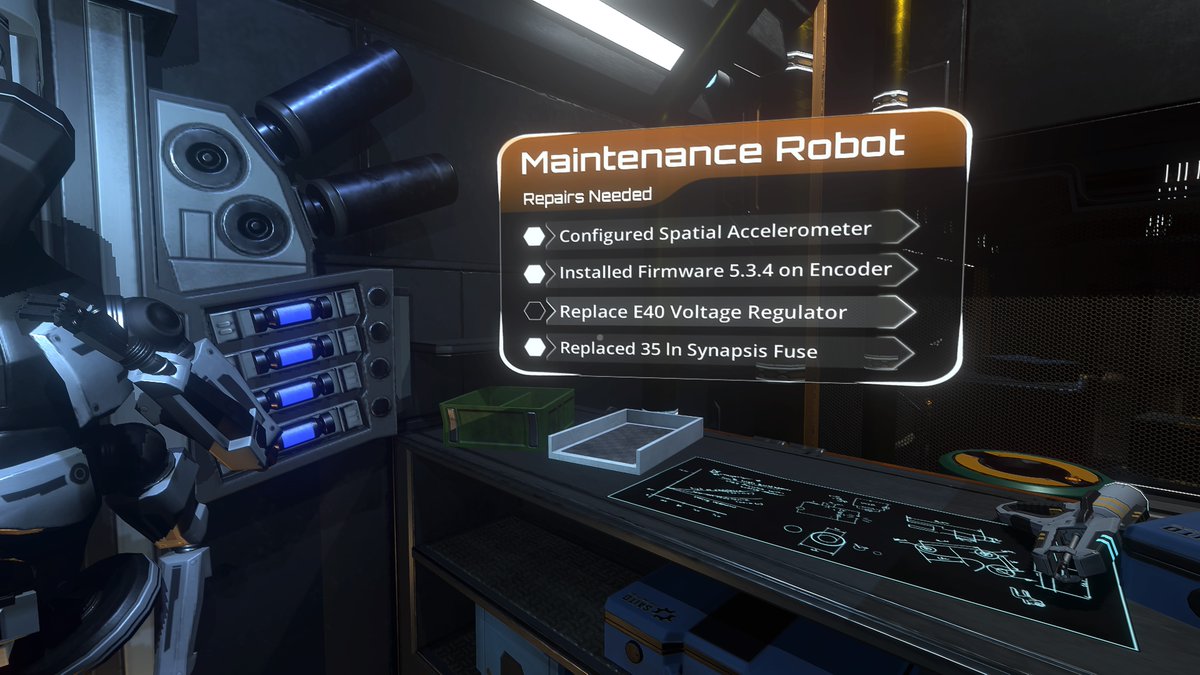
Repairing a maintenance robot by finding and replacing its components, or unlocking the team’s personal lockers by tracing their specific password, are just a few of the random tasks that will allow you to travel further into the station. The simple objective lists may seem easy enough at first, but nothing is ever as it seems when dealing with a failing space station.
Throughout your missions, you will find objective and task lists that help you explore further into the station.
Throughout your linear quest into the lonely space station, the overall mission never changes once. While the length of the game depends entirely on your ability to solve the tedious puzzles of fixing up everything around you or breaking into personal rooms/storage devices, players shouldn’t expect much out of the brisk space adventure.
The story leaves many interesting perspectives on the table with a truly exhilarating ending, but after one time through, nothing else changes and players can easily blast through in less time than an episode of Star Trek.
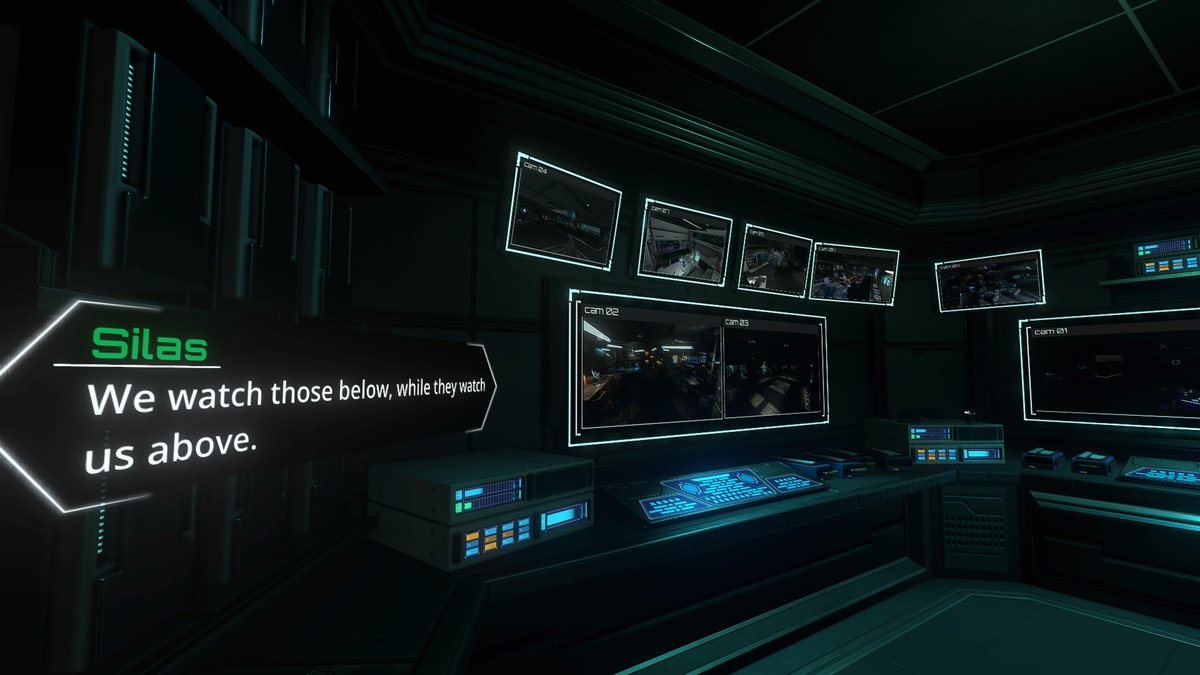
Uncover truths about the station through recent messages and audio logs left by the three-man team of scientists.
Worth The Trip?
All in all, The Station – as minimal as it is – serves its purpose as a mysterious and involved sci-fi puzzle adventure. The characters thrown into the plotline are interesting enough to keep players intrigued across their short journey, while the puzzles fit nicely into the setting of the lonely and seemingly abandoned space station.
With no outside threats or method of combat, players of all skill ranges can sit back and enjoy the curious and subtle thrills of solving the many mysteries of The Station.
There’s a famous saying that good artists copy and great artists steal. To a large extent, that saying is very true in the games industry with the trends that come and go and the mechanics that are shared across the board. But what happens when, rather than steal one great idea, you copy several good ideas?
Radiation Island Review [Nintendo Switch]
Well, Radiation Island is a result of the former where it picks the pocket of many other existing games and puts them all together. But it almost feels like it’s trying to complete a jigsaw puzzle with pieces that just don’t quite fit.
Originally launching on the mobile platform, Radiation Island graduates onto Switch and brings itself into the limelight, joining many new games on the eShop. This naturally means it has been adapted for button and stick controls rather than that of touch controls. The screen still serves a purpose, in some respects, but not to the same level of its mobile predecessor.
Radiation Island Review
What is Radiation Island though? Well, it’s hard to say because I don’t think it knows itself. You find yourself washed up on a mysterious island, that has been exposed to some form of radiation, and it’s up to you to discover how and why. After a brief tutorial, you’re set on your way to roam the island and do your thing. But, before you proceed, you choose what mode you wish to play in; which is where some of the confusion begins, I feel. You can just go explore, play the game the way it’s intended, or, play a hardcore mode which is more difficult.
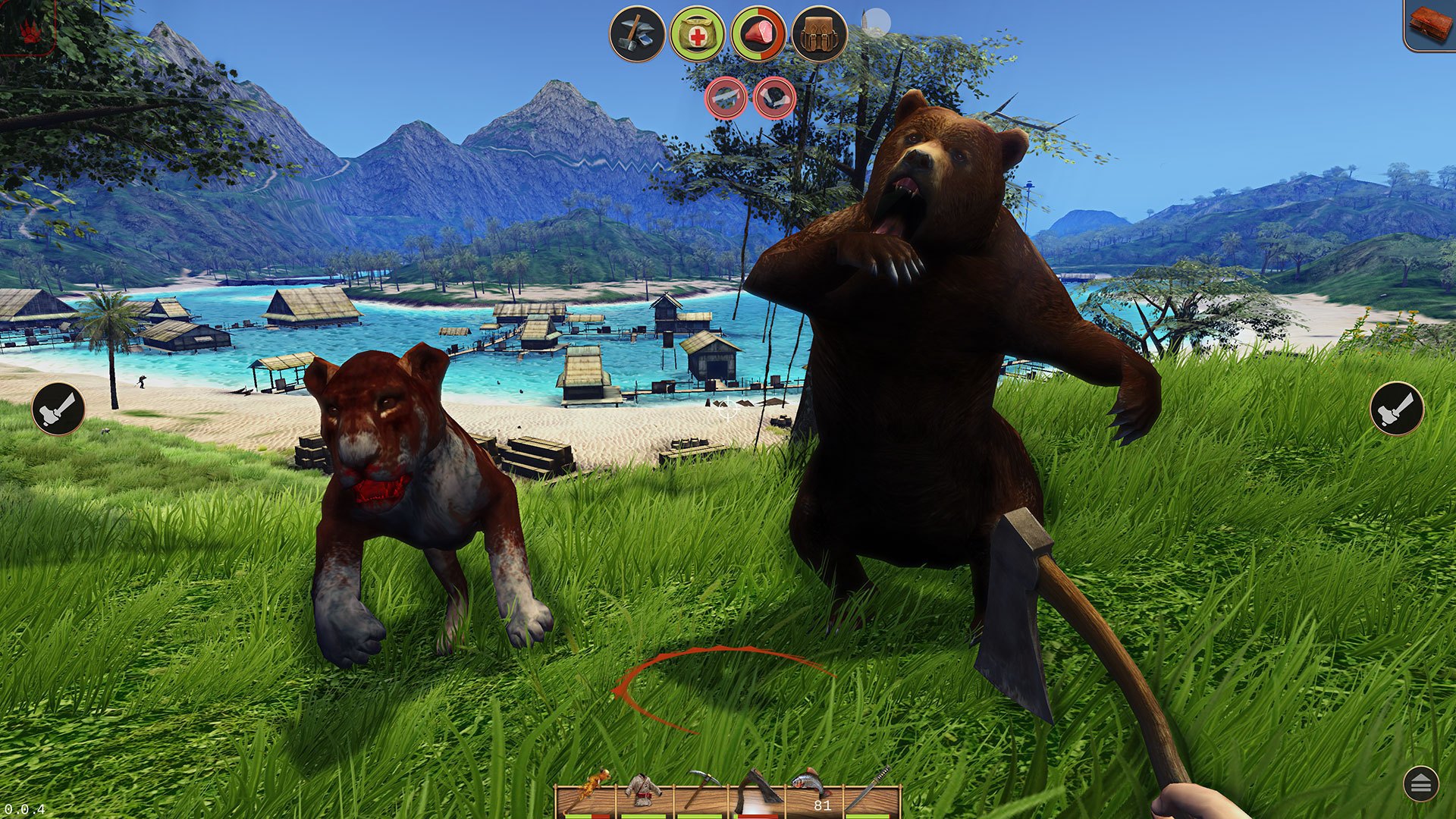
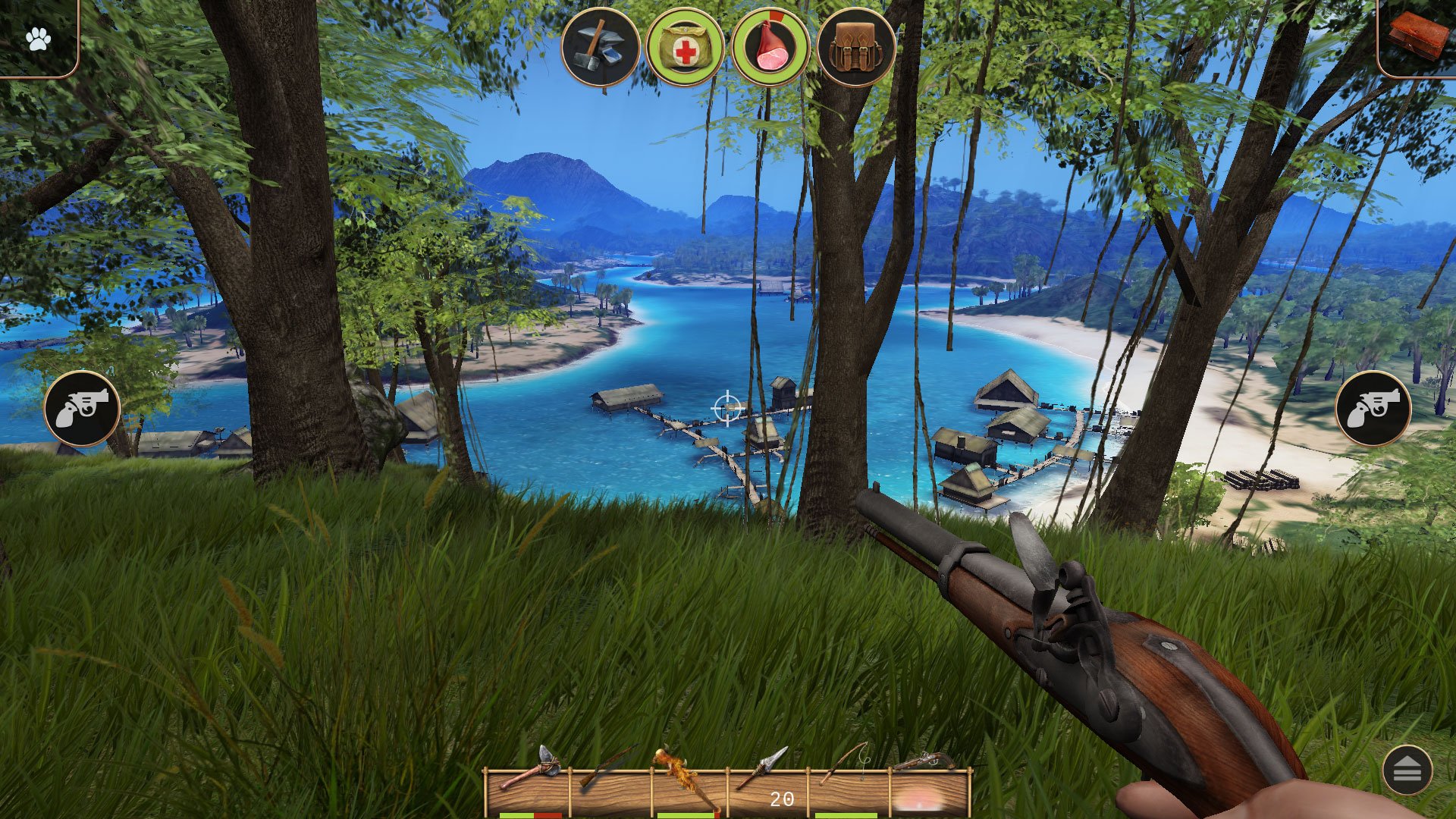
It combines elements of survival, crafting, exploration, hunting, shooting and melee combat. So it’s a bit like Fallout met Far Cry, saw Minecraft on the way and then DayZ tagged along for good measure. In theory that would make for a great result but it doesn’t quite make the grade. Of course, you can forgive some of its shortcomings due to its origins (graphics and general performance bugs) but you’d like to think that they’d be fixed for the launch on Switch.
Radiation Island Review
The all too distant military and conspiracy storyline shows early promise too but doesn’t keep you hooked to necessarily want to find out what went wrong. Radiation Island’s world is a good size and has its secrets to share, including dangerous and deadly zombies, but I’d be surprised if most had the fortitude to play for any great length of time. Which is a shame really as, given its sources of inspiration, Radiation Island could be really something quite good.
Do you sit at home wondering why no one has ever made a game that combines the ingenuity of a train simulator with the all-out fun of blasting away hordes of zombies? I knew you did, which is why I have great news. Do My Best Games has brought their 2016 opus The Final Station and its follow-up DLC The Only Traitor in a combined offering to the Nintendo Switch. I know I sound like I’m being sarcastic, but as random as that pairing may be, it all works exceptionally well to create a rather engrossing post-apocalyptic journey.
The Final Station Review [Nintendo Switch]
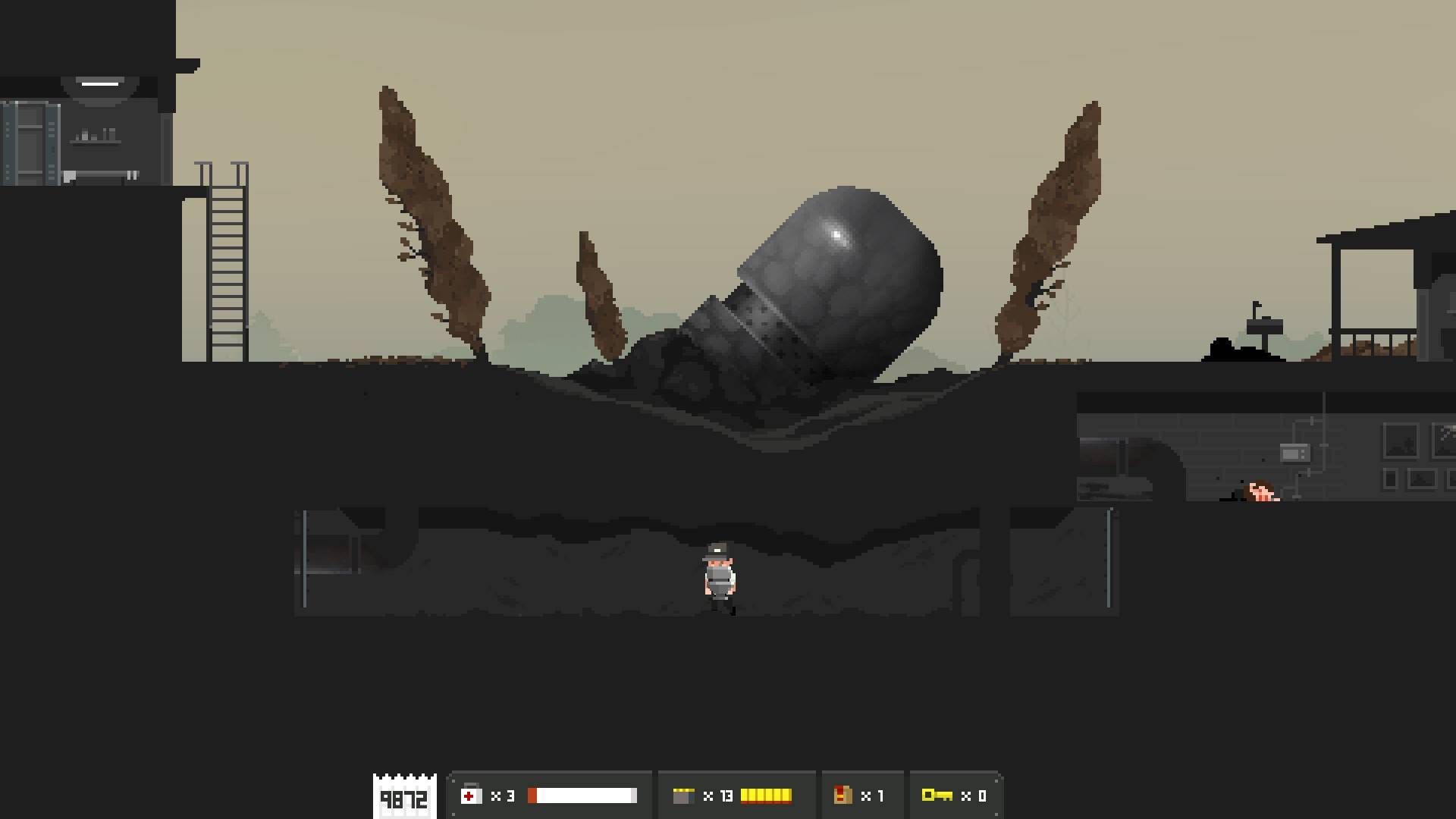
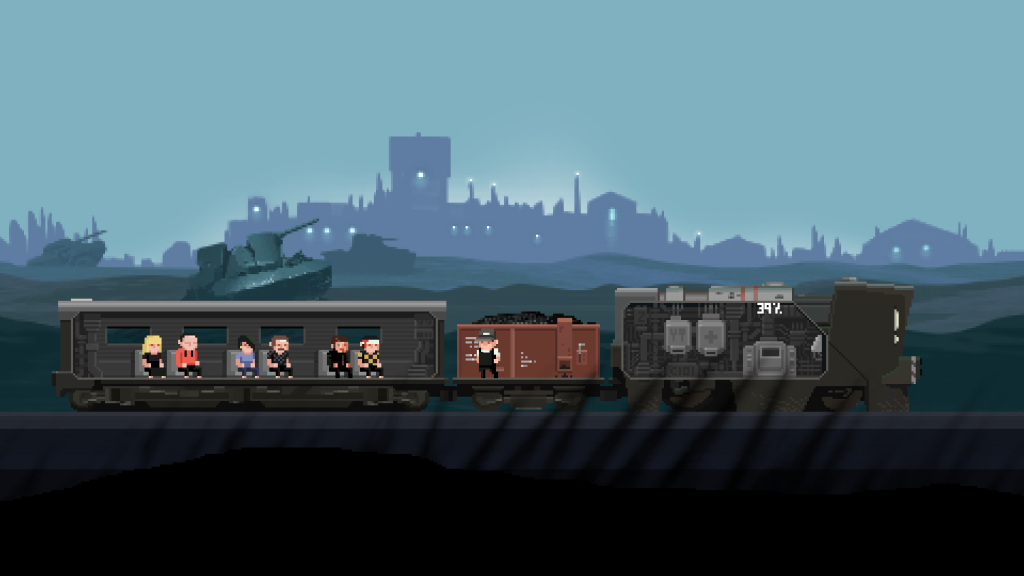
It’s been quite a while since the Visitation brought death and destruction to all. Mysterious canisters of no known worldly origin crashed landed on Earth, releasing a viral toxin that turns people into mindless zombies. In The Last Station, you take control of the train operator who travels across a dying world in search of supplies, passengers, and perhaps the salvation of all mankind. As you go from station to station, you must piece together what happened and wonder if another Visitation would or could happen again.
The Final Station Review
The story of The Last Station is told through a narrative environment. Notes, text messages, letters, and books from those no longer alive attempt to fill you in on what exactly happened over a hundred years earlier. This combined with conversations with the living, help to paint a picture of everything that has, is, and will occur. It’s a great way to unveil how the world came to be, but I did at times find it slightly confusing and hard to piece together.
After beating the game in under four hours, I was still a little hazy on what exactly happened, what the Visitation was, and who or what was behind it. You’re led to believe it was an alien attack from countless light-years away using advanced tech to send the poison gas to Earth. By the time the game ended, I wasn’t quite sure if this was the case. Whether it was manmade or extraterrestrial, that’s for you to decide.
As stated above, there are two distinct aspects to this game. On the one hand, you must operate the train as it goes from abandoned station to abandoned station. While travelling, the train operator (you) must make sure the equipment doesn’t break down and the passengers (whom you rescue), don’t die in transport. Various components of the train start to break down in route, and you must act fast to counteract the faulty parts. It’s not difficult, but if you’re tending to sick or dying passengers, you might not realize the train is about to go offline. Ignore the train issues long enough and the whole thing just stops in its tracks. The longer you take to get moving, the higher the odds someone will die.
Speaking of dying passengers, you need to pay attention to their health and hunger meters. Once either meter reaches the bottom, times up and they die. Each passenger you successfully bring back to a shelter will yield money and other necessary items. Furthermore, the more passengers you bring home safely, the more achievements you unlock. This is simply for those who love achievements, but it has no bearing on the actual content of the game.
The Final Station Review
There is a crafting element to the game as well, which you will need to utilize in order to make more medicine and ammunition. You often find food and medkits at the stations, but if you’ve run out while travelling to a new destination, you can craft more while in transit. The medkits can be used on your own wounds or for your sick passengers. When it comes to food, only those seeking refuge on the train will require it, but it’s found sparingly so use food kits wisely.
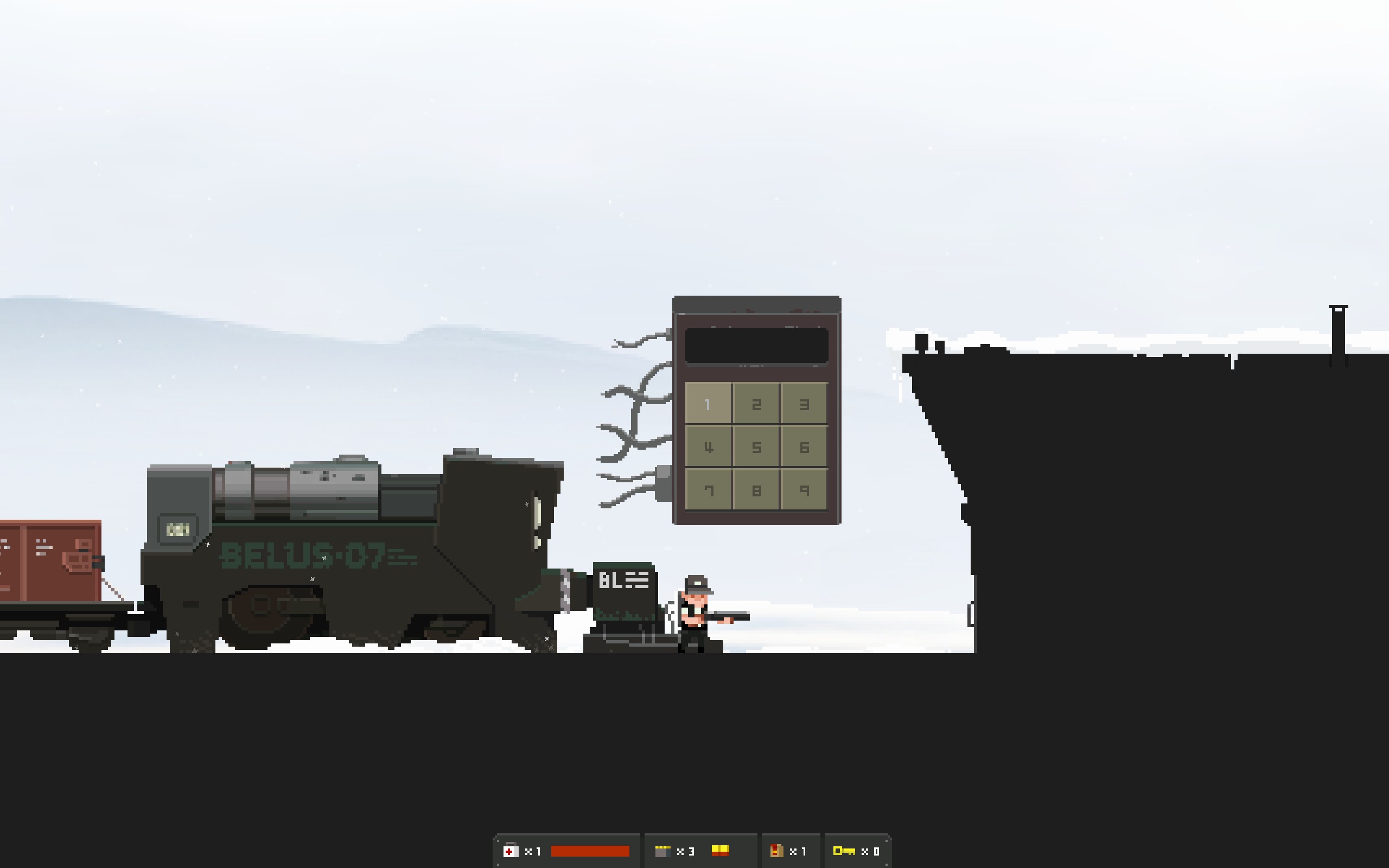
Once the train reaches a station, it’s your job to go exploring in order to find more equipment, passengers, and most importantly, the code needed to reach the next station. That last part sounds confusing, but I assure you it’s not very difficult. Armed with a handgun and your fists at first, eventually, you find a shotgun and a rifle to aid in your protection.
The Final Station Review
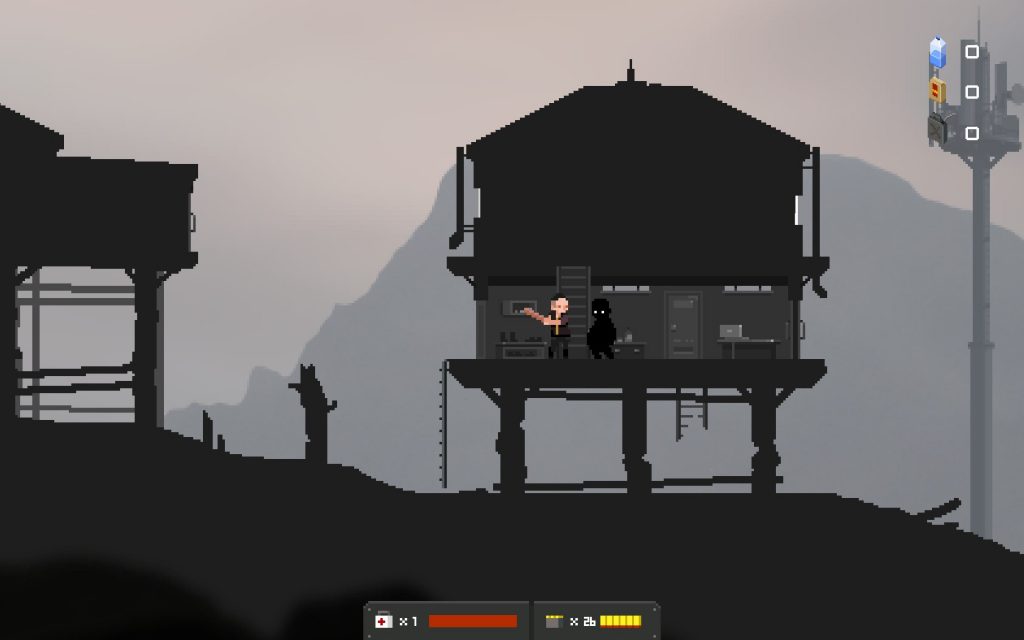
The station designs are rather creepy and add to the dark ambience of a zombie outbreak. You never know what’s behind a door or lurking inside a bathroom stall. Yes, the game is obviously using retro designs, but it effortlessly creates anxiety and apprehension. The graphics aren’t going to sell everyone, but the game isn’t supposed to be Resident Evil. It’s simplistic, but exceptionally well done. By taking away all the modern advances, Do My Best Games is allowed to focus on the story, and that’s what really matters.
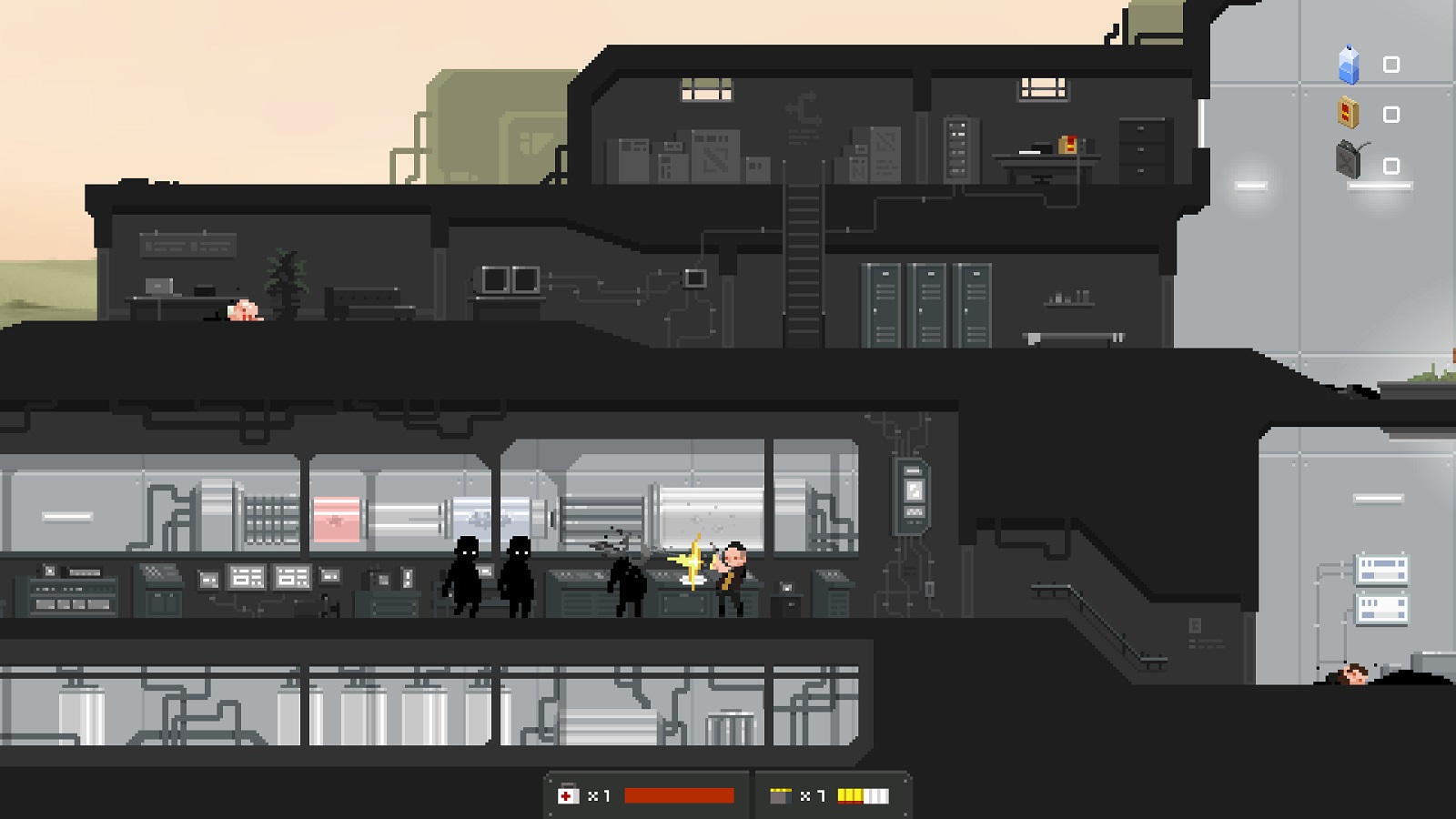
The main quest contains four types of zombies. Fast animal-like, slow and traditional, armoured, and explosive. The first two can easily be beaten, but don’t underestimate them. The armoured ones take an extra step, but once you knock off their helmet, a single shot to the head does the trick. The explosive zombies are the ones you really need to watch out for. A single bullet will ignite them, but you better run, or they’ll take you and everything out around them. Using the pyro zombies to your advantage in clearing a room works quite well.
The Final Station Review
In terms of difficulty, I would say it’s on the lower scale of things. Throughout the experience, I typically punched enemies to death eighty-five percent of the time versus using a weapon. Between low amounts of ammo and the fact that they’re taken down without much effort, it just seemed easier that way. I would have liked a little more of a challenge, but I am by no means saying the game was a breeze.
Finding passengers is optional throughout the game. You can easily search for supplies, get the next code and move on, but then you won’t earn any money to buy more supplies down the road (and you won’t get those achievements I spoke about earlier). Plus, it’s fun to explore the stations in their entirety, and you won’t get all the pieces to the apocalyptic puzzle if you don’t.
The Final Station Review
The music in the game adds to the dystopian feel. It’s a planet long in the throes of death, and that’s the exact feeling I got through the music. I don’t feel enough people take the time to really listen to the subtlety of the notes in the background, but for me, it puts me in this world and holds on as I navigate my way. Slap on some good headphones and you’ll have an amazing auditory experience.
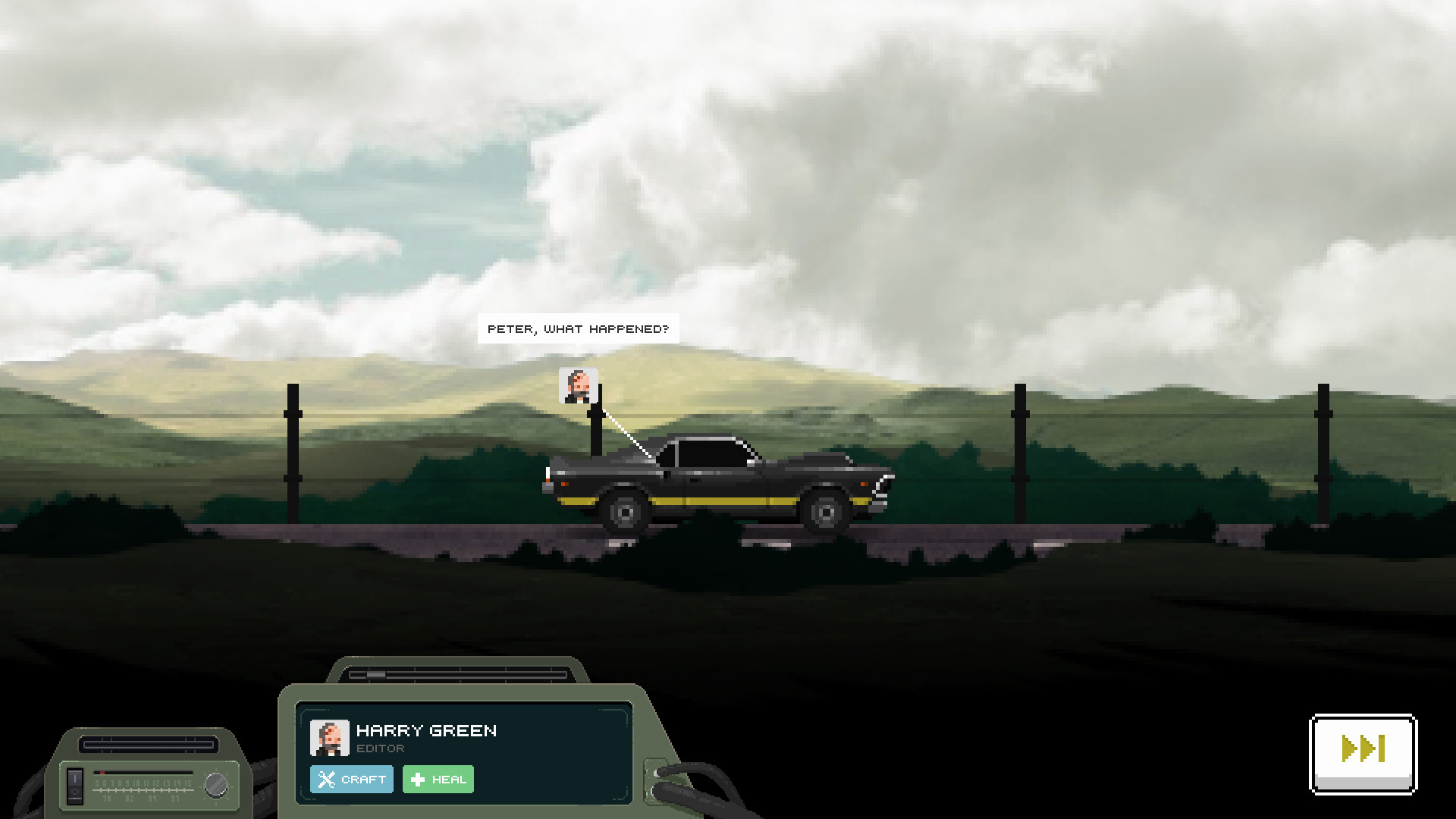
Switch owners are lucky enough to have both the main game and the DLC content The Only Traitor. In this, you play a man driving across the wasteland, looking for the last remaining shelter, picking up passengers along the way. You’ll revisit some of the places from before, and learn more about what happened to this world. There are new types of zombies (the acid spitting one was a treat), which I was very happy to see. Seeing as how you drive a sweet muscle car, there is only room for one passenger. As you discover new people, you must decide if you want to take or leave them based on the stats provided. It’s great the devs included this content for free, as it extends what would have been a rather short experience.
The Final Station Review
Storytelling is an art that has spanned ions, and when one comes across a compelling narrative, it’s a breath of fresh air. The Final Station isn’t graphically superior to anything, it’s rather short, and its simplicity is apparent from the get-go, but what it lacks in sophistication, it heavily makes up for with story. To be honest, I’m still not a hundred percent sure what exactly did and will happen, but my curiosity is overwhelming.
It’s hard not to get excited by a slick announcement like that. Yes, a Super Smash Bros. game is making its way to the Switch, surprisingly this year, and we think it’s a new title too. Masahiro Sakurai is even onboard – presumably chained to the desk at this point and gasping for air:
With that said, it’s worth remembering that Nintendo announced a lot of other interesting games (quite a bit smaller) would be making their way to the Switch (and even the 3DS as well).
So reader, here are some of the other games that won’t get a spotlight compared to something as big as Super Smash Bros:
Dillon’s Dead-Heat Breakers – May 24th
Dillon is back again… Who? Yep. That’s why we’re covering it. The armadillo Dillon was the star of a few indie gems on 3DS, so it’s great to see a new instalment. It’s action meets tower defence with added racing.
Luigi’s Mansion Remake – 2018
We didn’t see this coming. If there was ever going to be a chance to play the classic game starring the forgotten brother, we thought it would be on a theoretical Switch Virtual Console.
Nintendo has decided otherwise and is remaking the game for 3DS. There’s a boss rush mode, and you can use the second screen as a map for the mansion. “Mario?!!”
Okami HD – Summer
Okami HD was released late last year (December) with the Switch initially missing out. We now have confirmation it’s on the way along with touchscreen controls in handheld mode, and Joy-Con motion support in console mode.
Sushi Striker: The Way of Sushido – June 8th
Anime and lots of sushi battles? That’s The Way of Sushido. An original, quirky title where you shockingly eat sushi and match the colours to win – one that could be a surprise hit.
There are even super-powerful eating moves. Why not? It’s out this year for both 3DS and Switch.
Undertale – TBA
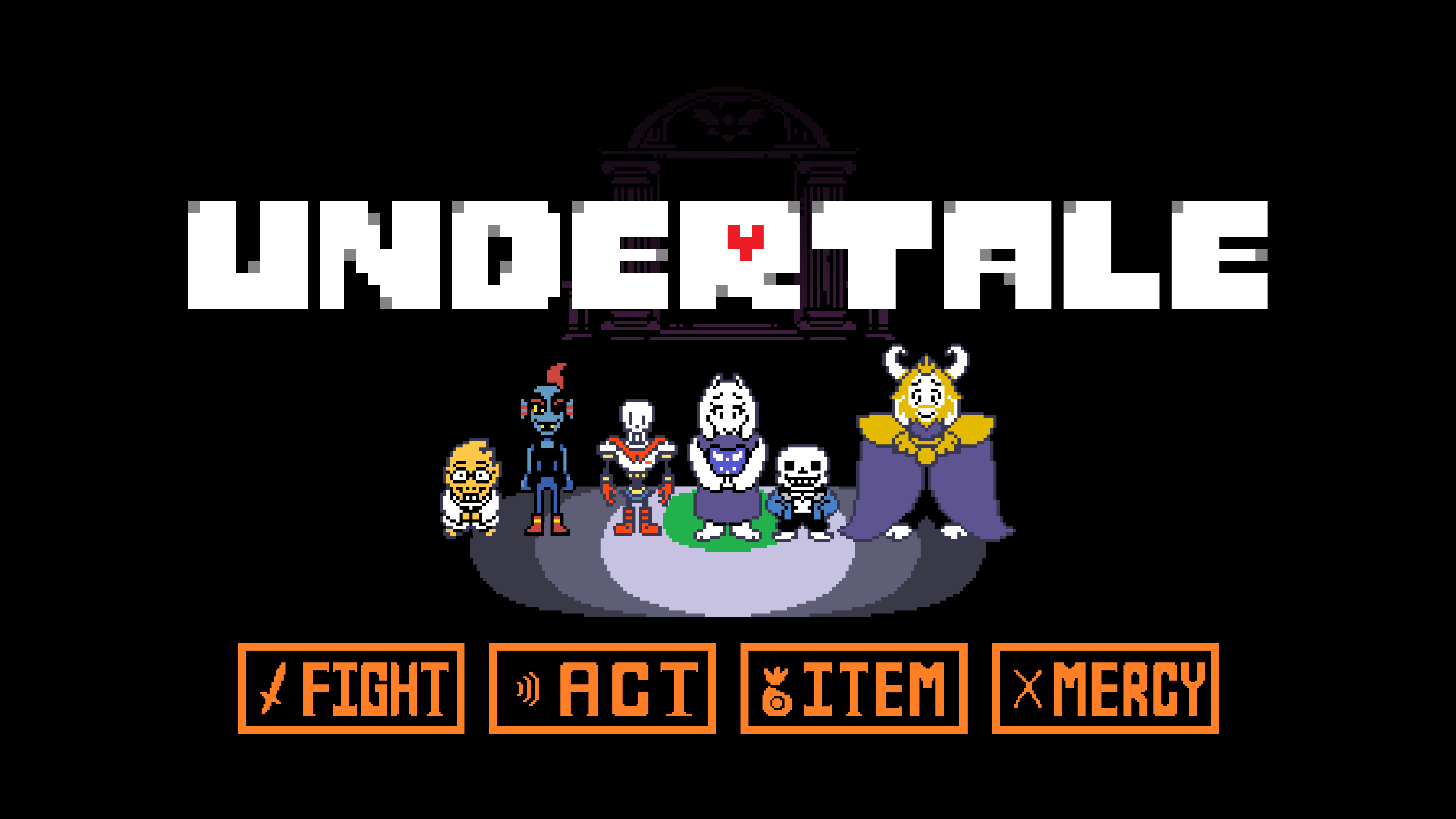
Critically acclaimed indie title Undertale is coming to Switch at some point this year. It’s one of the bigger indie titles out there, but we’re betting there’s a huge amount of people that still haven’t played it. Here’s another chance to do just that.
WarioWare Gold – August 3rd
The next entry in the WarioWare series, it promises to be the biggest collection yet. It’s significant because the series hasn’t had a new game in over 5 years. Not to mention that it’s exclusive to the 3DS, a console which, you would think, is on the way out.
Little Nightmares Complete Edition – May 18th
A Complete Edition of Little Nightmares is heading to the Switch. Essentially? All of the DLC content will be included. Using the Pac-Man amiibo with the game will also unlock the ‘Pakku’ Mask. Tanya from our site quite liked Little Nightmares…
Notable Mentions:
South Park: The Fractured But Whole is coming to Switch April 24th
Dark Souls is getting an amiibo: Solaire of Astora
Travis Strikes Again: No More Heroes is multiple games in one. There’s a new story mode and local co-op play
Mario & Luigi: Bowser’s Inside Story + Bowser Jr.’s Journey was announced, a remake of the DS classic – but where’s Partners in Time?
The bizarre Detective Pikachu is out on 3DS March 23rd – no Ryan Reynolds
RPG throwback Octopath Traveler is out on Switch July 13th + there’s a special edition
Overall it was a strong showing from Nintendo on some of the more niche titles out there. The continued support of the 3DS is rather curious though. It might mean they have no plans to replace the handheld and are giving it one last hurrah. Or, they are quietly working on a new handheld altogether, but are keeping the 3DS going until then.
Considering the Switch is a handheld as well, it may well be better to go with the former…
Even the best of us have something hidden within ourselves or our past we prefer to keep buried. The monsters of self-pity, jealousy, bitterness, and anger are always battling with our better self. For some, these inner demons can be just as dark as any denizens of Hell. Later On focuses on what it might be like if the murky recesses of the mind found their way out into a reality of their own.
Later On Review [PC]
You play as David, an individual who clearly has a less than lacklustre view of the world and the people in it. David often refers to people as “trash” as he makes his way around the neighbourhood. It is clear from the get-go that something is a little off about the town of Later On, and David seems a little too calm about it. For example, your daily routine involves disappearing into the back of a . . . research facility? Lab? Whatever it is, it has something to do with David’s “job”, and whatever that might involve doesn’t sound good based on the noises coming from the back area. Of course, David shows no sign that any of this is bizarre or out of place.
After “work” David runs into a friend, Nico, an ally complaining he needs David’s help because he just developed a tail. David isn’t quite certain how to assist, so he decides to do nothing and walk away. This decision to abandon his friend in a time of need sets off the game’s events as David attempts to make things right with Nico. But, this is only the beginning of David’s deep dive into his own motives. What kind of person is he? And if the world around is any clue, David has some skeletons in his closet that are going to be something much worse than that time you got drunk at Christmas no one prefers to talk about.
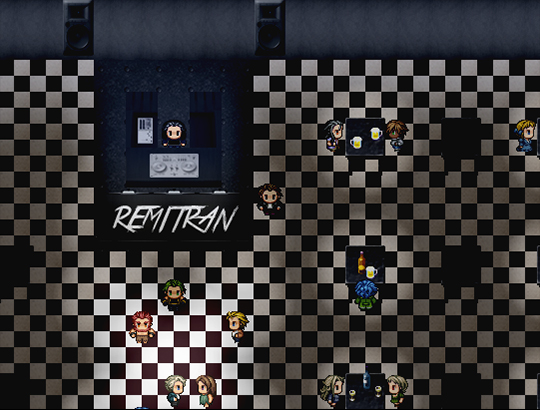
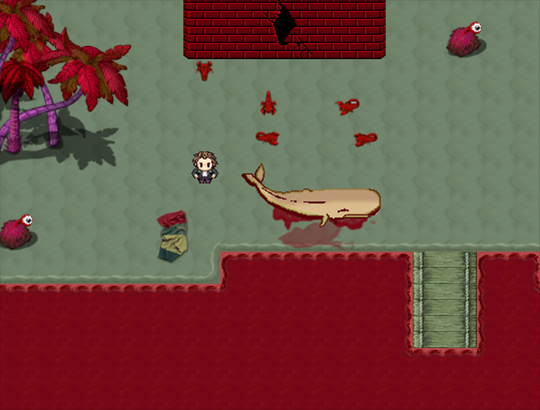
Later On does well in sustaining a sense of unsettling anticipation. In part, this is accomplished by well-placed and well-orchestrated sound effects and music. Another way is through an unpredictable narrative. Whether you are tasked with finding a mermaid or encouraging a sentient towel to allow you to pull it off the wrack, you never know what might come around the corner. When the game takes its darker turns, this unpredictability feels even more disquieting because it appears to be a normal aspect of David’s life. Environments take on a bloody hue at times and monsters present themselves as if they are a natural part of the everyday. Dreamlike conversations with fellow residents who seem totally at home in nightmarish situations only add to the unease.
Puzzles are usually simple and equally as surreal, requiring you to think about objects around you in a way that is contrary to their natural use. For example, you might have to utilize a painting as if it were a certain appliance, or figure out how to awaken a sleeping manhole cover so you can move it. In these instances, some trial and error along with just a little ingenuity are enough to find the solution. But, there are also instances where the game sends you on a hunt for an object without any clue where to locate it. In one case, I needed to find something to cut down some bushes that were blocking my progress. I wandered around town until I found it in a location that felt random rather than a natural place to seek them out. These situations made the puzzles feel a bit inconsistent.
There are only a couple of what might be called “boss battles” in Later On, and though these were clearly meant to serve as emotional epiphanies for David, I found them the least enjoyable interactions in the game. You are confronted by a monster that represents an aspect of David’s past or character that he wishes not to face. You are challenged with accusations to which David must respond accordingly by choosing from a set of replies.
For example, you will run into a monster of self-pity who can only be defeated if David responds in ways contrary to that emotion. However, there were times when the exact meaning of a sentence is not quite clear, so I had to guess which one would cause a blow to my enemy. If you guess wrong, you still have to complete the interaction only to fail and go through the whole thing once more. It also felt lacklustre as a tool for making me empathize with David. From the world around him and some of the later story elements, I began to understand just how disturbed David was, but I never felt close to David. This made having to try to answer questions as him a rote effort, particularly at the very beginning.
The characters around David feel charming and full of life. In fact, it is everything around David that gives the world both its vibrancy and horror. David himself is simply a vessel often removed and unaffected, which is fine and fitting, except when we are asked to get into his head and pretend to be him. It is for this reason that Later On doesn’t quite hit its mark as an emotional narrative that wants the player to connect with David in a rather visceral fashion. The horror is conveyed just the same, and perhaps natural empathy can help bridge the disconnect between David’s story and the player, but I left without ever feeling a strong sense of attachment when it seems clear the game intended that I should.
David’s story isn’t quite original. A number of indie horror titles have dealt with taking on the role of a protagonist whose mind has seriously affected their perceptions of the world around them. Home does this quite well and far more subtly.
“All that we see or seem, is but a dream within a dream.”
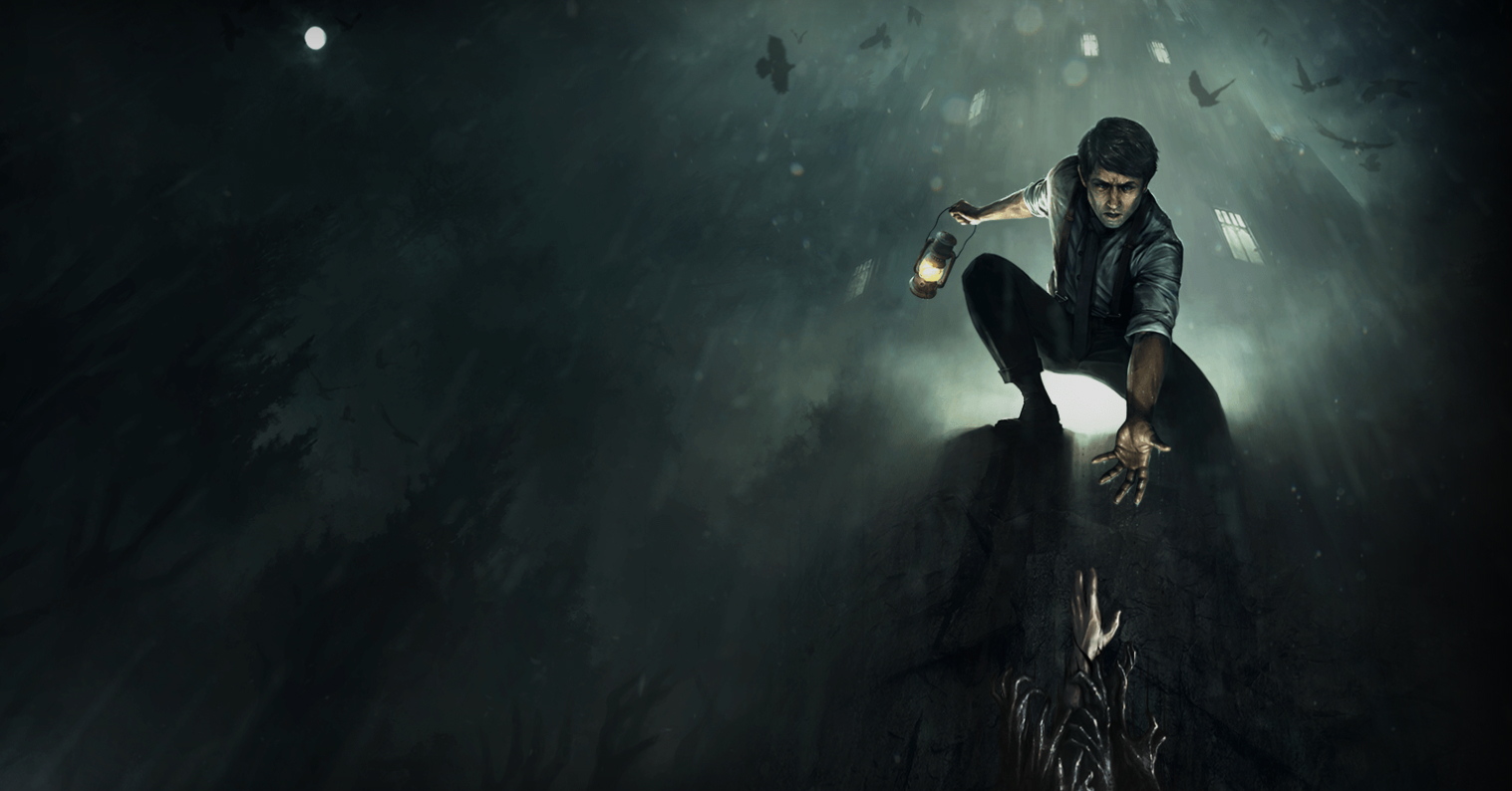
Are you a fan of Edgar Allan Poe and H.P Lovecraft? Then listen closely. THQ Nordic have resurrected the old classic Black Mirror for a new and improved version. Admittedly, I have not played the original, so this remake was my first experience with Black Mirror. Let me just clarify this right away for those who might visit the thought; this game is unrelated to the Netflix series!
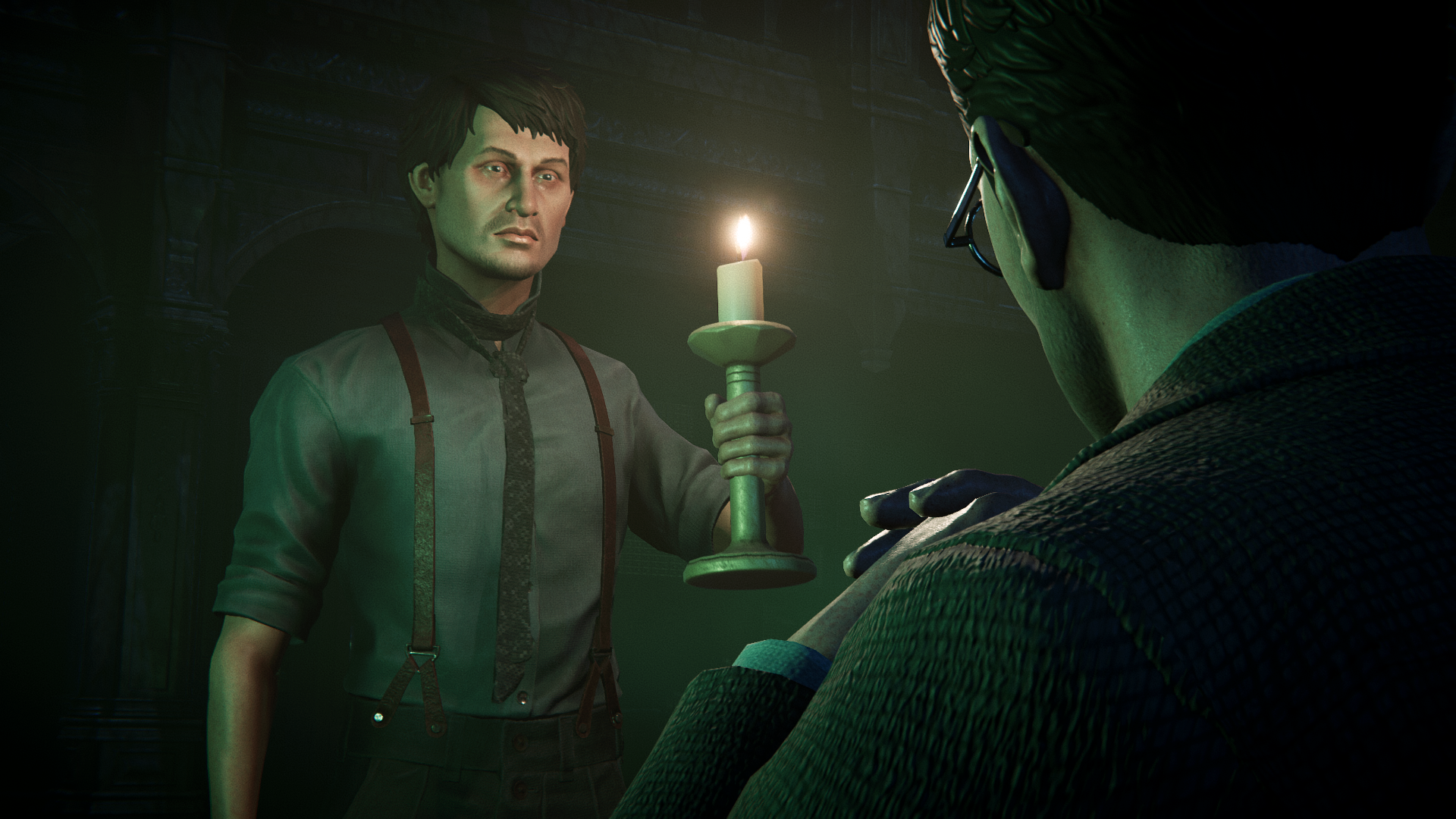
The story takes place in Scotland, year 1926. Following the death of his father, our protagonist David Gordon visits the home of his ancestors for the first time. But upon taking our first steps onto the property, we quickly discover that the Black Mirror mansion is filled with dark secrets that play with the sanity of those who wish to learn the truth.
David believes that his father killed himself. However, that theory is quickly debunked when you discover that it’s never that simple. The family has a history of deaths at a young age, and as you get deeper into the Gordon family history, one unwillingly ventures into the more supernatural elements that dwell inside the walls of the gigantic mansion. The more we learn about the history of the Black Mirror house, the more we delve deeper into David’s sanity.
“I became insane, with long intervals of horrible sanity.” – Edgar Allan Poe.
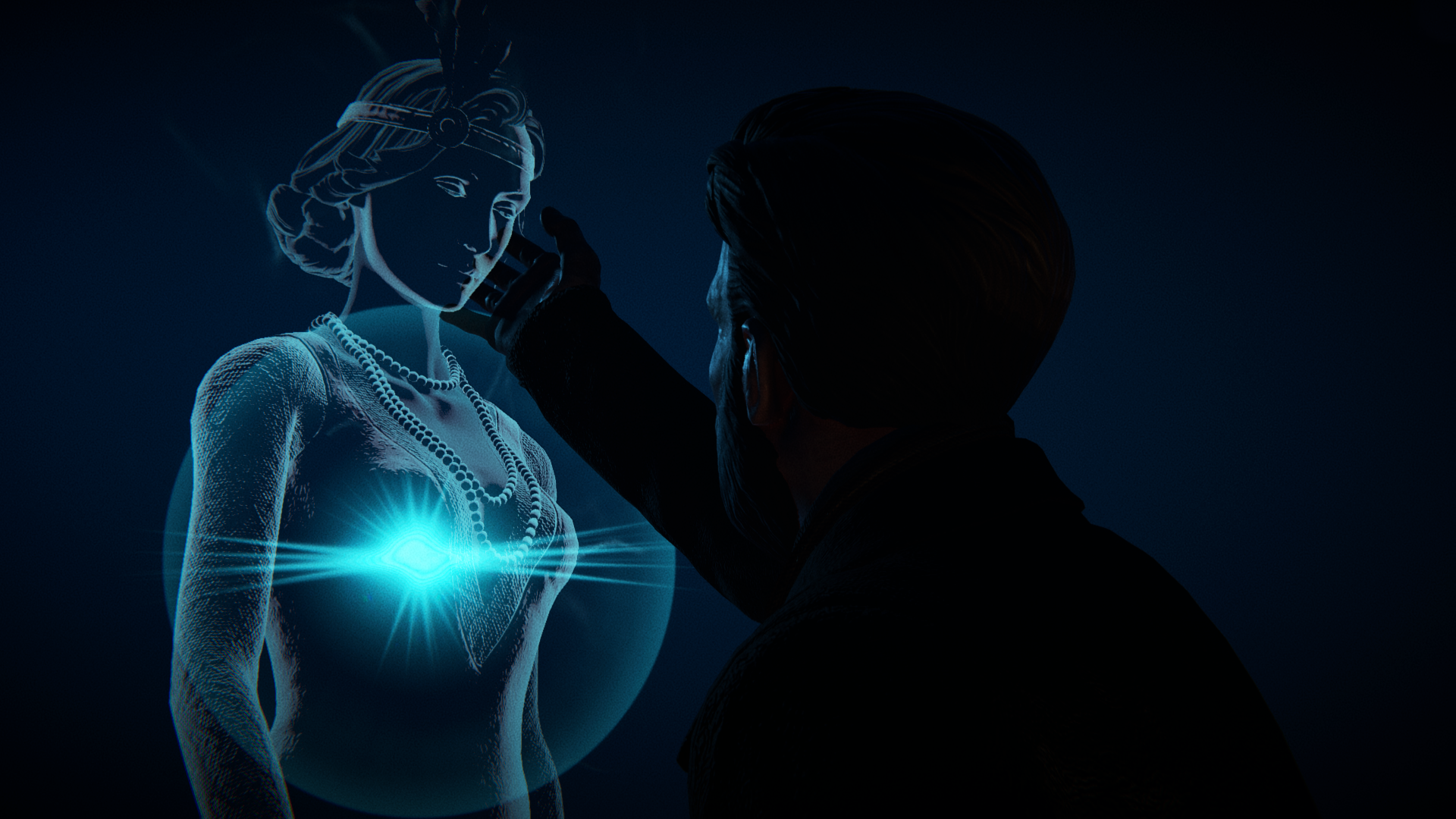
Storywise, you are immediately thrown into a mystery that feels like one Agatha Christie would enjoy. Having clear inspirational sources from the legendary gothic horror writers Edgar Allan Poe and H.P. Lovecraft, the universe include elements of the gothic, romanticism, and the uncanny. As Gordon explores the many rooms of the Black Mirror house, he often quotes the previously mentioned authors. As a big fan of this genre, this alone made the game seem worth playing. What helps fulfill the gothic horror fantasy, even more, is the fact that there are not only living human beings you can interact with and receive help from; you also have to interact and talk to spectral apparitions of the people who died there a long time ago.
On our arrival to the Black Mirror house, one doesn’t have to have watched several horror movies to understand that the tingling coming from your spine means that there is definitely something weird going on. The staff immediately put up a cold front, obviously not telling you everything about the history of the house. The residents of Black Mirror mansion are quick to establish that their relationship with Gordon (our protagonist) is one to be had at arm’s length. Why? Some of the first advice I get is to not leave my room in the late hours, because “ticking clocks are not the worst things I may encounter in the house at night.” You feel that it’s them against you. That you’re the invader. I feel like I entered a very hostile environment.
“They who dream by day are cognizant of many things which escape those who dream only by night.” – Edgar Allan Poe.
The artstyle and the graphics clearly show that the game originates from an older generation. The camera is locked in a traditional style, forcing our protagonist to move in a given way; which is fairly understandable, considering it’s a point-and-click adventure game. Gordon is a little bit hard to navigate, most likely because of the locked camera. I encountered some glitches here and there, that frankly, should not exist in a remastered game. While the cutscenes are beautiful, I can’t help but still feel annoyed at the bugs I encountered, requiring me to restart the game several times. I was also forced to Google some of the puzzles because I thought I couldn’t solve them on my own – but it turns out that the puzzles were bugged!
With that said, the puzzles are initially fairly complicated and well thought out. You have to search the environment closely and find clues to solve the mystery. The game is pretty fast-paced, depending on how quickly you can solve the puzzles (and if you manage to stay clear of the mentioned bugs). Considering the puzzle and narrative heavy game that Black Mirror is, what was unpredictable was the fact that, if you failed some of the puzzles, the results could prove fatal.