Time to break out of jail again! The release of the popular rule-breaking game, The Escapists 2, is right around the corner, so here’s our sneak peek of what to expect.
Two years ago, Team 17 released a prison simulator game that would become popular amongst anybody who loves strategy games. The deal is to – as the title of the game would indicate – escape prison. As an inmate, you are challenged with different prisons with various difficulties and you have to be creative as you desperately make your way to freedom.
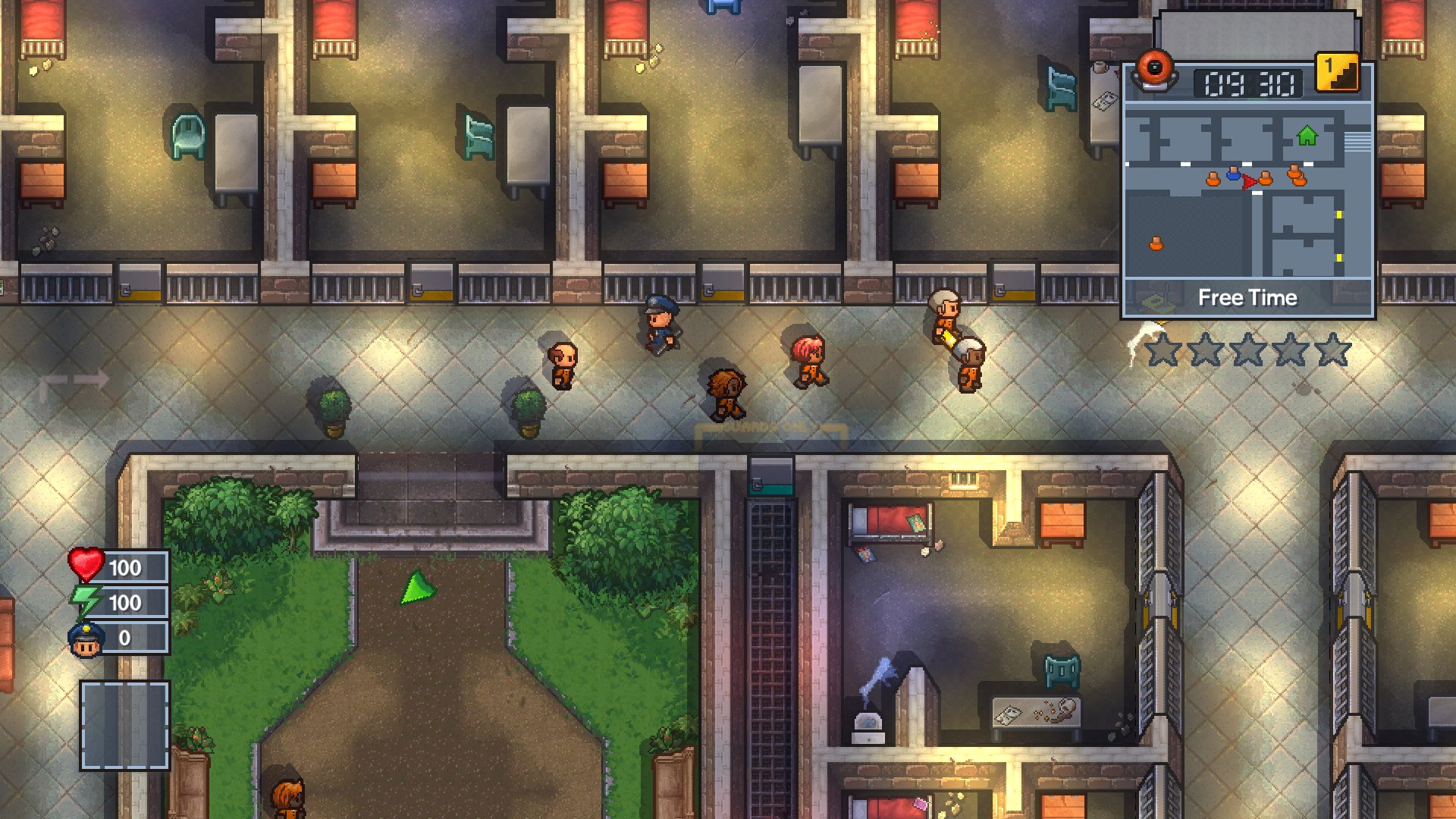
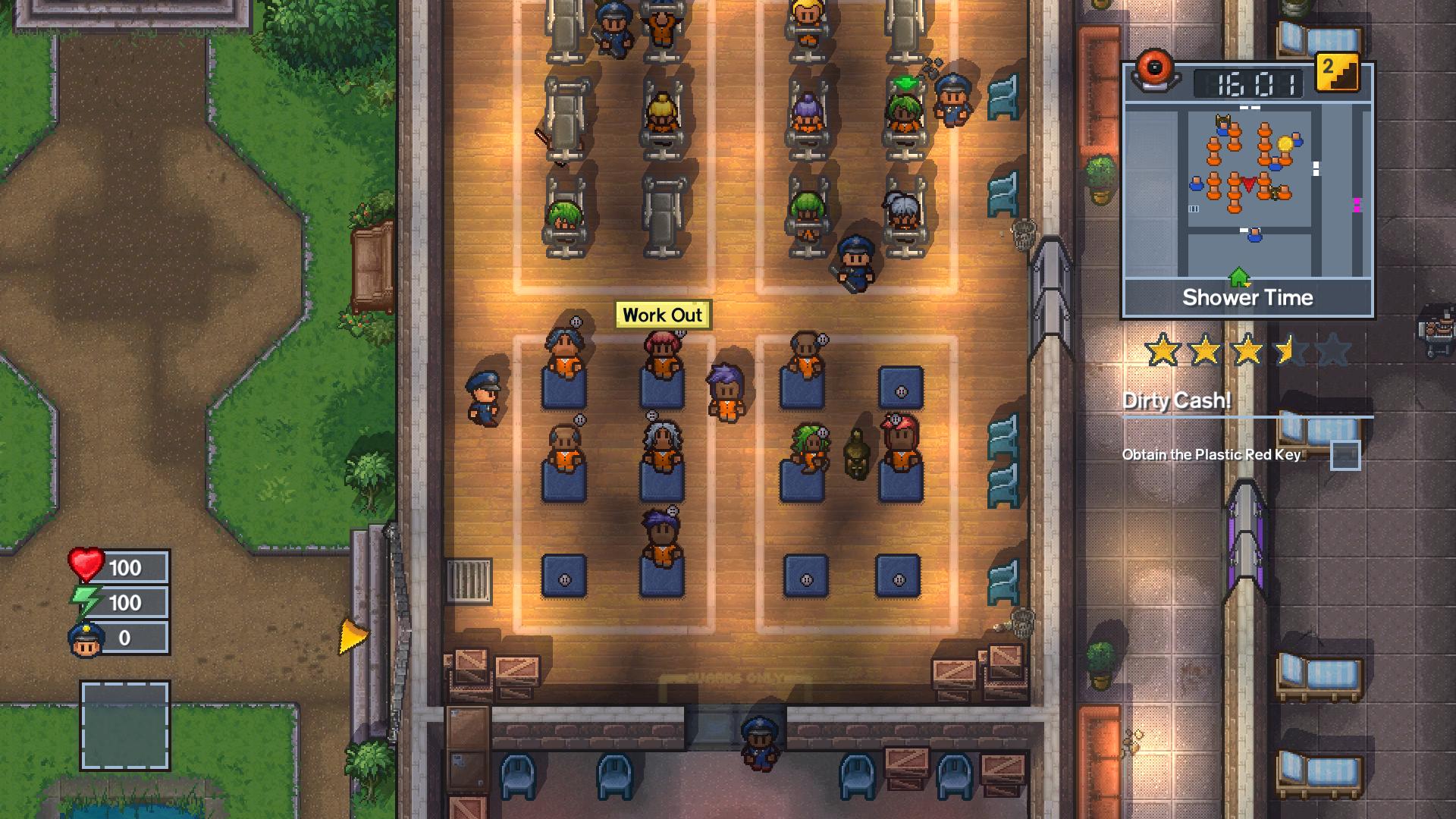
The first thing you notice about the game is the change in its art style; I am thoroughly surprised by the visuals. The new style looks amazing and is a definite improvement from the first. The graphics make the characters’ movement seem really smooth, with nice attention to detail in there – from the way the characters walk, to the way the hair bounces on their head. The style makes the game feel a bit more immersive, and it’s very enjoyable. I also want to make note of the soundtrack, which is very satisfying to my ears!
In the preview version of the game, the tutorial is called “Precinct 17”, where we play a short story about an escaped convict telling a man about his great escape. We learn the gameplay as we go along with the story and are given access to two of the game’s prisons: Centre Perks 2.0, a prison which is constructed in a very simple manner, leaving several loopholes for the prisoners. And Rattlesnake Springs which is a high-security prison that is built upon an unstable mine. So, uh, yeah. Good luck with that.
You are able to craft the items you need in a new and improved crafting system, escaping the multi-level prisons in more inventive ways. The game also offers multiplayer modes in split-screen, online co-op and versus. (That’s pretty neat!) They should make for some hilarious moments in the game…
What else is different? Well, you can now choose between a male or female inmate and changes to the combat system allow you to knock down fellow inmates and rob them of their stuff for your own convenience – however, beware! Unconscious inmates quickly get carried away to the hospital wing, so be quick about looting them. And whether you choose to enter the new hobby-system, which includes joining a band, learning to paint, all of which contributes to your great escape – is entirely up to you.
So, folks, this all seems very promising indeed. Look out for the release on the 20th August, and be ready to… erm… escape!
The Escapists 2 will be available on Xbox One, PS4, Nintendo Switch, and Steam for PC.
It’s safe to say, the terms “retro” and “nostalgia” have walked hand-in-hand for quite a while. But when we think of “retro” in games today, we think of a certain graphical style, gameplay and music.
Like the demanding bunch of gamers that we are, we always want something new in the gaming scene, even though we miss certain aspects of old games. This desire from us has certainly made for an interesting challenge for game developers. Exploring how nostalgia has become a relevant factor in many modern games, implementing the retro element has shown that games are indeed developing – but why do we choose to look back, rather than forward?
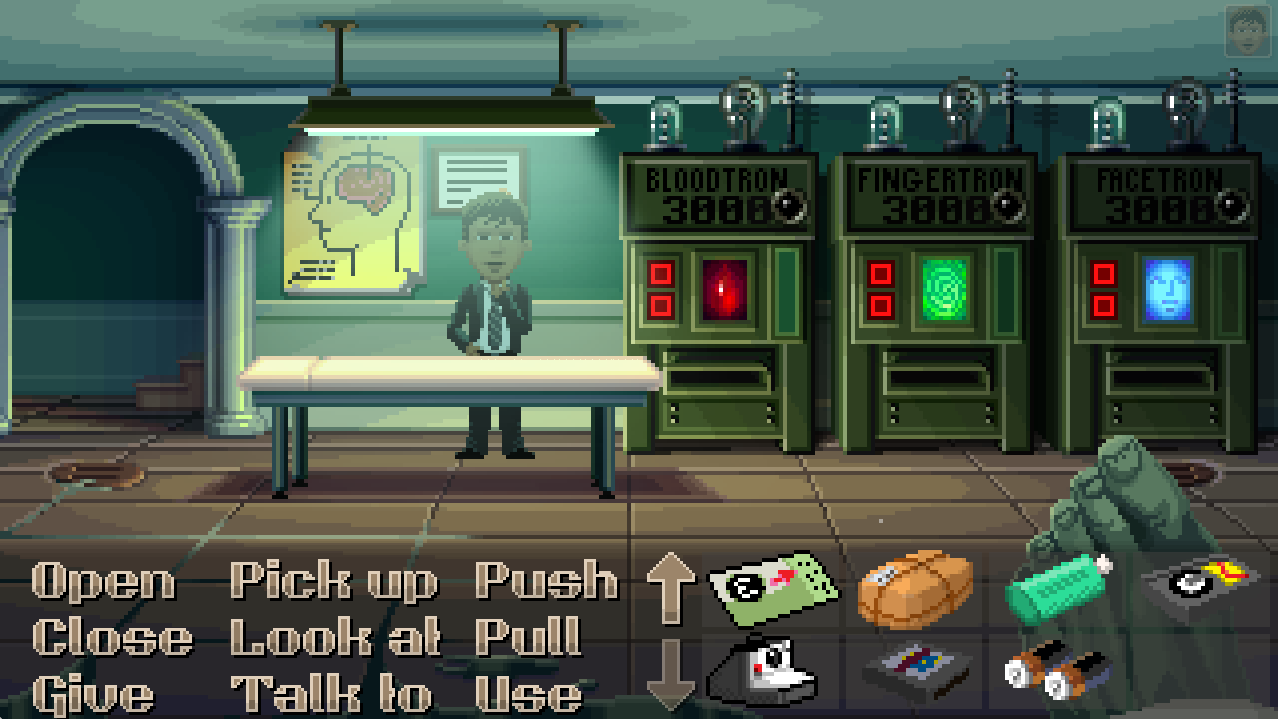
Thimbleweed Park is an excellent example of a game with retro gameplay, but with modern dialogue and story.
As the generations for said games grow up, so do our preferences for what type of games we play. Games such as Thimbleweed Park, Owlboy and Stories Untold have emerged from the indie-scene as very popular games, and have so far done a great job to fulfil some of these needs. In terms of retro-style gameplay, Thimbleweed Park provides a classic form of a point-and-click adventure, with an interesting touch on the dialogue. It is funny, weird, and intriguing, and definitely something worth looking into.
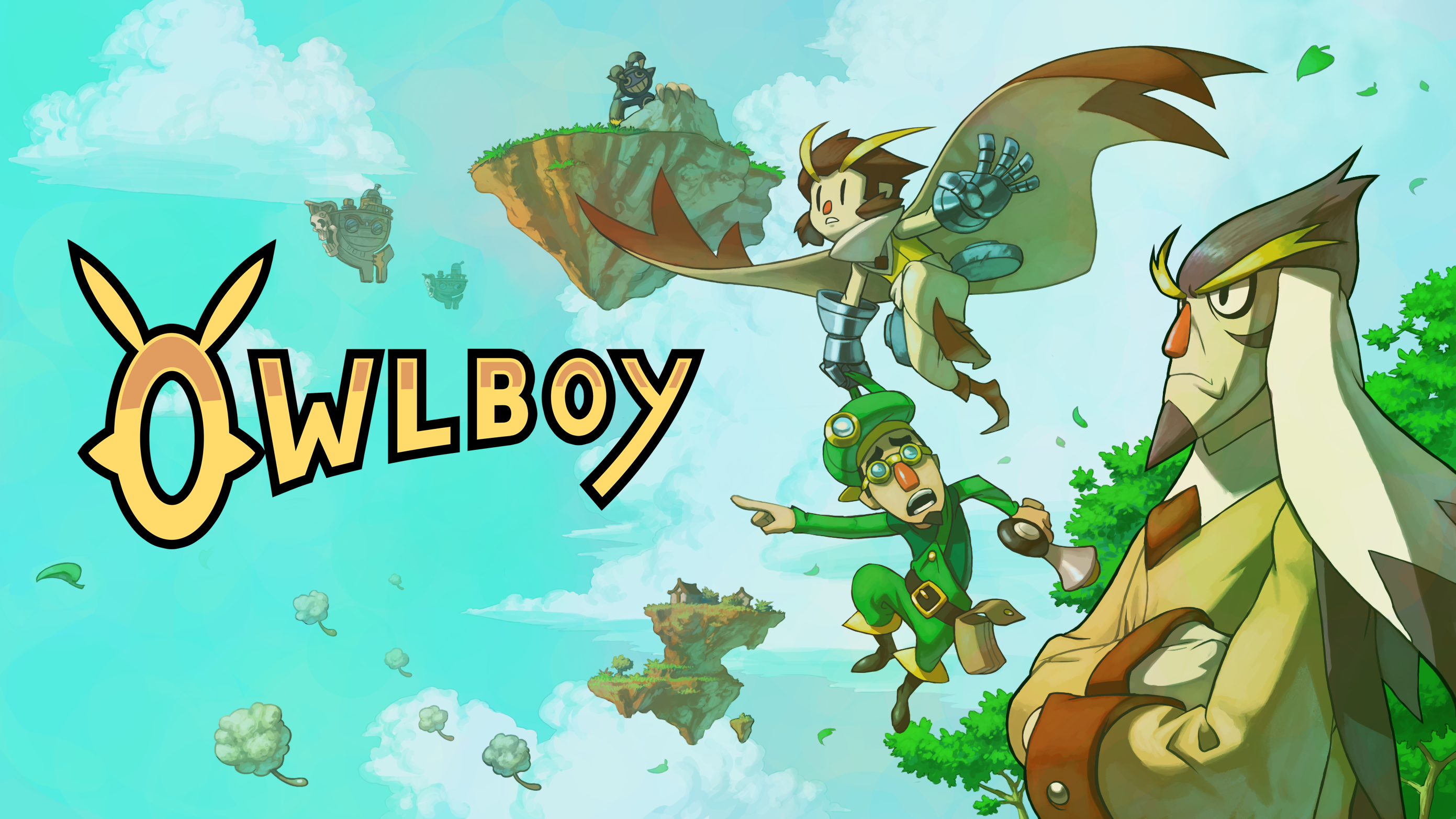
I’m not just mentioning Owlboy just because Norwegian developers made it – something that I am totally unbiased with, of course – but because it is also a good example of how a contemporary made retro game works perfectly, both in form and function. Sprinkled with well-written dialogue and lovable characters, Owlboy offers a really nice retro experience for both older and younger generations of gamers.
So why is this resurrection so fascinating, and why do we need it? The answer is fairly simple: the first gamer generation has grown up, and the gaming scene today is not what it once was; simple and straightforward. The desire for that element has become substantial, and game developers, especially, are taking this into careful consideration.
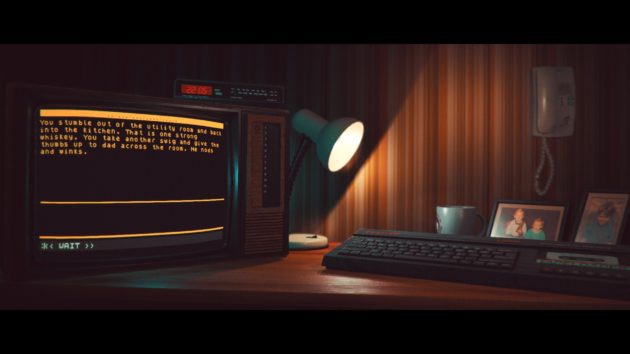
Stories Untold offers frightening, yet compelling storytelling in an interesting way.
Stories Untold is a game that should be praised for the way that the developers have chosen to implement the retro element and is a fairly unique example of how they have tried to immerse the gamer into a world that blends retro and modern together. Stories Untold offers a fascinating gaming experience, where you play through different chapters, following a story that includes several forms of gameplay. The story is unique and is definitely recommended if you are looking for a game that is a tad different from what you may have experienced before.
The games mentioned show us that the resurrection of the retro element in games is highly effective and successful. We have come to a time where people start to discuss how “games have changed since we were kids,” and start to desire certain aspects of how gaming used to be – how they looked, how they sounded, and how they felt. Well, one of the awesome things about game development is that we can basically do whatever we want. A lot of games have been travelling in time lately, to a point where a certain generation of gamers feel like they have been before. This genre – I will dare to categorize it as such – is one that will always be relevant, because there will always be a time and place for looking back.
Will there be a time when gamers do not fully comprehend the meaning of “retro”? Yes, definitely. I have watched several movies in black and white, and that does not mean that I automatically experienced the time when televisions went from black and white to coloured. It will be interesting to see how the term develops, and what game developers choose to do with it as generations pass.
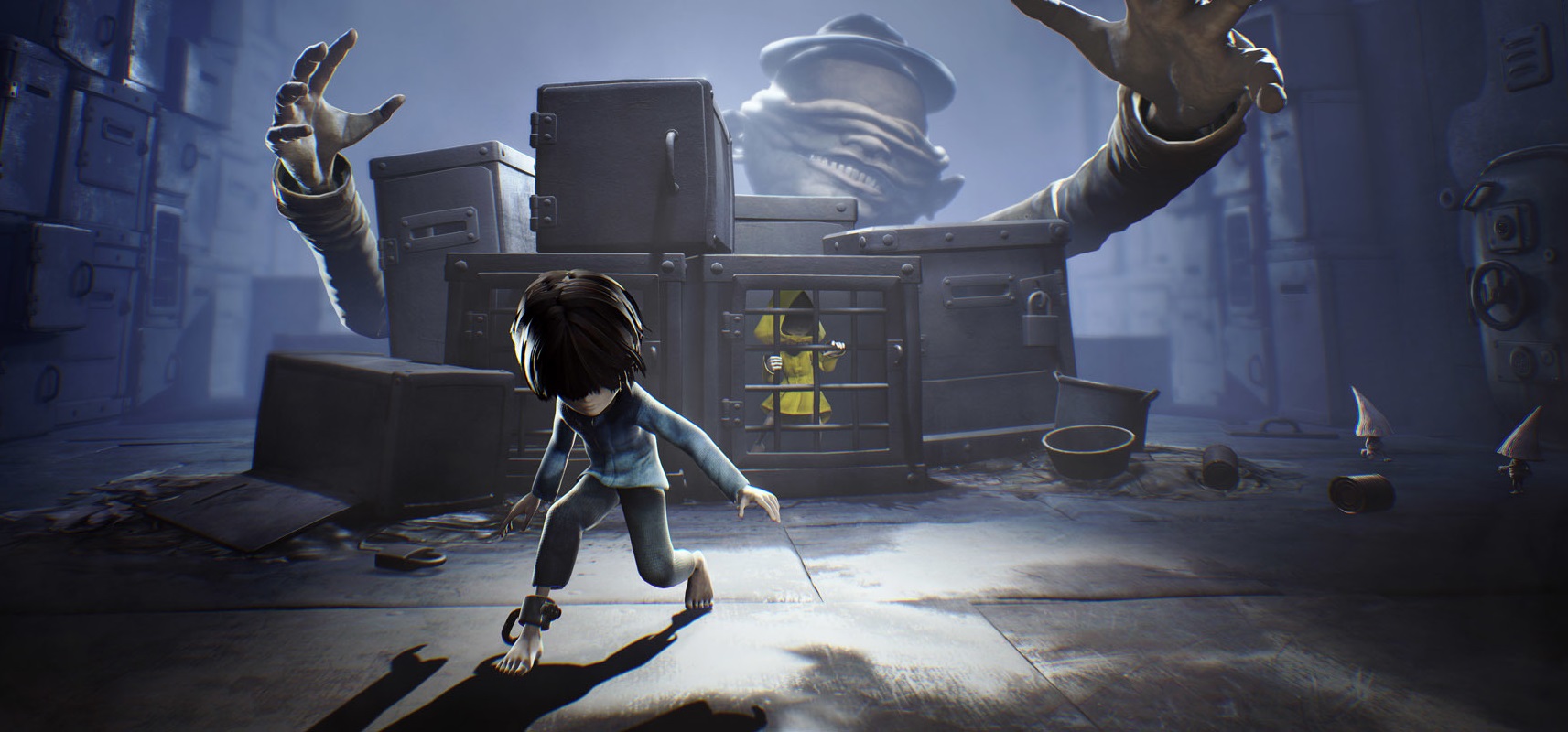
The eerie, yet wonderful Little Nightmares has released its first episode out of three in the new DLC, titled ‘Secrets of The Maw’. This time around they’re going to give us more information about what the Maw actually is, and what is going on there – through the eyes of a new character, The Runaway Kid. If you’re on the fence about buying the new DLC, I’m here to give you some insight. It did its job – it thoroughly creeped me out. Let me explain…
Reason 1: “Here we go again on my own / Going down the only road I’ve ever known”.
The first episode is clearly – and rightfully so – an introduction as to whom we are playing, and why we are here. The start of the game is uncannily familiar: something creepy and weird happens, and then The Runaway Kid (our protagonist) wakes up, realizing it was “just” a nightmare. Yeah, as if. The foreboding as to what is going to happen creates the same paranoia effect as the original game did. I keep asking myself “when”, “what”, “how”, and “why?”.
Reason 2: Realizing where exactly I met The Runaway Kid in the original game.
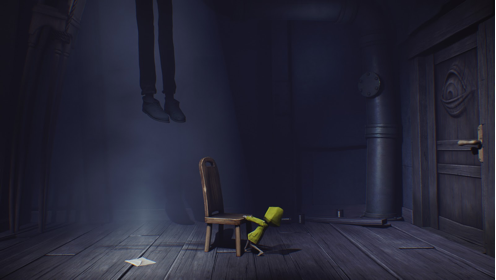
As he wakes up in his bed, I realize quickly that it is not just the dream sequence that is familiar. The bed and the room he wakes up in, is the exact same one as the room of beds that Six walks into when escaping the long-armed man: the bed with the sleeping children – and The Runaway Kid is one of those children. It gave me the chills knowing that he was there – especially as there were so few characters in the original game that were significant.
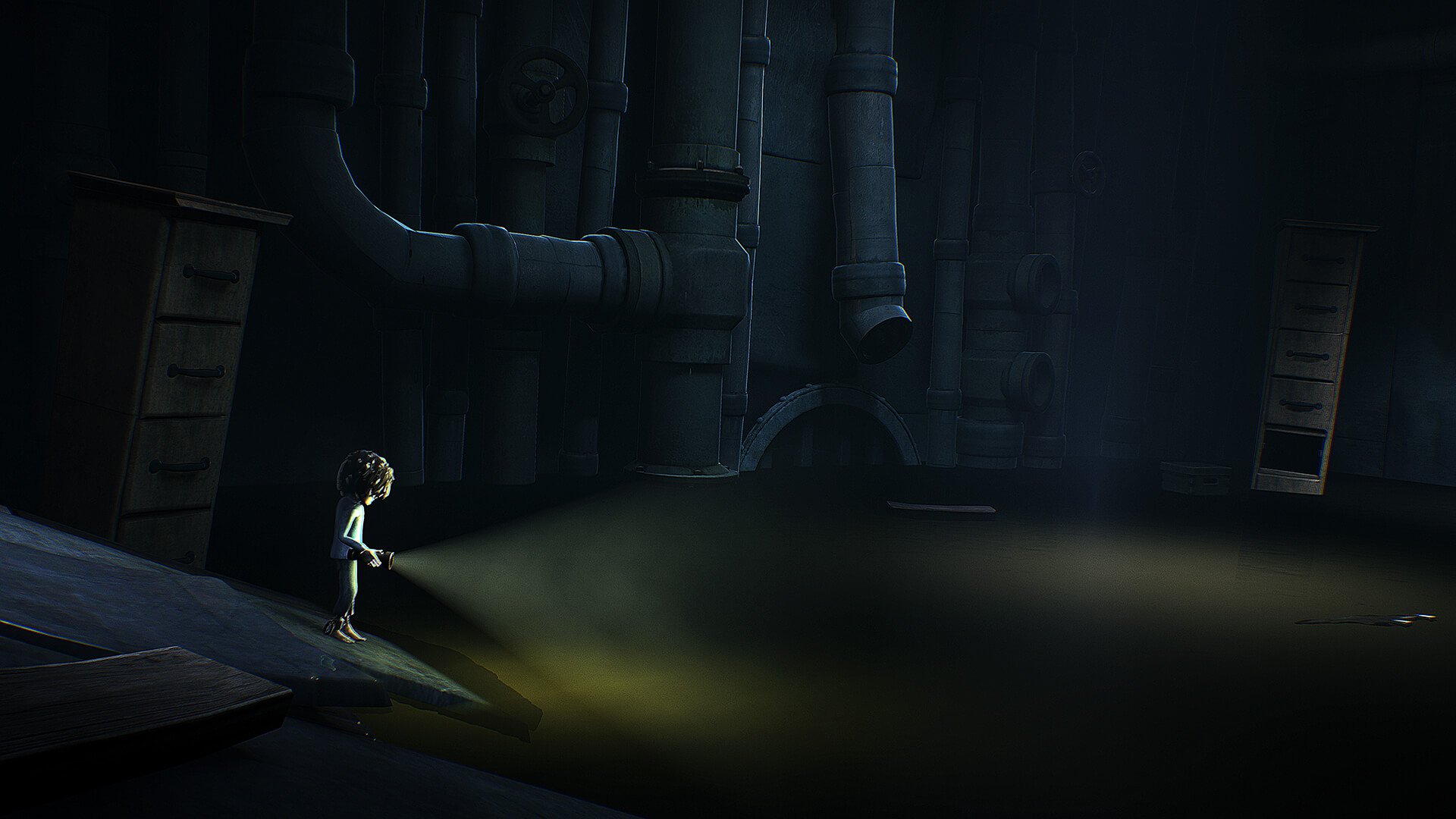
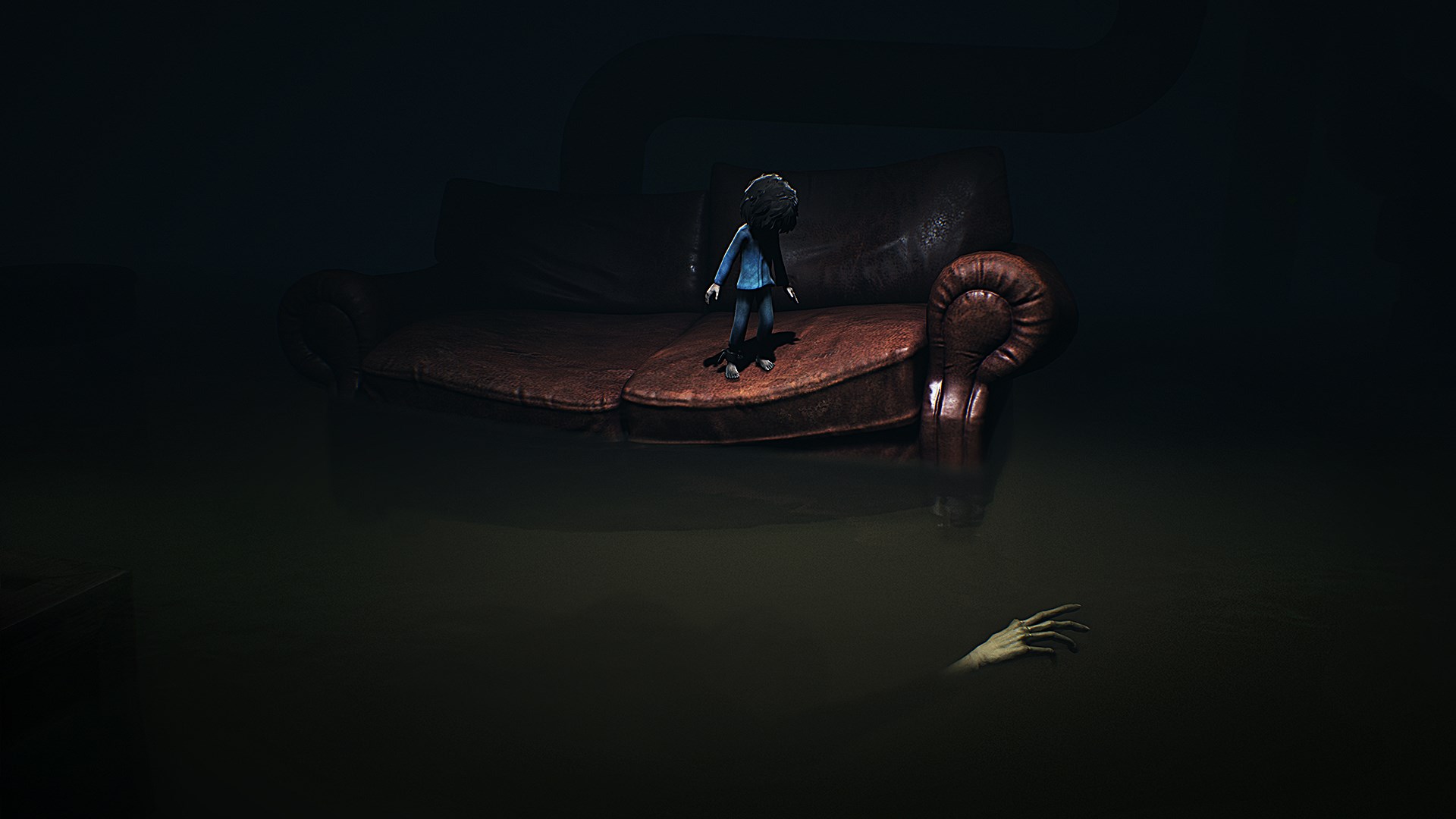
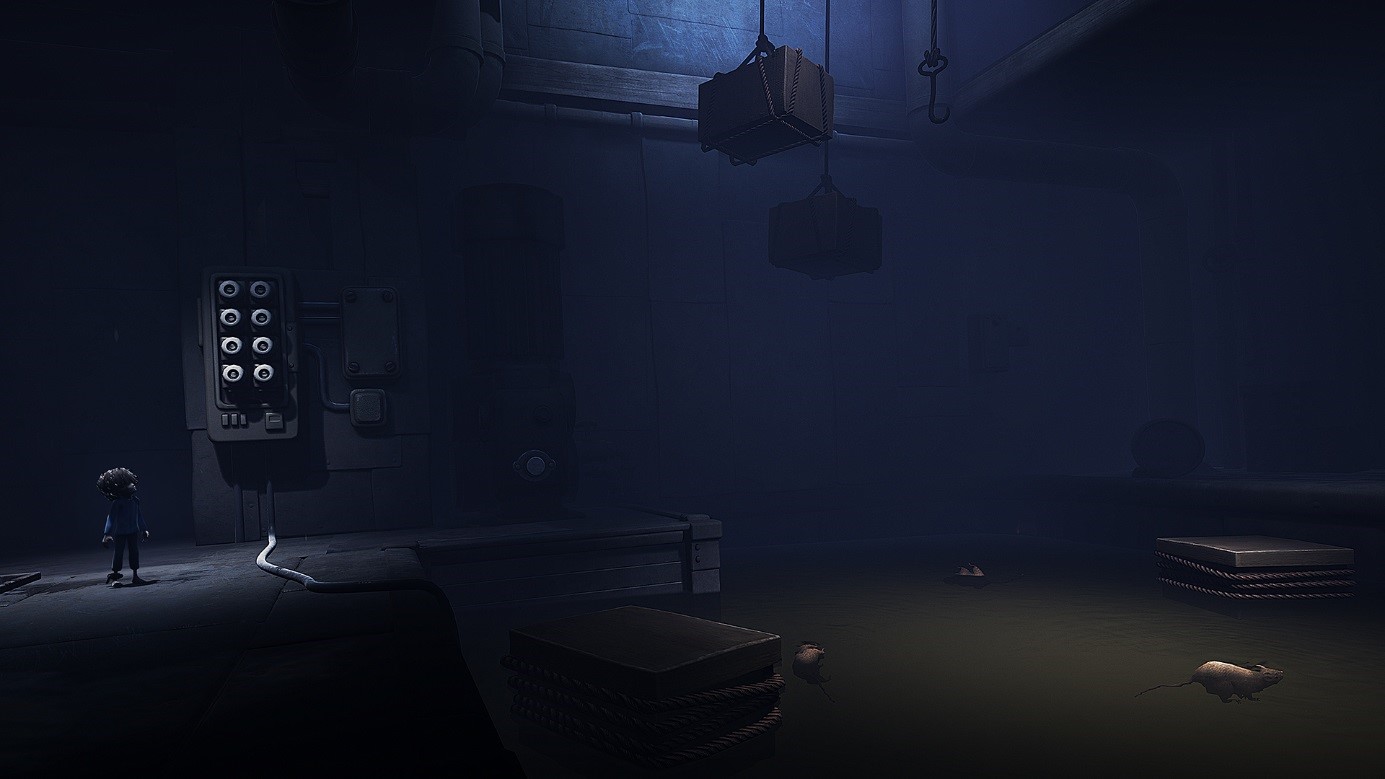
Enter the water, they said. It will be fun, they said.
Reason 3: The familiar surroundings.
We are, after all, also trying to gather information as to how this boy meets our original protagonist, Six, and how their paths meet. That would require us to retrace our steps. Going through the same rooms, the same environment and remembering all the fears that made you want to escape that room as quick as your little legs could carry you in the first place, is ever-present.
But why!?
Reason 4: The water.
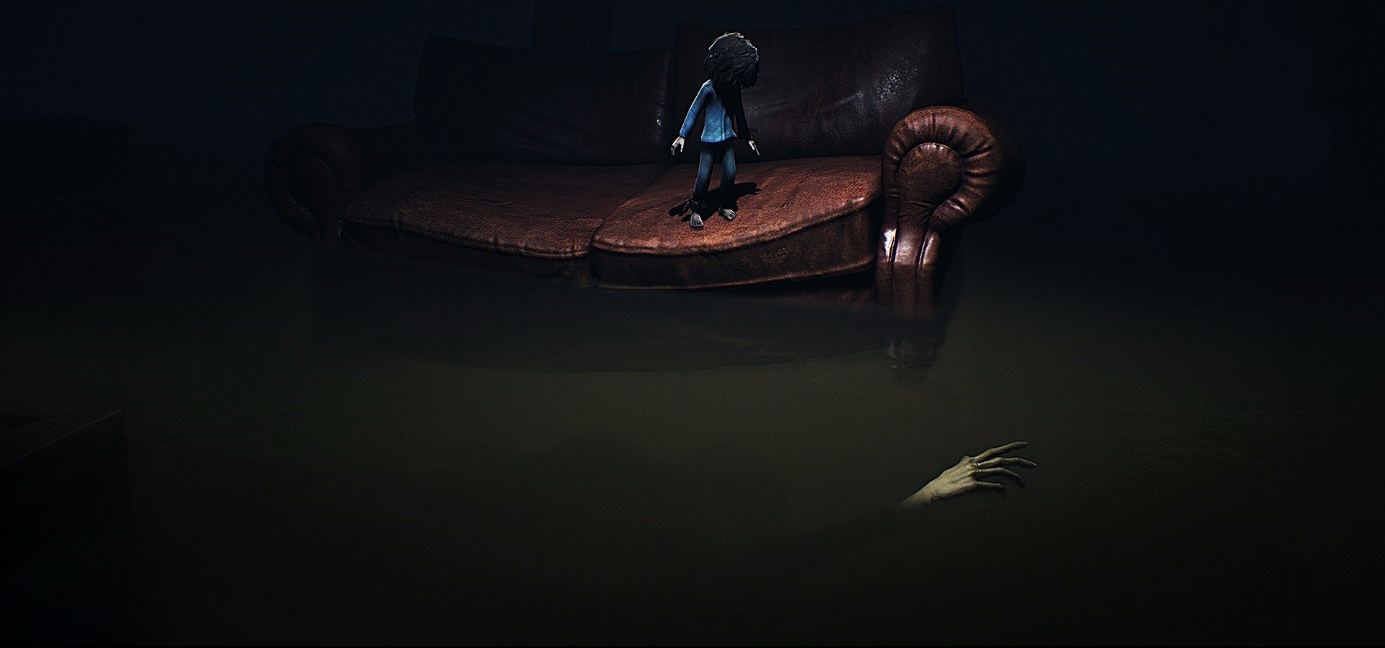
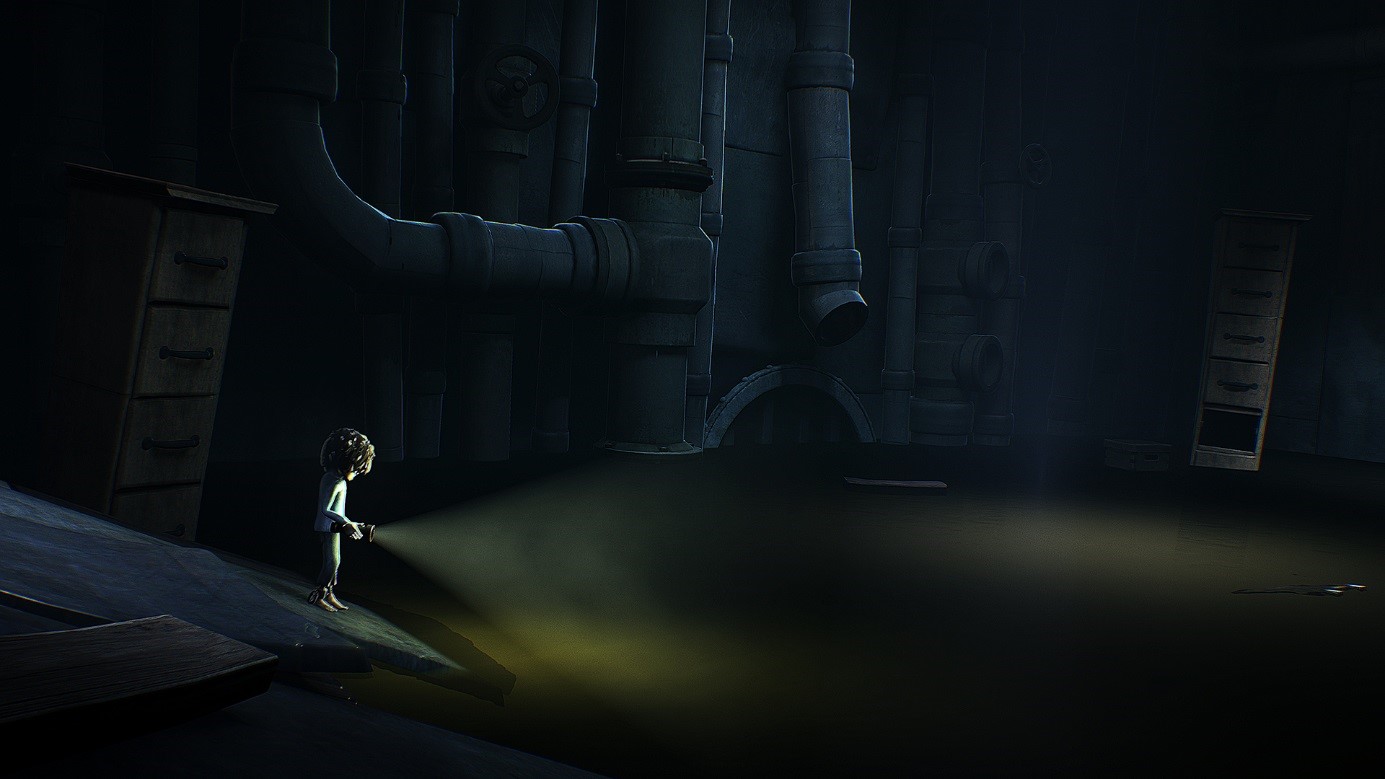
The freakin’ water, man. It is painfully obvious that they named this episode “The Depths” for a reason. As if water doesn’t make me squirm enough in the real world, it is a prominent element in this episode. Tarsier Studios have been true to their word, because not only is the water pitch black: it also contains something that I DO NOT want to encounter. But its contents sure want me. Which leads me to my final reason:
Reason 5: The monster(s).
There is one familiarity here: the leeches, which are far worse in this DLC. They are larger, faster, and more… gross. But they are not the worst of the bunch. As the developers previously warned us about, there is something lurking in the water. Oh ho yes, sir, what jolly good fun. You don’t actually see much of the creature in the water, but what you do see is horrifying. And he’s not there to tickle your feet, that’s for sure.
I love how Tarsier Studios have created a new puzzle – the story itself. The second episode will be released in November, the third and last episode in January. In other words, we will have to wait quite a while before we receive more pieces of the puzzle. The next episode is called “The Hideaway” – and it looks like we will meet some old friends there.
Let’s hope that the next piece to the puzzle is worth waiting for…
Ladies and gentlemen, welcome to the biggest nostalgia-trip of the year! Before we embark on this old, yet new journey, I must insist on warning ye who enters, that this is a highly subjective review. There are too many memories here for me to be objective about it. But if you are not familiar with Crash Bandicoot, I sincerely hope that my enthusiasm for these games will make you want to try it out for yourself – be your own judge. Since this is a trilogy, I have chosen not to make a complex review of each of them, but rather a short and concise review of my total impression of the games.
Because the wait is over: Crash Bandicoot N. Sane Trilogy is finally here. Everybody who played these games when they were younger was probably waiting with great excitement for this. I know I have been. I am here to tell you that the wait was not in vain. Back to collecting apples and crushing crates, ya’ll!
“Activision proudly presents an explosive blast from the past!” With these words, the game is introduced in its new and polished form, and it becomes obvious who these games were revamped for – the generations that played them when they first came out: those already familiar with the universe. I instantly felt a rush of nostalgia, perhaps reaching its high point when playing Warped, mentally travelling back in time to when I was a little girl playing on my PlayStation. I spent countless hours on the Crash Bandicoot games – it is then, perhaps, no wonder that I have already spent an equal amount of time on the new version.
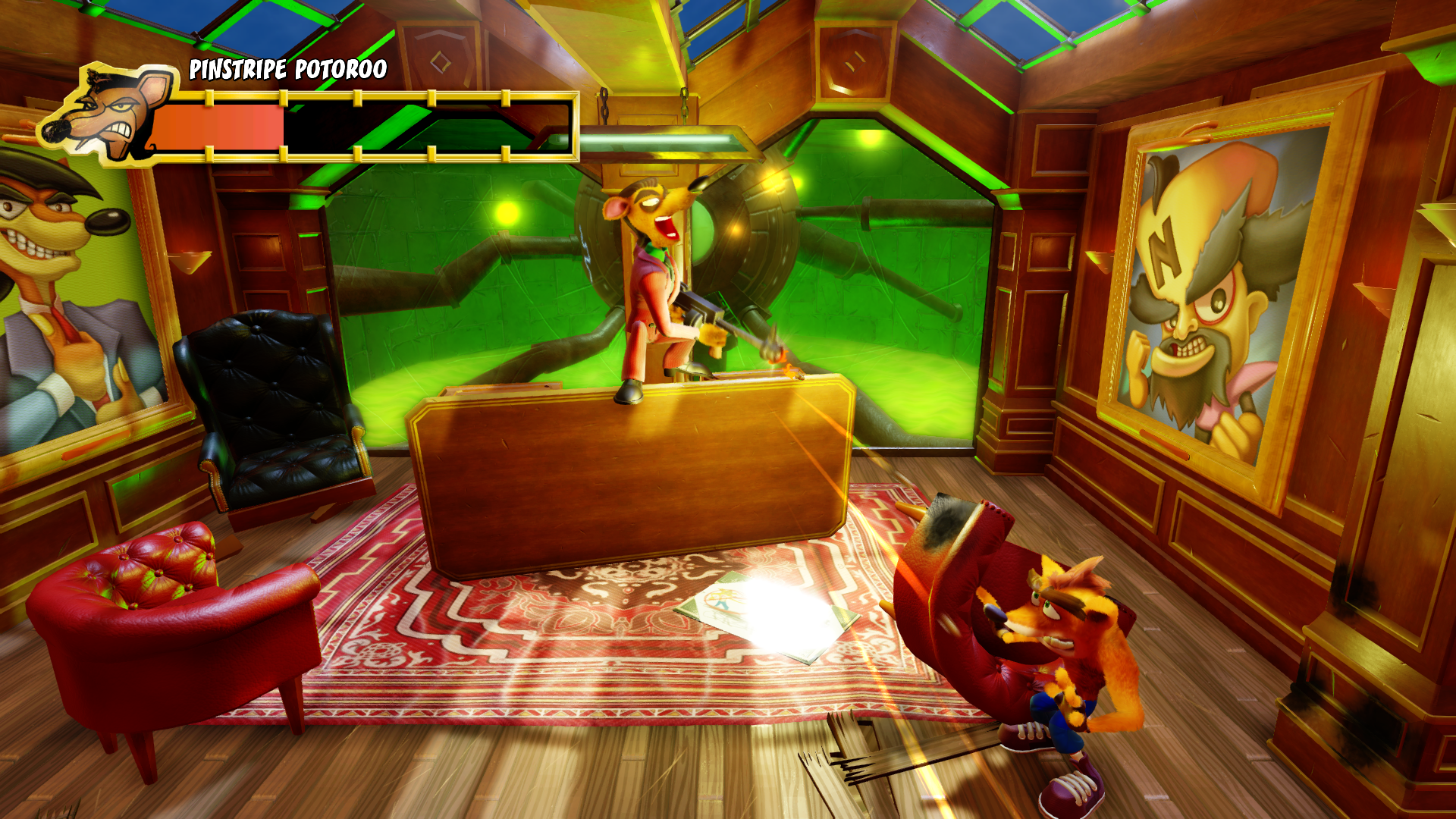
Take it easy, buddy.
Great precision is required to play each of the games, although specifically in the first. The controls are fairly sensitive, but they have not changed. If you played the games when they first came out, then learning the controls will be no problem. I started playing with immediate ease because it was all so familiar. I then thought about muscle memory, and in Crash Bandicoot Warped, I could see how many levels still stuck with me after all these years – the result of perfecting them when I was younger.
One thing is demanded from you as a gamer: patience. Because these games… are difficult. If you’ve played the levels “Road To Nowhere” or “The High Road”, then you know what I am talking about. The first game is considerably harder than the two others. I don’t even know how many hours I spent on completing a single level. With that said, I realize that the majority of deaths are my own fault. When playing the first Bandicoot game, I often thought “was it really this difficult before?”. Sometimes the levels required such precision that they might come off as tedious. I will admit that I went full on rage-mode a couple of times and had to take a few hours break, otherwise I would have thrown the controller at the TV – but hey, who hasn’t?
Your pulse rate will certainly increase. The difficulty is heightened by throwing several challenges at you simultaneously, which creates some real rage-mode moments. In the levels where Crash (or Coco) is being chased, apart from being stress-inducing, there is a certain rhythm to the levels. With the difficulty gradually increasing, that rhythm is easily broken – ruining the flow of the game. That can be frustrating at times.
I am really impressed with how the games turned out visually. There has obviously been a huge upgrade to the graphics, and this is the most prominent change in the trilogy. The camera angles are simple, thus they serve some interesting challenges when it comes to depth perception. Everything looks so smooth and beautifully lighted – looking at how the sunlight peeks through the trees, and how the rain falls on the ground. The levels inside the crypts are excellent examples of just how good the lighting is. This, along with the lovely details to the characters such as nuanced facial expressions, creates a beautiful recreation of a beloved universe.
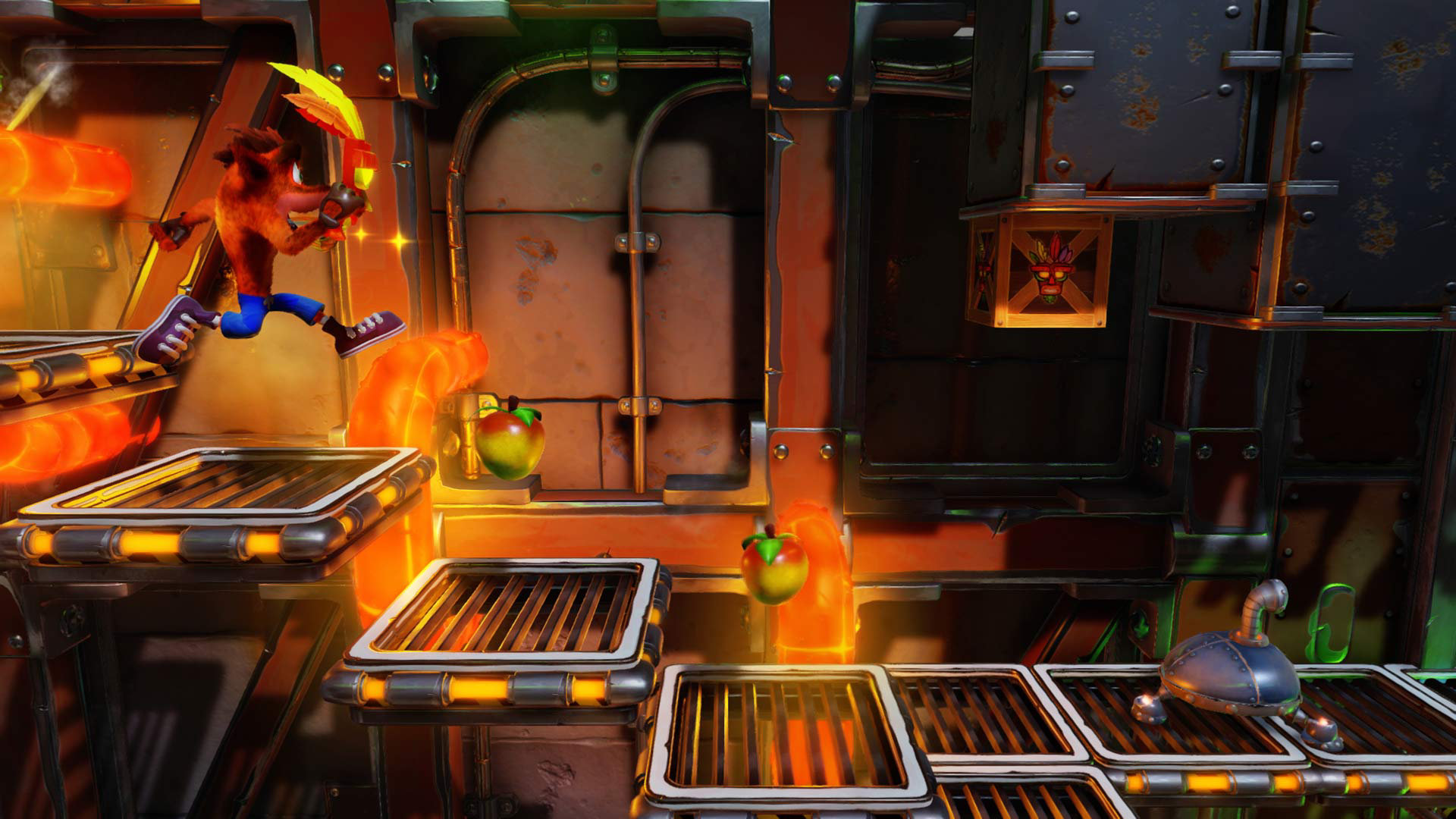
Those pipes look a little bit hot.
The level design is very familiar and well-made – even though you will have to learn each of them. If you manage to soar through a level on the first try, kudos to you! I also love how each level feels a bit different from the last, and not simply a repetition of the previous ones (apart from the fact that in Warped, some of the levels are actually the same, only with a higher difficulty!). The levels offer different points of view, with themed music, and new mechanics such as belly flops and double jumps – all of these factors create a nice diversity to them.
But oh, the music! The sound effects! One can appreciate the familiarity of it all as we reunite with beloved characters such as Crash Bandicoot and his sister Coco, Aku Aku, Uka Uka (yes, confusing, I know), Cortex, and of course all the bosses you encounter throughout the games. I appreciate the fact that they implemented more playtime for Coco, and not just certain levels too.
Crash Bandicoot Warped is probably the game I played the most when I was younger. I remember spending so many hours on it, so it’s no wonder that I suddenly found myself spending the same amount of hours on it this time around. Warped definitely features the best music of all the Bandicoot games, and it’s the one I was looking forward to playing the most. However, it was interesting to see what had become of the other games as well.
All in all, Crash Bandicoot N. Sane Trilogy is a trip down memory lane. It is nothing more, nothing less. The games within offer high entertainment value, and will definitely give you many hours of fun. The replayability is high because of the several hidden paths one might choose to take, and collecting different crystals and so on for the achievement hunter, if you are that kind of player. There’s plenty to go around. So have at it! By playing these games, I feel that I have reunited with a friend I didn’t even know I missed this much, solving puzzles together just like we did before. I’m glad I finally have the complete trilogy in my gaming inventory too, and that I can now revisit them whenever I want.
Many gaming communities pride themselves on being “inclusive”. While one can endlessly discuss what that term actually means, I have to chosen to focus on a certain type of inclusiveness: game accessibility – the one that should be way more evident than it actually is. With a quick search on Google, there is no reason to doubt the existence of articles and websites that offer information and measures on accessibility in games. However, I personally was not aware of how extensive this issue was. If you’re in the same boat as me, I encourage you to continue reading.
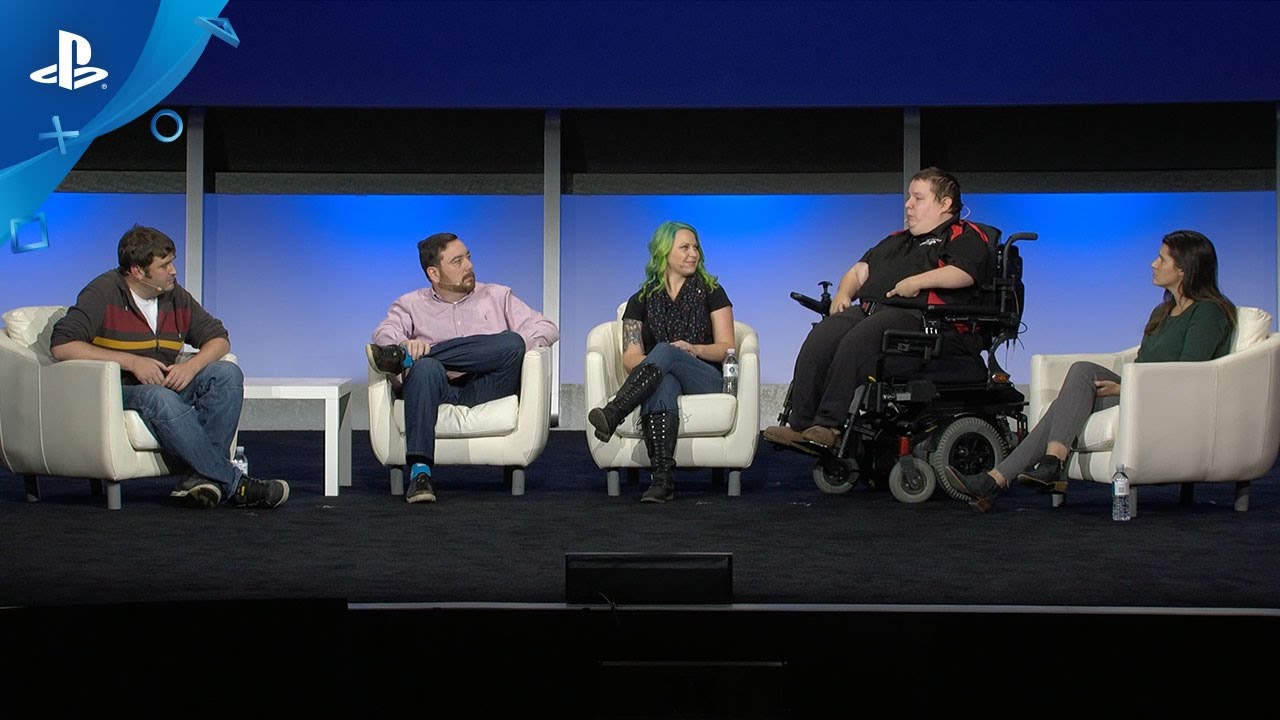
Recently, a friend showed me a YouTube video of Naughty Dog, PlayStation, and Josh Straub, one of the spokespersons for gamers with disabilities, talking about some of the efforts being made in the video game industry – it was essentially about how these small achievements make a huge difference for these gamers.
“What developers need to realize is that these games do more than just entertain the disabled. First of all, they provide an escape from the doldrums of being disabled. And second of all, they provide a social space where instead of being judged by physical appearance we’re purely judged by the action that we do and the things we produce in the game.” – Josh Straub.
Since there are so few gaming companies out there that don’t acknowledge the problem that not everybody can play their games, I believe there are more people out there like me who are not aware of this.
According to PR Newswire, 20% of casual gamers, that means one in five, have a mental, physical or developmental disability. Keep in mind, we are talking about disabilities ranging between bipolar, dyslexia, blindness, broken arm, and cerebral palsy – in other words, when they made this survey, they had a very wide grasp of the word “disability”. Either way, I still think it is important to acknowledge any type of disability, as it affects in a larger aspect how exactly we perceive games.
An example could be the development of virtual reality, which is a major step forward in the gaming world. However, when we think about the accessibility of said VR, it is not that big of a step. There are many who aren’t able to try this revolutionary way of gaming because of a disability rendering them unable. Furthermore, this does not just apply to this new way of playing games, but also the traditional way too. While this is a subject that one could write a dissertation about, I only choose to highlight some important points.
According to the PR Newswire survey, games relieved disabled gamers of stress, it lifted their mood, and served as a distraction from issues related to the disability. It also functioned as a way to improve concentration and mental workout – each benefit varied from the type of disability. Upon acknowledging the fact that we all live different lives, have different life stories, we therefore obviously play games for different reasons. While many non-disabled gamers might relate to the same benefits of playing a game, and perhaps play games for the same reasons, I think it is important to acknowledge the fact that the same source of outlet has a major difference in accessibility.
“When I turn on a game like Uncharted, I’m not confined to a wheelchair. I’m a swashbuckler treasure hunter like Nathan Drake. That brief period of escape is why accessibility is so crucial, because the more games that offer that, the more people with disabilities will be able to escape and have better lives.” – Josh Straub.
Slowly, but surely, more developers are starting to listen. In a dialogue with Straub, Naughty Dog and PlayStation took what they heard into careful consideration, and started to introduce some important changes. Keep in mind that these are only a few of the many changes they introduced:
They added a color-blind mode in the multiplayer section of the game
The camera has lock-on features – this focuses on using only one joystick controller
Upon pressing down one button, the game will act as though you are pushing it down repeatedly
Naughty Dog should be proud of themselves for stepping forward as a role model when it comes to accessibility, making games available for as many gamers as possible. This goes to show how some video game developers are able to be considerate of their audience, by working towards the goal that every player should receive the same gaming experience. While there are still a lot of developers that could do a lot better in this regard, it’s good to take what we can get at the moment, and help bring the discussion into the light.
In my opinion, the fact that huge gaming companies that work alongside Naughty Dog do not talk loudly enough about this angers me. It creates an unnecessary unfairness that wasn’t meant to be there in the first place.
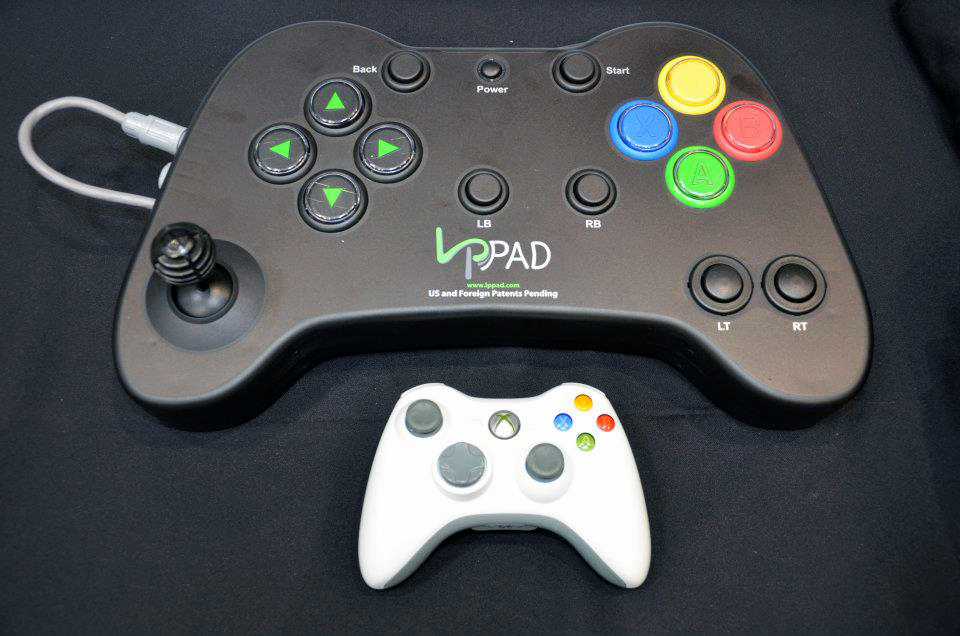
The LP Pad – an Xbox compatible controller made for gamers with little to no manual dexterity: designed to sit on the lap of the user. Picture taken from amsvans.com – you can read more about this controller here.
As more game developers take into consideration the fact that people require different means of accessibility, the inclusiveness of the gaming community will expand. I think that with the right attitude and awareness, the goal is easily achievable. With further development, games will be available to a wider audience – everybody wins. We would thrive on a community where everybody receives an equal gaming experience. There are so many fantastic games out there: let’s include everybody in the fantastic world that is video games. I will never take for granted the opportunity I have to play any game, however I want, ever again.
Pinstripe is a game made over the course of 5 years, by the one-man team Atmos Games, where Thomas Brush is the man of the hour. The game was funded by Kickstarter, and I am really impressed by the final product.
Thomas Brush, creator of award-winning games Coma and Skinny, reveals a gorgeous art style, breath-taking score, and chilling story with influences from The Nightmare Before Christmas, Coraline, and Alice in Wonderland. – pinstripegame.com
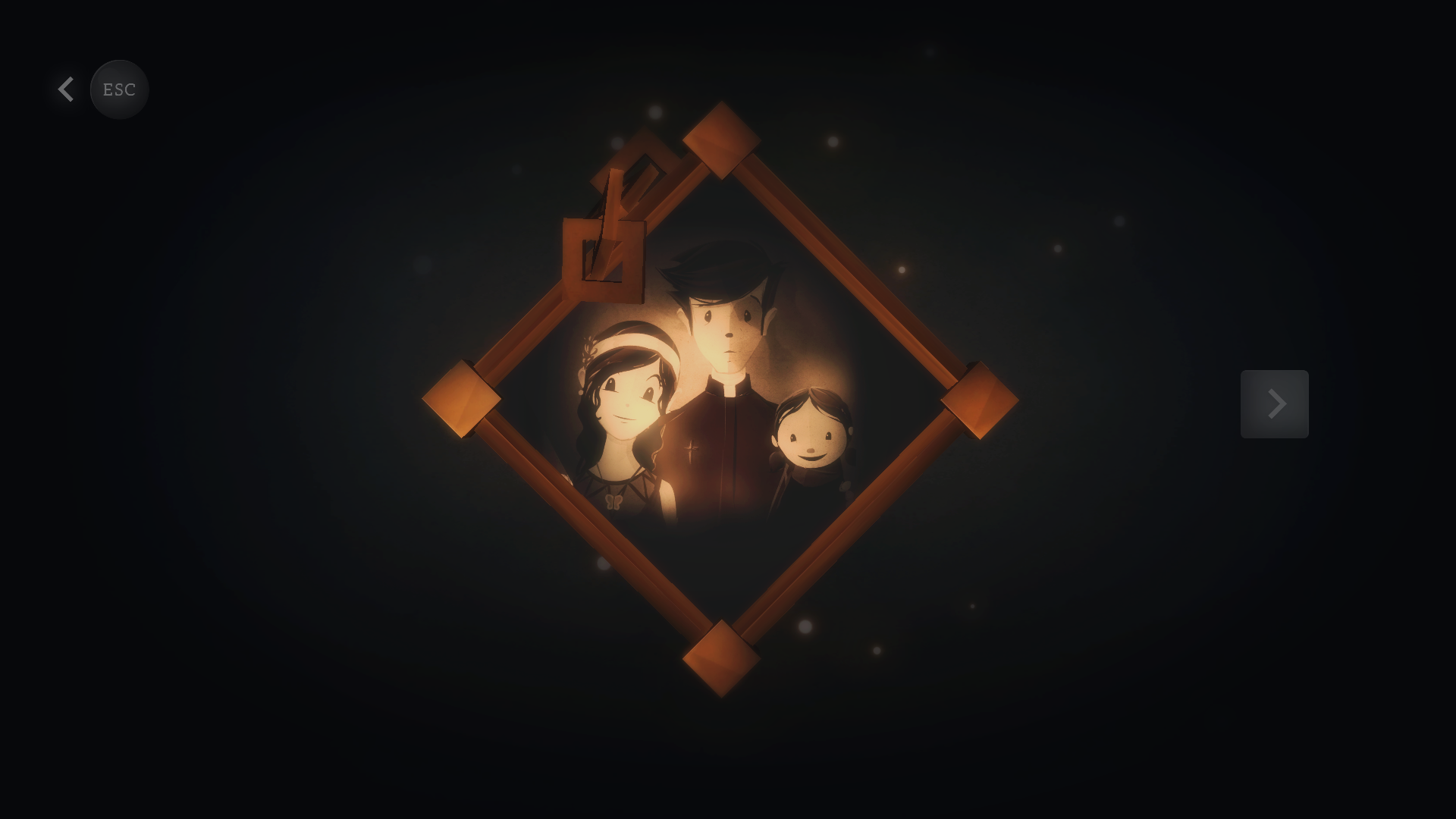
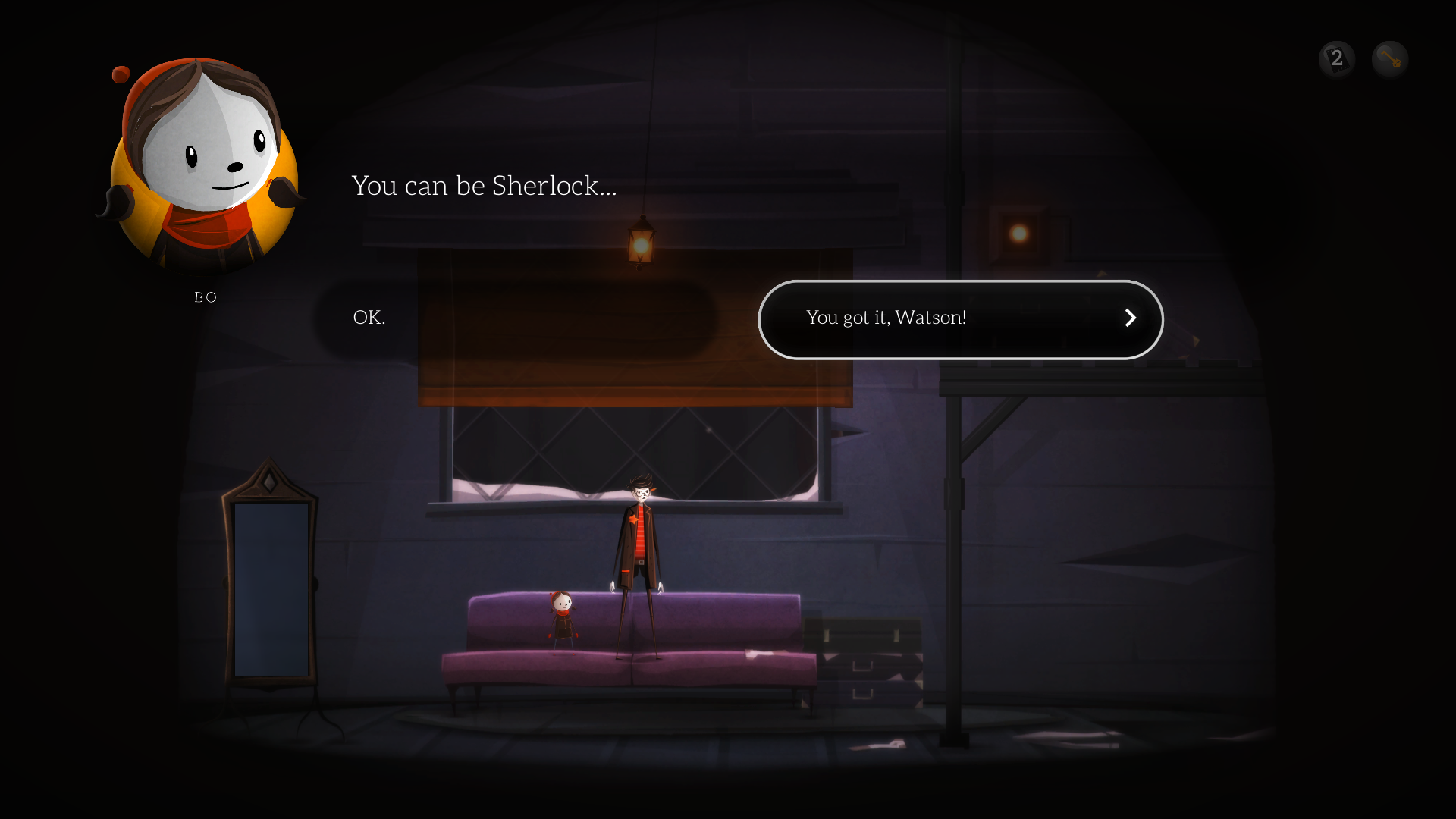
Looking at these influences, I quickly figured out that this game would be my cup of tea. I adore these worlds. Pinstripe is a beautiful, yet fairly short adventure game about Ted, an ex-minister, searching the afterlife for his daughter Bo, and her wicked kidnapper Mr. Pinstripe. On an interesting side-note, the sub-title of the game is: “A Father in Hell,” which serves for an interesting homonym – the priest and the parent. An interesting and clever touch!
On our journey through Hell, we have to look for clues and puzzles on the whereabouts of Bo and Mr. Pinstripe. I’ve easily taken a liking to every character I have encountered in the game. They are interesting, witty, creepy, and everything in between. They’re weird, and I like it.
Mr. Pinstripe is probably the most memorable of all the characters – a mysterious and intimidating man who lives in Red Wash, a lake deep down in the bowels of Hell. The rest of the inhabitants of Red Wash, however, seem to be only shadows of what they once were… As if the darkness is repeatedly taking pieces of them, leaving them on the verge of insanity.
One thing I will truly praise the game for is the voice acting. Mr. Pinstripe’s voice gave me the chills, making my spine tingle. It’s phenomenal, skipping between deliriously happy and crazed lunatic. As the characters’ voices vibrate through my headphones, the game gives an even more present touch of the uncomfortable – making me feel like the voice is coming from right behind me. Fun fact: there are several cameo appearances by popular Youtube personalities such as PewDiePie and JackSepticEye, making a highly interesting contribution in lending their recognizable voices to a small indie game like Pinstripe.
In his own description of the game, Thomas Brush is being true to his word: “The long and slim figures of the characters remind me of Jack Skellington from Nightmare Before Christmas, while the funny and random remarks bear resemblance of Alice in Wonderland”. Speaking of remarks, I love the humor in this game – with a touch of weirdness, and a drop of insanity. I cannot help but laugh at some of the characters.
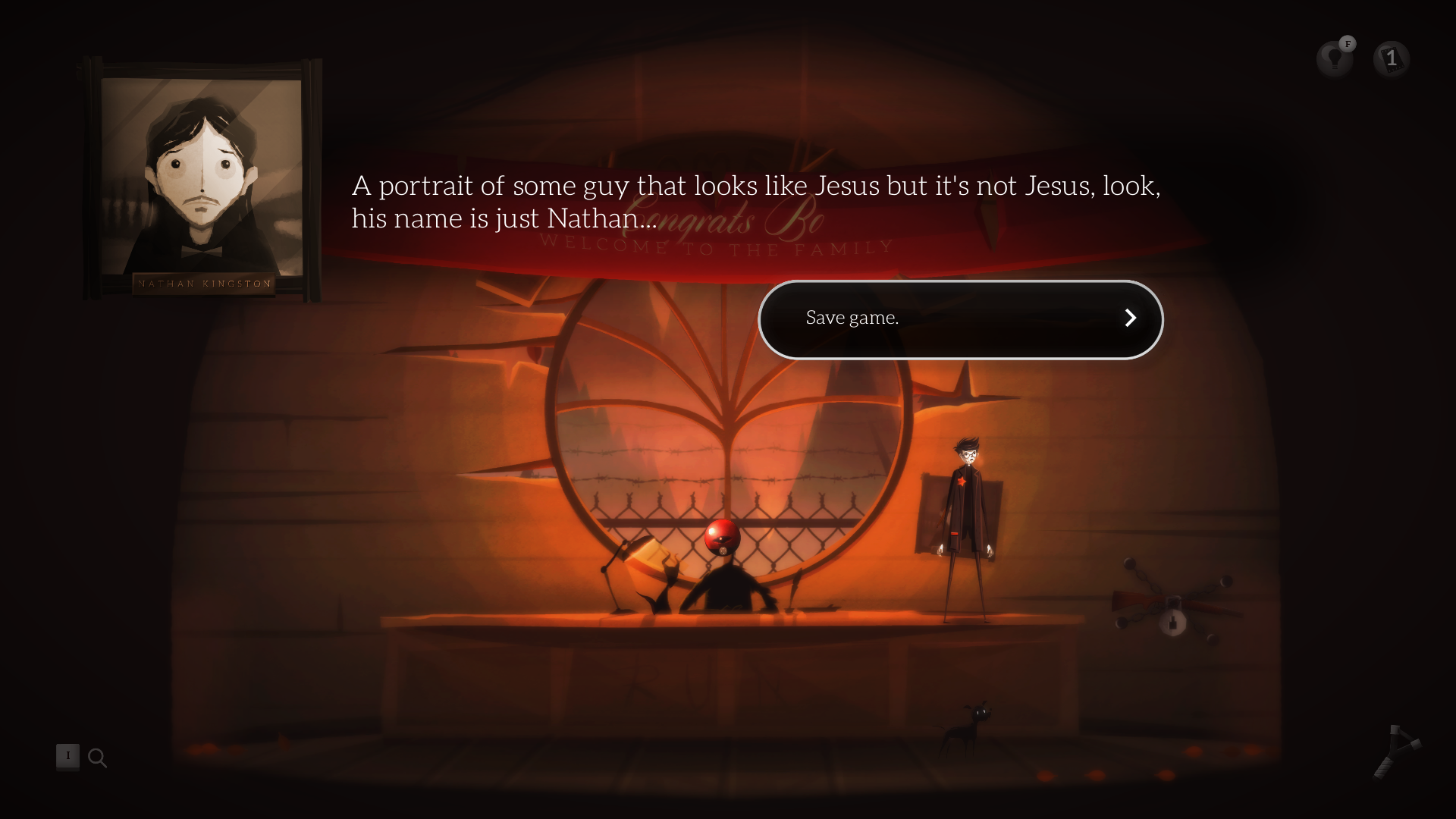
The art style of the game is gorgeous too. Along with a fantastic score and ambience, the gameplay works exceptionally well. As one progresses through the game, one might notice the developer’s awesome attention to detail. Some of them are made as a clever part of the gameplay, examining items closely in order to find more clues and solve puzzles. Save points in the game are portraits of different people for example (Kickstarter-backers, perhaps?), an interesting addition I do not think I have seen before in other games.
Throughout Pinstripe, you collect Frozen Drops, which is the currency of the game. Here is where the replay value comes in: if you’re an achievement hunter, Pinstripe is for you! There are several things you can do with these drops, but they can only be achieved when playing the game several times.
According to my Steam account, it took 3 hours to complete the game – I took my time talking to everybody, searching through each nook and cranny for stuff. I like how the puzzles were not too challenging, maintaining the flow of the game. However, I do have some mixed feelings about the ending. Without spoiling anything, I can say that it was beautiful, yet complicated. The game had a great build-up, but the ending was kind of anti-climactic.
Pinstripe is enjoyable and casual – with memorable characters, a beautiful atmosphere and great voice acting, it is a thoroughly well-made game. It’s clever, funny, mad and is definitely an experience you should not pass up.
Pinstripe is available for Microsoft Windows, Linux, and Mac OS, but hopefully it will be available on other platforms soon!
Remember how I said that I didn’t see the DLC of Little Nightmares coming? Scratch that. I didn’t see THIS coming. Holy… Moly.
According to Hollywood Reporter, Little Nightmares is now going to be adapted for television, after mere months of its release.
Anthony and Joe Russo, the guys behind Captain America: Civil War and Winter Soldier, will be teaming up with Henry Selick, the man who directed Nightmare Before Christmas, to create the TV adaptation of Little Nightmares. Yeah, this is kind of a big deal.
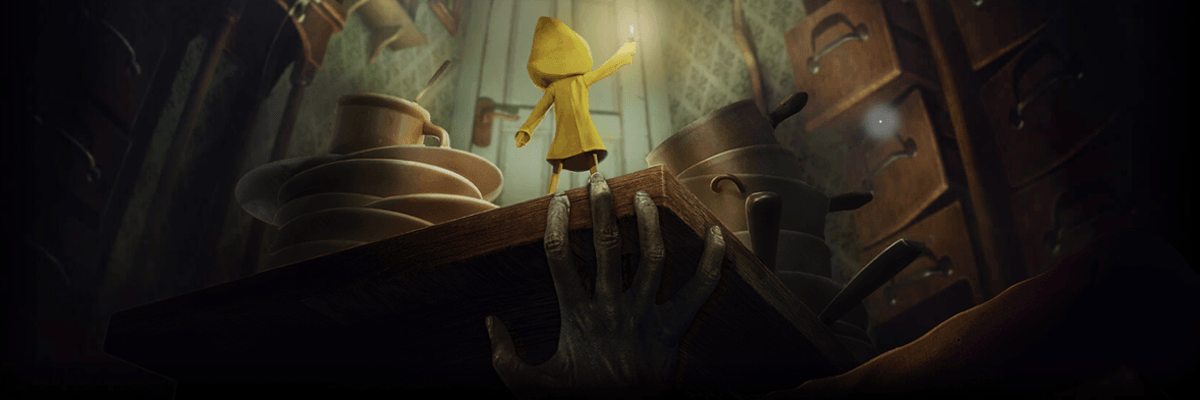
Little Nightmares is a horror adventure game where you play as the character Six, exploring the darkness of The Maw, and the monsters that live within.
You can read our review of the game here, and/or watch the chilling trailer down below. I’ll just go and lie-down.
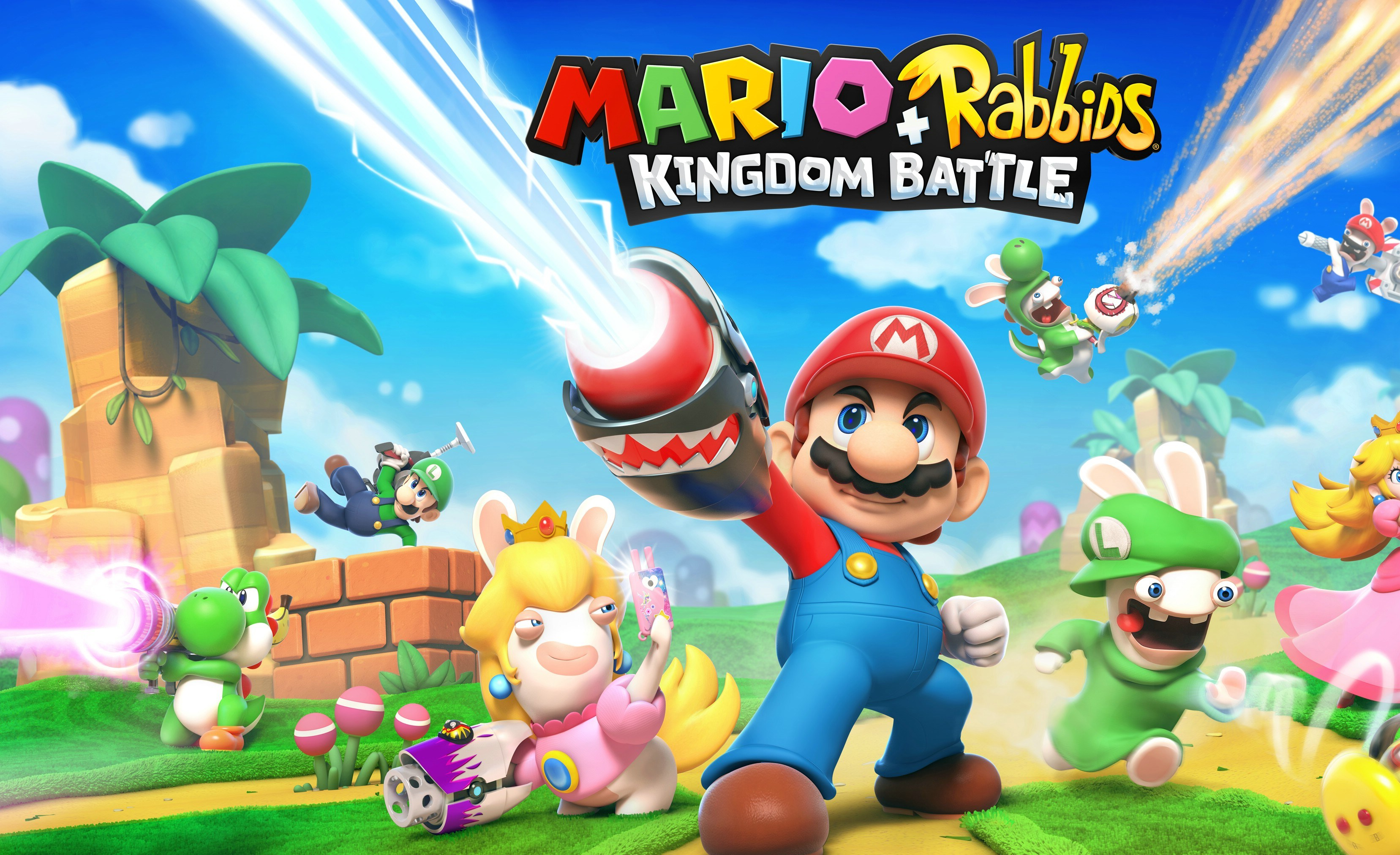
Yup. It’s true. A crossover between Super Mario and Rabbids is going to be a thing on August 29th. (It’s XCOM + Mario + Rabbids).
Mario + Rabbids: Kingdom Battle is a turn-based tactical (XCOM!) adventure game where you wander around in a charming-looking world with an exploration mode as well as a battle mode. I think the game looked pretty cool, to be honest.
We know this much about the combat system: we enter battlefield zones with a variety of characters. These characters will have different abilities, creating a mix-and-match system – as we progress, we get more weapons, and more heroes, bringing more tactics to the field. This way, the player will have to plan each movement sequence before playing them out. This is a game that can go both ways, I feel. It could turn out to be really weird, or it could turn out to be totally awesome. I’m excited to figure out the answer to that!
Consider me intrigued… Watch the funny and adorable trailer here:
Tarsier Studios are keeping us on our toes by publishing more information on their new DLC “Secrets of The Maw”!
On June 7th they published a mini-interview with the producer Stephen Halett to give some much-needed answers to questions asked by fans.
According to Halett, there were things left unanswered at the end of the game (a statement on which I totally agree), and they are now taking the opportunity to answer some of those questions – revealing more story about the The Maw and its inhabitants. They consist of three chapters working as self-contained stories, and will be released in an Expansion Pass format.
We get to experience more of The Maw as an underwater prison, and what happens to children that are brought there – through the adventures of the new protagonist, The Runaway Kid. We can also then assume that the speculations about the protagonist’s name being Seven has been debunked – unless they at some point change their minds.
Each chapter is set in a new environment with new gameplay features and challenges, such as more difficult puzzles and implementing water mechanics:
The Depths, a place that has been abandoned and flooded. Uh, I foresee an even worse version of the creepy girl underwater from Inside. Anyone else?
The Hideaway, where The Kid has to work together with the Nomes, our adorable minions from the original game, to solve the puzzles. I quote: “death is just a step away and only by working together can they both survive.”…Yikes.
The third and final chapter will involve a secret location within The Maw, and will decide the fate of The Runaway Kid.
When asked about why they wanted to involve a new character, Halett says they wanted a different perspective when shedding light “on the darkest secrets of The Maw”. He continues to say that The Kid’s and Six’s stories will cross paths several times over the coming chapters – learning more about her story while playing another.
The three chapters are ready to be pre-ordered on Steam and the PlayStation Store, and will respectively be released in July, November and January.
This should be interesting… I feel dread and excitement at the same time… I mean… *cough* LET’S DO THIS.
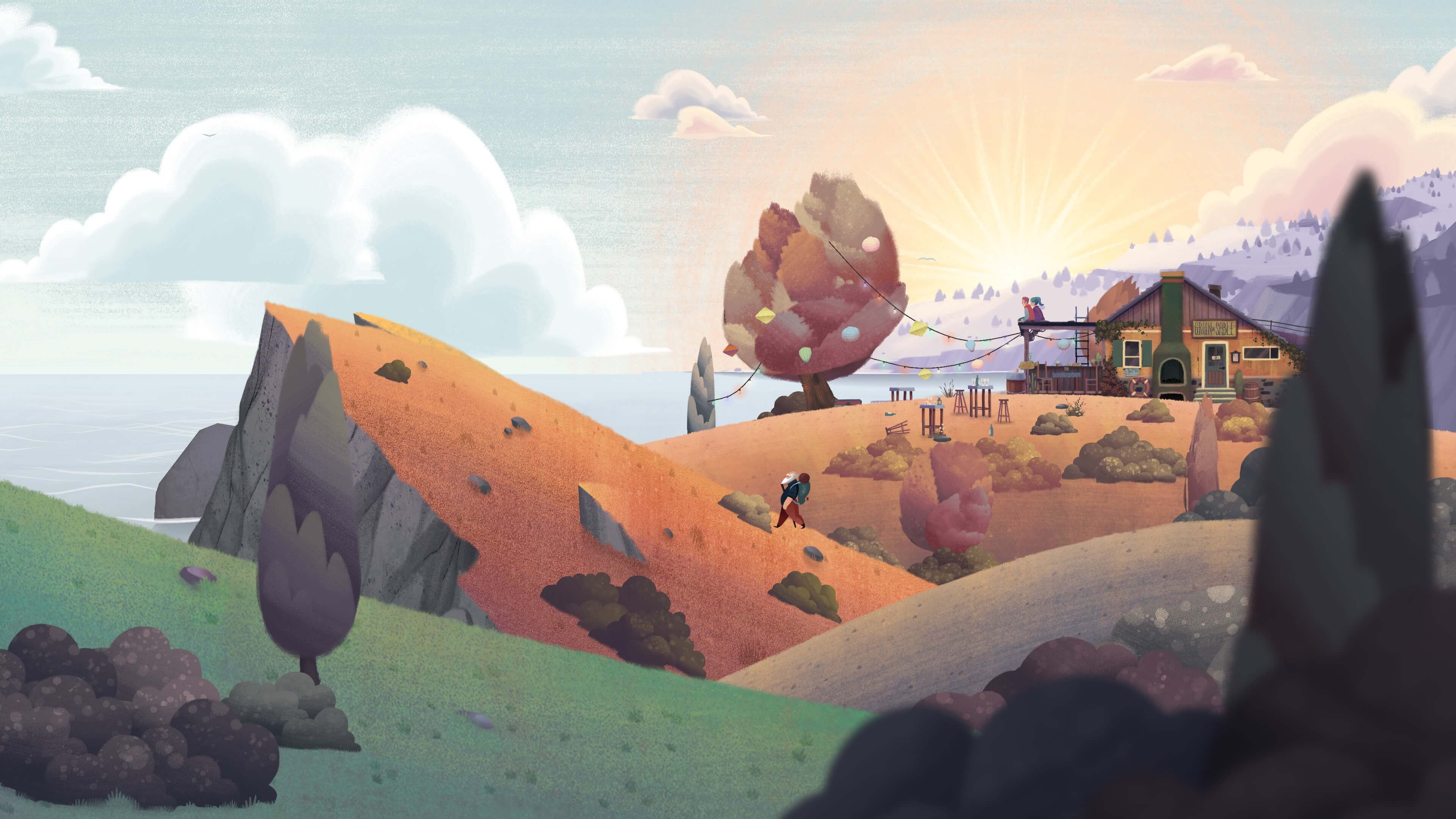
Old Man’s Journey is a short and unique point-and-click adventure game from the independent game studio Broken Rules, based in Vienna, Austria. They have made a game about life experiences, and everything that entails – love, happiness, regret, and reconciliation.
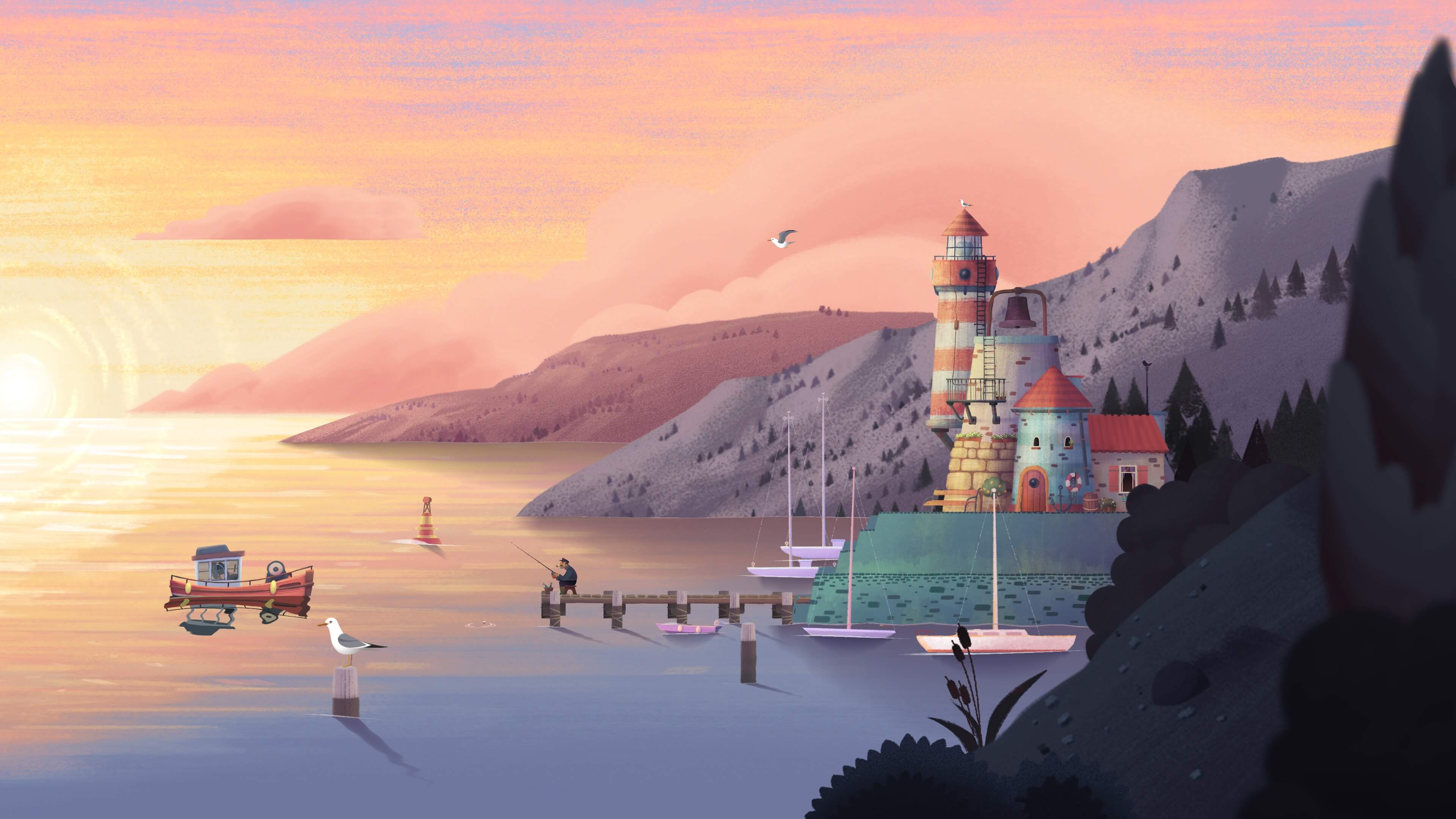
We follow an old man who lives in a beautiful house out by the sea. The game starts off with him receiving a letter, with the content left to be revealed at the end. As he gathers his backpack and walking cane, we join the old man as he ventures out on a journey through land and sea.
There are 15 different levels, or scenarios, in the game. Upon finishing each one, the man sits down on a nearby bench and scratches his white beard, pondering and re-exploring his past. With each memory, we collect more and more pieces of the story.
The level design of the game should be given high praise. Each level represents a different memory in the old man’s life, telling us where he has been and where he might be going. This way, we slowly progress through the old man’s life experiences up to the present.
The environment plays a huge role in the aspect of gameplay. In order to help the old man on his journey, the player has to manipulate the terrain around him, which I think is quite unique. Each level contains puzzles where you have to twist your brain a little, but never so much that it hurts. It never gets too challenging. Many might see that as a negative, but I rather enjoyed sailing through without much difficulty in a game like this: it is, after all, an atmospheric casual game.
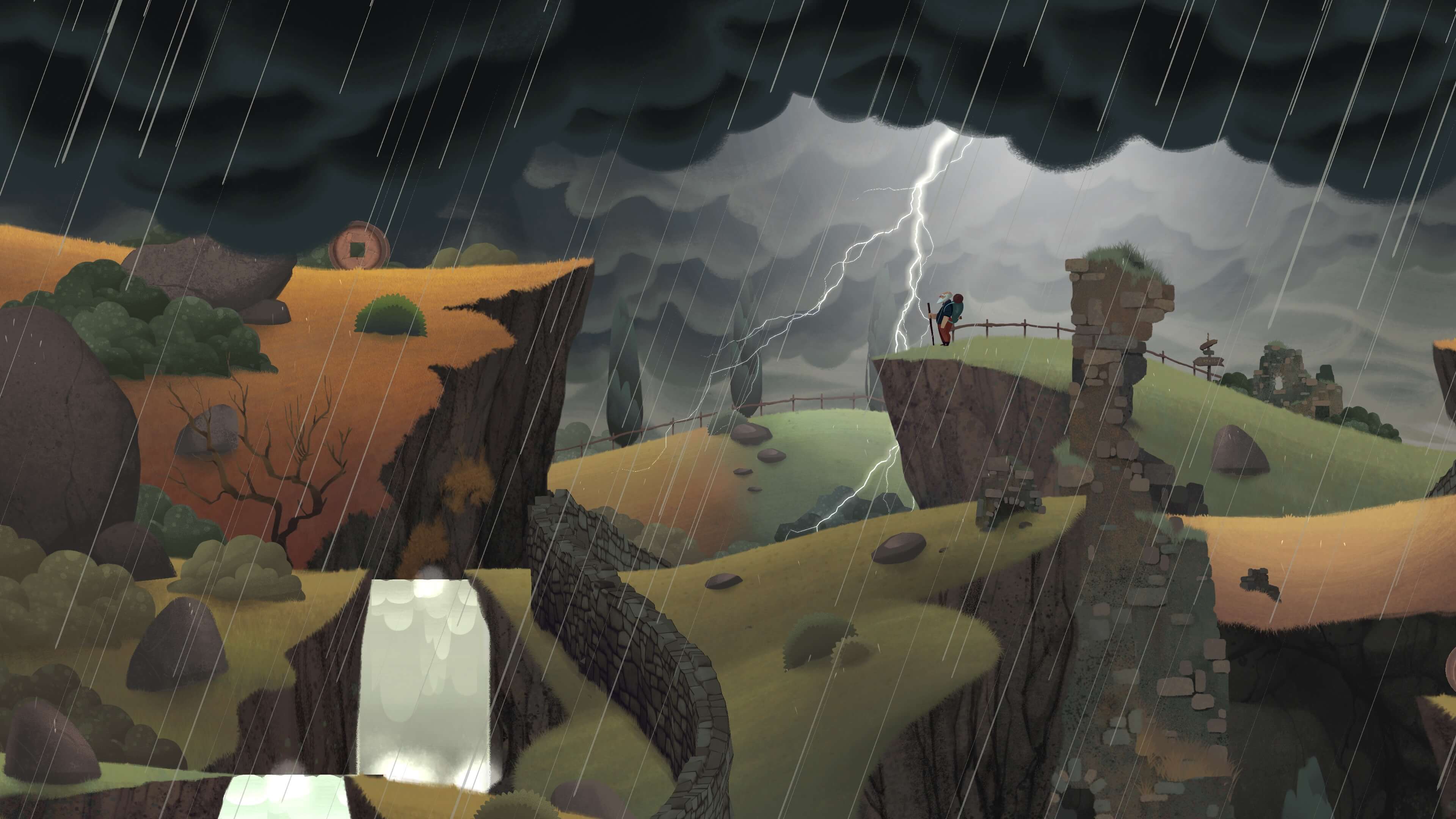
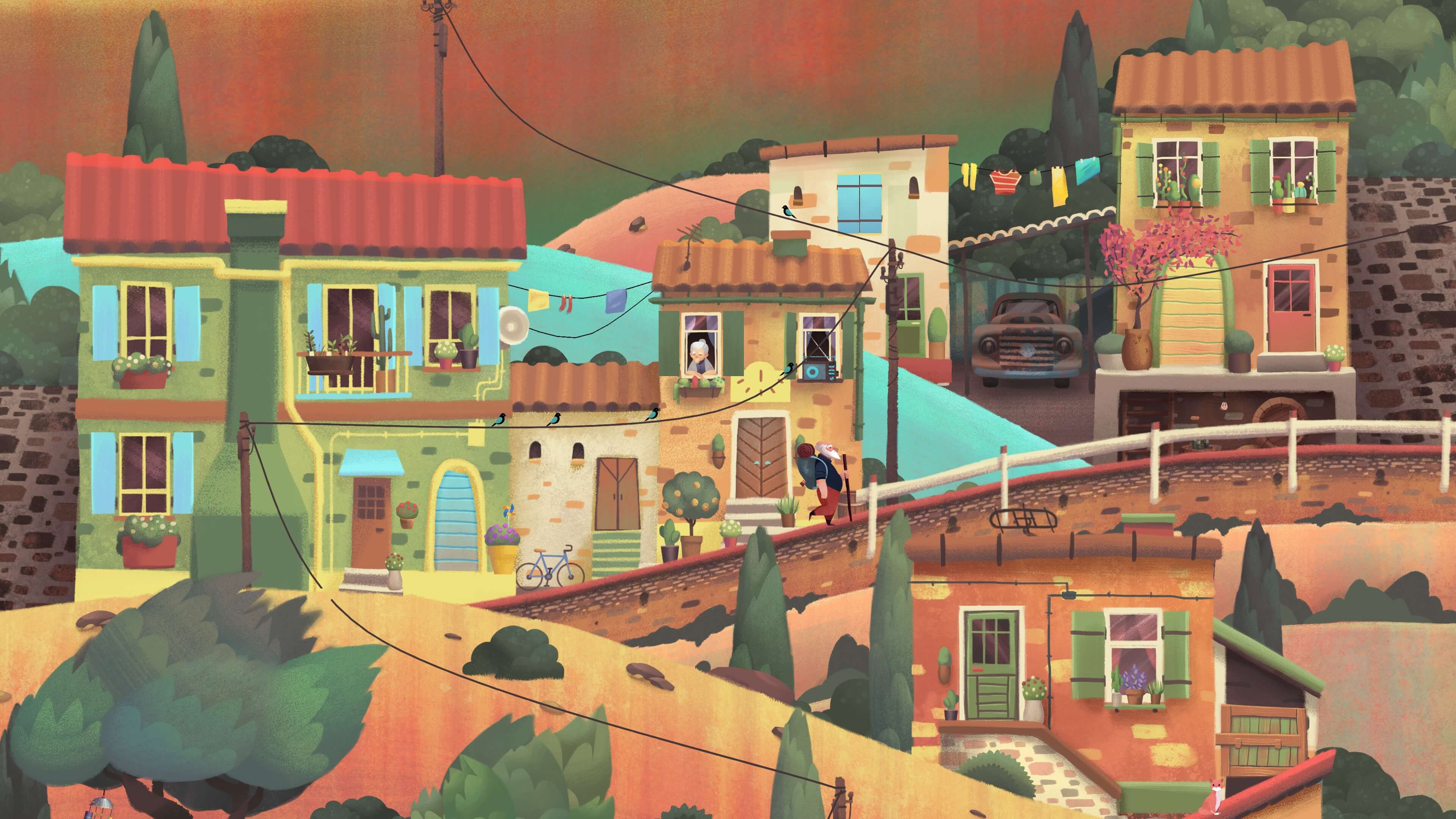
This game lives and breathes for the aesthetics. The memories look painted with watercolors, letting you experience art in a beautiful way – I feel like I’m walking through different paintings. With beautiful ambience such as the sounds of the ocean or the wind through the mountains, and simple yet gorgeous music with a present guitar and accordion, Old Man’s Journey provides a symphony for your eyes and ears. Putting on headphones and immersing yourself in the music and sounds when playing this is highly recommended. (THIS GAME IS GORGEOUS).
Amidst all the wonderfulness of the game, I encountered a few bugs where I had to restart some of the levels over again. This became all the more bothersome when I was right at the end of said levels. Along with a few graphic bugs as well, I felt that it broke up the flow of the game, which was fairly annoying when I’m in a meditative state of serenity.
I feel like I should also give a fair warning that Old Man’s Journey has little to no replay value. There’s no extra puzzles to solve, for example. When you figure out the ending to the story… it ends. Maybe that’s a message about life. Still, it would have been nice to have something else to do afterwards. That being said, the game is roughly 2-hours long, so it’s clear that the developers have created something to be played in one sitting, as there is no manual save function either.
Old Man’s Journey is a short and delicate game with a touching story. The music is simple, yet beautiful. Combined with an impressive art style and unique gameplay, Broken Rules has created a powerful piece of expression. I suggest you visit the Steam page while I dry my tears.
I honestly did not see this coming, but what a pleasant surprise!
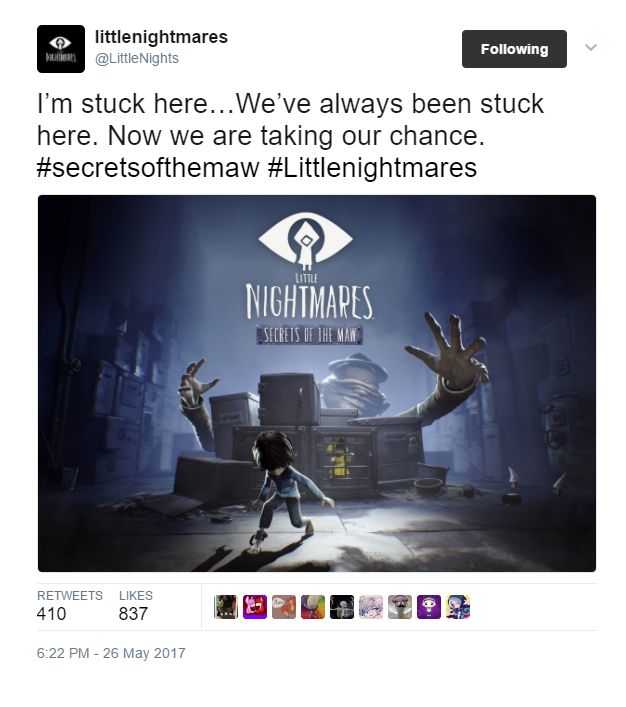
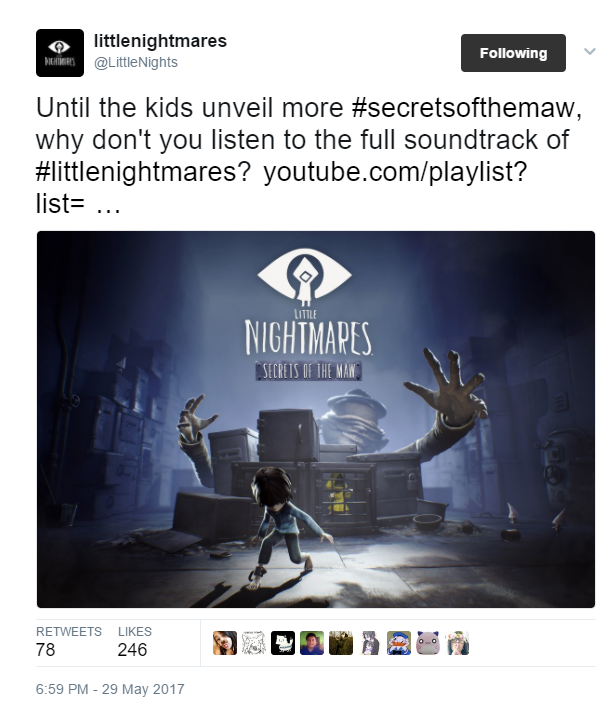
On May 26th and May 29th, Tarsier Studios posted some alluring tweets on Little Nightmare’s twitter page:
“I’m stuck here… We’ve always been stuck here. Now we are taking our chance.”
So, does this mean that the other kids we encountered down in the Maw are now trying to follow Six’s path, to try and escape the living hell?
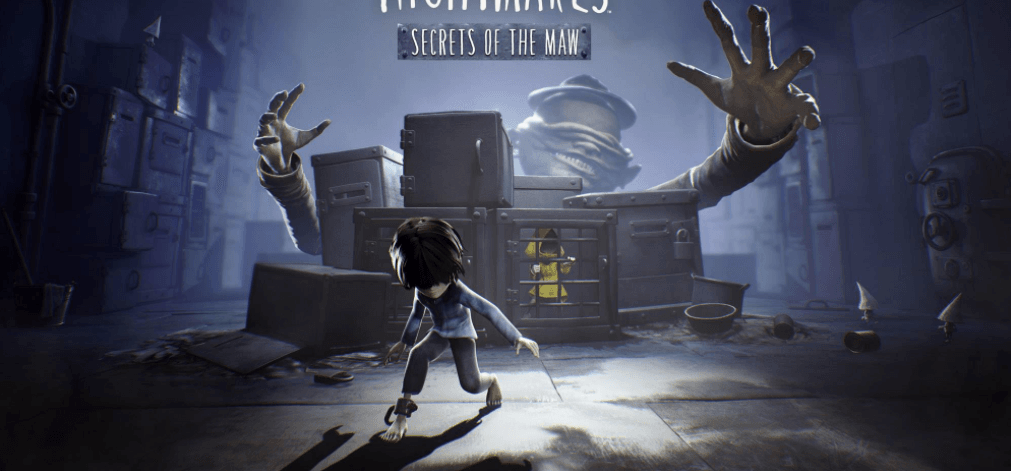
While very little has been said, one can now safely assume that Little Nightmares is getting DLC called ‘Secrets of the Maw’.
Speculations say that Six will not be the playable character in this DLC, but a boy named Seven, shown in the teaser picture. Will we embark on a new journey into the Maw with a new character, or will the boy give us additional story to the one we already know, but from a different perspective?
I know I’m excited – I have so many questions… And hey! Have you read my review on Little Nightmares?
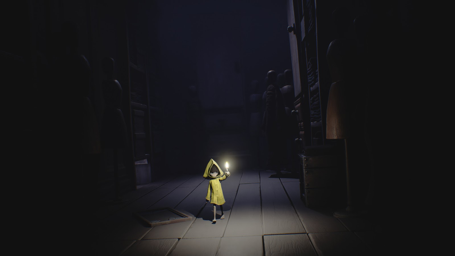
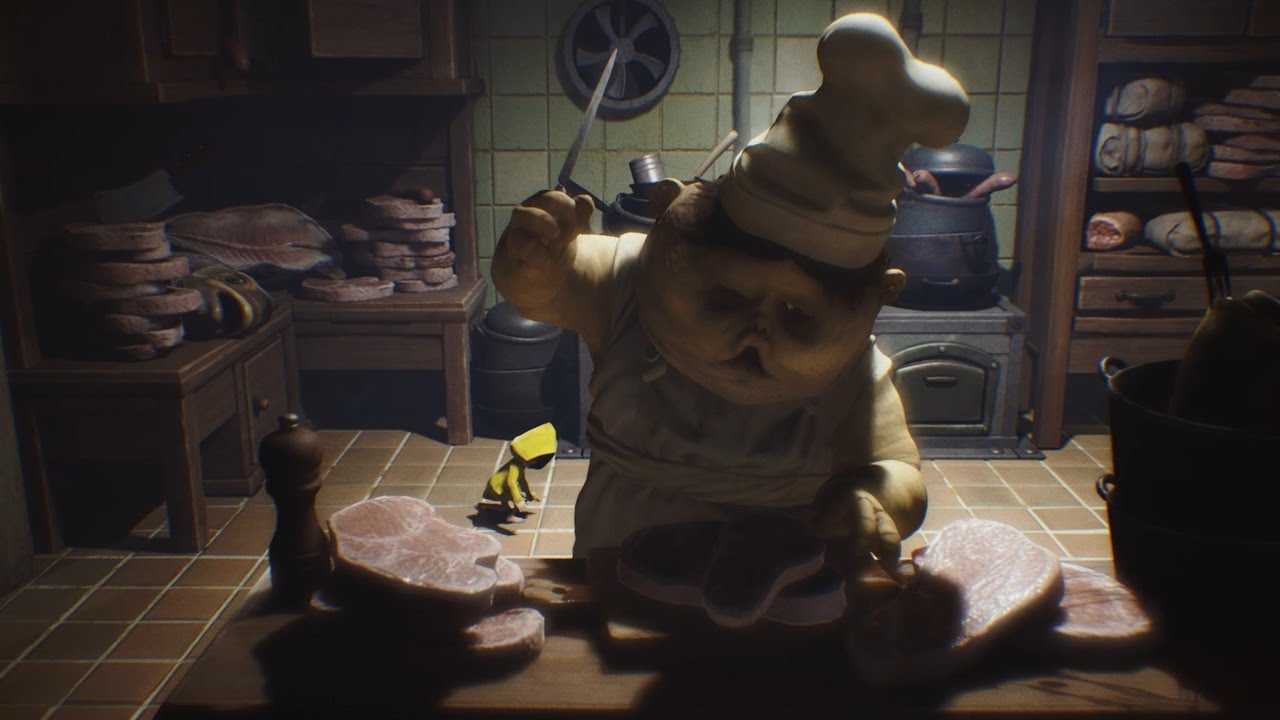
Little Nightmares is a horrifyingly mesmerizing puzzle-platformer developed by the Swedish-based Tarsier Studios. You play as a little girl named Six, wandering through The Maw, a disturbing world filled with monsters and horrors that makes your spine tingle.
This game is disturbing, uncomfortable, and absolutely gorgeous. However, there is also something alluring about it. I got a feeling that I had to explore this cruel and gruesome world with Six, so that somehow, I could protect her: so that I knew she wasn’t alone – and into the Maw we went.
In the early 2016, I went to a lecture about digital culture. Dave Mervik, the narrative designer for Tarsier Studios, was present and a part of the discussions. The lecture was called “The Art of Storytelling in Games.” One of the discussions was about how there could be a narrative designer for a game that doesn’t have a narrative. Playing games like Little Nightmares is always interesting because there is so much being told if we are willing to look.
Already then, the audience was given some sneak peeks about Little Nightmares. They were really small peeks though, since the game was still in development, and there were strict limitations to what Mervik could reveal. However, he revealed that the current name of the game was Hunger.
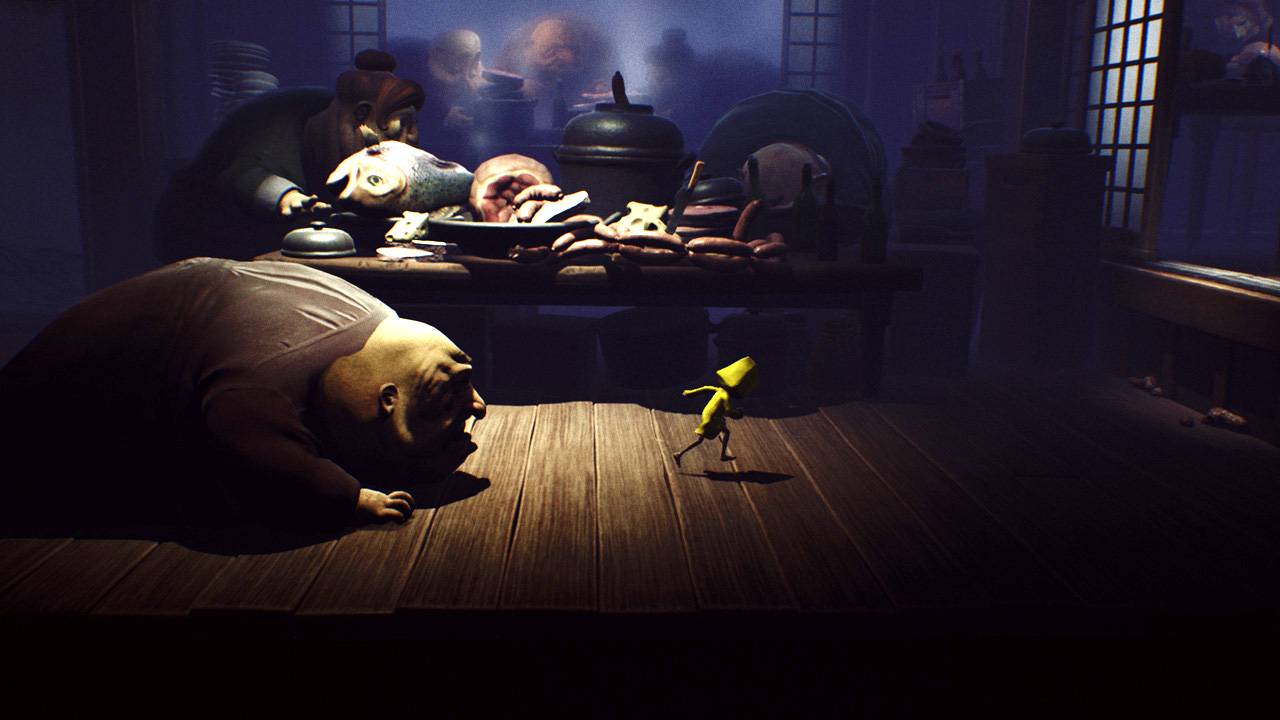
One of the themes I kept encountering was exactly this – the hunger. The insatiable hunger, where the mind is so overruled by this feeling that it stops thinking rationally. In one of the last parts of the game, you venture out on a gigantic ship where it seems that the only thing the guests are doing is eating. Eating with greedy hands, and greedy mouths. If they spot you, they will throw away everything in their hands, and reach for you. Even if they fall from their chairs in the process, they will keep grabbing at you, crawling towards you, groaning and moaning. That’s downright disturbing and uncomfortable. Even Six, our little adorable protagonist, will turn into a monster when hungry enough.
Is this what humans look like? Can we really be that greedy? The thought scares me…
I love the attention that the developers have made to the small details. Small details such as Six running her hands along the wall when walking close to it, feeling existence in the darkness. She turns her head to look at something interesting, as perhaps an indication to the player what is significant. The game is also beautifully structured, with a nice build-up and end on every level. It makes you hold your breath, with your heart pounding and your slightly sweaty hands on the controller.
My main issue with the gameplay: the sensitivity of controlling the character. It’s much trickier than it had to be, which sometimes could ruin the flow of the game.
It is clear as day that this game has several themes/elements to it. One of those elements is darkness. There are contrasts of darkness and light as Six always carries around a little lighter. You also light up candles and lanterns along the way. Little Nightmares makes it clear that it plays off your fears, such as the fear of darkness, tight spaces, critters, paranoia, etc. It was ominous when the monsters always showed up exactly where I was at all times. Thus, that is how it is when you are having a nightmare. The monster is always following you, and it is difficult to get away.
As I was playing the game I realized that it created a lot of philosophical thoughts in my head. That’s a good thing – I can always appreciate a game that makes me think. One of the discussions in the lecture about storytelling in games was about how there could be a narrative designer for a game that doesn’t have a narrative. Playing games like Little Nightmares is always interesting because there is so much being told if we are willing to look.
Little Nightmares shows how defeating your ultimate fear may make you able to conquer them all. It shows you how fear can be created where there is none. Without fear, there are no nightmares. If there’s one thing I’ve learned from this experience, it’s that the Maw can be pretty damn horrifying, in it’s beautiful, messed up sort of way. You learn that in the great scale of it all, we are but one single organism. Insignificant in the bigger context.
With Tim Burton characteristics in its style, Little Nightmares provides beautiful scenery and excellent ambience. When you realize how eerily quiet it can be around you, except from the rumbling of the machines, the occasional howl of the wind. Everything creaks, something squeals, something drags itself across the floor, and among it all – the small pitter-patter of Six’s feet. Overall, Little Nightmares is a work of art. It brings forth interesting themes, conveyed through what might very well be considered, quite simply, human nature.