Achievements might be coming to the Nintendo Switch – is it about time?

Another day, another juicy piece of information we’re probably not meant to know about yet. Could an achievements system be coming to the Nintendo Switch? It certainly looks like it.

The developers of Lichtspeer, an indie game just released for the console, recently conducted an AMA where “Redditors” could ask questions about the game’s development.

It was here that one particular question – whether the game had online rankings or not – caused a storm. The answer was quite revealing:

“Nintendo doesn’t have an official support for Achievements and Leaderboards, like Sony or Microsoft but we know that they’re working on it.”

Another user then highlighted the answer and asked if such knowledge was supposed to be, ahem, a secret. The devs responded, most likely realising that this information wasn’t, in fact, ready for the gaming public:

“Move along. Nothing to see here. Strong feeling [Nintendo] hinted it a few times”.

That last bit seems like damage control to us. Is this something we could see announced at the Nintendo Direct tonight? We’ll find out soon enough. Meanwhile, why not check out our piece on what to expect.

Would you like an achievement system on Nintendo platforms going forward?

Surprise! Okami HD is coming to PS4, Xbox One and PC in 4K

Ok, so you’re not that surprised, considering the cat was let out of the bag just days ago

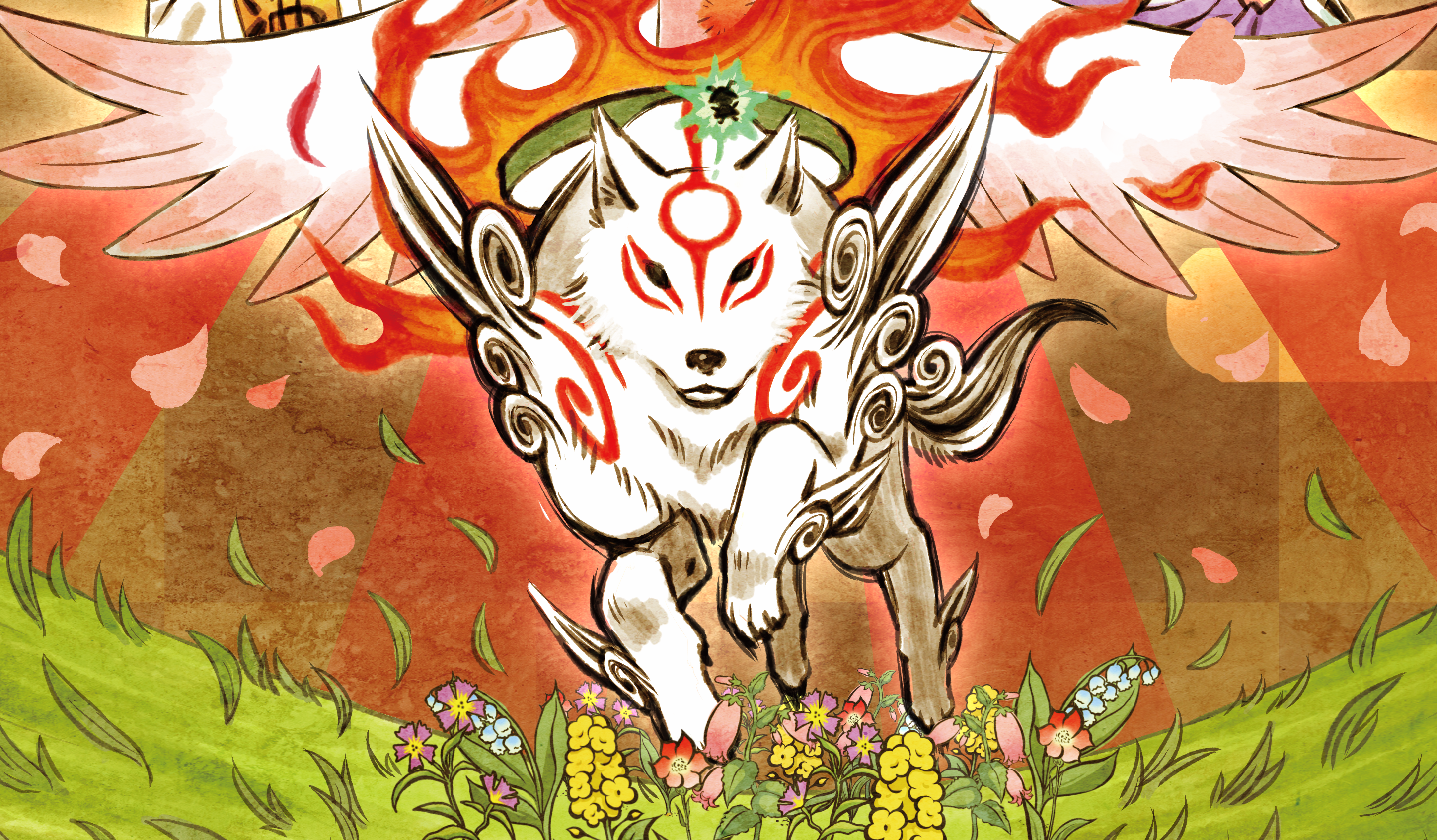
But yes, the masterpiece that is Okami is coming to PS4, Xbox One and PC both physically and digitally. There’s no Switch version, oddly.

The original game was released to critical acclaim back in 2006 and was hailed as one of the best games ever created.

What’s new exactly?

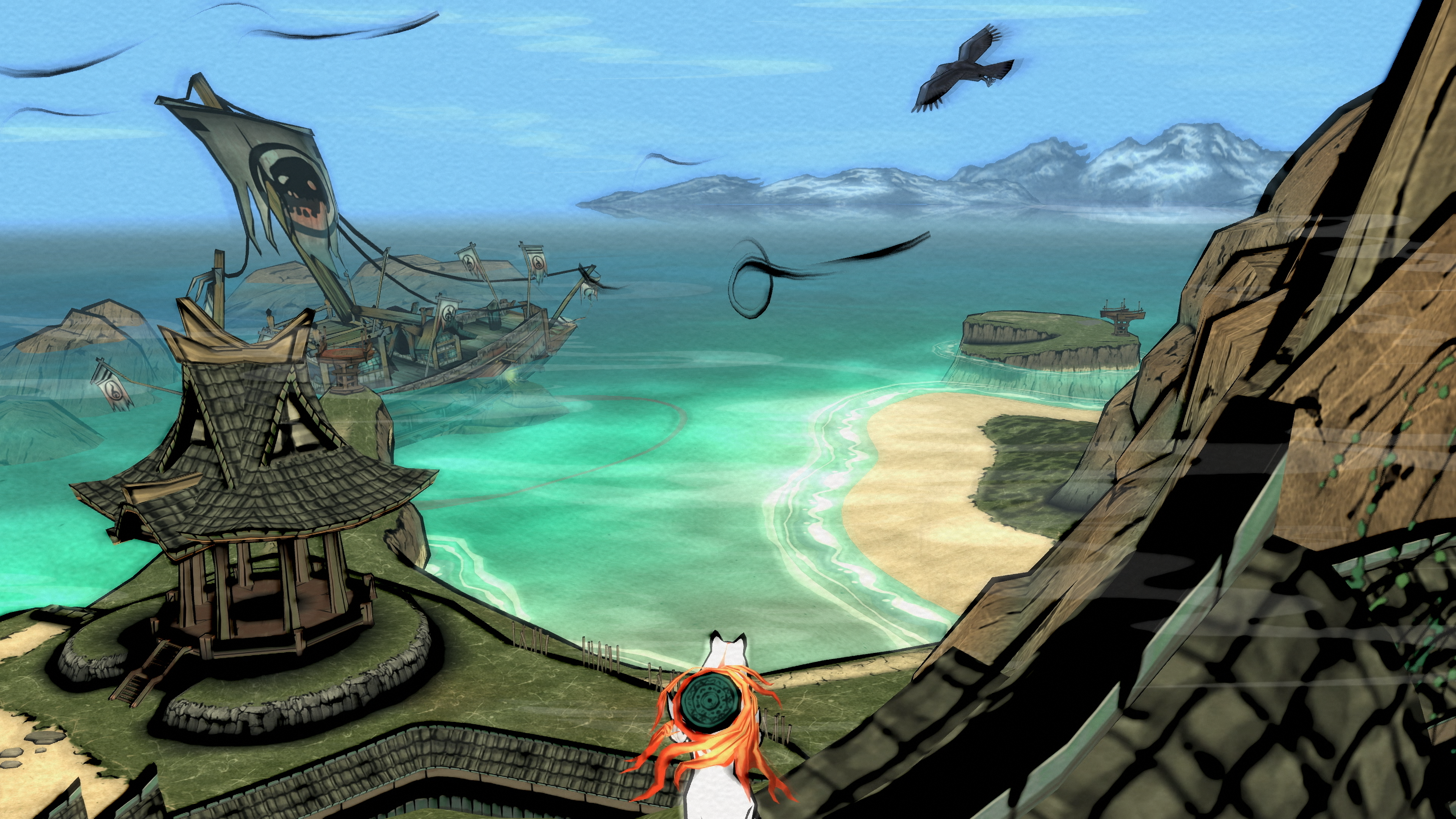
The graphics have been updated to take advantage of modern high resolutions, (as we predicted). Okami HD will be compatible with the Xbox One X and PS4 Pro, featuring 4K graphics on those systems, as well as PC.

Players will be able to choose between playing in a modern widescreen format or the original 2007 release’s 4:3 ratio. Interactive loading game screens from the original game are also included.

Okami HD

What’s it about?

You take on the role of Amaterasu, the Japanese sun goddess who inhabits the form of a legendary white wolf Shiranui on a quest to defeat Orochi, an eight-headed demon and tyrannical monster responsible for turning the world into a ruined wasteland.

Players must use Amaterasu’s magical abilities and an arsenal of items, attacks and Celestial Brush techniques to restore the land of Nippon to its previous glory full of life and colour.

Along the way, Amaterasu will be called upon to help a cast of quirky, (seriously quirky), characters and defeat a bevy of brutal enemies to rid the land of Orochi’s curse.

When and how much!?

Okami HD will be available digitally for all formats for £15.99 / €19.99 / $19.99 on December 12th, 2017. Simply, if you’ve never played it before, there’s no better time.

A Robot Named Fight, Metroidvania/roguelike hybrid, is now available on Steam

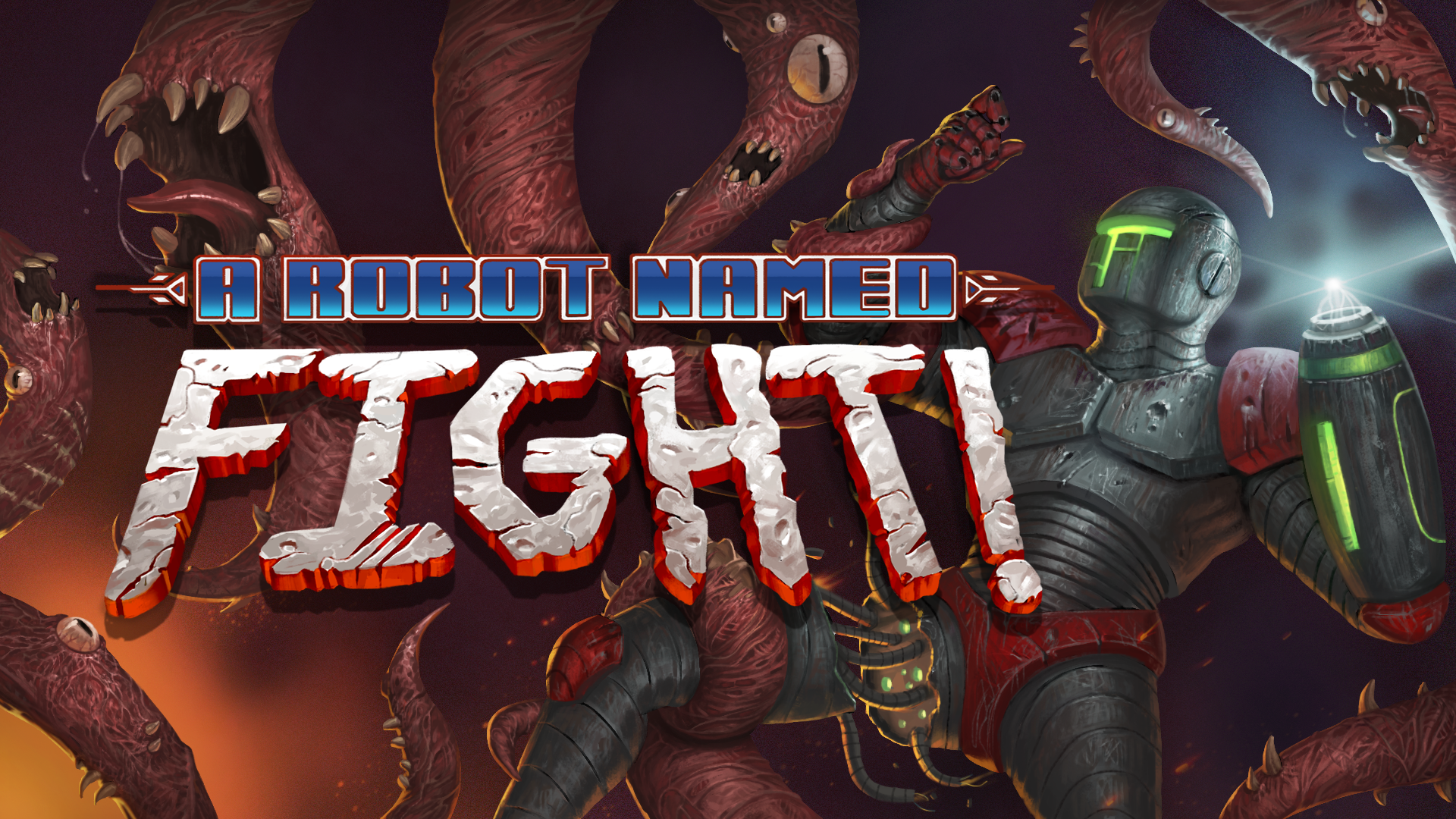
A Robot Named Fight is out today on Steam, everyone. Alien abominations, labyrinthine levels, and permadeath await you. If that’s your thing.

Combining the Metroidvania and roguelike genres, A Robot Named Fight aims to hit the sweet spot between retro and modern platformers.

As for the story, well, thousands of years have passed since the mechanical gods ascended and left the lower robots to cultivate the world, you see. Unfortunately for those left behind, something terrible is stirring among the stars: the “Megabeast”, a pulsating moon-sized orb of flesh, eyes, mouths and reproductive organs – unleashing its children onto the world like an unstoppable plague… How nice.

In the game, you play as a lone robot tasked with retrieving wartime artefacts deep beneath the surface of your planet. It’s here that you’ll explore a procedurally-generated underground world that’s full of monsters and power-ups.

Super Metroid fans, enjoy this trailer:

You can grab A Robot Named Fight on Steam now (both Windows and Mac) for $7.49 – 25% off the game’s retail price. The sale will end a week after launch (on September 14th).

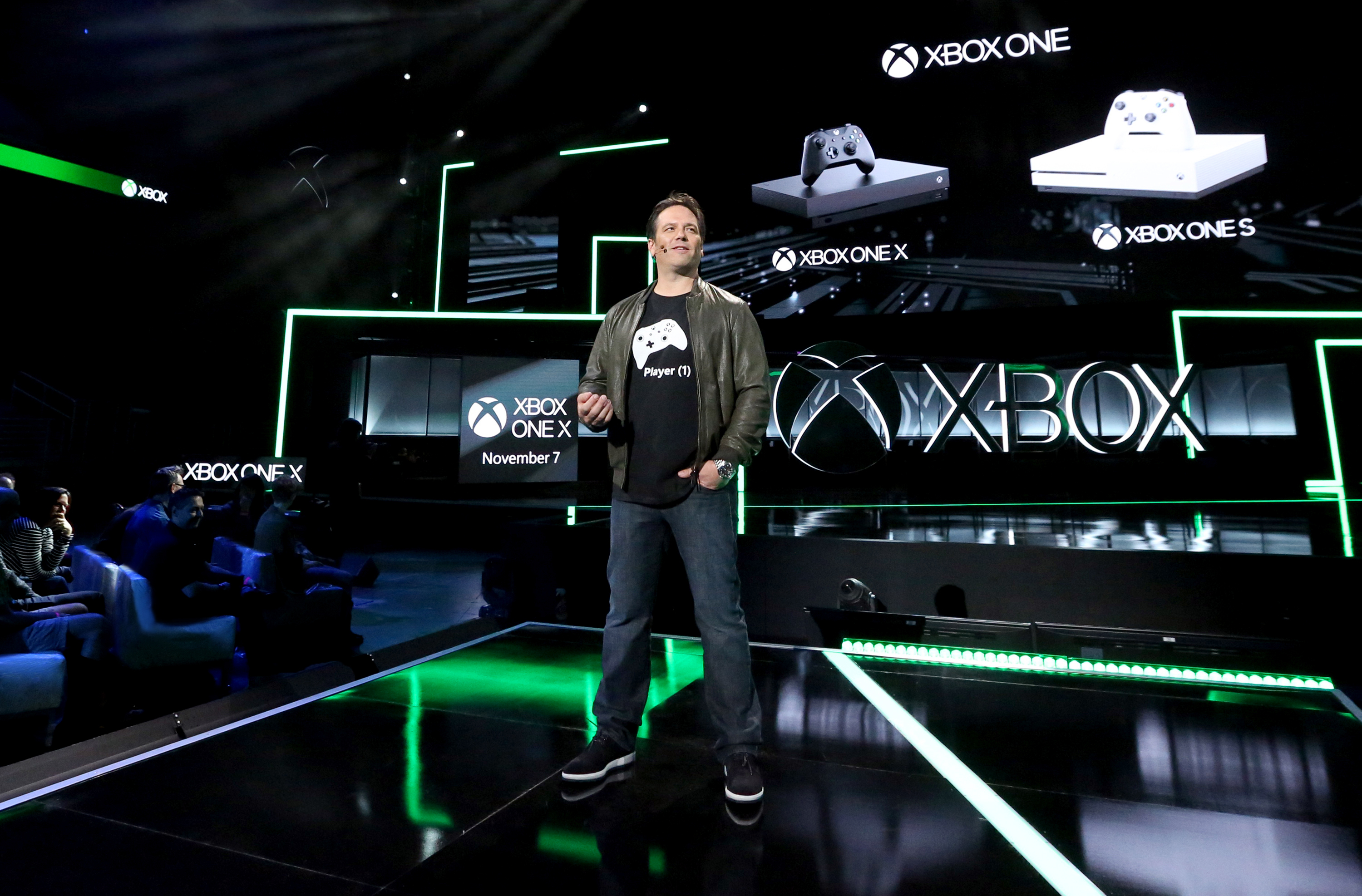
Analyst Michael Pachter predicts Microsoft will sell one million Xbox One X consoles this year

For those of you who are unaware, Michael Pachter is a controversial analyst in the games industry. He likes to make statements that get people talking… (And he gets paid to do it).

His latest? He believes Microsoft will sell one million Xbox One X consoles this year. Sounds like a solid number to us if it happens, right?

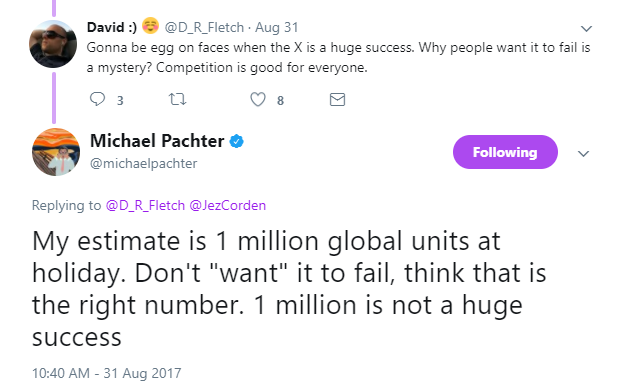
But this is where it gets interesting: Pachter believes that figure isn’t very good at all and that ultimately, the console will fail. Although he says he doesn’t want this to the case.

On Twitter:

Pachter

It’s sure to get some fans of the Xbox and the upcoming “X” system worked up, but what do you think about Microsoft’s beefy new hardware, and will you be buying one?

The debate, as ever, rages on.

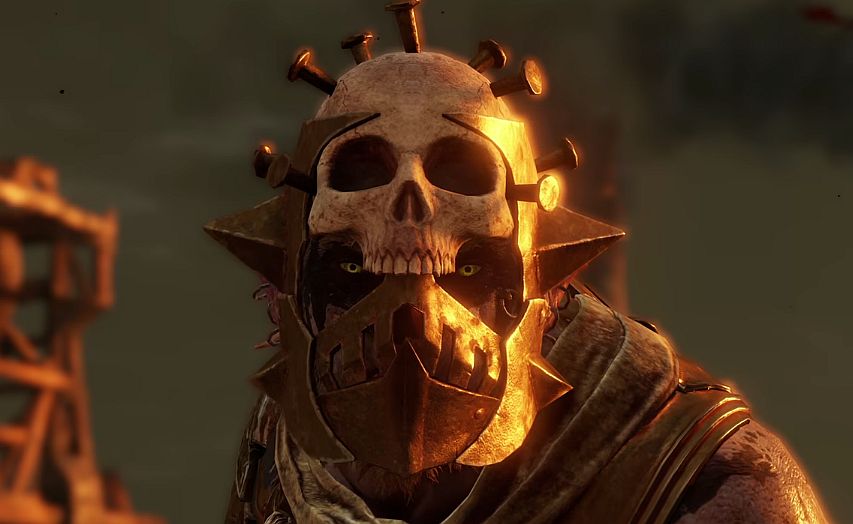
Meet the ‘Terror Tribe’ in Middle-earth: Shadow of War

We have a new video for Middle-earth: Shadow of War out today that shows us the ‘Terror Tribe’, a faction of Orcs who, you guessed it, specialise in spreading fear throughout Mordor… They look like a nice bunch.

In Shadow of War, Orcs now belong to tribes, which extend their influence stemming from the Overlords ruling the rather large fortresses throughout the open world, providing an ecosystem of missions and exploration.

These guys are master tormentors and rely on their infamous reputations to inspire fear among their enemies. Fear is a form of control, after all. You can see them below.

Shadow of War will be available for Xbox One X and Xbox One, Windows 10 PC (Windows Store and Steam), PS4 and PS4 Pro on the 10th October.

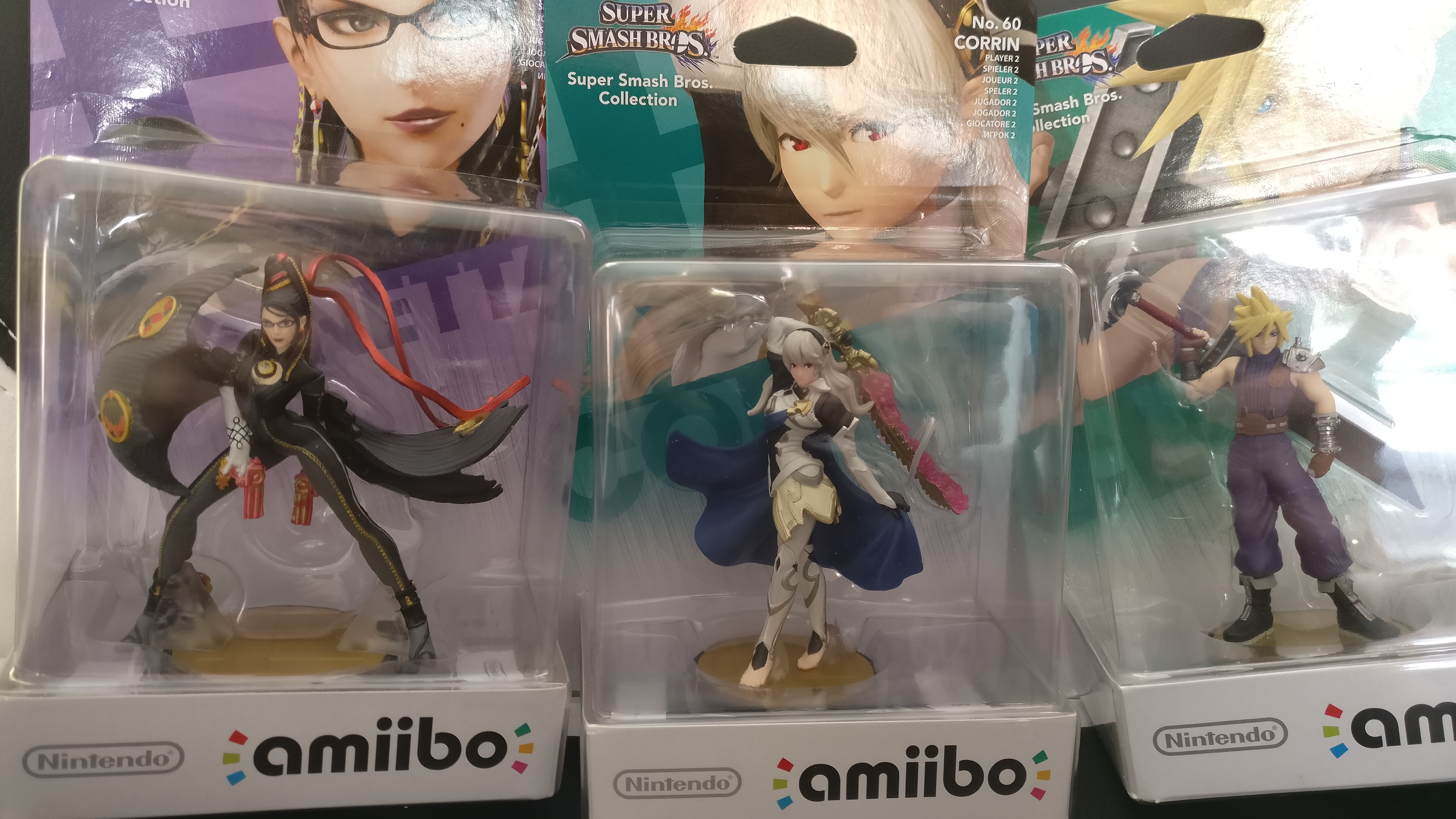
These just arrived at D-pad Joy HQ: Cloud, Bayonetta and Corrin amiibo!

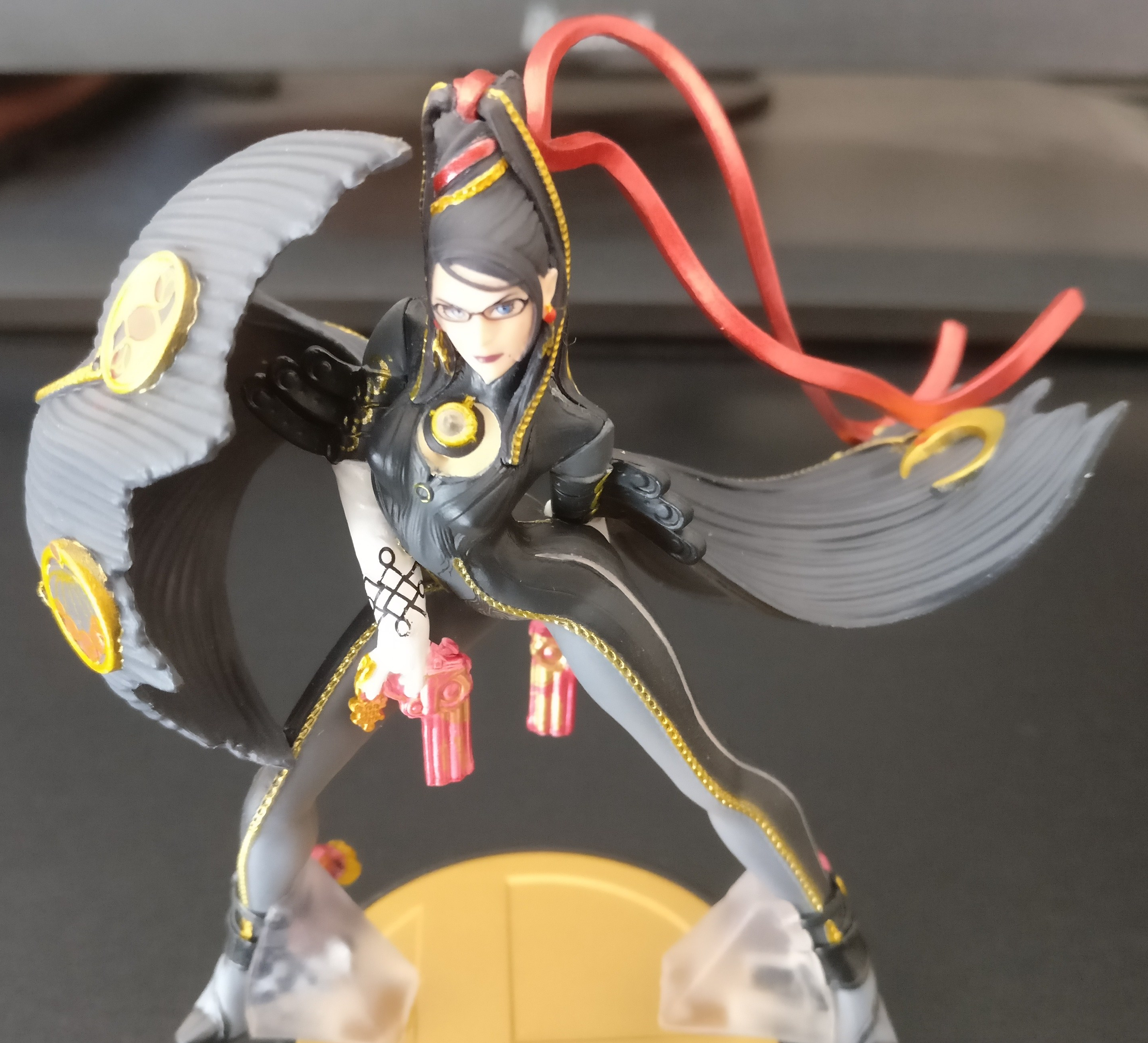
We’ve just had the final Super Smash Bros. amiibo turn up at the door. So, yes, that’s Cloud, Bayonetta and Corrin.

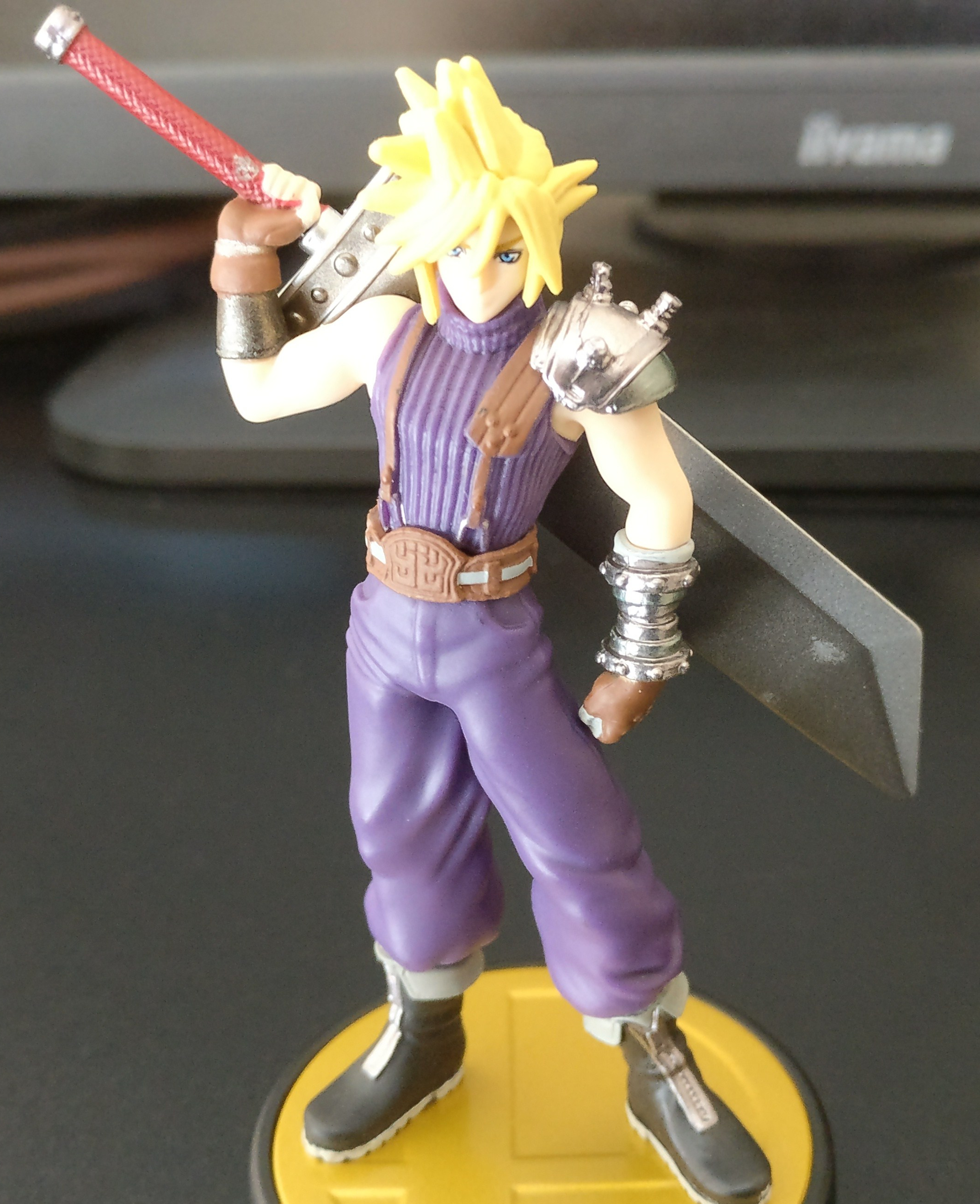
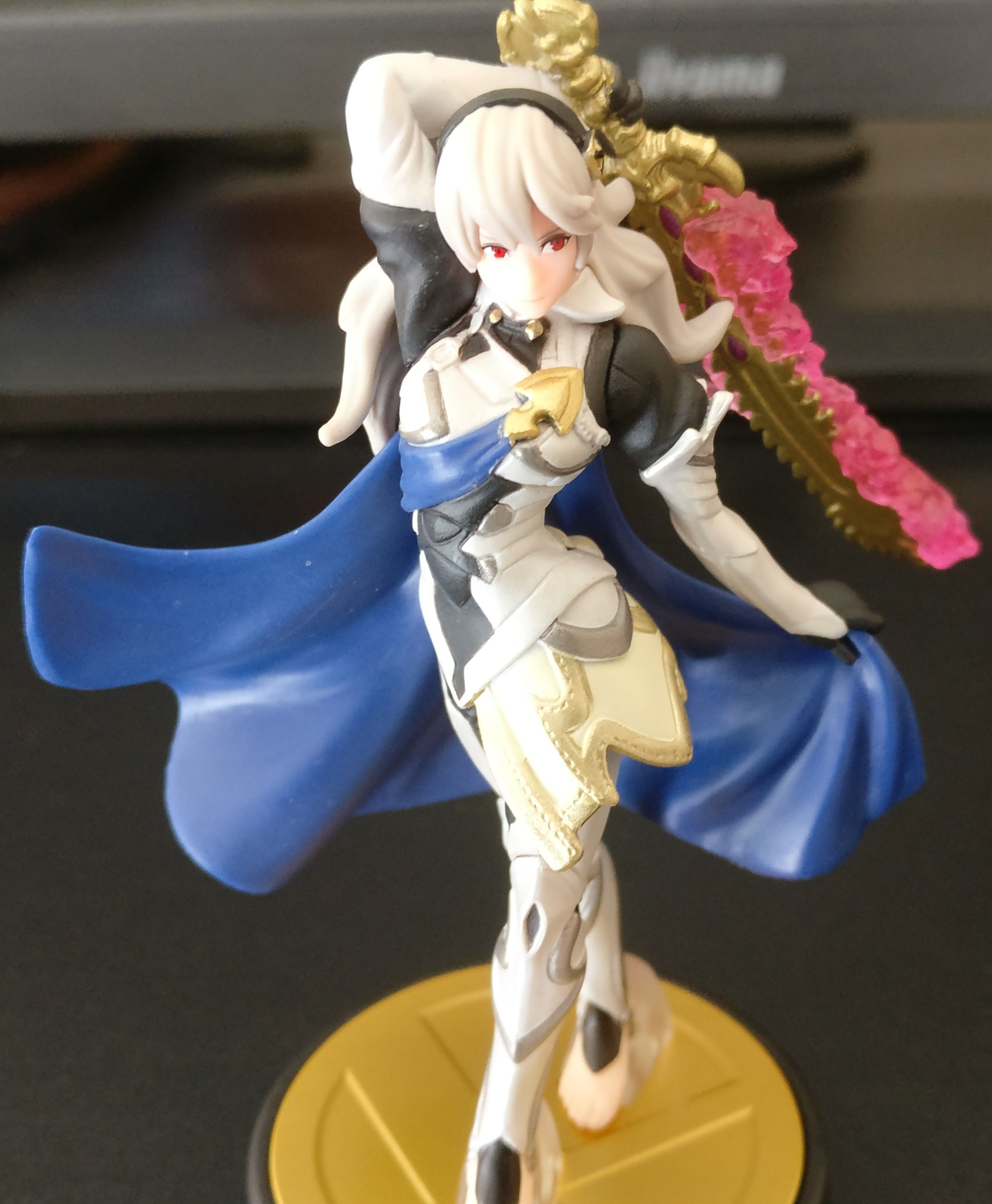
Our first impressions are good, they all feature highly-detailed models. The faces, as with most of the other more human-looking characters, aren’t amazing, but the level of detail on the costumes for each of them is impressive. There’s no doubt the figures have improved since the launch of the amiibo range.

Here’s a quick look at each of them:

Cloud Strife – Final Fantasy 7

cloud-amiibo.jpg

Corrin – Fire Emblem Fates

Corrin

Bayonetta – Bayonetta 1

bayonetta.jpg

It’s worth pointing out that each of the figures cost £10.99/$12.99 (before scalpers inflate the price), so for the money, the models are excellent. Each of the figures has a second version too: Cloud from Final Fantasy 7: Advent Children, Bayonetta from Bayonetta 2 on Wii U, and the male Corrin from Fire Emblem Fates.

Are you planning on picking any of them up – while you can, that is?

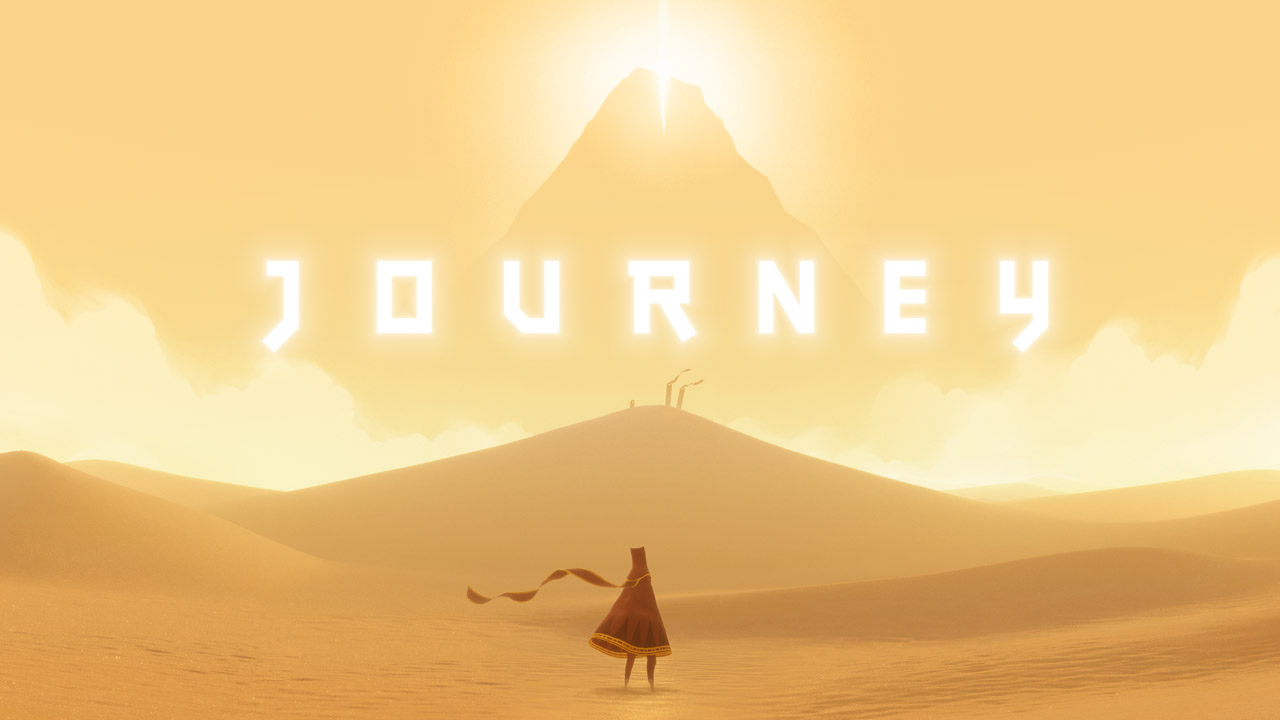
Review: Journey (PS4)

We present to you a review of one of our old favourites reader…

Are games art?

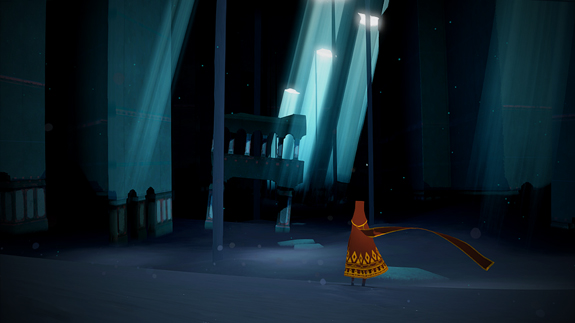
Journey wasn’t made or conceptualized by Pablo Picasso or directed by Jean-Luc Godard, neither has it won any Nobel Peace Prizes. It wasn’t written by F. Scott Fitzgerald nor was it featured in the Smithsonian, but this game made me feel as much emotion and as much awe and wonderment, if not more, than all of these great literary masters and artists. The whole Roger Ebert “game isn’t art” argument is quickly decaying and fading in relevance.

Art is supposed to invoke a broad spectrum of emotions within us all and this game explodes with just about everything that art itself stands for. Journey is the culmination of ThatGameCompany’s hard work and labour, from Flow to Flower; this is the game that defines who they are and what they stand for. A force to be reckoned with, ThatGameCompany has delivered a bite-sized experience that feels larger than life.

The story in Journey is purposely vague in its spiritual and airy nature, borrowing exploration elements from games like Shadow of The Colossus combined with the freedom and sense of empowerment of Flower. Hieroglyphs depict forthcoming revelations that players will experience throughout the game; for example, at the end of a certain level you may be shown a hieroglyph that shows a bridge of some kind or a structure being built, this lets you know a little bit more about this mysterious world and how you go about. There are also cutscenes that actually serve as transitions from one level to the next, really minimal and quiet, but impactful since it makes you feel like you’re getting closer to your destination.

Journey1

Without getting into the whole mythology of Journey, as fascinating as it is, your primary goal is to reach this mysteriously high mountain that echoes its presence in the distance. The closer you get, the harsher the conditions become as you brave through blistering blizzards and underground creatures, symbolizing that whatever that mountain is, it will be all worth it at the end.

Journey’s controls are tight and responsive with the right amount of float. You have a jump button that really makes you soar high up in the sky depending on how many pieces of fabric are attached to your magical scarf. You get these replenished by interacting with other pieces of fabric that exist in the world, or by interacting with another human player online. You are not given many abilities as you have to use your limited capabilities to make big changes to the environment. Interaction is key!

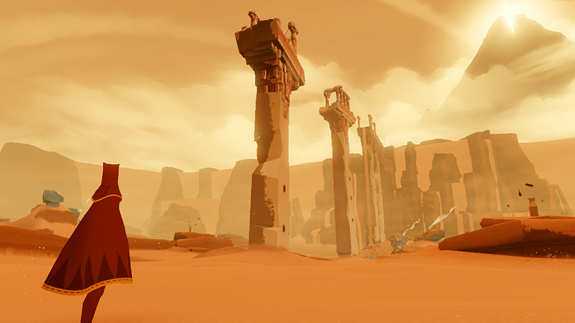
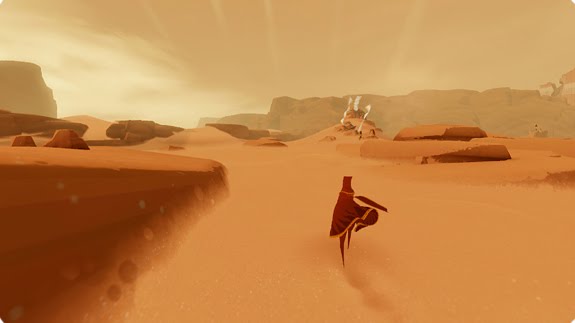
Journey was one of the best-looking games of 2012, the sand animation and textures are still stunning, and the character animations are fluid and top-notch. You would expect these kinds of enhancements and polish from a $60 game, so having this amount of polish in a downloadable experience is very encouraging.

Journey-2

It’s ThatGameCompany so you should already expect to be floored by a moving and sweeping score by Austin Wintory. It’s uplifting at times as you scale down a large hill as the sun is setting, and other times it can get dark and ominous as you venture deep into the abyss. Wintory keeps it moving from setting to setting without overdoing it and sometimes I found myself replaying levels just to hear the music as I explore around looking for more glyphs to unfold.

Journey boasts a seamless “drop-in” online co-op experience, passive multiplayer as they like to call it, ala Dark Souls but not quite. Players can randomly meet other players along their journey and if you wish, you can accompany your new companion all the way to the end with no interruption. However there are no PSN IDs or HUDs, no voice chat communication, so you have to use your “call” or “chant” that sounds similar to the sound you make when you touch flowers and roses in the game Flower; kind of like a symphonic tone that changes slightly the more times you interact.

At the end of the game, as the credits finish rolling, the players you met along the way are revealed to you in the form of their PSN IDs, and it’s really rewarding to actually see and find out who it was that helped you out. The sense of amazement is unmatched; the fact that I made it through the end with a complete stranger and that we bonded along the way, it’s unparalleled and it’s an experience I’m going to relive again and again thanks to ThatGameCompany.

Journey-3

Journey has made me feel emotions that I’ve never felt before when playing a game, it’s a rare treat and will continue to live on and set examples for what gaming can really provide and what it can do. You will not experience another game quite like this one, and if you haven’t picked it up yet, I recommend you stop reading this review right this moment and hop on the PS Store (the PS4 version is the best) and buy it immediately. Sit back, enjoy, and immerse yourself in a Journey you will never forget.

techtroid-rating10

4 Games That Need A Sequel – But Probably Won’t Get One

There are those games out there which rightfully deserve a sequel. They delighted us, entertained us and still give us countless nostalgic rushes.

Sadly, the odds of these games ever getting a sequel are few and far between – for whatever reason that may be.

Enslaved (2010)

Enslaved

Chance-O-Meter 2/5

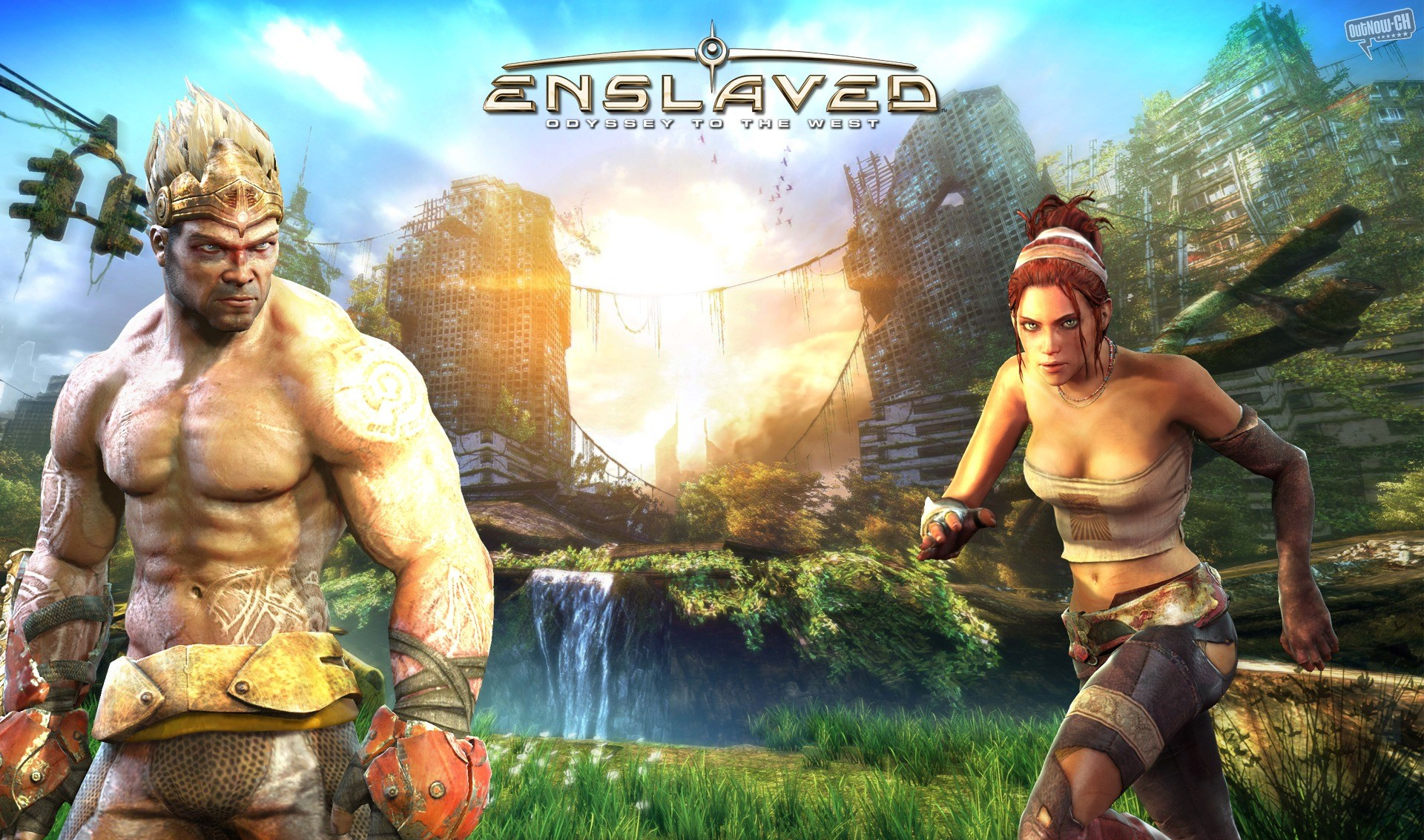
Enslaved: Odyssey To The West received a great all-round critical reception, but hardly anyone bought the damn game. And that’s a real shame.

Enslaved is a hidden gem of a game, one which will probably never be appreciated for the hard work and effort that has clearly gone into it. Following the main character Monkey, a tough, hot-headed, acrobatic genius, the player is taken on a journey with a really interesting storyline; this isn’t the usual ‘skip the scenes’ job. The characters and plot are really involving and without spoiling anything, the development between Monkey and Trip throughout the game is expertly executed.

Ninja Theory said they always planned for Enslaved to be two games, however, even they couldn’t anticipate the poor sales the game ultimately achieved. Come on, that ending needs expanding for sure. Maybe one day…

MediEvil (1998)

Medievil.jpg

Chance-O-Meter 1/5

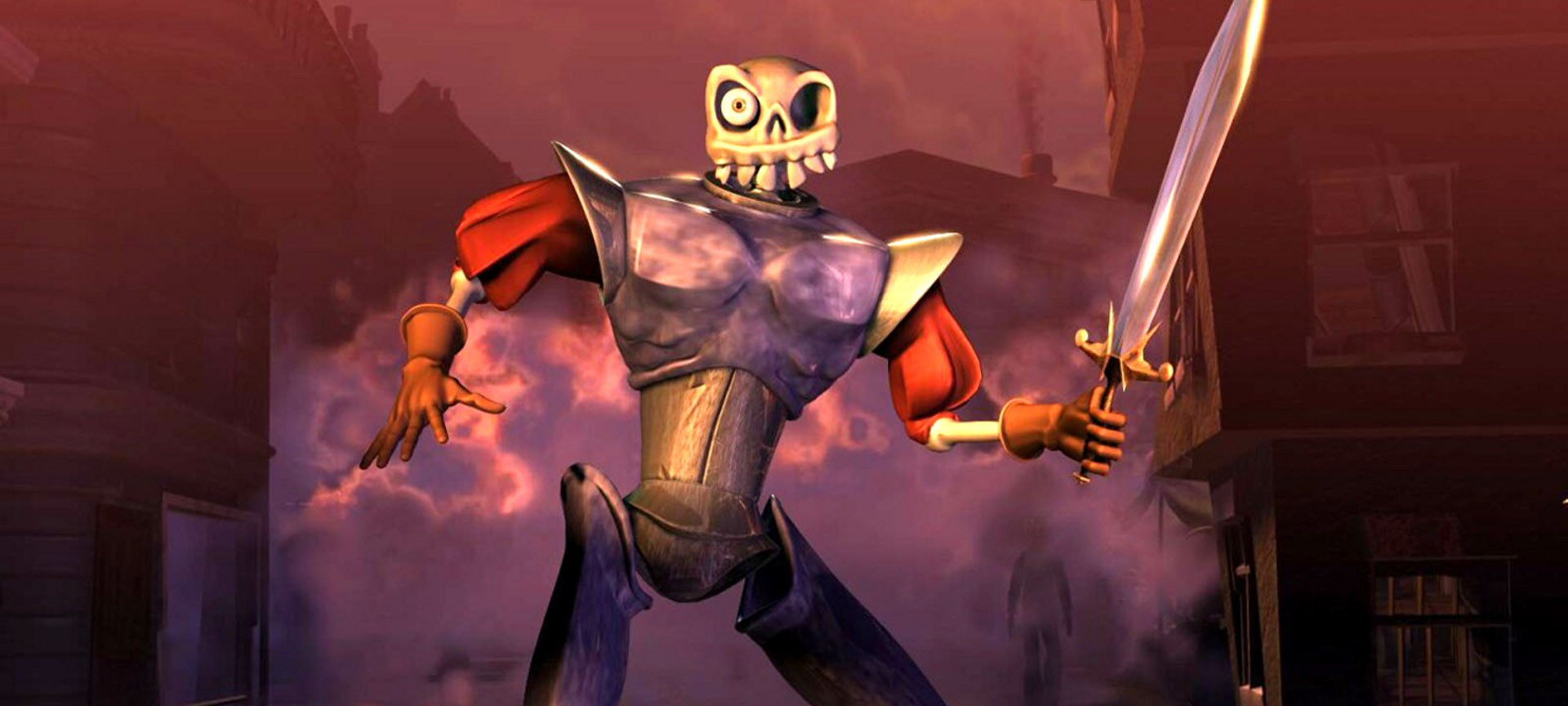
Ok, so MediEvil already had a sequel right? That doesn’t mean a third game shouldn’t happen. The first and second games were filled with charm. Players controlled the skeletal, one-eyed, Sir Daniel Fortesque, who couldn’t properly speak himself due to years entombed underground.

The dark, brooding atmosphere of the games really made them their own: combined with witty humour, yet having dark undertones within. The weapons were a particular highlight, with Dan in the second game wielding anything from a Magic Sword and Shield, to a Gatling Gun. The PSP outing titled: MediEvil: Resurrection, was a remake of the first game, and sadly not a new adventure for the loveable fella.

Hopefully Sony one day will see the error of their ways and produce a third game. With Call of Duty games coming out every year now however, who among the gaming mass really wants to play as this worn-out skeleton anymore – other than the cult following?

Hogs of War (2000)

hogs-of-war.jpg

Chance-O-Meter 1/5

Although Hogs of War was never given the top rankings among gaming critics, it wasn’t long before it became a classic in the eyes of those who played it. Rik Mayall even lent his voice!

The turn-based style that was clearly inspired from the Worms series of games meant that Hogs of Wars was essentially Worms with hogs – with perhaps more humour. Players had a team of hogs loaded with numerous strategic weapons for them to utilise. This ranged from Sniper Rifles, to Grenades, to Cattle Prods. The system – which saw your hogs promoted through the ranks – only made it even more painful when they fell in battle.

What makes it even worse is that a sequel to the game was confirmed to be in the making by Atari. Unfortunately, the game was quietly cancelled as far as everyone knows. Does that mean the chance of us ever seeing a revival is even slimmer? Pray it not.

World of Goo (2008)

World of Goo.jpg

Chance-O-Meter 2.5/5

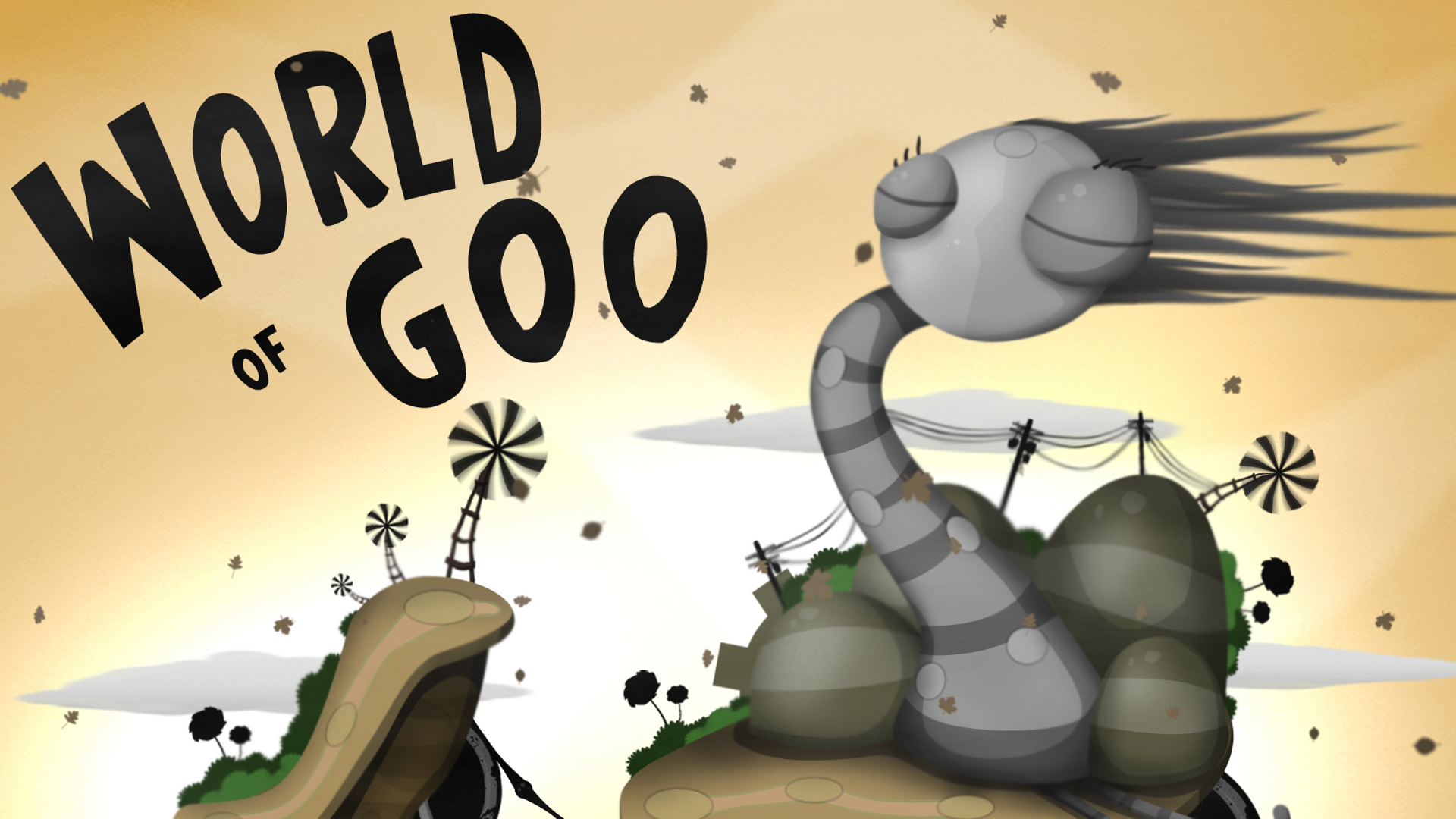
World of Goo was produced by only two people, but that doesn’t stop it from being one of the finest modern puzzle games conceived so far. With catchy music, brilliant design and lovely visuals, World of Goo took the world by storm.

The aim of the game is simple on the surface, but fiendish later on – something all good puzzle games should do. The idea was to get the Goo Balls to the end of the stage – by linking Goo Balls to other Goo Balls. The player could go about this in pretty much anyway they wanted, creating all sorts of weird shapes in the process of getting the cute black guys up the pipe.

So why is a sequel needed? Because everyone wants more levels, more music and more humorous plot scenes to take place. 2D Boy could even go about adding some new modes to the game, like online co-op for example. The first one was such a surprise hit for the duo, they’d be mad not to do another, surely?

Sequels Galore

So there you have it, four games that need sequels, (new IPs are always welcome as well). I’m aware that there are many more games out there that desperately need sequels, but this was my personal pick – what would yours be?

Viewpoint: How the Beyond Good and Evil 2 reveal represents the ever-changing nature of the games industry

2003 was a simpler time for gaming. A transitionary time of sorts. True widespread online accessibility was still a few years away and though technology was advancing rapidly, consoles and PCs weren’t the true technological behemoths that they are today. There were no trophies or achievements to display proudly. Things were different. Games, or rather, peoples’ attitudes to them were different too, at least on a rudimentary level. There were less variables to consider. This, coupled with the fact that titles were simply cheaper to make at the time, meant that studios, in general, were more willing to take risks.

This brings us to Beyond Good and Evil. Considered by some (myself included) to be a classic of its generation, it is nevertheless easy to see why the game may have gone on to struggle financially. The game is often consigned into the miscellaneous genre of the “Action Adventure”, where games that can be difficult to pinpoint are regularly forced to tread. In reality, Beyond Good and Evil is a mesh of various genres, with platforming, stealth, third-person combat, exploration, and even photography thrown in for good measure. Add in a large dose of anthropomorphic characters and a linear structure and the game doesn’t come across as being overly marketable.

This all led to a dichotomy of sorts, wherein the aforementioned aspects proved to be detrimental to the game’s overall sales performance, with Ubisoft considering Beyond Good and Evil to be a financial failure, despite its receipt of widespread critical acclaim. The bust was big enough for Ubisoft at the time to scrap any future plans for a continuation of the series, even though the game ended on a cliffhanger of sorts, as the game’s director, Michel Ancel, had originally envisioned it to be the first instalment in a trilogy.

The game, of course, went on to attract a large cult following throughout the years, adjoining with the likes of Earthbound and Killer 7 as titles whose mediocre sales didn’t reflect their overarching popularity amongst the gaming community. The fanbase grew as word of mouth spread. Clamours for a follow-up were abundant. A short tech demo was released in 2008 but nothing concrete had been shown until now; 14 years after the original game’s initial release, not only do we finally have official confirmation of a Beyond Good and Evil sequel, but also actual confirmation on what the game will entail, albeit the details remain minimal for the time being.
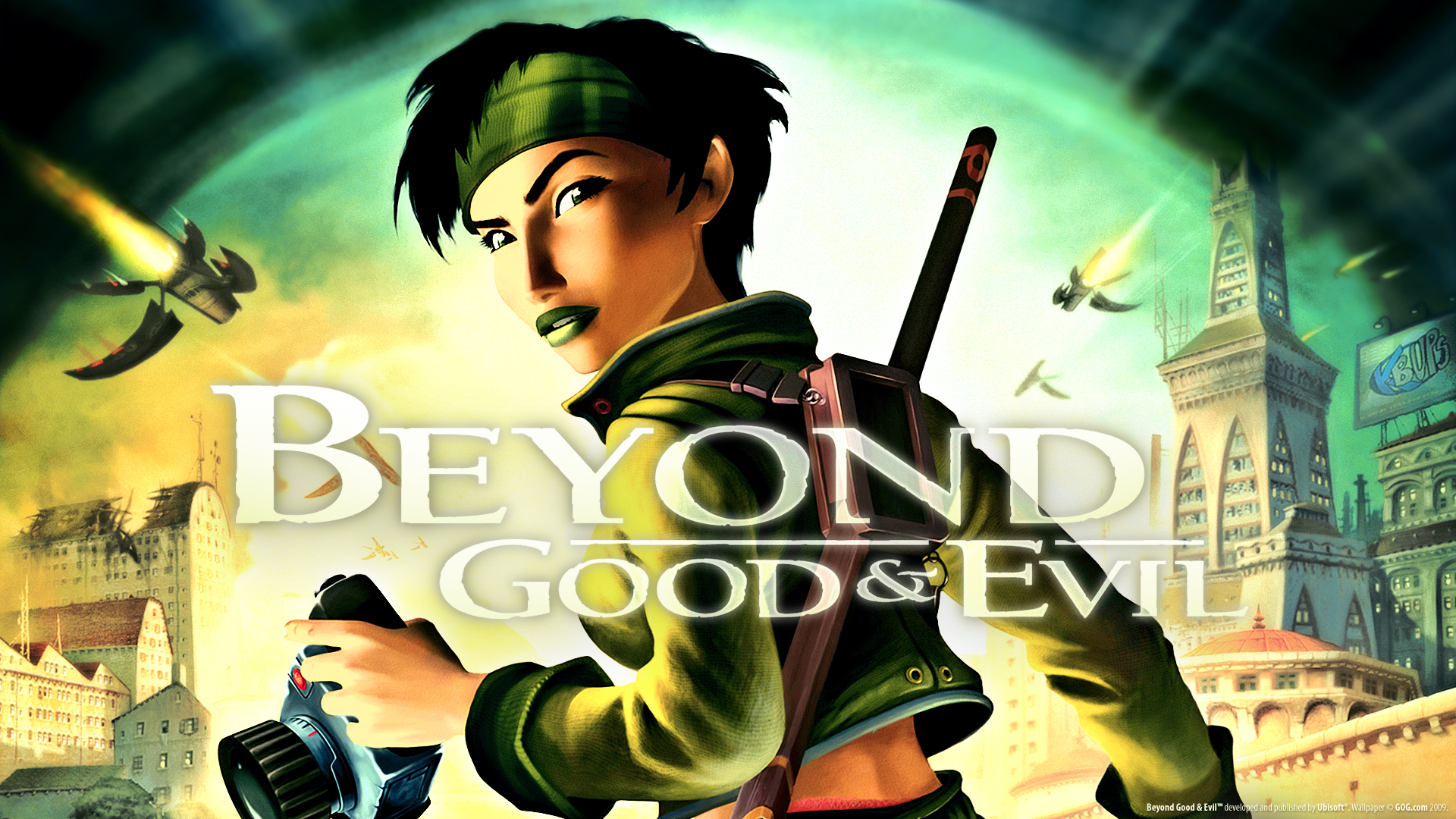
As a fan, it should obviously be both encouraging and exciting to have learned of such an announcement (and it is). However, along with nervous anticipation upon viewing the trailer at E3, one of the primary emotions I felt was that of concern. 14 years is a long time by any reasonable standard, but in an industry that moves as quickly as the games industry it can seem astronomical. The relative innocence of previous generations are gone and the even though the specifics we have for Beyond Good and Evil 2 are scarce at the moment, they nonetheless, in my opinion, reflect that.

First and foremost, let’s address the somewhat puzzling choice to release this game as a prequel rather than an outright sequel, despite there still being questions left unanswered from the first game. Of course, it is important to note that we still know very little about the game, however, on the surface, this seems largely disappointing. Ubisoft have gone on record in the past, stating that they won’t release a game that doesn’t have the potential to be made into a franchise. The games industry has always been dominated by franchises to a certain extent. However, in an age where the majority of the more esoteric experiences tend to come mainly from the indie circuit, and new IPs are more and more scarce from AAA developers, the decision to deviate from the game’s original storytelling plan and instead focus on something new could be seen as a form of risk management. There will, no doubt, be some form of appeasement for long-term fans of the original, but the choice to not continue with the plot is hard not to be considered a disappointment.

Likewise, as previous stated, the original game was released during a time of transition in the industry. Sandbox games were gaining popularity, but still in their relative infancy, with the revolutionary Grand Theft Auto III being released only two years previously. As things stand today, the sandbox genre, along with online multiplayer, are arguably the two most popular aspects in gaming, with major studios often eager to emphasise one or more of these two components. Ubisoft, being the enormous company that they are, are no different.

The original Beyond Good and Evil was “open world”, yes, but the game was essentially linear, and the map acted as more of an extended hub world rather than a proper sandbox, to a certain extent mimicking the format of a classic Legend of Zelda game. With news that the prequel will feature a “vast and seamless online playground”, it is clear to see that Ubisoft are reluctant to release the game without maximising its appeal to an audience as large as possible. The primary purpose of anything a studio releases is to make money, so this makes sense. Ubisoft are also more than entitled to do what they want with an IP they created. However, it is unfortunate that the changes they are making don’t seem to ring true with the original tonality of the game. Speaking of tone, the inclusion of a foul-mouthed, cockney monkey in the trailer seemed to be some way off the more measured atmosphere the first game possessed. I would view this as being more a curious creative choice as opposed to anything to do with the current gaming zeitgeist, but it is nonetheless an oddity.

None of what I have written in this article is a criticism per se, merely a set of observations. It is early days yet, and, despite some of the suspicions I have described, there are reasons to be optimistic too. The trailer itself, despite not featuring any gameplay, was an impressive aesthetic accomplishment. Pairing this with the idea of having a vast world and/or universe for exploration does, also, seem like it could possess a certain appeal. Indeed, the fact that the hugely talented Michel Ancel is back as its director is also an encouraging sign, especially when you can see that the game is clearly such a passion project for him. The question remains, however; can Ancel and Ubisoft manage to deliver a financially successful title that not only manages to draw in new players, but also stays true to the original game and its loyal fanbase? Only time will tell, and I for one am eager to find out.

Viewpoint: Why I’m worried about the Xbox One X

Now before I start, I want to make something very clear: I’m a huge Xbox supporter. I’ve followed them since the beginning, since the times when Halo was just becoming a thing. I have lost many, many hours to gaming on the Xbox family of consoles, sometimes almost religiously. I have a ridiculously large Gamerscore that is way too important to me. I live and breathe Xbox basically. However, I would be lying if I said that I was confident about the upcoming Xbox One X.

I’m worried for several reasons, but the biggest is the price of the machine. At $499, Microsoft will have to pray to the gods to get this console sold in any meaningful numbers. I understand that it will be ‘the most powerful console’ on the planet. I understand that it offers ‘true 4K’ – but that’s not enough. Very few people are going to be interested in a console launching at that price, no matter the power. Further to this, the original Xbox One launched at the same price, and look where that got Microsoft.

So what about the games? A new console launching at that price should have a few big hitters to convince people to jump in right? Nope. Sorry, but a shinier Forza 7 isn’t enough to make me want to spend $499. I love Forza, but it isn’t enough. I’ll get the regular version of the game on the Xbox One S, thanks. What about a new Halo game to really push the machine and entice gamers in? Nope. No sign of it. A huge mistake by Microsoft. As for third-party games like Assassin’s Creed Origins and Anthem, they look great, but they’re the same games on other platforms looking slightly better. It’s not enough to make me want to splash, like I did with the Nintendo Switch, because of the fact it offered something different. (My first Nintendo console by the way!).

813qnPOBsML._SL1500_
This is the console to beat

That brings me nicely to my next point. I possess a very powerful PC that can push almost all of the modern games to their limits. That’s the system I go to when I really want to see my games looking prettier than ever. And it’s glorious. The Xbox One X therefore, seems oddly placed to me. Why would I play games on there, when they would look better on my PC? That’s not to mention that almost all PC games are cheaper in the first place. So that leaves us with exclusives being the key reason why anyone would purchase the Xbox One X. Well, as we’ve already discussed, the exclusives don’t really exist. At least not yet. By the time they’re ready, surely we’ll be looking ahead to the next Xbox anyway?

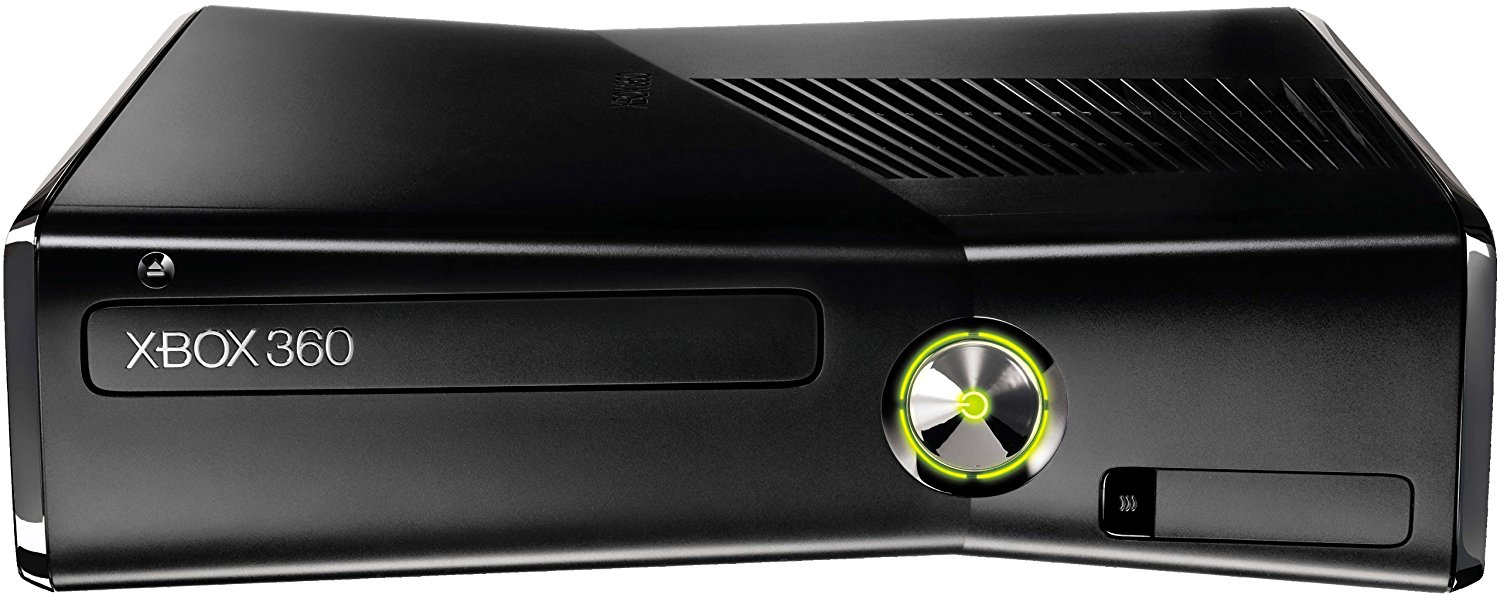
There’s no doubt in my mind that Microsoft is proud of the Xbox One X. It’s a machine they’ve created for hardcore console gamers. But I can’t help but feel it’s more a response to Sony and their (largely pointless) PS4 Pro than anything else. It seems that the claim to have ‘the most powerful console’ on the planet was the goal, without much thought on how that was actually going to be sold. The Xbox 360 was a great console, but it had very little to do with its power. It was the amazing games and the great price that helped to make it such a beloved console. No killer exclusives and a very high price are major deal-breakers for any console, ‘midlife’ upgrades or not. The whole console is redundant before it’s even been released in my opinion, and I don’t like to say that at all. As someone who loves the Xbox family, I’m pretty worried that this is going to be a failed attempt, pushing Microsoft even further back in relevance.

What do you think?

Viewpoint: Why Mechanics in Games Aren’t Everything

To many, mechanics are absolutely paramount when it comes to assessing or critiquing their favourite video games. And while the very basis of this article is to dismiss this as a somewhat ill-informed notion, it is easy to understand why. Every game, even the most narrative driven ones, all share a common trait in that they are interactive. Interactivity is what separates games from all other forms of art, and to many, also elevates them. So, it makes sense. It makes sense that people that would be harsh on games that they feel aren’t mechanically sound. Functionality is imperative. However, though I do agree that it is important that a game works as an inherently interactive experience, I don’t necessarily agree that mechanics are the be all and end all of achieving this.

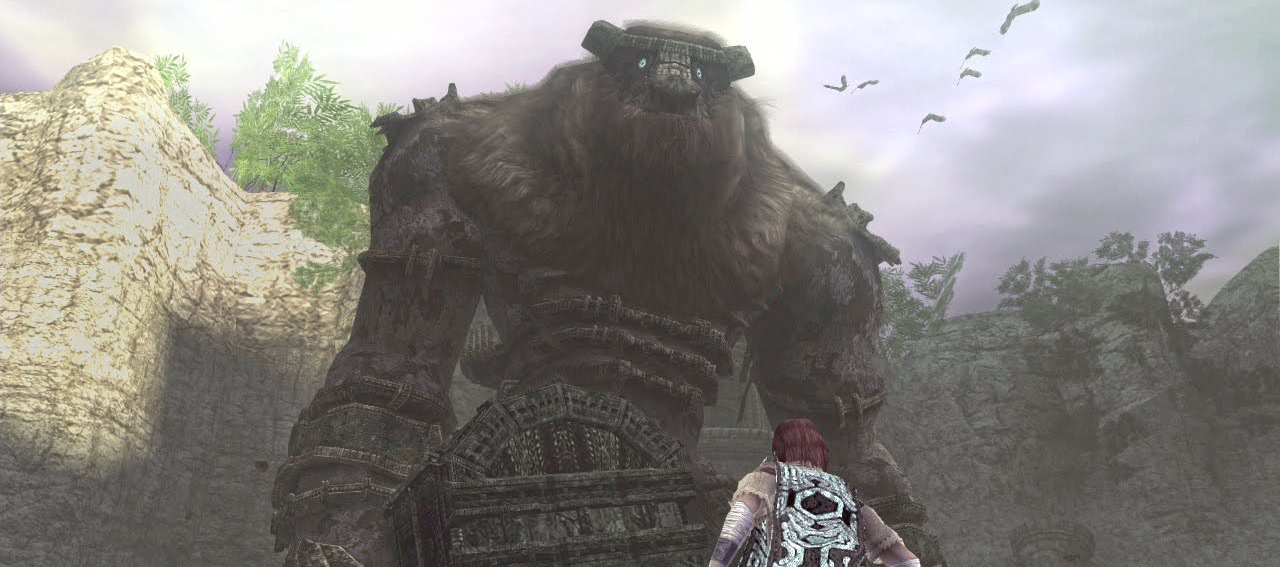
A game does not have to be mechanically perfect to work. There are numerous examples of excellent games that excel in other areas. Let’s look at something like Shadow of the Colossus. An absolute critical darling, considered by many to be one of the greatest examples of video games as an art form and lauded as a masterpiece in the gaming community. Nonetheless, even the most ardent fans of SOTC will admit that it isn’t exactly perfect from a pure gameplay perspective. Sure, it functions fine, but there are moments when the gameplay can feel relatively stiff. Some moments are even frustrating. People who have played it know this, yet the vast majority of people who have played it still concur that not only is it an outstanding artistic work, but that one of its biggest successes is creating a sense of emotion within the player, not through its core mechanics but from the feelings it manages to evoke from being interactive. It would not work as well in any other medium.

Wander, the player character, is designed in such a way that seeks to make the player feel as if they are in his shoes. He holds his sword in a noticeably awkward fashion. He will stumble and fall as he attempts to fight a colossi. Wander isn’t some pumped up, muscle-bound badass, but an everyman that the typical player can relate to. Sure, he has his own very specific (not to mention morally ambiguous) motivations for undertaking his quest but it is the way he is presented to the audience that makes people feel cordially towards him. Wander’s stallion companion, Agro is likewise programmed to make him feel more like a horse in real life than one you would commonly find in a video game. The relationship you build with him throughout the game feels like a genuine one. (SPOILERS)… There is a reason that his death often ranks highly on the lists of the saddest moments in gaming.

This is just one of the many aspects from Shadow of the Colossus that are just as, if not more so, memorable than the core gameplay that the game possesses. To write about them all would be an entirely different article in and of itself.

12.jpg

Is Shadow of the Colossus an anomaly? While it is extremely unique in many ways, the fact that its popularity stems from much more than its mechanics is not. Take Fallout 3 and Fallout: New Vegas for example. Both games were incredibly popular, but it was the giant, interesting and jam-packed sandbox world plus the sheer sense of adventure and immersion, that the games elicit in the audience, that got people coming back. The clunky shooting mechanics, stiff dialogue and wooden voice acting tend to be not as well-remembered, purely because of how engaging and indelible the setting was. There are numerous other examples of incredibly popular and/or acclaimed games where this is the case: The Last of Us? The mechanics are solid, but they are not the strongest aspect of the game by any stretch. Silent Hill 2? The atmosphere and associated lore are what generally sticks with the audience the most. Bioshock? Much like the aforementioned Fallout games, it’s the settings that tend to resonate more with players rather than the admittedly solid gameplay.

This can even extend to sports games, a genre where one would assume mechanics reign supreme. Take the outrageously popular FIFA games as an example. This is a series where describing the gameplay as unrefined would be an understatement. There are so many little issues that at times render the games a controller breaking level of frustrating. Yet, people still flock to it. Why? Is it because it’s an excellent simulation of what it’s like to play the world’s most popular sport? I would argue no, it’s because it’s an excellent simulation of the atmosphere and culture surrounding the world’s most popular sport. The games are impressively polished. People can put up with some maladroit mechanics here and there as long as they feel, consciously or otherwise, that they can project themselves into a convincing recreation of their favourite sporting environments. This was even the case back in the PS2 era, when Konami’s Pro Evolution Soccer series had a significantly more satisfying play experience to the FIFA franchise, yet the latter still regularly outsold the former.

None of this is to say that basic mechanics aren’t important. They absolutely are. They’re the bread and butter of the majority of gaming experiences. Nonetheless, the aspects previously mentioned in this article can, in some cases, prove to be every bit as important as the overall mechanics. Implementing these facets in an efficacious way can be the difference from a solid, enjoyable game and a true great of the medium.

What do you think reader? Let us know in the comments below.