Scarlett’s Dungeon Review – A Short, Zelda-like Adventure (PC)

Retro indie titles are a dime a dozen nowadays, and Steam is the hub of almost all of them, releasing thousands of titles annually, many of which follow themes from past video game history. PC game developer – Joan Ginard Mateo from the one-man studio, Indie Brain – has created the next Zelda-esque title, leaving vague memories of nostalgic adventure and familiar gaming mechanics found throughout Scarlett’s Dungeon.
Scarlett's Dungeon Review
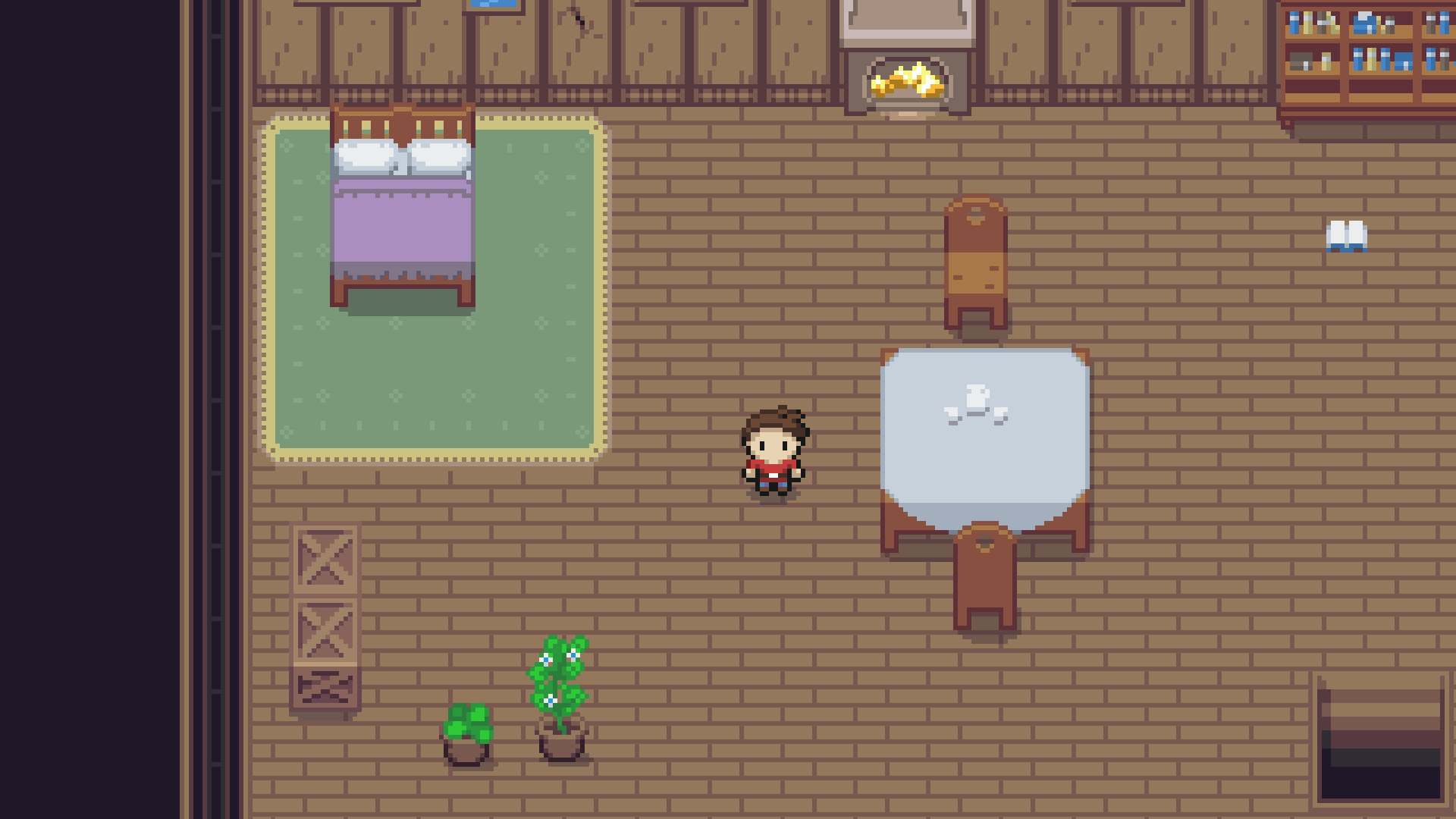
Once awake, Scarlett leaves her home to find her parents.

Waking up in a similar fashion to the original pixellated adventure title found in the NES cartridge library, Scarlett exits her house and ventures into the small village of Palette Town (yes, you read that correctly Pokémon fans). An all-powerful God has kidnapped a number of the town’s villagers, including Scarlett’s parents. Claiming that the ultimate being is waiting on the 15th floor, you’ll make your way through the procedurally generated dungeon levels, which ultimately ends abruptly and rather quickly.

Equipped with your sword, Dash ability, money bag and infinite escape ladder, you’ll head below to the dungeon area filled with monstrous robots that await ahead. A basic sword swipe and the helpful dash skill is all Scarlett needs to fend off the terror that awaits her beloved family. After receiving the necessary items from the kind townsfolk, you’re set to journey forth into the treacherous dungeons that lie below.
Scarlett's Dungeon Review
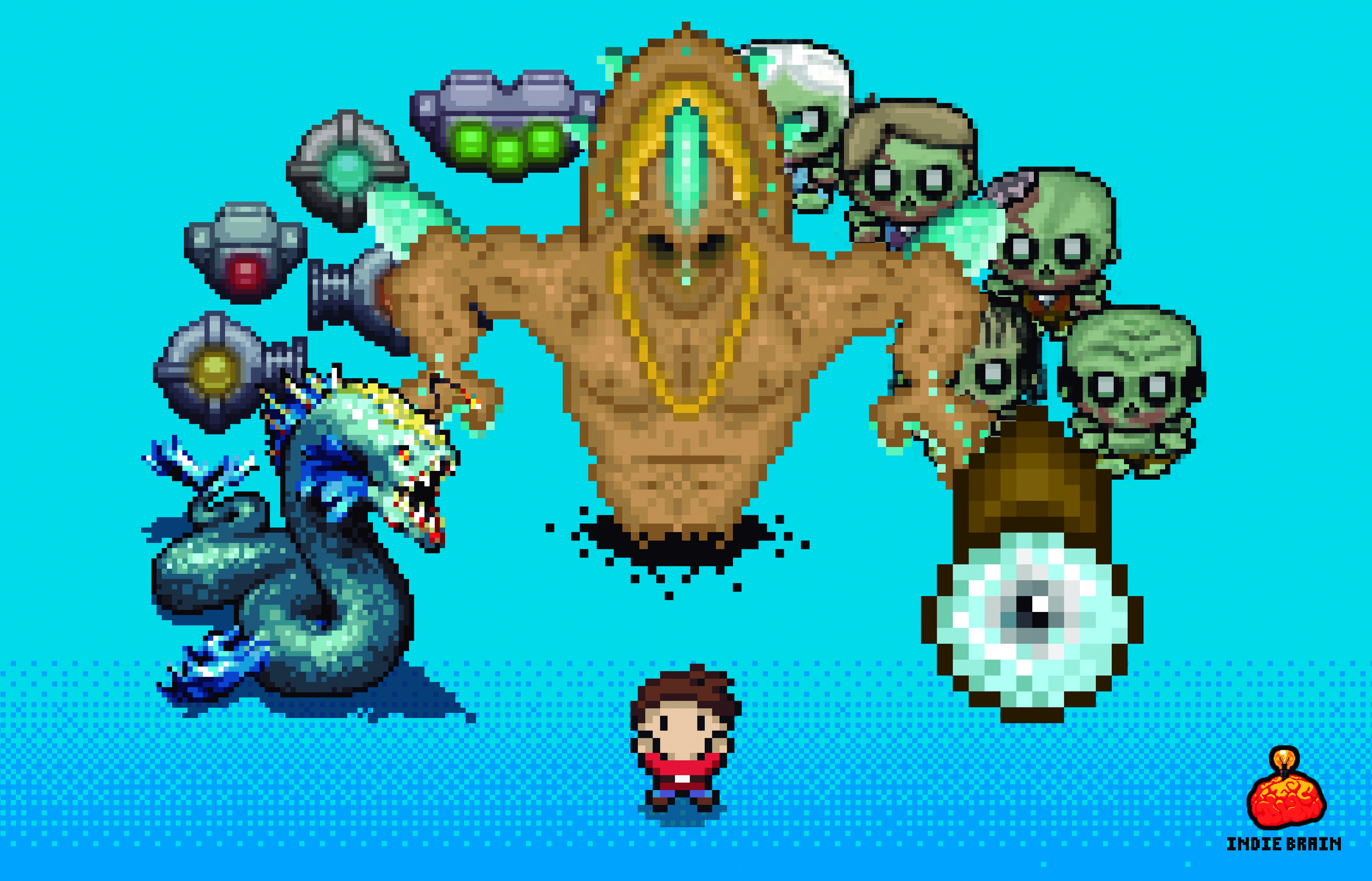
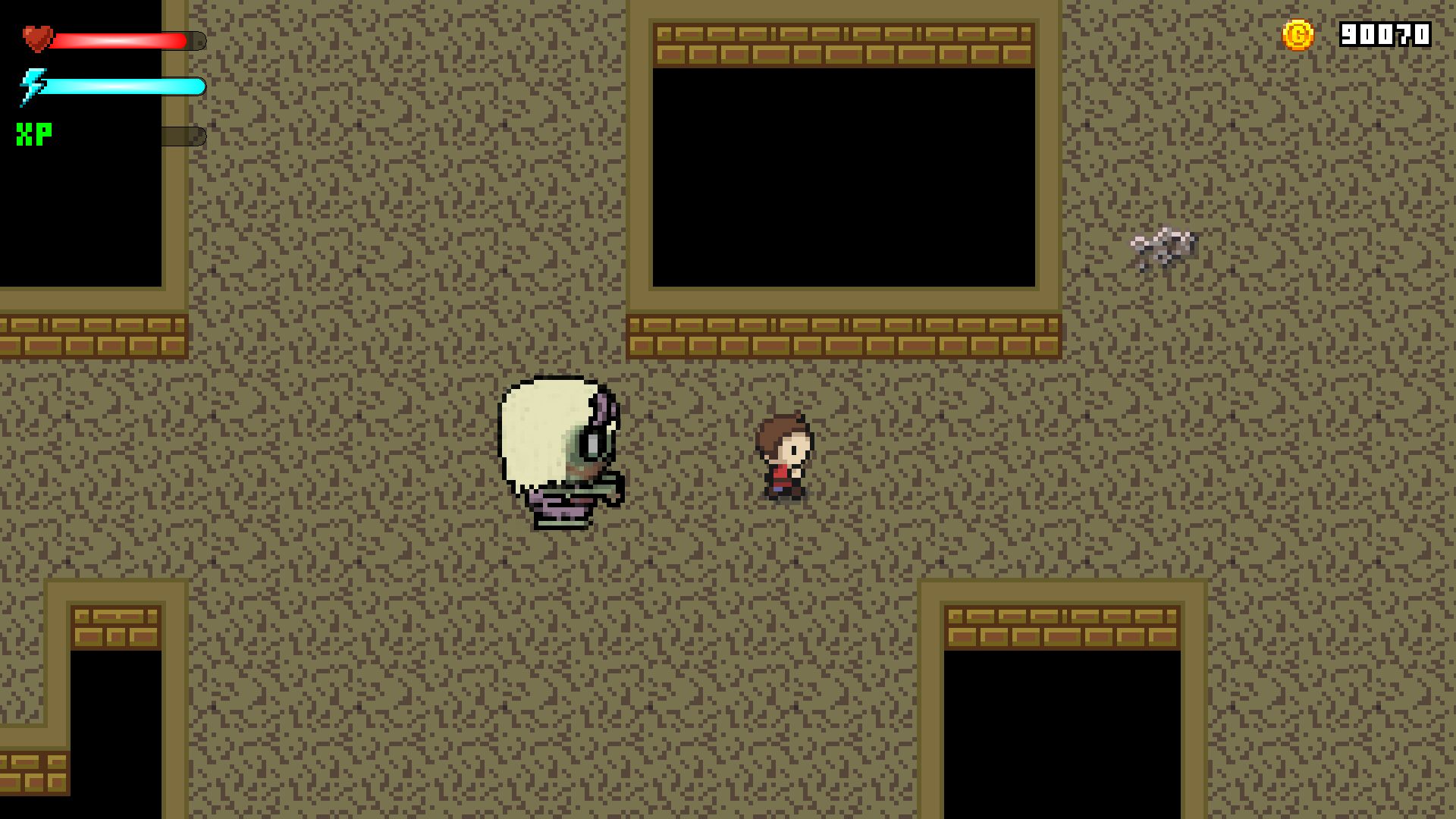
Many imaginative monsters are found throughout the randomly generated dungeons.

In Zelda-like style, the player proceeds to run around procedurally generated, maze-like dungeons, fighting off unique monsters while gathering valuable coin to help increase your weaponry. The gameplay – much like the storyline – is simple. Swift strikes from your sword, a very helpful dash ability to get you out of hairy situations and a levelling up system which essentially only adds to your strength and a dash of health upon gaining a new level.

Keeping your trusty Infinity Rope, you’re able to return to town while traversing any part of the dungeon, except of course, for the boss rooms. When in town and your coin bag is nice and full, you are able to purchase a new sword, ability or health items to help prepare yourself for the increasing dangers in the dungeons. This proves crucial as the game continues because every time you perish you restart from the beginning of whatever floor you died on; with the same amount of health you had when you originally entered the floor. This is especially dangerous when entering boss areas with extremely low health, since returning to town – or even previous floors for that matter – are not available when facing bosses.
Scarlett's Dungeon Review
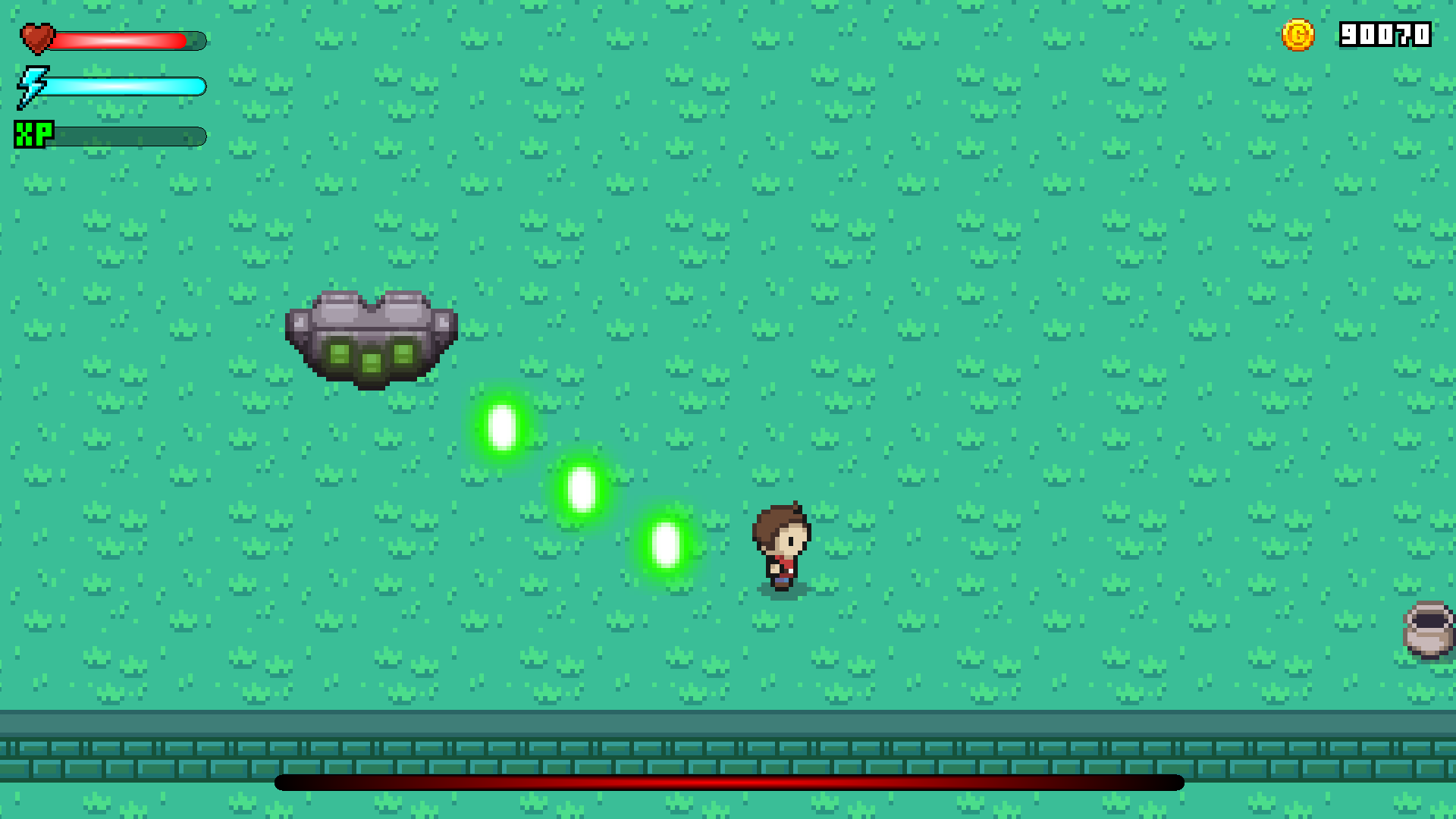
The bosses have different approaches for defeating them.

Every fifth floor a boss appears – and by doing the simple math – the final boss is waiting on floor 15. There are only 2 bosses to fight through before the end… Keep in mind this title was created by one solo college student, working through the trials of developing their first title. Though short and quirky in its own right, the action of dash-dodging and sword-swinging against diverse enemies creates enough of a challenge to keep most gamers entertained, even if it’s only for a short session.

Scarlett’s Dungeon Review: The Bottom Line

There’s not much in store for story and gameplay in Scarlett’s Dungeon – and what is there bares major resemblances to our beloved Hylian hero. Still, there’s a certain quality of simple comfort for a game that lasts all of an hour (or more if you explore every dungeon to the last pixel). If you’re looking for a quick fix of old school Zelda-like action, pick up Scarlett’s Dungeon on PC. It’s out this September 2017.

Scarlett's Dungeon Review

Life Is Strange: Before the Storm

Life Is Strange: Before The Storm Episode 1 Review (PS4)

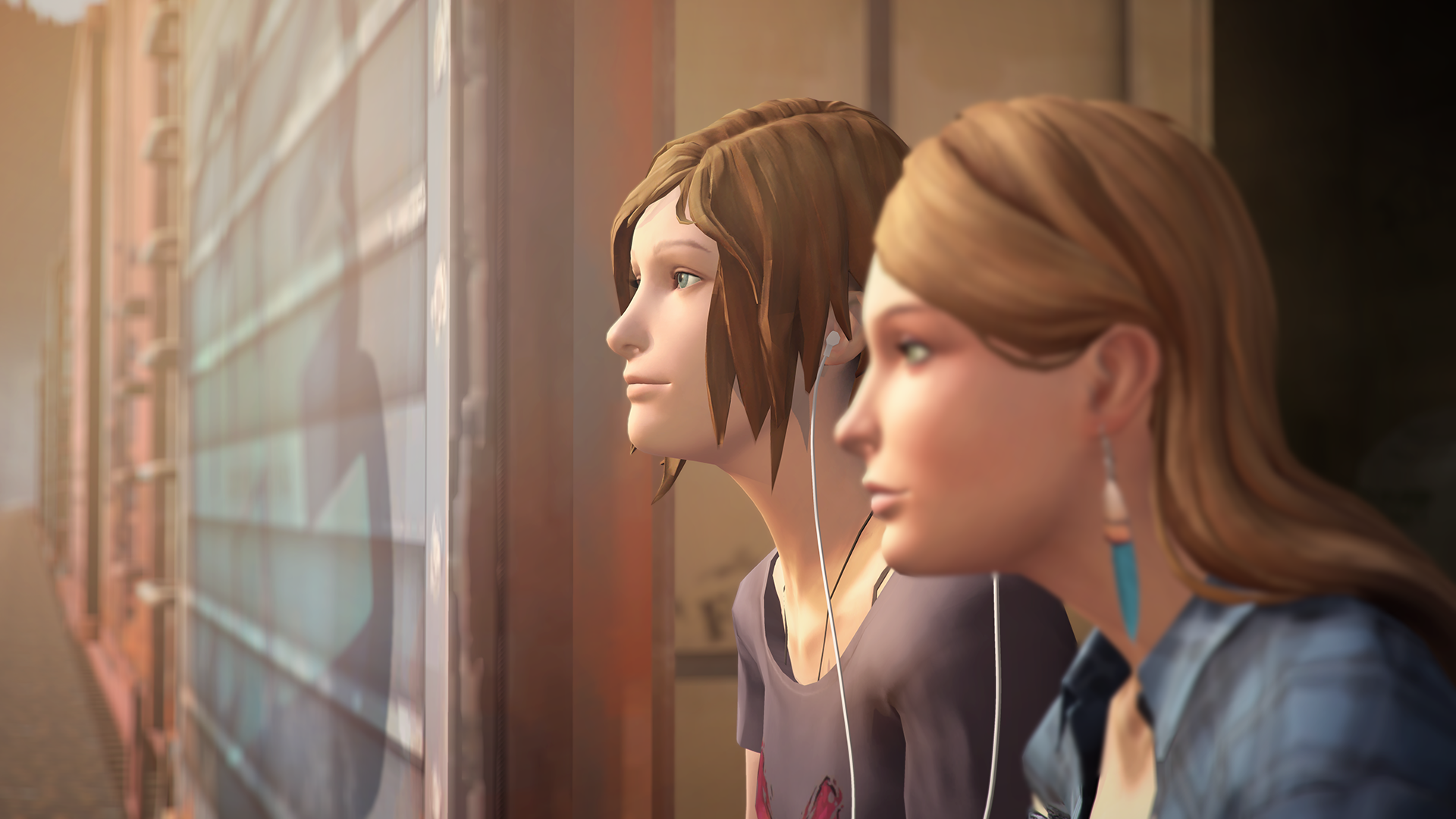
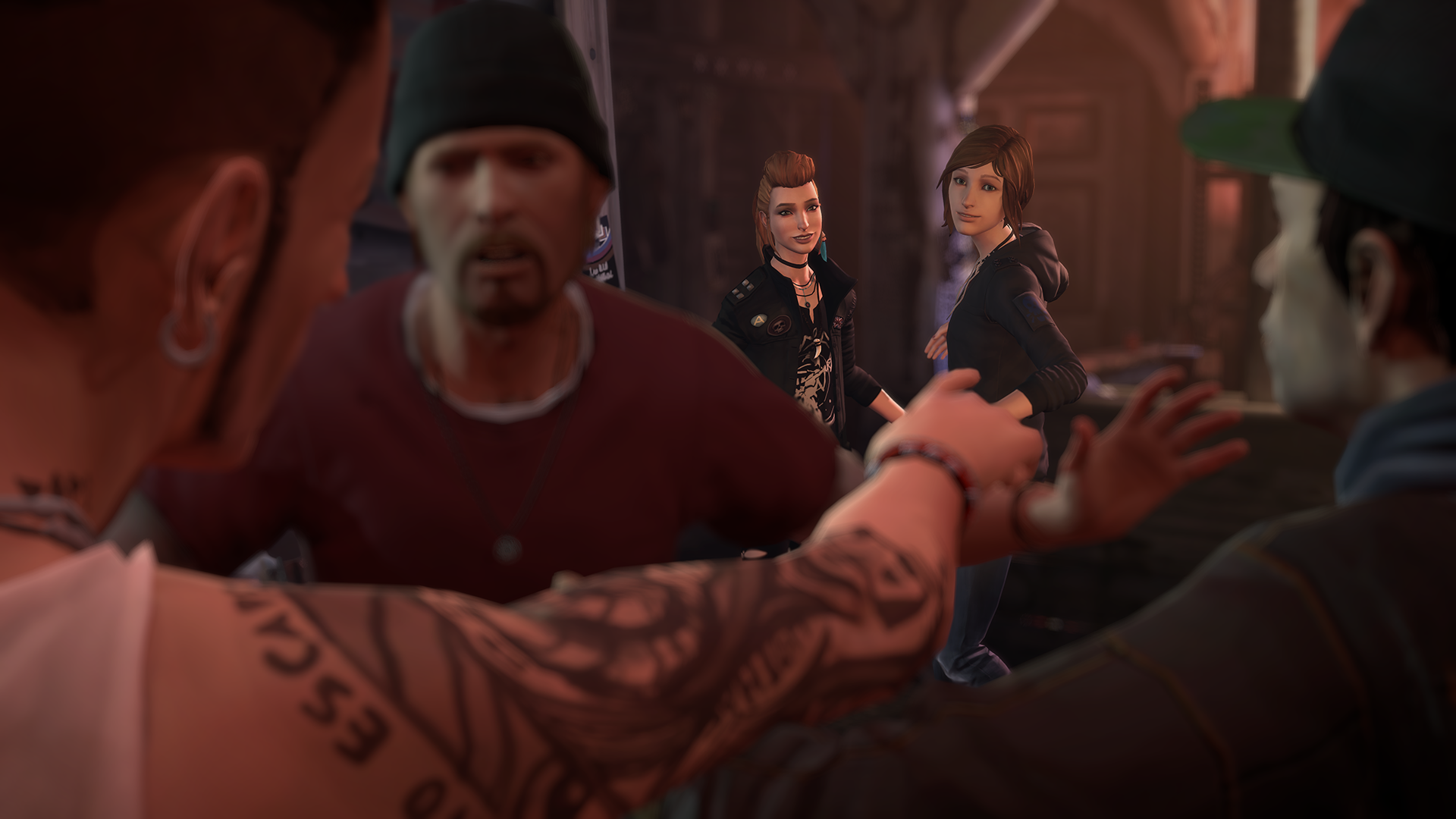
As a prequel to Life Is Strange that came out in 2015, Life Is Strange: Before The Storm tells the story of the 16-year old Chloe Price, Max Caulfield’s best friend in the first game. Which, in certain circumstances, I guess they still are. Chloe is a rebel, who forms a relationship with Rachel Amber, the popular girl at school, who is beautiful and is destined for success. However, we already know Rachel’s fate: it is a sad and unfair one. But now she is here: alive and kicking. After playing a whole game searching for her, it is nice to finally be able to meet her. This time around, we get to learn even more about this lost girl. We know she has a secret that will strengthen her relationship with Chloe, that takes their friendship to a new level. Because this is not just a story about Chloe, it is also the story of Rachel. Together, they will overcome their demons in Life Is Strange: Before The Storm.
The time has come for us to return to Arcadia Bay. I choose to believe that many of us have mixed feelings about this. In light of Max’s ability, we rewind time and are now in an Arcadia Bay where Max is in Seattle to go to school and has not moved back to start at Blackwell yet. Chloe tries to get in contact with her (judging from the information on her phone) but is replied with silence and rejection.

Life Is Strange: Before the Storm
New adventures ahead!

One cannot talk about the Life Is Strange games without mentioning the fantastic soundtrack – and how the music is used to match the protagonist’s personality. I love how they have adapted the music to fit Chloe’s personality better. Ranging from hard rock to indie, it reflects her mood – even though it fluctuates like the bounce of a ping-pong ball.

While speaking of our protagonist, let me just address the elephant in the room right away. The biggest problem had nothing to do with the game itself – but rather the stuff that happened in the making of it: Chloe’s voice. If you don’t know about this, let me explain: because of the long strike in the Screen Actors Guild, Chloe’s voice from the first game, Ashley Burch (who also gave her voice to Aloy in Horizon Zero Dawn and Tiny Tina in Borderlands 2), had to make a heartbreaking sacrifice because of this strike:

“I broke off a little piece of my soul when I did the first Life Is Strange and put it in Chloe”, she says to Kotaku.

Rhianna DeVries is the voice actress who has now given her voice to the 16-year old version of Chloe, and I’ve got to admit… I hear the difference, and I sadly have to say that I’m not a fan. There is something off about the way Chloe says things. And it may just be me that’s being real sensitive about the whole thing – because I really liked Chloe in Life Is Strange. Either way, this is a discussion with a lot of different stories to it and is not something I will discuss further here. There were big shoes to fill, and I guess that the outcome is better than no game at all. Because so far, this is a good game.

Unlike the first game, which had 5 episodes, Life Is Strange: Before The Storm has 3. But in return, they are longer. The game is as beautiful as it always has been. For example, you’ll notice how the main menu changes after you’ve played the first episode! I like little details such as that. Speaking of details, the last game had a butterfly (representing the never-ending cycle of life, and also represents the mind and our ability to change it when necessary) as the autosave symbol. Now, it’s a bird: the symbol of freedom and perspective. Which describes Chloe pretty nicely. While those might be only tiny details – they are interesting changes, and worth paying attention to, I think.

Life Is Strange: Before the Storm
Rebel Yell.

There is also a new important feature to the game, which replaces Max’s ability. This was highly discussed among fans when Square Enix announced the release of Before The Storm – Max’s ability was such a big part of the game, so what would they replace that with? Well, instead of rewinding time, Chloe’s ability is pretty obvious if you just think about it: her mouth. Yup. The Backtalk Challenge occurs either when you get in a fight, persuade them, etc. Sometimes, the person with the best argument wins. And other times, the more the comment hurts, the better. The more you explore the scenery, the more information you have to talk about. Gather information from what the other person is saying, only to turn it around and use it against them. It almost felt like a psychology session, where I learned about how humans use language as a weapon against each other.

This episode is a very promising start to a new adventure with Chloe. Life Is Strange is about teenage life, and all the love, hurt, rebellion, conflict, and drama that follows it. Life Is Strange: Before The Storm is no different. They are games about life experiences. Even though I was sceptical at first, it has already managed to pull me back into its universe – I am really excited to see what’s next, and how the story of these two girls unfold. Obviously, we know how it turns out, but I am excited to see more of the road that it leads up to!

Just a friendly tip: If someone asks you to play dungeons and dragons with them… say yes.

Still Time Review – Rewinding Its Way Back to 2D Puzzle Solving (PS4)

Still Time is a 2D pixelated puzzle game – created by game developer Alan Zucconi, and co-published by MixedBag – where players take control of the existing timeline of your character in each level. Falling deeper and deeper into the mysterious testing chambers of time control, you’ll have to solve your way out of dozens of challenging puzzles, manipulate time and interact with previous versions of yourself to escape the secrets that await in, Still Time.

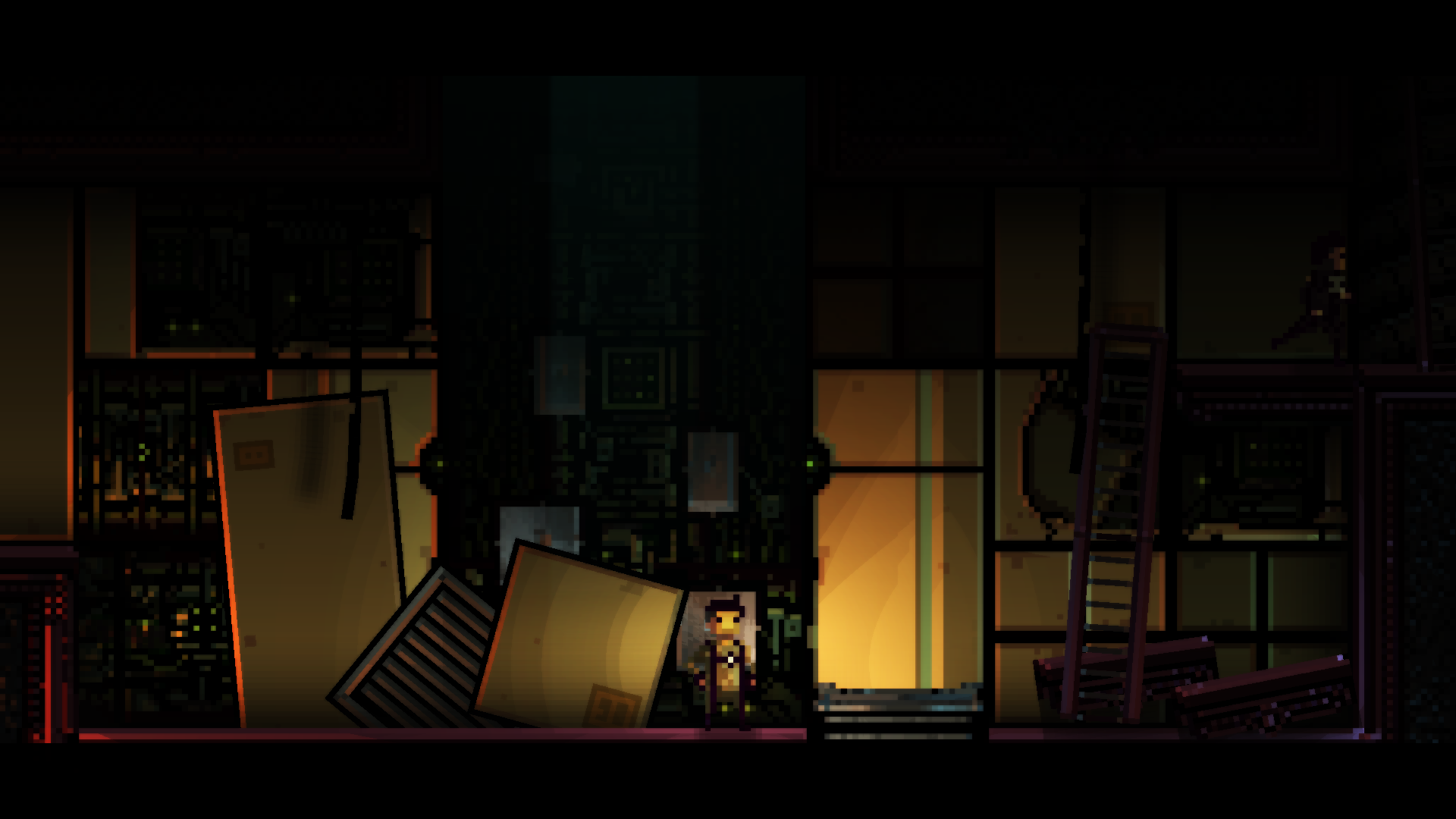
Placed in the vaults of time manipulation and experiments, our protagonist has no other option but to continue into the depths of the test chambers, which act as the introduction levels of the game. Going over the basics, you’ll be required to open locked doors by switching levers, placing boxes on switches, avoid threatening obstacles – all while tampering with the fabric of time itself.

05_big

The puzzles at first seem remarkably easy and transparent, however, once the usage of time becomes a factor, the mechanics start to change drastically. Flipping various switches to open doors or leaving weighted boxes on switches to help hold the exit open seems easy enough, but the catch soon starts to play its role.

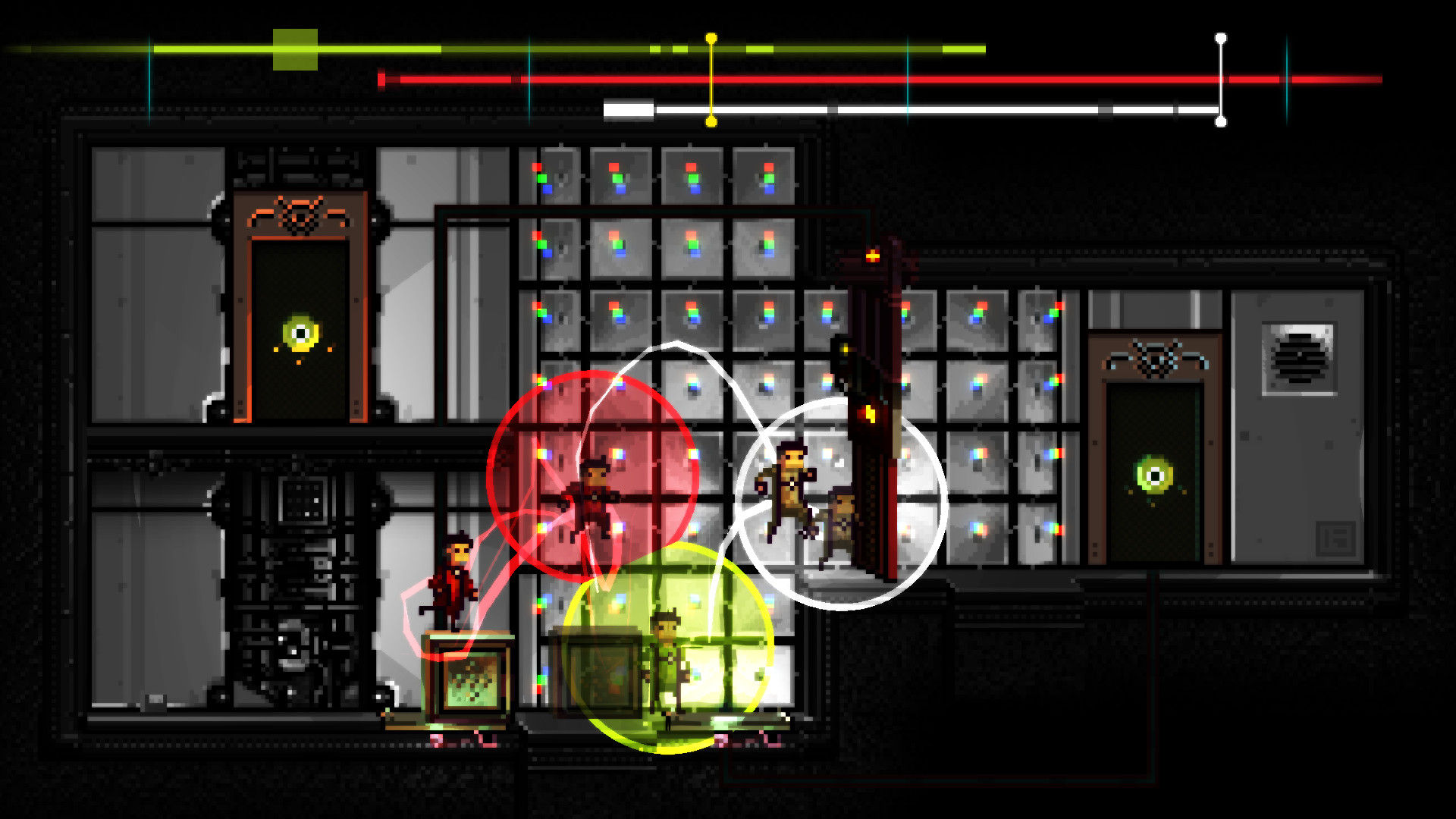
In many levels the exit doors will only stay open while the switch to activate it is occupied. Cleverly rewinding time will leave your present character in place, while creating a secondary AI character who will run along your previous path – exactly as you did before. Using this method, players will flip open doors in advance so you’ll be able to turn back time and take advantage of your past self’s actions.

STILLTIME_04

Unlike other time manipulating 2D puzzle titles – cough, Braid, cough – Still Time only controls the time itself, not the physical beings and space around involved. Meaning, your character doesn’t rewind along with time, but a second, or third, or even fourth portrayal of your character will appear and complete the tasks exactly as you performed them before. This approach leaves new tactics and strategies in solving these tedious puzzles, and makes for a overall new experience in the time manipulating genre.

Death doesn’t even stand in the way of our brave protagonist. Once the player has met an untimely demise, you are given the chance to rewind time back to before you collapsed to your death. This action is only available after a life terminating action, and does not create a past version of the character. Finding an appropriate time to “revive” your character is an important detail, as once you’ve faltered once in the level, your current run will restart from the beginning.

still time2

Of course, restarting is always an option, and not always a bad one at that. With the constant flow of time being rewound to unlock specific doors, it’s easy to go a bit overboard with “time clones”, flipping switches at wrong times, or otherwise losing a valuable object in the often times hectic levels. A quick restart from the menu is easy, as well as encouraged when things become a little too busy, or otherwise impassable.

Still time offers 40 different puzzling levels with unique gameplay mechanics, a challenging new way of approaching the puzzle solving platformer, and something many puzzle titles lack, an intriguing story of a man looking for his freedom, while uncovering truths about the time that surrounds him. If you’re looking for an inexpensive way to stress your brain and dive deep into a “timeless” adventure, Still Time provides a fresh experience with complex puzzles and level designs, waiting to be solved by using casual and simple puzzle solving capabilities in classic pixel art style.

Look for Still Time on the PS4 and PS Vita systems available now as a crossbuy purchase, and coming to Steam for PC at a later date.

techtroid-rating6

The Initiate Review (PC)

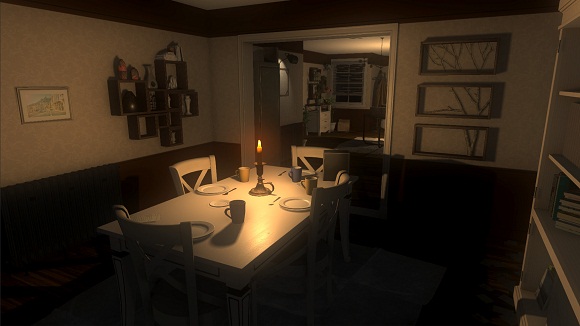
I wake up in a bedroom, and everything is silent, except for a radio that plays some tunes on the piano. I start to look around, and nothing this bedroom contains actually belongs to me. If this isn’t my room, whose is it? Suddenly, a voice begins to talk to me over an intercom, saying that I have a mission, to use my intelligence and escape. I am on a trial, where I have to unravel the mystery behind my captivity and escape whatever is going on.

The Initiate is a puzzle game with horror elements made by Deceptive Games Ltd. You are playing as Nathan Rockford, whom has lost his memory and has awakened in an unknown house full of traps and puzzles. Discover the truth. The rules are simple: complete the trial, and escape.

The puzzles are the main focus of this game. There are several phases of each trial, and you may only proceed if you have completed the previous phase. There are intricate puzzles within puzzles, and you really have to pay attention to everything around you in order to solve them, as well as listening to every single sound. Make sure you are wearing a headset when playing, or turn up the volume on your speakers. The ambience in the game was surprisingly good if you look away from the repetitive sounds of opening doors and cabinets.

the-initiate-pc-screenshot-www.ovagames.com-5.jpg

The story is interesting. You find yourself in the midst of this trial, which is an initiation for a cult named The Enlightened. So either I join them or… what? Solve a puzzle, and you get one more piece of information. The story, in many ways, works as a motivator in this game. Which is fine, because that is just following the rules, but I wish that there was a little more story to it all. I felt that after all my work, I got paid by the minimum.

Considering the game’s main attraction is the puzzles, leaves a lot to be said in regards to gameplay. The Initiate is highly interactive, but I wish that instead of only being able to look at the items, I wish that you could move some of the things around, physically. Because I got stuck on objects a lot. There is the possibility of it being a texture problem because I also got stuck in doorways and cave exits and entrances. However, if you shimmy enough, you manage to get out, eventually. One of the things that really brought the game down for me, was the lagging. Lots of it, from start to finish. Playing around with the graphic settings didn’t help, and with my current computer setup, this problem should not exist.

Peering our view away from that, each room of the house changes as you solve the different puzzles so that you have to rediscover the rooms several times and really pay attention to new details because you unlocked something new about them. It’s a cool detail, and it’s important to acknowledge the awesome job on the level design here.

The narrator guides you through the house (or at least he tries to, with different degrees of success), commenting as you go along. Which is nice, because it breaks with the eerie, whispering ambience, and the voice-actor does a good job in making you feel like you’re doing the right thing… whatever that thing might be. He also works as a nice indicator when you’ve made it to the important parts, which is sometimes difficult to establish in this game. Since it’s kind of a puzzle-inception deal going on in this house, it became too easy to lose track of which ones you are solving.

i3__large

A game that characterizes itself as a horror puzzle game should have more horror elements in it than The Initiate has. I wonder about this, because yes, the ambience definitely kept me on my toes, the narrator was a bit creepy. And a small section of the game also plays with claustrophobia. But nothing actually happens. The game never gave me a reason to be scared. Which to a horror-geek like me is disappointing.  

Coming to a conclusion, I wish that there was a deeper, more immersive story here. The Initiate is a game about cult societies, conspiracy theories and mystery, which are all interesting themes. So give us more. I was left with more questions than answers, which always makes me sigh and rub my temples out of a light frustration. Aside from the lagging and getting stuck, we cannot look away from the fact that the puzzles were interestingly designed, with various difficulties – and were extremely satisfying if you managed to solve them. The Initiate should receive high praise for its level design, and its concept – which makes me interested in what Deceptive Games has in store for their next game.

techtroid-rating6

Piczle Lines DX Review (Nintendo Switch)

Without the practice of science, man would never have made it out of his beloved cave. We would still be bashing each other with clubs and starting fires (that’s how I imagine the cavemen behaved anyway).

But if there’s one thing for certain, it is that the world would be a much safer, and boring one, without mad scientists. You could say that all scientists were a little mad, but it’s the ones that conduct their experiments willy-nilly with little regard for their or others’ safety that categorise them as truly mad.

With that in mind, this is the reason why we find ourselves here; science has created a rather charming and unique puzzle title. At least, that is the story behind Piczle Lines DX, after a scientist creates a camera which pixelates items which it takes images of. The result? His world is pixelated and needs restoring by joining the pixels back up to make an image of his lost items before they are transformed back again.

Unicycle Puzzle.jpg

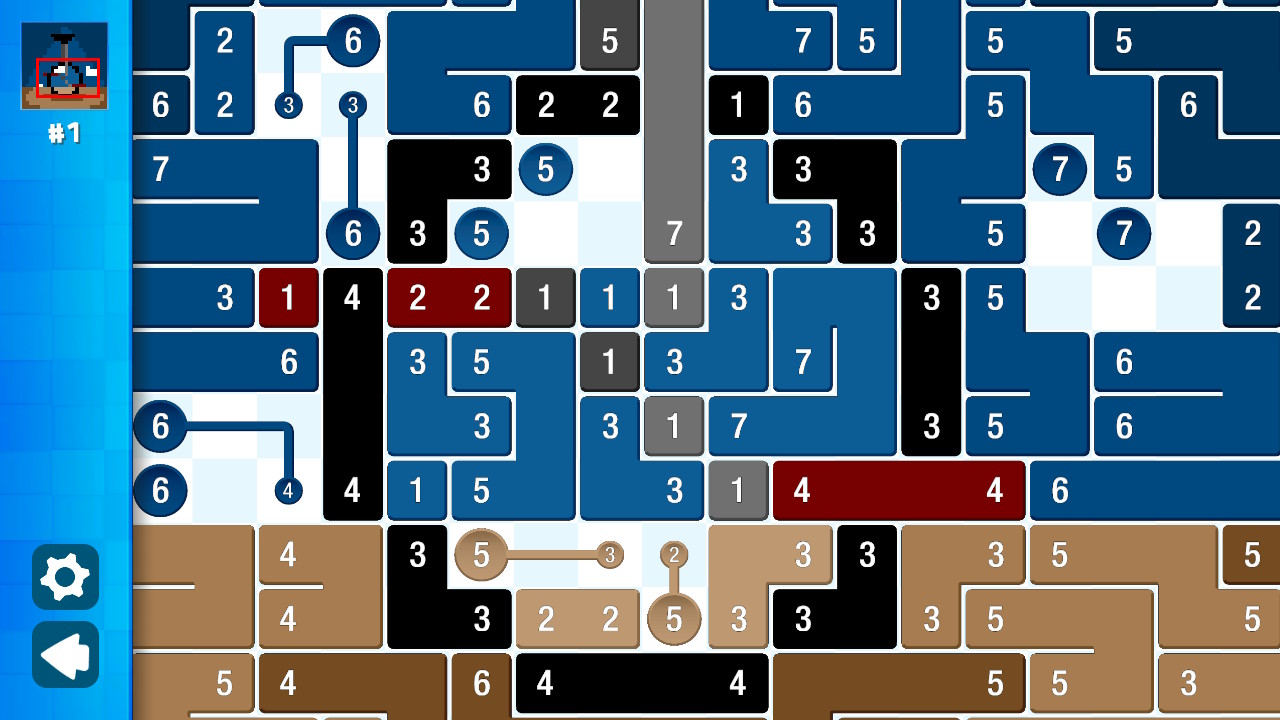
A quick tutorial lays out the land for how the game works; each square has a colour and a number. Each referring to how many squares away its counterpart is of the same colour. Once matched together, the pixels make a complete picture which then restores the item back to the real world.

Of course, the early stages take place on a much smaller grid to get you familiar with the formula. Even then, some of the earlier stages can catch you unaware, making you backtrack and question your matches. I found that the best technique to employ is to try and find the easier pairings, such as the 2’s and 3’s, and also the outer edges. This way you can be certain these don’t need amending later on.

Piczle Lines makes use of the Switch’s dual functionality by allowing you to play in two different ways. Whilst docked, you can play with the Joy-Cons to navigate and select your pixel to manipulate. However whilst in tablet mode you can also play using the touchscreen which I found to be the most appealing and easiest method.

Professor Complete ENG

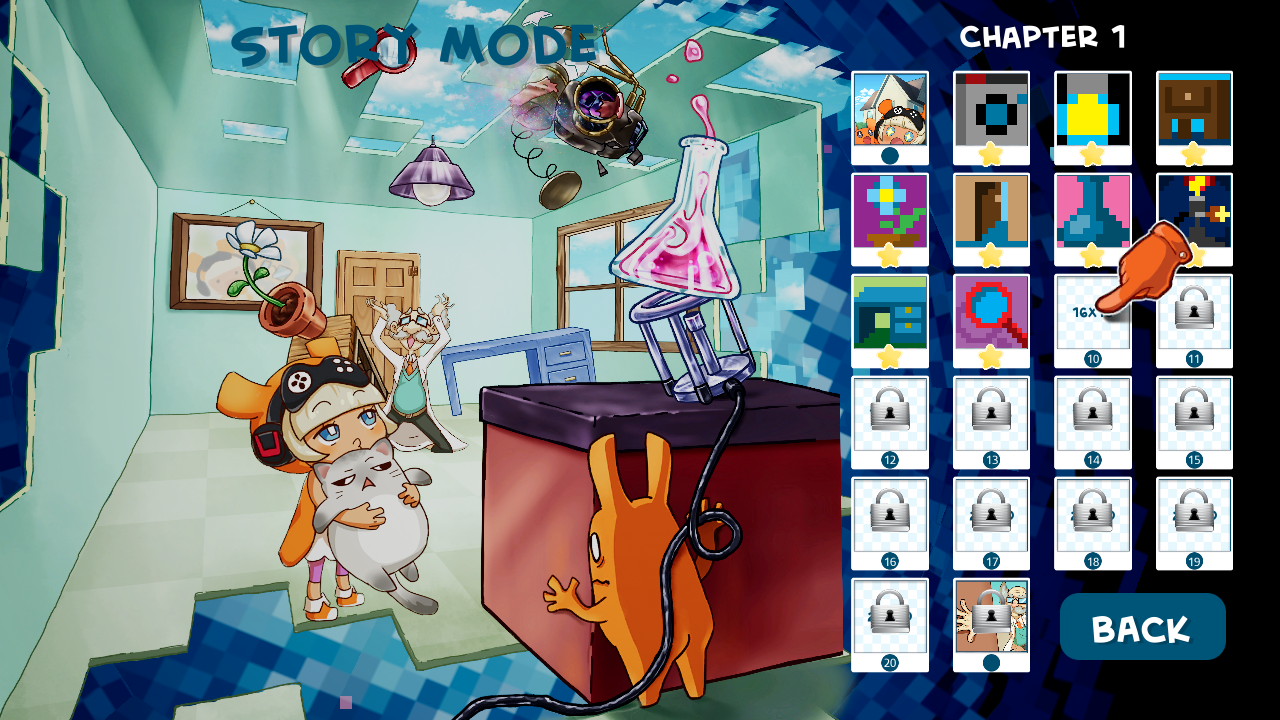
The game screams to me as a mobile game that is best suited to the Switch’s portable function and is great to play on the go or if you have a spare 10-15 minutes that needs filling. There are 100 levels in story mode to complete, with a further 200+ in puzzle mode to keep you going. Periodic updates will supply you with new levels free of charge should you exhaust the existing catalogue.

It’s a saving grace really that there are more levels to come as at £13.99 it seems a little steep to me. It’s fantastic to see that new games are coming to the Switch, tapping into its potential mobile market, but I feel that this may just be out of most people’s price range. If you fancy something new, however, and want to support what could be a flourishing indie scene on Switch, then Piczle Lines DX does come recommended.

Age of Fear 3: The Legend Review (PC)

Age of Fear 3: The Legend harkens back to 90s era turn-based strategy games with the added benefit of more modern AI. Though combat is really the main focus of the game, adventurers can choose from two narratives: a dryad sorceress or the drunken adventures of a dwarf lord. As a fan of both Tolkien and the occasional good ale, I chose the path of the dwarves, one of whom is even named Gimli in an apparent reference to a dwarf of the same name from The Lord of the Rings. The developers clearly designed Age of Fear 3 as a sort of tongue-in-cheek homage to the high fantasy genre itself. This approach might be a little hit and miss for most players, but the combat and other RPG elements provide enough strategic essentials to make it a decent challenge for casual players, and the AI along with other RPG elements adds enough depth to draw some interest for more advanced strategy fans seeking something fun without a huge time investment.

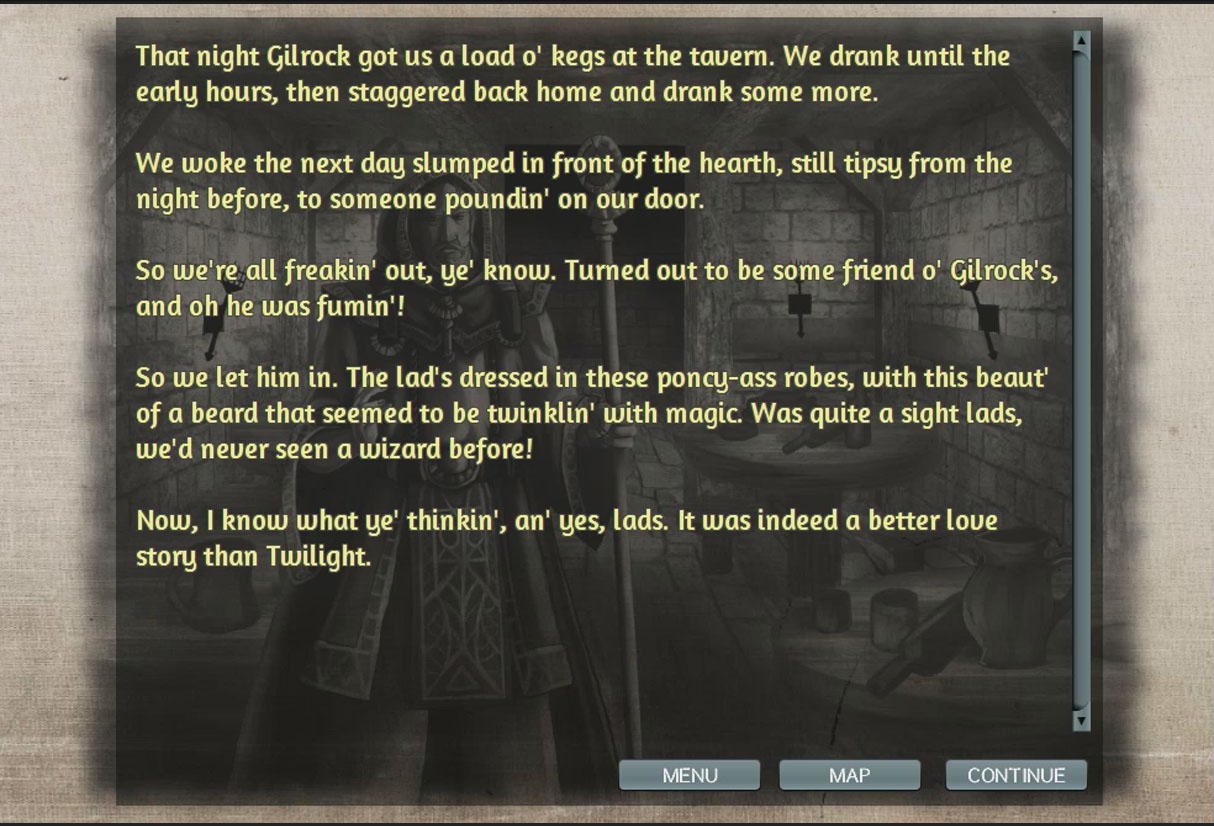
Each tale plays out largely through pages of text that appears between battles, followed by some dialogue between characters displayed using the tried and true dialogue boxes of yore. There is also some in-battle dialogue using the same boxes. The setup perfectly fits the retro style of the game. Unfortunately, the writing too often falls as flat as the dialogue boxes. The characters and story felt rather generic and often not very compelling. The tone was also inconsistent, with words like “noob” and a rather unanticipated reference to Twilight sprinkled in with uses of the word “ye” and other old-sounding English terms. Obviously, the attitude is meant to be light and a mixing of tones is fine for comedic effect, but given the general weakness of the storytelling, it only made me feel like very little time was placed on the narrative. I too often just wanted to move on to the next battle, and the story sort of felt like it was only there to give me some sense of progress rather than a memorable adventure.

text

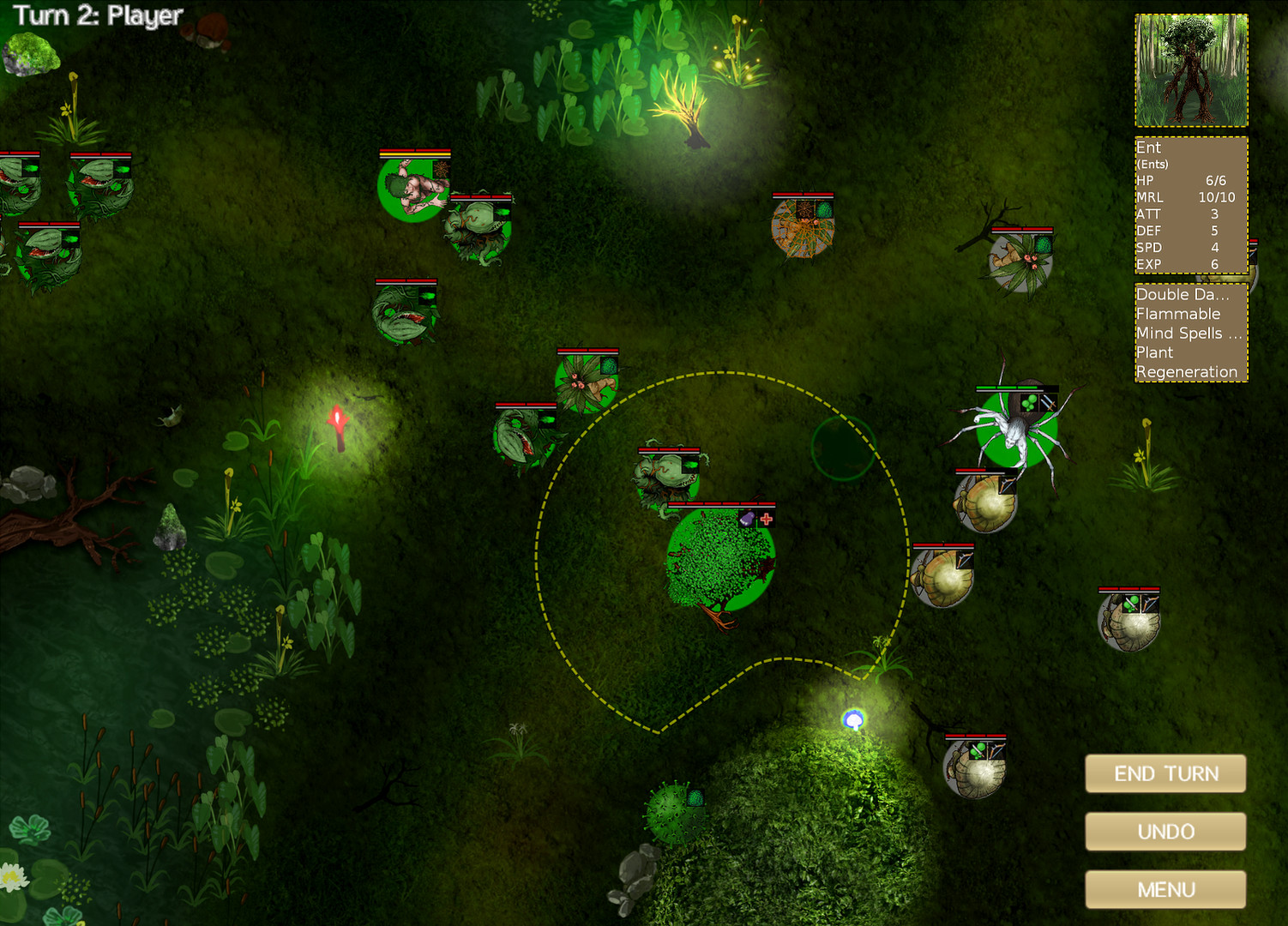
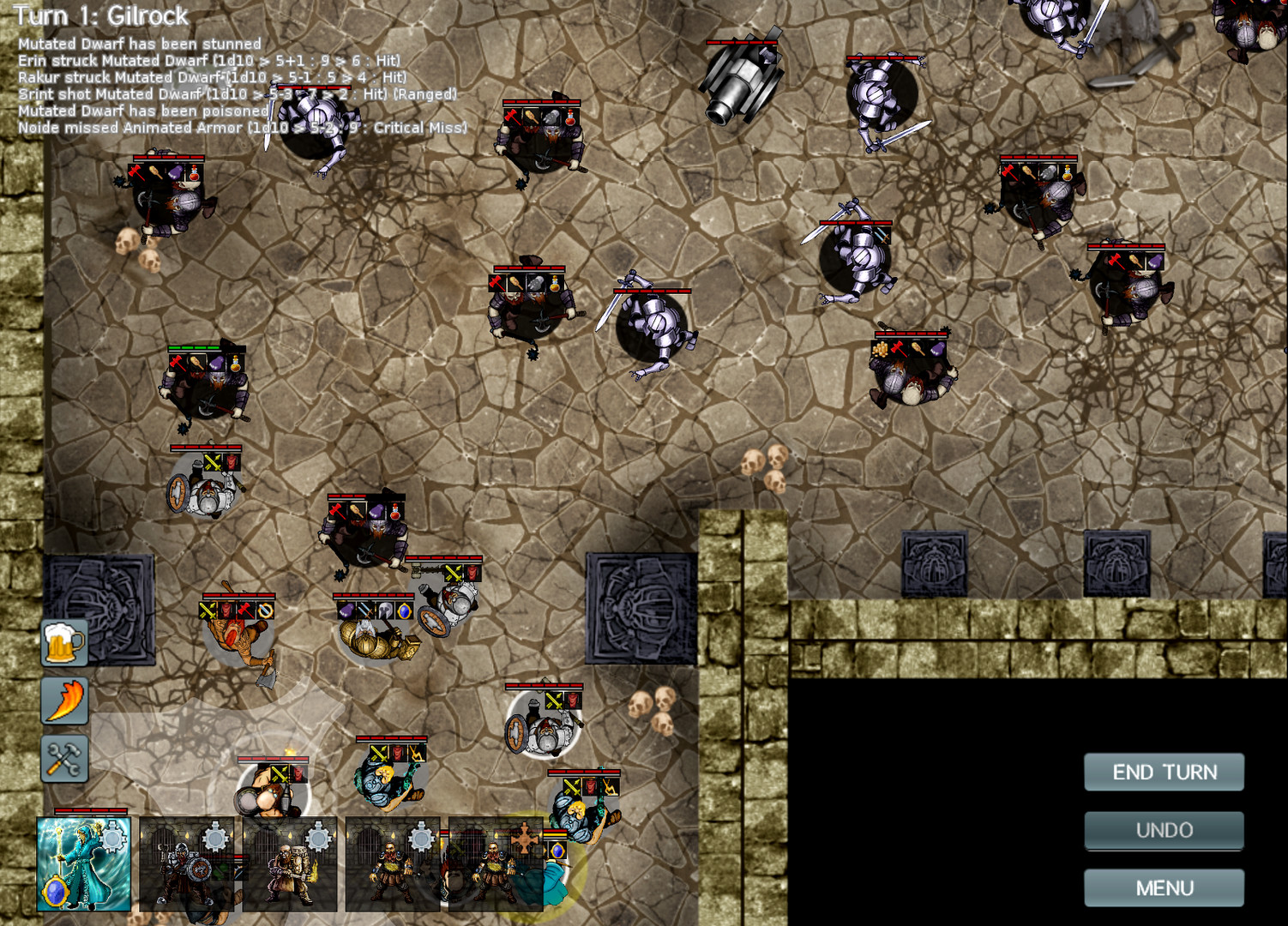
Of course, the combat system is the real focus of Age of Fear 3. The game boasts clever AI and a movement system that allows units to manoeuvre within a parameter rather than in squared off sections or set directions. Indeed, the AI proved clever enough to target my weaker characters, even moving past stronger ones to get to them. It would mob my more robust characters, move away when it could sense I was setting up for a major attack, and even target my spellcasters or units with ranged weapons to get them out of the way first. I was constantly forced to think ahead and be very aware of where all of my units stood at any given time.

ss_2e27d0510a2633d5e4fc182855de66cd4dc823e7.1920x1080

Since each unit can only take one action per turn, even moving was a major decision. I could, for instance, move my spellcaster to get him out of the way of an enemy unit poised to attack or use him to cast a spell that would help simultaneously take out multiple enemy units currently surrounding my weaker guys – but I can’t do both. Since my spellcaster had low health, this was a dire decision. In the beginning, the only way out was to try again, and this time be more careful about how I arranged my units on the battlefield, making sure to protract my weaker units and better anticipate my enemies’ movements. The ability to move a unit in any direction within a certain range is great, but I would also sometimes arrange units in a pattern that would end up blocking another unit’s movement in a way I did not anticipate. Turn-by-turn movement is a little frustrating. It seems obvious why it eventually fell out of style. However, it also adds to the overall difficulty, making the battlefield more like a game of chess than simply a challenge of might.

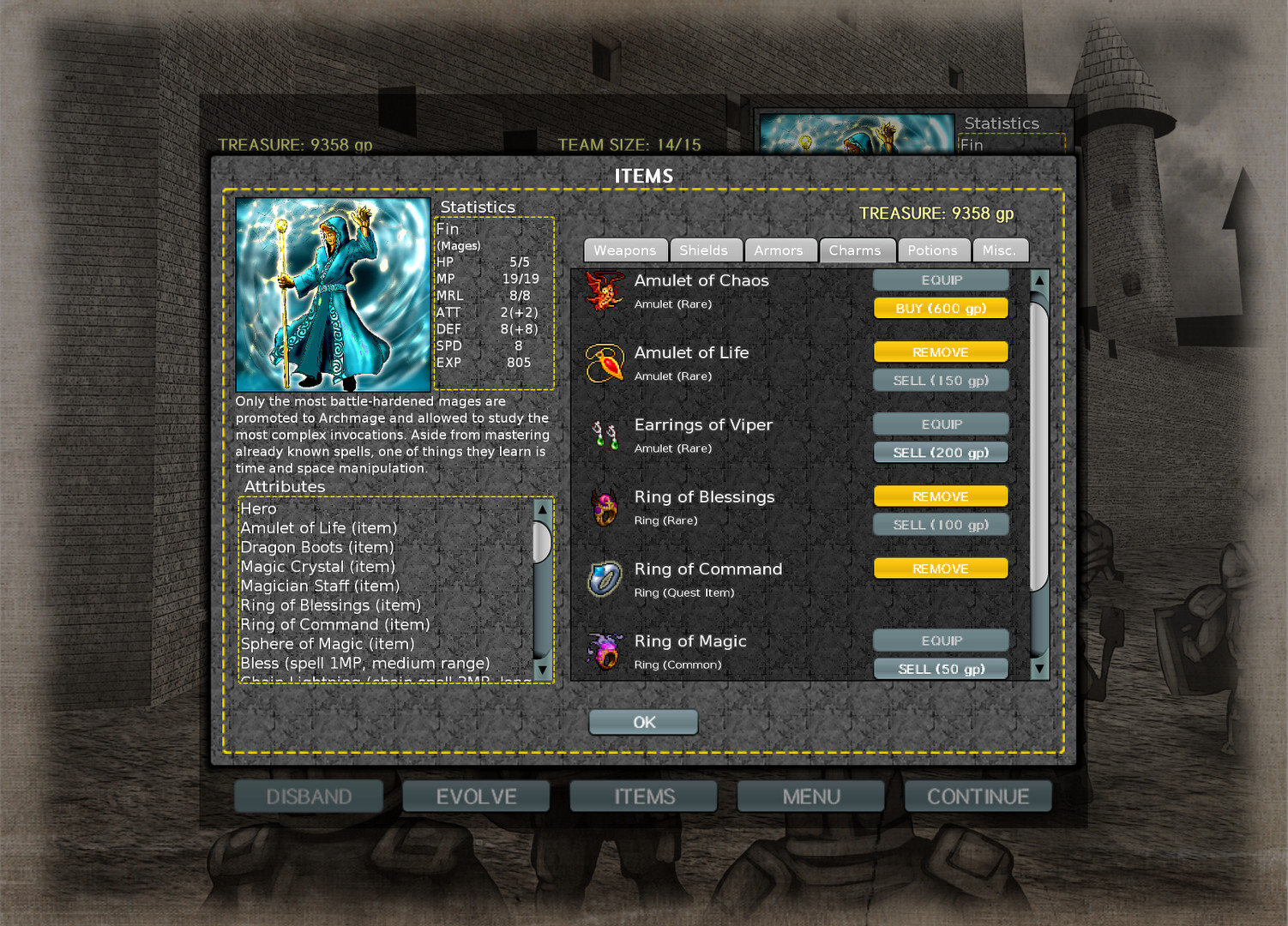
As your units fight their way toward victory, they will collect gold that you can use to purchase items or hire new units, as well as collecting experience points that can be used to upgrade your characters. For example, I could use my XP to give one unit more health or give my spellcaster the ability to use a turn to restore some of their magic. I can use my gold to buy new weapons, purchase potions to heal or alleviate poison, and even obtain rings that up my abilities or help protect me from harm. Anyone familiar with older RPGs such as Final Fantasy will be familiar with this type of system. Since units, aside from your two main characters, can permanently die, it also means keeping them alive and being able to use a character long-term requires mastering or at least becoming very familiar with this system.

ss_200f1aadb376003b8284c020d4b1fbccc4976448.1920x1080

Age of Fear 3: The Legend is clearly a work of love for a genre that had its heyday in a bygone era of gaming. However, modern strategy-based RPGs are still alive and well, if not necessarily making up much of the AAA market. For fans of the genre, Age of Fear 3 might not quite stand out among the crowd. It is, however, a pretty good trip down the road of nostalgia for those who miss the turn-based era and are looking for a new trip down memory lane. Tabletop strategy fans might enjoy the experience as well. The story might not stick with you, but the battles are fun and engaging enough to keep you on your toes. The upgrades and items systems add enough extra depth to make up (sort of) for what the story lacks. And, if nothing else, just grab a good ole glass of dwarfish ale, kick back, and see where the road takes you.

Sonic Mania Review – A Familiar Rush of 16-Bit Nostalgia (PS4)

The Sonic franchise has grown tiresome and abundantly stale over nearly two decades now, but the series continues to churn its legs, desperate for a break. The latest release from the famed Blue Blur, Sonic Mania, gives longtime fans the title they’ve been waiting for since the 16-bit days. No more clunky and confusing 3D adventure games, and out with the sub-par graphically enhanced, mechanically flawed 2D attempts at revamping the classic feel. Sonic Mania is here, and it delivers.

Maniapreorder47.png

The Sonic community shouted valiantly for a rebirth of the tight and responsive 16-bit blue hedgehog, and – though it took awhile – the Sonic the Hedgehog developers finally responded. Using the ingredients that made Sonic the icon he was in the 90s, Sonic porting professional – Christian Whitehead – and developers Headcannon and PagodaWest Games delivered a 2D, side-scrolling title so spot on with the originals, one could easily mistake the new release for a 16-bit Genesis remake.

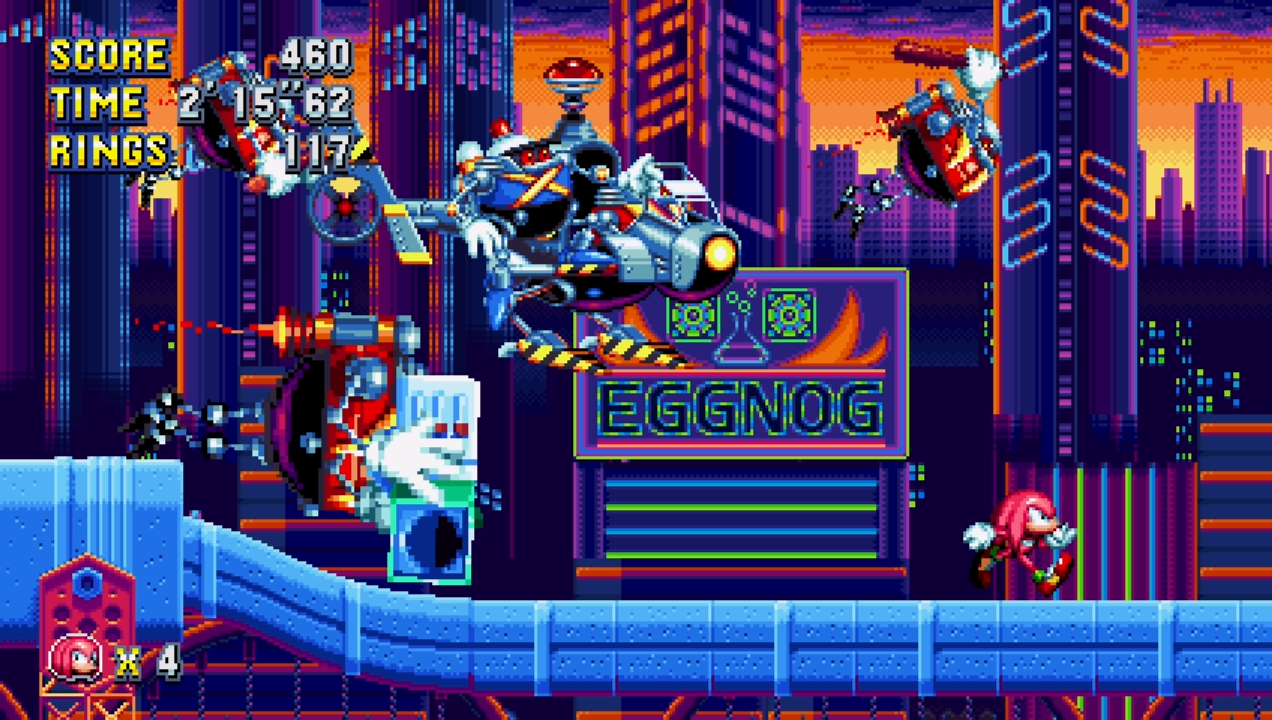
Speeding through new level designs, obstacles and a variety of branching pathways, Sonic Mania also delivers a few classic levels from the early years of Sonic the Hedgehog. With familiar platforming areas and enemies, these re-visited classics are now extended with tons of new areas to explore, where most new enhancements come when running through the second acts of levels. Completely revamped and re-imagined, new level designs introduce exciting platforming mechanics, surprising new areas, dangerous enemies and tough bosses – all with their own tactical advantages, and disadvantages.

SonicMania_01

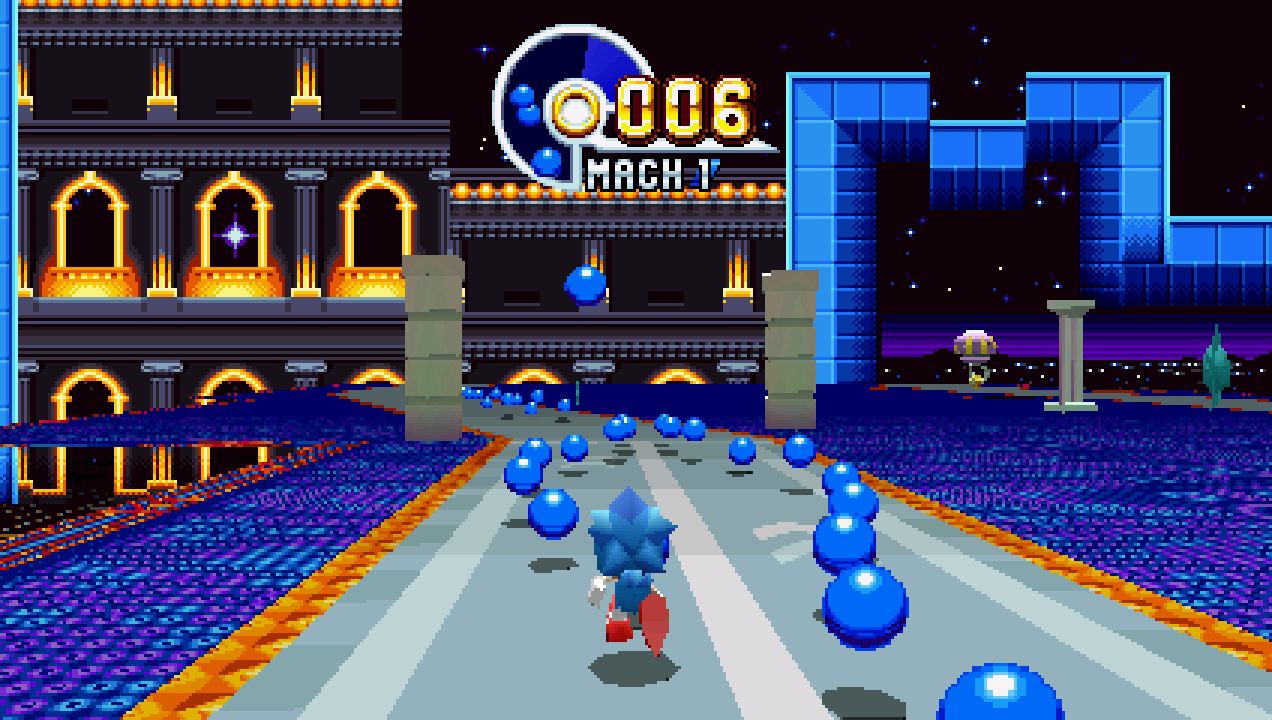
Special stages make a roaring comeback, starting with the return of the iconic 3D sphere trotting stages from Sonic 3 and Sonic & Knuckles, which reward you bronze, silver and gold tokens redeemable for secret unlockables. Introducing a new method of retrieving the precious Chaos Emeralds in the new “Big Ring” stages, players will have to put their skills and reflexes to the test in these new racing-style challenges.

Scattered in hidden areas across all levels, the coveted Big Ring teleports the player to new areas where they’ll be faced with chasing down an alien UFO that’s holding one of seven powerful Chaos Emeralds. Racing around what essentially resembles a small go-kart course, there are obstacles to dodge, rings to collect and more blue spheres to gather as you close in on the alien UFO. With a decreasing timer made up by your ring count, your speed set to a permanent Mach setting based upon your sphere total, and cliffsides, spike balls and shortcuts to keep the player acting quickly and precisely, these new additions keep the challenge of collecting all seven Chaos Emeralds exciting and new.

sonicmania special

Making your way through the nostalgic feel of the old Sonic games, you’ll be able to play as the 3 most recognizable characters – Sonic, Tails (or Sonic and Tails paired together) and Knuckles. Every level contains numerous pathways, loopy-loops, floating platforms, climbable walls, all of the familiar item boxes including the useful standard, fire and lightning shields and tons of hidden areas – in which some are only obtainable by certain characters. Using Knuckles‘ popular glide technique and rock climbing skill, Tails‘ flying technique and Sonic’s famous speed and essential skills, players are sure to find tons of secrets like special items, 1-ups and Big Ring stages.

The Escapists 2 Review (PS4)

Ever since Team 17 released The Escapists in 2014, I have been looking forward to seeing what more they can make out of this universe. After releasing several DLC’s for the first game (some were fun, others not so much), and releasing a Walking Dead-version, it is now time to move on.

I got the awesome opportunity to test both the PS4 version and the PC version, which is really nice for comparison. Because testing both platforms takes time I have, sadly, not had the chance to test out the multiplayer part yet – it will therefore not be included in this review. However, if I manage to test it out in the near future, expect an update on it for sure!

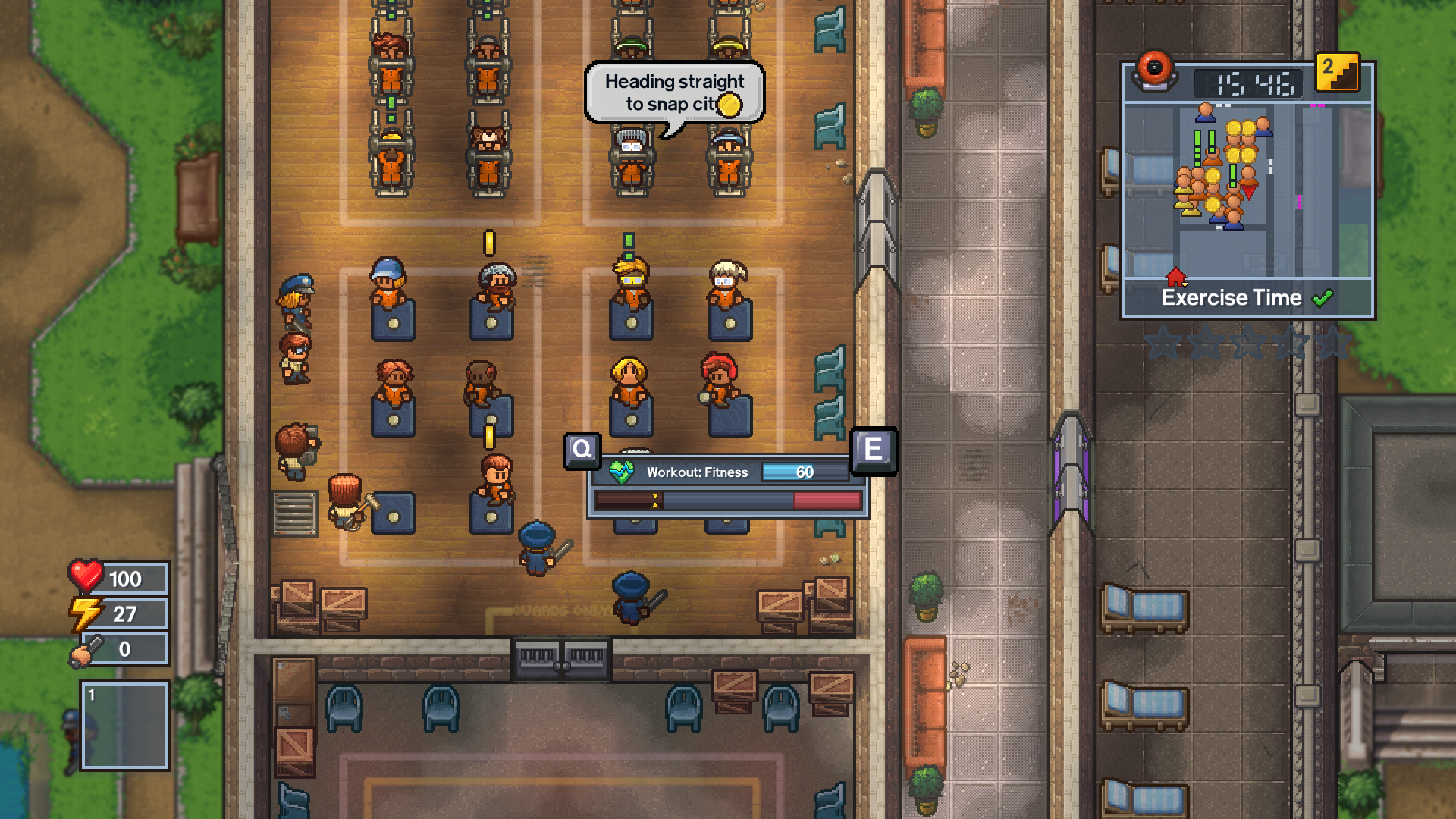
The Escapists 2 is a strategy sandbox game with pretty pixel graphics, offering as much as 10 new prisons with various difficulties for you to twist your brain and escape in new, creative ways. Personally, I’ve only managed to escape from two prisons (no judging, I’m slow, okay!), but I’ve used a lot of time just wandering around the prisons and exploring what the game has to offer.

roll-call-is-mandatory
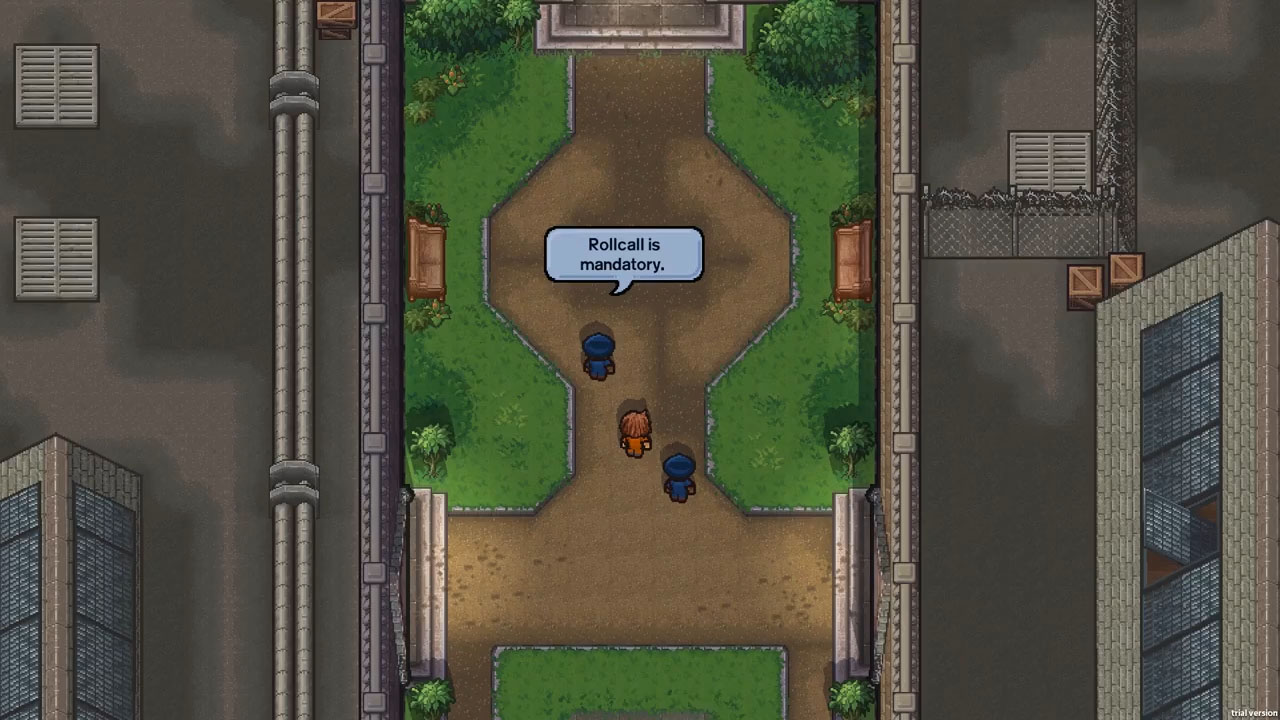
Always remember to uphold the prison’s schedule!

While I would normally prefer playing a game like The Escapists on the computer, I was pleasantly surprised when discovering that the game is equally comfortable to play on the PS4. It looks really good on both platforms, and the controls are smooth. Even though the controls (at least on the computer) are a bit different now than in the first game, I managed to adjust after a short while. 

The music of the Escapists 2 is just as catchy as it was in the original game. It changes with different times of the day, which creates a nice and fitting ambience, and a great change of pace. With enough hours played, you’re going to start humming the music like working songs. I love that the prisons have different themes, and music that fits accordingly.

With as much as 10 prisons available, many hours of gameplay await you. As if that weren’t enough, in order to proceed and unlock the different prisons, you have to collect keys – and the way of collecting these keys is to escape the prisons in different ways. There are set ways that you can escape, and you have to do it the way the game was designed to earn the key. I am guessing that you don’t have to play every single prison in every way, but it is definitely a challenge for the achievement hunters out there. You have to get creative, though – some of the prisons are timed!

Deeper character customization is also available, and you unlock more stuff for your character as you play through the different prisons. This is a relevant addition in regards to the multiplayer function, as it, obviously, makes it more fun to be playing against others with your very own customized character(s). It also creates a greater sense of ownership to the character, I think. It’s the little things in life, you know?

If I’m allowed to give some advice, get to know the place first – because each prison has its weaknesses. Get used to the routines of the prison, get a job and earn additional money by doing quests given by the other inmates. There are also ways of getting hints in the game to help you escape… But you have to be observant, and look closely. Remember that each prison is different, and needs a different strategy. Create a facade for yourself. Follow the schedule, don’t make the guards angry, and go do what you gotta do.

The Escapists 2
Get to know the people around you.

Personally, I don’t like the autosave function on a general basis. Therefore I get a tad annoyed when a game like The Escapists 2 has that feature because I have a need to be able to save when I want, not when the game decides to. My wish is that the game would enable a manual save feature.

I would also like information about the items you can craft in an update. Either a short description of what the item is or perhaps a little hint as to what you can use it for. I found myself stuck a couple of times because I didn’t know what to make and I didn’t know what they were for. Sure, I could’ve just tested it out, and figured it out on my own, but resources are pretty valuable in The Escapists, and I didn’t want to use my hard-earned resources for nought.

The recipes for the items and how to use them are different now than they were in the first Escapists-game too. For example: in the first game, one could hide the fact that you were digging a hole in the wall by placing a poster in front of it. Now, you have to make a fake wall out of paper maché – which is more logical, I guess, but it requires more resources and more work. It just took a heck of a lot of time to figure that out. However, it is the little things like that that makes The Escapists 2 feel quite different from the first game.

All in all, The Escapists 2 is a great game with a lot of potential, but there’s room for improvement with small things such as a manual save function and more information on items. The online and multiplayer function creates an even bigger replay value to the game, which is a huge plus.

The Escapists 2 offers new ways of escaping, more prisons, character customization, multiplayer (versus and co-op mode) plus online, new items to craft, more stuff to do. In short, the new Escapists is bigger, better, improved. It offers levels that are fun, but also challenging. Strategy is required, and it gives you a great sense of accomplishment if you manage to escape. It is a game that will definitely make the hours fly by, and is as addicting as it has always been.

techtroid-rating8

SpaceBOUND Review – Puzzle Platforming So Frustrating It’s Addictive (PC)

Platformers and puzzle games draw a line not met by many other genres in the video game world. Both requiring precise and strategic thoughts and movements, while each provides a casual approach to the entertainment of gaming. The debut release from Gravity Whale Games, SpaceBOUND, gives new meaning to the term puzzle/platformer.

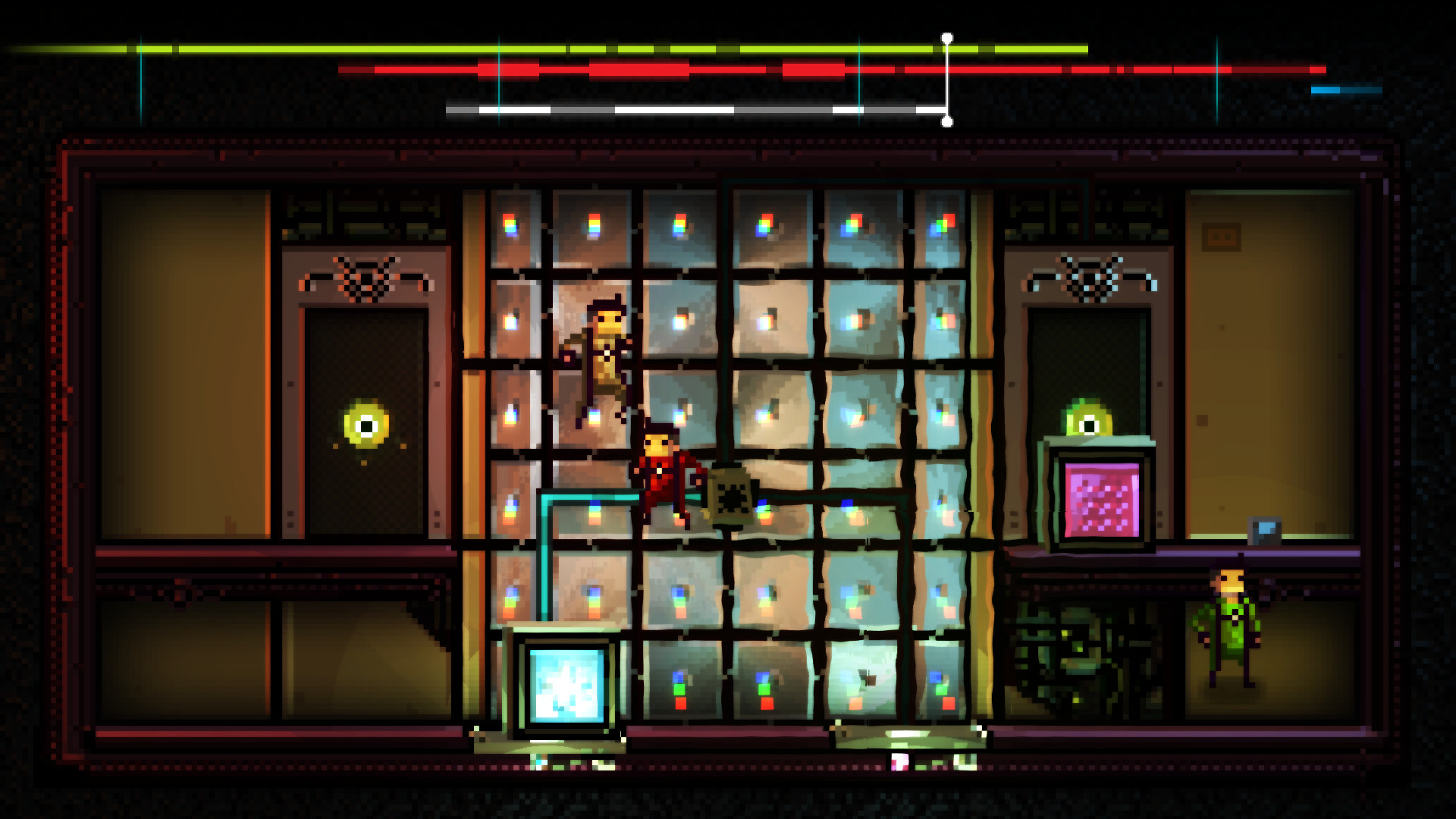
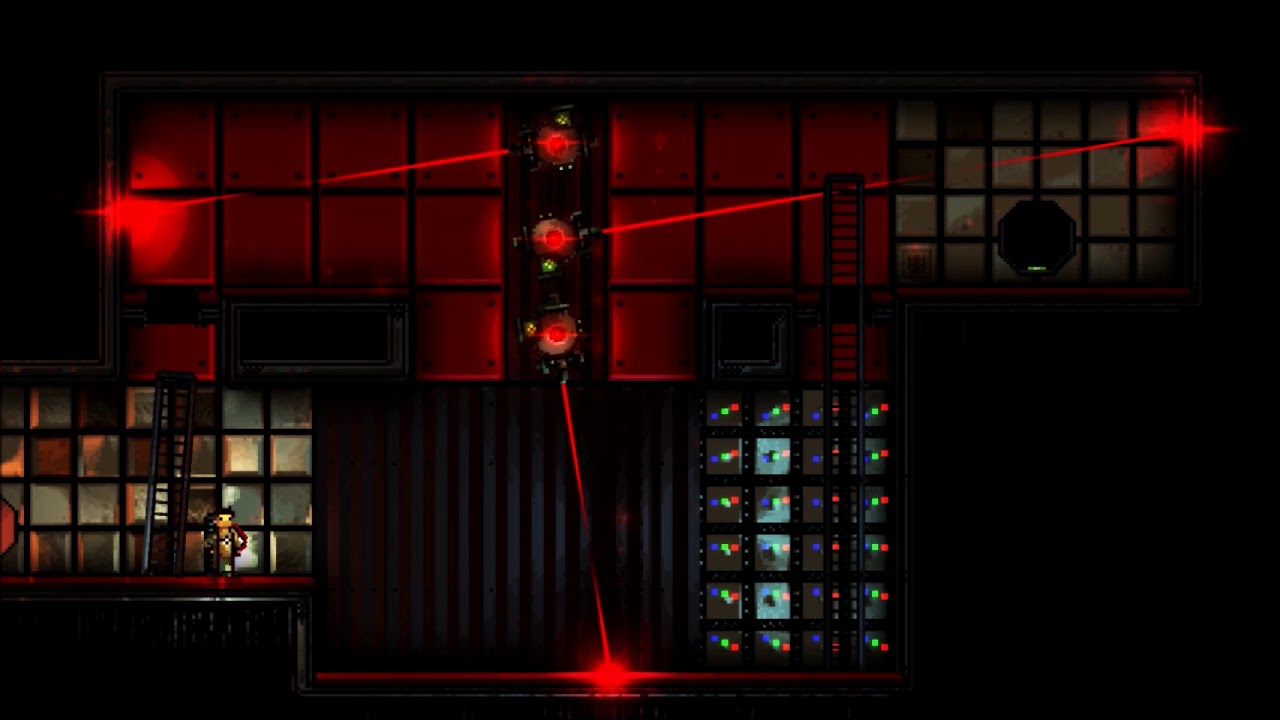
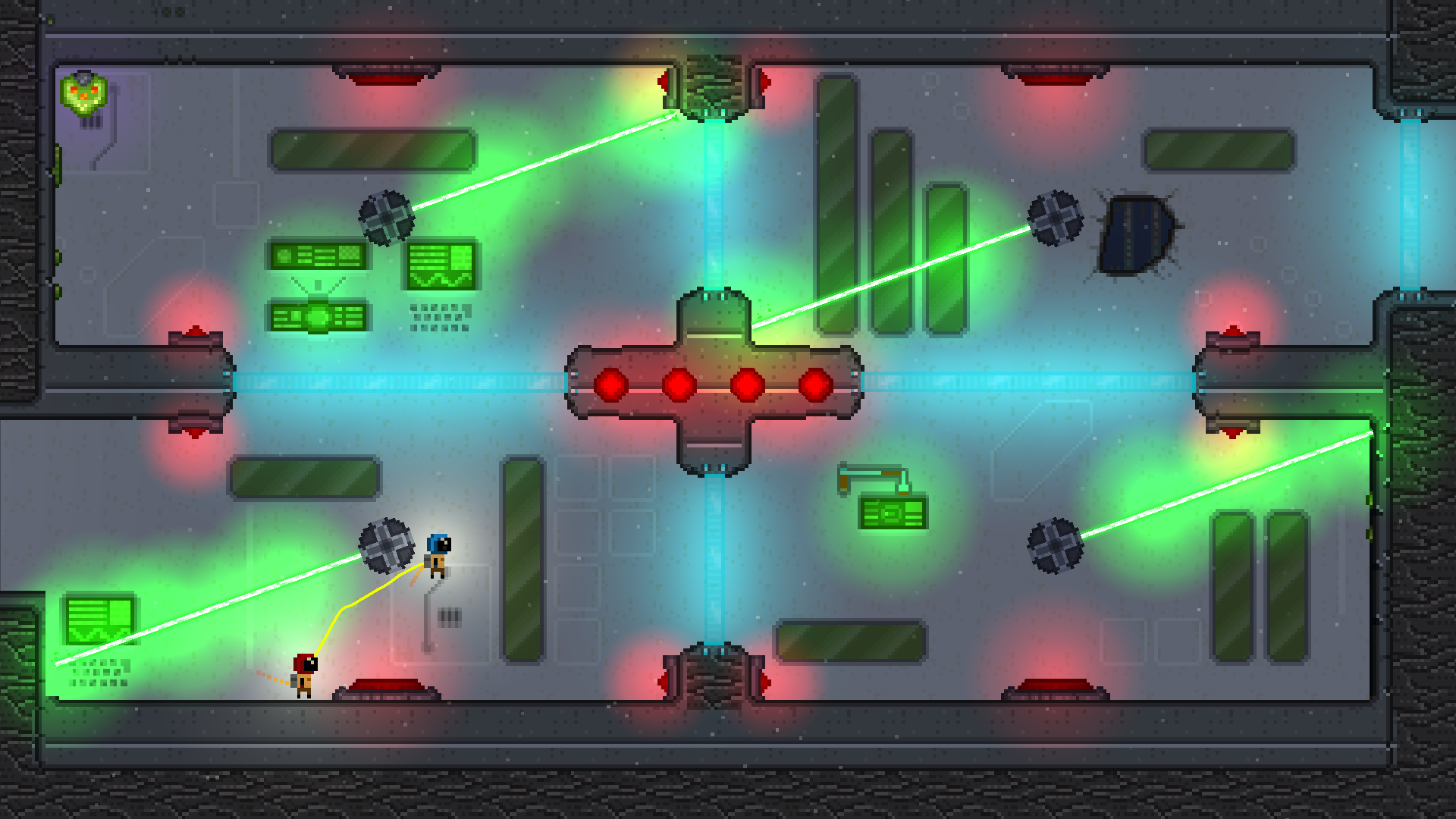
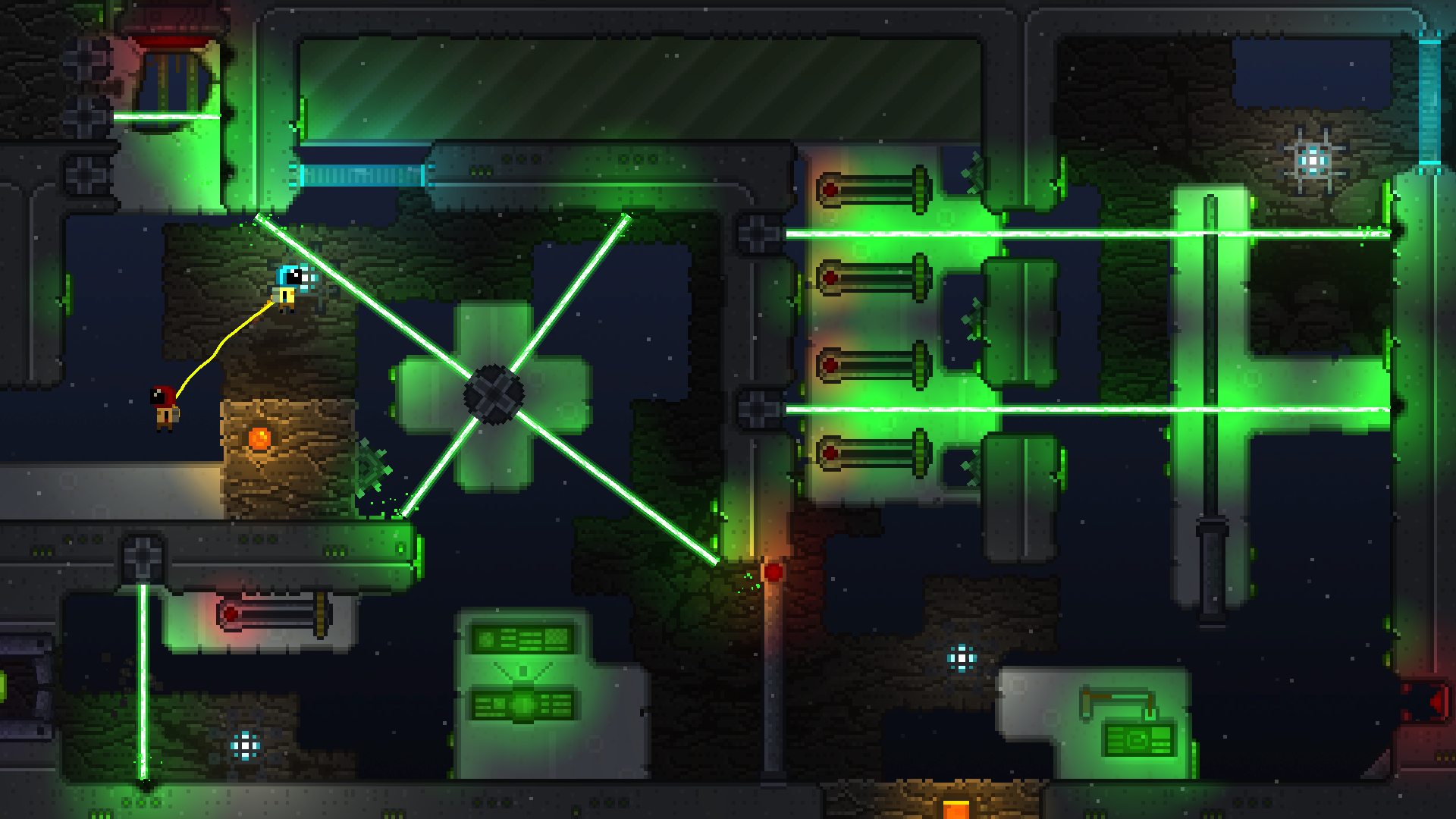
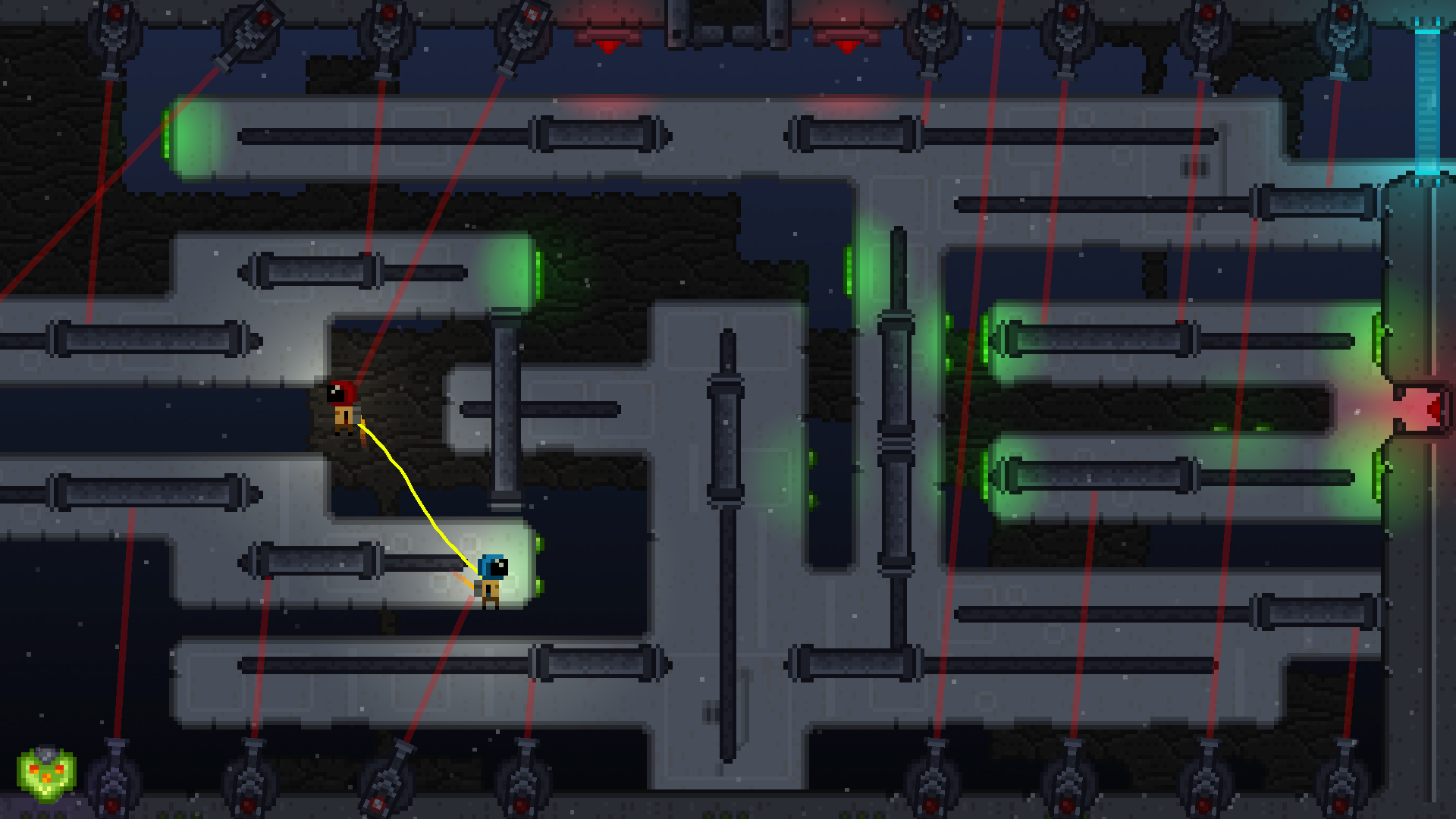
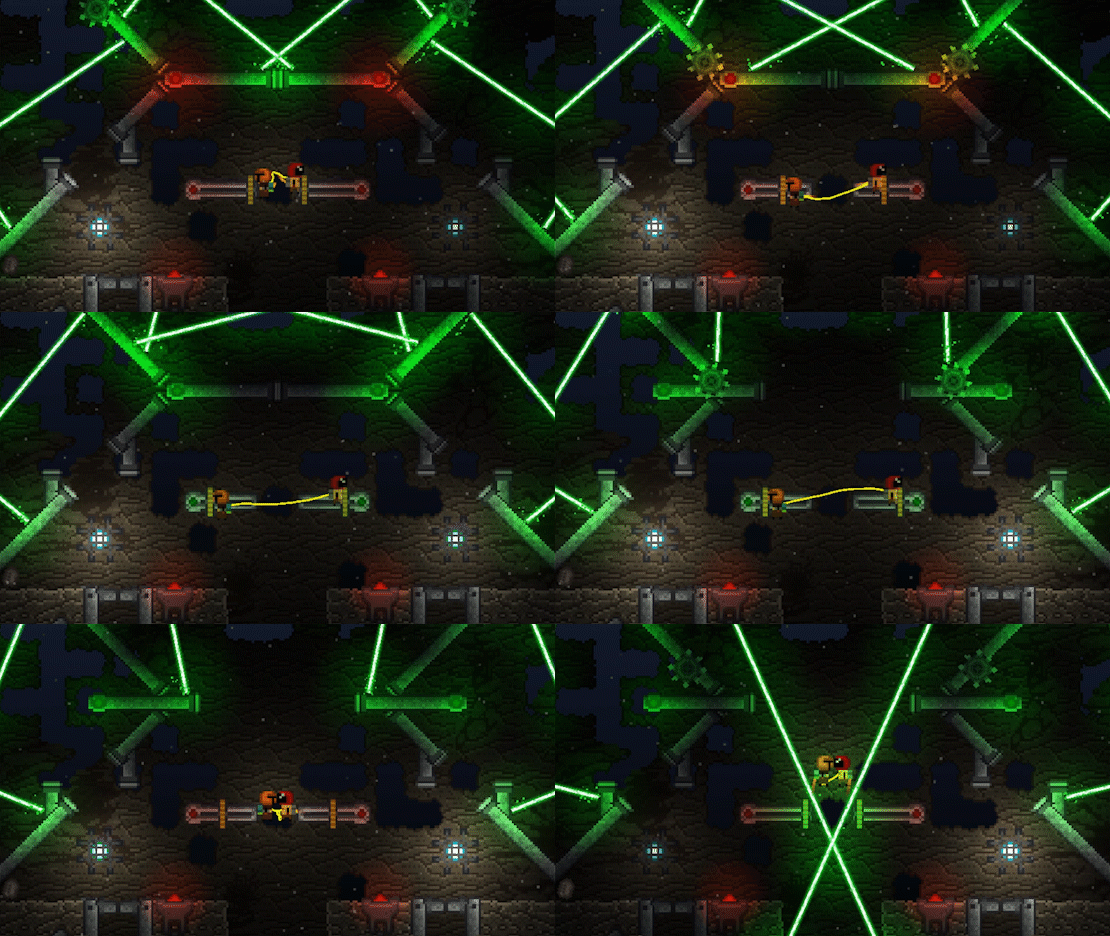
Players take control of two astronauts who have crash landed on an asteroid in the middle of deep space. Attached by a tether, both astronauts may be controlled separately by one player, or individually in cooperative mode. The idea is to navigate through an abandoned facility rigged with destructive lasers, electrical wires, various key buttons and other harmful and dangerous traps throughout the game. Unlocking gates, keeping both astronauts alive as you float about in zero gravity with your jetpacks, the tether is crucial for the tremendously challenging puzzles that lay ahead.

s2.png

If choosing to play solo, each astronaut is controlled separately using either the keyboard or more preferably, a gamepad. The arrow keys will control one astronaut, while the W, A, S, D keys control the other. In terms of the gamepad, both analogue sticks make a much more efficient method of guiding your astronaut buddies to safety. The catch of SpaceBOUND is the tether linking the two together.

Floating around, bouncing towards and away from each other proves extremely difficult when trying to avoid the shifting lasers and dangerous saw blades. When you inevitably meet your end to the scorching burn of one of the mines’ many lasers or death traps, your astronaut(s) burst into a splattered bloodshed of frustrations and regret; leaving you to restart the relatively short, but tedious level from the beginning. Say both of your comrades just barely survived the beam that nearly singed your space suits into ash, if your tether breaks it’s back to the start of the level.

s5.png

Though the tether line proves to be a minor liability and an extreme risk for ending your current run, it also acts as a strategic tool for throwing asteroid chunks, and even yourselves across the screen in a much more energetic manner. Catching rocks and then throwing them through a variety of lasers and obstacle, breaking down electrical lines guarding your way out and most notable pressing the button required to unlock the next area give players a true sense of accomplishment once the task has safely been completed.

With the short level length and a trial-and-error approach to puzzle solving, re-trying numerous areas throughout the campaign becomes more and more common, testing the player’s patience and platforming skills. The dual movements of the astronauts become second nature as you experiment with various methods of manoeuvring in sync with one another.

spaceBOUND-4.gif

Through dozens of levels full of traps and hurdles, an even more excruciating Time Trial mode and relentless mind-numbing puzzles for solo or co-op play, SpaceBOUND is the answer for 2D, zero-gravity platforming with a bemusing and often frustrating gameplay and level design. The tenacious gameplay and clever use of guiding two characters at once across a drifting minefield of death traps prove not for the faint of heart but requires players to act quickly and precisely, while using patience and your surroundings to accomplish uniquely difficult challenges in SpaceBOUND.

techtroid-rating8

Severed Review (Nintendo Switch)

Developer: DrinkBox Studios

Platform: Nintendo Switch (eShop)

Price: £13.49

Developed by the talented DrinkBox Studios, Severed has been released on several platforms before, including the PS Vita, Wii U, 3DS, iOS and now most recently the Nintendo Switch. It’s an action-adventure game that gives the Switch’s touchscreen the biggest workout yet.

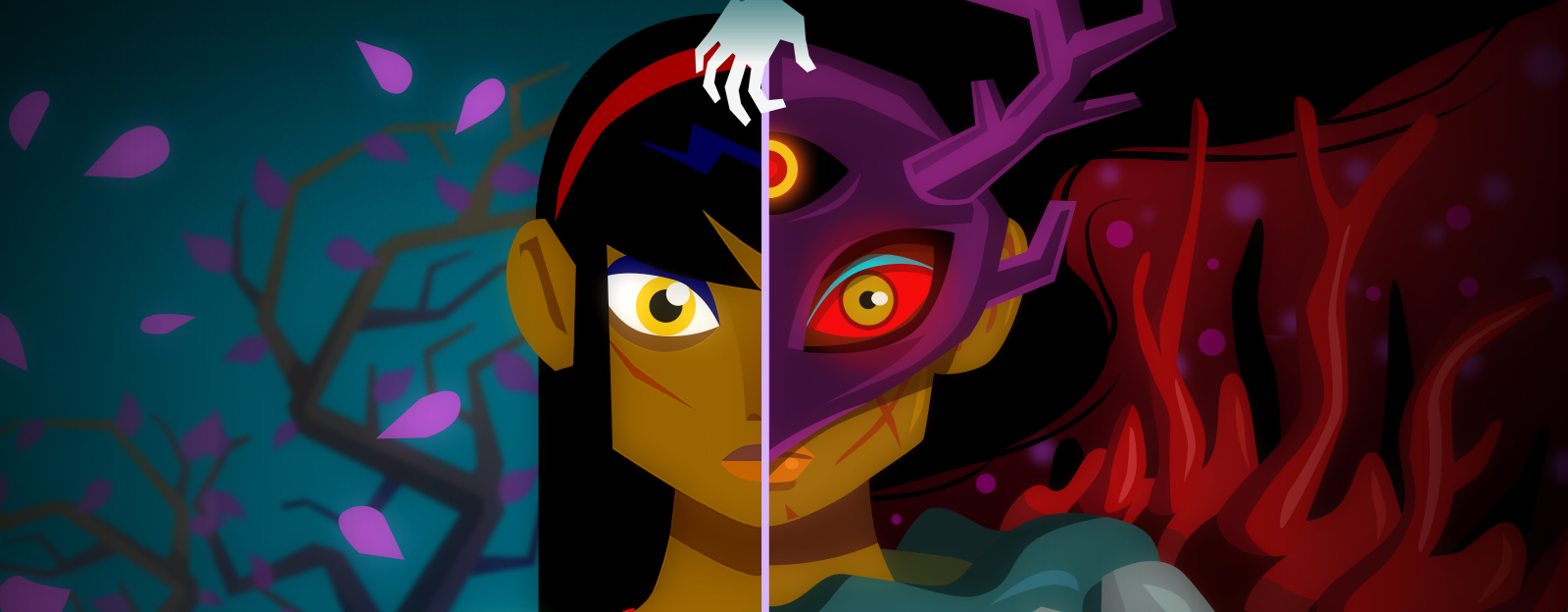
You play as Sasha, a one-armed warrior that is bestowed a living sword. She’s searching for her family, who have disappeared, and finds herself in a monstrous and deadly world. In this merciless place, you’ll solve numerous puzzles and will be up against a mixture of disturbing creatures. Luckily, Sasha is pretty handy with her sword.

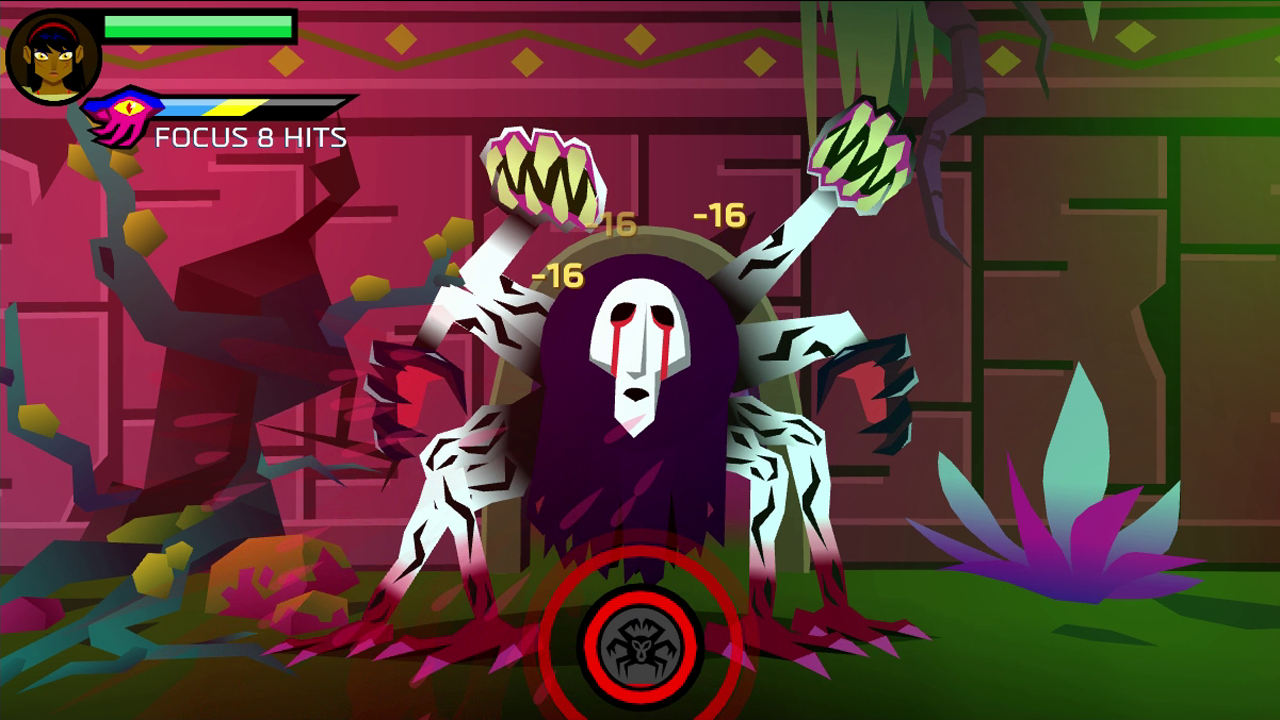
Using the touchscreen on the Switch you swipe to defeat your enemies. The longer the swipe movement, the more damage you do. To counter incoming attacks you have to swipe at the right time, and at the right angle. Upon continually getting hit by some of the more fiendish enemy attacks, I wondered if the swiping mechanism was woefully imprecise at first. It’s not; it’s actually the opposite and requires a bit of practice and skill to master. Once you’ve mastered it though, Severed begins to click.

There’s no option available to play the game while the Switch is docked.

Once you start to get accustomed to the generously checkpointed combat, Severed throws in an RPG style upgrade system. As you’re about to finish off your enemies, time briefly slows down, and it’s here that you’ll get the chance to quite literally sever their limbs off. These limbs serve as upgrade points and can be used to increase the damage you dish out, reduce the damage you take and much more. There’s also a strategic transmute system, in which you can convert the giblets you’ve found into the monsters’ limbs you need for your next upgrade. It’s a rewarding process.

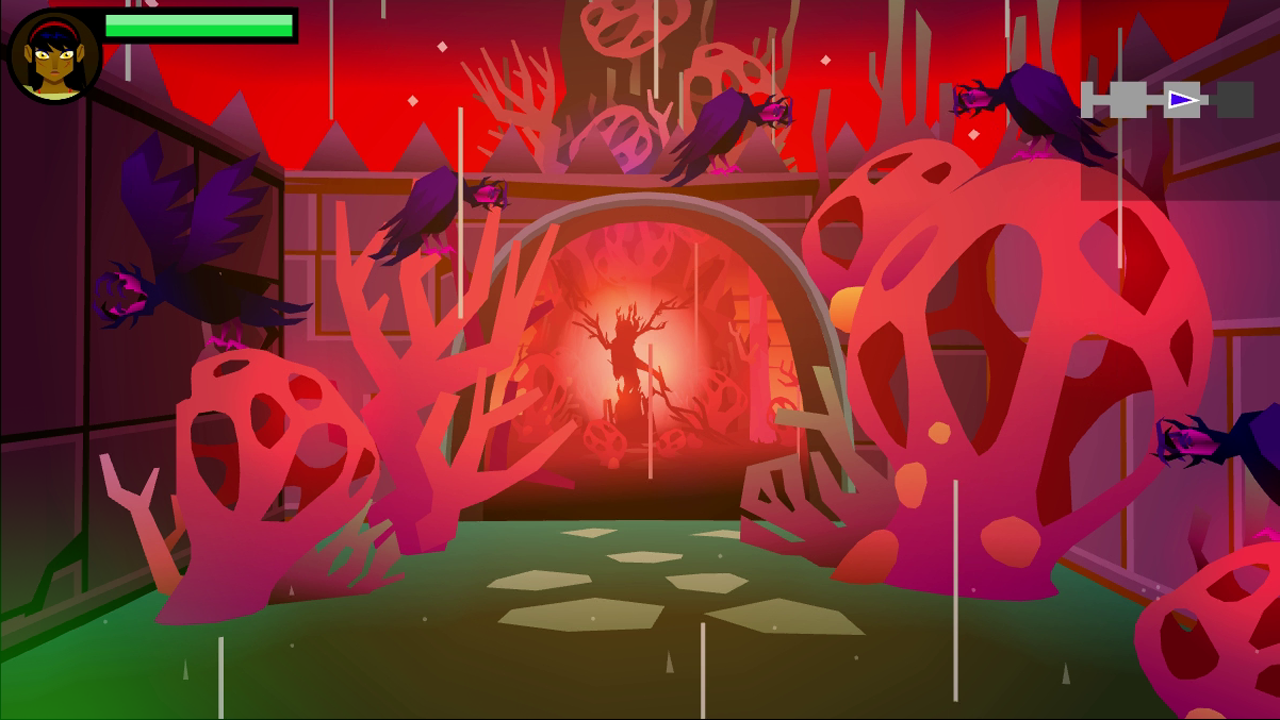
While exploring the clever map layouts, you’ll come across well-hidden heart and brain pieces that extend your health bar and magic respectively; you just have to eat them first! The puzzles found throughout Severed are smart too, requiring some thought to solve. It’s this blend of exploring, and the aforementioned touch combat, that is expertly realised.

Foreboding much?

To back up the impressive gameplay is the gorgeous, clean visuals that help to bring alive the ominous realm Sasha is stuck in. They look particularly great on the Switch’s ever-impressive screen. While the music, performed by the Canadian band Sonic Titan (feat. Pantayo), is suitably atmospheric and epic. The ending theme, “Take My Hand”, is powerful, to say the least.

Severed is short though, with the credits flowing down the screen more quickly than desired. After a few moderate play sessions, with one hand gripping the console and the other swiping away, I also found holding the Switch to be awkward at times.

Despite these minor issues, Severed is an excellent touchscreen indie title for the Switch and is one of the very best so far. If you’ve yet to play it on other devices, especially, it’s an essential purchase.

Starsceptre Review (iOS)

Developer: 8BitMagicGames

Platform: iOS (iPhone, iPad)

Price: $1.99 (App Store)

Updated 17.08.2017

In our original review of Starsceptre, there were some issues with certain aspects of the game. The developer has now released a big update, dealing with all of these issues. Looking at the new product, we feel that an updated review is needed.

One of the more important updates that Starsceptre recieved was the change to the shooting-mechanic. Autofire is now implemented, and it is oh, so beautiful. Our thumbs are saved from carpal tunnel and cramps because of the incessant tapping on the screen. It is also possible to toggle the autofire on and off if you so wish.

Another crucial change was made to the cutscenes, where the game would skip them after each level – making us lose a big part of the story. Now, they are coming right on queue after the levels are completed. There has also been an addition to the main menu where each cutscene has been made available – so you can watch the whole story in one go. Pretty neat!

As minor improvements go, we really like the additions to the main menu. Along with the availability of the cutscenes, the settings button is a very valued one in our book. Here, you can toggle the autofire, as well as adding or removing scanlines. Even though it’s minor, they really come in handy.

The game might not be perfect, but it has definitely made some great improvements. Considering the one-man business behind this product, it is definitely something to be proud of. We have decided to up the score to a 4/5 as a result of these changes.

Original review:

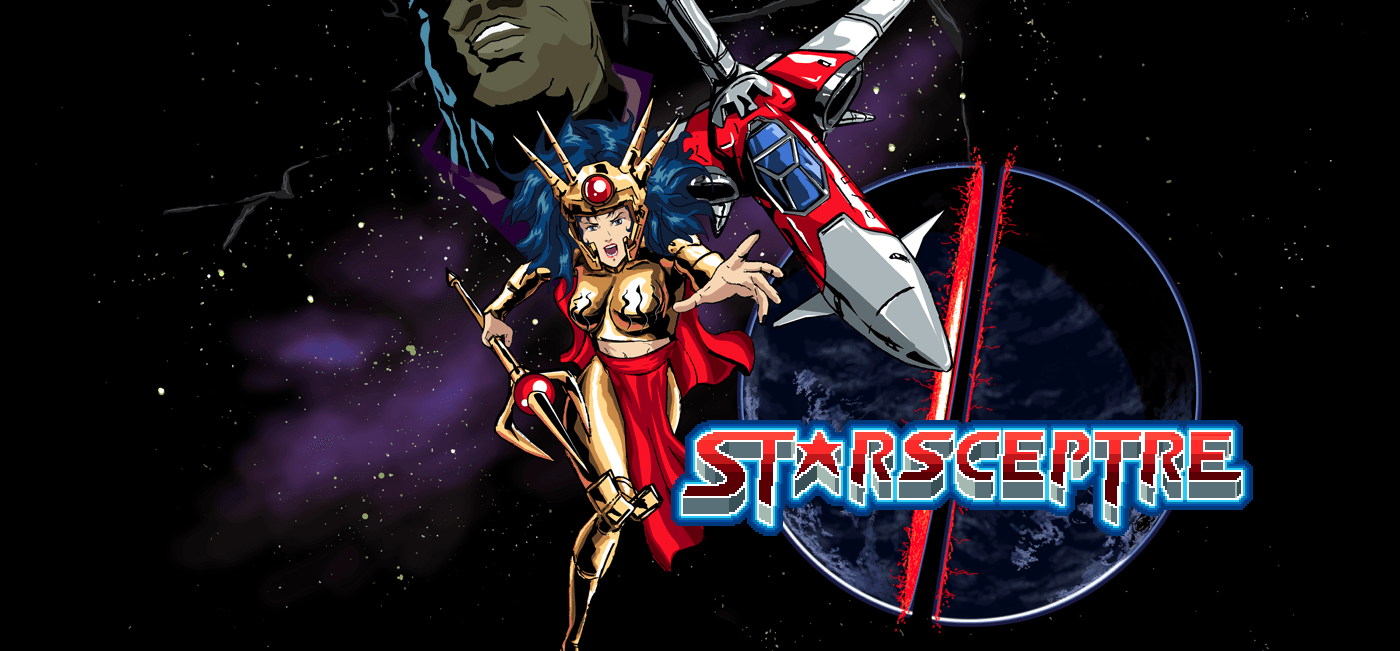
Starsceptre is a retro Shoot ’em up game by Richard Morgan, the man behind 8BitMagicGames. It was made solely on a programming app on the iPad, when Morgan was commuting to and from work. Seeing the result then, consider me impressed.

The story is simple – an evil race named Draxses is conquering planets, robbing them of their resources and enslaving their occupants. The Starsceptre is the only thing that can stop them, and with the help of Onalee, “the chosen one” to wield the Starsceptre, and Ensign Rook, the pilot of your spaceship, we must battle our way through the galaxy to defeat the Draxses.

back in time.png
“My game is all about skill and luck,” says Richard Morgan, “and as a gamer through and through I want people to win games on how well they play, not how deep their pockets might be.”

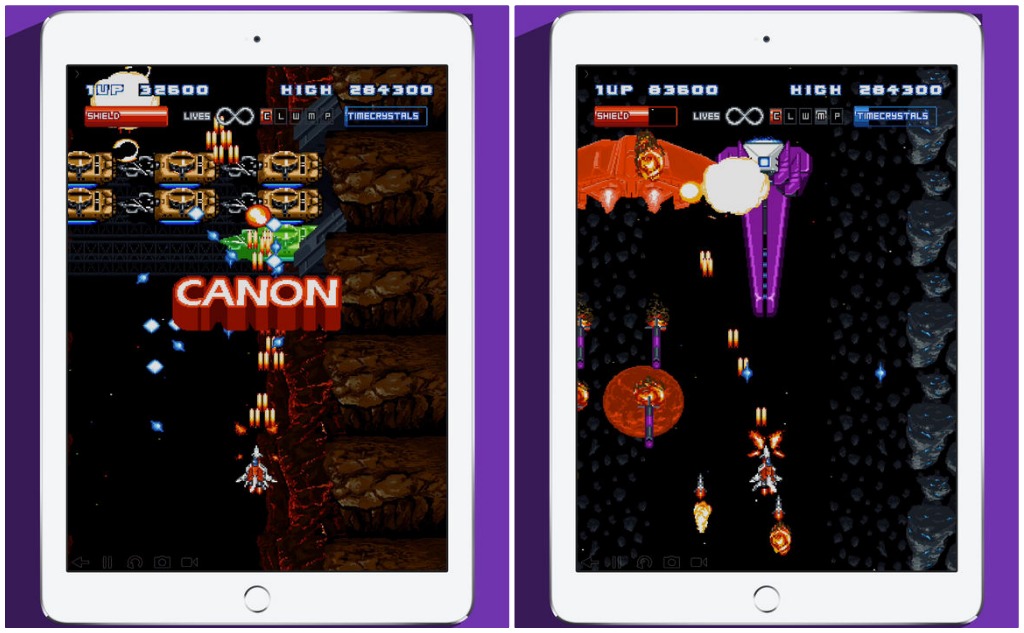
The twist in this game is that you don’t use traditional controls. To shoot, you have to tap the screen repeatedly, either with one or both hands. In order to move the ship, you have to move your device (in this case, my iPad) by tilting it to the respective side. Tilting the iPad towards you makes the ship loop backwards, and comes in handy for dodging – several boss fights require that you use this mechanic. Even though it takes a few minutes getting used to, one quickly adapts and it suddenly feels like a very natural way of playing.

The way the game is designed creates a highly immersive style of gameplay. However, even though the controls work well, they are perhaps too sensitive at times. The spaceship would flip repeatedly even though I did not order it to do so, which would ruin the flow of the game.

The game looks awesome by the way – it truly feels like you are in an 80s or 90s arcade game, and the music definitely fulfils this feeling. Starsceptre is by no means simple – easy to play yes, yet very hard to master. At the end of each level, there is a boss fight which requires certain tactics to defeat.

According to the developer’s home page, the game is being referred to as a “Tilt and Shoot” type of game, introducing a new hashtag: #tiltnshmup. Yeah, it’s got a nice ring to it.

starsceptre-100727018-orig.jpg
Tilt ‘n’ Schmoop!

I don’t think the developer spent much time on the voice-acting and dialogue, which was not good. At all. Luckily, this isn’t a big part of the game, because the dialogue would often get so cringe-worthy that I found it hilarious instead (maybe that was the idea?). I also encountered some trouble launching the cutscenes, where the game would just skip them, leaving me empty-handed storywise.

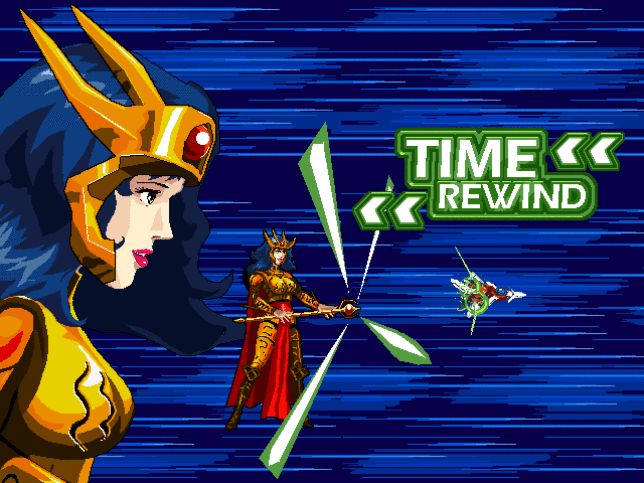
“Infinite chances to save the galaxy,” is the catch-phrase of the game, and for good reason: there is no game over. If you die, the Starsceptre will rewind time so you can give it another go. This function works really well with the flow of the game.

The game also receives both thumbs up from me because there are no microtransactions at all, “offering the full game for a one-off cost of less than a cup of coffee. All updates and all updates will be for free.” In other words, what you pay is what you get, and that sounds like a pretty good deal to me.

Phantom Trigger Review – A Hack ‘n’ Slash, Dungeon Crawler with Smooth Retro Style Action (PC)

Retro arcade experiences have been remodelled and re-imagined since the dawn of modern indie games. Each title inherits old gameplay styles while lending new and creative ideas to the experimental games releasing under independent developers. Phantom Trigger is exactly that, bringing old school dungeon crawling elements, while the strategically smooth hack ‘n’ slash playstyle brings a much-needed breath of fresh air to the mildly stagnant, and highly saturated genre.

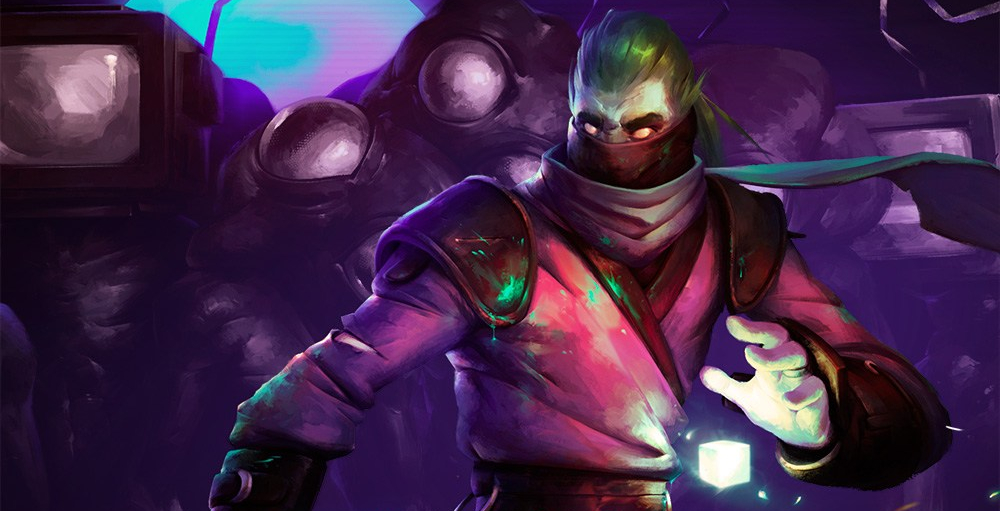
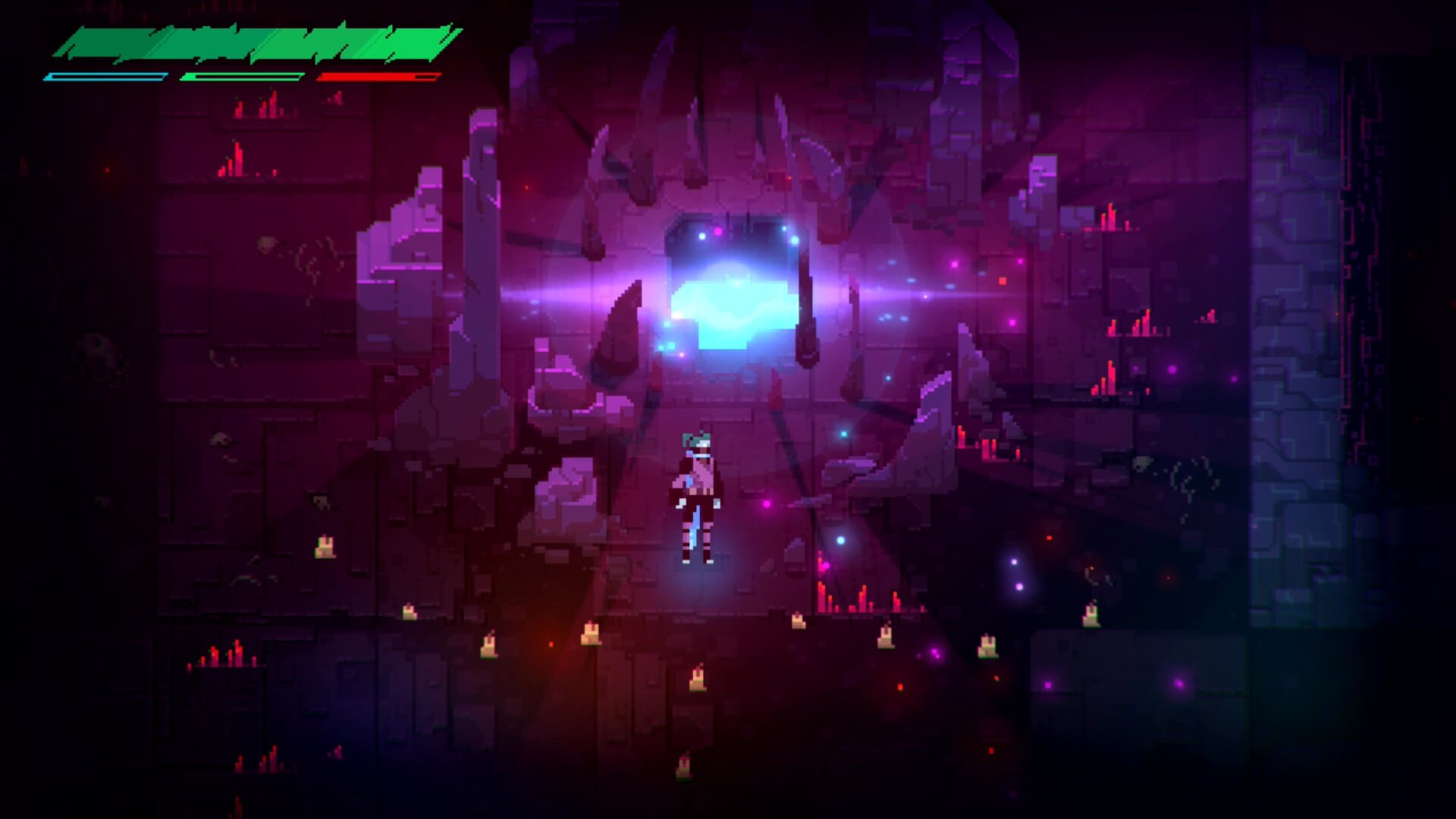
Starting the game as Stan, you’ve abruptly collapsed in the midst of what seems to be an ordinary morning with your wife. Awakening in a strange, dreamlike world, you venture into the unknown, meeting with the strange creatures and mysterious people who inhabit the phantom realm. Dungeon crawling takes place in a semi-isometric 2D perspective, with beautiful neon coloured pixellated graphics and detailed pixel shading. The further you advance in the game, the more you find out about Stan’s illness, and the mysterious tale begins to unfold.

4

Equipped with a few various weapons and abilities – such as the defensive manoeuvre to instantly dash a few paces forward, swing your trusty whip, slash your blue sword or swipe your mighty ‘phantom’ hands upon enemies, each tactic proves its own worth given the appropriate time. The dash move is self-explanatory, offering a quick “in-n-out” fighting style, keeping plenty of movement to and from the enemy. Also, this skill becomes valuable when traversing through walls and areas throughout the game.

The combat moves start off with the faithful green whip, which offensively reels in monsters, right into the hands, or blade, of the aggressive protagonist. Once found early on from the mystical talking tree, the blue blade swipes and slashes through waves of various types of enemies. Once passed the subtle difficulty curve in combat, the use of the blink dash ability and the whip’s ability to bring enemies to you sees fast-paced action that is found in few other titles to date. The one-two punch from the whip/sword combo proves a viable go-to skill for much of the modestly difficult game. The red phantom hands are found just a little further into the game, offering a mid-range ability to advance the technical abilities of Stan.

phantom-trigger-review-screenshot-3.jpg

Each move carries its own combo set, increasing the action and strategy gameplay mechanics that’ll help you progress further in the game. As you gather experience points in each weapon category through fighting and defeating enemies, more combo abilities will unlock for the designated weapon, being the icy blue sword, the vine-like green whip or your flaming phantom hands. Each weapon is colour coded in green, blue and red, matching various items and enemies spread across dungeons, as well as providing elemental damage to help you place opportune strikes in the thick of combat.

Though most of the game plays the same and repeats various monsters across similar dungeons, Phantom Trigger plays comfortably and tells an eerie tale of an ordinary man trapped in a dangerous world. At the end of every dungeon lies a powerful boss, each with its own unique method of defeat, further increasing the challenge. The addictive gameplay may get a little tiresome after long sessions of gaming, but it’s moderately short story and engaging action keeps things just interesting enough to pull you through satisfied.

techtroid-rating6