Review: Injustice 2 (PS4)

The release of Injustice 2 is finally among us and NetherRealm Studios has delivered yet another deep and engaging fighter, piling on more modes and characters than its predecessor. Sticking with the darker edge in an alternate DC universe, where even the most light-hearted super heroes aren’t afraid of turning the tide in favor of doom and gloom, Injustice 2 takes you on an epic story giving you almost 30 characters to fight your way through. On top of the devious story mode there’s the multiverse, plenty of rare equipment and other online/multiplayer modes to keep the game from stalling out well past its release.

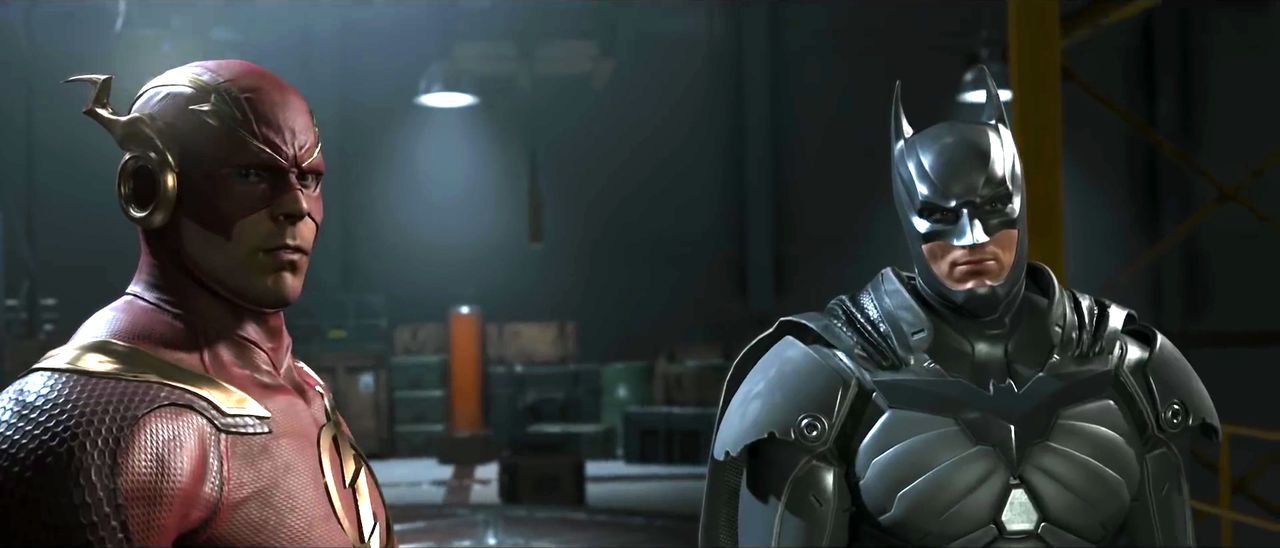
The game itself looks stunning. Impressive animations and CGI run smoothly leaving Injustice 2 in the top of its class as one of the sharpest looking games to date. The story mode is filled with gritty cut scenes and high-impact versus matches switching between the immense roster of characters, each chapter pertaining to a different hero (or villain). Delving deeper and deeper into the chaotic realm of the DC universe, it’s increasingly satisfying catching new characters share a little spotlight, as well as some lesser known comic book personalities showing off their abilities. Of course, the more prominent names share a demanding role creating the grander stage for the irreplaceable super heroes that we all know and love.
INJUSTICE-2-Everything-We-Know-So-Far-12

Stringing together brutal combos, leading into one of the characters’ many super moves, leaves an all-too-real gratification, engrossing you in every match. Each character comes with an assortment of special moves, from Batman’s grappling hook attack to the Green Lantern’s power ring. With a long list of varying combo and basic attacks, each superhero/villain also has a unique Character Power. With the push of a button each player performs a new move or enhances other skills giving more depth to the fighting ring. Environmental hazards and weapons play a huge part in turning the tables during the heat of battle as well. Whether you’re flinging a table across the screen or bouncing your enemy off a movie theater marquee, the 3D setting leaves a broad sense of perception in the 2D fighting plain.

The Super Meter acts like most other meters in previous fighting games. Filling with every hit landed or taken, once completely full you’re able to land a seriously outrageous attack known as a Supermove, not only dealing a massive amount of damage but showing off over-the-top superhuman strength. Using only a portion of the meter at a time combined with a special move causes a Meter Burn attack, which increases the damage done, adds extra hits or grants the ability to follow-up with combos. Graciously using up your super meter for stronger attacks or risking it all at once for a crucial strike is all part of the strategy during the intense brawls.
injustice 2 clash

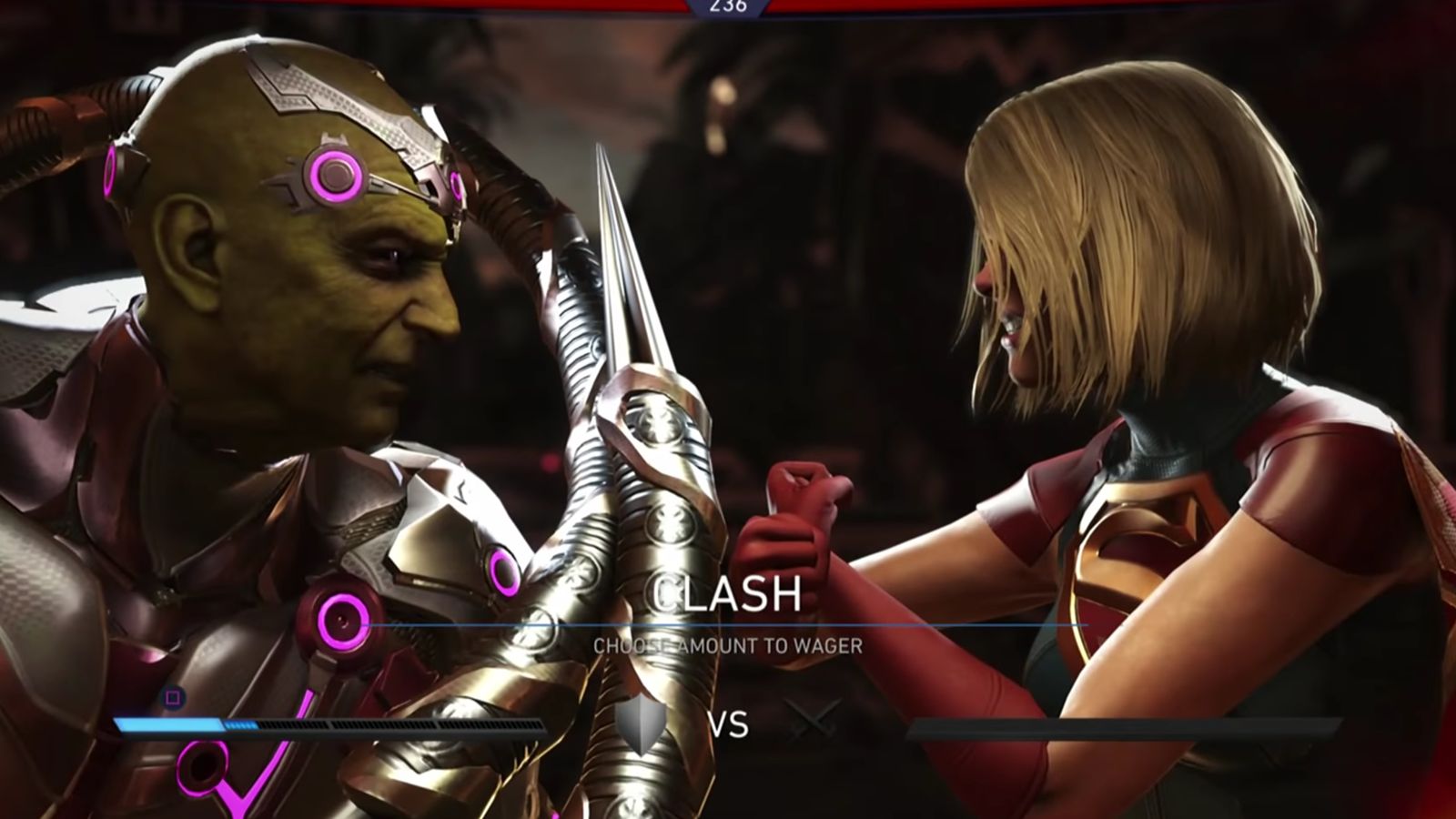
Offense isn’t the only purpose for use of the super meter. Drawing power from the meter, you can escape potential long running combos or attacks by starting what’s known as a Clash. Working in the sense of a wager, the characters go elbow-to-elbow, one player bets a portion of their super meter against the other’s bet. Whoever wins based on the difference of the wagers will either gain health if playing as defender, or the enemy will lose health, if you’re on the offensive. Following strict guidelines for when they can be used, one player may only perform one clash attack per match, leaving this method as a game changer if properly achieved.

Aside from killer graphics with addictive gameplay and a stunning story, there’s other engagements keeping you occupied in the game. Multiverse serves as a challenge map, giving you constant online updates with all new ways of fighting in the game, including modifiers that manipulate the match. Sometimes in your favor, other times not, the mods that are applied range from giving out health boosts to cryo rockets being steadily dropped upon you. The true multiverse opens up after completing three tutorial challenges, giving you a healthy dose of fighting but only a fraction of what you’ll be up against later on.
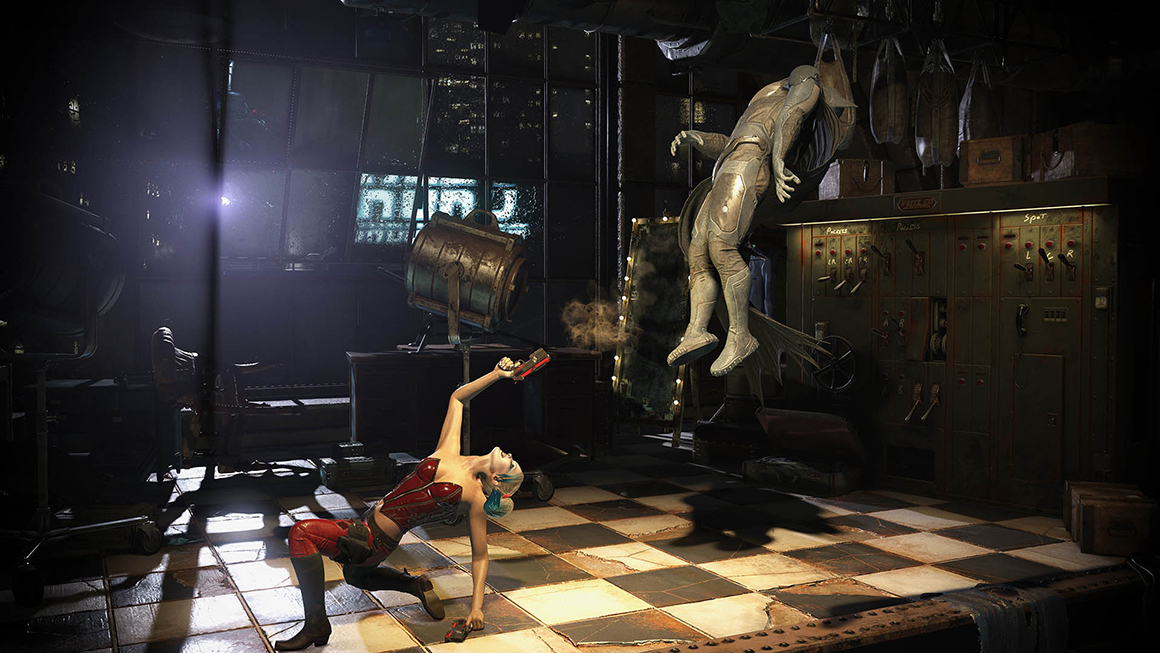
Injustice-2-Harley-Batman

Equipping different pieces of gear, receiving new stat buffs and other various perks like bonus experience or additional damage from certain moves, is a perfect incentive to grind out battles in multiverse. From head pieces and helmets, arms, greaves, belts or chest pieces, there’s loads of equipment, including rare epic pieces that significantly boost your player’s stats. Not only do they enhance fighting capabilities but also add a little style to the game, giving you the option to change the traditional appearances of the characters. Though not available right away, equipment pieces are all level-locked for each character, all with tons of pieces, so sticking with one specific hero is vital for leveling up.

Various online modes are found as well as offline multiplayer, with classics like versus ranked/unranked matches, tournaments and the all new AI Battle Simulator. Acting almost like horse racing or some form of spectator fantasy league, you build your team of three, challenge a player’s team online and watch the battles ensue. Building your heroes up with appropriate gear helps tip the scales in your favor, all while trying to earn more precious rare equipment. Other rewards you may earn are known as Mother Boxes, which contain loot based upon the ranking of the box: bronze, silver, gold, platinum and diamond. These are easily obtained and are great ways to build your gear library, keeping the customized equipment plentiful as the game progresses.

Injustice 2 goes well beyond its purpose as a ‘AAA’ fighter, during what seems to be, a drought in the fighting genre. With fluid combos and universal comfort with almost every character, there’s still a strong sense of individuality, leaving a desire to try out a large amount of the available cast based upon how you approach the game. With one climactic moment after another, Injustice 2 hits you where you feel it, throws plenty of options into the mix and commits to being a demanding fighter with breakthrough equipment options and gameplay, while leaving you breathless and exhilarated along the way.

Review copy provided by Warner Bros. Interactive Entertainment UK

techtroid-rating8

Review: Mr. Shifty (Nintendo Switch)

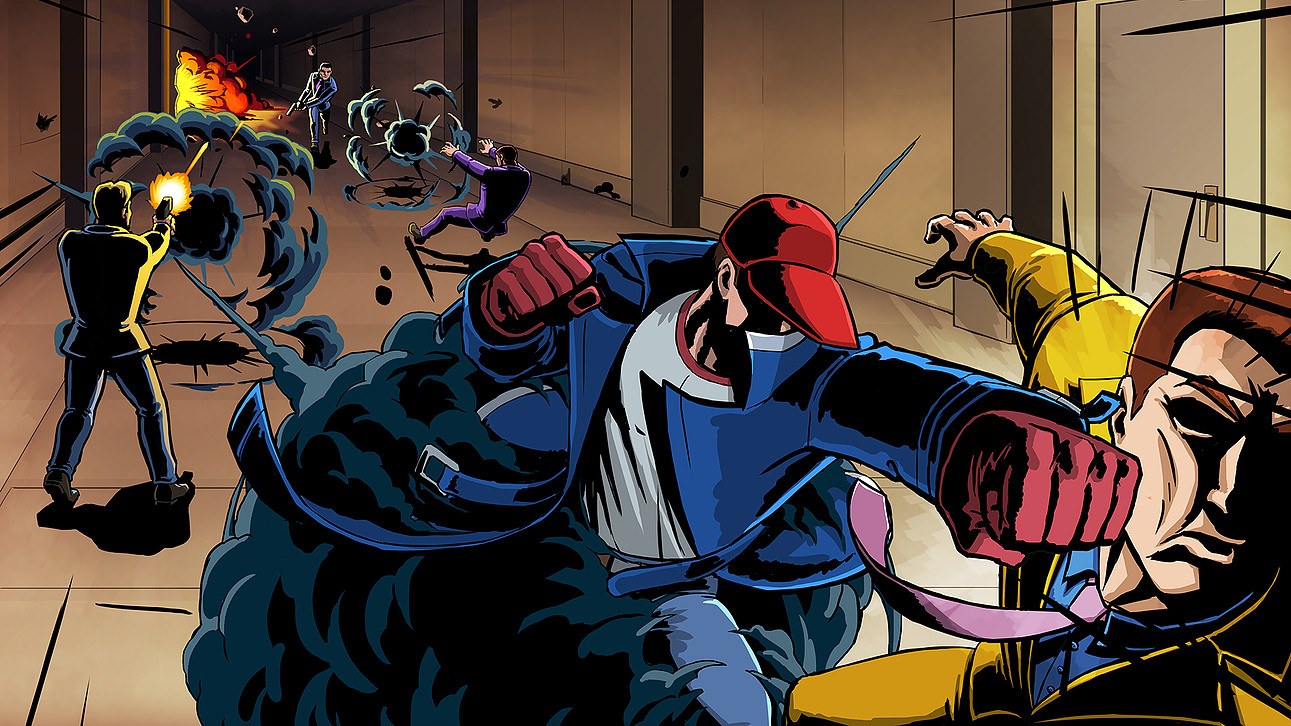
Playing Mr. Shifty will make you feel like a badass quite simply. The eponymous hero of the game doesn’t utter a single line of dialogue as he breaks skulls, takes names and artfully teleports his way through never-ending danger, (inside the most lethal skyscraper ever constructed). Sounds fun, right? Read on.

Across 18 short stages Mr. Shifty confronts increasingly tougher odds: shotgun-wielding guards, exploding tunnels, brutes, lasers, accountants, (we see what you did there TinyBuild) and an evil CEO that just doesn’t know when to quit. Basically, Mr. Shifty doesn’t take itself too seriously, it knows what it is, it knows what it wants to do, and that’s why it succeeds so thoroughly.

Let your fists do the talking

The game is so over the top you can’t help but feel a rush of adrenaline as you play it. For Nintendo Switch players, each strike is further emphasised by the built-in HD Rumble feature; punches feel like they connect with the jaws you’re hitting. Not an essential addition by any means, but it adds to the enjoyment and reinforces the point that Mr Shifty is a one-man army. When he gets into the flow of things, that is.

Make no mistake, Shifty isn’t immortal. The depth of the gameplay comes in the rhythmic flow of combat. As the player it’s your job to judge when to shift, and how much to shift. Shift at the wrong time and you’re dead. Shift too much and leave yourself out in the open? It’s a shotgun in the gut for you. There are no second lives here, you will die over and over again. Most importantly though, you’ll want to try again.

Outwitting your enemies is the key

Once you begin to master the timing of the shift, you’ll need to smack down your enemies in the precious few seconds you get. In the later levels of the game especially, the fast-paced gameplay goes something like this: shift, punch, punch, shift, shift, collect weapon, broom over the head, shift through a wall, recharge your ‘shifty meter’. To add to this, when you take out enough goons in a row, Mr. Shifty auto-engages his ‘shifty slo-mo’. This serves as the only lifeline the game will give you, allowing you to get caught in a spray of bullets and still come out alive.

While this non-stop action is going on, Mr. Shifty’s excellent soundtrack pulses on in the background, adding to the sense of rhythm and badassery. It repeats over the course of the game, so you can expect to have the songs firmly in your head after your first few play sessions. You can check out the video below for a taster of what’s on offer in the audio department.

The top-down visuals are simple, yet stylish in Mr. Shifty. Crucially, they allow you to see your enemies coming in from all angles as you form your plan of attack, and get ready to dance with your fists. Looking across the levels, by adjusting the movable camera, can be the key to survival as you weigh up which direction to shift through the skyscraper’s many rooms and halls. Often, this means you can outflank goons and eliminate them without retaliation.

Review: Mass Effect: Andromeda (PS4)

Exploring the depths of space, fighting off alien races before the brink of extinction takes its final bow, creating an alliance of super-soldiers of diverse species from across the galaxy. When Mass Effect first released there had been no game like it and it still remains comfortably prominent today. Taking advantage of the endless wonder of space while sprinkling in RPG elements and basic “cover ‘n’ shoot” gameplay, the Bioware series took off and kept dedicated fans eager to complete the Commander Shepard trilogy. Whether you’re a fan of how it all ended or one of the many who threw major upheaval during the final moments of the decisive ending, Mass Effect took players on a long, thrilling space expedition that sits radiantly amongst other popular trilogies.

In Mass Effect: Andromeda, Bioware’s next installation in the galactic adventure series, you leave the familiar faces of the Shepard crew and the Milky Way behind to embark on an excursion to Andromeda, a recently discovered galaxy 2.5 million light years away, over 600 years after the events of the original trilogy. Chasing supposedly habitable planets to create living environments for generations to come, you take control of one of the Ryder twins (male or female), awaking from a long, multi-century cryo-stasis nap. It doesn’t take long for things to heat up and the pressure to build upon landing in the Heleus cluster.

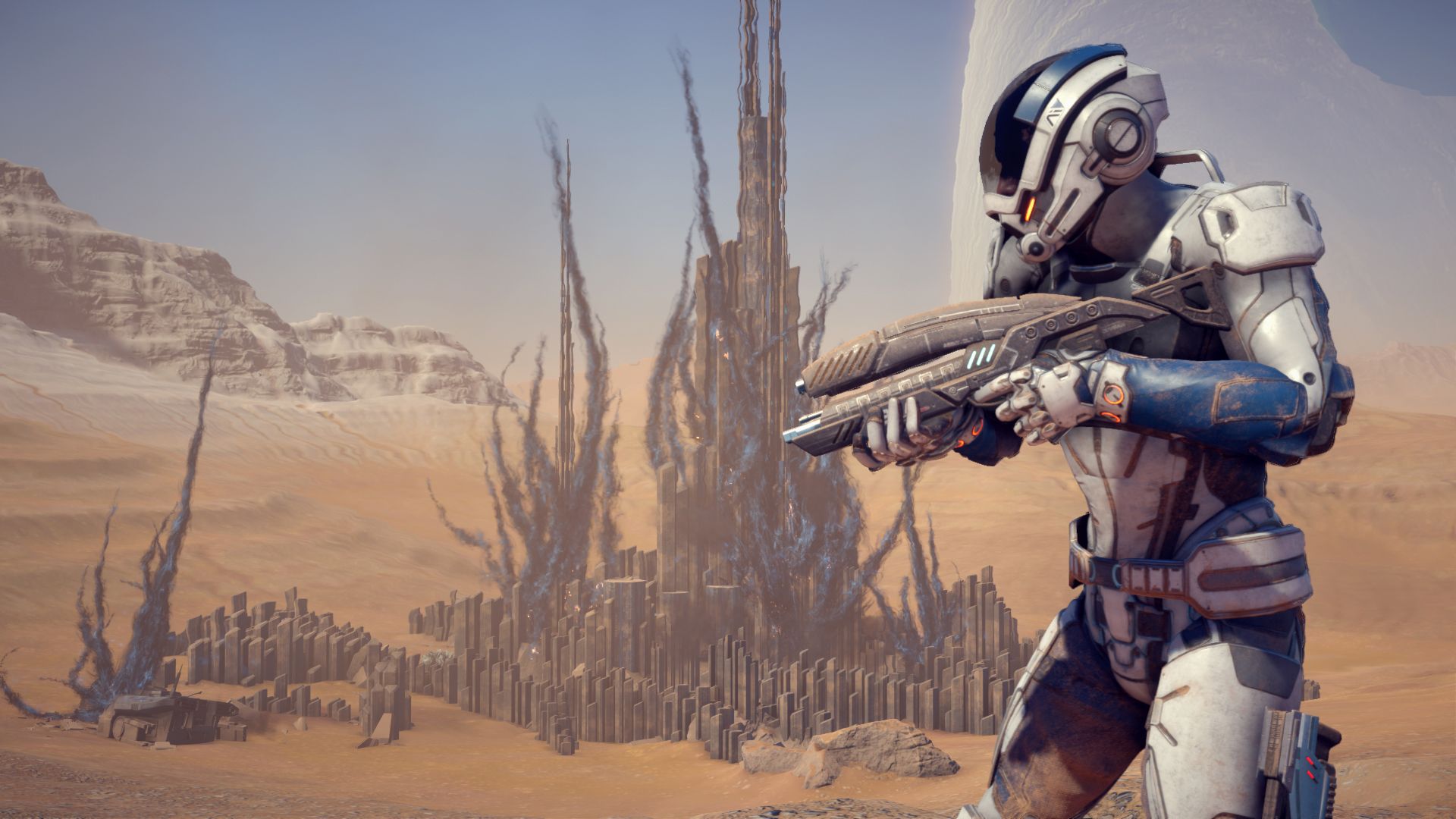
Unknown alien tech litters Habitat 7, the designated “new earth”, and patrolling foreign species known as Kett stay armed and ready for possible intruders. The gameplay is fluid, the easy navigating cover system works well and the combat feels more polished than any game in the series. Equipped to your armor is the new “jump-jet”, giving you a little more umph to your leap allowing extensive exploration through the rocky terrain. After meeting a couple of new crew members, Cora and Liam, and wiping off a few dozen Kett, events transpire leaving the plot in place, now guiding you along your mission as the Pathfinder.

Weapons you find early in the game are familiar as well as the biotic and tech powers used throughout the series. With a heap of skills to upgrade in three specific categories, combat, biotics and tech, you’re able to equip up to three powers at once. Interchanging the powers is a useful tactic, providing you a sense of profile freedom the more you progress through the game, switching between biotics expert to tech engineers to combat specialists. However you feel like playing the game is up to you at almost any moment, giving the game a fresh feeling after hours into the journey.

The armor that you equip is now broken up into four different pieces making full sets: helmet, chest, arms and legs. Pieces are dropped by enemies or bought from merchants and vendor kiosks. Mods can also be attached to your rig adding stat bonuses and weapon enhancements, giving you an edge in combat. All in all there’s plenty of customization, skills and weapons/armor to be found and equipped in the wide open galaxy of Andromeda.

A few hiccups in animation and an occasional glitch make for a harmless appearance; Andromeda looks to be up-to-par with current gen standards. While some facial expressions seem a little strange or obscure, more often they’re spot on giving off personal qualities that bring the game to life. Beautiful space settings and gorgeous planets look as brilliant as any game to date leaving much to discover with a number of different maps and locations, including the Nexus. Playing a role similar to the Citadel from the previous games (only still under construction), the Nexus is where you’ll find shops, clinics and plenty of friendlies looking for someone to send on various quests and missions throughout Andromeda.

With the sudden rise to Pathfinder status, Ryder is given the ship, Tempest, along with its own crew awaiting the arrival of their new leader. With a mission prioritized and an ambitious group of soldiers, scientists and new planets on the horizon, the journey has promising potential. Aside from minor struggling performance issues, which hopefully will receive a patch sooner than later, Mass Effect: Andromeda delivers an amicable experience filled with loads of new upgrades. Take the reins as Ryder and mold the legacy that awaits you in Andromeda.

techtroid-rating8

Review: Little Nightmares (PS4)

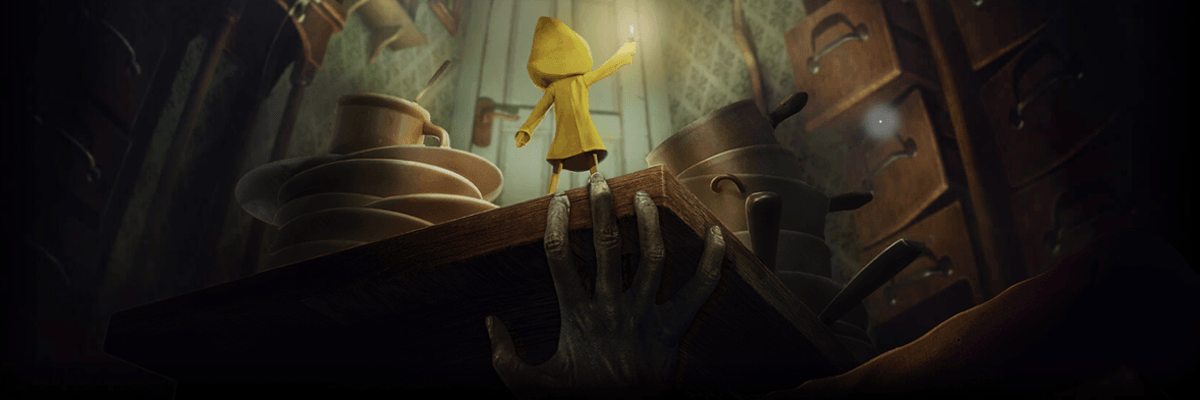
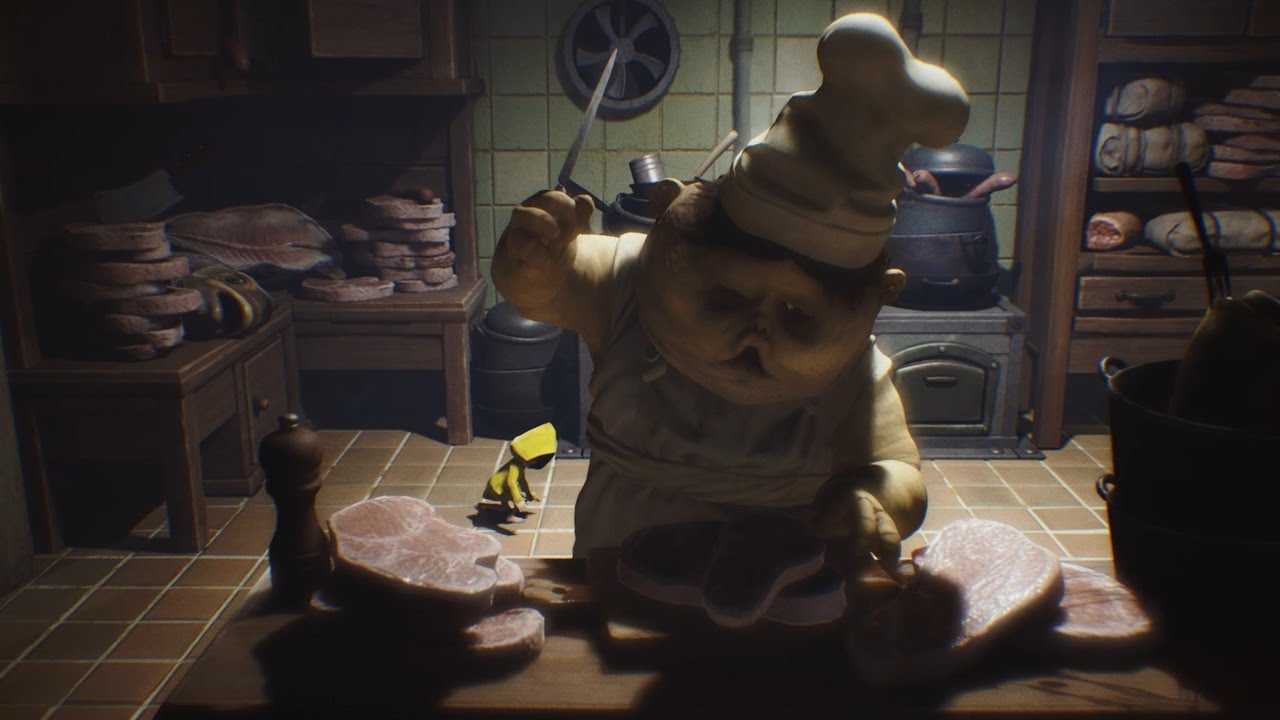
Little Nightmares is a horrifyingly mesmerizing puzzle-platformer developed by the Swedish-based Tarsier Studios. You play as a little girl named Six, wandering through The Maw, a disturbing world filled with monsters and horrors that makes your spine tingle.

This game is disturbing, uncomfortable, and absolutely gorgeous. However, there is also something alluring about it. I got a feeling that I had to explore this cruel and gruesome world with Six, so that somehow, I could protect her: so that I knew she wasn’t alone – and into the Maw we went.

Six

In the early 2016, I went to a lecture about digital culture. Dave Mervik, the narrative designer for Tarsier Studios, was present and a part of the discussions. The lecture was called “The Art of Storytelling in Games.” One of the discussions was about how there could be a narrative designer for a game that doesn’t have a narrative. Playing games like Little Nightmares is always interesting because there is so much being told if we are willing to look.

Already then, the audience was given some sneak peeks about Little Nightmares. They were really small peeks though, since the game was still in development, and there were strict limitations to what Mervik could reveal. However, he revealed that the current name of the game was Hunger.

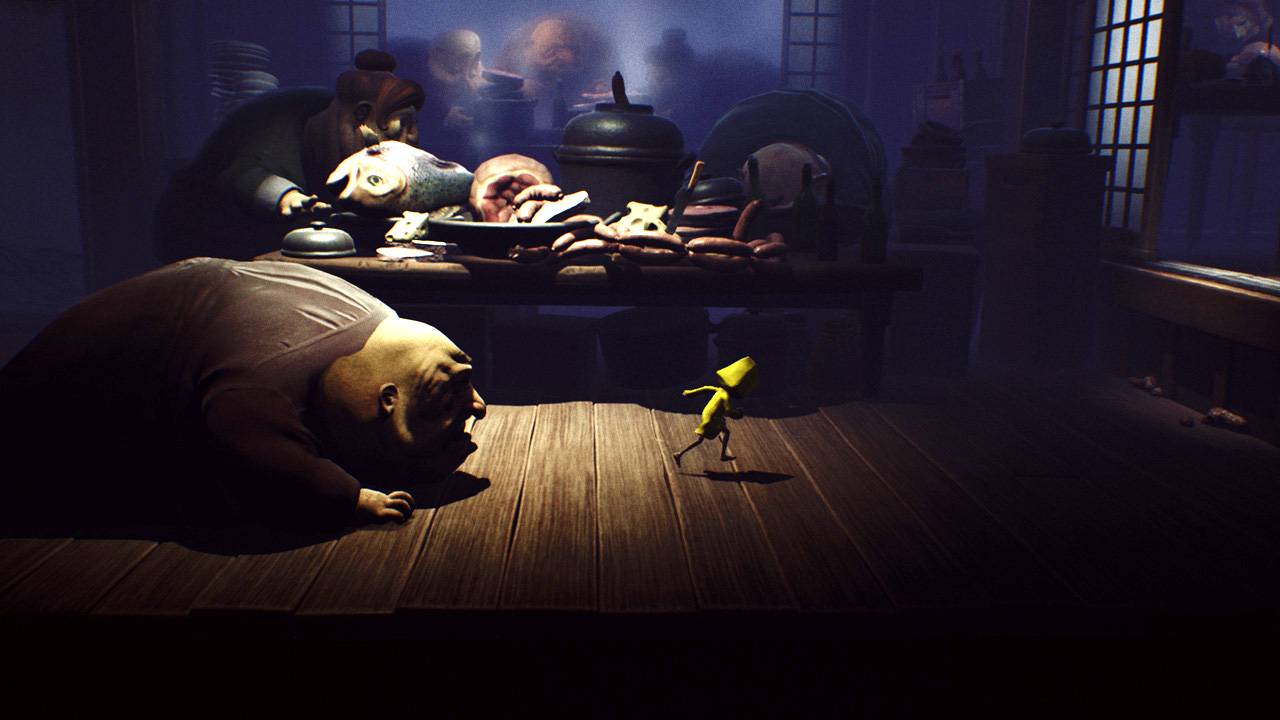
One of the themes I kept encountering was exactly this – the hunger. The insatiable hunger, where the mind is so overruled by this feeling that it stops thinking rationally. In one of the last parts of the game, you venture out on a gigantic ship where it seems that the only thing the guests are doing is eating. Eating with greedy hands, and greedy mouths. If they spot you, they will throw away everything in their hands, and reach for you. Even if they fall from their chairs in the process, they will keep grabbing at you, crawling towards you, groaning and moaning. That’s downright disturbing and uncomfortable. Even Six, our little adorable protagonist, will turn into a monster when hungry enough.

Is this what humans look like? Can we really be that greedy? The thought scares me…

A nopety nopey nope

I love the attention that the developers have made to the small details. Small details such as Six running her hands along the wall when walking close to it, feeling existence in the darkness. She turns her head to look at something interesting, as perhaps an indication to the player what is significant. The game is also beautifully structured, with a nice build-up and end on every level. It makes you hold your breath, with your heart pounding and your slightly sweaty hands on the controller.

My main issue with the gameplay: the sensitivity of controlling the character. It’s much trickier than it had to be, which sometimes could ruin the flow of the game.

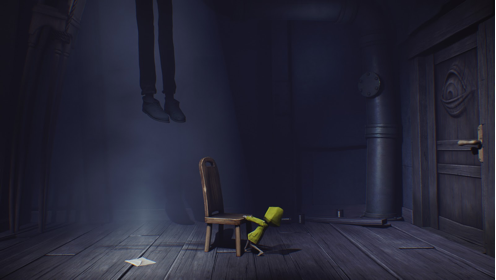
Hanged man

It is clear as day that this game has several themes/elements to it. One of those elements is darkness. There are contrasts of darkness and light as Six always carries around a little lighter. You also light up candles and lanterns along the way. Little Nightmares makes it clear that it plays off your fears, such as the fear of darkness, tight spaces, critters, paranoia, etc. It was ominous when the monsters always showed up exactly where I was at all times. Thus, that is how it is when you are having a nightmare. The monster is always following you, and it is difficult to get away.

a bigger nope

As I was playing the game I realized that it created a lot of philosophical thoughts in my head. That’s a good thing – I can always appreciate a game that makes me think. One of the discussions in the lecture about storytelling in games was about how there could be a narrative designer for a game that doesn’t have a narrative. Playing games like Little Nightmares is always interesting because there is so much being told if we are willing to look.

Little Nightmares shows how defeating your ultimate fear may make you able to conquer them all. It shows you how fear can be created where there is none. Without fear, there are no nightmares. If there’s one thing I’ve learned from this experience, it’s that the Maw can be pretty damn horrifying, in it’s beautiful, messed up sort of way. You learn that in the great scale of it all, we are but one single organism. Insignificant in the bigger context.

With Tim Burton characteristics in its style, Little Nightmares provides beautiful scenery and excellent ambience. When you realize how eerily quiet it can be around you, except from the rumbling of the machines, the occasional howl of the wind. Everything creaks, something squeals, something drags itself across the floor, and among it all – the small pitter-patter of Six’s feet. Overall, Little Nightmares is a work of art. It brings forth interesting themes, conveyed through what might very well be considered, quite simply, human nature.

techtroid-rating8

Review: Lego City Undercover Review (Nintendo Switch)

As a Wii U exclusive, Lego City Undercover was the very reason I purchased Nintendo’s under-supported console when it was first released. A questionable choice granted, but my Lego obsession knows very few bounds and beyond this, the console was left untouched. It’s quite funny then, that in its re-released form, I find myself playing Undercover once more on a Nintendo console; the Switch. Thankfully, given the Switch’s improvement in power over the Wii U, the Switch does Lego City justice and it’s a real treat to play as Chase McCain once more.

Those who played the game first time around will see that improvements have been made to Lego City, first and foremost with the resolution and frame rate. The game now runs at 1080p on the Switch (when docked) and the frame rate is much smoother than it was before (again, when docked). For the first ten hours or so of playtime, I ran Lego City undocked in order to see how it performed in both modes and to see how smoothly it ran. There were a few instances where the frame rate dropped slightly, and the resolution drop was noticeable at times, but there was nothing there to seriously dampen the experience.

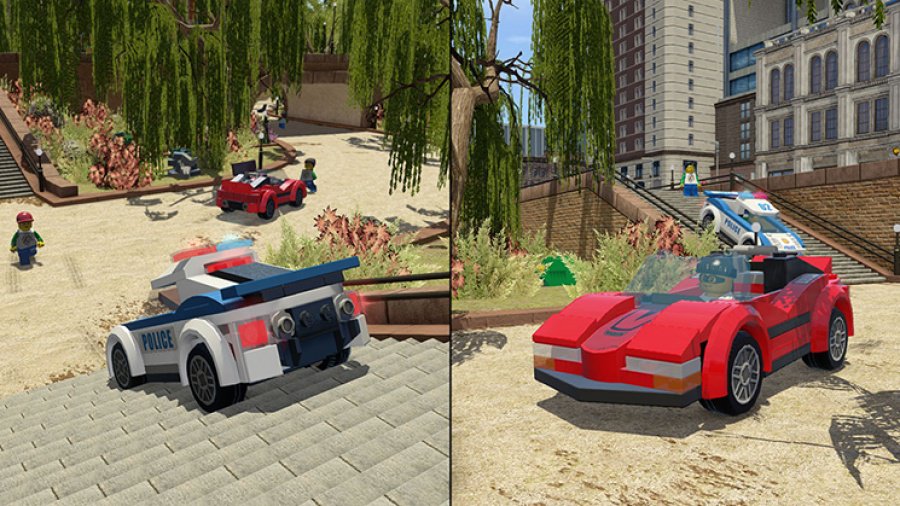
2 player mode

Content-wise, you’re getting exactly the same package that was released on the Wii U only this time there is a local co-op mode included. Much like the other Lego titles, this means that another player can drop it any time and join in the brick-smashing fun. Sadly there are no missions or puzzles specially designed for co-operative play, resulting in the second player acting as a second Chase as opposed to a partner of his. Given the size of the city though, there will be no shortage of things to see if you do decide to take on the game as a pair as opposed to solo.

All of the segments that were handled by the Wii U’s second screen are all now dealt with on-screen, which is at no detriment to the game whatsoever. Phone calls now pop up in the bottom corner of your screen, and the environmental scanner is now controlled by the two thumbsticks rather than holding your controller up and moving it around manually. The former is much more convenient as you don’t have to divert your attention away from the screen to watch the conversation unfold.

Blue Whittaker

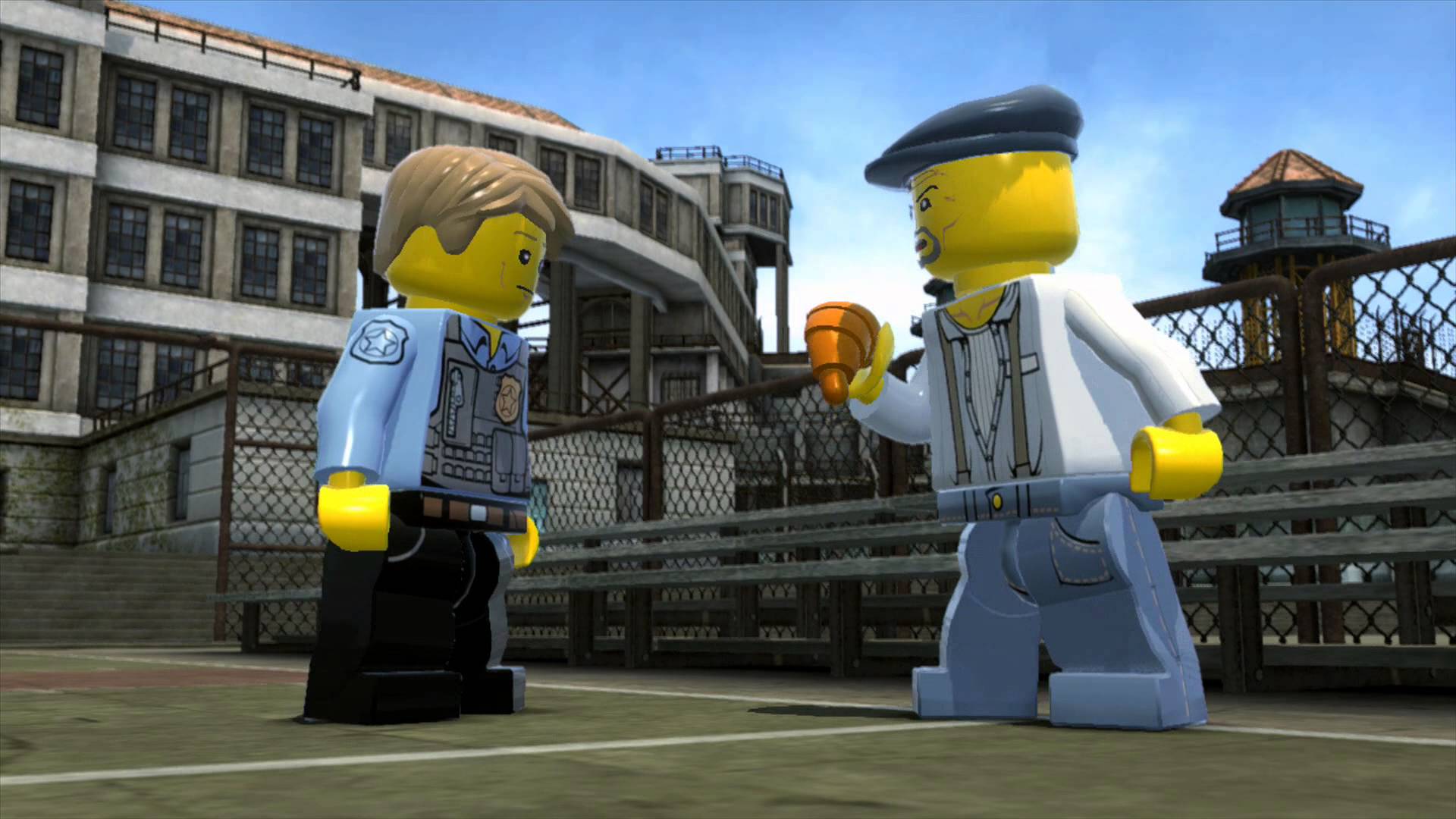
You certainly don’t want to miss any of the story or script as it is probably the wittiest title that Traveller’s Tales (TT) have written to date. There are countless references to popular TV shows and movies which are superbly written and integrated throughout both subtly and as part of the main story. The reference to Morgan Freeman and The Shawshank Redemption is a noteworthy example of this.

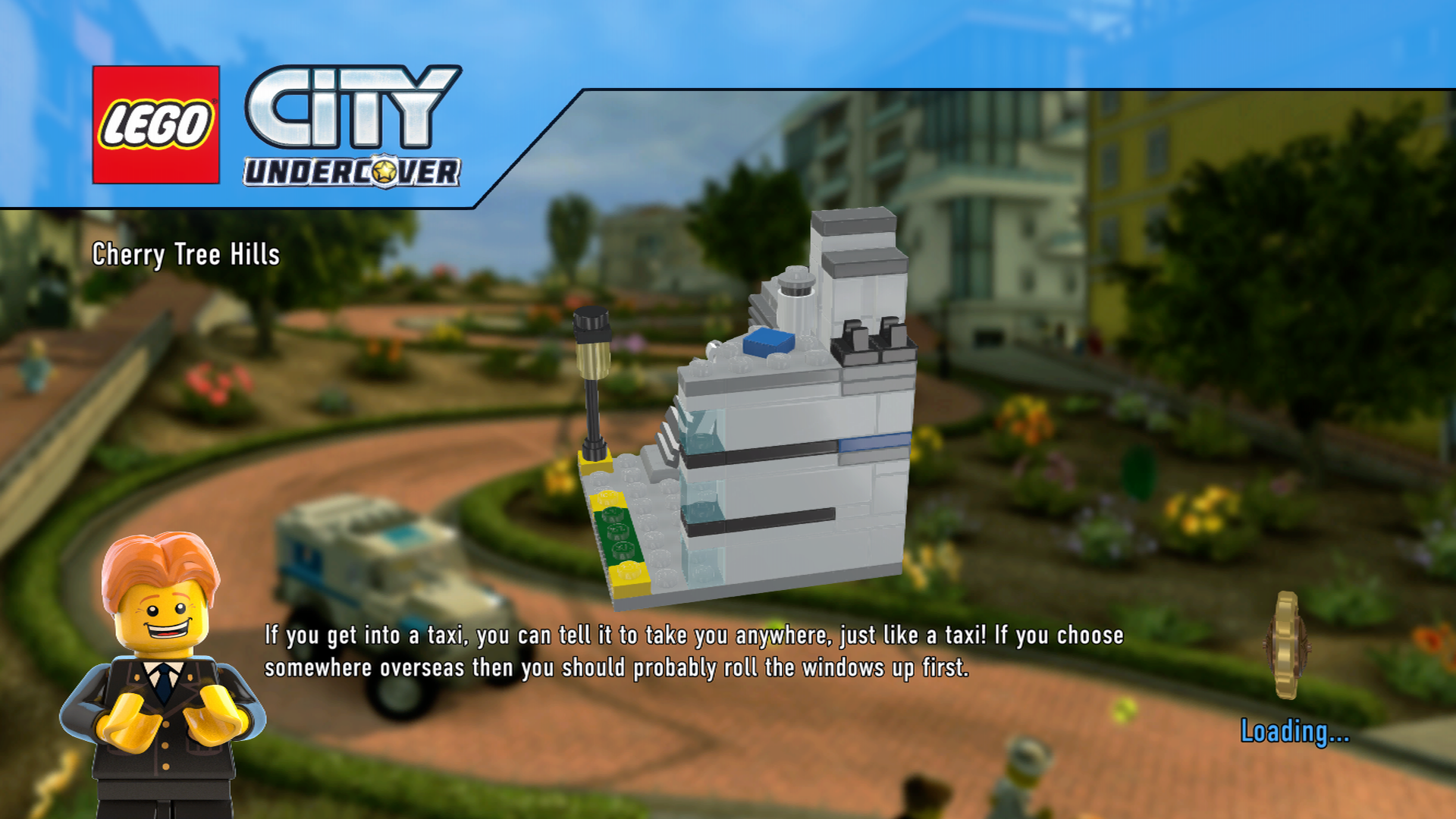
If there’s one thing that lets Undercover down, it’s the poor optimisation in the load times which plagued the Wii U outing, and sadly do the same here. It would have been nice to see TT give this area some attention to address the problem, but this does not appear to be the case, with some load screens being evident for over a minute in some instances. Much like the frame rate drops, this isn’t something that will spoil the experience, but it is noticeable, nonetheless when you’re left waiting for the next section or chapter to load.

Lego City Undercover Loading Screen

The main string of story missions will probably take the average gamer around ten hours to complete, but the sheer volume of extras on the side mean Lego City has a near endless playtime which only adds to its appeal. It’s not perfect, that’s a given, but it’s the best Lego title there has been to date and should be played by newcomers and returners alike.

Review: The Final Station: The Only Traitor DLC (PC)

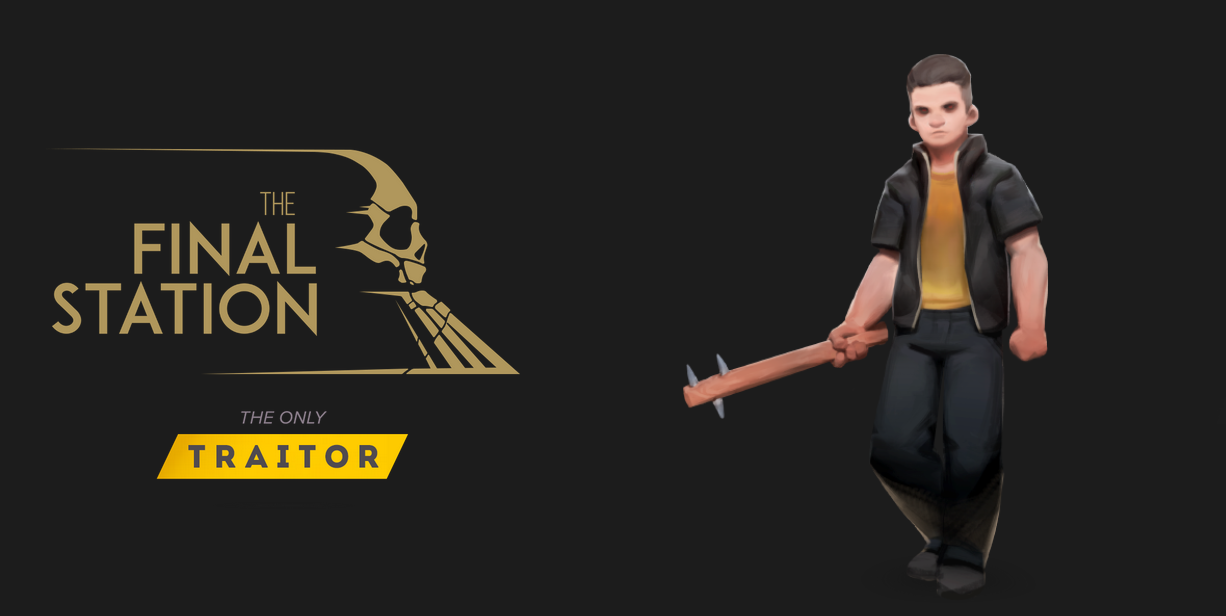
Side-scrolling exploration mixed with a light dash of strategy and a heavy dose of zombie slaying returns in the DLC for tinyBuild’s The Final Station. With more of the same 2D retro style gameplay, The Only Traitor brings a few new tricks to the table regarding objective’s found in the original. Add some new enemies, locations and a new character with a new mode of transport, and this add-on delivers more of the same obsessive gameplay with a renewed way to play it. Deboard the train and buckle up in an American muscle, because this one’s going to be a road trip.

Swapping the railways for the highways you travel from town to town in search for a functioning shelter. Exploring each disastrous town in similar fashion, however now you’re on the prowl for the utter essentials: water, food and fuel. If you spot a survivor waiting in the wings you can bring them along for the ride as well, but don’t expect them to stay for good. The long road to the shelter proves difficult and you’ll need the help of strangers to keep you healthy and armed, but with a new approach to the game comes new decisions to encounter along the way.

The biggest difference you’ll notice is, much like reality, you only have room for one other person in your two door muscle car. Unlike the train where you could rescue as many survivors as you could find, this DLC forces you to pick which survivor stays, and which one goes. You’ll make your decisions based on three stats varying with each character: crafting, medic and sociality, all of which prove crucial for survival down the road.

Each stop sticks you in the middle of an area allowing you to trek either left or right, having to explore both directions in able to find the required resources to continue onward. Sometimes not much exploration is needed in order to acquire your food, water and fuel checklist, leaving the decision up to you whether to continue exploring for survivors and salvage or hit the road to the next town. Though the levels aren’t very extensive when compared to the original game, they still give you plenty of rooms to explore and even throw in new enemies to keep you on your toes.

Good survival games puts you up against all odds, trying your patience when outnumbered and hanging on by a thread. Leaving players with informative dialogue in an unraveling story only adds more depth to an otherwise bleak setting. With returning addictive gameplay bringing a new survivor’s point of view, The Only Traitor is an exciting and somewhat challenging addition to last year’s side-scrolling shooter.

techtroid-rating6

Review: The Final Station (PC)

Old pixellated graphics, no matter how frequent in the world of indie games, resonate gratifying memories with most of today’s adult gamers. To younger generations, retro is the word that rings across the subtle yet beautiful graphics, while older generations, including myself, see nostalgia. Game developers at tinyBuild Games see bold opportunities to deliver something new and refreshing with The Final Station.

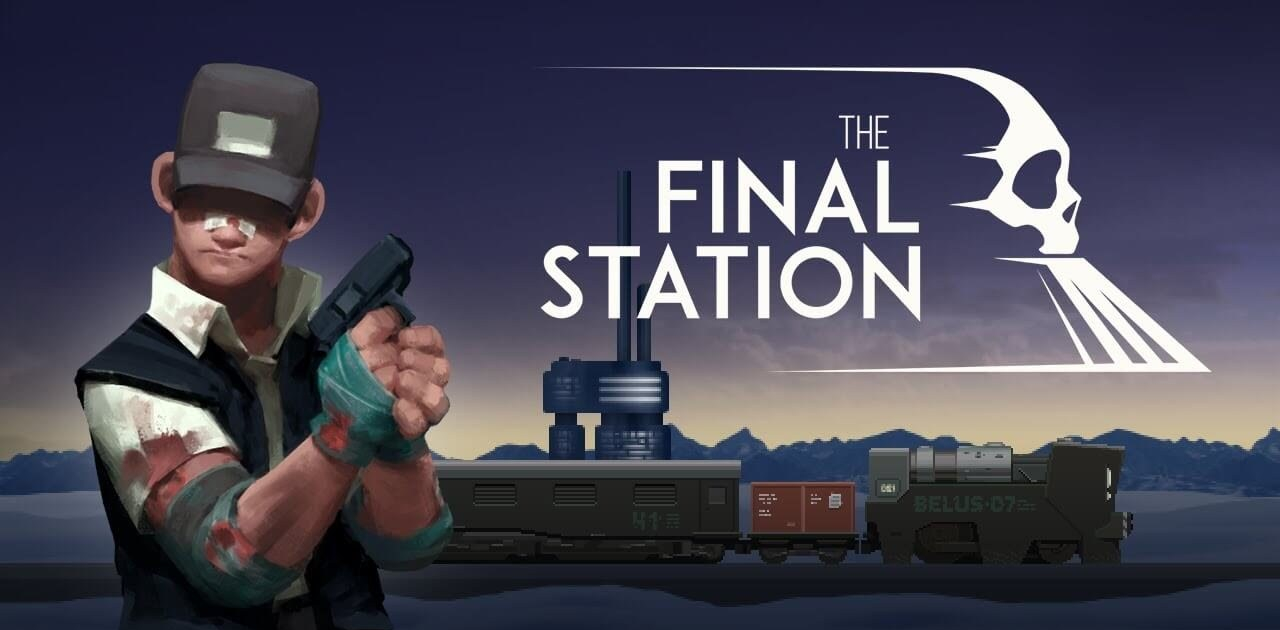
In this two-dimensional part action/adventure strategy game, you’ll find yourself traveling as an ordinary railway worker on the only running train around. Running through towns located at every train station, picking up discourse from gossiping townies or old letters, your main objective is finding the keycodes to release the railroad blockers at each station.

Armed with your fist, a pistol and a handful of bullets, every door opened or ladder scaled leaves you on your guard, braced for enemy encounters. Shadowy, seemingly brain-dead figures fill the decaying towns where you not only find blocker keycodes, but food, medkits and other precious resources, human survivors and more information revealing government conspiracies dipping deeper into the games’ lore. Dozens of stations make up the game and each one baring its very own 4 digit keycode retrieved by none other than, the lone train operator. Station after station, the people get scarce, the towns more desolate and the story unfolds.

In between each stop, while your train is pushing towards the next railroad blocker, you maintain an efficient running train as well as care for survivors found along your adventure. Various actions are used along the ride to ensure peak performance for the rumbling locomotive, its residents are starved and bruised.

The deeper you dig into The Final Station, the more compelling the game gets. Strategically choosing which survivors to save with your stash of medicine and food, or if you even want to save them, will reward you at the end of every act. Ammunition being limited, calculating melee strikes is crucial, leaving your firearms for emergency situations. Whether a fury of punches, one satisfying charged melee or a few well placed shots, the game plays fluidly leaving an overall addictive style of adventure.

After hours of gameplay I feel I only scratched the surface of what lies beyond. The minimal dialogue gives away just enough to keep going, but only on occasion answers questions. A variety of baddies ranging from slow walker-types to quick runners, heavily armored to heavily explosive, gives the game a methodical approach to the zombie-esque shooter. The Final Station is a standout game amongst a saturated genre and should not be overlooked by any fan of the 2D action/shooter family.

techtroid-rating8

Review: Horizon Zero Dawn (PS4)

In recent years there have been a heap of beautifully created, vast living and breathing open world games. Everything from sprawling plains to snowy mountains, full green forests to rocky red deserts. It brings the question, what else can they come up with? What else is there? With Guerrilla’s newest game, Horizon Zero Dawn, they graciously deliver another gorgeous sandbox worth exploring.

Long into the future, well after modern humanity rained and technology took over only to fall to near extinction numbers, mother earth reclaimed much of her land back. Humanity has declined back to tribal behaviors and old remnants of urban landscapes decay beneath the lush green foliage. Only machines from the past still roam the lands and seem to becoming increasingly more violent as the years begin to pass.

As you take control of Aloy, an outcast since birth, you begin to train for a chance to one day prove your worth to the tribe. Controlling Aloy is fluid, aiming her trusty bow and crafted arrows, using a variety of health aids and potions is near effortless. For close range attacks she has a couple various swings of her spear both light and heavy damage. Jumping and climbing is solid and smooth for easily traversing the very rocky and mountainous map. The story unfolds and new gadgets from the past begin to appear, most importantly the “Focus”. Traditional when compared to similar functions in other adventure games, the focus allows you to scan an area revealing enemies, object, resources and proves handy during numerous quests along the way.

Progressing through the game and a few cut scenes later, Aloy finds herself on her own once again. By now several skill points have been accumulated and you begin upgrading her skill tree full of dozens of useful abilities and enhancements. The entirety of the skill tree is broken up into 3 categories: “Prowler”, “Brave” and “Forager”. Enhancing battle techniques and new skills are found in the first two columns with prowler leaning more towards a stealth play style with silent moves and strikes while the brave column deals with skill sets found when in the heat of battle, such as faster reloads, firing a number of arrows at once and upgraded spear attacks. Forager is geared towards helping you out in the field. From acquiring additional resources to disarming traps set throughout the land, these skills help Aloy survive when enemy engagements have subsided, or to help prepare for the inevitable run ins with tribes and wild machines everywhere.

You’ll spend much of the game running around, either taking out hordes of various machines, collecting assorted leaves and branches for resources or medicines and hunting wild boar, turkeys or any other form of animal in the somewhat meager array of wildlife featured throughout the game, none of which being larger than the boar. Using the skins and guts along with a number of other scavenged parts from machines, you’ll craft upgrades for numerous quivers and carrying pouches for weapons, potions and traps. Furthermore, many common resources are used for crafting your ammunition, so regularly gathering is a favorable habit to adapt early on.

The map is huge and seems daunting to imagine traversing the entire land simply by foot. Luckily the game has a fast travel option, warping from campfire to campfire, keeping in mind it will cost you one “fast travel pack”, a relatively cheap item purchased from merchants, every time you wish to skip trudging through the immense wilderness. Another useful option for travel is using your “focus” to override machines and hopping on board to ride them around. Not as immediate as fast traveling but much swifter than running, as well as keeps you immersed and exploring the vast and vivid terrain.

With enough missions and side quests to help build Aloy’s reputation across the lands, there’s also plenty of simple errands, bandit camps to clear out, hunting grounds, and other activities to keep you busy. Infiltration opportunities become available and will have you exploring underground bunkers known as “cauldrons”, not only full of patrolling machines but plays home to them as well. Fighting your way deep into the core of the cauldron, or sneaking your way through, by the end, without giving too much away, you’ll find yourself with more information on machines than before, allowing more species to be overridden. This, being just one of many events to prevent premature exhaustion and repetition throughout much of the game.

Open world games are almost always a ton of fun to play and delve into. It’s the repetitive nature of these games that begins to wear down the player, i.e. you. With plenty to accomplish and yet another engaging world dropped upon us, Horizon’s boundless freedoms, brilliant scenery, curious story and addictive pick up and play action offers another reason why sandbox games have a tight grip on the ever so promising industry.

techtroid-rating8